Get 20% OFF All Premium 3D & STL Models!

In the dynamic world of 3D content creation, precision, detail, and versatility are paramount. Whether you’re an automotive designer crafting the next generation of vehicles, a game developer building immersive virtual worlds, or an architect visualizing a modern urban landscape, the quality of your 3D assets can make or or break a project. The demand for highly accurate, optimized 3D car models has never been higher, serving as the foundational element for everything from photorealistic renders to real-time interactive experiences.
At the forefront of modern electric vehicle design is the Tesla S-08, a vehicle synonymous with innovation and sleek aesthetics. Capturing such an iconic design in a digital format requires immense skill and attention to detail. A high-fidelity representation, such as the Tesla S-08 3D Model, stands as a testament to what’s achievable in digital asset creation, offering artists and developers a ready-to-integrate solution that embodies sophistication and technical excellence. This article will delve into the critical role of premium 3D car models, explore the essential file formats that define their utility, and demonstrate how a meticulously crafted asset like the Tesla S-08 can elevate a wide array of professional workflows, from advanced visualization to high-performance game development.
The journey of a 3D model, from creation to deployment, often involves navigating a diverse landscape of file formats. Each format is engineered with specific purposes, offering unique advantages in terms of compatibility, data preservation, and optimization for particular applications. Understanding these distinctions is crucial for anyone working with 3D car models, ensuring seamless integration into various software pipelines and end-use scenarios.
The .blend format is native to Blender, the powerful open-source 3D creation suite. When you acquire a .blend file, you’re not just getting a model; you’re gaining access to a fully editable Blender scene. This typically includes the mesh, materials, textures, lighting setups, cameras, and even animations or physics simulations configured within Blender. For artists who primarily work within Blender, this format offers the most flexibility for customization, material adjustments, and scene re-composition without loss of data fidelity. It’s an excellent choice for detailed rendering projects or further development within the Blender ecosystem, such as creating custom renders of the Tesla S-08 with specific studio lighting.
Autodesk’s .fbx (Filmbox) format has become an unofficial industry standard for exchanging 3D data between various applications, especially for game development and real-time pipelines. It can store a comprehensive range of data, including geometry, materials, textures, animations, skinning, and camera information. Its robustness makes it ideal for transferring complex animated assets into game engines like Unreal Engine and Unity. For a model like the Tesla S-08, an .fbx file ensures that details such as the separate wheels, suspension, and steering components, along with their pivot points, are correctly preserved for animation and dynamic simulations within a racing game or configurator.
The .obj (Wavefront OBJ) format is one of the oldest and most widely supported 3D file formats. It’s essentially a universal carrier for geometry data, supporting vertices, faces, normals, and UV coordinates. While it’s excellent for mesh data exchange, it typically references external material (MTL) and texture files, rather than embedding them. This simplicity makes it highly compatible across almost all 3D software packages, serving as a reliable fallback for cross-software compatibility when other formats might present issues. It’s a fundamental format for archiving or sharing the pure geometric data of the Tesla S-08.
.glb (GLB format, an extension of glTF) is quickly gaining traction as the preferred format for AR, VR, and web-based 3D applications. It’s a self-contained, binary format that bundles all necessary data – geometry, materials, textures, animations – into a single file, making it highly efficient for transmission and loading in browsers or mobile AR apps. Its optimization for real-time rendering and small file size makes it perfect for displaying the Tesla S-08 in an immersive virtual showroom, a mobile AR experience, or an interactive product configurator on a website, ensuring quick load times and smooth performance.
The .stl (Stereolithography) format is the industry standard for 3D printing. It represents 3D surfaces as a collection of unconnected triangles, essentially defining the outer geometry of an object without color, texture, or internal structure. While not suitable for rendering or animation, it’s indispensable for physical fabrication. For hobbyists or professionals looking to 3D print a display-scale model of the Tesla S-08, the .stl format is precisely what’s needed, ensuring the geometric accuracy required for manufacturing.
The .ply (Polygon File Format, or Stanford Triangle Format) is another format for storing 3D data, particularly suited for scanner data and point clouds. It can store more complex information than .obj, including color per vertex, normal information, and various other properties. While less common for general 3D asset exchange, it’s valuable in scientific, CAD, or reverse engineering applications where precision mesh data or additional attributes are crucial. For specific analytical or high-precision industrial applications involving the Tesla S-08, .ply could be a critical asset.
The .unreal designation, often referring to a specific asset packaging for Unreal Engine, signifies an asset that has been prepared and optimized directly for the Unreal Engine environment. This means it often comes with Unreal-specific material setups, LODs (Levels of Detail), collision meshes, and potentially blueprints or other engine-specific configurations. While technically not a standalone file format in the same way .fbx or .obj are, an .unreal asset represents a truly “game-ready” state, designed for immediate import and use within a real-time environment, streamlining the integration of the Tesla S-08 into a game or interactive visualization.
Finally, the .max format is the native project file for Autodesk 3ds Max, a leading software for 3D modeling, animation, and rendering. Similar to .blend, a .max file contains the complete scene data, including all models, materials, textures, lights, cameras, and animation curves. For users of 3ds Max, this provides the most extensive control and flexibility for modifying the Tesla S-08 model, setting up complex rendering scenarios, or creating advanced animations, making it an invaluable resource for professional studios.
The availability of multiple formats for the Tesla S-08 3D Model highlights its versatility and the commitment to providing a flexible asset for diverse professional needs. When selecting a 3D car model, understanding these formats ensures you choose the right tool for your specific project.
The Tesla S-08 represents a pinnacle of modern electric vehicle design, and translating its sleek, futuristic aesthetic into a high-fidelity 3D model requires meticulous craftsmanship. The Tesla S-08 3D Model from 88cars3d.com is a prime example of an asset engineered for both visual splendor and technical efficiency, making it an invaluable resource for a broad spectrum of creative and technical applications.
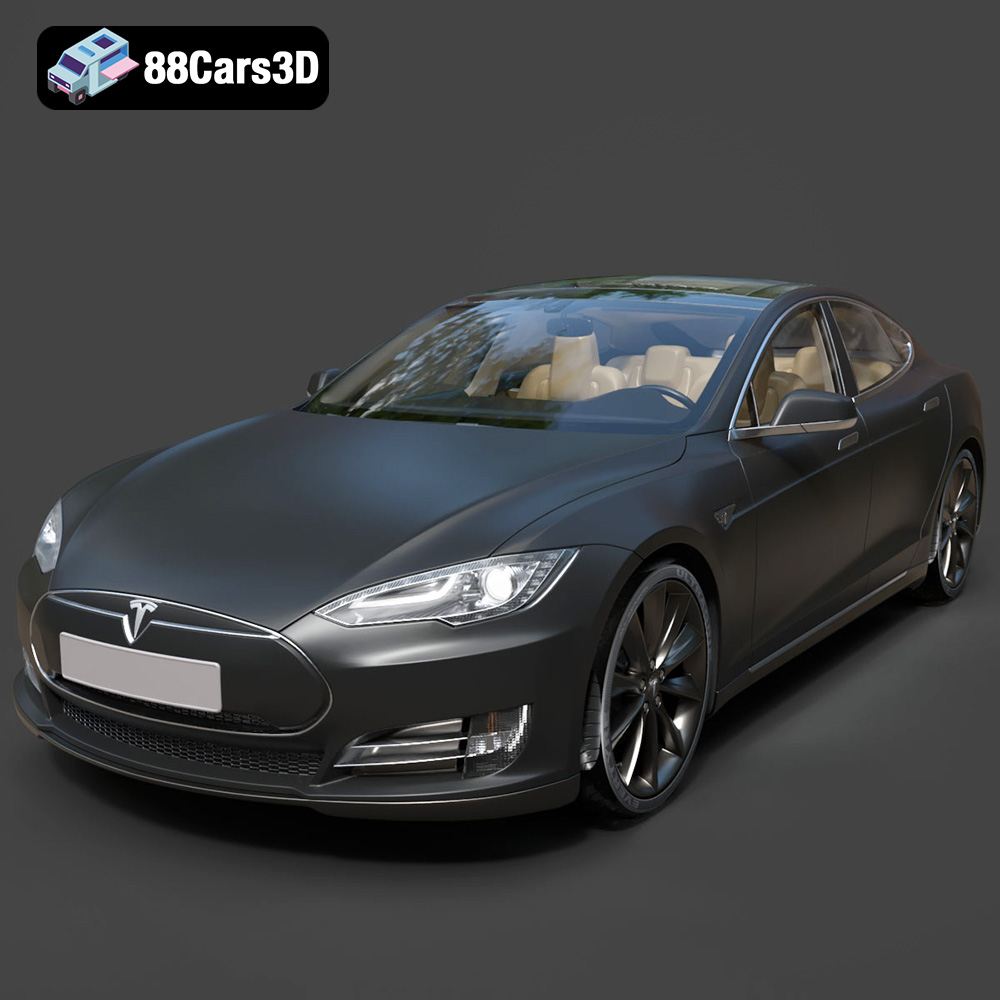
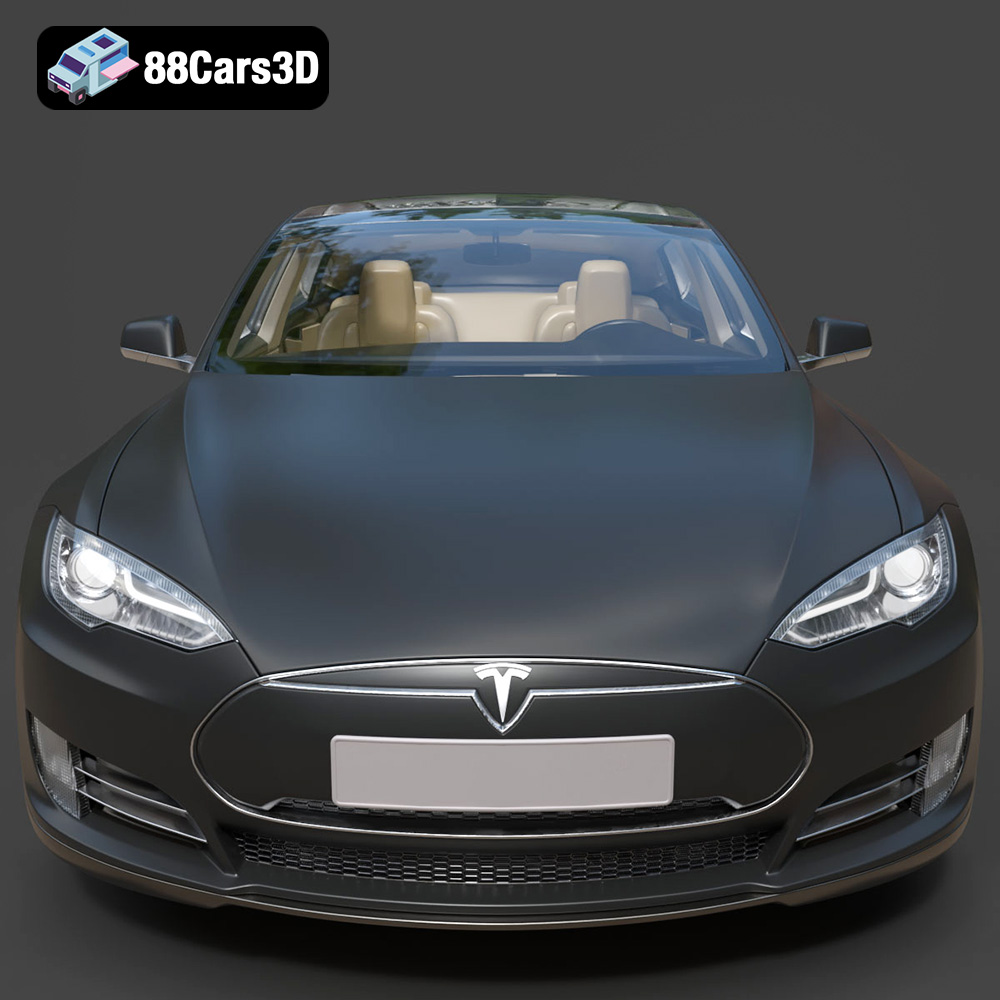
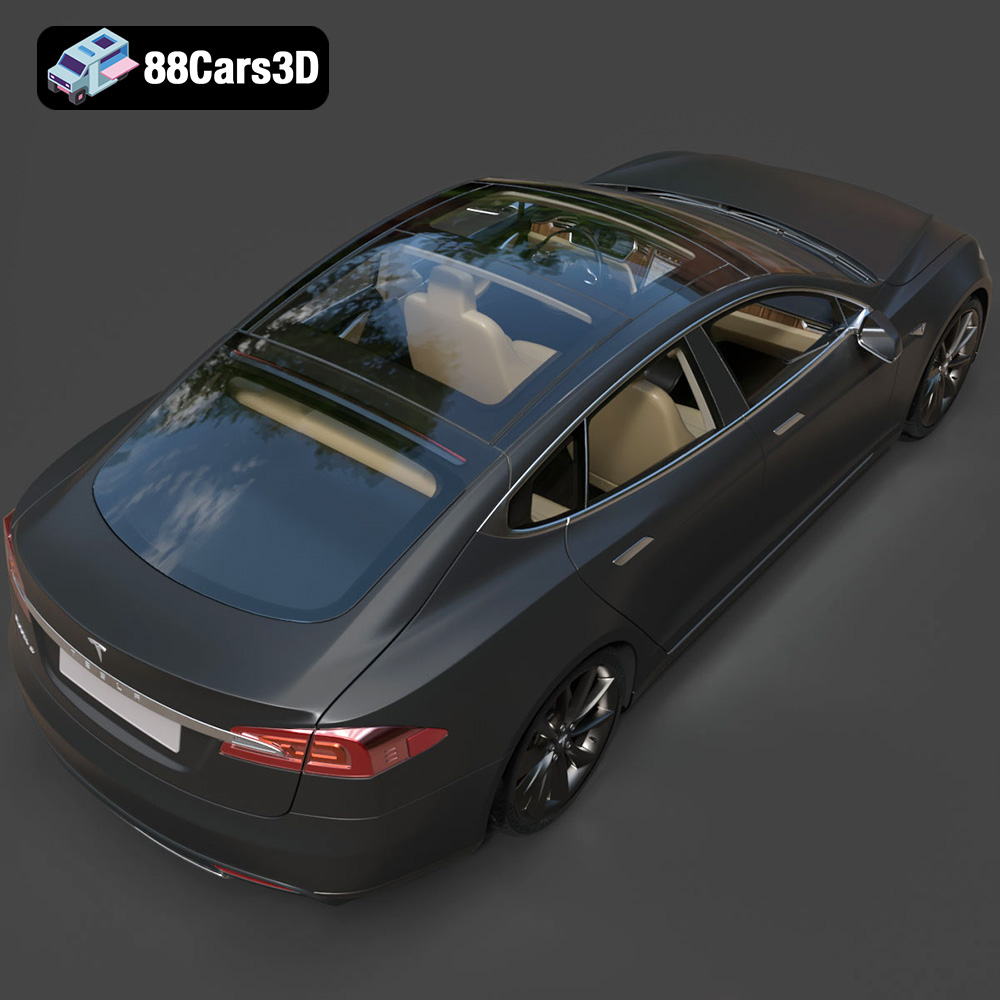
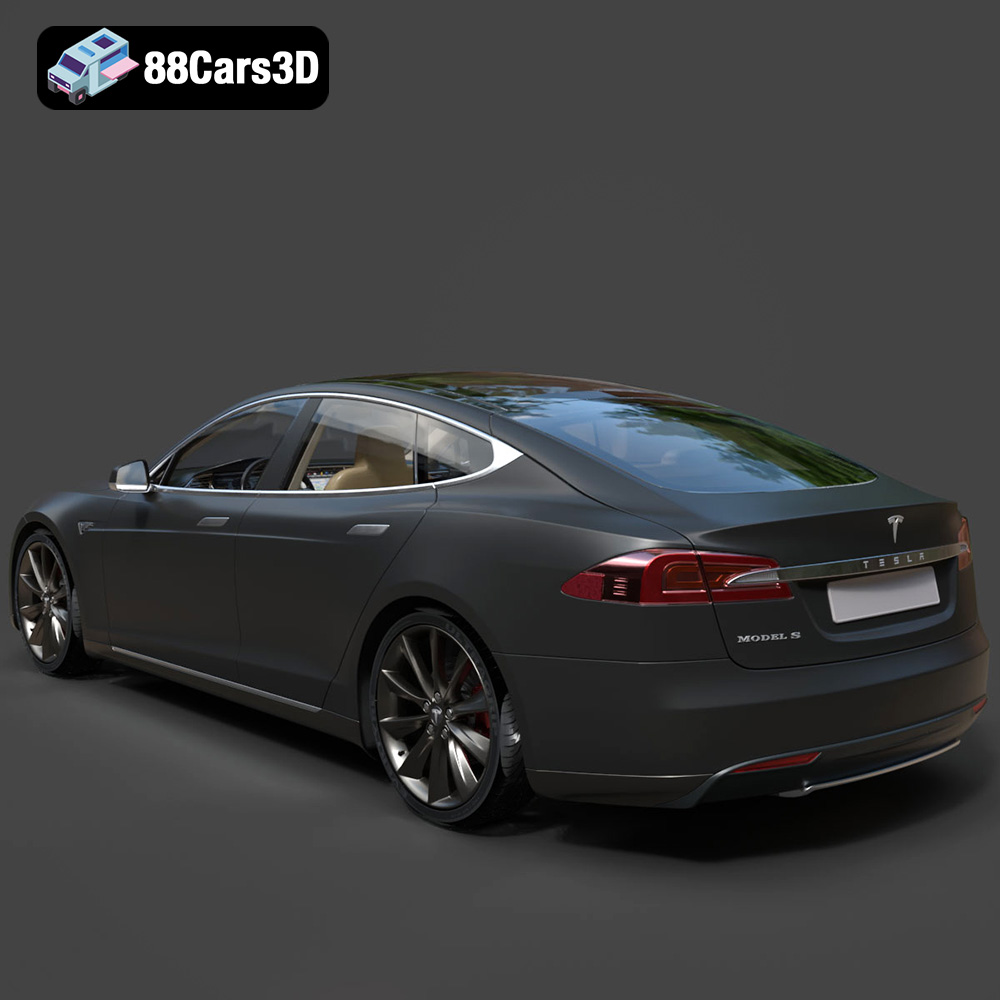
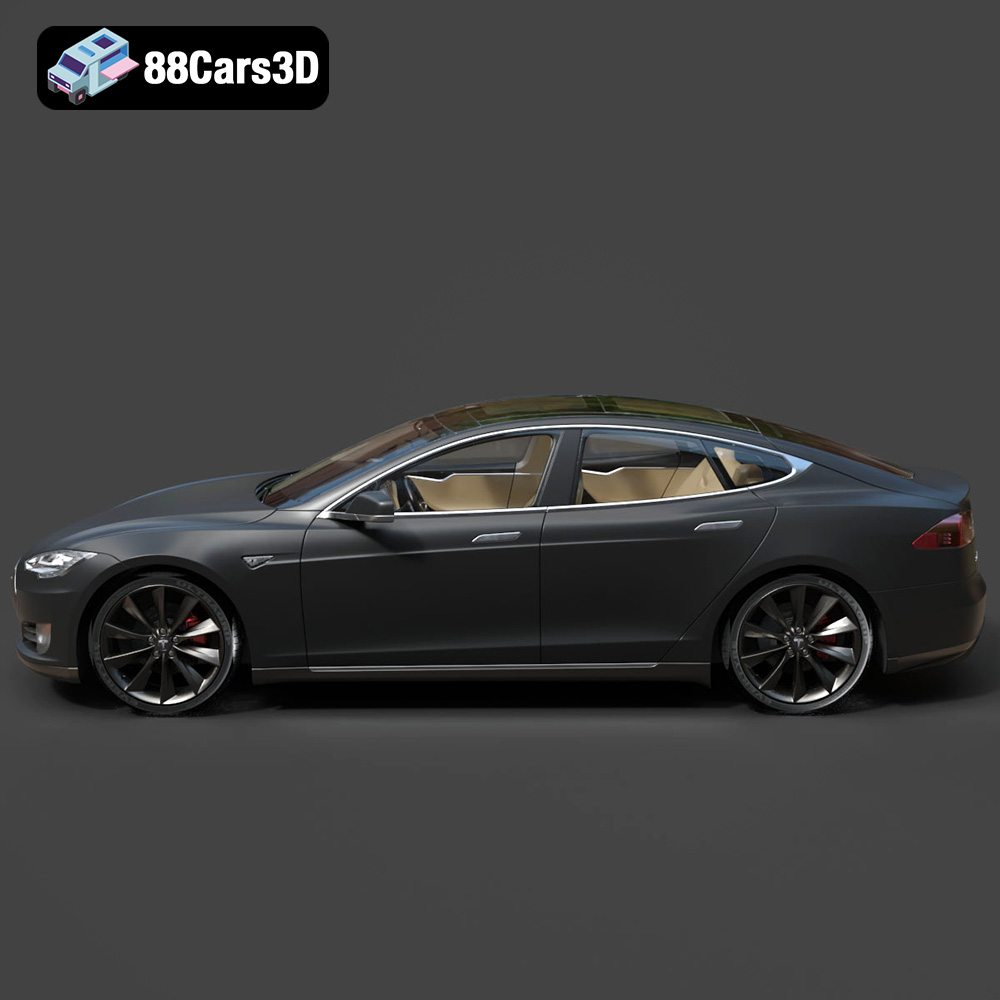
Every curve, every panel gap, and every design element of the Tesla S-08 has been painstakingly recreated. The model accurately reflects the vehicle’s seamless front fascia, emblematic of its electric powertrain, and the aerodynamic purity that defines its silhouette. From the flush door handles that contribute to its minimalist profile to the elegant sweeping roofline, the exterior geometry is a masterclass in digital automotive replication. This attention to detail extends to the undercarriage, which cleanly represents the EV skateboard chassis, further enhancing its authenticity for close-up renders and technical visualizations. The high-resolution LED headlights and signature taillight assemblies are precisely modeled, ready to glow realistically in any render or real-time environment. Even the premium aero-optimized alloy wheels and high-performance tires are rendered with distinct features, complete with realistic independent suspension setup and separate, animatable components for steering and rotation.
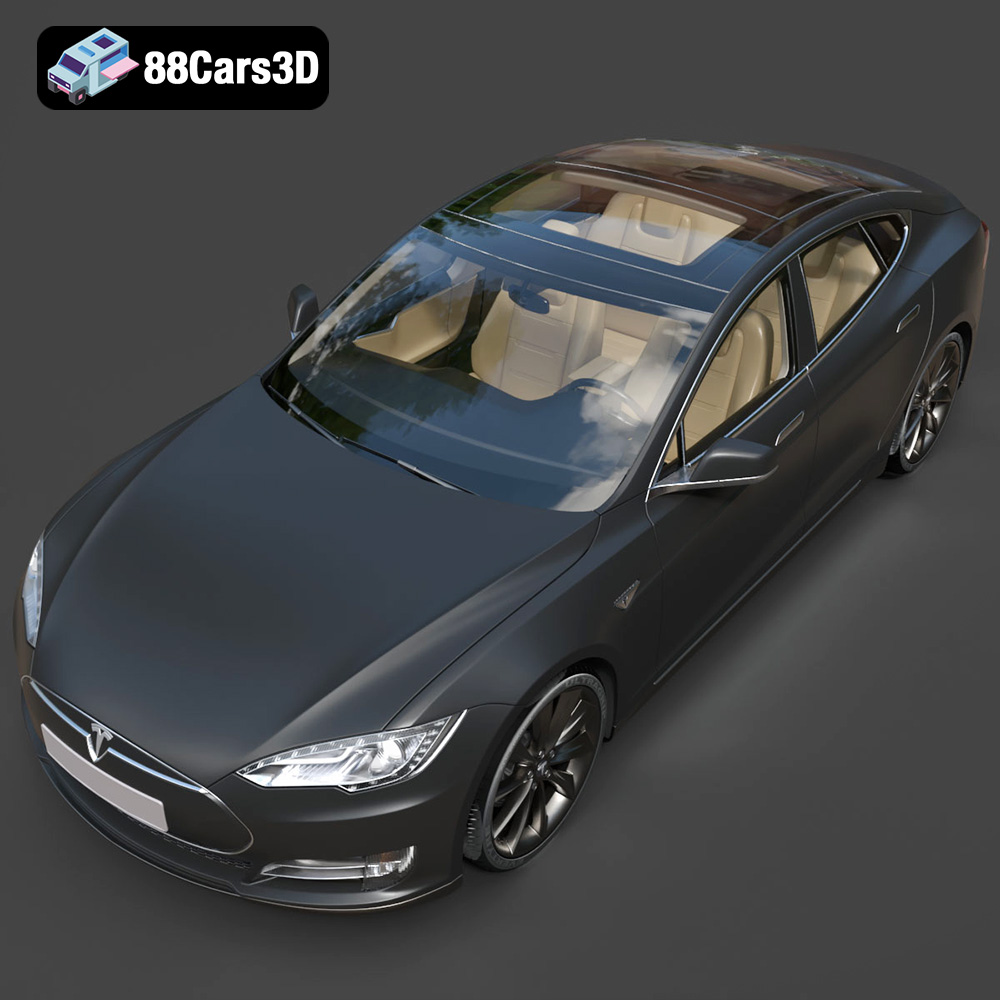
Beyond the exterior, the Tesla S-08 3D Model extends its fidelity to the interior. The cockpit features premium sculpted leather-style bucket seats, a distinctive minimalist steering wheel/yoke design, and the massive central touchscreen display and digital instrument cluster that are hallmarks of the Tesla experience. The accurate pedal assembly and intuitive interior controls further enhance the model’s realism. This level of interior detail is critical for projects requiring first-person perspectives, such as in game development or VR training simulations, where users might experience the vehicle from inside the cabin.
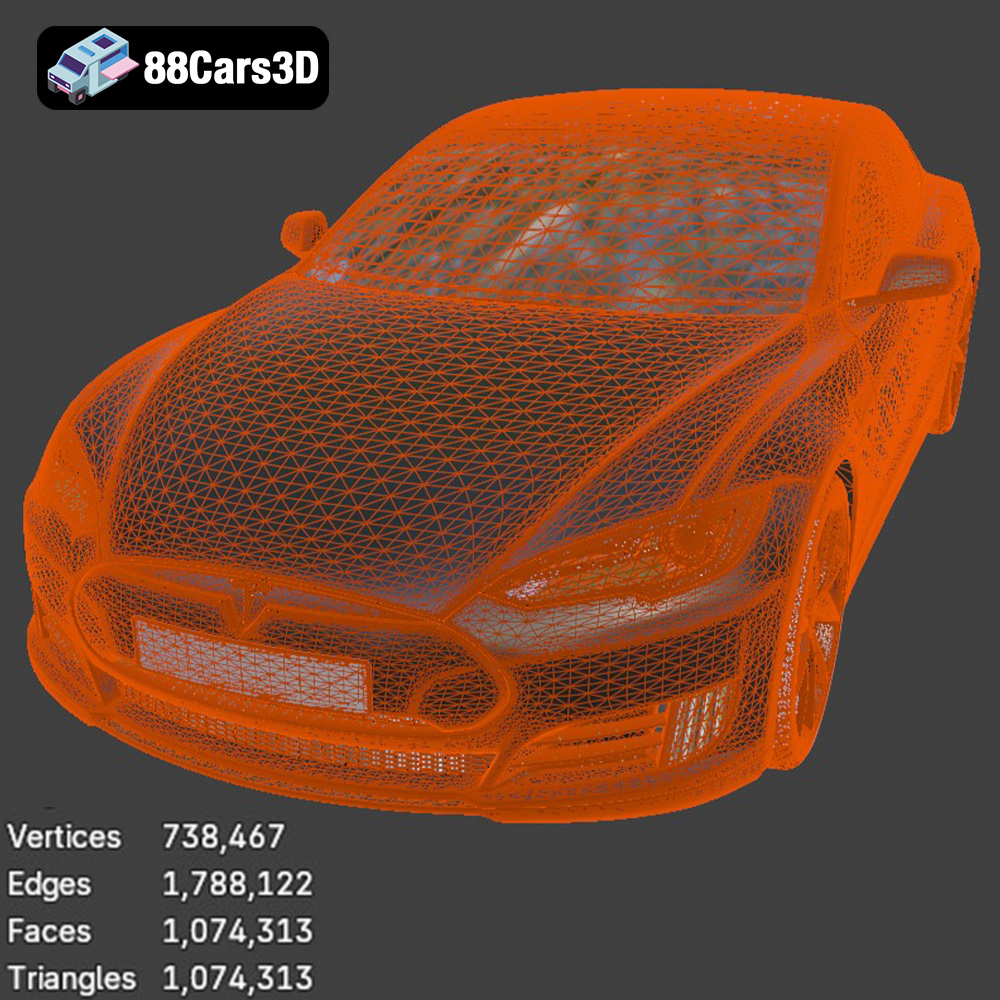
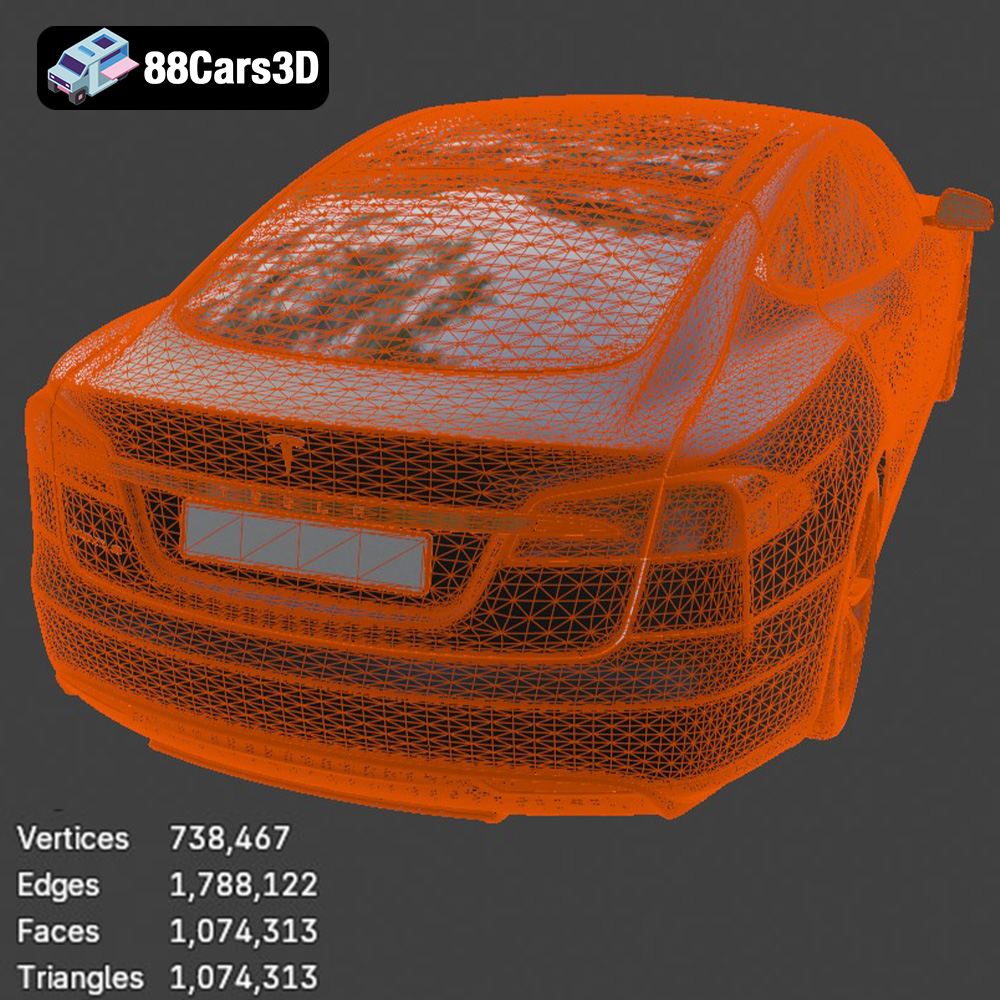
One of the most significant advantages of this model is its optimized topology. With 1,074,313 triangles, it strikes a perfect balance between high visual fidelity for close-up renders and efficient performance for real-time engines like Unreal and Unity. This “Game-Ready” optimization means developers don’t have to spend valuable time reducing polycounts or cleaning up meshes, a common pain point with less professionally crafted assets. The model also boasts real-world scale accuracy, based on actual vehicle chassis dimensions, ensuring it fits seamlessly into architectural visualizations or other scene compositions without scale mismatches. Crucially, proper pivot setups are included for steering, wheel rotation, and suspension travel, enabling straightforward animation and dynamic vehicle physics within game engines.
A high-quality 3D car model like the Tesla S-08 is more than just a static object; it’s a dynamic asset designed to integrate smoothly into various professional pipelines. Its versatility across different software and applications significantly streamlines the creative process and enhances final output quality.
For studios specializing in automotive rendering, advertising, or architectural visualization, the Tesla S-08 3D Model (available in .max and .blend formats) offers an immediate advantage. In 3ds Max, artists can leverage its robust rendering engines like V-Ray or Corona to produce photorealistic images and animations. The clean topology and well-defined materials allow for easy setup of studio lighting, reflections, and environmental effects, creating stunning marketing visuals. Imagine a sleek Tesla S-08 gracefully parked outside a modern minimalist home in an architectural viz, or showcased with dramatic flair in a commercial spot. Similarly, Blender users benefit from the native .blend file, enabling direct manipulation of materials, quick scene assembly, and rendering with Cycles or Eevee. This flexibility allows designers to experiment with various paint finishes, material textures, and lighting scenarios, delivering bespoke visualizations for brand campaigns or lifestyle scenes.
The “Game-Ready” optimization of the Tesla S-08 3D Model, with its balanced polycount and proper pivot setups, makes it an ideal asset for game developers. The .fbx and .unreal formats are tailored for direct import into Unreal Engine and Unity, respectively. In a racing simulator, the animatable wheels and suspension can be linked directly to vehicle physics systems, providing realistic feedback and visual accuracy. For open-world games, the optimized geometry ensures that the vehicle can be instanced multiple times without crippling performance. The detailed interior also supports first-person camera views, crucial for immersive gameplay or virtual tours.
Beyond traditional rendering and gaming, the Tesla S-08 3D Model excels in emerging fields. For AR/VR applications, the .glb format is perfectly suited for immersive virtual showrooms or mobile AR experiences, allowing users to interact with the vehicle in a real-world environment or a completely digital space. The model’s clean topology and real-world scale ensure an accurate and engaging presence. Furthermore, for hobbyists and educators, the .stl format opens the door to 3D printing. With recommended settings for scale and print orientation, users can produce tangible display models of this iconic EV, bridging the gap between the digital and physical realms.
The true value of a premium 3D car model lies not just in its aesthetic appeal but in its underlying technical quality and optimization. The Tesla S-08 3D Model exemplifies how robust technical foundations translate directly into superior performance and visual fidelity across diverse applications.
The stated 1,074,313 triangles represent a carefully calculated polycount, striking a “perfect balance” crucial for modern 3D pipelines. For high-end cinematic renders, this level of detail allows for smooth, subdivision-ready surfaces and intricate feature representation without needing excessive subdivision. For real-time applications, it’s optimized to display stunning detail even at close range, while remaining manageable for game engines. This balance is a hallmark of professional assets, ensuring that artists aren’t bogged down with overly dense geometry or forced to compromise on visual quality due to low polygon counts. A clean mesh structure, free from N-gons, non-manifold geometry, or overlapping faces, ensures predictable deformation, clean UV mapping, and error-free export to various formats.
Accuracy is king in 3D production. The Tesla S-08 3D Model adheres to real-world scale, a critical detail often overlooked in lesser assets. This ensures seamless integration into scenes without manual scaling adjustments, which can be time-consuming and lead to inconsistencies in larger projects, such as architectural visualizations or vehicle configurators where exact dimensions matter. Furthermore, the inclusion of “proper pivot setup for steering, wheel rotation, and suspension travel” is a major technical advantage. Correct pivot points are fundamental for animators and game developers, allowing for realistic vehicle dynamics and reducing setup time dramatically. Without accurate pivots, animating a car’s movement, steering, or suspension would require extensive manual correction, severely impacting workflow efficiency.
The extensive list of included file formats (.blend, .fbx, .obj, .glb, .stl, .ply, .unreal, .max) speaks volumes about the model’s compatibility and future-proofing. This multi-format availability ensures that the asset can be utilized across virtually any major 3D software platform or real-time rendering engine. Whether a studio uses Blender for personal projects, 3ds Max for large-scale productions, or Unreal Engine for game development, the Tesla S-08 3D Model is ready to integrate. This broad compatibility protects investment, as the asset remains usable even as software trends or project requirements evolve. It means you can start a project in one software and migrate to another if needed, with the core asset remaining intact.
Beyond its inherent quality, the Tesla S-08 3D Model offers significant avenues for creative customization, enabling artists and developers to tailor the asset to their specific project needs, extending its utility and lifespan.
The foundational quality of the model provides an excellent canvas for customization. Artists can easily “change body/tank colors” to match specific brand palettes, experiment with “authentic factory colors with metallic finishes,” or even apply custom finishes like matte, gloss, or iridescent effects. This flexibility extends to “modify tire textures” for different scenarios, such as swapping between sleek street tires for a luxury render and more rugged variants for a conceptual off-road scene. The ability to “adjust material finishes” broadly allows for a vast array of aesthetic permutations, ensuring the Tesla S-08 can seamlessly fit into diverse visual narratives, from gritty cyberpunk scenes to ultra-clean contemporary advertisements. Imagine a custom matte black Tesla S-08 dominating a night-time urban render, or a vibrant metallic blue version captivating viewers in a futuristic showroom.
A 3D car model never exists in a vacuum; its effectiveness is heavily influenced by its environment. The Tesla S-08’s design, with its clean surfaces and realistic light assemblies, responds beautifully to varied lighting conditions. The ability to “adapt lighting for different environments” allows artists to immerse the model in anything from a bright, sunny outdoor scene to a dramatic, low-key indoor studio setting. This can profoundly alter the mood and perceived realism of the vehicle. For instance, a soft, diffused lighting setup can highlight its elegant curves for a luxury ad, while sharp, directional lights can emphasize its aggressive, futuristic lines for a game cinematic.
The combination of meticulous detail, technical optimization, and broad file format support positions the Tesla S-08 3D Model as a truly future-proof asset. It’s not just a model for a single project but a versatile tool that can be re-purposed and adapted across numerous future endeavors. For creative professionals and studios, investing in such a high-quality, customizable 3D car model from marketplaces like 88cars3d.com significantly reduces production time and costs associated with creating assets from scratch, allowing more focus on creative direction and scene assembly. This long-term value makes it an indispensable component for anyone serious about top-tier 3D visualization, game development, and interactive experiences.
The world of 3D content creation thrives on precision, efficiency, and stunning visuals. From the intricate details of automotive design to the demanding requirements of real-time game engines and immersive AR/VR experiences, the quality of a 3D car model is foundational to success. As we’ve explored, understanding the nuances of different file formats, embracing optimized geometry, and leveraging the power of professional-grade assets can dramatically elevate any project.
The Tesla S-08 3D Model stands as a prime example of what a high-fidelity asset can offer. Its meticulous recreation of an iconic electric vehicle, coupled with a perfectly balanced polycount, real-world scale, accurate pivots, and a comprehensive suite of file formats, ensures it’s ready for any challenge. Whether you’re aiming for breathtaking renders in 3ds Max or Blender, seamless integration into Unreal Engine or Unity for cutting-edge game development, or even creating tangible replicas via 3D printing, this model provides an unparalleled starting point.
By choosing expertly crafted 3D car models like the Tesla S-08 from reputable sources such as 88cars3d.com, artists and developers gain a significant advantage. They save invaluable time and resources, allowing them to focus on the creative aspects of their work, knowing that the underlying asset is technically sound and visually superior. In an industry where efficiency and quality are paramount, investing in such a versatile and optimized asset is not just a choice, but a strategic move towards delivering exceptional results.
Experience the cutting-edge design of the Tesla S-08, a true pioneer in the electric vehicle revolution. This high-fidelity 3D model captures the sleek, aerodynamic curves and futuristic styling that define modern luxury EVs. From its signature seamless front fascia to the flush door handles and elegant sweeping roofline, every visual element has been meticulously recreated. The absence of a traditional combustion engine is visually represented by its clean undercarriage and enclosed grille design. Boasting a detailed topology of 1,074,313 triangles, this model offers premium visual fidelity suitable for close-up renders while maintaining an organized mesh structure. It provides an exceptional foundation for advanced visualization, high-end game development, and immersive interactive applications.
$37.50
.blend
.ev
.fbx
.glb
.max
.obj
.ply
.rendering
.sedan
.stl
.tesla
.unreal
car-3d-model
electric-car
game asset
game-ready
luxury car
optimized
s-08
VR/AR