Get 20% OFF All Premium 3D & STL Models!

In the dynamic realm of 3D visualization, from breathtaking architectural renderings to immersive game environments and cutting-edge AR/VR training simulations, the quality of your 3D assets can make or break a project. Achieving realism and optimal performance demands not just artistic talent, but also a deep understanding of technical specifications, file formats, and integration workflows. While sleek sports cars and everyday vehicles often capture the spotlight, the robust world of heavy machinery plays an equally critical role in many industrial, construction, and simulation projects.
Imagine constructing a bustling virtual city, designing a detailed industrial training module, or developing a realistic farming simulator. These ambitious projects rely on meticulously crafted assets that not only look authentic but also perform flawlessly across various platforms. This is where specialized 3D models truly shine. Today, we’re diving deep into the technical intricacies and versatile applications of such an asset, exemplified by the Skid Steer Loader 3D Model available on 88cars3d.com. This workhorse of a machine is a perfect case study for understanding how a highly optimized, detailed 3D model can empower creators across multiple industries.
Before diving into specific applications, it’s crucial to grasp the diverse array of 3D model file formats and their individual strengths. Each format is designed with particular use cases, software compatibility, and data compression in mind. Understanding which format to use and why is fundamental for seamless integration into your chosen workflow, whether you’re working on automotive rendering, game assets, or intricate AR/VR experiences.
Each of these formats serves a distinct purpose, and choosing the right one is key to efficient and successful 3D project execution. The Skid Steer Loader 3D Model from 88cars3d.com thoughtfully includes a comprehensive suite of these formats, ensuring maximum compatibility and utility across diverse professional workflows.
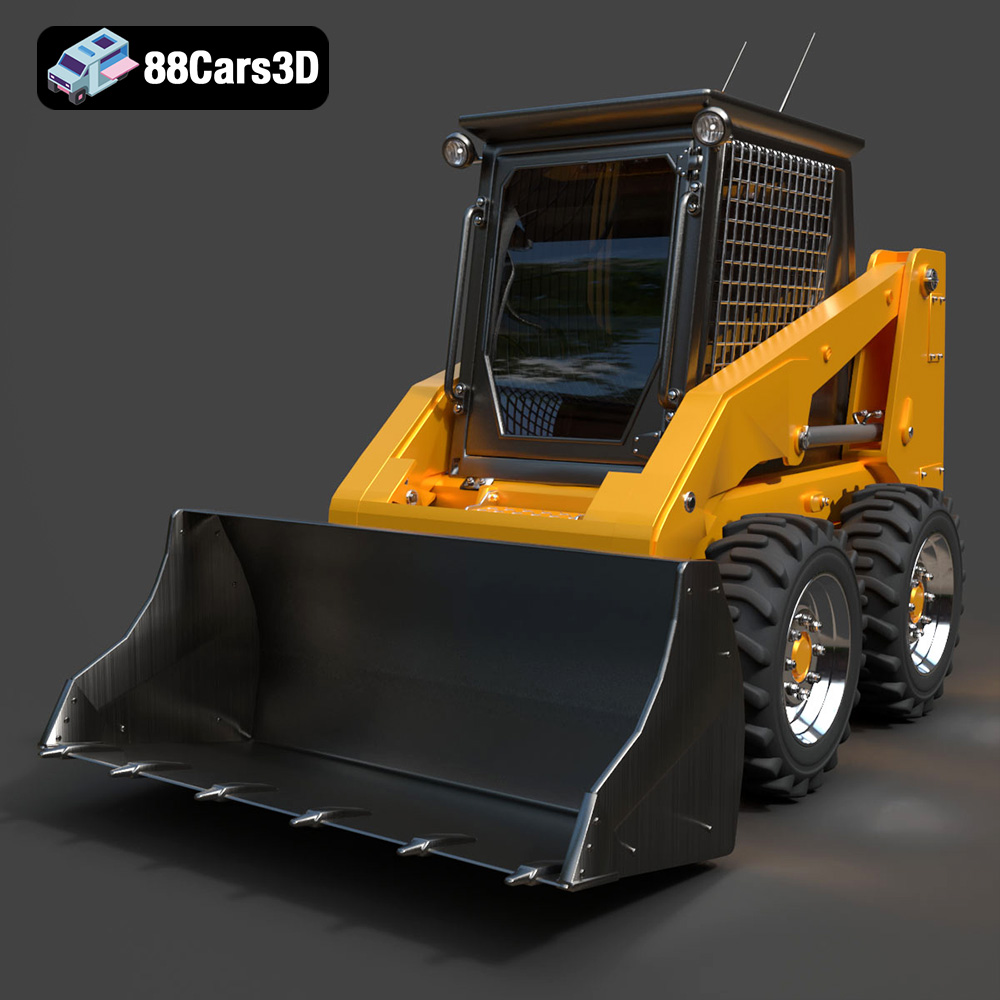
The Skid Steer Loader, a symbol of industrial efficiency and rugged utility, is brought to life in this detailed 3D model with an impressive balance of aesthetic accuracy and technical optimization. This model is far more than just a visual representation; it’s an engineering marvel designed for performance across various digital platforms.
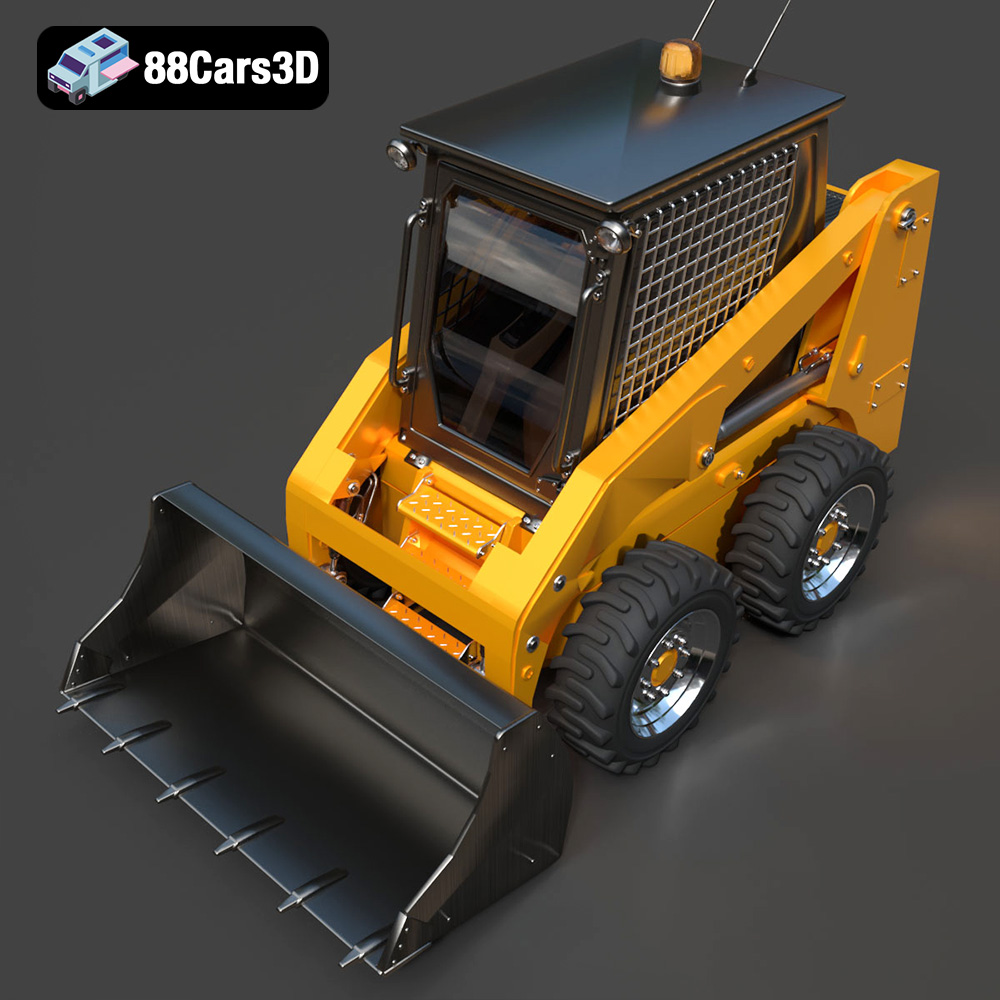
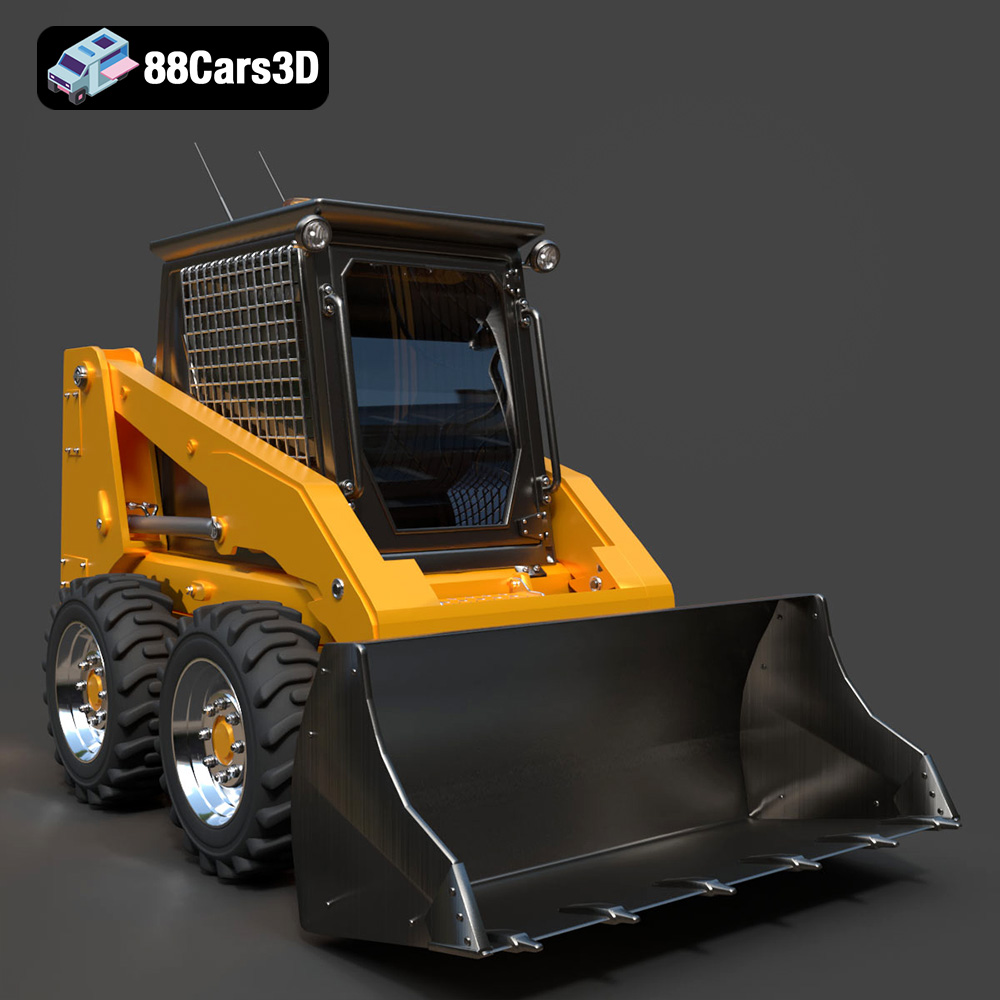
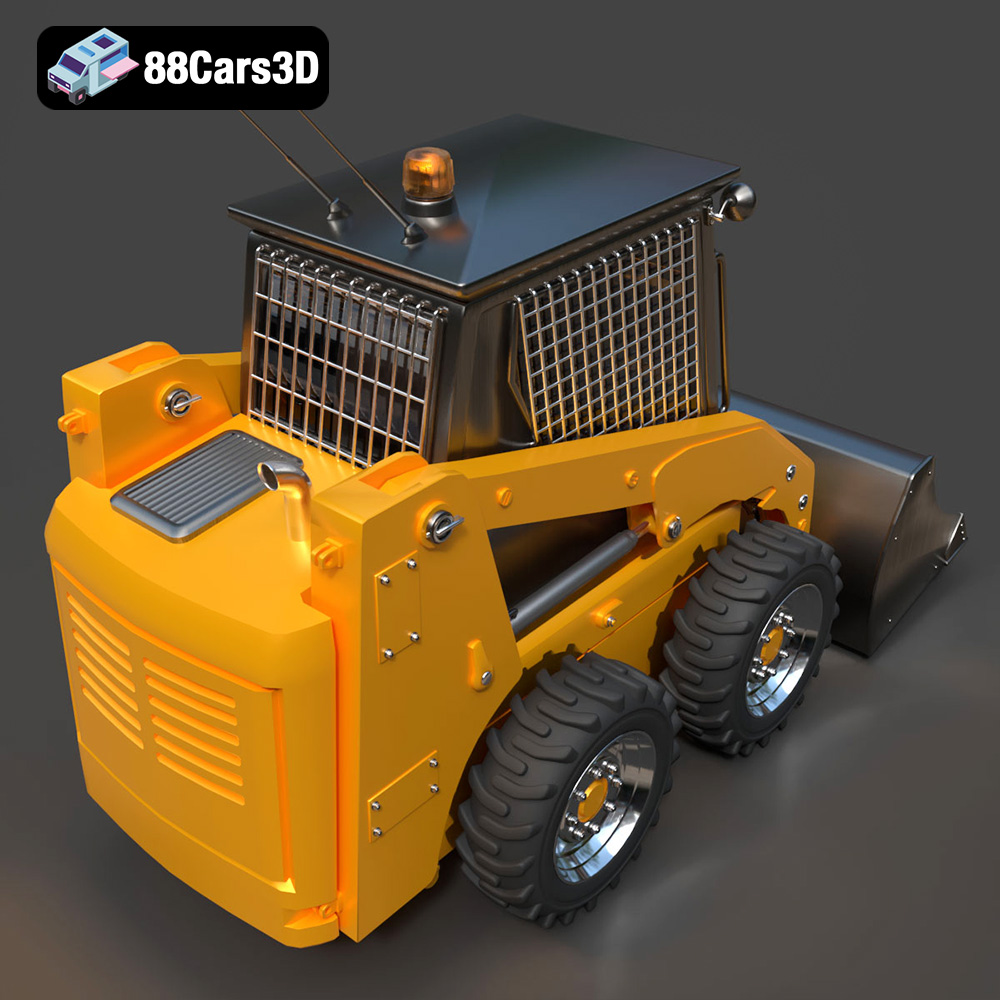
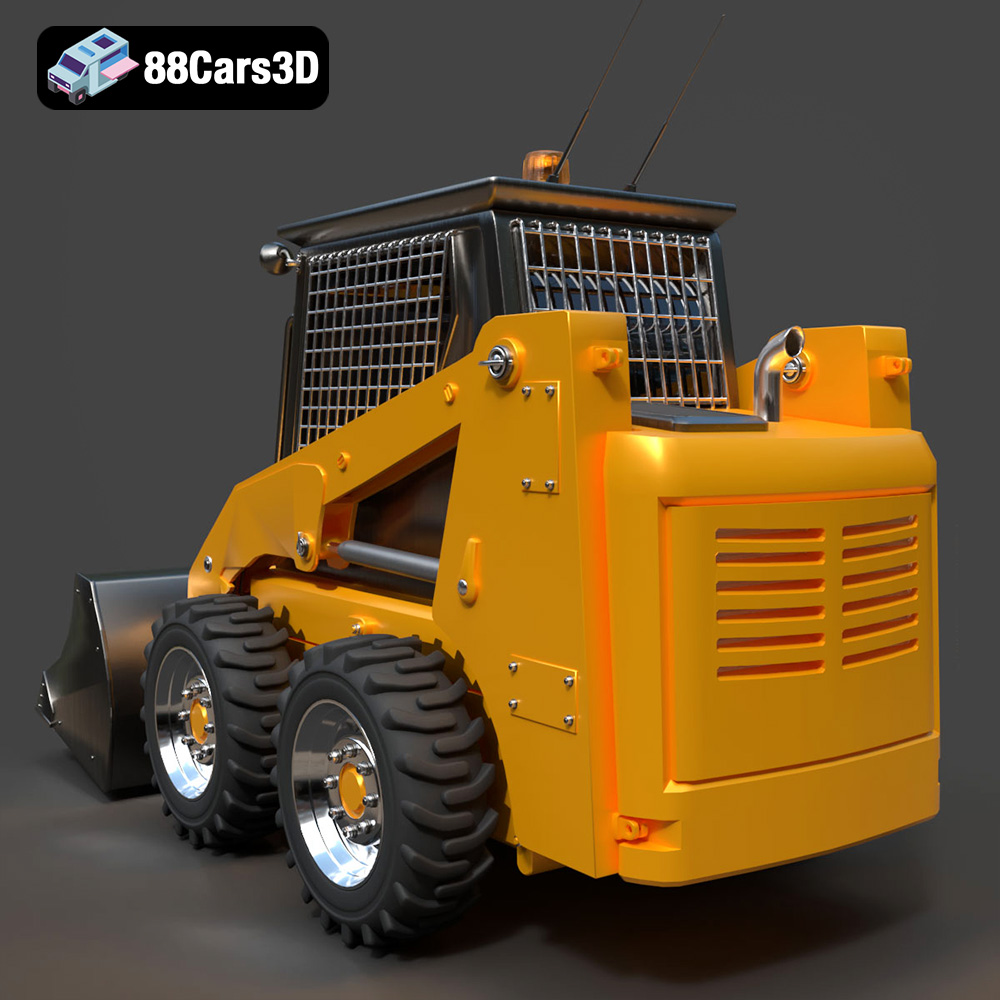
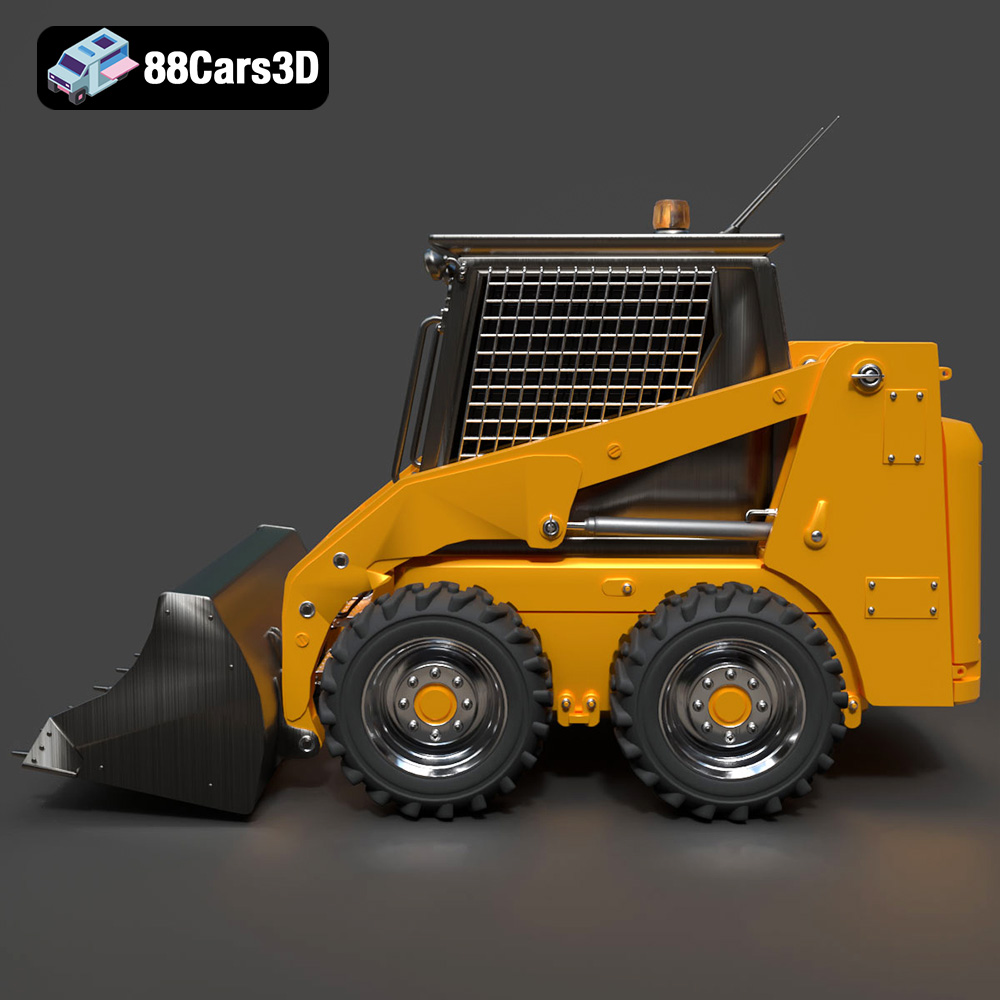
From the first glance, the model exudes authenticity. Its robust industrial proportions mirror real-world heavy machinery, ensuring that it feels grounded and credible in any scene. Key exterior details include an accurately modeled engine compartment ventilation and exhaust stack, adding to the realism. The hydraulic lift arms, cylinders, and pivot points are not merely static elements but are designed with functionality in mind, prepared for animation to simulate real-world operations like lifting and tilting. Functional work lighting, including front headlights and rear safety lights, are integral, ready to illuminate construction sites or dark environments. The heavy-duty off-road tires feature deep, mud-clearing treads, a critical detail for projects aiming for true-to-life ground interaction. Finally, the reinforced front bucket attachment is robust and precisely modeled, showcasing its formidable purpose.
One of the model’s significant technical advantages lies in its modularity. Crucial components such as the wheels, lift arms, bucket, and hydraulic elements are all separated. This segmentation is paramount for animators and game developers, allowing for independent movement and realistic interaction, transforming a static model into a dynamic asset.
The attention to detail extends beyond the exterior to the operator’s cockpit. This model features a detailed operator seat complete with a safety restraint system, enhancing realism for first-person perspectives in heavy machinery simulators or VR training. Accurate dual-joystick steering and control levers are present, mimicking the actual controls of a Skid Steer Loader. An industrial instrument cluster and monitoring displays provide visual feedback, crucial for immersive simulation experiences. The protective Roll-Over Protective Structure (ROPS) cage is accurately modeled, emphasizing safety and structural integrity. All interior geometry is optimized, making it perfect for first-person point-of-view applications without excessive polycount impact.
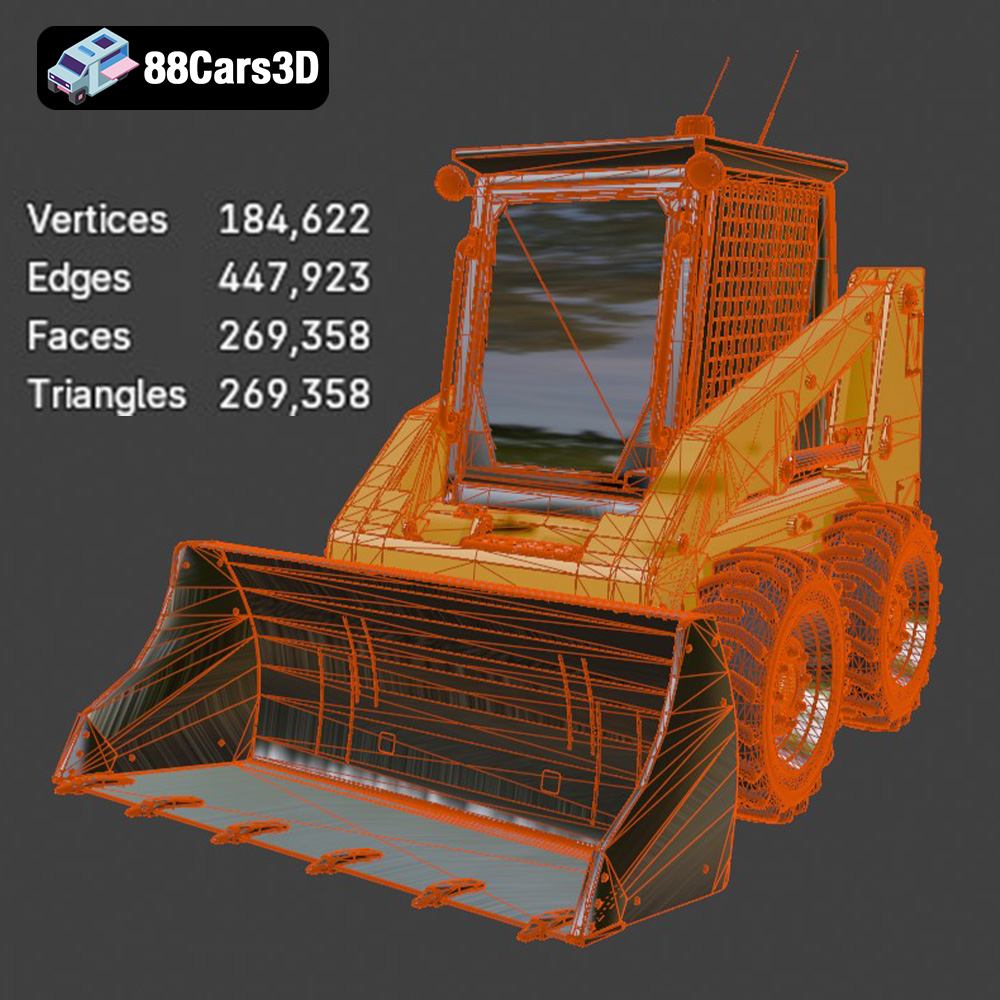
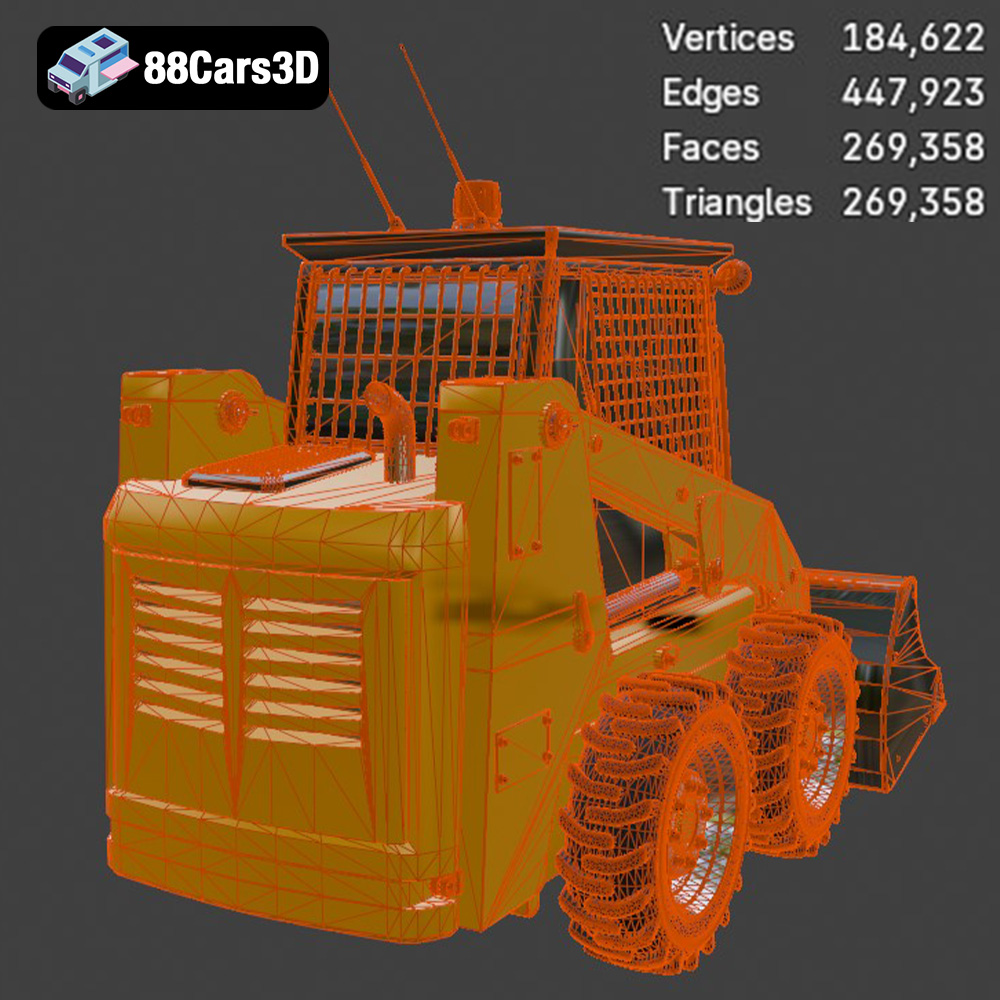
The Skid Steer Loader 3D Model boasts a triangle count of 269,358. This figure represents a crucial balance: high enough to convey exceptional visual fidelity and intricate details, yet optimized enough to ensure smooth integration and performance in real-time engines like Unreal and Unity. It maintains real-world scale accuracy, based on actual heavy machinery chassis, ensuring that it fits seamlessly into environments designed with realistic proportions. Furthermore, the proper pivot setup for steering, wheel rotation, arm lifting, and bucket tilting is pre-configured, drastically reducing setup time for animators and riggers. This thoughtful engineering makes the model truly game-ready and compatible with major 3D software platforms and rendering engines right out of the box.
The versatility of a well-crafted 3D model like the Skid Steer Loader allows it to serve as a cornerstone asset across a multitude of professional applications. Its optimized nature ensures it’s not just a beautiful render but a functional tool for various industries.
For game developers, performance is paramount. With a polycount of 269,358 triangles, this Skid Steer Loader model strikes an ideal balance for real-time engines. It’s truly “game-ready,” meaning it’s optimized for efficient rendering without compromising visual detail. Developers working on construction simulators, farming games, or industrial environment titles will find this asset invaluable. Its included .fbx and .unreal formats are specifically tailored for engines like Unreal Engine and Unity, providing a smooth import process. The pre-configured pivot points for animatable parts (wheels, arms, bucket) drastically cut down on development time, allowing teams to focus on gameplay and interaction rather than asset preparation. Imagine a player realistically operating the loader, lifting debris, or moving materials in a fully interactive virtual world—this model provides the foundation for such immersive experiences.
The rise of Augmented Reality (AR) and Virtual Reality (VR) has opened new frontiers for industrial training and safety simulations. The Skid Steer Loader model is perfectly suited for these applications. Its realistic proportions and detailed interior allow for highly immersive operator training modules, where trainees can learn to operate complex machinery in a safe, virtual environment. The .glb format is particularly beneficial here, offering a lightweight, single-file solution optimized for AR/VR platforms and web-based viewers. This makes it ideal for virtual showrooms where potential buyers can inspect the machinery in 3D, or for creating engaging safety walkthroughs where hazards can be visualized without real-world risk.
Architects, urban planners, and industrial designers frequently need to visualize projects that involve heavy machinery. Whether it’s showcasing a new construction site, planning logistics, or creating marketing materials for equipment manufacturers, a high-quality 3D model like this Skid Steer Loader elevates the realism of any rendering. Professionals using software like 3ds Max (via the .max file) or Blender (via the .blend file) can seamlessly integrate this model into their scenes. Its detailed exterior and functional components contribute to compelling visual narratives, accurately depicting how the machinery would look and operate within a real-world context. For static renders or animated sequences, the model provides the necessary fidelity to impress clients and convey complex ideas effectively.
Beyond digital realms, the Skid Steer Loader model also offers exciting possibilities for tangible creation through 3D printing. Having an .stl file included means hobbyists, educators, and model enthusiasts can bring this digital asset into the physical world.
To achieve the best results when 3D printing, careful attention to settings is crucial. The model is recommended for scales such as 1:24, 1:35, or 1:50, allowing for display-scale heavy machinery models. For optimal detail retention, particularly for intricate parts like the roll cage and hydraulic arms, resin printing is highly recommended over FDM (Fused Deposition Modeling). Resin printers can achieve much finer layer heights (0.04–0.12 mm) and capture subtle geometries that FDM printers might struggle with.
For FDM printing, ensuring adequate wall thickness (1.2–2.0 mm) is important for structural integrity. An infill of 20-30% is generally sufficient. Supports will be required for overhangs and detailed parts, especially for the protective roll cage, hydraulic arms, and the small joysticks in the cockpit. The recommended print orientation involves printing the main frame flat on the build plate, while wheels and the bucket should be printed separately to optimize quality and minimize support structures.
Once printed, post-processing can elevate your physical model to a professional standard. This often involves sanding to smooth layer lines or support marks, followed by a primer coat to prepare the surface for painting. For an authentic industrial look, consider painting the model in classic industrial yellow or orange, and then applying weathering effects such as dust, mud splatters, or subtle rust to simulate real-world wear and tear. This hands-on process brings a unique dimension to owning a high-fidelity 3D model, transforming it from a digital file into a tangible collector’s item or diorama piece.
The inherent design of a professional 3D model like the Skid Steer Loader allows for extensive customization, empowering artists and developers to tailor the asset to specific project requirements and artistic visions. This flexibility is a hallmark of truly valuable 3D assets.
One of the most immediate customization options is altering body colors. While standard industrial yellow is iconic, projects might call for a construction orange, a corporate white, or even a custom livery to match a specific brand or client. Similarly, modifying tire textures can dramatically change the perceived environment and usage history of the vehicle. Switching between muddy, dusty, or brand-new textures can instantly place the loader in a construction site, a dry desert, or a pristine showroom. Material finishes can also be adjusted, moving from a clean matte or gloss finish to heavy weathering and rust, telling a story of hard work and time.
Furthermore, adapting lighting is crucial for conveying different moods and environments. The included functional work lights can be manipulated for day or night construction scenarios, casting realistic shadows and highlights that enhance atmosphere and immersion. These customization options, readily achievable within popular 3D software like Blender or 3ds Max, ensure that the Skid Steer Loader can seamlessly integrate into a wide array of visual styles and project contexts, maximizing its utility and longevity as an asset. Whether your project demands pristine realism or a gritty, worn aesthetic, this model provides the foundation for limitless creative expression.
In the rapidly evolving landscape of 3D content creation, the demand for high-quality, versatile, and technically robust 3D models has never been greater. From game development to architectural visualization, and from cutting-edge AR/VR training to tangible 3D prints, professional-grade assets are the foundation upon which truly immersive and impactful digital experiences are built. The Skid Steer Loader 3D Model exemplifies this principle, offering a meticulously crafted and optimized asset that meets the stringent demands of various industries.
Its detailed exterior and interior features, coupled with its game-ready optimization and comprehensive suite of file formats, ensure it’s a valuable addition to any professional’s toolkit. By understanding the nuances of file formats, leveraging its optimized geometry, and exploring its customization potential, creators can significantly enhance the realism and efficiency of their projects. For those seeking to elevate their digital creations with outstanding 3D car models and heavy machinery assets, exploring the extensive collection at 88cars3d.com is a step towards achieving unparalleled visual excellence and technical prowess.
Explore the rugged versatility of this Skid Steer Loader, a highly accurate 3D model representing the workhorse of modern construction, landscaping, and agriculture. Known for its compact frame, tight turning radius, and formidable lifting power, this model captures the heavy-duty aesthetics perfectly, from its robust lifting arms and reinforced front bucket to its protective roll cage and hydraulic cylinders. This 3D model features a well-optimized topology with a triangle count of 269,358, providing an exceptional balance between high-end visual fidelity and real-time engine performance. Designed to be game-ready, the model ensures smooth integration into various platforms, making it an outstanding asset for game development, AR/VR industrial training applications, and realistic architectural visualizations. Perfect for construction site simulations, industrial animations, heavy machinery games, and VR operator training modules.
$27.99
.blend
.fbx
.glb
.max
.obj
.ply
.rendering
.stl
.unreal
construction-equipment
game asset
game-ready
heavy-machinery
loader
low-poly
optimized
skid-steer-loader
vehicle-3d-model
VR/AR