Get 20% OFF All Premium 3D & STL Models!

In the demanding world of 3D visualization, game development, and immersive experiences, the quality of your foundational assets can make or break a project. Whether you’re crafting a sprawling open-world game, simulating complex industrial operations, or producing photorealistic architectural renderings, the need for detailed, optimized, and versatile 3D models is paramount. Generic placeholders simply won’t suffice when precision and realism are key. This is particularly true for specialized machinery, where every hydraulic line, tread pattern, and structural component contributes to authenticity.
Today, we delve deep into the technical intricacies and vast applications of high-quality industrial 3D models, exemplified by a magnificent asset available on 88cars3d.com: the Backhoe Loader 3D Model. This isn’t just any model; it’s a meticulously crafted digital replica designed to meet the rigorous demands of professional environments, from detailed rendering to real-time simulations. We’ll explore how such an asset integrates into diverse workflows, its technical specifications, and why understanding the various file formats is crucial for maximizing its utility.
The journey of a 3D model from creation to integration across various platforms often involves navigating a complex landscape of file formats. Each format serves a specific purpose, offering unique advantages in terms of compatibility, data preservation, and optimization for particular applications. Selecting the right format is critical for an efficient workflow and successful project outcomes.
The `.blend` file format is the native format for Blender, a powerful open-source 3D creation suite. When you download a `.blend` file, you’re getting a fully editable Blender scene. This includes not just the mesh geometry, but also materials, textures, lighting setups, camera positions, animation data, modifiers, and even scene properties. For users deeply integrated into the Blender ecosystem, this offers maximum flexibility for customization, rigging, animation, and rendering directly within their preferred environment. It’s the go-to for artists who need full control over every aspect of the model.
Autodesk’s `.fbx` (Filmbox) format has become an industry standard for exchanging 3D data between various software applications. Its strength lies in its ability to store a wide range of 3D data, including geometry, materials, textures, animations, skinning, and camera/light information, while maintaining scene hierarchy. This makes `.fbx` ideal for game development pipelines, particularly with engines like Unreal Engine and Unity, where reliable data transfer and animation support are paramount. Its robust nature ensures that complex animated rigs, like those on the Backhoe Loader, transfer with minimal issues.
The `.obj` (Wavefront OBJ) format is one of the oldest and most widely supported formats for 3D geometry. It’s a universal standard, compatible with virtually every 3D modeling and rendering application. `.obj` files primarily store geometry (vertices, normals, texture coordinates, and faces) and can reference external `.mtl` (material template library) files for basic material definitions. While it doesn’t support animation or rigging, its simplicity and widespread compatibility make it excellent for static mesh exchange and archival, ensuring cross-software consistency.
The `.glb` (GL Transmission Format Binary) is the binary version of the `glTF` format, designed for efficient transmission and loading of 3D scenes and models by applications. It’s particularly optimized for AR (Augmented Reality), VR (Virtual Reality), and browser-based display, making it a cornerstone for emerging immersive technologies. `.glb` files package all necessary assets (geometry, materials, textures, animations) into a single file, minimizing HTTP requests and speeding up load times, which is crucial for interactive web experiences or mobile AR applications.
For those looking to bring their digital models into the physical world, the `.stl` (Stereolithography) format is indispensable. It represents a 3D object as a series of connected triangles, forming the surface geometry without any color or texture information. This simplified representation is universally understood by 3D printers and slicing software, making it the de facto standard for additive manufacturing. For hobbyists or professionals wanting to 3D print the Backhoe Loader, an `.stl` export is essential, though careful consideration of scale and supports is necessary for complex parts.
The `.ply` (Polygon File Format, or Stanford Triangle Format) is primarily used for storing 3D data from 3D scanners, CAD software, and other applications that require precise geometric representation. Like `.obj`, it stores vertex and face data, but it also allows for storing additional properties like color, transparency, and normal vectors per vertex or face. This makes `.ply` a robust format for scientific visualization, point cloud data, and when maintaining a high level of fidelity for geometric analysis or intricate fabrication is critical.
While not a traditional file extension in the same vein as `.fbx` or `.obj`, an “unreal” specific asset often implies a pre-packaged asset bundle optimized and ready for direct import and use within Unreal Engine. This could be a `.uasset` file or an `.fbx` specifically prepared with Unreal Engine’s naming conventions, material setup, and collision meshes in mind. These assets aim to streamline integration, offering engine-specific materials, collision hulls, and sometimes even pre-rigged Blueprints for interactive functionality, significantly reducing setup time for game developers.
The `.max` format is the native file type for Autodesk 3ds Max, a leading software for 3D modeling, animation, and rendering, especially prevalent in architectural visualization and product design. A `.max` file contains the complete scene data, including geometry, materials, textures, lights, cameras, animation, and all modifiers or plugins used. Similar to `.blend` for Blender users, the `.max` file offers unparalleled control and editable access to the original project, making it invaluable for professionals working within the 3ds Max ecosystem for advanced rendering or complex animation tasks.
Creating a truly professional 3D model, especially for complex machinery like a backhoe loader, goes far beyond simply replicating its shape. It involves meticulous attention to detail, structural integrity, and functional accuracy. The Backhoe Loader 3D model available on 88cars3d.com exemplifies this dedication, offering a robust foundation for any serious project.
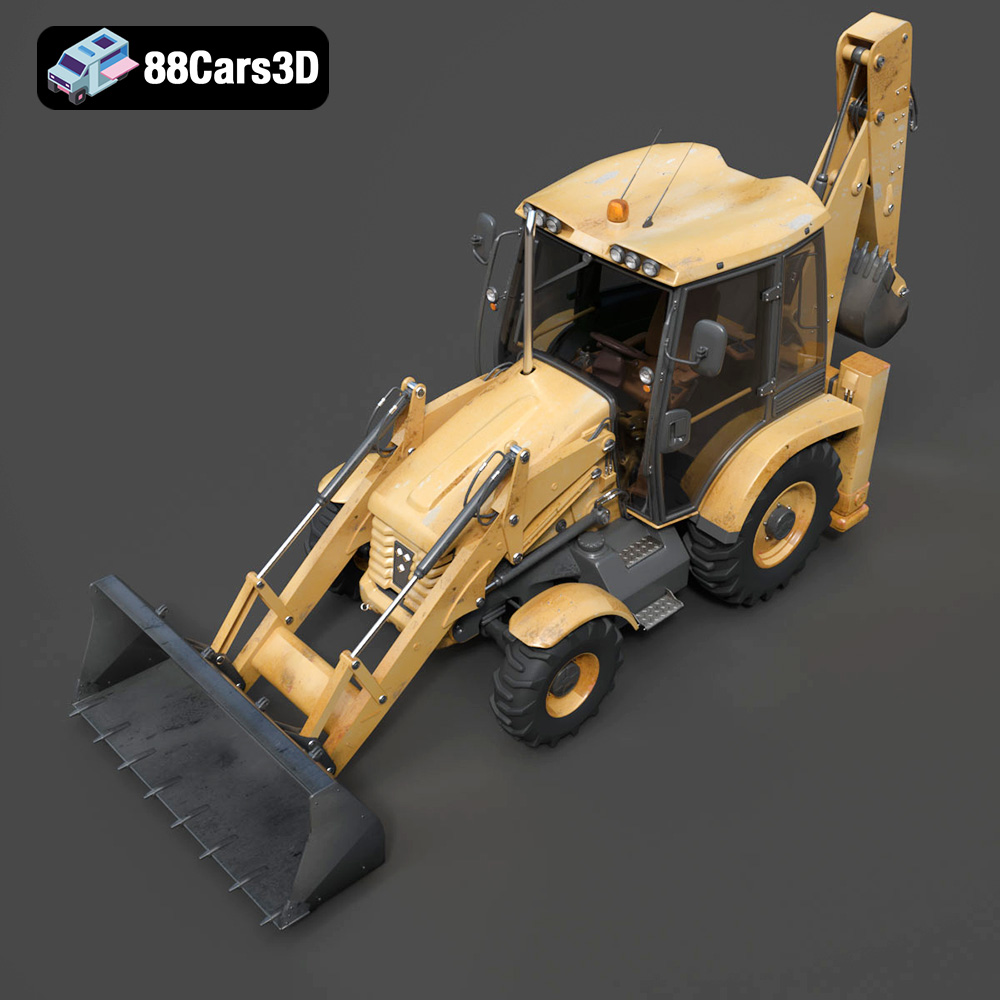
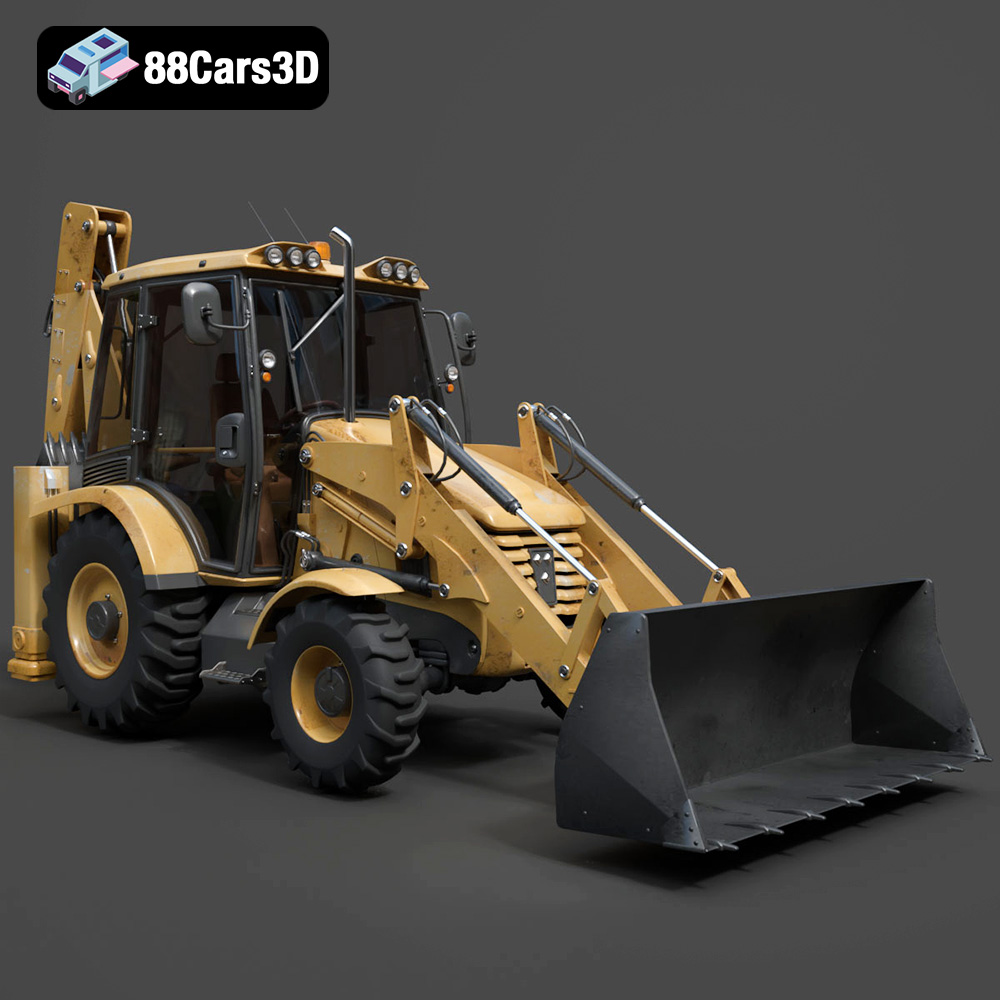
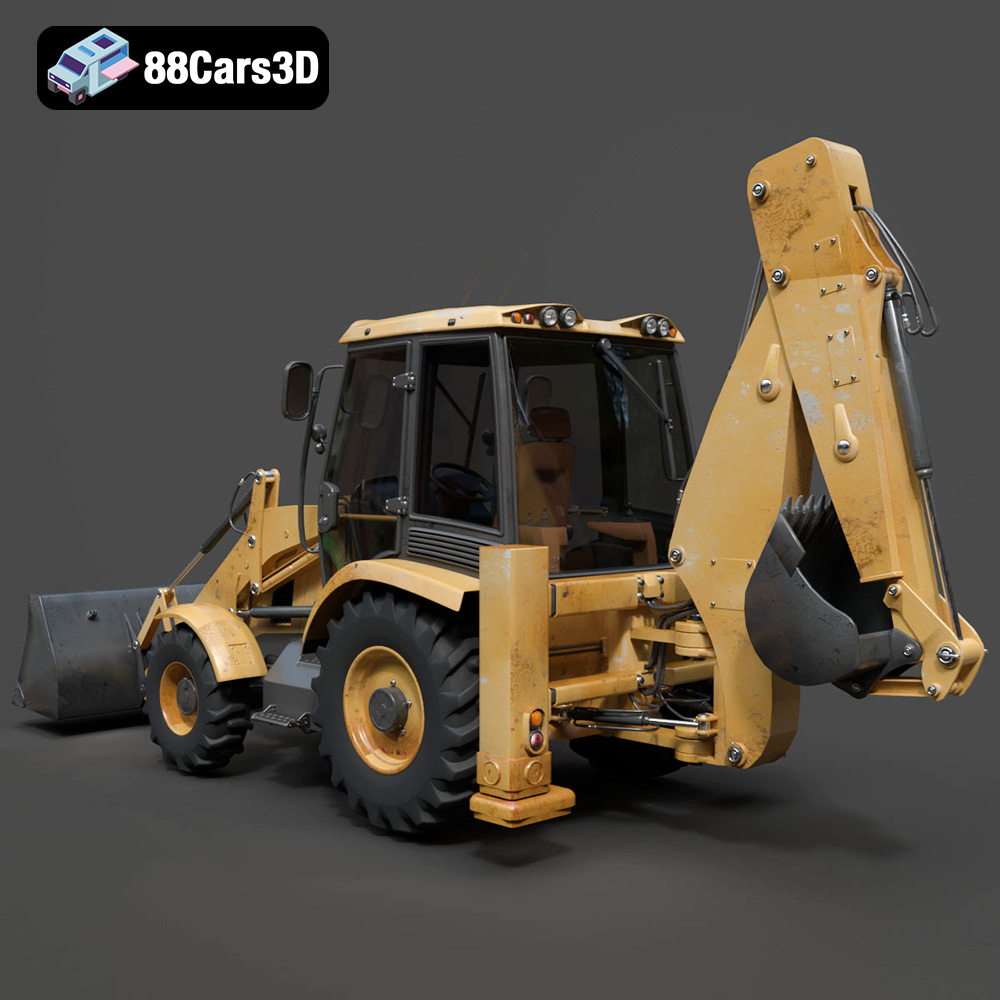
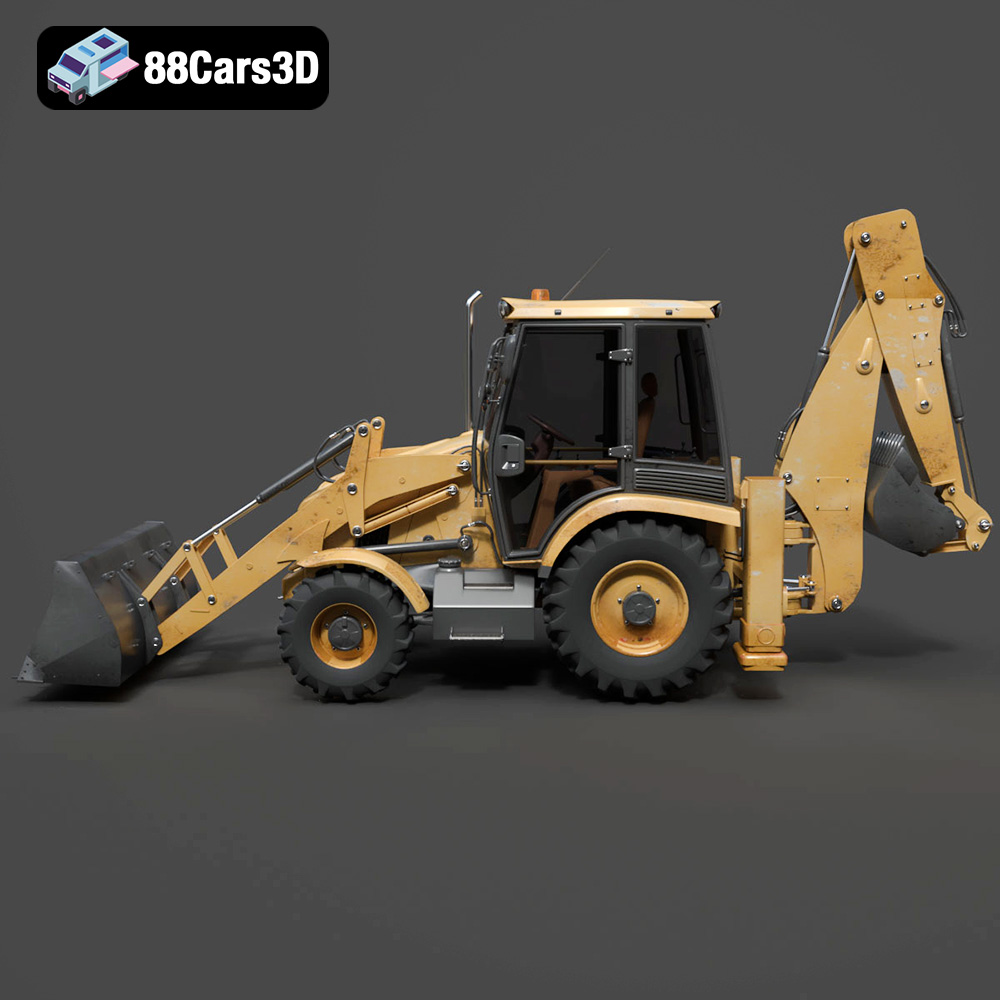
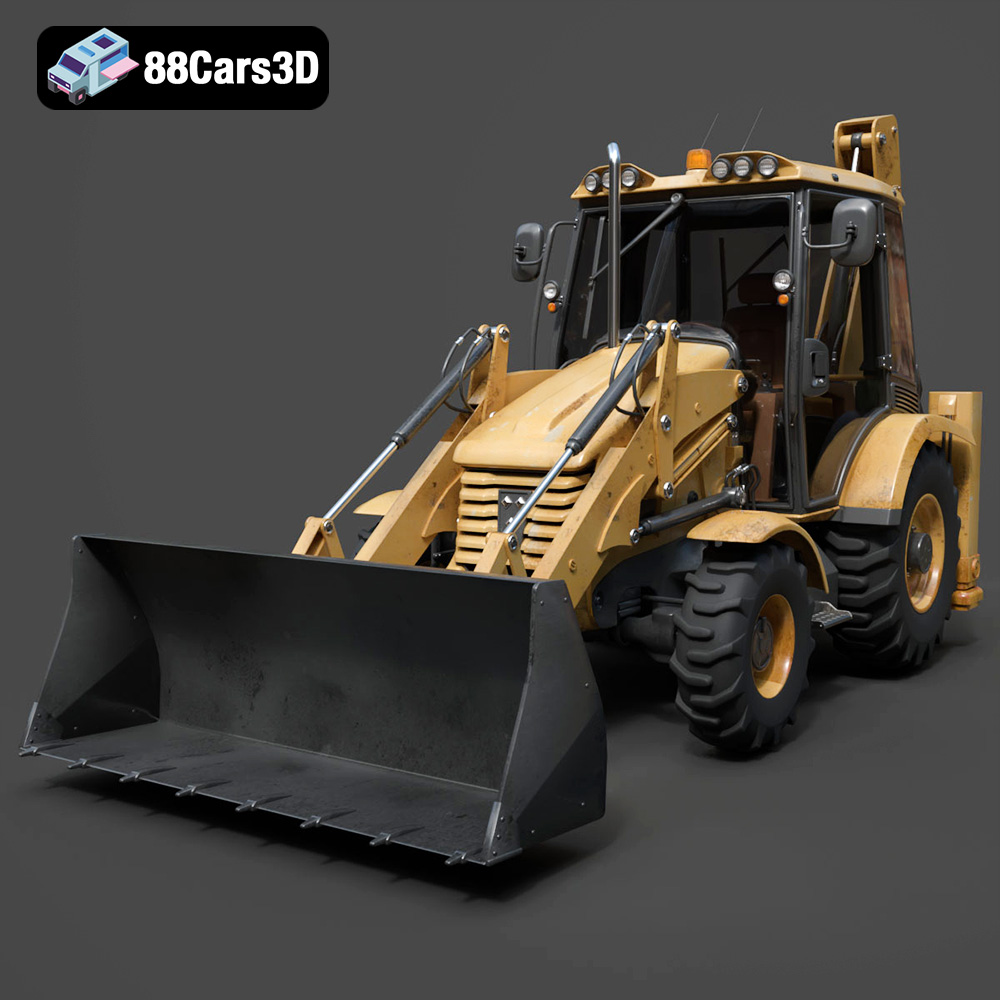
The external features of this Backhoe Loader model are designed to convey authentic industrial realism. From the heavy-duty frame geometry to the authentic vertical exhaust stack and air intake systems, every element is considered. Detailed exposed engine components and accurately routed hydraulic lines are crucial, as these are visible and functional parts of real-world equipment. Realistic industrial lighting, including roof beacons, work lights, and taillights, are not just aesthetic; they are vital for simulating construction environments and conveying operational status. Furthermore, deep-tread heavy equipment tires with rugged wheel hubs and detailed hydraulic cylinders on the front loader, rear boom, dipper, and bucket contribute significantly to the visual credibility and the ability to articulate movements realistically.
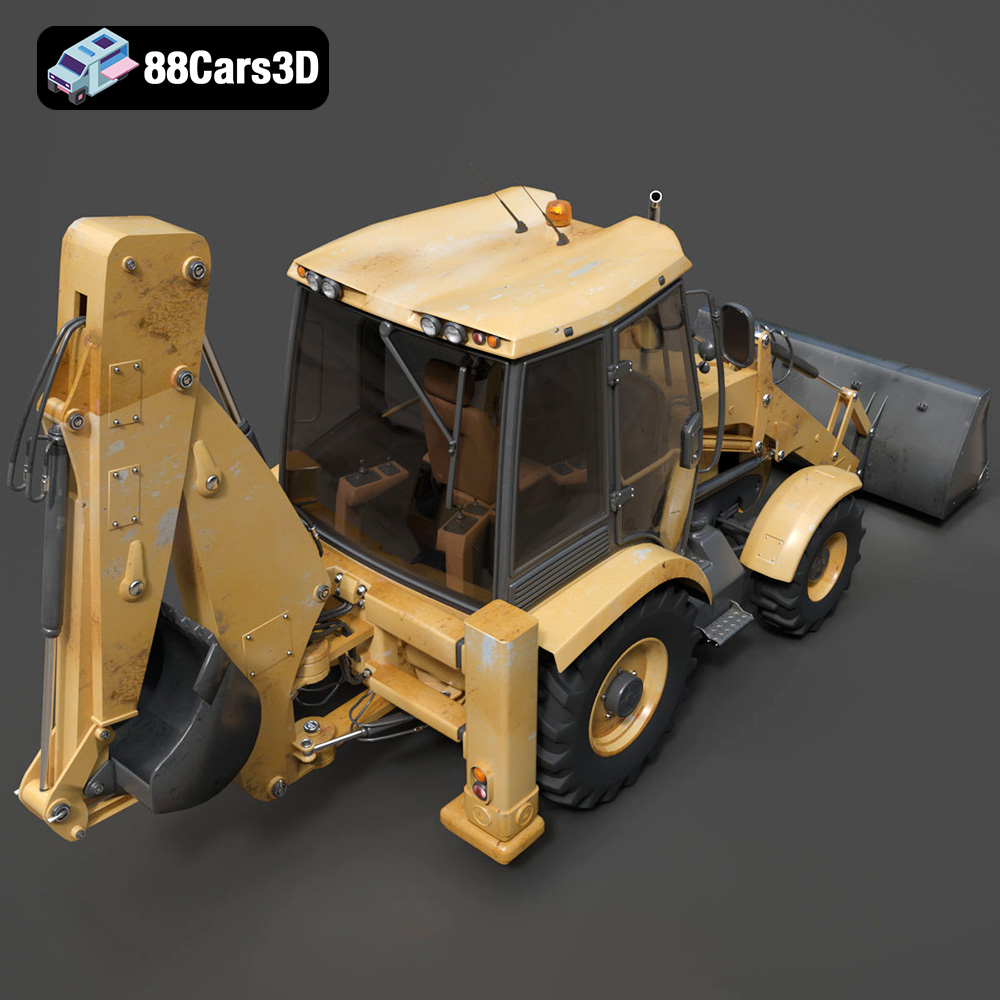
While external views are often the focus, a truly comprehensive model integrates a detailed interior. The operator cabin of this Backhoe Loader 3D model features a structural roll-over protection structure (ROPS), a swivel operator seat for front and rear machine control, and a comprehensive industrial instrument cluster with digital displays. Authentic joystick controls, a steering wheel, levers, and foot pedals are all present, making the model ideal for first-person POV experiences in heavy machinery simulators or detailed walkthroughs. This level of interior detail enhances immersion and realism, expanding the model’s utility beyond static renders to interactive applications like training modules or virtual showrooms.
In today’s interactive and real-time environments, such as game engines or AR/VR applications, raw detail must be balanced with performance. A model can be stunningly intricate, but if it bogs down the frame rate, its utility diminishes. The Backhoe Loader 3D model strikes this critical balance with its intelligent design.
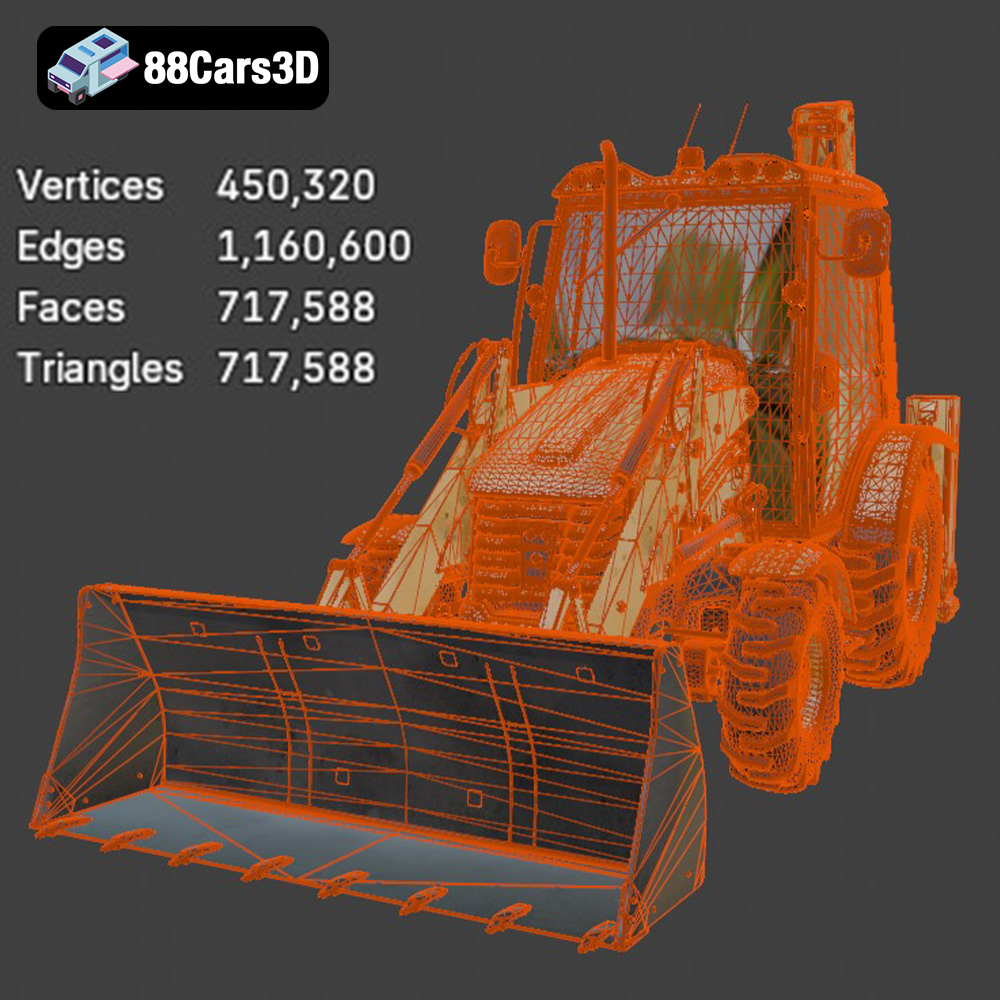
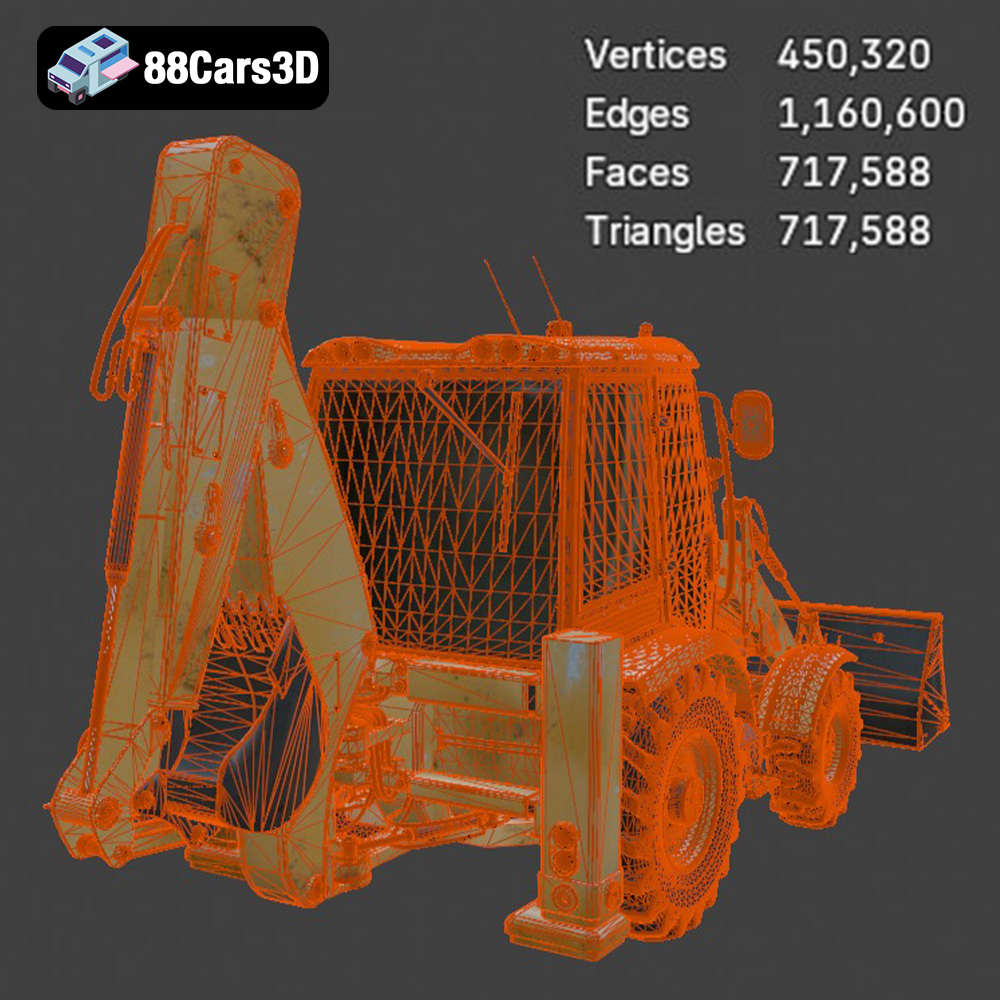
With an impressive 717,588 triangles, this high-fidelity 3D model manages to offer unparalleled visual detail without becoming overly cumbersome for real-time engines. This triangle count is carefully chosen to provide photorealistic visual fidelity that stands up to close-up shots and high-resolution rendering, while still allowing for optimal use in high-end game development (Unreal, Unity), virtual reality (VR), and augmented reality (AR). The meticulous topology ensures realistic reflections and structural accuracy, which are fundamental for both static renders and dynamic interactive scenes.
For any piece of machinery, movement is key. The Backhoe Loader 3D model features proper pivot setup for accurate steering, wheel rotation, bucket tilting, and full backhoe articulation. This pre-configured setup dramatically reduces the time and effort required for rigging and animation. Game developers can integrate the model directly and begin scripting controls for its various moving parts, knowing that the underlying geometry and pivot points are correctly established. This “game-ready” optimization extends its value significantly, enabling seamless animation of complex mechanical movements.
A high-quality 3D asset is a powerful tool, but its true value is realized when effectively integrated into professional workflows. The Backhoe Loader 3D model’s versatility makes it suitable for a wide array of applications across different industries.
For professionals in industrial design, engineering visualization, or architectural rendering, the Backhoe Loader 3D model provides an invaluable resource. Using 3ds Max, designers can import the `.max` file, leveraging its full editability to fine-tune materials, set up intricate lighting scenarios, and render photorealistic images or animations. Imagine a construction project visualization where the backhoe is realistically positioned, casting accurate shadows and interacting with the digital terrain. Similarly, Blender users can take advantage of the `.blend` file to integrate the model seamlessly into their scenes, utilizing Blender’s powerful Cycles or Eevee renderers for stunning visual output. This model is perfect for creating compelling marketing materials, site visualizations, or product configurators, bringing an authentic touch of heavy industry to any visual.
Game developers and AR/VR content creators will find the Backhoe Loader an exceptional game asset. Its optimized geometry and proper pivot setup make it ideal for integration into Unreal Engine or Unity. An `.fbx` or a pre-configured “unreal” asset ensures smooth import and immediate use. In a construction simulator, players could operate the backhoe with realistic controls, digging trenches or loading materials. For VR operator training modules, the detailed cockpit and swivel seat offer an immersive first-person perspective, allowing trainees to familiarize themselves with complex machinery in a safe, virtual environment. Augmented reality applications could project the backhoe onto a real-world construction site, aiding in planning or showcasing equipment in a dynamic, interactive way. The model’s balance of detail and performance makes these demanding real-time applications not just possible, but highly effective.
Beyond screen-based applications, the Backhoe Loader 3D model also extends its utility to the physical realm through 3D printing. With a readily available `.stl` format, hobbyists and scale model collectors can transform this digital asset into a tangible display piece. Printing at recommended scales like 1:35 or 1:50, and utilizing resin printing for fine details, can yield impressive results. Detailed print settings, including layer height, wall thickness, infill, and support requirements, are provided, guiding users through the process. Imagine a beautifully painted and weathered scale model of this industrial workhorse sitting on your desk, a testament to both digital craftsmanship and additive manufacturing. This capability offers a unique bridge between virtual and physical collections, broadening the model’s appeal.
Even with highly detailed models, the ability to customize and adapt them to specific project needs is crucial. The Backhoe Loader 3D model offers numerous avenues for personalization, ensuring it fits perfectly into a diverse range of scenarios.
The model’s design allows for extensive customization of its visual appearance. Artists can easily change industrial paint colors to match specific fleet liveries, from standard construction yellow to white or even custom company colors. Modifying tire textures to include dirt, mud, or realistic wear patterns can dramatically enhance the scene’s authenticity, making the machine appear as if it’s been hard at work on a real job site. Adjusting material finishes—think matte industrial paint, glossy cabs, or metallic hydraulics—adds another layer of realism and visual depth. This flexibility ensures that the backhoe can be tailored to various environments and brand requirements, maintaining its high fidelity while adapting to specific project aesthetics.
Beyond surface aesthetics, the model’s adaptability extends to dynamic environment building. Lighting can be adjusted to simulate day, night, or specific weather conditions, making it suitable for a wide range of operational scenarios. Imagine the backhoe illuminated by its own work lights during a night shift on a construction site, or gleaming under harsh sunlight in a desert environment. These adjustments, coupled with its robust geometry and animation-ready pivots, allow for the creation of compelling and highly specific narratives within games, visualizations, or simulations. The Backhoe Loader 3D model provides a versatile foundation upon which entire industrial scenes and interactive experiences can be built.
The demand for high-quality, technically sound 3D assets continues to grow across industries. For professionals in game development, architectural visualization, AR/VR, or 3D printing, sourcing models that are both detailed and optimized is a significant challenge. The Backhoe Loader 3D model, with its impressive 717,588 triangles, meticulously crafted exterior and interior features, and wide array of included file formats (.blend, .fbx, .obj, .glb, .stl, .ply, .unreal, .max), stands out as an exceptional example of a truly professional-grade asset.
Its “game-ready” optimization, real-world scale accuracy, and proper pivot setup for animation make it incredibly versatile, saving valuable development time and ensuring seamless integration into complex pipelines. From creating stunning photorealistic renders in 3ds Max to building immersive training simulators in Unreal Engine, or even producing a tangible scale model via 3D printing, this model delivers. It represents the pinnacle of digital craftsmanship, offering both aesthetic beauty and practical functionality.
When seeking such high-fidelity 3D car models and other essential vehicles for your next project, look no further than 88cars3d.com. Investing in assets of this caliber ensures not only visual excellence but also the robust technical foundation required to bring your most ambitious creative visions to life.
Experience the rugged utility of the iconic Backhoe Loader, a staple of modern construction and earthmoving equipment. This highly detailed 3D model captures the imposing industrial design of the versatile heavy-duty machine, featuring an articulated front loader bucket, a complex rear backhoe digging arm, sturdy stabilizer legs, and a fully realized heavy equipment chassis. Crafted with an impressive 717,588 triangles, this high-fidelity 3D model offers unparalleled visual detail while remaining structured for optimal use in high-end game development, virtual reality (VR), augmented reality (AR), and professional CGI animation. The topology is meticulously designed to ensure realistic reflections, structural accuracy, and seamless rigging for complex mechanical animations. Perfect for construction site simulations, industrial environments, heavy machinery configurators, and hyper-realistic rendering projects.
$48.99
.blend
.fbx
.glb
.max
.obj
.ply
.rendering
.stl
.tractor
.unreal
backhoe-loader
construction-equipment
game asset
game-ready
heavy-machinery
high poly
industrial-vehicle
optimized
vehicle-3d-model
VR/AR