Get 20% OFF All Premium 3D & STL Models!

In the dynamic worlds of game development, architectural visualization, industrial design, and immersive AR/VR experiences, the demand for highly detailed, performant, and accurate 3D assets has never been greater. Whether you’re crafting a vast open-world game, simulating complex construction scenarios, or developing cutting-edge virtual reality training modules, the quality of your foundational 3D models dictates the success and realism of your final output. Precision, optimization, and versatility are paramount, transforming mere digital objects into integral components of compelling narratives and functional simulations.
This pursuit of digital authenticity is particularly critical when dealing with heavy machinery, where every hydraulic line, every tread pattern, and every control panel contributes to the sense of weight, power, and operational fidelity. It’s in this demanding arena that specialized assets truly shine, offering an unparalleled level of detail that would be time-prohibitive to create from scratch. Today, we delve into one such exceptional asset: the Track Loader 3D Model, available for download at 88cars3d.com. This versatile and meticulously crafted model stands as a testament to what professional-grade 3D assets can bring to a myriad of industrial, entertainment, and educational applications, perfectly encapsulating the rugged functionality of a real-world earthmoving beast within a digital environment.
The digital age has revolutionized how industries visualize, design, and interact with complex machinery and environments. For professionals in fields from civil engineering to video game production, high-quality 3D models are no longer a luxury but a fundamental requirement. They serve as the building blocks for creating believable, interactive, and high-performance digital spaces.
Achieving photorealism or a highly stylized but consistent visual aesthetic demands assets that are not only geometrically sound but also rich in surface detail and material accuracy. When it comes to equipment like a track loader, every bolt, every weld, and every scuff mark contributes to its perceived authenticity. A well-modeled asset provides the necessary polygons and UV mapping to allow for sophisticated texturing and shading, making it indistinguishable from its real-world counterpart when rendered correctly. This level of realism is crucial for immersive experiences, whether it’s a prospective client reviewing a construction site visualization or a trainee learning to operate heavy equipment in VR.
Developing a complex 3D model like a heavy-duty track loader from scratch is an incredibly time-consuming and resource-intensive endeavor. It requires skilled modelers, texture artists, and technical artists working for hundreds of hours. By leveraging pre-existing, high-quality 3D models from marketplaces like 88cars3d.com, studios and individual creators can dramatically accelerate their production pipelines. These assets come optimized, properly scaled, and often with multiple file formats, allowing for immediate integration into various software environments. This efficiency translates directly into reduced development costs, faster project completion times, and the ability to allocate valuable resources to other critical aspects of a project.
Navigating the diverse landscape of 3D software and applications requires a solid understanding of the various file formats used to store and transfer 3D data. Each format has specific strengths, weaknesses, and intended use cases. The Track Loader 3D Model comes with a comprehensive suite of formats, ensuring maximum compatibility and utility across virtually any professional workflow. Understanding these formats is crucial for leveraging the full potential of such a versatile asset.
The .blend format is Blender’s native file type. It’s an all-encompassing format that saves not only the mesh data but also materials, textures, lighting, cameras, animations, rigging, scene settings, and even the user interface layout. For Blender users, this is the most powerful format as it provides full editability and preserves all proprietary Blender features. It’s ideal for those who want to deeply integrate the model into a Blender project, make extensive modifications, re-rig, animate, or render directly within Blender’s Cycles or Eevee engines.
.fbx (Filmbox) is a proprietary file format owned by Autodesk and is one of the most widely adopted interchange formats in the 3D industry. It excels at transferring complex scenes, including mesh geometry, materials, textures, animations, skinning, and camera data, between different 3D software applications (like Maya, 3ds Max, Blender, Cinema 4D) and game engines (Unreal Engine, Unity). Its robust support for animation and hierarchical data makes it the go-to choice for game development, AR/VR, and other real-time pipelines where movement and interaction are key. The Track Loader’s proper pivot setup for boom elevation and bucket tilt is fully preserved in the FBX format, making it animation-ready for game developers.
.obj (Wavefront OBJ) is a universal geometry definition file format that is highly compatible across almost all 3D software. It primarily stores geometric data – vertices, normals, UV coordinates, and faces. While it can reference external material (.mtl) files for basic color and texture information, it does not support animations, rigging, or complex scene data. The .obj format is excellent for transferring static mesh data efficiently when you only need the model’s geometry for rendering or further modeling in a different application. For the Track Loader, it provides a clean, universally readable mesh for foundational work.
.glb is the binary version of the glTF (GL Transmission Format), an open standard for 3D scenes and models developed by the Khronos Group. Designed for efficient transmission and loading of 3D models in web browsers, AR, and VR applications, .glb bundles all model data (geometry, materials, textures, animations) into a single, compact file. Its small file size and optimized structure make it perfect for interactive web viewers, immersive AR/VR experiences, and any scenario where quick loading and real-time performance are critical. The Track Loader’s optimization makes it an excellent candidate for interactive experiences via .glb.
.stl (Stereolithography) is the standard file format for 3D printing. It represents a 3D model as a collection of unconnected triangular facets, without any color, texture, or material information. While simplistic, its ubiquity in the additive manufacturing world makes it indispensable for physical prototyping or hobbyist printing. The Track Loader 3D Model, when converted to .stl, becomes a tangible object, allowing users to physically manifest the digital asset at recommended scales for display or educational purposes, though fine details often require resin printing.
The .ply (Polygon File Format) is another popular format for storing 3D data, particularly useful for models generated from 3D scanning or scientific applications. It can store a variety of properties including color, transparency, normals, texture coordinates, and data confidence values, often on a per-vertex or per-face basis. While less common for general asset exchange than FBX or OBJ, its ability to store detailed attribute data makes it valuable in CAD, reverse engineering, and applications requiring precise geometric analysis. For a highly detailed model like the Track Loader, .ply offers an alternative for specific analytical workflows.
The inclusion of an .unreal file (or specific Unreal Engine assets) indicates a model that is pre-configured and optimized for direct use within Unreal Engine. This often means it comes with proper material setups, collision meshes, LODs (Levels of Detail), and potentially even skeletal meshes or blueprints. For developers working in Unreal, this format dramatically streamlines the import process, ensuring the Track Loader is engine-ready for immediate integration into demanding game or simulation environments without extensive re-configuration. This directly supports the model’s “Game-Ready & Optimized” advantage.
The .max file format is the native scene file for Autodesk 3ds Max. Similar to Blender’s .blend, it contains all the scene data, including geometry, materials, textures, lighting, cameras, animation keyframes, modifiers, and rendering settings. For professionals using 3ds Max for high-end automotive rendering, architectural visualization, or detailed industrial simulations, the .max file offers complete control and editability. It allows users to leverage 3ds Max’s powerful modeling tools, physically based rendering capabilities (with V-Ray or Corona), and extensive animation features to fully customize and integrate the Track Loader model into complex projects.
The Track Loader 3D Model isn’t just a generic representation; it’s a testament to meticulous craftsmanship and a deep understanding of heavy equipment design. Every component, from the smallest bolt to the largest hydraulic cylinder, has been carefully considered to ensure both visual fidelity and functional accuracy.
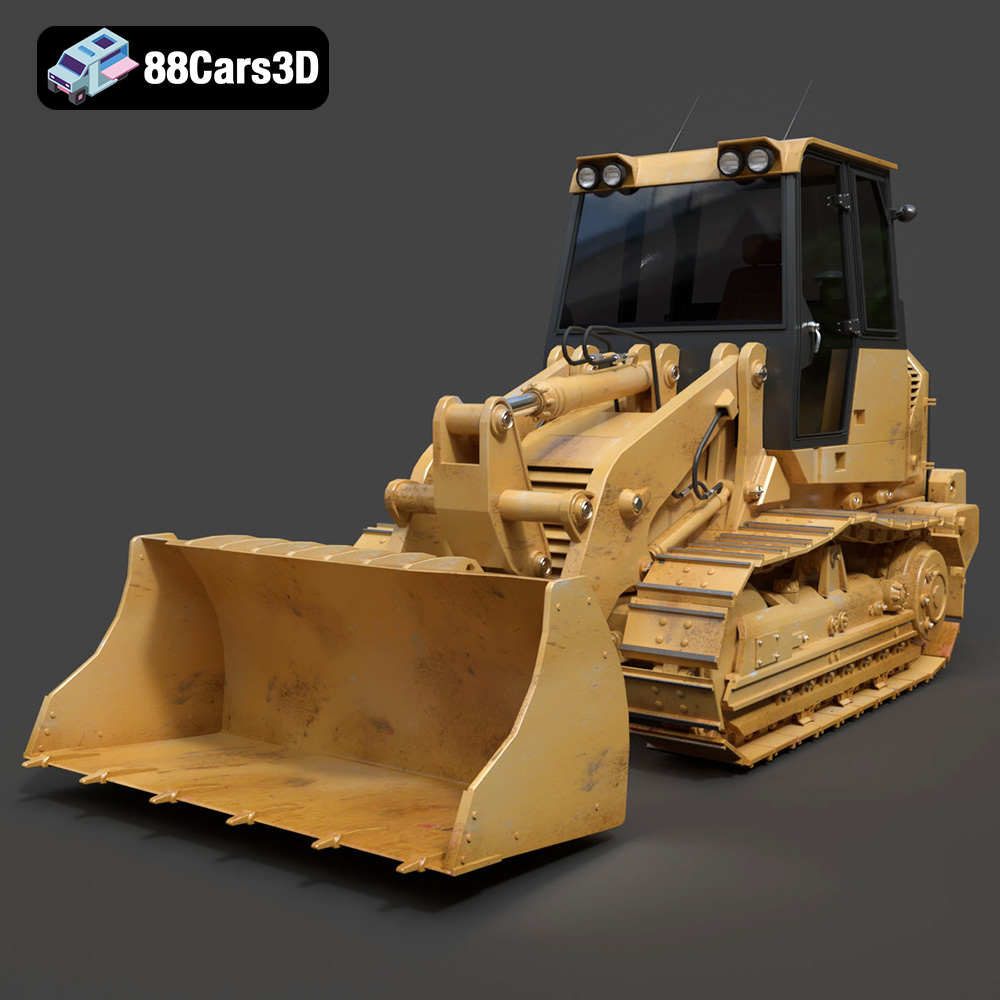
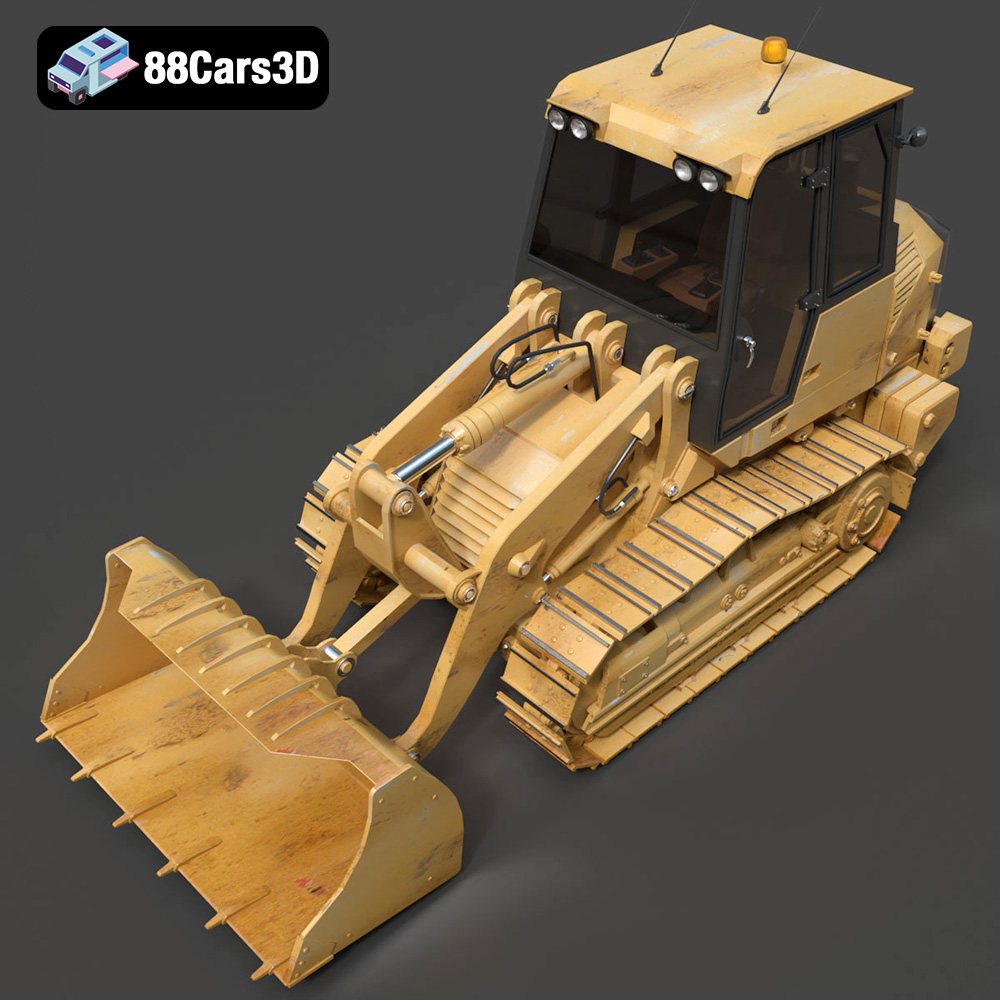
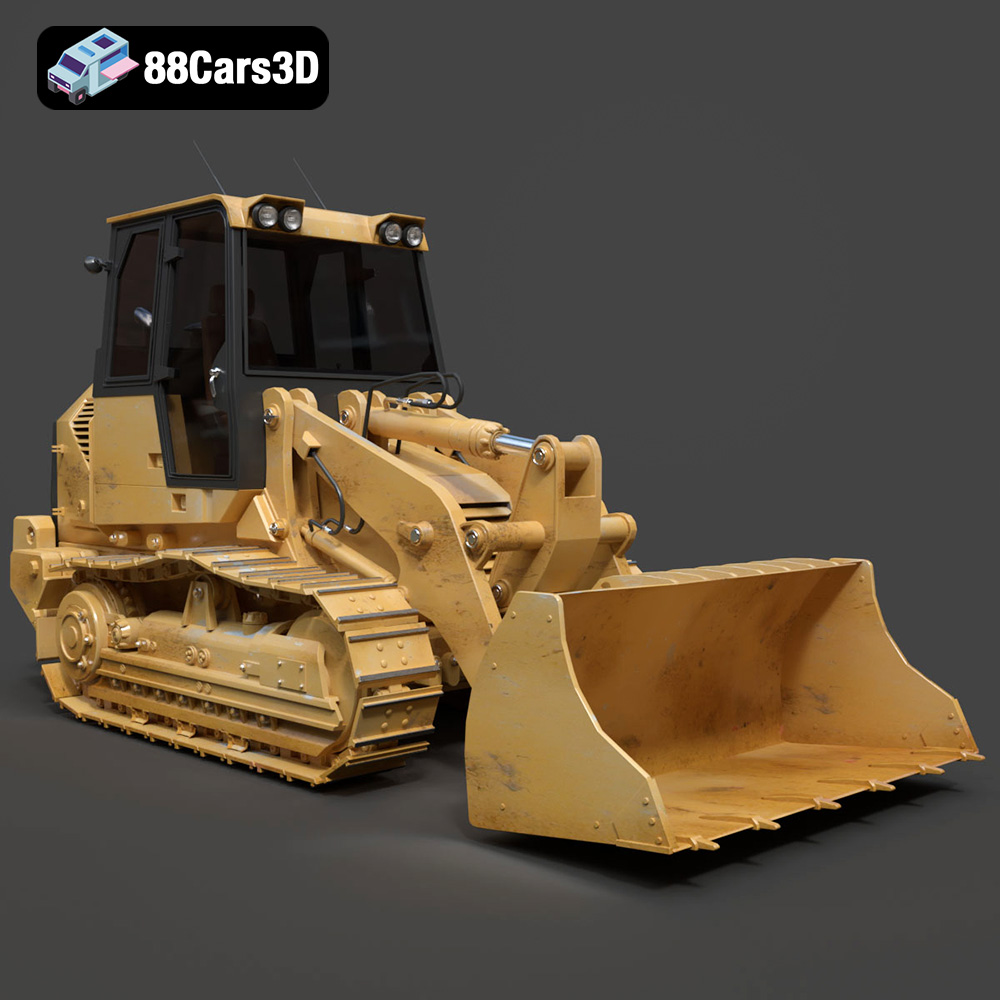
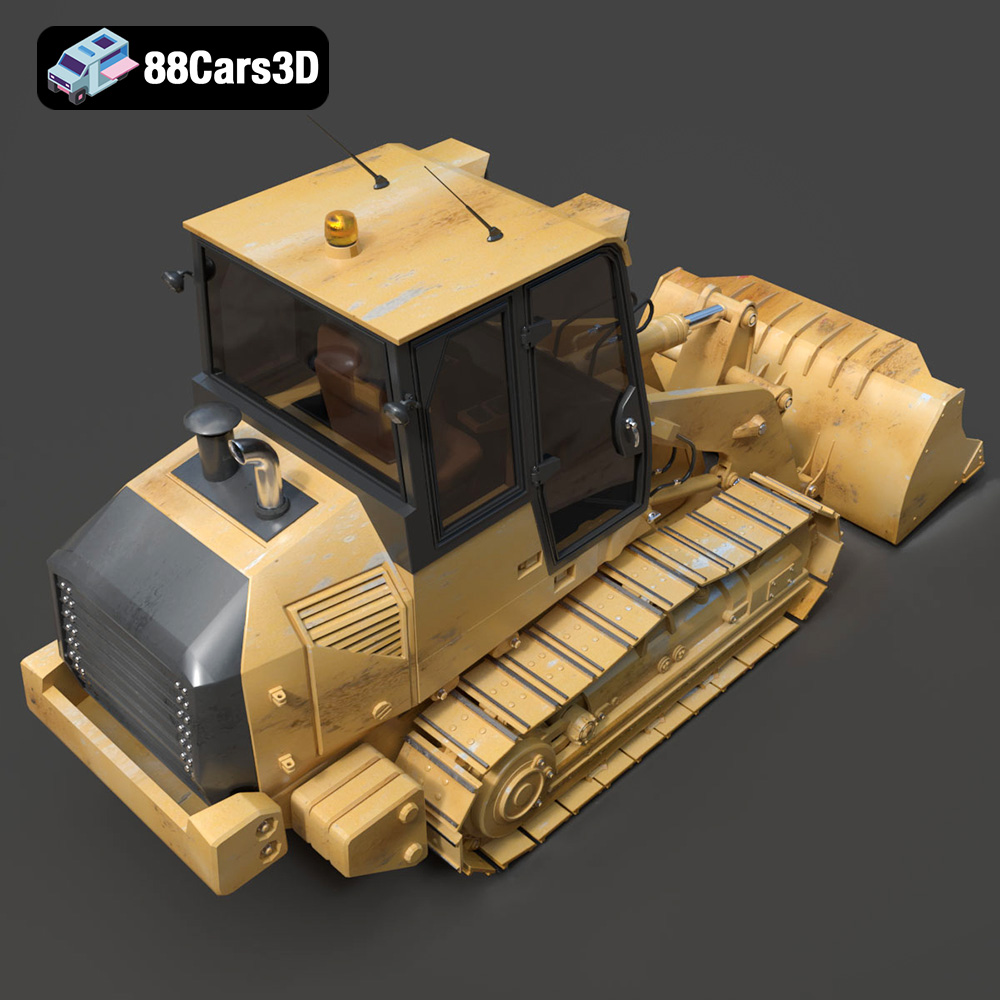
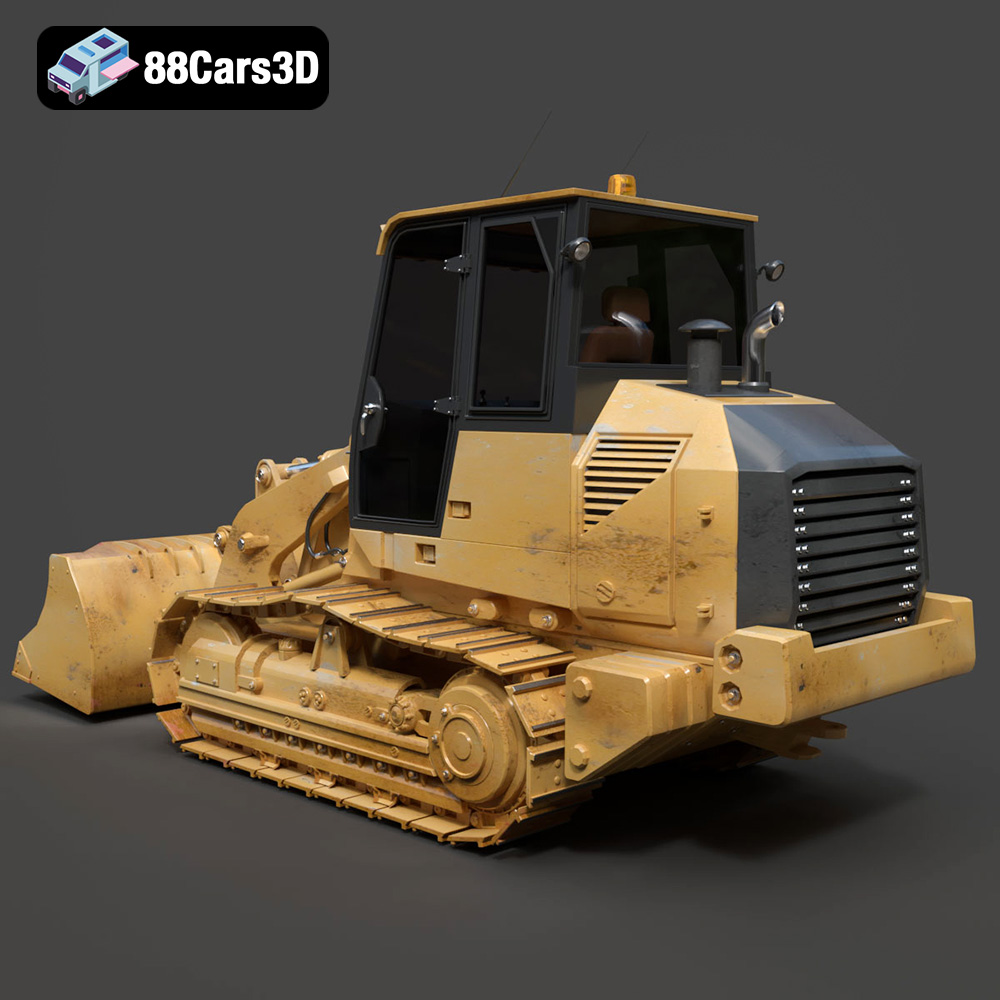
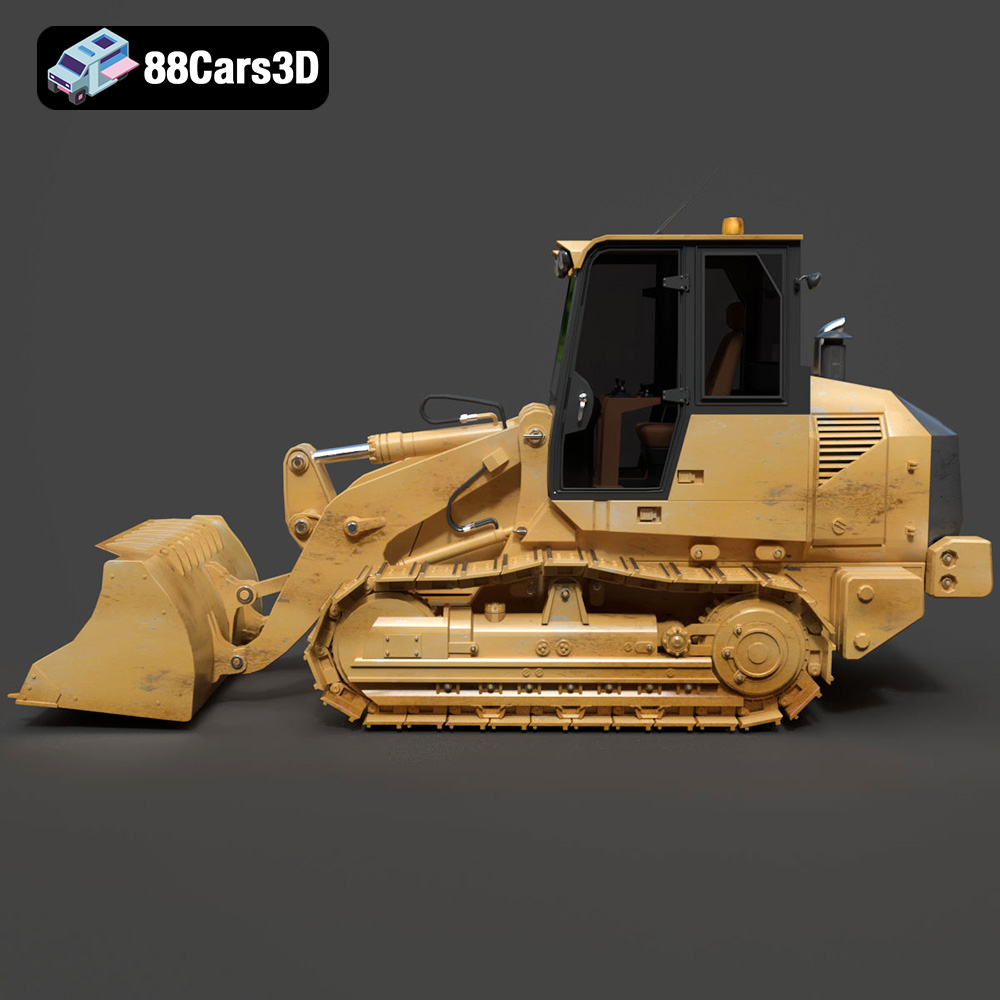
The exterior of this Track Loader model is a showcase of industrial authenticity. It features an accurate heavy-duty frame and counterweight geometry, ensuring the overall silhouette and robust stance are true to life. The detailed diesel engine enclosure, complete with authentic ventilation grilles and an exhaust stack, adds a layer of realism often overlooked in simpler models. Perhaps most impressive is the complex continuous track system, modeled with individual sprockets, idlers, and track rollers. This level of detail isn’t just for show; it’s crucial for realistic animation and physics simulations in games or training applications. The rugged front loader boom arms, articulated with intricate hydraulic lines and piston linkages, are prepped for mechanical animation, promising dynamic and believable operation. The high-capacity front bucket, with its accurately modeled digging teeth and wear edges, further reinforces the model’s utility and realism.
The attention to detail extends seamlessly into the Track Loader’s interior. An industrial operator cab is enclosed within a robust ROPS (Roll-Over Protective Structure), a critical safety feature that is accurately represented. Inside, a detailed pneumatic suspension seat with heavy-duty safety restraints provides a sense of the operator’s environment. The accurate dual joystick control layout for precision boom, bucket, and drive operation is crucial for first-person POV in simulators, allowing for intuitive and realistic interaction. A detailed instrument panel with digital displays, analog gauges, and environmental controls completes the cockpit, making it perfect for immersive safety training modules and realistic game environments. Optimized glass reflections and accurate interior spatial geometry enhance the realism for any virtual operator.
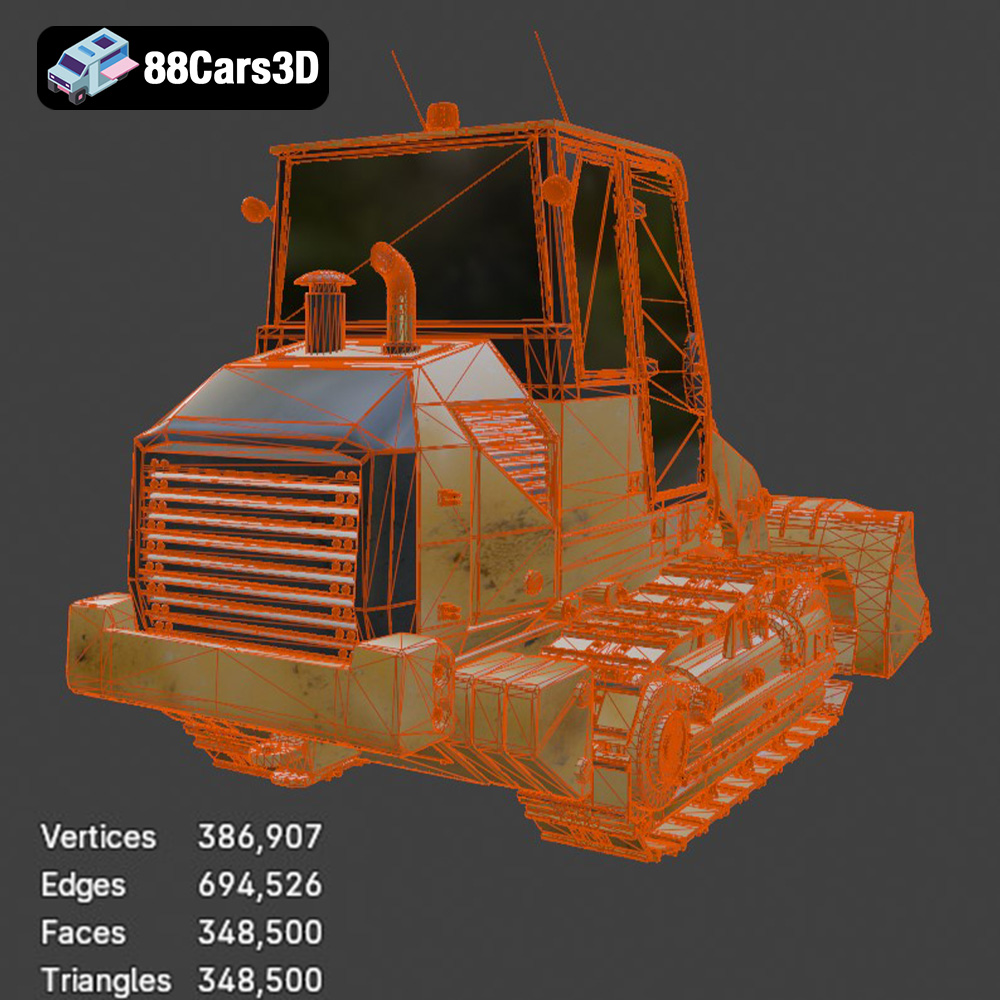
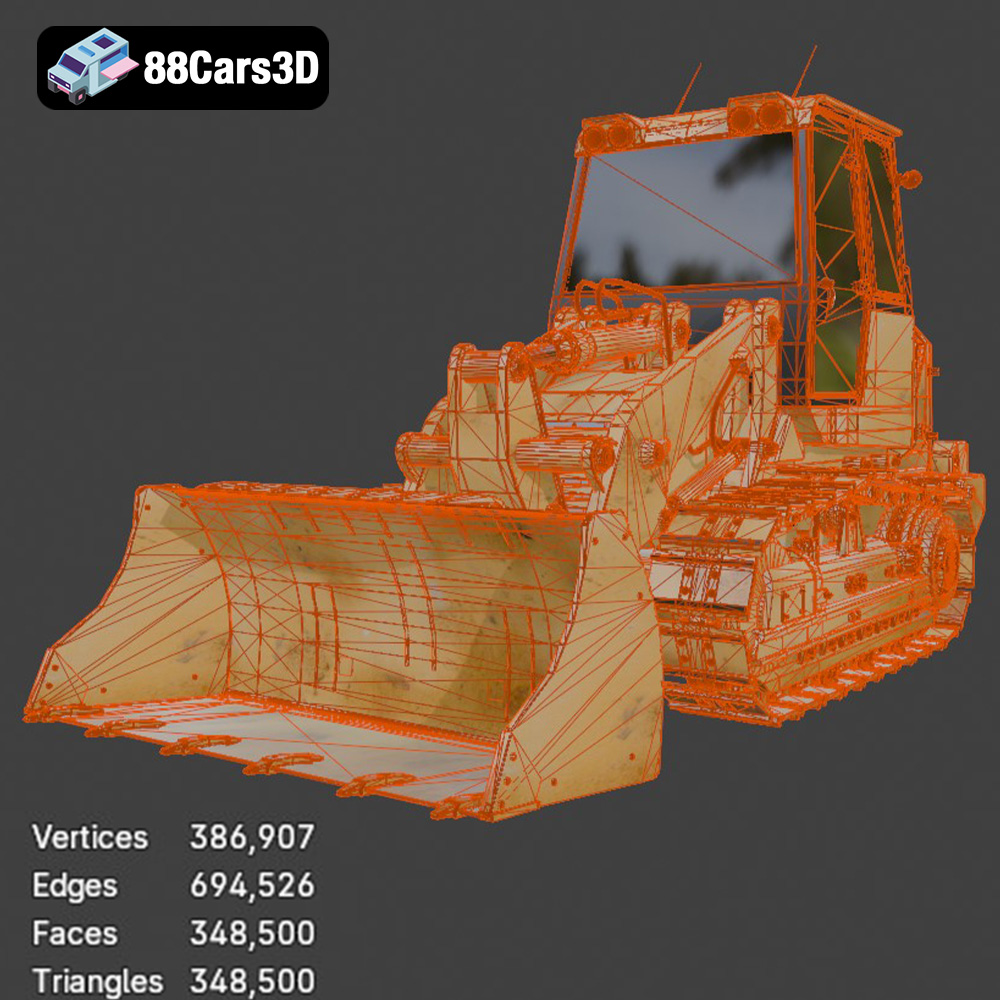
Beyond its visual appeal, the Track Loader 3D model boasts significant technical advantages. With an optimized topology of approximately 348,500 triangles, it strikes a perfect balance, delivering exceptional visual fidelity without compromising efficiency for real-time engines like Unreal and Unity. This “game-ready” optimization means developers can integrate it into their projects with minimal performance overhead. Furthermore, the model exhibits real-world scale accuracy, based on actual construction vehicle chassis schematics. This precision is invaluable for architectural visualizations, site planning, and any application requiring true-to-life spatial relationships. Proper pivot setups for boom elevation, bucket tilt, and track continuous rotation mean the model is ready for immediate mechanical animation, saving countless hours in rigging and setup.
The versatility of the Track Loader 3D Model, available at 88cars3d.com, makes it an invaluable asset across a spectrum of professional disciplines. Its optimized polycount, real-world scale, and multiple file formats ensure seamless integration into various pipelines.
For game developers, this Track Loader is a dream asset. Its 348,500 triangle count is perfectly balanced for modern game engines, allowing for high visual quality without crippling frame rates. The inclusion of .fbx and .unreal formats means a streamlined import process into Unreal Engine or Unity. Developers can easily set up physically based materials, add custom dirt and wear textures, and leverage the pre-set pivots for realistic mechanical animation. Imagine a vast open-world construction simulator where players operate this loader, digging trenches, moving earth, or loading trucks, all with believable physics and detailed visuals. Its design also makes it an excellent candidate for creating destruction meshes or vehicle damage systems, adding another layer of gameplay depth.
In architectural and industrial visualization, context is everything. Placing the Track Loader within a photorealistic construction site renders for a client presentation adds immense value and realism. Using the .max format, visualization artists can import the model into 3ds Max, apply V-Ray or Corona Renderer materials, and integrate it into complex scene lighting setups. This model can be used to illustrate construction phases, demonstrate operational flows, or simply provide environmental context to larger projects. The accurate scale ensures that the equipment fits naturally within site plans and building blueprints, providing a compelling visual narrative for stakeholders.
The immersive nature of AR/VR demands highly optimized yet detailed assets. The Track Loader model is perfectly suited for applications like industrial safety training modules, where trainees can virtually operate the machinery in a safe, controlled environment. Its .glb format is ideal for web-based AR viewers or lightweight VR applications, ensuring smooth performance. Imagine a virtual tour of a future construction site where clients can walk around, interact with the loader, and understand its role. For maintenance training, instructors could use the model to highlight specific components like hydraulic systems or engine access points in an interactive 3D space, greatly enhancing comprehension.
While often overlooked for virtual assets, the 3D printing capability of this model opens up unique possibilities. With the .stl format, hobbyists, educators, or even industrial designers can physically manifest a display-scale model of the Track Loader. This can be used for educational purposes, as a desk display for heavy machinery enthusiasts, or even as a physical prototype for design concepts. The recommended print settings – advocating for resin printing for fine hydraulic details and specific print orientations – demonstrate a thoughtful approach to converting digital fidelity into physical reality, showcasing the model’s versatility beyond the screen.
A high-quality 3D model like the Track Loader from 88cars3d.com isn’t just a static asset; it’s a foundation for boundless creative and functional customization. Its design anticipates the need for adaptation, allowing creators to tailor it to specific project requirements, thus maximizing its utility and return on investment.
The ability to change exterior chassis colors means the Track Loader can be seamlessly integrated into any corporate fleet livery or project-specific aesthetic. From the standard vibrant construction yellow to custom corporate blues or greens, artists have full control over its appearance. Beyond color, the model is designed to accept detailed material textures. Applying dirt, mud, rust, or worn-metal weathering effects can dramatically alter its narrative, transforming a pristine machine into a battle-hardened workhorse, reflecting the harsh realities of a construction site. This level of customization is vital for realistic scenes and diverse storytelling across games, simulations, and visualizations.
The Track Loader’s versatility extends to its integration within dynamic lighting and environmental setups. Artists can adapt its lighting for stark daytime construction sites, illuminated by the harsh sun, or for atmospheric nighttime work environments, bathed in the glow of overhead work lights and safety beacons. Proper material finishes – from matte industrial paint to gloss accents on exposed steel – react realistically to various lighting conditions, enhancing the overall visual impact. By adjusting these elements, the model can convey different moods, times of day, or specific operational conditions, enriching the overall scene.
The applications for this Track Loader 3D Model are remarkably broad. For Game Development, its optimized polycount and game-ready nature make it ideal for construction simulators or open-world sandbox games, delivering robust performance and high visual fidelity. In AR/VR, it excels in immersive safety training modules, allowing operators to learn procedures in a risk-free virtual space, or in interactive educational experiences. For Rendering & Visualization, it becomes a powerful tool for industrial marketing campaigns, creating compelling visuals for product launches, site planning visualizations, or high-end studio lighting setups. Even for 3D Printing, it offers a pathway for hobbyists and educational institutions to create tangible representations of this formidable machine. This wide array of applications underscores the model’s inherent value as a multi-purpose digital asset.
In a crowded digital marketplace, finding reliable, high-quality 3D assets can be a significant challenge. 88cars3d.com distinguishes itself by offering a curated selection of premium 3D models, ensuring that professionals have access to assets that meet rigorous industry standards. The Track Loader 3D Model is a prime example of the commitment to detail, optimization, and versatility that defines the offerings on the platform.
While the name might suggest a focus solely on 3D car models, 88cars3d.com understands the broader needs of the visualization and game development industries. Their expanded catalog includes a variety of meticulously crafted assets, from automotive rendering marvels to heavy industrial equipment like this Track Loader. Each model is selected for its technical precision, visual fidelity, and suitability for various professional workflows. This ensures that whether you’re building a racing game, an architectural walkthrough, or a construction simulator, you can find the high-caliber assets you need to populate your digital worlds authentically.
The value of an asset marketplace lies not just in the quality of its products but also in the efficiency it offers. By providing assets like the Track Loader 3D Model in a multitude of industry-standard formats (.blend, .fbx, .obj, .glb, .stl, .ply, .unreal, .max), 88cars3d.com significantly streamlines the asset acquisition process. This eliminates the need for tedious format conversions or extensive re-optimization, allowing artists and developers to integrate new assets into their projects almost immediately. This focus on practical utility and ease of integration is a cornerstone of the 88cars3d.com philosophy, helping professionals save valuable time and resources.
The world of 3D modeling continues to evolve at an astonishing pace, driven by an insatiable demand for realism, interactivity, and performance. For professionals navigating this complex landscape, the strategic acquisition of high-quality, pre-optimized 3D assets is no longer a luxury but a crucial component of efficient and successful project delivery. The Track Loader 3D Model stands out as an exemplary asset, meticulously crafted to meet the stringent demands of modern game development, immersive AR/VR simulations, compelling industrial visualizations, and even detailed 3D printing applications.
From its authentic exterior and detailed operator’s cabin to its optimized topology and versatile file format support, this model offers a robust foundation for any project requiring heavy machinery. It embodies the technical precision and visual fidelity that accelerate workflows, reduce production costs, and ultimately elevate the quality of your final output. Whether you’re an indie game developer, a seasoned architectural renderer, or an innovator in AR/VR training, integrating this Track Loader into your toolkit means investing in an asset that delivers both aesthetic excellence and technical performance. Explore this exceptional model and a wide range of other professional-grade 3D car models and assets at 88cars3d.com, and empower your next project with unparalleled digital realism.
The Track Loader is a versatile and heavy-duty piece of construction machinery, renowned for its formidable pushing power, traction, and lifting capabilities. Featuring rugged continuous tracks, a robust front bucket mechanism, and a reinforced industrial chassis, this earthmoving beast is essential for demanding excavation, grading, and material handling tasks. The model authentically captures the utilitarian aesthetics of heavy equipment, complete with detailed hydraulic systems and a secure operator’s cabin. This highly detailed 3D model boasts an optimized topology of approximately 348,500 triangles, delivering exceptional visual fidelity while remaining efficient for real-time applications. From the intricate hydraulic cylinders and linkages to the aggressive track treads and industrial paneling, every element has been meticulously crafted to meet the highest standards of game development, AR/VR simulations, and high-end industrial visualization. Perfect for heavy machinery simulators, construction site virtual environments, industrial safety training VR modules, and earthmoving game environments.
$26.00
.blend
.fbx
.glb
.max
.obj
.ply
.rendering
.stl
.unreal
3d model
construction-equipment
earthmover
game asset
game-ready
heavy-machinery
industrial-vehicle
loader
low-poly
optimized
track-loader
VR/AR