Get 20% OFF All Premium 3D & STL Models!

The world of 3D modeling has revolutionized how we interact with and perceive design, particularly within the automotive industry. From hyper-realistic visualizations that fuel marketing campaigns to robust game assets that power immersive virtual worlds, high-quality 3D car models are the bedrock of countless digital experiences. Professionals across various sectors, including game development, architectural visualization, and product design, constantly seek models that offer both exquisite detail and optimized performance.
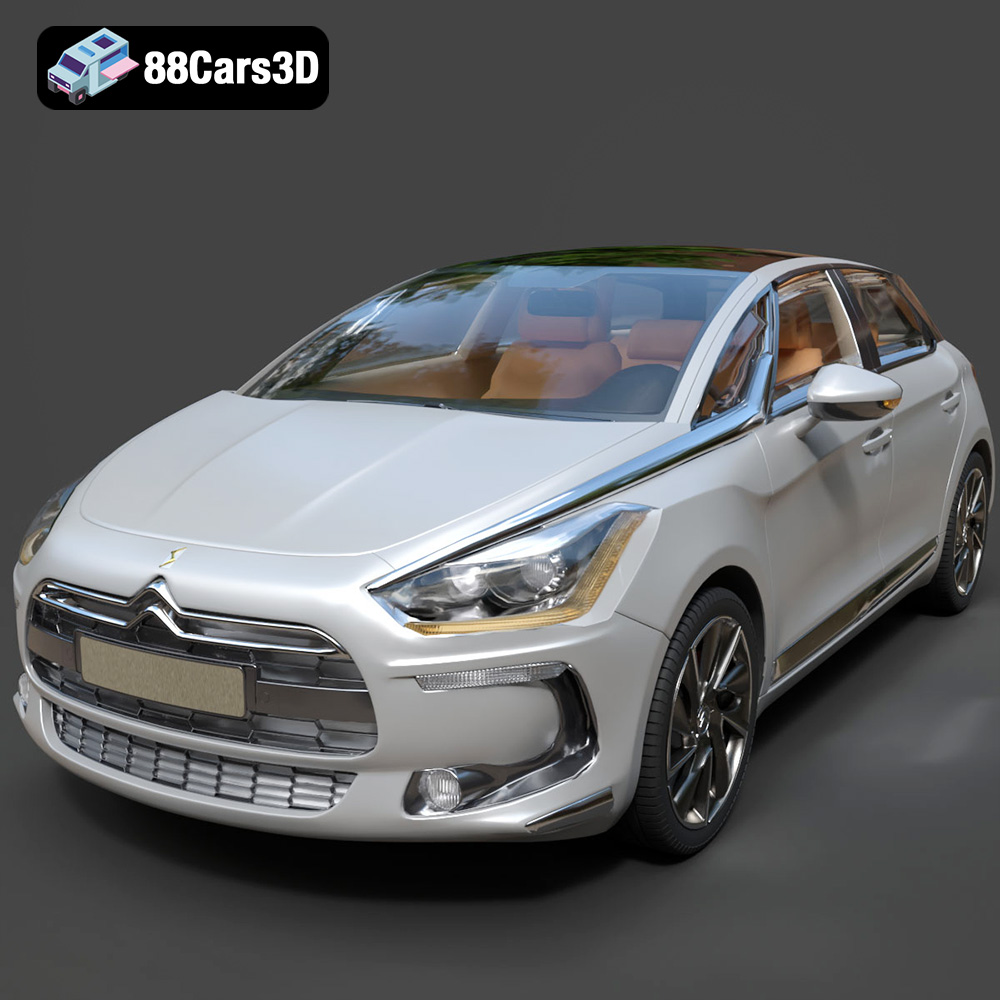
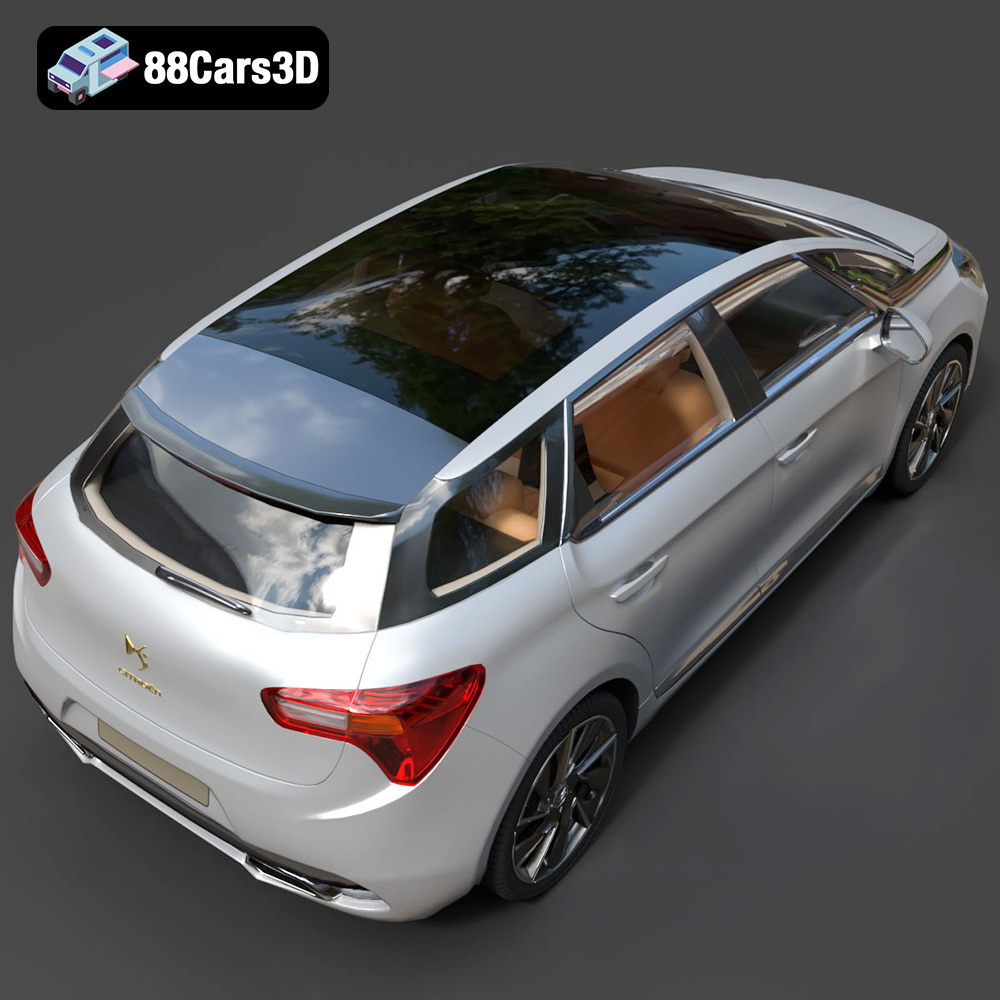
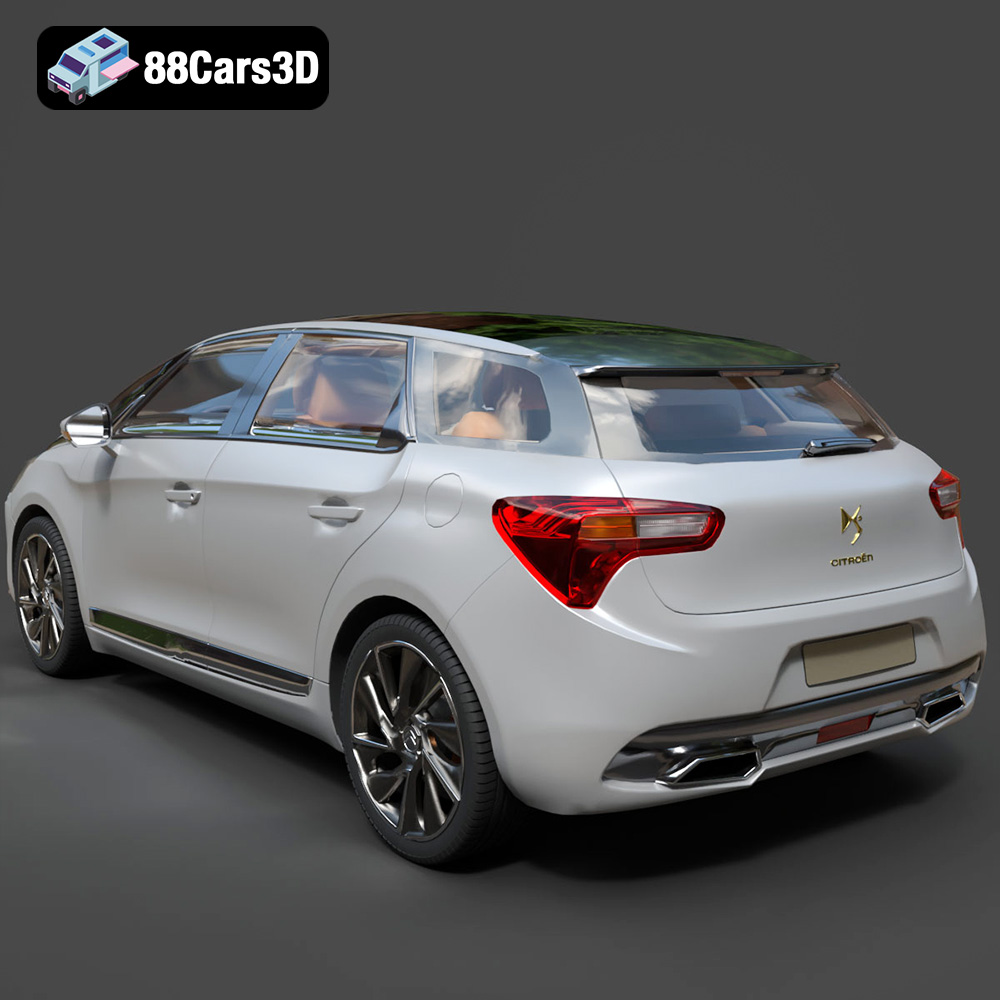
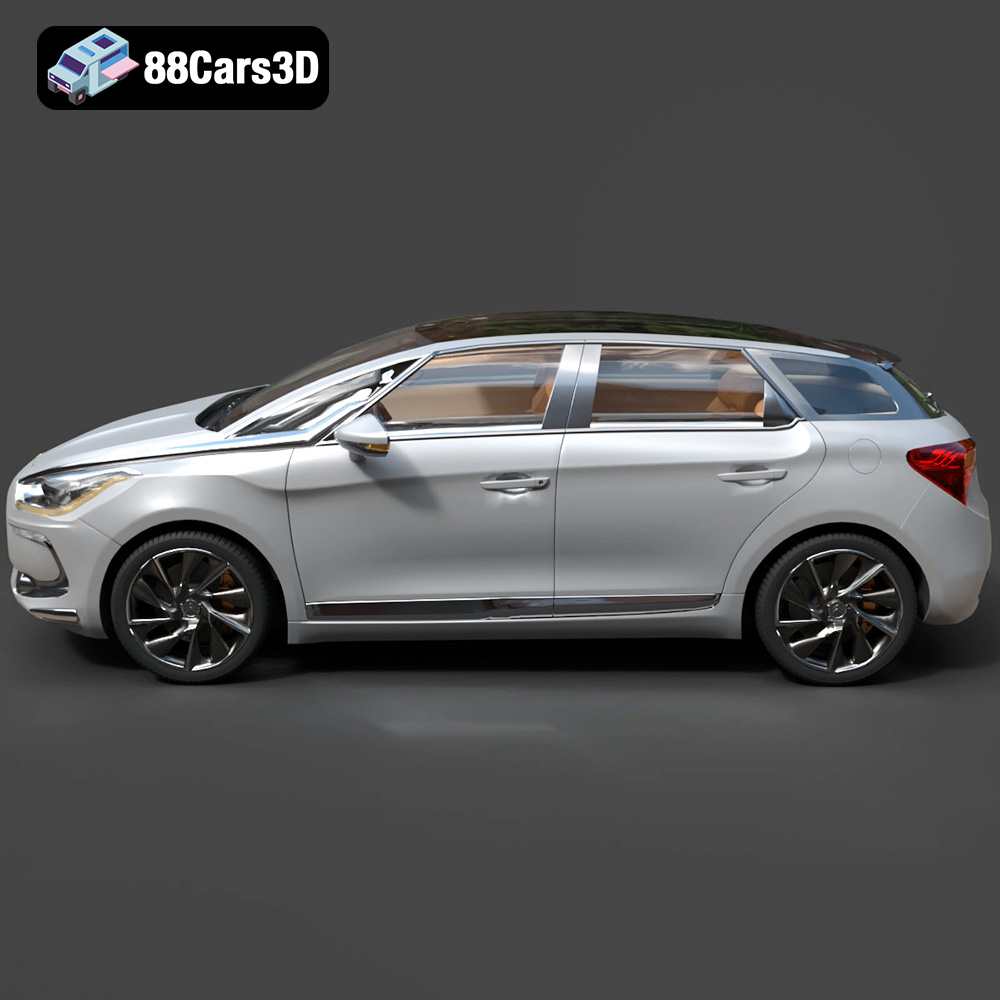
At the heart of this pursuit lies the balance between aesthetic fidelity and technical efficiency. A truly exceptional 3D car model doesn’t just look good; it’s engineered for seamless integration into diverse professional pipelines. This philosophy is perfectly embodied by the Citroen DS5 3D Model, a remarkable asset that encapsulates avant-garde French automotive design while adhering to rigorous technical standards. Its striking, aviation-inspired styling, complete with signature chrome “sabers” and sculpted bodywork, is meticulously reproduced, making it an ideal choice for projects demanding both visual flair and operational versatility. Whether you’re aiming for photorealistic cinematic animations or engaging real-time applications, this model provides the necessary foundation for outstanding results.
Creating compelling 3D car models is a complex art form, demanding a blend of artistic vision and technical precision. It’s about more than just replicating a vehicle’s form; it’s about capturing its essence, its character, and its potential within a digital environment. Every curve, every reflection, and every material choice contributes to the overall realism and usability of the asset. This meticulous approach is what differentiates a generic model from a premium one, ready for professional deployment.
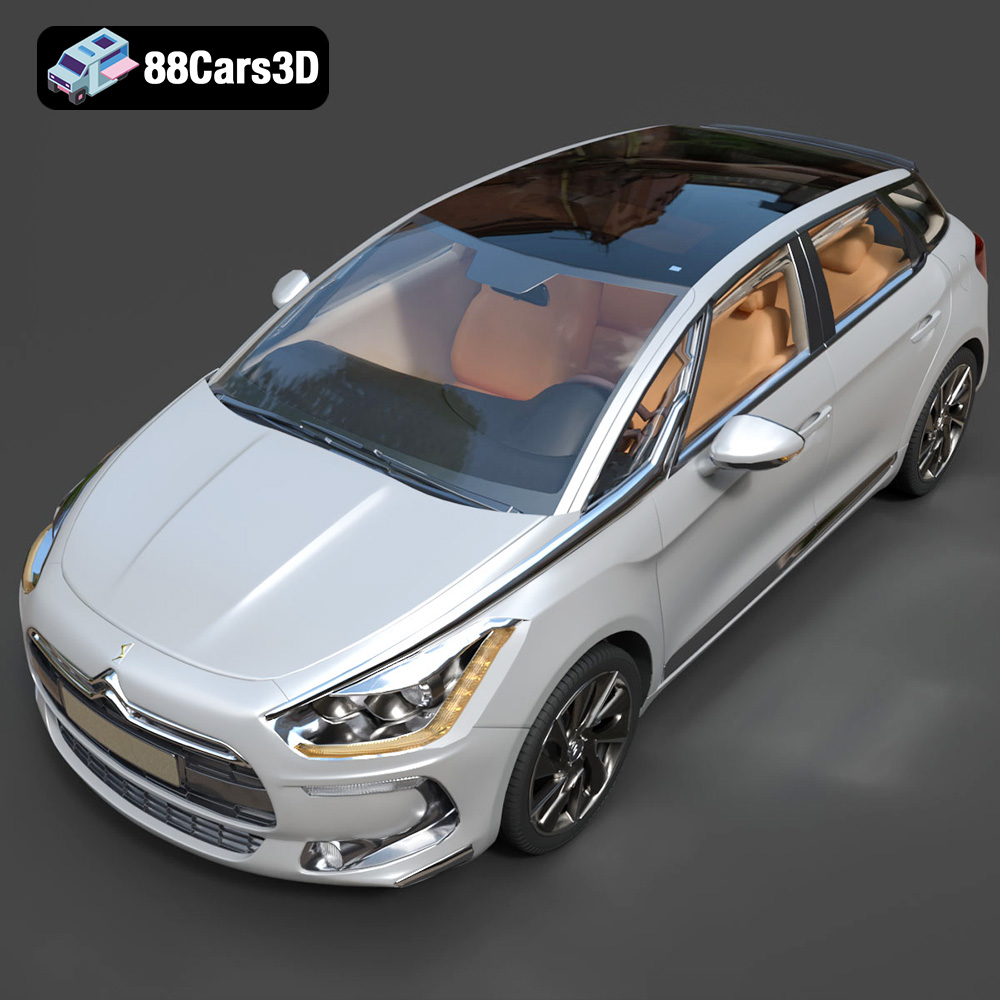
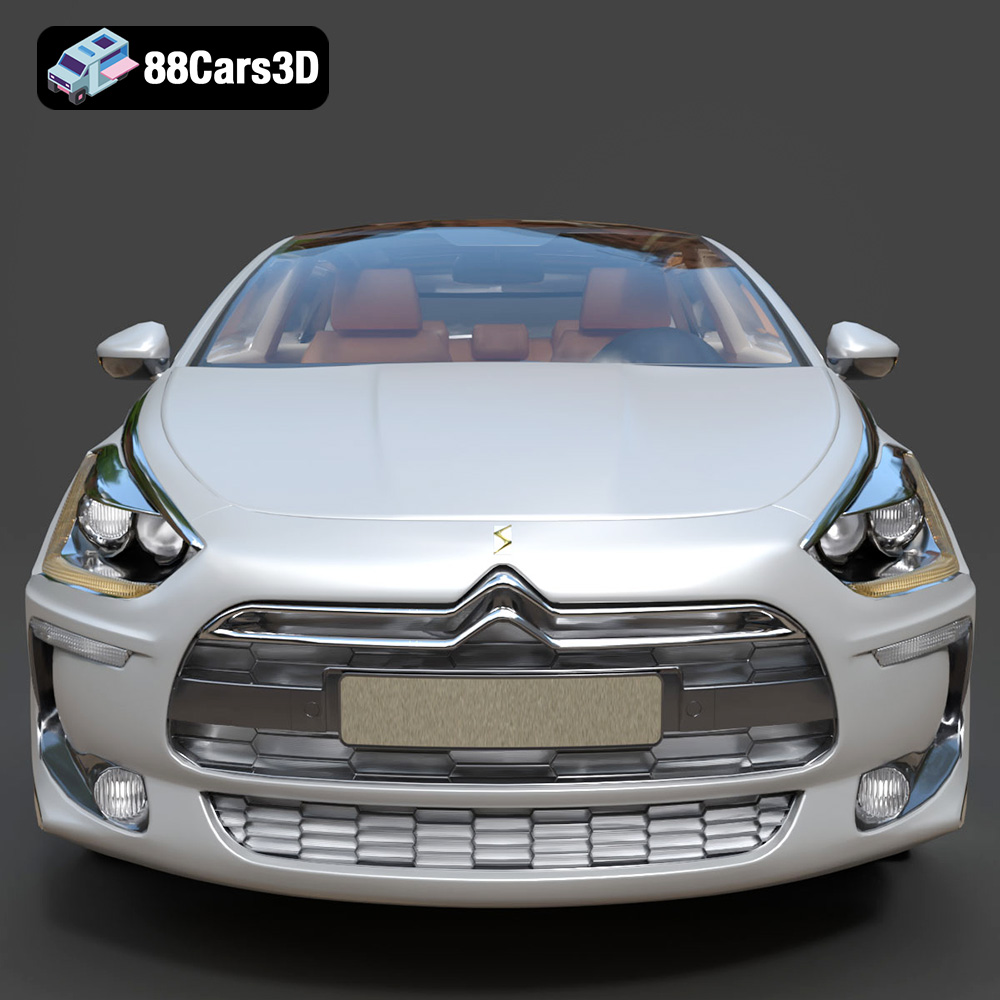
The Citroen DS5 is a prime example of a vehicle whose distinct design demands careful translation into 3D. Its unique blend of hatchback practicality and executive elegance, combined with its futuristic aesthetic, presents an exciting challenge for 3D artists. The Citroen DS5 3D Model featured on 88cars3d.com excels in this regard. Key design elements like the chrome “saber” trim pieces, the detailed dual exhaust system, and the complex LED lighting signatures are all faithfully reproduced. Even the interior, with its aviation-inspired cockpit and intricate dashboard details, offers a high level of fidelity suitable for first-person perspectives in gaming or VR simulations. This attention to detail ensures that the model not only looks authentic but also performs as expected in varied scenarios, from high-definition renders to interactive experiences.
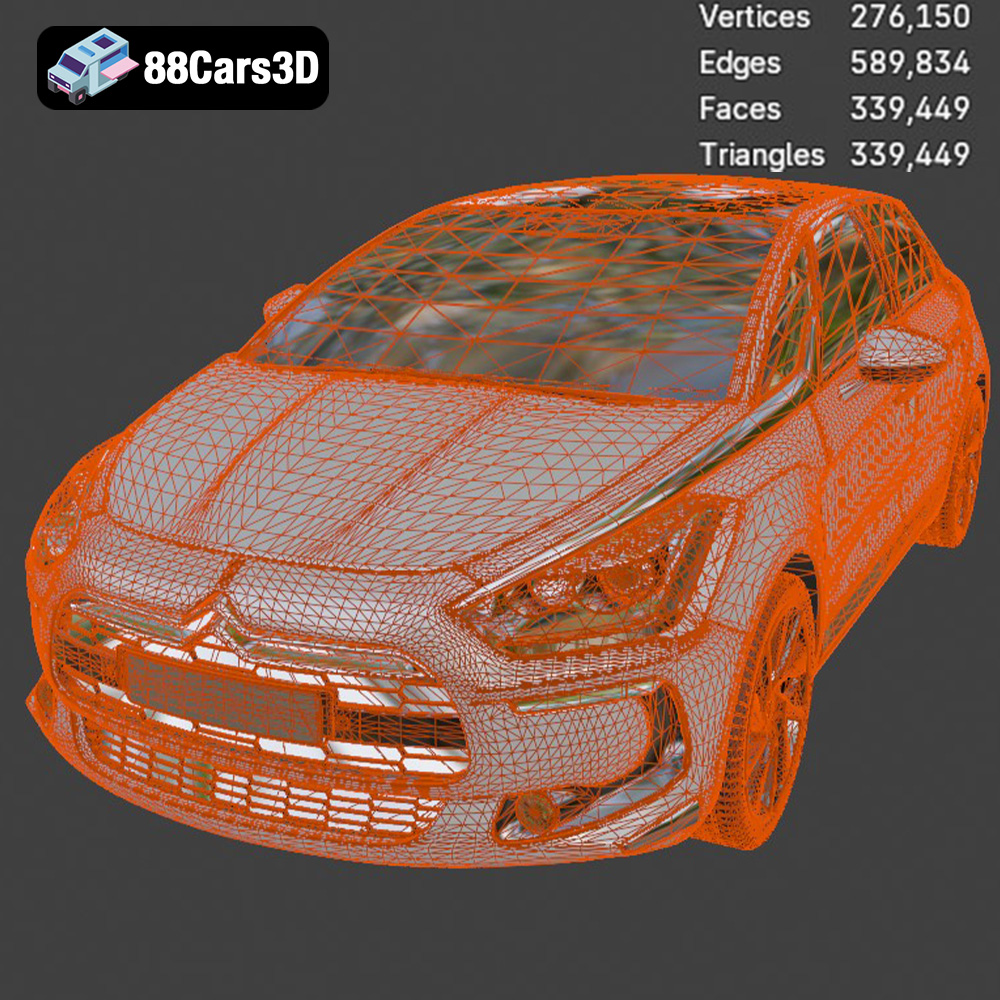
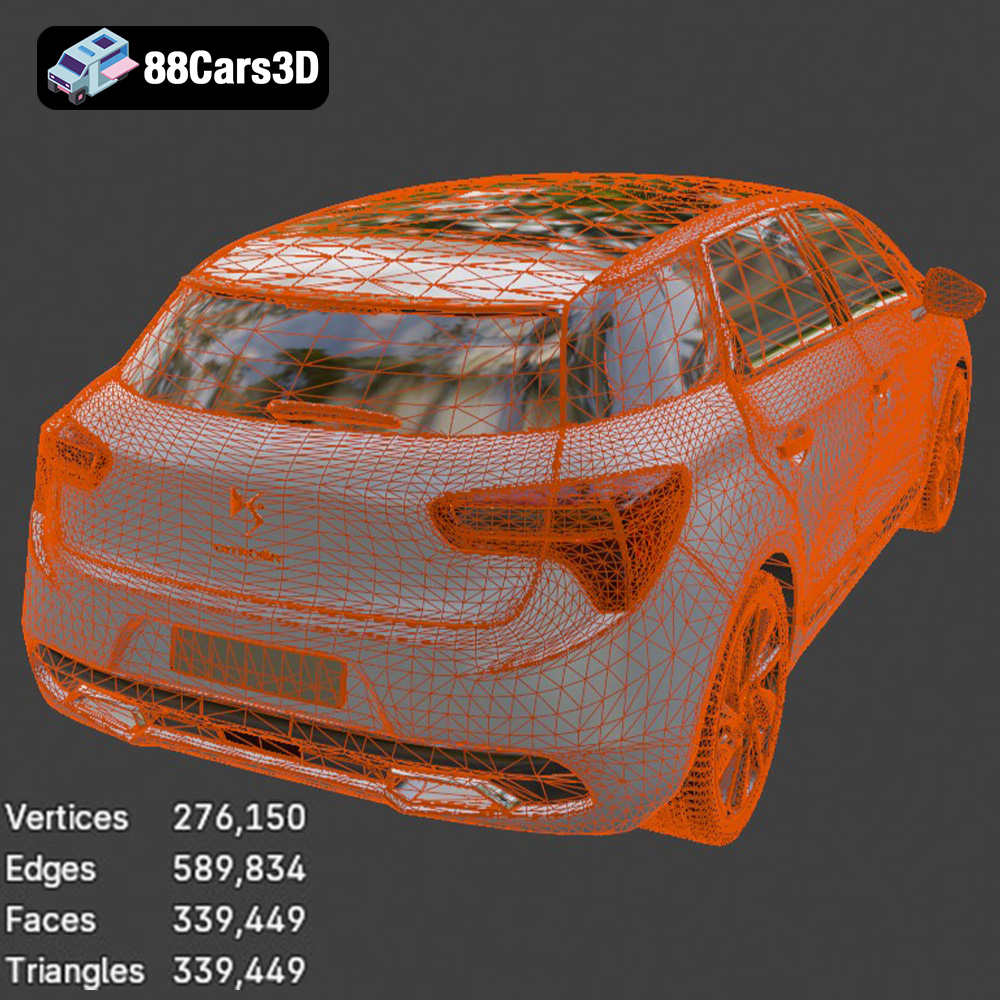
The demand for high-fidelity 3D car models continues to grow across numerous industries. In automotive marketing, photorealistic renders are crucial for showcasing upcoming vehicles and generating excitement. For game developers, optimized, game-ready assets are essential for building believable and engaging virtual worlds. Architectural visualization studios integrate cars into exterior scenes to add life and scale. Each application requires models that are not only visually accurate but also technically sound, with clean topology, proper UV mapping, and a suitable polygon count. The DS5 model’s meticulous optimization, with a triangle count of 339,449, exemplifies this balance, providing an exceptional blend of visual realism and performance efficiency.
The choice of file format for a 3D model is often as critical as the model’s quality itself. Different formats are optimized for different stages of a workflow, offering specific advantages in terms of compatibility, data retention, and performance. Understanding these distinctions is fundamental for any professional working with 3D assets, especially when integrating models like the Citroen DS5 into complex projects.
The .blend format is the native file type for Blender, an incredibly powerful and popular open-source 3D creation suite. When you download a .blend file, you’re not just getting the mesh; you’re getting a complete Blender scene. This includes all materials (often set up with physically based rendering, or PBR, workflows), textures, lighting, cameras, animation data, and even modifiers or rigging. For artists primarily working within Blender, or those who need full editability and access to the original project structure, the .blend file is the ultimate choice. It allows for complete customization, from altering material properties to tweaking geometry or animation paths. The Citroen DS5 .blend file offers unparalleled flexibility for users who want to deeply integrate and modify the model within their Blender projects.
.fbx (Filmbox) is an industry-standard proprietary file format developed by Autodesk, designed for seamless data exchange between different 3D applications and game engines. It supports not only geometry but also materials, textures, animations, rigging, and even camera and light data. Its robust nature makes it ideal for pipelines involving multiple software packages, such as transferring a model from 3ds Max or Blender into Unreal Engine or Unity. The .fbx format is particularly favored in game development and film production due to its comprehensive data support. The DS5 .fbx ensures that the model’s complex hierarchy, material assignments, and potential animation setups (like wheel pivots) are preserved across software boundaries.
.obj (Wavefront OBJ) is one of the oldest and most widely supported universal 3D file formats. It’s a simpler, text-based format primarily designed for storing 3D geometry (vertices, normals, texture coordinates, and faces) and references to external material files (.mtl). While it doesn’t support animation or rigging, its widespread compatibility makes it a fantastic choice for basic mesh exchange when you need to ensure virtually any 3D software can open the model. For static renders, 3D printing preparation (before converting to .stl), or as a fallback for maximum cross-software compatibility, the .obj format is invaluable. The DS5 .obj file provides a clean, raw mesh that can be easily imported into almost any modeling package for further refinement or material application.
.glb (GL Transmission Format Binary) is the binary version of glTF, a royalty-free specification for the efficient transmission and loading of 3D scenes and models by applications. It’s often referred to as the “JPEG of 3D” due to its optimization for web-based, AR, and VR applications. A single .glb file can contain geometry, materials, textures, animations, and skeletal data, all packaged for compact size and rapid loading. This makes it perfect for displaying 3D models directly in web browsers, mobile AR apps, or lightweight VR experiences. The Citroen DS5 .glb file is ideal for creating interactive virtual showrooms or product configurators directly on a webpage, showcasing its design in a performant manner.
The .unreal format, while not a standalone file extension in the traditional sense, refers to assets specifically packaged and optimized for direct import and use within Unreal Engine. This often means the asset has been exported as an .fbx but specifically prepared with Unreal’s conventions in mind, including material setup, collision meshes, and proper scaling. It signifies an engine-ready asset, where the hard work of optimization and integration has largely been done, allowing developers to drop the DS5 model directly into their real-time environments and begin developing games or simulations with minimal setup. This drastically speeds up the development process for Unreal Engine users.
.stl (Stereolithography) is the de facto standard file format for 3D printing. It represents a 3D model as a series of connected triangles (a tessellation of the surface geometry) and lacks any color, texture, or material information. Its simplicity makes it universally compatible with 3D slicers and printers. For enthusiasts wanting to bring the Citroen DS5 into the physical world through 3D printing, the .stl file is essential. The model is prepared to be convertible into .stl, ensuring it’s manifold and watertight, which are crucial for successful physical fabrication.
.ply (Polygon File Format) is another format for storing 3D data, particularly useful for scanned data, point clouds, and mesh data with properties like color per vertex, normals, and even transparency. While not as universally used as .obj or .fbx for general asset exchange, it offers precision and flexibility for certain applications, especially in scientific visualization, CAD, or analysis where vertex-level attributes are important. The inclusion of .ply for the DS5 provides an additional option for users requiring this specific data structure.
Finally, .max refers to the native file format for Autodesk 3ds Max, a leading software for 3D modeling, animation, and rendering. Similar to .blend, a .max file contains the complete project scene, including geometry, materials, textures, lighting, cameras, and animation. For professionals working within the 3ds Max ecosystem, the .max file of the Citroen DS5 offers full editability and allows for leveraging all of 3ds Max’s powerful features for advanced rendering (e.g., V-Ray, Corona Renderer), complex animation sequences, or integration into larger architectural visualization projects. It’s the most comprehensive format for 3ds Max users, ensuring seamless workflow integration.
Beyond visual appeal, the true measure of a high-quality 3D asset lies in its technical optimization. For professionals, particularly in game development and AR/VR, models must strike a delicate balance between visual fidelity and performance efficiency. The Citroen DS5 3D Model exemplifies this engineered approach, designed to be “game-ready” straight out of the box.
The polygon count, or triangle count, is a primary indicator of a model’s complexity and its impact on performance. The Citroen DS5 3D Model is optimized with a triangle count of 339,449. This figure represents a sweet spot: it’s high enough to capture the intricate curves and details of the DS5’s design for high-quality rendering, yet low enough to be performant in real-time engines like Unreal and Unity. For more extreme performance requirements, advanced workflows often involve creating Levels of Detail (LODs) – progressively lower poly versions of the model that swap in as the camera moves further away. While this specific model is optimized at its base, the clean topology of the DS5 makes it highly suitable for further LOD generation, allowing for scalability across different platforms and performance targets.
Proper UV mapping is crucial for applying textures accurately and efficiently. A well-UV’d model ensures that textures display correctly without stretching or distortion, and it enables the use of modern Physically Based Rendering (PBR) workflows. PBR materials simulate how light interacts with surfaces in the real world, producing highly realistic results. The DS5 model is designed for compatibility with these advanced material setups, allowing users to apply custom finishes, metallic sheens, and realistic lighting responses. This flexibility means the car can be seamlessly integrated into various environments, from a showroom’s polished floor to a gritty urban street scene, with consistent and believable visual quality.
For any interactive or animated application, a 3D car model needs to be set up correctly for movement. This involves establishing proper pivot points and a logical hierarchy for its components. The Citroen DS5 3D Model features a precise pivot setup for elements like steering, wheel rotation, and suspension travel. This means animators and developers can easily manipulate these components to create realistic driving simulations, dynamic cutscenes, or interactive configurators. Separated components like wheels, suspension, and steering ensure that complex animations can be implemented efficiently, saving valuable development time and allowing for more convincing motion.
A truly versatile 3D asset proves its worth through its ability to integrate seamlessly into diverse professional workflows. The Citroen DS5 3D Model, with its optimized geometry and extensive file format support, is designed precisely for this purpose. Let’s explore how it fits into some common industry pipelines.
For high-end automotive rendering, 3ds Max remains a dominant force, often paired with powerful renderers like V-Ray or Corona Renderer. The included .max file for the Citroen DS5 is a significant advantage here. Professionals can directly open the editable project, complete with its organized structure, and leverage 3ds Max’s robust modeling and animation tools. They can quickly set up complex studio lighting, experiment with custom paint materials (like changing body colors or adjusting metallic finishes), and create stunning photorealistic images or cinematic animations. The model’s accurate real-world scale and clean topology ensure that it interacts correctly with global illumination and environmental reflections, producing breathtaking results perfect for marketing campaigns, virtual showrooms, or lifestyle scene visualization.
The gaming industry demands optimized assets that perform flawlessly in real-time environments. The Citroen DS5’s “game-ready” classification, along with its dedicated .unreal and .fbx formats, makes it an ideal game asset. Game developers using Unreal Engine can import the model with confidence, knowing its polycount is optimized and its pivots are correctly set up for interactive gameplay. Its meticulous exterior and interior detailing allow for its use in open-world games, racing titles, or even specific driving simulators where players might enter the vehicle. The optimized geometry ensures minimal draw calls, contributing to smoother frame rates, while the well-defined materials support PBR texturing for realistic visuals under dynamic lighting conditions, enhancing the player’s immersion.
Augmented Reality (AR) and Virtual Reality (VR) are transforming how consumers engage with products. The Citroen DS5 3D Model is perfectly suited for these emerging platforms. Its .glb format is specifically designed for efficient transmission and loading in web browsers and mobile AR/VR applications, allowing for the creation of interactive virtual showrooms or product configurators that users can experience on their phones or headsets. Imagine a customer exploring the DS5’s interior in VR, or placing it virtually on their driveway using AR. The model’s optimized geometry and detailed features ensure a compelling and smooth experience, without compromising performance on resource-constrained devices. This capability is invaluable for automotive brands looking to offer innovative digital experiences to their clientele.
The utility of a high-quality 3D car model extends far beyond its initial creation. It becomes a foundational asset that can be repurposed and adapted across a spectrum of applications, enhancing workflows from early design concepts to consumer engagement. The Citroen DS5 3D Model embodies this versatility, offering solutions for numerous creative and technical challenges.
In the competitive automotive market, compelling visuals are paramount. Before a single physical prototype is built, 3D models are used extensively for design visualization. The Citroen DS5 model allows designers and marketers to render the vehicle in various environments, explore different color schemes and material finishes (matte, gloss, metallic), and create captivating promotional content. From brochure imagery to animated commercials, the detailed model provides a flexible canvas for showcasing the DS5’s distinctive features and luxurious appeal. Its ability to accurately represent the vehicle’s aesthetic saves time and resources, allowing for rapid iteration and impactful visual storytelling without the need for physical photography.
Beyond marketing, realistic 3D car models are crucial for simulation and training. Driving simulators, for example, rely on accurate vehicle models to provide an immersive and educational experience. The Citroen DS5’s real-world scale accuracy, coupled with its proper pivot setup for steering and suspension, makes it an excellent candidate for such applications. These simulations can range from professional driver training to virtual test drives for potential customers. The model’s detailed interior also supports first-person perspectives, allowing users to familiarize themselves with the cockpit layout and controls in a virtual environment, enhancing realism and engagement.
The emergence of consumer-level 3D printing has opened up new avenues for automotive enthusiasts and hobbyists. The Citroen DS5 3D Model includes an .stl format, specifically designed to be converted for 3D printing. This allows individuals to bring a physical representation of this iconic vehicle into their homes. The provided 3D print settings, including recommended scales, layer heights, and support requirements, guide users through the process of producing high-quality scale models. Whether for display, diorama creation, or simply the joy of fabrication, the ability to physically manifest a digital asset adds another layer of value and engagement. It transforms the virtual car into a tangible collectible, further blurring the lines between digital and physical design.
The journey of a 3D car model, from conceptualization to its diverse applications, is a testament to the power and flexibility of modern digital asset creation. The Citroen DS5 3D Model stands out as a prime example of a meticulously crafted asset that meets the rigorous demands of professional workflows. Its exquisite detail, capturing the avant-garde styling of the original vehicle, is perfectly balanced with technical optimization for performance across various platforms.
From the nuanced design elements suitable for high-end automotive rendering in 3ds Max to its game-ready optimization for real-time engines like Unreal, and its web-friendly formats for AR/VR experiences, this model offers unparalleled versatility. The comprehensive suite of file formats – including .blend, .fbx, .obj, .glb, .stl, .ply, .unreal, and .max – ensures that artists and developers can seamlessly integrate it into virtually any pipeline, unlocking creative possibilities whether for marketing, simulation, or even 3D printing. Investing in high-quality 3D car models like the Citroen DS5 from 88cars3d.com is an investment in efficiency, fidelity, and the success of your digital projects.
Experience avant-garde French automotive design with this highly detailed 3D model of the Citroen DS5. Renowned for its striking, aviation-inspired styling, the DS5 bridges the gap between a premium hatchback and a sleek executive estate. This model captures the vehicle’s iconic visual elements, most notably the signature chrome “sabers” that stretch seamlessly from the aggressive headlight clusters to the A-pillars. The sculpted bodywork, distinctive front grille, and dynamic dual exhaust setup are faithfully reproduced to reflect its luxurious and futuristic heritage. Engineered for maximum versatility, this 3D model features a meticulously optimized topology with a triangle count of 339,449. This ensures an impeccable balance between game-ready performance and high-end visual fidelity. Whether you are developing interactive real-time applications, crafting immersive AR/VR experiences, or producing photorealistic cinematic animations, this model delivers exceptional detail without compromising system performance. Perfect for modern urban driving games, virtual automotive showrooms, architectural visualization scenes, and high-end lifestyle rendering.
$35.00
.blend
.citroen
.ds5
.fbx
.glb
.hatchback
.max
.obj
.ply
.rendering
.stl
.unreal
car-3d-model
executive-car
game asset
game-ready
low-poly
optimized
VR/AR