Get 20% OFF All Premium 3D & STL Models!

In the dynamic world of 3D visualization, game development, and immersive experiences, the quality of a 3D asset can make or break a project. Automotive design, in particular, demands an exceptional level of detail and accuracy to truly capture the essence of a vehicle. From the intricate curves of a body panel to the precise calibration of an interior component, every element must contribute to an authentic and believable representation. This pursuit of digital perfection is where high-fidelity 3D car models truly shine, serving as the bedrock for stunning renders, captivating games, and realistic simulations.
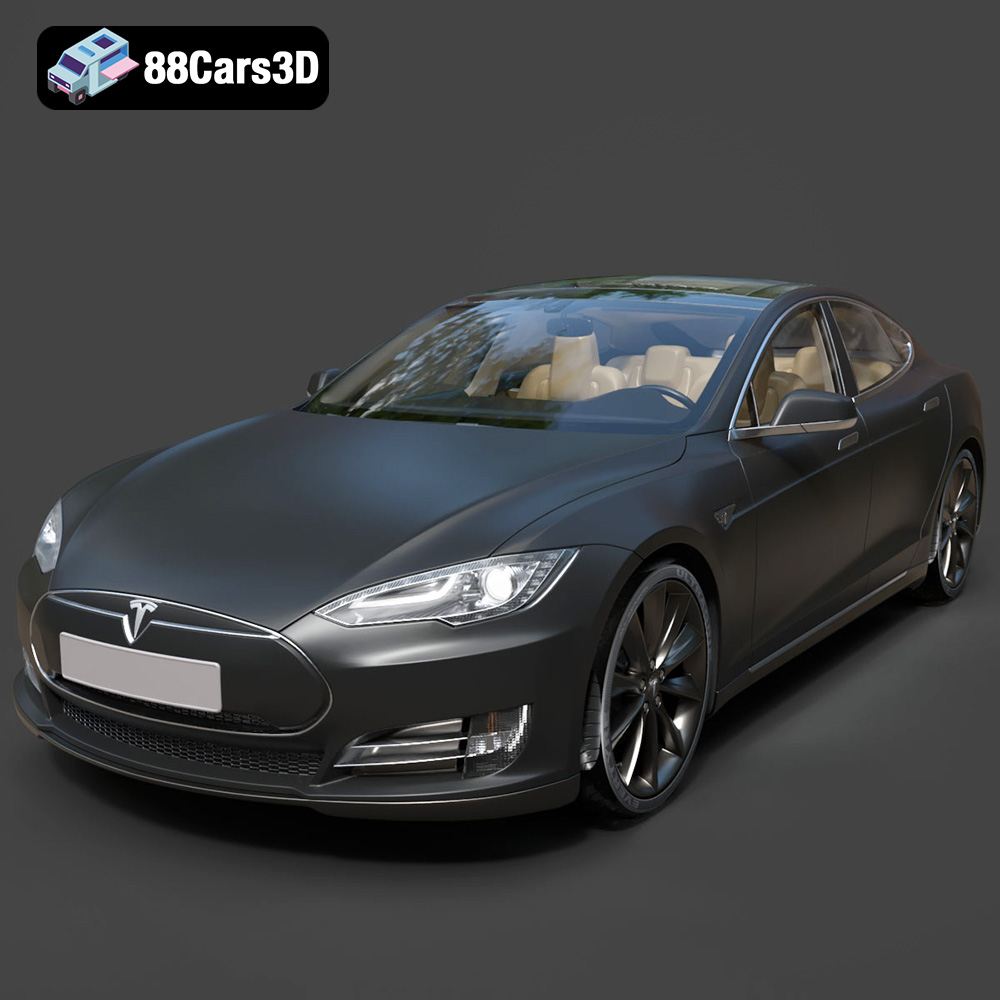
Today, we’re exploring the critical role of these advanced assets by focusing on a prime example: the Tesla S-08 3D Model. This model encapsulates the sleek, futuristic design and advanced engineering of modern electric vehicles, offering a versatile foundation for a multitude of professional applications. Whether you’re an automotive visualization artist, a game developer crafting an open-world environment, or an AR/VR enthusiast building immersive showrooms, understanding the technical nuances and versatile applications of such a model is paramount to achieving unparalleled results.
The digital automotive industry thrives on realism. Consumers, enthusiasts, and professionals alike expect nothing less than visually stunning and technically accurate representations of vehicles. High-quality 3D car models are not just pretty pictures; they are complex data sets meticulously crafted to replicate every facet of a real-world vehicle. This meticulous attention to detail is crucial across various sectors.
For automotive designers and engineers, 3D models are indispensable tools for concept visualization, prototyping, and even aerodynamic testing. A detailed model allows for rapid iteration and modification, enabling designers to refine aesthetics and test structural integrity long before physical production begins. The ability to manipulate lighting, materials, and environments within a 3D space provides invaluable insights, accelerating the design cycle and reducing costly errors. This iterative process, powered by robust 3D assets, is fundamental to modern product development.
In entertainment and advertising, authenticity sells. A racing game needs cars that feel real, a commercial needs vehicles that gleam authentically, and an architectural visualization benefits immensely from realistic background elements. Low-polygon, poorly textured models can instantly shatter immersion. Conversely, a high-fidelity 3D car model, such as the Tesla S-08 from 88cars3d.com, provides the granular detail necessary for close-up shots, dynamic lighting interactions, and believable physics simulations. This level of realism elevates the user experience and significantly enhances the perceived value of any digital content.
Choosing the right file format is a critical decision in any 3D workflow, directly impacting compatibility, feature retention, and pipeline efficiency. A comprehensive 3D model, like the Tesla S-08, often comes in a variety of formats to cater to diverse professional needs. Understanding each format’s strengths and typical use cases is essential for seamless integration into your projects.
The `.blend` file format is native to Blender, the powerful open-source 3D creation suite. When you receive a `.blend` file, you’re not just getting the mesh; you’re getting a fully editable Blender scene. This includes all materials, textures, lighting setups, animation data, and even modifiers and rigging. It’s ideal for Blender users who need complete control over the asset, allowing for easy modifications, re-texturing, and integration into existing Blender projects without any loss of data. For artists deeply integrated into the Blender ecosystem, this format offers the most flexibility and direct access to the model’s underlying structure.
Known as a robust proprietary format by Autodesk, `.fbx` (Filmbox) has become the de facto standard for 3D data exchange across different software applications and real-time engines. It excels at preserving complex scene data, including meshes, materials (often as basic shaders that need re-creation, but with texture paths intact), animations, cameras, and lights. For game developers working with Unreal Engine or Unity, or visualization artists moving models between 3ds Max, Maya, and Cinema 4D, `.fbx` is frequently the format of choice due to its wide support and efficient handling of animation and skeletal data. It provides a balanced approach between preserving data and ensuring broad compatibility, making it ideal for pipelines that involve multiple software packages.
The `.obj` (Wavefront Object) format is one of the oldest and most universally supported 3D file types. It stores geometry data (vertices, normals, texture coordinates) and references external `.mtl` (material) files for basic material properties. While it doesn’t support animation, rigging, or complex scene data, its simplicity and widespread compatibility make it an excellent choice for basic mesh exchange when you need to ensure almost any 3D software can open the model. It’s often used as a fallback or for models where only the static geometry is required, such as for sculpting or general scene population.
The `.glb` (GL Transmission Format Binary) is the binary version of glTF, a royalty-free specification for the efficient transmission and loading of 3D scenes and models by applications. `.glb` packs all assets—geometry, materials, textures, animations—into a single, self-contained file. This makes it incredibly efficient for web-based 3D viewers, AR/VR applications, and mobile platforms where file size and quick loading times are critical. Its optimization for real-time rendering and modern graphics APIs positions `.glb` as a key format for interactive 3D experiences on the internet and beyond.
The `.stl` (Stereolithography) format represents 3D surfaces as a collection of unconnected triangles. It’s the standard file format for additive manufacturing (3D printing). While it lacks color, texture, or material information, its simplicity makes it ideal for direct output to 3D printers. For models like the Tesla S-08, an `.stl` export allows hobbyists and professionals to bring the digital design into the physical world, creating tangible prototypes or display models. Precision and manifold geometry are crucial for successful `.stl` files.
The `.ply` (Polygon File Format) is often used to store 3D data from 3D scanners. It can store a wider range of information than `.obj` or `.stl`, including color, transparency, texture coordinates, normals, and even confidence values for scanned data. While less common for general 3D model distribution, it’s invaluable for scientific visualization, reverse engineering, and applications requiring precise geometric and attribute data. For detailed analysis or high-fidelity mesh handling, `.ply` offers robust data storage capabilities.
While not a direct file format in the traditional sense, the inclusion of an “.unreal” file or asset typically implies a model specifically prepared and optimized for direct import into Unreal Engine. This could mean a pre-packaged asset with materials, collision meshes, LODs (Levels of Detail), and blueprints already configured to Unreal Engine’s specifications. This level of preparation significantly accelerates development time for Unreal Engine projects, ensuring the Tesla S-08 model integrates seamlessly into real-time environments with minimal setup, adhering to engine best practices for performance and visual quality.
The `.max` file format is the native file type for Autodesk 3ds Max, a leading software for 3D modeling, animation, and rendering. Similar to `.blend`, a `.max` file contains the complete 3ds Max scene, including all geometry, textures, materials, lighting, cameras, animation, and plugins used within the project. It offers the most comprehensive control for 3ds Max users, allowing for deep customization and interaction with the model’s original construction. For professionals whose primary workflow revolves around 3ds Max, this format provides the highest level of editability and fidelity.
The Tesla S-08 3D Model is more than just a digital representation; it’s a testament to meticulous craftsmanship and a deep understanding of automotive design principles. This asset captures the essence of a modern luxury EV, providing artists and developers with an exceptional starting point for their projects.
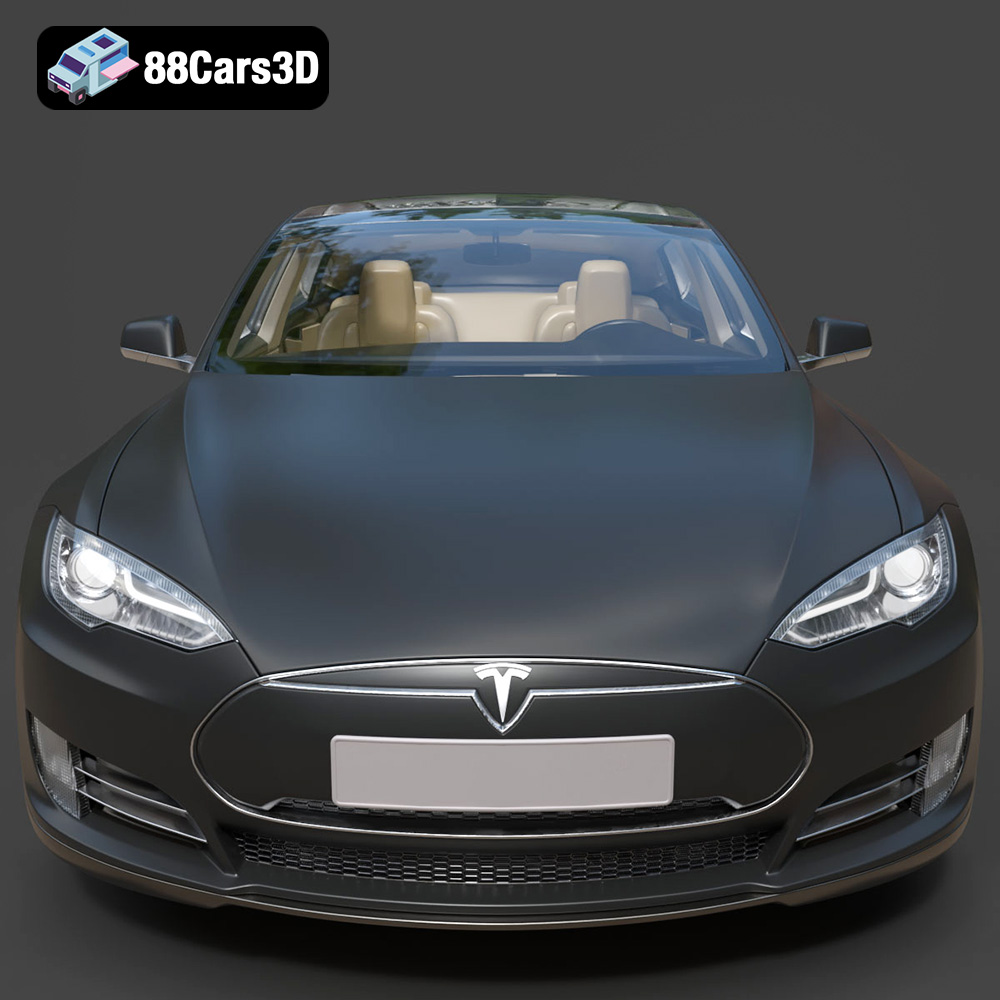
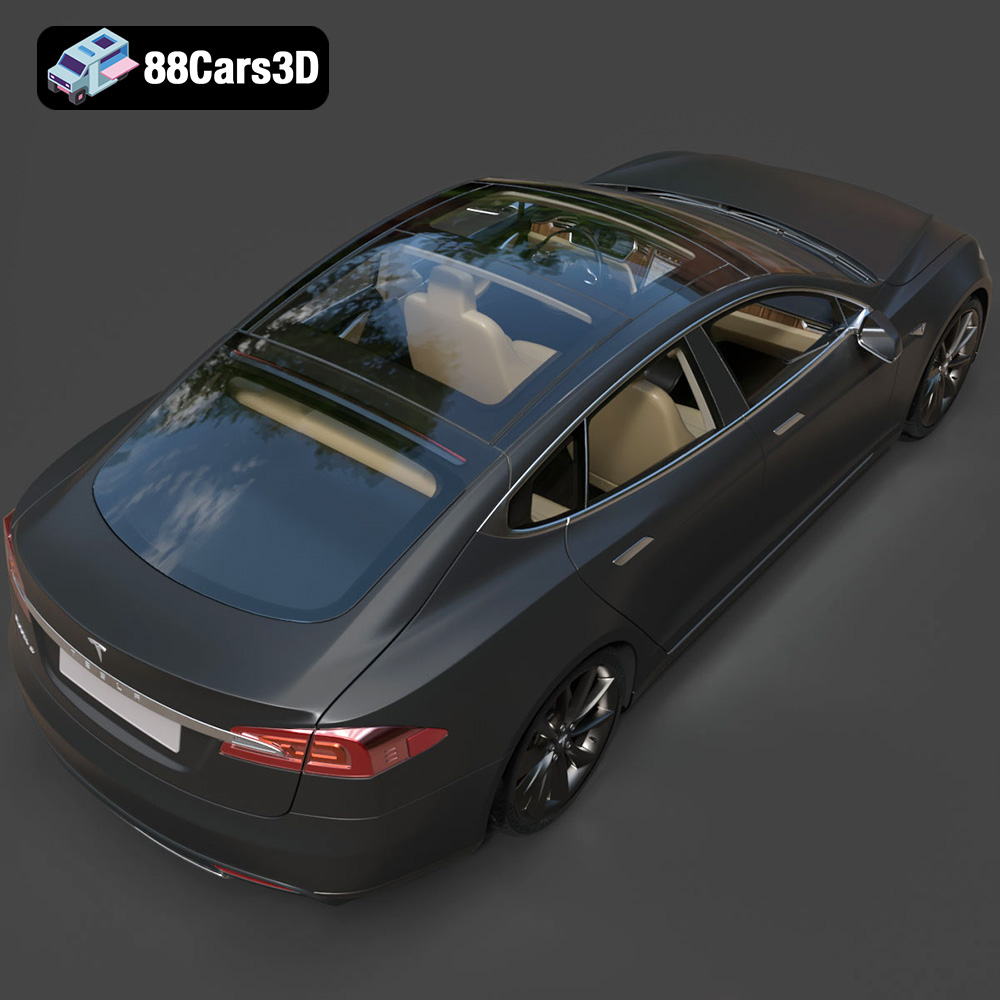
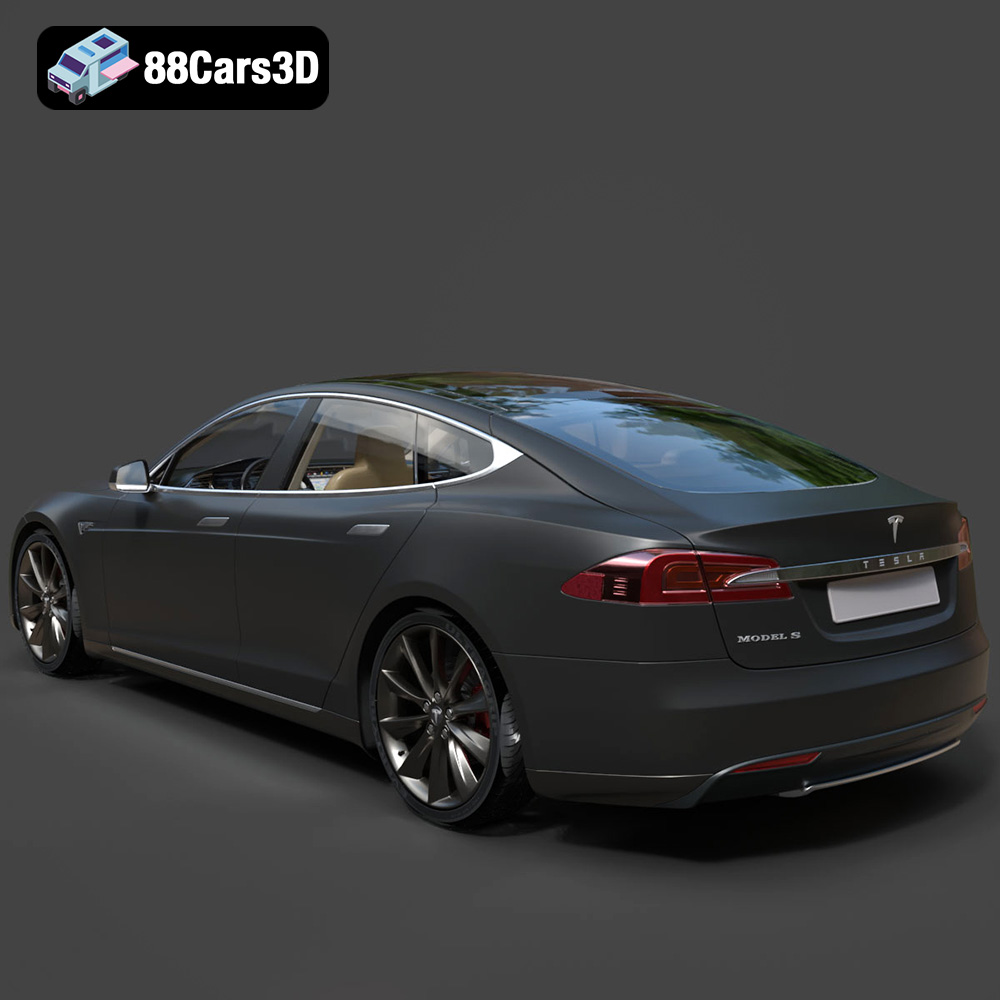
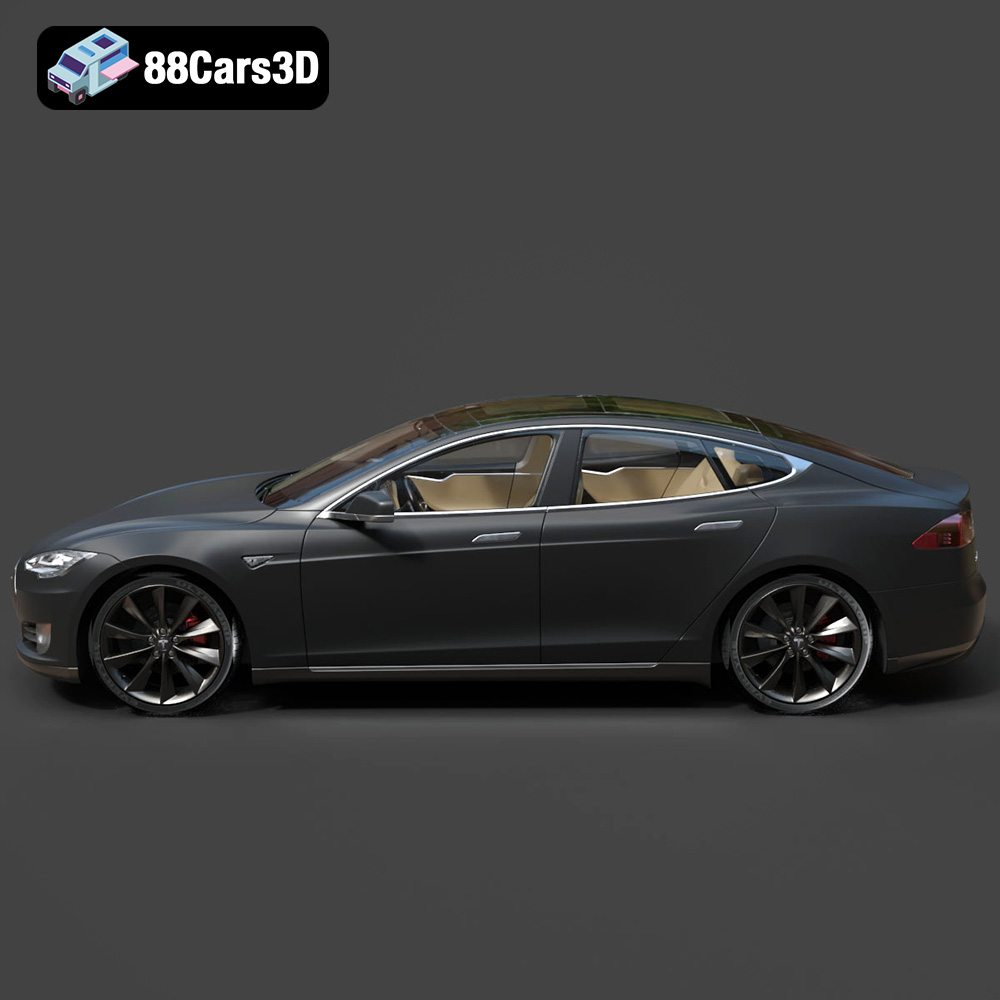
The product description highlights the model’s accurate Tesla S-08 frame geometry and aerodynamic proportions. This isn’t just about looking good; it’s about reflecting the functional design inherent in electric vehicles. The seamless front fascia, flush door handles, and sweeping roofline are not merely stylistic choices but contribute to the vehicle’s efficiency. The model also meticulously represents the EV skateboard chassis, a core differentiator for electric cars, along with a clean undercarriage and smooth diffuser panels—details often overlooked in less professional models. High-resolution LED headlights, signature taillight assemblies, and premium aero-optimized alloy wheels with high-performance tires complete the exterior, ensuring that even the most discerning eye will find it convincing.
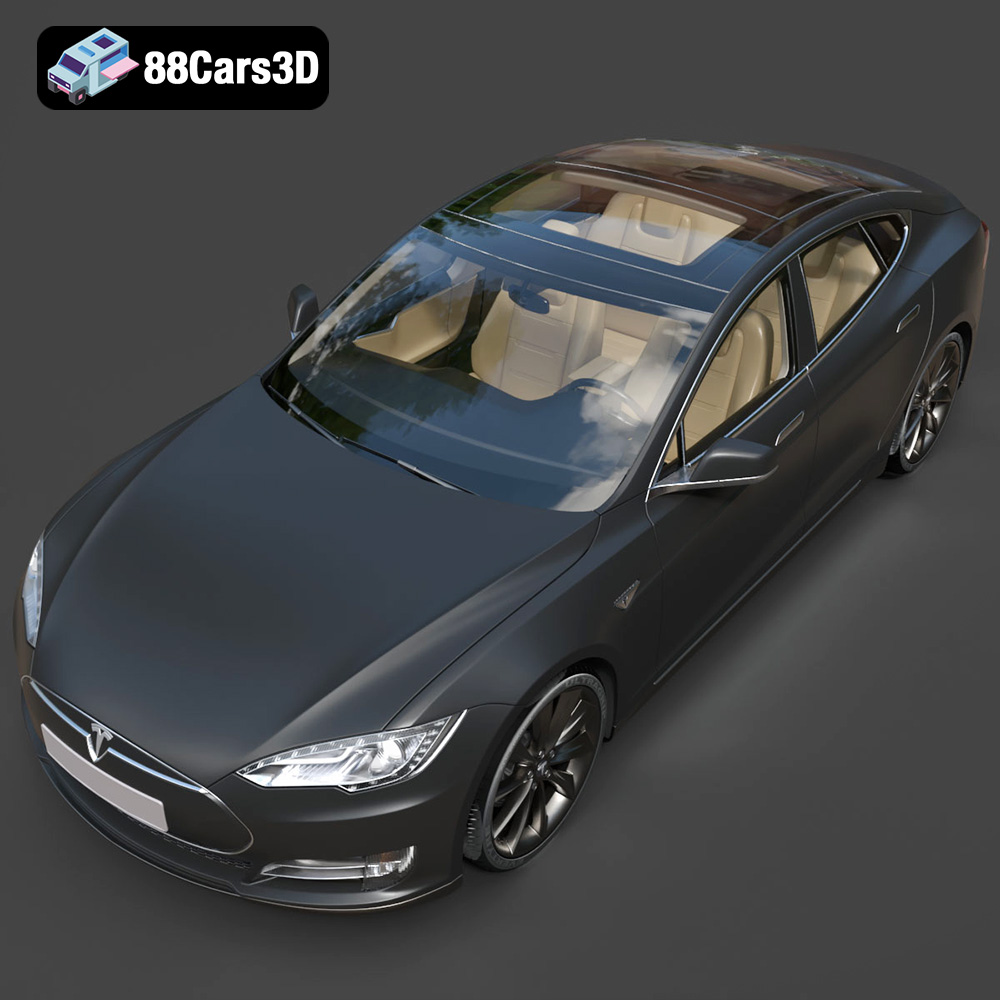
A truly high-fidelity 3D car model goes beyond the surface. The Tesla S-08 model extends its detail into the interior, offering a compelling cockpit experience. Premium sculpted leather-style bucket seats, a distinctive minimalist steering wheel/yoke design, and the massive central touchscreen display are all recreated with precision. The digital instrument cluster and accurate pedal assembly further enhance the realism, making it suitable for first-person perspectives in games or detailed virtual showrooms. This level of interior detail is crucial for VR applications where users can freely explore the vehicle’s cabin.
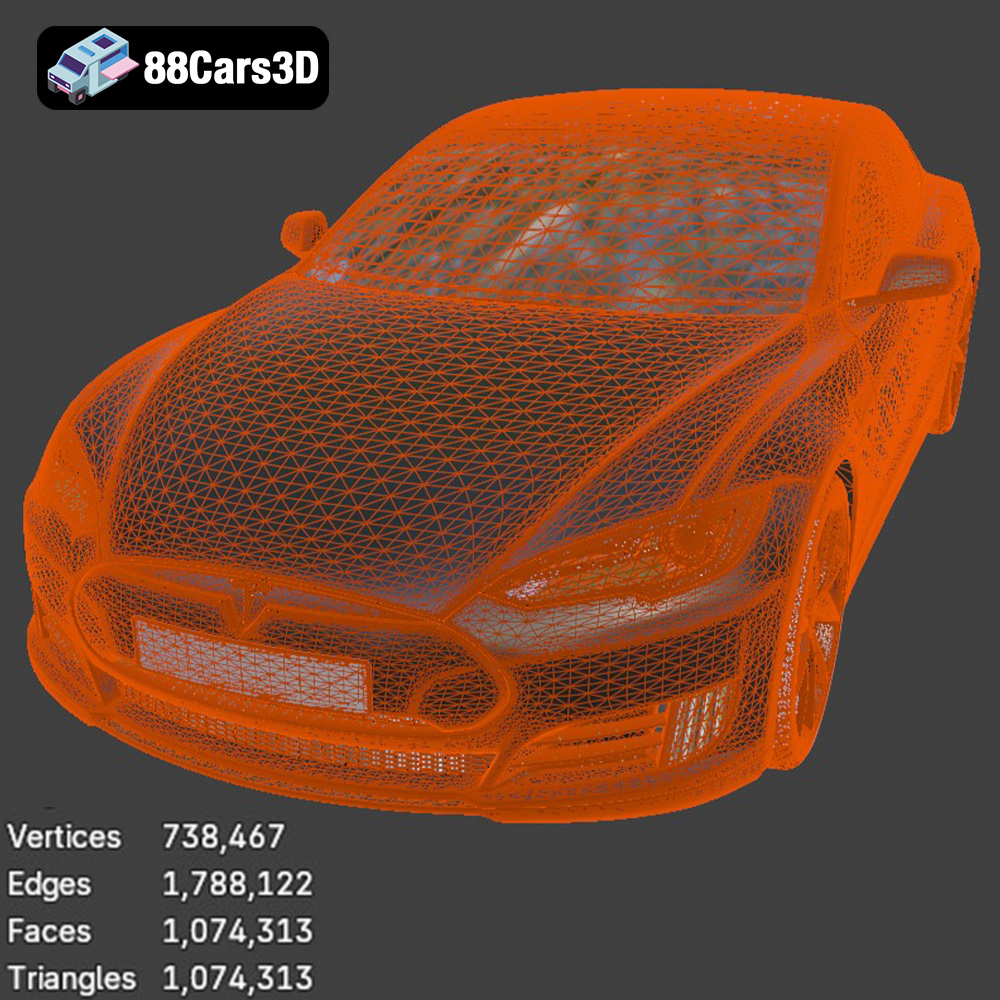
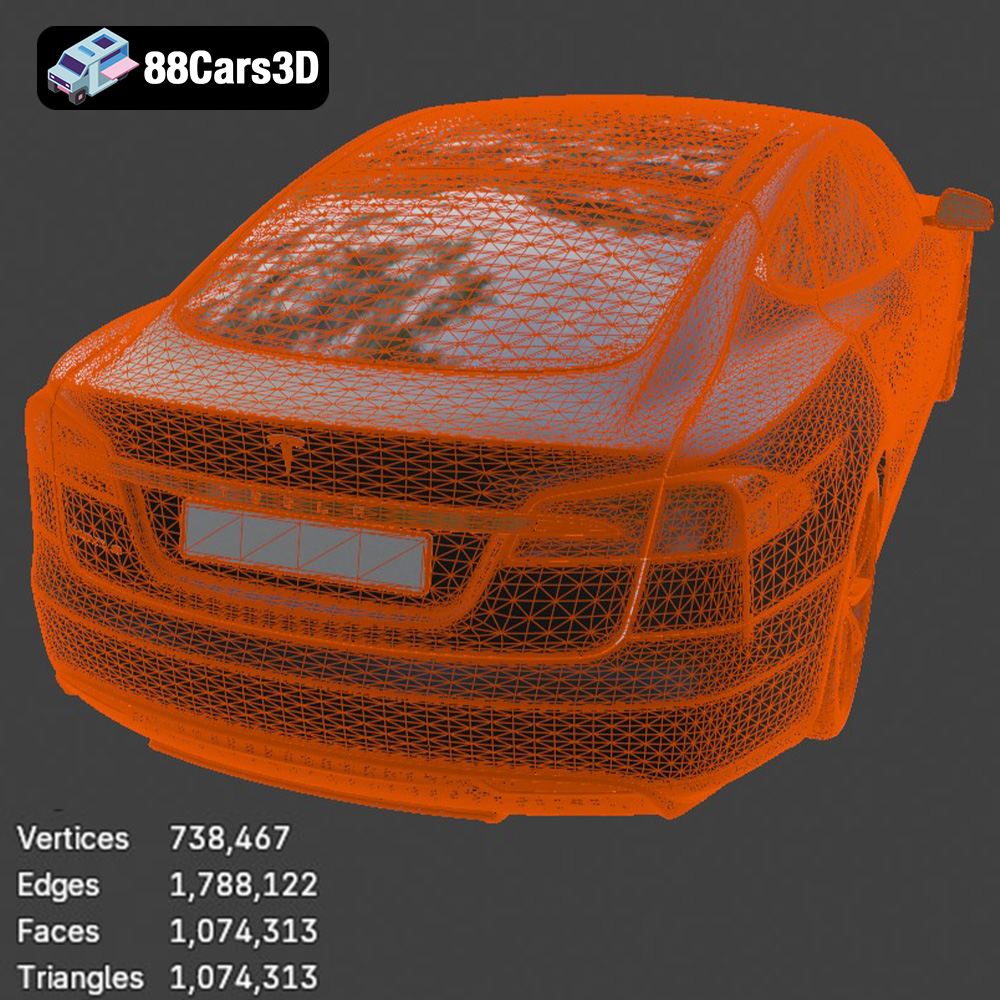
One of the standout features of this model is its technical optimization. Boasting 1,074,313 triangles, it strikes a perfect balance: high enough for premium visual fidelity in close-up renders, yet optimized enough for real-time engines like Unreal and Unity. This “game-ready” status means less time spent on manual optimization and more time on creative development. Furthermore, the model is built to real-world scale accuracy, ensuring it integrates seamlessly into architectural visualizations or existing game environments without needing tedious resizing. Crucially, it features a proper pivot setup for steering, wheel rotation, and suspension travel, making it animation-ready right out of the box. These technical advantages significantly reduce production overhead and accelerate workflow for professionals.
The versatility of the Tesla S-08 3D Model, available at 88cars3d.com, is its greatest asset. Its rich feature set and diverse file format support enable seamless integration into a wide array of professional workflows.
For high-end automotive rendering, 3ds Max users will find the `.max` file format invaluable. It provides direct access to the model’s raw geometry, allowing for detailed modifications, material assignments, and lighting setups. Artists can leverage powerful renderers like V-Ray or Corona to create photorealistic images, showcasing the Tesla S-08 in various environments, from a sleek studio to an urban streetscape. The model’s clean topology and accurate proportions ensure that reflections behave correctly, and its detailed interior allows for compelling “hero” shots that highlight the luxury experience. Professionals can easily swap out wheels, modify paint finishes, and adjust chrome levels to match specific brand requirements or artistic visions.
Game developers working with Unreal Engine or Unity will benefit immensely from the model’s “game-ready” status and the included `.fbx` and potentially `.unreal` formats. The optimized polycount of 1,074,313 triangles is ideal for modern game engines, providing visual quality without excessively taxing performance. The separate wheels, suspension, and steering components are crucial for implementing realistic vehicle physics and animation within the game engine. Developers can quickly set up car controllers, add collision meshes, configure LODs, and integrate the Tesla S-08 into open-world environments, racing titles, or even interactive showrooms. The accurate real-world scale ensures consistency with other game assets, simplifying scene assembly.
The `.glb` format makes the Tesla S-08 a perfect candidate for immersive AR/VR applications and web-based 3D experiences. Its optimized nature ensures fast loading times and smooth performance on mobile devices and within web browsers. Imagine a virtual showroom where prospective buyers can walk around, examine the Tesla S-08 from every angle, or even step inside. For AR, the model can be accurately overlaid onto a real-world environment, allowing users to “place” the car in their driveway via their smartphone. These interactive applications are becoming increasingly important for marketing, sales, and educational purposes, and a well-optimized `.glb` asset is key to their success.
The inclusion of the `.stl` file format opens up avenues for physical creation. Hobbyists and professionals can utilize the Tesla S-08 model for 3D printing, producing detailed display models or prototypes. The provided 3D print settings—recommended scales (1:12, 1:18, 1:24), layer height, wall thickness, infill, and support requirements—guide users towards successful prints. This allows for tangible exploration of the vehicle’s design, providing a unique bridge between the digital and physical realms. Resin printing is specifically recommended for capturing the fine details of this sophisticated vehicle, ensuring a high-quality physical replica.
Beyond its inherent quality, a truly professional 3D model offers extensive customization options. The Tesla S-08 model is designed with versatility in mind, allowing artists and developers to adapt it to their specific project requirements.
The model’s clean topology and organized mesh structure provide an excellent foundation for material and texture customization. Users can easily change body colors to match factory palettes or create unique custom finishes, from matte to gloss to metallic. Tire textures can be swapped between street variants and more aggressive designs, and material finishes for interior components can be adjusted. This flexibility is critical for creating variations of the vehicle, matching brand guidelines, or simply fulfilling creative visions without needing to re-model from scratch. A well-constructed model ensures that these material changes render predictably and realistically.
A key advantage for animators and game developers is the model’s animation-ready state. With separate wheels, suspension, and steering components, along with proper pivot setups, the Tesla S-08 can be easily rigged and animated. This means dynamic driving sequences, realistic suspension compression, and precise steering movements can be achieved with minimal effort. This capability is invaluable for cinematic renders, driving simulators, and interactive presentations, adding a layer of dynamic realism that static models cannot provide.
Whether you need to simplify the mesh for mobile AR, optimize textures for a low-spec game, or enhance details for an ultra-high-resolution render, the Tesla S-08 model provides the fundamental accuracy to do so. Its robust structure allows for the addition of custom parts, modifications, or environmental damage effects without compromising the underlying vehicle design. This adaptability extends the model’s lifespan across multiple projects and platforms, making it a truly valuable asset in any digital artist’s toolkit.
The world of 3D modeling demands precision, versatility, and technical excellence. High-quality 3D car models like the Tesla S-08 are not merely digital assets; they are sophisticated tools that empower artists, designers, and developers to create compelling, immersive, and realistic experiences across a myriad of applications. From stunning automotive visualizations and next-generation game environments to interactive AR/VR showcases and physical 3D prints, the foundational quality of the model dictates the ultimate success of the project.
The Tesla S-08 3D Model exemplifies this standard, offering meticulously crafted exterior and interior details, game-ready optimization, real-world scale, and a comprehensive suite of file formats to suit every professional workflow. Its adaptability and technical soundness make it an indispensable resource for anyone serious about digital automotive content creation. For those seeking to elevate their projects with premium 3D assets, exploring offerings like the Tesla S-08 on platforms such as 88cars3d.com is a definitive step towards achieving unparalleled digital realism and creative freedom.
Experience the cutting-edge design of the Tesla S-08, a true pioneer in the electric vehicle revolution. This high-fidelity 3D model captures the sleek, aerodynamic curves and futuristic styling that define modern luxury EVs. From its signature seamless front fascia to the flush door handles and elegant sweeping roofline, every visual element has been meticulously recreated. The absence of a traditional combustion engine is visually represented by its clean undercarriage and enclosed grille design. Boasting a detailed topology of 1,074,313 triangles, this model offers premium visual fidelity suitable for close-up renders while maintaining an organized mesh structure. It provides an exceptional foundation for advanced visualization, high-end game development, and immersive interactive applications. Perfect for architectural visualizations, modern street environments, high-end racing simulators, and premium AR/VR showrooms.
$37.50
.blend
.ev
.fbx
.glb
.max
.obj
.ply
.rendering
.sedan
.stl
.tesla
.unreal
car-3d-model
electric-car
game asset
game-ready
luxury car
optimized
s-08
VR/AR