Get 20% OFF All Premium 3D & STL Models!

In the fast-paced realms of automotive design, game development, architectural visualization, and immersive AR/VR experiences, the quality of 3D assets is paramount. A meticulously crafted 3D car model isn’t just a visual representation; it’s a foundational tool that drives realism, accelerates workflows, and enables unprecedented levels of interactivity. From concept validation to final marketing renders, these digital assets are indispensable.
Today, professionals demand models that are not only visually stunning but also technically robust—optimized for performance across diverse platforms while maintaining absolute fidelity to their real-world counterparts. This intricate balance is where true value lies, allowing creators to push boundaries without compromise. Imagine seamlessly dropping a highly detailed vehicle into an urban scene, a game engine, or even a virtual showroom, knowing it will perform flawlessly and look spectacular.
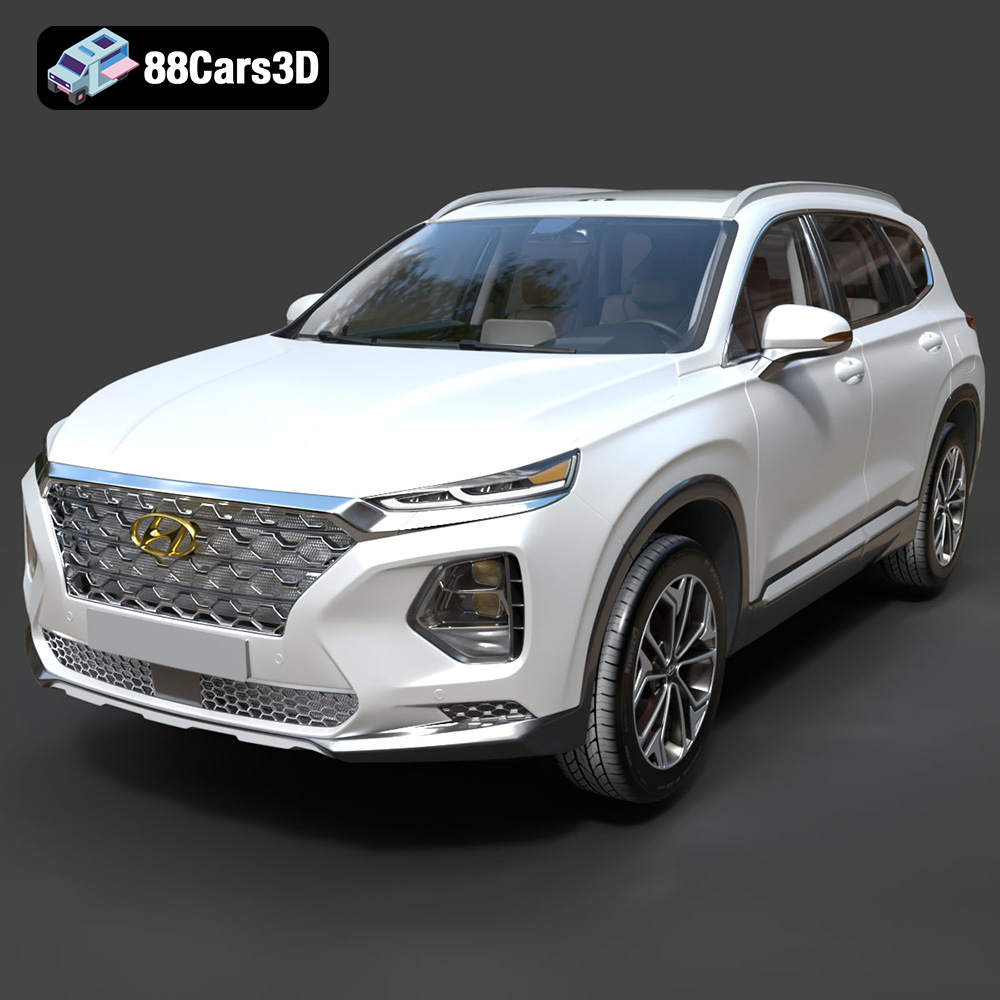
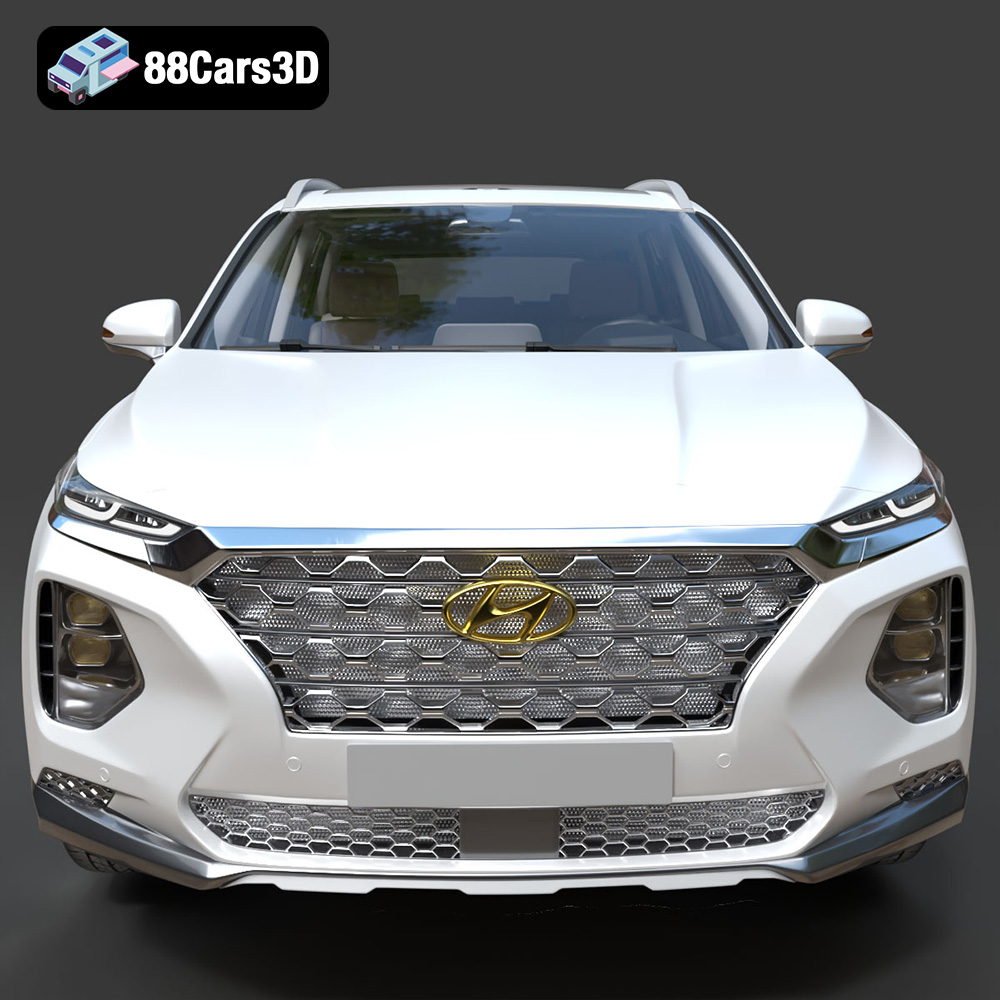
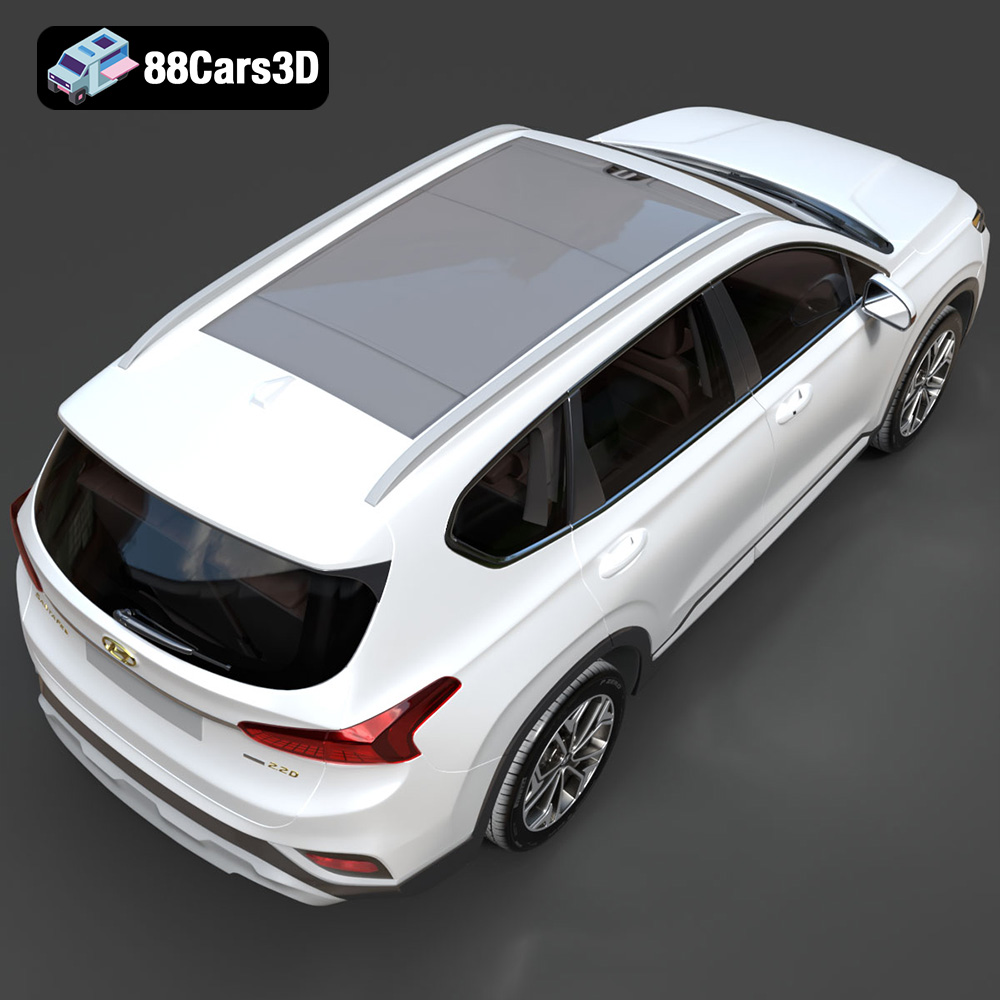
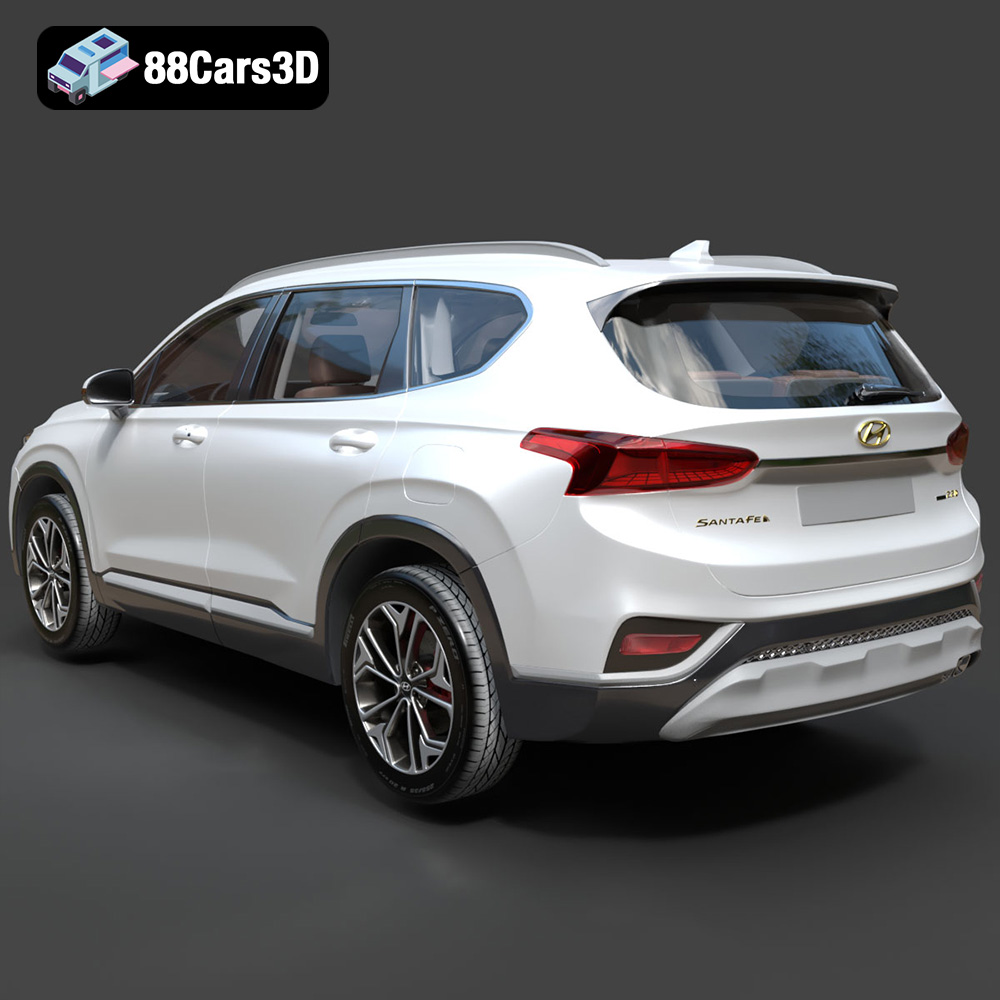
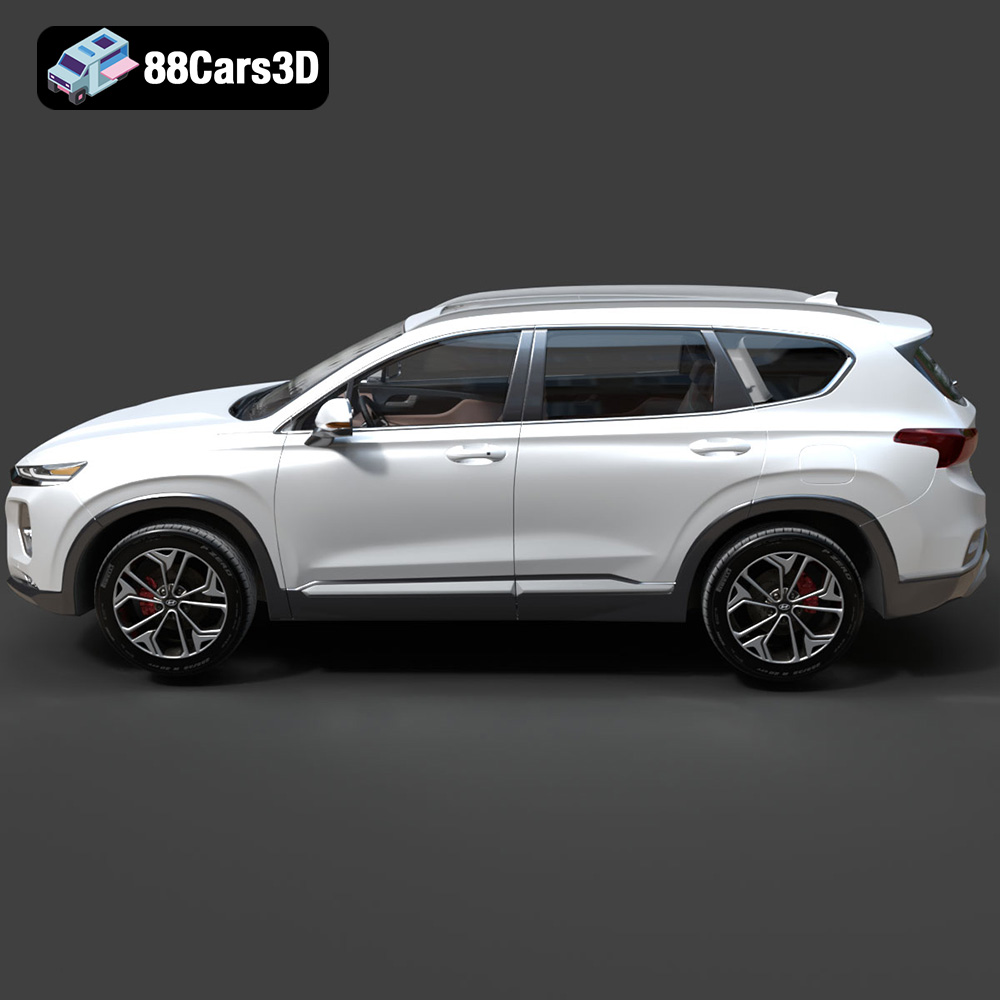
One prime example of such an asset is the Hyundai Santa Fe 2019 3D model. This model epitomizes the blend of aesthetic precision and technical optimization that modern projects require. It perfectly captures the distinctive styling and robust appeal of the 2019 Santa Fe, from its signature cascading grille to its dynamic split-headlight design. With game-ready topology and a wealth of detail, it serves as an excellent case study for understanding the impact of high-quality 3D car models in various professional contexts.
Creating a truly effective 3D car model goes far beyond simply mimicking shapes. It involves a deep understanding of vehicle design, material science, and computational efficiency. Every curve, every panel gap, and every component must be recreated with an obsessive attention to detail, while simultaneously ensuring the model remains usable in performance-critical environments.
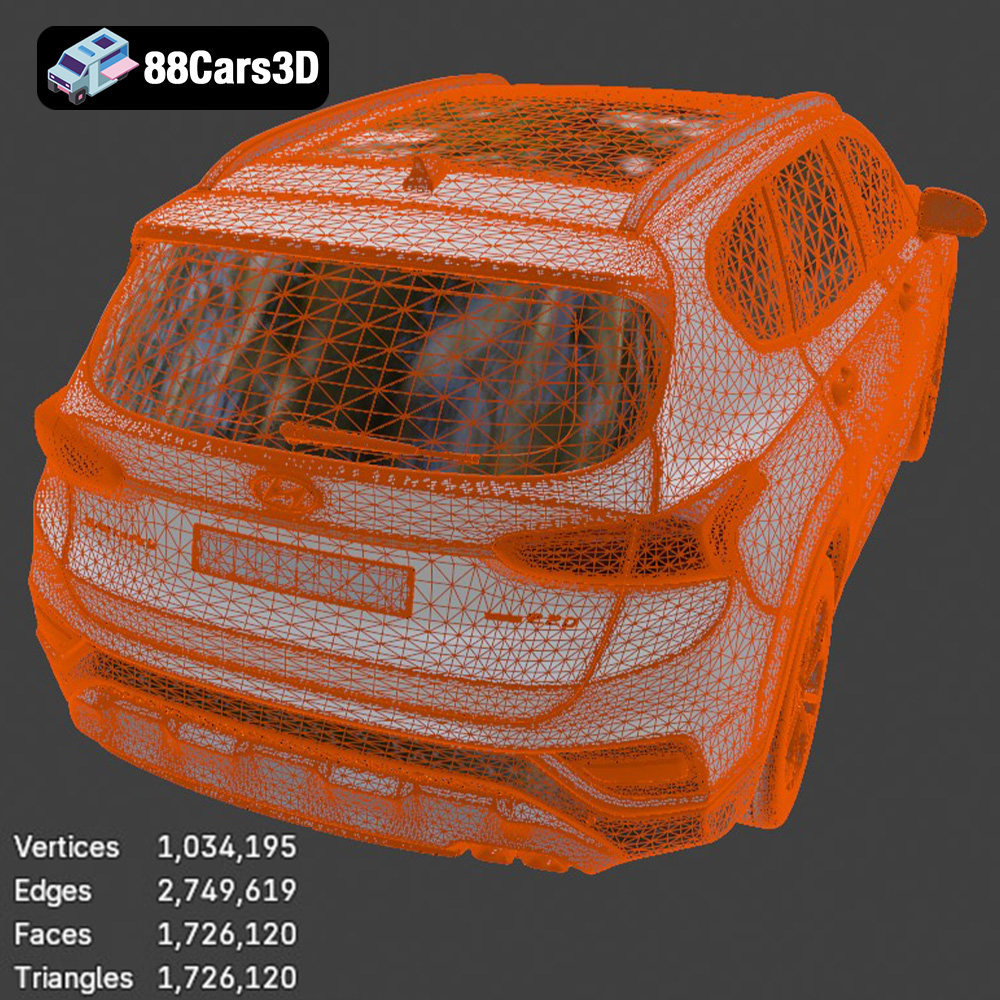
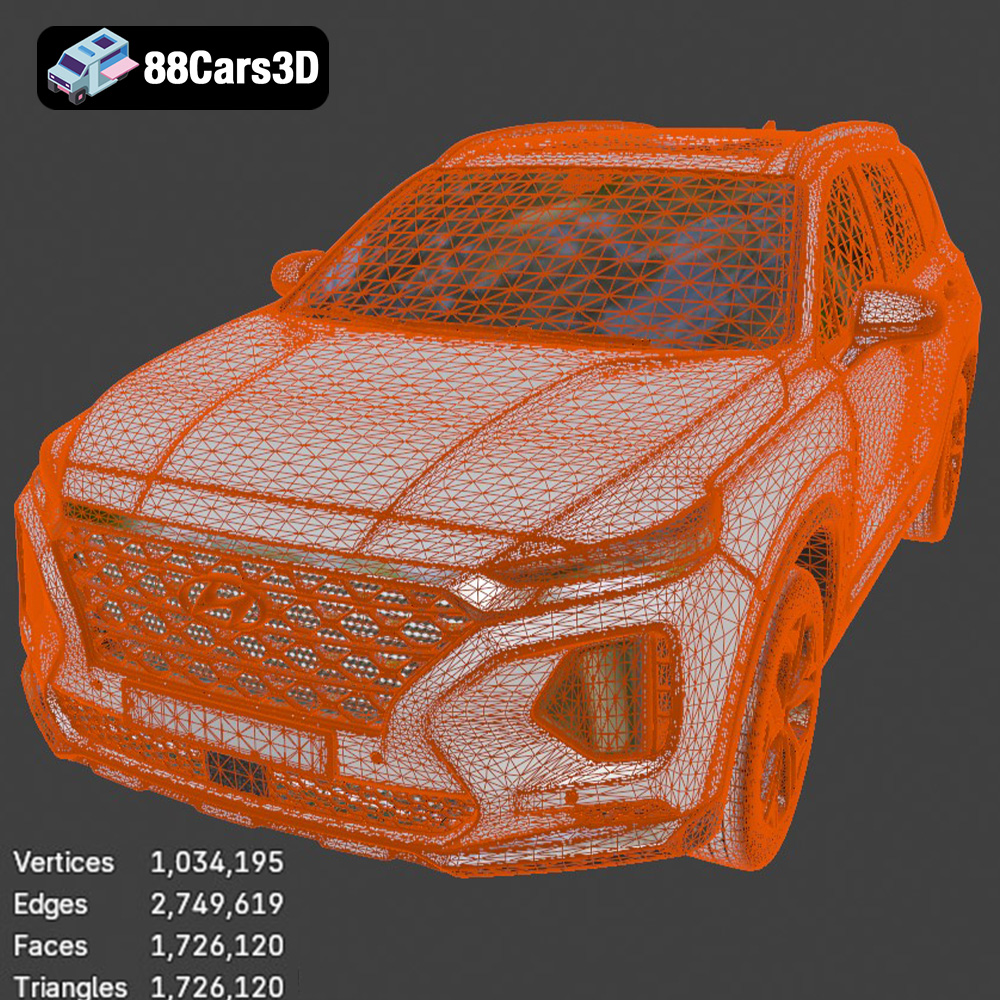
The foundation of any high-quality 3D car model is its geometrical accuracy. This means replicating the vehicle’s real-world dimensions, proportions, and surface contours with utmost precision. For the Hyundai Santa Fe 2019 3D model, this translates into faithfully capturing its bold stance, elegantly sculpted body lines, and distinctive exterior features. Details such as the accurate frame geometry, realistic suspension components, and the unique split-lighting setup are crucial for visual authenticity. With over 1.7 million triangles, this particular model strikes an impressive balance, offering uncompromising visual fidelity without being overly cumbersome for modern pipelines. This level of detail allows for close-up renders and animations where every nuance is visible, critical for automotive configurators or marketing campaigns.
Beyond raw polygon count, the quality of a model’s topology—how its vertices, edges, and faces are arranged—is paramount. “Game-ready” isn’t just a buzzword; it implies clean, efficient mesh flow that facilitates deformation, texturing, and real-time rendering. An optimized topology ensures that the model can be easily integrated into game engines like Unreal Engine or Unity, performing smoothly even when part of a larger, complex scene. It also aids in UV unwrapping, making texture application seamless and preventing visual artifacts. The Hyundai Santa Fe 2019 model is designed with this principle in mind, featuring proper pivot setups for animated elements like wheels, steering, and suspension, which are essential for dynamic simulations and interactive experiences.
Adherence to real-world scale is a fundamental requirement for any professional 3D asset, especially for vehicles. This ensures that when the model is imported into an environment, whether it’s an architectural scene, a game map, or an AR application, it appears correctly proportioned relative to other objects. Incorrect scaling can lead to countless headaches in rendering, physics simulations, and scene composition. The Hyundai Santa Fe 2019 3D model, built to real-world scale, ensures immediate compatibility and reduces setup time, allowing artists and developers to focus on creative tasks rather than scaling adjustments.
Navigating the diverse landscape of 3D file formats is crucial for any professional working with digital assets. Each format serves a specific purpose, offering unique advantages for different stages of the production pipeline, from initial modeling to final deployment. Understanding when and why to use each is key to efficient workflows and seamless integration. The Hyundai Santa Fe 2019 3D model is conveniently offered in a wide array of formats, ensuring maximum compatibility across various software and platforms.
The .blend format is native to Blender, a powerful open-source 3D creation suite. A .blend file typically encapsulates an entire Blender project, including the 3D model’s geometry, materials, textures, lighting, camera setups, animations, physics simulations, and even scene organization data. This makes it an ideal choice for artists who primarily work within Blender, offering full editability and access to all the original scene settings. It’s perfect for deep customization, adjusting materials, or re-rigging components. When you download a .blend file from 88cars3d.com, you get the complete, editable scene as the artist intended it within Blender.
Autodesk’s .fbx (Filmbox) format has become an industry standard for interoperability between different 3D software applications and game engines. It’s incredibly versatile, capable of storing not just geometry and materials, but also animations, rigs, skinning data, cameras, and lights. For real-time pipelines, especially with Unreal Engine and Unity, .fbx is often the preferred choice due to its robust support for animation and hierarchical data. It’s a reliable format for transferring complex animated models while preserving their structure and movement.
The .obj (Wavefront OBJ) format is one of the most widely supported and universal 3D file formats. It’s excellent for exchanging pure geometry data (vertices, normals, texture coordinates, faces) between almost any 3D software. While it can reference external material files (.mtl), it doesn’t embed animations or scene information. This makes it a lightweight and reliable option for basic model exchange, especially when you primarily need the mesh itself and plan to set up materials and lighting from scratch in your target application. It’s a safe bet for cross-software compatibility.
.glb (GL Transmission Format Binary) is a modern, open-standard, and royalty-free format designed for efficient transmission and loading of 3D scenes and models. It’s particularly optimized for augmented reality (AR), virtual reality (VR), and browser-based 3D applications because it packs all model data—geometry, materials, textures, and animation—into a single binary file. This self-contained nature minimizes file size and simplifies deployment, making it perfect for interactive web viewers, mobile AR apps, and virtual showrooms where quick loading times are crucial.
The .stl (Stereolithography) format is the de facto standard for 3D printing. It represents a 3D model as a series of connected triangles, defining only the surface geometry of an object without color, texture, or other model attributes. Its simplicity makes it universally compatible with 3D printers and slicing software. When preparing the Hyundai Santa Fe 2019 for physical production, an .stl file would be generated, requiring careful consideration of scale, layer height, and support structures to ensure a successful print.
The .ply (Polygon File Format) is another widely used format for storing 3D data, particularly popular for 3D scan data and applications in scientific visualization or computer-aided design (CAD). It can store information beyond simple geometry, such as color, transparency, normals, texture coordinates, and even reliability information for each vertex or face. While not as common for general asset exchange, its ability to store detailed mesh attributes makes it valuable for precision analysis or for models derived from real-world scans.
The .unreal format isn’t a single file type but represents assets specifically packaged or directly imported for Unreal Engine. When a model is provided in an “unreal” package, it means it’s already optimized, correctly scaled, and often includes material setups, collision meshes, and LODs (Levels of Detail) tailored for the engine. This significantly reduces setup time for Unreal developers, allowing them to drag and drop the asset directly into their projects with minimal additional work. The Hyundai Santa Fe 2019 3D model is provided with this level of integration, making it truly game-ready.
The .max format is the proprietary file type for Autodesk 3ds Max, a leading software for 3D modeling, animation, rendering, and compositing. Similar to .blend, a .max file contains all the data related to a 3ds Max scene, including geometry, materials, textures, lights, cameras, animations, and modifier stacks. This format offers full flexibility for artists working in 3ds Max, allowing for extensive modifications, re-texturing, or incorporating the model into existing complex scenes. It provides access to the full creative control within the 3ds Max environment.
Having such a comprehensive suite of file formats, as offered for the Hyundai Santa Fe 2019, empowers professionals to choose the best option for their specific workflow, ensuring seamless integration and maximum utility.
The true measure of a high-quality 3D car model lies in its adaptability and ease of integration across various professional applications. The Hyundai Santa Fe 2019 3D model, with its versatile file formats and optimized structure, is engineered to slot seamlessly into diverse industry workflows.
For game developers, the Hyundai Santa Fe 2019 3D model is an ideal asset. Its game-ready topology and optimized polycount (1,726,120 triangles) strike a perfect balance between visual realism and real-time performance. In engines like Unreal Engine or Unity, the included .fbx or .unreal formats streamline the import process. Developers can quickly integrate the vehicle into open-world environments, racing titles, or simulators. Crucially, the model features separate components for wheels, suspension, and steering, along with proper pivot setups. This enables realistic physics simulations, dynamic animations for driving, turning, and suspension travel, enhancing the player’s immersive experience. The optimized geometry also supports first-person POV in gaming, ensuring a detailed and accurate cockpit view.
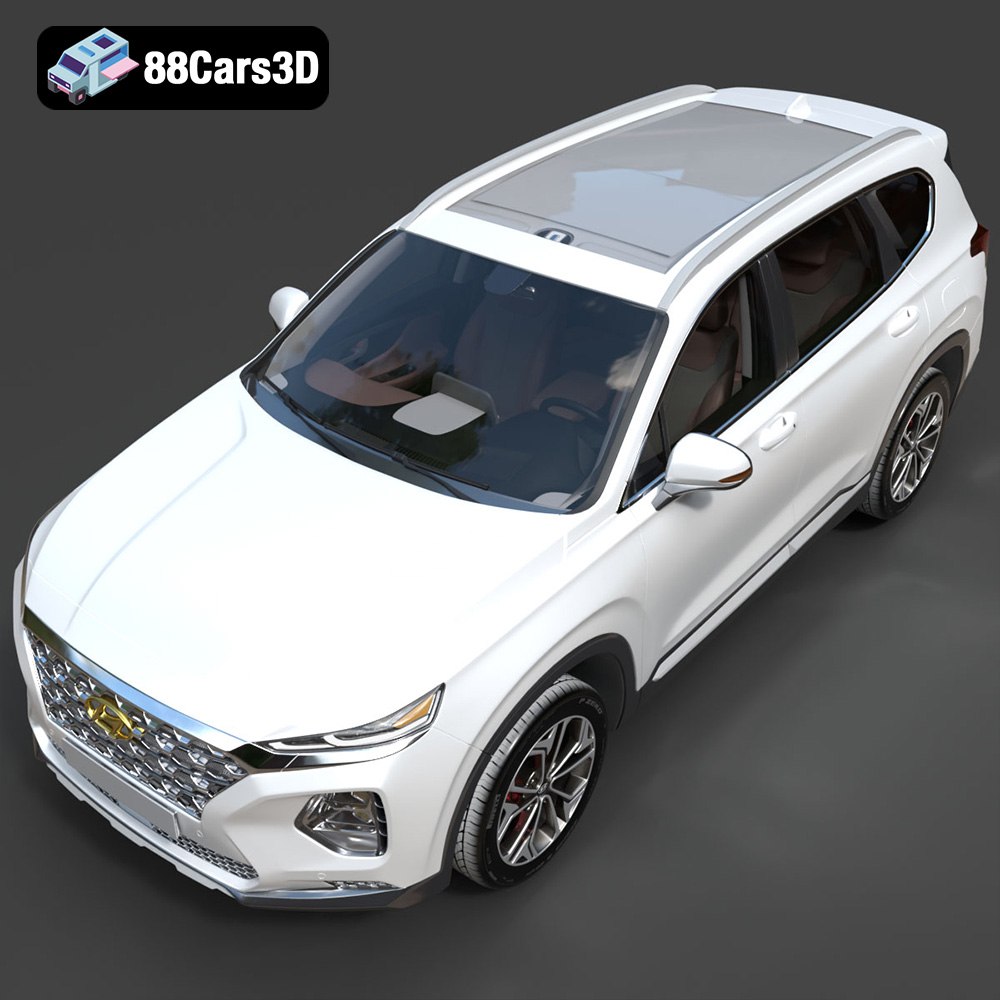
Architectural visualization (ArchViz) and product rendering demand photorealistic results. The detailed exterior and interior of the Hyundai Santa Fe 2019 3D model make it perfect for populating urban street scenes, driveways of residential projects, or lifestyle renders for marketing. Using software like 3ds Max (with the .max file) or Blender (with the .blend file) alongside renderers like V-Ray, Corona, or Cycles, artists can easily apply advanced materials, adjust lighting environments, and achieve stunning, lifelike imagery. The model’s real-world scale ensures it fits perfectly within architectural scenes, adding a touch of realism and context to property developments or smart city concepts. Its premium interior details, including the digital instrument cluster and floating infotainment display, are ideal for close-up shots that emphasize luxury and modernity.
The rise of AR/VR technology has created new avenues for showcasing products. The Hyundai Santa Fe 2019 model is perfectly suited for immersive virtual showrooms, interactive configurators, and mobile AR experiences. The .glb format, optimized for web and mobile, allows for quick loading and display on various devices without compromising visual quality. Users can explore the vehicle’s exterior and interior in a virtual space, change colors, inspect details, and even place the car in their real-world environment via AR. This provides an engaging, personalized, and memorable experience for potential customers or clients, bridging the gap between digital content and physical interaction.
For hobbyists, designers, or even automotive engineers needing physical prototypes, the ability to 3D print a model is invaluable. The Hyundai Santa Fe 2019 can be converted to the .stl format, making it ready for additive manufacturing. While scale, layer height, and infill settings are critical (recommended: 1:12 to 1:24 scale, 0.04–0.12 mm layer height, 20-30% infill), the detailed geometry ensures that the printed model retains the vehicle’s distinct characteristics. Resin printing is recommended for capturing fine details like the exhaust system, mirrors, and intricate interior elements. Post-processing, including sanding, priming, and applying authentic factory colors, can transform a digital asset into a stunning physical display piece.
Beyond simply having a high-quality 3D car model, the ability to render it photorealistically and animate it dynamically is where true artistic and technical skill shines. The Hyundai Santa Fe 2019 3D model provides the perfect canvas for these advanced techniques.
Achieving photorealism begins with material definition. For the Hyundai Santa Fe 2019, this means crafting physically based rendering (PBR) materials that accurately simulate everything from the car’s metallic paintwork to the subtle reflections on its glass and the texture of its interior plastics. PBR workflows ensure materials react correctly to light, providing consistent results across different lighting environments. Artists utilize texture maps for color (albedo), roughness, metallic properties, normal details, and ambient occlusion. Lighting plays an equally critical role; HDRI (High Dynamic Range Image) environment maps are frequently used to simulate real-world lighting conditions, from bright sunny days to dramatic twilight, creating authentic reflections and mood. Studio lighting setups, often using softboxes and reflectors, are employed for clean product shots, highlighting the vehicle’s form and features.
The Hyundai Santa Fe 2019 3D model’s robust technical specifications, including separate components for wheels, suspension, and steering, are built for animation. This modularity allows animators to create realistic driving sequences, intricate turns, and dynamic suspension compression over uneven terrain. Rigging the vehicle with appropriate controls enables intuitive animation, letting artists focus on performance rather than tedious individual component manipulation. Imagine a smooth camera pan around the car as it navigates a beautifully rendered urban street, or a detailed breakdown of its suspension system in action – all made possible by a well-prepared 3D model. These animations are invaluable for commercials, game cinematics, and interactive presentations, showcasing the vehicle’s design and functionality in motion.
Even after a render is complete, post-production is where the final magic happens. Using software like Adobe Photoshop or Nuke, artists can enhance their automotive renders with effects such as motion blur to convey speed, depth of field to draw attention to specific details, and color grading to establish a particular mood or aesthetic. Adding lens flares, subtle atmospheric haze, or integrating the car seamlessly into a backplate photograph further elevates realism. These techniques transform a raw render into a compelling visual narrative, ensuring that the Hyundai Santa Fe 2019 looks its absolute best in any marketing collateral or digital showcase.
In a world where speed, efficiency, and quality are paramount, sourcing reliable 3D car models can be a game-changer for any project. 88cars3d.com stands as a premier destination for professionals seeking top-tier automotive 3D assets, offering products like the versatile Hyundai Santa Fe 2019 3D model that meet the highest industry standards.
Time is money in any creative pipeline. Choosing pre-made, game-ready 3D car models like those found on 88cars3d.com significantly reduces development time and costs. Models are not just visually accurate; they are meticulously optimized for real-time performance, featuring clean topology, efficient polycounts, and proper pivot points for animation. This means less time spent on optimization and more time focused on creative implementation, whether you’re building a game, an AR app, or a complex visualization. The 2019 Hyundai Santa Fe model’s 1,726,120 triangles hit that sweet spot, delivering stunning visuals without bogging down your engine.
The breadth of included file formats—from .blend and .max for comprehensive editing to .fbx for universal exchange, .glb for web and AR/VR, and .stl for 3D printing—makes products from 88cars3d.com incredibly versatile. This ensures that whatever your target platform or software, you have an immediate solution. Whether you’re a game developer needing a high-performance vehicle, an architect visualizing a scene, a marketing team creating an interactive configurator, or a hobbyist looking to 3D print a detailed model, these assets are designed to perform reliably across the spectrum of professional demands.
When investing in digital assets, knowing they are created by experienced professionals is crucial. 88cars3d.com is committed to providing assets that are not only of high technical quality but also backed by clear descriptions and detailed technical specifications. This transparency helps professionals make informed decisions, ensuring the models they acquire will seamlessly integrate into their projects and contribute to their overall success. The detailed product description for the Hyundai Santa Fe 2019 model, outlining its exterior and interior features, technical specifications, and specific applications, exemplifies this commitment to reliability and customer confidence.
The journey from a digital concept to a tangible or interactive experience is paved with high-quality assets. As we’ve explored, a meticulously crafted 3D car model is more than just an object; it’s a multi-faceted tool that empowers creators across diverse industries. From populating vast open-world games and rendering photorealistic architectural scenes to driving immersive AR/VR experiences and even bringing digital designs to life through 3D printing, the demand for excellence in 3D car models continues to grow.
The Hyundai Santa Fe 2019 3D model exemplifies this professional-grade quality. Its detailed geometry, optimized topology, comprehensive file format support, and thoughtful design for animation and rendering make it an invaluable asset for any serious creative endeavor. By investing in such high-fidelity assets, professionals can streamline their workflows, achieve unparalleled realism, and ultimately deliver more compelling and impactful projects.
For those seeking to elevate their automotive rendering, game development, or visualization projects, exploring the extensive collection of high-quality 3D car models available on 88cars3d.com is a crucial step towards unlocking new creative possibilities.
The 2019 Hyundai Santa Fe represents a bold leap in mid-size SUV design, combining robust family-hauling capabilities with premium, sophisticated styling. This meticulously crafted 3D model captures the essence of the vehicle, highlighting its signature cascading grille, aggressive split-headlight design, and dynamic side profile. From its powerful stance to its elegantly sculpted body lines, every visual element of this modern SUV has been faithfully recreated. Boasting a highly detailed geometry with 1726120 triangles, this model offers uncompromising visual fidelity while remaining optimized for modern 3D pipelines. The game-ready topology ensures seamless integration into major rendering and real-time environments, making it a highly versatile asset for game development, architectural visualization, AR/VR applications, and high-end automotive animation.
$81.50
.blend
.fbx
.glb
.hyundai
.max
.obj
.ply
.rendering
.stl
.unreal
car-3d-model
family-suv
game asset
game-ready
low-poly
optimized
santa-fe
santa-fe-2019
SUV
VR/AR