Get 20% OFF All Premium 3D & STL Models!

In the dynamic world of digital content creation, where realism and performance go hand-in-hand, the demand for high-quality 3D assets is ever-growing. From blockbuster video games to cinematic visualizations and immersive AR/VR experiences, the quality of a 3D model can make or break a project. Automotive subjects, in particular, require a meticulous balance of historical accuracy, aesthetic appeal, and technical optimization. Few vehicles embody this challenge and reward as beautifully as the Chevrolet C10 (C14) 1963, a true icon of American automotive design.
The 1963 C10, with its distinctive grille, robust lines, and enduring legacy as a quintessential workhorse, presents a fascinating subject for 3D artists and developers. Crafting such a classic vehicle into a versatile 3D asset demands expertise in modeling, texturing, and understanding diverse digital pipelines. This article delves deep into what makes a premium 3D car model, using the exceptional Chevrolet C10 (C14) 1963 3D Model available on 88cars3d.com as a prime example. We’ll explore its technical specifications, professional applications, and the critical role of file formats in today’s diverse creative landscape.
The utility and versatility of any 3D model are heavily dependent on the file formats in which it is provided. Each format serves distinct purposes, catering to specific software environments, rendering pipelines, or end-use applications. For a comprehensive asset like the Chevrolet C10 (C14) 1963 3D Model, a broad spectrum of formats ensures its adaptability across virtually any professional workflow.
The .blend format is native to Blender, the powerful open-source 3D creation suite. It encapsulates an entire Blender scene, including mesh data, materials, textures, lighting, cameras, animation data, and even scene settings. This makes it incredibly valuable for users who wish to dive deep into the model’s construction, make extensive edits, re-rig, or customize materials directly within Blender. It offers the highest level of editability and preserves all proprietary Blender features, ensuring that the Chevrolet C10 1963 model retains its original fidelity and structure for Blender enthusiasts.
Autodesk’s .fbx (Filmbox) format is arguably the most widely adopted interchange format in the 3D industry, particularly favored for game development and real-time pipelines like Unreal Engine and Unity. It efficiently stores mesh data, textures, materials (often as PBR maps), animations (skeletal and blend shapes), cameras, and lights. Its robust support for skeletal animation and its ability to embed texture files make it ideal for transporting complex rigged models from one software to another without significant data loss. For the C10 model, the .fbx variant ensures seamless integration into game engines, preserving its pivot setups for steering and suspension, and enabling quick setup for interactive experiences.
The .obj (Wavefront OBJ) format is a venerable and universal standard for exchanging 3D geometry data. It is highly compatible across almost all 3D software applications. An .obj file primarily stores vertex positions, UV coordinates, normals, and face information, often accompanied by an .mtl (material template library) file for basic material properties and texture references. While it doesn’t support animation, rigging, or complex PBR materials directly within the file, its simplicity and widespread adoption make it an excellent choice for basic mesh exchange, especially when the goal is a clean, unadorned geometry base for custom texturing and setup in a new environment. The C10’s .obj variant provides a reliable foundation for any artist, regardless of their primary 3D package.
.glb (GL Transmission Format Binary) is an increasingly critical format, especially for emerging technologies like Augmented Reality (AR), Virtual Reality (VR), and web-based 3D viewers. It’s a binary container format that efficiently packs 3D models, textures, and animations into a single, self-contained file. This optimization for transmission and loading makes it perfect for mobile AR apps, immersive VR showrooms, and interactive browser experiences where performance and file size are paramount. The C10 model in .glb ensures that enthusiasts can quickly preview or integrate this classic truck into lightweight, high-performance digital environments.
The .stl (STereoLithography) format is the de facto standard for 3D printing. It represents a 3D model as a series of connected triangles, defining only the surface geometry of an object without color, texture, or other attributes. For hobbyists or professionals looking to bring the Chevrolet C10 1963 into the physical world, the .stl file is indispensable. It allows for the model to be sliced and prepared for fabrication, with the C10’s detailed structure lending itself well to physical reproduction, as noted by the recommended print settings for scale, layer height, and supports.
The .ply (Polygon File Format) is another popular format for storing 3D data, particularly suited for scanner data and applications requiring high precision mesh information. It can store various properties beyond just geometry, such as color, transparency, normals, texture coordinates, and even reliability information for scanned data. While less common for general asset exchange than .fbx or .obj, its precision and extensibility make it valuable in fields like CAD, reverse engineering, or scientific visualization where exact geometric representation is crucial.
The .unreal format, or rather assets specifically prepared and optimized for Unreal Engine, typically refers to files that have gone through a comprehensive pipeline including proper material setup (PBR), collision meshes, LODs (Levels of Detail), and sometimes even blueprint configurations. While not a standalone file extension in the same way as .fbx or .obj, providing a model “in .unreal format” implies it’s designed for drag-and-drop readiness within the Unreal Engine editor. This significantly accelerates development for game artists and simplifies the integration of the C10 into large-scale virtual environments.
Finally, the .max format is the proprietary scene file for Autodesk 3ds Max, a leading software for 3D modeling, animation, and rendering. Like .blend, it stores all scene data, including geometry, materials, textures, lights, cameras, animations, and modifiers specific to 3ds Max. This format offers complete editability and allows professional artists to leverage all the advanced tools and rendering capabilities of 3ds Max for high-end visualizations, animations, and complex scene setups involving the Chevrolet C10 1963 model.
The inclusion of such a diverse array of formats for the Chevrolet C10 (C14) 1963 3D Model underscores its commitment to professional versatility, ensuring that designers, developers, and hobbyists alike can integrate this classic truck into their preferred workflows with minimal friction.
Creating a truly exceptional 3D car model, especially one with significant historical presence like the Chevrolet C10 1963, goes far beyond simply replicating its silhouette. It involves a meticulous deep dive into every curve, component, and characteristic that defines the vehicle. The 88cars3d.com Chevrolet C10 (C14) 1963 3D Model exemplifies this dedication to detail, delivering an asset that is both visually stunning and technically robust.
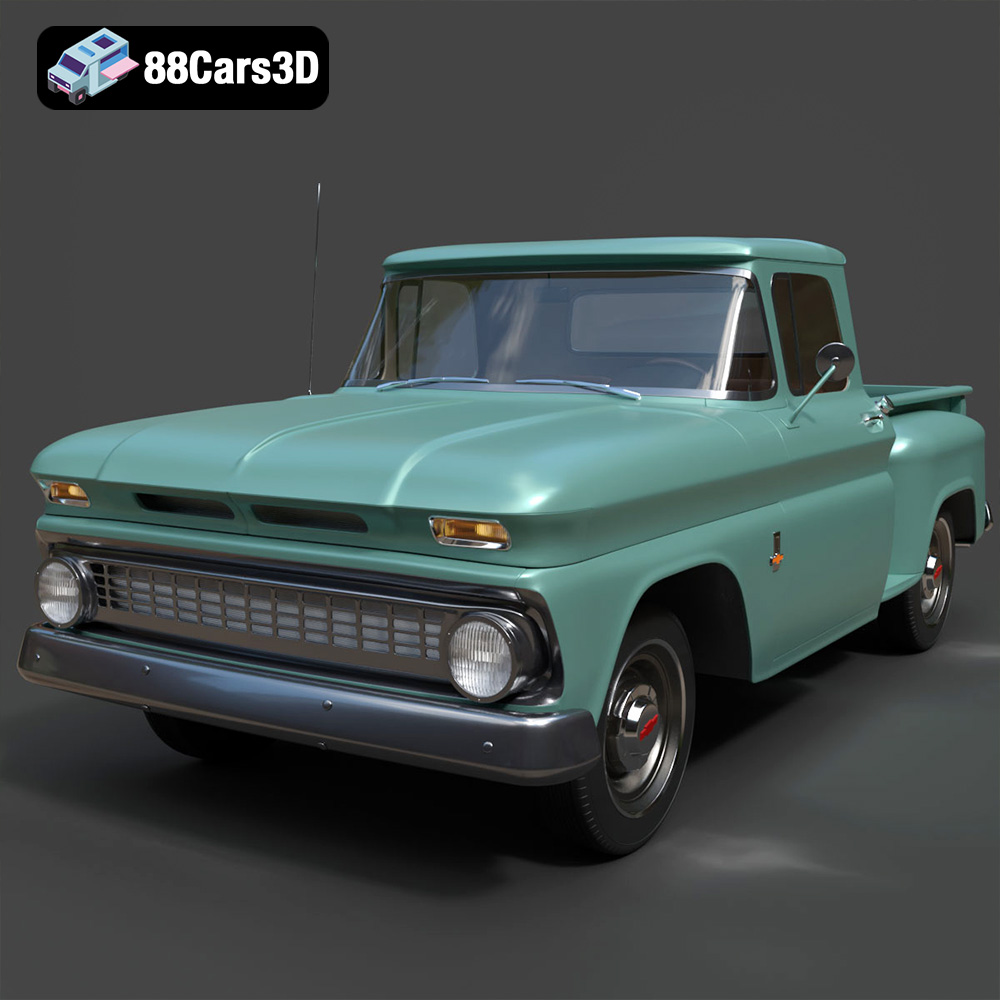
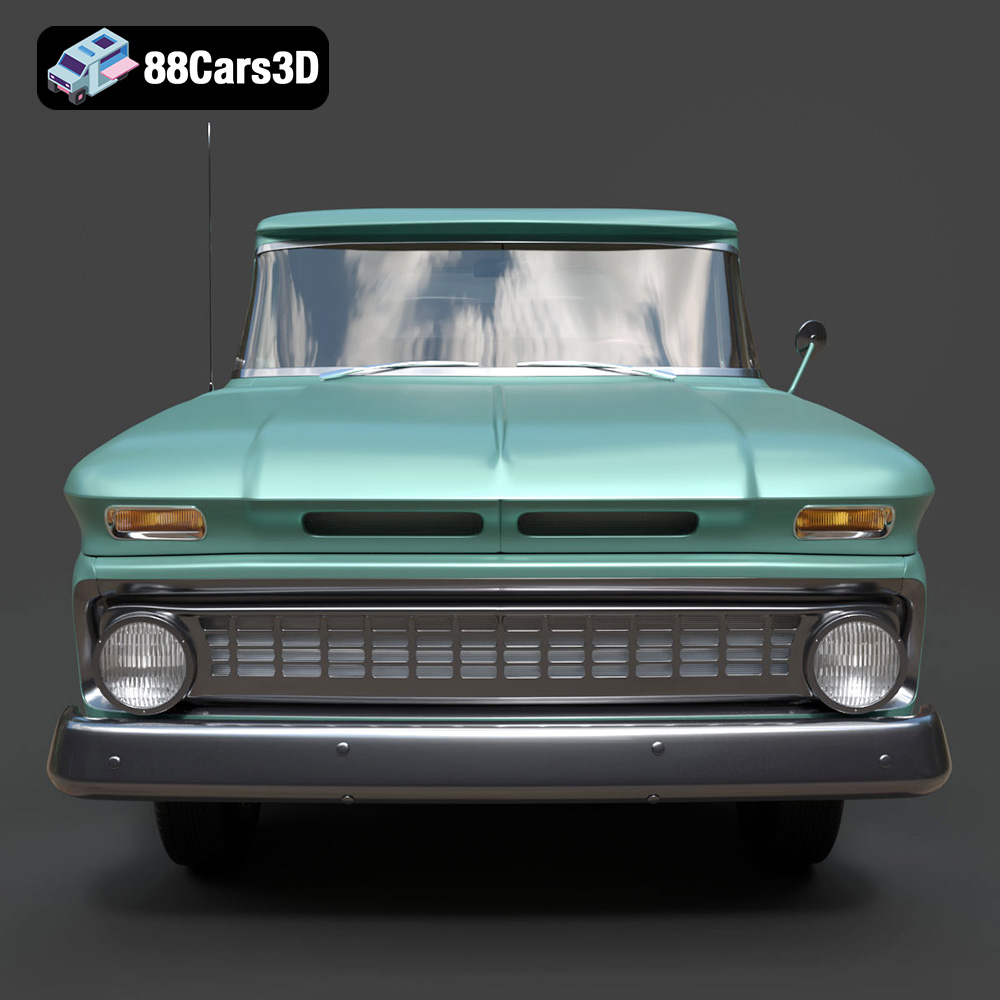
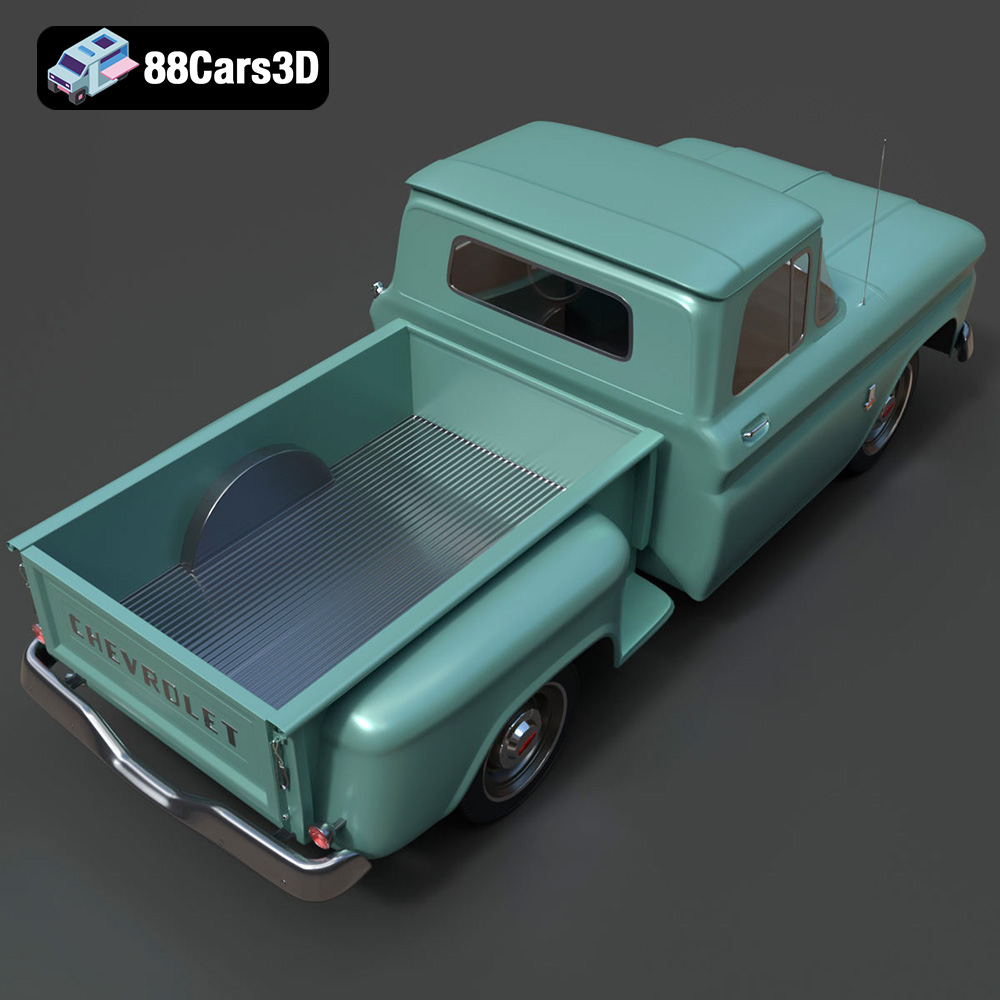
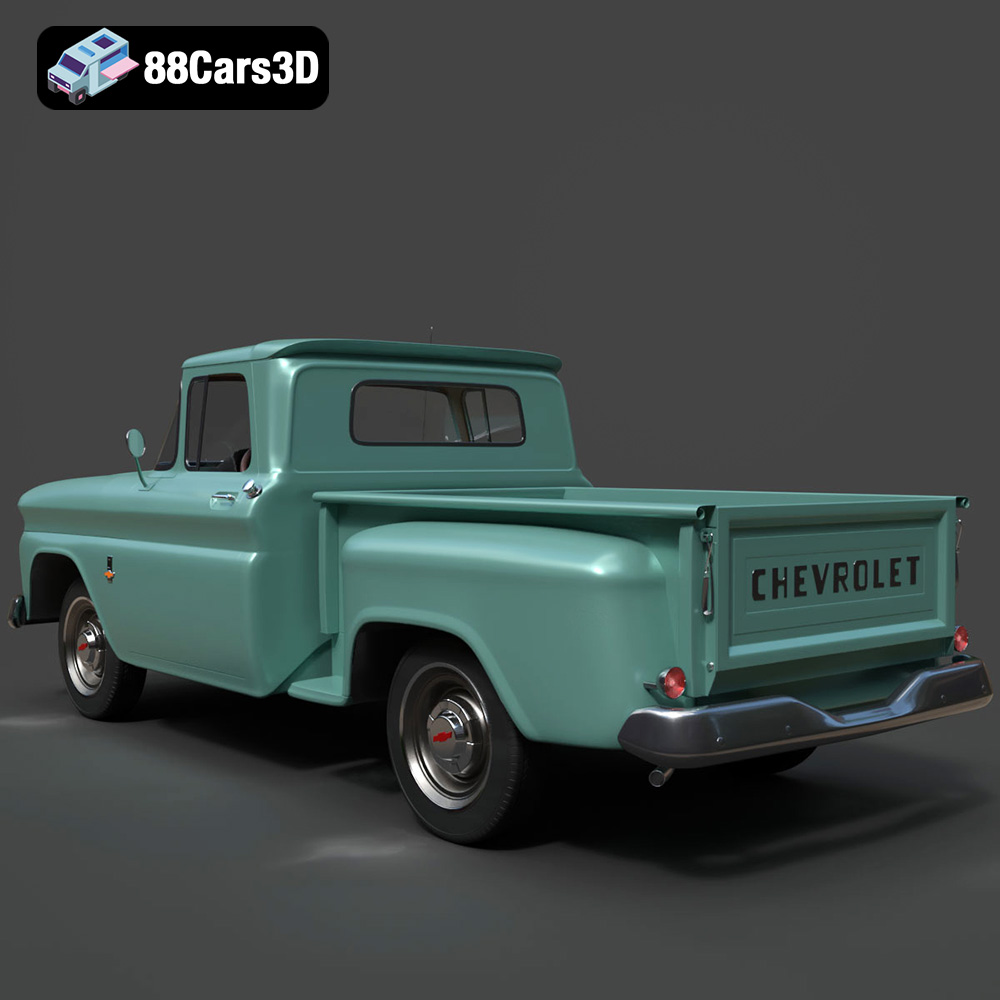
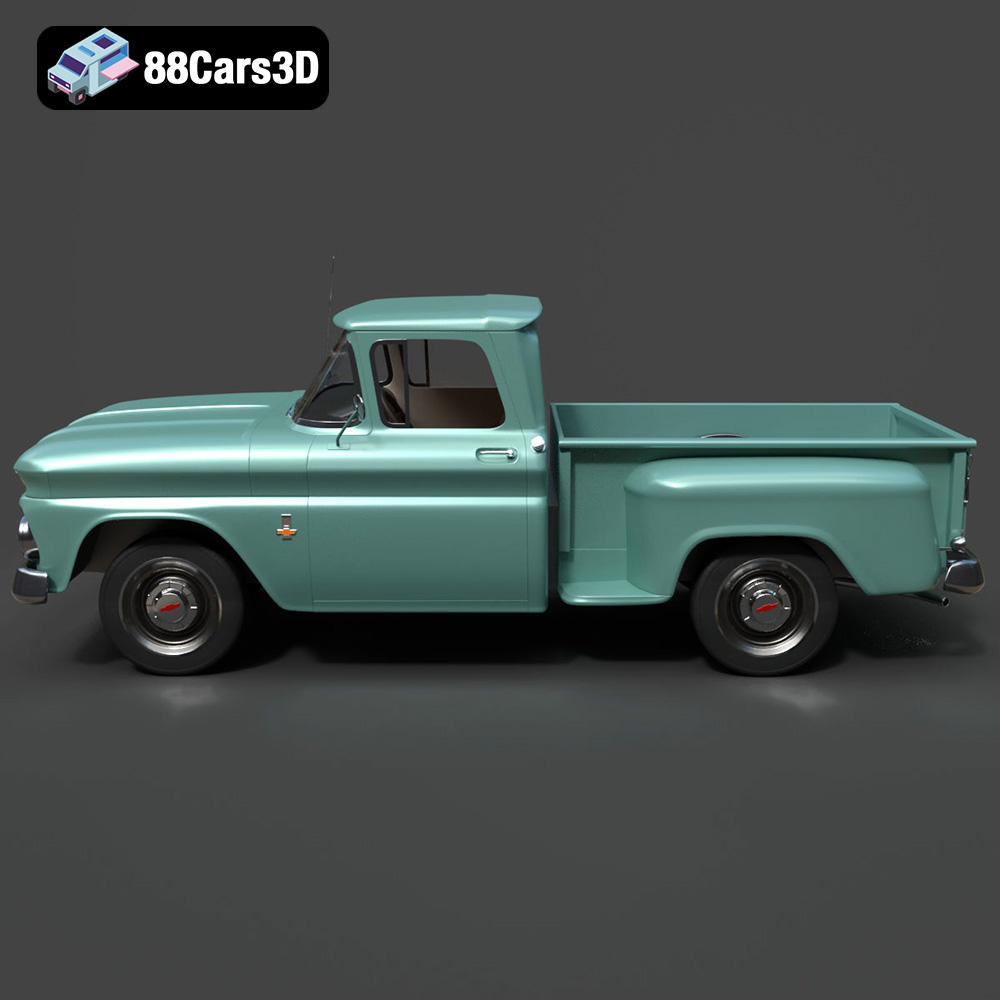
The exterior of the 1963 C10 is where its iconic personality truly shines. This 3D model captures its “accurate Chevrolet C10 (C14) 1963 frame geometry and classic pickup proportions,” ensuring that every angle and dimension aligns with the real-world vehicle. Crucial elements like the “distinctive front grille” are faithfully recreated, along with “historically accurate round headlights and vintage taillight assemblies.” Beyond the visible bodywork, the model extends to “detailed engine block based on classic Chevrolet configurations,” hinting at the power beneath the hood, and an “authentic dual or single exhaust system routing.” Even the undercarriage receives attention with “detailed leaf spring and independent front suspension components,” alongside “period-correct steel wheels with chrome hubcaps and classic tread tires.” The provision of “separate wheels, suspension, and steering components for animation” is a critical feature, allowing for dynamic real-time interaction and realistic cinematic sequences.
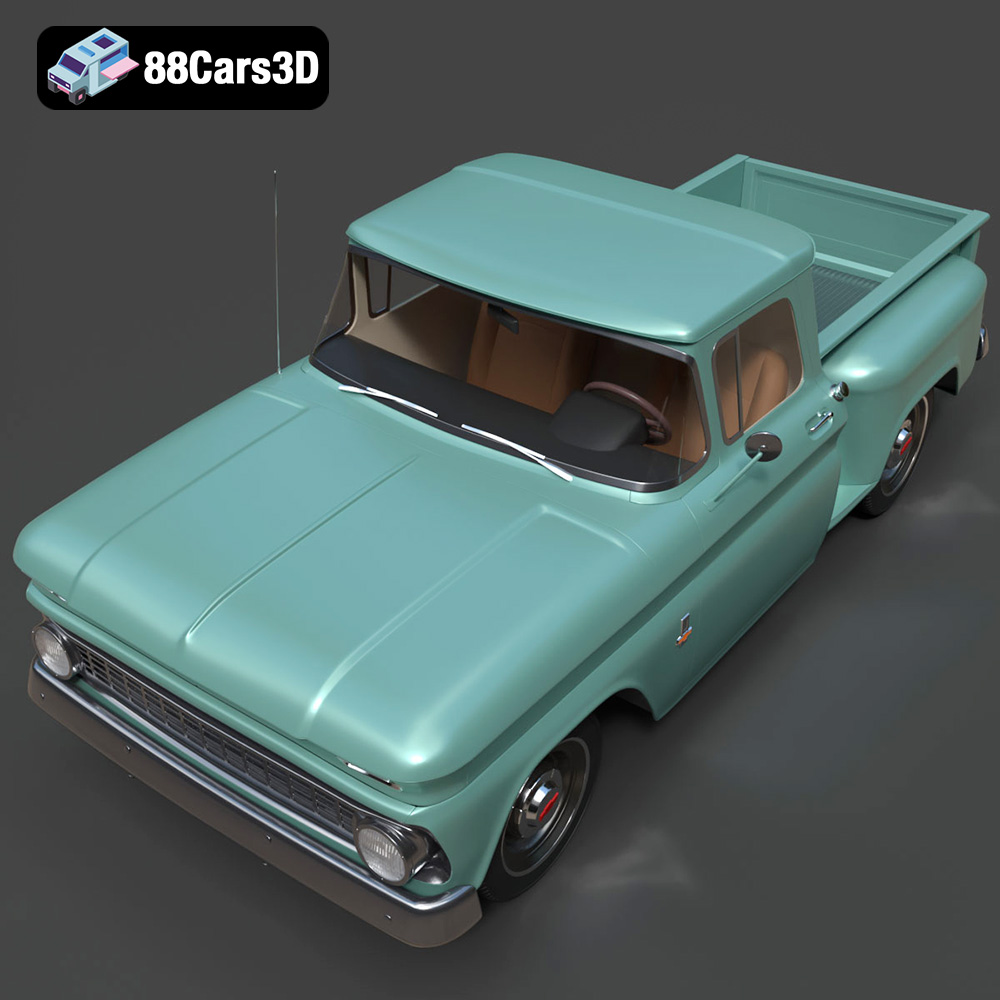
For many applications, particularly game development and AR/VR, the interior of a vehicle is just as important as its exterior. The C10 model’s “Cockpit & Interior Features” ensure a convincing user experience. A “classic vinyl bench seat with authentic stitching details” sets the tone, complemented by a “vintage large-diameter steering wheel with horn ring.” The “accurate instrument cluster with classic analog gauges” and “detailed dashboard controls, foot pedals, and column-mounted or floor shifter” provide a sense of tangible interaction. Significantly, the “optimized geometry for first-person POV in gaming” ensures that the model holds up under close scrutiny from inside the cabin, maintaining visual fidelity without over-burdening game engine resources. This careful balance is key for creating immersive gameplay or virtual showroom experiences.
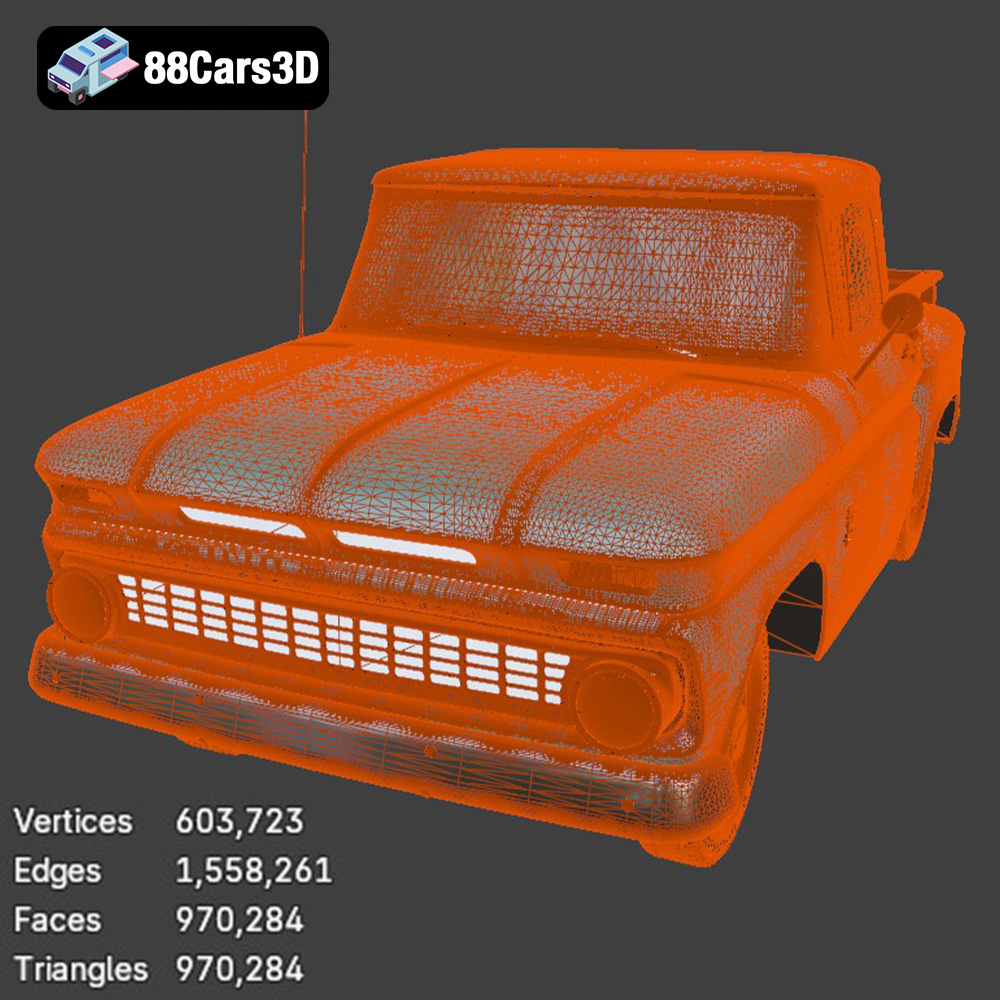
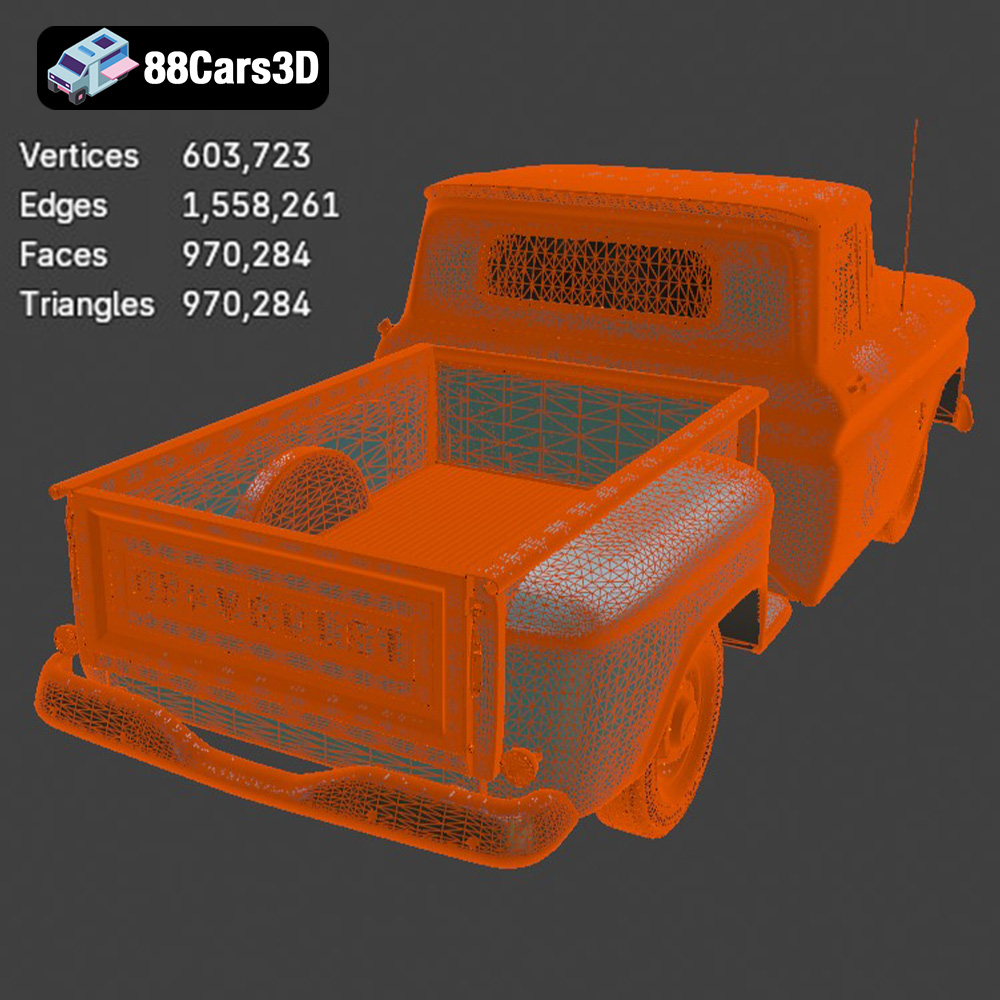
Beyond aesthetic accuracy, a professional 3D car model must excel in technical optimization. The Chevrolet C10 1963 model boasts “970,284 triangles,” a figure that strikes a sophisticated balance. It’s high enough to “deliver exceptional visual fidelity” and capture intricate details, yet optimized enough to prevent “compromising performance” in “modern real-time engines like Unreal Engine and Unity.” This “game-ready & optimized” nature is a testament to careful poly-budgeting and clean topology. Furthermore, “real-world scale accuracy based on actual vehicle chassis” ensures consistency across projects, and a “proper pivot setup for steering, wheel rotation, and suspension travel” is fundamental for any interactive or animated application. These technical specifications collectively make the C10 model not just a beautiful replica, but a highly functional and efficient asset for any professional workflow.
The true value of a versatile 3D asset like the Chevrolet C10 (C14) 1963 3D Model lies in its seamless integration into various professional workflows. From game engines to rendering suites, understanding how to leverage its features is paramount for achieving stunning results.
For game developers, the C10’s “game-ready & optimized” attributes are a significant advantage. Using the .fbx or specifically prepared .unreal formats, integrating the model into Unreal Engine or Unity is a streamlined process. The workflow typically involves:
Imagine the C10 cruising through a post-apocalyptic open-world or serving as a classic contender in a vintage racing game – its robust optimization makes these scenarios viable.
For artists focused on producing high-fidelity images or cinematic animations, the .max or .blend files offer maximum control. These formats allow full access to the model’s intricate geometry and material setup, enabling advanced rendering techniques.
This workflow is ideal for automotive rendering, marketing materials, and architectural visualizations where the C10 can add character and a sense of history.
Beyond traditional screen-based applications, the C10 model’s versatility extends to emerging technologies and physical fabrication.
The breadth of formats and applications ensures that the Chevrolet C10 (C14) 1963 3D Model is not just an asset, but a multifaceted tool for creativity across diverse platforms.
Creating compelling visuals with 3D car models requires more than just a great asset; it demands a deep understanding of rendering techniques. The Chevrolet C10 (C14) 1963 3D Model provides an excellent foundation to explore these advanced methods, pushing the boundaries of photorealism and artistic expression.
The model’s well-structured materials are key to its visual fidelity. Mastering material customization involves:
The ability to “change body/tank colors” and “modify tire textures” directly supports this level of artistic control, allowing the C10 to adapt to any visual narrative.
Lighting is the sculptor of 3D scenes. Effective lighting can evoke emotion, highlight forms, and define the mood.
Proper lighting ensures that the “material finishes (matte, gloss, metallic, patina)” are showcased optimally, adding to the visual storytelling.
Even the best raw render can be elevated through careful post-processing. This final stage refines the image, adding a layer of polish common in photography and film.
These techniques, when applied to the robust foundation of the 88cars3d.com Chevrolet C10 1963 model, can yield truly breathtaking automotive renders suitable for any professional application.
The versatility of a well-crafted 3D car model like the Chevrolet C10 1963 extends across numerous industries, proving its worth in diverse real-world applications. From interactive entertainment to marketing and design, its utility is undeniable.
In the expansive landscapes of modern open-world video games, vehicles are not merely props but integral elements of gameplay and immersion. The C10 model’s “optimized polycount” and “game-ready” attributes make it ideal for:
The inclusion of separate animatable components (wheels, suspension) is crucial for realistic physics, enhancing the driving experience within titles that often feature a variety of vehicles.
For brands and dealerships, high-quality 3D models are revolutionizing how vehicles are marketed and presented to consumers. Even for vintage cars like the C10, digital assets can create new engagement opportunities:
The customization options (colors, tire textures, material finishes) inherent in the C10 model are perfectly suited for these dynamic marketing applications.
Architectural Visualization (Arch-Viz) projects often benefit from incorporating contextual elements, and classic vehicles can significantly enhance the narrative and realism of a scene.
The ability to adjust the model’s materials to reflect different conditions—from showroom pristine to road-worn patina—makes it incredibly versatile for architectural artists aiming for specific aesthetic outcomes.
The world of 3D modeling demands precision, versatility, and an unwavering commitment to quality. The Chevrolet C10 (C14) 1963 3D Model stands as an exemplary asset, showcasing how meticulous craftsmanship can bridge the gap between historical accuracy and modern digital utility. From its faithfully recreated exterior and interior details to its expertly optimized topology, this model is engineered for performance across a spectrum of professional applications.
Whether you are a game developer crafting immersive open-world experiences, an automotive renderer striving for photorealistic marketing visuals, an AR/VR artist building interactive showrooms, or a hobbyist bringing digital designs to life through 3D printing, this C10 model provides an unparalleled foundation. Its comprehensive suite of file formats – .blend, .fbx, .obj, .glb, .stl, .ply, .unreal, and .max – ensures seamless integration into virtually any pipeline, making it a truly future-proof investment for your creative projects.
By investing in such a high-quality 3D car model from 88cars3d.com, artists and developers gain not just an asset, but a powerful tool that accelerates workflows, enhances realism, and inspires new creative possibilities. Embrace the timeless appeal of this classic American pickup and elevate your digital creations to the next level.
Experience the timeless appeal of the Chevrolet C10 (C14) 1963, a true icon of American automotive history. This legendary pickup truck is celebrated for its distinctive front grille, classic step-side or fleet-side body lines, and rugged utilitarian heritage. Our meticulously crafted 3D model captures the essence of this vintage workhorse, featuring authentic exterior styling cues, a detailed engine bay, and historically accurate mechanical components that made the ’63 C10 a favorite among truck enthusiasts. Boasting a highly detailed topology with 970,284 triangles, this model is expertly optimized to deliver exceptional visual fidelity without compromising performance. Whether you’re creating a realistic virtual environment, building a high-octane racing game, or producing photorealistic cinematic renders, this game-ready asset provides the perfect foundation. Its accurate geometry and well-structured materials ensure seamless integration into modern real-time engines like Unreal Engine and Unity. Perfect for open-world games, vintage car configurators, cinematic animations, and virtual reality showroom experiences.
$60.99
.1963
.blend
.chevrolet
.fbx
.glb
.max
.obj
.ply
.rendering
.stl
.unreal
c10-c14
car-3d-model
classic-car
classic-truck
game asset
game-ready
optimized
pickup-truck
VR/AR