Get 20% OFF All Premium 3D & STL Models!

In the fast-paced worlds of game development, architectural visualization, virtual reality, and automotive design, the demand for high-quality 3D assets is constant and ever-growing. From crafting immersive open-world environments to showcasing futuristic vehicle concepts, precision-engineered 3D car models are the digital workhorses that bring visions to life. These assets are not merely decorative elements; they are fundamental components that define realism, performance, and the overall fidelity of a project. A truly excellent 3D model can significantly cut development time, enhance visual appeal, and ensure seamless integration across diverse platforms.
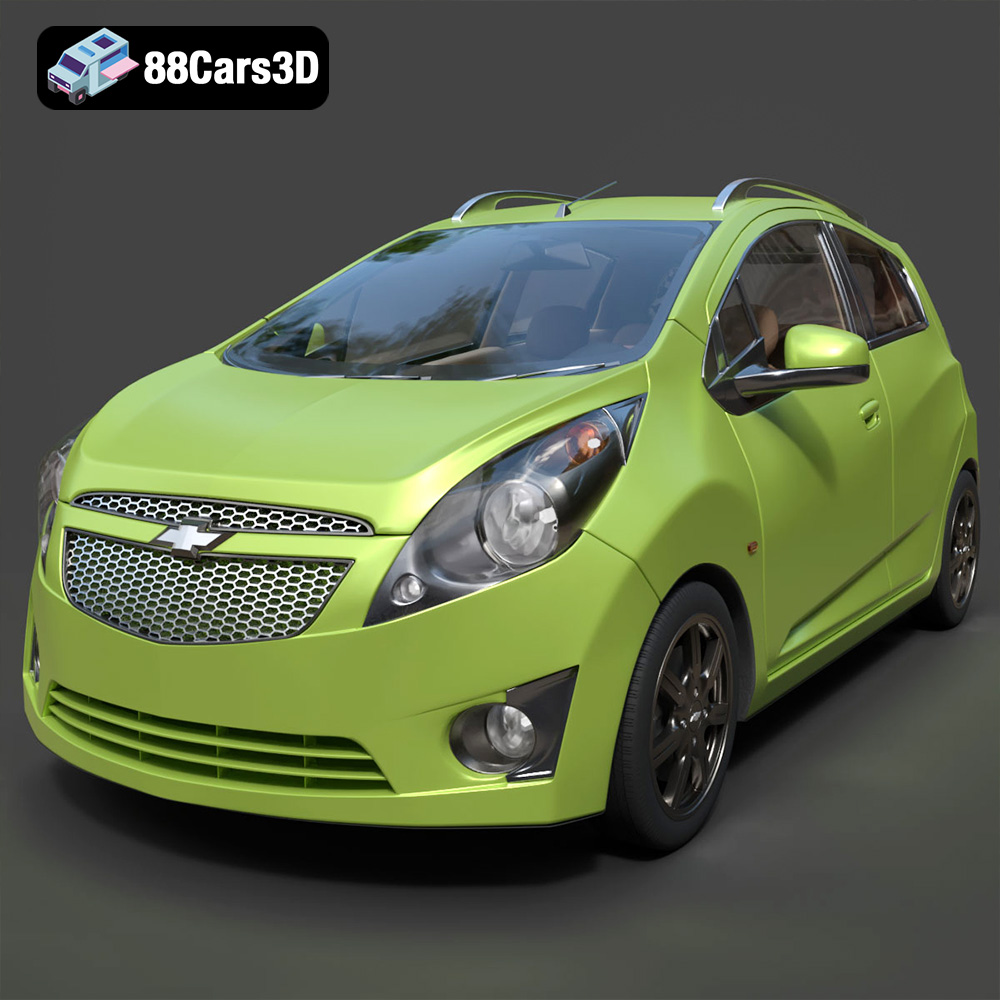
One such asset that exemplifies this blend of detail and optimization is the Chevrolet Spark (Beat) 2010-08 3D Model available on 88cars3d.com. This compact city car, known for its agile urban presence and distinctive styling, translates beautifully into a digital asset, offering a versatile foundation for a multitude of creative endeavors. But what truly makes a 3D car model stand out, and how do professionals leverage these complex digital creations in their workflows? Let’s delve into the technical intricacies and expansive applications that define the modern era of 3D asset utilization.
Navigating the landscape of 3D modeling requires a fundamental understanding of the various file formats available, each tailored to specific uses, software, and desired outcomes. The Chevrolet Spark (Beat) 2010-08 3D model from 88cars3d.com thoughtfully provides a comprehensive suite of formats, ensuring maximum compatibility and utility across professional pipelines. Choosing the right format is critical for everything from initial modeling to final rendering or real-time deployment.
The `.blend` format is Blender’s native file type, offering a complete snapshot of a Blender project. This includes not just the mesh geometry, but also materials, textures, lighting, cameras, animations, physics simulations, and even scene settings. For users deeply integrated into the Blender ecosystem, a `.blend` file is invaluable. It provides full editability of all components, allowing for seamless adjustments to topology, UV maps, material nodes, or even rigging and animation setups for the Chevrolet Spark. This is ideal for artists who wish to customize the model extensively, perhaps adding specific damage effects, integrating it into a complex scene with unique lighting, or modifying its interior for a custom project. Its self-contained nature ensures that all dependencies are present, making it easy to transfer and open on any system with Blender installed.
The Filmbox, or `.fbx`, format is an industry-standard proprietary file format developed by Autodesk, primarily used for interoperability between 3D software applications and game engines. It’s exceptionally robust, supporting not only mesh data but also animations, rigs, skinning, materials (though often simplified), and lights. For projects destined for real-time engines like Unreal Engine and Unity, `.fbx` is the go-to format. Its ability to efficiently package complex scenes with animation data makes it perfect for importing the animated wheels, suspension, and steering components of the Spark model directly into a game engine. While it can carry material information, specific engine-native material setups often need to be recreated or adjusted post-import for optimal PBR (Physically Based Rendering) results.
The Wavefront `.obj` format is one of the oldest and most widely supported 3D file formats. It’s a simple, text-based format that primarily stores geometry data (vertices, normals, texture coordinates, and faces) and references external material files (`.mtl`). Its strength lies in its universal compatibility; nearly every 3D software application can import and export `.obj` files. While it doesn’t support animation or rigging, it’s an excellent choice for static mesh transfers between different programs, acting as a reliable interchange format when other options fail or when only geometry is needed. For the Chevrolet Spark, an `.obj` file would provide a clean, robust mesh that can be easily brought into any renderer or modeling package for further texturing or scene integration.
The GL Transmission Format Binary, or `.glb`, is a binary version of the glTF (Graphics Language Transmission Format) standard. `.glb` is designed specifically for efficient transmission and loading of 3D scenes and models by applications, particularly in web-based augmented reality (AR), virtual reality (VR), and 3D web viewers. It encapsulates all necessary data—geometry, materials, textures, animations, and scene hierarchy—into a single file, making it highly self-contained and easy to deploy. This format is increasingly vital for interactive product configurators, online showrooms for the Spark, and mobile AR applications where minimal file size and fast loading times are paramount.
The Stereolithography, or `.stl`, format is the de facto standard for 3D printing. It represents a 3D model as a series of connected triangles, describing only the surface geometry of an object without any color, texture, or material information. For designers looking to physically manifest the Chevrolet Spark (Beat) 2010-08 model, the `.stl` format is essential. It defines the shell for additive manufacturing, allowing the printer to understand the object’s shape layer by layer. The Spark model’s robust topology makes it an excellent candidate for conversion to `.stl`, ensuring a clean, manifold mesh suitable for successful printing, particularly when following the recommended print settings for detailed parts.
The Polygon File Format, or `.ply`, is a more versatile format than `.stl`, capable of storing a wider range of properties, including color, transparency, normals, texture coordinates, and confidence values. It’s often used in applications that involve scanning data, scientific visualization, or CAD/CAM systems where precise geometric data is crucial. While not as universally used as `.obj` or `.fbx` for general 3D art, `.ply` offers a higher level of detail for mesh attributes, making it valuable for specific engineering analyses or high-precision modeling tasks related to the Chevrolet Spark’s geometry.
The `.unreal` format, often referring to assets packaged specifically for Unreal Engine projects, streamlines the integration process directly into Epic Games’ powerful real-time engine. While not a standalone file type in the same sense as `.fbx` or `.obj`, an “Unreal-ready” asset implies it has been meticulously prepared, optimized, and often comes with pre-configured materials, textures, and even blueprints or animation sequences designed to function flawlessly within Unreal Engine. This saves significant time for developers, as the Chevrolet Spark (Beat) 2010-08 model can be dropped directly into a scene with minimal setup, leveraging Unreal’s advanced rendering capabilities immediately.
The `.max` format is Autodesk 3ds Max’s native scene file. Similar to Blender’s `.blend`, it contains the complete scene data, including geometry, materials, textures, lights, cameras, animations, and plugins. For professionals whose primary workflow revolves around 3ds Max, having the Chevrolet Spark model in this format is exceptionally beneficial. It provides full access to the original scene setup, allowing for advanced rendering using V-Ray or Corona, complex animation sequences, or detailed modifications using 3ds Max’s extensive toolset without any loss of data fidelity. This ensures maximum flexibility for high-end rendering and detailed automotive visualization projects.
The Chevrolet Spark (Beat) 2010-08 is more than just a compact city car; it’s an icon of urban mobility. This philosophy extends into its 3D model, which is crafted with an exceptional level of detail and technical precision. The model from 88cars3d.com isn’t just a representation; it’s a meticulously engineered digital twin, ready for the most demanding professional applications.
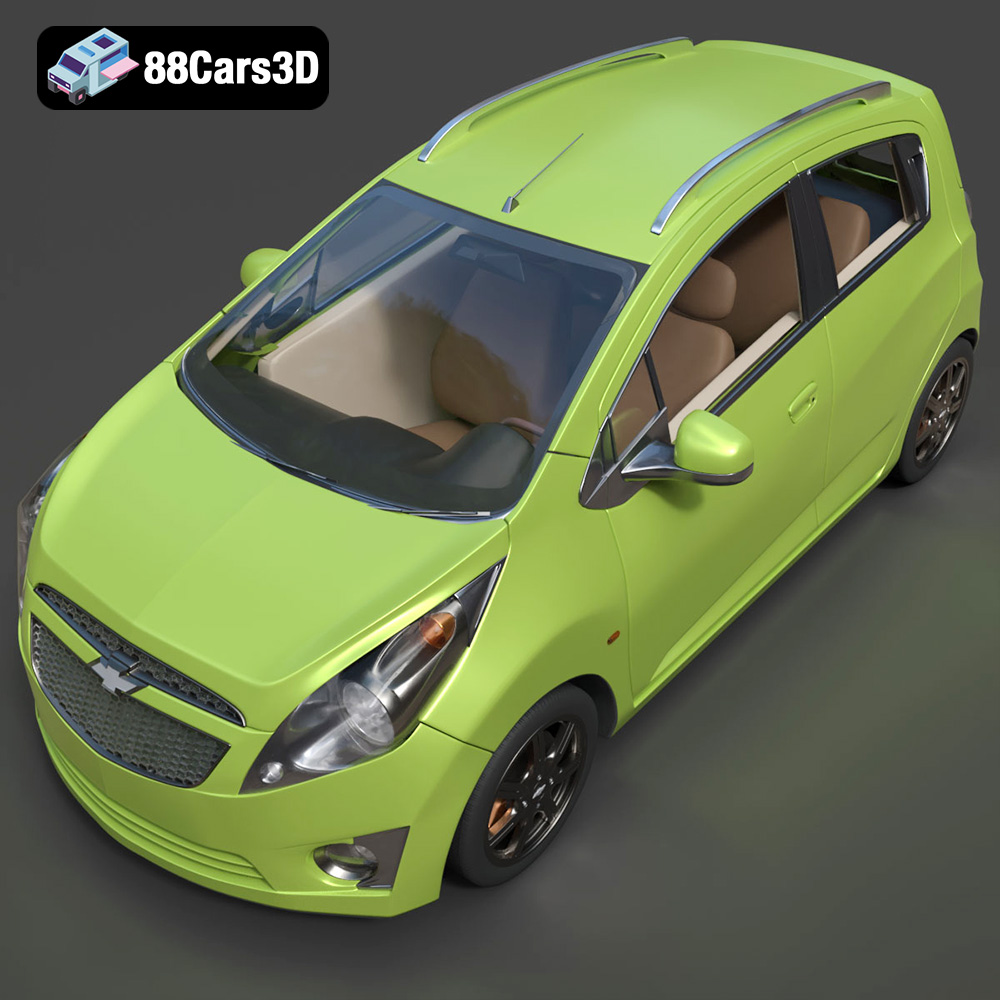
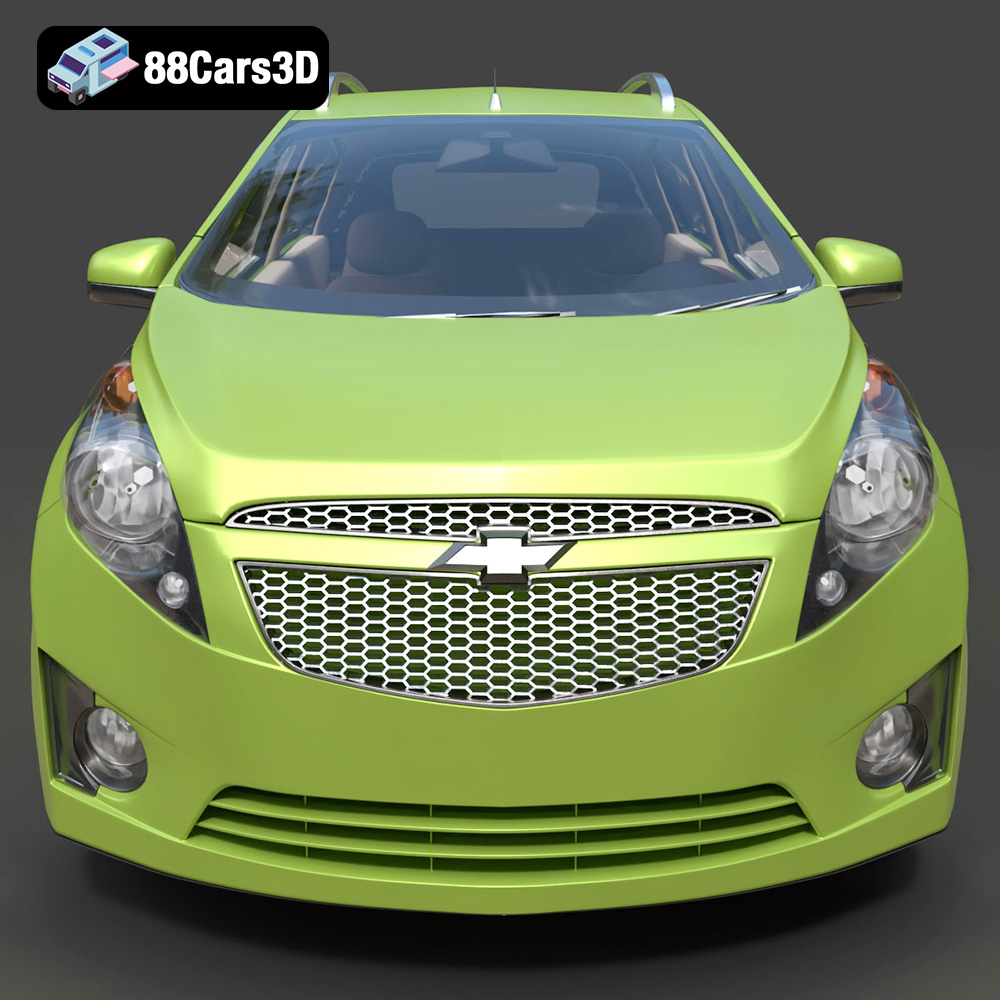
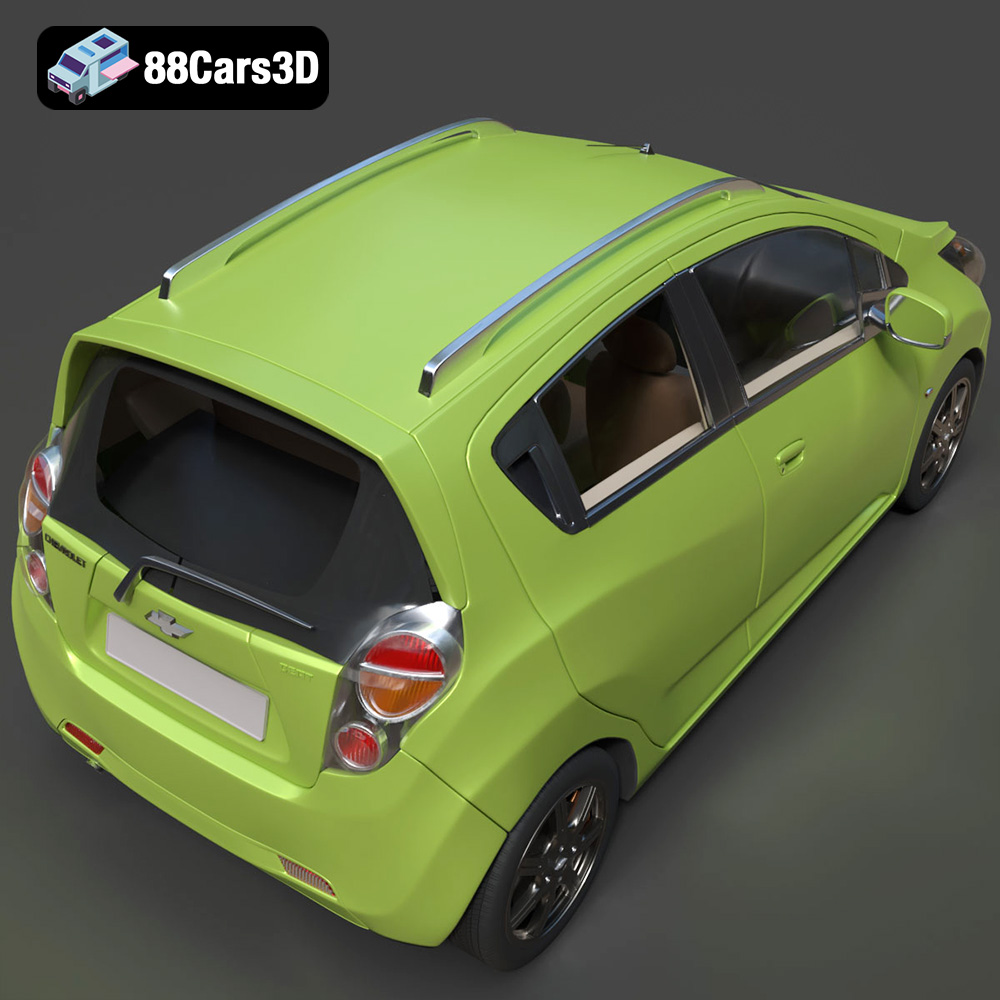
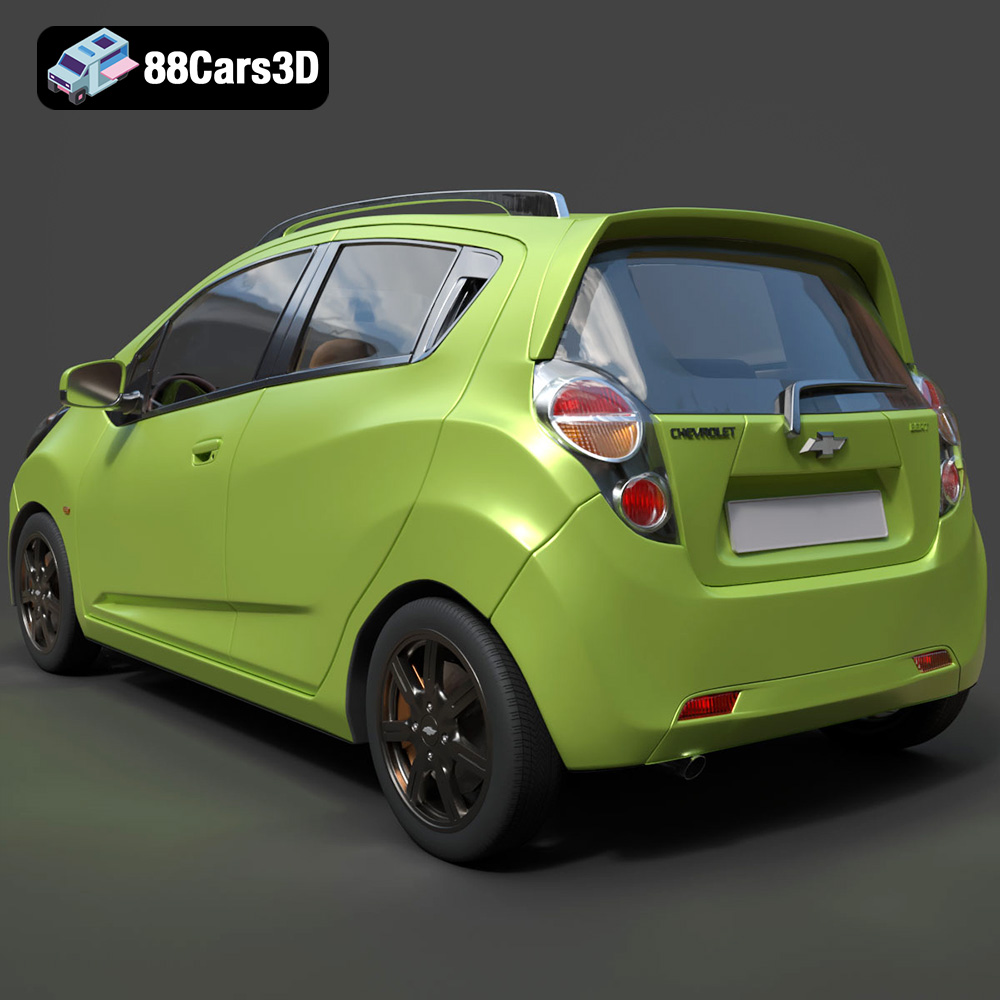
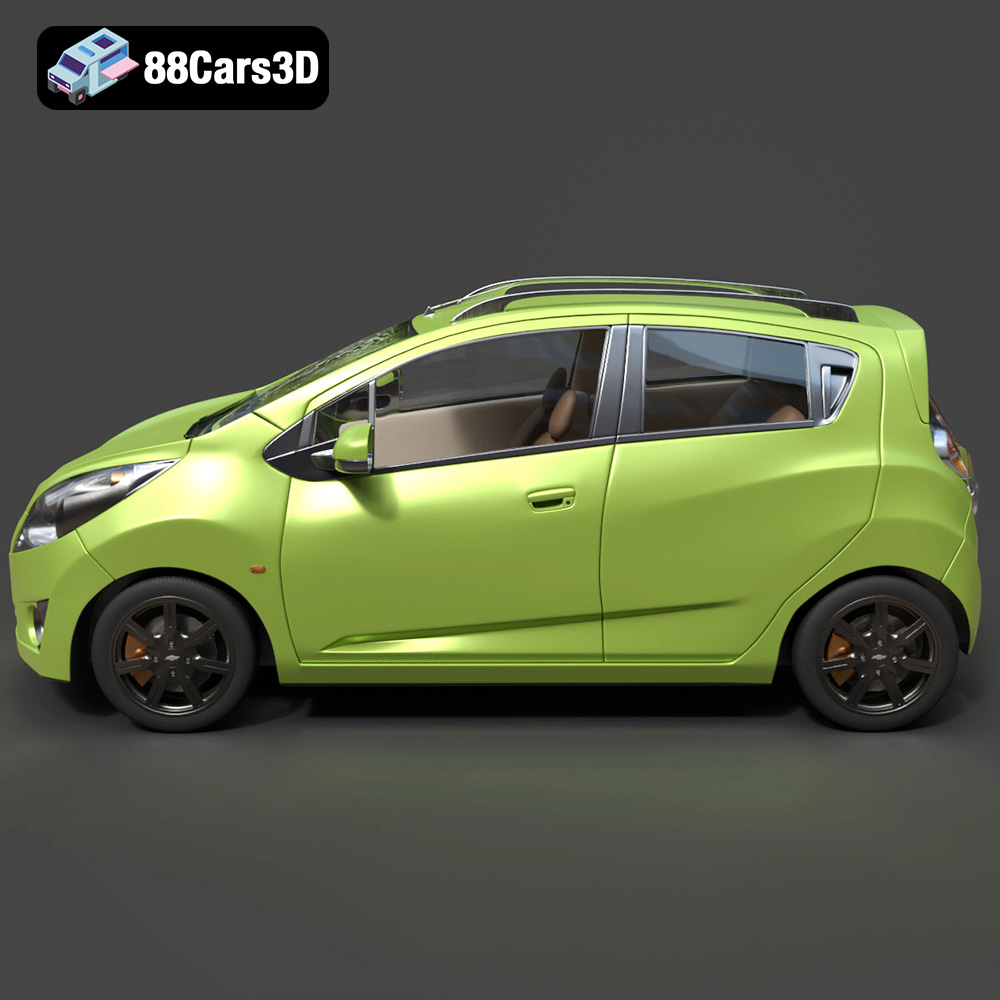
The exterior of this 3D Spark model captures every curve and angle of the real vehicle. From the aggressive front fascia to the signature swept-back headlights and the cleverly hidden rear door handles that give it a sporty three-door coupe appearance, the geometry is faithful. The inclusion of a detailed compact inline-4 engine block and an accurately routed exhaust system speaks to an unparalleled commitment to authenticity. What truly elevates this asset, however, is the separation of elements like wheels, suspension, and steering components. This crucial feature empowers animators to create realistic driving sequences, enabling dynamic motion with proper pivot setups for steering, wheel rotation, and suspension travel. This attention to mechanical detail transforms a static model into a highly versatile, animatable asset, perfect for interactive simulations or cinematic sequences.
Beyond the impressive exterior, the Chevrolet Spark 3D model boasts a cockpit that is equally detailed and immersive. Contoured seating with precise fabric stitching, an accurate 3-spoke steering wheel with realistic grip texturing, and the iconic motorcycle-inspired pod-style instrument cluster are all meticulously modeled. The detailed center console, complete with climate controls, shifter, and pedals, ensures that even first-person perspectives in games feel authentic. Crucially, the interior geometry is optimized for gaming, striking a perfect balance between visual richness and performance efficiency. This makes it ideal for integrating into open-world games or virtual reality experiences where players can interact with or inhabit the vehicle’s interior.
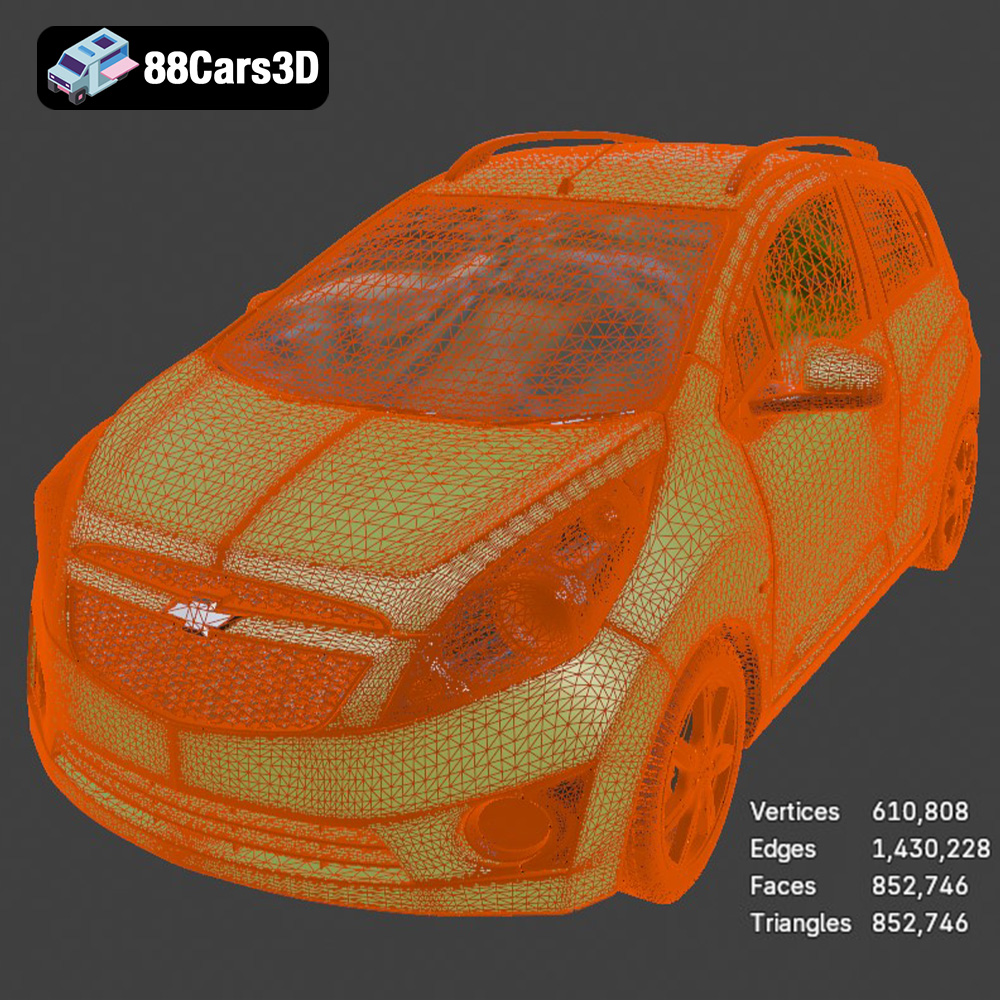
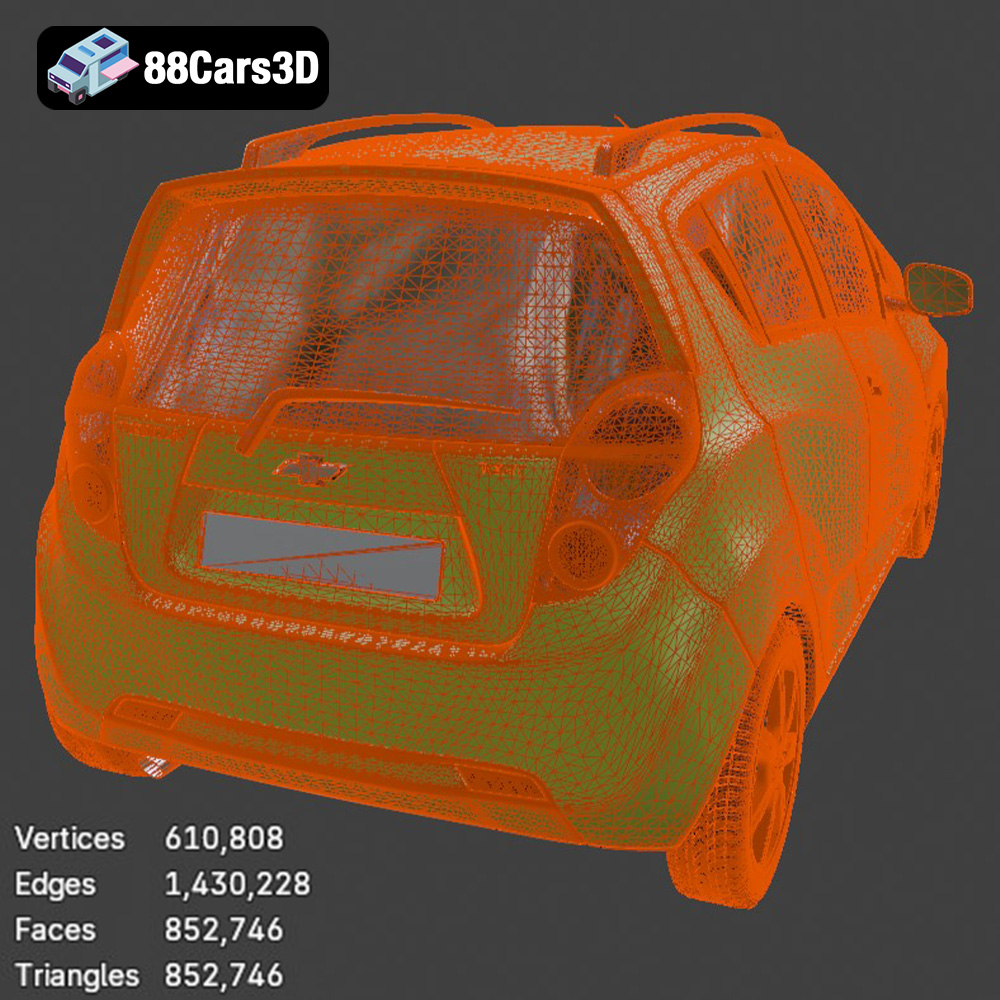
Underpinning the visual excellence are the robust technical specifications. With 852,746 triangles, the model achieves outstanding visual fidelity without over-burdening real-time engines like Unreal and Unity. This “game-ready & optimized” status is a testament to careful polygon budgeting and intelligent mesh construction. The real-world scale accuracy ensures seamless integration into environments built to scale, from architectural visualizations to realistic city simulations. Proper pivot setup for all articulated parts streamlines the rigging and animation process, making it a truly plug-and-play asset for dynamic scenarios. This combination of detail, optimization, and accurate mechanics makes the Chevrolet Spark (Beat) 2010-08 model a premium choice for any professional seeking high-performance 3D car models.
The utility of a high-quality 3D car model like the Chevrolet Spark extends across multiple professional disciplines. Each field leverages these assets in unique ways, demanding specific technical considerations and workflow efficiencies.
For game developers, 3D car models are central to creating believable virtual worlds. The Chevrolet Spark (Beat) 2010-08 model, with its optimized polycount and game-ready status, is perfectly suited for open-world games, racing titles, and detailed simulators. In Unreal Engine or Unity, developers would import the `.fbx` or `.unreal` version, set up PBR materials, and then integrate its pre-defined pivots for physics and animation. For instance, the separate wheel and suspension components allow for realistic vehicle physics simulations, where the suspension can compress and wheels can turn independently, critical for an authentic driving experience. Its relatively efficient triangle count ensures smooth frame rates even when dozens of these cars populate a bustling virtual city.
In ArchViz, automotive rendering provides essential context and realism to proposed buildings and urban plans. Placing a true-to-life Chevrolet Spark model in front of a new development or within a street scene instantly grounds the visualization in reality. Using formats like `.max` or `.obj` in 3ds Max with renderers like V-Ray or Corona, artists can apply advanced lighting and material shaders to achieve photorealistic results. The model’s accurate geometry and real-world scale are vital here, ensuring that the vehicle looks proportional and believable within the architectural environment, enhancing the overall narrative and immersion of the scene.
Augmented and Virtual Reality platforms demand highly optimized assets for fluid performance and engaging user experiences. The `.glb` format of the Spark model is tailor-made for these applications, offering a compact, efficient package for mobile AR apps or immersive VR showrooms. Imagine a potential buyer exploring a virtual showroom, able to walk around the Spark, view its interior, or even change its body color in real-time. The model’s robust optimization ensures that even on mobile devices or VR headsets, the experience remains smooth and highly interactive, showcasing the vehicle’s dynamic, edgy styling without performance hitches.
Achieving photorealistic results and efficient performance with 3D car models requires meticulous attention to several technical aspects, going far beyond just the raw polygon count.
The 852,746 triangles of the Chevrolet Spark model represent a carefully considered balance. This isn’t just about high numbers; it’s about intelligent topology – the clean, efficient arrangement of polygons that ensures smooth deformation and accurate light reflection. Excellent topology minimizes rendering artifacts and facilitates seamless integration with subdivision surfaces if higher detail is needed for close-up shots. Complementing this is meticulous UV mapping, where the 2D texture coordinates are laid out cleanly. This allows for the application of high-resolution textures – diffuse, normal, roughness, metallic – that bring out the intricate details like tire treads, fabric stitching, and metallic finishes without stretching or distortion. Proper UVs are non-negotiable for realistic automotive rendering.
Modern rendering relies heavily on Physically Based Rendering (PBR) materials, which simulate how light interacts with surfaces in the real world. A premium 3D model like the Spark is expected to come with a robust material setup, or at least clean UVs that facilitate easy material creation. This includes defining properties such as base color, metallicness, roughness, normal mapping for fine surface details, and ambient occlusion. For the Chevrolet Spark, this translates to realistic paint reflectivity, the subtle sheen of interior plastics, and the coarse texture of tire rubber. Customization options, such as changing body colors or adapting material finishes (matte, gloss, metallic), are essential for artists to integrate the model into diverse scenes and brand campaigns, adding versatility to the asset.
An “optimized” 3D model isn’t just low-poly; it’s efficiently built to perform well across different scenarios. For real-time applications, this means ensuring that meshes are appropriately dense where detail is needed (e.g., headlights, grille) and sparser where it’s not. For rendering, it might involve a higher polycount that can be dynamically reduced or a robust subdivision surface setup. The Chevrolet Spark model’s balanced polycount and varied file formats speak to this flexibility. From a high-resolution render in 3ds Max to a quick, interactive view in a web browser via `.glb`, the model is designed to deliver consistent quality and performance. The technical specifications, like real-world scale and proper pivot setups, further ensure that the model is ready for immediate integration and manipulation in professional settings.
Beyond digital screens, 3D car models are increasingly finding a tangible form through 3D printing. The Chevrolet Spark (Beat) 2010-08, being a detailed digital asset, is an excellent candidate for physical replication.
The `.stl` format, provided with the Chevrolet Spark model, is the gateway to 3D printing. However, converting a high-detail rendering asset into a printable model often requires careful preparation. The model’s existing detailed topology and clean geometry from 88cars3d.com greatly simplify this process. For a successful print, especially for display-scale hobbyists or product prototypes, factors like wall thickness, infill density, and support structures become critical. The recommended print settings for the Spark model – suggesting resin printing for fine details and specific orientations for structural integrity – highlight the nuances involved in translating digital fidelity to physical reality.
The goal of 3D printing is often to create a miniature, yet highly accurate, replica. For the Chevrolet Spark, this means ensuring that details like the sweeping headlights, distinct taillight clusters, and accurate alloy wheels are preserved. Post-processing is a vital step, involving sanding, priming, and then applying authentic factory colors with metallic finishes to truly bring the printed model to life. The ability to print separate components like the frame and wheels allows for higher precision and easier painting before final assembly, resulting in a display-worthy model that mirrors its digital counterpart and the real vehicle it represents. This tangible output further demonstrates the versatility and value of investing in quality 3D car models.
In an era where digital content drives everything from entertainment to engineering, the demand for high-quality 3D car models is undeniable. These assets are not mere conveniences; they are powerful tools that accelerate creativity, enhance realism, and streamline production across a myriad of industries. From the meticulous detail required for high-end automotive rendering to the strict optimization needed for performance-critical game assets and interactive AR/VR experiences, a well-crafted 3D model is an invaluable investment.
The Chevrolet Spark (Beat) 2010-08 3D model stands as a prime example of what a premium asset should be: versatile, technically robust, and visually stunning. Its comprehensive file format support, detailed geometry, and game-ready optimization make it an exceptional choice for professionals seeking efficiency without compromising on quality. By understanding the intricacies of file formats, the demands of various workflows, and the technical specifications that underpin realism, creators can fully leverage these digital marvels. Explore this and many other high-quality 3D car models at 88cars3d.com, and empower your next project with assets that truly drive innovation.
The Chevrolet Spark (also known globally as the Beat) 2010-08 is a renowned compact city car celebrated for its dynamic, edgy styling and exceptional urban agility. Standing out with its aggressive front fascia, signature swept-back headlights, and cleverly hidden rear door handles that give it a sporty three-door coupe appearance, the Spark perfectly blends practicality with youthful energy. Its efficient inline-4 engine and compact dimensions make it an iconic vehicle of modern urban mobility. This premium 3D model boasts a detailed topology of 852,746 triangles, delivering outstanding visual fidelity while maintaining efficient performance for real-time applications. Whether you are developing an interactive mobile game, creating an immersive virtual reality showroom, or producing high-end architectural visualizations, this highly optimized asset guarantees smooth rendering and realistic lighting responses across all major platforms. Perfect for urban driving games, realistic city traffic simulations, architectural visualization backgrounds, and VR showrooms.
$57.99
.2008
.2010
.blend
.chevrolet
.fbx
.glb
.hatchback
.max
.obj
.ply
.rendering
.stl
.unreal
beat
car-3d-model
city-car
compact-car
game asset
game-ready
low-poly
optimized
spark
VR/AR