Get 20% OFF All Premium 3D & STL Models!

In the rapidly evolving world of digital visualization, the demand for hyper-realistic and functionally robust 3D assets has never been higher. From cinematic spectacles and groundbreaking video games to immersive AR/VR experiences and precision engineering visualization, the quality of a 3D model can be the defining factor in a project’s success. Automotive design, in particular, thrives on this level of detail, where every curve, every reflection, and every component must convey authenticity and sophistication.
At the heart of this digital craftsmanship lies the expertise in creating complex 3D car models that not only look stunning but are also technically optimized for diverse applications. Today, we delve into the intricate world of premium automotive 3D assets, using the magnificent BMW X6M 2015 3D model as our prime example. This particular model, available at 88cars3d.com, encapsulates the pinnacle of detail and versatility, serving as a benchmark for what professional 3D car models should deliver across various industries.
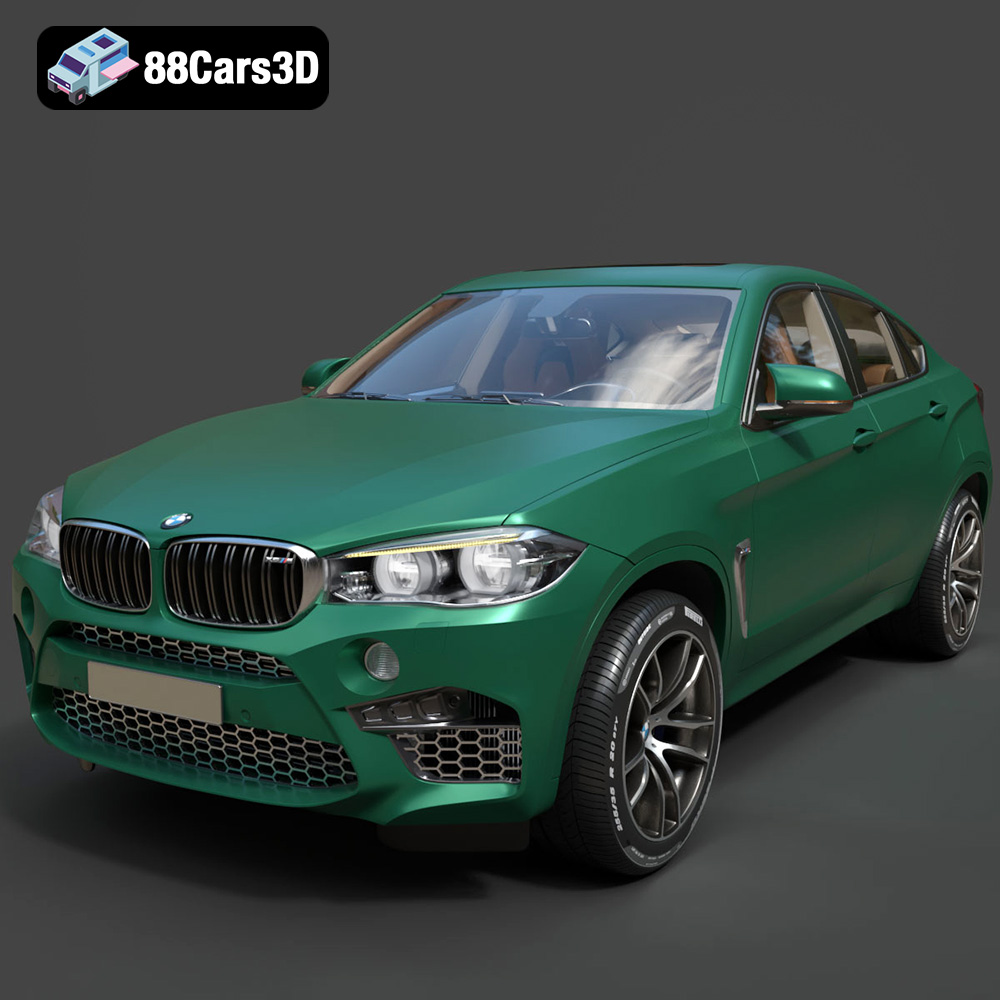
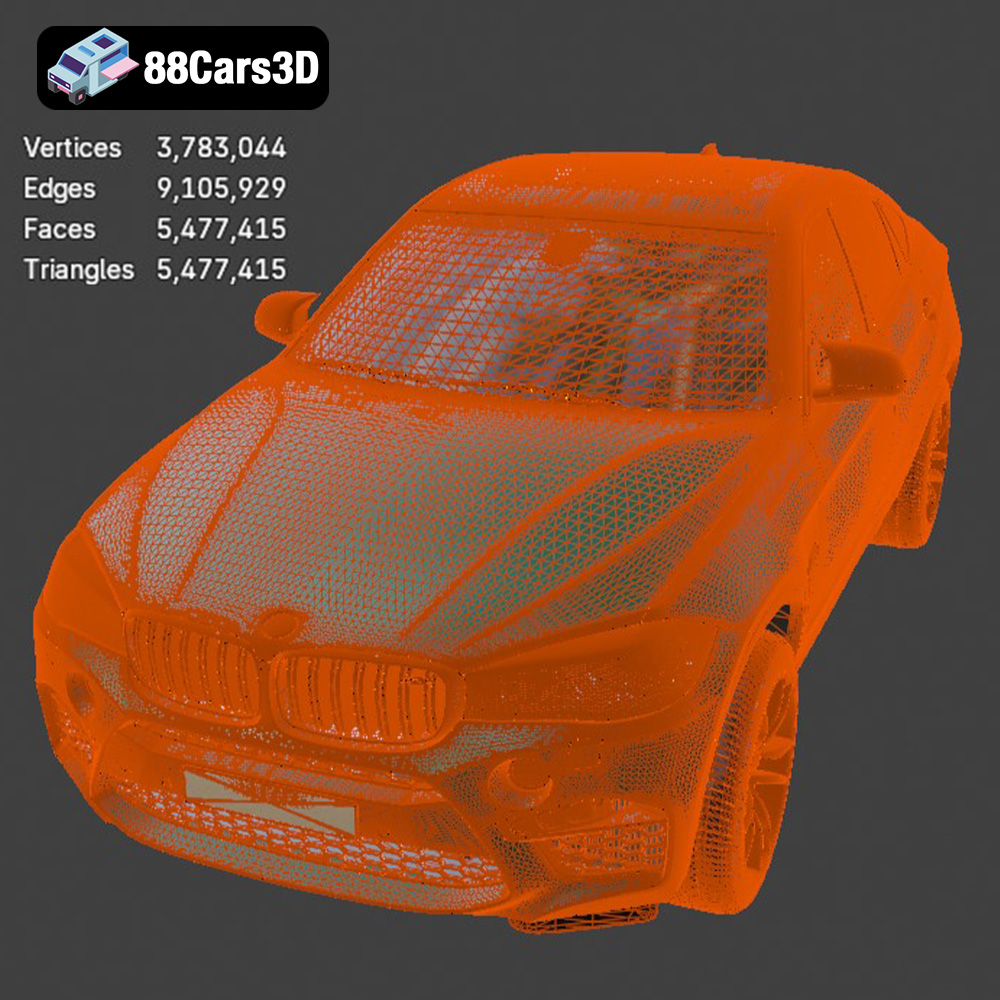
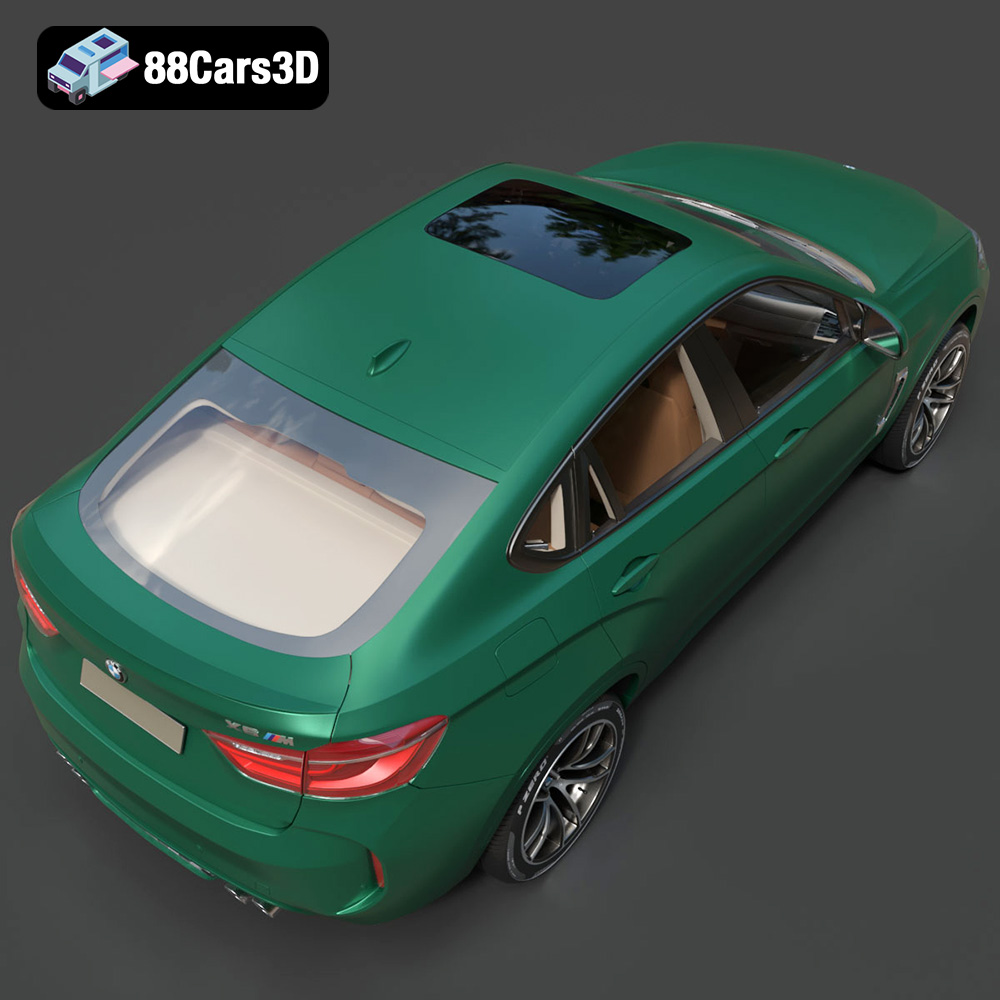
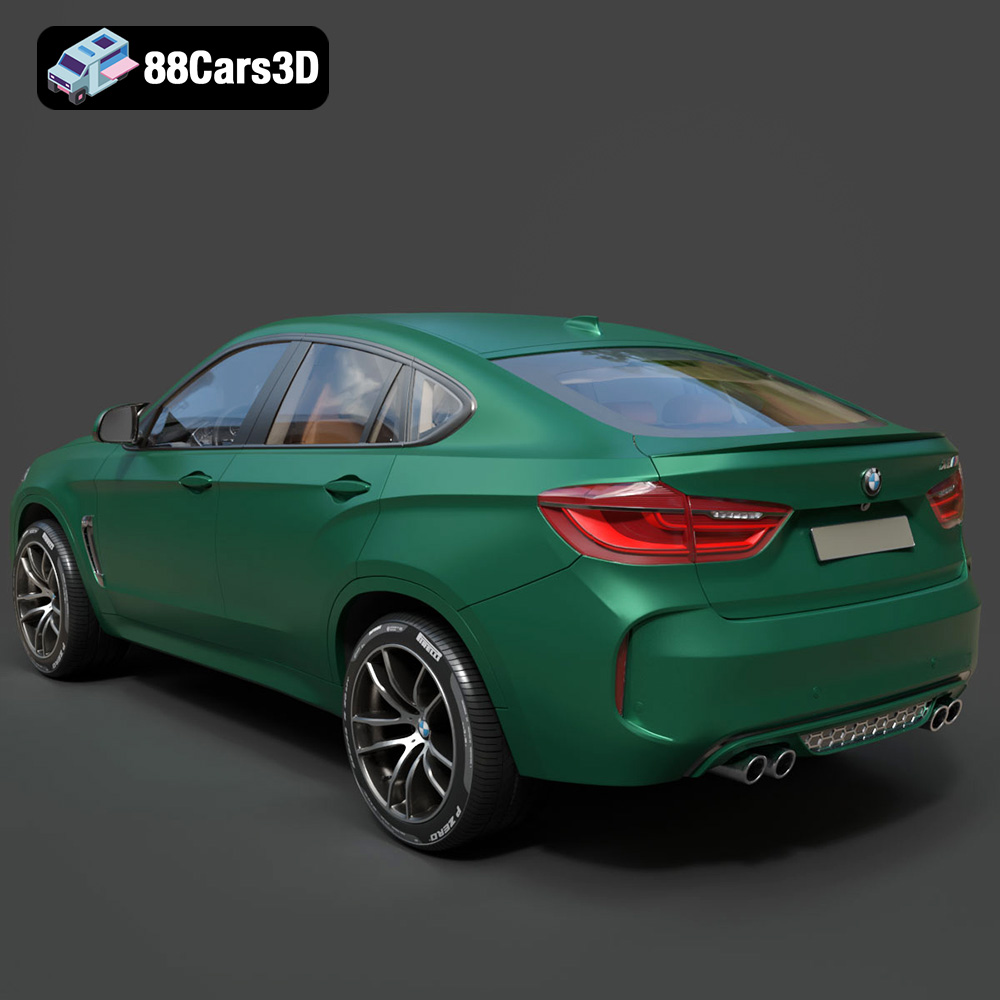
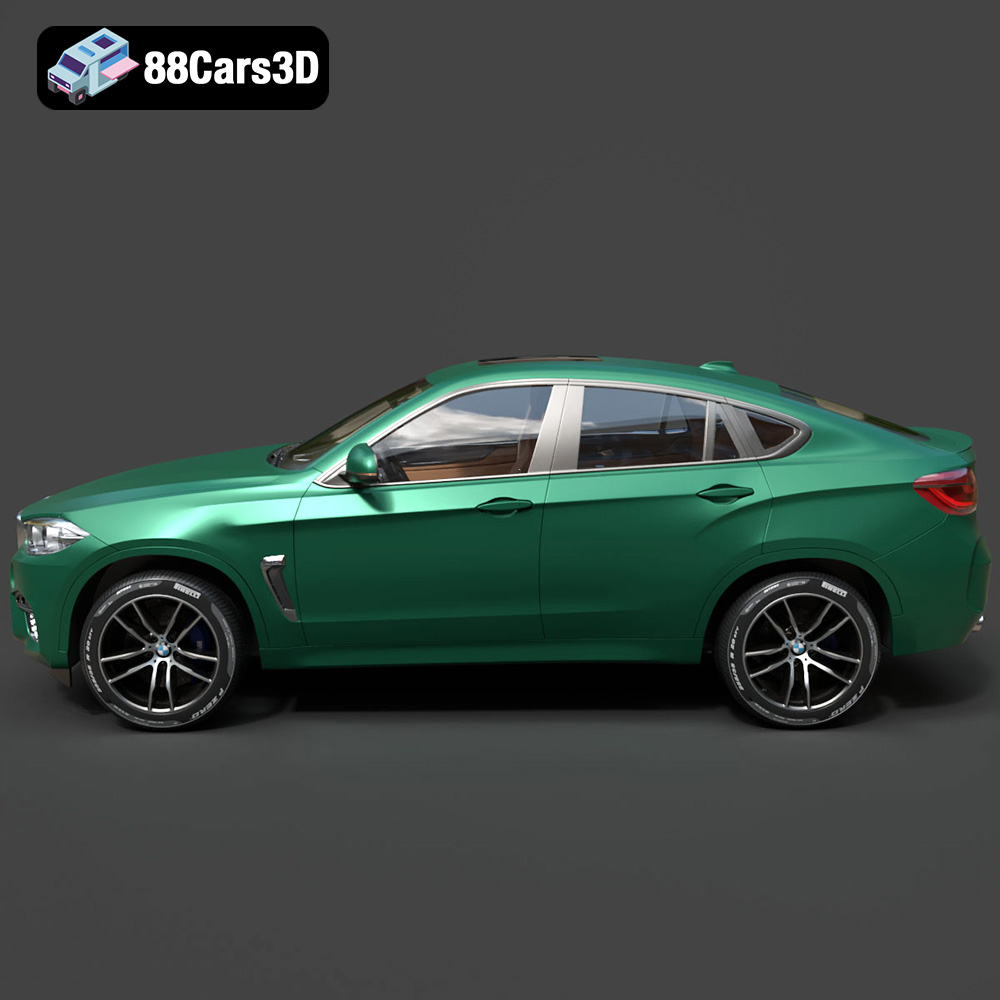
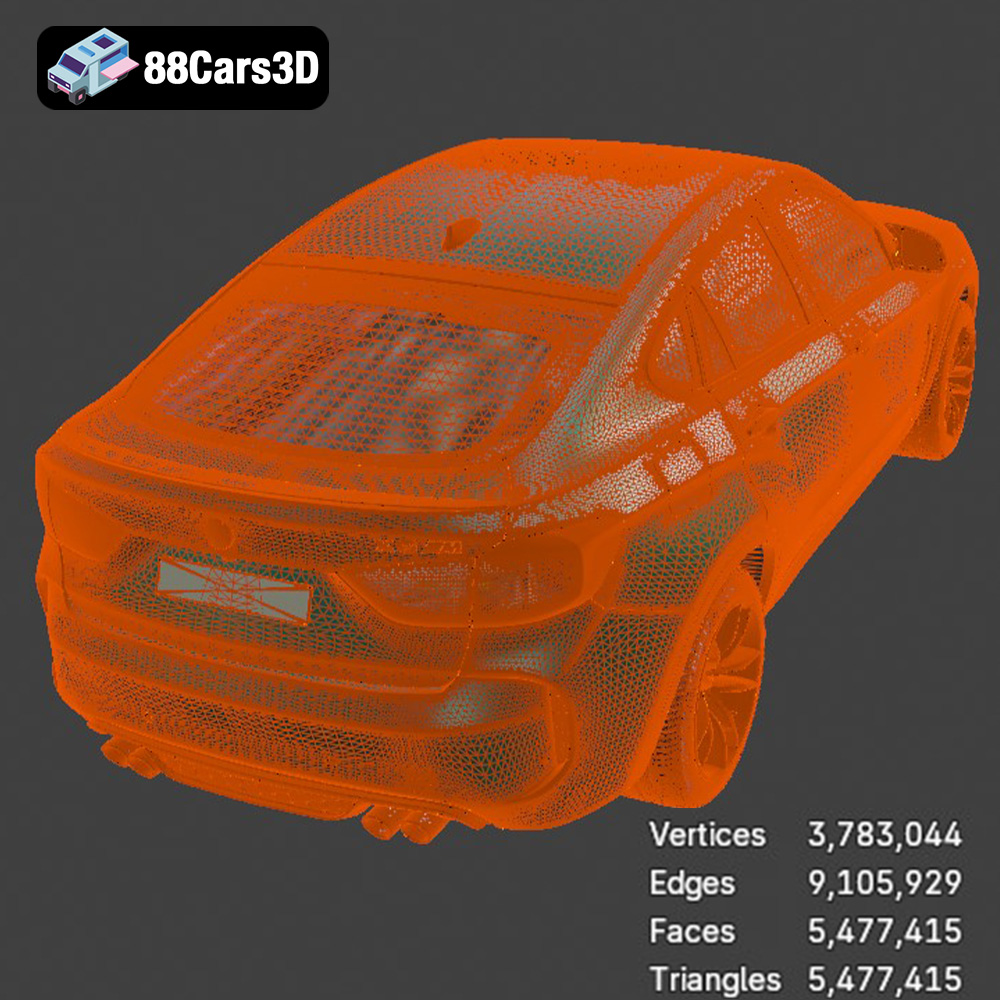
The BMW X6M 2015, a vehicle renowned for its aggressive styling and track-inspired performance within the Sports Activity Coupe (SAC) segment, presents a unique challenge and opportunity for 3D artists. Recreating its signature kidney grilles, aggressive M-specific front fascia, large air intakes, and distinctive quad exhaust system demands an acute eye for detail and a mastery of 3D software. This model, boasting an exceptionally high-fidelity topology with 5,477,415 triangles, is a testament to the meticulous effort required to achieve unparalleled visual realism and intricate detailing. It’s not just a model; it’s a digital twin crafted for maximum visual fidelity in even the most demanding professional pipelines.
The journey of a 3D model from concept to a tangible asset in various applications is heavily dependent on the file format chosen. Each format serves a specific purpose, catering to different software, pipelines, and end-uses. Understanding these distinctions is crucial for anyone working with premium 3D car models, ensuring compatibility, preserving data integrity, and optimizing workflows.
The .blend file is Blender’s native format, offering a fully editable scene with all materials, textures, lighting, cameras, animations, and modifiers intact. It’s a powerhouse for artists who primarily work within Blender, allowing for non-destructive workflows and complete creative control. For a model like the BMW X6M 2015, a .blend file would provide access to the original scene setup, enabling users to easily adjust geometry, refine materials for Cycles or Eevee rendering engines, or even repurpose animation data. It’s ideal for in-depth customization and projects staying within the Blender ecosystem.
FBX is arguably the most widely adopted format for 3D data exchange, especially within the game development and animation industries. Developed by Autodesk, it excels at interoperability between different 3D software packages (like 3ds Max, Maya, Cinema 4D, and Blender) and real-time engines (Unreal Engine, Unity). An .fbx file can encapsulate not just geometry and UVs but also crucial data like materials (often using PBR workflows), textures, skeletal animations, and blend shapes. For our BMW X6M 2015 3D model, the .fbx variant ensures that all the crucial animated components—such as separate wheels, suspension, and steering—are preserved for easy import into gaming or animation pipelines, making it a truly game-ready asset.
The .obj format is a universal standard, prized for its simplicity and broad compatibility. It primarily stores geometric data (vertices, normals, texture coordinates/UVs, and faces) and can link to an external .mtl (material) file for basic material properties. While it doesn’t typically support animation, rigging, or complex scene data, its widespread acceptance makes it excellent for cross-software model transfer, especially when the primary concern is the mesh geometry itself. For static renders or as a base for further modeling, an .obj version of the BMW X6M 2015 ensures that the core geometric fidelity is maintained, ready for any 3D application.
glTF (Graphics Language Transmission Format) is heralded as the “JPEG of 3D,” and .glb is its binary form, which bundles all assets (geometry, textures, animations) into a single file for efficiency. Optimized for web-based 3D, AR, and VR applications, .glb files are lightweight and fast-loading, supporting PBR materials. This format is crucial for showcasing 3D car models like the X6M in virtual showrooms, online configurators, or augmented reality experiences on mobile devices, ensuring high visual quality with minimal performance overhead.
The .stl format is the de-facto standard for 3D printing. It represents 3D surfaces as a collection of triangles, creating a tessellated approximation of the model’s geometry. For the BMW X6M 2015 3D model, its availability in .stl format means enthusiasts can transition from screen to physical reality, creating display-scale replicas. It’s essential for .stl files to be “watertight” (no holes or non-manifold geometry) to ensure a successful print, a consideration built into well-prepared models.
The .ply format is primarily used for storing 3D data from 3D scanners, CAD software, and other precision applications. It can store a vast array of information beyond just geometry, including color at each vertex, surface normals, transparency, and even specific data about the mesh’s quality. While less common for general animation or game development than .fbx, it is invaluable for scientific, engineering, or detailed analysis tasks where high precision and additional per-vertex data are critical for a complex model like an automotive chassis.
The .unreal format refers to assets specifically packaged and optimized for direct import and use within Unreal Engine. This is not a universal file extension but rather an indication that the asset has been prepared following Unreal Engine’s best practices, potentially including pre-configured materials, textures, collisions, and even blueprints. For the BMW X6M 2015, an “Unreal-ready” asset implies seamless integration, ensuring optimal performance, correct material setup (e.g., physically based rendering), and perhaps even pre-built LODs (Levels of Detail) to handle rendering at various distances, which is paramount for game development and real-time visualization.
The .max file is the native project file for Autodesk 3ds Max, a leading software in architectural visualization, automotive rendering, and animation. Like .blend, it contains the complete scene data, including geometry, materials (especially V-Ray or Corona Renderer setups), lighting, cameras, animation keyframes, and the full modifier stack. For professionals who operate within the 3ds Max ecosystem, the .max file of the BMW X6M 2015 provides the most comprehensive level of control for advanced rendering, intricate animation sequences, and integration into existing studio pipelines.
A truly premium 3D car model goes far beyond a mere visual representation; it’s a meticulously engineered digital asset that mirrors the physical vehicle’s complexities. The BMW X6M 2015 3D model from 88cars3d.com exemplifies this philosophy, offering an unparalleled level of detail and technical sophistication.
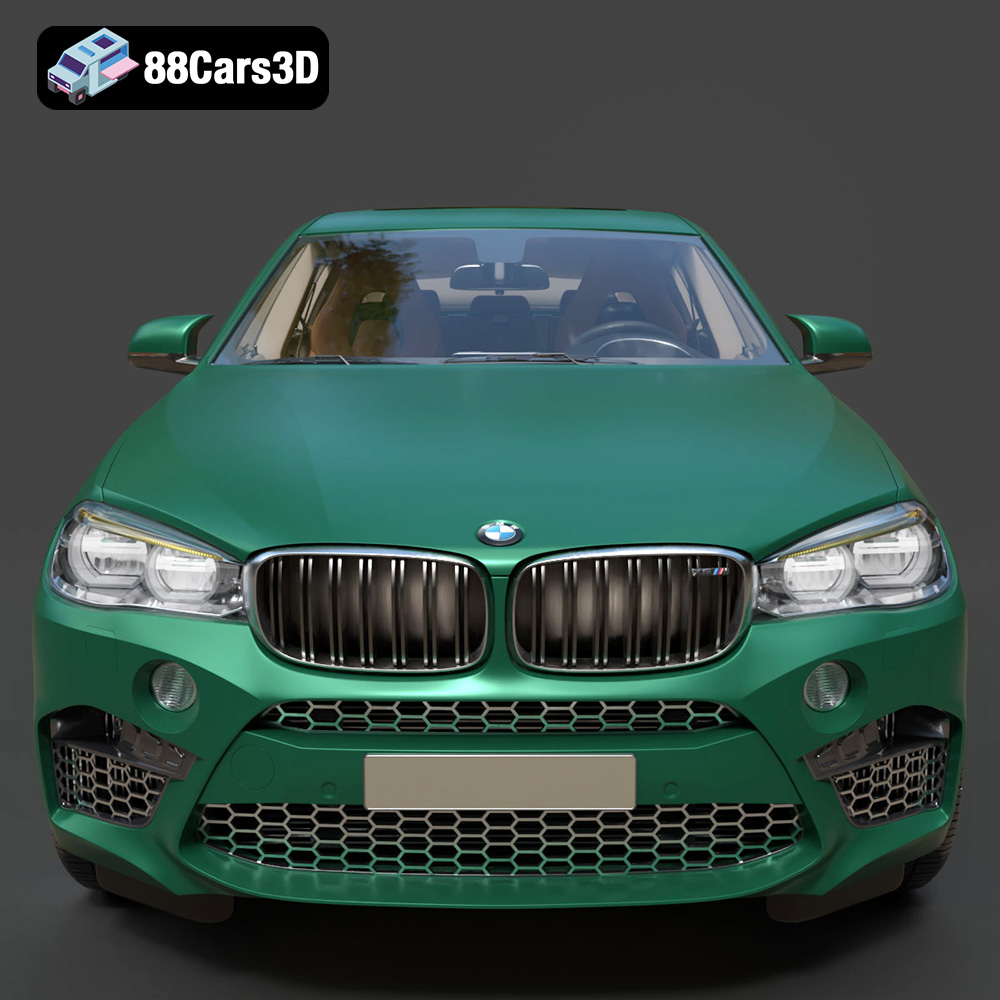
The exterior of any performance vehicle is its calling card, and the BMW X6M 2015 is no exception. This 3D model accurately captures every aggressive line and iconic feature. The signature M kidney grilles, the dominant front fascia with its large air intakes designed for optimal cooling, and the distinctive quad exhaust system at the rear are all rendered with impeccable precision. The adaptive LED headlights and the unique L-shaped LED taillights are not just textures but carefully modeled components that reflect light realistically. Furthermore, the model includes large M light-alloy double-spoke wheels, complete with high-performance tire treads and M-compound brake calipers with cross-drilled rotors, showcasing a dedication to authentic automotive engineering details. Even the M-TwinPower Turbo V8 engine bay simulation adds a layer of depth often overlooked in less detailed models, making it perfect for close-up shots and comprehensive automotive visualizations.
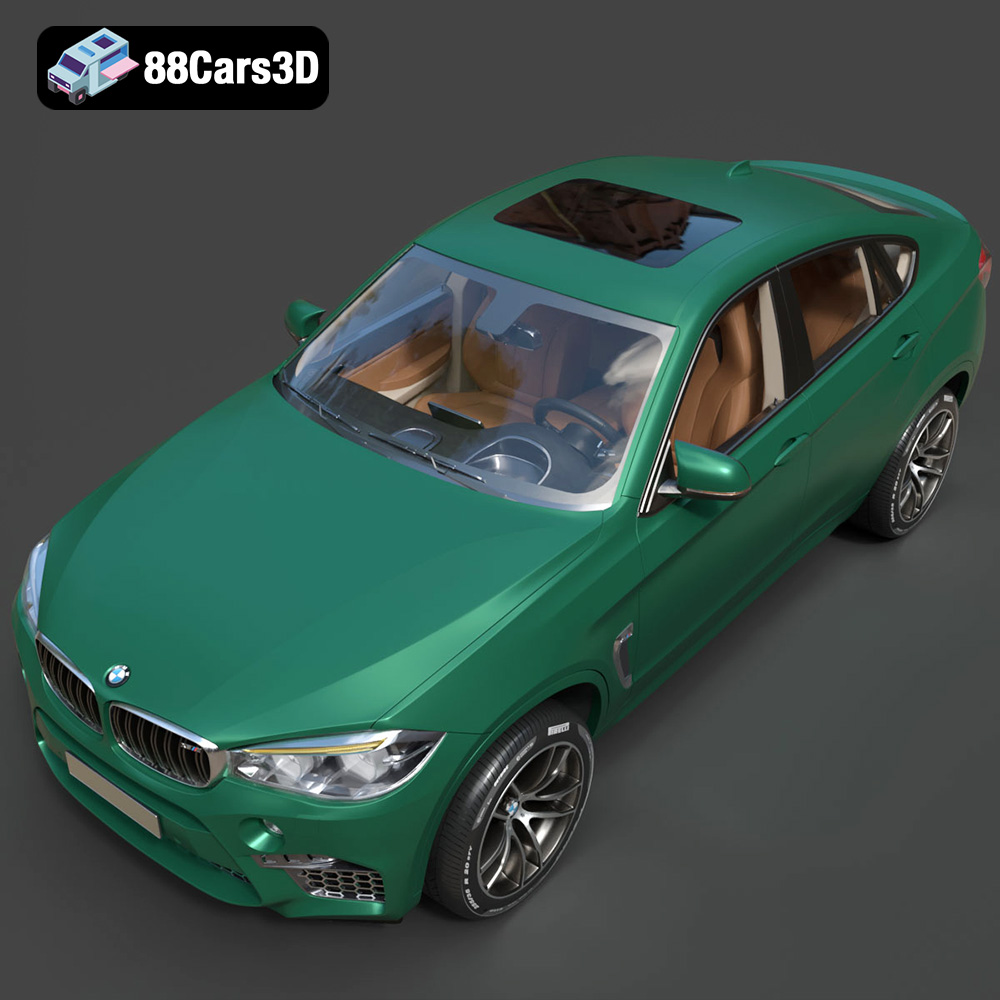
While the exterior grabs attention, the interior defines the user experience. The BMW X6M 2015 model extends its meticulous detailing into the cockpit, offering a premium and immersive environment. Users will find accurately modeled M multi-function leather seats with authentic stitching, an M leather steering wheel complete with aluminum paddle shifters, and a highly detailed digital instrument cluster alongside the iDrive infotainment display. Every control, including pedals, the gear selector, and the carbon fiber interior trim, is faithfully reproduced. This level of interior detail is crucial for projects requiring first-person POV in gaming or immersive virtual reality configurators, providing a believable and engaging user experience.
Technical specifications are the backbone of a high-quality 3D model. The BMW X6M 2015 boasts 5,477,415 triangles, a figure that strikes a perfect balance between high-end visual realism and optimization for real-time engines like Unreal and Unity. This “game-ready & optimized” designation means artists and developers don’t have to compromise on visual fidelity for performance. The model adheres to real-world scale accuracy, based on actual vehicle chassis dimensions, ensuring it fits seamlessly into architectural visualizations, scene compositions, or simulations. Crucially, it features a proper pivot setup for steering, wheel rotation, and suspension travel, which is indispensable for dynamic animations and interactive simulations, allowing for realistic movement and interaction.
The true value of a high-quality 3D car model, such as the BMW X6M 2015, is realized through its integration into diverse professional pipelines. These models are not just static objects; they are dynamic assets that empower creators across various industries.
For automotive studios, advertising agencies, and architectural visualization firms, photorealistic rendering is paramount. Premium 3D car models like the X6M 2015 are the cornerstone of compelling marketing campaigns and design reviews. Using software like 3ds Max paired with renderers like V-Ray or Corona, or Blender with Cycles, artists can create stunning studio lighting setups, intricate lifestyle scenes, and cinematic commercials. The detailed geometry and accurate materials of this model ensure that reflections, refractions, and shadows behave realistically, producing visuals indistinguishable from actual photography. It’s perfect for luxury automotive configurators where clients can visualize different paint finishes, wheel options, and interior trims in real-time or through high-resolution renders.
In the realm of game development, balancing visual fidelity with performance is a constant challenge. The BMW X6M 2015, with its optimized polycount of 5,477,415 triangles, is an ideal game asset for racing titles, open-world environments, and simulators. When imported into game engines like Unreal Engine or Unity, its “game-ready” nature means less time spent on optimization and more on creative implementation. The separate, pivot-setup components for wheels, suspension, and steering make it straightforward to implement vehicle physics and realistic driving mechanics. Developers can leverage its detailed interior for engaging first-person driving experiences, enhancing player immersion significantly.
Augmented Reality (AR) and Virtual Reality (VR) are transforming how consumers interact with products. The BMW X6M 2015 3D model is perfectly suited for creating immersive virtual showrooms or mobile AR experiences. Leveraging formats like .glb, which is optimized for web and mobile performance, dealerships and brands can offer customers the ability to explore the car in their own environment or walk around it in a virtual space, examining every detail as if it were physically present. These interactive experiences are powerful tools for sales, marketing, and product education, offering a level of engagement traditional media cannot match.
The utility of a high-quality 3D model extends beyond digital screens. For hobbyists, collectors, and prototyping endeavors, the ability to physically manifest a digital asset is a significant advantage. The BMW X6M 2015 3D model’s inclusion of the .stl format opens up a world of possibilities for 3D printing.
Transforming a complex digital model into a physical object requires careful preparation. The .stl format provided for the BMW X6M 2015 is specifically designed for 3D printing, tessellating the mesh into a series of triangles to define the surface geometry. Users are recommended to print at scales such as 1:12, 1:18, or 1:24 to capture sufficient detail. For optimal results, especially for fine details like the aggressive M-specific front fascia or the intricate brake calipers, resin printing is often recommended over FDM, allowing for layer heights as fine as 0.04–0.12 mm. Crucially, understanding specifications like a wall thickness of 1.2–2.0 mm and an infill of 20–30% helps ensure structural integrity without excessive material usage.
Successful 3D printing of an intricate vehicle model often necessitates careful consideration of supports and print orientation. Detailed parts such as the exhaust system, mirrors, and even parts of the suspension geometry will require supports to prevent sagging during the printing process. Printing the main frame angled can enhance structural integrity, while components like wheels are often printed separately and then assembled. Post-processing is an integral part of achieving a showroom-quality physical model. This typically involves sanding to smooth surfaces, applying primer to prepare for paint, and then meticulously painting with authentic factory colors and metallic finishes to replicate the BMW X6M’s luxurious appearance. This blend of digital precision and physical craftsmanship allows enthusiasts to bring their favorite 3D car models to life.
One of the most powerful aspects of working with premium 3D car models is the inherent flexibility they offer for customization. The BMW X6M 2015 3D model is designed with this versatility in mind, allowing artists and developers to adapt it to an endless array of creative scenarios.
The ability to effortlessly change the body color is fundamental for any automotive visualization. Whether it’s showcasing the X6M in its classic factory hues or applying a custom, unique finish, the model’s material setup supports easy modification. Beyond paint, users can modify tire textures to switch between street and off-road variants, or adjust various material finishes from matte to gloss or metallic, catering to different aesthetic preferences or project requirements. This level of material control is vital for creating diverse marketing assets or personalized configurators, ensuring the model can be tailored to specific brand guidelines or client visions.
Integrating a 3D car model into different environments requires dynamic lighting adjustments. Whether placing the BMW X6M 2015 in a sunny outdoor scene, a moody urban night, or a pristine studio, the model’s PBR-ready materials will react realistically to various lighting setups. Furthermore, the meticulously separated and pivoted components—including wheels, suspension, and steering—are a game-changer for animation. This allows for the creation of dynamic driving sequences, realistic suspension compression over bumps, and accurate steering responses, transforming a static model into a lifelike, moving vehicle for cinematic renders, simulations, or interactive experiences. This flexibility empowers creators to tell compelling visual stories, whether for a high-octane commercial or an engaging game sequence.
The world of 3D visualization is a testament to the blend of artistic vision and technical prowess. High-quality 3D car models are more than just digital assets; they are the foundation upon which captivating renders, immersive games, and revolutionary interactive experiences are built. The BMW X6M 2015 3D model exemplifies the pinnacle of this craftsmanship, offering unparalleled detail, technical optimization, and multi-format compatibility for professionals across various industries.
From its hyper-detailed exterior and immersive interior to its game-ready polycount and support for diverse file formats like .blend, .fbx, .obj, .glb, .stl, .ply, .unreal, and .max, this model is a versatile tool designed to meet the rigorous demands of automotive rendering, game development, AR/VR, and even 3D printing. It empowers creators to push boundaries, bring their visions to life, and deliver experiences that resonate with audiences.
For those seeking to elevate their projects with premium 3D assets, exploring the extensive collection of high-quality 3D car models available at 88cars3d.com is a crucial step. The BMW X6M 2015 3D model is a prime example of the exceptional resources available, ensuring that your next project benefits from the highest standards of digital artistry and technical excellence.
Experience the sheer power and luxury of the BMW X6M 2015 with this highly detailed 3D model. As a pinnacle of the Sports Activity Coupe (SAC) segment, the X6M combines aggressive, muscular styling with track-inspired performance. This model accurately captures the vehicle’s iconic features, including its signature kidney grilles, aggressive M-specific front fascia, large air intakes, and the distinctive quad exhaust system that hints at the twin-turbo V8 engine beneath the hood.
Boasting an exceptionally high-fidelity topology with 5,477,415 triangles, this 3D model delivers unparalleled visual realism and intricate detailing. Optimized for modern rendering engines and professional pipelines, it ensures maximum visual fidelity. It is an exceptional asset for cinematic animation, automotive visualization, and immersive virtual experiences.
Perfect for luxury automotive configurators, high-end architectural visualizations, cinematic commercials, and premium studio lighting setups.
.blend, .fbx, .obj, .glb, .stl, .ply, .unreal, .max
Tags:
bmw, x6m-2015, x6m, luxury-suv, sports-car, game-ready, high-poly, optimized, car-3d-model, game-asset, rendering, vr-ar, blend, fbx, obj, glb, stl, ply, unreal, max
$37.50
.blend
.bmw
.fbx
.glb
.luxury suv
.max
.obj
.ply
.rendering
.sports car
.stl
.unreal
.x6m
car-3d-model
game asset
game-ready
high poly
optimized
VR/AR
x6m-2015