Get 20% OFF All Premium 3D & STL Models!

In the dynamic world of 3D visualization, automotive rendering, and game development, the pursuit of photorealism and meticulous detail is relentless. Every curve, every reflection, and every material choice contributes to an immersive experience that can captivate audiences and elevate projects. Today, we delve into a prime example of digital craftsmanship: the Aston Martin DBS 2008 3D model, a masterpiece of virtual engineering available at 88cars3d.com that promises to transform your creative endeavors.
The 2008 Aston Martin DBS is more than just a car; it’s an icon of British luxury and raw power, famously gracing the silver screen and capturing the hearts of enthusiasts worldwide. Translating such an intricate piece of automotive design into a high-fidelity 3D asset is a challenge that requires both artistic vision and technical precision. This particular 3D model not only captures the aggressive aerodynamic profile, carbon-fiber accents, and the legendary V12 engine’s visual presence but also provides an optimized, game-ready asset that meets the rigorous demands of professional pipelines.
Whether you’re crafting the next generation of racing simulators, designing breathtaking virtual showrooms, or producing cinematic animations, the quality of your 3D car models is paramount. This Aston Martin DBS model serves as an exceptional foundation, offering unparalleled realism and technical flexibility. Join us as we explore the intricate details, technical advantages, and diverse applications of this outstanding 3D asset, demonstrating how it empowers creators across various industries to achieve their highest artistic and technical goals.
The versatility of a 3D model often hinges on its compatibility across various software and platforms, which is primarily dictated by its file format. Understanding the nuances of each format is crucial for maximizing workflow efficiency and achieving specific project goals, whether for automotive rendering, game development, or 3D printing. The Aston Martin DBS 2008 3D model from 88cars3d.com comes equipped with a comprehensive suite of formats, ensuring seamless integration into virtually any professional pipeline.
The .blend format is the native file type for Blender, the popular open-source 3D creation suite. When you download a .blend file, you’re not just getting the raw mesh; you’re getting a fully editable Blender scene. This includes all the original materials, textures, lighting setups, cameras, and even animation data if present. For artists and developers who primarily work in Blender, this format offers the highest degree of flexibility for modification, refinement, and scene composition. It allows direct access to the model’s topology, UV maps, shader nodes, and rigging, making it perfect for deep customization or integrating the Aston Martin DBS into an existing Blender project with minimal fuss.
.fbx (Filmbox) is arguably the most widely used proprietary 3D exchange format, developed by Autodesk. It’s an ideal choice for transferring 3D data between different software applications, especially for game engines like Unreal Engine and Unity, and DCC (Digital Content Creation) tools like 3ds Max, Maya, and Cinema 4D. FBX files can store a wide range of data, including geometry, materials, textures, animations, skinning, and even camera and lighting information. Its robust support for skeletal animations and blend shapes makes it indispensable for real-time pipelines. For the Aston Martin DBS, the .fbx format ensures that the model, its materials, and any pre-configured pivots (for wheels, steering, suspension) are reliably transferred to your game or rendering engine, maintaining integrity and accelerating setup.
The .obj (Wavefront Object) format is a venerable and highly compatible format known for its simplicity and universality. It primarily stores geometric data (vertices, normals, texture coordinates, and faces) and can reference external material library files (.mtl) for surface properties. While it doesn’t support animation or rigging, its widespread support across virtually all 3D software makes it an excellent fallback or starting point for cross-software compatibility. If you need a clean mesh to import into an application that might have issues with more complex formats, .obj is a reliable choice for the Aston Martin DBS, offering a robust geometric foundation for your work.
.glb (GLB format for glTF embedded) is the binary version of the glTF (GL Transmission Format) standard, which has rapidly become the “JPEG of 3D.” Optimized for efficient transmission and loading of 3D scenes and models, .glb packages all necessary data (geometry, materials, textures, animations) into a single file. This makes it incredibly efficient for web-based 3D viewers, AR/VR applications, and mobile platforms where file size and quick loading are critical. The Aston Martin DBS in .glb format is perfectly suited for immersive virtual showrooms, augmented reality configurators, or integrating into browser-based experiences without compromising visual quality.
.stl (Stereolithography) is the de facto standard file format for 3D printing. It represents a 3D model as a series of connected triangles, defining only the surface geometry without color, texture, or other properties. While simple, its ubiquity in the 3D printing world is unmatched. The Aston Martin DBS, when converted to .stl, becomes a printable blueprint, ready for physical manifestation. This is ideal for hobbyists, product designers, or anyone looking to create a tangible replica of the iconic vehicle.
The .ply (Polygon File Format) is another common format for storing 3D data, particularly useful for scanned data or models with precise geometric properties. It can store a wider range of attributes than .obj, including color, transparency, and often normal vectors per vertex, which can be useful for certain rendering engines or scientific applications. While less common for general DCC workflows, it offers a robust alternative for CAD integration or specific analytical tasks where mesh integrity and additional vertex data are paramount.
The .unreal format signifies an asset specifically prepared and optimized for direct import and use within Unreal Engine. This often implies that the model has undergone specific optimizations, material setups, and sometimes even blueprint configurations tailored for the engine’s ecosystem. While typically integrated through .fbx, having a dedicated “unreal” package suggests an asset that is ready to drop into your project with minimal setup, adhering to Unreal’s specific asset pipeline requirements. For the Aston Martin DBS, this means a smoother, faster workflow for game developers aiming for high-performance, visually stunning results in Unreal Engine.
The .max format is the native file type for Autodesk 3ds Max, a powerful 3D modeling, animation, and rendering software widely used in architectural visualization, game development, and film. A .max file provides the complete 3ds Max scene, including geometry, materials (with all their properties), textures, lighting, cameras, and animation curves. For users working within the 3ds Max environment, this format offers full editing capabilities, allowing for extensive customization, retargeting animations, or integrating the Aston Martin DBS into complex visualization scenes with the highest level of detail and control.
This diverse range of formats ensures that the Aston Martin DBS 2008 3D model is not just a static asset but a versatile tool, ready to be deployed across any professional workflow you can imagine, solidifying its value as a premium offering on 88cars3d.com.
Creating a truly exceptional 3D car model goes far beyond simply replicating shapes. It demands an understanding of industrial design, an eye for engineering accuracy, and a mastery of digital topology. The Aston Martin DBS 2008 3D model exemplifies this fusion, offering a level of detail and optimization rarely found in commercial assets. Every element, from the expansive body panels to the intricate mechanical components, has been meticulously crafted to deliver an authentic digital representation.
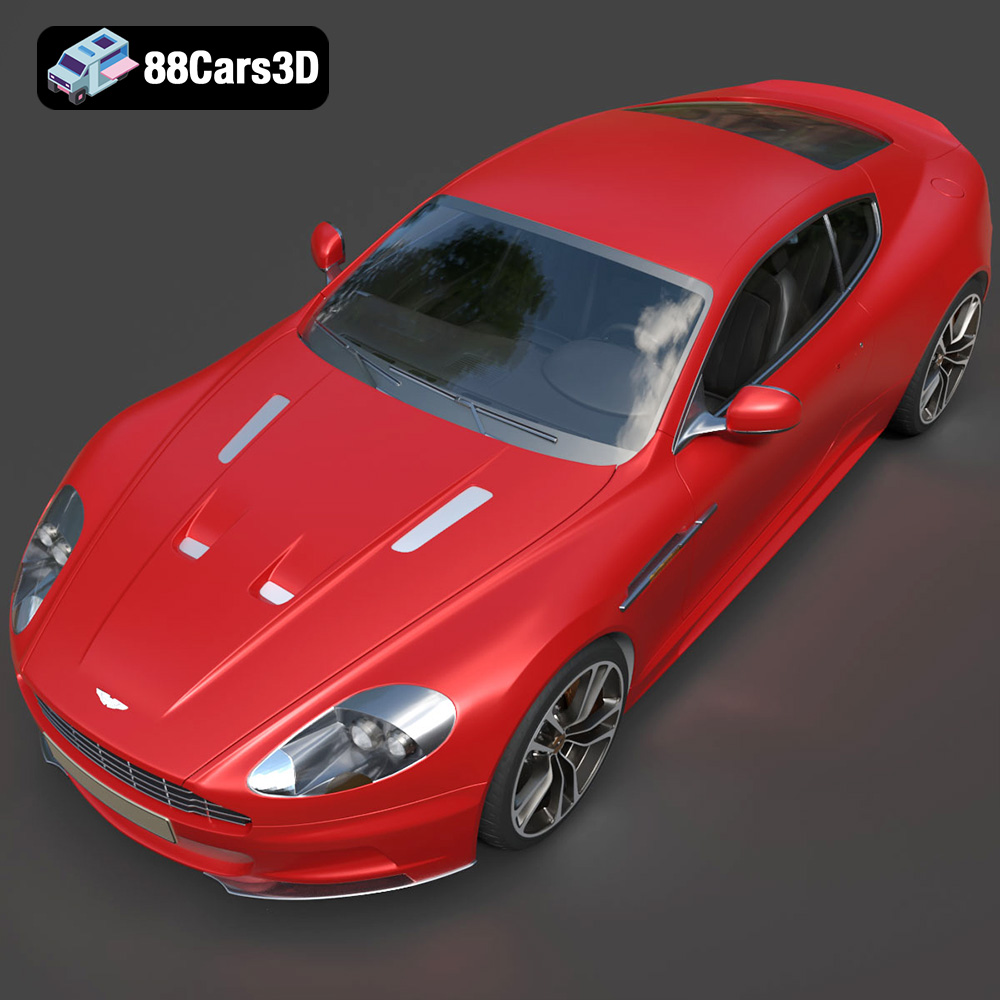
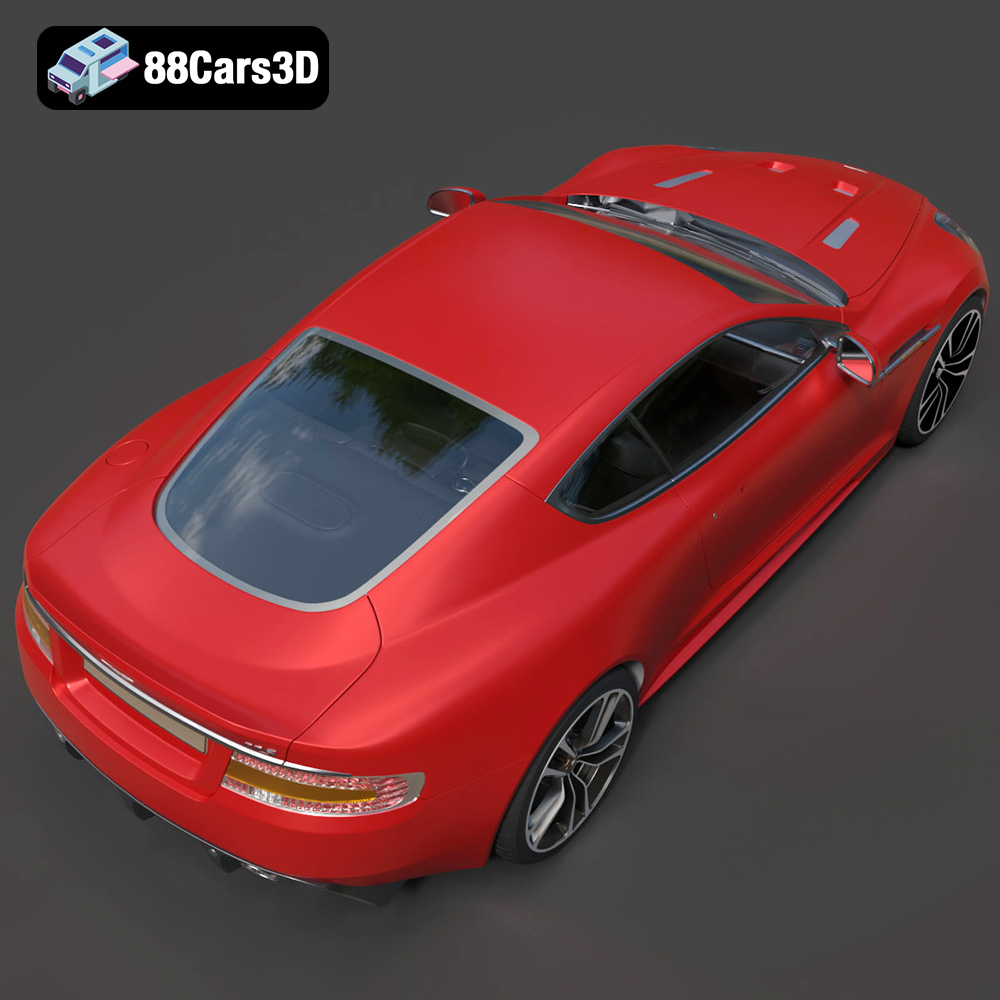
The first impression of the Aston Martin DBS is one of powerful elegance, and this 3D model faithfully translates that to the digital realm. The core strength lies in its accurate frame geometry and flawless exterior proportions, based on real-world scale data. This precision is evident in the signature front grille, the flowing lines of the bonnet, and the muscular haunches. Carbon-fiber design cues, a hallmark of the DBS, are represented with fine detail, extending to the aggressive rear diffuser and the dual exhaust system, which itself is a testament to the model’s high-fidelity. The bespoke alloy wheels are paired with accurately treaded high-performance tires, each element designed to reflect the real vehicle’s engineering. Beyond mere aesthetics, the detailed suspension system, featuring realistic brake calipers and drilled rotors, is modeled with separate components for seamless animation, allowing for accurate wheel rotation, steering, and suspension travel—a critical feature for racing simulators and interactive experiences.
The interior of an Aston Martin DBS is a sanctuary of luxury and performance, and this 3D model brings that experience to life. Stepping into the virtual cockpit reveals premium luxury sport seats with detailed stitching and leather textures, immediately conveying a sense of opulence. The authentic Aston Martin sport steering wheel, complete with accurate badging, feels tangible, while the highly detailed instrument cluster and central infotainment screen provide crucial visual cues for realism. Intricate control details, including aluminum pedals, the gear shifter, and tactile center console buttons, are all present, optimized for immersive first-person point-of-view (POV) experiences in gaming and virtual reality. This level of interior detail ensures that the model is not just impressive from the outside but also fully capable of supporting deep, interactive user engagement.
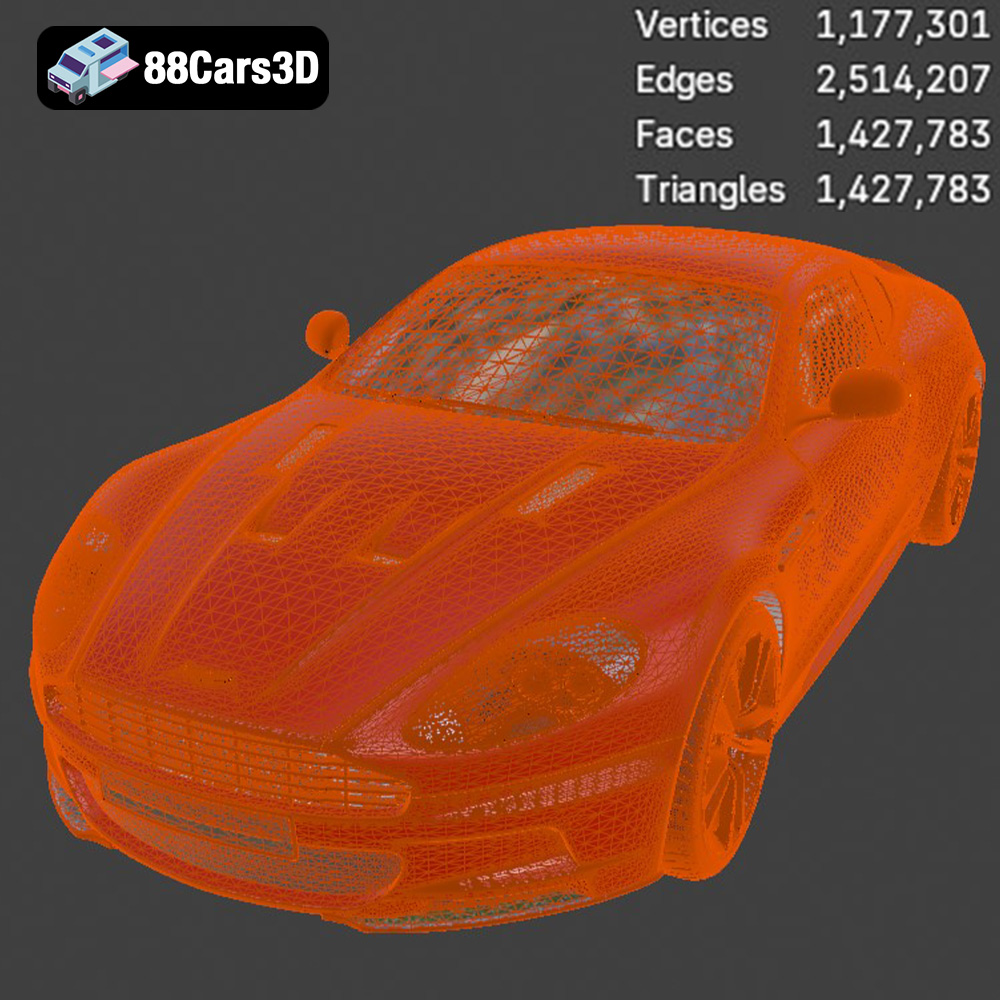
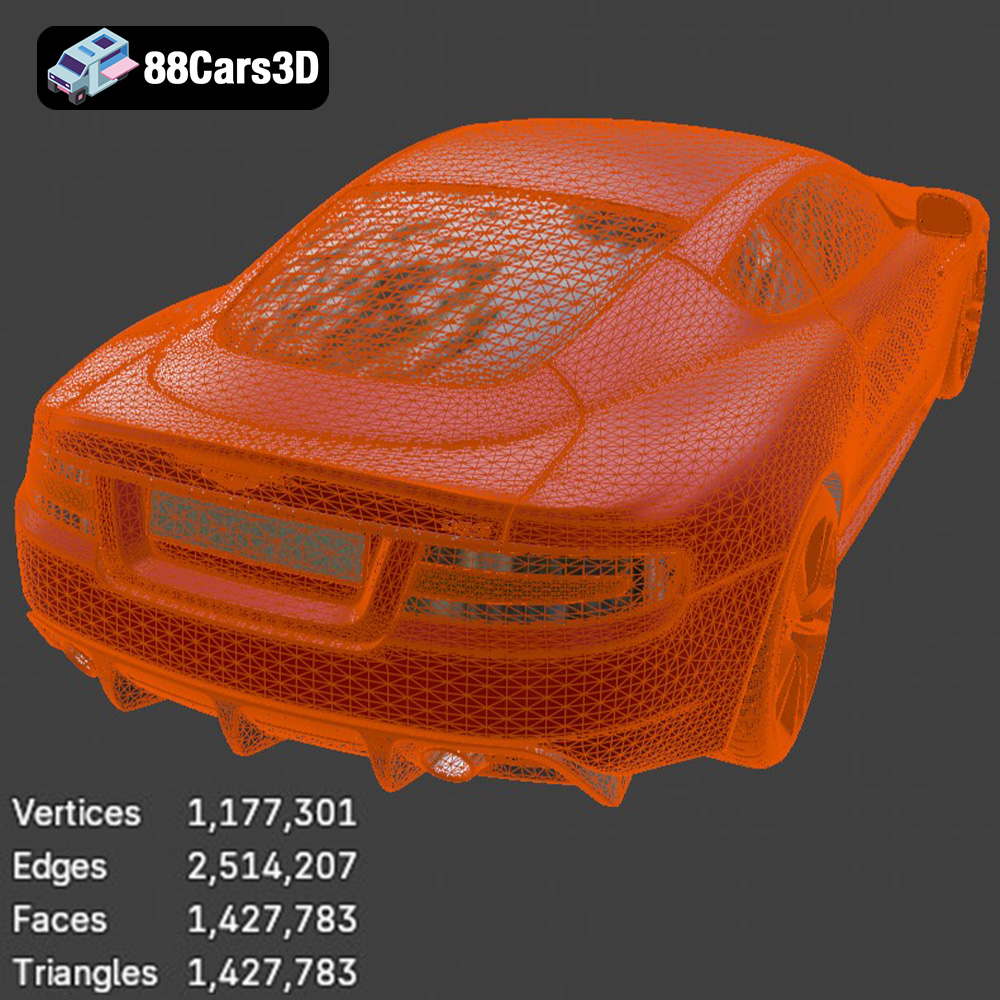
A significant challenge in 3D modeling is striking the perfect balance between visual fidelity and performance efficiency. This Aston Martin DBS 2008 model achieves this with a high-fidelity geometry boasting 1,427,783 triangles. This polycount is robust enough to deliver unparalleled realism for high-end rendering and cinematic sequences, yet it remains highly optimized for seamless performance in modern game engines like Unreal Engine and Unity. The topology has been carefully structured to ensure clean deformations and efficient UV mapping, which is crucial for texture application and performance in real-time environments. Furthermore, the model is built with real-world scale accuracy, ensuring correct physical interactions and scene integration. Proper pivot setups for steering, wheel rotation, and suspension travel are pre-configured, drastically reducing setup time for animators and game developers. This thoughtful technical approach makes the asset incredibly versatile, adapting to the demands of diverse professional applications without sacrificing visual quality.
The value of a truly exceptional 3D car model lies in its ability to seamlessly integrate into and enhance various professional workflows. From the demanding performance requirements of game development to the intricate detail needed for cinematic rendering, the Aston Martin DBS 2008 3D model is engineered to excel. Its robust technical specifications and diverse file format support make it a powerful asset for creative professionals.
For game developers, the holy grail is a “game-ready” asset: a model that looks stunning but performs flawlessly within the tight constraints of real-time rendering. This Aston Martin DBS model fits that description perfectly. With its optimized polycount of 1,427,783 triangles, it strikes an ideal balance, maintaining high-end visual realism without overburdening game engines like Unreal Engine and Unity. The clean topology ensures smooth deformations for damage systems or complex animations, while efficient UV mapping is critical for applying high-resolution textures and materials without performance hits. Developers can leverage the .fbx and .unreal formats for direct integration, capitalizing on the pre-configured pivot setups for realistic wheel spin, steering, and suspension. This model is tailor-made for open-world games, high-fidelity racing titles, and immersive simulators where realism and performance are paramount.
In the realm of cinematic rendering and architectural visualization (ArchViz), the emphasis shifts towards uncompromising visual quality. Here, the Aston Martin DBS 2008 model shines brightly. Its high-fidelity geometry and meticulously crafted details, from the engine bay components to the precise stitching on the interior seats, allow for breathtaking photorealistic renders. Using formats like .max (for 3ds Max) or .blend (for Blender), artists can harness the full power of advanced rendering engines like V-Ray, Corona, or Cycles. Imagine the DBS artfully placed within an opulent architectural scene, its metallic finish catching the light, or starring in a high-octane brand campaign. The model’s real-world scale accuracy ensures correct perspective and integration with other scene elements, making it an invaluable asset for creating compelling, visually rich marketing materials, design presentations, or film-quality animations.
The burgeoning fields of Augmented Reality (AR) and Virtual Reality (VR) demand 3D assets that are not only detailed but also highly efficient for real-time display on diverse hardware, from powerful VR headsets to mobile AR devices. The Aston Martin DBS 2008 model, particularly in its optimized .glb format, is an excellent candidate for these immersive applications. Its balanced polycount ensures smooth framerates, crucial for preventing motion sickness in VR and providing fluid interaction in AR. Imagine potential customers exploring a virtual showroom, walking around the DBS, inspecting its interior, and even changing body colors and material finishes in real-time using an AR app on their phone. This model facilitates the creation of engaging, interactive experiences, perfect for luxury virtual showrooms, interactive configurators, and mobile AR experiences that bring the iconic vehicle directly into the user’s environment.
While the primary applications of 3D car models often revolve around digital environments, their utility extends far beyond pixels. High-quality 3D assets, like the Aston Martin DBS 2008 from 88cars3d.com, can bridge the gap between the virtual and the physical, opening new avenues for product display, prototyping, and even personalized collectibles through 3D printing.
The ability to convert a detailed 3D model into a physical object through 3D printing is a testament to its geometric integrity. The Aston Martin DBS 2008 model is designed with this possibility in mind, offering an .stl format specifically for 3D printing. For hobbyists, collectors, or even automotive enthusiasts, this means the opportunity to create display-scale replicas of this grand touring masterpiece. The recommended print settings – scales of 1:12, 1:18, or 1:24, combined with a fine layer height (0.04–0.12 mm, with resin printing recommended for intricate details) – ensure that the finer elements are retained. Structural considerations like wall thickness (1.2–2.0 mm) and infill (20–30%) are suggested for durability. Crucially, the model’s design accounts for the need for supports for delicate parts like the exhaust, mirrors, and steering wheel, and advises printing the frame angled for structural integrity, with wheels printed separately. Post-processing, including sanding, primer, and authentic factory colors with metallic finishes, allows for a truly stunning, showroom-quality physical model. This capability transforms a digital asset into a tangible work of art.
While not a primary use case for every general-purpose asset, detailed 3D car models can also offer insights for conceptual design, engineering analysis, or prototyping. The inclusion of the .ply format, known for its precision in capturing mesh data, makes the Aston Martin DBS model suitable for scenarios where a clean, accurate mesh might be used as a reference. Although not a CAD model, its real-world scale accuracy and detailed component separation could be valuable in early-stage conceptual work or as a visual guide for physical mock-ups. Designers might use such a detailed model to understand surface continuity, aerodynamic flow (visually, if not through simulation), or the interplay of components before committing to physical prototyping. This demonstrates the wider impact of high-fidelity 3D models beyond immediate digital rendering, contributing to a more informed and streamlined design process even in a physical context.
In today’s competitive digital landscape, where visual fidelity often dictates success, the importance of high-quality 3D assets cannot be overstated. For professionals working in automotive design, game development, advertising, or visualization, investing in premium 3D car models like the Aston Martin DBS 2008 is not merely a choice for aesthetic appeal; it’s a strategic business decision that impacts efficiency, quality, and client satisfaction.
One of the most significant advantages of purchasing a meticulously crafted 3D model is the immense time and resource savings it offers. Building a complex vehicle like an Aston Martin DBS from scratch is an extraordinarily labor-intensive process, demanding hundreds, if not thousands, of hours from highly skilled 3D artists. This includes exhaustive research, blueprint matching, modeling every component, UV unwrapping, texturing, and material setup. By acquiring a game-ready, optimized model like this from 88cars3d.com, studios and individual artists can bypass these initial stages entirely. This allows project timelines to be drastically shortened, freeing up valuable artistic talent to focus on unique project-specific elements, animation, lighting, and scene composition rather than foundational asset creation. For tight deadlines and budget-conscious projects, this efficiency is invaluable.
The quality of a 3D asset directly translates to the perceived quality of the final project. In a market saturated with digital content, delivering unparalleled realism is key to standing out. The Aston Martin DBS 2008 3D model, with its accurate proportions, intricate exterior and interior details, and carefully optimized topology, guarantees a professional finish. For automotive manufacturers, advertising agencies, or game studios, this means creating visualizations, marketing campaigns, or interactive experiences that genuinely impress and engage. High-fidelity models lead to photorealistic renders that accurately reflect brand identity, compelling game environments that immerse players, and AR/VR applications that feel truly interactive and believable. This elevated level of quality can be the differentiator that wins clients, attracts users, and establishes a reputation for excellence.
The marketplace for 3D assets can be vast and varied in quality. Finding a reliable source that consistently delivers professional-grade models is crucial. 88cars3d.com positions itself as such a platform, specializing in high-quality 3D car models that meet the stringent demands of professional pipelines. The detailed product descriptions, comprehensive technical specifications, and diverse file format support for assets like the Aston Martin DBS 2008 underscore their commitment to providing creators with production-ready resources. By sourcing models from a trusted vendor, professionals can mitigate risks associated with poor topology, inaccurate geometry, or incompatible formats, ensuring a smooth workflow and predictable results. This reliability allows artists and studios to focus on their creative vision, confident in the foundational assets they are employing.
The digital landscape is constantly evolving, with new rendering technologies, game engines, and visualization platforms emerging regularly. Investing in 3D assets that are not only high-quality but also adaptable and customizable is a smart strategy for future-proofing your projects. The Aston Martin DBS 2008 3D model exemplifies this adaptability, offering a suite of features that ensure its longevity and versatility across various creative endeavors.
A truly valuable 3D model offers more than just its default appearance; it provides a canvas for creative expression. The Aston Martin DBS 2008 model allows for extensive customization, empowering artists to tailor the vehicle to specific project requirements or artistic visions. Users can effortlessly change body and tank colors, applying anything from authentic factory shades to custom finishes that match a particular brand identity or scene aesthetic. The ability to modify tire textures, perhaps swapping between track-specific or street variants, adds another layer of realism and context. Furthermore, adjusting material finishes – toggling between matte, gloss, or metallic carbon fiber – provides granular control over how light interacts with the surfaces, enabling the creation of diverse moods and visual styles. This level of customization ensures that the model can be seamlessly integrated into various scenarios, from a gritty urban environment to a sleek, futuristic showroom, always looking its best.
An asset’s longevity is directly tied to its reusability across multiple projects and its compatibility with evolving software. The Aston Martin DBS 2008 3D model, with its clean topology, optimized geometry, and support for a wide range of industry-standard file formats (.blend, .fbx, .obj, .glb, .stl, .ply, .unreal, .max), is built for the long haul. A well-constructed model like this can serve not just a single project but can be repurposed for subsequent game titles, architectural visualizations, marketing campaigns, or even educational content. Its foundational quality means it will hold up to scrutiny under future rendering advancements, benefiting from new lighting techniques, improved texture mapping, or advanced physics simulations. This makes the purchase of such a model a strategic investment, providing enduring value and a powerful toolset that can be leveraged repeatedly, ensuring that your digital content remains cutting-edge and relevant for years to come.
The pursuit of excellence in 3D visualization demands tools that are both powerful and precise. The Aston Martin DBS 2008 3D model is a shining example of such a tool, offering a meticulously crafted asset that embodies the pinnacle of automotive design and digital artistry. From its breathtaking exterior fidelity to its intricately detailed interior, every aspect has been engineered for unparalleled realism and performance.
We’ve explored how this model, available on 88cars3d.com, is not just a visual spectacle but a robust technical asset, perfectly balanced with 1,427,783 triangles for seamless integration into real-time game engines like Unreal and Unity, while also delivering the high-fidelity required for cinematic rendering and architectural visualization. Its support for a diverse array of file formats—including .blend, .fbx, .obj, .glb, .stl, .ply, .unreal, and .max—ensures compatibility across virtually every professional workflow, from AR/VR experiences to precise 3D printing. The emphasis on real-world scale, proper pivot setups, and optimized topology underscores its versatility and ease of use, drastically reducing development time and enhancing project quality.
For any professional seeking to elevate their 3D projects, whether in game development, automotive rendering, virtual reality, or physical prototyping, the Aston Martin DBS 2008 3D model represents a strategic investment. It empowers creators to deliver captivating visuals, streamline their workflows, and future-proof their assets against evolving technological demands. Visit 88cars3d.com today to discover this exceptional 3D model and unlock new possibilities for your next masterpiece.
Experience the epitome of British automotive excellence with this meticulously crafted 3D model of the 2008 Aston Martin DBS. Renowned for its breathtaking combination of brute force and sophisticated elegance, the DBS features an aggressive aerodynamic profile, carbon-fiber design cues, and the legendary naturally aspirated V12 engine. From its signature front grille to the sculpted rear diffuser and dual exhaust system, every iconic visual element has been faithfully recreated to capture the undeniable presence of this grand touring masterpiece.
Boasting a high-fidelity geometry with 1,427,783 triangles, this model delivers unparalleled realism while remaining highly optimized. The topology has been carefully structured to ensure seamless performance in modern game engines like Unreal Engine and Unity without sacrificing the premium visual quality demanded by high-end rendering software. Whether deployed in an interactive environment or a photorealistic static scene, this asset stands out with exceptional detail.
Perfect for high-end racing simulators, luxury virtual showrooms, architectural visualizations, and cinematic automotive animations.
.blend, .fbx, .obj, .glb, .stl, .ply, .unreal, .max
Tags:
aston-martin, dbs, dbs-2008, sports-car, grand-tourer, luxury-car, game-ready, optimized, car-3d-model, game-asset, rendering, vr-ar, blend, fbx, obj, glb, stl, ply, unreal, max
$37.50
.blend
.dbs
.fbx
.glb
.max
.obj
.ply
.rendering
.sports car
.stl
.unreal
aston-martin
car-3d-model
dbs-2008
game asset
game-ready
grand-tourer
luxury car
optimized
VR/AR