Get 20% OFF All Premium 3D & STL Models!

In the dynamic world of digital content creation, the demand for photorealistic and performant 3D assets is ever-increasing. From blockbuster game titles and cinematic sequences to immersive architectural visualizations and cutting-edge AR/VR experiences, high-quality 3D car models stand as a cornerstone of modern digital projects. These aren’t just simple geometric shapes; they are intricate digital sculptures, engineered with precision to serve a multitude of professional applications.
The journey from concept to a fully realized digital vehicle is a testament to the skill of 3D artists and the power of advanced software. It’s about capturing not just the form, but the very essence of an automobile, ensuring every curve, every line, and every material reflects its real-world counterpart. This meticulous approach is critical for achieving true immersion and delivering a compelling visual narrative. Whether you’re a game developer seeking authentic vehicles for your virtual worlds, an architect integrating realistic streetscapes into your renders, or an animator crafting a breathtaking car commercial, the foundational quality of your 3D assets dictates the success of your final output.
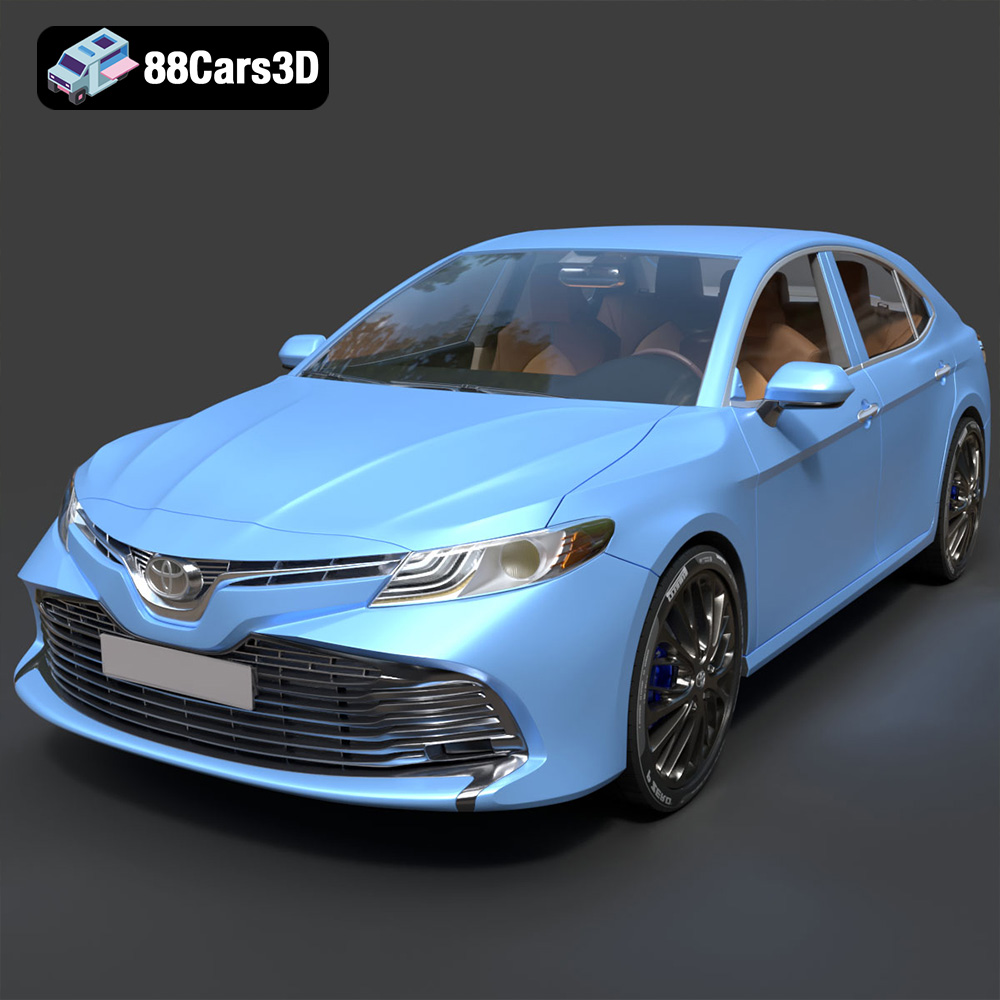
Today, we delve deep into the technical intricacies and creative possibilities offered by professional-grade 3D car models, exemplified by a standout asset: the Toyota Camry 2018 3D model. This particular model, available on 88cars3d.com, is an excellent case study for understanding how a single, well-crafted asset can be leveraged across diverse industries, offering unparalleled fidelity and flexibility for any digital endeavor.
The versatility of a 3D car model largely depends on the file formats it supports. Each format is designed with specific use cases and technical considerations in mind, making the choice crucial for integration into different software and pipelines. A comprehensive asset, like the Toyota Camry 2018 3D model, offers a suite of formats to ensure maximum compatibility and utility across various professional workflows.
The .blend.blend file typically contains the entire Blender scene, including mesh data, materials, textures, lighting, cameras, animation, and even physics simulations. For artists working primarily in Blender, this format offers full editability, allowing for seamless modifications to the model’s topology, UVs, rigging, and shader networks. It’s ideal for in-depth customization, rendering within Cycles or Eevee, and preparing assets for export to other platforms while retaining all original scene data. Its comprehensive nature makes it perfect for those who need to dive deep into the model’s construction.
Autodesk’s .fbx.fbx is the go-to because it efficiently packages geometry, UVs, normal maps, and often rudimentary material assignments, ensuring a smooth transition into game development environments. Its robust support for skeletal animations is particularly valuable for complex car models with separate, animatable parts like wheels, steering, and suspension.
The .obj.obj file typically stores vertex positions, UV coordinates, normals, and references to external material (.mtl) files. While it doesn’t support animations or advanced scene data like .fbx, its ubiquity makes it a reliable choice for cross-software compatibility, especially when the focus is purely on the model’s geometry for static renders or initial sculpting phases.
.glb.glb is optimized for AR, VR, and browser-based display due to its compact size and single-file nature (embedding textures and other assets). It’s rapidly becoming the “JPEG of 3D,” providing a lightweight, high-performance solution for displaying 3D models interactively on the web or in mobile augmented reality applications, perfect for virtual showrooms or product configurators.
.stl.stl is the necessary step. While the Toyota Camry 2018 3D model boasts a high poly count for rendering, careful reduction and preparation are required for successful 3D printing, following the recommended print settings for scale, layer height, and support structures provided with the model.
.ply.fbx or .obj, its ability to store detailed mesh properties makes it valuable for applications requiring precision geometry for CAD integration, reverse engineering, or detailed mesh analysis.
While not a standalone file type in the traditional sense like .fbx, an .unreal.fbx that has been meticulously set up with proper materials, collision meshes, LODs (Levels of Detail), and pivot points, ready to be dropped into an Unreal scene. This streamlined format significantly reduces the setup time for game developers, offering an “engine-ready” solution that bypasses many of the initial import and configuration steps, making the Toyota Camry 2018 model an invaluable asset for Unreal projects.
Finally, the .max.blend, a .max file contains all scene data, including geometry, modifiers, materials, lights, cameras, and animations. For artists working in 3ds Max, this provides the highest level of flexibility for editing, rigging, animating, and rendering the model using renderers like V-Ray or Corona. It’s the ultimate source file for deep customization and high-end automotive rendering.
The provision of such a wide array of formats with the Toyota Camry 2018 3D model underscores its professional-grade nature, ensuring that creators across all disciplines have the tools they need to integrate this exceptional asset into their specific pipelines.
Automotive rendering is a specialized discipline that marries technical precision with artistic flair. The goal is to create visuals so compelling that they are indistinguishable from photographs, or to craft stylized scenes that evoke a specific mood or brand identity. Achieving this level of quality hinges on several key factors: the base model’s fidelity, the sophistication of its materials, and the mastery of lighting and camera work.
The visual impact of any 3D car model, even one as detailed as the Toyota Camry 2018 from 88cars3d.com, is heavily dependent on its materials. Photorealism begins with physically based rendering (PBR) materials, which accurately simulate how light interacts with surfaces in the real world. This involves meticulously defining properties like diffuse color, metallicness, roughness, normal maps for fine surface detail, and clear coat layers for paint finishes.
Lighting is the single most important factor in transforming a good 3D model into a stunning render. Both 3ds Max (often with V-Ray or Corona) and Blender (with Cycles or Eevee) offer powerful lighting tools to simulate various real-world conditions.
While high-end rendering prioritizes visual fidelity with fewer performance constraints, real-time game engines like Unreal Engine and Unity demand a delicate balance between visual quality and computational efficiency. Game-ready 3D car models must be meticulously optimized to ensure smooth frame rates without sacrificing the immersive experience. The Toyota Camry 2018 3D model is specifically designed with these requirements in mind, boasting a balanced triangle count and optimized structure.
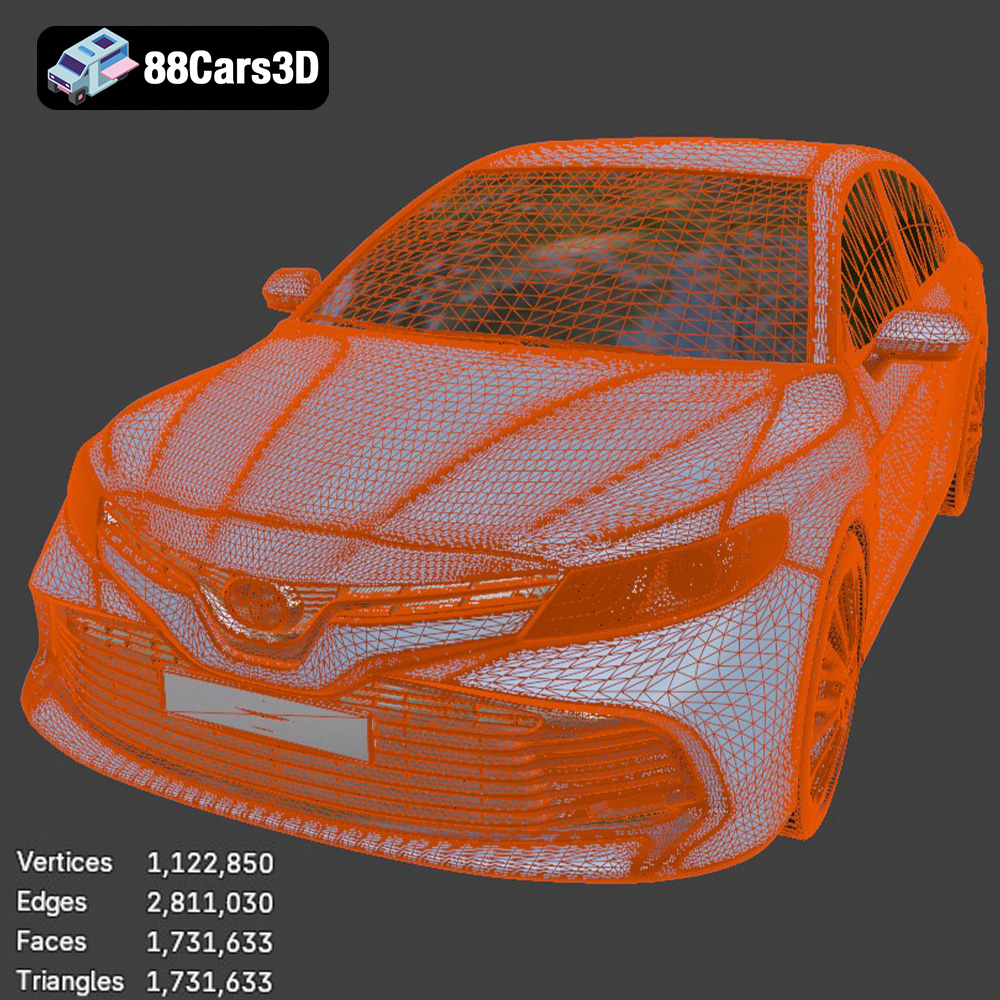
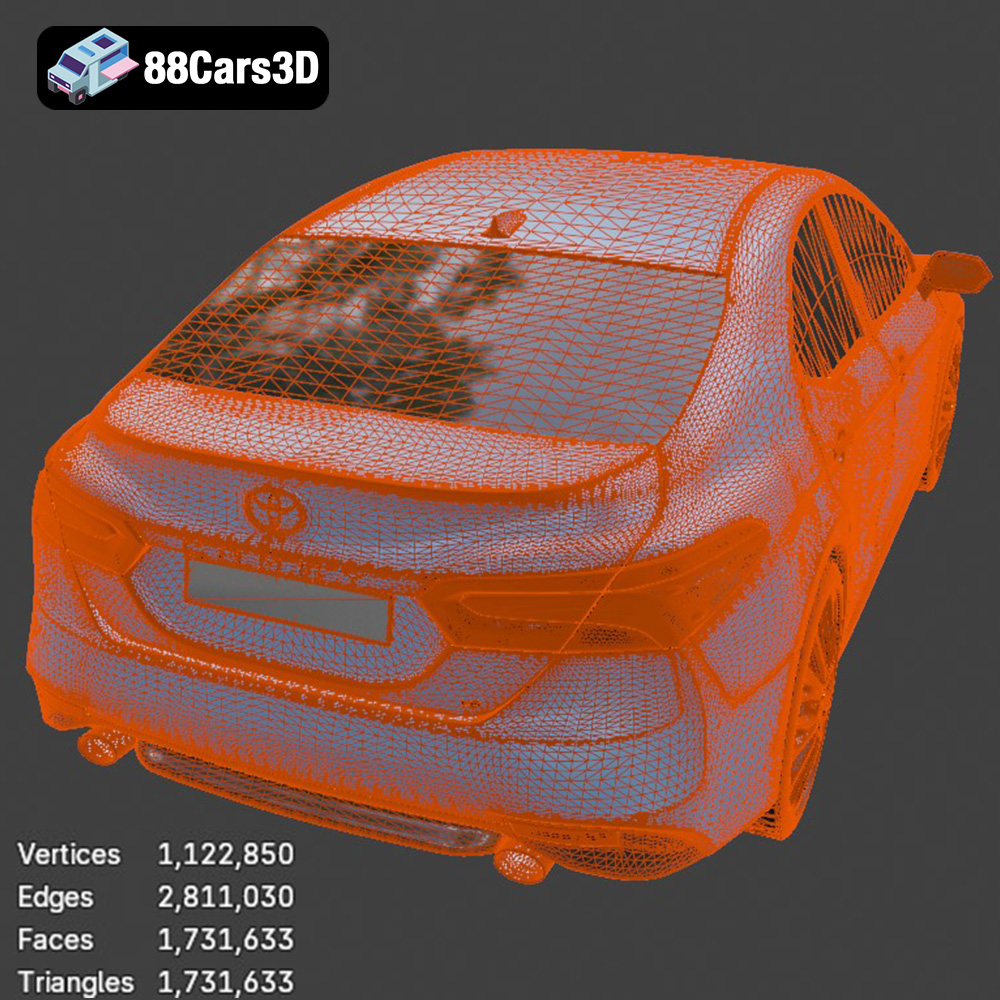
A key challenge in game development is managing polygon count. The Toyota Camry 2018 3D model, with its 1,731,633 triangle count, strikes an excellent balance for high-end visual realism in real-time engines. However, for open-world games or scenarios where multiple vehicles are present, further optimization is often necessary through Levels of Detail (LODs).
Beyond visual fidelity, game assets require robust integration with the engine’s physics and collision systems to behave realistically within the virtual world. The Toyota Camry 2018 model’s technical advantages, such as its real-world scale accuracy and proper pivot setup, are crucial here.
The utility of a high-quality 3D car model extends far beyond traditional rendering and game development. Its precise geometry and adaptable formats make it invaluable for emerging technologies and specialized visualization needs, opening new avenues for interaction and production. The Toyota Camry 2018 3D model, with its diverse file format offerings, is ideally positioned for these varied applications.
Augmented Reality (AR) and Virtual Reality (VR) are transforming how consumers interact with products, offering immersive showrooms and configurators that transcend physical limitations. A detailed 3D car model is the centerpiece of such experiences.
.glb format, in particular, is a game-changer for web-based AR/VR, offering efficient loading and display.The ability to transform a digital 3D model into a physical object via 3D printing offers a unique bridge between virtual and real. While requiring specific preparation, it allows for the creation of prototypes, scale models, or collectible items.
.stl format is the standard for 3D printing. However, a model initially designed for high-resolution rendering (like the 1.7 million triangles of the Camry) may need simplification for practical 3D printing. The product description for the Toyota Camry 2018 model provides crucial 3D print settings, including recommended scales (1:12, 1:18, 1:24), layer height, wall thickness, infill, and the necessity of supports for intricate details.For architects, urban planners, and environmental designers, integrating realistic vehicles into their visualizations is essential for conveying scale, context, and a sense of realism. The Toyota Camry 2018 model, ideal for urban environment rendering, serves this purpose perfectly.
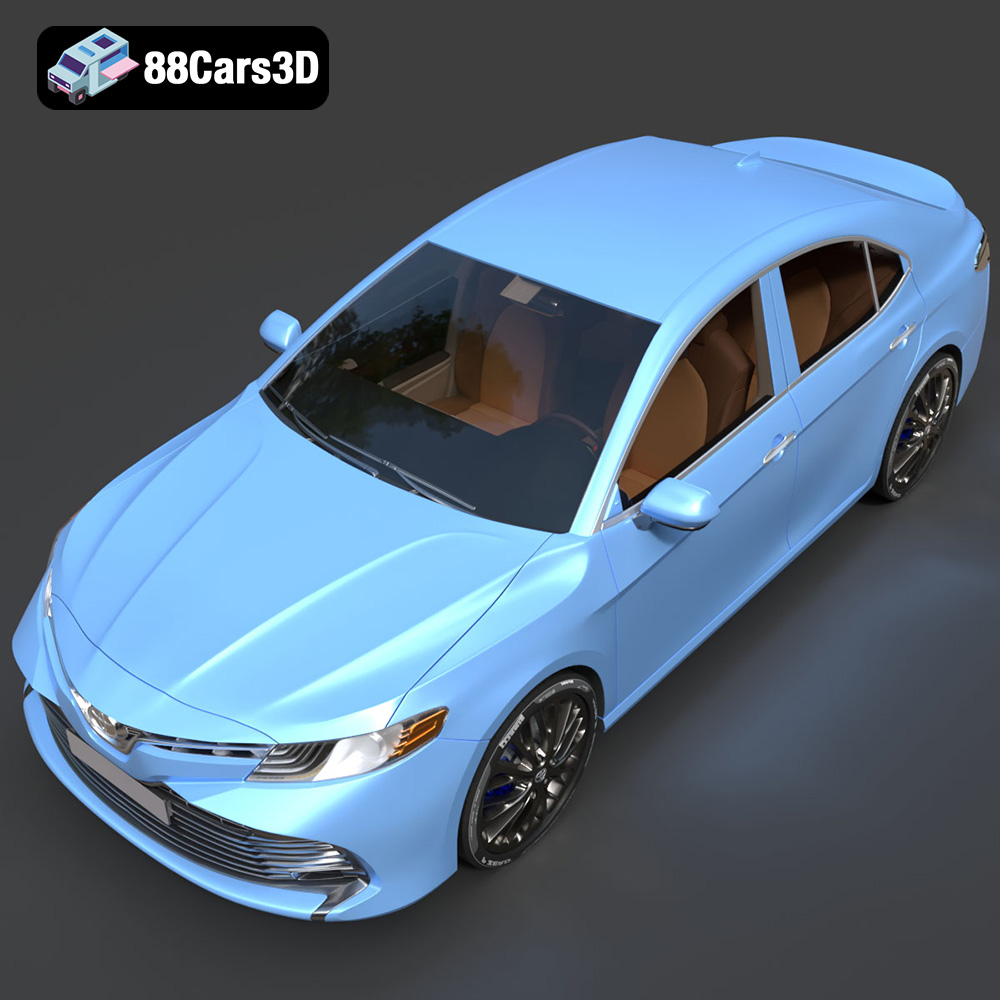
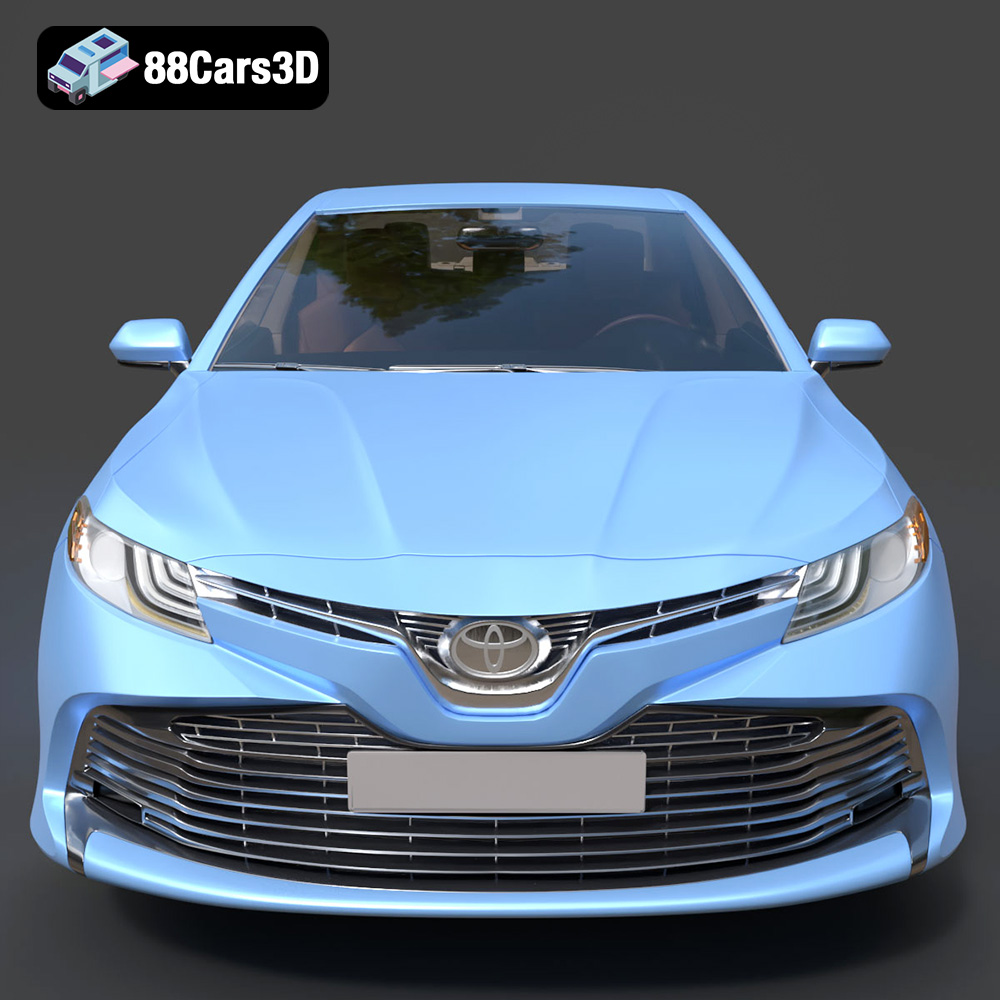
The 2018 Toyota Camry marked a significant evolution for the venerable sedan, embracing a bolder, more aggressive design language built on the dynamic TNGA platform. The Toyota Camry 2018 3D model available on 88cars3d.com perfectly encapsulates this transformation, offering a meticulously crafted digital asset that stands out for its detail, accuracy, and versatility across a spectrum of professional applications.
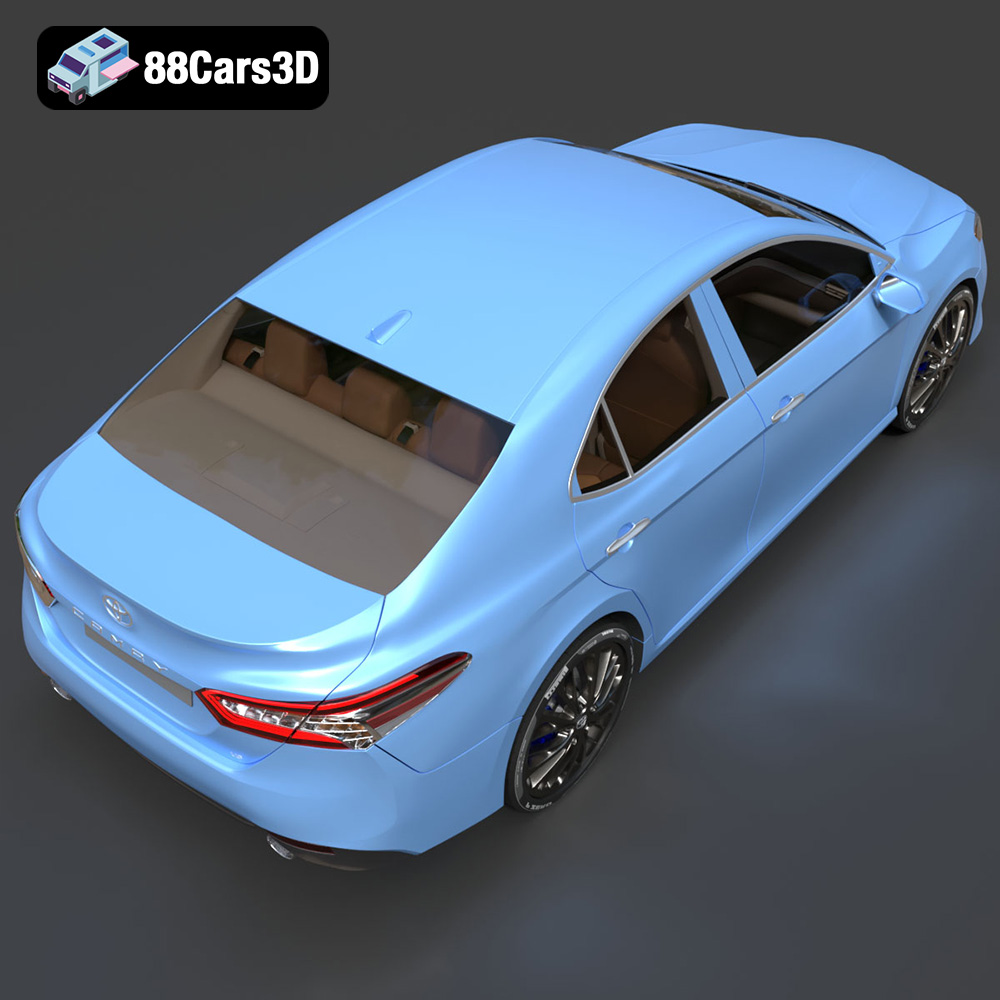
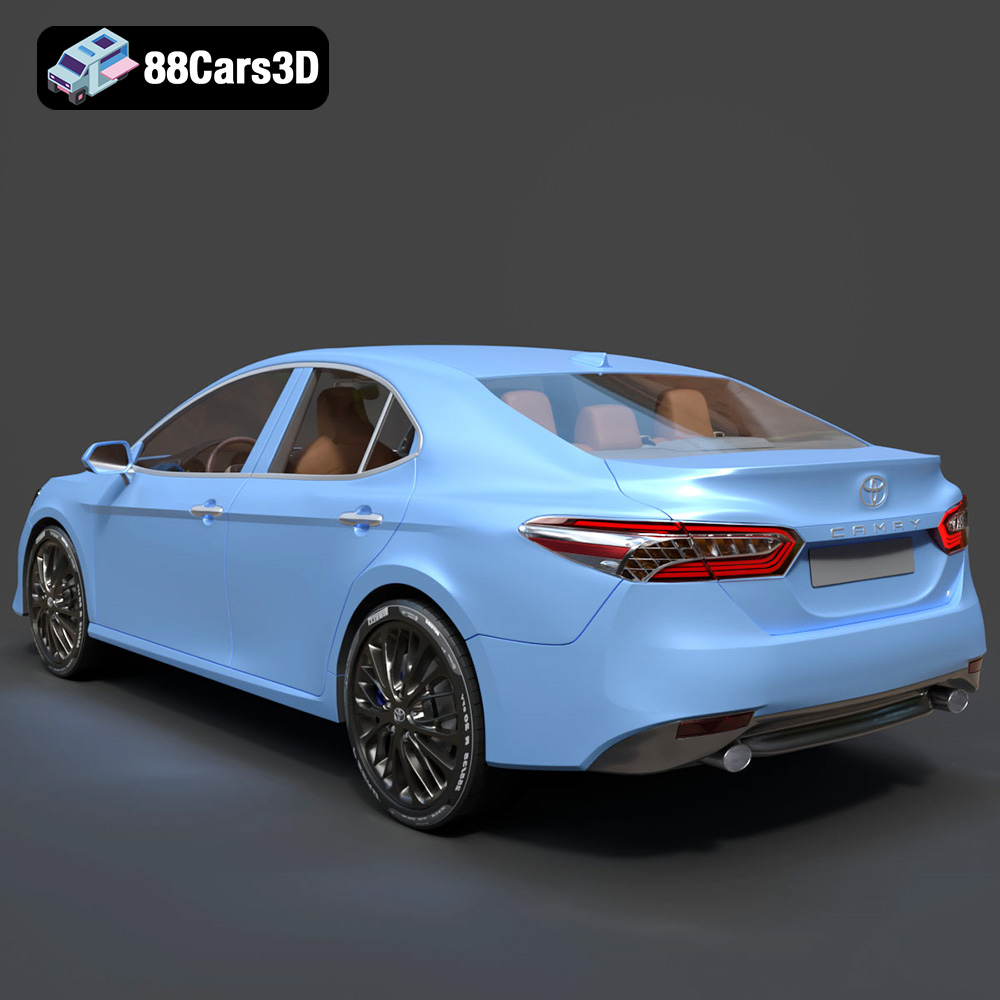
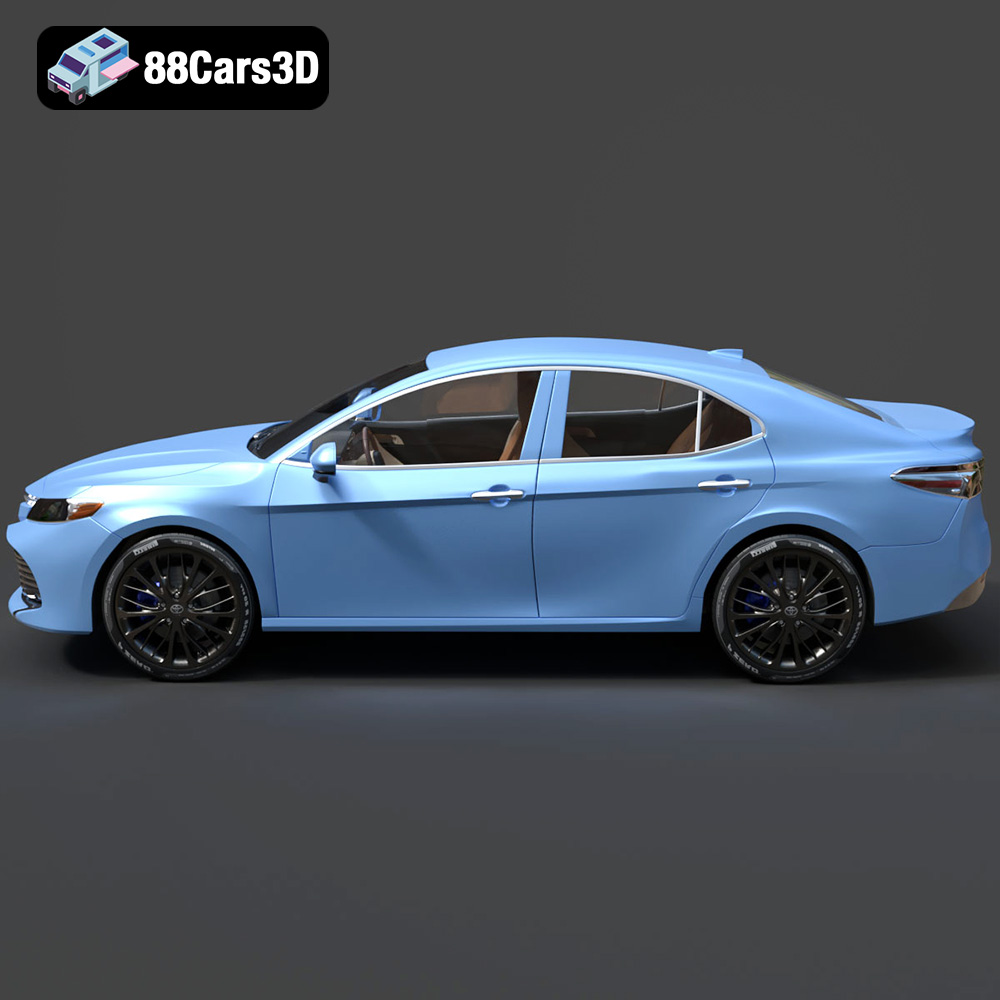
This model is a testament to precision modeling, capturing the Camry’s striking aerodynamic silhouette with unparalleled visual fidelity. Every exterior feature has been carefully replicated:
The attention to detail extends seamlessly into the cockpit, offering a highly immersive interior:
Beyond its visual appeal, the Toyota Camry 2018 3D model offers robust technical specifications designed for performance and flexibility:
Whether for developing immersive driving simulators, creating stunning architectural visualizations, crafting cinematic automotive animations, or building interactive virtual showrooms, this Toyota Camry 2018 3D model provides a professional-grade foundation. Its comprehensive suite of included file formats – .blend, .fbx, .obj, .glb, .stl, .ply, .unreal, and .max – guarantees compatibility and ease of use across the industry’s leading software platforms and rendering engines. This makes it an indispensable asset for any professional aiming for excellence in their digital automotive projects.
The world of 3D modeling for automotive design is a complex yet incredibly rewarding domain, demanding both artistic vision and technical mastery. High-quality 3D car models serve as the linchpin for everything from captivating marketing campaigns to immersive gaming experiences and practical 3D prints. Understanding the nuances of file formats, the artistry of rendering, and the strict requirements of real-time engines are all critical for success in this field.
The Toyota Camry 2018 3D model stands as a prime example of a meticulously crafted asset that meets these professional demands. Its detailed exterior and interior, optimized polycount, real-world scale, and comprehensive file format support (including .blend, .fbx, .obj, .glb, .stl, .ply, .unreal, and .max) make it an incredibly versatile tool. Whether you are an automotive renderer seeking photorealism, a game developer building a new racing title, or an AR/VR specialist creating interactive experiences, this model provides the foundation you need. It exemplifies the dedication to quality found on 88cars3d.com, a marketplace committed to providing top-tier 3D car models for every professional need. Investing in such an asset is an investment in the quality and efficiency of your digital projects, enabling you to bring your creative visions to life with unparalleled realism and performance.
The 2018 Toyota Camry marked a revolutionary shift for the legendary sedan, introducing a bold, aggressive design language and the dynamic TNGA platform. This highly detailed 3D model perfectly captures the vehicle’s striking aerodynamic silhouette, featuring its distinct front grille, sleek character lines, and modern lighting elements that redefined the midsize sedan category. Boasting a detailed topology of 1,731,633 triangles, this model delivers unparalleled visual fidelity while remaining suitable for high-end rendering and real-time engine integration. It is meticulously structured to serve professional workflows, whether you are developing immersive driving simulators, creating stunning architectural visualizations, or building interactive virtual showrooms.
$81.50
.blend
.camry
.fbx
.glb
.max
.obj
.ply
.rendering
.sedan
.stl
.toyota
.unreal
camry-2018
car-3d-model
classic-car
game asset
game-ready
low-poly
optimized
VR/AR