Get 20% OFF All Premium 3D & STL Models!

In the dynamic world of digital content creation, the quest for realism and performance is unending. From the hyper-realistic environments of next-generation video games to the immersive experiences of virtual reality, and the stunning visuals of automotive advertising, high-quality 3D assets are the bedrock of compelling visual narratives. Few subjects ignite passion quite like legendary automobiles, and for enthusiasts and professionals alike, bringing these machines to life in the digital realm demands precision and technical excellence.
Today, we’re diving deep into the intricacies of creating and utilizing advanced 3D car models, with a special focus on an undisputed JDM icon: the Mitsubishi Lancer Evolution III. This legendary rally machine, born from the rigorous demands of the World Rally Championship, represents a pinnacle of 90s automotive engineering. Capturing its aggressive stance, functional aerodynamics, and the raw power of its 4G63T engine in a digital model requires a meticulous approach – an approach exemplified by the high-quality assets available on platforms like 88cars3d.com. We’ll explore the technical specifications, diverse applications, and workflow advantages that such a detailed 3D car model offers, showcasing how it can elevate your projects from concept to breathtaking reality.
The journey of a 3D car model from its creation to its final application often involves traversing a landscape of various file formats. Each format serves a specific purpose, offering unique advantages in terms of compatibility, data preservation, and optimization for particular workflows. Understanding these differences is crucial for any professional working with 3D assets, ensuring seamless integration and optimal performance. The Mitsubishi Lancer Evolution III model, for instance, is available in a comprehensive suite of formats, catering to virtually every need.
The .blend format is the native file type for Blender, a powerful and increasingly popular open-source 3D creation suite. A .blend file typically encapsulates an entire Blender scene, including all mesh data, materials, textures, lighting setups, cameras, animation data, and even physics simulations. For artists and studios primarily working within the Blender ecosystem, this format offers the highest degree of editability and flexibility. It preserves all the intricate details of the model’s construction, allowing for easy modification of topology, UVs, and material properties. When you download a .blend file, you’re not just getting a model; you’re getting a fully editable project, ready for extensive customization and rendering.
Autodesk’s .fbx (Filmbox) format has become an industry standard for exchanging 3D data between different software applications. Its strength lies in its ability to store not just geometry, but also materials, textures, skinning, animation, and camera information in a relatively universal manner. This makes it ideal for game development pipelines (Unreal Engine, Unity), architectural visualization, and film/VFX production where assets need to move between programs like Maya, 3ds Max, Blender, and Substance Painter. The .fbx format is highly optimized for real-time engines, providing a robust and efficient way to import complex animated models while maintaining proper hierarchies and pivot points, which is critical for a functional 3D car model with animatable components.
The .obj (Wavefront OBJ) format is one of the oldest and most widely supported 3D file formats. It’s a simple, human-readable format that primarily stores geometry (vertices, normals, texture coordinates, and faces) and references to external material files (.mtl). While it doesn’t support animation or rigging, its universal compatibility makes it an excellent choice for basic mesh exchange between almost any 3D software. If you need a clean, basic mesh to start with in a new application, .obj is a reliable fallback, though it may require re-establishing materials and textures upon import.
.glb (GL Transmission Format Binary) is a modern, royalty-free format designed for efficient transmission and loading of 3D scenes and models on the web and in augmented/virtual reality applications. It’s a binary version of glTF, which packages all necessary assets (geometry, materials, textures, animations) into a single file, making it incredibly easy to share and embed. Its compactness and native support in many AR/VR viewers and web browsers make it perfect for showcasing the Mitsubishi Lancer Evolution III in interactive web configurators, mobile AR experiences, or light VR showrooms without complex setups.
The .stl (Stereolithography) format is the de facto standard for 3D printing. It describes only the surface geometry of a 3D object as a collection of unconnected triangles (a tessellation). It lacks color, texture, or material information, focusing solely on the shape needed for additive manufacturing. For hobbyists and professionals looking to create physical replicas of the Evo III, an .stl file is essential. The quality of the printed output directly correlates with the resolution and integrity of the original mesh when converted to .stl.
The .ply (Polygon File Format) format, also known as the Stanford Triangle Format, is primarily used for storing 3D data from 3D scanners, CAD applications, and scientific visualization. It can store a variety of properties including color, transparency, surface normals, and texture coordinates, in addition to basic geometry. While less common for general 3D asset exchange than .fbx or .obj, .ply offers a robust solution for preserving precise mesh information, often used in contexts requiring high accuracy or further computational analysis of the model’s surface.
The .unreal format, or more accurately, assets packaged for Unreal Engine, typically refers to files that have been specifically prepared and sometimes already imported into an Unreal project, often distributed as .uasset files or entire project folders. These assets are optimized with appropriate material setups, collision meshes, LODs (Levels of Detail), and blueprint configurations, making them plug-and-play within the engine. For game developers using Unreal Engine, an .unreal asset like the Mitsubishi Lancer Evolution III means a significant head start, saving countless hours on preparation and configuration, ensuring it’s instantly ready for real-time rendering and interaction.
Similar to .blend for Blender, the .max format is the native file type for Autodesk 3ds Max, a leading software for 3D modeling, animation, rendering, and visualization. A .max file contains all scene information, including geometry, materials, lighting, cameras, animation, and modifiers. For users entrenched in the 3ds Max ecosystem, this format provides full editability and control over every aspect of the Mitsubishi Lancer Evolution III model, enabling complex animations, V-Ray or Corona renders, and intricate scene setups.
The availability of such a diverse range of formats for a single product, such as the Mitsubishi Lancer Evolution III 3D model, underscores its versatility and the foresight of its creators. It ensures that regardless of your software preference or project requirements, you have the right tool for the job.
The allure of the Mitsubishi Lancer Evolution III is undeniable. It’s not just a car; it’s a testament to motorsport innovation, a symbol of aggressive performance, and a cornerstone of JDM culture. Translating such an iconic machine into a high-fidelity 3D model requires more than just technical skill; it demands an appreciation for its heritage and an eye for every defining detail.
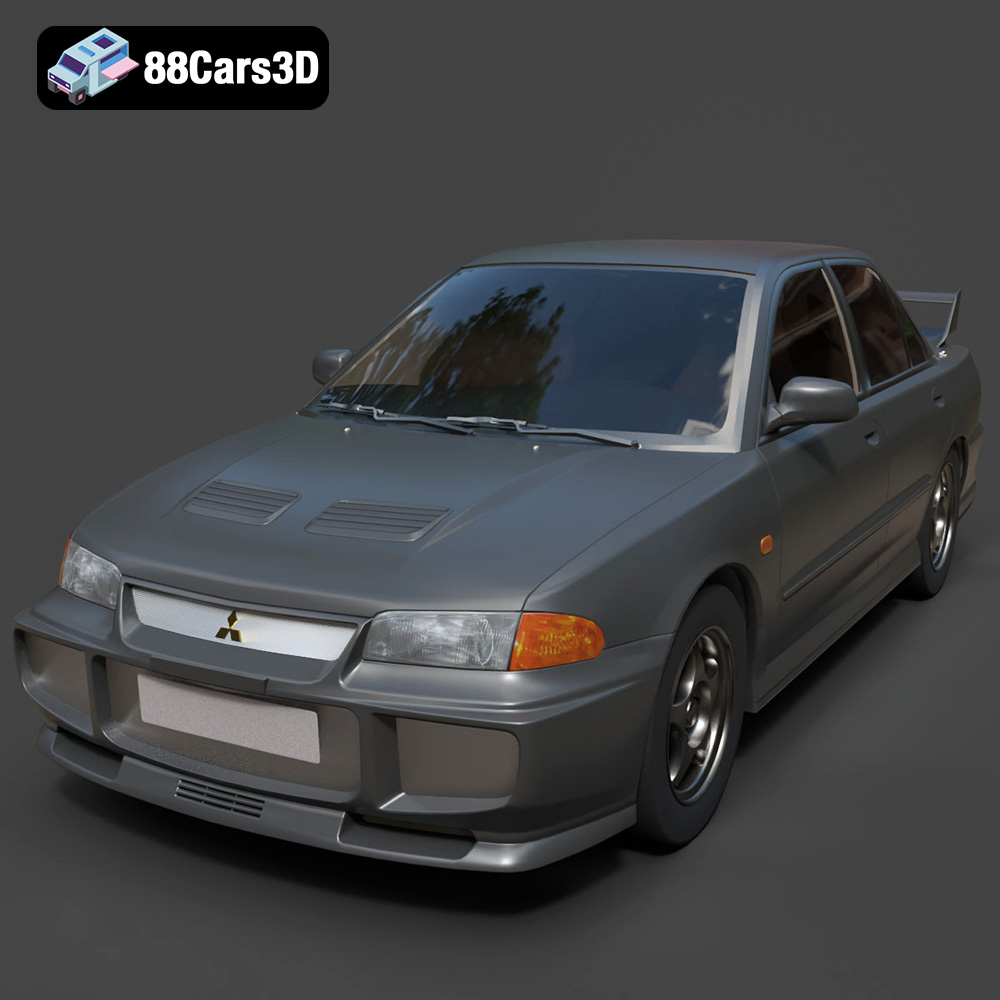
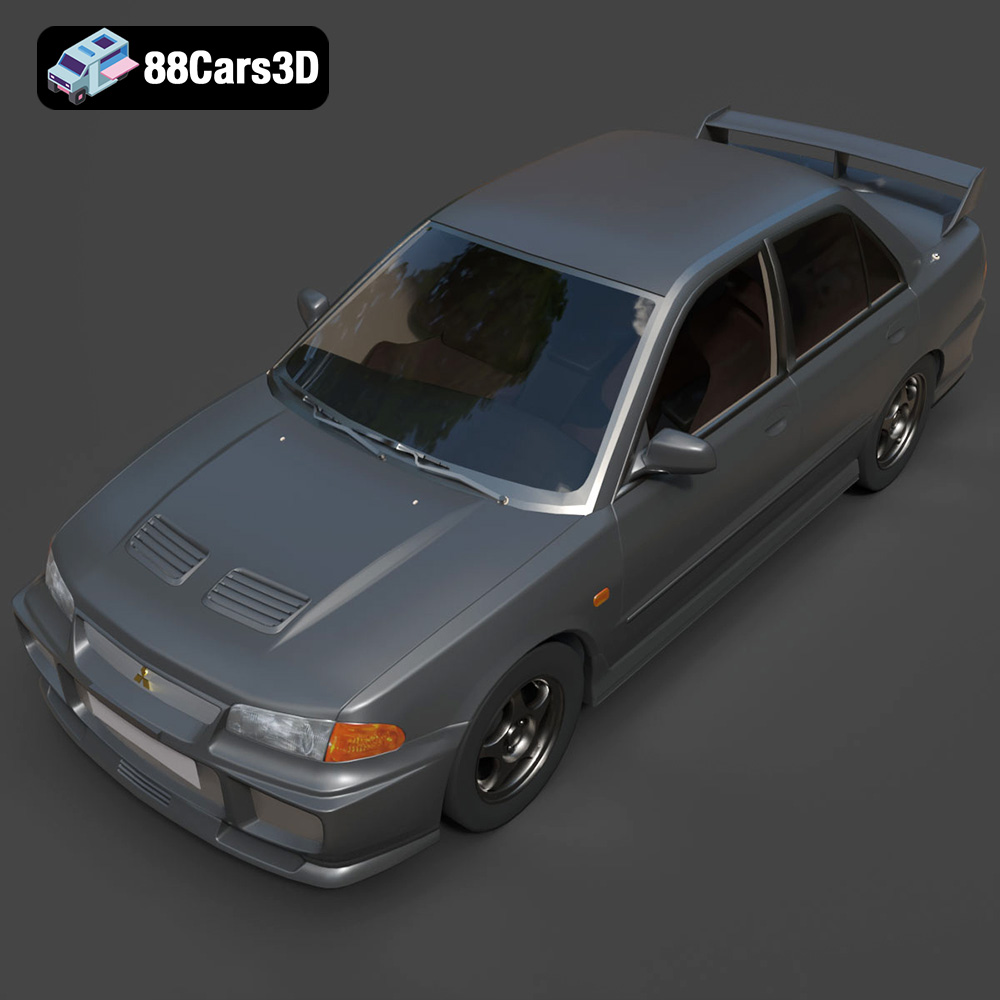
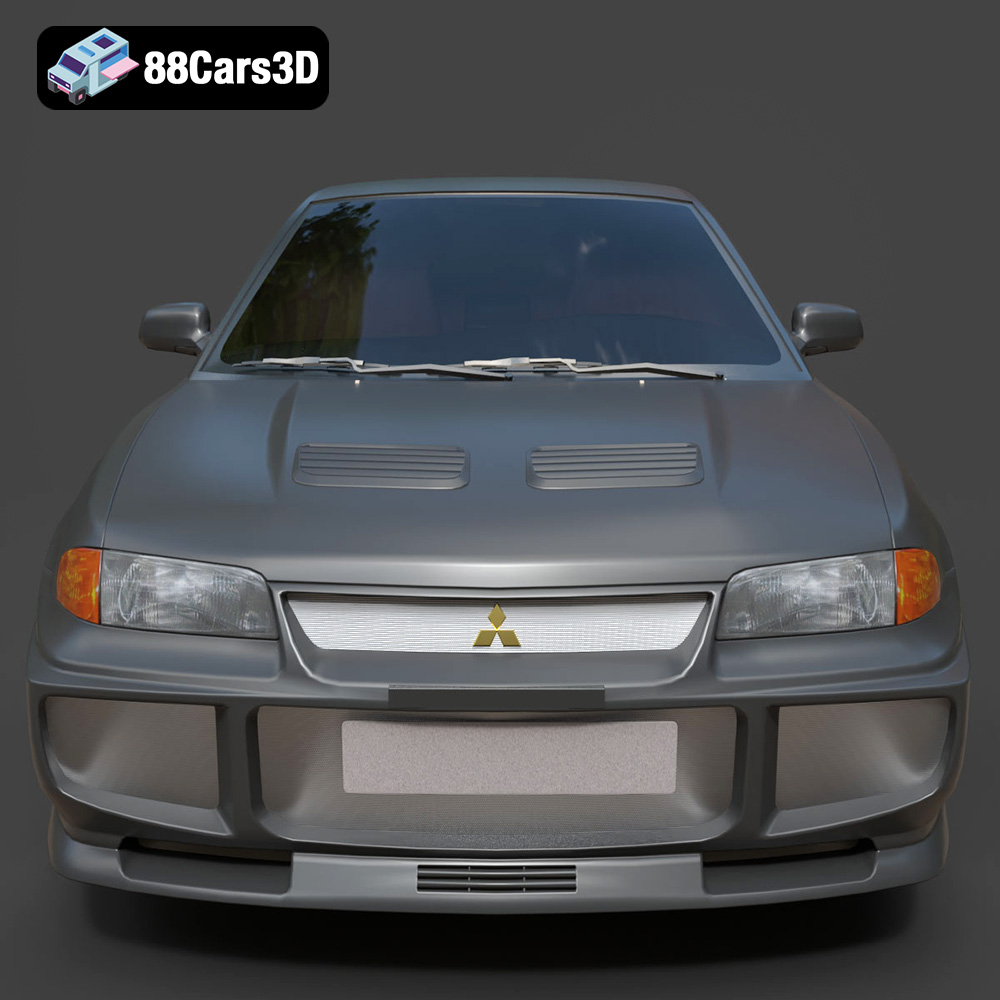
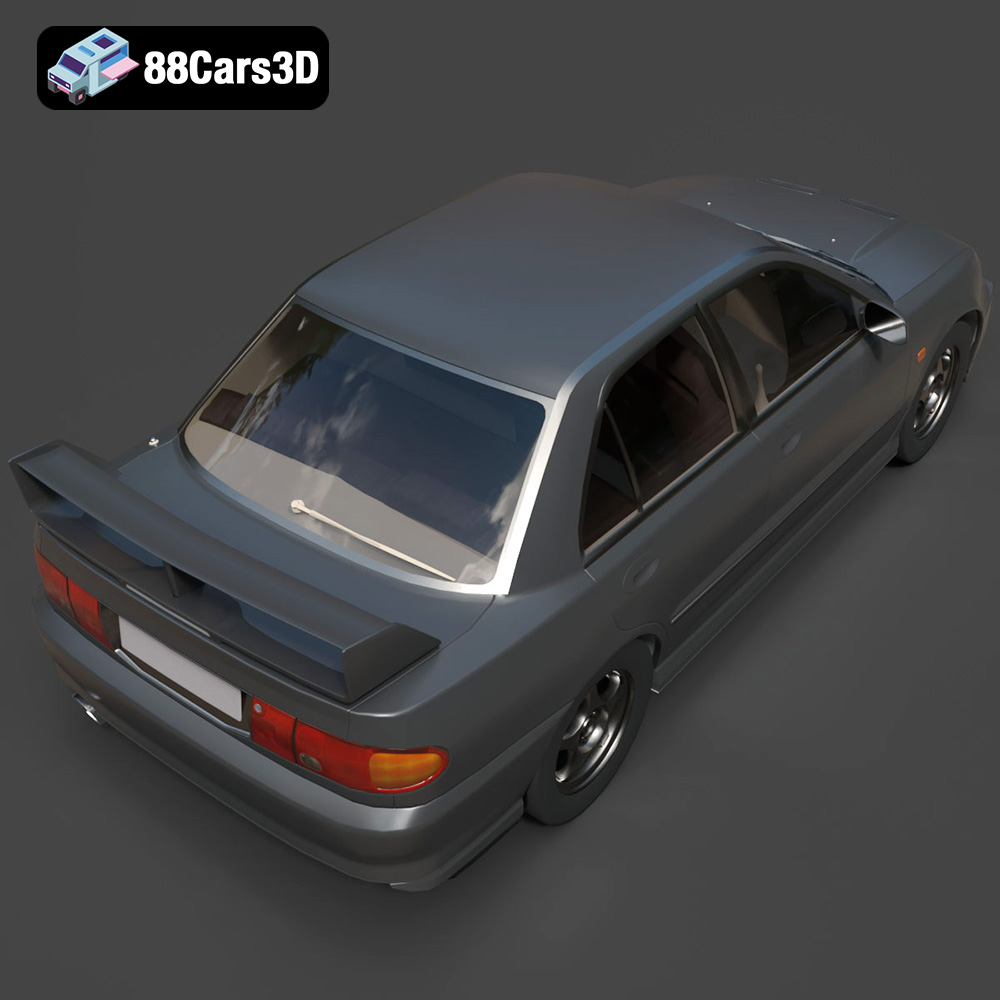
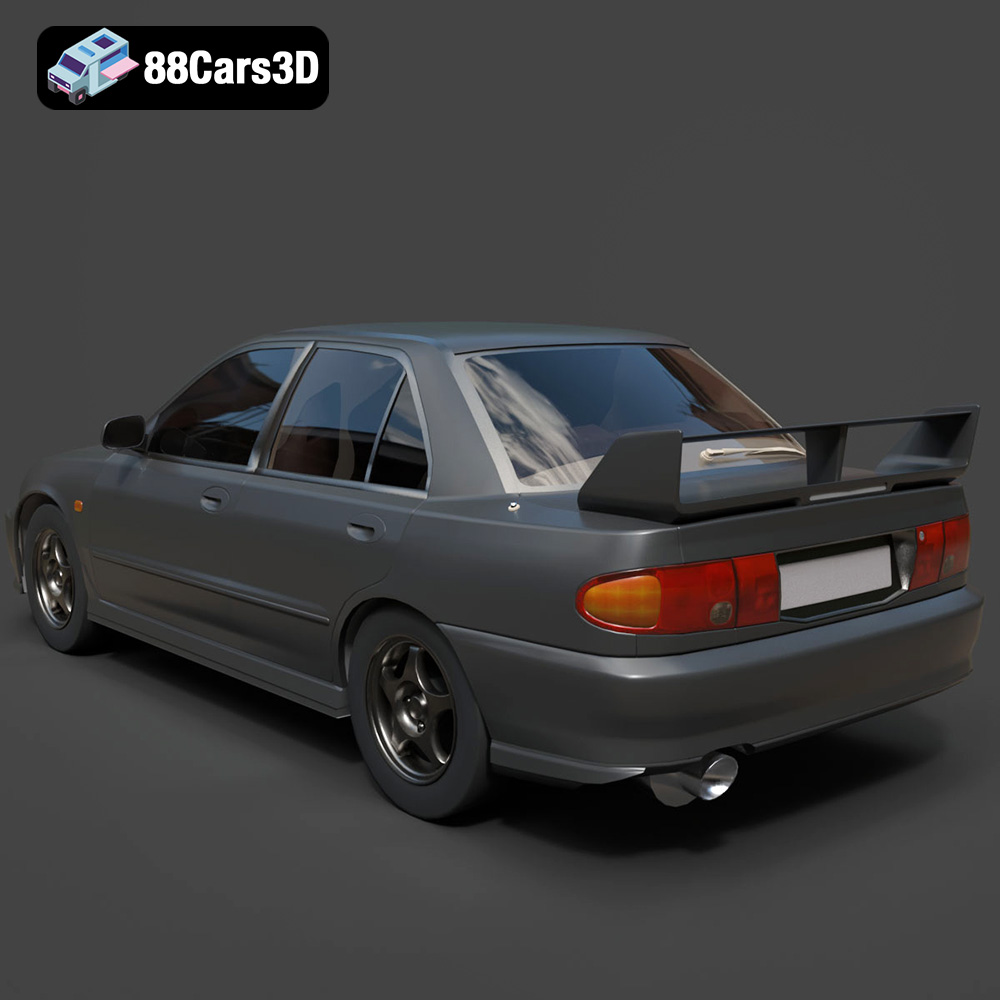
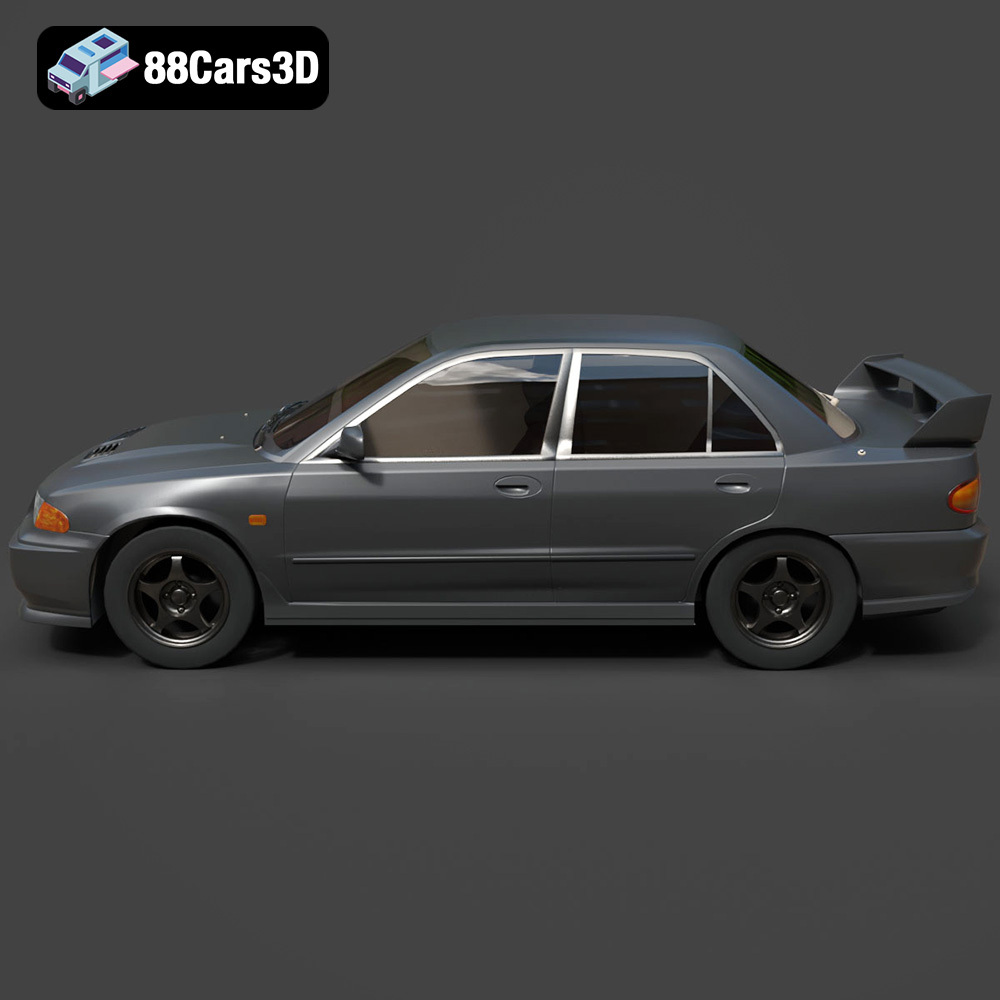
The essence of the Evo III lies in its “form follows function” design philosophy, dictated by its World Rally Championship homologation. This 3D model meticulously recreates that spirit. From the unmistakable high-profile rear wing that defined its silhouette to the widened stance that hinted at its AWD prowess, every element speaks of its rally dominance. The larger front air dams, designed to feed air to its intercooler and improve aerodynamics, are accurately modeled, allowing the detailed intercooler to be visible—a crucial detail for enthusiasts. This attention to aggressive aerodynamics and authentic styling ensures that the digital representation truly embodies the raw, purposeful aesthetic of its real-world counterpart.
A truly professional 3D car model goes beyond static visual appeal. The Mitsubishi Lancer Evolution III model boasts an array of exterior features that enhance both realism and functionality. High-detail halogen headlights and the unmistakable Evo III rear taillight assemblies provide crucial visual anchors. The classic multi-spoke rally-style alloy wheels are paired with performance tires, and critical components like visible brake calipers and suspension systems are included. Crucially, the model is structured with separate wheels, suspension, and steering components. This modularity is not merely for aesthetics; it’s a technical advantage, enabling realistic animation of steering, wheel rotation, and suspension travel for racing simulations and cinematic sequences.
The experience of a high-performance car isn’t complete without its interior. For game developers and VR experience creators, an accurate cockpit is paramount for first-person perspectives. This Evo III model delivers with detailed Recaro-style racing bucket seats that anchor the driver, an accurate Momo-style sports steering wheel for direct control, and a classic 1990s analog instrument cluster and center console dials that transport the user back in time. The detailed manual shifter, handbrake, and sport pedal assembly further enhance the tactile illusion. The geometry within the cockpit is optimized, ensuring that even from a first-person POV, the detail is convincing without being overly demanding on real-time rendering resources.
In digital production, particularly for real-time applications like games and AR/VR, raw visual fidelity must be balanced with performance. A model that looks incredible but brings a game to a crawl is of limited use. The Mitsubishi Lancer Evolution III 3D model distinguishes itself by striking this critical balance, making it truly “game-ready.”
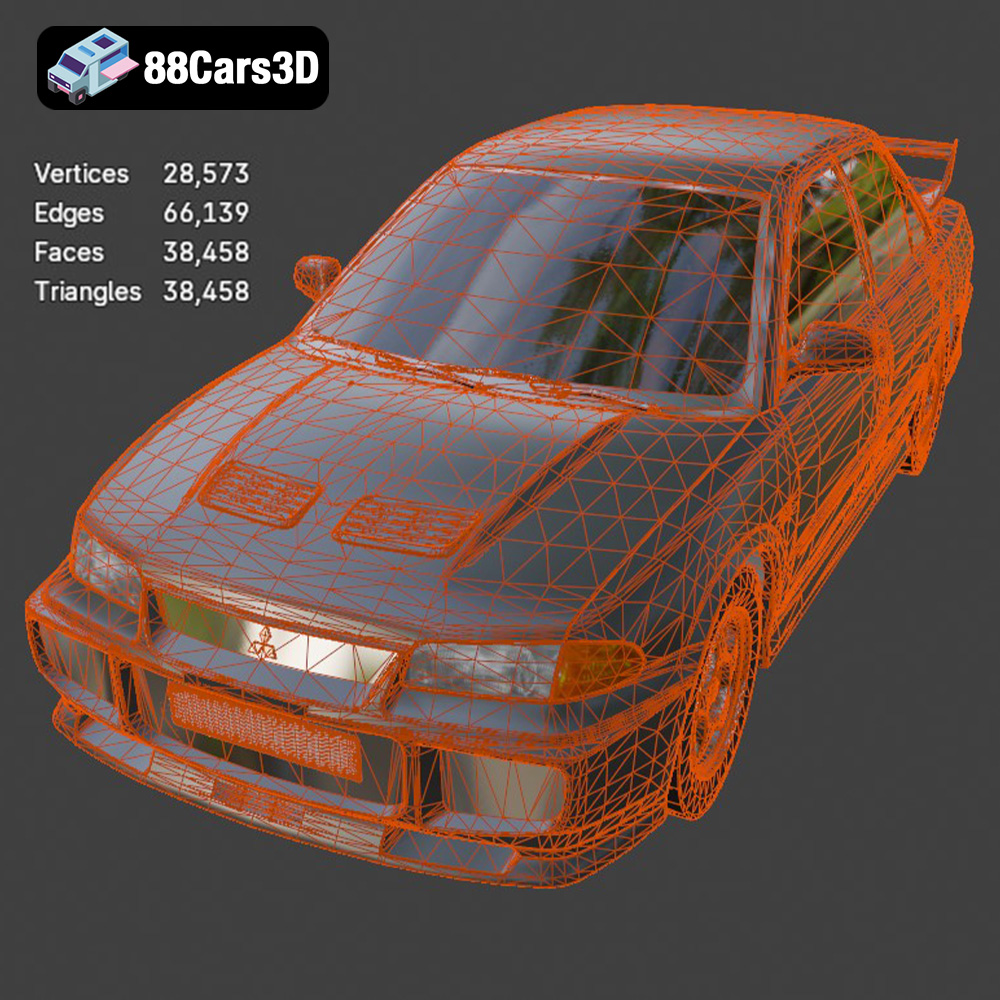
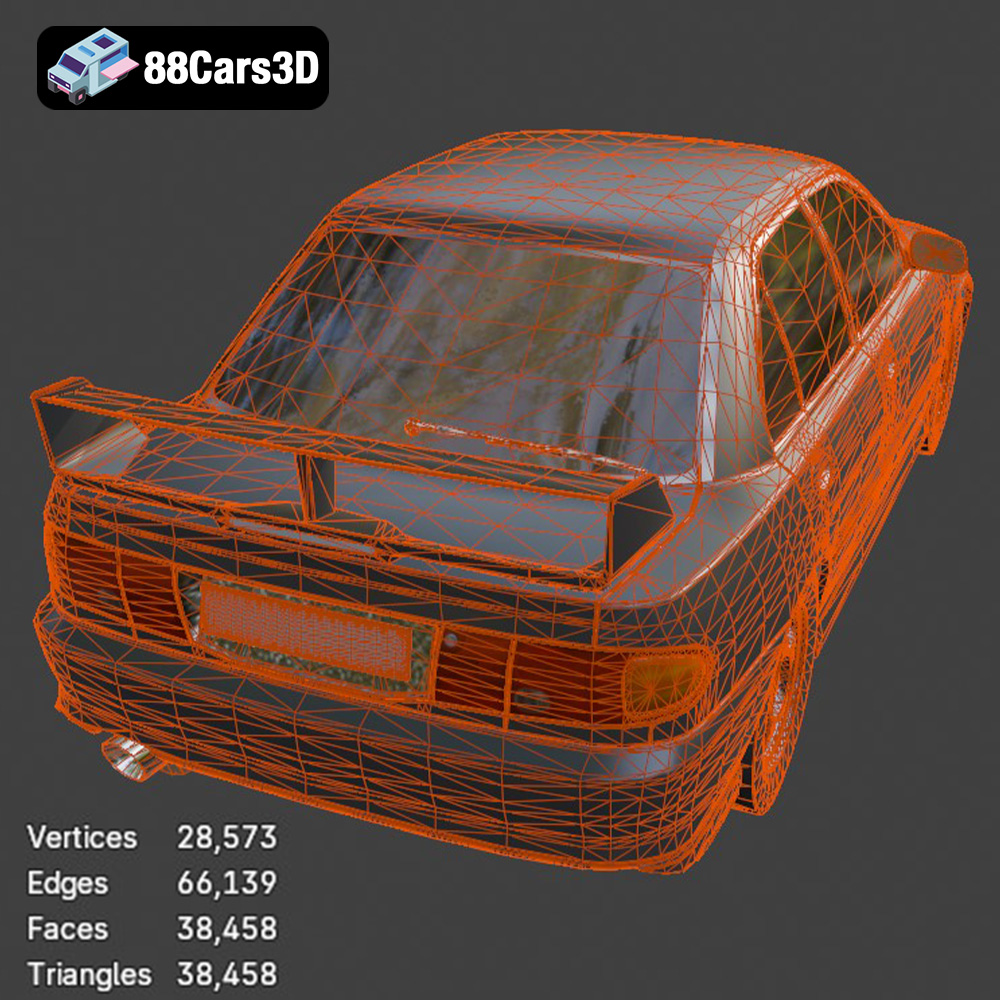
The model’s technical specifications highlight its optimization: a triangle count of 38,458. This figure is a testament to sophisticated 3D modeling practices. For the uninitiated, “polycount” refers to the number of polygons (triangles being the most common unit) that make up a 3D mesh. A higher polycount generally means more detail but also requires more computational power to render. A count of 38,458 triangles for a detailed car model like the Evo III is exceptionally well-optimized. It provides enough geometric detail to maintain high-end visual realism – capturing the vehicle’s curves, panel lines, and internal components – while remaining light enough for efficient rendering in demanding real-time engines such as Unreal Engine and Unity. This ensures smooth frame rates in fast-paced racing titles, seamless navigation in open-world environments, and fluid interaction in VR showrooms.
Accuracy extends beyond visual fidelity to real-world scale. The Evo III model is built to actual vehicle chassis dimensions, a critical factor for realistic physics simulations in games and accurate placement in architectural visualizations. Furthermore, the proper pivot setup for steering, wheel rotation, and suspension travel is not an afterthought; it’s engineered into the model. This means that animators and developers don’t have to manually adjust pivot points or re-rig parts – the groundwork for dynamic, realistic motion is already laid. This level of technical preparation drastically reduces integration time and effort, making the asset a true plug-and-play solution across major 3D software platforms and real-time rendering engines.
High-quality 3D car models like the Mitsubishi Lancer Evolution III are invaluable assets across a multitude of professional disciplines. Their inherent versatility, coupled with meticulous technical execution, allows them to seamlessly integrate into diverse workflows, driving innovation and efficiency.
The “game-ready” optimization of the Evo III model makes it a cornerstone for game development. For open-world titles, racing simulators, and arcade racers, the balance of visual fidelity and low polycount (38,458 triangles) is perfect. Developers can drop the model directly into engines like Unreal or Unity, leveraging the included .fbx and .unreal formats. Its proper pivot setup for wheels, steering, and suspension travel is a huge time-saver, allowing designers to immediately focus on physics implementation, AI integration, and track design rather than asset preparation. This streamlines the pipeline, enabling rapid prototyping and iteration, and ultimately bringing iconic vehicles like the Evo III into players’ hands faster.
The immersive nature of Augmented Reality (AR) and Virtual Reality (VR) demands highly optimized assets that can render smoothly on a variety of devices, from powerful VR headsets to mobile phones. The Mitsubishi Lancer Evolution III model, with its balanced topology and inclusion of the .glb format, is ideally suited for these applications. Imagine a virtual showroom where potential buyers can walk around, inspect, and even customize the Evo III in real-time. Or a mobile AR app that projects the car onto your driveway. The optimized geometry ensures fluid interaction and breathtaking realism in these interactive, spatial computing environments, making it perfect for virtual configurators, immersive marketing, and educational experiences.
Beyond real-time interactivity, the Evo III 3D model excels in static and animated rendering for marketing, visualization, and cinematic projects. Advertising agencies, automotive design studios, and visualization artists can leverage the detailed geometry and robust material setups (preserved in .max, .blend, and .fbx formats) to create stunning visuals. Whether it’s a studio lighting setup showcasing every curve, a dramatic action shot on a virtual rally stage, or integration into a lifestyle scene, the model provides the foundational quality. Artists can apply advanced shaders, ray tracing techniques, and global illumination to achieve photorealistic results, bringing the legend to life with unparalleled visual fidelity for brand campaigns and product showcases.
The versatility of a high-quality 3D car model extends beyond digital screens into the tactile world of physical objects. For enthusiasts and collectors, the ability to transform a digital asset into a tangible replica is a fascinating and rewarding aspect of 3D modeling. The Mitsubishi Lancer Evolution III model, with its inclusion of the .stl format, opens up this exciting avenue.
The process of 3D printing allows hobbyists and professionals to hold a miniature version of their favorite digital cars. For an iconic vehicle like the Evo III, a physical model can be a desk ornament, a display piece, or a component in a larger diorama. The .stl format provided ensures that the model’s precise geometry is preserved for additive manufacturing. While the digital model is optimized for screens, the .stl conversion maintains the form and details necessary for successful printing, allowing the aggressive aerodynamics, the distinctive spoiler, and the overall rally aesthetic to be perfectly replicated in the physical realm.
Successfully 3D printing a complex object like a car model requires careful consideration of settings. For the Mitsubishi Lancer Evolution III, recommended scales often range from 1:12 to 1:24, offering a balance between manageable print size and visible detail. For fine details, resin printing (SLA/DLP) is highly recommended over FDM, allowing for layer heights as low as 0.04–0.12 mm. Optimal wall thickness (1.2–2.0 mm) and infill (20–30%) contribute to structural integrity without excessive material usage. Crucially, supports are required for intricate parts such as the exhaust system, mirrors, and the prominent rear wing to prevent sagging during printing. A recommended print orientation involves printing the main frame angled to enhance structural strength, while wheels are often printed separately for better detail and easier painting. Post-processing, including sanding, priming, and painting with authentic factory colors or custom rally liveries (often with metallic finishes), is essential to elevate a raw print into a show-stopping replica.
A truly valuable 3D asset is not merely a static representation; it’s a canvas for creativity, a foundation upon which new ideas can be built. The Mitsubishi Lancer Evolution III 3D model offers extensive opportunities for customization, allowing users to infuse their unique vision into this digital legend.
The flexibility of the included file formats, particularly .blend, .max, and .fbx, provides a robust platform for customization. Users can effortlessly change body colors, experimenting with authentic factory hues, classic rally liveries, or entirely custom schemes. Modifying tire textures to switch between gravel rally variants and street-performance tires instantly alters the car’s context and intended use. Material finishes can be adjusted, moving from a pristine gloss to a rugged matte or a dynamic metallic, further enhancing realism. Adapting lighting for different environments – be it a sun-drenched tarmac, a misty rally stage, or a dramatic studio setup – allows the model to tell endless stories. This level of customization ensures that the Evo III model can be tailored to fit any project’s aesthetic and functional requirements, making it an incredibly adaptable asset.
Investing in high-quality 3D car models from trusted sources like 88cars3d.com provides enduring value. These assets are not just for a single project; they are long-term tools that can be repurposed, updated, and integrated into countless future endeavors. The technical excellence, game-ready optimization, and comprehensive format support mean that an asset like the Mitsubishi Lancer Evolution III will remain relevant across evolving software versions, engine updates, and industry trends. For both seasoned professionals seeking efficient workflows and aspiring artists looking for a solid foundation, these models represent a smart investment in creative freedom and production efficiency, driving innovation in automotive rendering, game asset development, and immersive experiences for years to come.
The Mitsubishi Lancer Evolution III stands as a testament to automotive legend, and its digital counterpart, a high-quality 3D car model, brilliantly captures that essence. We’ve explored how its meticulous detailing, from aggressive aerodynamics to an immersive cockpit, brings the iconic rally machine to life. The model’s technical prowess, characterized by an optimized 38,458 triangle count and animatable components, ensures it’s perfectly game-ready for real-time engines like Unreal and Unity, while also excelling in AR/VR applications and high-end automotive rendering. Furthermore, its comprehensive file format support, including .blend, .fbx, .obj, .glb, .stl, .ply, .unreal, and .max, guarantees seamless integration into virtually any professional workflow, even extending its utility to the exciting realm of 3D printing.
Whether you’re crafting a new racing title, visualizing an immersive virtual showroom, producing a stunning cinematic render, or creating a physical replica, this Mitsubishi Lancer Evolution III 3D model provides the foundational quality and flexibility needed to succeed. Its blend of historical accuracy, technical optimization, and customization potential makes it an indispensable asset for anyone passionate about automotive design and digital creation. For top-tier 3D car models that drive creativity and elevate production value, exploring the offerings at 88cars3d.com is a clear path to digital excellence.
The Mitsubishi Lancer Evolution III is an iconic JDM legend born from World Rally Championship homologation requirements. Renowned for its aggressive aerodynamics, larger front air dams, and the legendary 4G63T 2.0-liter turbocharged inline-four engine, this model captures the essence of 1990s rally dominance. From its unmistakable high-profile rear wing to its widened stance and ventilated hood, every detail of this classic AWD sports car has been meticulously recreated to honor its rich motorsport heritage.
$16.99
.blend
.fbx
.glb
.jdm
.max
.mitsubishi
.obj
.ply
.rendering
.sports car
.stl
.unreal
car-3d-model
evo-3
game asset
game-ready
lancer-evolution-iii
low-poly
optimized
rally-car
VR/AR