Get 20% OFF All Premium 3D & STL Models!

In the dynamic world of 3D content creation, the demand for highly detailed, historically accurate, and performance-optimized assets is constant. From immersive video games and compelling cinematic visualizations to interactive AR/VR experiences and precise 3D prints, professionals rely on assets that deliver both visual fidelity and technical versatility. While the focus often falls on modern vehicles or fantastical creatures, the meticulous recreation of historical equipment presents unique challenges and opportunities for creators. This is where specialized 3D models truly shine, offering a shortcut to quality that accelerates production workflows without compromising authenticity.
Today, we’re taking an in-depth look at a prime example of such an asset: the Bofors 20 mm M-40 3D model. This iconic anti-aircraft autocannon, known for its pivotal role in military history, has been meticulously recreated for digital environments. Whether you’re a game developer seeking realistic weaponry, a historian building a virtual museum, or a visualization artist crafting a powerful scene, this model provides a robust foundation. Available at 88cars3d.com, this asset exemplifies the high standards of detail and optimization that professional projects demand, offering a wide array of file formats to suit virtually any pipeline.
The choice of file format is critical in 3D production, dictating compatibility, feature retention, and workflow efficiency. A high-quality asset like the Bofors 20 mm M-40 comes with a suite of formats, each serving distinct purposes across various software and platforms. Understanding these formats is essential for any professional leveraging 3D models, ensuring a seamless integration into diverse projects, from automotive rendering to complex game environments.
The .blend format is Blender’s native file type, offering a complete and fully editable scene with all associated materials, textures, lighting, cameras, and animation data. For users deeply integrated into the Blender ecosystem, this format provides the most flexibility for modifications, rigging, and custom rendering setups. It’s ideal for artists who wish to dissect the model, understand its construction, or make extensive alterations before export. The Bofors M-40 .blend file ensures that every part, from the elevation gears to the aiming sights, can be individually manipulated and re-textured within Blender.
As Autodesk’s Filmbox format, .fbx is arguably the most prevalent exchange format in the 3D industry. It excels at transferring 3D models, animations, and scene data between different software applications like Maya, 3ds Max, Blender, and directly into game engines such as Unreal Engine and Unity. Its strength lies in its ability to preserve complex hierarchies, skinning, and animation curves. For the Bofors M-40, the .fbx format is the go-to for game developers needing a robust, engine-ready asset with proper pivot setups for animation and seamless integration into real-time pipelines.
The .obj (Wavefront OBJ) format is a widely supported, simple, and universal format primarily for geometric data. It’s a fantastic choice for cross-software compatibility, often used when only mesh data (vertices, normals, UVs) and material definitions (via an accompanying .mtl file) are needed. While it doesn’t support animation or rigging, its widespread support makes it an excellent fallback for importing into almost any 3D software. The Bofors M-40 .obj file is perfect for static renders or for importing into CAD software for further engineering analysis.
.glb (GL Transmission Format Binary) is the binary version of glTF, specifically designed for efficient transmission and loading of 3D scenes and models in web and real-time applications. It packages textures, animations, and mesh data into a single, self-contained file, making it incredibly easy to deploy in AR/VR experiences, web viewers, and mobile applications. The optimized nature of the Bofors M-40 .glb format ensures quick loading and smooth performance in interactive historical exhibits or tactical combat simulations on various devices.
The .stl (Stereolithography) format represents 3D surfaces as a collection of triangles, making it the de facto standard for 3D printing. It describes only the surface geometry of a 3D object without any color, texture, or other CAD attributes. For hobbyists or professionals looking to bring the Bofors M-40 into the physical world, the .stl file provides the precise geometry required for additive manufacturing. It’s crucial for enthusiasts creating display-scale military models or detailed dioramas.
.ply (Polygon File Format or Stanford Triangle Format) is a versatile format for storing 3D data, particularly useful for scanned data and high-precision meshes. It can store various properties beyond just geometry, such as color, transparency, and normals per vertex or face. While less common for general asset exchange than FBX or OBJ, it’s often preferred in scientific visualization, reverse engineering, and CAD applications where precise mesh information and additional data attributes are critical. The Bofors M-40 .ply file caters to specialized pipelines demanding this level of mesh integrity.
The .unreal file format, typically referring to an asset specifically prepared or imported into the Unreal Engine, represents an optimized and often pre-configured asset package. While not a standalone file type like FBX, it signifies that the Bofors M-40 model has been specifically prepared with Unreal Engine compatibility in mind, often including proper material setups, collision meshes, and LODs (Levels of Detail) if applicable. This ensures drag-and-drop readiness, significantly reducing setup time for developers.
Similar to .blend for Blender, .max is the proprietary file format for Autodesk 3ds Max. It stores the complete scene, including geometry, materials, lighting, animation, and renderer settings. For users of 3ds Max, this format offers the highest level of editability and direct access to all original scene components. The Bofors M-40 .max file provides 3ds Max artists with the full working project, enabling extensive customization for high-end rendering and animation sequences.
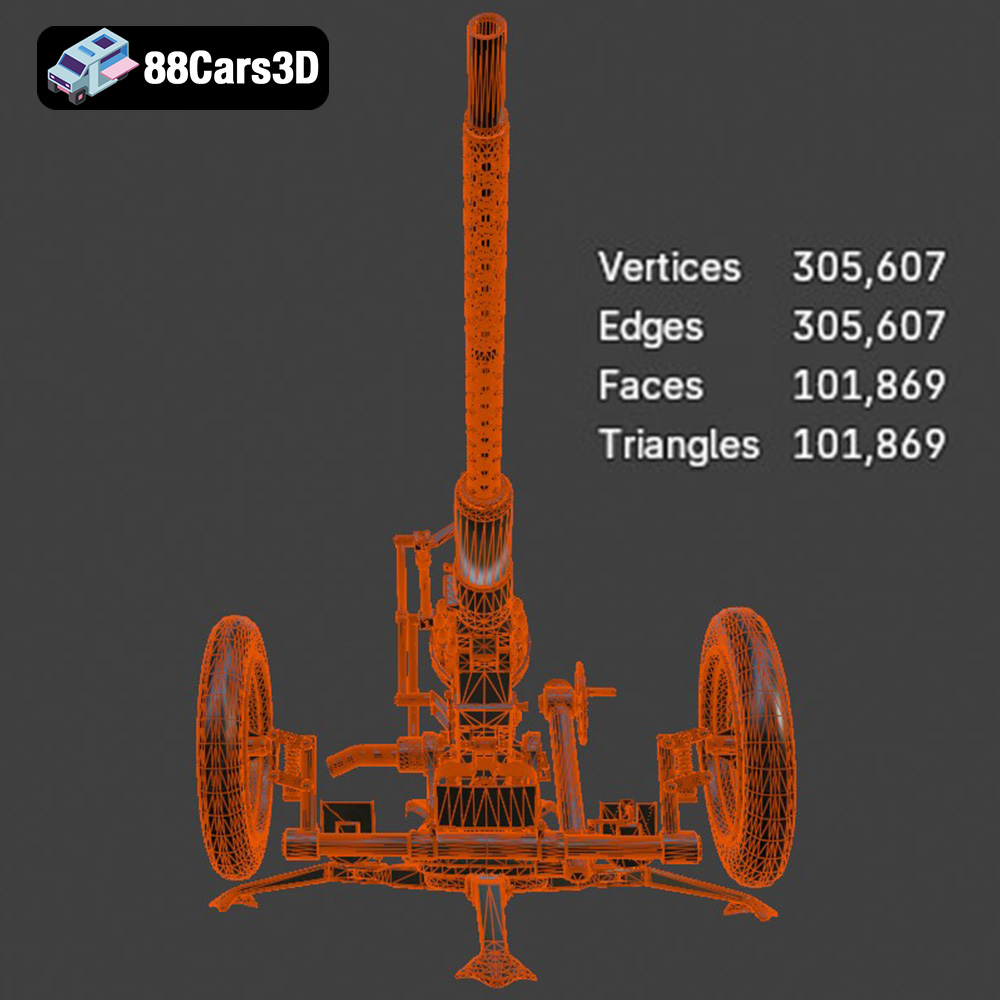
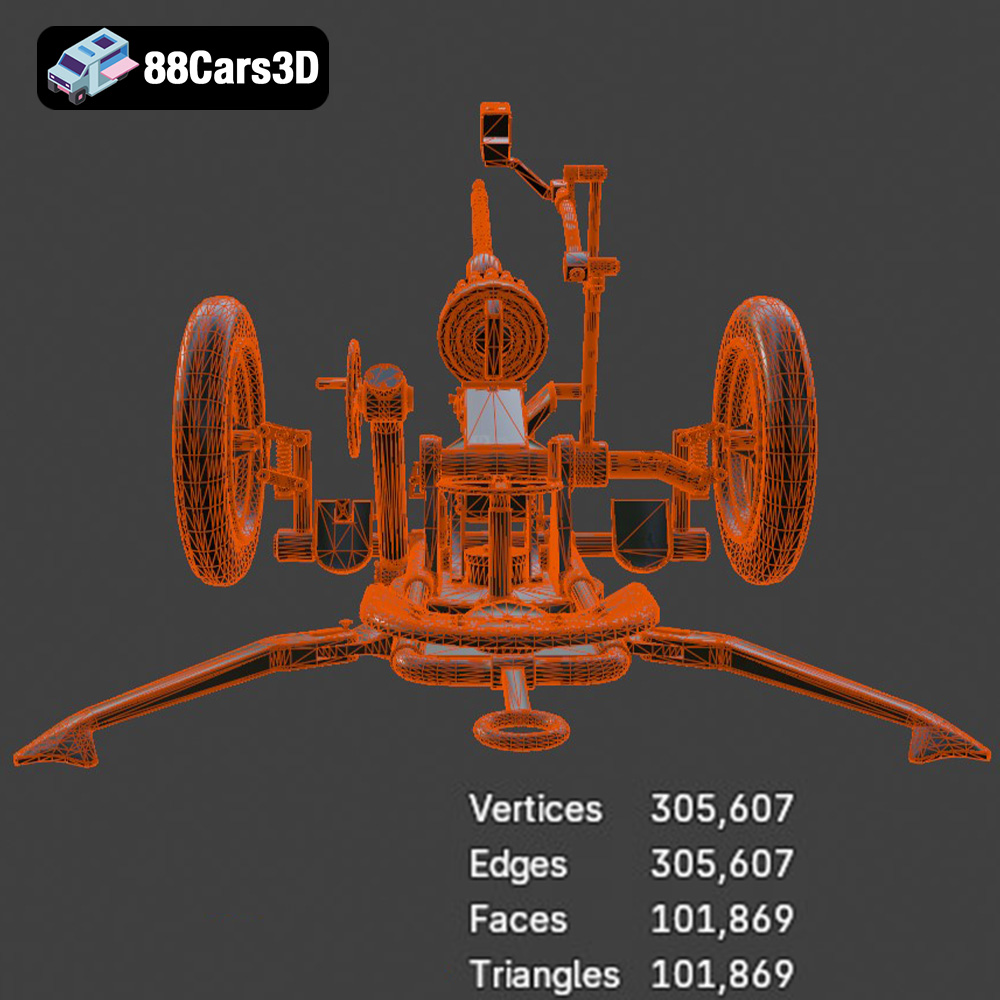
The journey from historical schematics to a compelling 3D model is paved with meticulous attention to detail and a profound understanding of optimization. The Bofors 20 mm M-40 3D model exemplifies this balance, offering a visual fidelity that stands up to close-ups while maintaining a performance footprint suitable for real-time applications. With exactly 101,869 triangles, this asset strikes a perfect equilibrium, making it a powerful addition to any professional library.
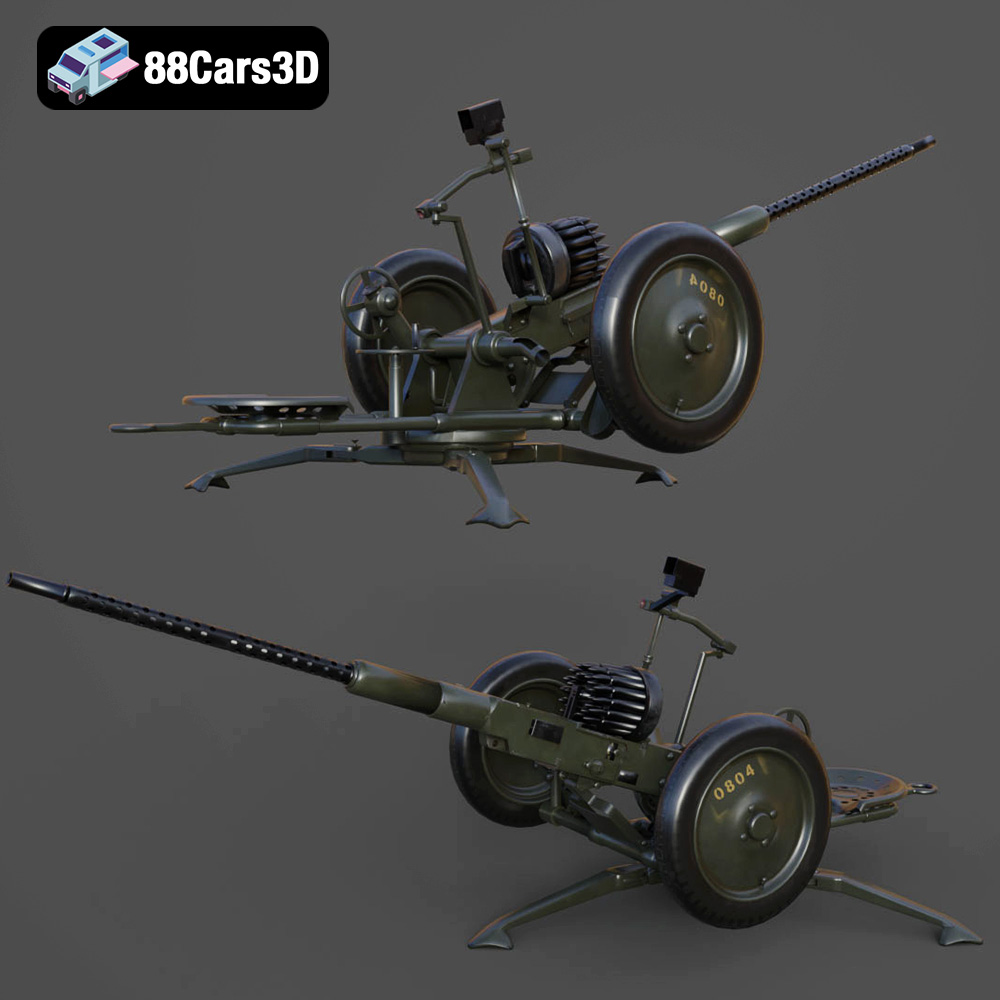
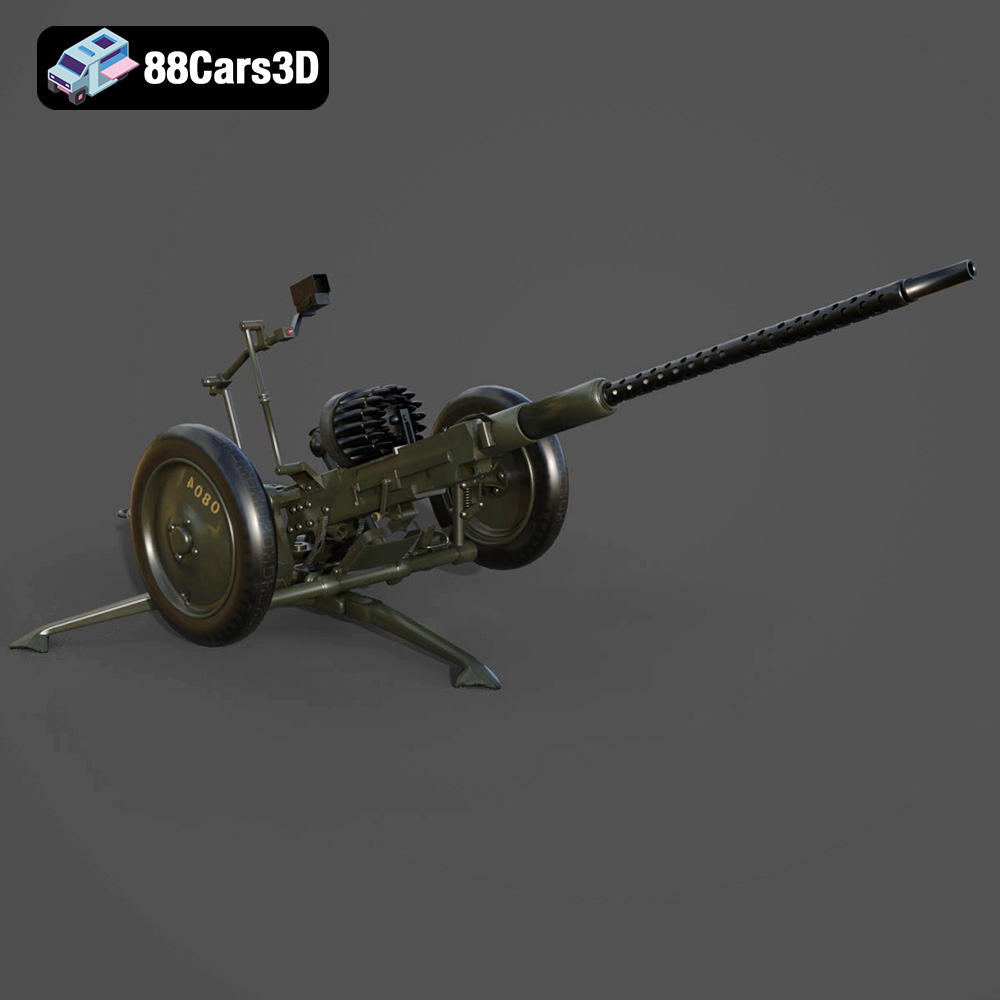
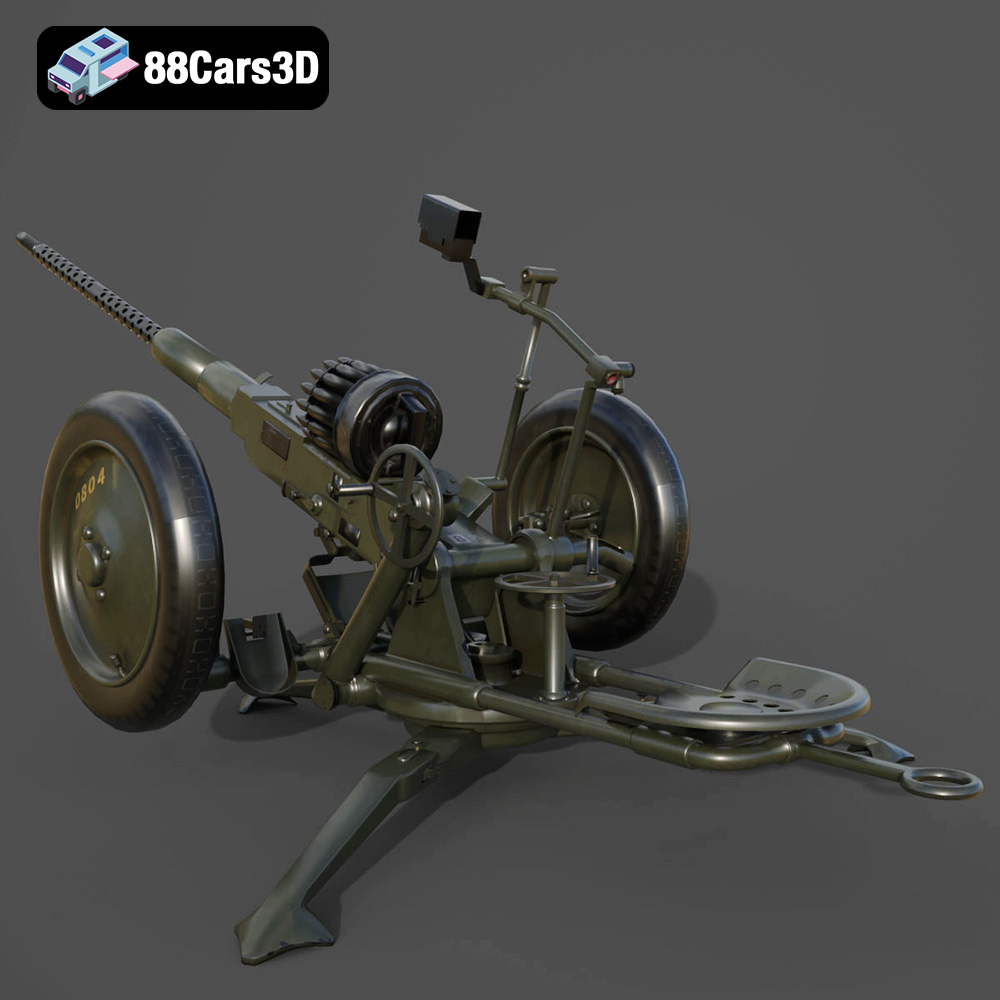
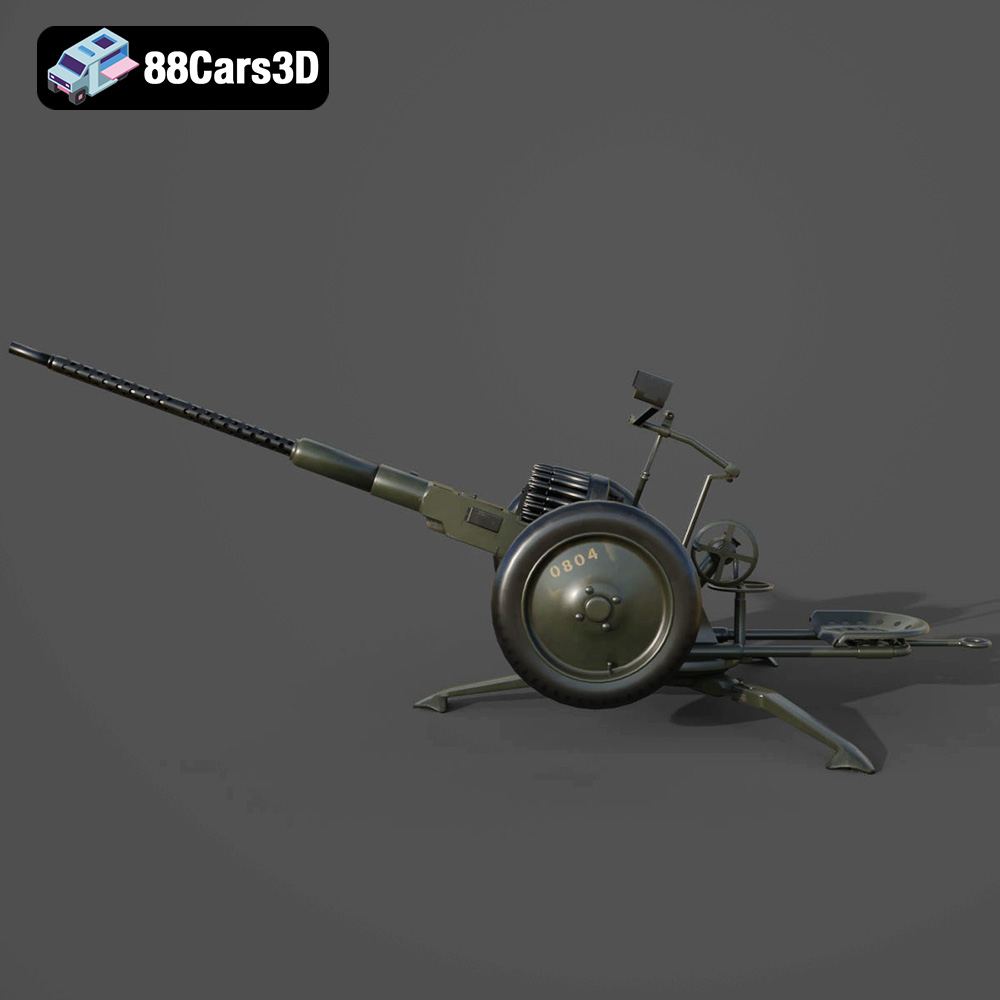
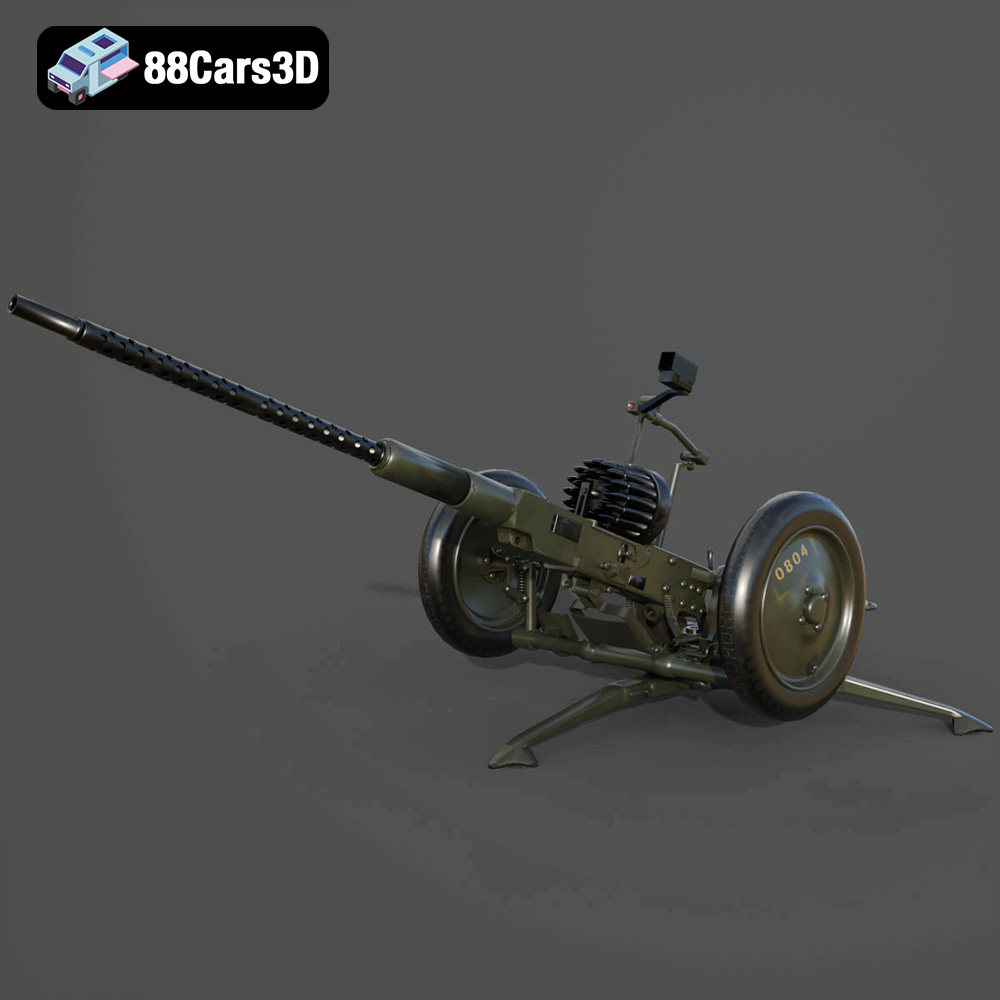
The exterior of the Bofors M-40 model is a testament to thorough research and precise modeling. Every curve, rivet, and mechanical linkage has been faithfully reproduced. The distinctive long barrel, complete with its flash hider and receiver, conveys the formidable presence of the original weapon. The ammunition feed system and magazine housing are accurately depicted, contributing to the authenticity. From the heavy-duty base mount to the robust stabilizing legs and intricate deployment mechanisms, no detail is overlooked. The precision-modeled recoil cylinders and mechanical linkages are not just for show; they are separate components, allowing for seamless and realistic animation of the gun’s operation, a critical feature for game developers and animators alike.
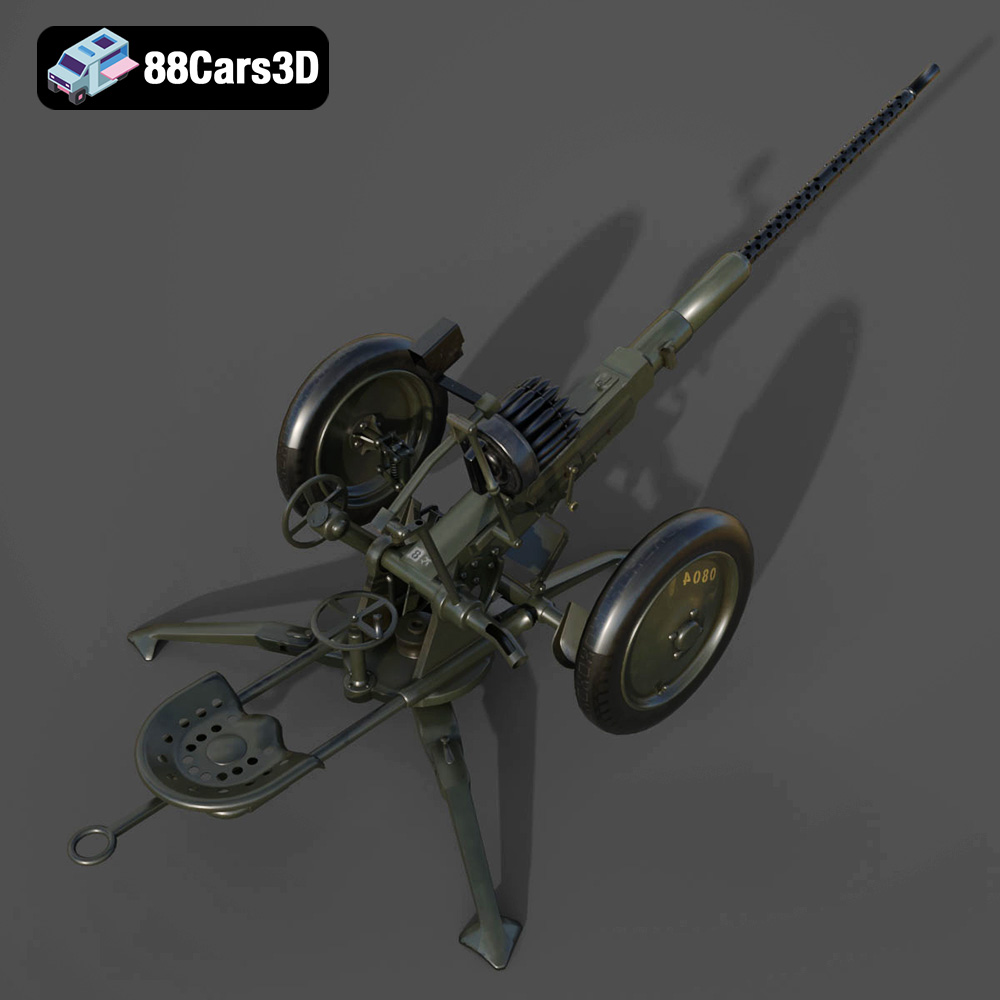
Beyond its imposing exterior, the Bofors M-40 model extends its high-fidelity detailing to the gunner’s operator station. This interior focus is paramount for applications demanding first-person perspectives, such as VR simulations or immersive game environments. The model includes authentic seating elements, intricate handwheels for precise traverse and elevation control, and historically accurate aiming sights with reticle mounts. Even the mechanical firing pedals and control levers are faithfully recreated. This level of interior detail ensures that players or viewers stepping into the gunner’s shoes experience a truly immersive and historically accurate interaction, enhancing the realism of any tactical combat simulation or virtual historical exhibit.
The versatility of the Bofors 20 mm M-40 3D model, backed by its comprehensive file format support, makes it an invaluable asset across a spectrum of professional creative workflows. Its optimized nature ensures it performs admirably in the most demanding real-time engines, while its intricate details shine in high-fidelity rendering projects. Assets like this, found on platforms like 88cars3d.com, are designed to integrate seamlessly, saving artists and developers countless hours.
For game developers working with engines like Unreal Engine and Unity, the Bofors M-40 model is truly game-ready. Its optimized topology of 101,869 triangles hits a sweet spot, providing excellent visual quality without taxing system resources, crucial for maintaining high frame rates. The proper pivot setup for aiming traverse, barrel elevation, and mechanical recoil animation means it can be rigged and integrated quickly. In a historical shooter, players can man the gun and experience accurate firing mechanics; in a tactical simulator, the Bofors can be a deployable asset with functional controls. The .fbx and .unreal formats streamline import, often requiring minimal setup for materials and collision. Developers can also implement various Levels of Detail (LODs) to further optimize performance, though the base mesh is already highly efficient. This allows for grand-scale battlefields where multiple Bofors units can be present without significant performance degradation.
When it comes to high-quality rendering and visualization, whether for cinematic battle scenes, historical documentaries, or product showcases, the Bofors M-40 provides an exceptional foundation. Using software like 3ds Max or Blender (with the .max or .blend files), artists can leverage the model’s rich detail. They can set up studio lighting, apply advanced PBR (Physically Based Rendering) materials, and craft dramatic camera angles to highlight the weapon’s imposing form. The meticulous geometry allows for extreme close-ups without loss of fidelity, perfect for demonstrating the mechanical intricacies or showcasing the wear and tear of a battle-hardened weapon. Imagine a scene in a historical film, where the Bofors M-40 is prominently featured, its metallic sheen and weathered paint telling a story, all powered by this authentic 3D asset.
The burgeoning fields of Augmented Reality (AR) and Virtual Reality (VR) benefit immensely from optimized 3D models. The Bofors M-40, particularly in its .glb format, is ideal for creating immersive virtual museums or interactive historical AR experiences. Imagine an educational application where students can virtually walk around the Bofors M-40, interact with its controls, and learn about its history and mechanics in a fully spatial environment. The model’s real-world scale accuracy further enhances the sense of presence and educational value. Its optimized mesh ensures smooth performance on VR headsets and AR-enabled mobile devices, making historical education both engaging and accessible.
The utility of a robust 3D model extends beyond digital displays, crossing over into the physical realm through 3D printing. For military hobbyists, diorama builders, or educational institutions, having a physically accurate replica of the Bofors 20 mm M-40 can add an invaluable tangible element to their collections or displays. The inclusion of the .stl format with this model makes this transition straightforward, but success hinges on understanding the nuances of 3D printing.
The Bofors M-40 3D model is designed with real-world scale accuracy, making it perfectly suitable for scaling to common hobbyist standards like 1:12, 1:35, or 1:48. These scales allow for compatibility with existing model kits and dioramas. For achieving the intricate mechanical details, such as the aiming sights, handwheels, and barrel flash hider, resin printing is highly recommended. Resin printers can achieve much finer layer heights (0.04–0.12 mm) compared to filament-based FDM printers, ensuring that the delicate nuances of the model are accurately reproduced without visible layer lines, resulting in a display-quality physical object.
Successful 3D printing is often followed by meticulous post-processing to achieve a professional finish. For the Bofors M-40, this would typically involve careful removal of supports, light sanding to smooth any minor imperfections, and priming the surface for painting. The model’s historical context calls for authentic military colors, such as olive drab, naval gray, or desert camouflage. Applying metallic wear finishes, weathering effects, and even tiny decals can elevate a printed model from a basic replica to a true piece of historical art. The detailed geometry of the 3D model provides ample features to highlight with dry brushing, washes, and other modeling techniques, allowing hobbyists to capture the rugged, battle-hardened appearance of the original anti-aircraft gun.
A truly professional 3D asset offers more than just high fidelity; it provides flexibility for customization. The Bofors 20 mm M-40 3D model is built with adaptability in mind, allowing artists and developers to tailor its appearance to suit specific project requirements and historical contexts. This level of customization ensures that the asset can be repurposed across numerous scenarios, maximizing its value.
The model’s material setup allows for easy modifications to its aesthetic. Users can effortlessly change the frame and base colors to reflect different military branches or operational theaters. Imagine shifting from a classic olive drab for a European battlefield to a naval gray for a ship-mounted variant, or even a desert camouflage for North African campaigns. Furthermore, the ability to modify material finishes for varying degrees of combat wear and weathering is crucial. Whether depicting a brand-new weapon rolling off the assembly line or a heavily used piece of artillery showing the scars of multiple engagements, artists can adjust specular maps for realistic oiled metal, matte painted surfaces, and subtle grime accumulation. This dynamic texturing capability ensures the Bofors M-40 can seamlessly fit into any historical narrative or visual style.
Beyond surface aesthetics, the Bofors M-40 model also offers potential for mechanical adaptations. While the core model is based on a specific variant, the separate barrel, elevation gears, and traverse components provide a foundation for minor structural modifications. This allows experienced users to adapt mechanical setups for different mount variants, such as configuring it for a land-based deployment with stabilizing legs, or perhaps imagining a naval mount if the base geometry allows for such adaptation. This inherent flexibility, characteristic of well-designed 3D models available on marketplaces like 88cars3d.com, empowers creators to get the most out of their purchased assets, extending their use cases far beyond the initial intent.
The Bofors 20 mm M-40 3D model stands as a testament to the power of meticulously crafted digital assets in modern creative industries. Its balanced optimization, historical accuracy, and comprehensive file format support make it an indispensable tool for game developers, cinematic artists, AR/VR content creators, and even 3D printing enthusiasts. From its detailed exterior and immersive gunner station to its seamless integration into complex pipelines and robust customization options, this model is designed to accelerate professional workflows and elevate the realism of any project.
Whether you are recreating historical battlefields, developing the next generation of tactical simulations, or producing high-fidelity visualizations, the Bofors M-40 provides a reliable and high-quality foundation. Its availability in formats like .blend, .fbx, .obj, .glb, .stl, .ply, .unreal, and .max ensures maximum compatibility and utility across virtually all major 3D software and real-time engines. Explore this exceptional asset and many other high-quality 3D models for rendering, game development, and visualization at 88cars3d.com, where attention to detail meets professional-grade optimization.
The Bofors 20 mm M-40 is a highly regarded anti-aircraft autocannon that played a crucial role in historical military operations. Renowned for its rapid rate of fire and robust engineering, this weapon features an iconic long barrel, heavy-duty base mount, and intricate mechanical aiming systems. This meticulously crafted 3D model captures the imposing presence and complex mechanical styling of the original artillery piece, from the precise gearing of the elevation controls to the authentic ammunition feed mechanisms. Boasting a highly optimized topology with exactly 101,869 triangles, this game-ready 3D model delivers exceptional visual fidelity without compromising on performance. It is meticulously detailed for extreme close-ups while remaining lightweight enough for real-time applications. Whether deployed in cutting-edge game development, immersive AR/VR experiences, high-quality historical animations, or professional rendering, this model stands out with unparalleled realism.
$24.99
.anti-aircraft
.artillery
.blend
.bofors
.fbx
.glb
.max
.obj
.ply
.rendering
.stl
.unreal
20-mm
game asset
game-ready
low-poly
m-40
military-3d-model
optimized
VR/AR
weapon-3d-model