Get 20% OFF All Premium 3D & STL Models!

The digital realm of automotive design and visualization has evolved dramatically, pushing the boundaries of realism, interactivity, and creative freedom. From the high-octane excitement of virtual racing to the intricate details of architectural visualization, the demand for exceptionally crafted 3D car models is higher than ever. These digital assets are the backbone of immersive experiences, marketing campaigns, and cutting-edge simulations, requiring a meticulous blend of artistic precision and technical optimization.
At the heart of this evolving landscape lies the need for models that are not only visually stunning but also versatile and engineered for diverse applications. Today, we delve into the world of premium 3D automotive assets, exploring what makes a model truly stand out, and how it empowers artists and developers across industries. We’ll examine the critical role of file formats, optimization techniques, and the boundless potential they unlock, all while showcasing a prime example of digital craftsmanship: the BMW X1 M-Sport 2020 3D model, available on 88cars3d.com.
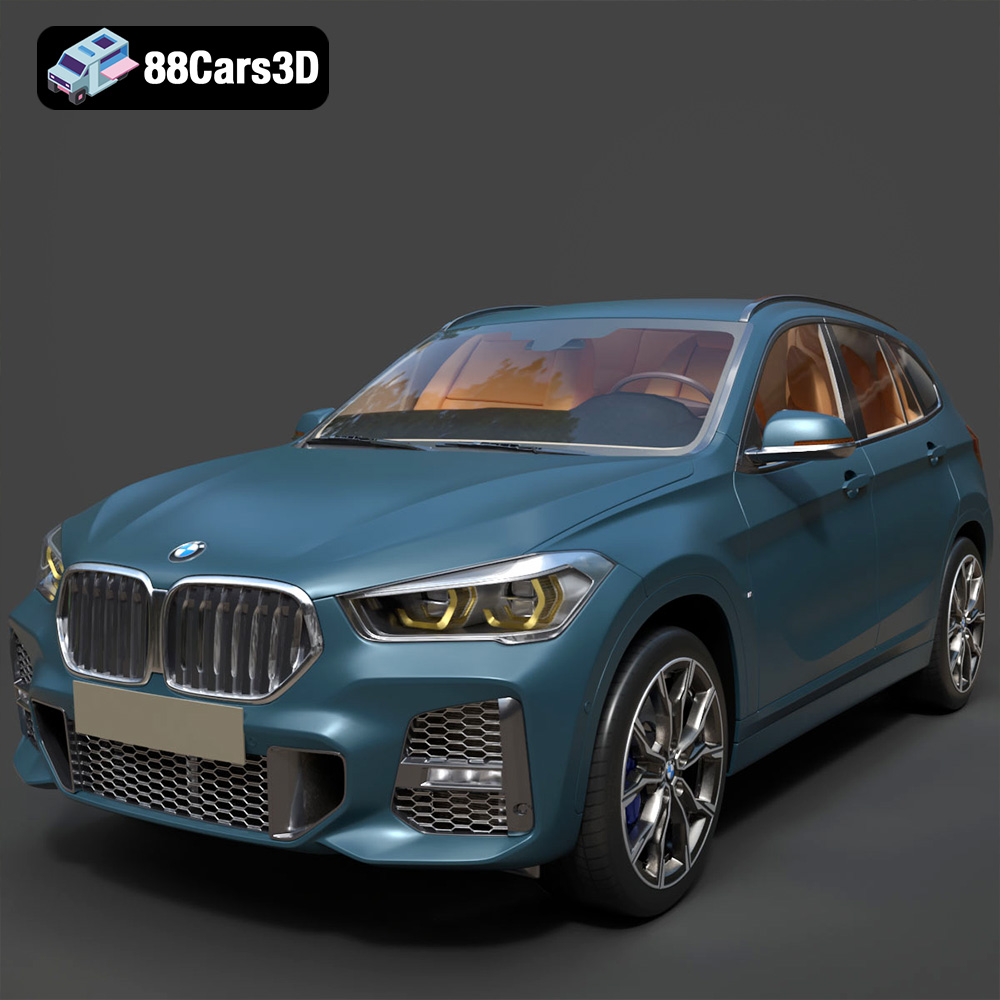
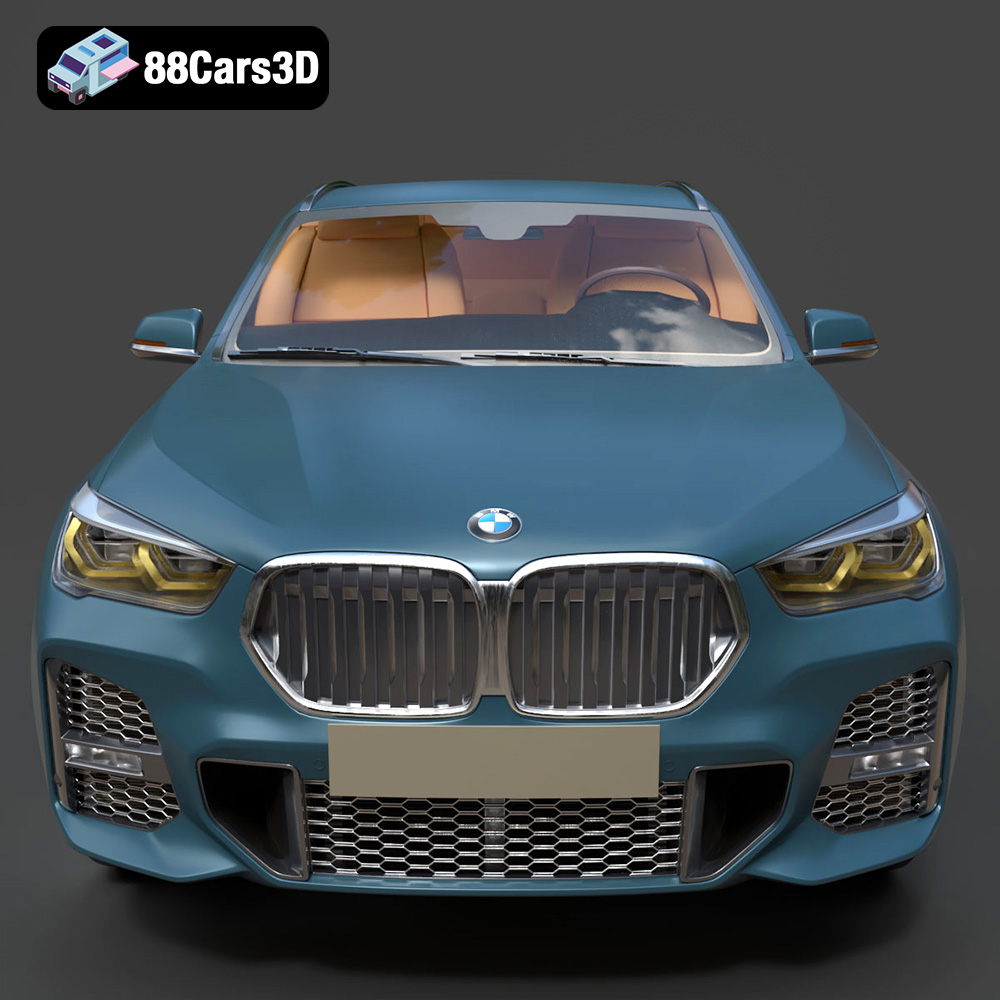
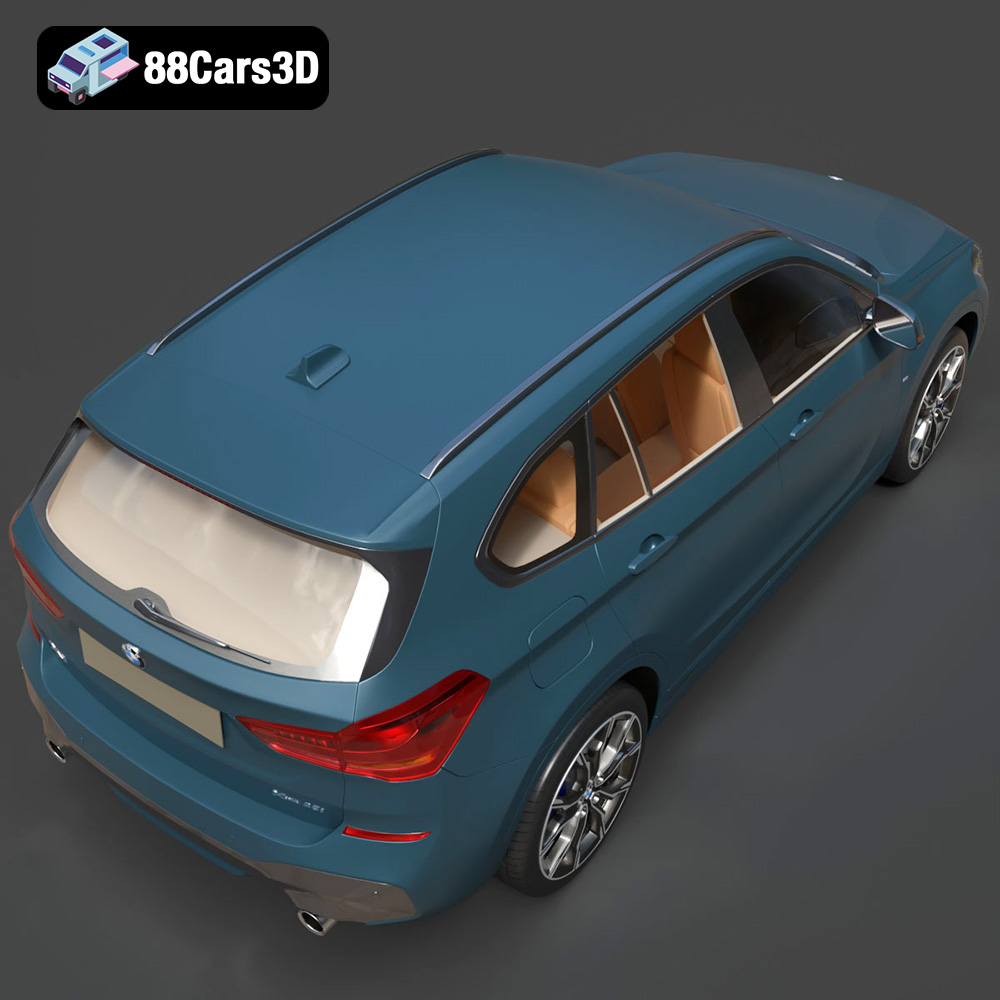
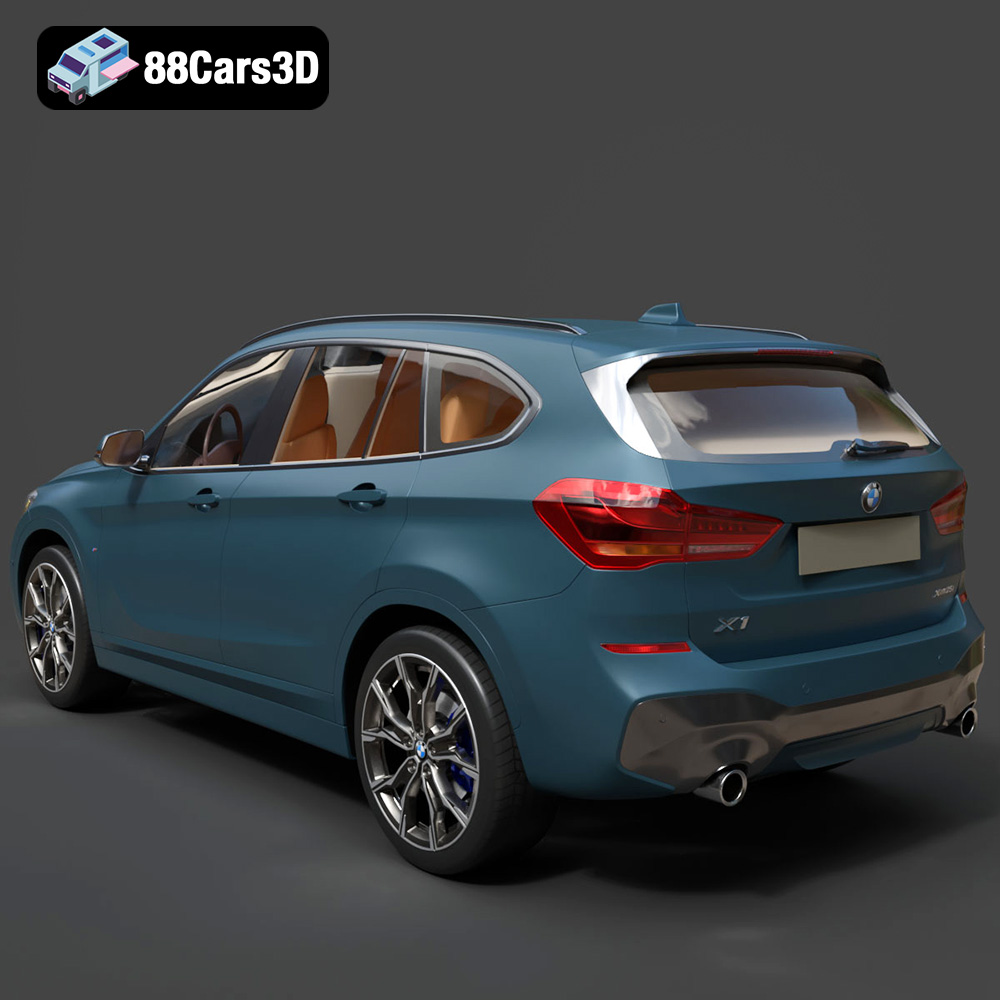
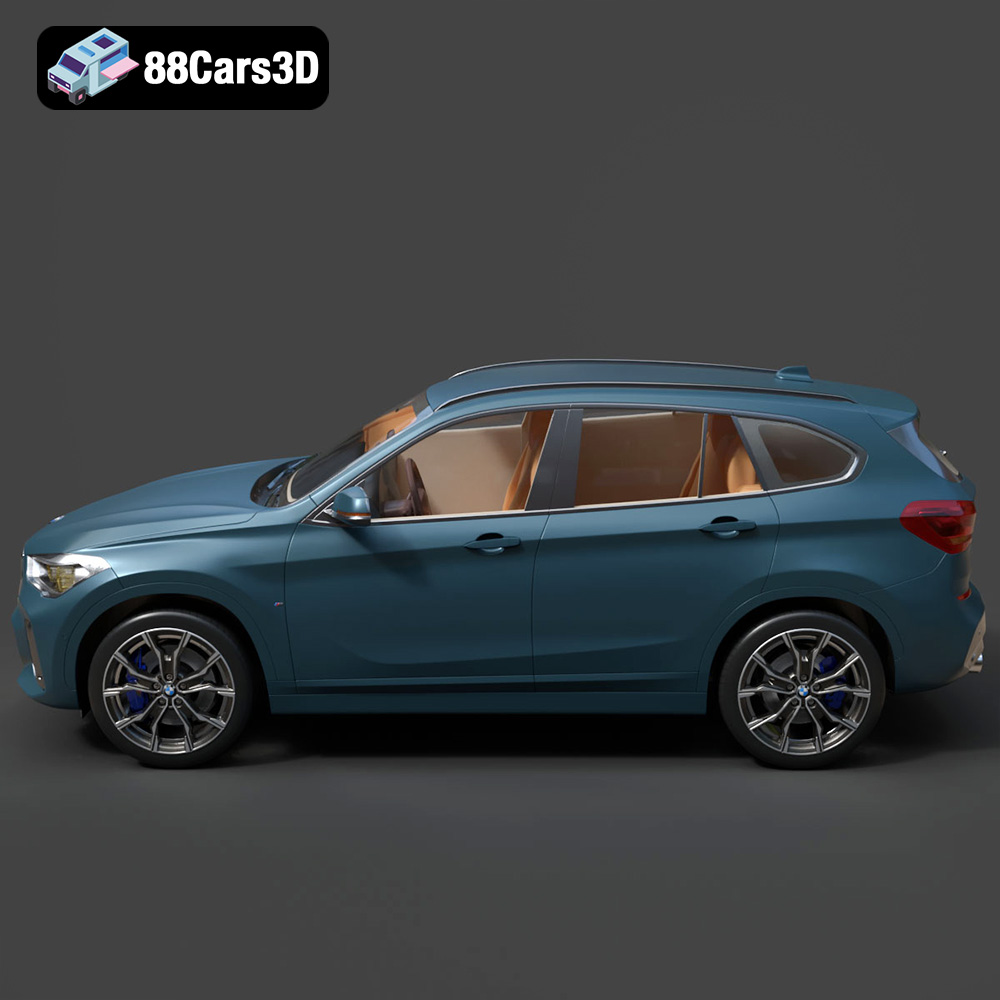
This meticulously crafted asset embodies the perfect fusion of versatility and athletic performance. It captures the aggressive M aerodynamics package, signature enlarged air intakes, and the iconic prominent kidney grilles of the real vehicle. From its sporty twin exhaust tailpipes to the sharply contoured side profile, every element of this BMW X1 M-Sport 2020 has been faithfully recreated to convey the dynamic presence of its M-Sport lineage, making it an ideal subject for our exploration into high-quality automotive 3D.
One of the most crucial aspects of working with 3D models, especially high-fidelity automotive assets like the BMW X1 M-Sport 2020, is understanding the myriad of file formats available. Each format serves specific purposes, excelling in certain workflows while potentially limiting others. Choosing the right format is paramount for seamless integration, optimal performance, and preserving the integrity of your digital creation. The BMW X1 M-Sport 2020 3D model, for instance, comes in a comprehensive suite of formats, catering to virtually any professional pipeline.
The .blend file format is the native file type for Blender, the popular open-source 3D creation suite. When you download a .blend file, you’re not just getting a mesh; you’re often getting a fully editable Blender scene. This includes not only the meticulously modeled geometry of the BMW X1 M-Sport but also materials, textures, lighting setups, animation rigs, modifiers, and even camera data. For artists primarily working within Blender, this format offers maximum flexibility and direct access to all components, allowing for extensive customization without any loss of data or conversion artifacts. It’s ideal for those who wish to delve deep into the model’s construction, make significant alterations, or integrate it into complex Blender-based projects.
Autodesk’s .fbx (Filmbox) format has become an indispensable standard for interoperability between various 3D applications, game engines, and real-time pipelines. Its strength lies in its ability to store not just geometry and UVs, but also animations, skinning, rigging, camera information, and material assignments in a robust, binary package. This makes .fbx the go-to choice for transferring models like the BMW X1 M-Sport 2020 into game engines such as Unreal Engine and Unity, or for importing into other 3D software like Maya, 3ds Max, or Cinema 4D for further animation or rendering. Its efficiency and comprehensive data support are critical for complex, animated scenes and real-time environments.
The .obj (Wavefront Object) format is a widely adopted, universal exchange format renowned for its simplicity and broad compatibility. It primarily stores geometric data (vertices, faces, normals, UV coordinates) and can reference external material (.mtl) files. While .obj is excellent for transferring static mesh data between almost any 3D software, it lacks support for advanced features like animation, rigging, or PBR (Physically Based Rendering) material definitions. For projects requiring just the raw, clean geometry of the BMW X1 M-Sport 2020, perhaps for a simple render or as a base for retopology, .obj remains a reliable choice due to its near-universal acceptance.
The .glb (GL Transmission Format Binary) is a modern, efficient format designed for rapid loading and display in web-based applications, augmented reality (AR), and virtual reality (VR) environments. It’s a binary container that bundles geometry, materials, textures, and even animations into a single, compact file. This self-contained nature and optimization for real-time rendering make it perfect for interactive virtual showrooms, mobile AR experiences, or showcasing the BMW X1 M-Sport 2020 directly in a browser. Its focus on efficiency ensures smooth performance on devices with varying computational power.
The .stl (Stereolithography) format is the ubiquitous standard for 3D printing. It represents a 3D model as a raw, tessellated surface of interconnected triangles, defining only the surface geometry without color, texture, or material information. For hobbyists and professionals looking to physically manifest the BMW X1 M-Sport 2020, the .stl file is essential. While it discards artistic flourishes, its simplicity makes it ideal for slicing software to generate print paths. The BMW X1 M-Sport 2020 3D model is thoughtfully prepared for .stl conversion, offering recommended print settings to ensure successful physical replication.
The .ply (Polygon File Format) is another format for storing 3D data, similar to .obj but often more robust in its ability to store additional properties for each vertex or face, such as color, normals, transparency, or even confidence values from 3D scanning. It’s commonly used in applications requiring high-precision mesh data, such as CAD, scientific visualization, or processing results from 3D scanners. While less common for general artistic exchange than .fbx or .obj, its capacity for detailed data makes it valuable in specific technical workflows where the intricate surface properties of a model like the BMW X1 M-Sport 2020 are critical for analysis or reconstruction.
When a product lists “.unreal” as an included format, it typically signifies that the asset is provided in a state specifically optimized and configured for direct import or integration into Unreal Engine. This often means pre-configured materials, proper collision meshes, Level of Detail (LOD) setups, and sometimes even Blueprints or scene files that ensure the BMW X1 M-Sport 2020 is ready to drop into an Unreal project with minimal additional setup. This format drastically reduces development time for game designers and simulation engineers, offering a true “plug-and-play” experience for a demanding real-time environment.
Similar to .blend for Blender, the .max file is the native project format for Autodesk 3ds Max. This format retains all scene information, including complex modeling operations, modifiers, animation paths, camera settings, and renderer-specific materials (like V-Ray or Corona materials often used in 3ds Max). For professionals working within a 3ds Max pipeline, the .max file provides the most comprehensive and editable version of the BMW X1 M-Sport 2020, allowing for full control over rendering, animation, and scene integration without any translation errors or data loss that might occur with generic exchange formats.
Creating a truly convincing 3D car model is an intricate dance between artistic interpretation and technical accuracy. It demands a profound understanding of automotive design principles, combined with a mastery of 3D software and optimization techniques. The BMW X1 M-Sport 2020 model from 88cars3d.com exemplifies this balance, delivering a level of detail and realism that elevates any project it’s integrated into.
The first impression of any car model comes from its exterior. For a vehicle like the BMW X1 M-Sport, this means capturing the aggressive yet refined lines that define its M-Sport lineage. This model features accurate frame geometry and proportions, mirroring the real-world vehicle. Crucial details, often overlooked in lesser models, are meticulously present: the signature M double-spoke alloy wheels come with realistic tire treads, the M Sport suspension details are visible, and even the distinctive brake calipers are modeled. The high-resolution LED headlights and 3D L-shaped taillights aren’t just texture maps; they boast intricate geometry that catches light authentically, crucial for compelling automotive rendering. Furthermore, separate wheels, suspension, and steering components are modeled independently, providing the necessary foundation for realistic animation, a critical feature for racing simulations or cinematic sequences.
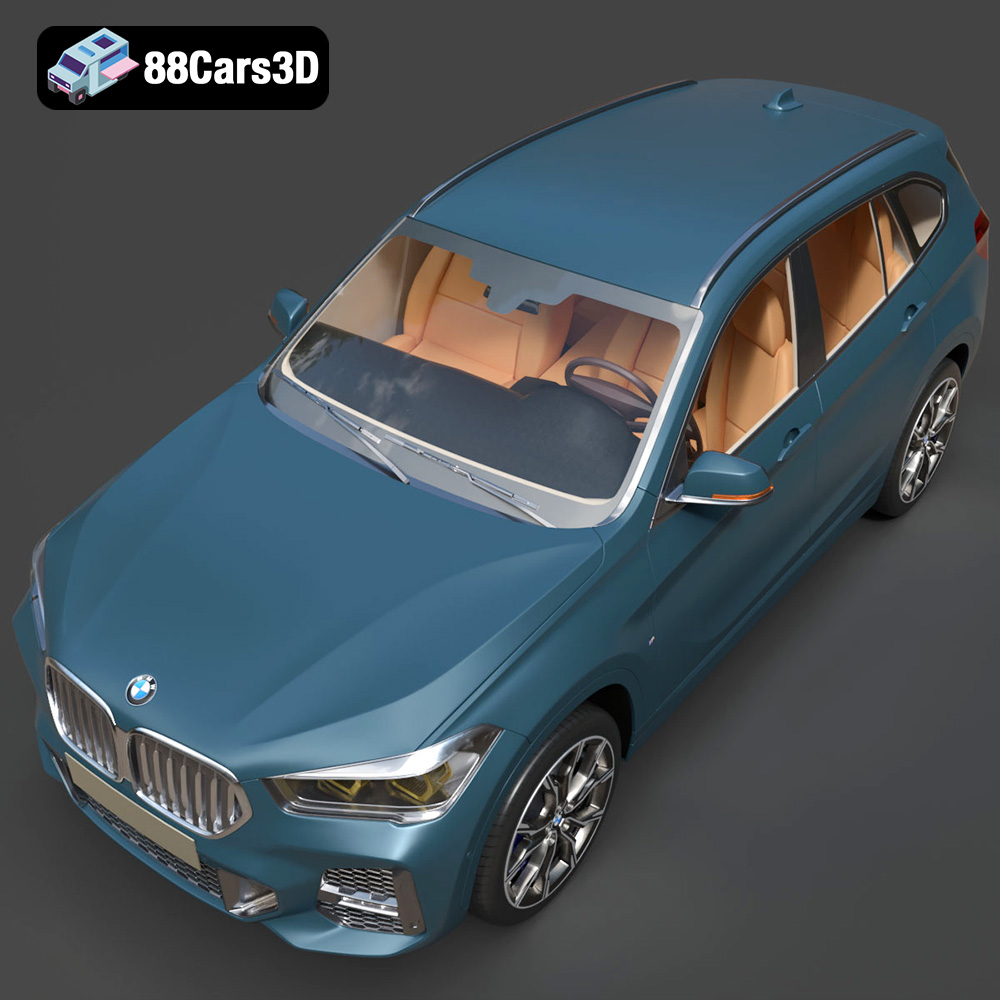
While the exterior grabs attention, the interior defines the immersive experience, especially for virtual reality, gaming, or first-person visualizations. The BMW X1 M-Sport 2020 3D model excels here with its fully detailed cockpit. Premium sports seats feature intricate stitching and bolstering, an iconic M leather steering wheel includes multi-function controls, and even the digital instrument cluster and iDrive infotainment screen are faithfully recreated. Every control detail, from pedals to the gear selector and climate controls, is present and optimized. This level of interior fidelity is vital for creating believable virtual showrooms or delivering a truly immersive driver’s perspective in game development, ensuring that the model holds up under intense scrutiny from any angle.
A beautiful 3D model is only truly valuable if it performs efficiently within its intended environment. This is especially true for game development and real-time applications where every polygon and every texture byte contributes to performance. The BMW X1 M-Sport 2020 3D model is a testament to sophisticated engineering, striking a perfect balance between high-end visual realism and game-ready optimization.
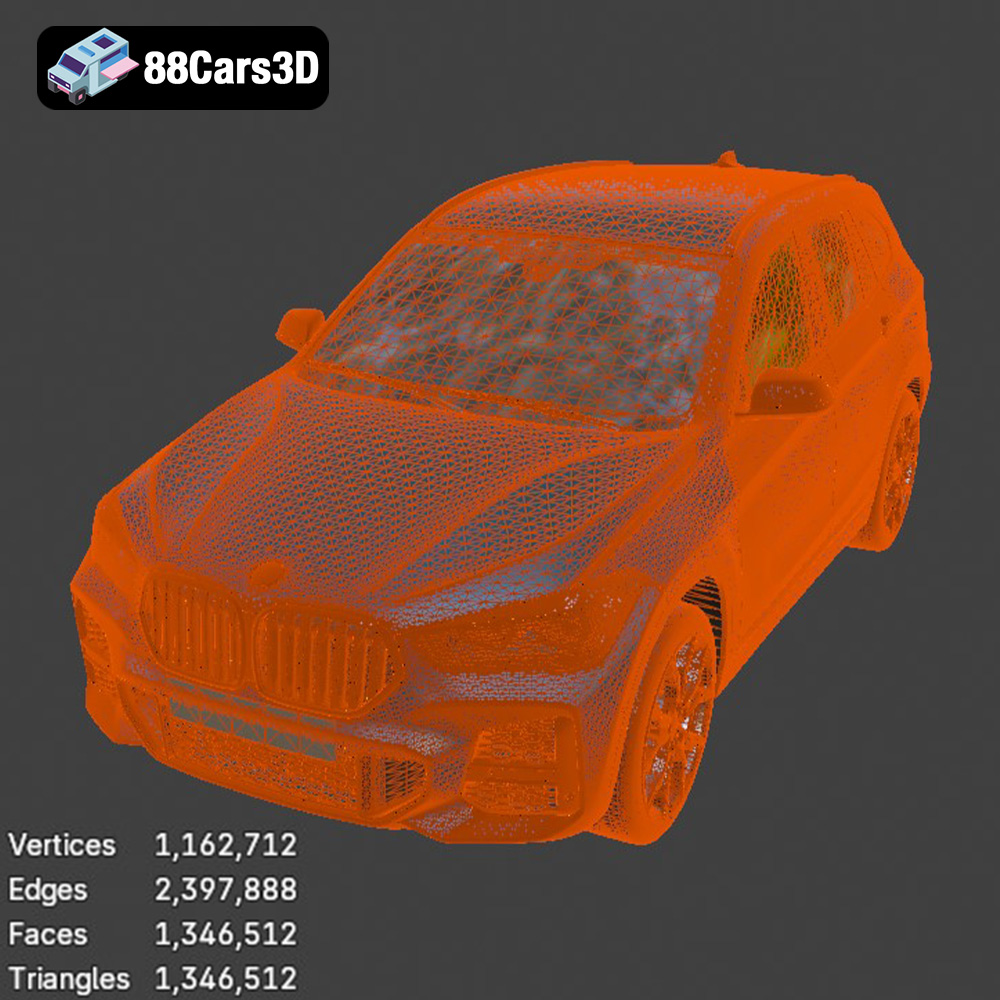
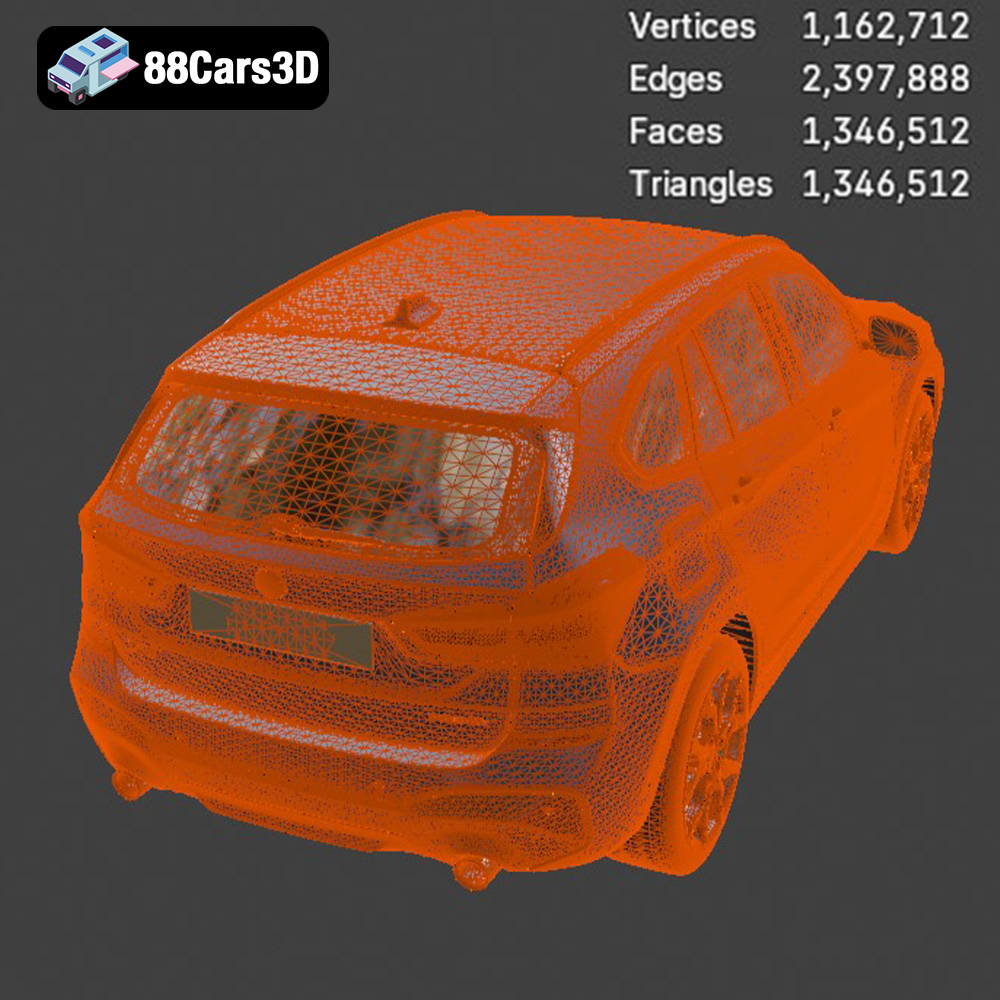
The model boasts a highly detailed topology of 1,346,512 triangles. While this might sound high, it’s expertly optimized to deliver uncompromised visual fidelity while maintaining efficient performance. This polycount is a strategic choice, ensuring smooth reflections, crisp edge flow, and unparalleled realism for demanding 3D environments, yet remaining manageable for modern game engines. The geometry is clean, well-structured, and designed to minimize rendering overhead. This careful optimization means developers don’t have to sacrifice detail for performance, a common dilemma in high-end 3D asset creation.
For game developers, an asset being “game-ready” means more than just a good polycount. It implies proper pivot setups for steering, wheel rotation, and suspension travel, allowing for easy integration into vehicle physics systems. It means clean UV mapping for efficient texture application and consistent material behavior. The BMW X1 M-Sport 2020 is designed with these considerations in mind. Its compatibility with major 3D software platforms and real-time rendering engines like Unreal and Unity is baked into its technical specifications. The inclusion of an “.unreal” format further underlines its readiness, often implying pre-configured materials, LODs (Levels of Detail), and collision meshes, significantly accelerating development cycles for open-world games, racing titles, and simulators.
High-quality 3D car models are not confined to a single industry; their versatility makes them invaluable across a broad spectrum of professional applications. The BMW X1 M-Sport 2020 3D model, with its superior detail and optimized structure, stands as a prime example of an asset that can drive innovation and engagement in multiple sectors. Finding such adaptable assets is simplified by marketplaces like 88cars3d.com, which curates models for a wide range of uses.
In the realm of game development, the need for realistic vehicle assets is paramount. Racing simulations, open-world games, and even serious games for training and education rely heavily on models that accurately represent real-world vehicles. The BMW X1 M-Sport 2020, with its game-ready optimization and precise physics-friendly pivot points, is ideal for these applications. Its balanced polycount ensures smooth framerates, while its detailed exterior and interior provide an immersive experience for players. Developers can easily integrate it into vehicle control systems, allowing for realistic driving mechanics and visual fidelity that truly enhances gameplay.
Augmented Reality (AR) and Virtual Reality (VR) are transforming how we interact with digital content, offering unprecedented levels of immersion. For automotive brands, this means virtual showrooms, interactive configurators, and mobile AR experiences where customers can explore a vehicle in their own environment. The BMW X1 M-Sport 2020 3D model, particularly with its .glb format, is perfectly suited for these cutting-edge applications. Its optimized geometry and comprehensive detail allow for smooth performance in VR headsets and mobile AR apps, enabling users to walk around, sit inside, and even customize the vehicle virtually. This capability offers a powerful tool for marketing, sales, and product showcasing.
Beyond interactive experiences, high-fidelity 3D car models are indispensable for creating stunning cinematic renders and visualizations. Automotive brand campaigns, lifestyle scenes, and studio lighting setups benefit immensely from models that hold up to extreme close-ups and dramatic camera angles. The BMW X1 M-Sport 2020 model provides the necessary geometric precision and detail for producing photorealistic imagery that can capture attention and convey brand prestige. Artists can experiment with various environments, lighting conditions, and material finishes to create compelling visuals for advertisements, brochures, or even concept art, without the prohibitive costs and logistics of real-world photography.
The journey of a 3D model doesn’t always end on a digital screen. For many enthusiasts and professionals, the ability to bring a virtual asset into the physical world through 3D printing opens up a new dimension of creativity and utility. The BMW X1 M-Sport 2020 3D model offers this exciting possibility, with careful consideration for the unique demands of additive manufacturing.
The inclusion of an .stl format for the BMW X1 M-Sport 2020 model signifies its readiness for 3D printing. While the .stl format simplifies the geometry to raw triangles, the underlying quality of the original model is crucial for a successful print. This model’s clean topology translates directly into robust geometry for slicing software. Recommended scales (1:12, 1:18, 1:24) are provided, offering flexibility for display-scale hobbyists to create detailed replicas. Understanding the ideal scale is important as it dictates the visibility of fine details and the structural integrity of the print. The guidance on wall thickness (1.2–2.0 mm) and infill (20–30%) are practical insights for ensuring the physical model is sturdy yet economical in material usage.
To achieve the best possible physical representation of the BMW X1 M-Sport 2020, specific print settings and post-processing steps are recommended. A layer height of 0.04–0.12 mm is suggested, with resin printing being highly recommended for capturing the model’s fine details, such as exhaust tips, mirrors, and door handles, which might be lost on less precise FDM printers. The necessity of supports for these intricate parts is also highlighted, along with strategic print orientation (frame angled, wheels separate) to optimize structural integrity and minimize support material. After printing, post-processing such as sanding, priming, and applying authentic factory colors with metallic finishes can elevate the physical model to a stunning, showroom-quality collectible, perfectly mirroring its digital counterpart. This attention to detail in 3D print preparation sets this model apart for enthusiasts who appreciate both digital and tangible craftsmanship.
The true power of a high-quality 3D asset like the BMW X1 M-Sport 2020 lies in its flexibility and how seamlessly it integrates into various professional workflows. Artists, designers, and developers constantly need to adapt models to specific project requirements, and robust customization options are key to unlocking creative potential and maximizing efficiency.
One of the significant advantages of this premium 3D car model is its inherent customizability. Artists can effortlessly change body colors, experimenting with a spectrum of finishes from Misano Blue to Alpine White, or even entirely custom hues. The ability to modify tire textures, perhaps switching between summer performance and winter variants, adds another layer of realism and scenario-specific adaptation. Material finishes, such as matte, gloss, metallic, or carbon fiber, can be adjusted to achieve a desired aesthetic or to match a particular branding strategy. Furthermore, adapting the lighting for different environments allows the model to be showcased in diverse settings, from a sun-drenched outdoor scene to a dramatic studio setup, ensuring it always looks its best. This level of control empowers users to truly make the model their own.
The BMW X1 M-Sport 2020 3D model is designed for optimal compatibility with major 3D software and real-time engines. For those working in 3ds Max or Blender, the native .max and .blend files provide full access to the model’s internal structure, allowing for complex animations, rigging, and shader development. In Unreal Engine, the dedicated .unreal format means developers can quickly import a fully functional asset, complete with optimized materials and collision geometry, minimizing setup time. Whether it’s for an architectural visualization project where the car serves as a lifestyle element, a high-fidelity racing simulator, or an immersive AR application, the model’s precise real-world scale and proper pivot setups ensure it behaves correctly within any physics or rendering engine. This comprehensive support across platforms underscores its value as a versatile game asset and rendering workhorse, ready for any challenge a professional workflow presents.
In the dynamic world of 3D modeling, the demand for high-quality, versatile, and technically robust automotive assets is constant. Whether for automotive rendering, cutting-edge game assets, immersive AR/VR experiences, or even physical 3D prints, the foundation of any successful project lies in the integrity and flexibility of its core models. The BMW X1 M-Sport 2020 3D model exemplifies these critical attributes, offering a meticulously crafted digital replica that transcends mere aesthetics.
We’ve explored how its detailed exterior and interior capture the essence of its real-world counterpart, how its optimized topology balances visual fidelity with game-ready performance, and how its broad range of file formats caters to diverse professional pipelines. From the intricate geometry of its M-Sport features to its seamless integration into platforms like 3ds Max, Blender, and Unreal Engine, this model stands as a testament to expert 3D craftsmanship.
The ability to customize colors, materials, and lighting, combined with precise recommendations for 3D printing, ensures that this asset is not just a static model but a dynamic tool for creators. It empowers developers to build engaging games, designers to produce stunning visualizations, and enthusiasts to bring their favorite vehicles to life, both virtually and physically.
For professionals and hobbyists alike seeking premium 3D car models that deliver on both visual excellence and technical practicality, 88cars3d.com offers a curated selection of assets. The BMW X1 M-Sport 2020 is a prime example of the quality and versatility available, ready to elevate your next project. Dive into the world of high-fidelity 3D and experience the difference a truly professional asset can make.
Experience the perfect fusion of versatility and athletic performance with this meticulously crafted 3D model of the BMW X1 M-Sport 2020. Representing the pinnacle of premium compact SUVs, this model captures the aggressive M aerodynamics package, signature enlarged air intakes, and the iconic prominent kidney grilles. From the sporty twin exhaust tailpipes to the sharply contoured side profile, every element has been faithfully recreated to convey the dynamic presence of the M-Sport lineage. Boasting a highly detailed topology of 1346512 triangles, this model is expertly optimized to deliver uncompromised visual fidelity while maintaining efficient performance across various digital platforms. Whether deployed in cutting-edge game engines or high-resolution cinematic renders, the geometry guarantees smooth reflections, crisp edge flow, and unparalleled realism for demanding 3D environments. Perfect for high-end racing simulations, architectural visualization scenes, immersive virtual showrooms, and automotive brand campaigns.
$37.50
.2020
.blend
.bmw
.crossover
.fbx
.glb
.max
.obj
.ply
.rendering
.stl
.unreal
car-3d-model
game asset
game-ready
optimized
SUV
VR/AR
x1-m-sport