Get 20% OFF All Premium 3D & STL Models!

In the dynamic world of 3D visualization, the difference between a good project and an outstanding one often lies in the quality and versatility of its core assets. From cinematic renders to immersive virtual realities, the demand for highly detailed, optimized, and pipeline-ready 3D models has never been greater. Professionals in game development, architectural visualization, industrial design, and even marketing continually seek resources that can seamlessly integrate into their diverse workflows, saving invaluable time and delivering exceptional fidelity.
This pursuit of excellence is particularly evident in the realm of specialized assets, such as high-performance aircraft. Imagine the complexity of accurately depicting a luxury private jet – its sleek lines, intricate mechanical components, and the aura of sophistication it embodies. This is where a meticulously crafted 3D model, like the Bombardier 6000, becomes an indispensable tool. It’s more than just a mesh; it’s a foundation for breathtaking renders, realistic simulations, and compelling interactive experiences. Understanding the technical nuances and practical applications of such an asset is key to unlocking its full potential, transforming conceptual ideas into tangible, visual masterpieces.
The flexibility of a 3D model often hinges on the range of file formats it supports. Different formats serve specific purposes, offering unique advantages for various software, engines, and end-use applications. A premium asset like the Bombardier 6000 model provides a comprehensive suite of options, ensuring compatibility across virtually any professional workflow. Grasping the distinctions between these formats is crucial for optimizing your project and maintaining asset integrity.
The .blend format represents a fully editable Blender scene. For artists and developers working within Blender, this is often the most desirable format as it preserves all aspects of the original project: meshes, materials, textures, lighting, cameras, animation data, and even modifiers. It provides maximum flexibility for customization, rigging, and rendering directly within Blender’s powerful ecosystem. If you need to make extensive modifications, re-texture, or integrate it deeply into a Blender-based pipeline, the .blend file is your go-to.
FBX (Filmbox) is arguably the most widely adopted proprietary file format for 3D data exchange, especially within game development. Developed by Autodesk, it excels at storing 3D models, animation, and various scene data in a highly compatible way. It’s ideal for transferring assets between 3ds Max, Maya, Blender, and real-time engines like Unreal Engine and Unity. FBX maintains hierarchies, PBR materials, animation curves, and UVs robustly, making it the preferred choice for a smooth pipeline into interactive experiences. For the Bombardier 6000, the .fbx ensures seamless import into game projects or professional animation studios.
OBJ (or .obj) is a universal, open-standard format that has been around for decades. It’s a simple, text-based format primarily used for transferring mesh data (vertices, normals, UVs, and faces) between different 3D applications. While it doesn’t typically store advanced features like animation, rigging, or complex material setups (often referencing a separate .mtl file for basic material properties), its widespread support makes it incredibly reliable for cross-software compatibility. If you need a clean mesh to start with, or are working with software that has limited import options, .obj is a dependable choice.
GLB (GL Transmission Format Binary) is the binary version of glTF, a modern, open-standard format specifically designed for efficient transmission and loading of 3D scenes and models by applications. It’s highly optimized for web-based 3D, augmented reality (AR), and virtual reality (VR) experiences due to its compact size and ability to embed all textures and animations directly within a single file. For showcasing the Bombardier 6000 in a browser-based configurator or an AR application, the .glb format offers superior performance and ease of deployment.
STL (Stereolithography) is the de facto standard file format for 3D printing. It represents a 3D model as a collection of triangular facets, defining only the surface geometry of an object without color, texture, or other CAD attributes. While it lacks visual information, its simplicity makes it universally compatible with 3D printing software (slicers). The Bombardier 6000 in .stl format is perfect for hobbyists or professionals looking to produce physical scale models, requiring careful attention to print settings like infill and supports.
PLY (Polygon File Format) is another format for storing 3D data, often used for representing 3D scanned data. It’s more flexible than STL in that it can store additional properties like color, transparency, and normal vectors, and can represent meshes with polygons of more than three vertices. It’s frequently employed in CAD applications, scientific visualization, and contexts where precise mesh data, often originating from 3D scanning or generated through complex algorithms, is paramount. For analytical or highly precise manufacturing workflows, .ply can be beneficial.
While not a standalone file extension in the traditional sense like .fbx or .obj, the inclusion of “.unreal” often signifies an asset specifically prepared and optimized for direct import into Unreal Engine. This typically means the asset has been exported with Unreal-specific settings in mind, ensuring correct scale, pivot points, material setup (using PBR workflows), and often includes a basic scene file or a pre-configured asset package ready to be dropped into an Unreal project. It streamlines the integration process, minimizing post-import adjustments for developers.
The .max format is the native project file for Autodesk 3ds Max. Similar to .blend for Blender, it encapsulates the entire 3ds Max scene, including geometry, lights, cameras, materials, animation, and any scene-specific settings. For users deeply integrated into the 3ds Max ecosystem, this file offers the highest level of editability and allows access to all original scene components. It’s perfect for studios that primarily use 3ds Max for their rendering and animation pipelines, enabling comprehensive control over the asset.
The availability of such a diverse array of formats for the Bombardier 6000 3D model underscores its professional-grade nature, ensuring that no matter your chosen platform or end goal, you have a perfectly tailored asset at your disposal.
The Bombardier 6000 stands as a pinnacle of luxury aviation, and its digital counterpart must live up to that reputation. This 3D model available on 88cars3d.com is not merely a visual representation; it’s a meticulously engineered asset designed to perform across a spectrum of demanding applications. From its striking aerodynamic profile to the detailed internal structures, every element has been considered for both aesthetic fidelity and technical efficiency.
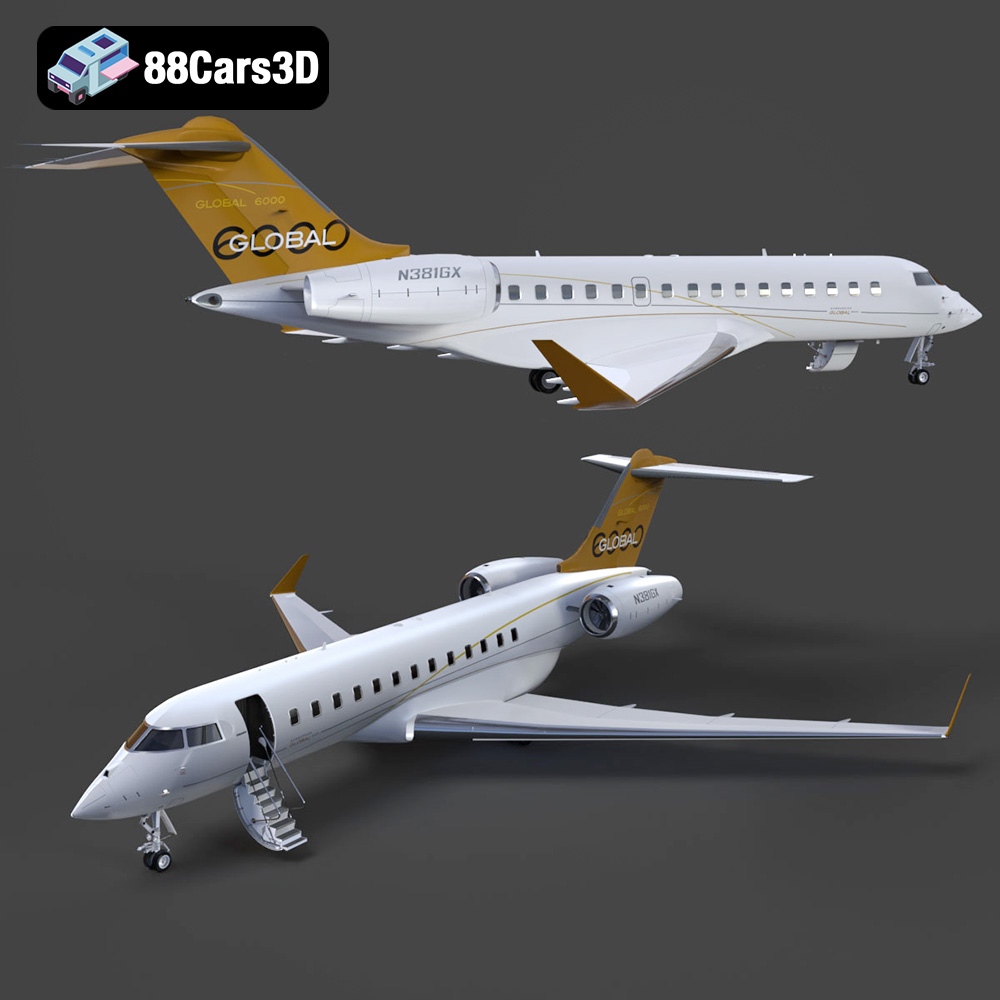
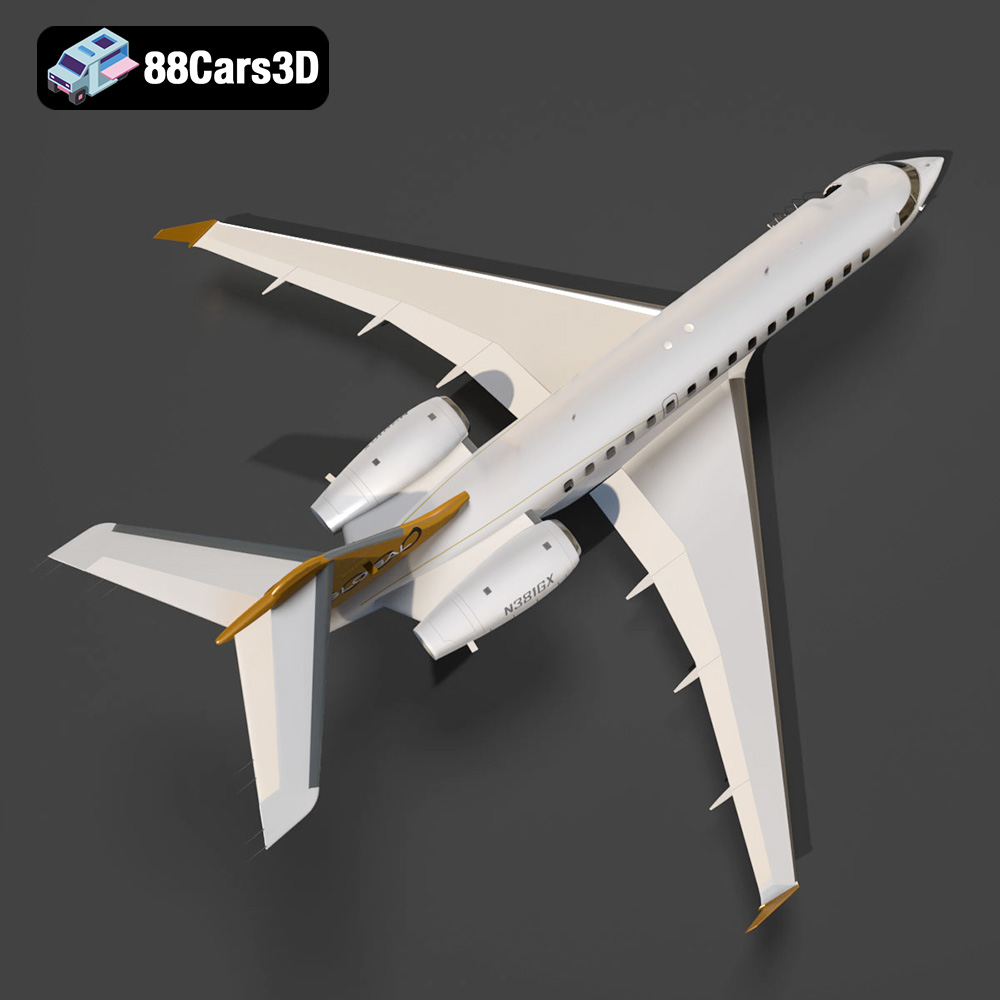
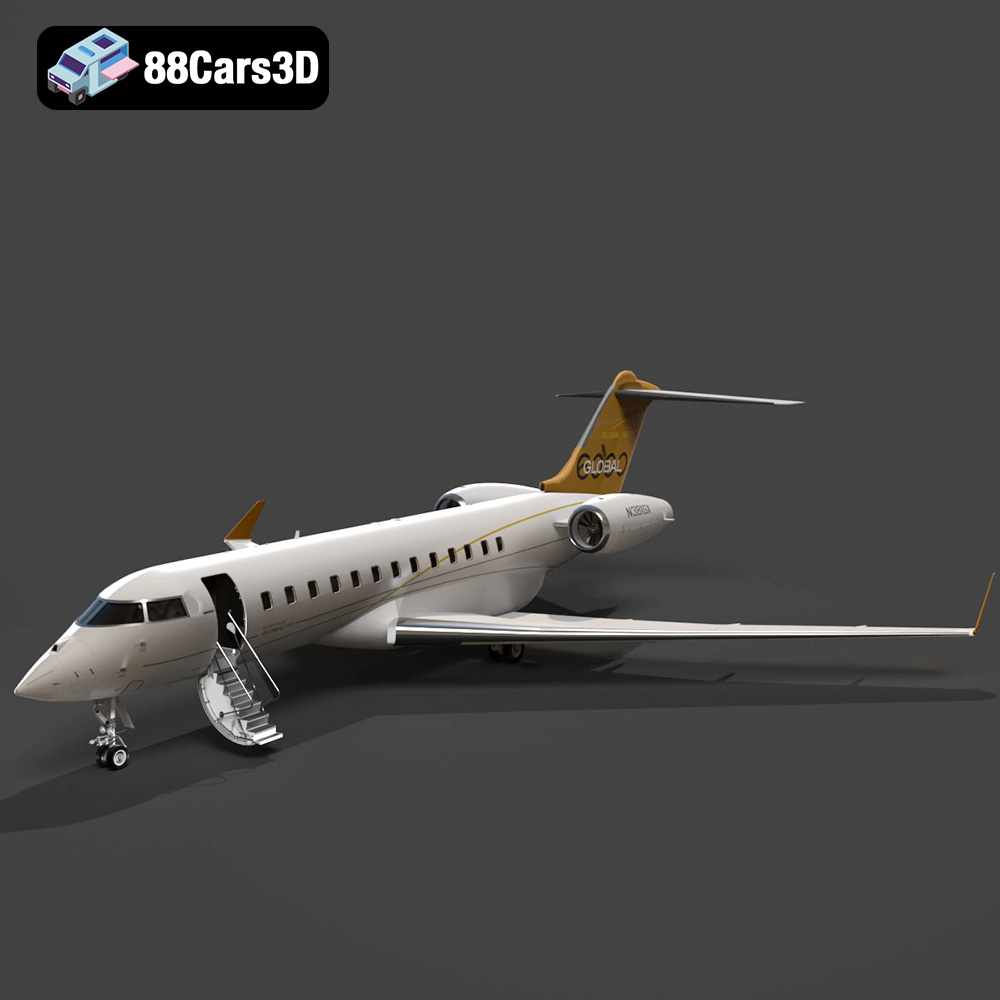
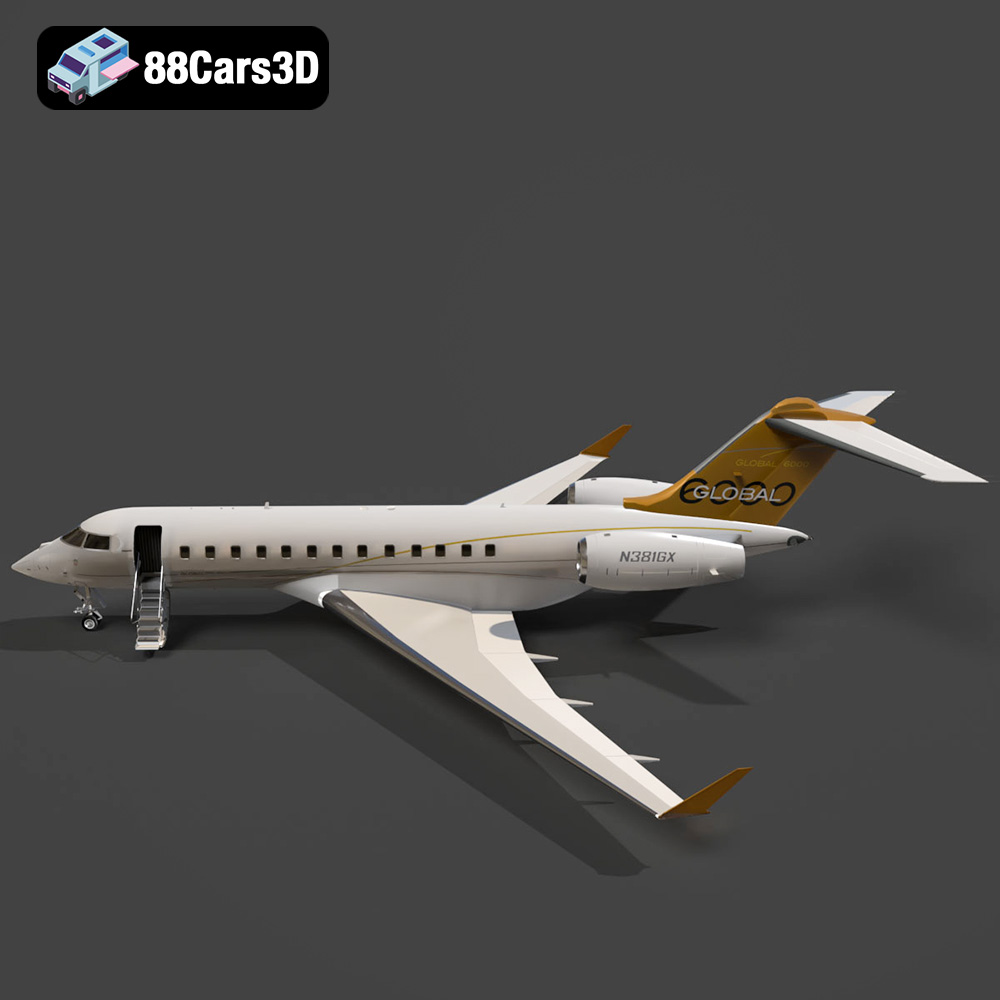
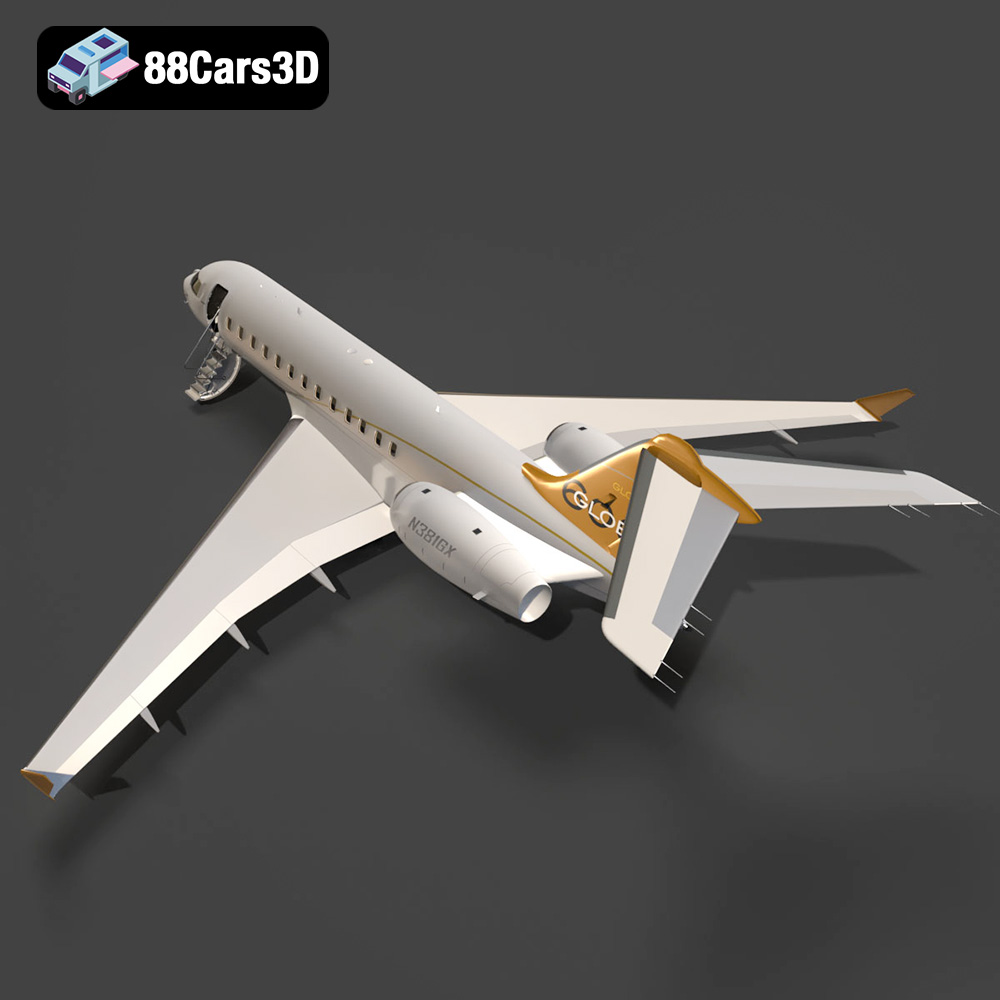
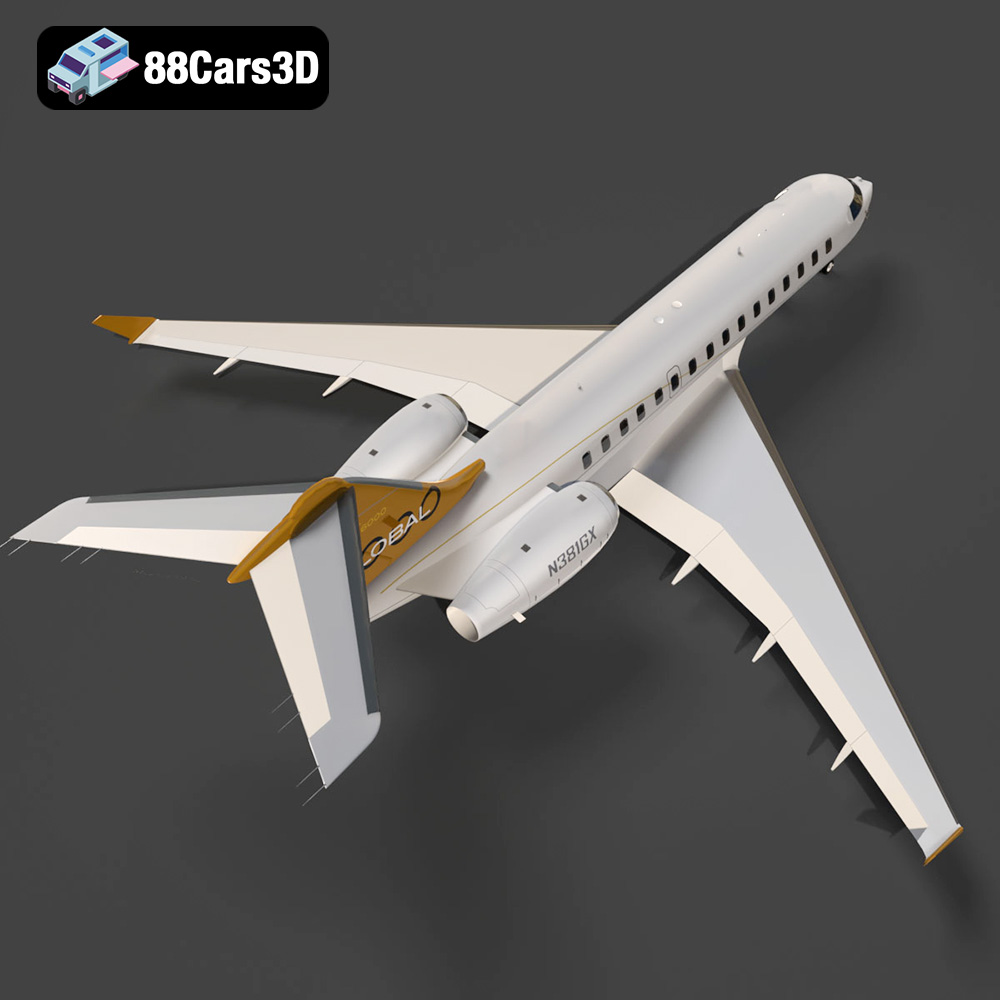
The first impression of any aircraft model lies in its exterior. This Bombardier 6000 model excels here, capturing the elegant sweeping lines, signature winglets, and powerful turbofan engine housings with remarkable accuracy. The geometry is clean, reflecting the real-world engineering with precision. Critical components like landing gear assemblies, wheels, tires, and bay doors are intricately modeled, ensuring that even close-up renders maintain a high level of realism. Furthermore, separate elements for ailerons, flaps, and engine turbines are crucial for animation, allowing for dynamic simulations of flight and ground operations without complex rigging hurdles.
While the exterior often garners initial attention, a truly comprehensive 3D model extends its detail inward. The Bombardier 6000 model includes a well-defined cockpit and interior features, offering significant value for first-person perspectives, VR experiences, and detailed cinematic shots. Pilot and co-pilot seating, flight yokes, steering columns, and a geometry-ready instrument panel provide a solid foundation for adding glass cockpit displays and interactive controls. This level of interior detail, optimized for immersive experiences, sets it apart, making it suitable for high-end flight simulators where user interaction within the cockpit is paramount.
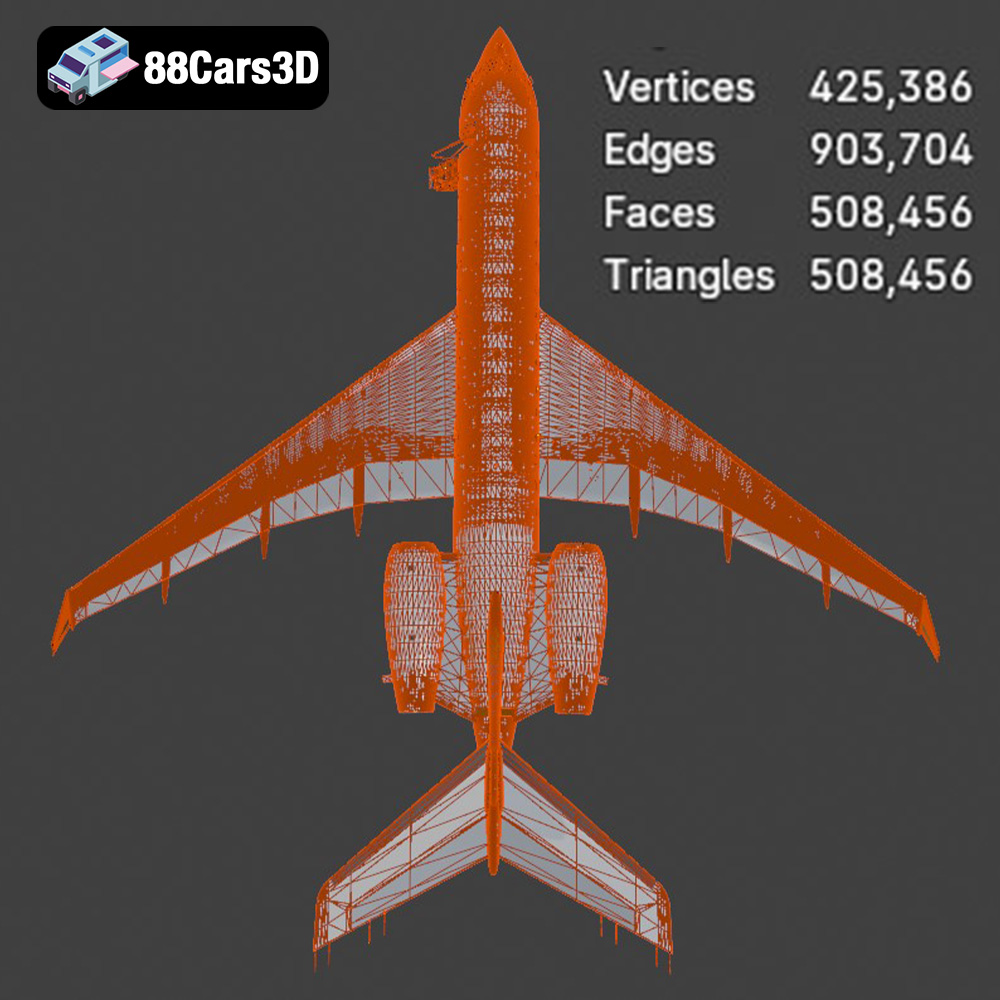
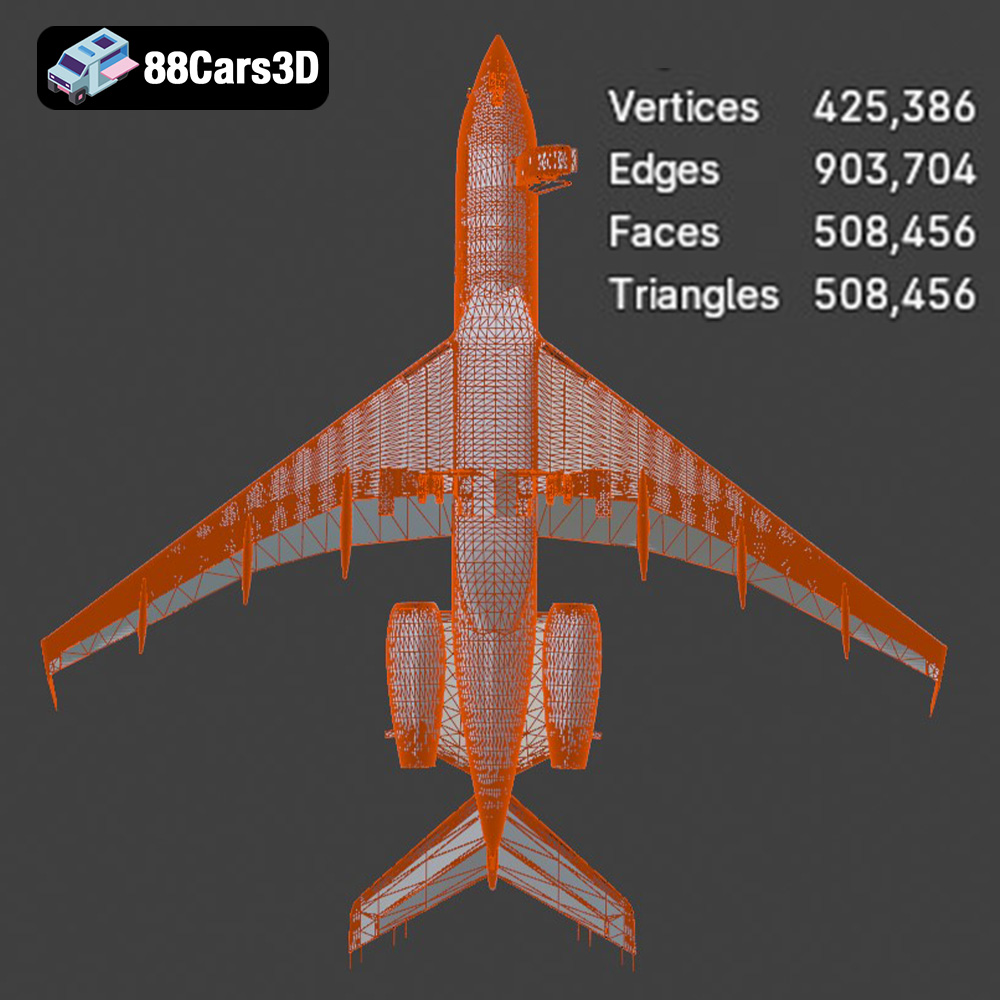
One of the most significant technical advantages of this Bombardier 6000 3D model is its optimized topology. With a triangle count of 508,456, it strikes a crucial balance. This polycount is high enough to deliver unparalleled visual fidelity, capturing subtle curves and intricate components without appearing blocky or simplistic. Yet, it remains efficient enough for real-time applications such as game engines (Unreal, Unity) and AR/VR platforms, where performance is critical. This “game-ready” optimization means developers can integrate it into their projects without extensive re-topology or baking, saving considerable development time. Moreover, the model boasts real-world scale accuracy and proper pivot setups, simplifying animation tasks like landing gear retraction or control surface movement, a testament to its professional-grade construction.
The true value of a versatile 3D asset is realized through its seamless integration into diverse professional workflows. Whether your focus is on photorealistic rendering, interactive game development, or dynamic animation, the Bombardier 6000 3D model provides a robust starting point. Its multi-format availability ensures that it can be dropped into virtually any industry-standard software.
For studios specializing in architectural visualization, product showcases, or cinematic sequences, 3ds Max remains a powerhouse. Importing the .max file of the Bombardier 6000 provides immediate access to the original scene, allowing artists to leverage Max’s advanced rendering capabilities (V-Ray, Corona, Arnold). The detailed geometry can be enhanced with intricate PBR material setups, utilizing high-resolution textures for metals, glass, and composite surfaces. Lighting can be meticulously crafted to highlight the aircraft’s contours, simulating everything from a golden hour glow on the tarmac to dramatic airport night scenes. With its accurately modeled exterior and cockpit, artists can create stunning fly-through animations, showcasing both the aircraft’s luxury and its technical prowess. The separate animate-able parts (landing gear, control surfaces) greatly simplify the animation process, allowing for realistic take-off, landing, and flight sequences.
Blender, with its open-source nature and powerful feature set, is a favorite among independent artists and smaller studios. The .blend file for the Bombardier 6000 provides full editability within this environment. Artists can easily customize corporate liveries, modify material finishes, or even expand the interior detail further if specific project requirements demand it. Blender’s comprehensive sculpting, texturing, and rigging tools mean the model can be adapted for unique artistic visions or integrated into larger, complex scenes. For those looking to use the model in Blender-based game engines or interactive experiences, the optimized topology ensures good performance, while Blender’s Cycles or Eevee renderers can produce high-quality stills and animations with ease.
Unreal Engine is at the forefront of real-time rendering, powering everything from AAA games to cutting-edge virtual production. The “game-ready” nature and .fbx/.unreal formats of the Bombardier 6000 model make it an ideal asset for such platforms. Developers can import the model, set up its materials using Unreal’s robust PBR system, and integrate it directly into flight simulators, open-world environments, or even VR training modules. The optimized polycount (508,456 triangles) ensures smooth frame rates without sacrificing visual quality, critical for immersive experiences. Proper pivot points simplify the implementation of interactive elements like animated landing gear, rotating turbines, and articulated control surfaces. Imagine a player freely exploring a detailed airport environment, with the Bombardier 6000 sitting majestically on the tarmac, ready for a simulated flight.
The utility of a high-quality 3D model extends far beyond traditional screen-based rendering and game development. The Bombardier 6000 model’s diverse file format support positions it perfectly for emerging technologies like Augmented Reality (AR), Virtual Reality (VR), and the tangible world of 3D printing.
AR and VR are transforming how we interact with digital content, offering unprecedented levels of immersion. The Bombardier 6000 model, especially in its .glb format, is tailor-made for these applications. In AR, you could project a life-sized Bombardier 6000 into a physical space using a smartphone or tablet, allowing potential buyers to virtually walk around and inspect the aircraft as if it were truly there. For VR, the model can be integrated into virtual showrooms, offering prospective clients a detailed, interactive tour of the exterior and optimized cockpit from a first-person perspective. The “optimized geometry for immersive first-person POV” specified in its description is a direct nod to its suitability for these demanding, real-time environments. Such applications are invaluable for luxury brand campaigns, allowing for highly engaging and memorable product demonstrations that transcend traditional marketing.
The inclusion of the .stl format opens up an entirely different dimension: bringing the digital asset into the physical world through 3D printing. For aviation enthusiasts, collectors, or even educational purposes, printing a scale model of the Bombardier 6000 offers a unique tangible experience. The product description provides precise guidance for 3D print settings, recommending scales like 1:72, 1:100, or 1:144, along with layer height, infill, and crucial support requirements. Resin printing is specifically recommended for capturing the fine details like antennas and landing gear, highlighting the model’s fidelity. Post-processing suggestions, such as sanding, priming, and applying authentic corporate liveries, guide users towards creating museum-quality display pieces. This capability underscores the model’s versatility, serving both the digital artist and the physical model maker.
The Bombardier 6000 3D model is more than a technical marvel; it’s a catalyst for creating compelling visual narratives and interactive applications across various industries. Its design and flexibility enable a multitude of professional use cases, each leveraging its unique features.
Consider a next-generation flight simulator. Developers demand aircraft models that are not only visually stunning but also optimized for complex real-time physics and vast open-world environments. The Bombardier 6000’s “game-ready” topology and 508,456 triangle count are perfectly suited. Imagine a virtual pilot experiencing a high-fidelity flight through various weather conditions, with the intricately detailed cockpit providing an immersive first-person view. The separate landing gear and flight control surfaces are invaluable for programming realistic animations for take-off, landing, and in-flight maneuvers. A game built around this quality of asset would offer an unparalleled level of realism and player engagement.
For luxury brand campaigns, particularly those targeting ultra-high-net-worth individuals, visual representation is everything. A digital advertisement showcasing a stunning villa often requires a complementary high-end vehicle or aircraft to complete the scene. The Bombardier 6000 3D model can be seamlessly integrated into such architectural or lifestyle visualizations, positioned elegantly on a private runway or descending towards a bespoke resort. Its ability to “easily change exterior colors to create custom corporate liveries” means it can be branded to match any client’s aesthetic. The cinematic quality it brings to renders elevates the entire presentation, creating a powerful sense of aspiration and exclusivity. It’s not just an aircraft; it’s a symbol of a lifestyle.
Beyond entertainment, highly accurate 3D models like this one find critical applications in training and engineering. Aviation schools could use the Bombardier 6000 model in VR training modules to familiarize pilots with cockpit layouts and pre-flight checks in a safe, virtual environment. Engineering firms might use it for visualizing aerodynamic simulations or integrating it into digital mock-ups for airport planning and logistics. The “real-world scale accuracy” and “proper pivot setup” are crucial here, ensuring that simulations behave realistically and provide valuable data or training experiences.
Purchasing a premium 3D model like the Bombardier 6000 from 88cars3d.com is an investment in quality and efficiency. But its true long-term value lies in its adaptability and the possibilities it offers for customization and future expansion, ensuring it remains a valuable asset for years to come.
The included customization options are designed to empower artists and developers. The ability to “easily change exterior colors to create custom corporate liveries” is a game-changer for branding and personalization. Imagine showcasing this jet with a client’s specific company colors and logo, instantly making the asset feel bespoke. Beyond color, the flexibility to “modify tire textures for varying levels of wear” adds a layer of realism that can denote a brand new jet straight from the factory or a seasoned aircraft with thousands of flight hours. Similarly, adjusting material finishes from matte to high-gloss or adding metallic accents allows for fine-tuning the visual character to match any aesthetic demand or specific lighting scenario. Even adapting cabin and exterior lighting for day or night environments provides essential flexibility for any scene or interactive experience.
The comprehensive nature of the Bombardier 6000 3D model, encompassing both exterior and optimized interior features, provides a solid foundation for future projects. Should your needs evolve to require more intricate interior details, the existing optimized geometry serves as an excellent base for further sculpting or modular additions. The clean topology and well-defined parts mean that if future software or engine updates necessitate re-exporting or minor adjustments, the process will be streamlined. Furthermore, the inclusion of multiple file formats inherently future-proofs the asset, ensuring compatibility with new software versions and emerging platforms. This isn’t just a single-use model; it’s a versatile toolkit that can be repurposed and expanded upon for countless visualization challenges.
In an industry where precision, performance, and visual fidelity are paramount, the Bombardier 6000 3D model stands out as an exceptional asset. Its meticulous design, optimized topology, and comprehensive feature set — from the detailed exterior and optimized cockpit to its support for diverse file formats — make it an indispensable tool for professionals across game development, high-end rendering, AR/VR experiences, and even 3D printing.
This model doesn’t just represent an aircraft; it represents a commitment to quality and technical excellence. Its ability to seamlessly integrate into workflows ranging from 3ds Max for cinematic renders to Unreal Engine for immersive simulations, coupled with its robust customization options, ensures that it can adapt to virtually any project requirement. By investing in such a high-caliber 3D model, creators gain a strategic advantage, transforming complex visualization challenges into opportunities for breathtaking digital experiences.
For those seeking to elevate their projects with a truly premium aviation asset, the Bombardier 6000 3D model, available at 88cars3d.com, offers the perfect blend of detail, performance, and versatility. It’s more than just a purchase; it’s an investment in unparalleled visual potential.
Experience the epitome of luxury aviation with this highly detailed 3D model of the Bombardier 6000, a premier long-range business jet renowned for its exceptional performance, striking aerodynamic profile, and global reach. This model meticulously captures the aircraft’s elegant sweeping lines, iconic winglets, and powerful turbofan engine housings that make it a standout in any virtual fleet or high-end aviation visualization. Featuring a beautifully optimized topology with a triangle count of 508,456, this model delivers unparalleled visual fidelity while remaining efficient for real-time applications. Designed with developers and 3D artists in mind, it provides the perfect balance of detail and performance, making it highly suitable for flight simulation games, AR/VR experiences, animation, and architectural or high-end lifestyle visualizations. Perfect for flight simulators, luxury brand campaigns, cinematic airport scenes, and virtual showrooms.
$26.00
.aircraft
.blend
.bombardier
.fbx
.glb
.max
.obj
.ply
.rendering
.stl
.unreal
airplane-3d-model
bombardier-6000
game asset
game-ready
low-poly
optimized
private-jet
VR/AR