Get 20% OFF All Premium 3D & STL Models!

In the dynamic worlds of game development, advanced visualization, and immersive simulations, the demand for highly detailed and technically optimized 3D assets continues to surge. Whether crafting a sprawling urban environment for a next-generation title, designing a photorealistic architectural walkthrough, or developing cutting-edge virtual reality training modules, the quality of your 3D models dictates the believability and effectiveness of your digital creations. Generic, low-detail assets simply won’t cut it when aiming for professional-grade results.
Creating complex heavy machinery, with its intricate hydraulic systems, robust chassis, and functional components, is a significant undertaking. It requires meticulous attention to real-world scale, engineering accuracy, and optimized topology for diverse applications. This challenge is precisely where a premium asset like the Skid Steer Loader 3D Model from 88cars3d.com shines. This model isn’t just an object; it’s a meticulously engineered digital twin, ready to integrate seamlessly into the most demanding professional workflows, from construction site simulations to detailed automotive rendering projects, and serving as a crucial game asset.
The role of specialized 3D models, particularly those representing heavy machinery, extends far beyond simple aesthetics. They are foundational elements for creating truly immersive and functional digital experiences across various industries.
For industries like construction, mining, and agriculture, operator training is paramount for safety and efficiency. Traditional training methods can be costly and hazardous. High-fidelity 3D models, such as our featured Skid Steer Loader, revolutionize this by enabling realistic AR/VR industrial training applications. Trainees can interact with virtual machinery in safe, controlled environments, practicing complex maneuvers, understanding control layouts, and reacting to virtual scenarios without risk. The model’s accurate dual-joystick steering, industrial instrument cluster, and protective ROPS cage provide an authentic experience, significantly reducing the learning curve and improving real-world performance.
In architectural visualization (arch-viz) and engineering presentations, the context of a build site is often as important as the structure itself. Including an accurately scaled and detailed 3D model of a Skid Steer Loader can instantly bring a construction site rendering to life, adding realism and a sense of ongoing activity. For equipment manufacturers, these models are invaluable marketing tools, allowing for dynamic showcases, animated demonstrations of product capabilities, and interactive virtual showrooms that highlight every feature, from the robust lifting arms to the heavy-duty off-road tires. The ability to customize body colors and material finishes further enhances their utility for branded content.
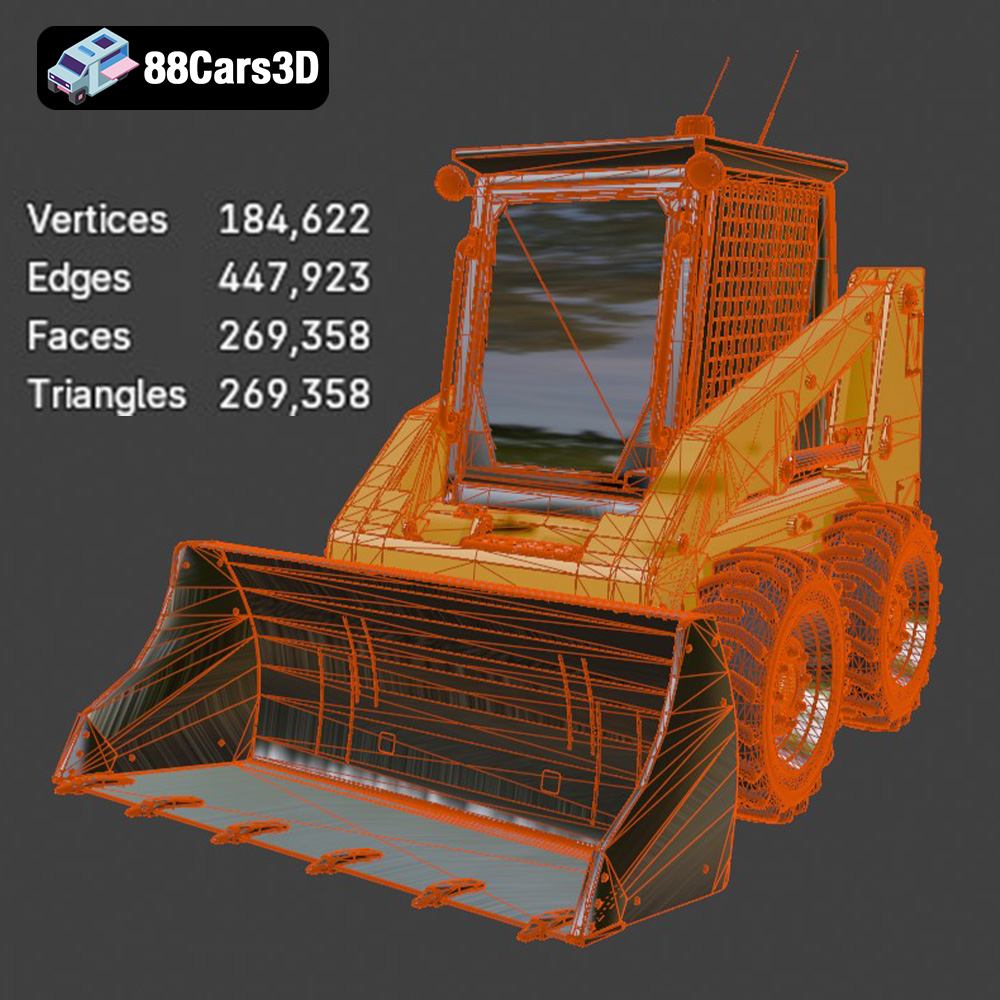
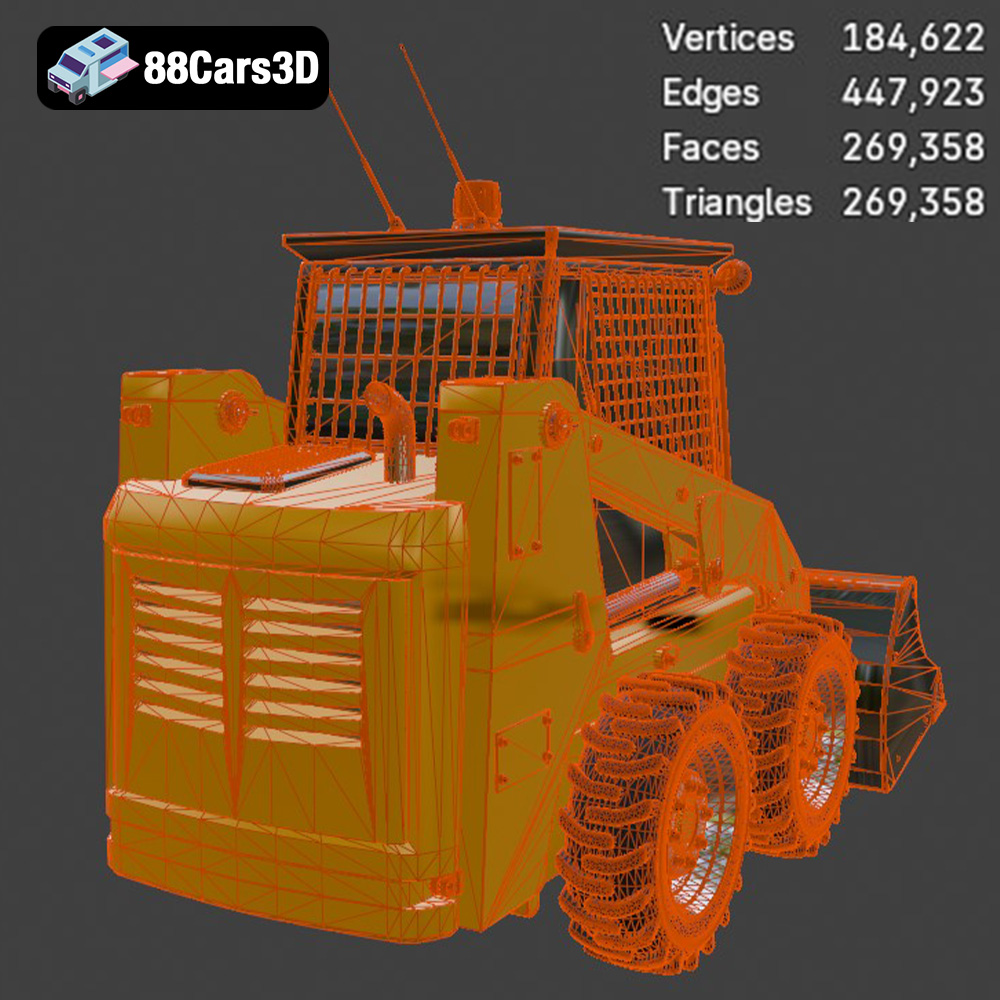
Modern video games demand highly optimized yet visually stunning assets. For titles ranging from construction simulators to open-world adventures or farming games, a detailed heavy machinery asset like the Skid Steer Loader is indispensable. Its game-ready topology, featuring an optimized triangle count of 269,358, strikes an ideal balance between visual fidelity and real-time engine performance. This ensures smooth frame rates and efficient resource usage, critical for immersive gameplay. The separate wheels, lift arms, bucket, and hydraulic components also mean it’s ready for intricate animations and interactive gameplay mechanics, making it a prime example of a top-tier game asset.
The true versatility of a professional 3D model is often defined by its availability in multiple industry-standard file formats. Each format serves a specific purpose, catering to different software environments, rendering pipelines, and end-use applications. The Skid Steer Loader 3D Model is provided in an extensive range of formats, ensuring maximum compatibility and utility for any project. Understanding these formats is crucial for seamless integration into your workflow.
The .blend format is Blender’s native file type. It encapsulates the entire Blender project, including mesh data, materials, textures, lighting, cameras, animations, and even physics simulations. For artists and studios primarily working within Blender, this is the most powerful format as it offers complete editability. You can dissect the model, modify its topology, adjust every aspect of its materials using Blender’s node-based shader editor, or extend its rigging and animation. For the Skid Steer Loader, the .blend file provides a direct gateway to explore its optimized geometry, examine its material setup, and integrate it into Blender-centric automotive rendering or heavy machinery visualization projects.
FBX (Filmbox) is a proprietary file format owned by Autodesk, widely recognized as the industry standard for interoperability between 3D software applications and, critically, for real-time game engines like Unreal Engine and Unity. It excels at preserving complex data such as mesh geometry, materials, textures, animation, rigging, and even camera data. When exporting the Skid Steer Loader as an .fbx, it’s typically set up for clean import, with proper scale and pivot points, making it an excellent game asset. Its robust support for animations makes it perfect for transferring animated hydraulic movements or wheel rotations directly into a game engine.
OBJ (or Wavefront OBJ) is one of the oldest and most universally supported 3D file formats. While it doesn’t support animation or advanced material properties as robustly as FBX, it is unparalleled for transferring pure geometric data—vertices, faces, and UV coordinates—between almost any 3D software. An accompanying .mtl (material template library) file can store basic material properties and texture references. The .obj format for the Skid Steer Loader ensures that virtually any 3D artist, regardless of their primary software (e.g., Maya, Cinema 4D, Modo), can import and work with the model’s fundamental structure, making it a highly reliable backup or universal interchange format.
GLB is the binary version of glTF (Graphics Language Transmission Format), an open standard developed by the Khronos Group. GLB files are highly optimized for efficiency, designed specifically for web-based 3D applications, augmented reality (AR), virtual reality (VR), and streaming 3D content. A single .glb file can contain geometry, materials, textures, animations, and skinning data, all in a compact package. The Skid Steer Loader in .glb format is perfect for embedding in interactive web experiences, showcasing the model directly in a browser, or deploying it in AR/VR applications where file size and load times are critical. This makes it an invaluable asset for online catalogs of 3D car models or heavy machinery.
STL (stereolithography) is the most common file format for 3D printing. It represents a 3D object as a series of connected triangles, describing only the surface geometry without color, texture, or material information. While not suitable for rendering or animation, the .stl format is precisely what a 3D printer reads to construct the physical object layer by layer. The Skid Steer Loader’s .stl export ensures hobbyists and professionals can bring this digital workhorse into the physical realm, creating display models, prototypes, or even parts for custom projects. The product description’s detailed 3D print settings further enhance its utility for this application.
PLY (Polygon File Format, also known as Stanford Triangle Format) is another format for storing 3D data, often used in scientific and engineering fields. It can store a wide range of properties, including color, transparency, surface normals, and texture coordinates, in addition to geometry. PLY is frequently used for storing data from 3D scanners and is valued for its extensibility and precision. While less common for general 3D asset exchange than FBX or OBJ, its inclusion for the Skid Steer Loader speaks to the model’s robustness and potential for use in more specialized CAD or analysis pipelines.
The .unreal format implies a file specifically prepared or packaged for direct import into Unreal Engine. While Unreal primarily imports .fbx files, a designated “.unreal” file often signifies that the model has been pre-configured with Unreal-specific materials, collision meshes, LODs (Levels of Detail), and possibly blueprints for interactivity, making it truly “engine-ready.” This streamlines the integration process, saving significant time for game developers and simulation engineers who leverage Unreal Engine for their projects, especially when dealing with complex game assets like vehicles or heavy machinery.
The .max format is Autodesk 3ds Max’s native scene file. Similar to Blender’s .blend, it contains all the data from a 3ds Max project, including geometry, modifiers, materials, textures, lights, cameras, and animations. For users of 3ds Max, this file offers the highest degree of flexibility for further modification, advanced rendering setups (using V-Ray, Corona, Arnold), and complex animation sequences. The Skid Steer Loader’s .max file is ideal for professional visualization studios that require full control over every aspect of the asset within a robust production environment, particularly for high-end automotive rendering or detailed industrial animations.
The Skid Steer Loader 3D Model from 88cars3d.com is a testament to meticulous 3D artistry and technical excellence. It’s not just a visually appealing model; it’s engineered for peak performance across a spectrum of professional applications.
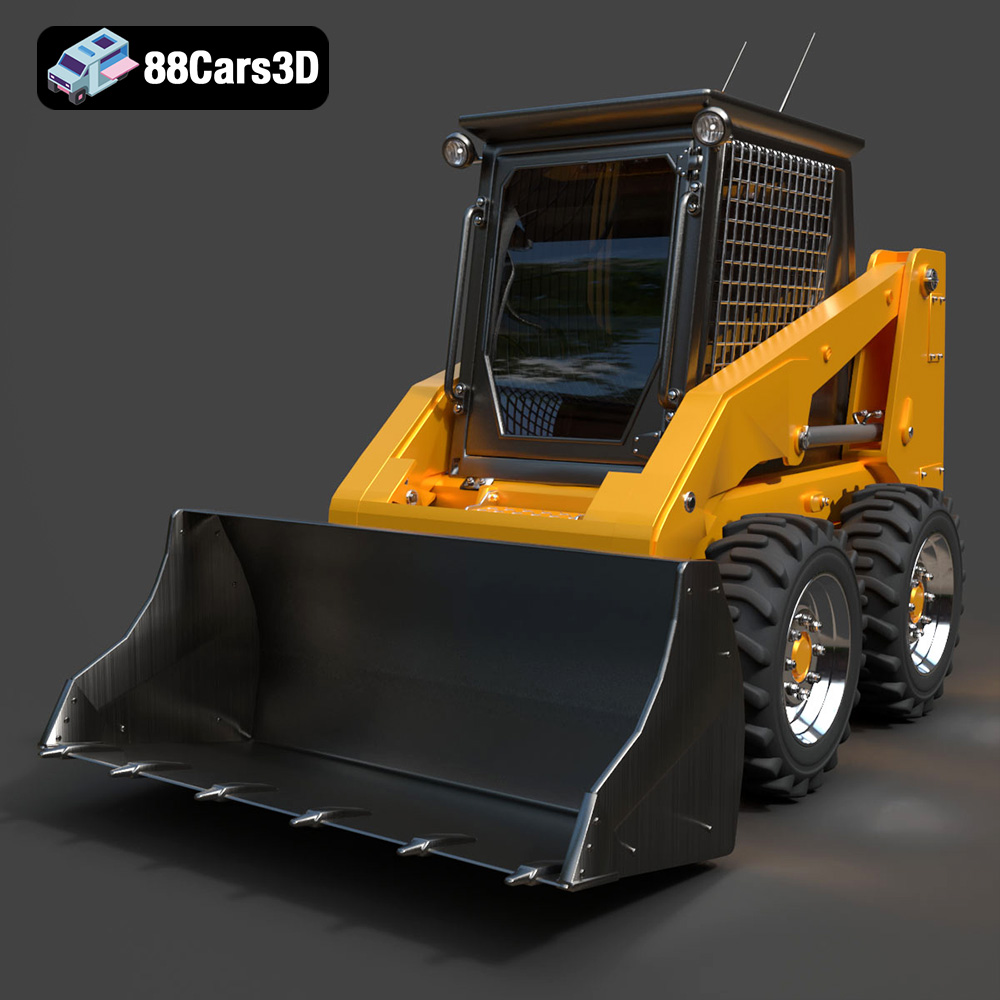
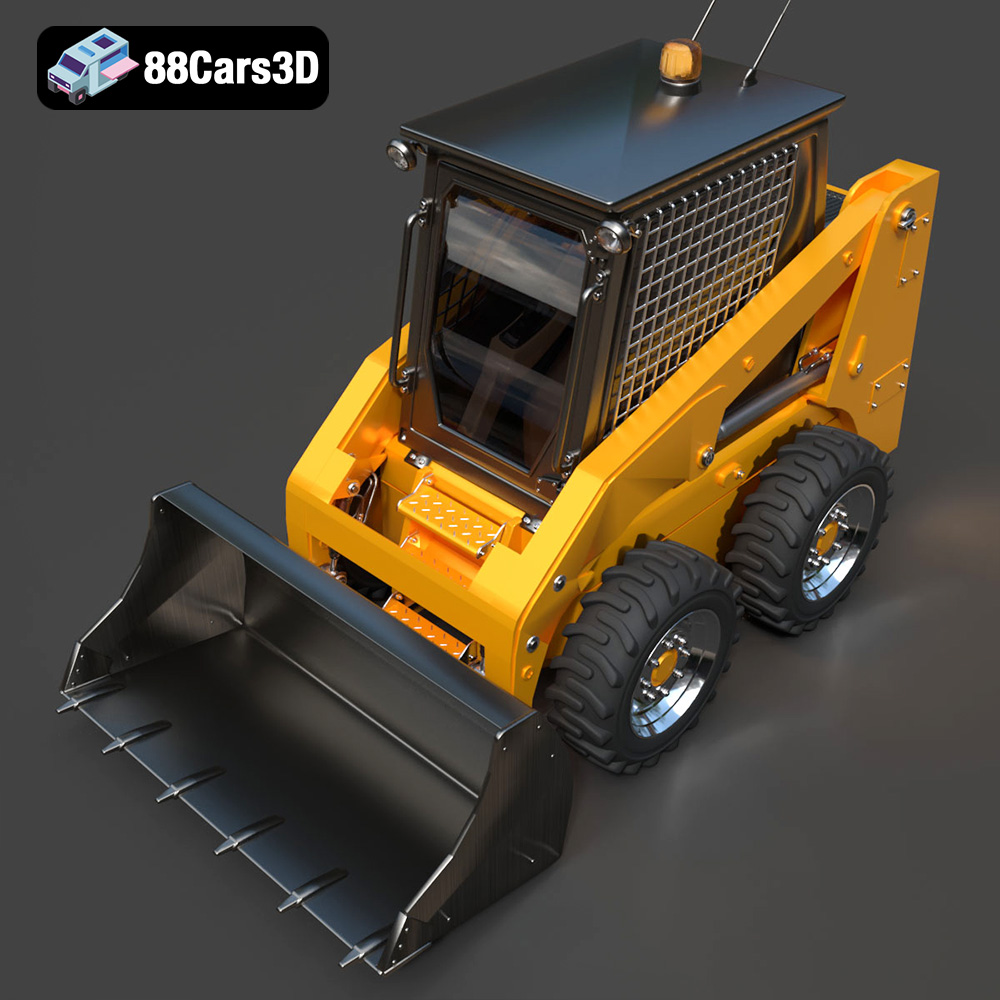
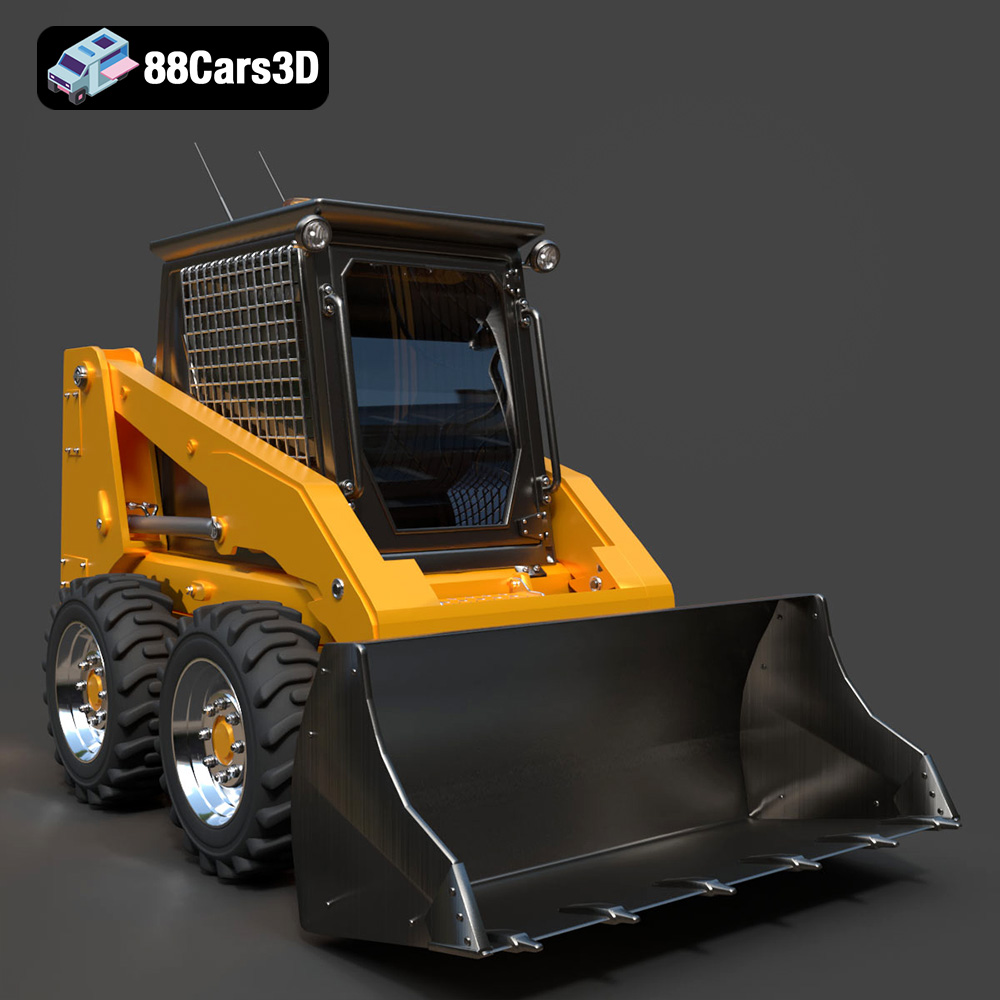
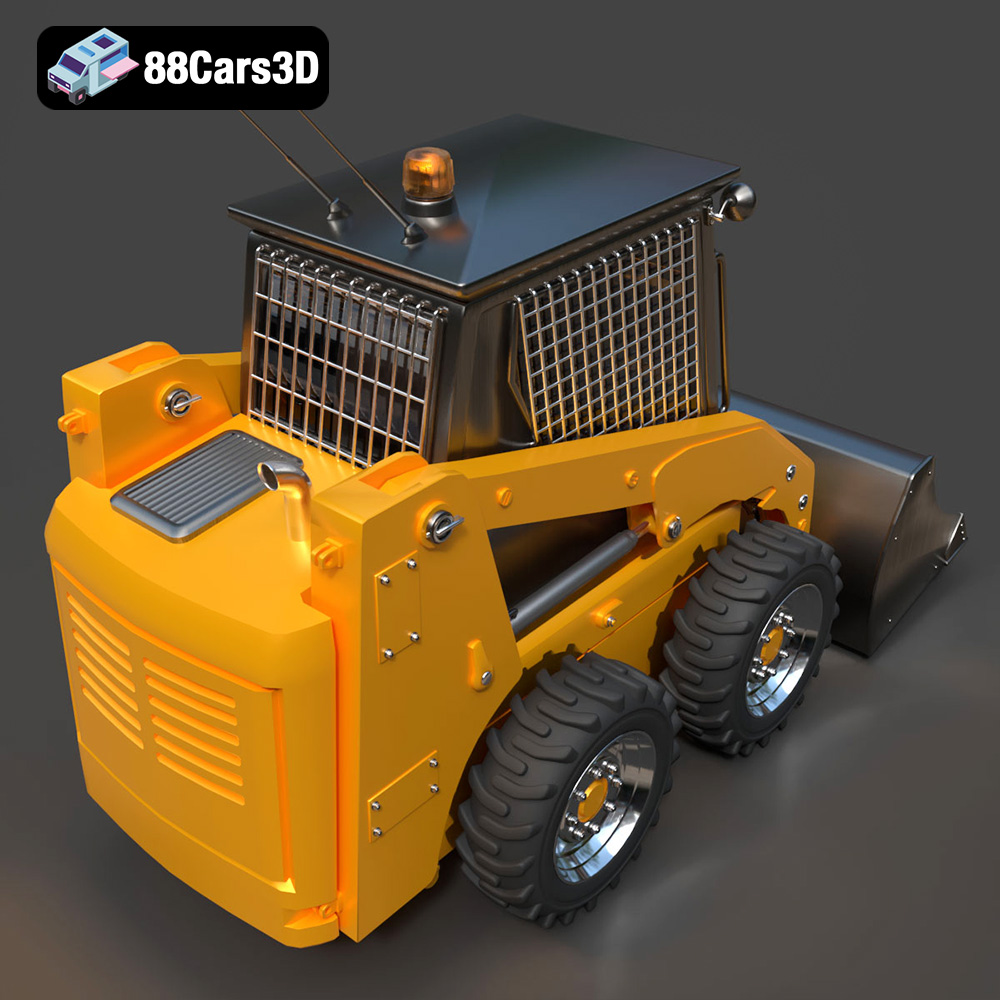
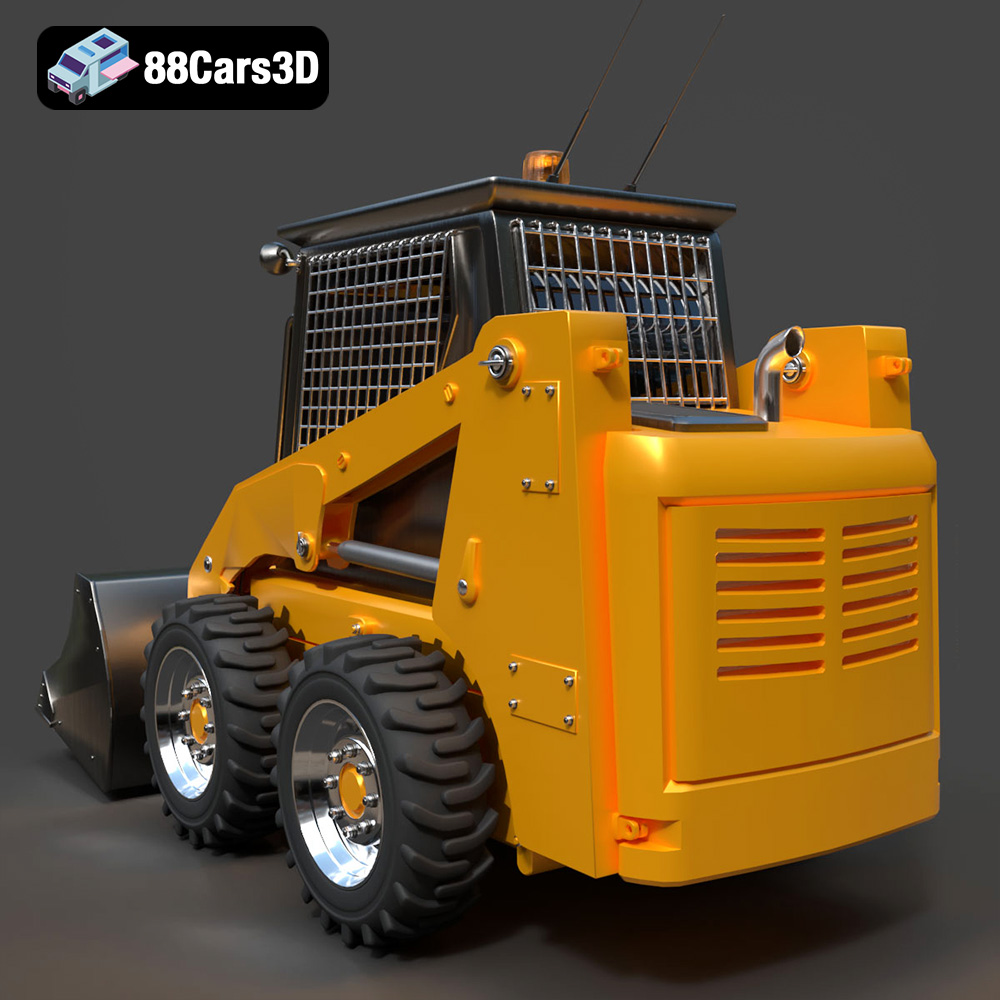
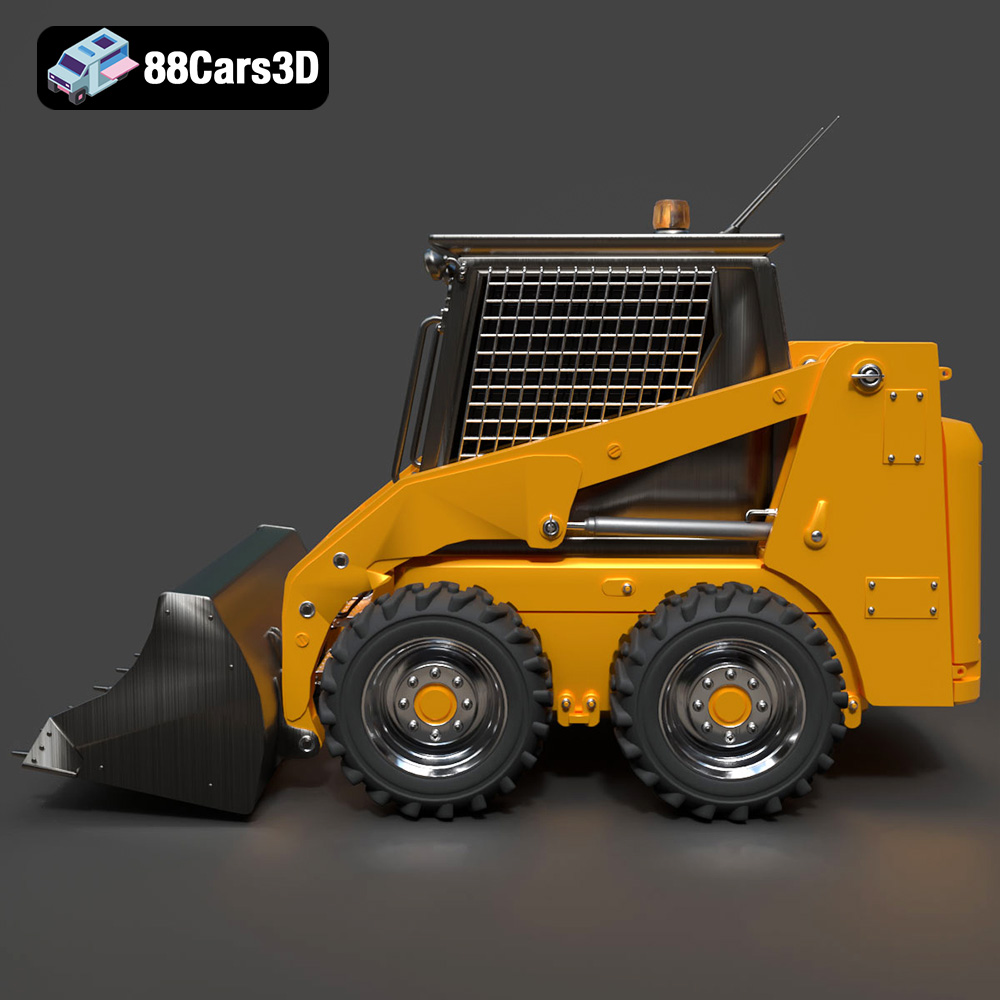
Every curve, every joint, and every robust component of a real-world skid steer loader has been faithfully replicated. The model boasts accurate frame geometry, capturing the formidable industrial proportions that define this machinery. From the detailed engine compartment ventilation and exhaust stack to the fully modeled hydraulic lift arms, cylinders, and pivot points, the exterior is a masterclass in industrial realism. Functional work lighting, including front headlights and rear safety lights, adds to the authenticity, while the heavy-duty off-road tires with deep, mud-clearing treads solidify its rugged appeal. The reinforced front bucket attachment, a critical part of its functionality, is also precisely rendered, making it perfect for any construction or landscaping scene.
Beyond the impressive exterior, the Skid Steer Loader 3D Model offers a highly detailed interior, crucial for first-person perspectives in heavy machinery simulators and AR/VR training. The operator’s seat comes complete with a safety restraint system, emphasizing attention to detail. Accurate dual-joystick steering and control levers provide the tactile feedback necessary for immersive training. An industrial instrument cluster and monitoring displays are precisely modeled, enhancing the realism of the cockpit. Furthermore, the protective Roll-Over Protective Structure (ROPS) cage is accurately represented, not just as a visual element but as an integral part of the machinery’s design, reinforcing its role in safety simulations.
A key technical advantage of this model is its optimized topology. With a triangle count of 269,358, it achieves an exceptional balance between high-end visual fidelity and real-time engine performance. This optimization ensures that the model looks incredibly realistic without burdening game engines like Unreal or Unity, making it a true game asset. The real-world scale accuracy, based on actual heavy machinery chassis, guarantees seamless integration into existing environments without scaling issues. Crucially, the proper pivot setup for steering, wheel rotation, arm lifting, and bucket tilting means the model is animation-ready right out of the box, saving countless hours in rigging and setup for animators and game developers.
The Skid Steer Loader 3D Model is designed for maximum compatibility, making it a seamless fit into various professional 3D production pipelines.
For studios leveraging Autodesk 3ds Max, the included .max file provides an unparalleled starting point. Artists can take advantage of 3ds Max’s robust toolset for advanced rendering with V-Ray or Corona Renderer, achieving photorealistic results for architectural visualizations or marketing materials. The model’s clean topology and separate, pre-pivoted components (wheels, arms, bucket) simplify the rigging process for complex animations, allowing for lifelike hydraulic movements, bucket operations, and vehicle dynamics. This makes it an ideal asset for detailed industrial animations or high-end automotive rendering projects where precision and realism are paramount.
Blender users will find the .blend file equally empowering. With its powerful Cycles and Eevee render engines, Blender can produce stunning visuals from the Skid Steer Loader model. Artists can dive into the material nodes to customize textures and shaders, leveraging Blender’s expansive procedural capabilities. The model’s optimized geometry ensures smooth viewport performance, even in complex scenes, facilitating efficient scene setup, lighting, and animation within Blender’s intuitive environment. For independent developers or smaller studios, the .blend format offers professional-grade quality without license limitations, fostering creative freedom.
The “game-ready” designation and the inclusion of an .fbx and .unreal file format underscore the model’s suitability for Unreal Engine. Importing the Skid Steer Loader into Unreal is straightforward, allowing developers to quickly set up materials using Unreal’s PBR shader system. The optimized polycount ensures excellent performance within real-time environments, making it perfect for game development, AR/VR experiences, and high-fidelity simulations. Developers can leverage Unreal’s Blueprint system to add interactive controls for the loader’s movements, hydraulic functions, and even integrate it into virtual training modules with real-time physics and environmental interactions.
The inclusion of the .stl format broadens the model’s utility to the physical world. For hobbyists, engineers, or designers interested in creating tangible representations, the Skid Steer Loader is ready for 3D printing. The provided 3D print settings are invaluable, recommending specific scales (1:24 / 1:35 / 1:50), layer heights (0.04–0.12 mm for resin), and wall thicknesses (1.2–2.0 mm). Crucially, the guidance on supports (required for the roll cage, hydraulic arms, joysticks) and print orientation ensures successful prints. Post-processing suggestions, like sanding, priming, and applying authentic industrial yellow/orange with weathering effects, empower users to create stunning, realistic display models or functional prototypes.
A truly versatile 3D asset provides more than just a static representation; it offers avenues for customization and integration into diverse scenarios, elevating its value across various industries.
The Skid Steer Loader 3D Model offers extensive customization options, allowing users to adapt its appearance to specific project needs. You can easily change body colors to match corporate branding, perhaps from a standard industrial yellow to a construction orange or a unique corporate white. Modifying tire textures to reflect muddy, dusty, or brand-new conditions adds another layer of realism depending on the scene. Adjusting material finishes—from matte to gloss, or introducing heavy weathering and rust—can tell a story about the machinery’s history and environment. Additionally, adapting lighting for day or night construction environments further enhances scene authenticity. This flexibility makes the model incredibly valuable for varied visual requirements, from pristine marketing renders to gritty game assets.
The practical applications of this detailed 3D model are broad and impactful. In the realm of industrial training, companies can deploy VR simulations featuring the Skid Steer Loader to train new operators in a risk-free environment, reducing costly errors and improving safety protocols. Architectural firms can integrate this model into their visualizations to present construction phases more realistically, helping clients visualize projects with greater clarity. Game developers can use it as a core asset in construction simulation games, where players manage virtual building sites, or in open-world titles requiring dynamic heavy machinery. Event organizers could even use it for AR experiences at trade shows, allowing attendees to interact with a virtual skid steer loader on a scale model of a construction site. This robust model, like the high-quality 3D car models available at 88cars3d.com, proves that investing in superior assets yields significant returns in realism and utility.
In the competitive landscapes of 3D visualization, game development, and advanced simulation, the quality and versatility of your digital assets are paramount. The Skid Steer Loader 3D Model is an exemplary heavy machinery asset that embodies precision engineering, visual fidelity, and technical optimization. From its meticulously detailed exterior and immersive interior to its game-ready topology and extensive file format support, it offers an unparalleled solution for professionals seeking to elevate their projects.
Whether you’re developing an intricate AR/VR training application, rendering a photorealistic construction site, building a robust game environment, or even embarking on a 3D printing endeavor, this model provides the foundation for success. Its comprehensive design and diverse format offerings, including .blend, .fbx, .obj, .glb, .stl, .ply, .unreal, and .max, ensure seamless integration into virtually any professional workflow. This Skid Steer Loader is more than just a model; it’s a powerful tool ready to bring your industrial visions to life. Explore this exceptional asset and other high-quality 3D car models and vehicle assets available at 88cars3d.com to unlock the full potential of your digital creations.
Explore the rugged versatility of this Skid Steer Loader, a highly accurate 3D model representing the workhorse of modern construction, landscaping, and agriculture. Known for its compact frame, tight turning radius, and formidable lifting power, this model captures the heavy-duty aesthetics perfectly, from its robust lifting arms and reinforced front bucket to its protective roll cage and hydraulic cylinders. This 3D model features a well-optimized topology with a triangle count of 269,358, providing an exceptional balance between high-end visual fidelity and real-time engine performance. Designed to be game-ready, the model ensures smooth integration into various platforms, making it an outstanding asset for game development, AR/VR industrial training applications, and realistic architectural visualizations.
$27.99
.blend
.fbx
.glb
.max
.obj
.ply
.rendering
.stl
.unreal
construction-equipment
game asset
game-ready
heavy-machinery
loader
low-poly
optimized
skid-steer-loader
vehicle-3d-model
VR/AR