Get 20% OFF All Premium 3D & STL Models!

In the rapidly evolving landscape of digital media, the demand for realistic and versatile 3D assets is at an all-time high. From blockbuster game titles and cinematic advertisements to immersive augmented reality experiences and precise architectural visualizations, a high-fidelity 3D model can be the linchpin of a project’s success. Automotive design, in particular, thrives on the ability to replicate real-world vehicles with stunning accuracy, capturing every curve, reflection, and interior detail.
Today, artists and developers require more than just a pretty model; they need assets that are technically optimized, meticulously detailed, and provided in a range of formats to suit diverse professional workflows. This is precisely where specialized marketplaces like 88cars3d.com become invaluable resources. They provide ready-to-use solutions that save countless hours of modeling and texturing, allowing creative teams to focus on implementation and innovation. One such exceptional offering is the Chevrolet Captiva Premier 2021 3D Model, a testament to modern 3D asset creation that bridges the gap between aesthetic appeal and technical efficiency.
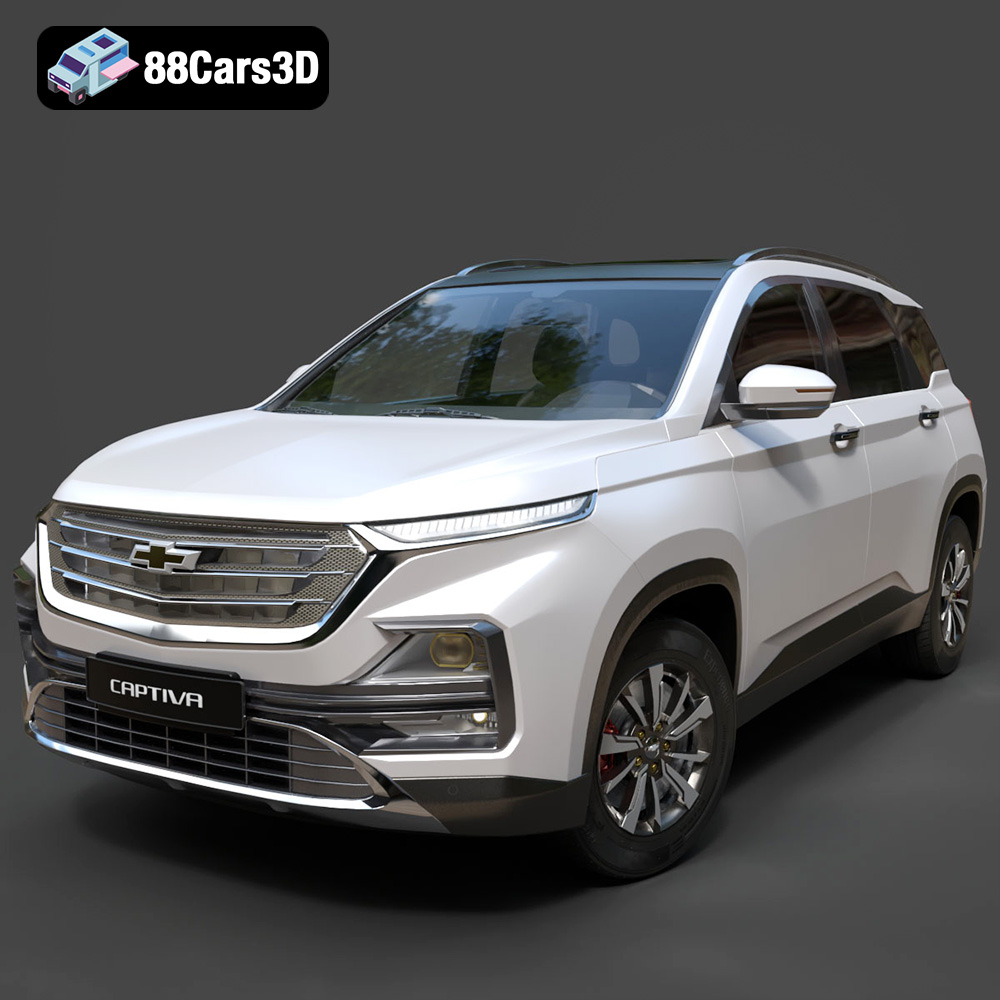
The Chevrolet Captiva Premier 2021, known for its sleek design and family-oriented versatility, is a prime candidate for digital replication. This particular 3D model goes beyond basic representation, offering an asset that is not only visually striking but also engineered for performance across various demanding applications. Whether you’re a game developer aiming for immersive realism, a visualization artist crafting a brand campaign, or an AR/VR innovator building interactive experiences, understanding the nuances of such a complex asset and its supporting file formats is crucial. This article will delve into the technical depths of professional 3D car models, exploring their applications, workflows, and the critical role the right file format plays in achieving digital excellence.
The versatility of a professional 3D car model largely hinges on the range and quality of the file formats it supports. Each format is designed with specific use cases and software ecosystems in mind, offering unique advantages in terms of data preservation, compatibility, and optimization. The Chevrolet Captiva Premier 2021 3D Model exemplifies this comprehensive approach by offering a wide array of formats, ensuring seamless integration into almost any professional pipeline.
The .blend file is the native format for Blender, a powerful open-source 3D creation suite that has gained immense popularity among artists and studios. When you download a .blend file for the Captiva Premier, you’re getting a fully editable Blender scene. This includes not just the mesh geometry but also materials, textures, lighting setups, cameras, animations (if present), and any modifiers or rigging applied to the model. For users who primarily work in Blender, this format offers the most flexibility for customization, allowing for deep modifications, re-texturing, re-lighting, or even re-rigging the vehicle without losing any data fidelity. It’s ideal for those who want to integrate the model into a Blender-centric workflow, leveraging Blender’s robust rendering engines like Cycles or Eevee.
.fbx (Filmbox) is a proprietary file format owned by Autodesk and is widely regarded as an industry standard for exchanging 3D data between different software applications. Its strength lies in its ability to store a comprehensive range of data, including geometry, materials, textures, animations, and skeletal deformation. For game development, particularly with engines like Unreal Engine and Unity, .fbx is often the go-to format. The Captiva Premier 2021 3D Model in .fbx format is perfectly suited for direct import into these engines, preserving hierarchies, pivot points (crucial for wheel rotation and suspension), and basic material assignments, streamlining the transition from 3D software to real-time environments.
.obj (Wavefront OBJ) is one of the oldest and most universally compatible 3D file formats. It primarily stores geometric data – vertices, normals, UV coordinates, and faces – and references external material files (.mtl) for appearance information. While it doesn’t support animations or rigging, its simplicity and widespread support make it an excellent choice for cross-software compatibility. If you need to import the Captiva Premier into an application that might struggle with more complex formats, or if you’re primarily concerned with the pure mesh data for tasks like sculpting or retopology, .obj is a reliable option.
.glb (GL Transmission Format Binary) is a binary version of glTF (GL Transmission Format), designed for efficient transmission and loading of 3D scenes and models by engines and applications. It packages all necessary assets – models, textures, animations – into a single file, making it incredibly convenient for web-based 3D viewers, augmented reality (AR), and virtual reality (VR) applications. Its compact nature and optimization for real-time rendering make the Chevrolet Captiva Premier 2021 3D Model in .glb format ideal for interactive product configurators on websites or showcasing the vehicle in a mobile AR experience.
.stl (Stereolithography) is the de facto standard format for 3D printing. It represents a 3D model as a series of connected triangles, describing only the surface geometry of an object without color, texture, or other attributes. When transforming the Captiva Premier into a physical model, the .stl file ensures that the printer receives a clean, watertight mesh suitable for fabrication. The provided .stl for the Captiva Premier 2021 3D Model is optimized for display-scale hobbyists, with recommendations for resin printing to capture its fine details accurately.
.ply (Polygon File Format) is another format for storing 3D data, particularly useful for scanned data and applications requiring high precision. It can store a variety of properties including color, transparency, normals, texture coordinates, and scalar data. While less common for general animation, .ply is valuable in scientific, CAD, or reverse engineering workflows where precise mesh information and additional vertex attributes are critical. For the Captiva Premier, this format offers a robust data set for advanced analysis or integration into specialized design software.
The inclusion of an .unreal file (or specific Unreal Engine asset package) signifies a model optimized directly for Epic Games’ Unreal Engine. This isn’t a generic exchange format but typically an asset that has been specifically prepared, often with pre-configured materials, collision meshes, LODs (Levels of Detail), and blueprint setups within the Unreal Editor. For the Chevrolet Captiva Premier 2021 3D Model, an .unreal asset streamlines the process of integrating the car into a game or real-time simulation, ensuring it’s battle-tested for the engine’s rendering pipeline and performance requirements, often requiring minimal setup post-import.
Similar to .blend for Blender, the .max file is the native project format for Autodesk 3ds Max, a leading software in architectural visualization, product design, and cinematic rendering. A .max file of the Captiva Premier provides the complete scene, including complex material setups, lighting rigs, camera animations, and modifier stacks unique to 3ds Max. For professional studios heavily invested in the Autodesk ecosystem, this format offers the highest level of control and editability, allowing artists to leverage 3ds Max’s powerful rendering capabilities (like V-Ray or Corona) to produce stunning, photorealistic imagery and animations.
This extensive selection of formats ensures that the Chevrolet Captiva Premier 2021 3D Model from 88cars3d.com isn’t just a static object, but a flexible, adaptable asset ready for any project, across any platform, truly embodying the principles of modern 3D asset development.
Creating a high-quality 3D car model like the Chevrolet Captiva Premier 2021 is a delicate balance between artistic fidelity and technical precision. It involves capturing the intricate design language of the vehicle while ensuring it performs efficiently in various digital environments.
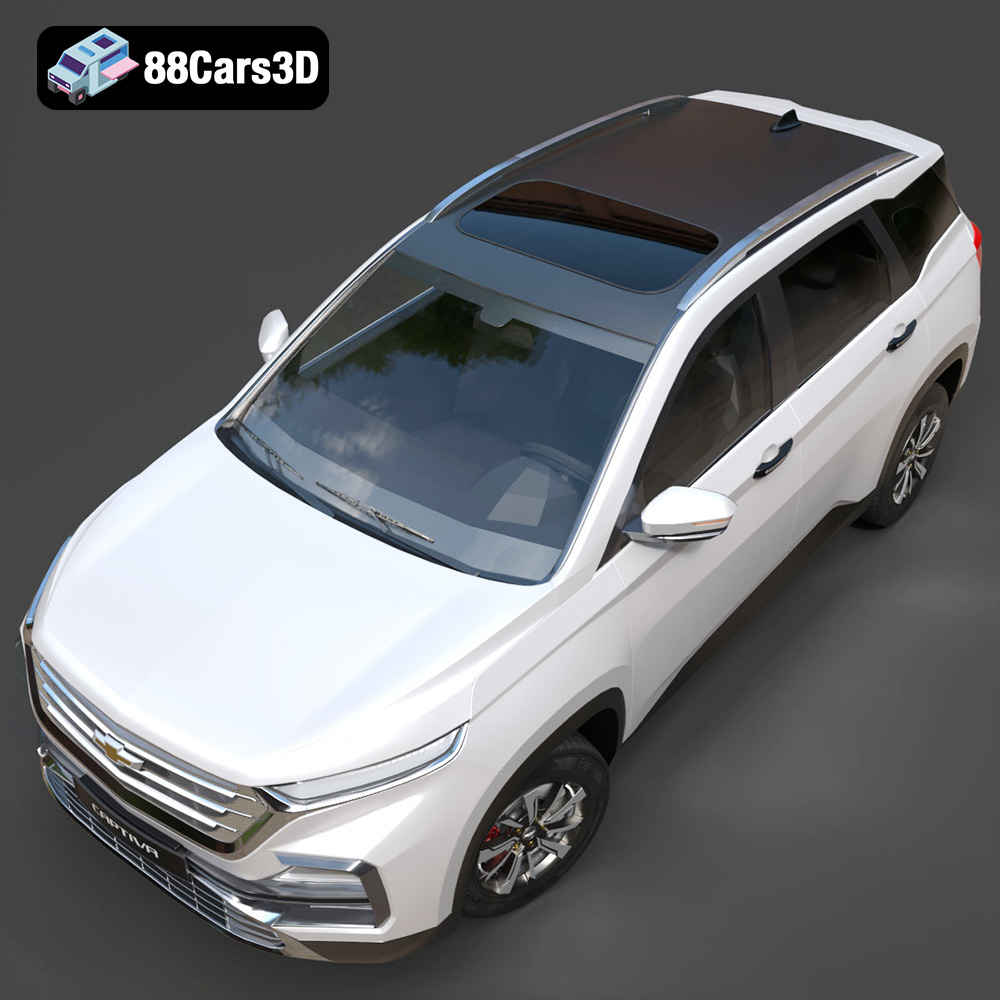
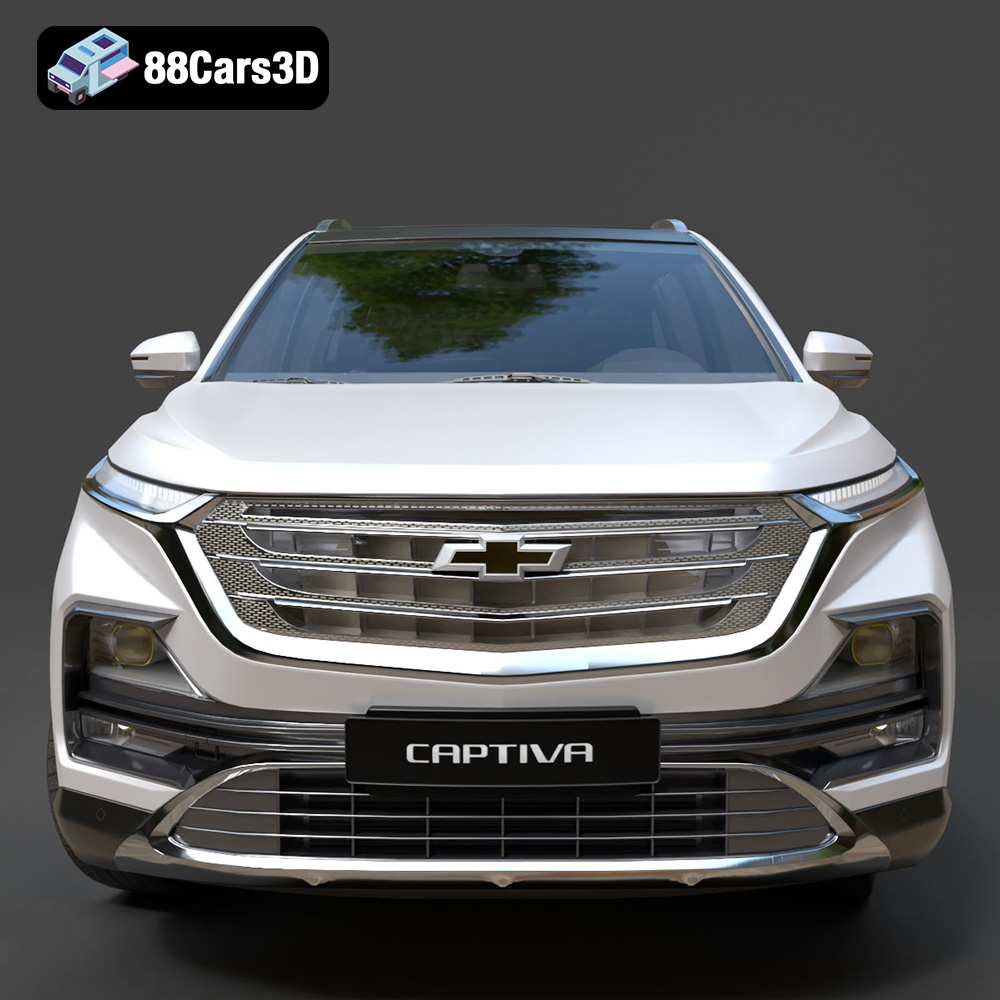
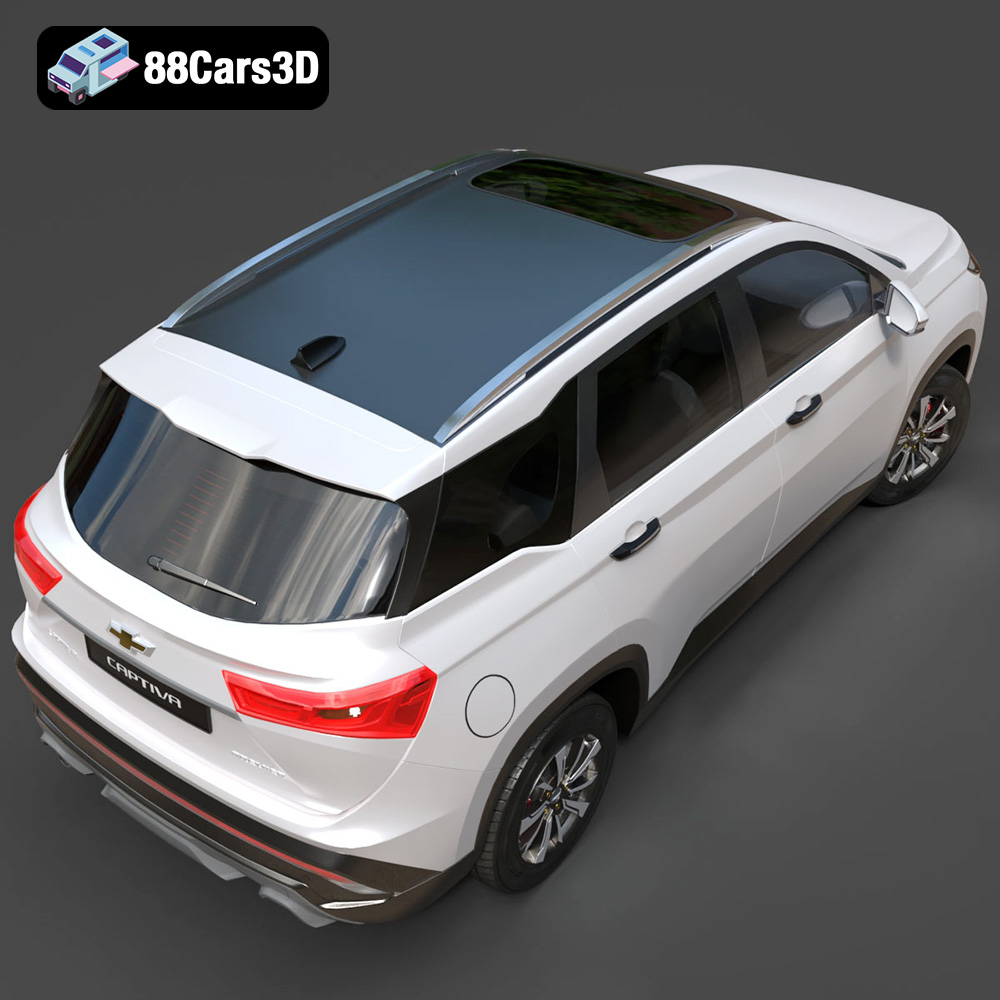
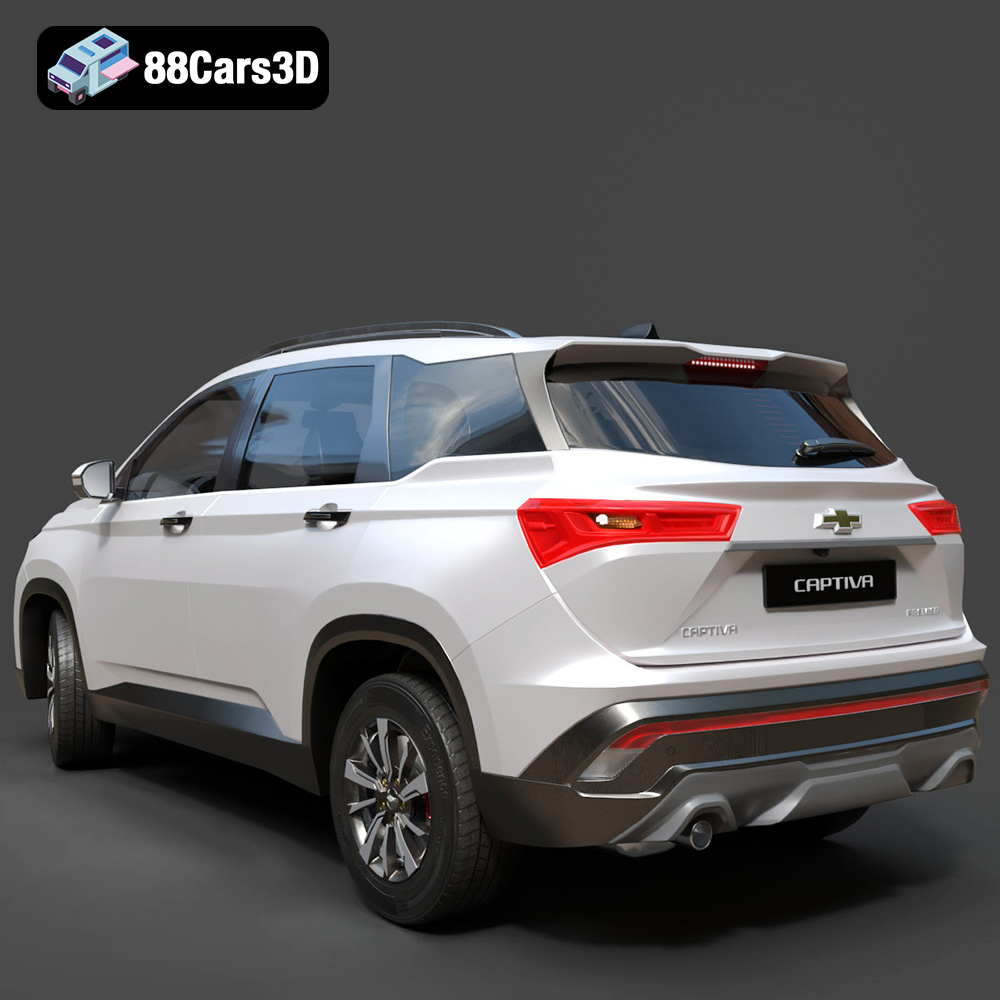
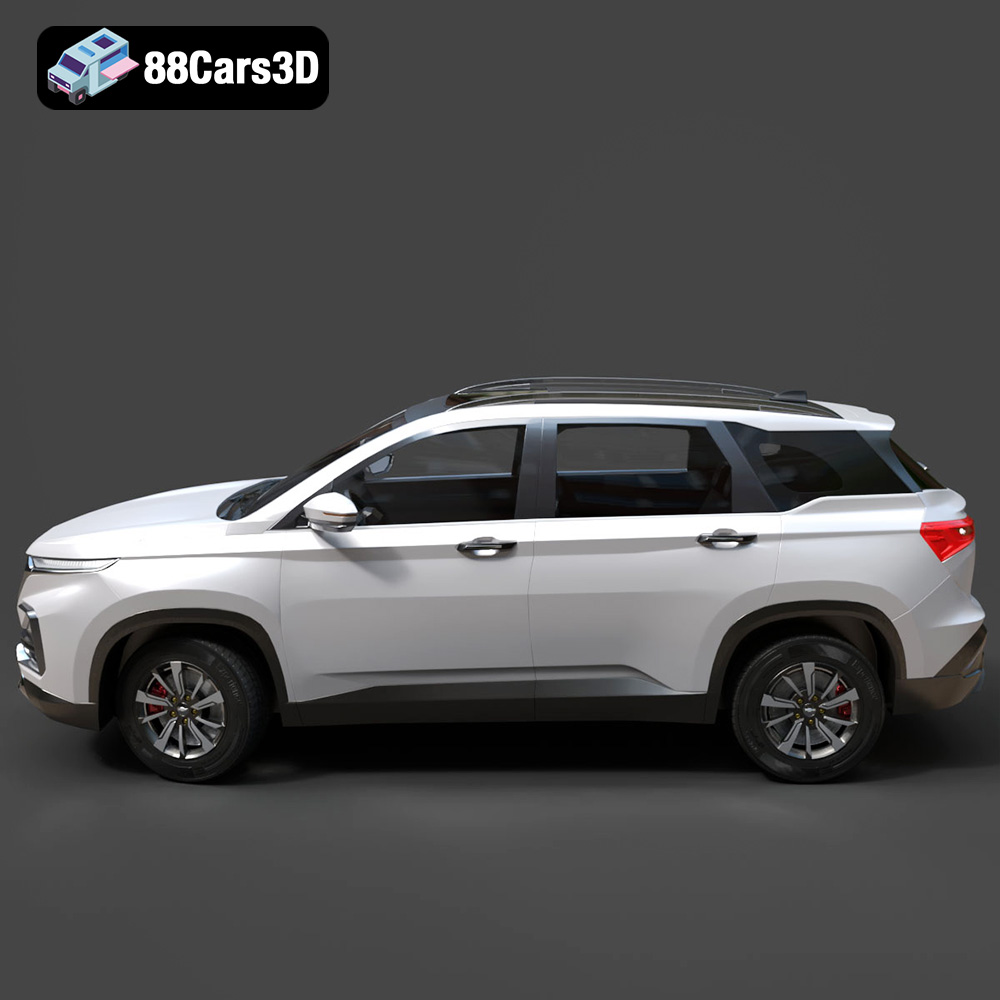
The exterior of any car model is its most recognizable feature, and for the Captiva Premier 2021, its “signature horizontal front grille, sleek LED daytime running lights, and a refined aerodynamic profile” are key. Professional 3D artists painstakingly replicate these details, often working from CAD data, blueprints, and photographic references to achieve absolute accuracy in geometry and proportions. This includes precision-modeled lighting, authentic exhaust systems, chrome accents, and premium alloy wheels with accurate tire tread patterns. The result is a model that is indistinguishable from its real-world counterpart, capable of standing up to close-up renders and detailed scrutiny. The model’s clean mesh structure ensures perfect reflections and smooth shading, which are critical for photorealistic automotive rendering.
Beyond the gleaming exterior, the interior of a vehicle contributes significantly to immersion, especially in gaming and AR/VR applications. The Chevrolet Captiva Premier 2021 3D Model doesn’t cut corners here, featuring “premium seating details with accurate stitching lines, a multifunction steering wheel with precise emblem and controls, detailed digital and analog instrument cluster, and an accurate center console with infotainment screen, climate controls, and gear shifter.” This level of interior detail is crucial for first-person perspectives in games or interactive virtual showrooms, where users might enter and explore the cabin. Such intricate elements require careful modeling and optimized topology to maintain high fidelity without overburdening system resources.
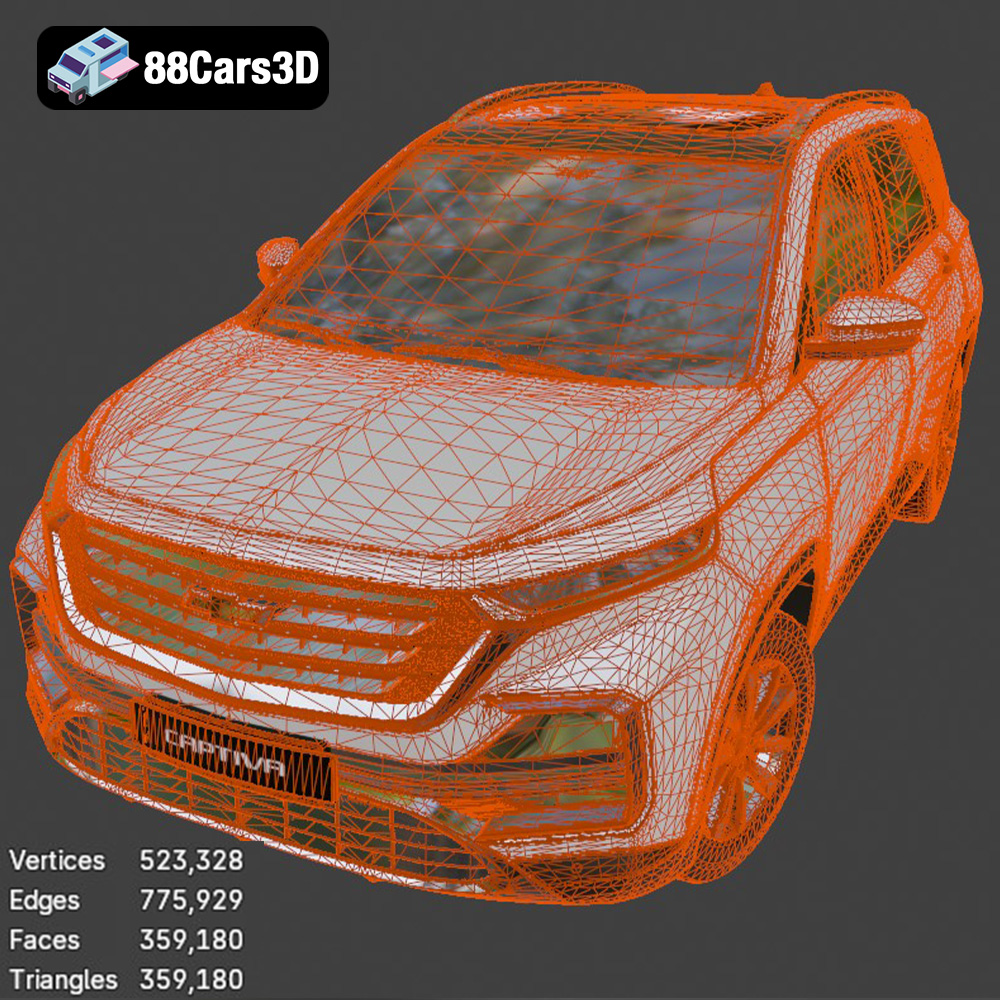
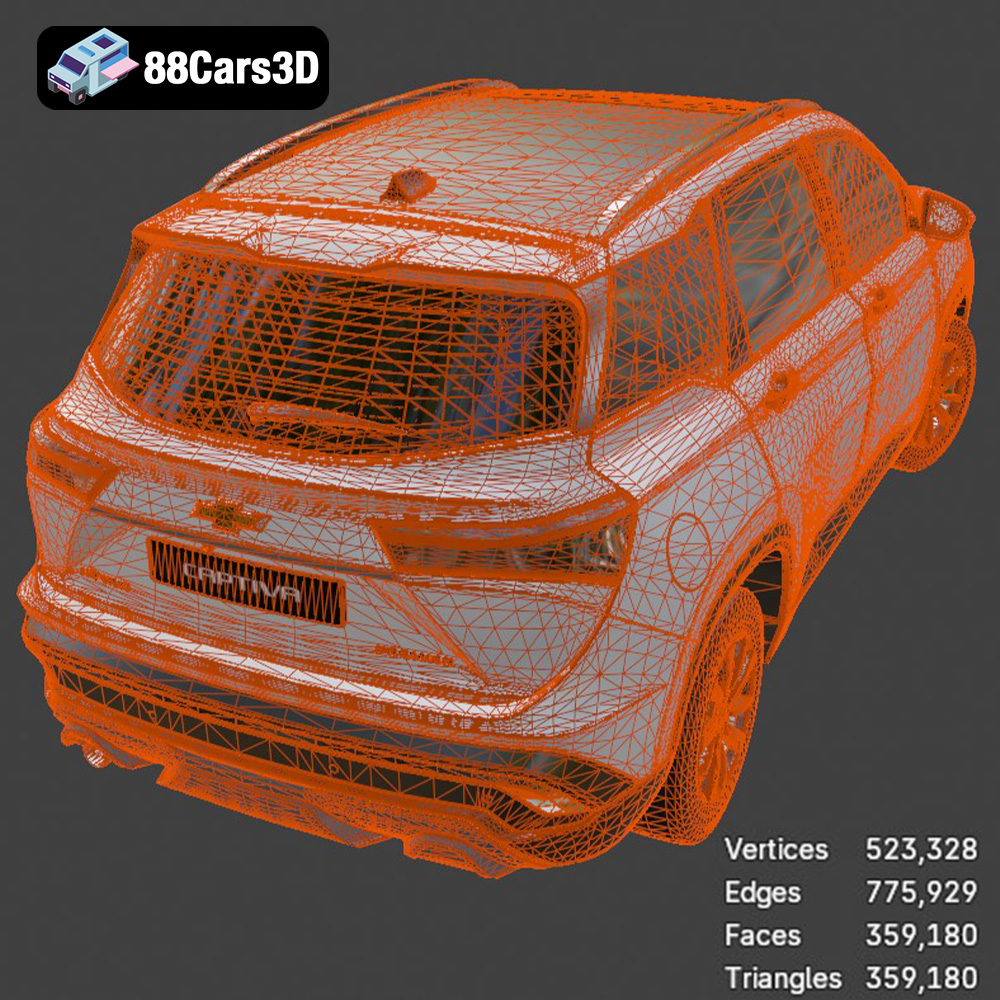
A crucial technical aspect for any professional 3D car model is its topology. The Captiva Premier model boasts an optimized topology of 359,180 triangles. This number is not arbitrary; it strikes a perfect balance between visual fidelity and efficient performance, making it “fully game-ready.” For real-time engines like Unreal and Unity, an optimized polycount is vital to maintain high frame rates. Excessive polygons can cause performance bottlenecks, while too few can compromise visual realism. Furthermore, the mesh structure is “cleanly structured,” meaning it avoids issues like N-gons, non-manifold geometry, or overly stretched polygons, which can lead to shading artifacts or problems during UV unwrapping and texturing. This careful optimization extends to having separate wheels, suspension, and steering components, complete with proper pivot setups, enabling realistic animation of vehicle movement.
High-quality 3D car models are the cornerstone of stunning visualizations and renders. The Chevrolet Captiva Premier 2021 3D Model is engineered to excel in these demanding environments, offering flexibility for artists working across various rendering software.
For many automotive visualization studios, Autodesk 3ds Max remains a dominant tool, often paired with industry-leading renderers like V-Ray or Corona Renderer. The .max file provided with the Captiva Premier allows artists to seamlessly integrate the model into their existing 3ds Max scenes. Here, the emphasis is on crafting compelling studio lighting setups or integrating the vehicle into realistic architectural visualizations. Artists can leverage 3ds Max’s powerful modeling and animation tools to create dynamic shots, while V-Ray or Corona handle the complex global illumination, physically based materials, and advanced light bounces necessary for photorealism. The model’s optimized topology ensures smooth subdivision for high-resolution renders, and its accurate real-world scale makes it easy to position within existing scenes, whether it’s an urban street or a luxury showroom.
Blender has emerged as a powerhouse for 3D artists, offering an open-source alternative that competes with commercial software. With its powerful Cycles and real-time Eevee renderers, Blender users can produce incredible results. The .blend file for the Captiva Premier is a complete scene, ready for artists to experiment with different lighting scenarios, material adjustments, and even custom animations within Blender. Cycles, being a physically based path tracer, excels at producing unbiased, photorealistic imagery, perfect for marketing renders or detailed concept art. Eevee, on the other hand, offers real-time rendering capabilities, allowing for rapid iteration and pre-visualization, ideal for animatics or quick showcases. The model’s clean UVs and well-defined material slots facilitate easy application of new PBR (Physically Based Rendering) textures and shaders, allowing for endless customization of body colors, tire textures, and material finishes.
Consider a major automotive brand launching a new vehicle. Instead of costly physical photography shoots for every angle and color variant, they can utilize a high-fidelity 3D model like the Captiva Premier. This model can be rendered in countless environments – from sleek studio shots to dynamic urban settings – with different paint finishes and interior trims, all without moving a single physical car. Online car configurators, allowing potential buyers to customize their vehicle in real-time, also heavily rely on such optimized 3D assets. Furthermore, in architectural visualization, the presence of a realistic car model can dramatically enhance the perceived realism of a building render, adding a sense of scale, context, and lifestyle to the scene. The versatility of the Chevrolet Captiva Premier 2021 3D Model makes it an ideal choice for these high-stakes applications.
In the world of interactive experiences, the performance and fidelity of 3D assets are paramount. The Chevrolet Captiva Premier 2021 3D Model is meticulously designed to meet the rigorous demands of game development and other real-time applications.
Unreal Engine, known for its stunning visuals and robust toolset, is a prime target for high-quality game assets. The inclusion of an .unreal file or a well-prepared .fbx file for the Captiva Premier signifies its readiness for this powerful engine. Developers can import the model directly, benefiting from its optimized polycount of 359,180 triangles, which ensures smooth frame rates even in complex scenes. The separation of wheels, suspension, and steering components, coupled with proper pivot setups, means that implementing realistic vehicle physics and animations is straightforward. Developers can build upon this foundation to create intricate blueprint systems for driving mechanics, damage models, and interactive features. This game-ready asset significantly reduces development time, allowing teams to focus on gameplay and immersive world-building rather than basic asset preparation.
Unity is another widely adopted game engine, particularly favored for mobile games and indie titles due to its accessibility and cross-platform capabilities. The .fbx and .glb formats provided for the Captiva Premier are highly compatible with Unity. For mobile applications or VR experiences where performance is even more critical, developers can implement Level of Detail (LOD) systems, generating lower-poly versions of the model that swap in as the camera moves further away. While the Captiva Premier’s base polycount is optimized, further LODs can push performance even further. The model’s clean topology and efficient material setup also contribute to faster rendering and reduced draw calls in Unity, ensuring a smooth experience even on less powerful hardware.
Beyond traditional video games, high-fidelity car models are essential for a new generation of immersive experiences. Driving simulators, used for training, research, or entertainment, demand highly realistic vehicle models that behave accurately. The Captiva Premier, with its precise real-world scale and animatable components, provides an excellent foundation for such simulators. In Augmented Reality (AR) and Virtual Reality (VR), models must be highly optimized and visually convincing to maintain immersion. The .glb format is particularly beneficial here, allowing the Captiva Premier to be easily deployed in mobile AR apps or interactive VR showrooms. Imagine a potential customer exploring the Captiva Premier in their driveway via AR, or taking a virtual test drive in a VR headset – such experiences are powered by assets like this.
The utility of a comprehensive 3D car model extends far beyond rendering and game engines, venturing into tactile and highly interactive domains like augmented reality, virtual reality, and physical 3D printing.
Augmented Reality (AR) and Virtual Reality (VR) are revolutionizing how we interact with products and environments. For the automotive industry, these technologies offer unprecedented opportunities for marketing, sales, and interactive showcases. The Chevrolet Captiva Premier 2021 3D Model is perfectly suited for these immersive applications. Its optimized geometry and clean topology ensure smooth performance in real-time AR/VR environments. The .glb format, specifically designed for web-based 3D, AR, and VR, makes it incredibly easy to integrate the Captiva Premier into web-based configurators or mobile AR apps. Imagine a customer using their smartphone to project a life-size Captiva Premier into their driveway, exploring its interior, changing colors, and inspecting details before visiting a dealership. Or, in a VR showroom, experiencing a fully interactive tour of the vehicle, sitting inside, and testing features. These applications demand realistic, well-optimized 3D car models to deliver truly compelling experiences.
The ability to transform a digital 3D model into a physical object via 3D printing opens up exciting possibilities for collectors, hobbyists, and designers. The Chevrolet Captiva Premier 2021 3D Model includes an .stl file, which is the standard format for 3D printing. This means enthusiasts can download the model and print their own scaled replica of the Captiva Premier. The provided 3D print settings are critical for success:
This attention to 3D printing specifics highlights the comprehensive nature of the asset, demonstrating its value not just in digital realms but also for tangible, physical creations.
The journey through the intricate world of 3D car models reveals a profound truth: a truly valuable asset is one that marries aesthetic perfection with technical robustness. The Chevrolet Captiva Premier 2021 3D Model stands as a prime example of this philosophy, offering a meticulously crafted vehicle that is ready to be integrated into virtually any professional workflow. From its accurate exterior and detailed interior to its optimized topology and extensive file format support, every aspect has been considered to empower artists and developers.
Whether your project demands photorealistic renders for a high-stakes marketing campaign, game-ready assets for an immersive driving simulator, interactive models for cutting-edge AR/VR experiences, or even a physical replica through 3D printing, this Captiva Premier model delivers. Its comprehensive technical specifications, including the balanced polycount and proper pivot setups, ensure peak performance and flexibility across major software platforms like Blender, 3ds Max, Unreal Engine, and Unity.
For studios and individual creators seeking to elevate their projects with premium 3D assets, marketplaces like 88cars3d.com provide a curated selection of models that meet these exacting standards. Investing in a high-quality 3D car model like the Chevrolet Captiva Premier 2021 isn’t just about acquiring a digital object; it’s about gaining a versatile tool that saves time, enhances realism, and unlocks new creative possibilities across the entire spectrum of digital media production. It’s about driving digital excellence, one perfectly rendered polygon at a time.
Experience the modern versatility and striking design of the Chevrolet Captiva Premier 2021 with this highly accurate 3D model. Known for its spacious family-oriented design and bold contemporary aesthetics, the Captiva Premier trim boasts a signature horizontal front grille, sleek LED daytime running lights, and a refined aerodynamic profile. Every detail of this popular SUV’s exterior styling has been meticulously captured, making it a standout asset for any digital environment. With a beautifully optimized topology of 359,180 triangles, this 3D model delivers exceptional visual fidelity while maintaining efficient performance for real-time applications. The mesh is cleanly structured to ensure perfect reflections and smooth shading. It is fully game-ready and ideally suited for high-end rendering, game development, augmented and virtual reality, and cinematic animations. Perfect for urban driving simulations, virtual car showrooms, architectural visualizations, and lifestyle marketing renders.
$35.99
.2021
.blend
.chevrolet
.fbx
.glb
.max
.obj
.ply
.rendering
.stl
.unreal
captiva-premier
car-3d-model
family-suv
game asset
game-ready
low-poly
optimized
SUV
VR/AR