Get 20% OFF All Premium 3D & STL Models!

Few vehicles command the immediate respect and admiration quite like the Ford Cobra. It’s more than just a car; it’s a raw, visceral experience, a testament to American engineering prowess, and an icon of the 1960s. With its aggressive stance, flared fenders, roaring V8, and unmistakable side-exit exhausts, the Cobra embodies pure, unadulterated muscle and racing heritage. This legendary status extends far beyond the asphalt, reaching into the digital realms of automotive rendering, game development, and virtual reality. Capturing the essence of such a machine in a 3D model requires meticulous attention to detail, technical precision, and a deep understanding of how these digital assets will be utilized across diverse platforms.
For designers, animators, and game developers, the availability of a high-fidelity 3D model of the Ford Cobra is a game-changer. It unlocks countless creative possibilities, from photorealistic visualizations to immersive virtual experiences. Imagine recreating historical races, designing custom car configurators, or integrating this classic into an open-world game. This is precisely where a carefully crafted asset like the Ford Cobra 3D Model from 88cars3d.com truly shines. It provides a foundation of authenticity and technical excellence, ready to be dropped into your next project and ignite the engines of your imagination.
The digital landscape of 3D modeling is vast, and knowing which file format to use for your specific project is crucial for efficiency and successful integration. Different formats are optimized for different purposes, ranging from real-time game engines to high-fidelity rendering or even 3D printing. The Ford Cobra 3D Model comes with a comprehensive suite of file formats, ensuring maximum compatibility and versatility for any professional workflow. Let’s break down these essential formats:
The .blend file format is the native format for Blender, a powerful and popular open-source 3D creation suite. When you download a .blend file, you’re getting a complete Blender scene, often including cameras, lighting, materials, and even animations if present. This format is ideal for users who primarily work in Blender and want full editability. It allows direct access to the model’s modifiers, UV maps, material nodes, and object hierarchy, making it perfect for custom modifications, rendering within Blender’s Cycles or Eevee, or setting up complex scene interactions. The .blend file for the Ford Cobra 3D Model would provide an excellent starting point for any Blender enthusiast or studio.
Autodesk’s .fbx (Filmbox) format is arguably the most widely adopted interchange format in the 3D industry, especially for animation and game development. Its strength lies in its ability to store not just mesh data, but also animation, cameras, lights, and materials in a single file. This makes .fbx incredibly versatile for transferring assets between different software applications like 3ds Max, Maya, Blender, and directly into real-time engines such as Unreal Engine and Unity. For the Ford Cobra, an .fbx file is perfect for importing into game development pipelines, ensuring proper pivot points for wheels and steering, and maintaining animation data for realistic car simulations.
The .obj (Wavefront OBJ) format is a venerable and highly compatible format primarily used for storing 3D geometry data. It’s a text-based format that defines vertices, normals, UV coordinates, and faces. While it doesn’t typically store animation or rigging information, its simplicity and widespread support make it a universal choice for cross-software compatibility. If you need a clean mesh to bring into almost any 3D application for modeling, texturing, or static rendering, .obj is an excellent choice. The Ford Cobra .obj file would be a reliable base for artists needing raw mesh data for custom material setups in various renderers.
.glb (GL Transmission Format Binary) is the binary version of glTF, a royalty-free specification for the efficient transmission and loading of 3D scenes and models by applications. It’s often referred to as the “JPEG for 3D” due to its efficiency and compact size. .glb is particularly optimized for AR (Augmented Reality), VR (Virtual Reality), and browser-based display, making it perfect for virtual showrooms, interactive web experiences, and mobile applications. Its single-file packaging (containing geometry, materials, textures, and animation) simplifies distribution. For showcasing the Ford Cobra in a web configurator or an AR app, the .glb format is indispensable.
The .stl (Stereolithography) format is the de facto standard for 3D printing. It represents a 3D model as a collection of unconnected triangular facets, defining only the surface geometry without color, texture, or other attributes. While not ideal for rendering, its simplicity makes it universally compatible with 3D printers and slicing software. The Ford Cobra .stl file allows hobbyists and professionals alike to bring this classic muscle car into the physical world, printing detailed scale models as desktop displays or components for larger projects.
The .ply (Polygon File Format or Stanford Triangle Format) is another format for storing 3D data, often used for scanned 3D objects, CAD, or scientific visualization. It can store a wider range of properties than .obj, including color, transparency, normals, texture coordinates, and even reliability information for each vertex. While less common for general artistic asset exchange compared to .fbx or .obj, its precision and ability to handle complex data make it valuable for specific analytical or manufacturing workflows where the Ford Cobra’s geometry might be utilized.
The .unreal file format, or more accurately, an optimized asset package for Unreal Engine, signifies that the model is prepared for direct import and use within Unreal Engine. This typically means the mesh has been correctly scaled, UV mapped, and potentially includes basic material setups optimized for Unreal’s Physically Based Rendering (PBR) pipeline. While not a standalone file extension in the traditional sense, its inclusion implies that the Ford Cobra model has undergone the necessary preparation steps to seamlessly integrate into Unreal projects, saving developers significant time on asset preparation and optimization.
The .max file is the native format for Autodesk 3ds Max, a powerful 3D modeling, animation, rendering, and compositing software. Similar to a .blend file for Blender, a .max file contains the complete scene data, including all geometry, textures, lighting, cameras, animation, and scene settings. This format offers full editability within 3ds Max, allowing artists to modify the model, refine materials, set up complex render passes, or integrate it into larger architectural or cinematic visualizations. For 3ds Max users, the Ford Cobra .max file provides the most comprehensive and flexible starting point.
Creating a truly exceptional 3D car model, especially one as iconic as the Ford Cobra, involves a delicate balance of artistic fidelity and technical precision. It’s not just about replicating the shape; it’s about capturing its soul in a digital form that performs flawlessly across various applications.
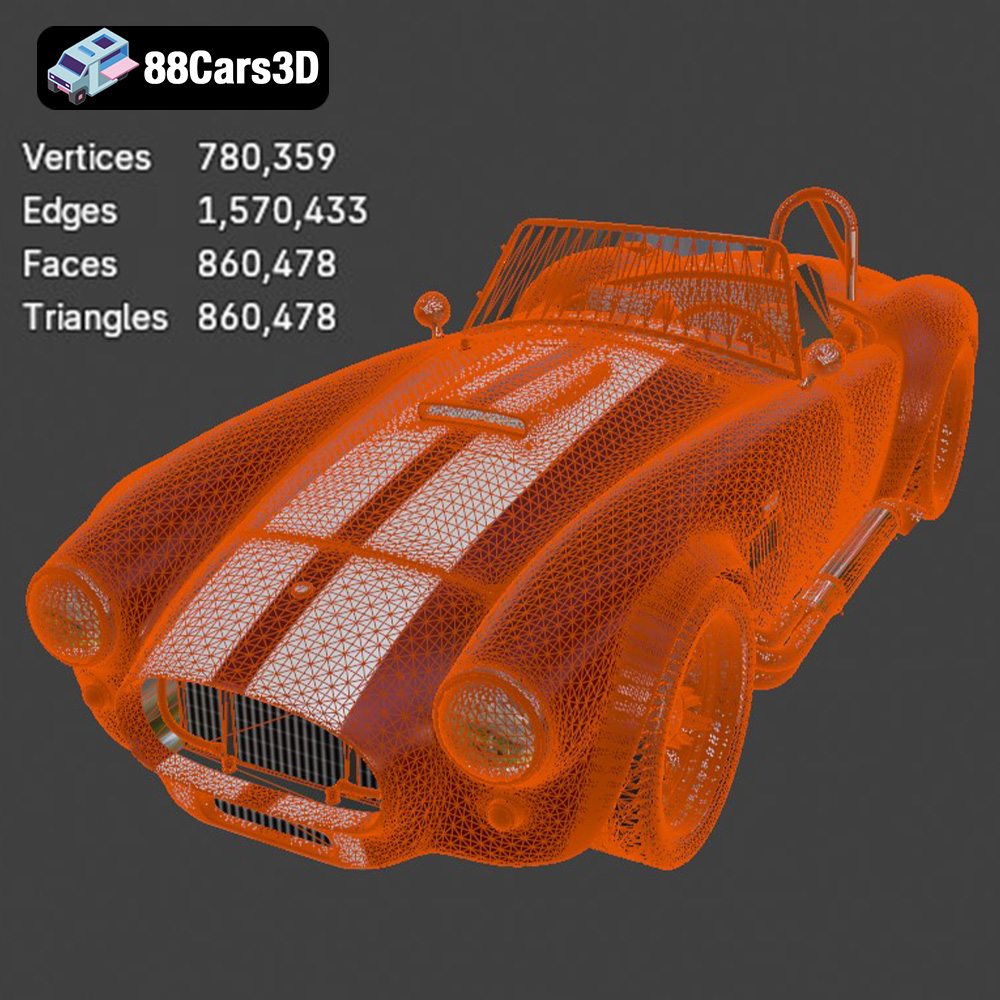
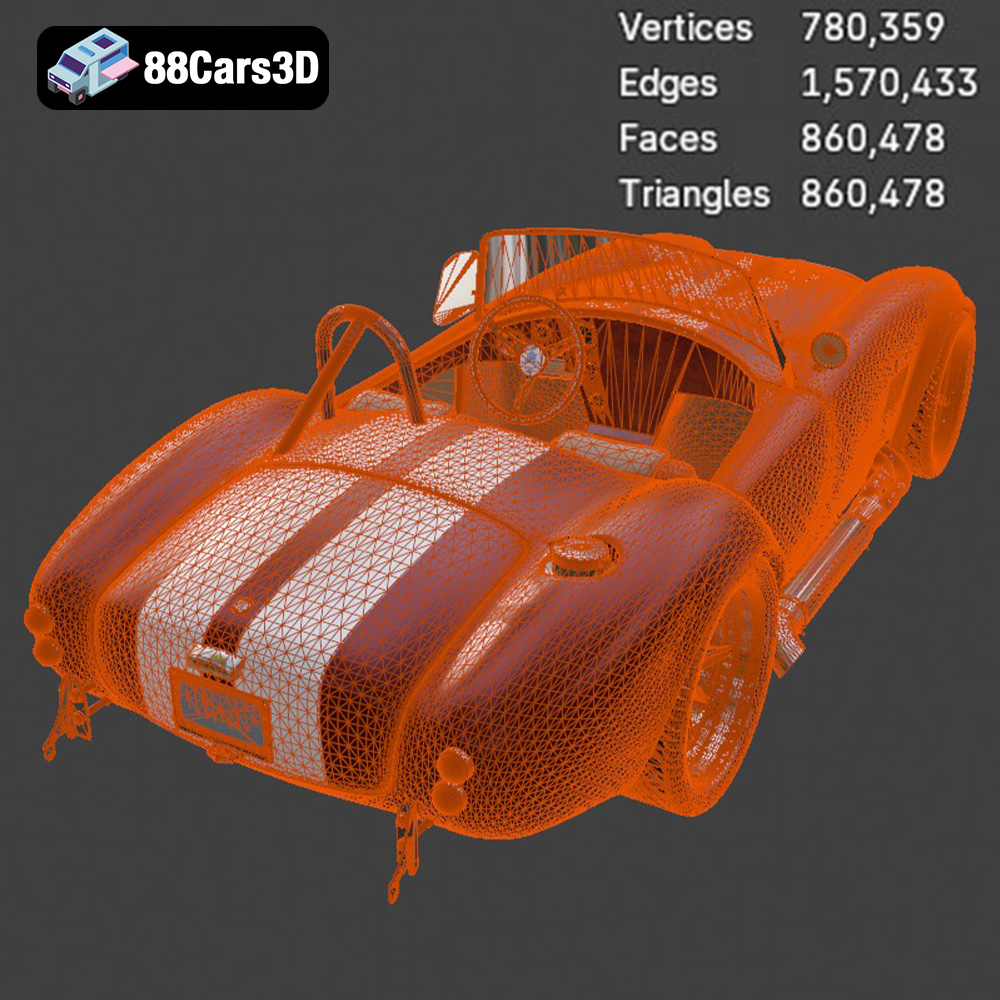
The backbone of any robust 3D model is its topology. The Ford Cobra 3D Model boasts a highly detailed topology with 860,478 triangles. This figure represents a sweet spot: it’s high enough to ensure stunning visual fidelity, capturing every curve, vent, and panel gap with accuracy, yet it remains optimized for real-time environments. In game development, this “game-ready” optimization means developers can integrate the model without excessive performance overhead, delivering a smooth experience. For high-end rendering, the detailed mesh ensures clean subdivisions and reflections, crucial for photorealistic results.
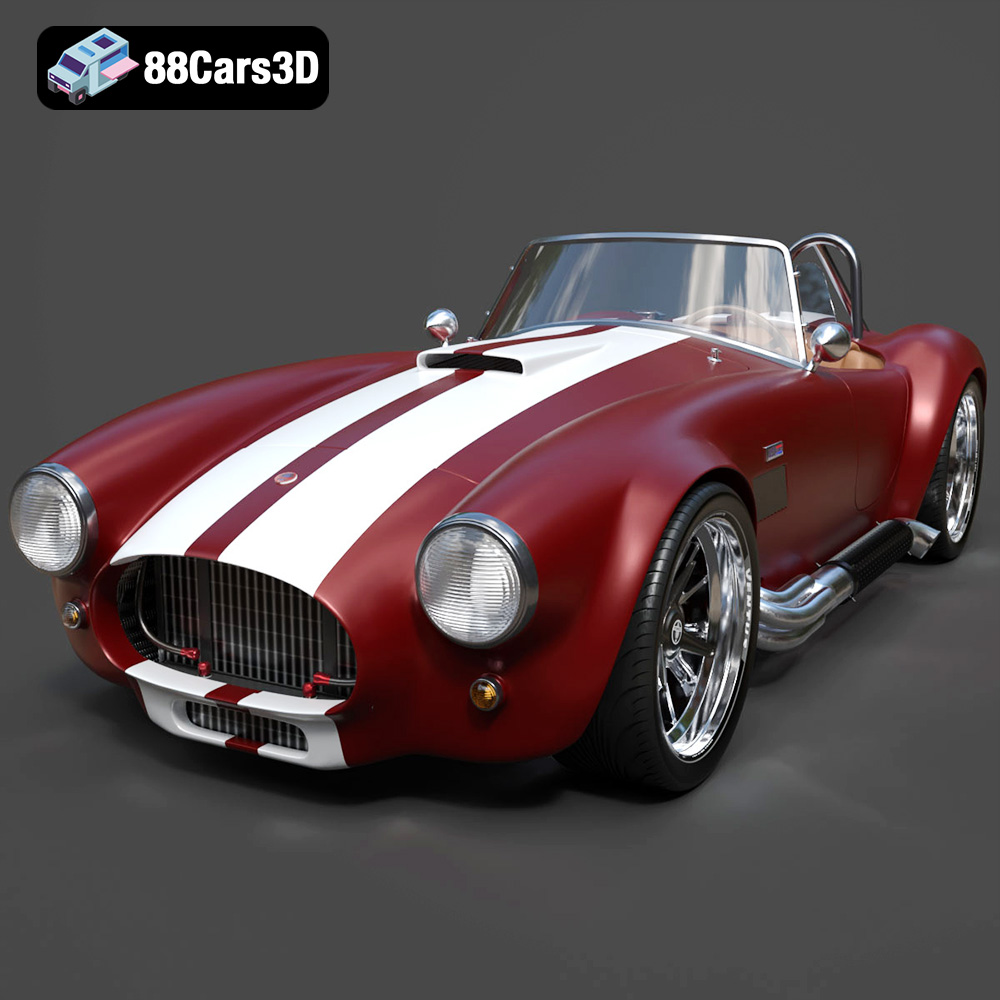
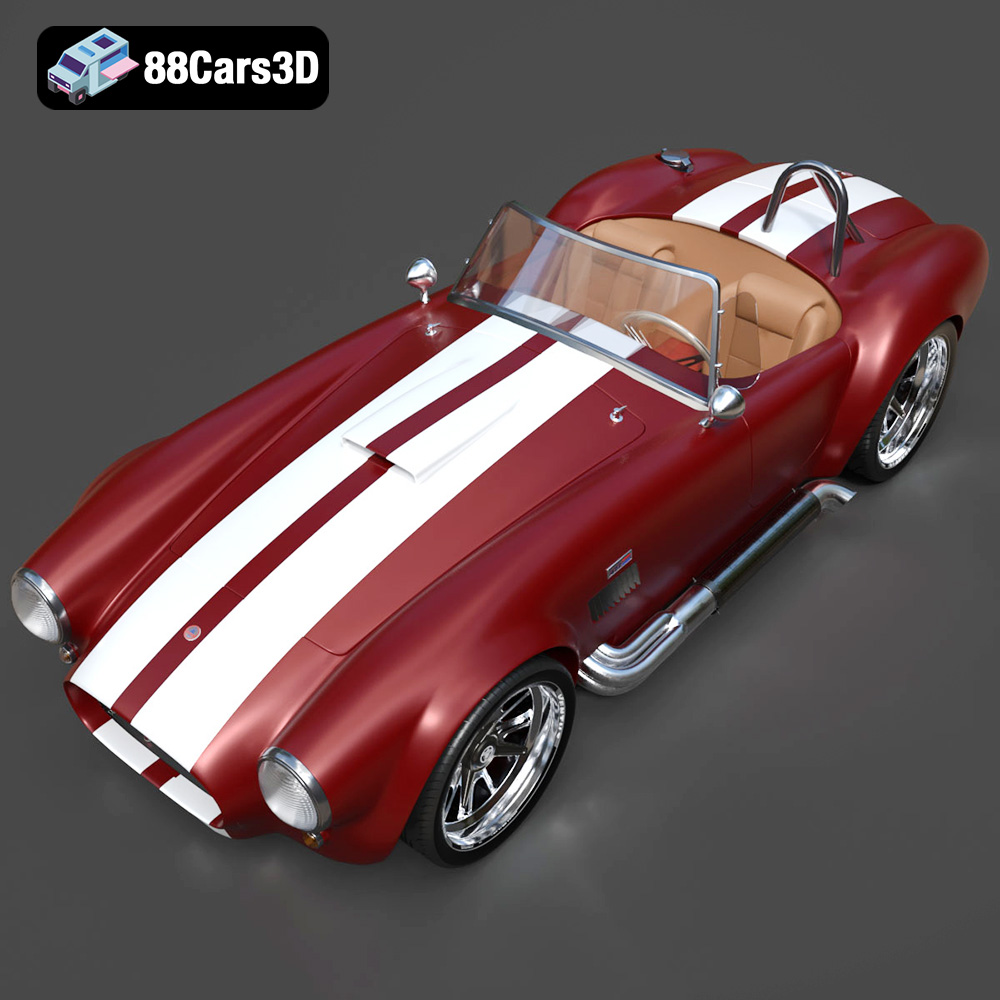
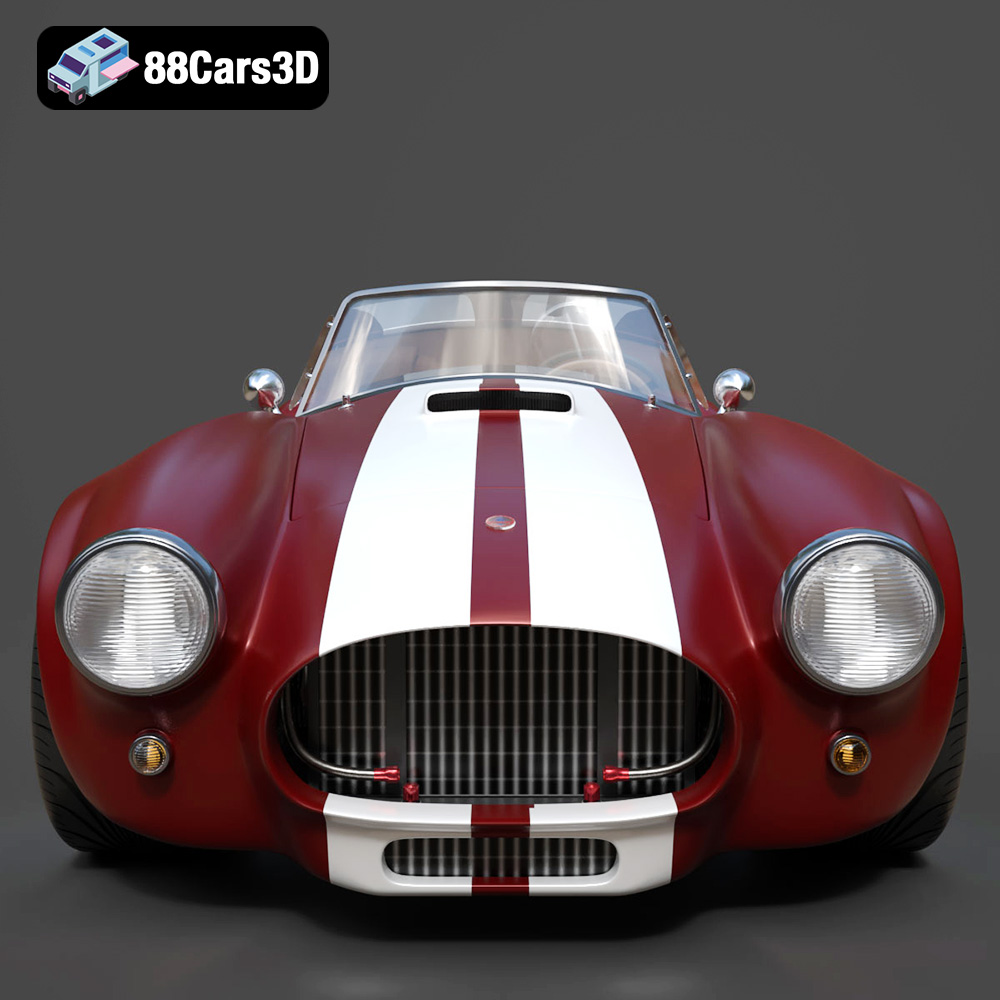
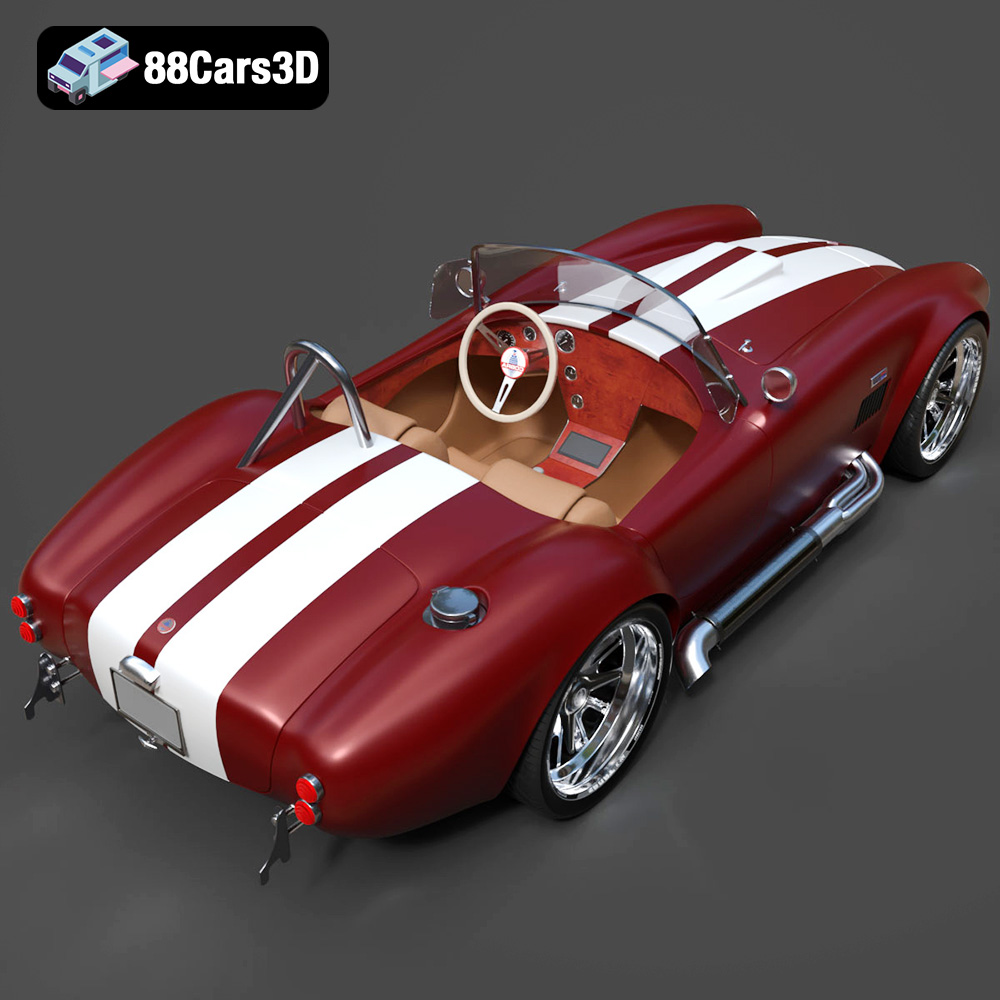
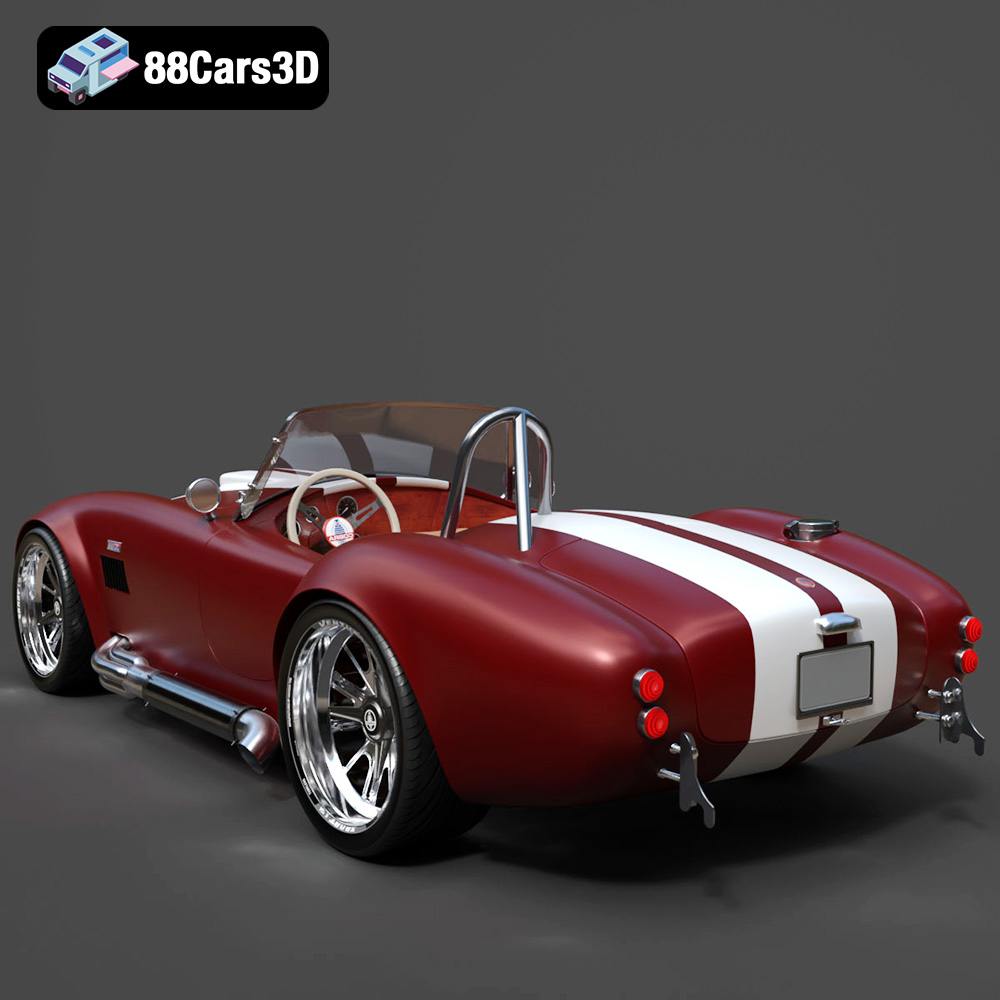
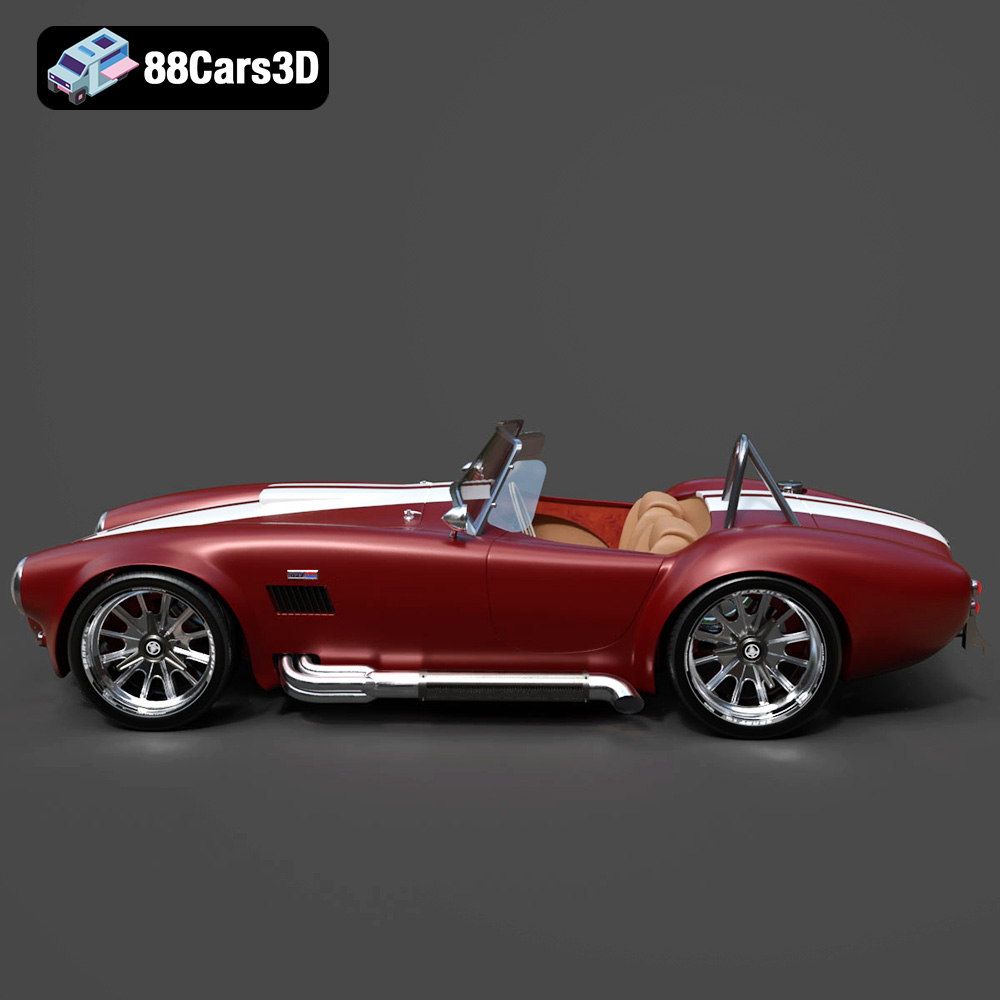
The accuracy of the Ford Cobra 3D Model extends to every component. The exterior features the accurate Ford Cobra frame geometry, the iconic flared bodywork, and the signature chrome side-exit exhaust system. Crucially, the V8 engine block with prominent air cleaners is detailed, allowing for engine bay showcases. The inclusion of classic round headlights, vintage taillight assemblies, authentic knock-off style wheels, and wide performance tires further elevates the realism. Even the suspension and undercarriage components are meticulously modeled, catering to close-up shots or transparent chassis views.
The interior is equally compelling, designed for both aesthetic appeal and functionality. Vintage leather-textured bucket seats, a classic wood-rimmed steering wheel, and a period-correct analog instrument cluster create an immersive cockpit. Authentic control details, including pedals, the gear shifter, and dashboard switches, ensure that the model is ready for first-person POV in gaming or virtual reality experiences. This level of detail is essential for creating truly believable and engaging automotive scenes.
A fundamental requirement for professional 3D car models is adherence to real-world scale accuracy. The Ford Cobra model is built to actual vehicle chassis dimensions, guaranteeing that it fits seamlessly into any scene without requiring scale adjustments. Furthermore, the model is engineered with proper pivot setups for steering, wheel rotation, and suspension travel. This means animators can easily rig and animate the car’s movements, from driving sequences to complex interactive simulations, providing a dynamic and lifelike experience.
The true value of a versatile 3D asset lies in its seamless integration into various professional pipelines. Whether you’re a seasoned artist in an animation studio, a developer crafting the next big racing game, or a visualization specialist, the Ford Cobra 3D Model is designed to accelerate your workflow.
For game developers, the Ford Cobra 3D Model is an exceptional asset, particularly with its “.unreal” optimized format and careful polygon count. Importing into Unreal Engine is typically a straightforward process using the .fbx file. Once imported, the model’s clean UVs allow for easy application of PBR (Physically Based Rendering) materials. Developers can quickly set up advanced car shaders, leveraging Unreal’s material editor to achieve stunning metallic paint, realistic tire rubber, and detailed interior textures. The pre-set pivot points for wheels and steering significantly cut down on rigging time, allowing for rapid implementation into driving mechanics or cinematic sequences. Imagine this classic roaring through a meticulously crafted virtual environment, its detailed suspension reacting to every bump and turn.
In the realm of high-end architectural visualization and automotive rendering, 3ds Max remains a powerhouse. The .max file provided with the Ford Cobra 3D Model offers complete flexibility. Artists can load the model, apply sophisticated V-Ray or Corona Renderer materials, utilizing advanced shading networks for flawless reflections, paint flakes, and accurate light interaction. The detailed interior and exterior allow for extreme close-ups without loss of fidelity, perfect for marketing campaigns, studio shots, or configurator renders. The separate components, like wheels and suspension, enable precise animation for turntable renders or dynamic action shots, showcasing the car’s mechanics in exquisite detail.
Blender users will appreciate the native .blend file, which provides an unencumbered starting point within their preferred software. Artists can dive straight into customizing materials using Blender’s node-based shader editor, experimenting with Cycles for photorealistic renders or Eevee for real-time visualization. The model’s clean geometry is ideal for further sculpting, adding custom accessories, or integrating it into complex scene compositions. From creating captivating product shots to dynamic chase scenes, the Ford Cobra in Blender offers immense creative freedom, allowing artists to fully realize their vision.
The utility of a high-quality 3D car model extends far beyond simple imagery. It serves as a foundational asset for innovative technologies and diverse industries, driving engagement and pushing creative boundaries. The Ford Cobra 3D Model from 88cars3d.com is specifically designed with these varied applications in mind.
One of the most apparent applications for a detailed vehicle model like the Ford Cobra is in game development. Its optimized polycount (860,478 triangles) makes it ideal for racing titles, open-world games, and dedicated simulators. Developers can leverage its accurate real-world scale and animatable components to create incredibly immersive driving experiences. Imagine an historical racing game where players can customize and drive this legendary machine, or an adventure title where the Cobra is a key part of the narrative. The “game-ready” nature significantly reduces the time and resources required for asset preparation, allowing studios to focus on gameplay and user experience.
Augmented Reality (AR) and Virtual Reality (VR) are transforming how consumers interact with products. The .glb format, included with the Ford Cobra model, is perfectly suited for these immersive environments. Businesses can create virtual showrooms where customers can walk around, inspect, and even “sit inside” the Cobra from their homes. AR applications can project the car onto a real-world driveway, allowing users to visualize its scale and presence. Interactive configurators can let users change body colors, wheel types, and interior finishes in real-time, providing a powerful sales and marketing tool. For classic car dealerships or automotive museums, this offers an unparalleled way to showcase their prized possessions.
The inclusion of the .stl file format opens up exciting possibilities for 3D printing. Hobbyists, collectors, and model makers can convert the Ford Cobra 3D Model into a tangible object, scaling it to their desired size (recommended 1:12 / 1:18 / 1:24) and bringing it to life with paint and detailing. Resin printing is recommended for capturing the intricate features like the side-exit exhausts and engine details. This application bridges the gap between the digital and physical worlds, offering a unique way to own a piece of automotive history, even if only in miniature form. Customization options, such as changing body colors or finishes, translate directly to physical post-processing, making each printed model a unique creation.
For advertising agencies, film productions, and automotive brands, the Ford Cobra 3D Model is an invaluable asset for cinematic animations and high-impact visual campaigns. Its high fidelity allows for breathtaking renders in any environment, from sleek studio setups to dramatic outdoor scenes. Animators can craft dynamic commercials, showcasing the Cobra’s power and elegance without the logistical complexities and costs of real-world shoots. The ability to control every aspect of the digital model – lighting, camera angles, materials, and environment – offers unparalleled creative control, ensuring the final visual narrative perfectly aligns with brand messaging.
The journey of creating a high-quality 3D car model involves constant decisions about optimizing for both performance and visual detail. This balancing act is crucial for ensuring the asset is versatile and practical across different platforms and applications. The Ford Cobra 3D Model exemplifies this careful consideration.
As mentioned, the 860,478 triangles (polygons) of the Ford Cobra model represent a meticulously chosen polycount. Too few polygons, and the model loses its smooth curves and intricate details, appearing blocky. Too many, and it becomes a performance drain, especially in real-time engines. This specific count allows for realistic reflections on the bodywork, sharp edges on the interior components, and visible engine detail, while still being manageable for game engines like Unreal and Unity. The ability to maintain this high visual fidelity without crippling performance is a hallmark of professional-grade 3D car models.
Beyond the mesh, the quality of textures and material setup plays a pivotal role. While not explicitly detailed in the product description, the phrase “game-ready optimization” implies well-laid out UVs and efficient texture atlases. PBR workflows, standard in modern rendering and game development, require carefully crafted albedo, normal, roughness, metallic, and ambient occlusion maps. A well-optimized model minimizes texture calls and memory usage, ensuring snappy performance in interactive applications while delivering stunning visual realism in static renders. The detailed cockpit features, such as vintage leather textures and wood-rimmed steering wheel, suggest a robust material pipeline was employed.
The “proper pivot setup for steering, wheel rotation, and suspension travel” is a key technical advantage. This attention to detail simplifies the animation process tremendously. Instead of manually adjusting pivots and hierarchies, animators can immediately begin defining wheel rotations, steering inputs, and suspension compression/extension. This not only saves valuable production time but also ensures physically accurate movement for simulations and cinematic sequences, enhancing the overall believability of the Ford Cobra in motion.
A static, uneditable 3D model, no matter how detailed, limits creative potential. The Ford Cobra 3D Model empowers artists and developers with extensive customization options, ensuring it can be adapted to any creative vision or project requirement.
The ability to “change body/tank colors” is fundamental. Artists can easily apply classic factory colors, experiment with custom finishes like matte or metallic, or recreate iconic racing liveries with stripes and decals. This flexibility extends to modifying tire textures – switching between sleek street variants and rugged off-road styles, if desired. Adjusting material finishes (matte, gloss, metallic) allows for fine-tuning the car’s appearance to suit different lighting conditions or artistic moods, from a pristine showroom shine to a gritty, battle-worn look.
The model’s adaptability goes beyond its surface. Artists can “adapt lighting for different environments,” seamlessly integrating the Ford Cobra into a sun-drenched desert scene, a dimly lit garage, or a vibrant urban landscape. This environmental versatility means the model isn’t restricted to a single context, making it a valuable asset for a wide range of storytelling and visualization needs.
While not explicitly called out as “modular” in the traditional sense, the separation of components like “wheels, suspension, and steering” inherently provides modularity. This allows for individual animation, but also opens possibilities for replacing parts, upgrading wheels, or even creating custom body kits if desired. This design philosophy provides a solid base that artists can build upon, ensuring the Ford Cobra remains a relevant and flexible asset for years to come.
The Ford Cobra is more than just a classic car; it’s a symbol of raw power, timeless design, and exhilarating performance. Translating such an icon into a high-quality 3D model requires an intricate blend of artistic skill and technical acumen. The Ford Cobra 3D Model available at 88cars3d.com truly delivers on all fronts.
From its meticulously crafted 860,478-triangle topology ensuring both visual fidelity and game-ready optimization, to its authentic exterior and interior details, every aspect has been considered. The model’s adherence to real-world scale and its animatable components make it a robust foundation for any project. Furthermore, its comprehensive suite of file formats – .blend, .fbx, .obj, .glb, .stl, .ply, .unreal, and .max – guarantees seamless integration into virtually any professional workflow, be it high-end rendering in 3ds Max, real-time game development in Unreal Engine, immersive AR/VR experiences, or even physical 3D printing.
This Ford Cobra 3D Model is not just an asset; it’s an accelerator for your creative vision. It empowers automotive artists, game developers, and visualization specialists to bring this legendary muscle car to life in stunning detail, providing the technical excellence needed to focus on narrative, interaction, and pure artistic expression. If you’re looking to elevate your next project with an iconic piece of automotive history, this model offers the precision, flexibility, and performance you demand.
The Ford Cobra represents the pinnacle of classic American muscle, combining lightweight roadster design with immense V8 performance. Known for its iconic flared fenders, aggressive wide stance, signature side-exit exhausts, and legendary racing heritage, this vehicle is a true automotive masterpiece that captures the essence of 1960s sports cars. This meticulously crafted 3D model features a highly detailed topology with 860,478 triangles. It ensures stunning visual fidelity and game-ready optimization, making it an exceptional asset for high-end rendering, game development, AR/VR environments, and detailed animation work. Perfect for classic car racing simulators, vintage automotive showcases, cinematic animations, and virtual reality garage experiences.
$57.99
.blend
.cobra
.fbx
.ford
.glb
.max
.obj
.ply
.rendering
.roadster
.sports car
.stl
.unreal
car-3d-model
classic-car
game asset
game-ready
low-poly
muscle-car
optimized
VR/AR