Get 20% OFF All Premium 3D & STL Models!

In the expansive realms of digital creation, whether crafting immersive game environments, producing cinematic visualizations, or designing functional training simulations, the demand for highly detailed and technically sound 3D models is ever-present. From the sleek lines of high-performance sports cars to the rugged utility of industrial workhorses, each asset plays a pivotal role in bringing a vision to life. Today, we delve into the world of heavy machinery, specifically focusing on a crucial element of construction and infrastructure development: the road roller.
For artists, developers, and engineers, having access to specialized 3D car models and vehicle assets that are both visually stunning and technically optimized is paramount. It’s about saving valuable production time while maintaining an uncompromising standard of quality. This brings us to a prime example of such an asset: the Articulated Tandem Road Roller Dusty 3D Model. This particular model, available on 88cars3d.com, encapsulates the grit and power of real-world construction, offering a versatile foundation for a multitude of professional applications.
This comprehensive guide will explore the technical nuances of such a model, demonstrating how it integrates into various professional pipelines, from game development and automotive rendering to AR/VR experiences and even 3D printing. We’ll uncover its intricate details, discuss the critical role of file formats, and illustrate how this robust asset can elevate your projects.
A successful 3D model is more than just pretty polygons; it’s a meticulously engineered digital representation that balances aesthetic fidelity with practical performance. The Articulated Tandem Road Roller Dusty 3D Model is a testament to this principle, providing an exceptional blend of realism and optimization crucial for demanding projects.
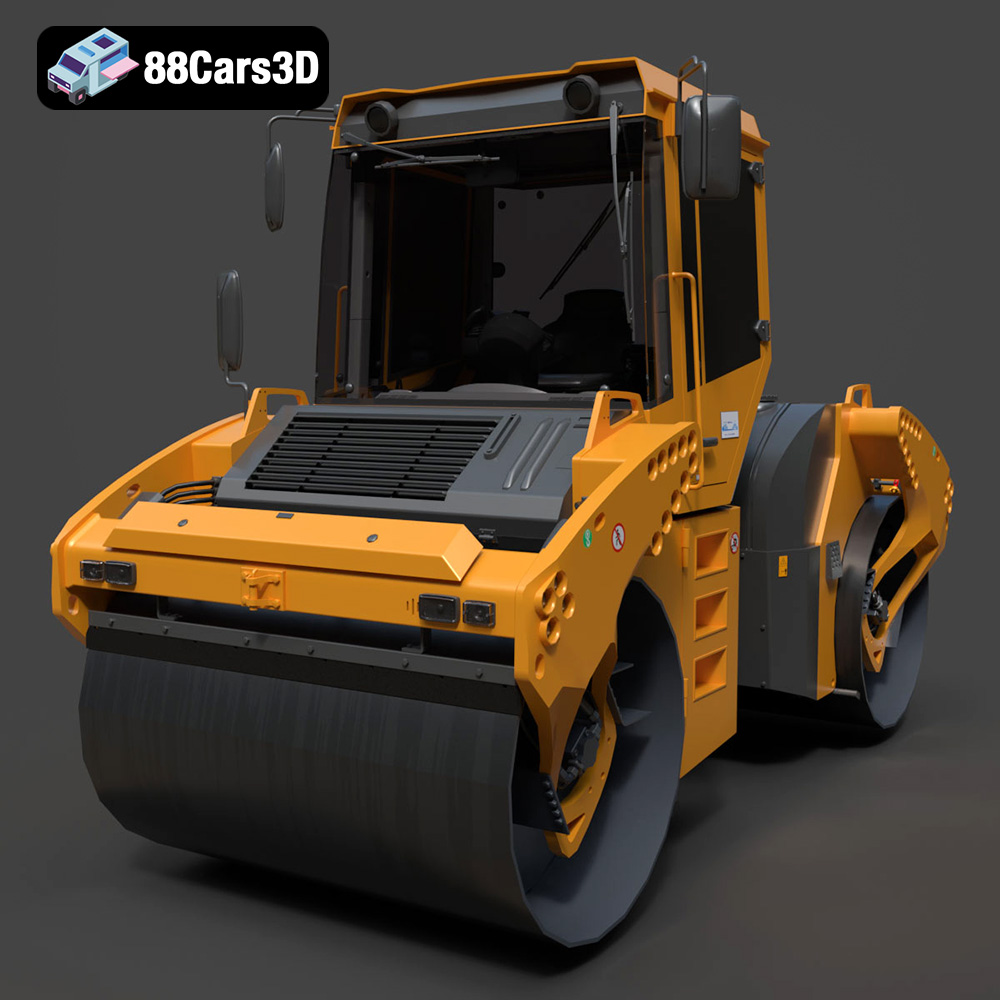
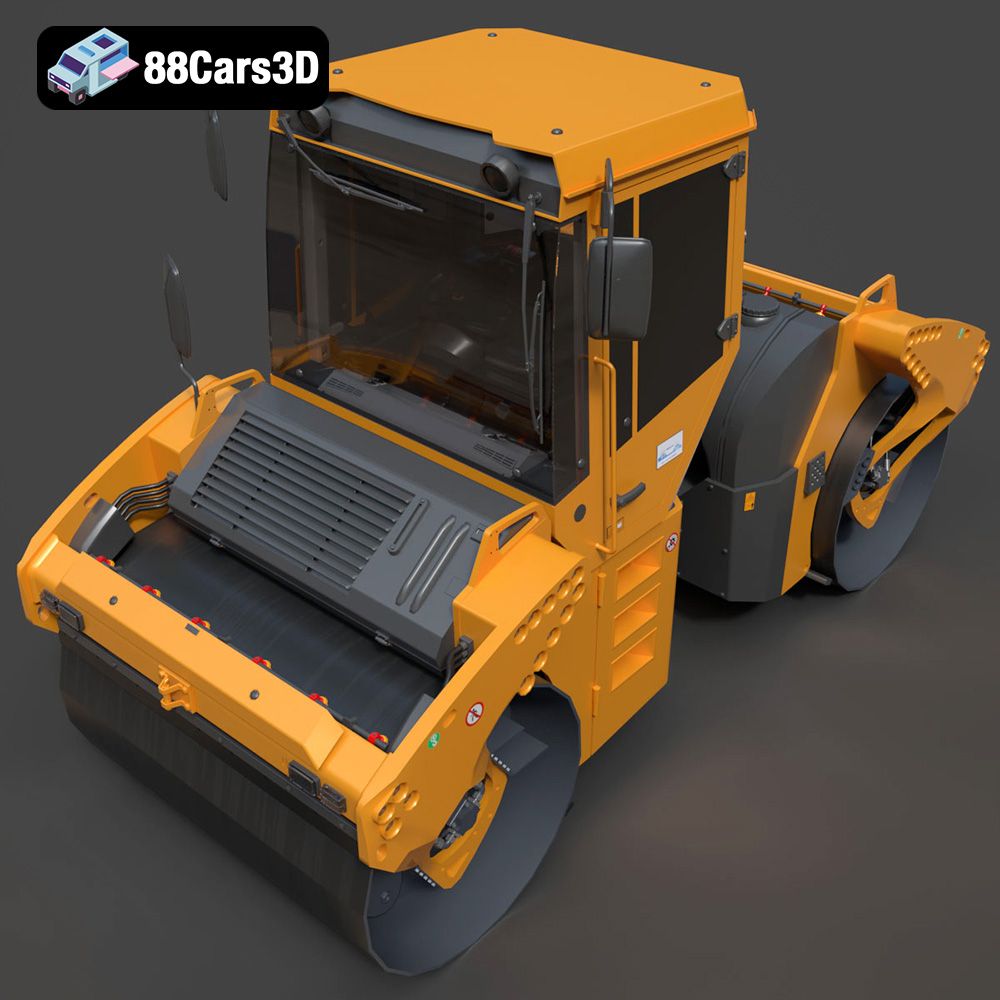
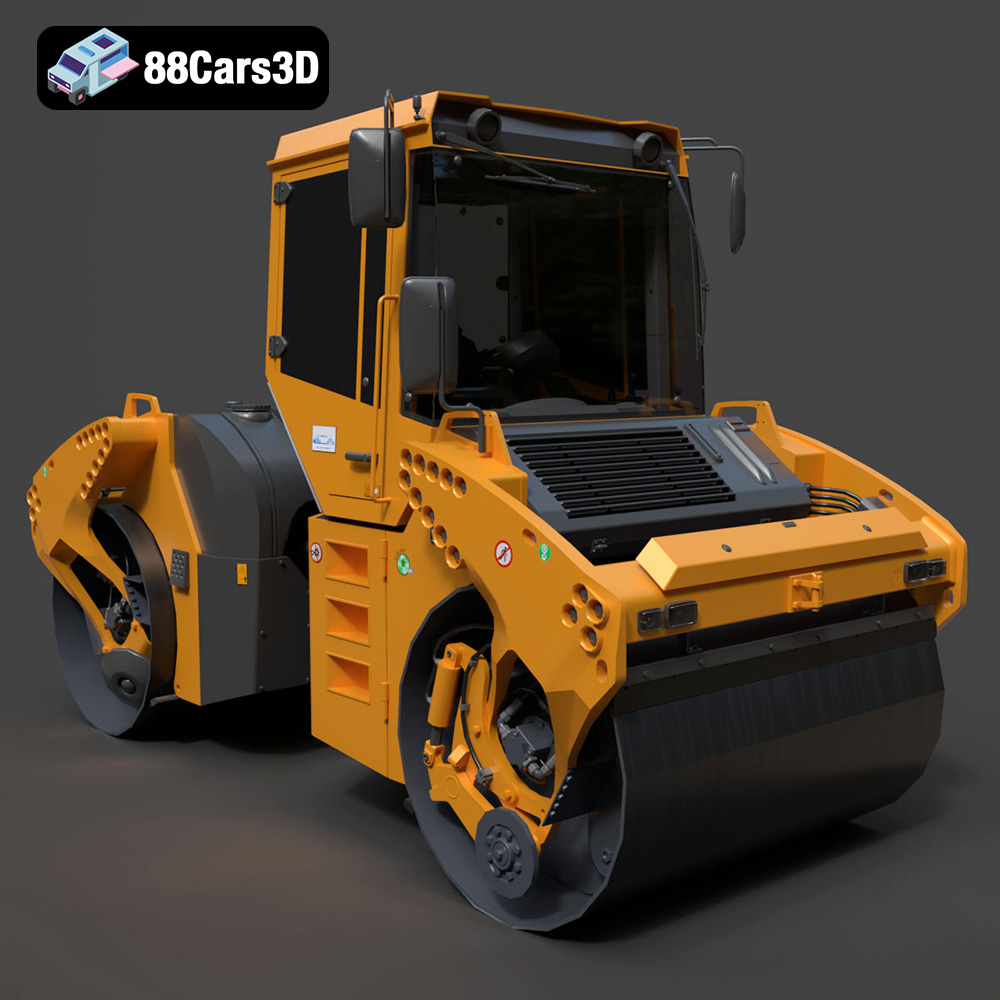
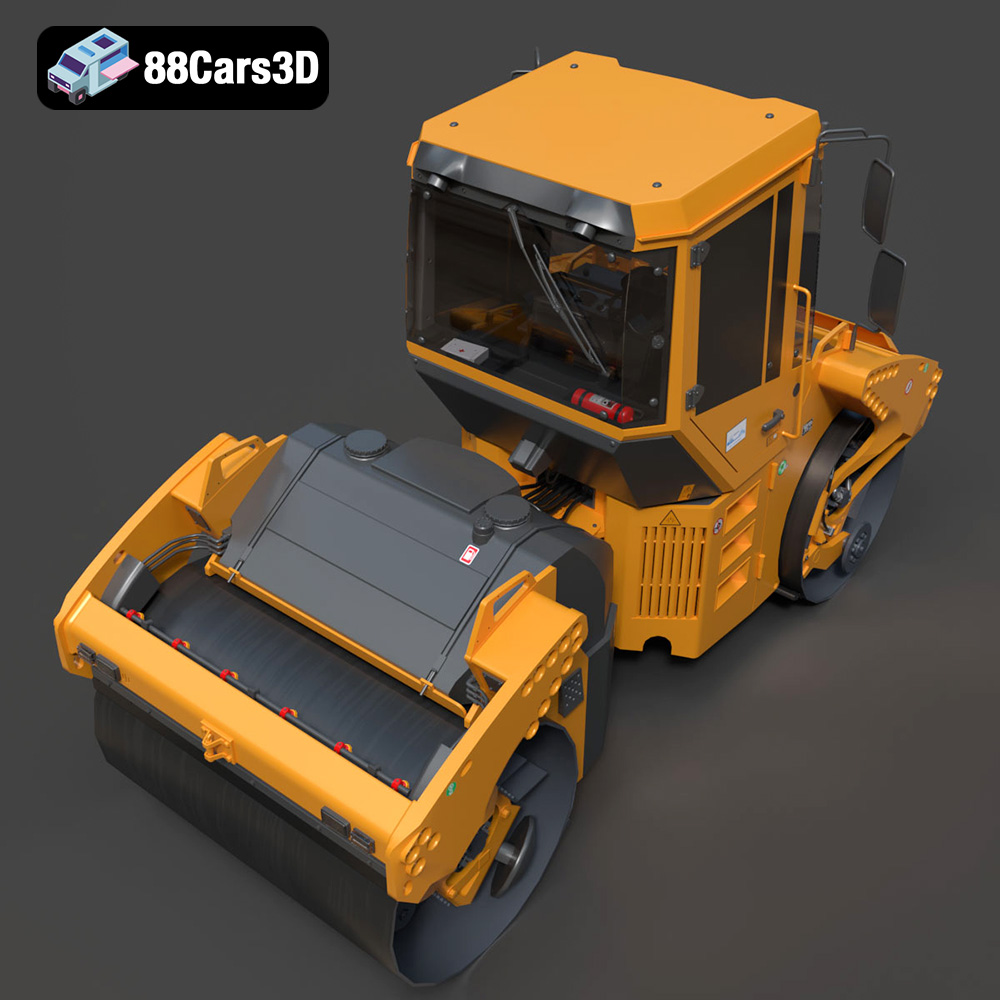
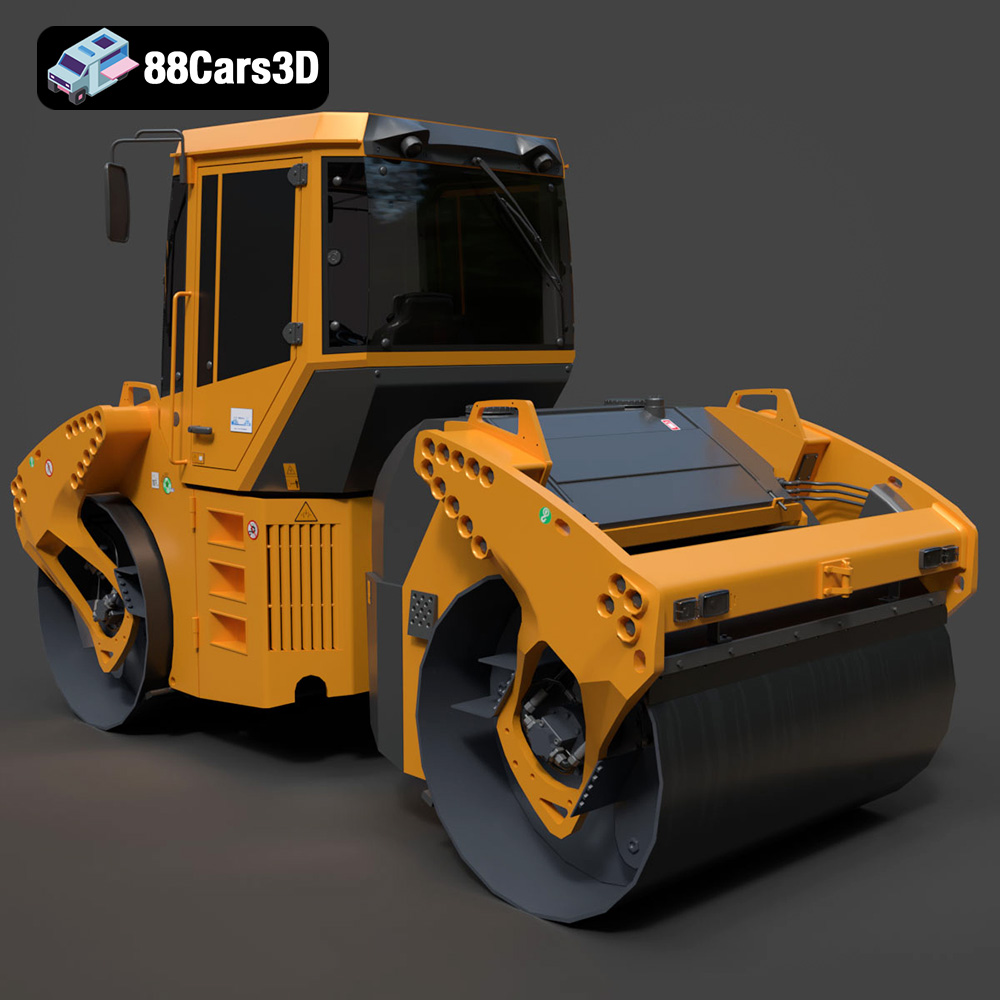
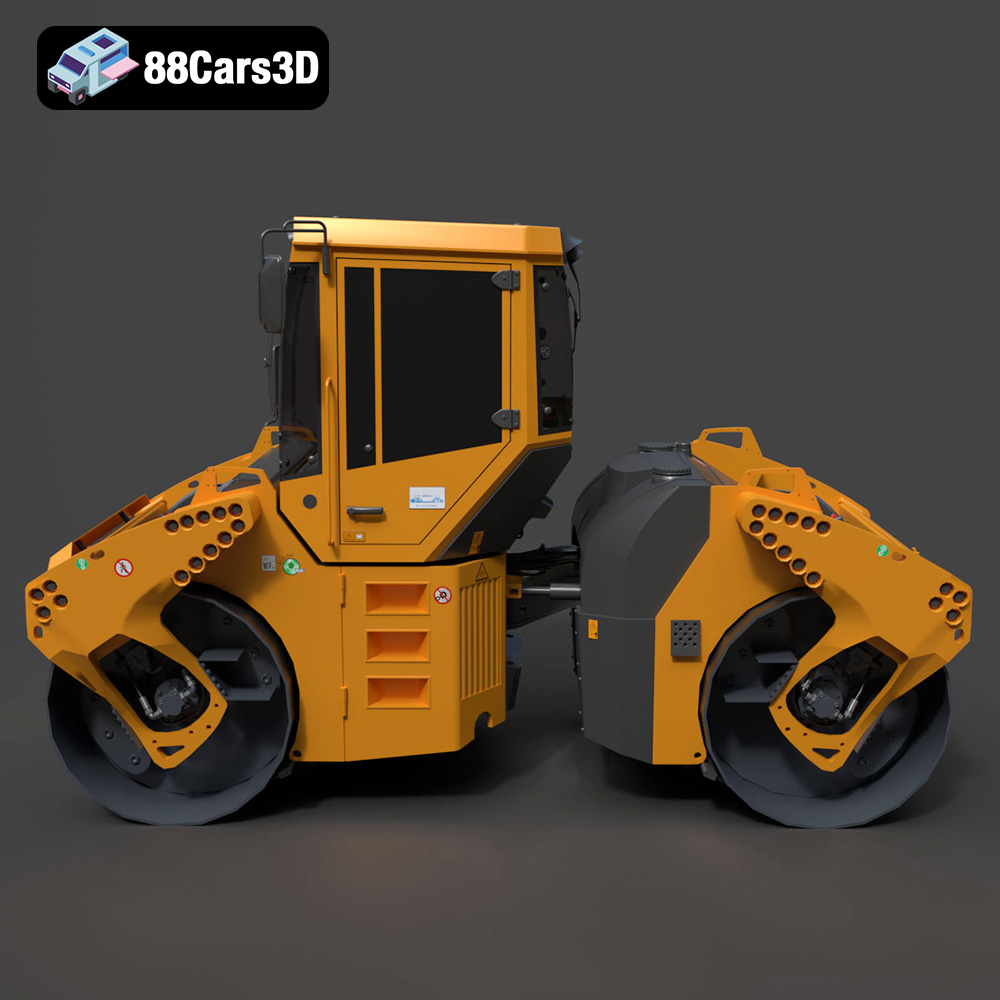
The essence of any construction vehicle lies in its functional design and the marks of its demanding work environment. This model excels in capturing that authenticity. It features the iconic dual steel compaction drums and a highly detailed articulated center pivot, which are the hallmarks of these powerful machines. What truly sets this model apart is its realistic weathered, dusty finish. This isn’t just a simple texture; it’s a deliberate choice that imbues the model with an authentic industrial character, making it appear as though it’s just rolled off a busy construction site. From the intricate hydraulic routing, visible hoses, and mechanical articulation joint to the robust operator platform, every visual element is meticulously crafted to reflect the true nature of earthmoving and paving equipment. This level of detail ensures the model feels grounded and believable in any scene.
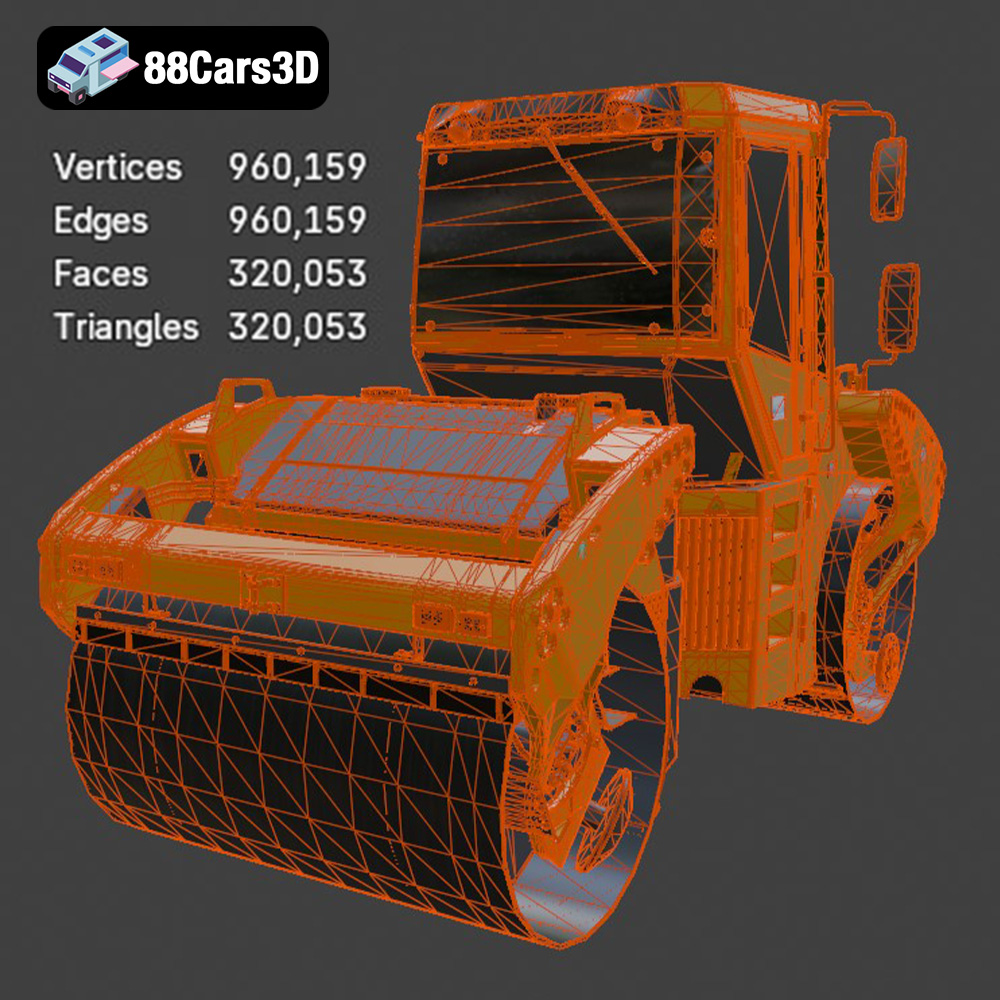
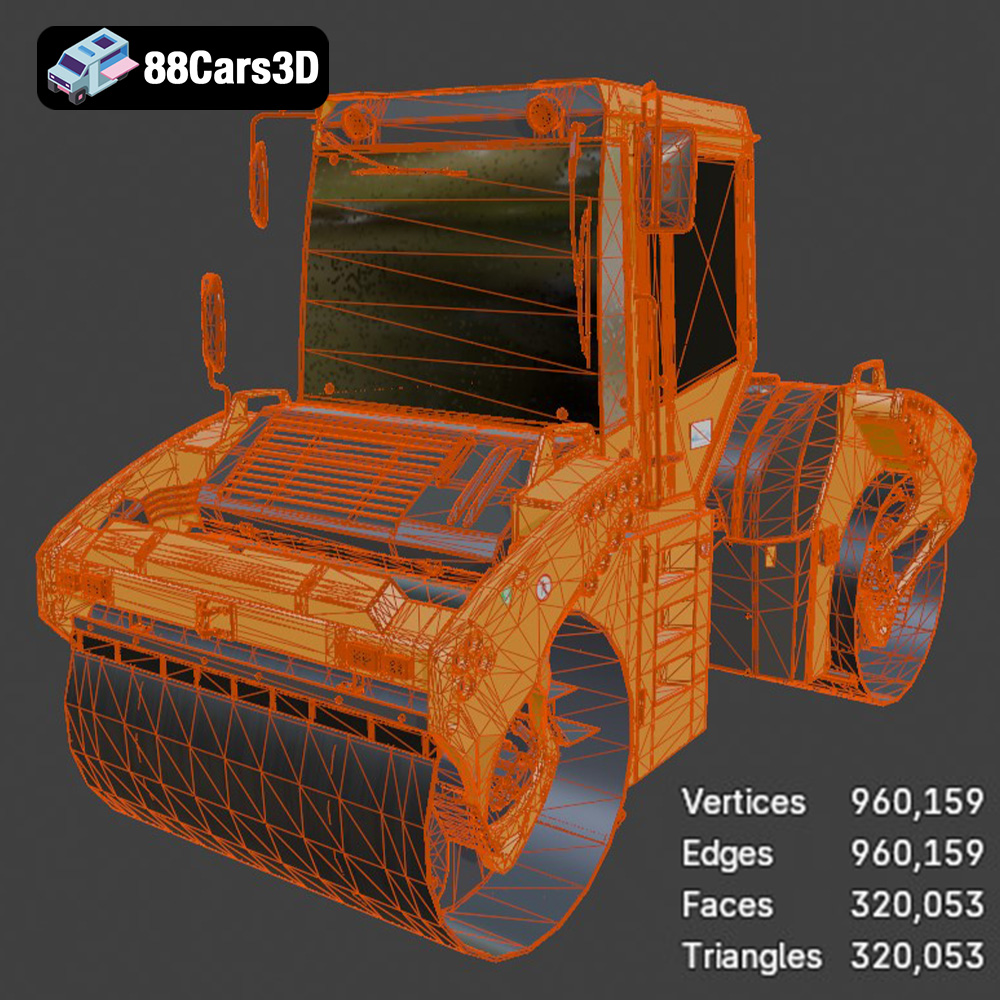
In the world of 3D, especially for real-time applications like games or AR/VR, polygon count is a critical specification. The Articulated Tandem Road Roller boasts a highly detailed yet efficient topology of 320,053 triangles. This figure represents a sweet spot, striking a perfect balance between high-end visual fidelity for close-up renders and game-ready optimization for smooth performance. The geometry is structured to support seamless integration, allowing developers and artists to drop it into real-time engines without significant performance overhead, while still maintaining enough detail for complex, high-resolution renders. This careful optimization means less time spent on LOD (Level of Detail) creation and more time on creative iteration, a distinct advantage when working with complex game assets.
The true value of a professional 3D asset lies in its comprehensive feature set, enabling diverse applications:
The versatility of a 3D model often hinges on the file formats it supports. Different formats are designed for different purposes, offering specific advantages for compatibility, functionality, and optimization. Understanding these distinctions is crucial for anyone working with 3D assets, whether for high-end rendering, game development, AR/VR, or 3D printing. The Articulated Tandem Road Roller Dusty 3D Model from 88cars3d.com exemplifies this flexibility, being available in a comprehensive suite of formats to cater to virtually any professional workflow.
Here’s a breakdown of the included formats and their specific use cases:
The .blend format is the native file type for Blender, the popular open-source 3D creation suite. When you receive a .blend file, you’re getting the complete Blender scene, including the model’s geometry, materials, textures, lighting setups, cameras, and even animations. This format offers maximum flexibility for Blender users, allowing for full customizability, easy modifications to topology, material adjustments, or scene enhancements. If Blender is your primary tool, this format provides the most direct and uncompromised access to the model’s original data.
Autodesk’s .fbx (Filmbox) format is an industry standard for 3D data interchange. It’s incredibly robust, supporting not just geometry but also materials, textures, bones, and animations. This makes it the go-to format for transferring assets between different 3D applications and, critically, into real-time game engines like Unreal Engine and Unity. Its ability to encapsulate complex animation data and hierarchical structures makes it perfect for game assets like our Articulated Tandem Road Roller, ensuring that its articulated steering and drum rotations can be seamlessly imported and controlled within an engine.
The Wavefront .obj format is one of the oldest and most widely supported 3D file formats. It’s essentially a universal translator for 3D geometry, capable of defining vertices, faces, normals, and UV coordinates. While it doesn’t typically store advanced scene data like rigging or animation, it often comes accompanied by an .mtl (Material Template Library) file, which defines basic material properties and references texture maps. The .obj format is excellent for ensuring cross-software compatibility, making it a reliable choice for importing static models into almost any 3D application for rendering or further modification.
.glb (GL Transmission Format Binary) is the binary version of the glTF format, specifically designed for efficient transmission and loading of 3D scenes and models. It packages all necessary data—geometry, materials, textures, animations—into a single, self-contained file. This makes it highly optimized for augmented reality (AR), virtual reality (VR), and browser-based 3D applications, where quick loading times and compact file sizes are essential. For showcasing the Road Roller in a virtual showroom or an interactive web experience, .glb is the superior choice.
The .stl (Stereolithography) format is the standard for 3D printing. Unlike other formats, .stl only describes the surface geometry of a 3D object using a mesh of interconnected triangles, without any color, texture, or material information. It’s a “dumb” format in that sense, but its simplicity makes it universally compatible with 3D printers and slicing software. When preparing the Articulated Tandem Road Roller for physical fabrication, the .stl file will be your starting point, ready for scaling and slicing.
The .ply (Polygon File Format) is often used for storing 3D scan data and precision meshes. It’s more flexible than .obj, capable of storing properties like color per vertex, normal per vertex, transparency, and even confidence values from scanners. While not as common for general asset exchange as .fbx or .obj, it is particularly useful in applications requiring high-precision geometry, such as CAD, reverse engineering, scientific visualization, or scenarios where vertex-level color information is critical.
While .unreal isn’t a standalone file format in the traditional sense, it signifies an asset that has been specifically prepared and optimized for direct import and use within Unreal Engine. This often means the source .fbx has been meticulously cleaned, materials are set up with PBR (Physically Based Rendering) textures, collision meshes are pre-configured, and pivot points are correctly placed for animation within the engine. When an asset is described as ‘.unreal’ ready, it implies a streamlined workflow for developers, minimizing the setup time once imported into the Unreal project.
The .max format is the native file type for Autodesk 3ds Max, a powerful 3D modeling, animation, and rendering software widely used in architectural visualization, film, and game development. A .max file provides the complete 3ds Max scene, offering full editability of the model, its materials, textures, modifiers, rigging, and animation data. For professionals whose primary workflow revolves around 3ds Max, this format provides the highest level of control and detail, ideal for high-fidelity rendering and complex animation sequences involving the Articulated Tandem Road Roller.
The availability of the Articulated Tandem Road Roller Dusty 3D Model in all these formats means unparalleled flexibility, ensuring it fits perfectly into virtually any production pipeline, a key advantage offered by high-quality 3D car models and vehicle assets from sources like 88cars3d.com.
The true measure of a versatile 3D asset lies in its seamless integration across diverse professional workflows. The Articulated Tandem Road Roller Dusty 3D Model is engineered to be a workhorse in your digital arsenal, adapting effortlessly to various industry needs.
For game developers, the challenge is always balancing visual fidelity with performance. The Articulated Tandem Road Roller model, with its 320,053 triangle count, strikes this balance perfectly. It’s truly “Game-Ready & Optimized.”
For studios focused on marketing, architectural visualization, or industrial campaigns, visual realism is paramount. This model excels in delivering that.
Augmented Reality (AR) and Virtual Reality (VR) demand optimized, high-quality assets to create convincing immersive experiences. The Articulated Tandem Road Roller is well-suited for this evolving field.
While digital applications are primary, the versatility of a robust 3D model extends into the physical world through 3D printing. The Articulated Tandem Road Roller offers a unique opportunity for enthusiasts and professionals alike to bring this heavy machinery to life in miniature form.
The included .stl format is the industry standard for 3D printing, translating the complex geometry of the digital model into a mesh of triangles that 3D printers can understand. Preparing this model for physical fabrication involves careful consideration of several factors:
Once printed, the physical model offers a canvas for further artistic expression:
Beyond its core technical merits, the Articulated Tandem Road Roller Dusty 3D Model offers significant scope for customization, making it a highly adaptable asset for a wide array of creative and commercial projects.
The ability to modify an asset’s appearance to suit a project’s unique aesthetic or branding is invaluable. This model provides several key avenues for customization:
The model’s technical setup also allows for dynamic integration into animated sequences and interactive environments:
This level of customization and dynamic readiness ensures that the Articulated Tandem Road Roller is not just a static prop but a dynamic, versatile asset ready to be tailored to the exact specifications of any professional project, reinforcing its value as a premium 3D car model from 88cars3d.com.
In the demanding world of 3D content creation, the difference between a good project and a great one often lies in the quality and versatility of its core assets. The Articulated Tandem Road Roller Dusty 3D Model stands as a prime example of an asset that delivers on all fronts: meticulous detail, optimized performance, and unparalleled adaptability across diverse professional workflows. Its authentic weathered finish, precise geometry, and carefully prepared pivot points make it an ideal choice for everything from high-fidelity automotive rendering to immersive game development, critical AR/VR training, and even tangible 3D prints for collectors and educators.
The comprehensive range of included file formats—from .blend and .max for native software users to .fbx for real-time engines, .glb for web-based AR/VR, and .stl for 3D printing—ensures that this essential construction vehicle integrates seamlessly into virtually any pipeline. This thoughtful provision of formats streamlines production, allowing artists and developers to focus on creative execution rather than conversion hassles.
Whether you are populating a vast open-world construction site, creating a hyper-realistic industrial visualization, developing an interactive training simulation, or simply seeking a detailed model for a diorama, the Articulated Tandem Road Roller Dusty 3D Model offers the quality and flexibility needed to bring your vision to life. This and many other high-quality 3D car models and specialized vehicle assets are available to elevate your projects. Discover this essential asset and more at 88cars3d.com.
The Articulated Tandem Road Roller Dusty edition captures the rugged essence and heavy-duty presence of essential construction machinery. Featuring its iconic dual steel compaction drums and a highly detailed articulated center pivot, this model showcases a realistic weathered, dusty finish that brings authentic industrial character to any scene. From the intricate hydraulic routing to the robust operator platform, every visual element is meticulously crafted to reflect the true nature of earthmoving and paving equipment. Boasting a highly detailed yet efficient topology of 320,053 triangles, this 3D model offers the perfect balance between high-end visual fidelity and game-ready optimization. The geometry is structured to support seamless integration into real-time engines and complex renders, making it an exceptional asset for game development, AR/VR experiences, industrial animation, and professional visualization.
$34.50
.blend
.fbx
.glb
.max
.obj
.ply
.rendering
.stl
.unreal
articulated-tandem-road-roller
car-3d-model
construction-vehicle
dusty
game asset
game-ready
heavy-machinery
low-poly
optimized
road-roller
VR/AR