Get 20% OFF All Premium 3D & STL Models!

In the fast-paced world of digital creation, high-quality assets are the bedrock of stunning visuals and immersive experiences. From blockbuster racing games to photorealistic architectural visualizations and cutting-edge AR/VR applications, the demand for exceptionally detailed and technically sound 3D models has never been greater. Few subjects command as much attention and require as much precision as automotive design, where every curve, every reflection, and every mechanical detail must be captured with fidelity. This pursuit of perfection is precisely where a meticulously crafted asset like the Chevrolet Corvette C7 3D model truly shines.
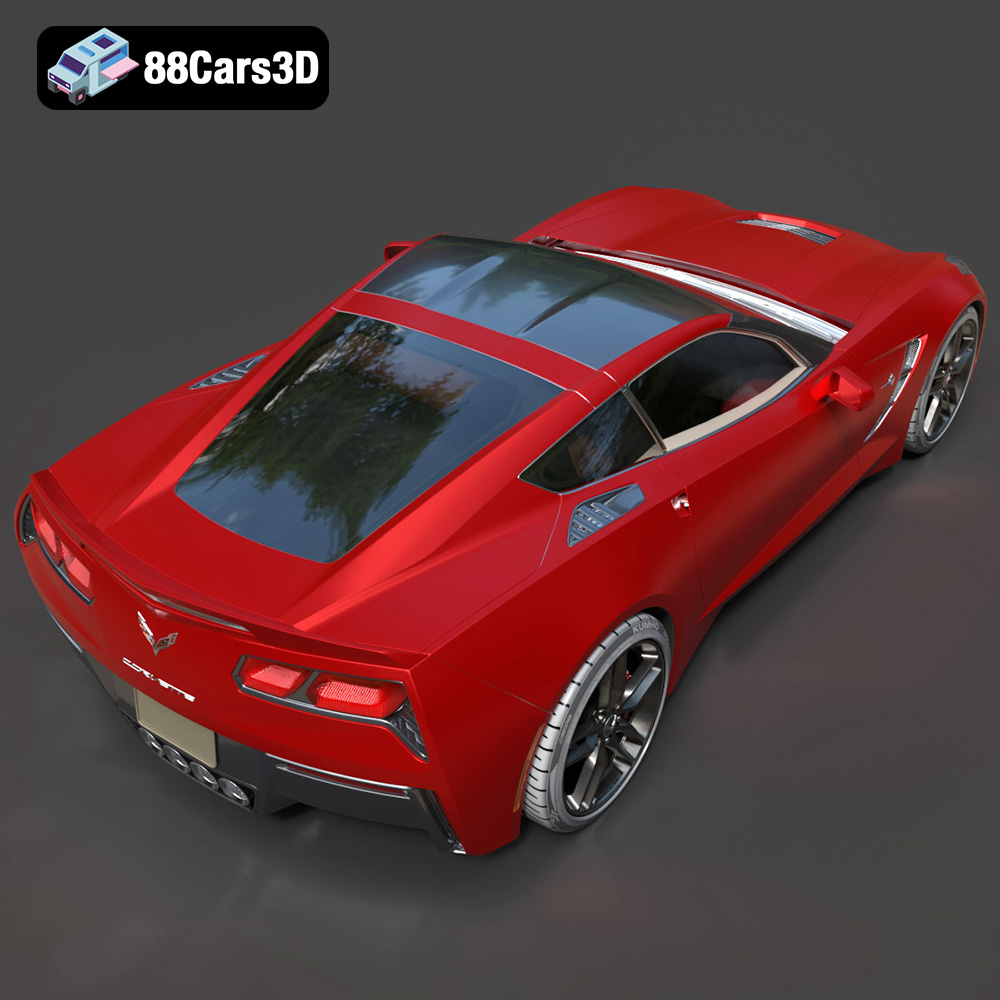
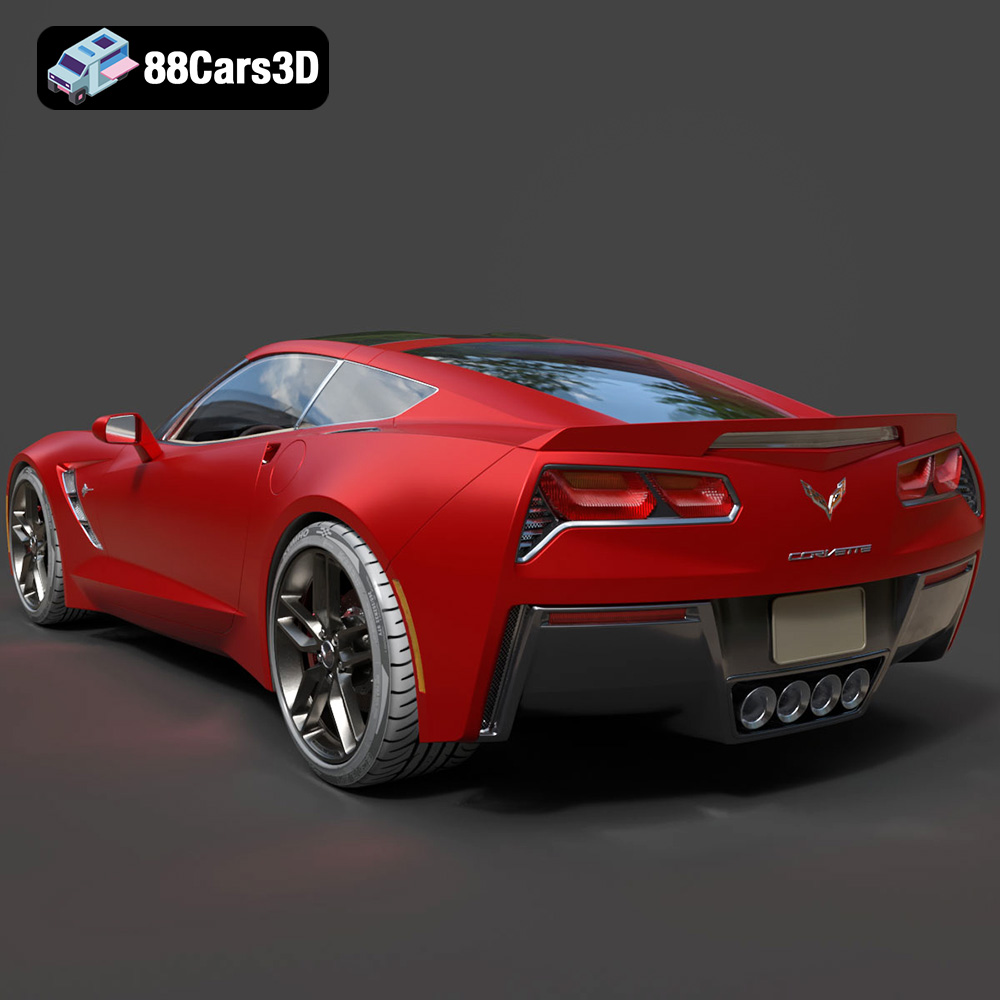
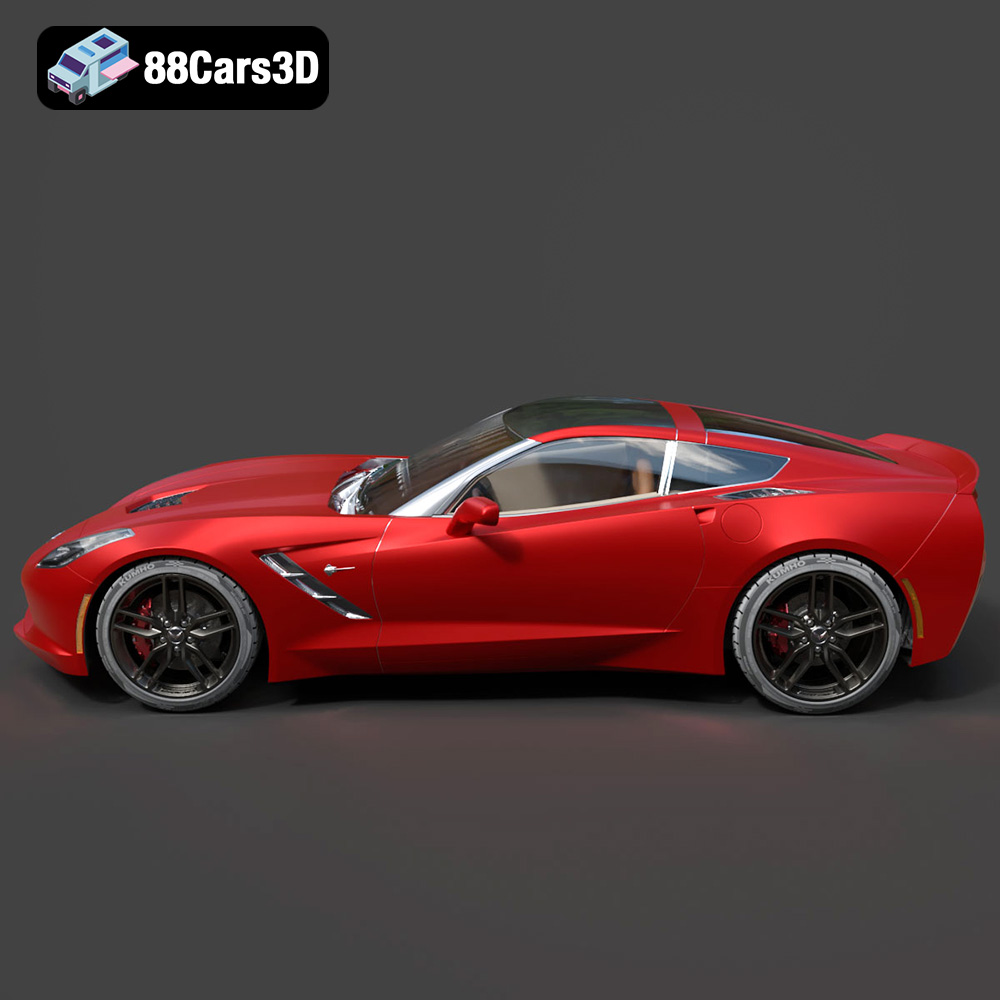
The C7 generation Corvette is an icon, a symphonic blend of aggressive styling and raw American power. Its sharp lines, commanding stance, and unmistakable quad exhaust evoke a sense of speed and precision. Translating such an intricate piece of automotive design into a digital asset requires not just artistic skill, but a deep understanding of 3D topology, material science, and optimization for various platforms. A premium 3D car model, such as the one available on 88cars3d.com, transcends mere aesthetics; it’s an engineering marvel in itself, designed to be versatile and production-ready for the most demanding professional projects.
This article will delve into the critical role of high-fidelity 3D car models, exploring the technical considerations, diverse applications, and specific workflows that leverage these assets. We’ll examine how a model like the Chevrolet Corvette C7 can be integrated into rendering pipelines, game engines, and even 3D printing processes, demonstrating its value as an indispensable tool for creators aiming for unparalleled realism and performance.
The versatility of a 3D model is often defined by the array of file formats it supports. Each format is engineered for specific purposes, offering unique advantages in terms of compatibility, data retention, and optimization. Understanding these differences is crucial for any professional working with 3D assets, as selecting the right format can streamline workflows and ensure project success. The Chevrolet Corvette C7 3D model, for instance, comes equipped with a comprehensive suite of formats, catering to virtually any professional need.
The .blend format is the native file type for Blender, a powerful and widely used open-source 3D creation suite. A .blend file typically contains a complete scene, including the model’s geometry, materials, textures, lighting, camera setups, and even animations or physics simulations. For artists primarily working in Blender, having the Corvette C7 in .blend format means instant access to a fully editable scene, allowing for quick modifications, rigging, or custom rendering setups without any loss of data during import/export. It’s the ideal choice for in-depth customization and leveraging Blender’s robust toolset.
.fbx (Filmbox) is a proprietary file format developed by Autodesk, but it has become the de facto industry standard for 3D data exchange between various software applications and game engines. It supports a wide range of 3D data, including geometry, animation, skinning, camera settings, and lights. For integrating the Corvette C7 into game engines like Unreal Engine or Unity, or for importing into other DCC (Digital Content Creation) software like Maya or 3ds Max, .fbx is often the most reliable choice. Its robust nature ensures that complex hierarchies and animations are preserved, making it ideal for real-time pipelines and collaborative projects.
.obj (Wavefront OBJ) is one of the oldest and most universally supported 3D file formats. It’s a simple, text-based format primarily used to store 3D geometry (vertices, normals, texture coordinates, and faces) and references to external material files (.mtl). While it doesn’t support animation or rigging, its widespread compatibility makes it an excellent choice for cross-software transfers where only static mesh data is required. For archival purposes or when exporting the Corvette C7 for a fresh start in a new software, .obj offers dependable mesh fidelity.
.glb (GL Transmission Format Binary) is the binary version of glTF, a royalty-free specification for the efficient transmission and loading of 3D scenes and models by applications. .glb files package all necessary assets (geometry, materials, textures, animations) into a single, self-contained binary file, making them highly optimized for web-based 3D, augmented reality (AR), virtual reality (VR), and mobile applications. The Corvette C7 in .glb format is perfect for virtual showrooms, interactive product configurators on websites, or AR experiences where quick loading and broad device compatibility are paramount.
.stl (Stereolithography) is the most common file format used for 3D printing. It represents a 3D model as a series of connected triangles (a tessellated surface). While it’s relatively simple and lacks color or texture information, its ubiquity in the 3D printing world is undeniable. For hobbyists or professionals looking to bring the detailed Corvette C7 into the physical realm, the .stl version provides the necessary geometry for slicing software and subsequent additive manufacturing. The provided C7 model is perfectly convertible to .stl, enabling enthusiasts to print their own display-scale models.
.ply (Polygon File Format or Stanford Triangle Format) is another format that describes 3D objects, specifically designed to store data from 3D scanners. It can store various properties beyond just geometry, such as color, transparency, and range data, on a per-vertex or per-face basis. While less common for general artistic distribution, it’s highly valued in scientific and engineering fields for precision mesh data, CAD applications, or advanced analysis. Having the Corvette C7 in .ply ensures maximum data retention for highly specialized use cases.
The .unreal format, or more accurately, assets pre-prepared and configured for direct import into Unreal Engine projects, signifies a level of optimization specifically tailored for real-time environments. This isn’t a single file format in the conventional sense, but rather an indication that the asset package has been structured, textured, and sometimes even had its materials set up to be immediately usable within Unreal Engine. This often means PBR (Physically Based Rendering) materials are correctly configured, meshes are optimized, and pivot points are accurate for game physics and animation, saving developers countless hours. The Corvette C7 model’s “game-ready” attributes and inclusion of .unreal assets highlight its direct applicability for high-performance game development.
The .max format is the native file type for Autodesk 3ds Max, a leading software for 3D modeling, animation, rendering, and visualization. Similar to .blend, a .max file stores a complete scene with all its components, allowing for full editability within 3ds Max. For professionals entrenched in the Autodesk ecosystem, having the Corvette C7 in .max format means seamless integration into existing projects, leveraging 3ds Max’s powerful modeling tools, modifiers, and rendering capabilities (such as V-Ray or Corona Renderer) for high-end visualizations and animations.
Photorealistic automotive rendering is an art form that demands technical prowess and an keen eye for detail. It’s where the raw data of a 3D model truly transforms into a captivating image. A high-fidelity asset like the Chevrolet Corvette C7 3D model provides the perfect foundation for achieving stunning visual results, whether for advertising, film, or architectural visualization.
The visual impact of any 3D car model heavily relies on its materials and textures. Physically Based Rendering (PBR) is the cornerstone of modern rendering, accurately simulating how light interacts with surfaces in the real world. For the Corvette C7, this means meticulously crafted PBR materials for its metallic paint, glass, rubber tires, and intricate interior fabrics. High-resolution texture maps (Albedo, Normal, Roughness, Metallic, Ambient Occlusion) are crucial for capturing subtleties like microscopic scratches on the paint, the grain of the leather seats, or the precise tread pattern of the tires. The goal is to make the digital model indistinguishable from its real-world counterpart, a feat made easier when starting with an inherently detailed model like this one from 88cars3d.com.
Lighting is paramount in automotive rendering, shaping the vehicle’s form and highlighting its design nuances. Studio lighting setups, often involving virtual softboxes and area lights, are used to emphasize contours and reflections. High Dynamic Range Images (HDRIs) are indispensable for simulating realistic outdoor environments, casting accurate light and reflections onto the car’s body. For the Corvette C7, experimenting with different HDRIs can transport the vehicle from a sun-drenched coastal road to a moody, rain-slicked city street, each environment dramatically altering its perceived presence. Moreover, the separate components of the C7 model, such as its distinct angular LED headlights and sculpted taillights, allow for dynamic lighting setups, perfect for showcasing its functional elements.
Achieving truly photorealistic results often involves advanced rendering techniques. Global Illumination (GI) for realistic light bouncing, caustics for glass refraction, and depth of field for cinematic blurring all contribute to immersion. Software like 3ds Max, paired with renderers like V-Ray or Corona, offers extensive controls for these effects. Post-processing in tools like Adobe Photoshop or DaVinci Resolve further enhances renders, adding color grading, lens flares, and subtle atmospheric effects to elevate the final image. The sheer detail of the Corvette C7’s exterior, from its engine block to its distinct quad center-exit exhaust, provides ample opportunity for close-up renders that truly shine with these techniques.
For game developers, 3D car models are more than just visual assets; they are interactive elements that must perform flawlessly within real-time environments. The Chevrolet Corvette C7 3D model is designed with “game-ready” principles in mind, making it an excellent candidate for AAA racing titles, open-world adventures, and immersive simulators.
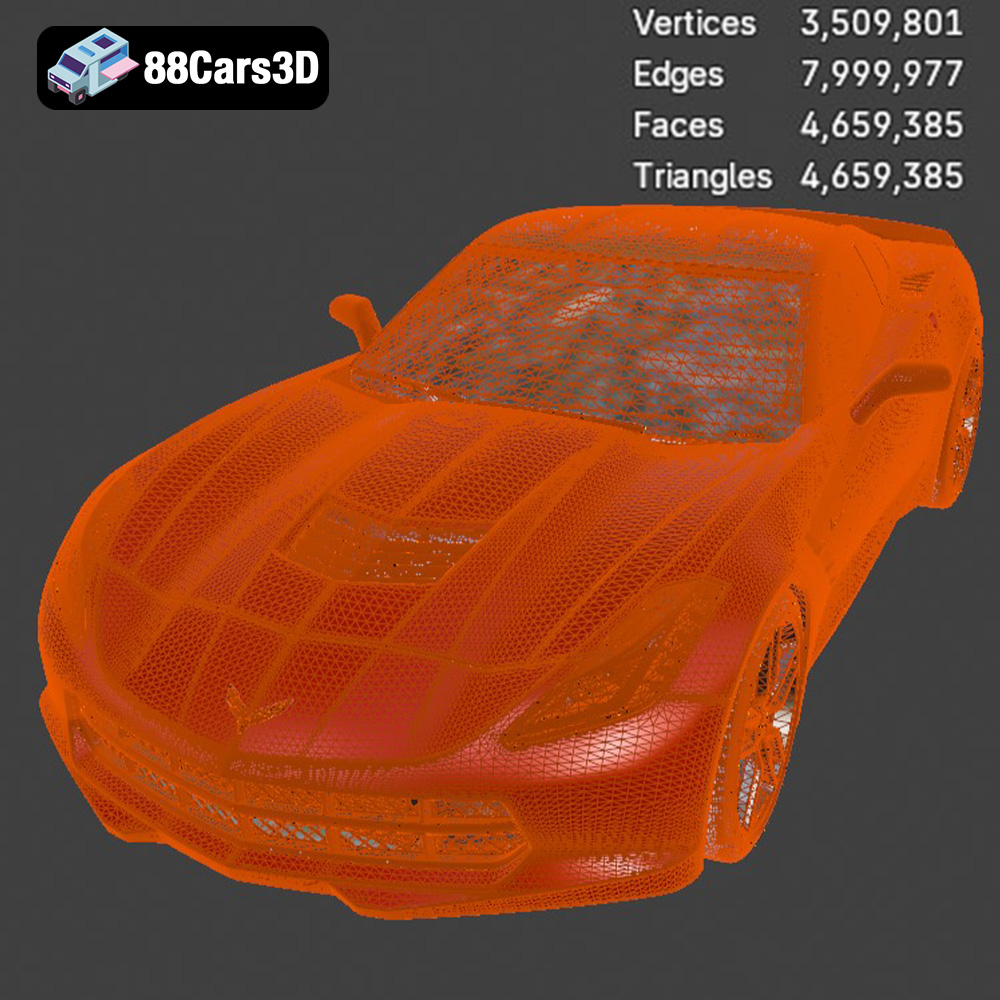
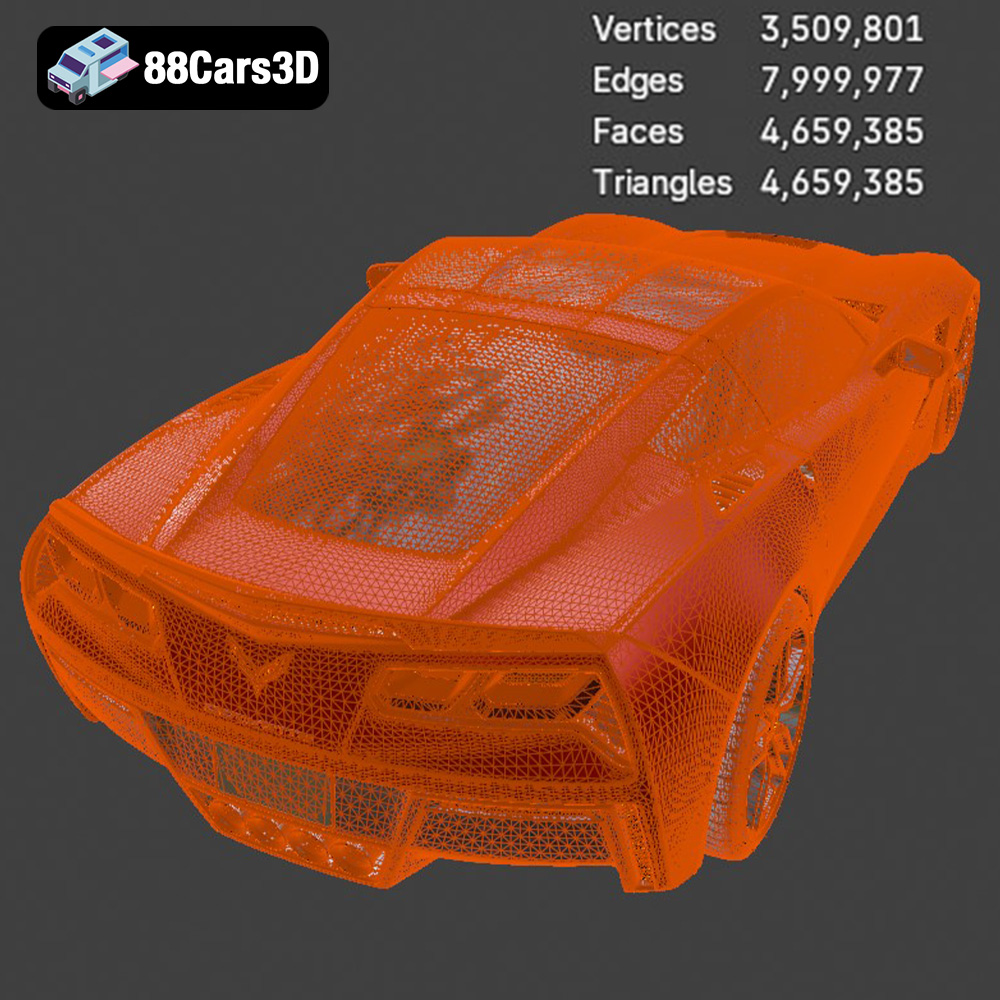
While the Corvette C7 model boasts a high polygon count of 4,659,385 triangles, it’s explicitly stated to strike a balance for modern game engines utilizing “nanite-like technologies.” This is a critical distinction. Traditional game asset pipelines often require significant polycount reduction for optimal performance. However, with technologies like Unreal Engine’s Nanite virtualized geometry, highly detailed meshes can be rendered efficiently without manual LODs (Levels of Detail). This allows developers to maintain the stunning visual fidelity of the C7 model without sacrificing frame rates, providing a truly next-generation gaming experience. The clean mesh structure of the model is key to its smooth integration into such advanced pipelines.
A static model is insufficient for gaming. Game-ready assets like the C7 model are structured for dynamic interaction. This includes accurate pivot setups for steering, independent wheel rotation, and realistic suspension travel. The separation of components – wheels, suspension, steering – is invaluable for rigging and implementing vehicle physics systems. The detailed interior, with its driver-focused cockpit, precise instrument cluster, and separate pedals, is optimized for first-person POV, essential for immersive driving experiences. Developers can leverage the accurate real-world scale of the Corvette C7 to ensure that physics calculations and collision detection are precise, delivering a believable and engaging driving simulation.
Seamless integration into game engines like Unreal Engine and Unity requires consistent material setup. The C7 model’s compatibility with major 3D software platforms implies that its PBR materials can be easily transferred and configured within these engines. Using established material workflows, developers can ensure that the Corvette C7 reacts realistically to various lighting conditions, reflecting the environment and showing wear and tear as expected in a game. The inclusion of .fbx and .unreal formats further simplifies this process, providing engine-ready assets that minimize conversion issues and accelerate development timelines.
The utility of a high-quality 3D car model extends far beyond traditional rendering and game development. Emerging technologies like Augmented Reality (AR), Virtual Reality (VR), and 3D printing are opening new avenues for interactive experiences and tangible creations, with models like the Chevrolet Corvette C7 at the forefront.
AR and VR offer unparalleled opportunities for users to interact with 3D models in virtual or mixed realities. Imagine a virtual showroom where prospective buyers can walk around a life-sized Corvette C7, open its doors, examine its detailed engine, and even change its paint color in real-time. The C7’s optimized geometry and realistic textures make it ideal for such applications. The .glb file format, specifically designed for efficient web, AR, and VR display, is crucial here. It allows for quick loading and smooth performance on mobile devices and VR headsets, delivering truly immersive virtual experiences that were once the realm of science fiction.
For enthusiasts and collectors, the ability to physically hold a scale model of their favorite car is a unique thrill. The Chevrolet Corvette C7 3D model, convertible to .stl format, makes this possible. The detailed topology ensures that even at smaller scales (recommended 1:12 to 1:24), the distinctive angular LED headlights, performance brake calipers, and intricate interior details are faithfully reproduced. While the model’s high triangle count might require careful preparation for some home FDM printers, resin printing is recommended for capturing the fine details. The provided print settings and advice on supports and post-processing guide users through transforming a digital asset into a tangible display piece, complete with authentic factory colors and metallic finishes.
In design and engineering, 3D models serve as powerful visualization and prototyping tools. Architects can integrate the Corvette C7 into their scene to add a touch of realism and scale to their renders, while product designers can use it for visual context in presentations. The .ply format, with its precision mesh data, could even be used in some specialized engineering analysis or reverse-engineering workflows. The versatility of the C7 model across these formats means it’s not just an artistic asset but a functional tool for various professional disciplines.
In a competitive digital landscape, the difference between good and great often lies in the quality of the foundational assets. For automotive visualization and interaction, cutting corners on 3D car models can lead to subpar results, costly rework, and missed opportunities. This is where investing in premium, production-ready assets like the Chevrolet Corvette C7 3D model from 88cars3d.com pays dividends.
Creating a detailed 3D car model from scratch is an incredibly time-consuming and labor-intensive process, requiring hundreds of hours of expert modeling, texturing, and optimization. By providing a meticulously crafted asset like the Corvette C7, 88cars3d.com empowers artists and developers to bypass this initial stage, allowing them to focus immediately on creative implementation, rendering, animation, or game logic. The “game-ready & optimized” nature of the model, complete with proper pivot setups and real-world scale accuracy, means less time spent on troubleshooting and more time on producing stunning final outputs.
The Chevrolet Corvette C7 3D model isn’t just a pretty mesh; it’s a technical masterpiece. Its 4,659,385 triangles represent a commitment to visual fidelity, yet its clean topology ensures it remains manageable for modern engines. The explicit attention to exterior features like the 6.2L V8 engine block, signature quad exhaust, and performance brake calipers, coupled with an optimized detailed interior, demonstrates a dedication to authenticity. This level of detail is crucial for projects demanding photorealism, where every element contributes to the overall immersion and believability of the scene. From the accurate C7 frame geometry to the detailed sport bucket seats, every aspect has been considered for professional use.
A single, high-quality asset that can be seamlessly integrated into multiple pipelines offers immense value. The Corvette C7 model’s extensive list of included file formats – .blend, .fbx, .obj, .glb, .stl, .ply, .unreal, .max – means it’s ready for virtually any professional scenario. Whether it’s high-end cinematic rendering in 3ds Max, real-time interactive experiences in Unreal Engine, or even physical replication via 3D printing, the model adapts. This versatility ensures that creators get maximum utility from their investment, making it a truly future-proof asset for diverse projects across game development, AR/VR, visualization, and more.
The digital realm is an infinite canvas, but the quality of its creations is directly tied to the foundation upon which they are built. For automotive projects, from the fastest racing simulators to the most evocative advertising campaigns, a premium 3D car model is not just an advantage – it’s a necessity. The Chevrolet Corvette C7 3D model exemplifies this standard, offering an exquisite balance of artistic fidelity and technical optimization.
Its comprehensive detail, from the roar of its virtual V8 engine to the intricate stitching on its sport seats, ensures breathtaking realism in any rendering scenario. Its game-ready architecture, particularly its suitability for nanite-like technologies, positions it perfectly for the next generation of interactive experiences. Furthermore, its broad file format compatibility opens doors to AR/VR immersion and the tactile satisfaction of 3D printing. For professionals seeking to elevate their projects with a truly iconic and impeccably engineered vehicle, the Chevrolet Corvette C7 3D model available on 88cars3d.com is an investment in excellence. It’s more than just a model; it’s a versatile tool engineered to drive your creative vision forward.
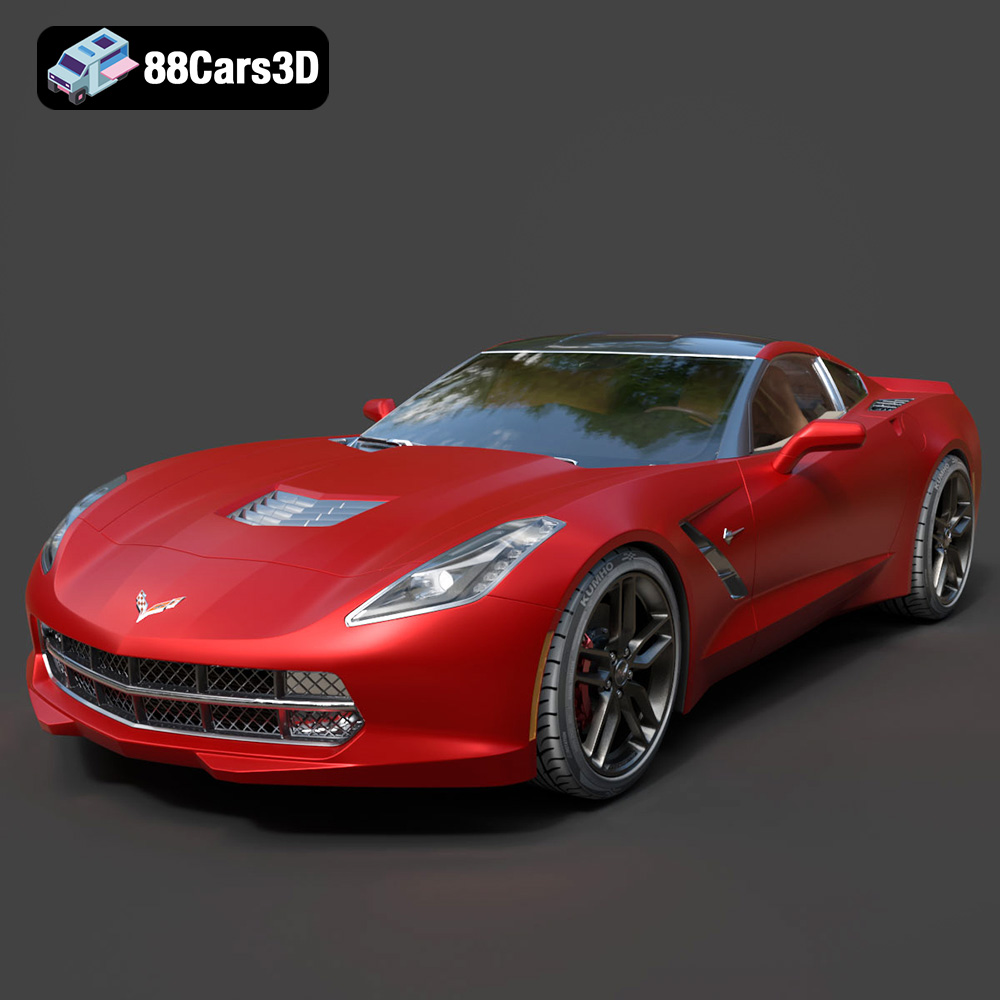
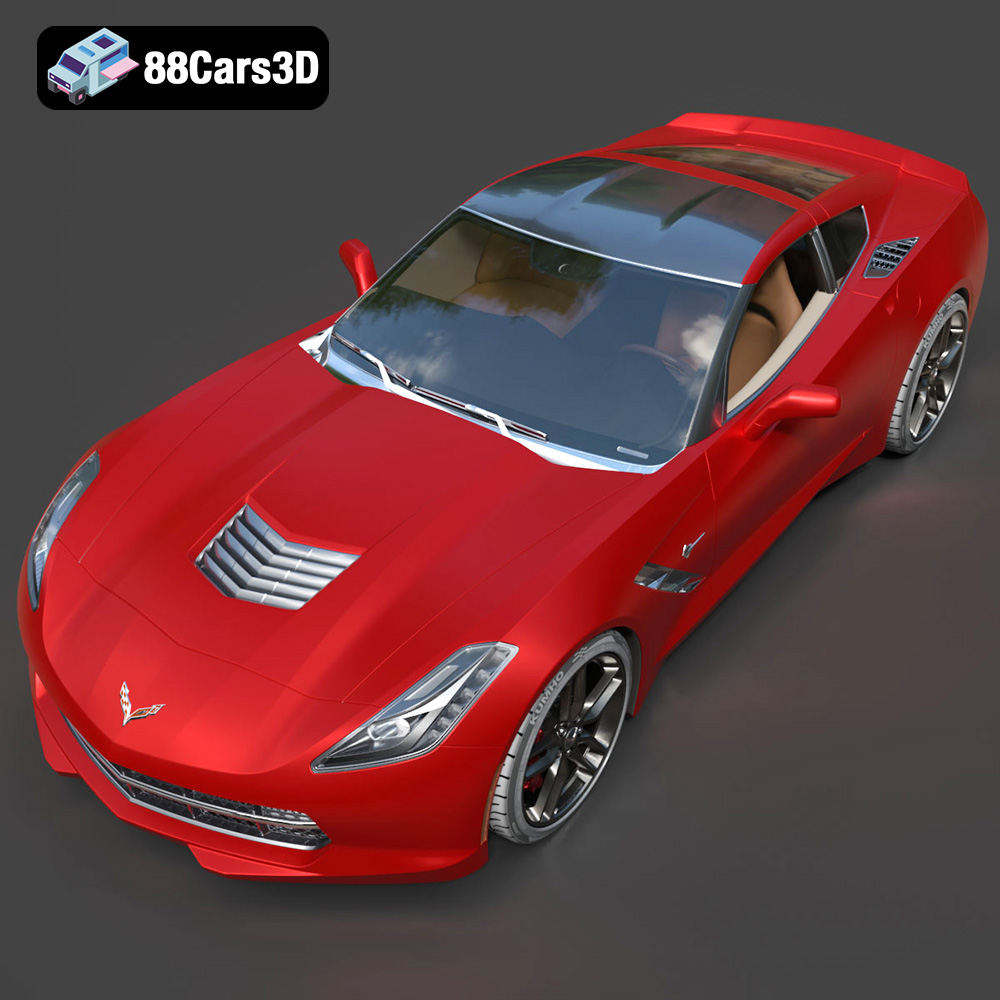
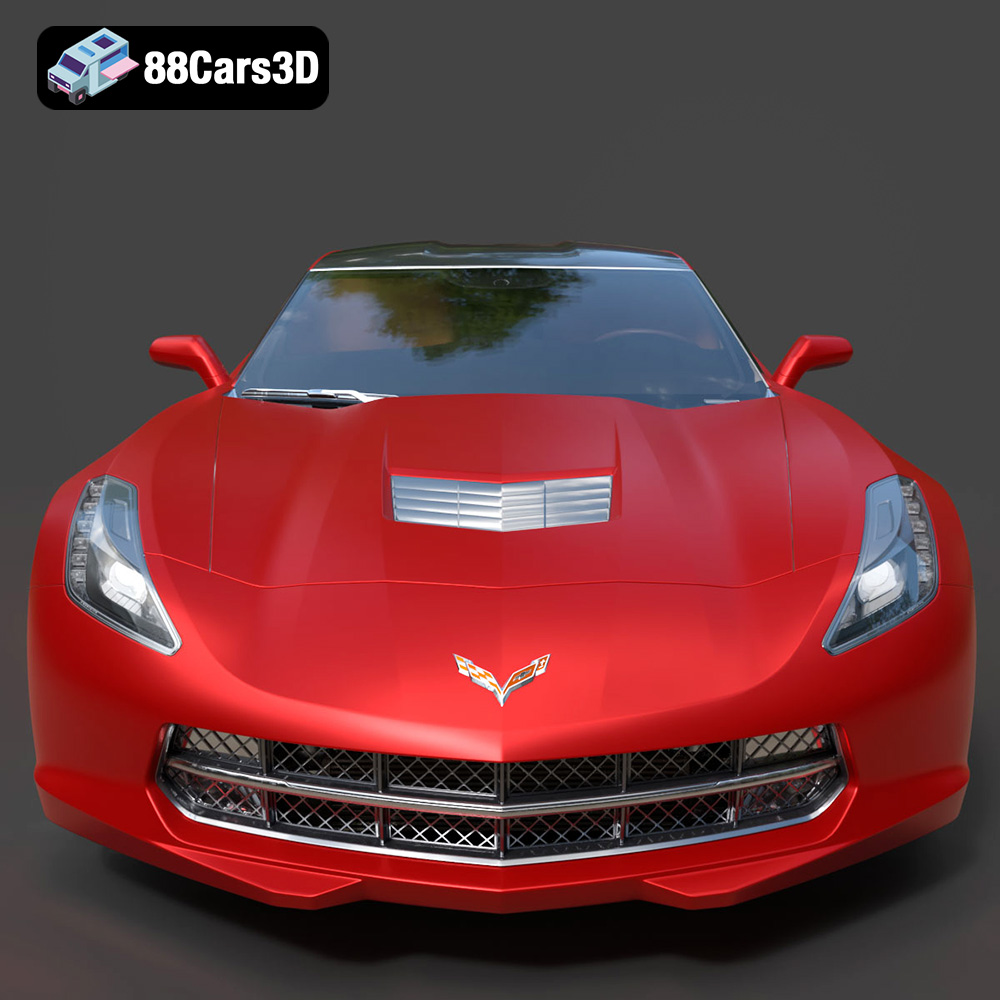
Experience the thrill of American muscle with our meticulously crafted Chevrolet Corvette C7 3D model. Renowned for its dramatic styling and performance, the C7 generation features sharp, aggressive aerodynamic lines, a powerful 6.2L LT1 V8 engine, and its unmistakable quad center-exit exhaust system. Every curve and intake has been carefully modeled to capture the aggressive, track-ready essence of this iconic sports car. Boasting a highly detailed topology of 4,659,385 triangles, this model delivers unparalleled visual fidelity. Despite the high polygon count, its clean mesh structure ensures smooth integration into modern game engines utilizing nanite-like technologies, making it a premium asset for high-end rendering, virtual reality experiences, and next-generation gaming environments. Perfect for AAA racing titles, immersive virtual showrooms, high-end automotive rendering, and architectural visualization scenes.
$37.50
.blend
.chevrolet
.fbx
.glb
.max
.obj
.ply
.rendering
.sports car
.stl
.supercar
.unreal
car-3d-model
corvette-c7
game asset
game-ready
high poly
muscle-car
optimized
VR/AR