Get 20% OFF All Premium 3D & STL Models!

In today’s fast-paced digital landscape, the demand for exceptionally realistic and technically sound 3D assets is paramount. From the immersive worlds of video games to the stunning visuals of cinematic animations and the practical applications of architectural visualization, a high-quality 3D car model is often the cornerstone of a compelling project. It’s not merely about aesthetics; it’s about precision, optimization, and seamless integration across diverse platforms.
A prime example of such a versatile and meticulously crafted asset is the Chevrolet Cruze 2011 3D Model. This particular model captures the essence of a pivotal compact sedan, known for its sharp styling and robust presence, translating these attributes into a digital format that is both visually striking and technically robust. It stands as a testament to the level of detail and optimization required for professional pipelines, making it an invaluable addition for anyone looking to elevate their projects, whether for game development, advanced automotive rendering, or interactive AR/VR experiences. The intricate blend of aesthetic accuracy and technical foresight ensures this model is ready to perform in any demanding virtual environment.
The choice of file format for a 3D model is far more than a minor technicality; it’s a critical decision that impacts workflow, compatibility, performance, and ultimately, the success of a project. When sourcing high-quality 3D car models, such as the Chevrolet Cruze 2011 3D Model available at 88cars3d.com, understanding the nuances of each format is essential for maximizing its potential. Different formats are optimized for distinct purposes, from real-time game engines to precision 3D printing.
The .blend format is the native file type for Blender, the popular open-source 3D creation suite. It is highly versatile, capable of storing an entire Blender scene, including mesh data, materials (with node setups), textures, animations, rigging, lighting, cameras, and even physics simulations. This makes .blend files ideal for users who primarily work in Blender and require full editability and access to all scene components. For the Chevrolet Cruze 2011, a .blend file provides the complete, editable project, allowing for intricate adjustments and further development within the Blender ecosystem.
.fbx (Filmbox) is an Autodesk-developed proprietary format that has become an industry standard for 3D data exchange, particularly between different 3D software applications and game engines like Unreal Engine and Unity. It supports not only geometry but also materials, textures, animations, bones, and even camera data. The .fbx format is highly robust and is often the go-to for exporting animated characters or complex scenes. Its comprehensive support makes it ideal for integrating the Chevrolet Cruze 2011 into real-time pipelines where animation and complex material setups are crucial.
.obj (Wavefront OBJ) is one of the oldest and most widely supported 3D file formats. It’s a universal format known for its simplicity and excellent cross-software compatibility. An .obj file primarily stores geometry (vertices, normals, texture coordinates, and faces) and can reference external material files (.mtl) for basic color and texture information. While it doesn’t support animation or advanced rigging, its widespread compatibility makes it a safe choice for basic mesh transfer when intricate animations are not required. For the Chevrolet Cruze 2011, the .obj version ensures broad accessibility across almost any 3D software.
.ply (Polygon File Format or Stanford Triangle Format) is often used for storing 3D data from 3D scanners, CAD applications, and scientific instruments. It can store a wide range of properties, including color, transparency, surface normals, texture coordinates, and even reliability information. While less common for general asset exchange than .fbx or .obj, its precision mesh capabilities make it suitable for tasks requiring high geometric accuracy or for specific engineering and analysis applications involving the Chevrolet Cruze 2011’s chassis or components.
.glb (GL Transmission Format Binary) is a modern, compact, and efficient 3D file format optimized for web and real-time applications, especially AR and VR. It packages 3D model data (geometry, materials, textures, animations) into a single binary file, making it incredibly easy to load and display in browsers and mobile applications without needing multiple file requests. The .glb version of the Chevrolet Cruze 2011 is perfect for creating interactive web configurators, mobile AR experiences, or light VR showrooms, offering excellent performance and visual quality.
The .unreal format, while not a standalone open file format, refers to an asset that is specifically packaged or pre-configured for direct use within Unreal Engine. This often means it comes with correctly set up materials, collision meshes, LODs (Levels of Detail), and blueprint functionalities, making it engine-ready and significantly reducing setup time for developers. For the Chevrolet Cruze 2011, having an .unreal asset means it’s been meticulously prepared to drop into Unreal Engine projects, adhering to its specific optimization standards for real-time environments.
.max is the native file format for Autodesk 3ds Max, a powerful 3D modeling, animation, rendering, and visualization software widely used in architectural visualization, game development, and film production. Like .blend, a .max file contains a complete 3ds Max scene with all its elements. It offers full editability and access to advanced rendering features, modifiers, and animation tools. The .max version of the Chevrolet Cruze 2011 is ideal for professional studios that use 3ds Max as their primary software, allowing for complex rendering setups with engines like V-Ray or Corona and detailed animation sequences.
Finally, .stl (Stereolithography) is the most common file format for 3D printing. It represents a 3D model as a series of connected triangles (a triangular mesh) and contains only geometric information, without color, texture, or material data. For hobbyists or professionals looking to bring the Chevrolet Cruze 2011 into the physical world, the .stl format is the standard. It provides the necessary data for slicing software to prepare the model for additive manufacturing, enabling the creation of tangible display models or prototypes.
Creating a truly high-fidelity 3D car model is an intricate art form that blends artistic vision with technical precision. It requires an understanding of real-world automotive design, meticulous attention to detail, and advanced optimization techniques. The Chevrolet Cruze 2011 3D Model exemplifies these principles, offering a digital asset that is both visually stunning and functionally superior across various applications.
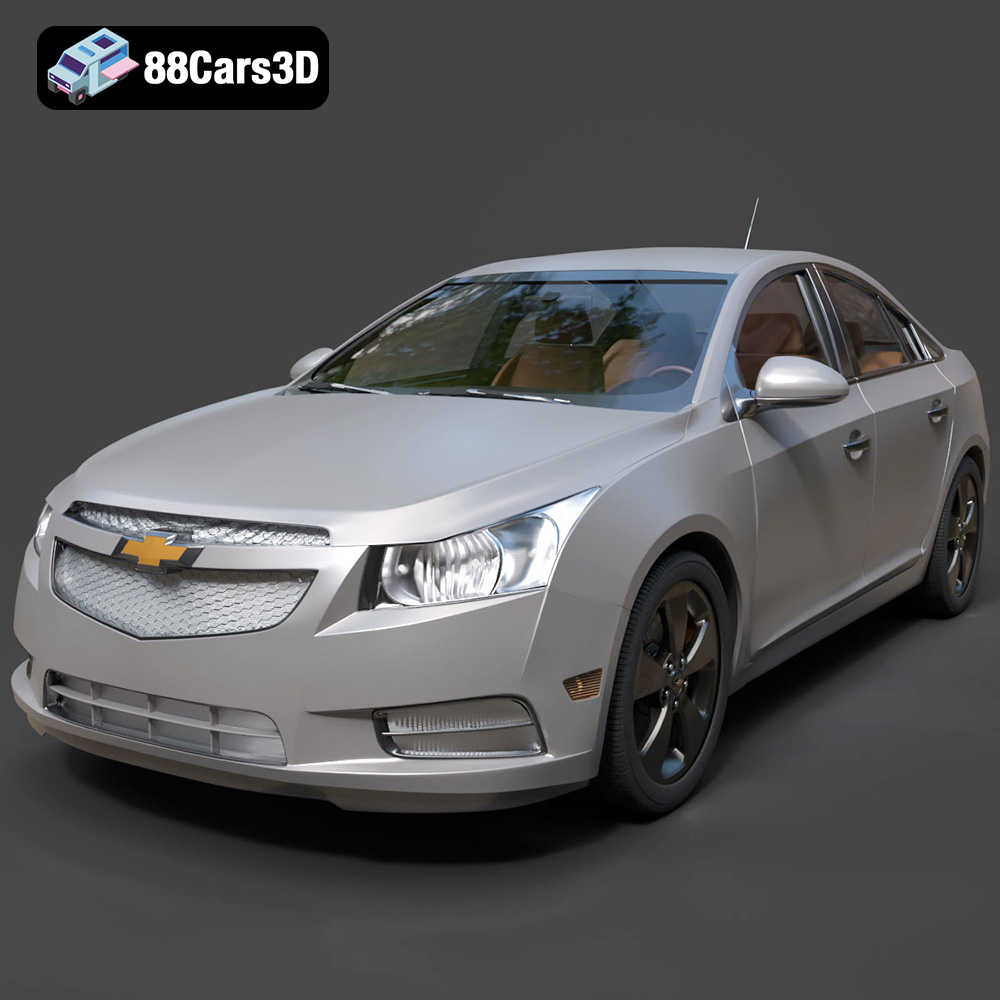
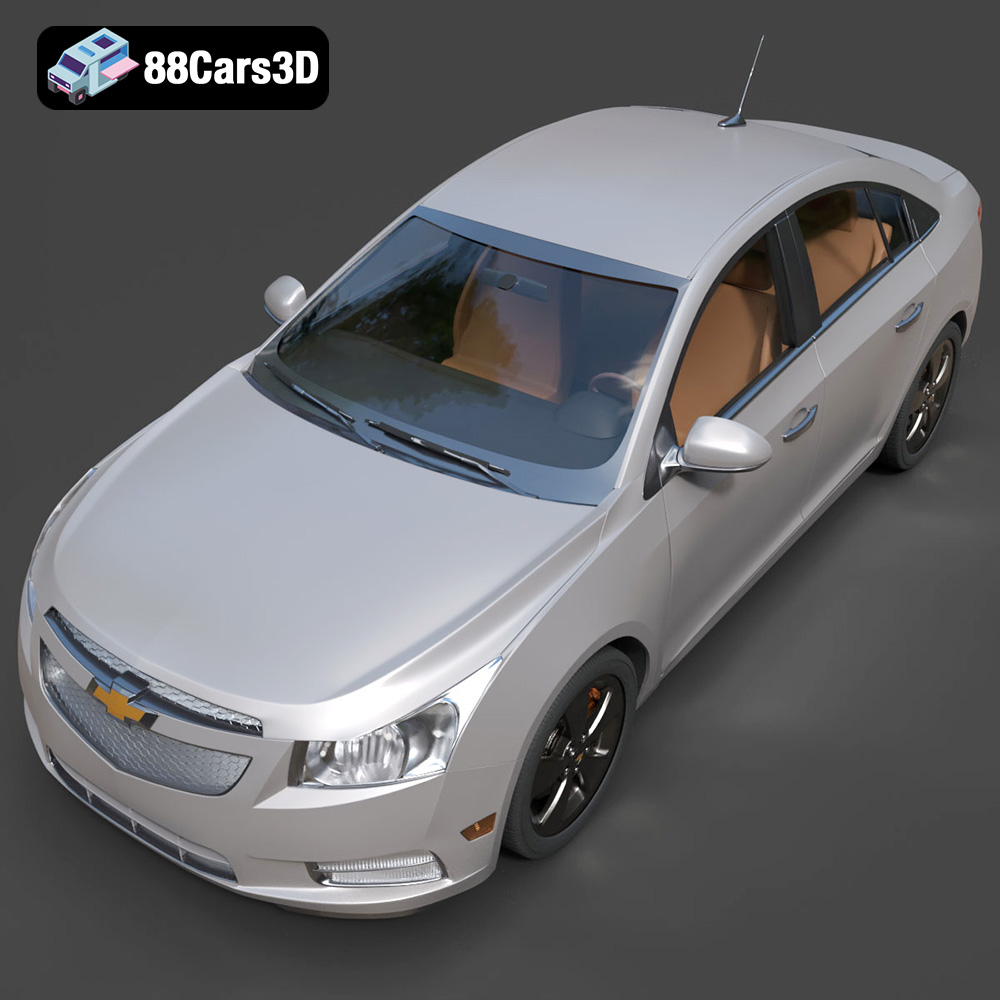
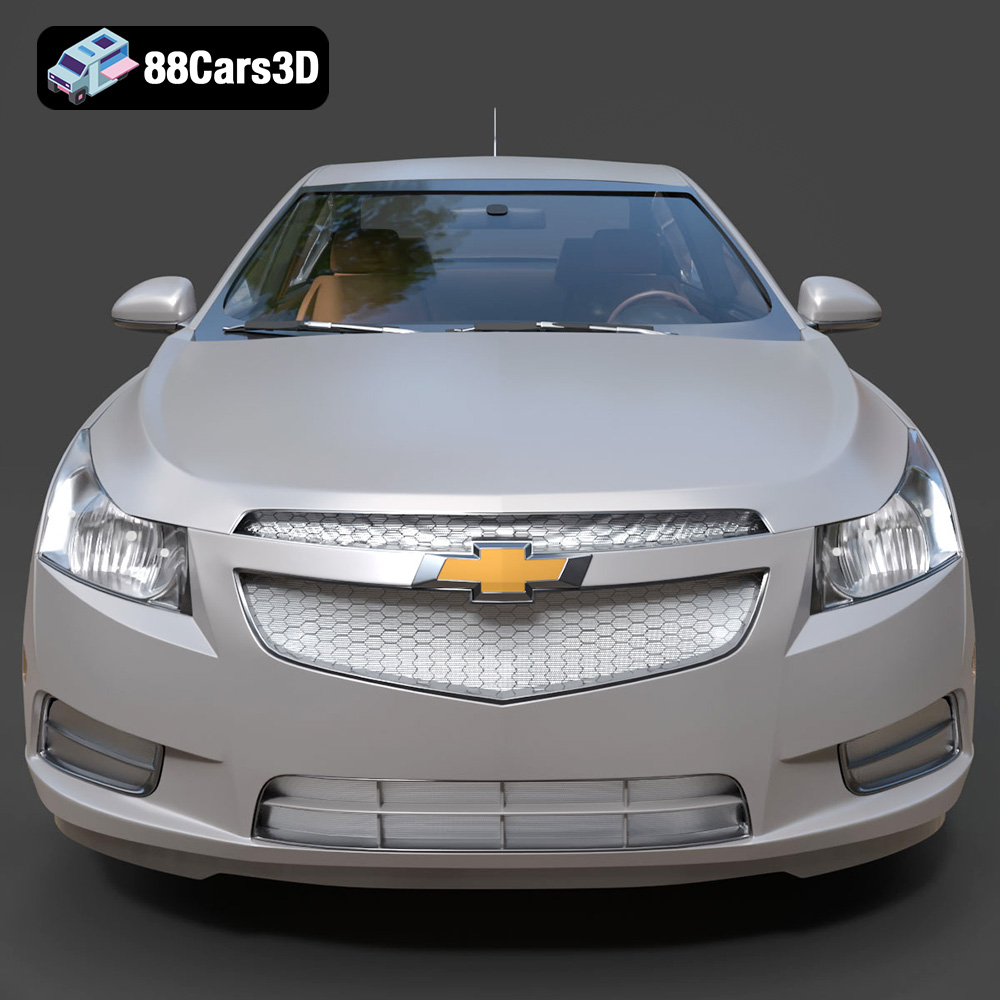
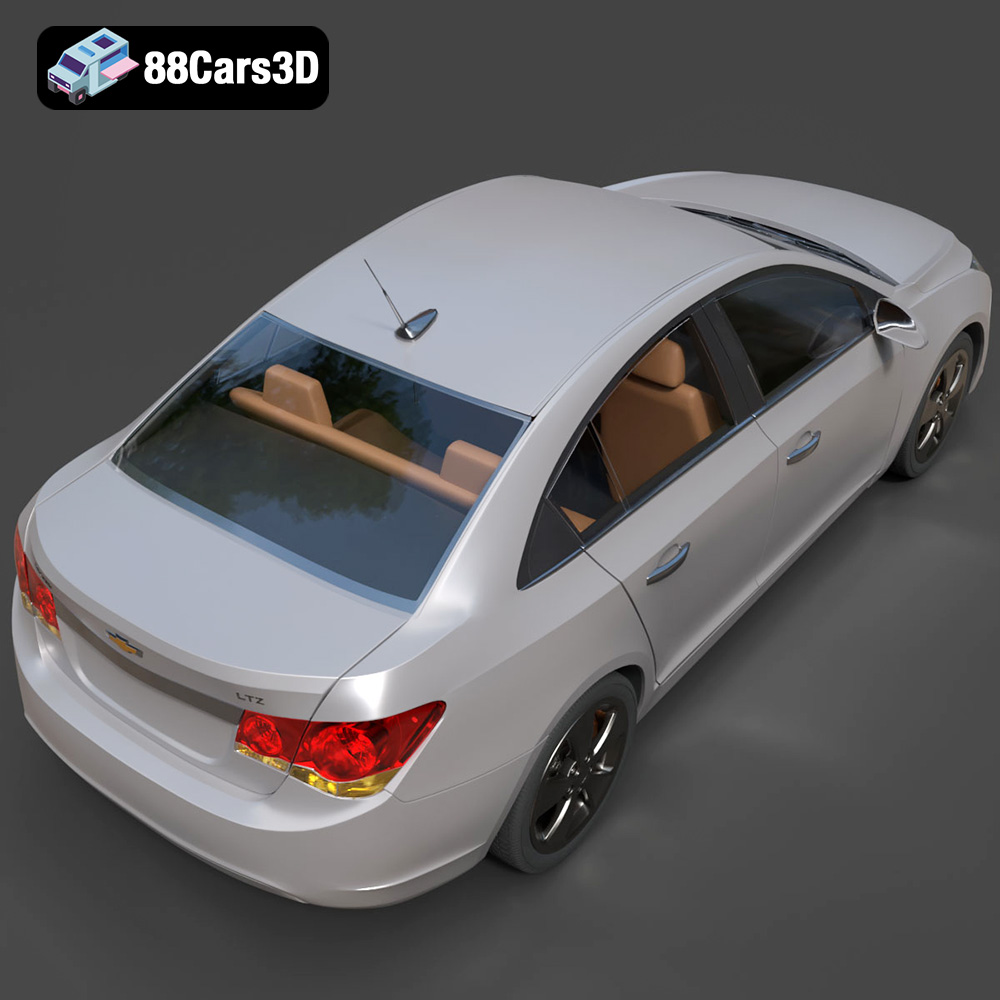
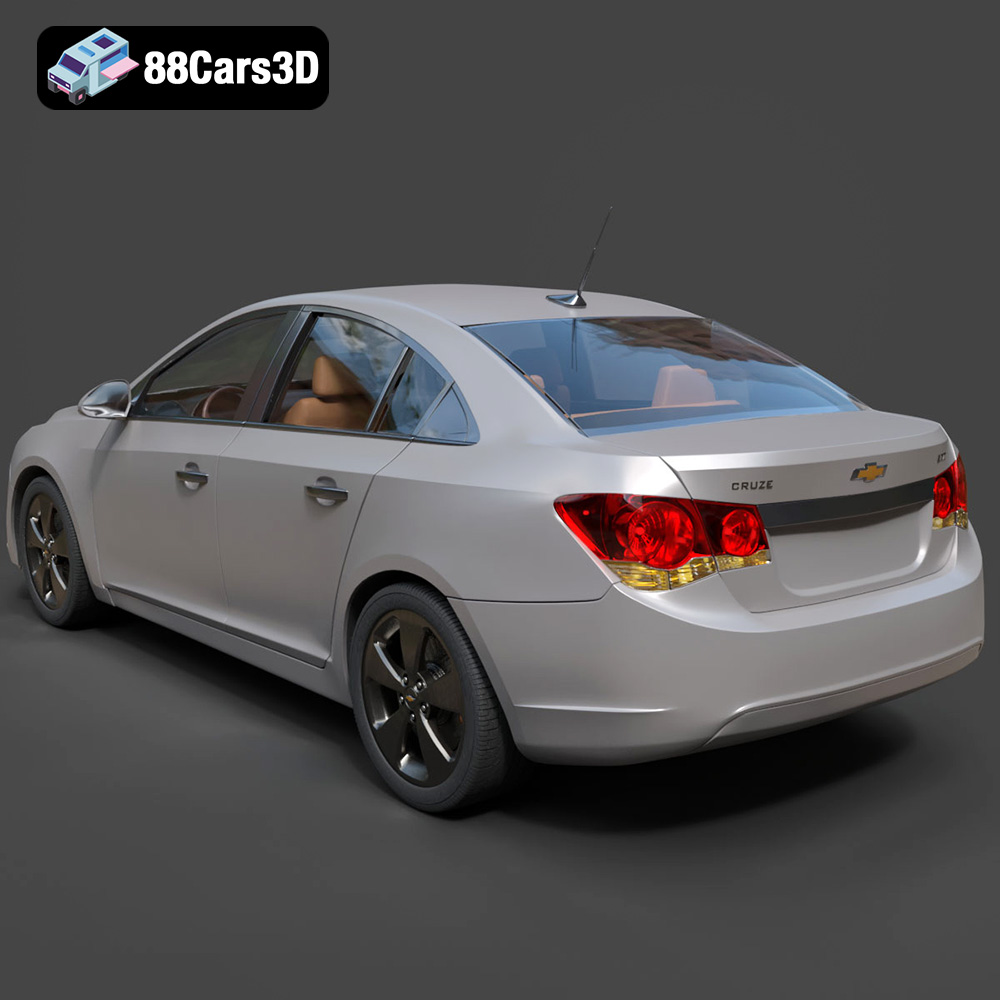
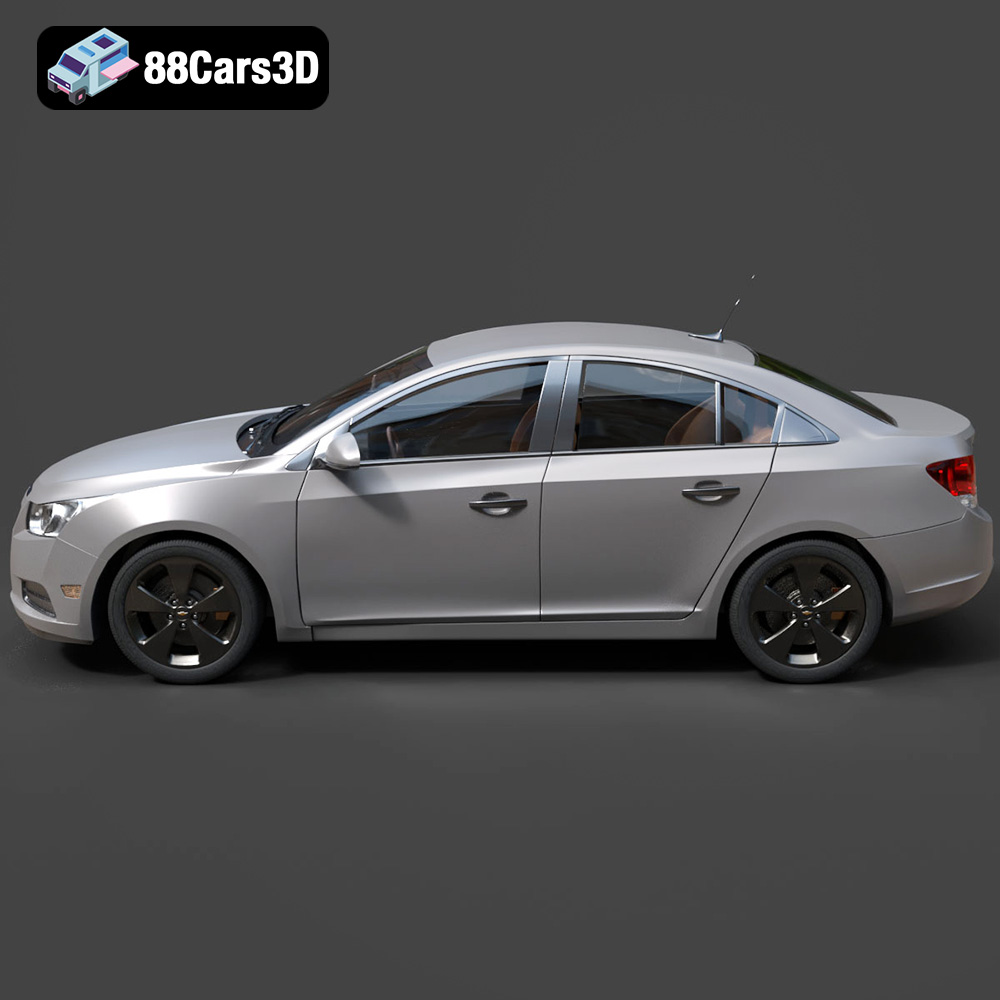
The exterior of the Chevrolet Cruze 2011 3D model is a masterclass in accurate representation. Key visual elements, such as the signature Chevrolet dual-port front grille and sweeping halogen headlights, are meticulously recreated, capturing the aggressive yet refined aesthetic of the original vehicle. The aerodynamic roofline and well-proportioned rear styling give it an assertive, planted stance, which is faithfully translated into the 3D geometry. Beyond the primary body, the model features a detailed engine block representation (Ecotec inline-four), a realistic exhaust system and undercarriage details, and highly detailed lighting assemblies. Crucially, it includes accurate multi-spoke alloy wheel rims with detailed tire treads, along with realistic suspension components and brake calipers. This level of granular detail ensures that even in close-up renders or first-person camera views, the model holds up to scrutiny, reflecting the dedication to authenticity found in premium 3D car models.
The interior doesn’t compromise on detail either. The detailed twin-cockpit design with both cloth and leather textured seats provides a rich tactile experience even in a virtual setting. An accurate multi-function steering wheel, complete with controls and a steering column, along with a detailed instrument cluster featuring twin-binnacle gauges, immerses the viewer. The intricate center console controls, infotainment unit, and gear shifter further enhance the realism, making the model perfectly suited for first-person POV in gaming and VR driving scenarios where internal fidelity is paramount.
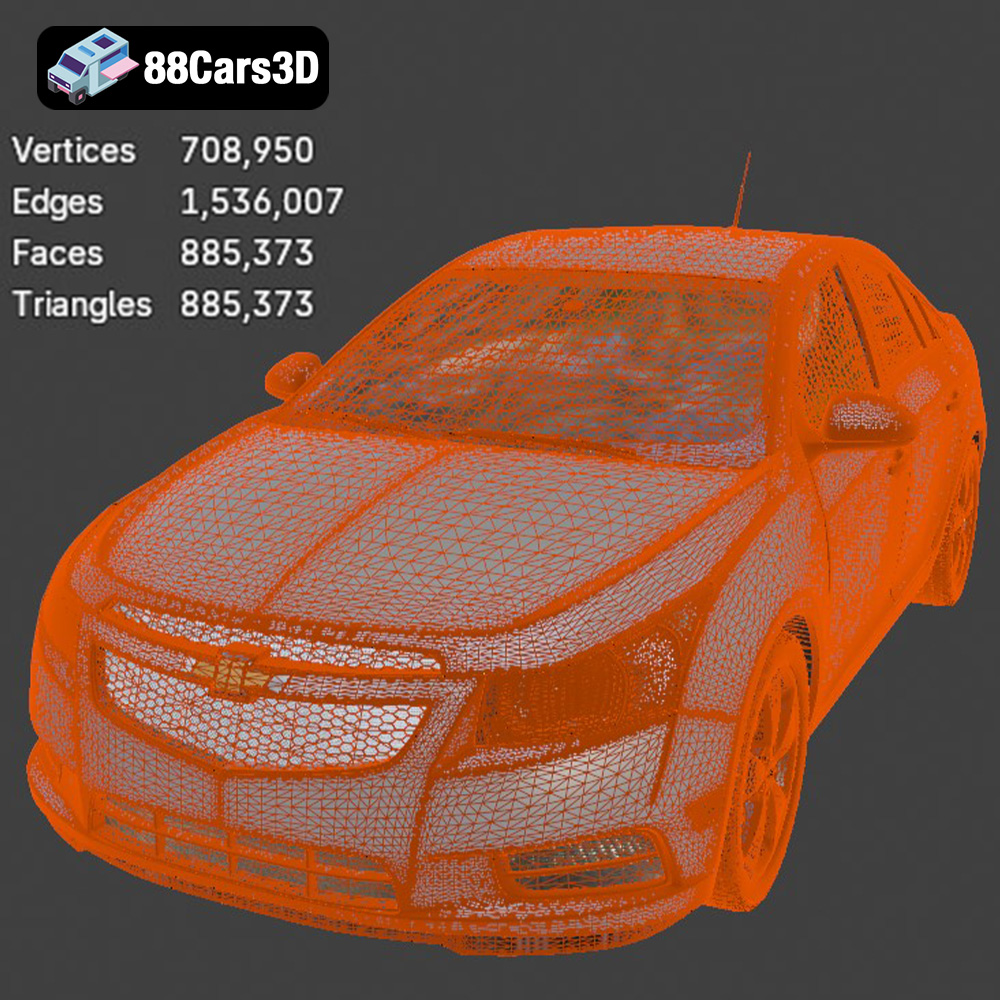
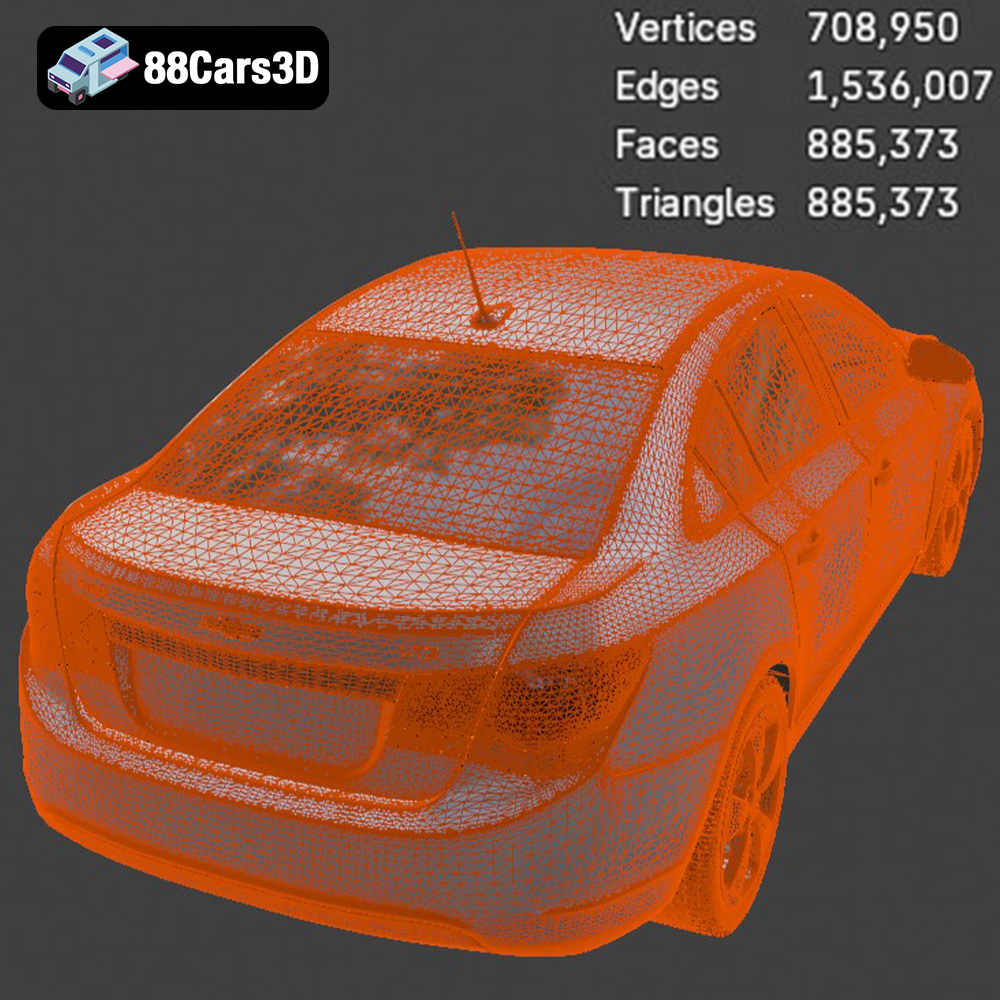
One of the most significant advantages of this Chevrolet Cruze 2011 3D Model is its intelligent optimization. With a finely tuned topology of 885,373 triangles, the model strikes a perfect balance between visual fidelity and performance efficiency. This poly count is high enough to maintain high-end visual realism with smooth surface reflections and pristine edge loops, ensuring the model looks breathtaking in both real-time lighting scenarios and offline rendering setups. Simultaneously, it’s meticulously optimized to be game-ready for engines like Unreal and Unity, preventing performance bottlenecks while preserving intricate details. The developers at 88cars3d.com clearly prioritized creating an asset that can be used immediately without extensive rework.
Furthermore, the model boasts real-world scale accuracy based on the actual vehicle chassis dimensions, which is crucial for realistic simulations and seamless integration into existing environments. It features a proper pivot setup for accurate steering, wheel rotation, and suspension travel, making it incredibly versatile for animation. This careful construction allows for realistic vehicle dynamics, essential for racing games or traffic simulations. The thoughtful separation of wheels, suspension, and steering components allows for seamless and independent animation, providing animators and game developers with maximum flexibility.
The aesthetic appeal and technical robustness of a 3D car model truly shine in the realm of rendering and visualization. For professionals in advertising, marketing, and design, a high-quality asset like the Chevrolet Cruze 2011 3D Model is indispensable for creating stunning visual content that captivates audiences. Its detailed design and optimized structure make it a prime candidate for a myriad of rendering scenarios.
In today’s competitive market, striking visuals are crucial for capturing consumer attention. The Chevrolet Cruze 2011 3D Model from 88cars3d.com offers an unparalleled tool for brand campaigns, lifestyle scenes, and studio lighting setups. Imagine a sleek virtual showroom where potential customers can explore the car from every angle, customize its features, and even “test drive” it in a photorealistic environment. This model is perfect for creating high-resolution images for brochures, websites, or social media campaigns, bypassing the need for expensive physical photoshoots. With its finely tuned topology and smooth surface reflections, the model reacts beautifully to advanced rendering engines like V-Ray, Corona Renderer, or Arnold, allowing artists to achieve studio-quality lighting and material fidelity. Whether showcasing different body colors or highlighting the intricate design of its alloy wheels, this 3D car model provides the flexibility and detail needed to produce top-tier automotive rendering.
Beyond traditional automotive marketing, the Chevrolet Cruze 2011 3D Model finds significant utility in broader visualization contexts. For architectural visualization (arch-viz) artists, populating urban city environments or highway traffic simulations with realistic vehicles is essential for bringing scenes to life. A meticulously detailed car model like this provides the necessary realism to ground an architectural rendering, adding scale, context, and a sense of bustling activity. Its accurate frame geometry and aerodynamic proportions ensure it sits naturally within any scene, enhancing overall credibility.
In cinematic animation, the demand for realistic vehicles is equally high. Whether for short films, commercials, or game cinematics, the Cruze model’s separate, animatable components (wheels, suspension, steering) allow animators to create dynamic and convincing driving sequences. The detailed interior, optimized for first-person views, also makes it suitable for scenes where characters interact with the vehicle’s cockpit. Its pristine edge loops ensure smooth deformations and reflections, crucial for maintaining realism during motion. From a simple drive-by to a complex narrative sequence, this asset is built to integrate seamlessly into sophisticated animation pipelines.
The world of interactive entertainment, particularly video games and real-time simulations, demands 3D assets that are not only visually impressive but also highly optimized for performance. The Chevrolet Cruze 2011 3D Model excels in this area, having been specifically designed with game development in mind, offering a perfect blend of realism and efficiency.
A “game-ready” asset is one that minimizes the developer’s workload and maximizes engine performance. The Chevrolet Cruze 2011 3D Model, with its optimized 885,373 triangle count, strikes this crucial balance. This level of detail ensures high-end visual realism without burdening the game engine, making it ideal for open-world games, racing titles, and traffic simulators. For Unreal Engine users, the inclusion of an .unreal file format means the asset is essentially plug-and-play. It often includes pre-configured materials using the Physically Based Rendering (PBR) workflow, correct pivot points, and potentially even collision meshes and Levels of Detail (LODs) to ensure smooth performance across various distances from the camera. Importing the .fbx version into Unity is equally straightforward, where developers can easily assign materials and set up physics for realistic vehicle behavior. The model’s real-world scale accuracy is also critical for consistent physics simulations and believable interactions within the game world.
The true test of a game-ready vehicle asset lies in its ability to facilitate immersive driving experiences. The Chevrolet Cruze 2011 3D Model is equipped with features that enable sophisticated vehicle dynamics. Its proper pivot setup allows for accurate steering, wheel rotation, and suspension travel, which are fundamental for realistic handling in racing or driving simulators. The separate wheels, suspension, and steering components are not just for visual detail but are key for seamless animation and the implementation of advanced vehicle physics systems. Developers can rig these components independently, allowing for dynamic reactions to terrain and player input, thus creating a more believable driving feel.
Furthermore, the model’s optimized geometry tailored for first-person POV in gaming and VR driving ensures that the detailed interior holds up perfectly when the player is inside the car. This is vital for cockpit-view driving games where the dashboard, steering wheel, and cabin environment are constantly in the player’s view. The customization options, such as changing body colors or modifying tire textures, allow developers to create diverse vehicle fleets or offer player customization, further enhancing replayability and immersion. From urban city environments to high-speed highway traffic, this model provides the foundational quality for compelling real-time automotive scenarios.
The versatility of a well-crafted 3D model extends far beyond traditional screen-based rendering and real-time games. The Chevrolet Cruze 2011 3D Model demonstrates this by offering direct pathways into tangible creations via 3D printing and immersive interactive experiences through Augmented Reality (AR) and Virtual Reality (VR).
For hobbyists, collectors, and prototyping professionals, the ability to transform a digital model into a physical object is a fascinating prospect. The Chevrolet Cruze 2011 3D Model is convertible to .stl format for display-scale hobbyists, making this transition seamless. The .stl format is the industry standard for 3D printing, providing the raw geometric data necessary for slicing software to prepare the model for fabrication. The product description provides clear 3D Print Settings, including recommended scales (1:12, 1:18, 1:24), layer height (0.04–0.12 mm, with resin printing recommended for fine details), and wall thickness (1.2–2.0 mm).
These guidelines are crucial for achieving successful prints, especially for a detailed car model. The recommendation for supports for detailed parts like exhaust, mirrors, and door handles, along with print orientation advice (frame angled for structural integrity, wheels printed separately), showcases a thoughtful approach to physical replication. Post-processing steps like sanding, priming, and applying authentic factory colors with metallic finishes allow creators to produce stunning, true-to-life miniature replicas of the Chevrolet Cruze 2011, transforming a virtual asset into a tangible display piece or a personalized collectible.
Augmented Reality (AR) and Virtual Reality (VR) represent the next frontier in interactive digital experiences, offering unparalleled immersion. The Chevrolet Cruze 2011 3D Model is perfectly positioned for these cutting-edge applications, thanks to its optimization and the inclusion of specific file formats like .glb. This format, optimized for web and real-time display, makes it incredibly easy to integrate the car into interactive virtual showrooms, sophisticated configurators, and mobile AR experiences. Imagine an AR app where you can place a life-sized Chevrolet Cruze 2011 in your driveway, explore its interior, and change its color in real-time, all through your smartphone.
For VR, the model’s optimized geometry and detailed interior are a significant advantage. Its optimized geometry tailored for first-person POV makes it ideal for virtual car showrooms where users can “step inside” the vehicle, inspect the cockpit, and experience the design as if they were physically present. This level of realism and interactivity is invaluable for automotive brands looking to offer prospective buyers a truly immersive and engaging way to experience their products, providing a significant edge in digital marketing and customer engagement. The meticulous attention to detail ensures that the virtual experience is as close to reality as possible, reinforcing the model’s value as a premium game asset.
In any professional 3D production pipeline, efficiency and quality are paramount. Creating complex assets like detailed car models from scratch is incredibly time-consuming and resource-intensive. This is where the strategic acquisition of premium 3D car models, such as the Chevrolet Cruze 2011 3D Model from 88cars3d.com, proves to be an invaluable investment, significantly streamlining workflows and elevating project outcomes.
The immediate and most significant advantage of using a pre-optimized 3D model is the immense time saving. Instead of dedicating hundreds of hours to modeling, texturing, and rigging a vehicle, artists and developers can instantly integrate a high-quality asset into their projects. The Chevrolet Cruze 2011 3D Model arrives game-ready and optimized, meaning it comes with a finely tuned topology, proper pivot setups, and compatibility with major 3D software and real-time engines. This ensures that precious development time can be focused on creative aspects like scene composition, animation, lighting, or game mechanics, rather than foundational asset creation. The meticulous work on the model’s 885,373 triangle count ensures optimal performance without sacrificing visual fidelity, a balance difficult to achieve for every asset within a tight deadline.
Furthermore, purchasing a professionally made asset guarantees a certain level of quality and consistency. The real-world scale accuracy and pristine edge loops of this model mean less time spent on corrections and refinements. It’s a reliable foundation upon which to build, ensuring that the visual quality of the vehicle will meet high industry standards right out of the box, whether for automotive rendering or game assets. This quality assurance minimizes unforeseen technical hurdles, allowing for a smoother production schedule.
A truly valuable 3D asset is not just high-quality but also highly adaptable. The Chevrolet Cruze 2011 3D Model offers excellent customization options, allowing it to be tailored to fit specific project needs without extensive re-modeling. Users can easily change body/tank colors, choosing from authentic factory colors or creating custom finishes. Modifying tire textures to switch between standard street and all-weather variants, or adjusting material finishes between matte, gloss, and metallic clear coats, provides immense creative freedom. This flexibility ensures that the single asset can be re-purposed for various scenarios—from a pristine showroom display to a weathered urban vehicle in a post-apocalyptic game—all with relative ease.
The ability to adapt lighting for different day/night environments further enhances its versatility for different rendering or real-time scenarios. Whether depicting a sunny afternoon drive or a moody nighttime scene, the model’s material setup is designed to respond realistically to diverse lighting conditions. This adaptability means that a single investment in a premium 3D car model from 88cars3d.com can serve multiple purposes across different projects, providing exceptional value and a competitive edge in any digital production pipeline.
The landscape of 3D content creation is continuously evolving, and at its heart lies the demand for assets that are not only visually stunning but also technically sound and versatile. The Chevrolet Cruze 2011 3D Model stands as a prime example of such an asset, perfectly embodying the meticulous detail and optimization required for modern digital projects. From its finely tuned topology and real-world scale accuracy to its comprehensive interior and exterior detailing, this model is engineered for excellence across a spectrum of applications.
Whether you are a game developer crafting immersive open worlds, an automotive rendering specialist creating captivating marketing visuals, an architect visualizing urban environments, or a designer exploring AR/VR experiences and 3D printing, this model offers a robust and ready-to-use solution. Its support for a wide array of industry-standard file formats—including .blend, .fbx, .obj, .glb, .stl, .ply, .unreal, and .max—ensures seamless integration into virtually any professional workflow. By leveraging such high-quality 3D car models, artists and developers can significantly streamline their production pipelines, saving invaluable time and resources while achieving unparalleled levels of realism and immersion.
For those seeking to elevate their projects with premium, game-ready, and render-optimized 3D car models, a visit to 88cars3d.com offers an extensive collection designed to meet the highest industry standards. The Chevrolet Cruze 2011 3D Model is just one example of the exceptional quality and versatility available, providing a powerful tool to drive your creative visions forward.
The Chevrolet Cruze 2011 represents a pivotal shift in the compact sedan market, boasting sharp styling, solid build quality, and a well-appointed interior. Key visual elements include the signature Chevrolet dual-port front grille, sweeping halogen headlights, an aerodynamic roofline, and well-proportioned rear styling that gives it an assertive, planted stance. This 3D model features exceptional quality with a finely tuned topology of 885,373 triangles. It is meticulously optimized for game engines while preserving high visual fidelity. The pristine edge loops and smooth surface reflections ensure the model looks breathtaking in real-time lighting scenarios and offline rendering setups alike. It is the perfect digital asset for game development, AR/VR projects, cinematic animation, and architectural visualization.
$58.50
.2011
.blend
.chevrolet
.cruze
.fbx
.glb
.max
.obj
.ply
.rendering
.sedan
.stl
.unreal
car-3d-model
compact-car
game asset
game-ready
low-poly
optimized
VR/AR