Get 20% OFF All Premium 3D & STL Models!

In the dynamic world of 3D visualization, precision and performance are paramount. From immersive game environments to critical industrial training simulations and photorealistic architectural renderings, the demand for highly accurate and optimized 3D assets continues to grow. For professionals working on projects involving construction, agriculture, or logistics, generic models simply won’t suffice. What’s needed are assets that not only look authentic but also integrate seamlessly into diverse professional workflows, offering both visual fidelity and technical adaptability.
Today, we delve into the intricate details of professional 3D asset creation and utilization, highlighting how meticulously crafted models can elevate your projects. We’ll explore various applications, technical considerations, and the critical role that file format selection plays in achieving successful outcomes. As a prime example of a model that meets these stringent industry standards, we will frequently reference the Skid Steer Loader 3D Model available at 88cars3d.com – a workhorse asset designed for versatility across multiple platforms, from real-time engines to high-fidelity renders and even 3D printing.
Choosing the correct 3D model file format is not merely a preference; it’s a critical technical decision that dictates compatibility, performance, and the scope of future modifications. For any professional working with 3D models, especially complex assets like heavy machinery, a clear understanding of these formats is indispensable. The Skid Steer Loader 3D Model, for instance, comes in a comprehensive array of formats, ensuring its utility across virtually any pipeline.
The .blend file is the native format for Blender, a powerful open-source 3D creation suite. When you download a .blend file, you’re getting a complete Blender scene, often including cameras, lights, and fully editable materials. This format is ideal for artists who primarily work in Blender, offering maximum flexibility for modifications, rigging, animation, and custom shader development. It retains all scene information, modifiers, and non-destructive workflows, making it the preferred choice for deep customization.
Autodesk’s .fbx (Filmbox) format is arguably the most widely adopted interchange format in the 3D industry, particularly for game development (Unreal, Unity) and animation pipelines. It excels at transferring 3D models, animations, rigs, and material assignments between different software applications while preserving a high degree of fidelity. Technical considerations include ensuring proper scale units during export/import, correct normal orientation, and managing embedded textures versus external texture references. Its robust support for skeletal animations and blend shapes makes it essential for dynamic assets.
The .obj (Wavefront OBJ) format is a classic, universal standard for transferring 3D geometry data. It’s renowned for its simplicity and broad compatibility across nearly all 3D software. An .obj file typically contains vertex positions, UV coordinates, normals, and face definitions. While it doesn’t inherently support animation or complex material definitions like .fbx, it’s excellent for clean mesh transfer. Associated .mtl files (Material Template Library) often accompany .obj files to define basic material properties and texture maps.
.glb (GL Transmission Format Binary) is the binary version of glTF, a modern, royalty-free specification for 3D scenes and models. It’s specifically designed for efficient transmission and loading of 3D content in web browsers, AR (Augmented Reality), and VR (Virtual Reality) applications. .glb files package geometry, textures, animations, and PBR (Physically Based Rendering) materials into a single, compact file, making it incredibly convenient for real-time interactive experiences where performance and file size are critical. This makes the Skid Steer Loader an excellent candidate for industrial AR/VR training.
.stl (Stereolithography) is the de facto standard format for 3D printing. It describes only the surface geometry of a 3D object using a collection of triangular facets. The primary concern with .stl is ensuring a watertight mesh (no holes or non-manifold geometry) to prevent printing errors. While it contains no color or texture information, its simplicity makes it universally compatible with 3D printers and slicing software. The Skid Steer Loader 3D Model, when prepared as an .stl, offers hobbyists and professionals the ability to create physical prototypes or display models.
.ply (Polygon File Format) is another format for storing 3D data, often used in scientific and engineering applications, particularly for scanned data. It can store not just geometry but also properties like color per vertex, normal information, and even material properties. It’s a more flexible alternative to .obj when more detailed mesh attributes are required beyond basic geometry, making it suitable for CAD, reverse engineering, or detailed mesh analysis.
While not a standalone file extension in the traditional sense, “.unreal” typically signifies a model that has been specifically prepared and optimized for direct import into Unreal Engine. This means it often comes pre-configured with appropriate scale, collision meshes, LODs (Levels of Detail), and PBR material setups, significantly streamlining the import and integration process for game developers. These assets are curated to meet Unreal Engine’s performance and rendering requirements, ensuring immediate usability.
The .max file is the native format for Autodesk 3ds Max, a leading software for 3D modeling, animation, and rendering in the architectural visualization, film, and game industries. Like .blend, a .max file contains the complete scene, including geometry, lights, cameras, modifiers, and intricate material setups. It’s ideal for users working within the 3ds Max ecosystem who require full editing capabilities and access to its extensive toolset for complex rigging and animation.
Beyond file formats, the intrinsic quality and design of a 3D model are what truly define its value. The Skid Steer Loader 3D Model exemplifies this, offering a meticulously detailed and optimized representation that transcends mere aesthetics. It’s engineered for both visual impact and functional performance across various applications.
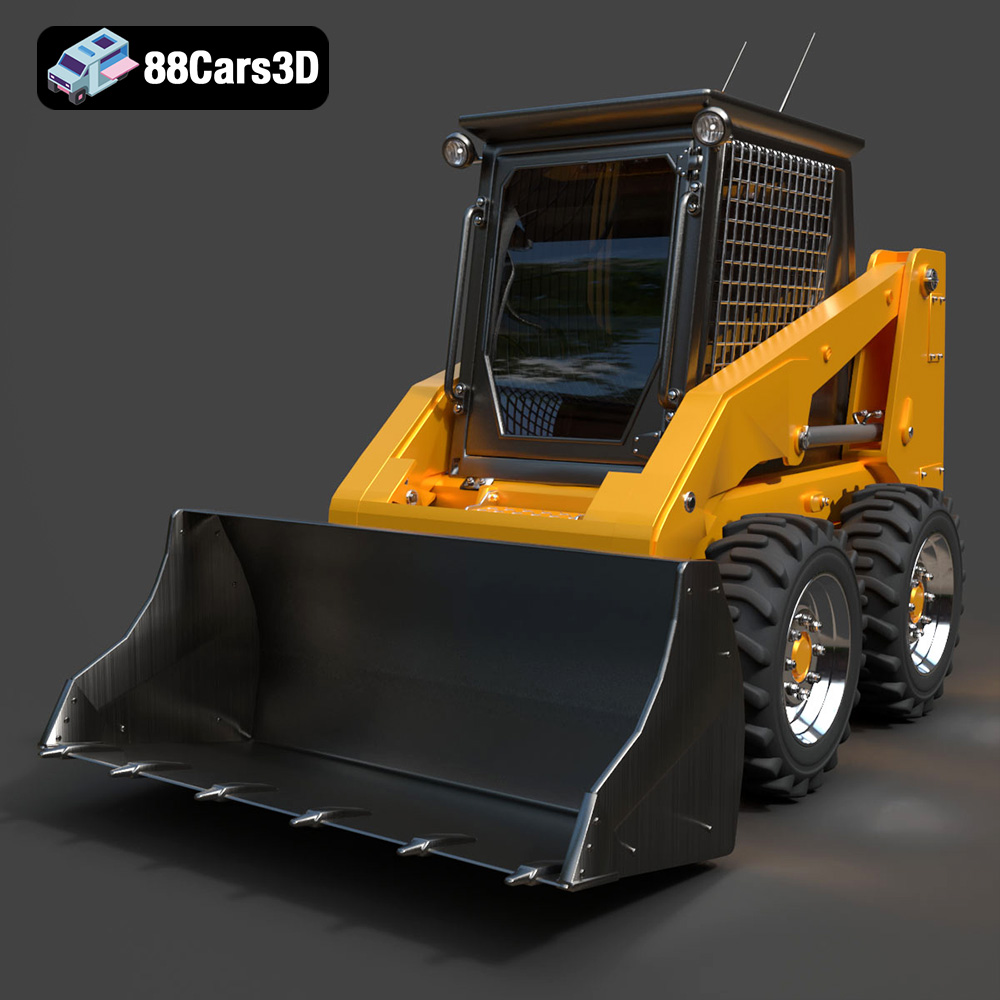
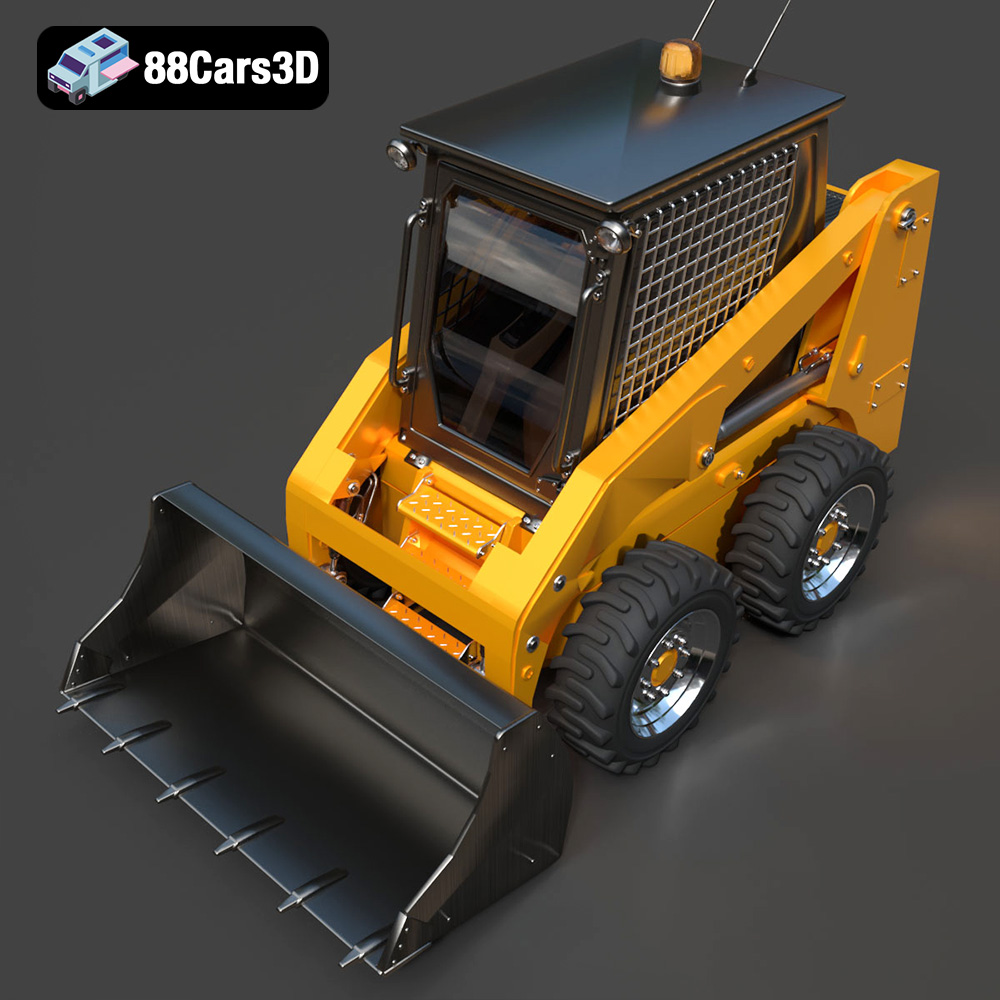
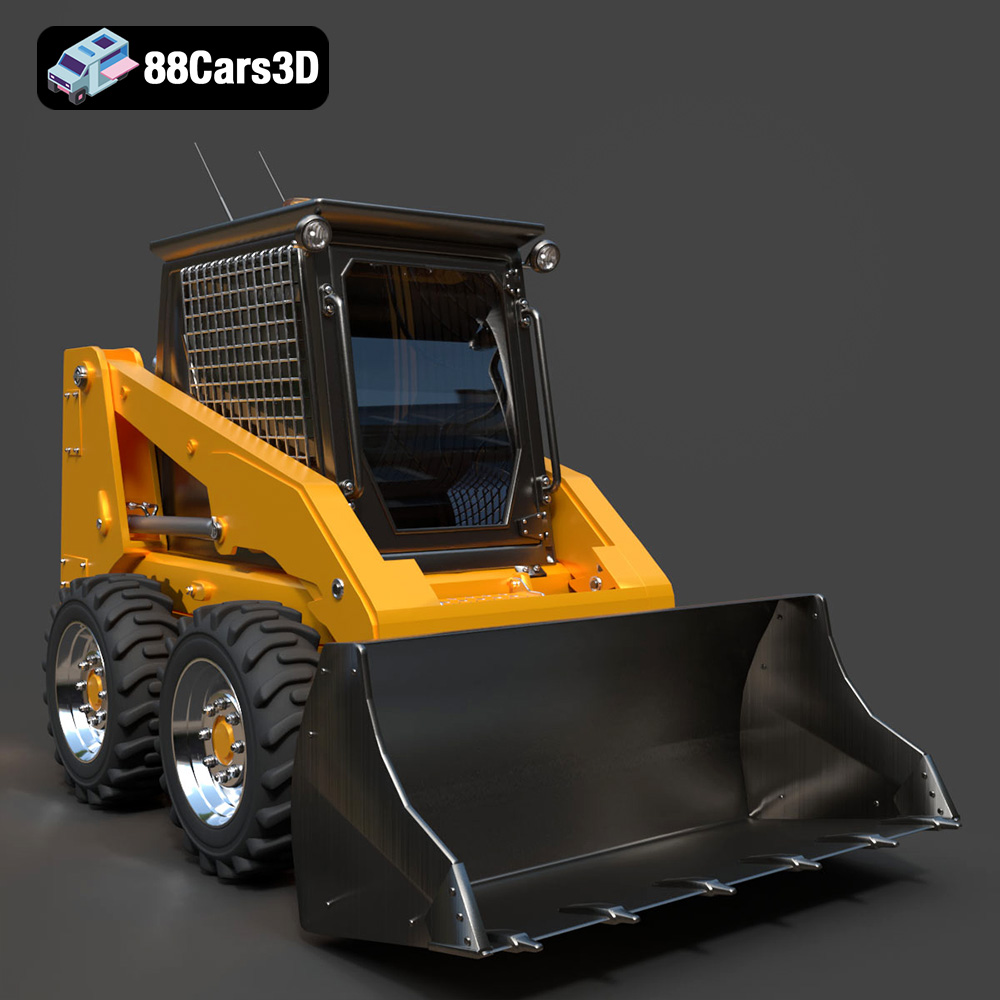
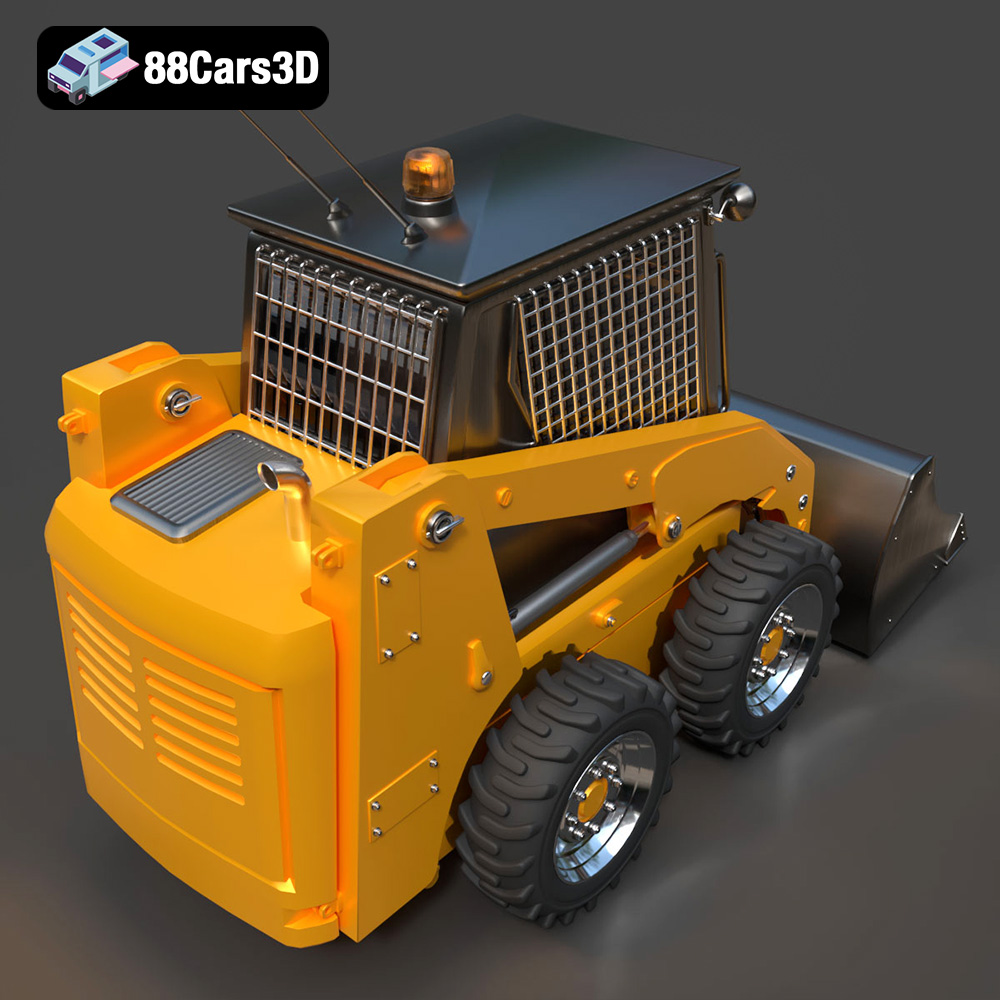
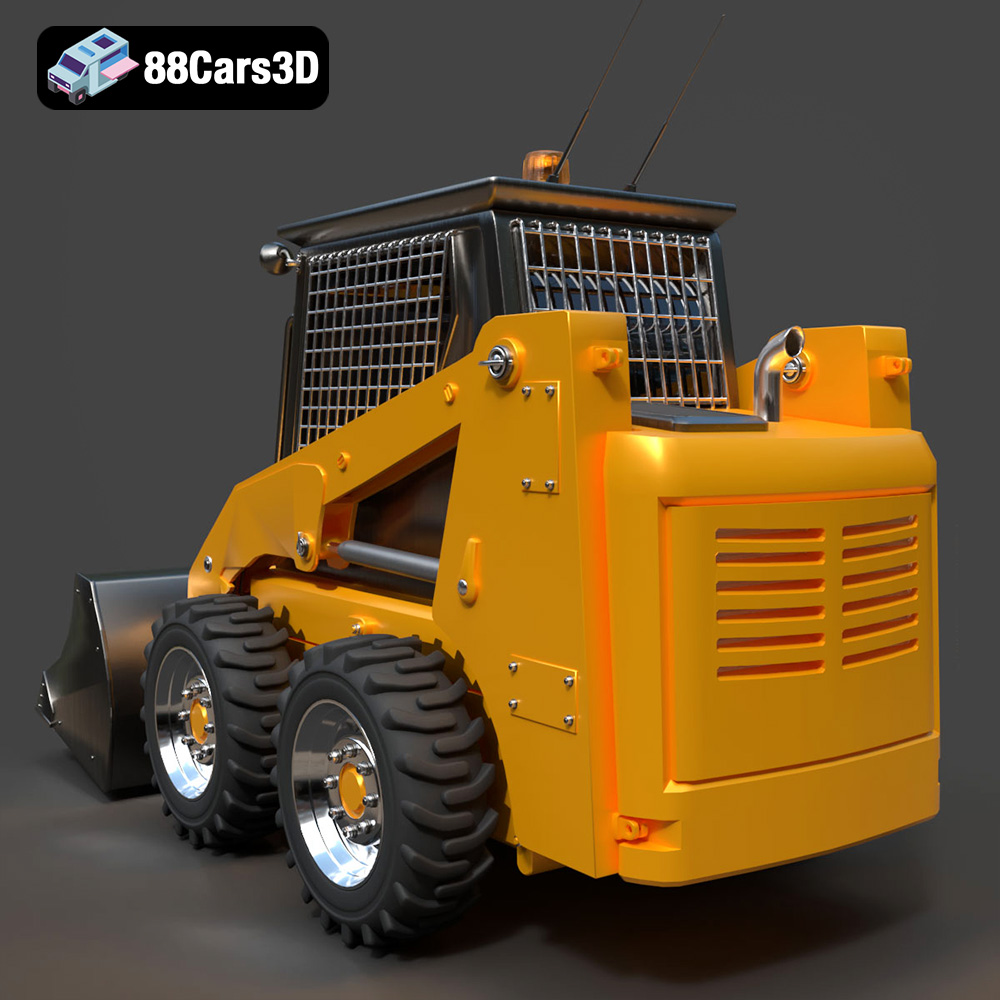
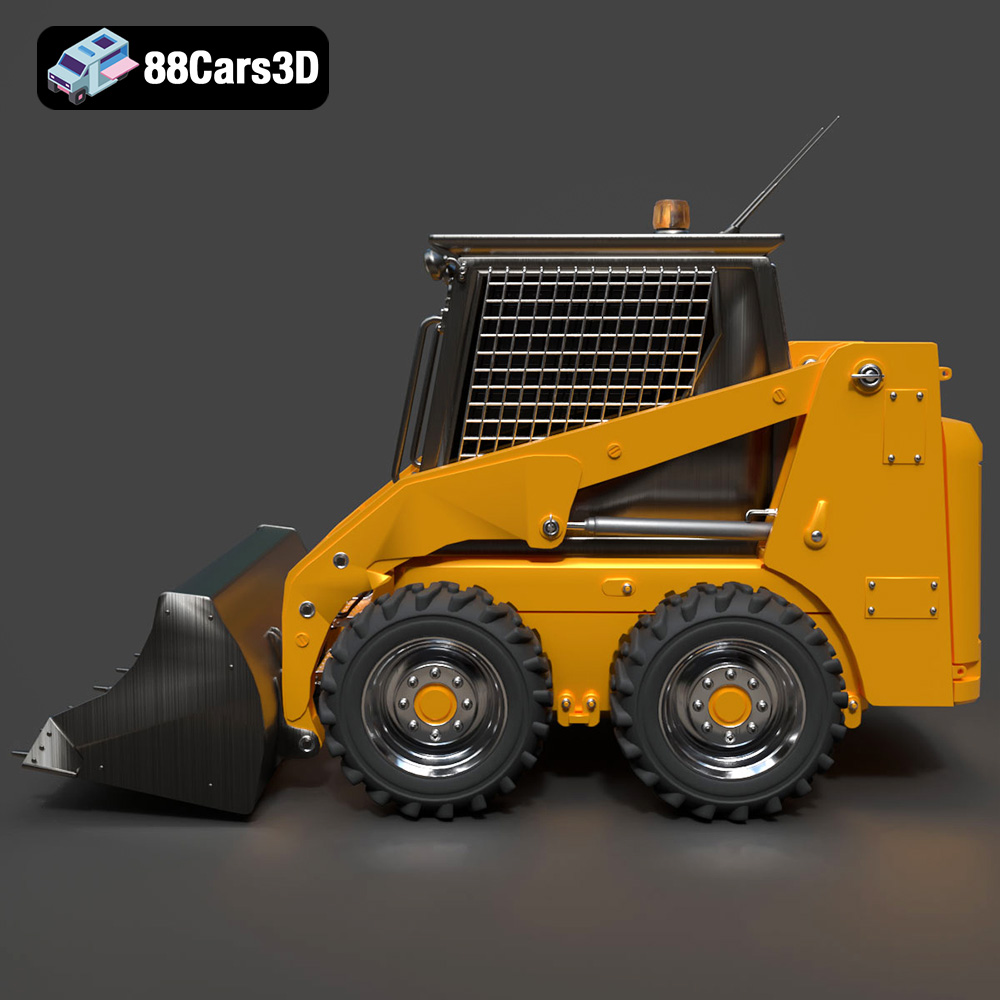
The robust exterior of the Skid Steer Loader model is a testament to careful observation and technical execution. Every element, from the accurate frame geometry and industrial proportions to the detailed engine compartment ventilation and exhaust stack, is rendered with precision. Key features like the fully modeled hydraulic lift arms, cylinders, and pivot points are not just visual; they are designed with animation in mind. The separate components – wheels, lift arms, bucket, and hydraulic elements – ensure that animators have complete control over realistic movements. Furthermore, the inclusion of functional work lighting and heavy-duty off-road tires with deep treads adds to the realism, making it suitable for dynamic scene creation.
For simulations and interactive experiences, the interior of a vehicle model is just as crucial as its exterior. The Skid Steer Loader 3D Model features a detailed operator seat complete with a safety restraint system, accurate dual-joystick steering, and control levers. The industrial instrument cluster and monitoring displays provide a sense of authenticity, vital for operator training modules. Crucially, the protective Roll-Over Protective Structure (ROPS) cage is accurately modeled, not only for visual realism but also for safety training scenarios. The optimized geometry ensures a smooth first-person POV, making it an outstanding asset for heavy machinery simulators where immersion is key.
A high-quality 3D model like the Skid Steer Loader isn’t just a static asset; it’s a dynamic tool that integrates into diverse professional workflows, offering significant advantages in efficiency and realism.
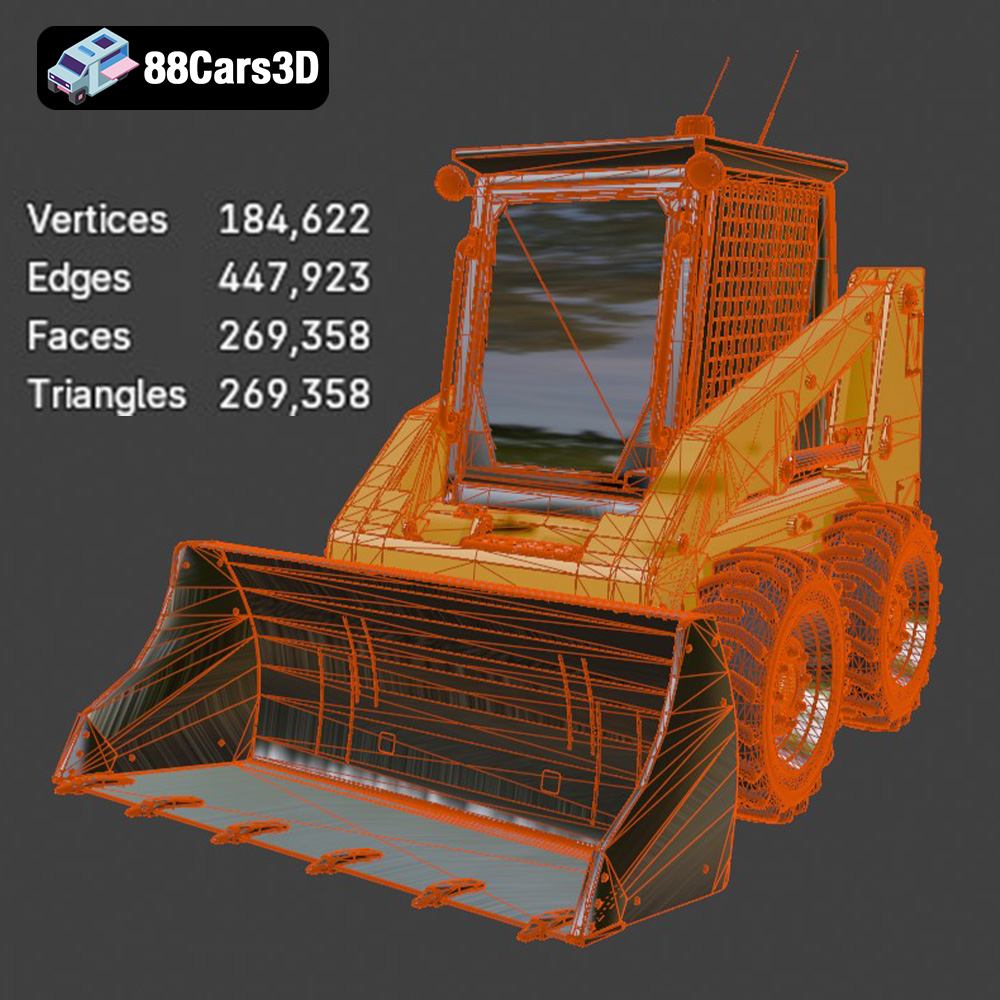
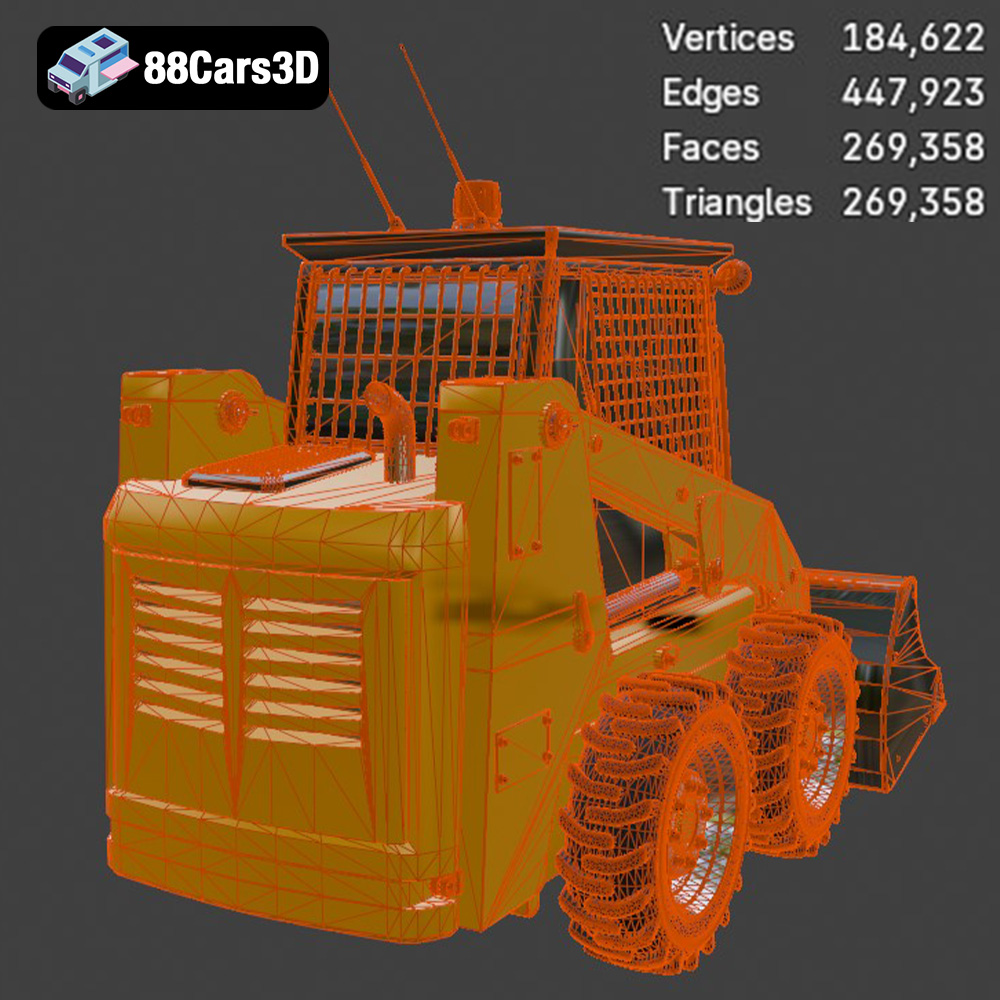
For game developers, performance is paramount. The Skid Steer Loader 3D Model is described as “Game-Ready & Optimized” with a triangle count of 269,358. This polycount strikes an excellent balance, providing high-end visual realism without overburdening real-time engines like Unreal and Unity. Its clean topology and proper pivot setup for steering, wheel rotation, arm lifting, and bucket tilting make it an ideal game asset. Developers can quickly drop it into their scenes, knowing it’s built to perform efficiently, support physics interactions, and integrate with vehicle systems for construction simulators, farming games, or industrial environments.
In architectural visualization (arch-viz) and industrial rendering, photorealism is the ultimate goal. The detailed nature of the Skid Steer Loader model, with its accurate geometry and industrial proportions, makes it perfect for populating construction site visualizations or industrial facility renderings. Artists using 3ds Max or Blender can leverage the model’s high fidelity to create stunning static images or complex animations. The ability to customize body colors, material finishes (matte, gloss, weathering), and adapt lighting allows for unparalleled flexibility in matching specific project aesthetics, whether it’s a pristine new machine or a heavily used piece of equipment on a dusty site. This model from 88cars3d.com can dramatically enhance the realism of any virtual construction project.
The growth of AR/VR technologies has opened new avenues for industrial training and safety simulations. The Skid Steer Loader model is perfectly suited for these applications. Its real-world scale accuracy and optimized geometry allow for immersive operator training where users can virtually interact with the machine’s controls and practice complex maneuvers in a safe, controlled environment. Imagine a trainee learning to operate the loader, feeling the virtual controls, and navigating a digital construction site. This significantly reduces risks and costs associated with real-world training, making it an invaluable tool for industrial education and virtual showrooms.
While digital applications are primary, the Skid Steer Loader 3D Model extends its utility into the physical realm through 3D printing. The inclusion of the .stl format, specifically designed for additive manufacturing, opens up exciting possibilities for hobbyists, educators, and even professionals seeking physical prototypes or display models.
Converting a digital model into a tangible object requires careful consideration of 3D print settings. The product description provides excellent guidance: recommended scales (1:24, 1:35, 1:50) cater to different display needs, while suggested layer heights (0.04–0.12 mm) emphasize the detail achievable, especially with resin printing. Wall thickness recommendations (1.2–2.0 mm) ensure structural integrity. Crucially, the need for supports for intricate parts like the roll cage and hydraulic arms is noted, as is the optimal print orientation for the frame, wheels, and bucket. This forethought minimizes potential printing failures and optimizes material usage, demonstrating the model’s thoughtful preparation for diverse applications.
For heavy machinery hobbyists, the ability to 3D print a detailed Skid Steer Loader offers a unique opportunity to create authentic display models. Post-processing steps like sanding, priming, and applying authentic industrial yellow/orange paint with weathering effects can result in highly realistic miniature replicas. In an educational context, printed models can serve as tactile learning aids for engineering students studying heavy equipment mechanics or design. They can be used to demonstrate complex hydraulic systems or structural components in a hands-on manner that static diagrams cannot replicate.
The true power of a well-designed 3D model lies not just in its initial fidelity but also in its capacity for customization and adaptation. The Skid Steer Loader 3D Model is built with this flexibility in mind, ensuring it remains a valuable asset throughout a project’s lifecycle and beyond.
Projects rarely remain static, and neither should your 3D assets. The Skid Steer Loader model offers robust customization options that allow artists to tailor its appearance to specific scenarios. Changing body colors, for instance, can transform a standard industrial yellow machine into a corporate-branded white loader or a construction orange variant. Modifying tire textures from pristine to muddy or dusty instantly communicates a story about the machine’s usage and environment. Furthermore, adjusting material finishes – from a brand-new gloss to heavy weathering or rust – adds layers of realism and narrative depth. The ability to adapt lighting for day or night construction environments further enhances its utility in varied scene compositions, ensuring the model always fits the mood and requirements of your visualization.
Investing in high-quality, customizable 3D models like those found on 88cars3d.com is a strategy for long-term project success. A model that can be easily modified and re-textured ensures its longevity across multiple projects, saving time and resources that would otherwise be spent creating new assets from scratch. Its well-optimized topology and clean UVs (implied by “game-ready” and “optimized”) mean that future texture updates or material overhauls can be implemented efficiently. This makes the Skid Steer Loader 3D Model not just an asset for a single use case, but a foundational element for a wide array of future creative and technical endeavors, proving its value as a future-proof investment.
The world of 3D modeling for industrial applications, gaming, and visualization demands assets that are not only visually impressive but also technically robust and highly adaptable. From understanding the nuanced utility of various file formats like .blend, .fbx, and .unreal to appreciating the intricate details of a model’s design and its potential for physical output, every aspect contributes to the success of a project. High-quality 3D models streamline workflows, enhance realism, and provide invaluable tools for immersive experiences.
The Skid Steer Loader 3D Model stands out as an exemplary asset, meticulously crafted for a multitude of professional applications. Its optimized geometry, animatable components, and comprehensive file format support ensure it’s game-ready, ideal for AR/VR training, and perfect for stunning renders and even 3D printing. By providing a perfect balance of visual fidelity and real-time performance, it empowers creators to bring their industrial visions to life with unparalleled realism and efficiency. Explore this and other exceptional 3D vehicle models at 88cars3d.com to elevate your next project.
Explore the rugged versatility of this Skid Steer Loader, a highly accurate 3D model representing the workhorse of modern construction, landscaping, and agriculture. Known for its compact frame, tight turning radius, and formidable lifting power, this model captures the heavy-duty aesthetics perfectly, from its robust lifting arms and reinforced front bucket to its protective roll cage and hydraulic cylinders.
This 3D model features a well-optimized topology with a triangle count of 269,358, providing an exceptional balance between high-end visual fidelity and real-time engine performance. Designed to be game-ready, the model ensures smooth integration into various platforms, making it an outstanding asset for game development, AR/VR industrial training applications, and realistic architectural visualizations.
Perfect for construction site simulations, industrial animations, heavy machinery games, and VR operator training modules.
.blend, .fbx, .obj, .glb, .stl, .ply, .unreal, .max
Tags:
skid-steer-loader, construction-equipment, heavy-machinery, loader, game-ready, low-poly, optimized, vehicle-3d-model, game-asset, rendering, vr-ar, blend, fbx, obj, glb, stl, ply, unreal, max
$27.99
.blend
.fbx
.glb
.max
.obj
.ply
.rendering
.stl
.unreal
construction-equipment
game asset
game-ready
heavy-machinery
loader
low-poly
optimized
skid-steer-loader
vehicle-3d-model
VR/AR