Get 20% OFF All Premium 3D & STL Models!

In the high-stakes world of military simulation, cinematic rendering, and immersive AR/VR training, the demand for exceptionally detailed and technically accurate vehicle assets is paramount. These aren’t just aesthetic requirements; they’re critical for realism, performance, and ultimately, effective communication or training. Among the most iconic and essential vehicles on the modern battlefield is the Mine-Resistant Ambush Protected (MRAP) vehicle, a testament to survivability and tactical engineering. Its imposing V-hull design, heavy armor, and rugged functionality make it a prime candidate for digital representation.
Today, we’ll delve into the intricacies of integrating such a complex asset into professional pipelines, focusing on a standout example: the Caiman MRAP 2008 3D Model available at 88cars3d.com. This meticulously crafted digital replica encapsulates the essence of the real-world Caiman, providing artists, developers, and engineers with a powerful tool for a myriad of applications, from game-ready combat simulations to high-fidelity defense visualizations and even detailed 3D prints. Understanding its technical specifications, supported file formats, and application workflows is key to unlocking its full potential in your next project.
The Caiman MRAP is more than just a vehicle; it’s a symbol of resilience on the battlefield. Recreating such a complex piece of machinery in a digital environment requires a deep understanding of its real-world counterpart, combined with astute technical execution to ensure both visual fidelity and optimal performance. The Caiman MRAP 2008 3D Model from 88cars3d.com exemplifies this balance, offering a robust foundation for any project.
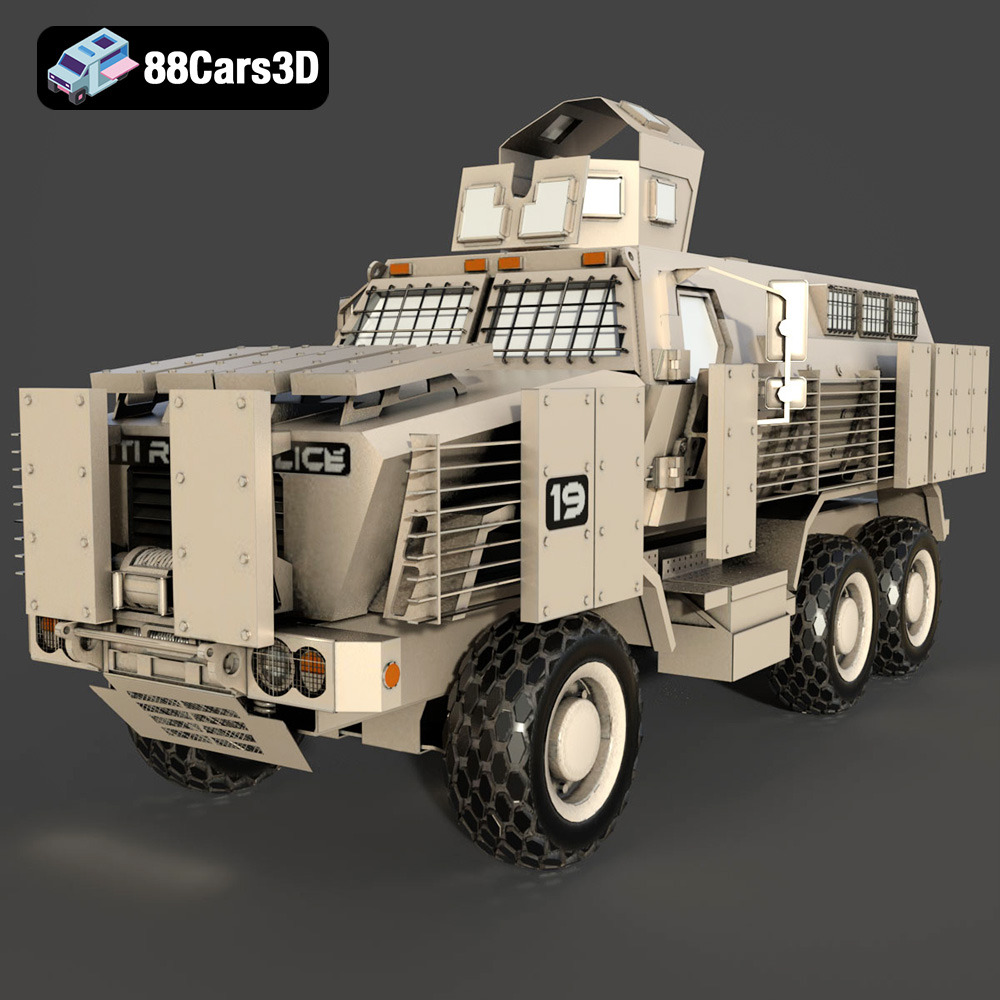
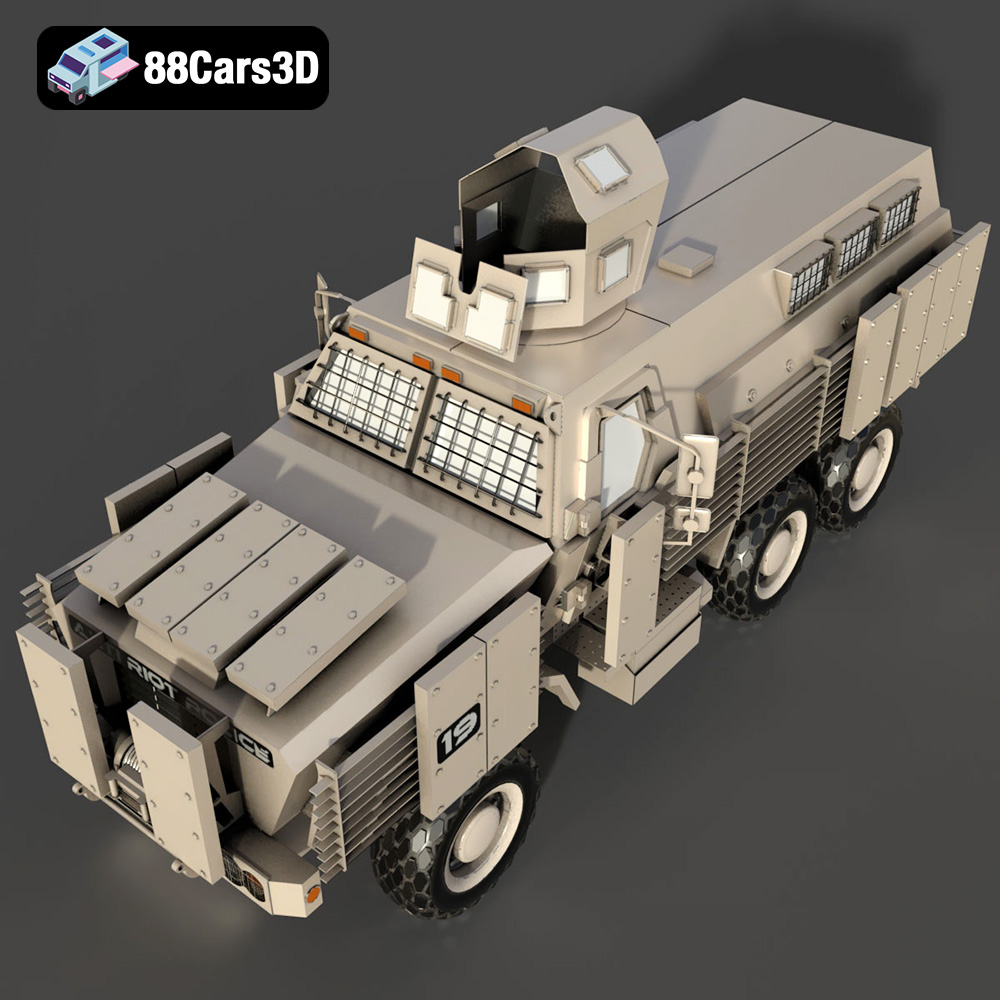
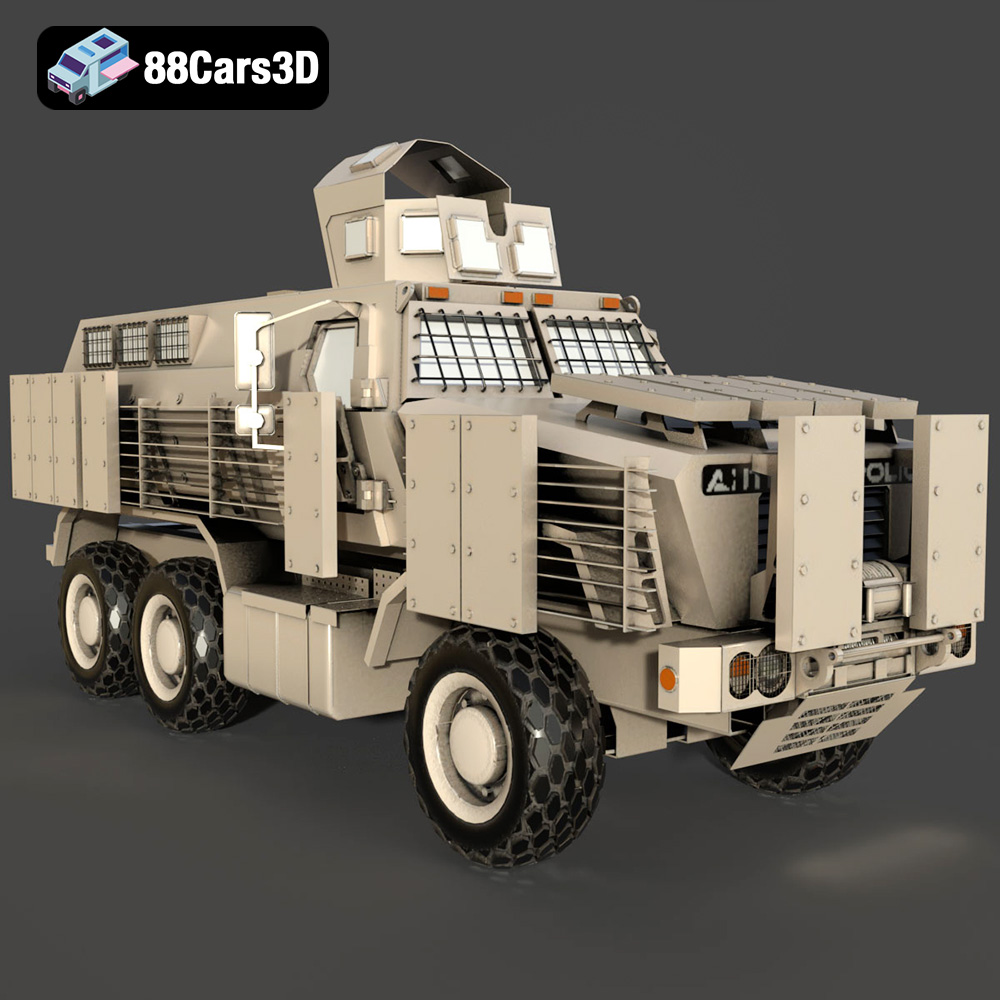
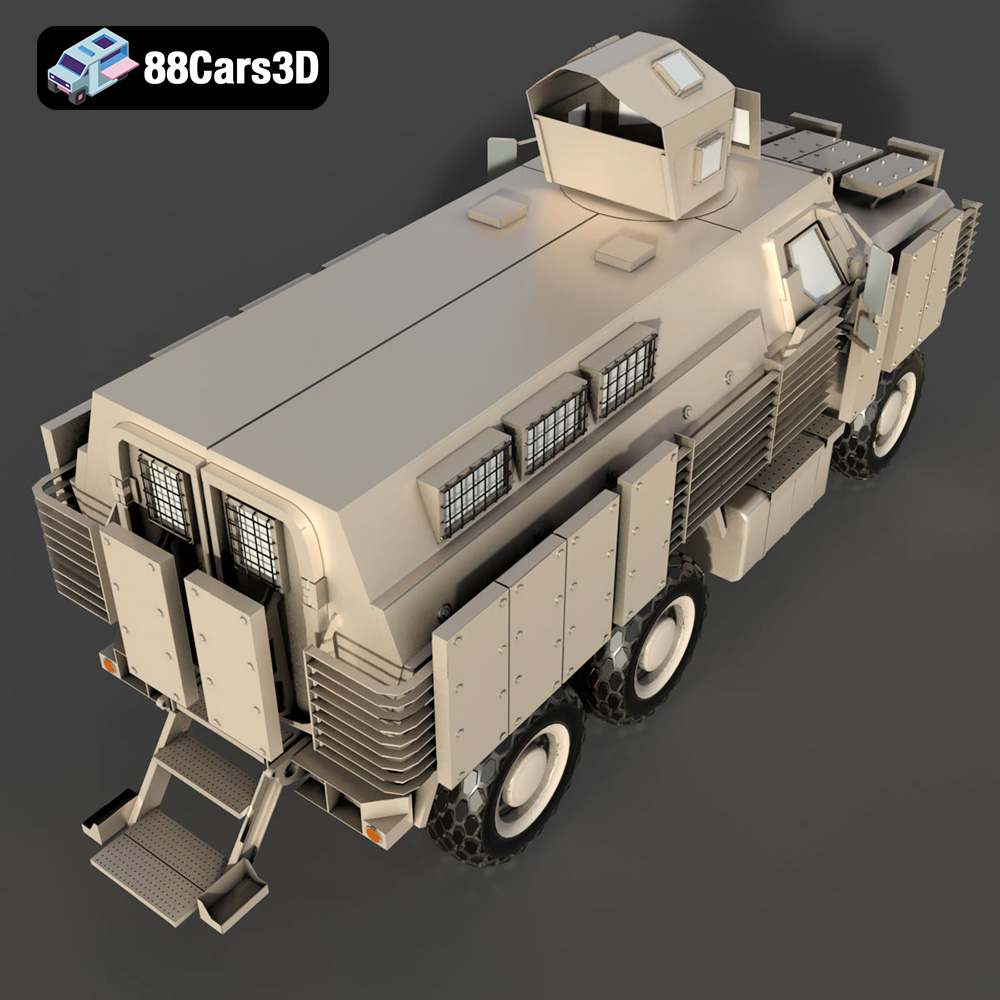
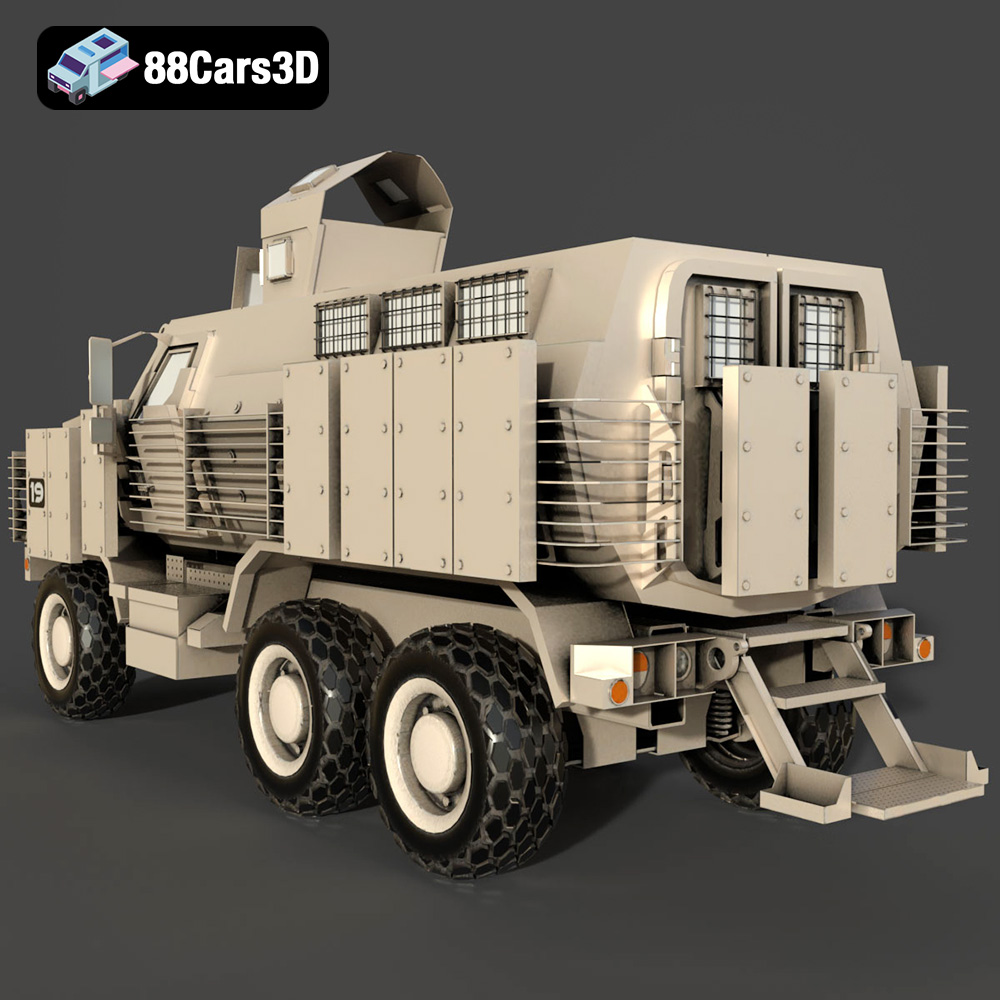
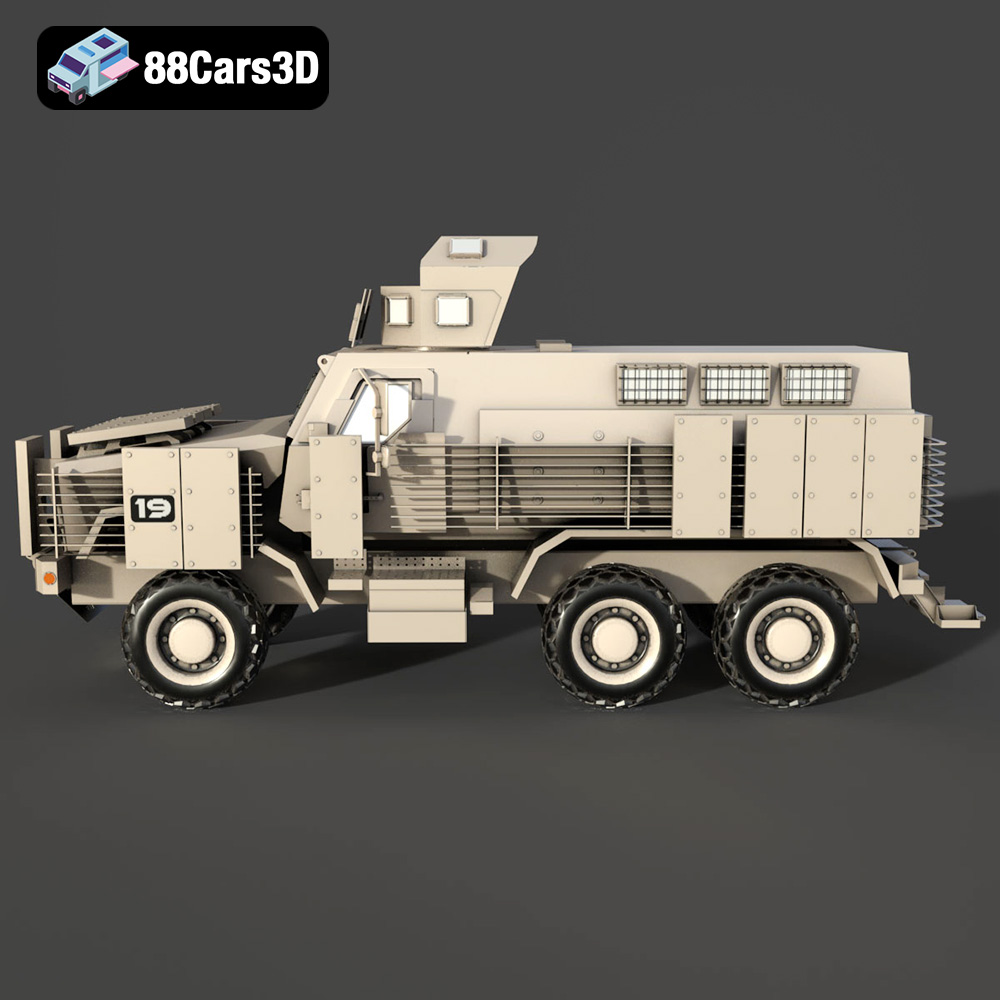
The exterior of the Caiman MRAP is its most striking feature, defined by its heavy-duty armored chassis and distinctive V-hull design. This model meticulously replicates these elements, ensuring accurate proportions and geometry that mirror the real vehicle. From the intricate detailing of the diesel engine block and armored cooling grilles, designed to protect vital components, to the specialized tactical exhaust routing engineered for high-clearance environments, every aspect has been considered. Military-spec blackout lighting, searchlights, and standard tactical headlights are accurately placed. Crucially, the massive run-flat tactical wheels with their deep, aggressive off-road treads are precisely modeled, complete with reinforced heavy-duty leaf springs and solid axle suspension details. For dynamic scenarios, components like the wheels, suspension, turret, and steering are separated, allowing for realistic animation and interactive control.
Beyond the formidable exterior lies a functional and resilient interior, faithfully reproduced in this 3D model. The blast-mitigating troop seats and commander station details are rendered with care, highlighting the vehicle’s primary function of crew protection. Key operational elements such as the heavy-duty tactical steering wheel, reinforced column, military-grade instrument cluster, and digital comms displays are all present. Even the robust pedals, levers, and transmission shifter have been meticulously designed, providing a comprehensive cockpit experience. This level of interior detail is not just for show; its optimized geometry is perfect for first-person POV in tactical gaming, allowing players or trainees to immerse themselves fully within the Caiman’s operational environment.
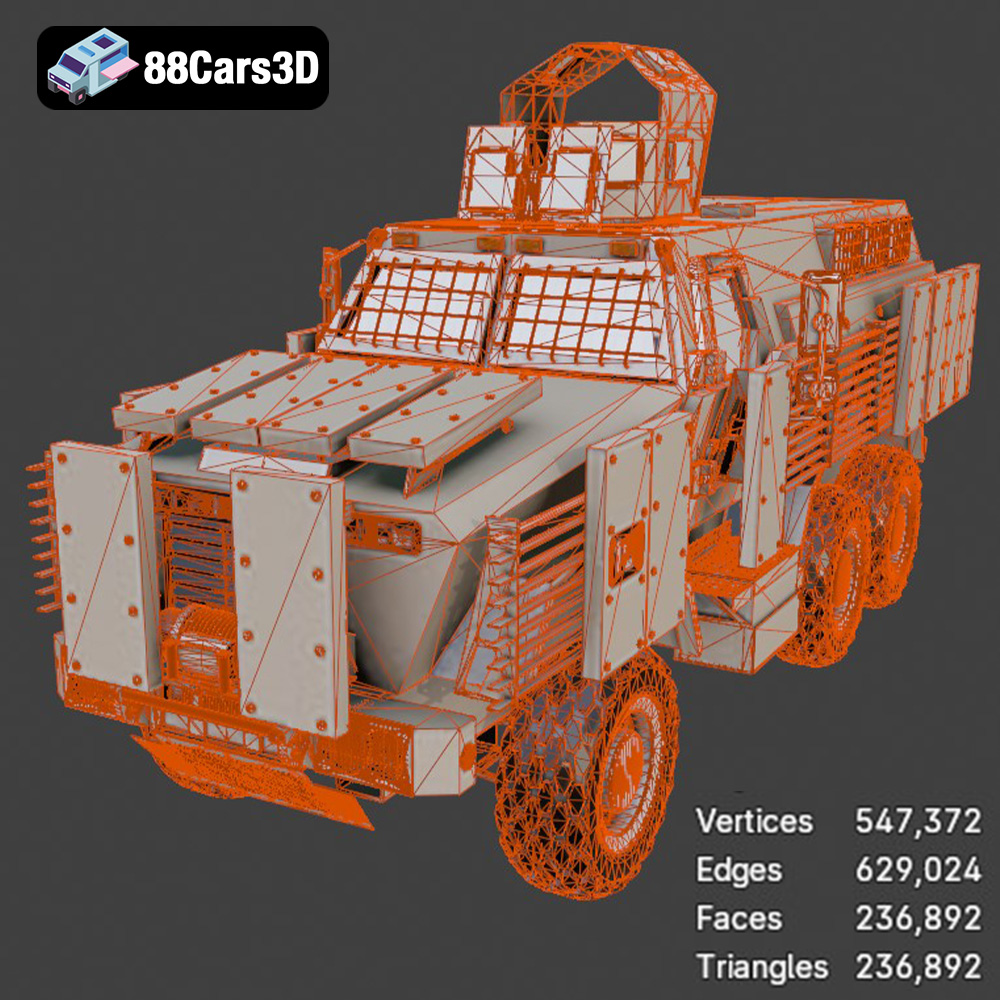
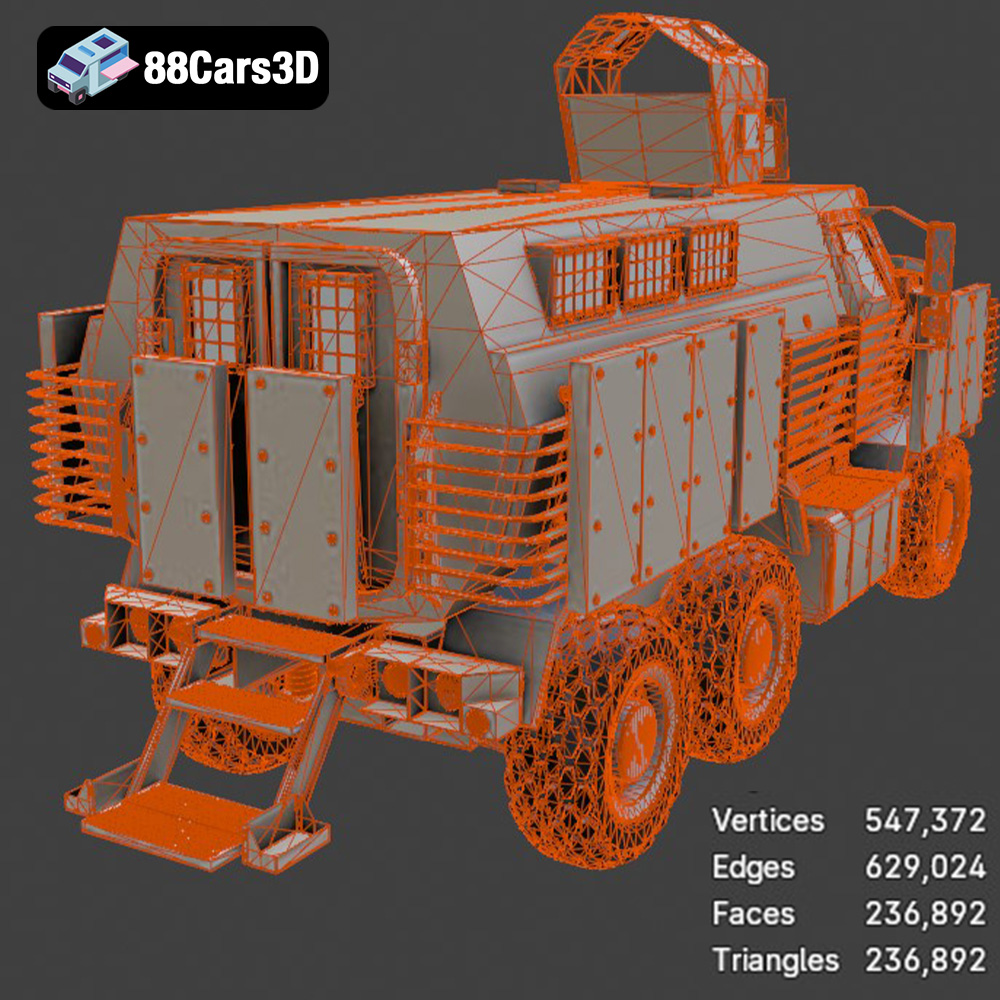
A truly professional 3D asset blends visual excellence with technical efficiency. The Caiman MRAP 2008 3D Model achieves this with a highly optimized topology featuring 236,892 triangles. This specific poly count is a deliberate choice, striking an ideal balance for real-time engines like Unreal and Unity, ensuring smooth performance without compromising high-end visual realism. Furthermore, the model boasts real-world scale accuracy, essential for believable simulations and interoperability with other assets. Proper pivot setups are implemented for steering, wheel rotation, and suspension travel, significantly streamlining animation processes. Its inherent compatibility with major 3D software platforms and real-time rendering engines makes it a versatile addition to any professional toolkit.
The utility of a 3D model is often defined by its compatibility and the specific file formats it supports. Different formats serve different purposes, optimized for various software, workflows, and output types. The Caiman MRAP 2008 3D Model offers an extensive suite of formats, ensuring its adaptability across virtually any professional pipeline. Understanding each is crucial for maximizing its potential.
The `.blend` file format is native to Blender, a powerful open-source 3D creation suite. When you download a `.blend` file, you’re getting the complete Blender scene, including all geometry, materials (with Cycles/Eevee node setups), textures, lighting, camera configurations, and even animation data. This format is ideal for users who primarily work in Blender and wish to have full editability, allowing them to adjust modifiers, change material parameters, or integrate the model seamlessly into their existing Blender projects. It offers the most flexibility for customization within its native environment.
`.fbx` (Filmbox) is arguably one of the most widely adopted proprietary file formats for 3D data exchange, especially prevalent in game development and animation. Developed by Autodesk, `.fbx` supports not only geometry but also complex data like animation, rigging, PBR (Physically Based Rendering) materials, textures, and even lights and cameras. It’s the go-to format for importing assets into game engines like Unreal Engine and Unity, or transferring models between different 3D applications such as 3ds Max, Maya, and Cinema 4D. Its robust support for embedded data makes it an excellent choice for real-time pipelines where animation and material fidelity are critical.
The `.obj` (Wavefront OBJ) format is a classic, widely supported open standard for 3D geometry. It’s renowned for its universality, making it an excellent choice for cross-software compatibility. An `.obj` file primarily stores geometry data (vertices, normals, texture coordinates, and faces) and can reference an accompanying `.mtl` (material) file for basic material properties and texture paths. While it doesn’t support animation or rigging, its simplicity and broad adoption mean almost any 3D software can open and interpret an `.obj` file, making it a reliable interchange format for static models like the Caiman MRAP’s base mesh.
`.glb` (GL Transmission Format Binary) is the binary version of the GLTF format, designed for efficient transmission and loading of 3D scenes and models by engines and applications. It’s quickly becoming the standard for 3D on the web, AR (Augmented Reality), and VR (Virtual Reality) experiences. A `.glb` file embeds all model data—geometry, materials, textures, and even animation—into a single file, making it highly portable and optimized for fast loading and rendering in browser-based viewers, mobile AR apps, and WebGL applications. For interactive presentations or mobile deployment of the Caiman MRAP, `.glb` is the ideal choice.
`.stl` (Stereolithography) is the de facto standard file format for 3D printing. It represents a 3D model as a series of connected triangles, forming the surface geometry of an object. Unlike other formats, `.stl` files typically do not contain color, texture, or material information—they are purely about shape. For hobbyists or professionals looking to physically manifest the Caiman MRAP 2008 3D Model, converting it to `.stl` and preparing it for a 3D printer is the necessary step. The Caiman’s detailed geometry makes it an excellent candidate for scale model military dioramas.
`.ply` (Polygon File Format) is a versatile format often used for storing 3D scanner data, point clouds, and mesh data from CAD or analysis software. It can store a variety of properties including color, transparency, and normal vectors for each vertex or face. While not as universally used for game assets as FBX or OBJ, it’s invaluable in workflows involving precise geometric analysis or when integrating scanned real-world data with synthetic models. For highly detailed military vehicle reproductions, `.ply` can offer a robust, precise representation of the mesh.
The inclusion of an `.unreal` file format signifies an asset specifically optimized and prepared for direct import and use within Unreal Engine. This often means the model has been exported with Unreal Engine’s conventions in mind, potentially including proper scale, pivot points, collision meshes, and basic material setups compatible with Unreal’s PBR workflow. For game developers and simulation creators working in Unreal Engine, this format provides the most streamlined integration, saving valuable development time by minimizing manual adjustments after import.
`.max` is the native file format for Autodesk 3ds Max, a leading 3D modeling, animation, and rendering software widely used in architectural visualization, film, and game development. A `.max` file contains the complete 3ds Max scene, offering full editability of geometry, materials (including V-Ray, Corona, or Arnold setups), animation, lights, and cameras. For professionals who use 3ds Max as their primary creative tool, the `.max` format provides the most comprehensive control over the Caiman MRAP model, allowing for advanced rendering setups and integration into complex animation sequences.
The Caiman MRAP 2008 3D Model’s versatility, supported by its array of file formats and optimized topology, makes it an invaluable asset across various professional disciplines. Let’s explore how it fits into different workflows.
For game developers, performance is paramount. The Caiman MRAP’s 236,892 triangles strike an excellent balance, providing enough detail for close-up shots while remaining performant in real-time environments. In game engines like Unreal Engine, importing the `.fbx` or the specific `.unreal` format simplifies the process. Developers can then set up PBR materials using textures (not explicitly mentioned but usually included or easily applied with PBR workflows), create collision meshes, and implement LODs (Levels of Detail) to ensure optimal performance across different viewing distances. The separated components (wheels, suspension, turret) are crucial for animation implementation, allowing for realistic vehicle dynamics, independent suspension travel, and turret rotation, essential for an engaging tactical shooter or military simulator. This asset can form the backbone of a player’s primary vehicle or populate sprawling battlefields as an AI-controlled element.
When it comes to creating stunning cinematic sequences or high-fidelity defense industry visualizations, the Caiman MRAP truly shines. Using software like 3ds Max with its `.max` file or Blender with its `.blend` file, artists have full control over the asset. They can craft intricate lighting setups – perhaps simulating a dusty desert patrol at dawn or a tense night-vision operation. Applying advanced material finishes, like weathered desert tan or battle-damaged urban grey, further enhances realism. Camera angles can be choreographed for dramatic effect, capturing the imposing presence of the vehicle. With renderers like V-Ray or Corona in 3ds Max, or Cycles in Blender, the Caiman MRAP can be rendered with photorealistic precision, making it perfect for marketing campaigns, explainer videos, or even fictional war dramas.
The Caiman MRAP’s robust design and detailed interior make it an ideal candidate for AR/VR applications, especially in military training. The `.glb` format is particularly useful here, offering an optimized package for web-based or mobile AR/VR experiences. Imagine a virtual training scenario where soldiers can interact with a life-sized Caiman MRAP in their physical environment via AR, learning about its features, maintenance points, or operational controls. In VR, the optimized geometry for first-person POV allows for immersive driver or gunner training, practicing maneuvers or engagement protocols in a safe, controlled digital space. The detailed cockpit and instrument clusters provide a realistic interface for familiarization with the vehicle’s internal systems, making it an invaluable tool for tactical configurators and immersive learning.
A high-quality 3D model isn’t just about static representation; it’s about adaptability and the potential for creative expansion. The Caiman MRAP 2008 3D Model offers excellent foundations for customization, allowing users to tailor its appearance and function to specific project needs. This flexibility is what transforms a good asset into an indispensable one.
The ability to easily modify the visual characteristics of the Caiman MRAP is a significant advantage. Users can readily change body and armor colors to reflect different operational environments—from a classic desert tan or woodland camouflage for forest operations to an urban grey for city skirmishes. The tire textures can also be adjusted, switching between heavy mud variants for a bogged-down look or dry dirt for arid terrains. Furthermore, artists can apply various material finishes, ranging from a pristine matte military-spec look to heavily weathered or battle-damaged textures, instantly conveying a narrative of wear and tear or intense combat. This level of control over materials and textures ensures the Caiman MRAP can seamlessly integrate into diverse scene contexts and storytelling requirements.
Beyond surface aesthetics, the Caiman MRAP’s design supports dynamic integration into complex scenes. The lighting of the model can be adapted to simulate different times of day, from bright daytime patrols under harsh sunlight to subtle night-vision environments that require specific lighting rigs. Its separate components for animation (wheels, suspension, turret) mean the vehicle can be animated to traverse challenging terrain, engage targets, or simply perform realistic starts and stops. Placing the Caiman MRAP in varied environments—be it a war-torn urban street, a sprawling desert, or a dense forest—further enhances its visual impact and narrative potential. These customization options empower creators to breathe life into their digital worlds, making the Caiman MRAP a dynamic and central element rather than a static prop.
The utility of a 3D model extends beyond the digital realm. For military hobbyists, diorama builders, or even educational purposes, bringing a digital asset into the physical world through 3D printing offers a tangible connection to the subject. The Caiman MRAP 2008 3D Model, with its inclusion of the `.stl` format, is perfectly poised for this transition.
Converting the Caiman MRAP into a physical object requires careful preparation and an understanding of 3D print settings. The product description recommends scales of 1:35, 1:24, or 1:18, offering flexibility for different display sizes or integration into existing model collections. For optimal detail, especially for the intricate tactical elements, resin printing is highly recommended over FDM (Fused Deposition Modeling), allowing for finer layer heights (0.04–0.12 mm). Standard wall thicknesses of 1.2–2.0 mm and an infill of 20–30% generally provide a good balance between structural integrity and material usage.
Successful 3D printing of complex models like the Caiman MRAP often requires supports for overhangs and delicate parts. Elements such as the exhaust, mirrors, antennas, and the turret will benefit significantly from well-placed support structures to ensure fidelity. Print orientation is also crucial; printing the armored frame at an angle can enhance structural integrity, while printing wheels separately often yields cleaner results. Once printed, post-processing is key to achieving a professional finish. This typically involves sanding to remove layer lines, applying a primer, and then painting with authentic military finishes, such as CARC (Chemical Agent Resistant Coating) colors, to truly capture the real-world aesthetic. This journey from digital file to physical model provides a rewarding experience for enthusiasts and a practical application for the model’s precise geometry.
The Caiman MRAP 2008 3D Model stands as a testament to the power of high-quality digital assets in today’s demanding creative and technical industries. Its meticulously detailed design, optimized topology, and extensive range of supported file formats (.blend, .fbx, .obj, .glb, .stl, .ply, .unreal, .max) make it an incredibly versatile tool. Whether you’re a game developer building an immersive combat simulation, a cinematic artist crafting a dramatic military sequence, an AR/VR designer creating cutting-edge training environments, or a hobbyist bringing iconic vehicles to life through 3D printing, this model offers a robust and reliable foundation.
By understanding the technical nuances of each file format and the application-specific advantages of this model, professionals can unlock its full potential, streamlining workflows and achieving unparalleled realism. The Caiman MRAP 2008 3D Model isn’t just a static object; it’s a dynamic asset capable of transforming your projects. For those seeking premium 3D car models and game assets that meet the highest standards of quality and versatility, exploring the offerings at 88cars3d.com is a worthwhile endeavor.
The Caiman MRAP (Mine-Resistant Ambush Protected) is a legendary military vehicle renowned for its unparalleled survivability and rugged tactical aesthetic. Designed to withstand explosive devices and ambushes in hostile territories, it features a signature V-hull design, heavy-duty armor plating, and an imposing, high-clearance stance. This digital replica captures its iconic features meticulously, from the robust diesel engine enclosure and reinforced exhaust system to the intricate rooftop turret, grab handles, and communication antennas.
Boasting a highly accurate topology with a triangle count of 236,892, this model achieves the perfect balance between high-end visual fidelity and game-ready optimization. Whether deployed in a modern combat simulator or a cinematic war sequence, the geometry is carefully structured to deliver peak performance and stunning realism across game development, AR/VR training environments, animation, and professional defense visualization.
Perfect for military combat simulations, first-person tactical shooters, VR military training applications, and cinematic war zone renderings.
.blend, .fbx, .obj, .glb, .stl, .ply, .unreal, .max
Tags:
caiman, mrap, mrap-2008, military-vehicle, armored-vehicle, tactical, game-ready, low-poly, optimized, car-3d-model, game-asset, rendering, vr-ar, blend, fbx, obj, glb, stl, ply, unreal, max
$14.99
.blend
.fbx
.glb
.max
.obj
.ply
.rendering
.stl
.tactical
.unreal
armored-vehicle
caiman
car-3d-model
game asset
game-ready
low-poly
military-vehicle
mrap
mrap-2008
optimized
VR/AR