Get 20% OFF All Premium 3D & STL Models!

In the dynamic world of digital content creation, the demand for realistic and versatile assets is ever-growing. From blockbuster video games and immersive virtual reality experiences to high-fidelity architectural visualizations and compelling automotive advertisements, accurately modeled vehicles are a cornerstone. A truly professional 3D car model is more than just a mesh; it’s a meticulously crafted digital artifact designed for seamless integration into complex pipelines, offering both visual fidelity and performance efficiency. These assets empower artists and developers to bring their visions to life, saving countless hours of intricate modeling work and ensuring a consistent standard of quality across diverse projects.
Understanding the intricacies of such models, from their underlying topology to their compatibility across various software, is crucial for anyone looking to leverage them effectively. Today, we’re diving deep into what makes a superior 3D car model indispensable, using an excellent example available on 88cars3d.com: the Chevrolet Lanos 2008 3D Model. This particular model, a staple of urban landscapes, offers a fantastic case study in how a well-executed digital asset can serve a multitude of professional needs, from game development to advanced rendering and even 3D printing.
Navigating the landscape of 3D design requires a foundational understanding of the various file formats available. Each format serves specific purposes, excelling in different stages of a production pipeline or for particular end uses. When you acquire a versatile asset like the Chevrolet Lanos 2008 3D Model, understanding its bundled file formats is key to maximizing its utility. Let’s break down the most common and crucial formats included with premium 3D car models.
The .blend format is the native file type for Blender, the popular open-source 3D creation suite. It’s more than just a mesh container; it’s a complete scene file. This means a .blend file typically includes the 3D model itself, along with its materials, textures, lighting setups, cameras, animations, and even physics simulations. For artists working in Blender, this format offers the highest degree of editability and flexibility. You can easily adjust topology, modify materials, relight the scene, or even extract individual components for other projects. For the Chevrolet Lanos, the .blend file would provide a fully functional, ready-to-render scene right out of the box, allowing for immediate customization or integration into a larger Blender project.
.fbx (Filmbox) is a proprietary file format developed by Autodesk, widely recognized as the industry standard for exchanging 3D data between different software applications. Its strength lies in its ability to store not just geometry, but also animation data, skeletal rigs, textures, and even embedded media. This makes it ideal for pipelines involving multiple software, such as moving a model from 3ds Max to Unreal Engine or Unity. For game development, .fbx is often the go-to format for exporting animated game assets. The Chevrolet Lanos 2008 3D Model in .fbx format ensures that its separate animated components (wheels, suspension, steering) retain their pivot information and hierarchy when imported into game engines or other DCC applications, making it an excellent game asset.
The .obj (Wavefront OBJ) format is one of the oldest and most widely supported file formats for 3D geometry. It’s a simple, text-based format primarily used for exchanging raw polygonal models between different 3D software. While it handles geometry and UV data exceptionally well, it typically relies on accompanying .mtl (material library) files for material definitions and doesn’t inherently support animations or advanced scene data. Its universality is its greatest strength, making it a reliable choice for cross-software compatibility when the focus is purely on the model’s shape and texture coordinates. For the Lanos model, the .obj version ensures that virtually any 3D software can open and manipulate its core geometry, providing a solid foundation for further detailing or material work.
.glb (GL Transmission Format Binary) is the binary version of glTF, an open-standard, royalty-free specification for 3D scenes and models. Designed for efficiency and runtime delivery, .glb files are typically self-contained, including models, textures, and PBR (Physically Based Rendering) materials in a single file. This makes them exceptionally well-suited for web-based 3D applications, augmented reality (AR), virtual reality (VR), and mobile viewing, where file size and loading speed are critical. When integrating the Chevrolet Lanos into an AR configurator or a web-based showroom, the .glb format provides an optimized, high-quality, and lightweight asset that ensures smooth performance and quick loading times.
.stl (Stereolithography) is almost exclusively used for 3D printing. This format represents a 3D model as a series of connected triangles, describing only the surface geometry of an object without color, texture, or other CAD attributes. While simple, it’s the most common input for 3D slicers. The Chevrolet Lanos 2008 3D Model’s availability in .stl format means hobbyists and professionals can easily prepare it for physical fabrication. It’s crucial to consider print settings like scale, layer height, and support structures, as detailed in the product description, to achieve a high-quality physical replica.
.ply (Polygon File Format) is another format for storing 3D data, particularly useful for scanned data, point clouds, and mesh models with color information per vertex or face. While less common for general 3D asset exchange than .fbx or .obj, it’s often preferred in scientific, engineering, and CAD applications where precise mesh data, potentially with attributes like color, normal, and confidence, is important. For specialized analysis or reverse engineering projects involving the Chevrolet Lanos, the .ply format offers a robust data set.
The .unreal format refers to assets specifically packaged or optimized for direct import and use within Unreal Engine. This often implies a pre-configured asset with appropriate materials, collision meshes, LODs (Levels of Detail), and sometimes Blueprints. While .fbx is the common conduit into Unreal, an “.unreal” file suggests an even more streamlined, engine-ready asset, potentially saving significant setup time within the engine itself. For game developers, having the Chevrolet Lanos 2008 3D Model available in an .unreal-ready format means faster integration into their virtual worlds, reducing iteration times and ensuring optimal performance.
Similar to .blend for Blender, .max is the native project file format for Autodesk 3ds Max. This comprehensive file stores the entire scene, including geometry, materials, textures, lighting, cameras, animation keyframes, and modifiers. For professionals utilizing 3ds Max for architectural visualization, automotive rendering, or complex animations, the .max file provides unparalleled flexibility. It allows artists to dive deep into the model’s construction, make fine-tuned adjustments to materials, set up complex rendering passes with V-Ray or Corona, or integrate the Chevrolet Lanos into detailed animated sequences.
The availability of the Chevrolet Lanos 2008 3D Model in this diverse range of formats on 88cars3d.com underscores its adaptability, ensuring that creators, regardless of their preferred software or end-goal, have a suitable starting point for their projects.
The essence of a high-quality 3D car model lies in its meticulous attention to detail and faithful recreation of its real-world counterpart. The Chevrolet Lanos 2008 3D Model exemplifies this principle, offering a level of fidelity that truly elevates any digital project. Its design focuses on capturing the “essence of practical, everyday driving” with both precision and an optimized structure.
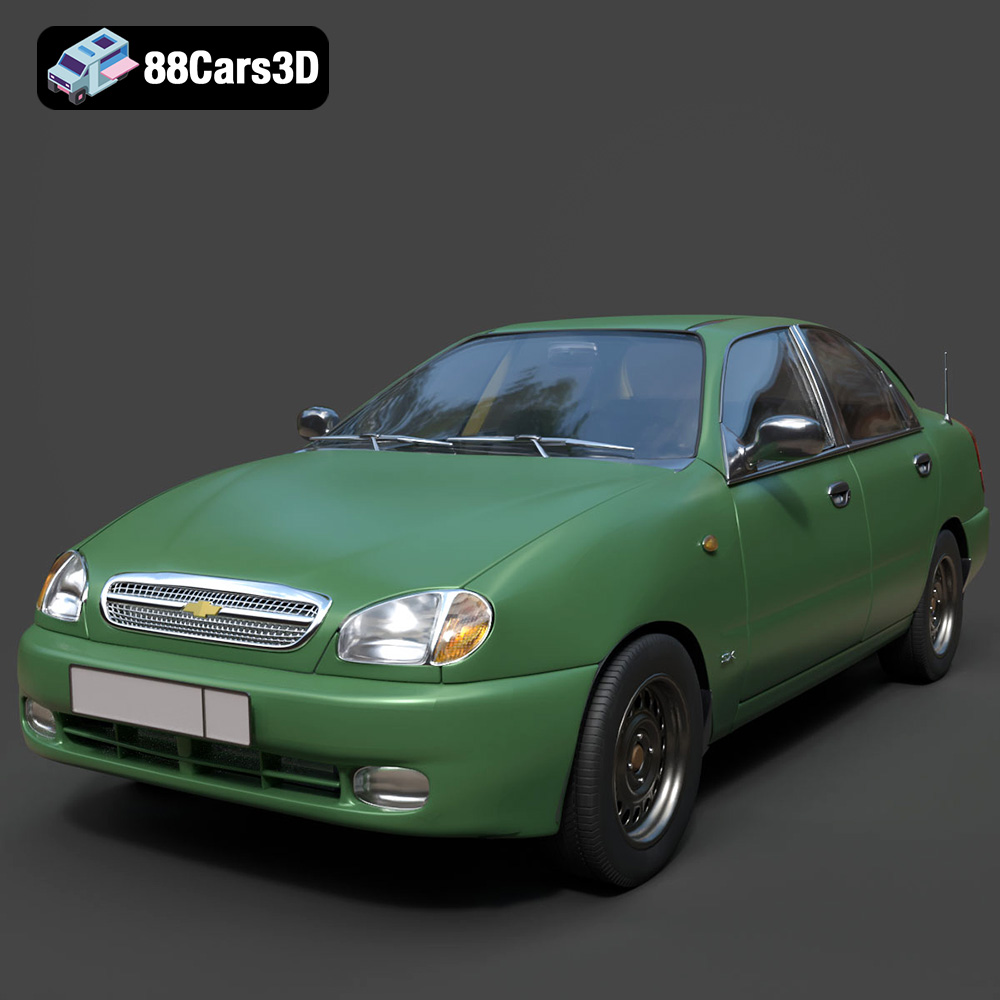
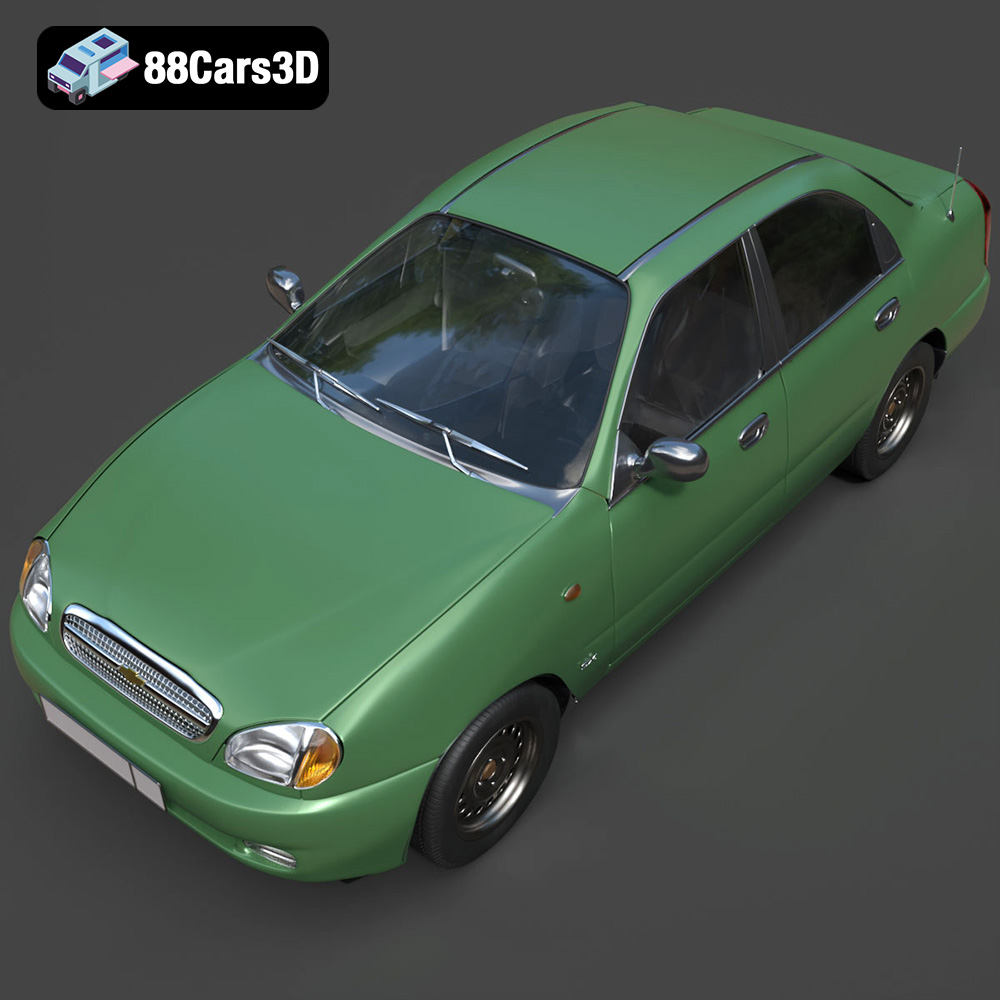
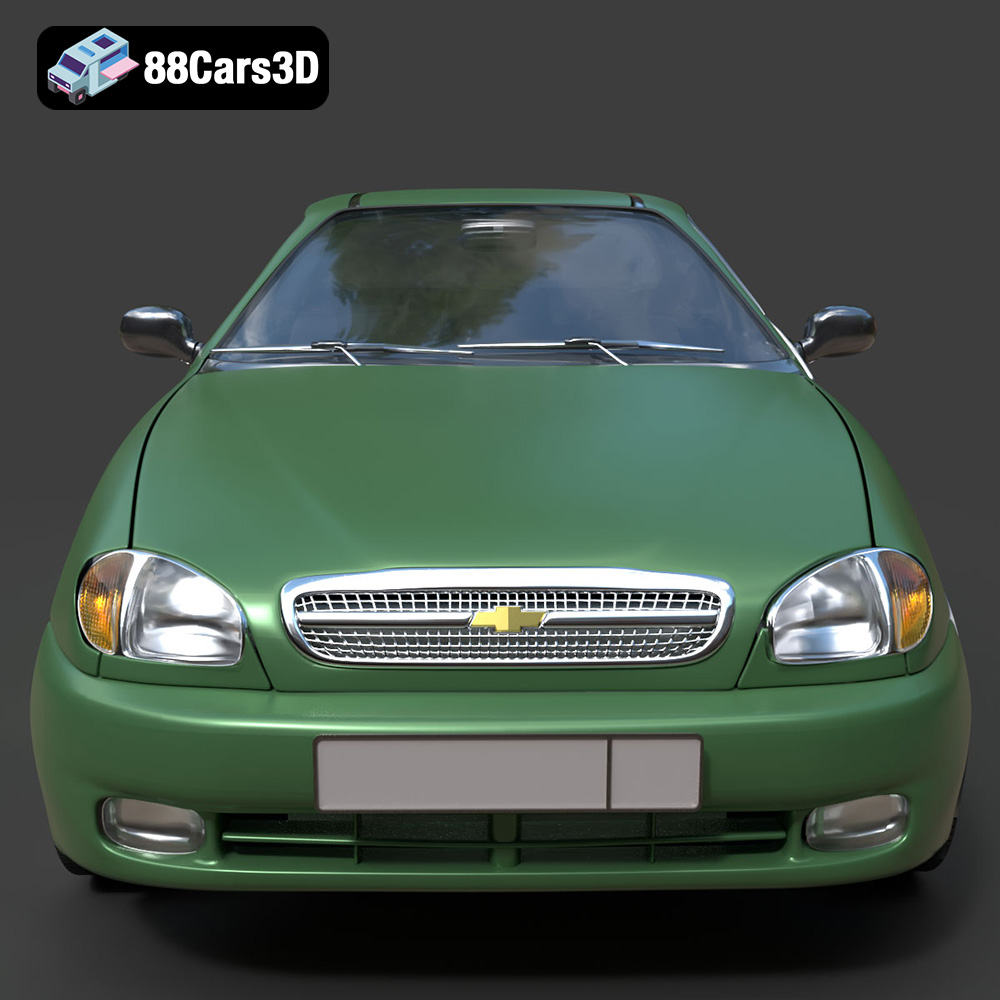
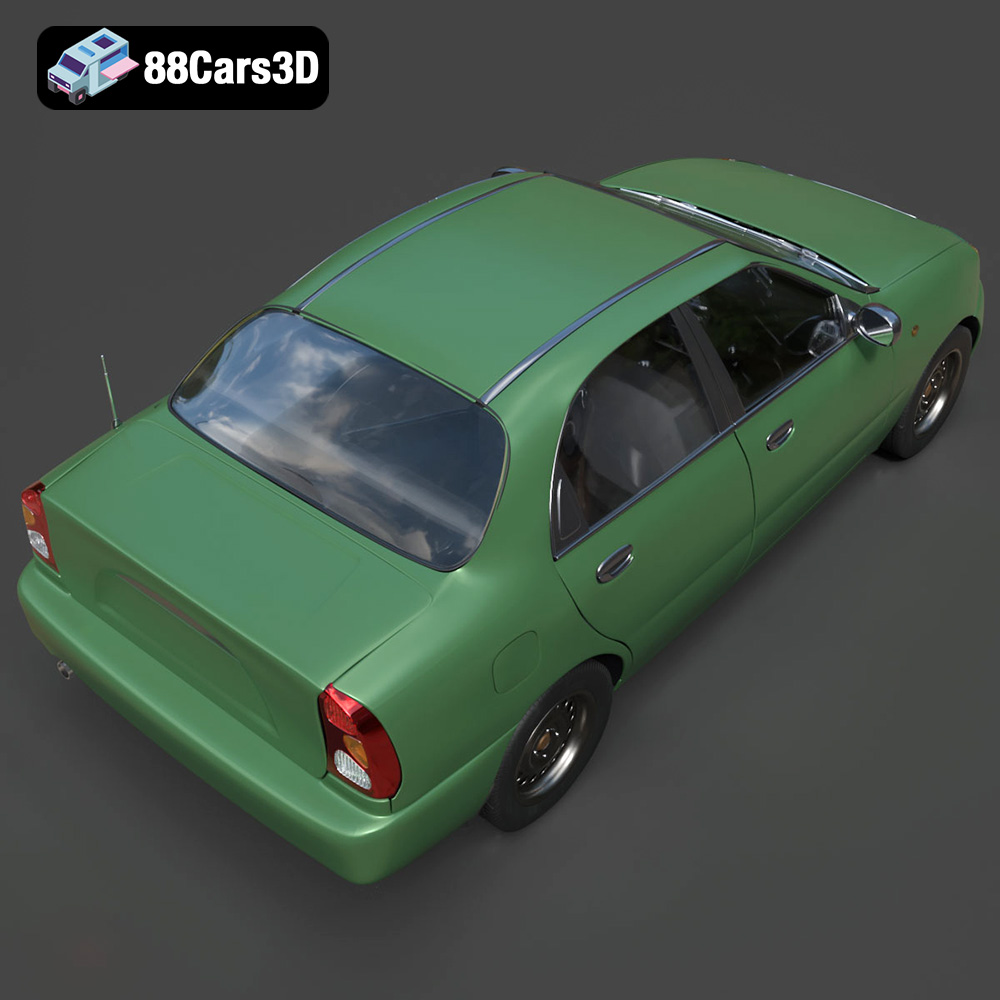
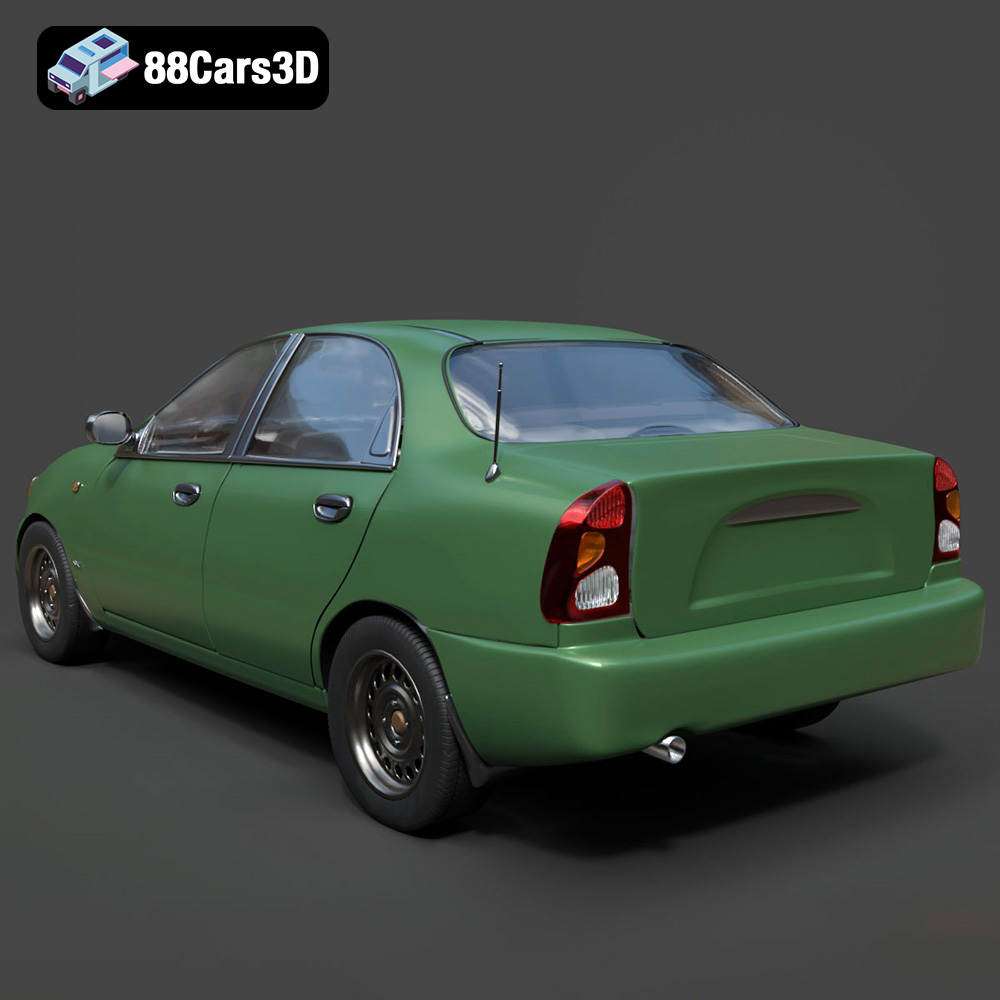
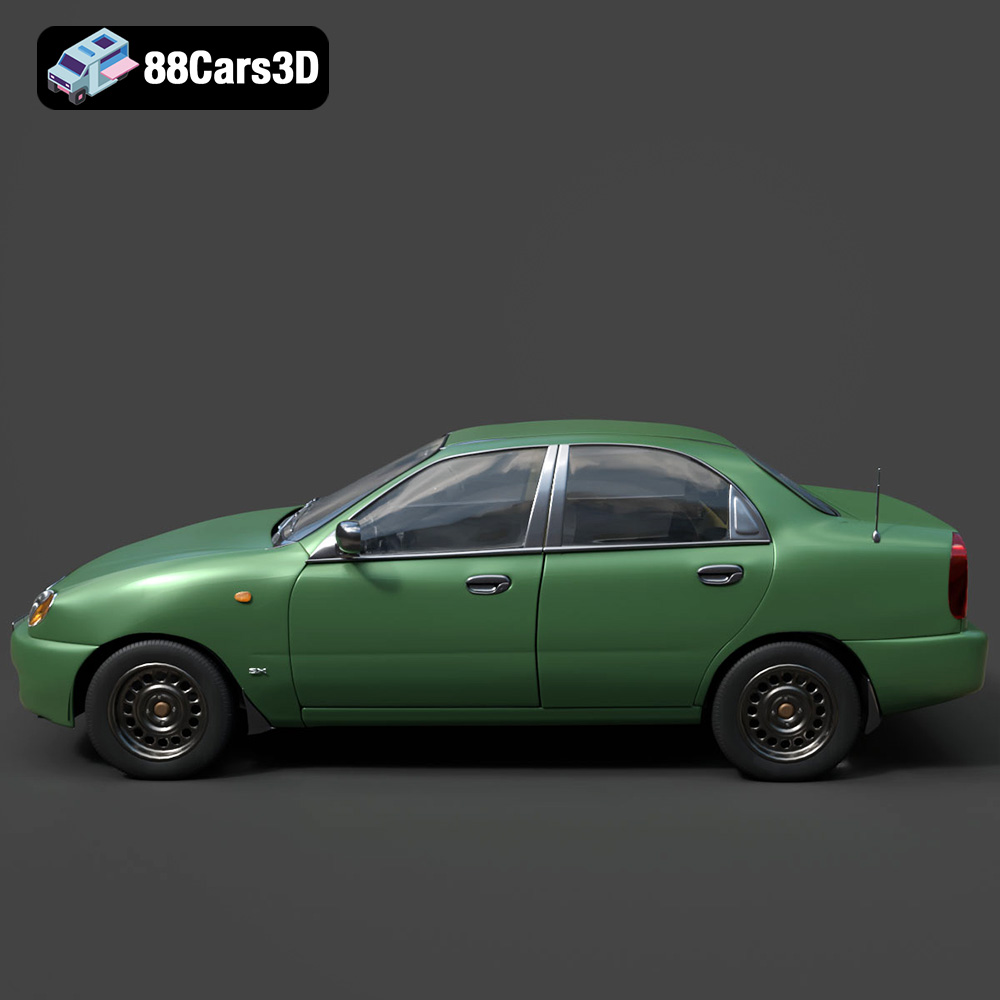
The exterior of the Lanos model is a testament to accurate automotive 3D modeling. It faithfully recreates the vehicle’s “smooth aerodynamic lines, signature modest front grille, and classic utilitarian styling.” This isn’t just about getting the shape right; it involves precise measurements and careful consideration of how light interacts with surfaces. Key exterior features include authentic headlight and taillight housings, complete with internal reflectors, which are crucial for realistic lighting setups in rendering. The factory-spec wheels, hubcaps, and realistic tire treads contribute significantly to visual realism, making the car look grounded and believable in any scene. The overall geometry and proportions are based on the actual vehicle chassis, ensuring that it feels right whether it’s navigating a virtual street or being presented in a high-res rendering.
Beyond the polished exterior, the interior of the Chevrolet Lanos 2008 3D Model provides an immersive experience. The “standard cloth seat details with authentic stitching” immediately convey a sense of realism, particularly important for first-person perspectives in games or close-up interior shots in architectural visualization. The accurate steering wheel, column design, and a detailed instrument cluster – complete with speed, tachometer, and fuel gauges – ensure that the cockpit is fully functional and believable. Precision in control details, from pedals to the gear shifter and center console, means that this model can stand up to scrutiny from any angle. This level of interior detail is critical for creating compelling virtual showrooms, driver training simulators, or even just populating a scene with a visible, realistic cabin.
What truly sets a professional 3D car model apart is its detailed engineering, even in areas not always immediately visible. The Lanos model includes a “detailed 4-cylinder inline engine block” and a “standard factory exhaust system with undercarriage routing.” This level of detail is invaluable for advanced visualization, educational content, or even custom projects where parts of the car might be exposed. Crucially, the model is built with “separate wheels, suspension, and steering components for animation.” This means each part is individually articulated with proper pivot setups, allowing for realistic wheel rotation, steering, and suspension travel. This ‘game-ready’ setup is a significant advantage for game developers and animators, offering immediate functionality without the need for extensive rigging.
The true value of a versatile 3D asset like the Chevrolet Lanos 2008 3D Model lies in its ability to seamlessly integrate into various professional workflows. From high-end rendering studios to bustling game development environments, this model offers a robust foundation for diverse creative endeavors.
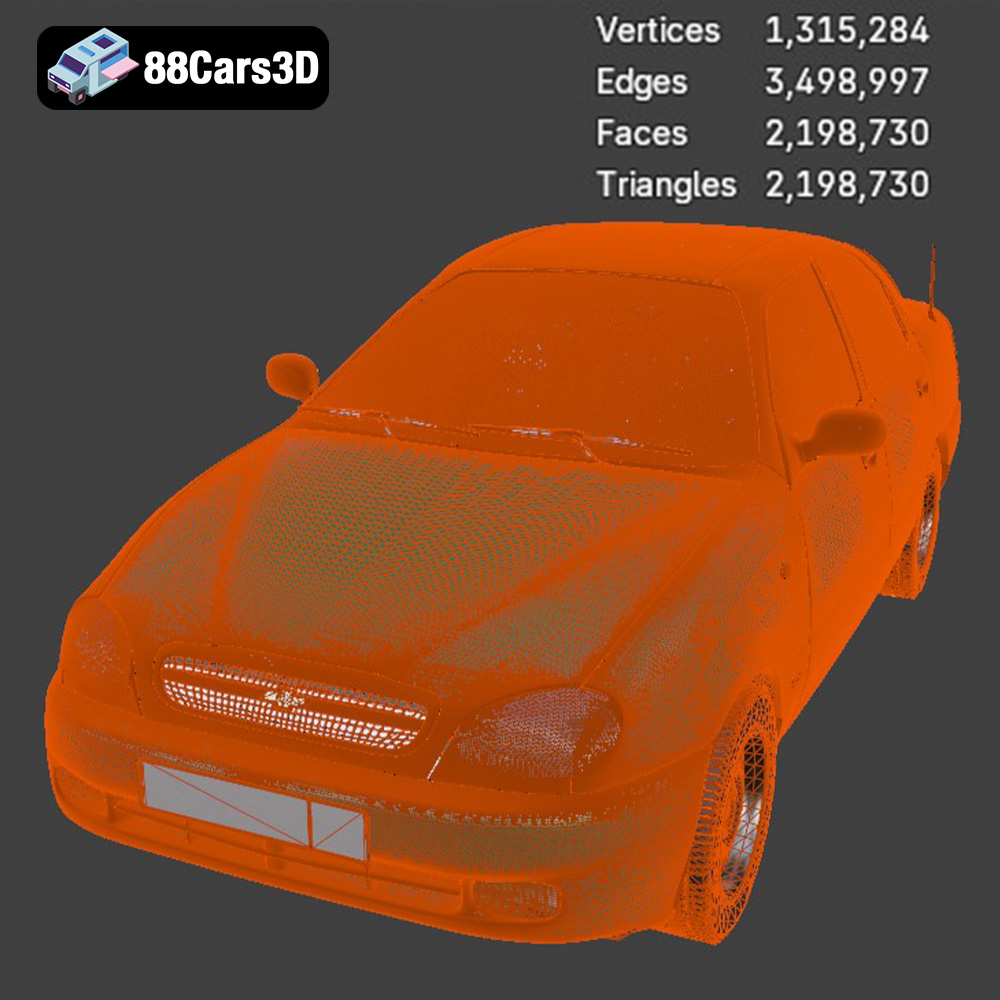
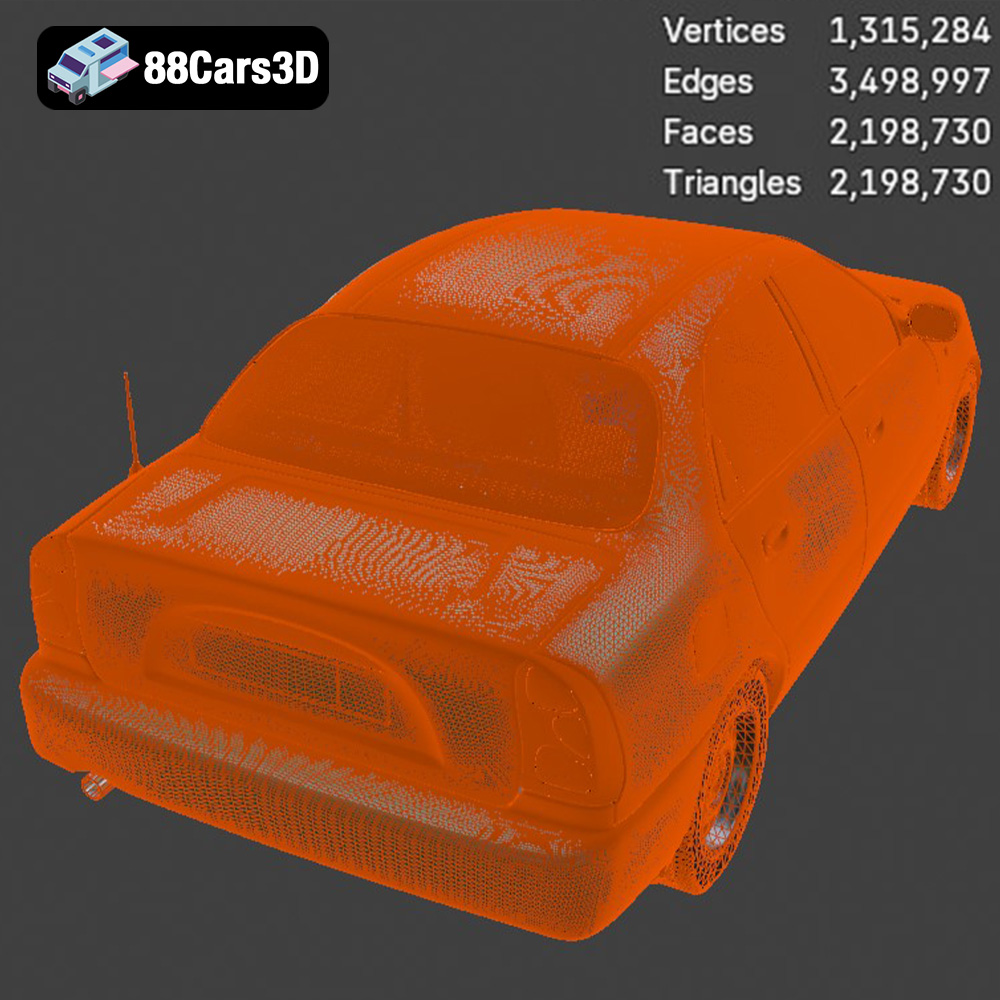
For game developers, the phrase “game-ready” is paramount. The Chevrolet Lanos 2008 3D Model, with its optimized topology of 2,198,730 triangles, strikes an excellent balance between visual fidelity and real-time performance. This polycount is sufficiently detailed for close-up views while remaining manageable for modern game engines like Unreal Engine and Unity. The inclusion of the .fbx and .unreal formats ensures a streamlined import process. Developers can directly bring the model into their engine, leveraging its proper pivot setup for wheels, suspension, and steering to quickly implement driving mechanics. Whether populating an open-world urban environment with realistic traffic or creating a detailed vehicle for a racing simulator, this model saves invaluable development time. Its optimized geometry means fewer draw calls and better frame rates, which are critical for delivering a smooth player experience.
When it comes to automotive rendering for marketing, advertising, or architectural visualization, photorealism is the ultimate goal. The Chevrolet Lanos 2008 3D Model excels here due to its high detail and accurate geometry. Artists working in 3ds Max with renderers like V-Ray or Corona, or in Blender with Cycles, can utilize the .max or .blend files respectively, which often come with pre-configured materials or allow for easy setup of PBR materials. The accurate representation of materials – from the subtle reflections on the body paint to the texture of the tire rubber and the stitching on the interior seats – makes it possible to achieve stunning, lifelike visuals. Imagining this model parked convincingly in front of a modern architectural building or featured in a sleek product shot demonstrates its capability to hold up under the most demanding rendering conditions. The ability to easily customize colors and material finishes further enhances its utility for brand campaigns.
Augmented Reality (AR) and Virtual Reality (VR) are transforming how we interact with digital content, and high-quality 3D car models are central to this revolution. The Chevrolet Lanos 2008 3D Model is “perfect for immersive virtual showrooms, configurators, and mobile AR experiences.” Its optimized polycount and efficient .glb format make it ideal for these performance-sensitive platforms. In a VR showroom, customers could walk around the Lanos, open doors, and even sit inside, experiencing its interior in full 3D. For AR, the model can be placed in a real-world environment via a smartphone, allowing users to visualize the car in their driveway or garage. The real-world scale accuracy ensures that the virtual vehicle feels correctly proportioned in these immersive settings, providing a truly convincing and engaging experience for users.
Beyond visual accuracy, a truly professional 3D car model is defined by its technical robustness, ensuring it performs efficiently across various applications and can be easily adapted to specific project requirements. The Chevrolet Lanos 2008 3D Model showcases these advantages beautifully.
The stated topology of 2,198,730 triangles for the Chevrolet Lanos model represents a critical design decision. This polycount is not arbitrarily chosen; it’s a “perfect balance for real-time engines (Unreal, Unity) while maintaining high-end visual realism.” For game assets, polycount is a constant trade-off. Too low, and the model looks blocky; too high, and it cripples performance. This specific count allows for intricate details like complex curves, the intricacies of the engine block, and fine interior elements to be present without overwhelming the graphics pipeline. This meticulous optimization means that the model can be deployed in a vast open-world game without causing significant performance drops, yet it still holds up beautifully when the camera zooms in for a close-up.
Accuracy in 3D modeling extends beyond visual fidelity to encompass real-world scale and proper articulation. The Lanos model adheres to “real-world scale accuracy based on actual vehicle chassis,” which is fundamental for seamless integration into scenes, especially in architectural visualization and AR/VR. An incorrectly scaled vehicle would immediately break immersion. Furthermore, the “proper pivot setup for steering, wheel rotation, and suspension travel” is a technical advantage that simplifies animation and simulation tasks. Animators can quickly set up realistic driving sequences, and game physics engines can interact with the model accurately, allowing for dynamic suspension compression and realistic steering behavior without extensive manual rigging.
The ability to customize a 3D model is crucial for fitting it into unique project aesthetics and requirements. The Chevrolet Lanos 2008 3D Model offers excellent “customization options,” allowing creators to “change body/tank colors,” modify tire textures, and “adjust material finishes (matte, gloss, metallic).” This flexibility is incredibly powerful. For example, an automotive rendering project might require the car in various factory colors or with custom paint jobs, while a game might need different tire variants (e.g., street vs. off-road) to reflect gameplay choices. The modular nature of high-quality 3D car models, often with separate components and well-defined materials, ensures that these modifications can be implemented quickly and efficiently, making the asset adaptable to a wide array of visual styles and functional needs.
The versatility of a well-crafted 3D car model is best illustrated through its diverse applications. The Chevrolet Lanos 2008 3D Model is designed to serve a broad spectrum of industries, showcasing its adaptability as a premier game asset and rendering component.
One of the primary applications for the Chevrolet Lanos 2008 3D Model is in game development, particularly for urban simulators and open-world titles. Imagine a sprawling virtual city where the Lanos forms part of the everyday traffic, adding authenticity to the environment. Its optimized polycount and game-ready configuration make it ideal for populating scenes without performance hitches. In a driving simulator, this model could be a player’s starting vehicle, offering an authentic experience of an economic sedan. The separate, animatable components allow for realistic damage models, suspension physics, and interactive driving mechanics, enhancing immersion for players. This model could even be used in educational simulations for driving schools, providing a safe and realistic environment to practice maneuvers.
For architectural visualization (arch-viz) artists, placing a realistic car in front of a building or in a street scene instantly adds life, scale, and context. The Chevrolet Lanos, being a common urban vehicle, is perfect for grounding an architectural rendering in reality. Its “excellent for brand campaigns, lifestyle scenes, and studio lighting setups” description highlights its potential. Picture the Lanos parked outside a newly designed apartment complex, or cruising down a tree-lined street in a marketing render – it instantly conveys a sense of realism and inhabitation. The high detail ensures that even in close-up shots for advertising, the car appears convincing. For interior renders, the detailed cockpit can be glimpsed through windows, adding another layer of authenticity to the scene.
Beyond digital screens, the Chevrolet Lanos 2008 3D Model also extends into the physical realm through 3D printing. The inclusion of the .stl format means that creators can transform this digital asset into a tangible object. Hobbyists can print scaled-down models for display, creating physical representations of their favorite cars or populating dioramas. For automotive design students or small-scale prototyping, printing out parts of the Lanos, such as wheels or body panels, could be a valuable exercise. The detailed 3D print settings provided – recommending resin printing for fine details, specific layer heights, and wall thicknesses – guide users towards achieving the best possible physical output, turning a digital render into a desktop display model.
The expansive utility of this 3D car model, available on 88cars3d.com, truly demonstrates how a high-quality asset can empower creators across various fields, from entertainment to engineering and marketing.
In the vast and ever-evolving landscape of digital content creation, the importance of high-quality 3D car models cannot be overstated. They are foundational assets that accelerate workflows, enhance visual fidelity, and ensure technical consistency across projects ranging from video games and immersive AR/VR experiences to photorealistic renderings and physical prototypes. As we’ve explored with the Chevrolet Lanos 2008 3D Model, a truly exceptional asset offers far more than just a detailed mesh; it provides comprehensive file format support, meticulous attention to both exterior and interior details, game-ready optimization, and the flexibility for extensive customization.
The ability to access models in formats like .blend, .fbx, .obj, .glb, .stl, .ply, .unreal, and .max is a testament to their versatility, catering to specific needs in design, animation, simulation, and manufacturing. This strategic approach to asset creation empowers artists and developers to focus on their creative vision rather than getting bogged down in repetitive modeling tasks. Whether you’re an indie game developer looking for authentic game assets, an architect seeking realistic context for your visualizations, or an animator crafting compelling scenes, investing in premium 3D car models is a strategic decision that pays dividends in quality and efficiency.
The Chevrolet Lanos 2008 3D Model serves as a prime example of such an asset, meticulously designed and optimized for a diverse range of professional applications. It stands ready to be integrated into your next project, offering reliability, realism, and a streamlined workflow. Discover this and many other high-quality 3D car models at 88cars3d.com, your premier destination for exceptional digital automotive assets.
The Chevrolet Lanos represents the essence of practical, everyday driving. With its straightforward and recognizable subcompact sedan silhouette, this economic vehicle is a staple in many urban landscapes around the world. The model faithfully recreates the smooth aerodynamic lines, signature modest front grille, and classic utilitarian styling that defines the Lanos. This highly detailed 3D model boasts a topology of 2,198,730 triangles, delivering exceptional visual fidelity suitable for close-up renders while offering a structured geometry that performs well in modern environments. Designed with game development, AR/VR, animation, and high-end visualization in mind, it provides a highly realistic automotive asset for any digital project. Perfect for urban street scenes, driving simulators, open-world traffic population, and architectural visualization.
$86.50
.2008
.blend
.chevrolet
.fbx
.glb
.lanos
.max
.obj
.ply
.rendering
.sedan
.stl
.unreal
car-3d-model
compact-car
game asset
game-ready
low-poly
optimized
VR/AR