Get 20% OFF All Premium 3D & STL Models!

In the fast-paced world of digital content creation, whether it’s for immersive video games, photorealistic architectural visualizations, cutting-edge augmented reality experiences, or intricate 3D printing projects, the demand for high-fidelity 3D assets is ever-present. Automotive models, in particular, stand as a cornerstone of many such endeavors, requiring a meticulous blend of artistic precision and technical optimization. These aren’t just pretty pictures; they are complex data structures designed to perform flawlessly across a spectrum of software and hardware.
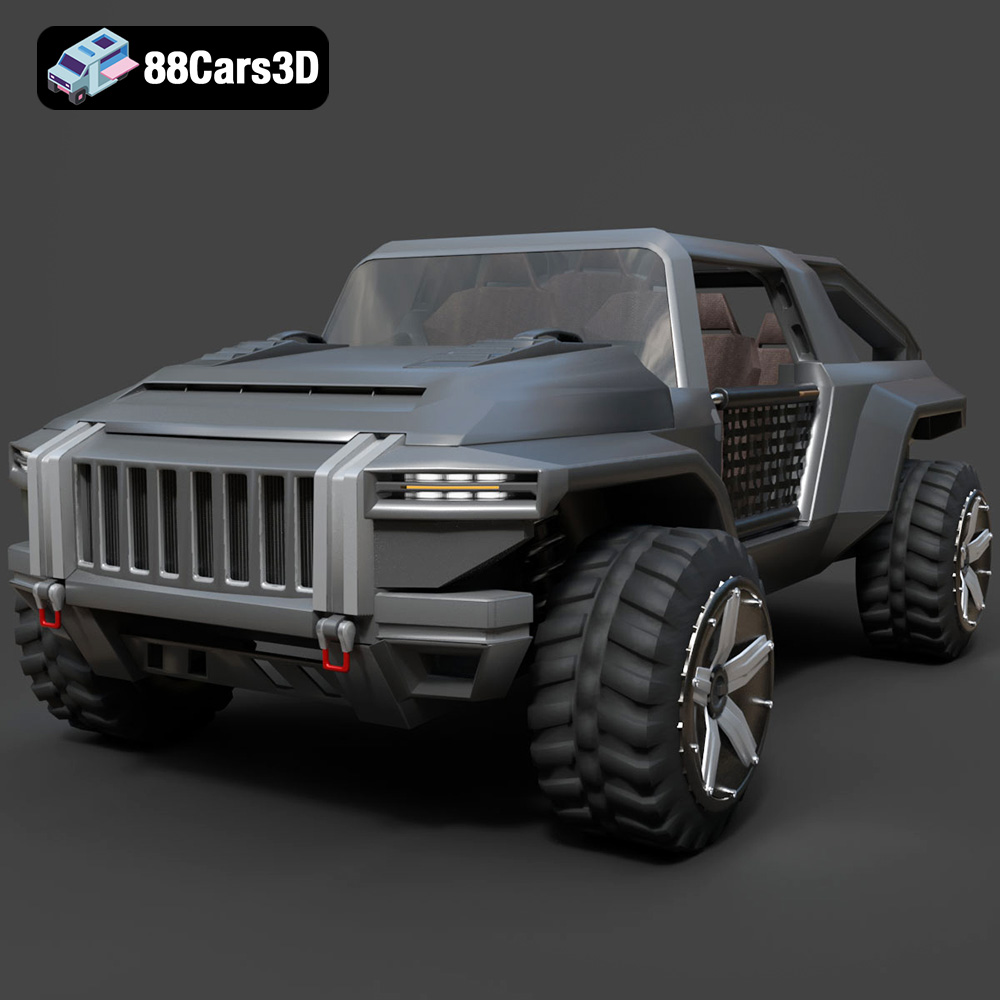
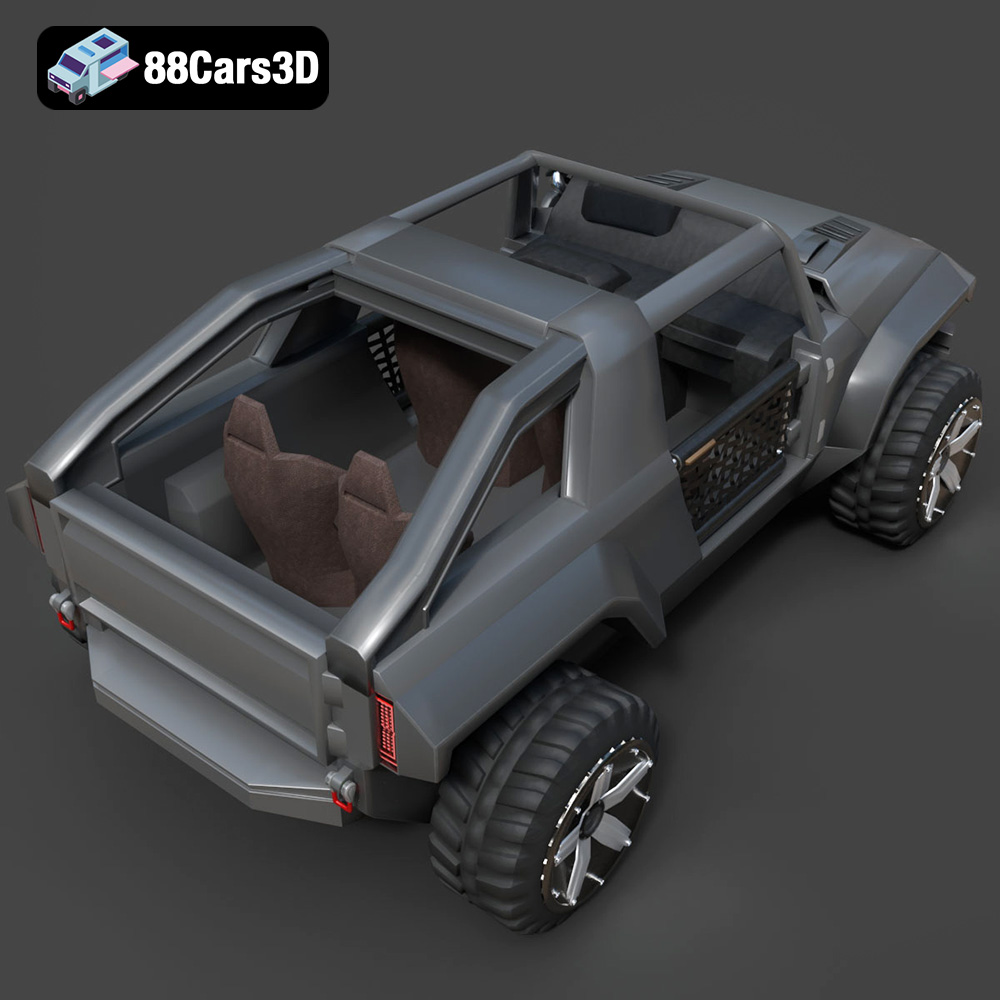
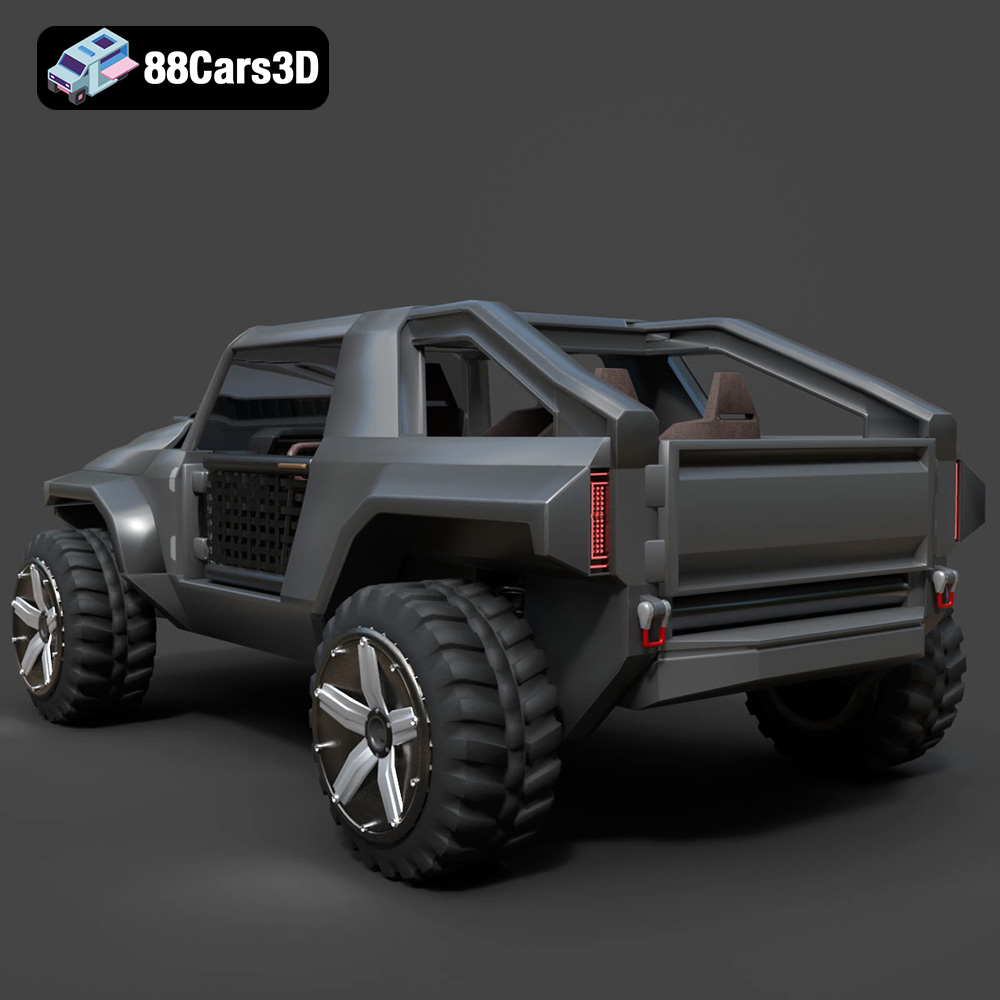
Today, we’re diving deep into what makes a superior 3D car model, using a prime example that embodies versatility and robust design: the Cactus Jeep 3D Model. This particular model isn’t just a digital replica; it’s a meticulously crafted asset ready to integrate into diverse professional workflows, offering both exceptional visual fidelity and optimized performance. From its rugged exterior details to its game-ready topology, this model exemplifies the quality and adaptability sought after by creators in various industries.
The journey of any 3D model, including sophisticated 3D car models like the Cactus Jeep, begins and progresses through various file formats. Each format serves a specific purpose, catering to different stages of the design pipeline, software compatibility, and end-use applications. Understanding these formats is crucial for any professional working with 3D assets, ensuring smooth transitions and optimal performance.
The .blend file is the native format for Blender, a powerful open-source 3D creation suite. When you receive a .blend file, you’re getting a complete Blender scene, including the model’s geometry, materials, textures, lighting setups, animations, and even scene properties. This format is ideal for users who primarily work in Blender and require full editability. It allows for deep customization, from adjusting mesh topology and UV layouts to modifying shaders and rigging. For the Cactus Jeep 3D Model, the .blend file provides the foundational project for any Blender user looking to personalize or integrate the asset seamlessly into their existing Blender projects.
Autodesk’s .fbx (Filmbox) format is arguably the most widely adopted interchange format in the 3D industry. It’s renowned for its ability to store not just mesh data, but also complex information such as animations, rigs, cameras, and lights. This makes .fbx the go-to format for transferring assets between different 3D software applications and, critically, for importing models into real-time game engines like Unreal Engine and Unity. Its robust support for skeletal animations and material assignments ensures that a 3D car model like the Cactus Jeep retains its intricate details and functionality when moving from a modeling package to a game environment.
The .obj (Wavefront OBJ) format is a simple, universal geometry definition file that has been around for decades. It’s excellent for transmitting basic mesh data – vertices, normals, UVs, and faces – between virtually any 3D software. While it doesn’t typically carry animation, rigging, or complex material definitions (often relying on an accompanying .mtl file for basic material properties), its widespread compatibility makes it a safe choice for sharing static models. For the Cactus Jeep, an .obj file guarantees that the core geometric structure can be opened and worked with in almost any 3D application, serving as a reliable fallback or a starting point for re-texturing.
.glb is the binary version of the GL Transmission Format (.gltf), an open standard for 3D scenes and models. Optimized for efficiency and speed, .glb files encapsulate all necessary data (geometry, textures, animations, PBR materials) into a single, compact file. This makes them perfect for web-based 3D viewers, augmented reality (AR), virtual reality (VR), and mobile applications where file size and loading times are critical. The Cactus Jeep’s availability in .glb format ensures it’s instantly ready for immersive virtual showrooms or interactive experiences directly within a web browser, without needing complex server-side processing.
The .stl (Stereolithography) format is the ubiquitous standard for 3D printing. It represents a 3D model as a collection of unconnected triangles (a tessellation of the surface), describing only the surface geometry without color, texture, or other CAD attributes. While not ideal for visual rendering, it’s precisely what 3D printers need to slice and build an object layer by layer. The Cactus Jeep 3D Model is convertible to .stl, enabling hobbyists and professionals alike to bring this rugged vehicle into the physical world, creating display models or components for custom projects.
The .ply (Polygon File Format) is often used for storing 3D data from 3D scanners, CAD software, and other applications requiring high precision. It can store not only polygonal mesh data but also additional properties like color, transparency, normals, texture coordinates, and even confidence values per vertex or face. While less common for general animation, .ply is invaluable for scientific visualization, reverse engineering, and applications where highly accurate geometric representation is paramount. For detailed analysis or high-fidelity reproduction, the Cactus Jeep’s .ply export ensures maximum geometric integrity.
When an asset is provided in an .unreal specific format, it signifies a model that has been pre-processed and optimized for direct import and use within the Unreal Engine ecosystem. This might involve specific material setups, collision meshes, LODs (Levels of Detail), and pivot points configured to Unreal’s specifications. For game developers, having the Cactus Jeep available in an .unreal-ready format drastically reduces setup time, allowing for immediate integration into an Unreal project with minimal tweaking, highlighting its game-ready advantage.
Similar to .blend for Blender, .max is the native file format for Autodesk 3ds Max, a leading software for 3D modeling, animation, rendering, and compositing. A .max file contains the entire scene data, including geometry, materials, textures, lighting, cameras, animation keyframes, and plugins used. Professionals working in 3ds Max benefit immensely from this format, as it provides the most comprehensive project file for customization, complex rigging, and high-end rendering workflows. The Cactus Jeep’s .max file offers complete flexibility for 3ds Max users to leverage its detailed structure for advanced animations or intricate studio renders.
Creating truly compelling 3D car models is an intricate dance between artistic interpretation and precise technical execution. It demands an understanding of real-world vehicle design, material science, and the specific demands of digital environments. The Cactus Jeep 3D model, available on 88cars3d.com, perfectly illustrates this balance.
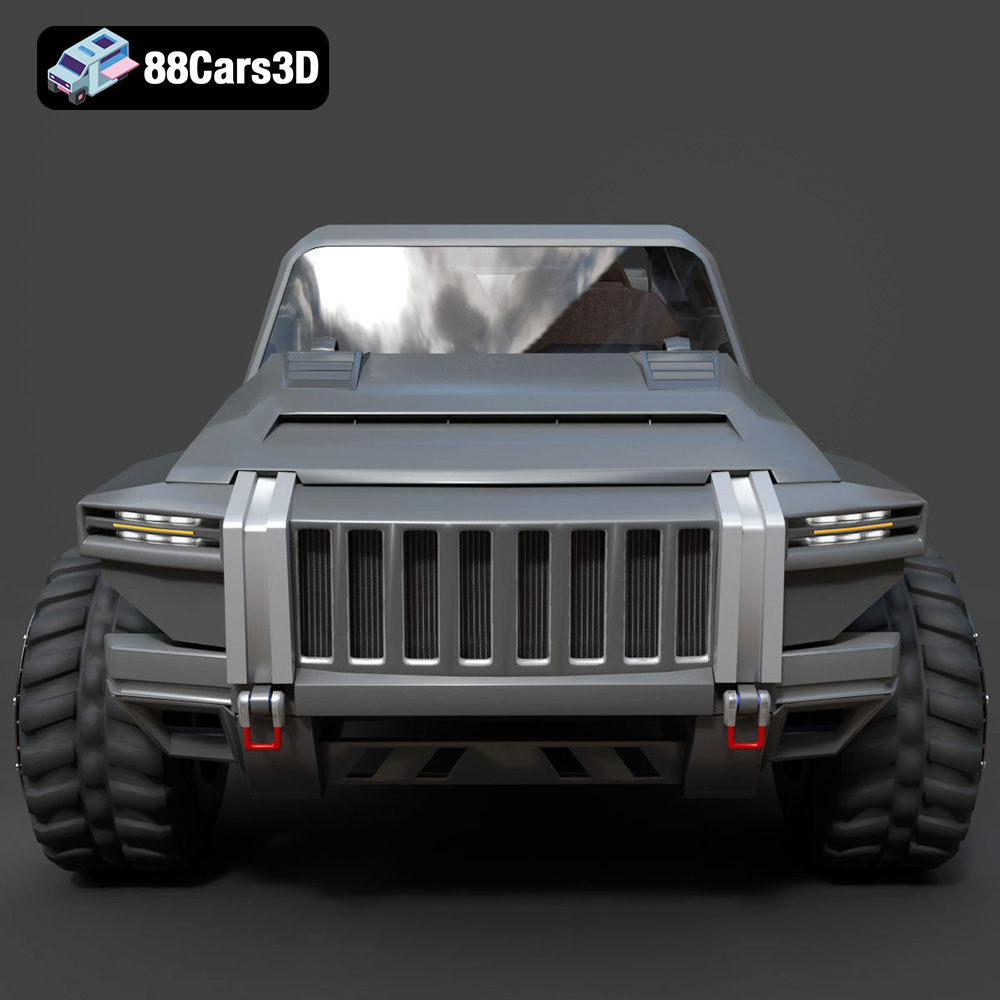
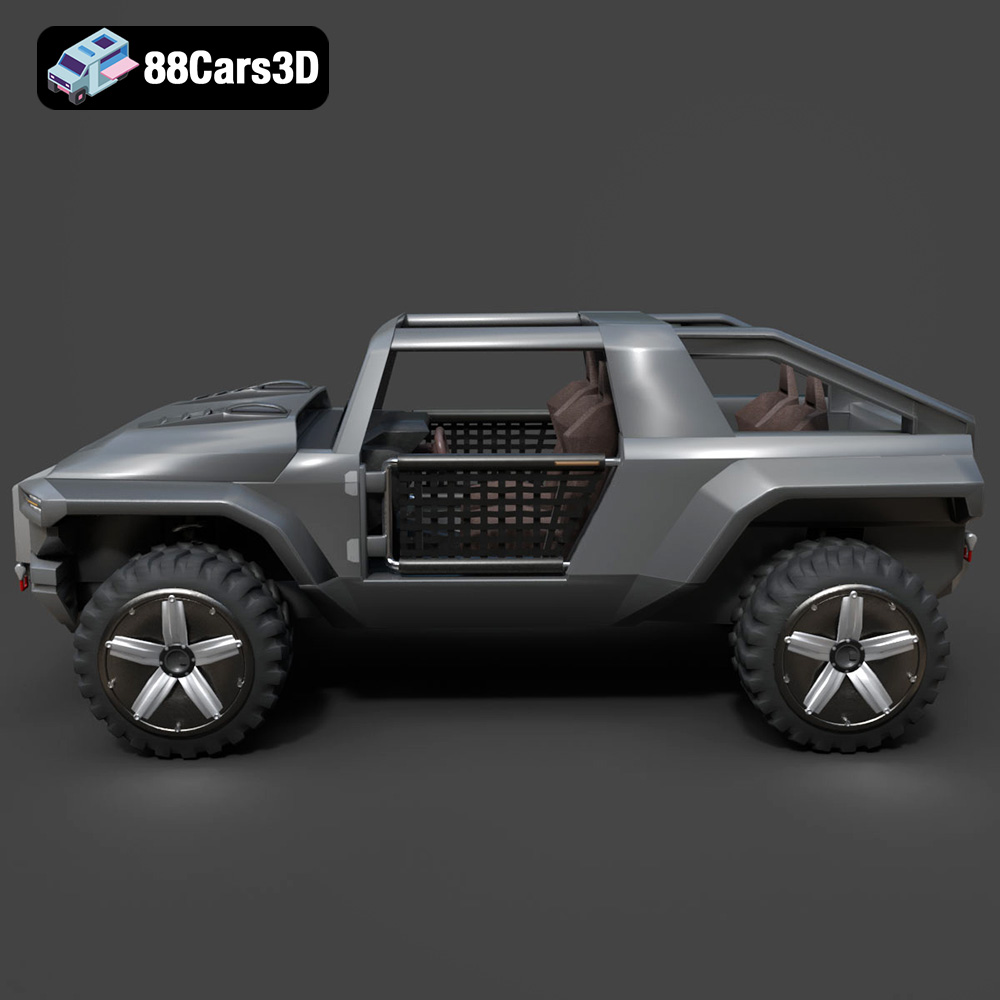
An automotive model is only as good as its fidelity to the original design. For the Cactus Jeep, this means meticulously replicating its iconic utilitarian styling. The distinctive front grille, a hallmark of its brand, must be instantly recognizable. The exposed heavy-duty chassis and muscular wheel arches aren’t just cosmetic; they communicate the vehicle’s rugged capability. Key exterior features like the classic round headlights, utilitarian taillights, and auxiliary light mounts contribute significantly to its identity. Even the chunky all-terrain tires on robust steel wheels and the high-clearance off-road suspension system with visible leaf springs and dampers are faithfully recreated. Achieving real-world scale accuracy is paramount, ensuring that the model looks and feels authentic whether it’s navigating a virtual desert or being showcased in a digital showroom.
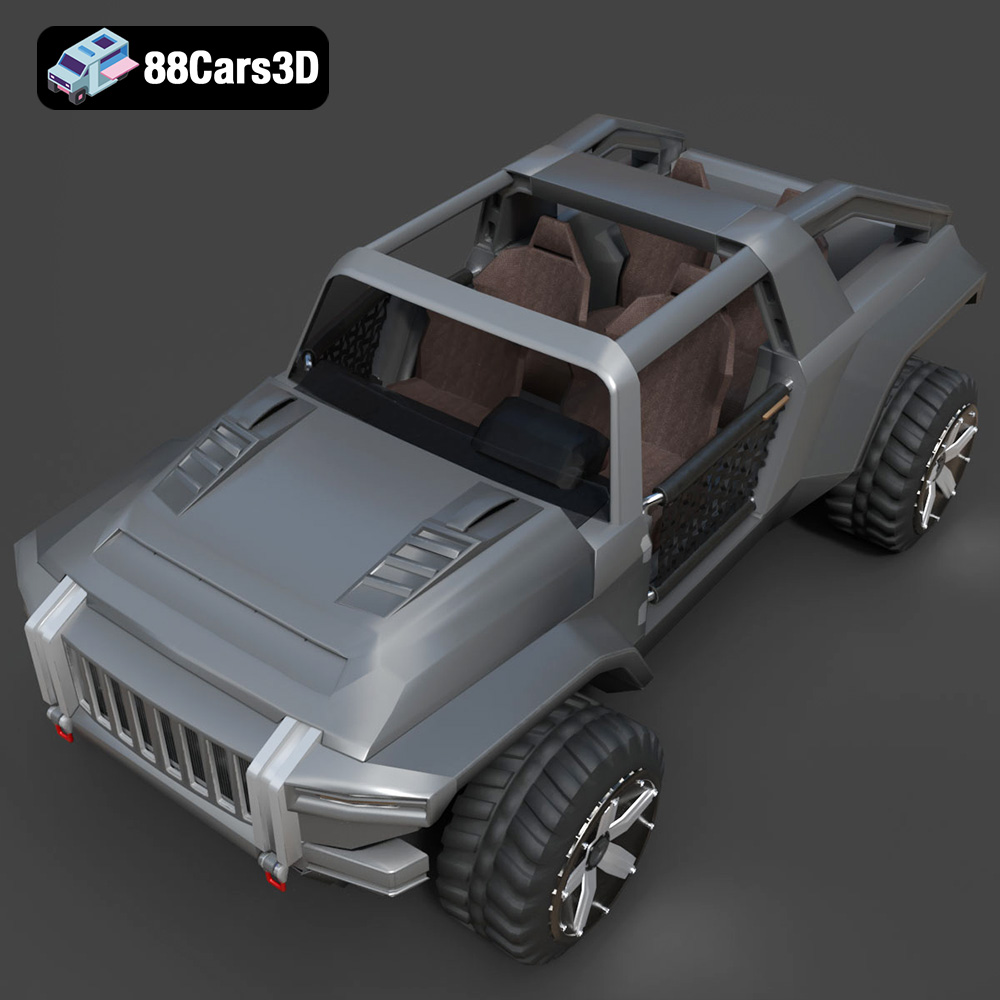
While the exterior grabs initial attention, a detailed interior is crucial for immersive experiences, especially in game development and virtual reality. The Cactus Jeep model addresses this with a carefully crafted cockpit. Utilitarian front bucket seats and a rear bench, complete with rugged textures, evoke the vehicle’s no-nonsense purpose. The classic heavy-duty steering wheel, vintage-inspired analog instrument cluster, and dashboard dials immerse the user in the vehicle’s character. Crucially, the detailed manual transmission shifter and 4WD transfer case levers aren’t just props; they signal the vehicle’s functional design. The interior geometry is optimized for first-person POV in gaming, ensuring that players get a compelling and believable view from behind the wheel without compromising performance.
A high-quality 3D car model must be more than just visually appealing; it must be technically optimized for its intended use cases, from the most demanding real-time engines to high-resolution rendering pipelines. The Cactus Jeep excels in this regard, striking a delicate balance between detail and performance.
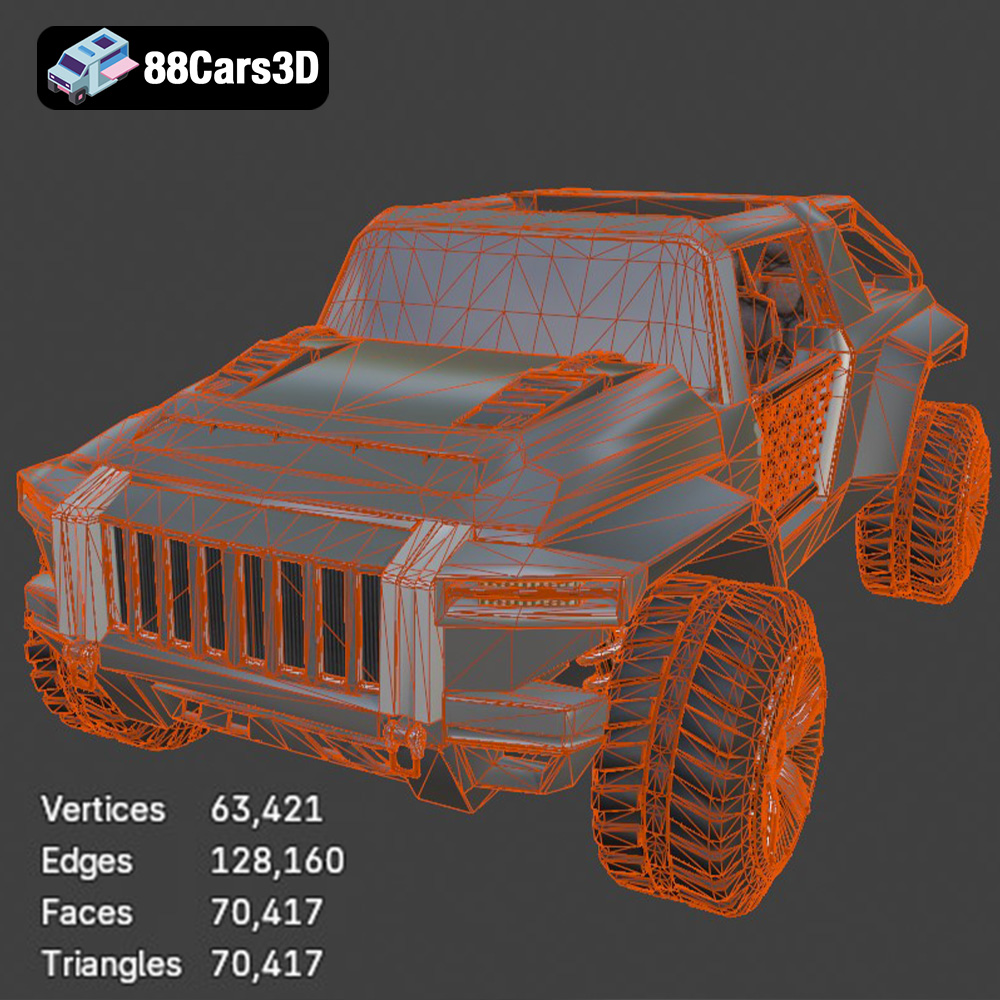
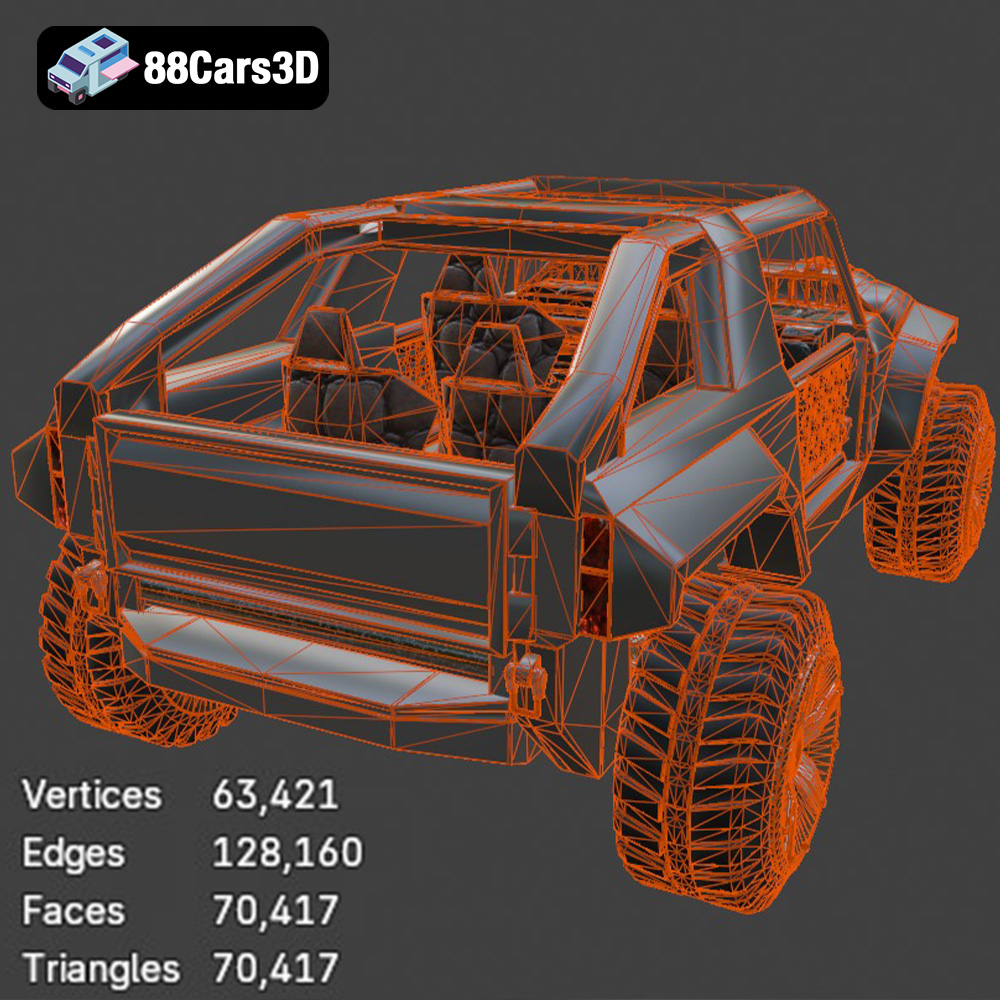
The term “game-ready” is a critical indicator of a 3D asset’s suitability for interactive environments. It implies an optimized polycount, clean topology, efficient UV mapping, and proper material setup. The Cactus Jeep 3D model boasts an efficient topology of 70,417 triangles. This figure represents a sweet spot, providing stunning visual fidelity without bogging down real-time engines like Unreal and Unity. A lower polycount ensures smoother framerates, especially when multiple vehicles or complex environments are present. Beyond polycount, the model’s proper pivot setup for steering, wheel rotation, and suspension travel is essential for realistic vehicle physics and animation within games. This attention to technical detail makes the Cactus Jeep an exceptional asset for open-world games, racing titles, and vehicle simulators.
For artists and designers focused on creating stunning still images or cinematic animations, the Cactus Jeep offers a robust foundation. Its detailed geometry and accurate material definitions allow for photorealistic rendering across various software. This makes it excellent for brand campaigns, where high-impact visuals are necessary to showcase products or evoke a particular lifestyle. Digital automotive showrooms can leverage its realistic textures and proportions for immersive product presentations. Furthermore, its versatility allows for customization, enabling creators to change body and tank colors, modify tire textures, or adjust material finishes (matte, gloss, metallic) to fit specific scene requirements or brand aesthetics. Lighting can also be adapted to create diverse moods, from a harsh desert sun to a dramatic studio setup.
Augmented Reality (AR) and Virtual Reality (VR) platforms demand incredibly optimized assets due to their real-time, often mobile-first, processing constraints. The Cactus Jeep’s efficient topology and availability in formats like .glb make it an ideal candidate for AR/VR applications. Imagine a virtual showroom where customers can walk around the Cactus Jeep, open its doors, or even configure its features in real-time on a tablet. Or perhaps an interactive VR experience where users can virtually “drive” the Jeep through a challenging off-road course. The model’s balanced detail ensures that it looks great even on less powerful devices, offering a smooth and engaging experience for users.
The true measure of a versatile 3D asset lies in its ability to seamlessly integrate into various professional workflows. Whether you’re a seasoned 3ds Max artist, a Blender enthusiast, or an Unreal Engine developer, a well-prepared model like the Cactus Jeep should streamline your project.
For those who prefer to dive deep into the model’s structure, the availability of .max and .blend files is invaluable. These native formats allow for complete control over every aspect of the asset. In 3ds Max, artists can leverage its powerful modeling tools to further refine details, create complex animations, or integrate the vehicle into larger scenes. Similarly, Blender users can take advantage of its comprehensive toolset for texturing, rigging, or applying custom modifiers. This level of access enables designers to tailor the Cactus Jeep to exact project specifications, whether it’s adding unique accessories, modifying its physical dimensions, or optimizing it further for highly specific rendering pipelines.
When moving from a modeling package to a real-time environment like Unreal Engine or Unity, the .fbx and .unreal formats become indispensable. The .fbx file, being an industry standard, allows for a clean transfer of geometry, UVs, and animation data. Once imported into Unreal Engine, for example, developers can leverage its powerful material editor to create physically based rendering (PBR) materials that react realistically to light. The Cactus Jeep’s optimized geometry and proper pivot setups mean that setting up wheel rotation, suspension travel, and steering animations is a straightforward process. For Unreal Engine users, the .unreal specific file further simplifies this, often coming with pre-configured settings and materials that minimize setup time, allowing creators to focus on gameplay and environment design.
Consider a scenario where a game studio is developing an open-world off-road simulation. The Cactus Jeep 3D model, with its game-ready optimization and detailed exterior/interior, can be immediately dropped into the game world. Its separate wheels, suspension, and steering components are pre-setup for animation, allowing developers to quickly rig it for dynamic physics and interactive driving. In an automotive configurator project, the model’s customization options—changing colors, modifying tire textures, adjusting material finishes—become vital. Users could see their choices reflected in real-time, enhancing the buying experience. For architectural visualization, the Cactus Jeep could serve as a realistic prop in an outdoor scene, adding character and context to a modern home or rugged landscape render, enhancing the overall storytelling of the visualization.
While often associated with digital screens, 3D car models also have a tangible presence through 3D printing. The ability to transition a digital asset into a physical object opens up new avenues for prototyping, display models, and educational tools.
For hobbyists and professionals looking to create physical representations, the .stl format is the bridge. The Cactus Jeep 3D model is convertible to .stl, allowing for accurate physical reproduction. However, 3D printing requires specific considerations. The recommended scales (1:12, 1:18, 1:24) ensure that details are preserved while remaining manageable. Layer height (0.04–0.12 mm) is critical for surface smoothness, with resin printing often recommended for capturing the fine details of the Jeep’s frame, engine bay, and interior components. Proper wall thickness (1.2–2.0 mm) and infill (20–30%) ensure structural integrity. Supports are often required for intricate parts like the exhaust system, mirrors, and auxiliary light mounts, preventing warping and ensuring fidelity. Print orientation, such as printing the frame angled, can also improve structural strength and reduce the need for excessive supports.
Bringing a 3D print to life often involves a series of post-processing steps. Sanding helps smooth out layer lines, followed by primer application to create an even surface for painting. The final stage involves applying authentic factory colors or custom finishes, perhaps with metallic paints to mimic real vehicle aesthetics. This process allows creators to fully realize the Cactus Jeep as a display-scale model or even as a functional prototype component. From miniature dioramas to custom RC vehicles, the ability to physically manifest these detailed 3D car models adds another layer of utility and creative potential.
The world of 3D modeling is vast and constantly evolving, with high-quality 3D car models sitting at the intersection of artistic expression and technical innovation. As we’ve explored with the Cactus Jeep 3D Model, a truly exceptional asset offers not just visual appeal but also robust technical specifications, diverse file format support, and seamless integration into a multitude of professional workflows. Whether your passion lies in crafting immersive game worlds, producing breathtaking automotive renders, developing cutting-edge AR/VR experiences, or bringing digital designs to life through 3D printing, the foundational quality of your 3D assets is paramount.
The Cactus Jeep stands as a testament to what a meticulously designed and optimized 3D car model can achieve across various applications. Its detailed features, game-ready topology, and broad compatibility make it an invaluable resource for any digital creator. For those seeking top-tier 3D models that deliver on both aesthetics and performance, exploring curated collections like those on 88cars3d.com is an excellent starting point. Investing in high-quality assets like the Cactus Jeep streamlines production, enhances visual fidelity, and ultimately empowers creators to bring their most ambitious visions to life.
Experience the ultimate blend of rugged utility and off-road heritage with the Cactus Jeep. This iconic 4×4 vehicle is celebrated for its utilitarian styling, exceptional durability, and unmatched capability on rough terrains. From its signature front grille and exposed heavy-duty chassis to its muscular wheel arches and functional boxy silhouette, this 3D model captures the true spirit of a classic off-roading legend ready to tackle the wilderness. Engineered for seamless integration into modern digital environments, this model boasts an efficient topology of 70,417 triangles. It delivers stunning visual fidelity without compromising performance, making it an exceptional game-ready asset. Whether you are developing an immersive open-world adventure, creating realistic automotive renders, or building an interactive VR experience, this meticulously optimized model guarantees high-end results across various real-time engines and rendering software.
$14.99
.4×4
.blend
.fbx
.glb
.jeep
.max
.obj
.ply
.rendering
.stl
.unreal
cactus
car-3d-model
game asset
game-ready
low-poly
off-road
optimized
SUV
VR/AR