Get 20% OFF All Premium 3D & STL Models!

The world of 3D visualization is constantly pushing boundaries, bringing to life everything from fantastical creatures to the most intricate pieces of industrial machinery. For professionals in game development, architectural visualization, AR/VR training, and industrial simulation, the demand for high-quality, technically accurate 3D models of heavy equipment is immense. These aren’t just decorative elements; they are critical components that define realism, enable interactive experiences, and drive professional projects forward.
Creating such models from scratch is a monumental task, requiring expertise in hard-surface modeling, intricate rigging, realistic texturing, and meticulous optimization. This is particularly true for complex machines like excavators, with their articulated booms, detailed hydraulic systems, and robust track mechanisms. Fortunately, marketplaces like 88cars3d.com offer specialized solutions, providing ready-to-use assets that meet rigorous industry standards. One such stellar example is the Compact Track Excavator 3D Model, a versatile and highly detailed asset engineered to seamlessly integrate into diverse professional pipelines. This article will delve deep into the technical intricacies of leveraging such a model, exploring its features, ideal applications, and the vital role of understanding various 3D file formats in maximizing its potential.
Before diving into the specifics of integrating a complex model like the Compact Track Excavator, it’s crucial to grasp the landscape of 3D file formats. Each format serves a specific purpose, offering unique advantages in terms of compatibility, data preservation, and target application. Choosing the right format is paramount for an efficient workflow, whether you’re working on a high-fidelity render, a real-time game, or preparing for 3D printing. The Compact Track Excavator 3D Model conveniently offers a comprehensive suite of these formats, ensuring maximum flexibility for any project.
The .blend format is native to Blender, an open-source 3D creation suite widely adopted across industries. A .blend file is a complete package, containing not just the mesh data, but also materials, textures, lighting, cameras, animations, rigging, and even scene settings. This makes it an ideal choice for users who primarily work within Blender or need a fully editable project to customize. For the Compact Track Excavator, the .blend file would provide immediate access to its well-optimized topology, carefully crafted materials, and pre-configured setup, allowing for quick modifications or scene integration.
.fbx (Filmbox) is arguably the most ubiquitous interchange format in the 3D industry, especially prevalent in game development and animation pipelines. Developed by Autodesk, it excels at transferring complex scene data, including geometry, materials, textures, animation, and rigging information, between different 3D software and game engines like Unreal Engine and Unity. Its robust nature makes it the go-to format for bringing the Compact Track Excavator into a real-time environment, ensuring that its articulated parts, such as the boom and tracks, can be properly rigged and animated within the engine.
The .obj (Wavefront OBJ) format is a simple, widely supported, and highly compatible format, often considered a universal standard for transmitting 3D geometry. It primarily stores vertex positions, UV coordinates, normals, and material group information. While it doesn’t typically embed animations or complex rigging, its strength lies in its ability to be opened and understood by virtually any 3D software. For the Compact Track Excavator, an .obj file provides a clean, raw mesh that can be imported into any application for sculpting, retopology, or as a base for custom material setups.
.glb (GL Transmission Format Binary) is an increasingly popular format, particularly optimized for web-based 3D, AR (Augmented Reality), and VR (Virtual Reality) applications. It’s a binary version of glTF, bundling all assets (mesh, textures, animations) into a single file, which makes it incredibly efficient for streaming and quick loading on various platforms, including mobile devices and browsers. If you’re showcasing the Compact Track Excavator in a virtual showroom, an interactive web application, or a mobile AR experience, the .glb format is your best bet for performance and accessibility.
The .stl (Stereolithography) format is the cornerstone of additive manufacturing, specifically 3D printing. It represents 3D surfaces as a collection of unconnected triangular facets, making it simple yet effective for describing the geometry of a solid object. For users intending to physically manifest the Compact Track Excavator, the .stl file is essential. The model’s description already suggests appropriate scales and print settings, indicating that the geometry is prepared for successful physical replication.
.ply (Polygon File Format) is another format for storing 3D data, often used for scanned 3D objects or in CAD and scientific applications where precision and detailed mesh properties are critical. It can store a wide range of properties, including color, transparency, normals, and texture coordinates, per vertex or per face. While less common for general animation, its inclusion for the Compact Track Excavator caters to users needing a highly precise mesh for engineering analysis, reverse engineering, or integration into specialized CAD environments.
The .unreal format, often referring to specific asset types or packaged content for Unreal Engine, signifies an asset that has been prepared and optimized directly for this powerful real-time engine. This typically means it comes with pre-configured materials, collision meshes, LODs (Levels of Detail), and correct scale, saving significant time in the import and setup process. For the Compact Track Excavator, an .unreal asset would allow developers to drop the model straight into their Unreal projects, minimizing conversion issues and accelerating game or simulation development.
Finally, the .max format is the native file type for Autodesk 3ds Max, a long-standing industry standard for 3D modeling, animation, and rendering, particularly in architectural visualization and product design. Similar to .blend, a .max file preserves the entire scene data, including modifiers, complex material setups, lights, cameras, and animation curves. For professionals using 3ds Max, having the Compact Track Excavator available in this format means instant access to an editable, fully functional scene ready for high-end rendering or custom animation sequences.
Understanding these formats empowers you to select the best option for your specific project needs, ensuring compatibility, preserving crucial data, and streamlining your workflow when utilizing assets from resources like 88cars3d.com.
The Compact Track Excavator 3D Model is a testament to meticulous craftsmanship, designed to meet the rigorous demands of various digital applications. Its highly detailed representation of modern construction machinery makes it an invaluable asset for anyone looking to add authenticity and visual prowess to their projects. This model isn’t just about surface aesthetics; it’s about accurate engineering translated into a digital format.
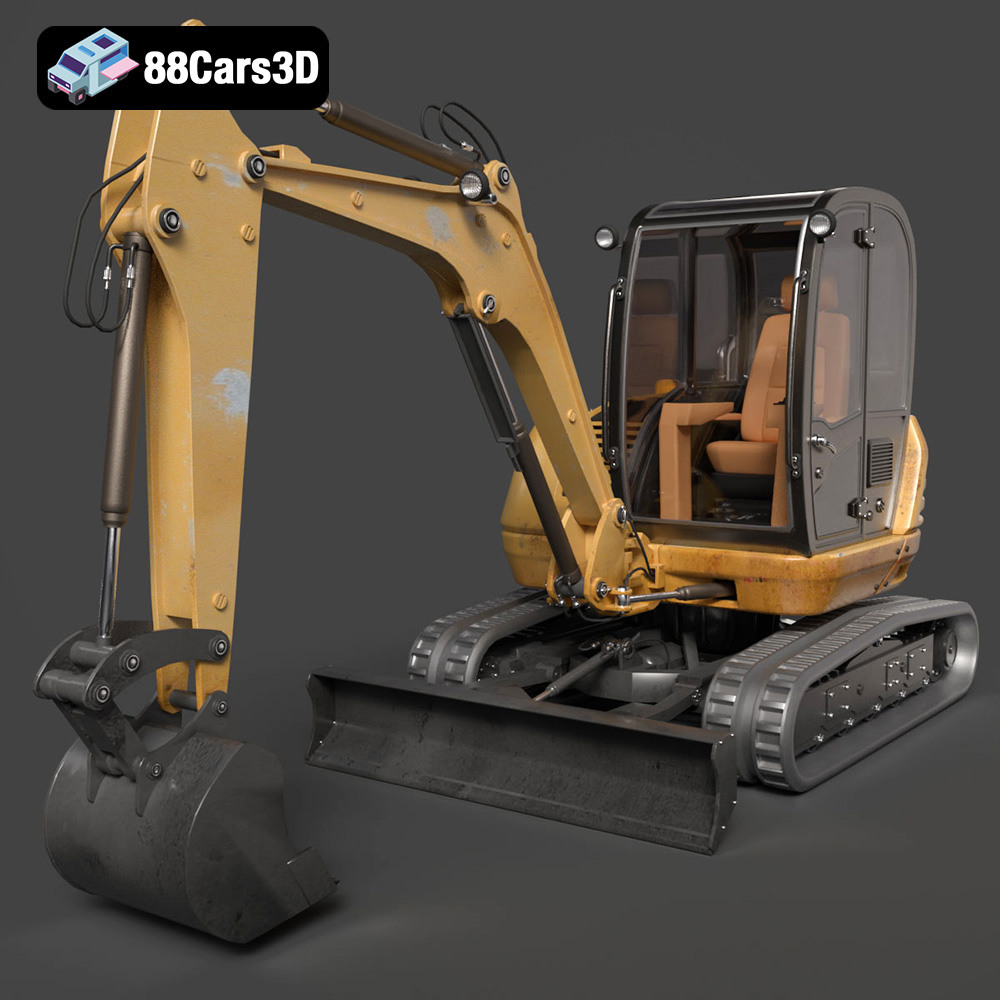
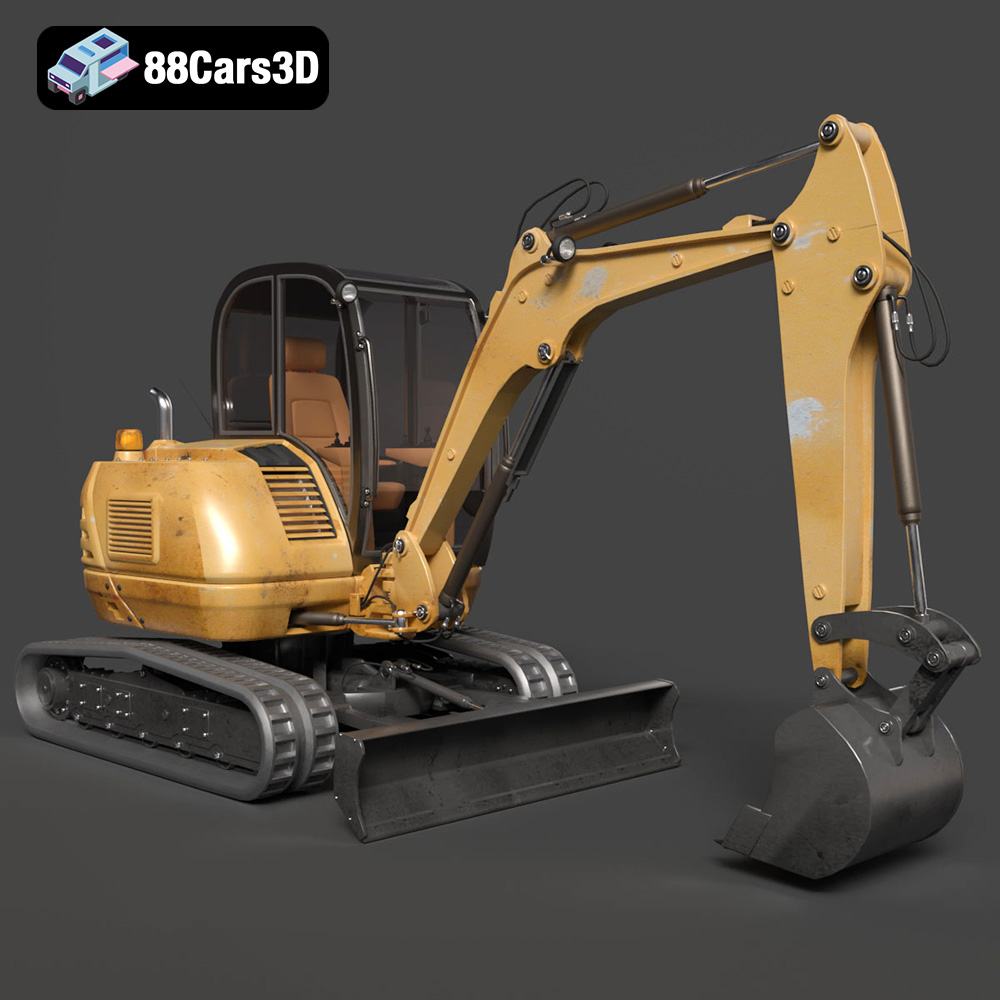
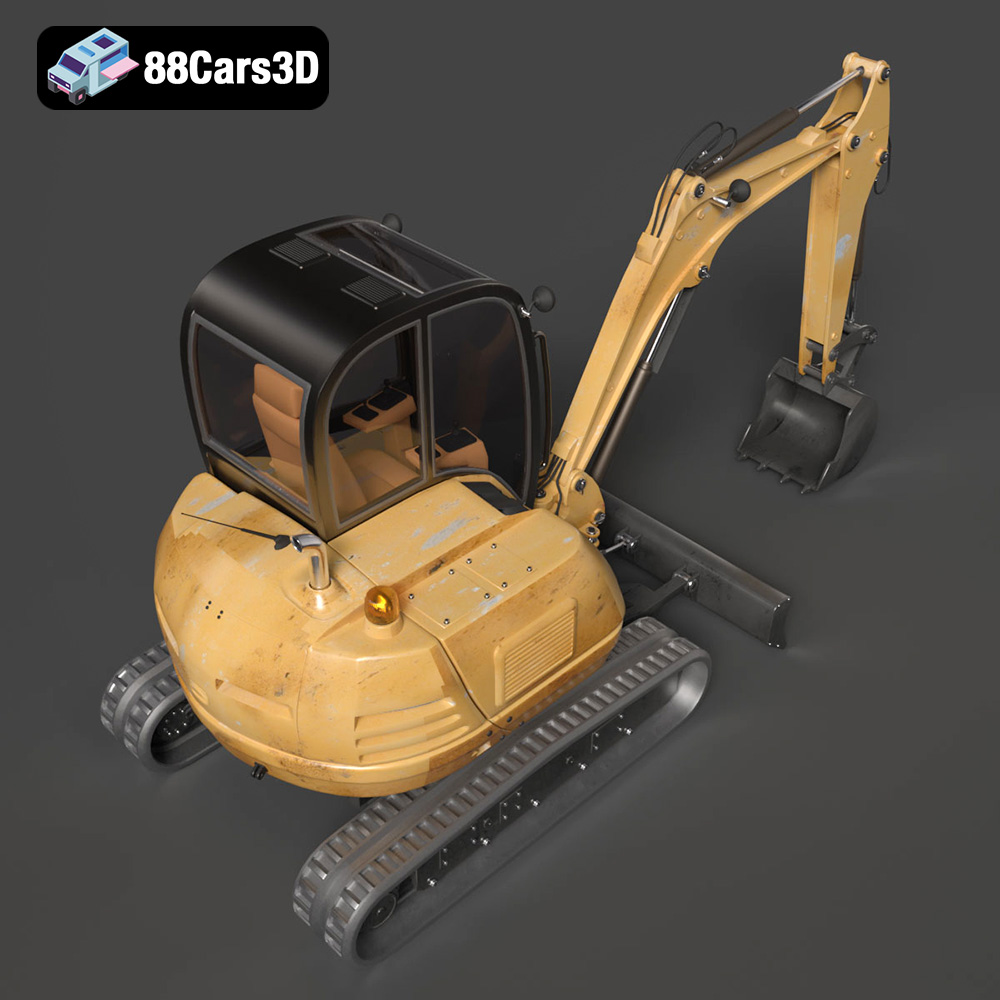
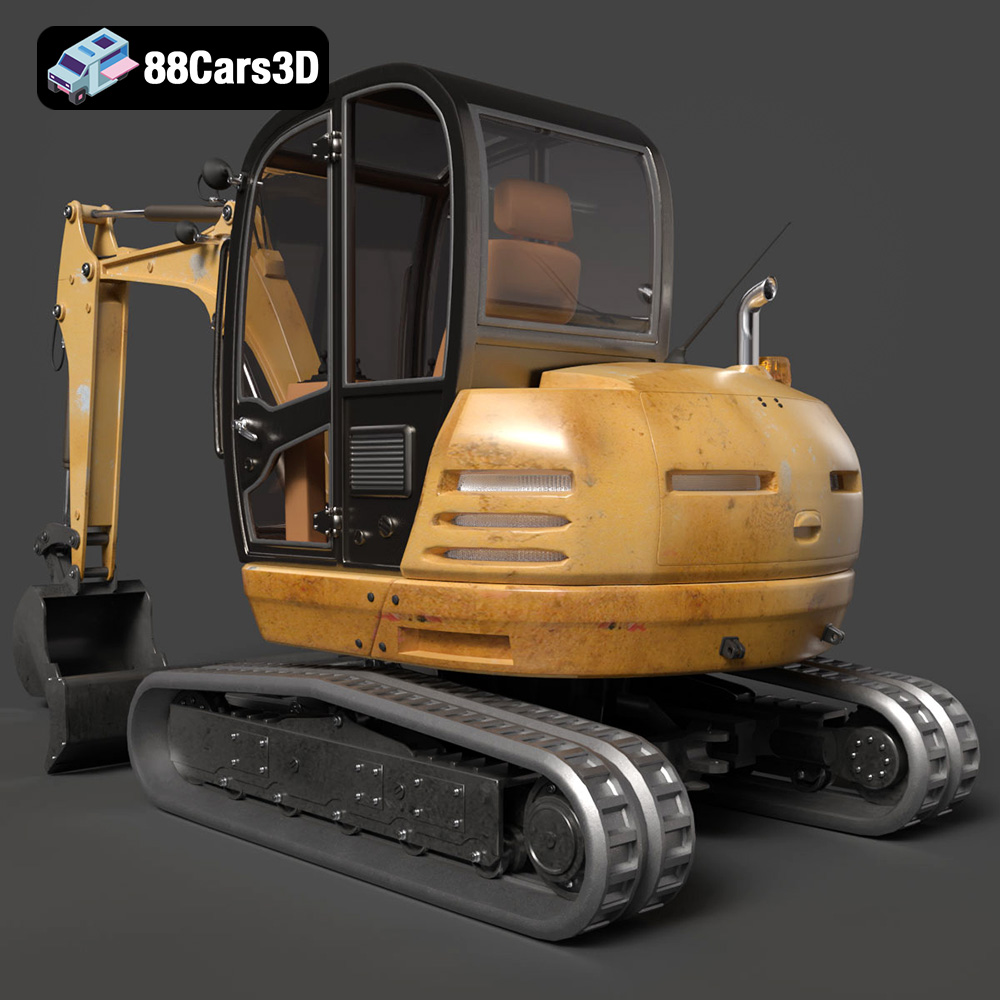
From the moment you inspect this model, its dedication to real-world accuracy is evident. The overall frame geometry and industrial proportions precisely mirror actual compact track excavators. This isn’t a generic interpretation but a faithful digital twin, ensuring that it integrates believably into any scene, whether it’s a bustling construction site in a game or a detailed architectural visualization. The aggressive stance and robust design cues are all present, contributing to its authentic industrial appeal.
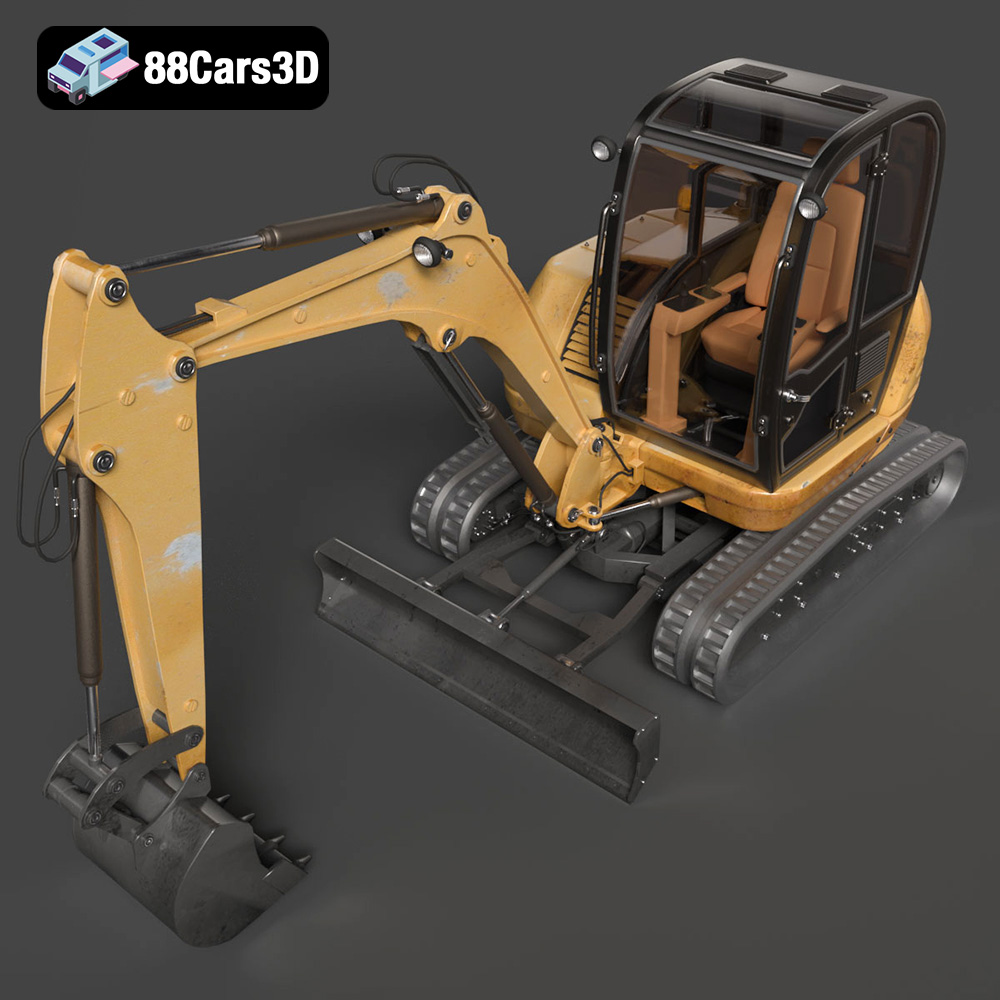
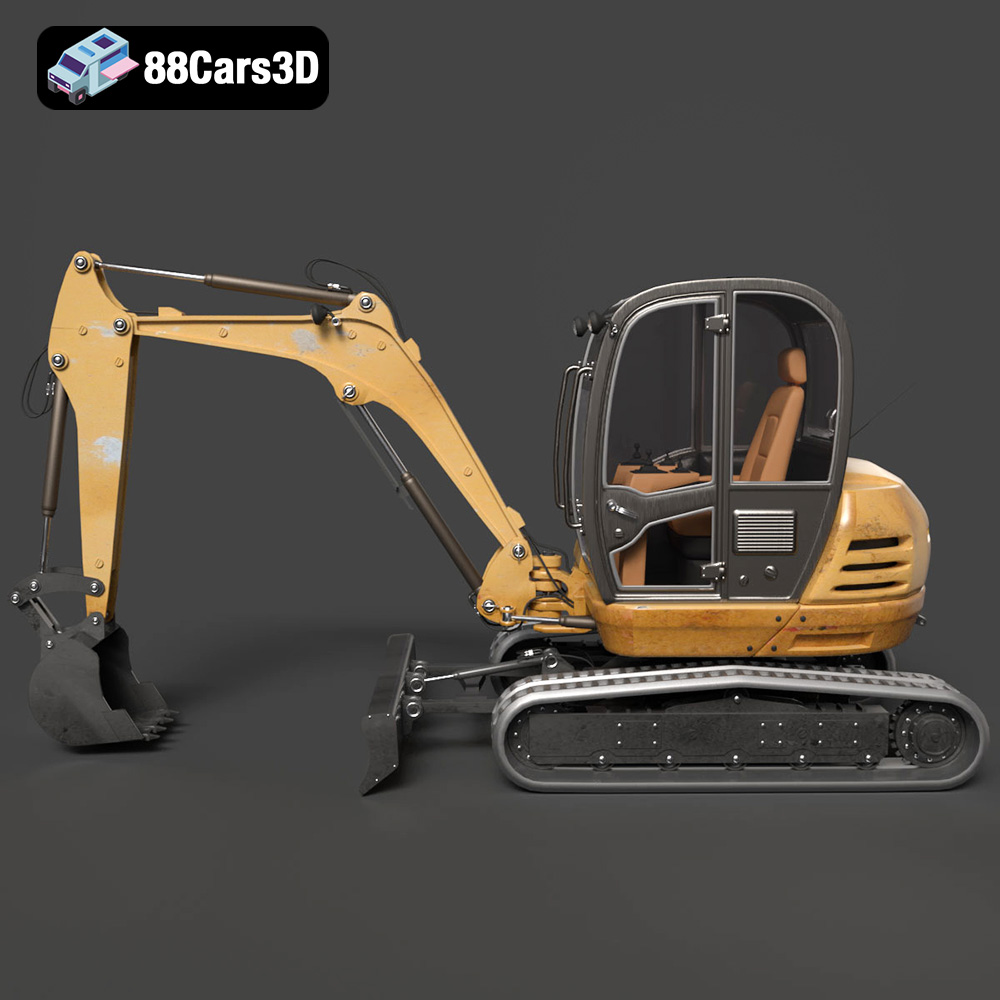
One of the most complex aspects of heavy machinery modeling is the hydraulic system. This Compact Track Excavator 3D Model shines in this area, featuring detailed hydraulic cylinders, pistons, and meticulously routed hoses. These aren’t merely decorative textures; they are distinct 3D elements that provide depth and realism, essential for close-up renders or realistic animation where the mechanical movements are observed in detail. Similarly, the robust undercarriage with its highly detailed continuous tracks and drive sprockets is a critical feature, offering the foundation for realistic track deformation and movement during animation.
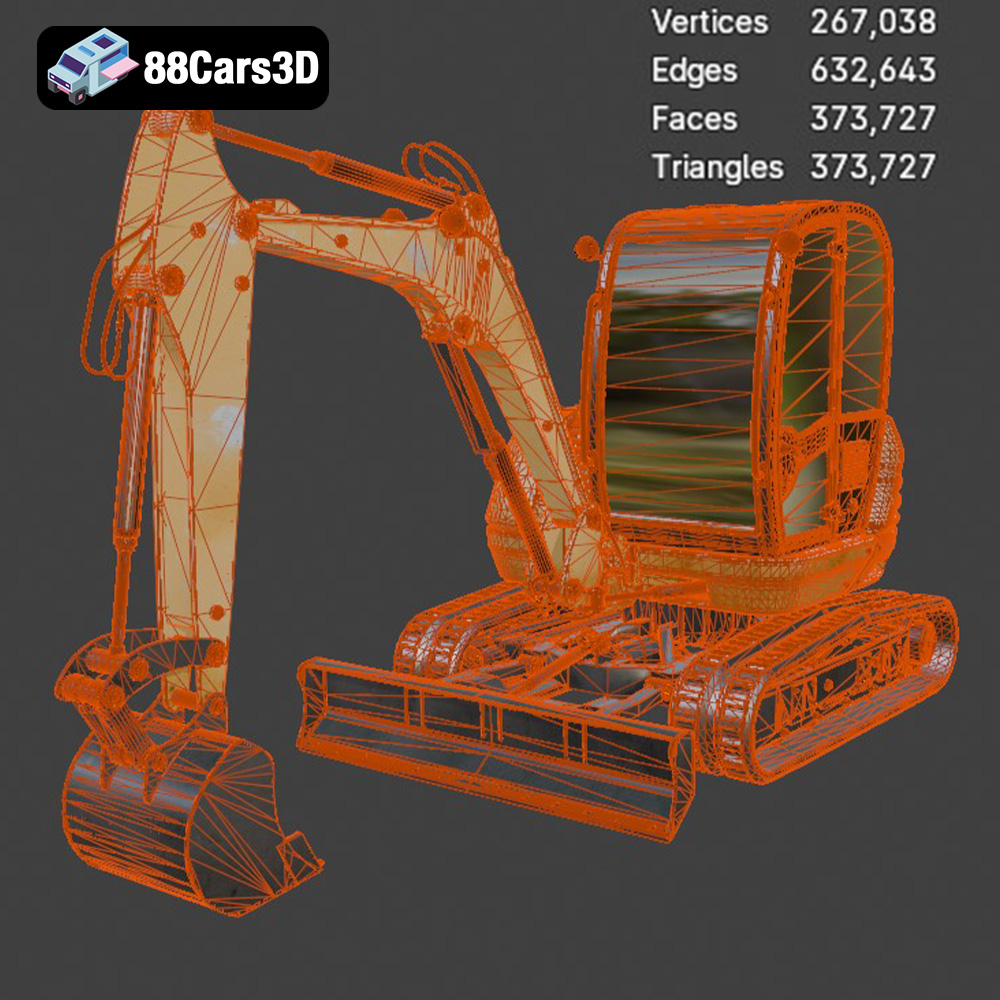
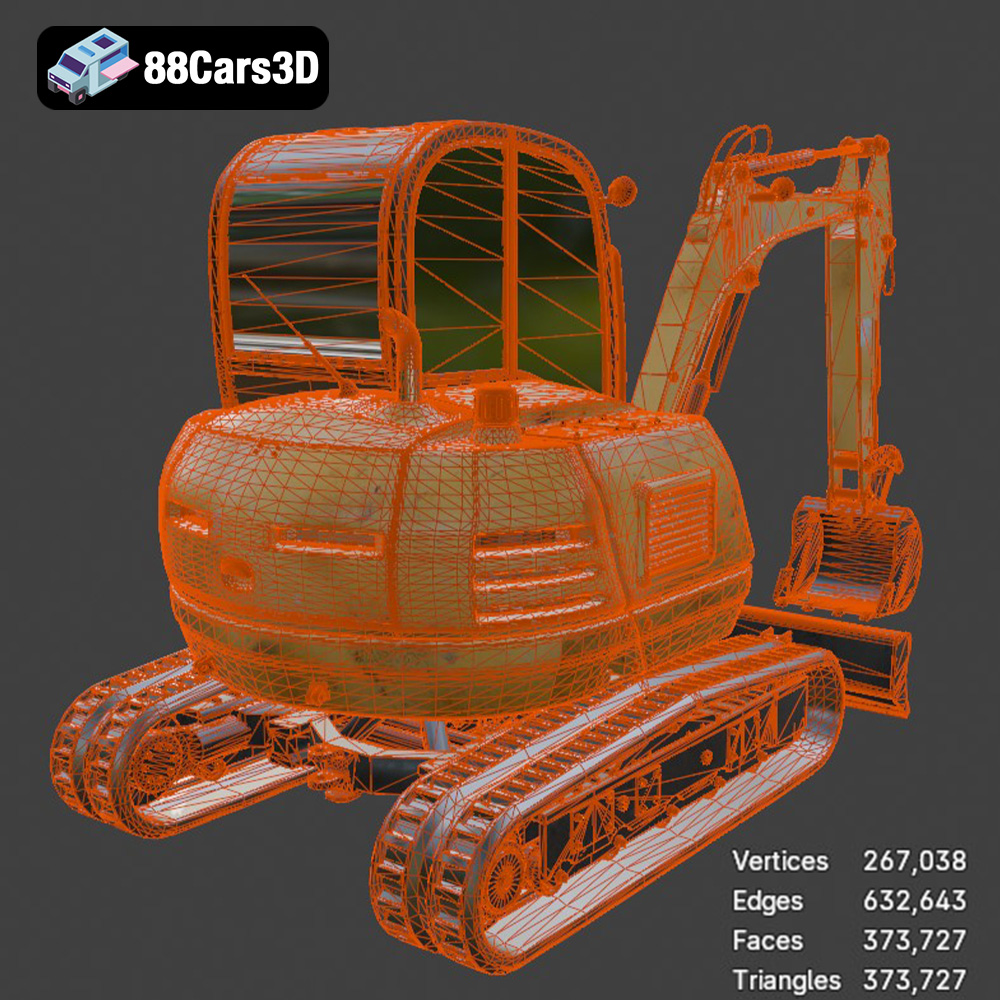
A significant technical advantage of this model is its optimized topology, boasting 373,727 triangles. This polycount strikes a crucial balance: it’s high enough to deliver uncompromising visual fidelity, capturing all the necessary details without appearing blocky or simplistic, yet it remains efficient enough for real-time applications. This “game-ready” characteristic means less work for developers in retopology or LOD generation. Furthermore, the model is built to real-world scale accuracy, which is non-negotiable for professional visualization and simulation where precise measurements are critical for environmental integration and realistic interactions.
The proper pivot setup for 360-degree turret rotation, track movement, and multi-stage boom articulation is another highlight. This pre-configured rigging foundation significantly reduces setup time for animators, allowing for fluid and realistic operational sequences right out of the box.
In the fast-paced world of game development and real-time interactive experiences, performance is paramount. A beautiful model is useless if it brings an engine to its knees. The Compact Track Excavator 3D Model from 88cars3d.com is specifically designed with these constraints in mind, offering features that make it a seamless fit for game engines and AR/VR platforms.
The “game-ready” designation is not merely a marketing term; it signifies that the model has undergone crucial optimization steps. With 373,727 triangles, it achieves a sweet spot for modern game engines like Unreal Engine and Unity. This polycount allows for impressive visual realism without excessive draw calls, ensuring smooth frame rates. For instance, in a large open-world construction simulator, having multiple instances of this excavator running simultaneously without performance hitches is a game-changer. The .fbx and .unreal file formats are particularly suited for direct import into these engines, often including pre-baked normals and optimized UV layouts.
Bringing the Compact Track Excavator into Unreal Engine is a straightforward process, especially with the .fbx or .unreal formats.
AR/VR training programs for heavy equipment operators are becoming increasingly sophisticated. The Compact Track Excavator excels in this domain due to its detailed interior and optimized geometry for first-person POV. An operator in a VR simulator needs to feel fully immersed, interacting with controls that mirror their real-world counterparts. The detailed joysticks, pedals, and instrument cluster in this model provide that level of fidelity, crucial for realistic muscle memory training.
The .glb format, optimized for web and mobile, is perfect for deploying AR experiences. Imagine a construction company showcasing their fleet in AR, allowing potential clients to visualize the excavator in a real-world environment through their smartphone camera. The balance of detail and optimization ensures smooth performance on mobile devices, preventing motion sickness or choppy visuals that can plague VR/AR experiences with unoptimized assets.
While the Compact Track Excavator is game-ready, its high level of detail also makes it an outstanding choice for non-real-time rendering and visualization projects where photorealism is the ultimate goal. Architectural visualization firms, industrial design studios, and marketing agencies often require assets that can stand up to extreme scrutiny in static renders or cinematic animations.
For architectural visualization, accurately depicting construction progress or proposed site layouts is crucial. A high-quality 3D model of an excavator can instantly communicate the scale, activity, and functionality of a construction project. Using the .max or .blend format, designers can import the Compact Track Excavator into their scene, apply V-Ray or Corona render materials, and integrate it seamlessly with architectural models. The detailed hydraulic system and realistic tracks, combined with advanced lighting, can produce stunningly photorealistic images and animations.
Similarly, for industrial demonstrations, the model can be used to illustrate operational procedures, safety protocols, or the capabilities of heavy machinery in a virtual environment. Imagine a marketing video for a new construction technique, featuring the excavator performing tasks with precision. Its proper pivot setup allows for complex animation sequences that highlight the machine’s full range of motion.
Leveraging the .max file for 3ds Max users unlocks the full potential for high-fidelity rendering.
The versatility of the Compact Track Excavator 3D Model extends beyond digital screens, offering the exciting possibility of physical replication through 3D printing. For hobbyists, diorama builders, or even engineering firms needing scale prototypes, this model provides an excellent foundation.
The inclusion of the .stl format is specifically for 3D printing, translating the complex geometry into a mesh of triangles that 3D printers can interpret. The product description provides excellent guidance for preparing this model for physical output, emphasizing the considerations needed for a successful print.
The journey doesn’t end with a finished print. Post-processing is where the model truly comes to life. Sanding away support marks, applying primer, and then painting with authentic industrial colors (like yellow or orange) are essential steps. To achieve a “weathered site realism,” techniques like washes, dry-brushing, and pigment powders can be used to simulate dirt, mud, rust, and scratches, transforming a clean print into a believable miniature of its real-world counterpart. This combination of a high-quality 3D printable model and thoughtful post-processing can yield stunning results for any diorama or display piece.
One of the enduring strengths of purchasing a high-quality 3D asset like the Compact Track Excavator from 88cars3d.com is the inherent flexibility it offers for customization and seamless integration into existing professional workflows. This isn’t a static model; it’s a dynamic foundation.
The customization options outlined for this model are extensive and practical:
The Compact Track Excavator’s robust feature set and format compatibility make it a versatile tool across a spectrum of professional applications:
The investment in a high-quality 3D model like the Compact Track Excavator is an investment in efficiency, realism, and versatility across virtually all digital media pipelines. Its availability across multiple formats ensures that professionals, regardless of their preferred software or target platform, have an immediate, high-grade solution at their fingertips.
In the demanding landscape of 3D content creation, where deadlines are tight and realism is paramount, the availability of meticulously crafted assets is a game-changer. The Compact Track Excavator 3D Model exemplifies this, offering an unparalleled blend of technical accuracy, visual fidelity, and optimization across a wide array of professional applications. From its robust industrial design and intricate hydraulic systems to its game-ready polycount and detailed interior, every aspect has been engineered for excellence.
The comprehensive support for diverse file formats—from the editable .blend and .max files for in-depth customization, to the universal .fbx and .obj for broad compatibility, the web-optimized .glb for AR/VR, and the indispensable .stl for 3D printing—ensures that this model is a truly versatile asset. Understanding these formats is not just a technicality; it’s a strategic advantage, enabling seamless integration into any workflow, be it a fast-paced game development cycle, a high-fidelity architectural visualization, or an immersive AR/VR training simulation.
For professionals seeking to elevate their projects with authentic heavy machinery, this Compact Track Excavator 3D Model from 88cars3d.com represents a smart and efficient solution. It’s more than just a 3D model; it’s a fully realized, production-ready asset designed to empower creators and drive innovation in the digital realm.
The Compact Track Excavator represents the pinnacle of modern construction and heavy machinery engineering. Designed for versatility and power in confined spaces, this machine is characterized by its robust track system, highly articulated hydraulic boom, and heavy-duty digging bucket. Its distinctive industrial styling is complemented by exposed hydraulic hoses, a reinforced operator cabin, and an aggressive stance that makes it a staple on any digital construction site. This meticulously crafted 3D model features a well-optimized topology with 373,727 triangles, delivering uncompromising visual fidelity while remaining efficient for real-time applications. Whether deployed in game development, industrial simulations, AR/VR training programs, or high-end architectural visualizations, the asset is structured to provide maximum realism. The meticulously modeled undercarriage and boom pivot points ensure seamless rigging and animation.
$36.50
.blend
.excavator
.fbx
.glb
.max
.obj
.ply
.rendering
.stl
.unreal
compact-track-excavator
construction-equipment
game asset
game-ready
heavy-machinery
low-poly
optimized
vehicle-3d-model
VR/AR