Get 20% OFF All Premium 3D & STL Models!

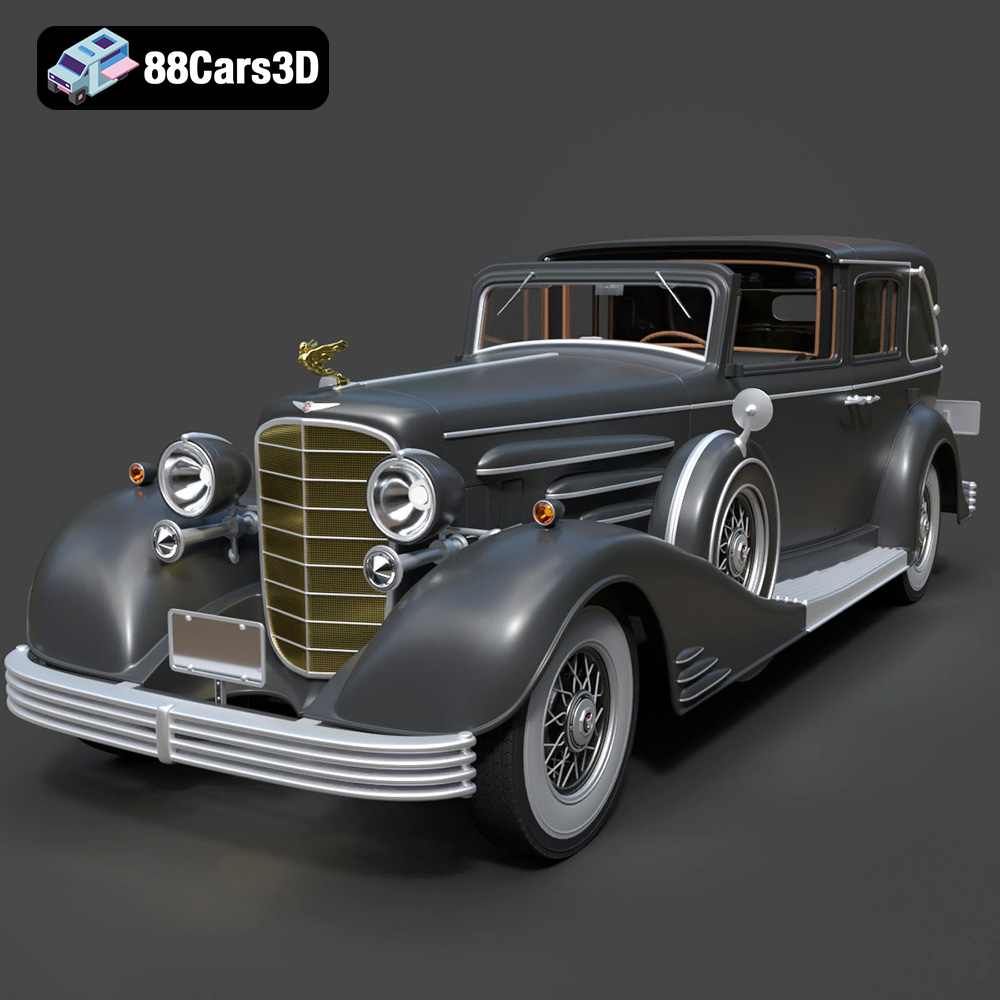
Few vehicles command the same reverence and admiration as the pre-war American classics, epitomizing an era of unparalleled craftsmanship, daring design, and engineering prowess. Among these automotive legends, the 1933 Cadillac V16 (452-C) Town Car stands as an undisputed monarch, a symbol of extreme luxury and bespoke coachbuilding that defined the zenith of 1930s elegance. Its colossal, whisper-quiet 16-cylinder engine and the distinctive open-chauffeur “Town Car” body style etched its place in history. Today, the digital realm offers a unique opportunity to preserve, interact with, and re-envision such masterpieces. For artists, developers, and enthusiasts seeking the pinnacle of virtual automotive fidelity, a high-quality 3D car model of this iconic vehicle is an indispensable asset, opening doors to cinematic renderings, historically accurate game environments, and captivating AR/VR experiences. This article will delve into the intricacies of integrating such a model into various professional pipelines, highlighting its technical advantages and diverse applications, all exemplified by the exceptional Cadillac V16 452-C Town Car 1933 3D Model available on 88cars3d.com.
When investing in premium 3D car models like the 1933 Cadillac V16, understanding the various file formats included is paramount to maximizing its utility across different software and platforms. Each format serves a specific purpose, offering unique advantages for particular workflows, from detailed automotive rendering to real-time game assets. The Cadillac V16 452-C Town Car 3D Model thoughtfully includes a comprehensive suite of file types, ensuring maximum compatibility and flexibility for any project.
The .blend format is the native file type for Blender, a powerful and increasingly popular open-source 3D creation suite. A .blend file typically encapsulates the entire scene, including geometry, materials, textures, lighting, camera setups, and even animation data. For artists primarily working in Blender, this format provides the most direct and editable access to the model. You can modify the topology, adjust shaders using Blender’s node-based material system, or integrate it seamlessly into existing Blender projects without any conversion losses. It’s ideal for deep customization, complex scene assembly, and leveraging Blender’s extensive toolset for rendering with Cycles or Eevee.
.fbx (Filmbox) is arguably the most widely adopted proprietary file format for 3D data exchange, especially prevalent in game development and animation pipelines. Developed by Autodesk, FBX files can store not just geometry and UVs, but also skeletal animation, blend shapes, lights, and cameras. Its robust support for PBR (Physically Based Rendering) materials makes it perfect for importing into game engines like Unreal Engine and Unity, where accurate material representation is crucial. When working with the Cadillac V16 as a game asset, .fbx ensures that all animation pivots and hierarchical structures are preserved, making it production-ready for real-time applications.
The .obj (Wavefront OBJ) format is a simple, human-readable data format that represents 3D geometry alone. It stores vertex positions, UV coordinates, normals, and face data. While it can reference an accompanying .mtl (Material Template Library) file for basic material properties, it doesn’t support advanced features like animation, rigging, or complex PBR shaders natively. Its strength lies in its universal compatibility; virtually every 3D software can import and export .obj files. It’s an excellent choice for straightforward geometry transfer, archival purposes, or when you only need the raw mesh data of the Cadillac V16 for sculpting or retopology in a different application.
.glb (GL Transmission Format Binary) is a relatively newer format, an efficient, self-contained binary version of glTF (GL Transmission Format). It’s specifically designed for rapid loading and execution in web browsers, augmented reality (AR), and virtual reality (VR) environments. A .glb file packs geometry, materials, textures, and even animations into a single, highly optimized file, making it ideal for interactive web experiences, mobile AR apps, and virtual showrooms. For showcasing the 1933 Cadillac V16 in a browser-based configurator or an immersive AR experience, .glb offers unparalleled performance and ease of deployment.
The .stl (Stereolithography) format is the de facto standard for 3D printing. It represents the surface geometry of a 3D model using a tessellated mesh of triangles, without any color, texture, or material information. It describes “what to print” rather than “how it looks.” While the detailed Cadillac V16 model is designed for high-fidelity rendering, its .stl export enables physical reproduction. This format is crucial for hobbyists or professionals looking to create physical scale models for display, prototyping, or educational purposes. It requires careful consideration of mesh integrity and manifold geometry for successful printing.
The .ply (Polygon File Format) is another popular format for storing 3D data, particularly useful for models generated from 3D scanners or scientific datasets. Unlike .stl, .ply can store a wider range of properties, including color per vertex or per face, normals, and even transparency. It’s often favored in academic and research settings for its ability to handle complex and dense point cloud or mesh data with higher precision. For specialized applications involving mesh analysis, reverse engineering, or integrating the Cadillac V16 into a CAD pipeline, .ply offers a robust solution.
While not a standalone file extension in the traditional sense, the inclusion of an .unreal file package signifies an asset specifically prepared and optimized for Unreal Engine. This could refer to a .uasset file or a set of files organized for direct import or migration within Unreal Engine, often including pre-configured materials, textures, and possibly LODs (Levels of Detail). This format dramatically streamlines the integration process, saving artists and developers significant time by providing a ready-to-use game asset with appropriate collision meshes, material instances, and optimization already applied for high-performance real-time rendering within the engine.
The .max format is the native scene file for Autodesk 3ds Max, a leading software for 3D modeling, animation, and automotive rendering. Similar to .blend, a .max file contains comprehensive scene data, including geometry, modifiers, materials, lights, cameras, and animation curves. For professionals working in 3ds Max, this provides the most control and flexibility. You can leverage powerful rendering engines like V-Ray or Corona Renderer, utilize 3ds Max’s extensive modifier stack for non-destructive edits, or integrate the Cadillac V16 into complex architectural visualization or animation projects with ease.
The breadth of formats included with the Cadillac V16 452-C Town Car 1933 3D Model underscores its versatility and the foresight of 88cars3d.com in catering to a diverse professional audience. This ensures that regardless of your preferred software or end-application, you have the right tools at your fingertips.
Recreating a vehicle as historically significant and visually complex as the 1933 Cadillac V16 (452-C) Town Car in 3D requires a blend of meticulous research, artistic skill, and technical precision. The model available at 88cars3d.com is a testament to this detailed process, designed to bridge the gap between historical accuracy and modern digital application.
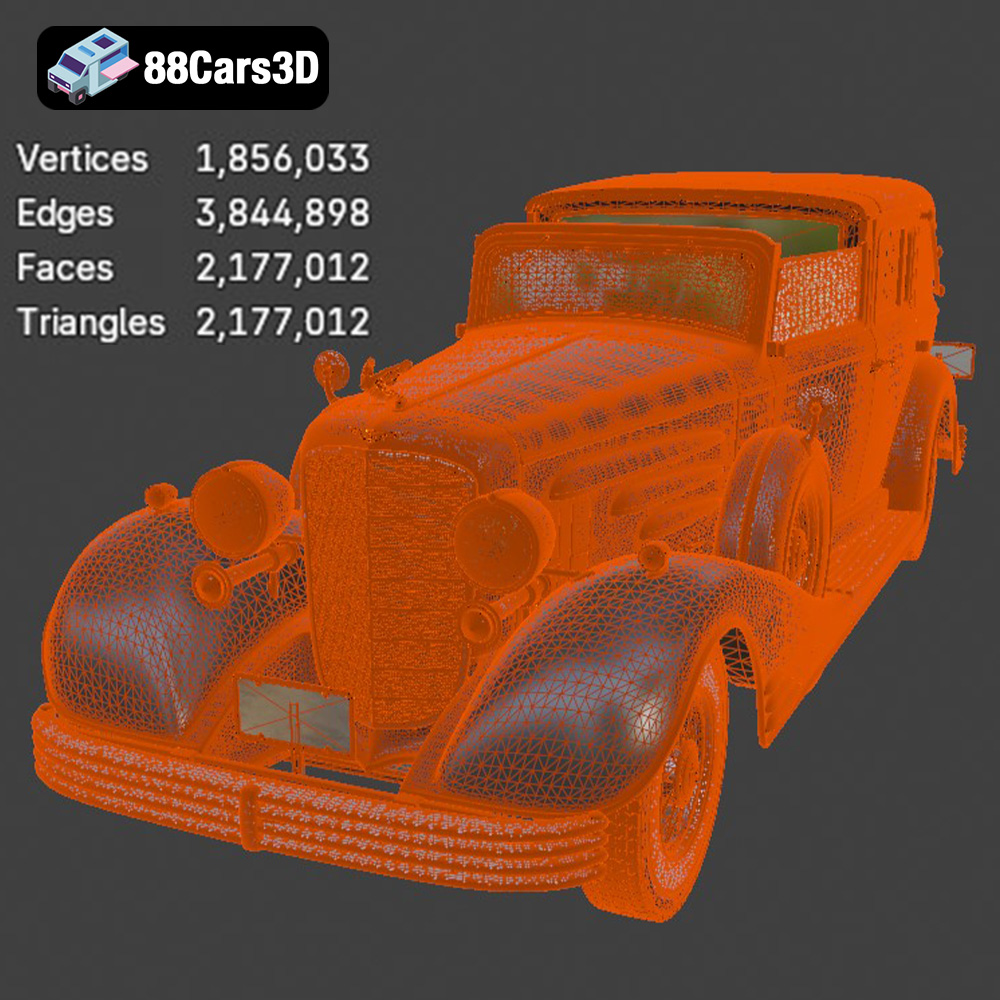
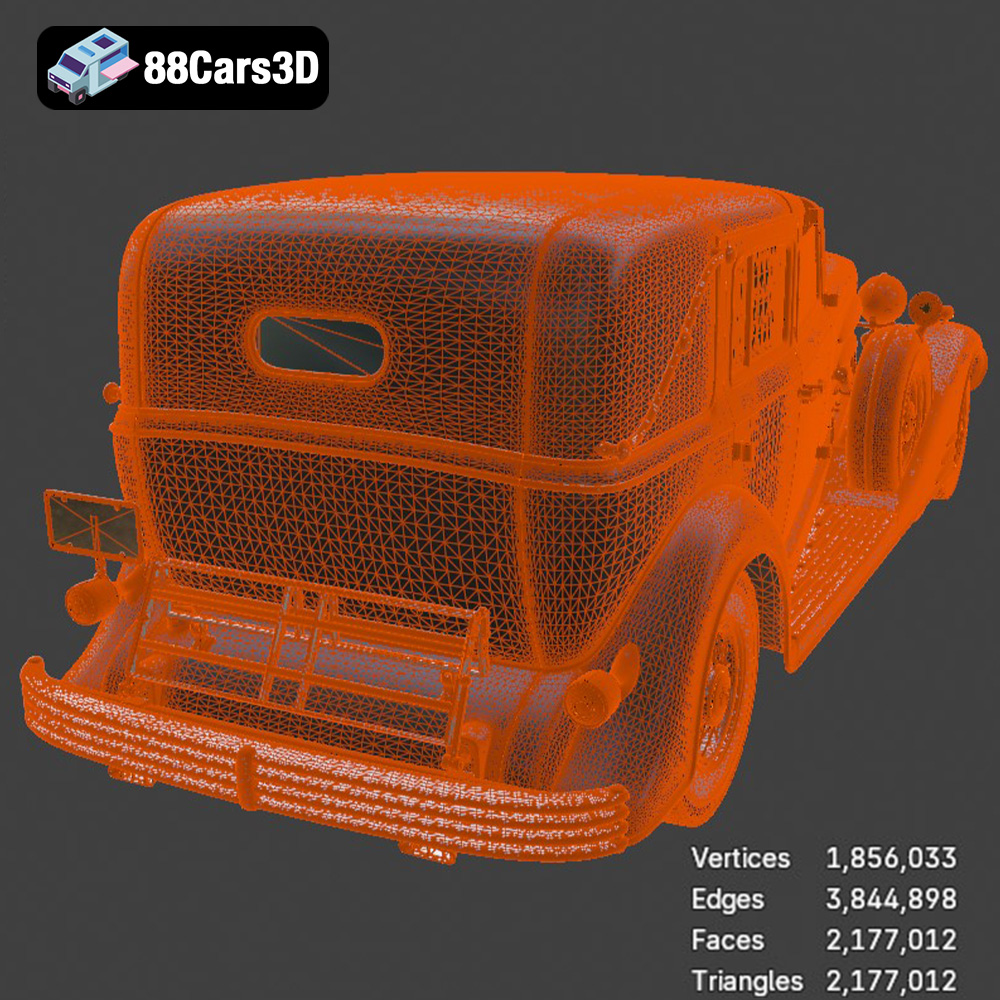
The premium 3D car model of the 1933 Cadillac V16 boasts an extraordinary level of visual fidelity, captured through a detailed topology of 2,177,012 triangles. This poly count is a deliberate choice, striking a perfect balance: it’s high enough to ensure stunning photorealism for close-up renders and cinematic sequences, capturing every nuanced curve and chrome accent, yet intelligently structured to remain versatile for high-end digital applications, including demanding real-time engines. The geometry is clean, well-optimized, and built to real-world scale based on the actual vehicle’s chassis and wheelbase, ensuring accurate proportions and dimensions for any scene. Furthermore, the model includes proper pivot setups for crucial components like the wheels, suspension, and steering, which are essential for realistic animation and interactive experiences.
Every aspect of the Cadillac V16’s distinctive design has been painstakingly recreated. On the exterior, artists will find the accurate frame geometry and sweeping 1930s proportions that define its regal silhouette. Key visual elements, such as the majestic chrome V-shaped grille, sweeping pontoon fenders, and the iconic Goddess hood ornament, are rendered with exquisite detail. The model features detailed engine block enclosures showcasing the legendary 452 cubic-inch V16 layout, an authentic dual exhaust system, and intricate undercarriage details often overlooked in less premium models. Period-correct lighting, including elegant carriage lights, massive bullet-style headlights, and twin taillights, further enhances its authenticity. The intricate multi-spoke wire wheels are fitted with classic wide whitewall tires, and historically accurate leaf spring suspension detailing completes the exterior’s robust realism.
The interior is equally impressive. True to the Town Car coachwork, it features an exposed driver’s open-air cockpit, meticulously detailed with a classic Art Deco instrument cluster, accurate gauges, pedals, a gear lever, and a large-diameter steering wheel. The opulent rear passenger compartment is a sanctuary of digital luxury, complete with tufted seating and rich woodwork detailing. The interior geometry is optimized, making it ideal for first-person POV in gaming and virtual reality experiences, allowing users to truly step inside this automotive legend.
The versatility of the 1933 Cadillac V16 452-C Town Car 3D Model lies in its seamless integration into diverse professional pipelines, offering solutions for film, gaming, visualization, and beyond. Its meticulous construction and multiple file formats ensure it’s ready for any challenge.
For artists focused on producing stunning still images or cinematic animations, this model is a powerhouse for automotive rendering. Whether you’re using 3ds Max with V-Ray or Corona Renderer, or Blender with Cycles, the .max and .blend files provide native access to the model’s clean topology and material assignments. A typical workflow involves importing the model, setting up studio-quality lighting, and defining camera angles to highlight its majestic form. The detailed PBR materials, including polished chrome, gloss paint, rich woodwork, and tufted leather, react realistically to light, enabling breathtaking photorealism. This makes it an exceptional asset for historical recreations, luxury virtual showrooms, advertising campaigns, and architectural visualizations where period-correct vehicles add immense character and context to a scene.
The Cadillac V16 model is explicitly described as “Game-Ready & Optimized,” making it an invaluable game asset. With 2,177,012 triangles, it sits comfortably at the high-end of real-time asset budgets, suitable for next-generation open-world games, racing titles, and detailed simulators running on Unreal Engine or Unity. Developers can import the model using the .fbx format, which preserves animation pivots and hierarchical structures (separate wheels, suspension, steering components). For Unreal Engine users, the dedicated .unreal asset package simplifies integration even further, potentially offering pre-configured materials, LODs (Levels of Detail for optimal performance at varying distances), and collision meshes. This allows for quick setup, enabling artists to focus on environmental integration, gameplay mechanics, and optimizing the overall interactive experience while maintaining breathtaking visual realism.
The rapid growth of Augmented Reality (AR) and Virtual Reality (VR) platforms demands highly optimized yet visually rich 3D content. The inclusion of the .glb format makes the Cadillac V16 3D Model perfectly suited for these immersive technologies. Its lightweight, self-contained nature allows for efficient loading and smooth performance on mobile AR devices or high-fidelity VR headsets. Imagine an interactive virtual showroom where users can walk around, open doors, and examine the opulent interior of the 1933 Cadillac V16, or a museum-grade interactive visualization allowing students to explore its engineering marvels in a virtual space. This model serves as an excellent foundation for creating configurators, educational tools, and engaging marketing experiences that bring this classic car to life in new and exciting ways.
The utility of a premium 3D car model extends beyond purely digital applications. The Cadillac V16 452-C Town Car 1933 3D Model also caters to the growing community of 3D printing enthusiasts and professionals, while offering extensive customization options for creative expression.
For those who wish to hold a tangible piece of automotive history, the .stl format included with the model makes 3D printing a reality. While the source model is high-detail, conversion to .stl requires careful preparation to ensure a watertight mesh suitable for fabrication. The product description provides clear guidance for recommended print settings, suggesting scales like 1:12, 1:18, or 1:24 for display-scale models. It advocates for resin printing (SLA/DLP) due to its ability to capture fine details like the intricate wire wheels, exhaust system, and interior elements at smaller scales, recommending layer heights of 0.04–0.12 mm. Specific instructions for wall thickness, infill percentages, and crucial support placement for delicate parts (mirrors, steering wheel) are also provided. Post-processing steps like sanding, priming, and applying authentic factory colors with metallic finishes can transform the printed model into a museum-quality display piece, merging digital precision with physical craftsmanship.
Despite its historical accuracy, the Cadillac V16 3D Model offers ample customization opportunities, empowering artists to adapt the vehicle to specific project needs or artistic visions. Using the native .blend or .max files, users can easily change body and coachwork colors, experimenting with classic two-tone 1930s factory finishes or entirely new schemes. Tire textures can be modified to reflect different scenarios, from pristine whitewalls for a showroom look to weathered appearances for a gritty, historical scene. Material finishes throughout the model can be adjusted – perhaps a matte leather interior, a high-gloss paint job, or even aged, tarnished chrome effects. Furthermore, the modular nature of the model allows for adapting lighting setups to match different environments, be it a sun-drenched outdoor scene or a dramatic studio render. This level of creative freedom ensures the model is not just a static representation, but a dynamic tool for artistic expression.
In today’s fast-paced digital production environment, efficiency and quality are paramount. Sourcing high-fidelity 3D car models from reputable marketplaces like 88cars3d.com offers significant advantages for professionals across various industries.
Creating a 3D model of the complexity and accuracy of the 1933 Cadillac V16 from scratch is an incredibly time-consuming and labor-intensive process, often requiring hundreds of hours for research, modeling, UV mapping, texturing, and rigging. By purchasing a ready-made, professionally crafted asset, artists and development teams can save invaluable time and resources. This allows them to allocate their efforts to more creative aspects of a project, such as scene composition, animation sequences, environmental design, or optimizing the overall user experience. The immediate availability of such a detailed game asset or rendering model accelerates production timelines significantly.
When you acquire a premium 3D model from 88cars3d.com, you are investing in a product that meets professional standards. The 1933 Cadillac V16 3D Model exemplifies this commitment to quality: clean, optimized geometry, accurate real-world scale, PBR-ready materials, and comprehensive file format support. This versatility ensures that the model is suitable for a wide array of applications – from high-resolution cinematic automotive rendering and intricate architectural visualizations to performance-optimized real-time game engines and engaging AR/VR experiences. The meticulous attention to detail, from the exterior proportions to the interior cockpit features, guarantees a visually stunning and technically robust asset for any demanding project.
The 1933 Cadillac V16 (452-C) Town Car is more than just a classic automobile; it’s a legend. In the digital age, this legend finds new life as an exceptionally detailed and versatile 3D car model. Whether you are an architectural visualizer seeking to imbue historical context into your renderings, a game developer crafting an immersive open-world experience, or an AR/VR designer building an interactive showroom, this model provides the foundation for breathtaking digital creations. Its comprehensive suite of file formats, including .blend, .fbx, .obj, .glb, .stl, .ply, .unreal, and .max, ensures seamless integration into virtually any professional pipeline, while its remarkable visual fidelity and technical specifications promise unparalleled realism. This exceptional game asset and rendering marvel from 88cars3d.com empowers artists and developers to transport audiences back to the golden age of motoring, demonstrating how digital preservation can elevate both artistry and technological innovation. Explore this magnificent piece of history and countless other high-quality 3D car models to elevate your projects today.
The 1933 Cadillac V16 (452-C) Town Car is an undisputed masterpiece of American automotive history, representing the absolute pinnacle of pre-war luxury and bespoke coachbuilding. Renowned for its whisper-quiet, colossal 16-cylinder engine and the distinctive open-chauffeur “Town Car” body style, this magnificent vehicle defined 1930s elegance and prestige. Key visual elements include its sweeping pontoon fenders, the iconic Goddess hood ornament, majestic chrome V-shaped grille, and dual side-mount spare tires, all culminating in a breathtakingly regal silhouette. This premium 3D model boasts an extraordinary level of visual fidelity with a detailed topology of 2,177,012 triangles, capturing every nuanced curve and chrome accent of the classic original. Despite its high detail, the geometry is intelligently structured to ensure stunning photorealism while remaining versatile for high-end digital applications. It stands as an exceptional asset for developers and artists demanding true-to-life representation in historical recreations, architectural visualizations, and cinematic productions.
$37.50
.blend
.cadillac
.fbx
.glb
.max
.obj
.ply
.rendering
.stl
.unreal
.v16
1933
452-c
car-3d-model
classic-car
game asset
game-ready
luxury car
optimized
pre-war
town-car
VR/AR