Get 20% OFF All Premium 3D & STL Models!

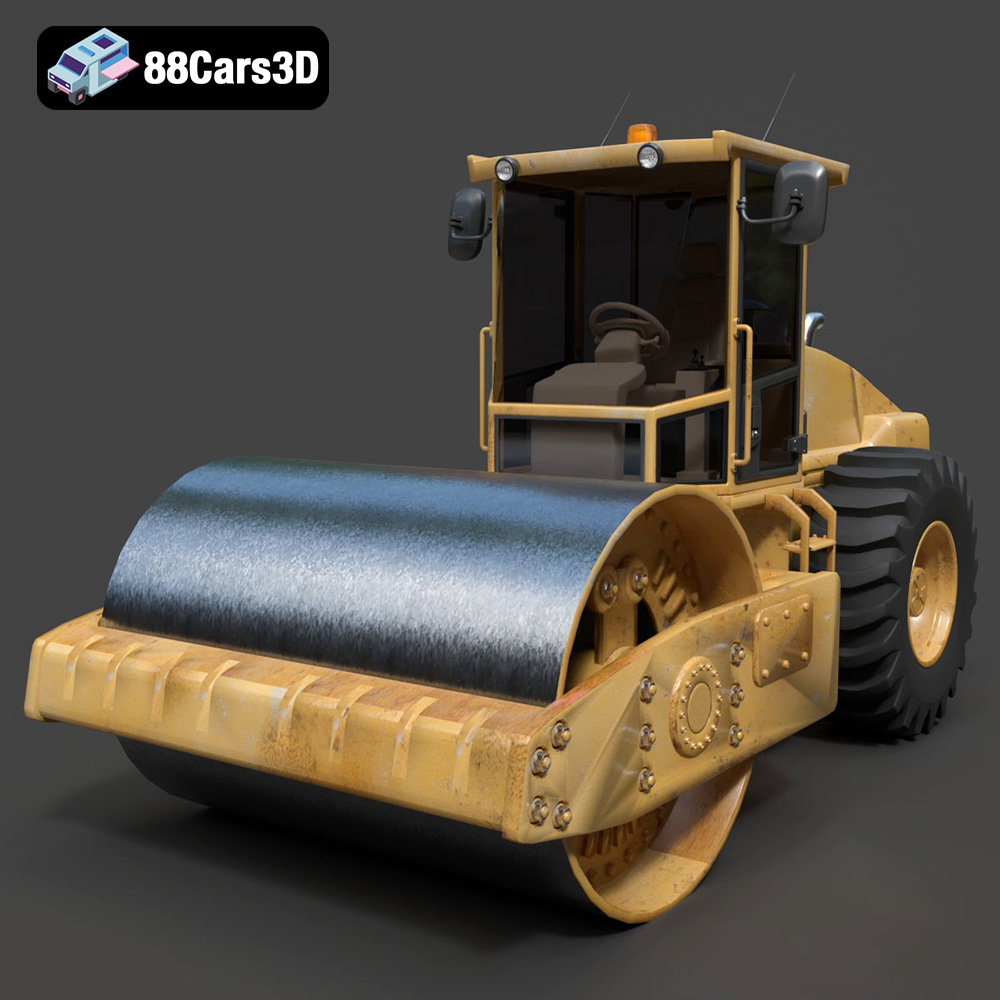
In the dynamic world of 3D visualization, game development, and architectural rendering, the quality of your assets dictates the impact of your final output. From intricate automotive rendering projects to vast open-world game environments, precise and optimized 3D models are the bedrock of compelling digital experiences. While many focus on sleek sports cars or futuristic vehicles, the realm of heavy machinery offers a unique opportunity to add industrial realism and functional depth to any scene. Consider the sheer power and utility of a construction behemoth, designed to shape landscapes and build infrastructure. This is where a meticulously crafted asset like the Soil Road Roller 3D Model becomes an indispensable tool in a professional’s arsenal.
The Soil Road Roller, a quintessential piece of heavy construction equipment, is not merely a static object but a symbol of progress and engineering prowess. Its digital counterpart must convey this robust utility, from its massive compaction drum to its articulated frame and powerful diesel engine. A premium 3D model, such as the one available at 88cars3d.com, encapsulates this essence, offering a balance of visual fidelity and technical optimization crucial for modern pipelines. Whether you’re a game developer building a realistic construction simulator, an architect visualizing a new development, or a filmmaker crafting a cinematic sequence, the right heavy equipment model can profoundly elevate your project’s realism and narrative.
The demand for realism in digital content has never been higher. Audiences expect environments and objects that are indistinguishable from their real-world counterparts. This expectation extends from the sleek lines of 3D car models to the rugged textures of heavy machinery. Producing such high-fidelity assets from scratch is a time-consuming and costly endeavor, often requiring extensive modeling, texturing, and rigging expertise.
For professional visualization, whether for engineering reviews, marketing campaigns, or educational content, accurate 3D models are paramount. A Soil Road Roller model, complete with detailed hydraulics, an authentic engine block, and correct proportions, allows for precise planning and presentation. Engineers can simulate construction processes, urban planners can integrate heavy equipment into cityscapes, and educators can create interactive learning experiences. This level of detail isn’t just aesthetic; it’s functional, enabling stakeholders to understand complex machinery and operations without physical prototypes.
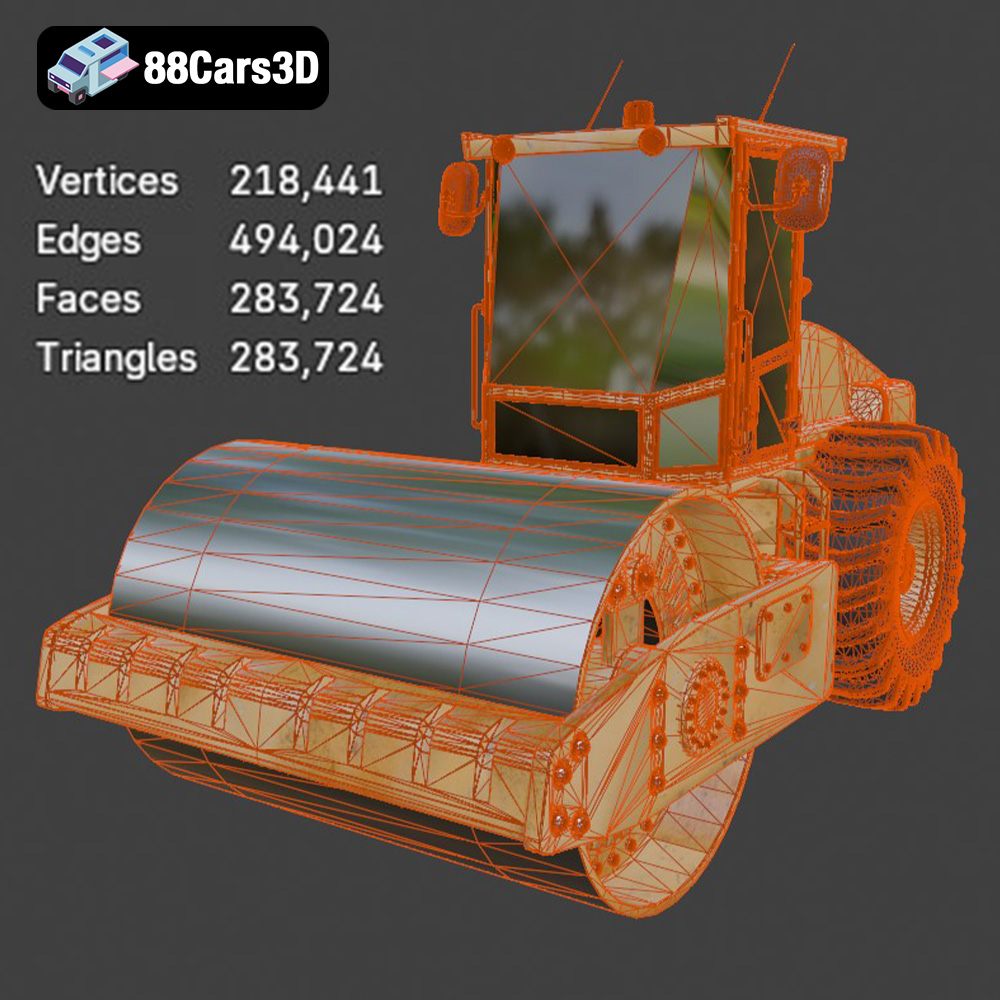
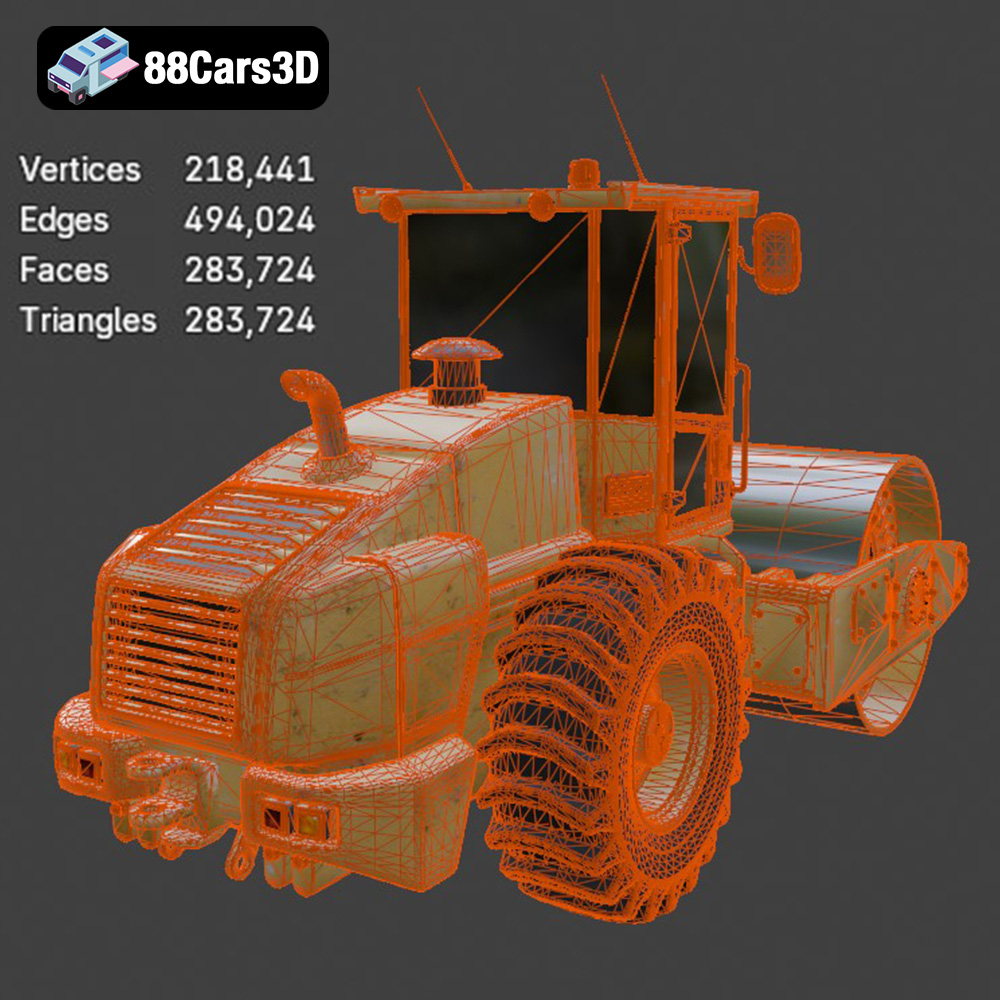
Time is a critical resource in any production pipeline. Leveraging pre-existing, high-quality 3D assets significantly streamlines workflow, reduces development costs, and accelerates time to market. A game-ready model like the Soil Road Roller 3D Model, optimized with a balanced poly count (283,724 triangles) and proper pivot setups for animation, can be dropped directly into an engine like Unreal or Unity. This bypasses the lengthy modeling and rigging phases, allowing artists and developers to focus on scene composition, lighting, and interactive elements. For studios operating under tight deadlines, a robust library of such assets is an invaluable competitive advantage.
One of the most crucial technical considerations when acquiring 3D models is understanding the various file formats and their specific applications. Each format is designed with particular strengths, catering to different stages of a project lifecycle, software compatibilities, and end-use scenarios. The Soil Road Roller 3D Model, for instance, offers a comprehensive suite of formats, ensuring maximum versatility across professional workflows. Let’s delve into these essential formats.
The `.blend` file format is the native format for Blender, a powerful open-source 3D creation suite. When you receive a `.blend` file, you’re not just getting the raw mesh data; you’re getting a complete Blender scene. This includes all geometry, materials, textures, lighting setups, cameras, animation data, and even modifiers. For artists working primarily in Blender, this format offers the highest level of editability and allows for direct manipulation of every aspect of the model. It’s ideal for those who need to deeply customize the asset, modify its topology, re-texture extensively, or integrate it seamlessly into an existing Blender project pipeline without any data loss from conversion.
FBX (Filmbox) is a proprietary file format owned by Autodesk, and it has become the de facto standard for 3D data interchange, especially in game development and animation. The `.fbx` format is excellent at storing not just mesh data but also animation, rigging, skinning, materials, and sometimes even lighting information. Its widespread adoption means it’s natively supported by almost all major 3D software packages (Maya, 3ds Max, Blender) and real-time engines like Unreal Engine and Unity. For the Soil Road Roller 3D Model, the `.fbx` version is specifically optimized for these game engines, making it incredibly easy to import, apply physics, and animate its articulated components such as the drum and steering. It ensures consistent data transfer, minimizing conversion errors.
OBJ (or Wavefront OBJ) is one of the oldest and most universally supported 3D file formats. It’s a simple, text-based format primarily used to store 3D geometry data (vertices, normals, texture coordinates, and faces). Materials are typically defined in a separate `.mtl` (material template library) file referenced by the `.obj` file. While it doesn’t support animation or rigging, its simplicity and widespread compatibility make it an excellent choice for transferring static mesh data between different 3D applications when complex scene data isn’t required. It’s a reliable “fallback” format when other, more feature-rich options present compatibility issues, ensuring that the core geometry of the Soil Road Roller 3D Model is accessible to virtually any 3D software.
GLB (GL Transmission Format Binary) is the binary version of glTF (Graphics Language Transmission Format), an open standard for 3D scenes and models. Often referred to as the “JPEG for 3D,” glTF and `.glb` are specifically designed for efficient transmission and loading of 3D models in web applications, augmented reality (AR), and virtual reality (VR) environments. A single `.glb` file encapsulates all data, including geometry, materials, textures, animations, and skeletal data, making it incredibly lightweight and easy to integrate into browser-based viewers or mobile AR apps. For visualizing the Soil Road Roller in an interactive web configurator or an AR experience on a smartphone, the `.glb` format is the optimized choice, offering quick loading times and broad platform support.
STL (stereolithography) is another widely adopted file format, specifically designed for 3D printing and CAD software. Unlike other formats that store color or texture information, `.stl` files describe only the surface geometry of a 3D object using a collection of interconnected triangles. It essentially provides a “shell” of the object, defining its shape for fabrication. When preparing the Soil Road Roller for physical production on a 3D printer, the `.stl` format is crucial. It ensures that the printer can accurately interpret the model’s dimensions and geometry to build the physical object layer by layer, adhering to the specified print settings for scale, layer height, and support structures.
PLY (Polygon File Format) is primarily used for storing 3D data from 3D scanners, CAD software, and other applications that require precise polygonal or point cloud representations. It can store a variety of properties beyond just geometry, including color, transparency, surface normals, and even data about the reliability of the measurements. While less common for general asset exchange than FBX or OBJ, `.ply` is valuable for engineering analysis, scientific visualization, or when higher precision and richer attribute data are needed for the Soil Road Roller’s mesh, perhaps for structural integrity analysis or detailed surface inspections.
The `.unreal` format typically refers to an asset that has been specifically prepared and exported for direct use within Unreal Engine, often through an Unreal project export or a custom pipeline. This format often includes not just the mesh but also Unreal-specific materials, blueprints, collision data, and level of detail (LOD) setups, ensuring a truly plug-and-play experience. For the Soil Road Roller 3D Model, this means the asset is designed to drop directly into an Unreal project with minimal setup, leveraging Unreal’s powerful rendering and physics capabilities straight away, making it a truly game-ready asset for real-time applications.
The `.max` file format is the native project file for Autodesk 3ds Max, a leading software for 3D modeling, animation, rendering, and visualization. Similar to Blender’s `.blend` format, a `.max` file contains the entire scene data, including geometry, materials, textures, lights, cameras, modifiers, animation keyframes, and scene organization. For professionals who use 3ds Max as their primary DCC (Digital Content Creation) tool, the `.max` version of the Soil Road Roller 3D Model provides complete access to its construction. This allows for deep customization, complex animation setups, integration into V-Ray or Corona renders, and leveraging 3ds Max’s robust toolset for high-end visualization and automotive rendering.
The effectiveness of any 3D model lies in its underlying structure and technical execution. The Soil Road Roller 3D Model exemplifies thoughtful asset design, balancing intricate detail with practical performance. This is crucial for heavy machinery, which needs to look convincing while remaining efficient for real-time applications or large-scale renders.
With a precise topology of 283,724 triangles, this model strikes an impressive balance. For high-fidelity renders and close-up cinematic shots, this polycount allows for the intricate details of hydraulic lines, engine components, and the rugged texture of the compaction drum to be clearly visible without aliasing or chunky geometry. Yet, it remains optimized enough for game development and interactive AR/VR environments, where performance is paramount. The clean quad-based or triangulated mesh ensures good deformation during animation and smooth shading across all surfaces, making it a versatile asset for a range of demanding applications.
A static model, however detailed, limits creative possibilities. The Soil Road Roller 3D Model is designed with animation in mind, featuring separate drum, wheels, articulation joints, and steering components. This “proper pivot setup” is a critical technical advantage. It means animators can immediately begin keyframing complex movements – the drum’s rotation, the wheels’ independent spin, the realistic articulation of the heavy-duty frame during turns, and the steering column’s movement – without needing to manually set up pivots or re-rig parts. This significantly accelerates the animation pipeline for construction site simulators, vehicle demonstrations, or dynamic architectural visualizations.
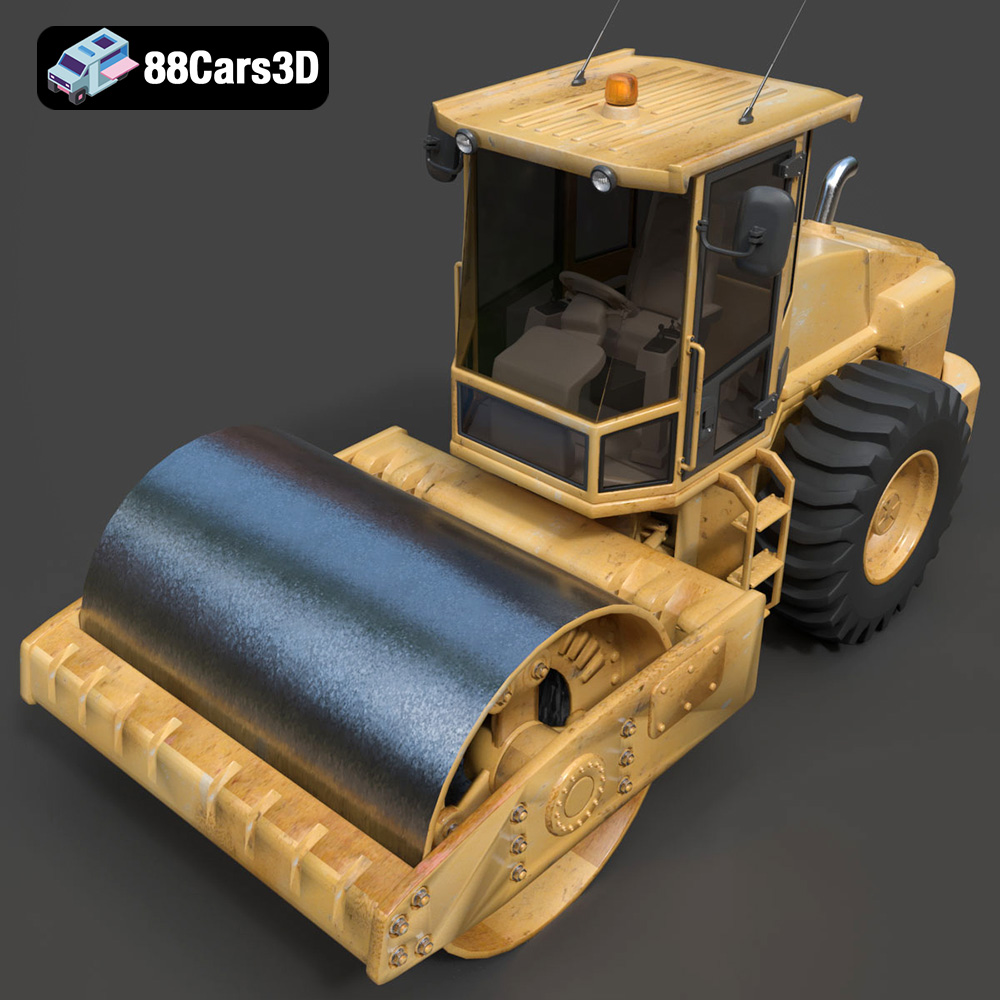
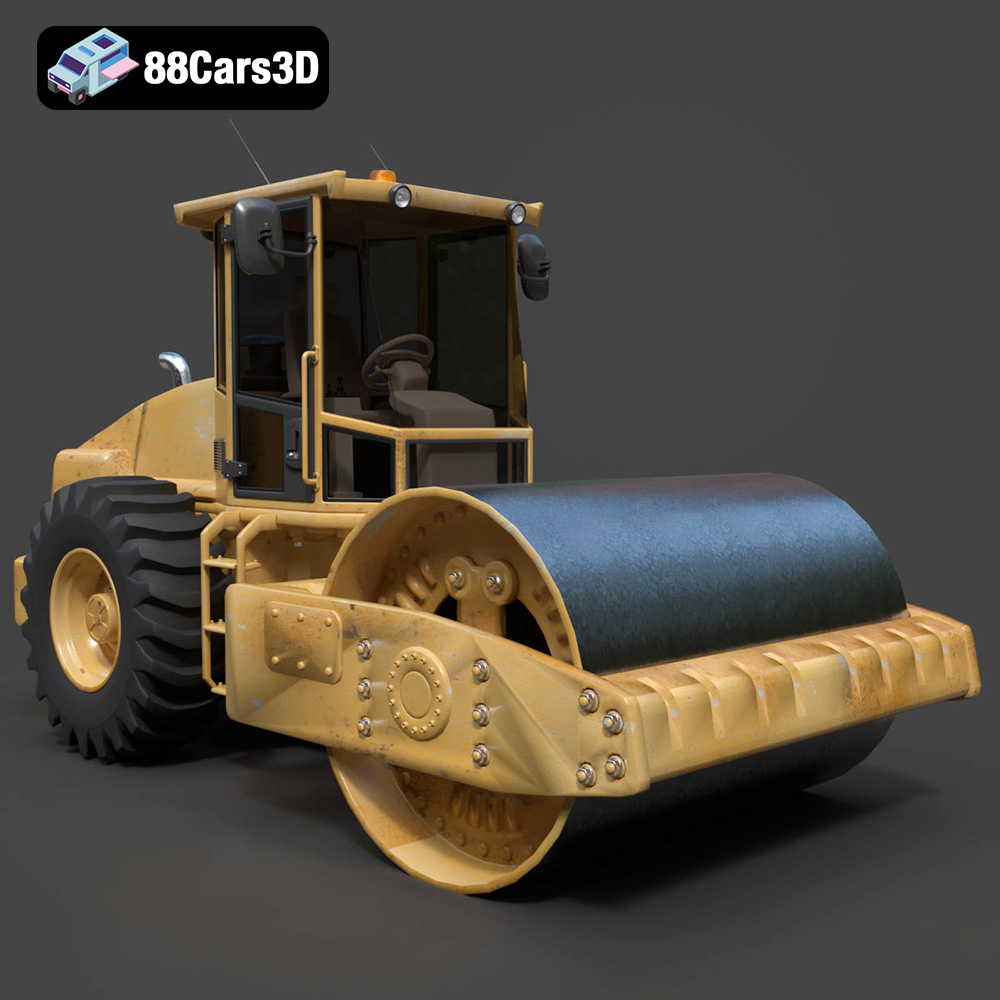
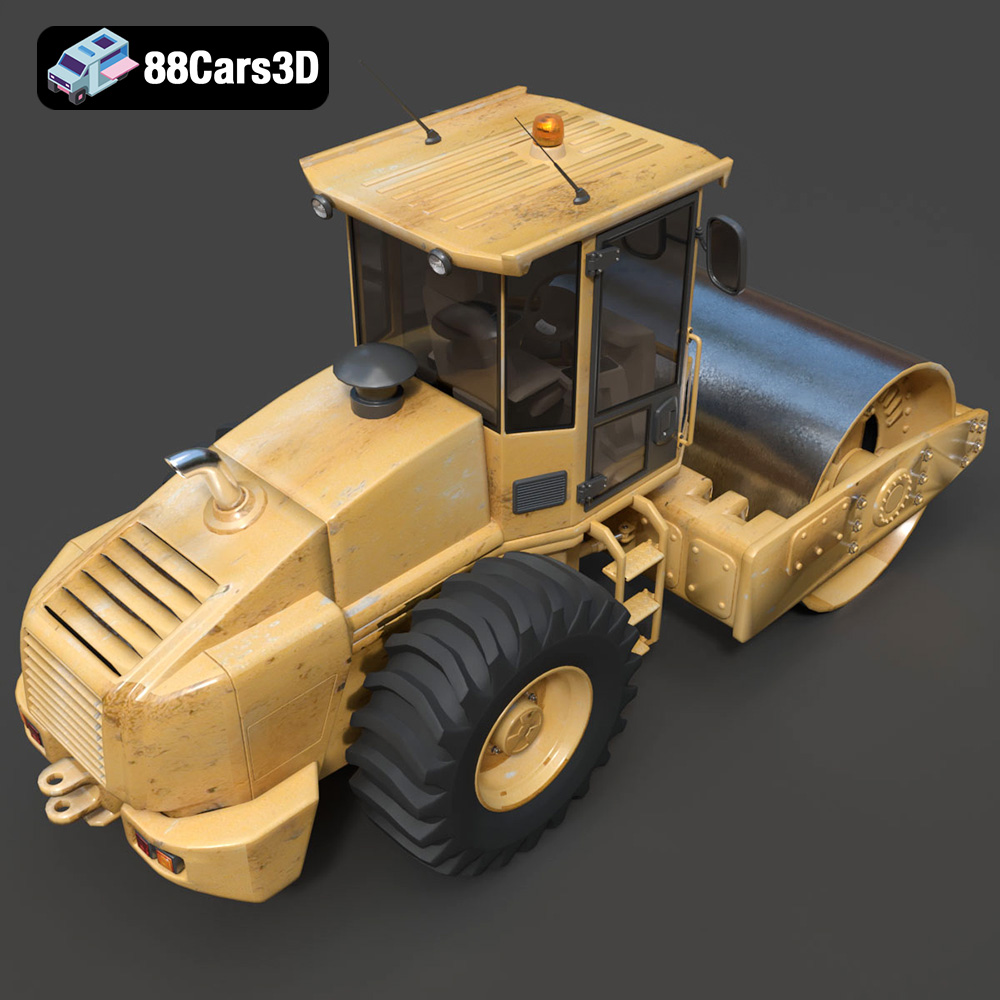
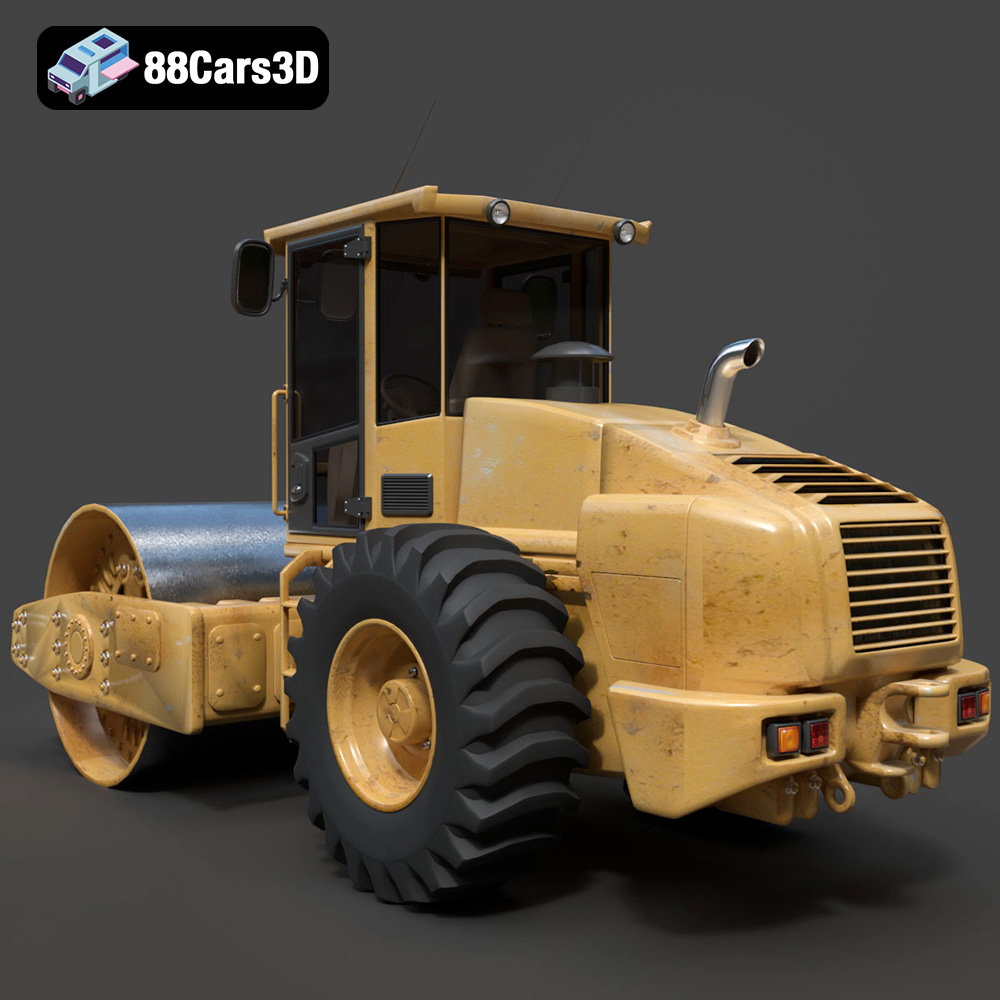
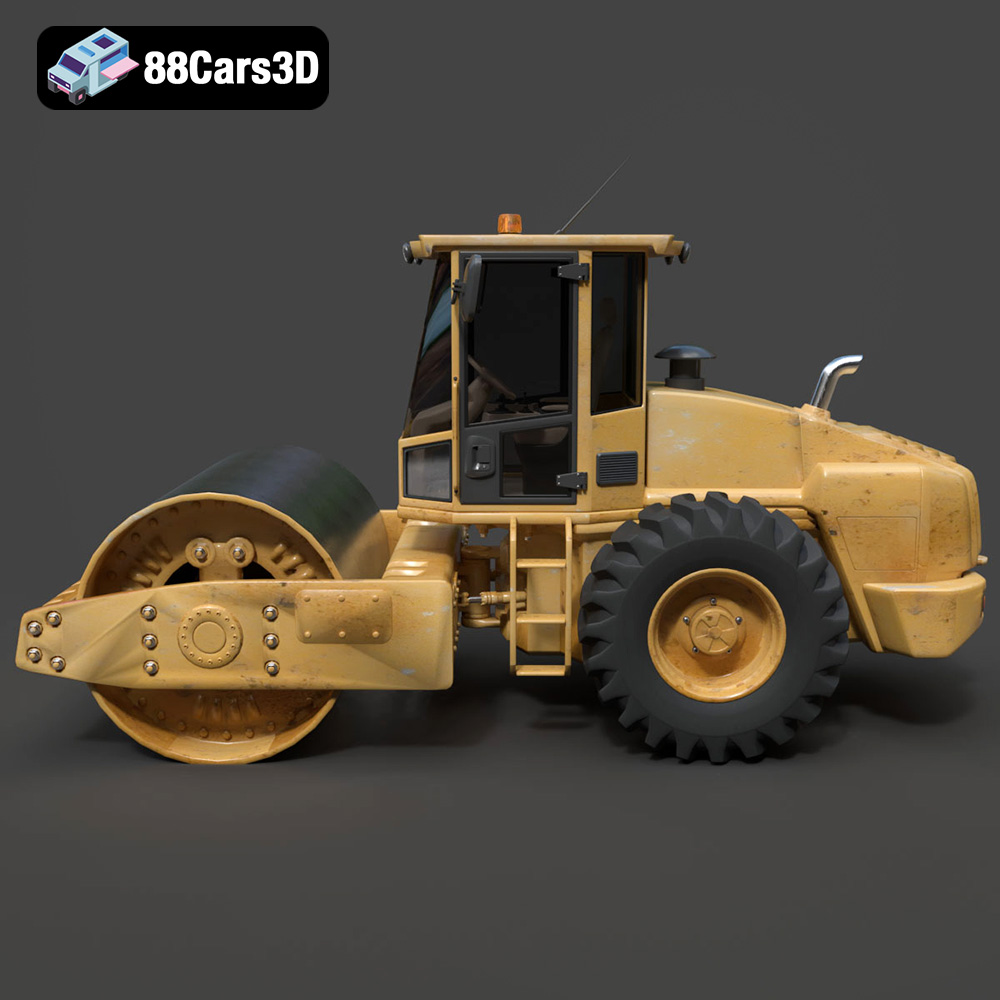
True immersion comes from comprehensive detail. The Soil Road Roller model shines in both its exterior and interior features. The exterior boasts accurate articulated frame geometry, a detailed industrial heavy-duty diesel engine block, vertical exhaust system, high-intensity LED work lights, and massive steel compaction drum with deep-tread rear pneumatic tires. Exposed hydraulic cylinders and hoses add a layer of functional realism. Internally, the cockpit features an industrial operator seat with a suspension base, a heavy-duty steering column, directional control joysticks, a comprehensive instrument cluster, pedals, hydraulic levers, and safety switches. This optimized geometry for first-person POV makes it perfect for driving simulators or interactive VR training modules, offering a truly complete and believable user experience.
A versatile 3D asset needs to seamlessly integrate into diverse professional pipelines. The Soil Road Roller 3D Model, with its comprehensive file formats and optimized design, is engineered for maximum utility across various industries.
For game developers, especially those creating open-world games, construction simulators, or racing titles featuring heavy machinery, this model is an immediate asset. Its game-ready optimization (283,724 triangles) is perfect for real-time engines like Unreal Engine and Unity. The detailed exterior and optimized cockpit geometry allow for both third-person gameplay and immersive first-person perspectives. Developers can leverage the separated animated components for realistic physics and driving mechanics, making the Soil Road Roller an engaging vehicle for players. Integrating it into environmental scenes, perhaps alongside other 3D car models or industrial equipment from 88cars3d.com, allows for the rapid construction of rich, believable game worlds.
Beyond gaming, the Soil Road Roller 3D Model is an excellent candidate for high-end visualization and rendering projects. Architectural visualization studios can populate construction sites with authentic machinery, bringing life and scale to their proposed developments. Industrial design firms can use it in product presentations or training materials. For those specializing in automotive rendering, this model expands the scope to heavy vehicles, offering a new dimension for showcasing complex mechanical designs or creating compelling brand campaigns. With its detailed engine block and hydraulic lines, it provides ample opportunities for close-up glamour shots and technical breakdowns within professional rendering software like 3ds Max, V-Ray, or Blender Cycles.
Augmented Reality (AR) and Virtual Reality (VR) are transforming how we interact with digital content. The Soil Road Roller model, especially in its optimized `.glb` format, is perfectly suited for immersive AR/VR applications. Imagine placing a virtual road roller on a construction site through an AR app for planning purposes, or training new operators in a fully immersive VR simulation. Furthermore, the accuracy and detail of this model make it ideal for digital twin initiatives, where a virtual replica of a physical asset is used for monitoring, analysis, and predictive maintenance. This allows for real-time interaction and data visualization, pushing the boundaries of industrial innovation.
The journey of a 3D model doesn’t always end on a screen. For hobbyists, engineers, or educators, translating a digital asset into a physical object through 3D printing offers a tangible connection to the design. The Soil Road Roller 3D Model, with its `.stl` format inclusion, is fully prepared for this transition.
The `.stl` file provides the mesh data crucial for 3D printers. The recommended print settings for the Soil Road Roller – scales of 1:12, 1:18, or 1:24, layer heights of 0.04–0.12 mm, and specific wall thicknesses – are vital for achieving a high-quality physical replica. Resin printing is specifically recommended for its ability to capture fine details, ensuring that intricate parts like the exhaust system, hydraulic lines, and the industrial operator seat are accurately reproduced. Understanding these parameters ensures a successful print, minimizing waste and maximizing detail. Proper orientation of parts, such as printing the frame angled for structural integrity and wheels separately, is also key to avoiding print failures and ensuring a robust final model.
Once printed, the physical Soil Road Roller model can be further enhanced through post-processing. This includes sanding to smooth layer lines, applying primer for an even surface, and painting with authentic factory colors, potentially with metallic finishes to mimic the heavy-duty machinery look. For a truly realistic appearance, weathering effects like rust and dirt overlays can be added, transforming a pristine model into a battle-hardened workhorse. This process turns a digital blueprint into a display-scale model, a collectible, or even a functional prototype for educational purposes.
Even the most detailed 3D model benefits from the flexibility of customization. Professional projects rarely use assets “as is”; they require adaptation to fit specific brand guidelines, environmental conditions, or artistic visions. The Soil Road Roller 3D Model is designed with this adaptability in mind, offering numerous avenues for personalization.
The ability to change body and tank colors is fundamental for brand consistency. Whether it’s standard construction yellow, safety orange, or custom fleet colors, adjusting the materials allows the Soil Road Roller to seamlessly integrate into any corporate identity. Beyond color, modifying tire textures (e.g., swapping clean street variants for mud-splattered off-road tires) can instantly communicate a story about the vehicle’s environment and recent activity. Adjusting material finishes—from matte to gloss, metallic sheen, or even applying rust and dirt overlays—adds layers of realism and character, making the asset truly unique to your scene or game level. This level of material control is invaluable for automotive rendering specialists who demand absolute control over surface properties.
The lighting setup dramatically influences how any 3D model is perceived. The Soil Road Roller model can be adapted to various lighting conditions, from the harsh direct sunlight of a construction site to the diffused glow of a warehouse interior or the dramatic shadows of a twilight render. By adjusting the intensity and color of its high-intensity LED work lights, headlights, and warning beacons, you can further enhance its presence within different environments. Integrating the model into various backdrops—be it a sprawling industrial complex, a remote mountainous road, or an urban development zone—is made easier by its robust design, allowing artists to craft compelling narratives and visualizations that resonate with their audience.
The journey from a complex piece of heavy machinery to a versatile, game-ready 3D model is a testament to the skill and technical prowess behind modern digital asset creation. The Soil Road Roller 3D Model is far more than just a collection of polygons; it is a meticulously crafted tool designed to empower professionals across game development, architectural visualization, AR/VR, and 3D printing. Its balance of high fidelity and optimization, combined with a comprehensive suite of file formats, ensures its utility in virtually any contemporary pipeline.
From animating its articulated frame in Unreal Engine to creating a physical replica via 3D printing, or integrating it into stunning automotive rendering projects, this asset offers unparalleled flexibility and realism. It exemplifies how purpose-built 3D models can accelerate workflows, enhance visual quality, and unlock new creative possibilities. For those seeking premium 3D assets that deliver on both technical specifications and aesthetic appeal, the Soil Road Roller 3D Model from 88cars3d.com stands as a robust and reliable choice, ready to shape your digital landscapes and elevate your projects.
The Soil Road Roller is an essential piece of heavy construction equipment, meticulously designed for earthwork, soil compaction, and road paving projects. This highly detailed 3D model captures its massive industrial presence, featuring a large steel compaction drum, an articulated heavy-duty frame, a robust diesel engine block, and authentic functional styling cues such as rugged hydraulic lines and industrial-grade exhausts.
With a precise topology of 283,724 triangles, this model balances high visual fidelity with game-ready optimization. It delivers exceptional realism through carefully modeled surfaces and mechanical components, making it ideal for close-up renders, cinematic sequences, and real-time environments across game development, AR/VR applications, and professional visualization software.
Perfect for construction site simulators, open-world industrial environments, infrastructure visualization, and heavy machinery games.
.blend, .fbx, .obj, .glb, .stl, .ply, .unreal, .max
Tags:
soil-road-roller, road-roller, compactor, heavy-equipment, construction-vehicle, game-ready, low-poly, optimized, vehicle-3d-model, game-asset, rendering, vr-ar, blend, fbx, obj, glb, stl, ply, unreal, max
$24.99
.blend
.fbx
.glb
.heavy-equipment
.max
.obj
.ply
.rendering
.stl
.unreal
compactor
construction-vehicle
game asset
game-ready
low-poly
optimized
road-roller
soil-road-roller
vehicle-3d-model
VR/AR