Get 20% OFF All Premium 3D & STL Models!

In the vast landscape of 3D content creation, where precision and authenticity are paramount, the demand for meticulously crafted assets continues to grow. From high-octane video games to immersive virtual reality experiences and stunning cinematic visualizations, the foundation of any compelling project lies in its high-quality 3D models. While many artists focus on modern designs, there’s an equally fervent desire for assets that faithfully represent historical artifacts, bringing forgotten eras back to life with breathtaking realism.
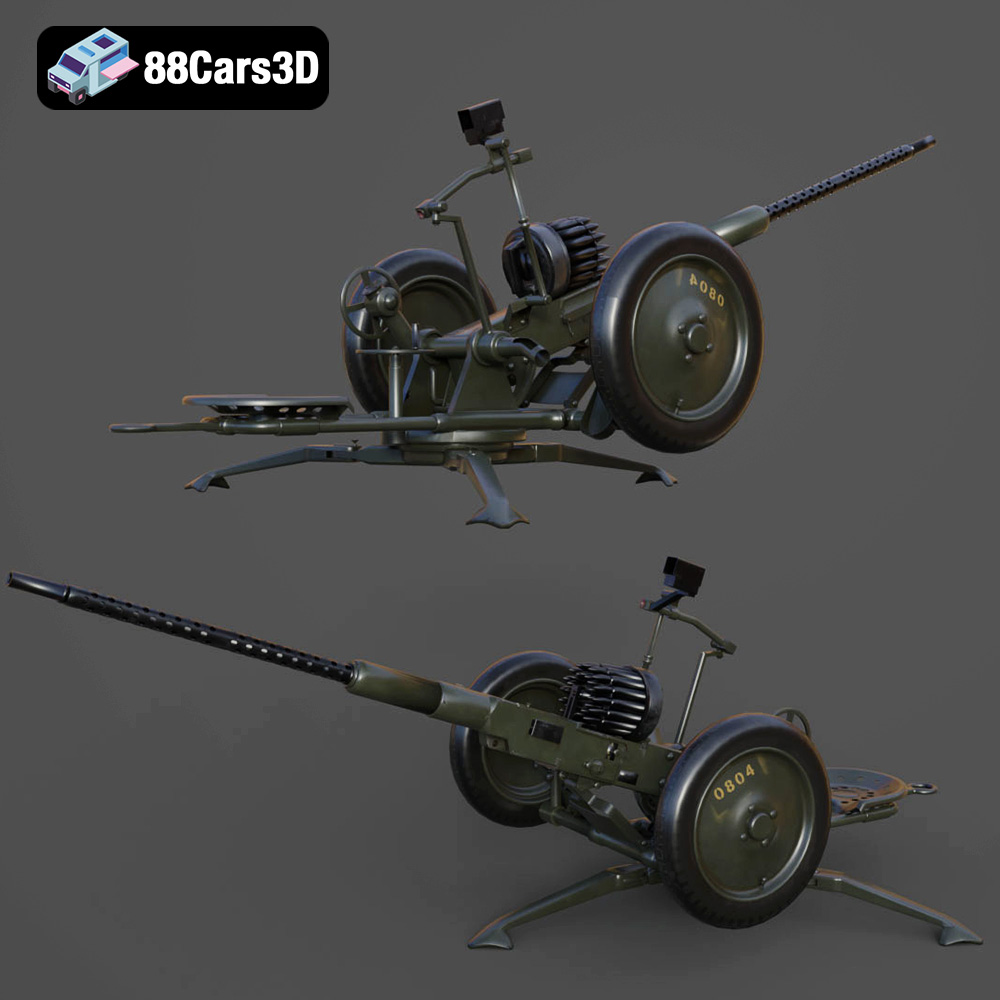
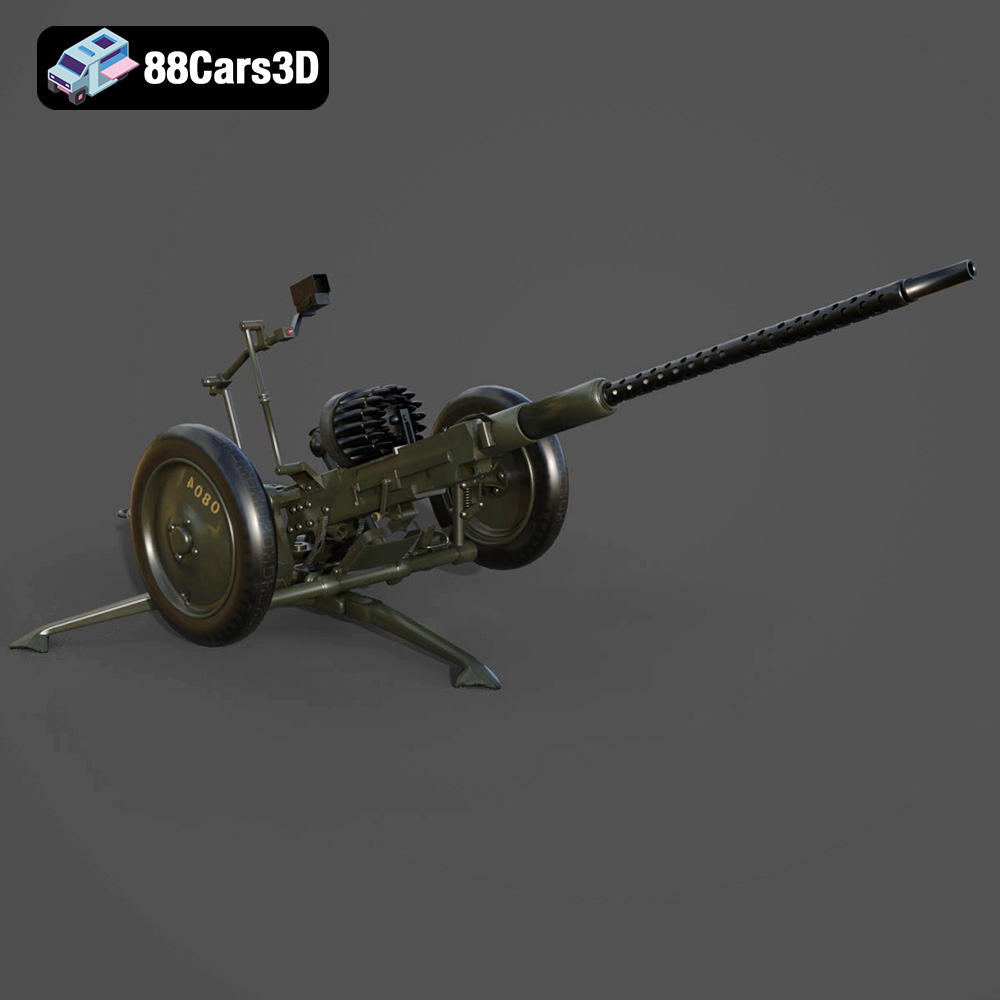
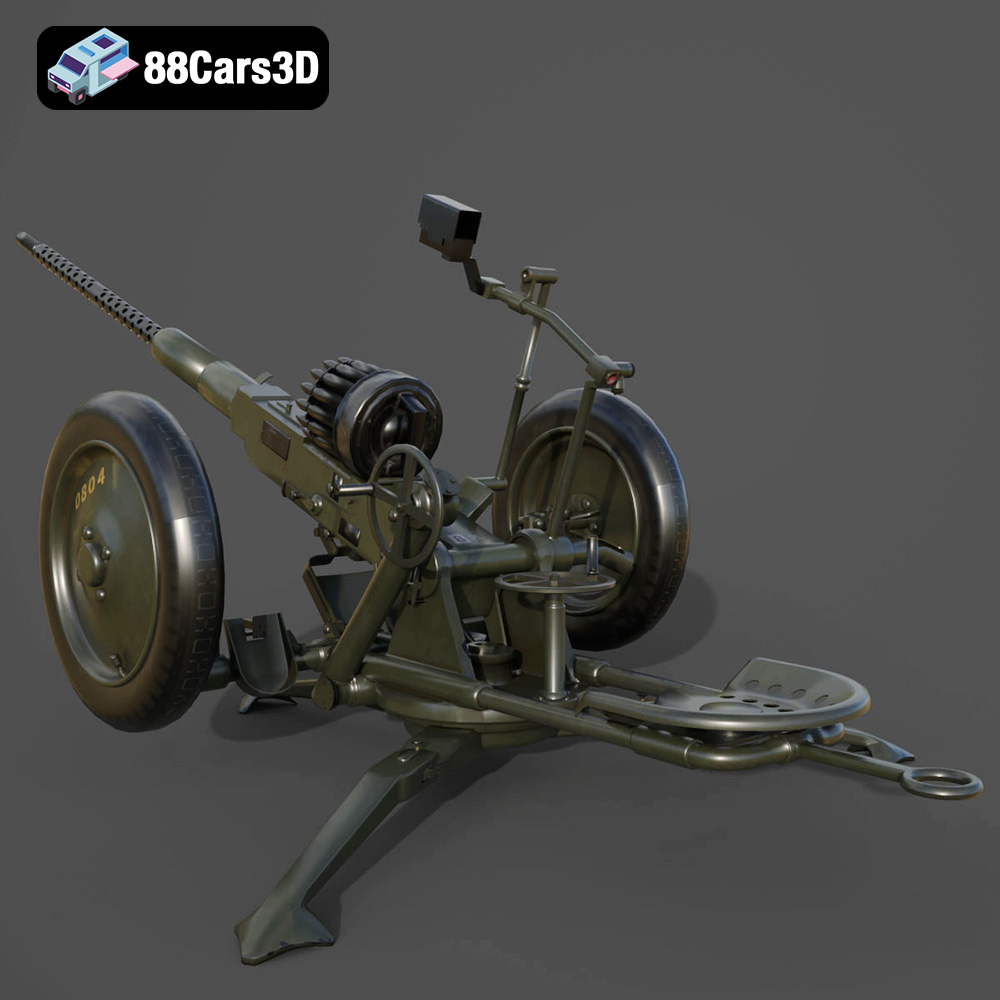
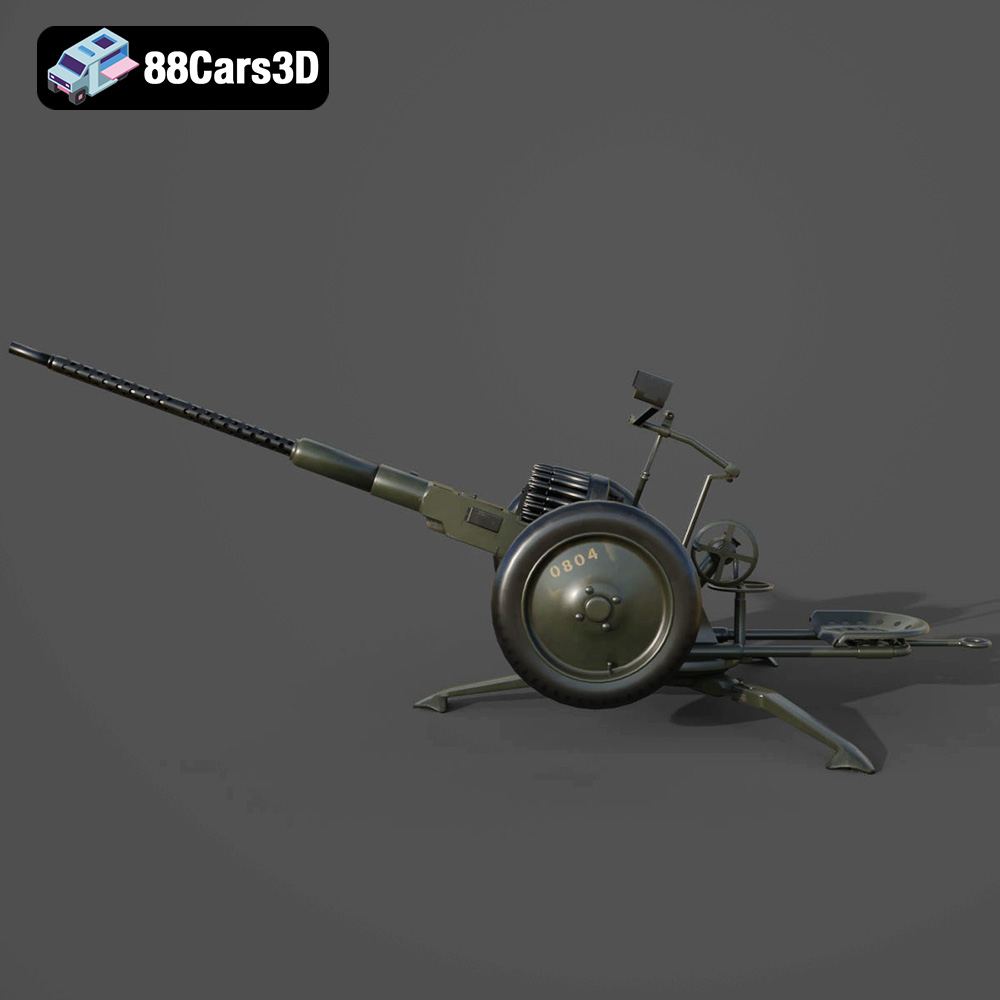
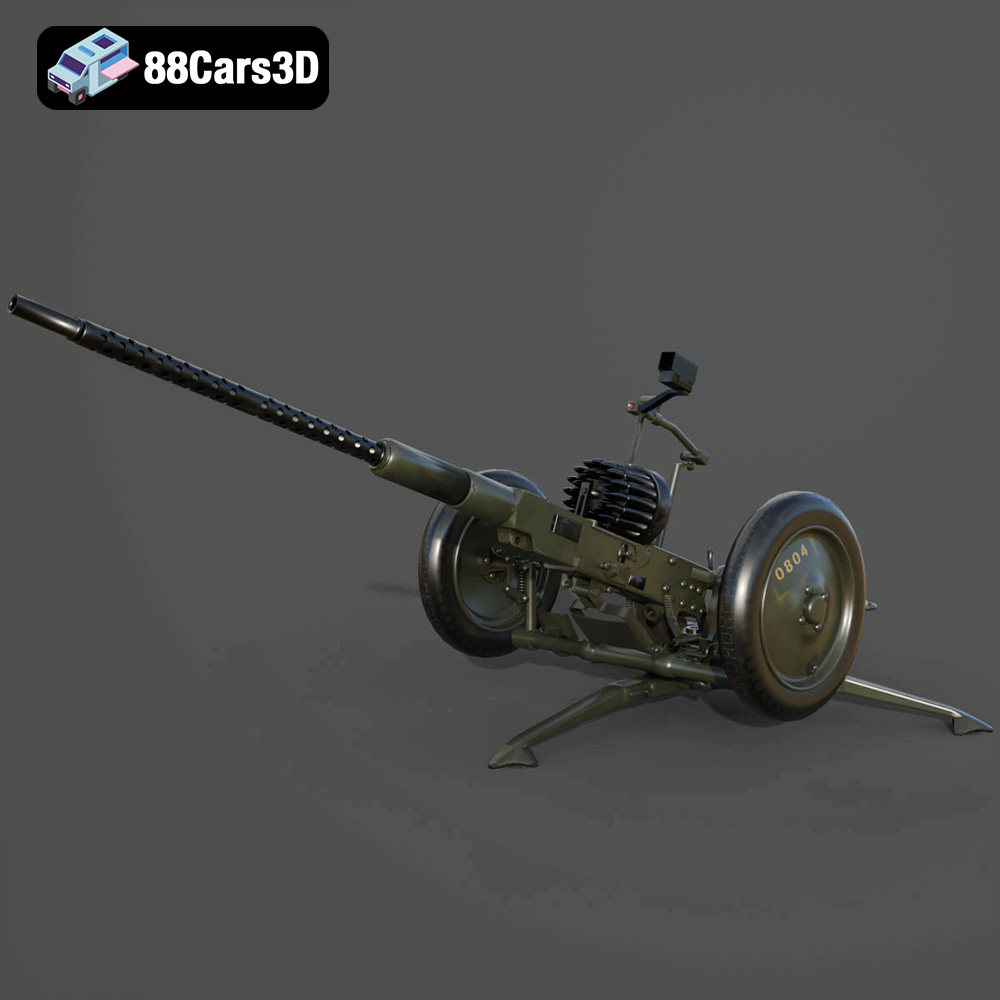
Today, we delve into a prime example of such an asset: the Bofors 20 mm M-40 3D Model. This anti-aircraft autocannon, renowned for its significant role in various historical military operations, offers a fascinating blend of mechanical complexity and historical gravitas. A truly exceptional digital recreation, available at 88cars3d.com, this model encapsulates the imposing presence and intricate mechanical styling of the original artillery piece. From the precise gearing of its elevation controls to its authentic ammunition feed mechanisms, every detail has been painstakingly preserved, offering creators an unparalleled resource for their projects.
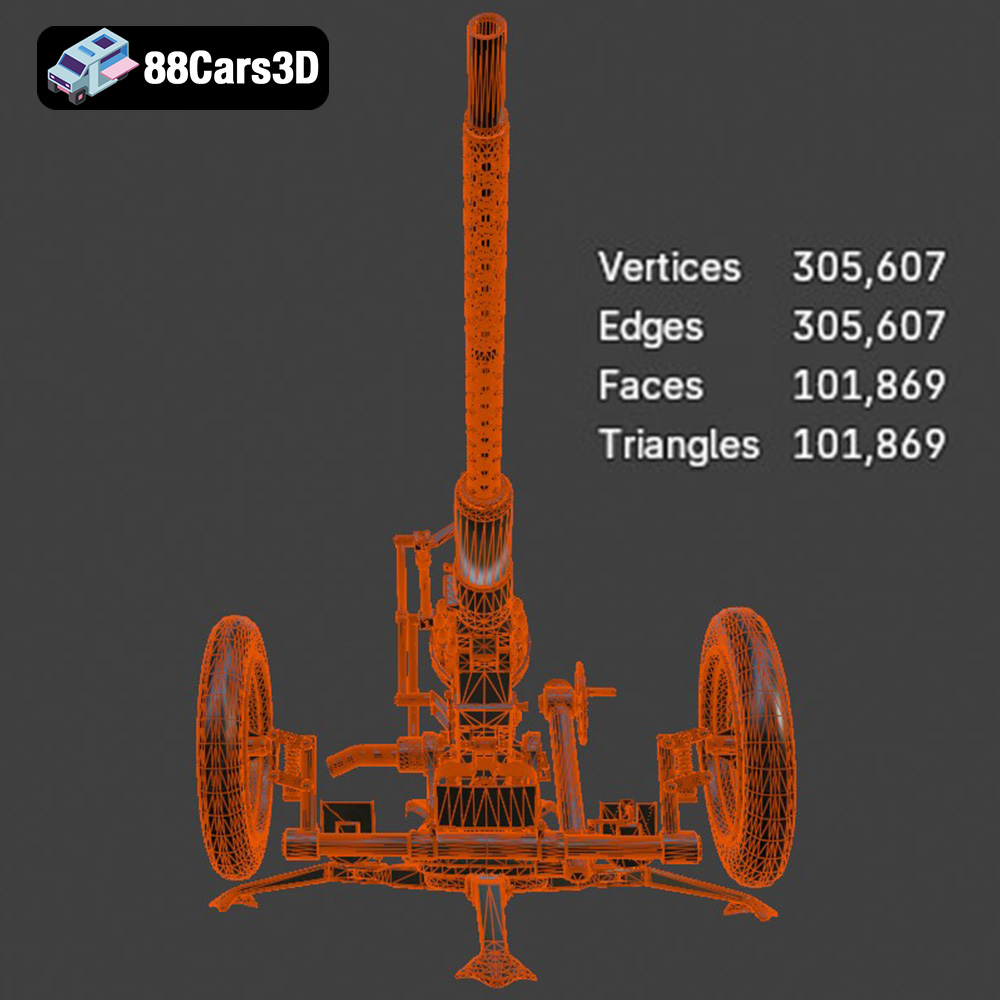
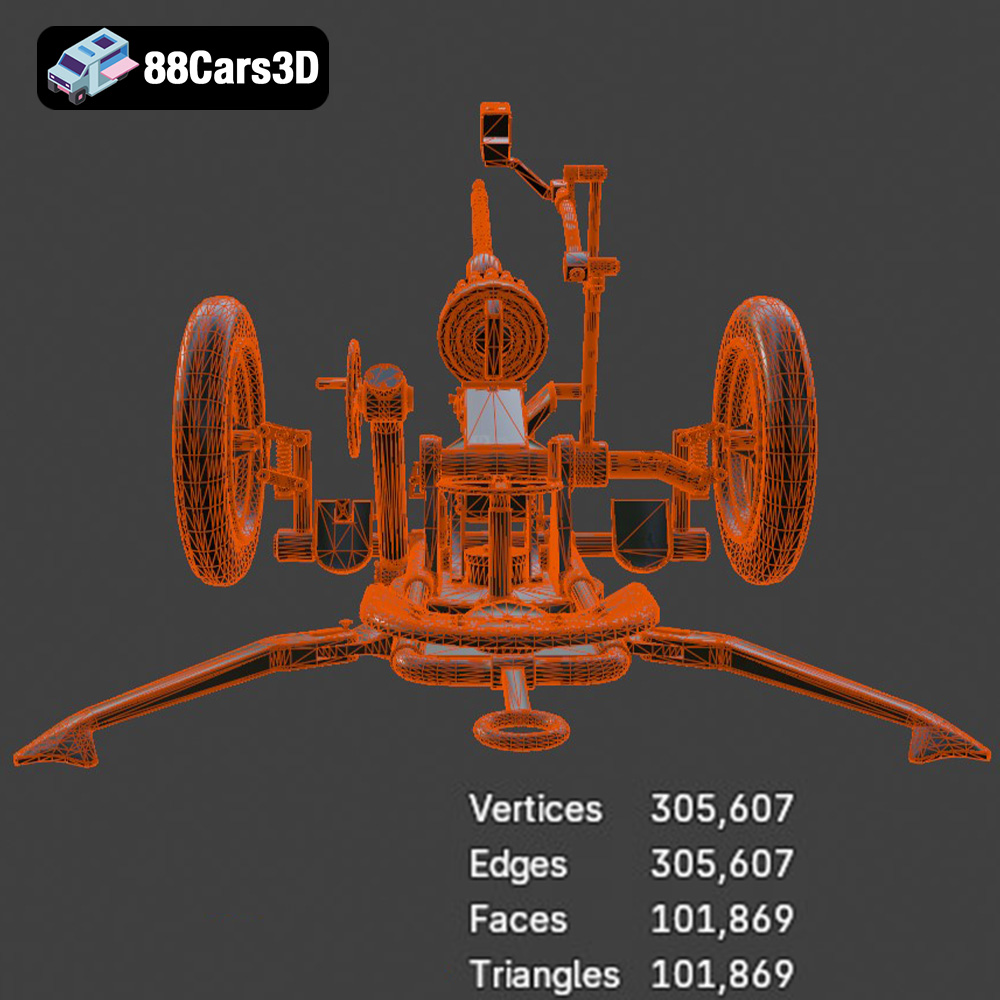
Whether you’re a game developer seeking an optimized, battle-ready asset, an AR/VR enthusiast building immersive historical exhibits, or a visualization artist aiming for cinematic realism, the Bofors M-40 model provides the perfect foundation. Its balanced topology, with exactly 101,869 triangles, ensures exceptional visual fidelity without compromising performance, making it suitable for even the most demanding real-time applications.
The Bofors 20 mm M-40 is more than just a piece of military hardware; it’s a testament to early 20th-century engineering and a critical component of numerous historical narratives. Its widespread adoption and effectiveness made it a formidable presence on battlefields and naval vessels, cementing its place in military history. Bringing such a significant artifact into the digital realm requires not only technical skill but also a deep respect for historical accuracy.
Recreating a historical weapon like the Bofors M-40 for modern digital platforms presents a unique set of challenges. Artists must meticulously research blueprints, historical photographs, and archival footage to ensure every curve, rivet, and mechanism is accurately represented. The digital model available on 88cars3d.com achieves this with remarkable success. It transforms a formidable piece of history into a versatile 3D asset, ready for deployment across diverse applications. Imagine this autocannon deployed on a virtual battlefield in a historical shooter, serving as a static display in a museum-grade AR experience, or even as a focal point in a cinematic reconstruction of a pivotal historical event. Its utility extends far beyond mere aesthetics, offering functional integrity that supports realistic animation and interaction.
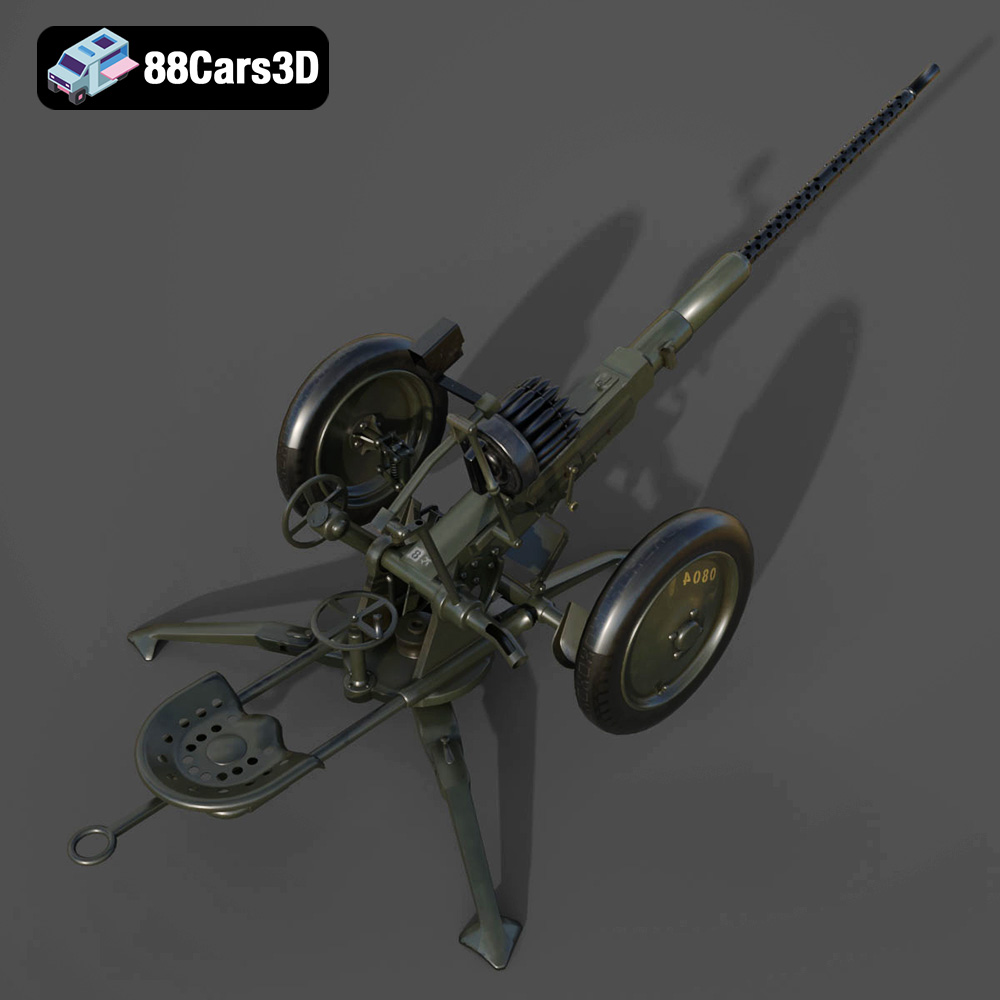
Authenticity in a 3D model is not just about getting the shape right; it’s about conveying the character and history of the object. The Bofors 20 mm M-40 3D model excels in this regard, capturing the nuances of its design, from the distinctive flash hider on its barrel to the heavy-duty base mount and the intricate handwheels for traverse and elevation control. The inclusion of historically accurate structural rivets, bolts, and robust stabilizing legs speaks volumes about the attention to detail. This level of realism is crucial for projects where historical accuracy is paramount, allowing audiences to connect with the digital representation as if it were the real thing.
When acquiring a 3D model, especially one as versatile as the Bofors 20 mm M-40, understanding the various file formats included is critical for seamless integration into your workflow. Each format serves a specific purpose, catering to different software, platforms, and end-uses. The Bofors M-40 model from 88cars3d.com is provided in a comprehensive suite of formats, ensuring maximum compatibility and utility for any project.
The .blend format is native to Blender, one of the most popular open-source 3D creation suites. When you download the Bofors M-40 as a .blend file, you’re getting a fully editable Blender scene, complete with materials, textures, and potentially even animation setups. This is invaluable for Blender users who need to make custom modifications, adjust materials, re-rig, or even integrate the model directly into a larger Blender project. Similarly, the .max format is the native file type for Autodesk 3ds Max, a leading software in professional 3D modeling, animation, and rendering. An editable .max project provides full access to the model’s construction, modifiers, and rendering settings within 3ds Max, making it ideal for high-fidelity animations, architectural visualization integrations, or complex scene compositions where 3ds Max is the primary tool.
The .fbx (Filmbox) format is a widely adopted proprietary file format for 3D content exchange, developed by Autodesk. It’s often considered the industry standard for transferring 3D data, including models, animations, and materials, between different software applications. Its robust support for skeletal animation, blend shapes, and PBR (Physically Based Rendering) materials makes it ideal for real-time game engines like Unreal Engine and Unity. When using the Bofors M-40 in .fbx, you can expect a smooth import with most of its attributes intact. The .unreal format signifies an engine-ready asset specifically optimized for Unreal Engine. This often means the model has been pre-configured with Unreal’s specific material types, collision meshes, and LOD (Level of Detail) setups, drastically reducing the setup time for developers. It ensures optimal performance and visual quality directly within the engine’s real-time environment, streamlining game development and interactive experiences.
The .obj (Wavefront OBJ) format is a universal 3D geometry definition file format that has been around for decades. It’s a simple, widely supported format for exchanging geometric data, including vertex positions, UV coordinates, and normals. While it doesn’t typically store animation or advanced material properties, its ubiquity makes it excellent for cross-software compatibility. Almost every 3D application can import and export .obj files, making the Bofors M-40 accessible to virtually any artist. The .glb (GL Transmission Format Binary) is a relatively newer format, optimized for AR (Augmented Reality), VR (Virtual Reality), and web-based 3D display. It’s a binary version of glTF, bundling all textures and data into a single file, making it incredibly efficient for streaming and quick loading in immersive environments and browser applications. For 3D printing, the .stl (STereoLithography) format is the undisputed standard. It represents a 3D model as a collection of triangulated surfaces, ideal for sending models to 3D printers. The Bofors M-40 .stl file would be ready for hobbyists and professionals looking to physically manifest this historical weapon. Lastly, the .ply (Polygon File Format or Stanford Triangle Format) is a precision mesh format, often used for storing 3D scanner data and sometimes for CAD or scientific analysis due to its ability to store various properties like color, transparency, and normals per vertex or face. It offers another layer of versatility for specialized applications. By offering such a comprehensive range, the Bofors M-40 3D model ensures that creators have the right tool for every job, from high-end rendering to real-time interactive experiences and physical fabrication.
For game developers, the quality and optimization of 3D assets are critical to both visual fidelity and performance. A model must look great, but it must also run smoothly within the tight constraints of real-time engines. The Bofors 20 mm M-40 3D model is a masterclass in achieving this delicate balance, designed from the ground up to be game-ready.
The Bofors M-40 model boasts an optimized topology with exactly 101,869 triangles. This specific polycount is not arbitrary; it represents a carefully calculated balance. For real-time applications, particularly in modern game development and AR/VR, managing polygon count is crucial to maintaining high frame rates. A model that is too dense will bog down performance, while one that is too sparse will lack detail. The 101,869 triangles allow for exceptional visual fidelity, capturing the intricate mechanical details of the autocannon, from the gears and levers to the textured metal surfaces, even in extreme close-ups. Yet, it remains lightweight enough to be integrated into complex scenes with multiple other assets, including high-detail 3D car models or environments, without causing performance bottlenecks.
A static model, no matter how detailed, has limited utility in dynamic environments. The Bofors M-40 model is designed with animation in mind. It features a proper pivot setup for aiming traverse, barrel elevation, and mechanical recoil animation. This means that animators can easily manipulate the weapon’s components – rotating the base for traverse, elevating the barrel, and simulating the recoil action – without complex rigging from scratch. This pre-configured animation readiness significantly speeds up development time, allowing game developers and animators to focus on creating compelling sequences rather than wrestling with technical setup. The separate barrel, elevation gears, and traverse components are also distinct elements, facilitating seamless and realistic motion.
Beyond geometry, the materials and textures define a model’s visual realism. While specific texture maps aren’t detailed in the product description, the mention of “change frame and base colors,” “modify material finishes for varying degrees of combat wear and weathering,” and “adjust specular maps for realistic oiled metal and matte painted surfaces” implies a robust PBR (Physically Based Rendering) material setup. This allows developers to easily customize the model’s appearance to fit various environments, eras, or narrative requirements. Whether the Bofors M-40 needs to appear freshly painted in an olive drab, weathered from years of combat in naval gray, or adapted with desert camouflage, these customization options provide immense flexibility. This is essential for creators who need their assets to adapt to different scenarios, from pristine museum exhibits to gritty, battle-scarred landscapes, often seen in high-fidelity automotive rendering projects or historical recreations.
The Bofors 20 mm M-40 3D model is not just for interactive experiences; it’s also a powerful tool for high-end rendering and visualization. Professional artists, whether working on historical documentaries, cinematic sequences, or studio-quality product visualizations, demand assets that can stand up to extreme scrutiny under various lighting conditions. This model, much like the premium 3D car models available on 88cars3d.com, meets those exacting standards.
Modern rendering relies heavily on Physically Based Rendering (PBR) workflows, which simulate how light interacts with surfaces in the real world. The Bofors M-40 model’s design, with its implied PBR-ready materials, allows artists to achieve cinematic quality renders. By applying appropriate albedo (base color), roughness, metallic, normal, and ambient occlusion maps, artists can accurately depict the varied surfaces of the weapon – from the smooth, oiled metal of its moving parts to the matte, chipped paint of its heavy-duty frame. This attention to material detail is what transforms a good render into an exceptional one, making the virtual object indistinguishable from its real-world counterpart, a core principle in realistic automotive rendering.
Effective lighting is paramount in conveying the mood and historical context of a scene. With a model as detailed as the Bofors M-40, artists can employ sophisticated lighting strategies to highlight its mechanical intricacies and evoke a specific era. Techniques such as three-point lighting for studio shots, or complex environmental lighting using HDRI (High Dynamic Range Image) maps for outdoor scenes, can dramatically enhance the model’s presence. Imagine the glint of sunlight off its barrel in a historical battlefield scene, or the dramatic shadows cast by its complex aiming system under harsh studio lights. These lighting choices not only illuminate the model but also tell a story, grounding it firmly within its historical narrative.
Once rendered, the Bofors M-40 model can be further enhanced through post-processing techniques. Color grading can adjust the overall tone to match specific historical palettes or cinematic styles, while depth of field can draw the viewer’s eye to critical details, simulating the look of a professional camera lens. Effects like subtle atmospheric haze, lens flares, or even film grain can add another layer of realism and artistry, transforming a raw render into a polished, impactful visual. This meticulous approach to rendering and post-processing ensures that the Bofors M-40 3D model is not just an asset, but a central element in compelling visual storytelling.
The versatility of the Bofors 20 mm M-40 3D model extends beyond traditional screens, opening doors to interactive and physical manifestations. Its detailed and optimized nature makes it perfectly suited for cutting-edge AR/VR experiences and the burgeoning field of 3D printing.
Augmented Reality (AR) and Virtual Reality (VR) offer unparalleled opportunities for immersive education and entertainment. Imagine visitors to a virtual military museum donning a VR headset and being able to walk around a full-scale, interactive Bofors M-40, examining its intricate mechanisms up close. Or, in an AR experience, having the weapon appear realistically overlaid onto a real-world environment, allowing for interactive learning about its operation and historical context. The model’s optimized polycount (101,869 triangles) is crucial here, as AR/VR applications demand extremely efficient assets to maintain high frame rates and prevent motion sickness. Its accurate real-world scale and proper pivot setup also facilitate realistic interaction, enabling users to “operate” the gun’s traverse and elevation controls in a virtual space, making history tangible and engaging.
For military enthusiasts, hobbyists, and educators, the ability to physically hold a scale model of a historical artifact is invaluable. The Bofors M-40 3D model, provided in the industry-standard .stl format, is perfectly convertible for 3D printing. This opens up possibilities for creating display-scale models for dioramas, educational tools, or even highly detailed miniatures. The product description’s specific 3D print settings – including recommended scales (1:12, 1:35, 1:48), layer height (0.04–0.12 mm for resin), wall thickness, infill, and support requirements – demonstrate a thoughtful approach to physical replication. Resin printing is specifically recommended for its ability to capture the fine mechanical details like aiming sights and handwheels, ensuring that the printed model retains the same level of fidelity as its digital counterpart. Post-processing suggestions, such as sanding, priming, and applying authentic military colors with metallic wear finishes, further guide creators in producing museum-quality physical replicas.
The Bofors 20 mm M-40 3D model’s comprehensive file format support ensures it can be seamlessly integrated into various professional 3D content creation pipelines. Let’s explore how this robust asset can be utilized within popular software environments.
For Blender artists, importing the native .blend file provides the most straightforward experience. Upon opening, the Bofors M-40 model will load with its complete geometry, materials, and potentially even its pivot points pre-configured. Artists can then:
Professionals working with 3ds Max can leverage the .max file for full editability and access to its powerful toolset. The workflow typically involves:
For game developers and AR/VR creators, the .fbx or .unreal formats are ideal for integration into Unreal Engine. The process is streamlined for performance and interactivity:
The Bofors 20 mm M-40 3D model stands as a testament to the power of meticulous digital craftsmanship. It masterfully bridges the gap between historical accuracy and modern technical requirements, offering a versatile asset suitable for a broad spectrum of applications. Whether your project demands extreme visual fidelity for cinematic rendering, optimized performance for a real-time game, immersive detail for an AR/VR experience, or a physically tangible replica through 3D printing, this model delivers.
Its thoughtful design, featuring an optimized polycount, animation-ready pivots, and extensive file format support – including .blend, .fbx, .obj, .glb, .stl, .ply, .unreal, and .max – ensures that professionals across various disciplines can integrate it seamlessly into their workflows. Just as 88cars3d.com is known for its exquisite range of 3D car models, this Bofors M-40 autocannon exemplifies the same commitment to quality, detail, and technical readiness. It’s not just a model; it’s a comprehensive solution for bringing a piece of history to life in the digital age. Explore this exceptional asset and many others at 88cars3d.com to elevate your next project.
The Bofors 20 mm M-40 is a highly regarded anti-aircraft autocannon that played a crucial role in historical military operations. Renowned for its rapid rate of fire and robust engineering, this weapon features an iconic long barrel, heavy-duty base mount, and intricate mechanical aiming systems. This meticulously crafted 3D model captures the imposing presence and complex mechanical styling of the original artillery piece, from the precise gearing of the elevation controls to the authentic ammunition feed mechanisms. Boasting a highly optimized topology with exactly 101,869 triangles, this game-ready 3D model delivers exceptional visual fidelity without compromising on performance. It is meticulously detailed for extreme close-ups while remaining lightweight enough for real-time applications. Whether deployed in cutting-edge game development, immersive AR/VR experiences, high-quality historical animations, or professional rendering, this model stands out with unparalleled realism. Perfect for historical battlefields, military museum virtual exhibits, tactical combat simulations, and strategy game environments.
$24.99
.anti-aircraft
.artillery
.blend
.bofors
.fbx
.glb
.max
.obj
.ply
.rendering
.stl
.unreal
20-mm
game asset
game-ready
low-poly
m-40
military-3d-model
optimized
VR/AR
weapon-3d-model