Get 20% OFF All Premium 3D & STL Models!

In the vast and ever-evolving landscape of 3D visualization, the demand for highly detailed and technically accurate models is paramount. From the sleek lines of a performance vehicle to the colossal scale of industrial machinery, every digital asset plays a crucial role in bringing virtual worlds to life. While many think of 3D car models when considering high-fidelity assets, the realm of heavy industry presents its own unique challenges and opportunities for breathtaking realism and functional utility. Today, we’re diving deep into an exemplary piece of industrial design: the Electric Rope Shovel.
This magnificent machine, a true titan of the mining and heavy construction industry, embodies raw power and engineering prowess. Capturing such complexity in a 3D model requires meticulous attention to detail, optimized topology, and versatile file format support. Professionals in game development, architectural visualization, AR/VR, and even 3D printing consistently seek assets that not only look authentic but also integrate seamlessly into their demanding workflows. The Electric Rope Shovel 3D Model, available on 88cars3d.com, is precisely one such asset, designed to meet these rigorous standards across various applications.
Let’s explore the intricacies of leveraging such a robust 3D model, understanding its technical underpinnings, and unlocking its full potential in your next project, whether it’s an expansive open-world game, a critical safety training simulation, or a stunning cinematic rendering.
The digital representation of heavy machinery and industrial equipment has transcended mere aesthetic appeal. In today’s production pipelines, high-quality industrial 3D models serve as foundational elements for a myriad of critical applications. These aren’t just props; they are often the core components around which entire simulations, training modules, or marketing campaigns are built.
For industries like mining, construction, and logistics, the ability to simulate real-world scenarios before actual deployment is invaluable. Industrial 3D models, such as the Electric Rope Shovel, provide the visual fidelity necessary for truly immersive and effective training. Operators can learn the complex controls, understand machine kinematics, and practice maneuvers in a safe, virtual environment. This not only reduces risk and cost associated with physical training but also allows for a wider range of simulated conditions, from routine operations to emergency procedures. The accuracy of the model, from its boom and dipper bucket articulation to its crawler track movement, directly impacts the transferability of skills learned in the virtual realm to the physical one.
Beyond training, industrial 3D models are transformative tools for design review and marketing. Engineers can visualize and iterate on machinery designs in context, identify potential issues, and present concepts with unparalleled clarity. For marketing and sales, these models enable the creation of photorealistic renders and animated sequences that showcase product features, scale, and operational capabilities in compelling ways. Imagine a client presentation where the Electric Rope Shovel is animated through a simulated mine site, its parts moving with precise accuracy, demonstrating its power and efficiency. Such visualizations are far more impactful than static images or technical drawings, driving engagement and understanding.
The versatility of a 3D model is often defined by its compatibility with various software and engines, which directly relates to the file formats it supports. Choosing the right format for your specific workflow is critical for efficiency, data integrity, and optimal performance. The Electric Rope Shovel 3D model from 88cars3d.com offers a comprehensive suite of formats, ensuring broad applicability across the industry. Let’s break down each one:
The .blend format is Blender’s native file type, offering a complete and fully editable scene. When you download an asset in .blend format, you’re not just getting the mesh; you’re getting the entire Blender project. This typically includes the model’s geometry, UV maps, materials (often set up with Cycles or Eevee nodes), textures packed within the file, lighting, cameras, and even animations or rigging if present. This format is ideal for Blender users who need full control over the asset, allowing for easy modifications, re-texturing, re-lighting, or integration into existing Blender scenes without complex import/export steps. It preserves all Blender-specific data, making it the most robust option for customization within Blender.
.fbx (Filmbox) is a proprietary file format owned by Autodesk but widely adopted as a de facto standard for 3D data exchange between various applications and game engines. It’s renowned for its ability to store a vast array of 3D data, including geometry (meshes), UVs, normals, materials, textures, skinning, rigging, animation, and even camera and light data. For real-time pipelines like Unreal Engine and Unity, .fbx is often the go-to format due to its robust support for animations and skeletal meshes. While it can be a bit more complex than simpler formats due to its comprehensive nature, its reliability for transferring complex animated assets makes it indispensable for game development and professional rendering workflows.
The .obj (Wavefront OBJ) format is one of the oldest and most universally compatible 3D file formats. It’s a simple, text-based format primarily used for transferring geometric data: vertices, normals, UV coordinates, and faces. Material definitions are typically stored in a companion .mtl (material) file, which references external texture files. Its widespread support across virtually all 3D software makes it excellent for cross-software compatibility, especially when you only need to transfer the mesh data and plan to re-create materials in your target application. It’s a reliable choice for static models, often used as a fallback when other formats present issues, but it lacks support for animation or rigging.
.glb (GL Transmission Format Binary) is the binary version of glTF, a modern, royalty-free specification for 3D scenes and models. It’s specifically designed for efficient transmission and loading of 3D assets in real-time applications, particularly those on the web, in AR, and VR. A single .glb file can contain geometry, materials, textures, animations, and skeletal data, all optimized for fast parsing and rendering. Its “single file” nature means all assets are self-contained, simplifying distribution and integration, especially for browser-based viewers, mobile AR experiences, and platforms like Facebook 3D Posts. For the Electric Rope Shovel, a .glb file would be perfect for an interactive web display or a quick AR preview.
.stl (STereoLithography) is the primary file format used for 3D printing. It represents a 3D model as a series of connected triangles (a triangular mesh) that describe the surface geometry of the object. It does not contain color, texture, or material information, focusing solely on the shape. While it’s excellent for manufacturing physical objects, it’s not suitable for rendering or animation workflows. For the Electric Rope Shovel, converting to .stl allows hobbyists and professionals alike to print detailed scale models, requiring careful consideration of scale, wall thickness, and support structures, as detailed in the product description.
.ply (Polygon File Format or Stanford Triangle Format) is another format for storing 3D data, similar to .obj but often used for storing data from 3D scanners, point clouds, and more complex mesh properties. It can store various data types beyond just geometry, including color per vertex, normal information, and even material properties. While less common for general 3D asset exchange than .fbx or .obj, it’s valuable in scientific visualization, CAD, and applications where precise mesh data or vertex color is critical for analysis or reconstruction. It offers more flexibility in data storage than .stl but is generally not used for animation.
The .unreal format signifies an asset specifically prepared and optimized for direct import into Unreal Engine projects. While typically this refers to the native asset structure within an Unreal project (.uasset), some marketplaces provide “unreal” packages which are essentially pre-configured assets ready for drag-and-drop. This usually means the model has been imported, materials set up with Unreal’s PBR shaders, textures correctly linked, and potentially even collision meshes and LODs (Levels of Detail) generated. This format drastically reduces setup time for Unreal Engine developers, allowing them to instantly integrate the Electric Rope Shovel into their real-time environments with minimal post-import work.
Similar to .blend for Blender, the .max format is Autodesk 3ds Max’s native scene file. It encapsulates the complete 3ds Max project, including geometry, UVs, materials, textures, lighting, cameras, animation, and any modifiers or rigging applied within 3ds Max. This format is the definitive choice for professionals working in 3ds Max who require full editing capabilities, whether it’s adjusting the mesh, modifying materials with V-Ray or Corona renderers, or incorporating the Electric Rope Shovel into a complex architectural visualization or animation sequence. It provides the most comprehensive control for 3ds Max users.
The Electric Rope Shovel 3D model from 88cars3d.com is a prime example of balancing intricate detail with performance optimization. Its design philosophy directly addresses the needs of professionals across various demanding applications.
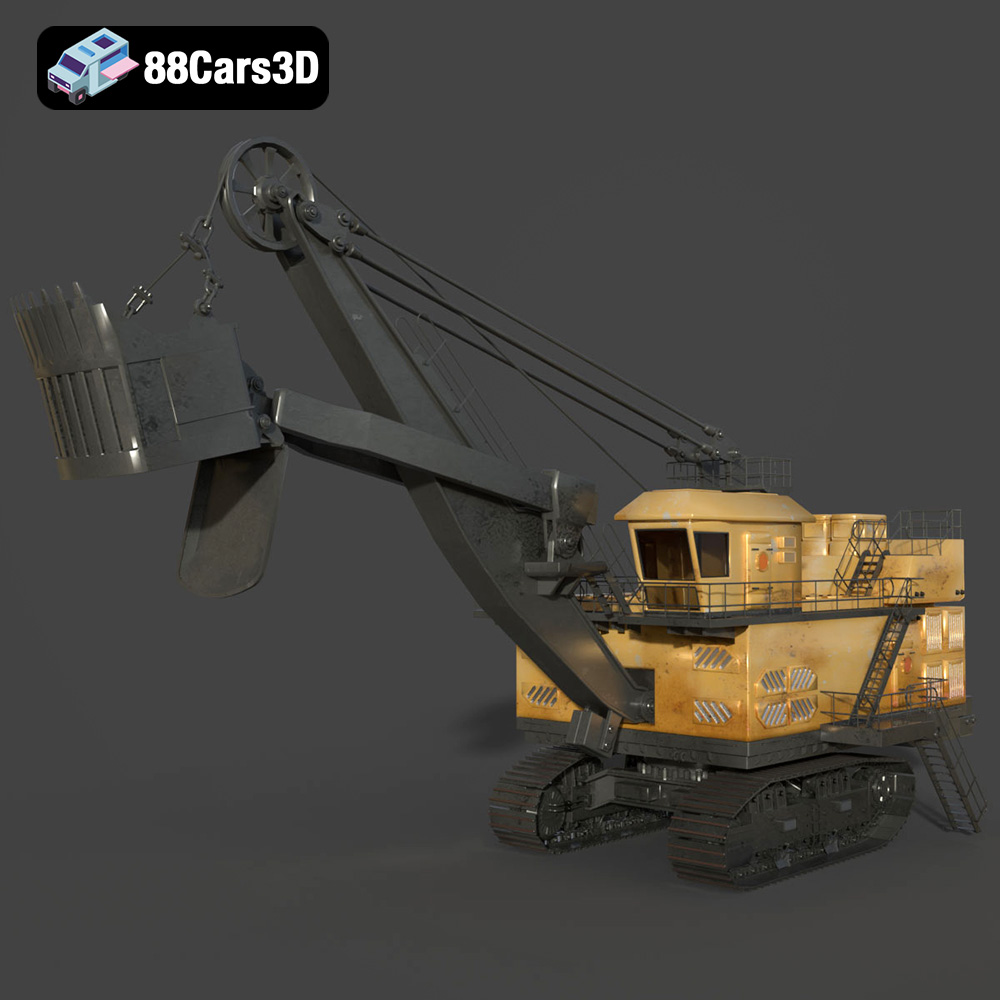
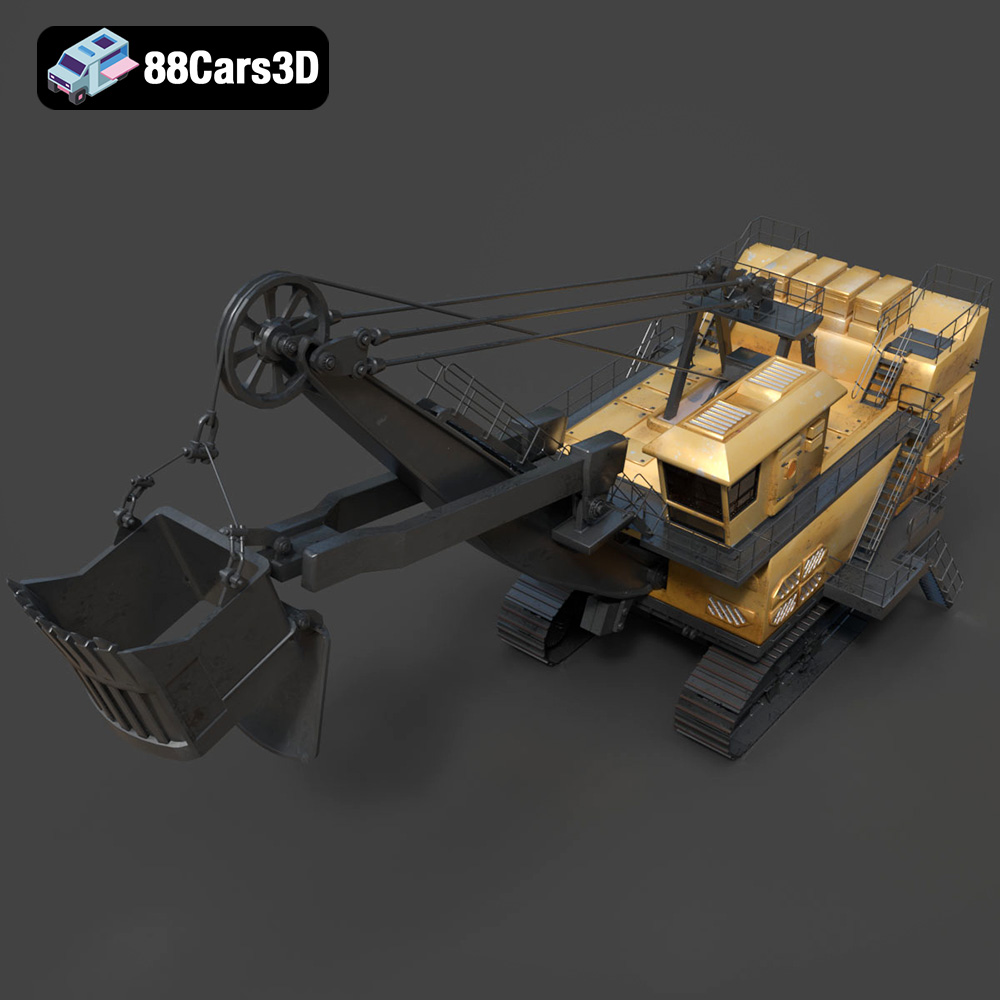
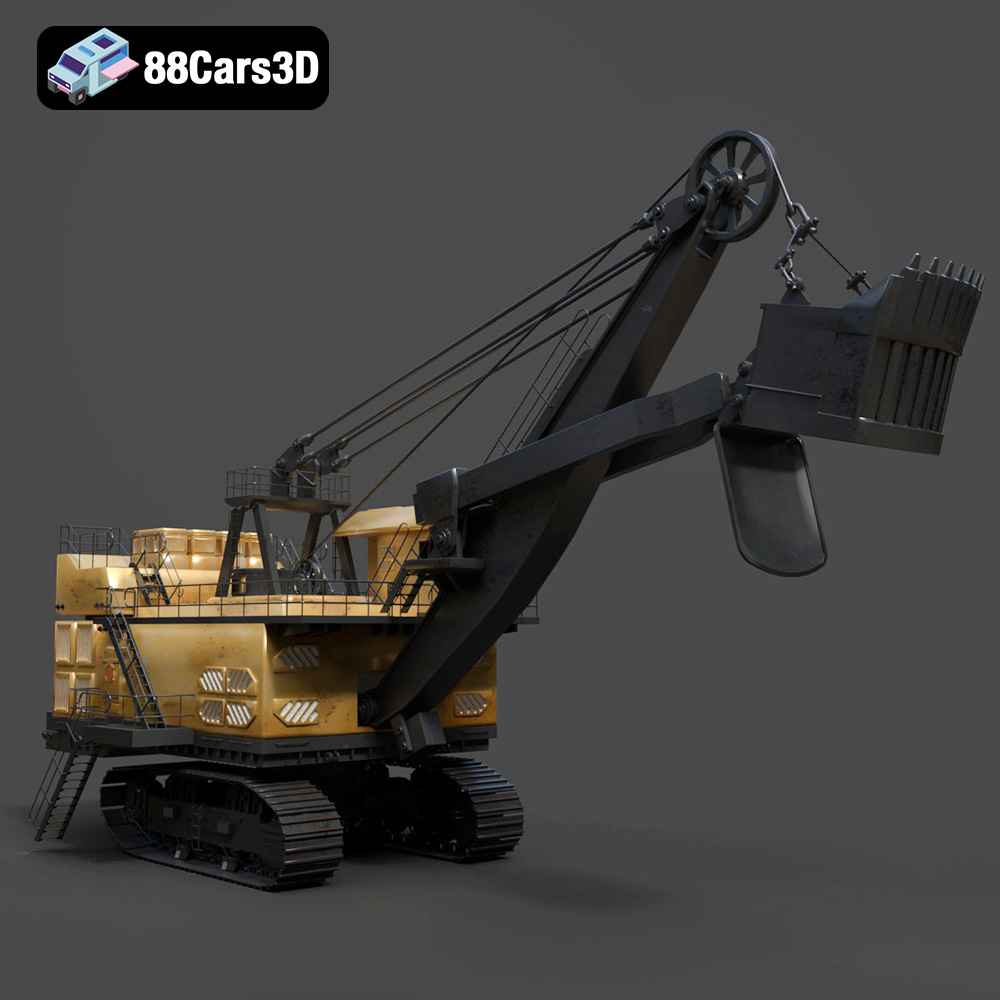
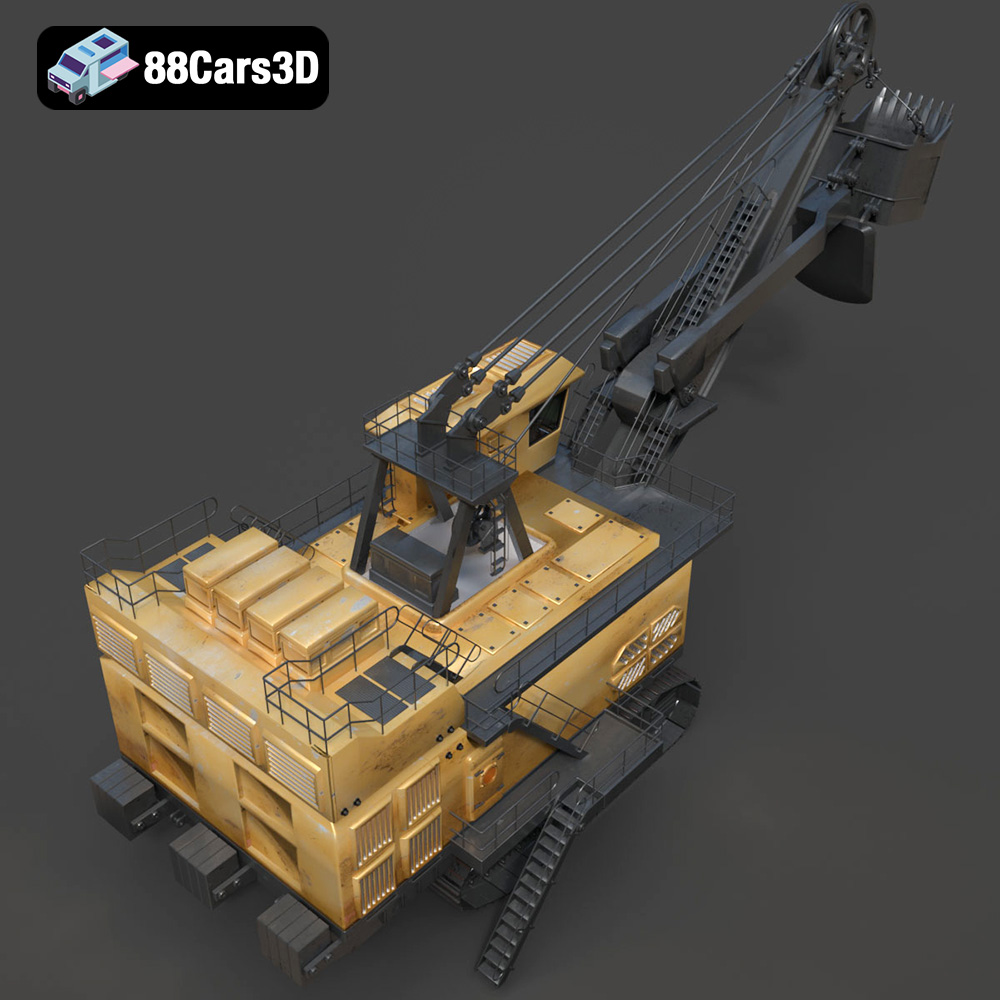
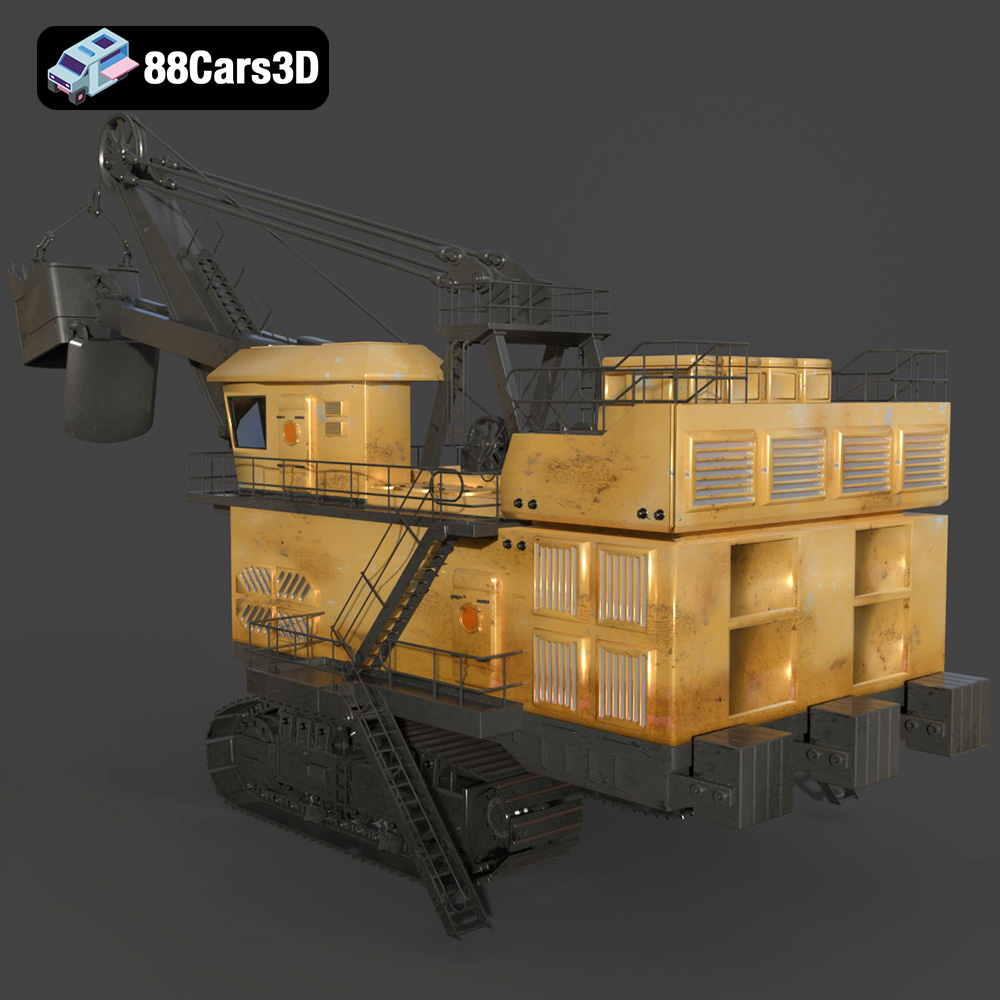
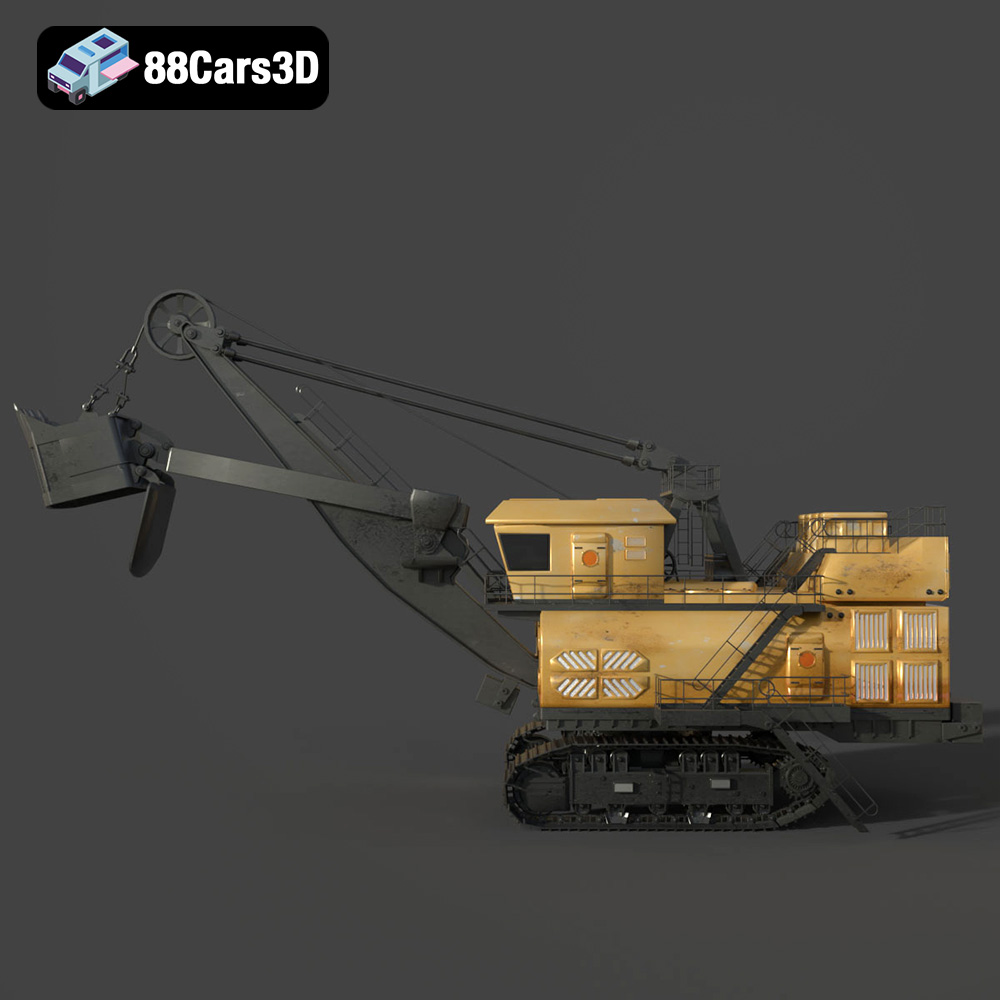
The model’s exterior is where its true industrial grandeur shines. Every aspect of a real Electric Rope Shovel’s massive proportions and complex mechanics has been meticulously recreated. From the accurate structural geometry to the heavy-duty electric motors and their housing, the attention to detail is evident. The model features sophisticated boom, hoist, and crowd rigging systems, which are not merely static elements but separate components, crucial for realistic animation sequences. Industrial safety lighting and access ladder detailing add to the authenticity, providing believable visual cues for both rendering and interactive applications. Perhaps one of the most impressive features is the massive crawler track assembly, modeled with individual links. This level of detail is vital for realistic ground interaction and animation in simulators, where each link’s movement contributes to the believable locomotion of the heavy machinery. The heavy-duty dipper bucket, with its intricate teeth and door mechanisms, further enhances the model’s functional realism, ready for virtual excavation tasks.
Stepping into the fully enclosed operator cab reveals an equally impressive level of interior precision. The detailed industrial control panels and heavy machinery joysticks are not just textures; they often feature modeled buttons and levers, providing tactile realism even in a virtual setting. The operator console and monitoring displays are accurately represented, complete with heavy-duty pedals, levers, and safety switches. This level of interior detail is crucial for VR safety training modules and first-person POV in gaming. When an operator is immersed in a VR environment, every button and display must be recognizable and interactable to facilitate effective training and engagement. The optimized geometry for the cockpit ensures that these details are present without unnecessarily burdening real-time rendering performance.
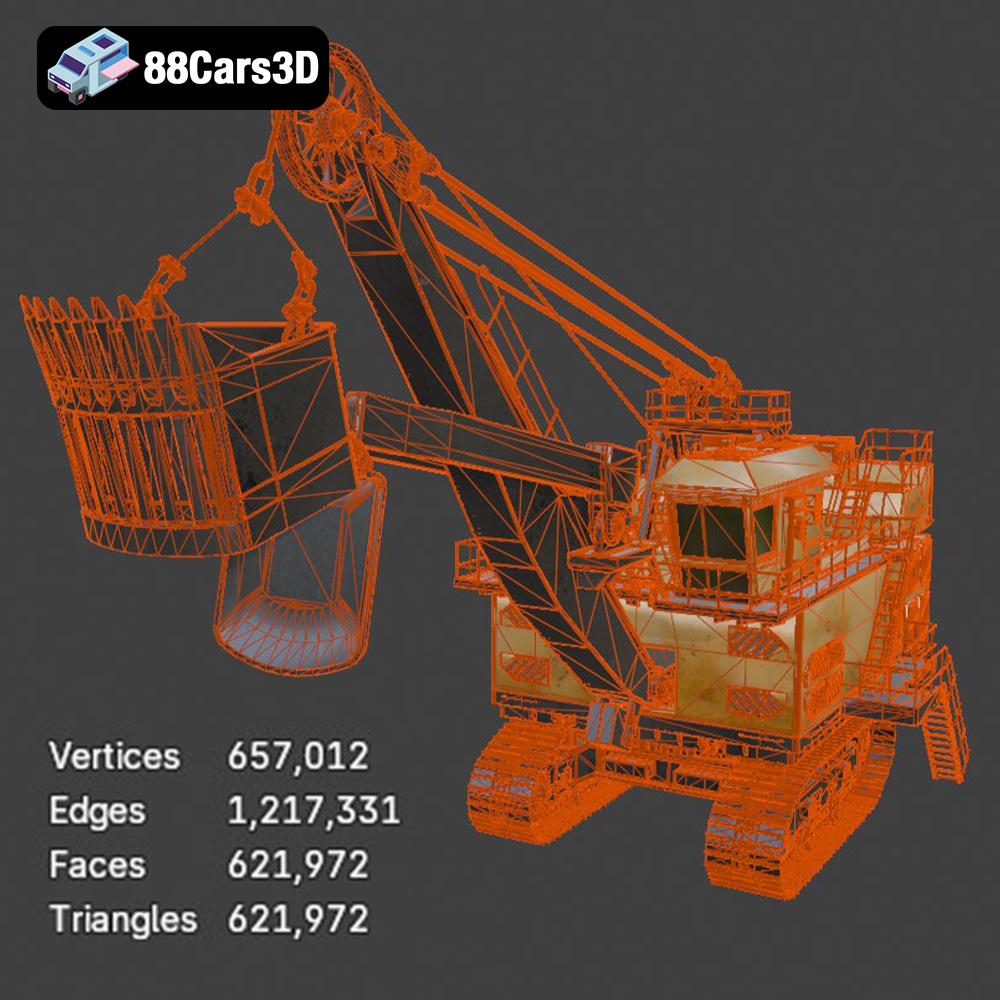
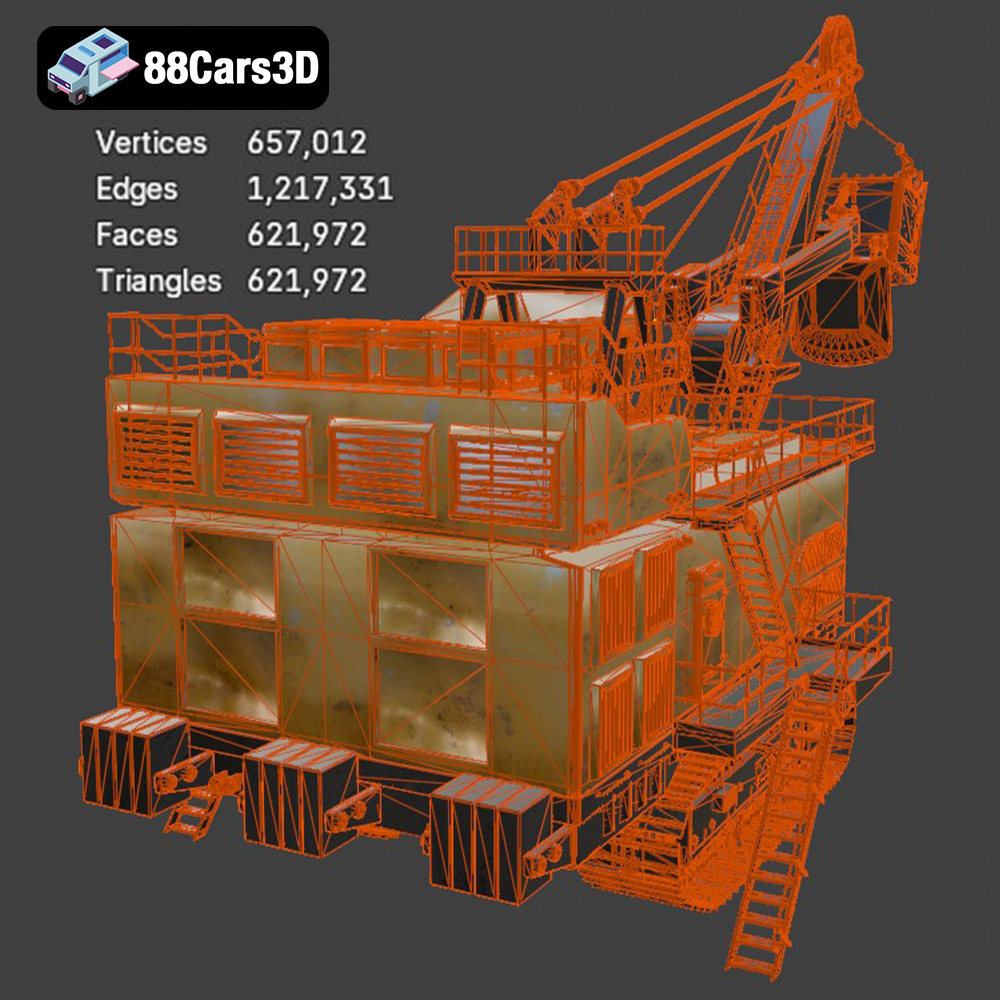
The true technical prowess of this model lies in its thoughtful optimization. With 621,972 triangles, it strikes a perfect balance. This poly count is high enough to convey exceptional visual realism, capturing the complex curves and hard-surface details of the machinery, yet it remains optimized for real-time engines like Unreal and Unity. This “game-ready” status means developers can integrate it into their projects with minimal performance overhead. Beyond topology, the model boasts real-world scale accuracy, ensuring it fits perfectly into existing scenes or environments without tedious adjustments. Crucially, proper pivot setups are included for key animated components: track rotation, boom movement, bucket articulation, and cab rotation. These pre-configured pivots significantly reduce the setup time for animators and riggers, allowing for quick and realistic motion implementation directly out of the box. This attention to technical detail makes the Electric Rope Shovel a highly versatile and production-ready asset.
The flexibility of the Electric Rope Shovel 3D model, supported by its extensive file format compatibility, makes it an ideal candidate for integration into diverse professional pipelines. Let’s explore how it fits into some common workflows.
For game developers, the Electric Rope Shovel offers an immediate solution for populating open-world games, industrial simulators, and construction titles. Its optimized polycount (621,972 triangles) ensures it runs smoothly in real-time engines like Unreal Engine and Unity without causing significant performance dips. When imported via .fbx, the model retains its geometry, UVs, and often includes basic material assignments, allowing developers to quickly apply their PBR textures. The pre-set pivot points for animation are a huge time-saver, enabling rapid rigging for interactive controls. Imagine a player driving this colossal machine, its individual track links deforming realistically over terrain, its boom extending and bucket digging with satisfying precision—all made possible by the model’s inherent design. Furthermore, the game-ready interior is perfect for first-person gameplay, allowing players to fully immerse themselves in the operator’s role.
The immersive nature of AR/VR demands high-quality, optimized assets, and the Electric Rope Shovel excels in this area. For virtual training facilities, the model’s detailed interior and accurately separated parts (boom, bucket, tracks) allow for interactive safety training modules where operators can physically manipulate controls or practice maintenance procedures. Its real-world scale accuracy is critical for a convincing VR experience, where the sense of presence is paramount. For industrial equipment configurators or mobile AR experiences, the .glb format is particularly advantageous. It offers a compact, single-file solution that loads quickly and performs efficiently on various devices, enabling users to view and interact with the shovel in their real-world environment or customize its features on the fly.
For artists and studios focused on rendering and visualization, the Electric Rope Shovel provides an excellent foundation for stunning cinematic sequences, industrial showcases, and machinery demonstrations. In software like 3ds Max (using the .max file) or Blender (using the .blend file), artists have full control over the model. They can leverage advanced rendering engines like V-Ray, Arnold, or Cycles to create photorealistic images and animations. This involves setting up complex material shaders (e.g., weathered metal, dusty plastic, reflective safety surfaces), intricate lighting scenarios (daytime mining operations, dramatic night shifts), and camera animations that highlight the machine’s power and intricate mechanics. The separated components facilitate complex animation, allowing for realistic hoists, scoops, and pivots, ideal for demonstrating the shovel’s full operational capabilities in high-impact marketing videos or technical explainers.
A truly versatile 3D model offers more than just out-of-the-box utility; it provides a canvas for customization and even translation into the physical world. The Electric Rope Shovel model is designed with these possibilities in mind.
The provided formats, particularly .blend and .max, allow for extensive customization. Artists can easily change the machine house and boom colors, adapting the model to specific mining company liveries or standard industrial yellows and oranges. This extends to modifying wear and tear textures—adding muddy tracks, rusted buckets, or dusty exteriors to reflect different operational conditions and enhance realism. Adjusting material finishes, from matte metal to glossy painted steel or safety reflective surfaces, further refines the visual appeal. For dynamic scenes, adapting lighting for night-shift mining environments transforms the visual narrative, making the shovel a versatile asset for a wide range of storytelling needs. These customization options enable the model to integrate seamlessly into diverse visual styles and narrative requirements.
The inclusion of the .stl format, alongside specific 3D print settings, opens up a fascinating avenue for the Electric Rope Shovel: physical model creation. Hobbyists and professionals can translate this detailed digital asset into a tangible display piece. The recommended scales (1:50 / 1:64 / 1:87) provide flexibility, while advice on layer height (0.04–0.12 mm for fine details), wall thickness, infill, and support structures ensures successful prints. The recommendation for resin printing highlights the fine details present in the model, such as the rigging and individual track links. Post-processing suggestions, including sanding, primer, and authentic industrial yellow/orange with weathering effects, guide users in creating a realistic miniature replica. This capability extends the model’s value beyond purely digital applications, allowing for educational models, display pieces, or even prototyping for design verification.
The world of 3D modeling demands precision, versatility, and performance, especially when dealing with complex industrial machinery. The Electric Rope Shovel 3D Model exemplifies these qualities, offering an incredibly detailed yet optimized asset that seamlessly integrates into a broad spectrum of professional workflows. From its meticulously crafted exterior and interior to its robust technical specifications and extensive file format support, this model is engineered to empower creators in game development, AR/VR, rendering, and even 3D printing.
Whether you are building an immersive mining simulator in Unreal Engine, crafting photorealistic visualizations in 3ds Max or Blender, or developing interactive VR training modules, this asset provides the foundational realism and technical flexibility you need. The inclusion of formats like .blend, .fbx, .obj, .glb, .stl, .ply, .unreal, and .max ensures that regardless of your software preference or project requirements, you have a high-quality, game-ready, and render-ready solution at your fingertips. By understanding the nuances of each file format and leveraging the model’s intrinsic detail and optimization, you can unlock its full potential.
For those seeking top-tier 3D car models or industrial equipment that combines visual fidelity with technical excellence, 88cars3d.com stands as a reliable source. The Electric Rope Shovel 3D Model is a testament to the high standards of quality and utility available, ready to elevate your next project to new heights of realism and engagement.
The Electric Rope Shovel is a titan of the mining and heavy construction industry, renowned for its immense digging power and massive scale. This incredibly detailed 3D model captures the rugged industrial design of the real-world machine, featuring a meticulously crafted boom, a heavy-duty dipper bucket, intricate crawler tracks, and the complex mechanical rigging systems essential to its operation. Boasting a detailed yet manageable topology with 621,972 triangles, this 3D model strikes an excellent balance between high-end visual fidelity and optimized performance. Whether you are building an expansive mining simulator, an industrial visualization, or a VR training application, this asset delivers unparalleled realism. Perfect for industrial simulators, heavy machinery rendering, VR safety training modules, and open-world mining environments.
$45.50
.blend
.excavator
.fbx
.glb
.max
.obj
.ply
.rendering
.stl
.unreal
construction-vehicle
electric-rope-shovel
game asset
game-ready
heavy-machinery
industrial-3d-model
low-poly
mining-equipment
optimized
VR/AR