Get 20% OFF All Premium 3D & STL Models!

In the rapidly evolving landscape of digital visualization, automotive design stands as a testament to both aesthetic beauty and engineering prowess. From cutting-edge video games that push the boundaries of realism to immersive virtual showrooms and cinematic marketing campaigns, the demand for highly detailed, authentic 3D car models has never been greater. These aren’t just mere digital representations; they are intricate works of art, meticulously crafted to replicate every curve, every reflection, and every nuanced detail of their real-world counterparts.
At the heart of this digital transformation lies the crucial intersection of artistic skill and technical precision. Professionals across various industries, including game development, architectural visualization, AR/VR experiences, and product design, rely on premium 3D assets to bring their visions to life. It’s about more than just geometry; it’s about the emotional connection a viewer feels when confronted with a perfectly rendered vehicle, one that evokes the luxury, performance, and presence of the original. Take, for instance, the Mercedes-Benz C-Class 2019. This vehicle is renowned for its sophisticated blend of elegant design heritage and modern aerodynamic styling. Recreating such a car in 3D requires an extraordinary level of dedication to accuracy and detail, ensuring that its digital twin is just as captivating as the physical one. A high-quality 3D model, like the Mercedes-Benz C-Class 2019 available on 88cars3d.com, becomes an indispensable tool, offering unparalleled versatility and realism for a myriad of applications.
Navigating the world of 3D modeling often requires a clear understanding of the various file formats, each designed for specific purposes, software compatibility, and optimization goals. Choosing the right format is critical for seamless integration into your workflow, whether you’re working on a real-time game, a high-fidelity render, an AR/VR experience, or a physical 3D print. The Mercedes-Benz C-Class 2019 model, for example, is offered in a comprehensive range of formats, ensuring its adaptability across virtually any professional pipeline.
The `.blend` file format is native to Blender, the powerful open-source 3D creation suite. When you receive a `.blend` file, you’re not just getting the raw geometry; you’re getting a fully editable Blender scene. This includes all materials, textures, lighting setups, cameras, animation data, modifiers, and even intricate rigging information. For artists and developers primarily working within the Blender ecosystem, this format offers maximum flexibility. You can dive in, inspect the scene structure, tweak materials, modify topology, or extract specific components with ease, making it ideal for deep customization or learning from expert setups.
Autodesk’s `.fbx` (Filmbox) format is arguably the most prevalent interchange format in the 3D industry, particularly favored in game development and animation pipelines. Its strength lies in its ability to encapsulate a wide array of data beyond just mesh geometry, including materials, textures, animations, skinning (for character rigging), camera information, and light sources. Game engines like Unreal Engine and Unity rely heavily on `.fbx` for importing complex assets. Its robust support for skeletal animations and blend shapes makes it indispensable for animated characters and deformable meshes, making it a perfect choice for bringing dynamic 3D car models into a real-time environment.
The Wavefront `.obj` format is a universal standard known for its widespread compatibility across almost all 3D software applications. It primarily stores geometry data, including vertices, faces, normals, and UV coordinates. While it can reference external `.mtl` (material library) files for basic material properties, it does not support advanced features like animation, rigging, or complex scene hierarchies. This simplicity makes `.obj` incredibly robust and reliable for static mesh assets, perfect for models that need to be easily transferred between different software packages without losing fundamental geometric data.
`.glb` is the binary version of the GL Transmission Format (glTF), often referred to as the “JPEG of 3D.” It’s specifically designed for efficient transmission and loading of 3D scenes and models on the web, in AR (Augmented Reality), and VR (Virtual Reality) applications. A `.glb` file is a single, self-contained asset that includes geometry, materials, textures, and even animation data, all optimized for performance. Its compact nature and ease of integration into web-based viewers and mobile AR/VR platforms make it an excellent choice for virtual showrooms, interactive product configurators, and low-latency immersive experiences.
The Stereolithography (`.stl`) format is the de facto standard for 3D printing. Unlike other formats that store material or animation data, `.stl` files exclusively describe the surface geometry of a 3D object using a collection of interconnected triangles. It lacks color, texture, or internal structure information. For hobbyists and professionals looking to physically manifest their digital creations, an `.stl` file is the essential bridge. Preparing a model for `.stl` often involves ensuring a watertight mesh and checking for manifold errors to guarantee a successful print. The Mercedes-Benz C-Class 2019 model’s availability in `.stl` opens up exciting possibilities for scale models and physical prototypes.
The Polygon File Format (`.ply`) is a robust format often used for storing 3D data from 3D scanners or for models requiring highly detailed attributes. Beyond just geometry, `.ply` can store color, transparency, normals, texture coordinates, and even reliability information for each vertex or face. It’s more comprehensive than `.stl` for certain applications and is particularly useful when working with point cloud data or high-precision meshes generated from real-world scans or CAD applications, where preserving intricate details and associated metadata is crucial.
While `.unreal` is not a standalone file format in the traditional sense, its inclusion signifies an “Unreal Engine-ready” asset. This typically means the model has been rigorously optimized, structured, and potentially even pre-imported or designed for direct, seamless integration into an Unreal Engine project. This could imply an `.fbx` file that adheres to Unreal’s specific import guidelines, has proper pivot points, LODs (Levels of Detail) already configured, and potentially even includes basic material setups compatible with the engine’s physically based rendering (PBR) pipeline. For Unreal Engine developers, an “.unreal” designation means less setup time and a smoother workflow.
Finally, the `.max` file format is native to Autodesk 3ds Max, one of the most powerful and widely used 3D modeling, animation, and rendering software packages in the industry. Similar to `.blend` for Blender, a `.max` file contains the entire scene, including all geometry, materials, textures, lighting, cameras, modifiers, animation paths, and even render settings. For users deeply embedded in a 3ds Max pipeline, this format offers full editing capabilities and access to all parameters, enabling comprehensive modifications and integrations into complex architectural visualizations or cinematic projects.
The digital reproduction of a luxury vehicle like the Mercedes-Benz C-Class 2019 is a demanding undertaking, requiring an acute eye for detail and a mastery of 3D modeling techniques. The model available on 88cars3d.com exemplifies this dedication, offering a level of fidelity that satisfies the most stringent professional requirements.
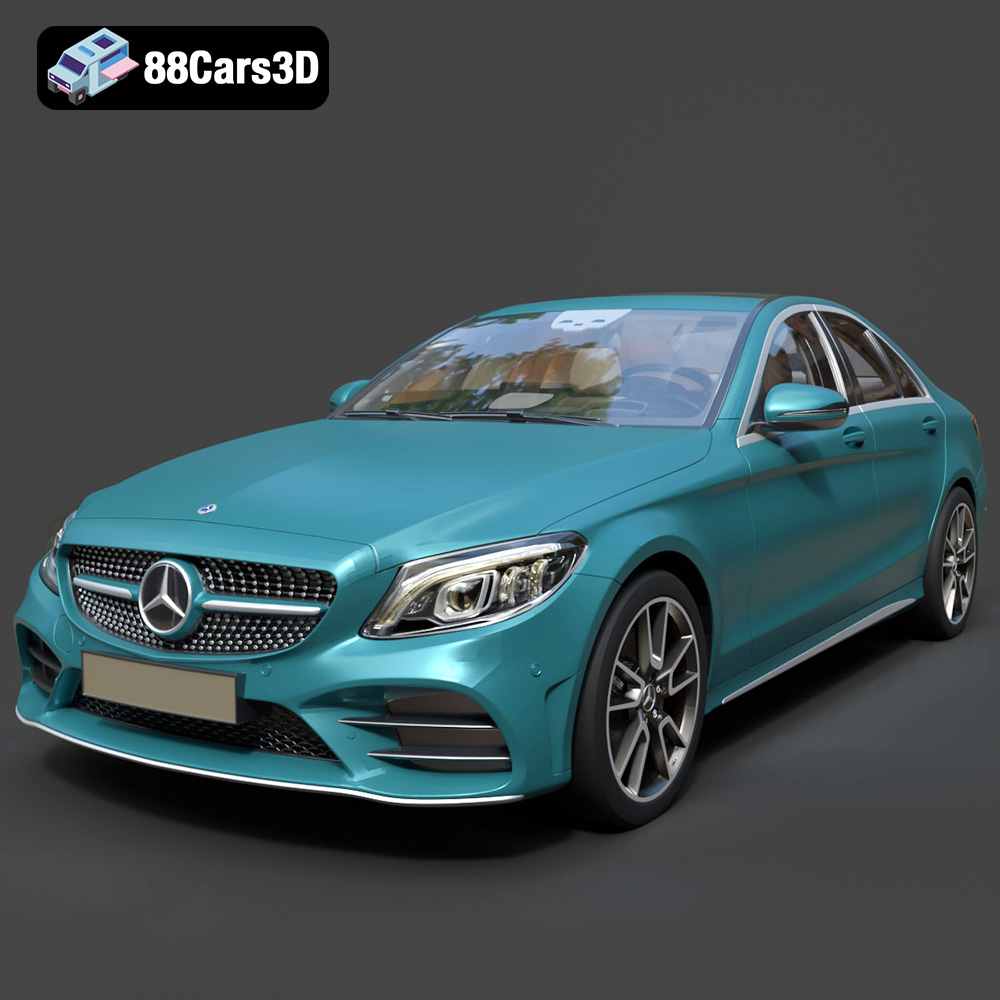
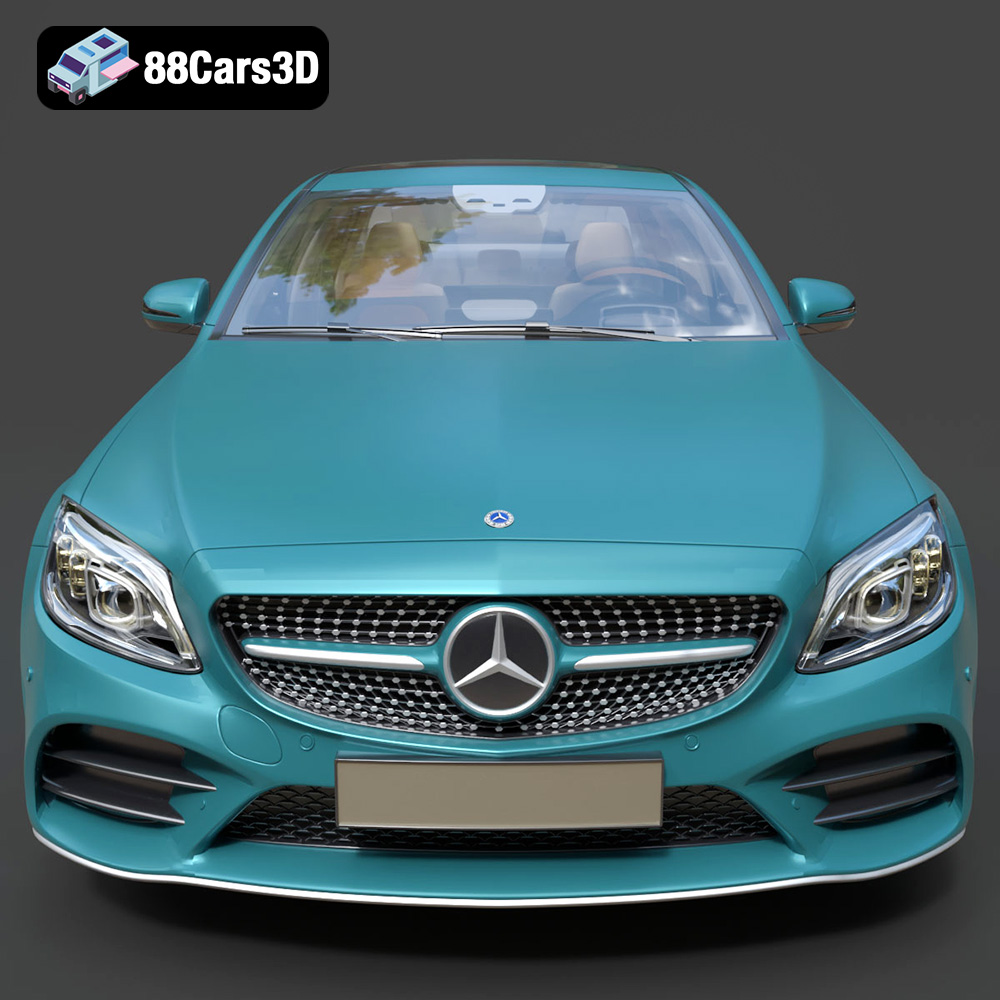
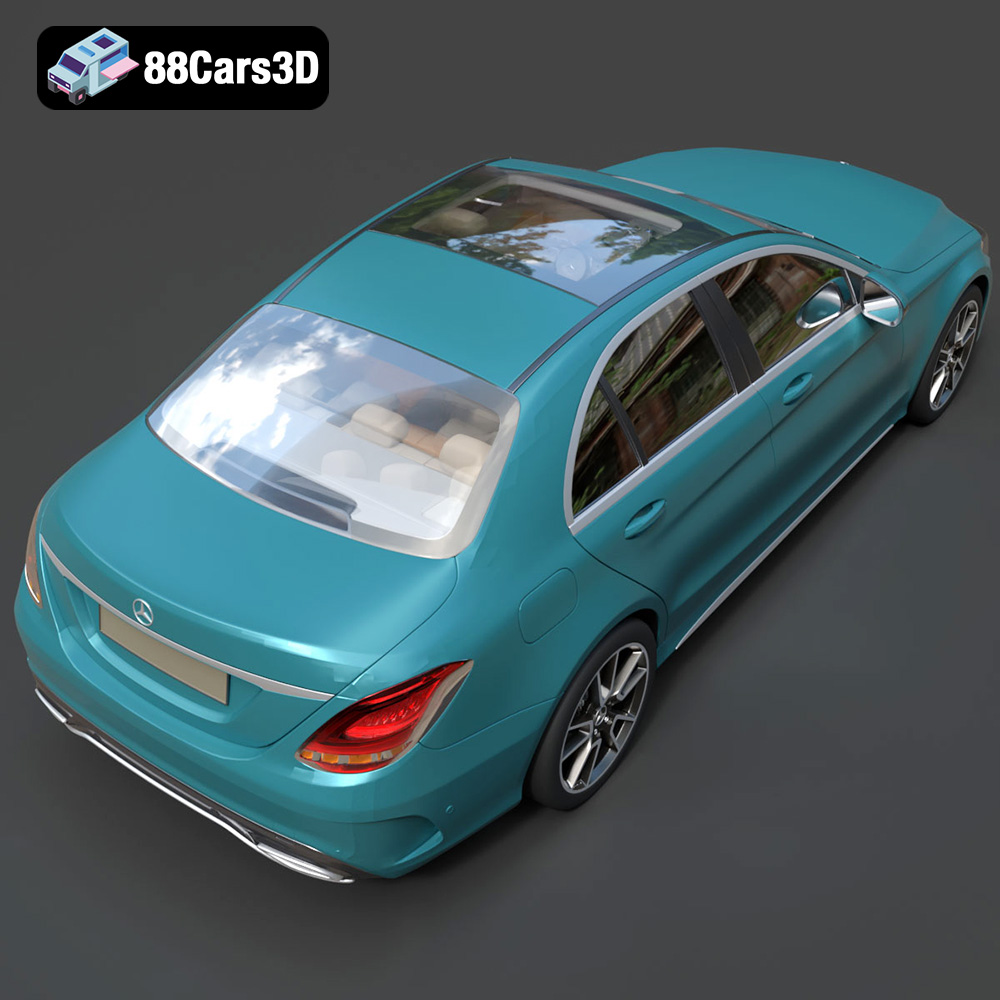
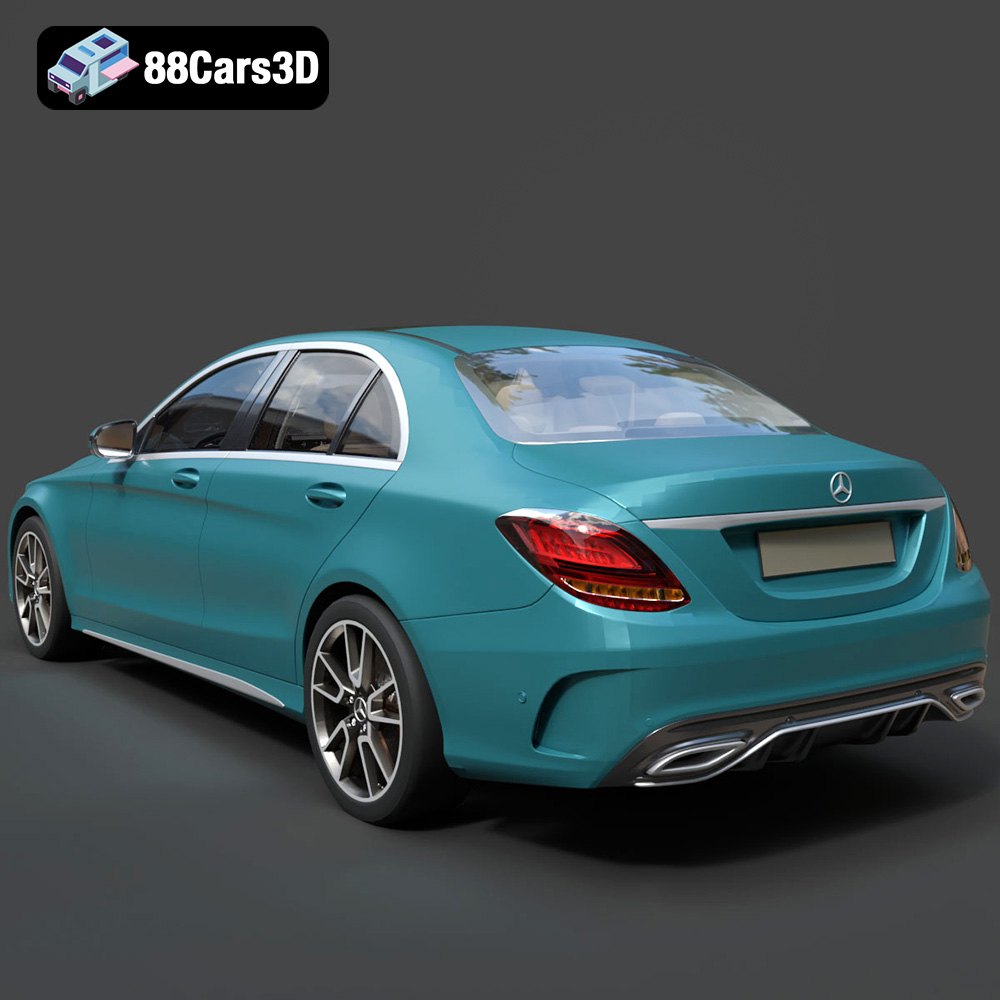
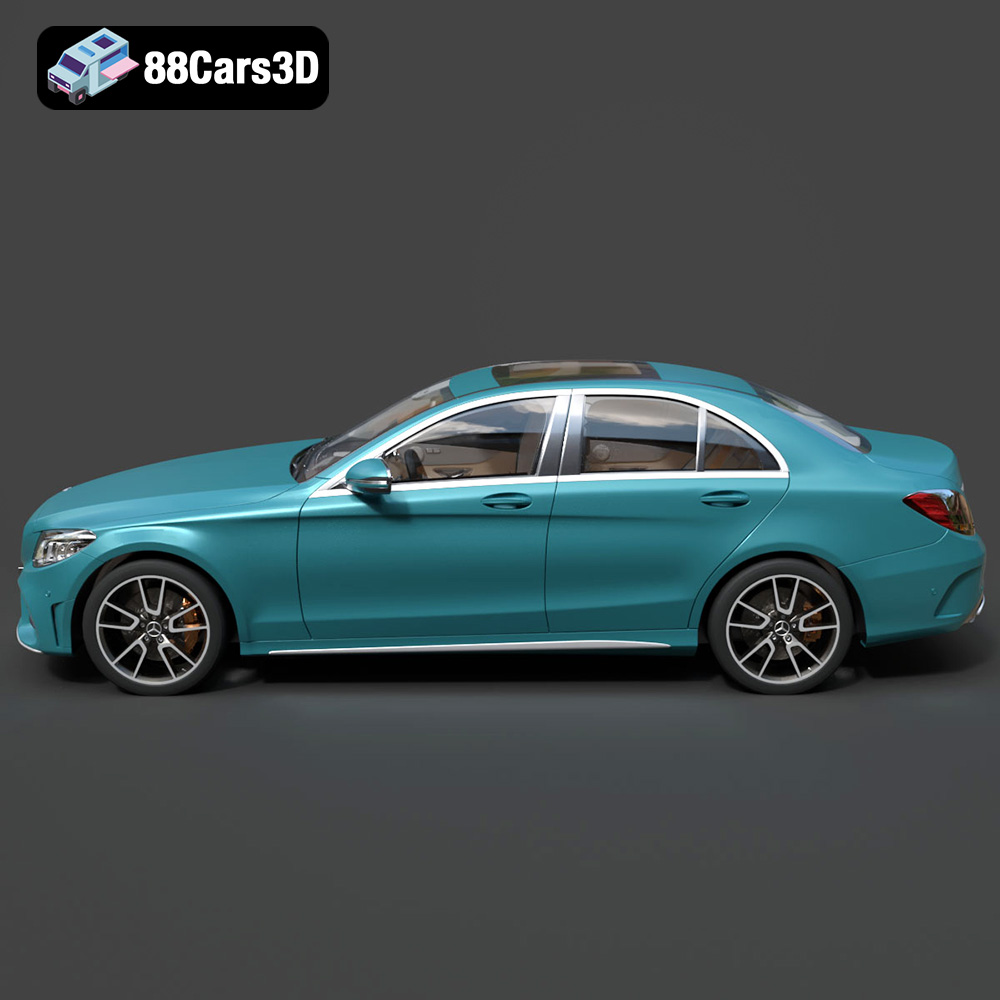
The exterior of any car model is its most immediate visual identifier. For the Mercedes-Benz C-Class 2019, this means accurately capturing its iconic diamond-block grille, the distinctive star emblem, and the sophisticated contours that define its aerodynamic silhouette. The model boasts accurate body panels, ensuring that reflections behave realistically across its surfaces, a critical aspect for photorealistic rendering. Details such as the twin-pipe exhaust system, rear diffuser setup, and complex LED lighting for both headlights and taillights are meticulously crafted. This level of granular detail extends to the wheels, with precisely modeled multi-spoke alloy wheels featuring realistic tire tread patterns. Even the often-overlooked components like the suspension and brake calipers are highly detailed, providing authenticity even in close-up shots. Furthermore, the provision of separate wheels, suspension, and steering components is a technical advantage, enabling realistic animation for racing games or automotive configurators.
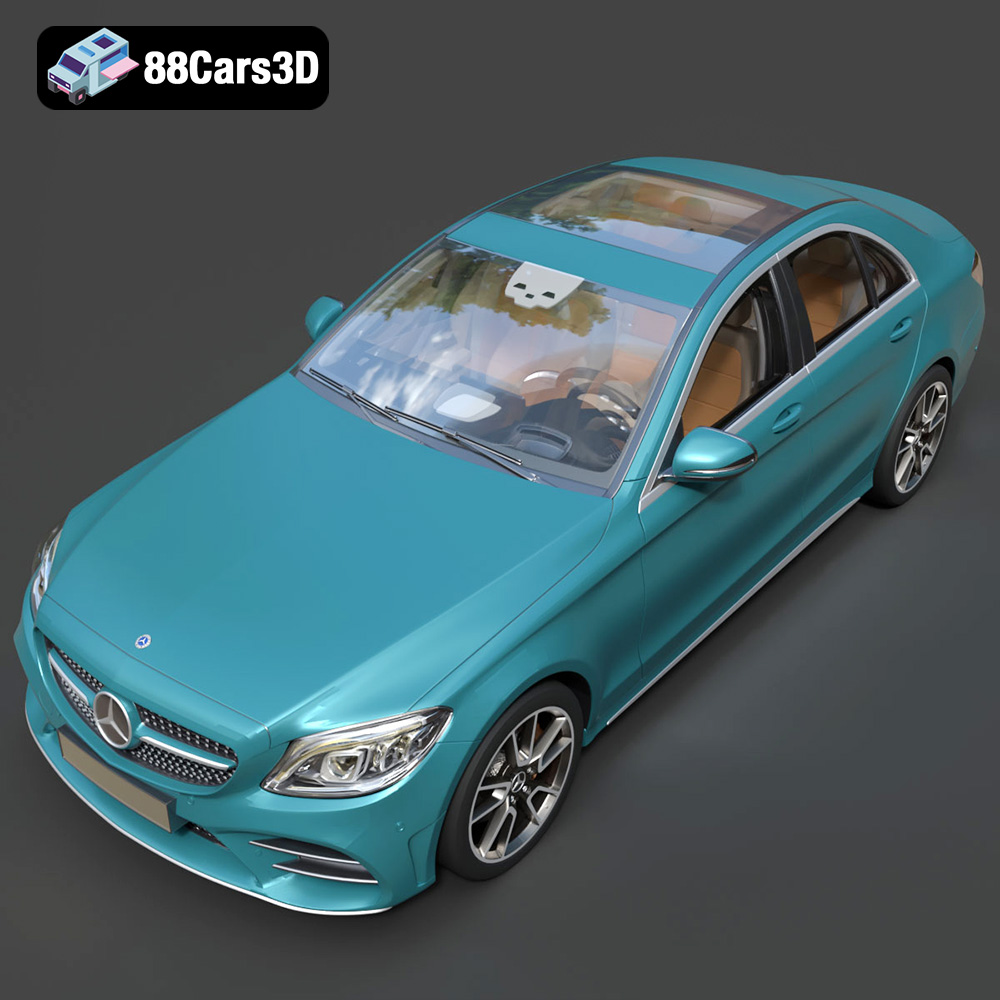
While the exterior captures attention, the interior defines the luxury experience. The Mercedes-Benz C-Class 2019 model doesn’t disappoint, offering a highly detailed cockpit that is optimized for both static rendering and interactive experiences. Features like luxurious leather-stitched seat detailing, an authentic multi-function steering wheel with accurate badging, and a detailed digital instrument cluster alongside the infotainment screen are all present. The refined center console controls, climate vents, and gear selector contribute to an immersive environment. For game developers, this optimized geometry is crucial, ensuring a compelling first-person POV without excessive polycount that would hinder real-time performance.
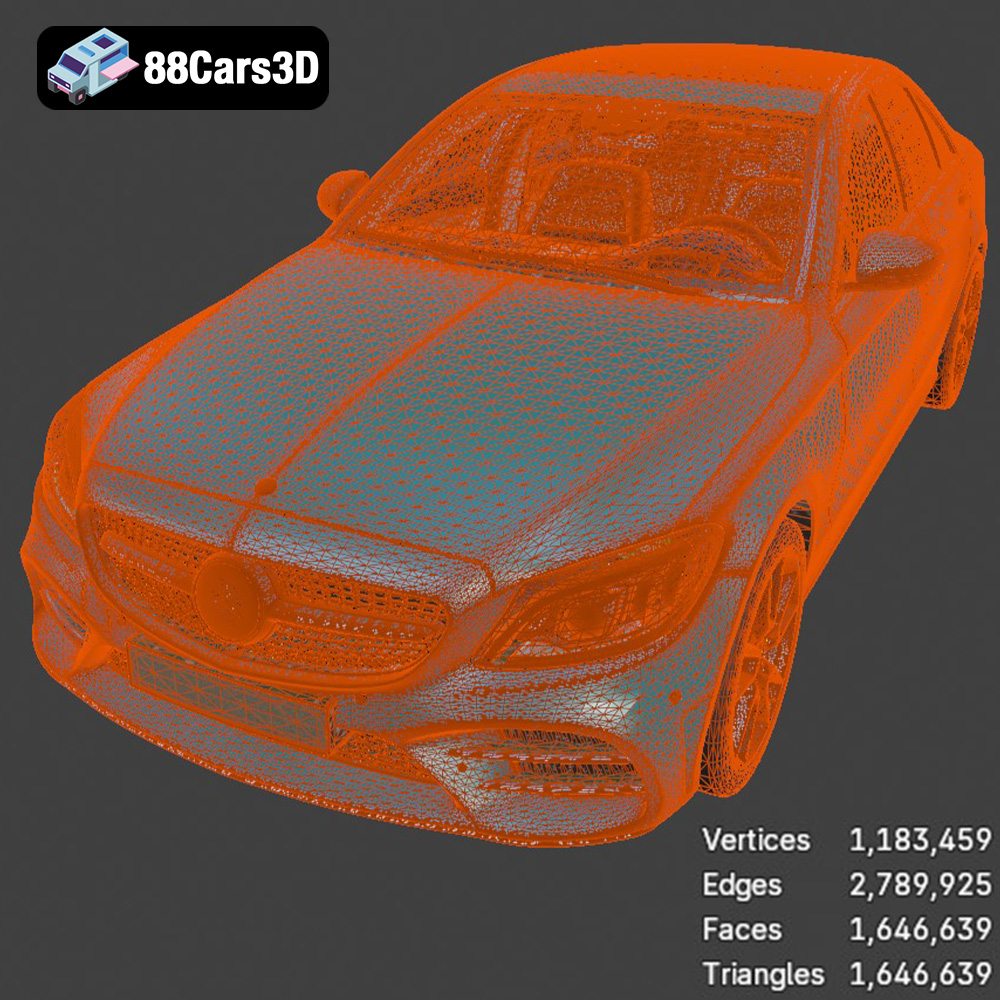
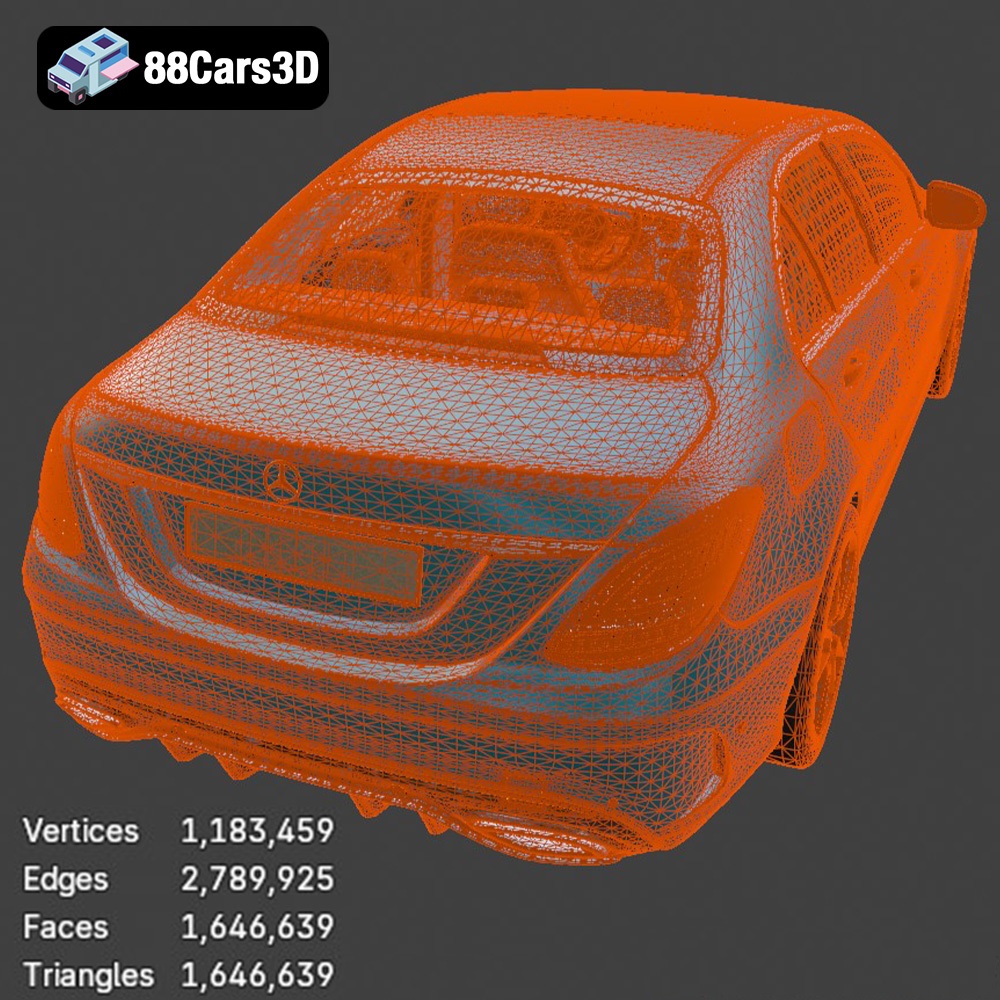
The true mark of a premium 3D asset lies in its technical specifications. With 1,646,639 triangles, the Mercedes-Benz C-Class 2019 model strikes an impressive balance. This polycount is sufficiently high to ensure breathtaking visual fidelity for close-up renders and cinematics, yet optimized enough to be game-ready for real-time engines like Unreal and Unity. Real-world scale accuracy, based on actual vehicle chassis dimensions, ensures that the model fits seamlessly into architectural visualizations or simulations. Crucially, proper pivot setups for steering, wheel rotation, and suspension travel are implemented, making the model animation-ready right out of the box. This attention to technical detail makes the asset robust and highly adaptable across diverse professional applications.
The versatility of a well-crafted 3D car model is best demonstrated by its seamless integration into various professional workflows. From the demanding performance requirements of game development to the aesthetic precision of architectural rendering, the Mercedes-Benz C-Class 2019 model provides an ideal foundation.
In modern game development, realism is paramount. Whether it’s an open-world sandbox, a high-octane racing simulator, or a VR driving experience, high-quality vehicle assets are critical. The Mercedes-Benz C-Class 2019, with its optimized 1.6 million triangle count, is perfectly suited as a “game-ready” asset. Developers can import the `.fbx` or `.unreal` version directly into Unreal Engine or Unity, leveraging its pre-configured pivots for animation. The separate components for wheels, suspension, and steering enable dynamic physics simulations, allowing players to experience realistic handling and damage. The detailed interior is a significant advantage for first-person views or in-game cinematics, enhancing player immersion. Furthermore, the model’s clean topology ensures that LODs (Levels of Detail) can be generated effectively, maintaining performance across various hardware specifications.
Architectural visualization (ArchViz) relies on high-fidelity assets to bring life and context to static building renderings. A luxury car like the Mercedes-Benz C-Class 2019 adds immediate prestige and realism to any exterior or interior scene. Imported into 3ds Max (using the `.max` format) or Blender (using `.blend` or `.fbx`), artists can easily integrate the vehicle into street scenes, driveways, or even within a grand garage. The model’s real-world scale and accurate materials allow for realistic lighting interactions, casting convincing shadows and reflecting the environment naturally. It serves as a powerful storytelling element, suggesting lifestyle and target demographic, elevating a simple building render into a captivating visual narrative.
Augmented Reality (AR) and Virtual Reality (VR) are transforming how consumers interact with products. For the automotive industry, this means virtual showrooms, interactive configurators, and mobile AR experiences that allow users to explore vehicles in their own environment. The `.glb` format of the Mercedes-Benz C-Class 2019 model is tailor-made for these applications. Its optimized nature ensures fast loading times and smooth performance on mobile devices and VR headsets. Imagine walking around the C-Class in your living room via AR, or exploring its luxurious interior in a full VR environment. The model’s detailed interior and exterior features translate directly into a compelling, immersive experience, offering potential buyers an unprecedented level of interaction before a physical test drive.
The utility of a premium 3D model extends far beyond digital rendering and interactive experiences. With the advent of accessible 3D printing technologies, these digital assets can be transformed into tangible objects, offering a unique avenue for display, prototyping, and personal collection. The Mercedes-Benz C-Class 2019 model, being available in the `.stl` format, embraces this exciting possibility.
Converting a high-detail 3D car model into a physical print is a fascinating process that combines digital precision with material science. The `.stl` file, specifically designed for 3D printers, contains all the necessary surface geometry. However, printing a complex object like a car requires careful planning. The provided print settings for the C-Class model are invaluable:
Post-processing, involving sanding, priming, and painting with authentic factory colors and metallic finishes, transforms the raw print into a stunning miniature replica. This allows hobbyists and collectors to create display-scale models that showcase the engineering and design of the C-Class in a tangible form.
Beyond mere display, 3D printed car models can serve as valuable tools for prototyping and education. Designers can print scaled versions to evaluate forms, proportions, and aesthetic choices in a physical medium. Engineering students can use these models to study vehicle architecture, suspension systems, and aerodynamic principles in a hands-on manner. The ability to quickly iterate and test physical designs derived from a high-quality digital model accelerates the design process and fosters a deeper understanding of automotive engineering.
Achieving a balance between stunning visual fidelity and optimal performance is a continuous challenge in 3D content creation. For complex assets like 3D car models, strategic optimization is key. The Mercedes-Benz C-Class 2019 model from 88cars3d.com demonstrates a thoughtful approach to this balance.
With a triangle count of 1,646,639, the C-Class model delivers exceptional visual detail, making it ideal for close-up renders and high-resolution cinematics. However, in real-time applications like games or VR, rendering millions of triangles for every object can quickly impact frame rates. This is where the concept of Level of Detail (LODs) becomes critical. While not explicitly stated as included, a professional-grade asset of this quality is designed to allow for easy generation of LODs. Lower poly versions of the model are swapped in as the camera moves further away, drastically reducing the rendering burden without a noticeable loss of detail to the player. This intelligent management of geometric complexity ensures the model performs efficiently across various distances and hardware configurations.
Modern rendering engines, especially those used in game development and architectural visualization, rely on Physically Based Rendering (PBR) workflows. This involves using a set of texture maps (e.g., Albedo/Base Color, Metallic, Roughness, Normal, Ambient Occlusion) that accurately simulate how light interacts with different materials in the real world. A high-quality 3D car model must come with PBR-ready materials or be easily adaptable to them. The C-Class model, with its “photorealistic studio rendering” optimization, implies that its material setup is designed to integrate seamlessly into such pipelines, ensuring realistic paint finishes, glass reflections, and tire textures under various lighting conditions.
For dynamic applications, a static mesh isn’t enough. The Mercedes-Benz C-Class 2019 model’s inclusion of “separate wheels, suspension, and steering components for animation” is a significant technical advantage. This means the model is implicitly rigged or structured in a way that allows for easy application of animation. Proper pivot points are essential for realistic wheel rotation, steering articulation, and suspension travel simulation. This pre-configured structure saves countless hours for animators and game developers who would otherwise have to manually prepare the model for movement, making it truly “game-ready” for racing titles and cinematics.
A valuable 3D asset is one that offers flexibility and longevity. The Mercedes-Benz C-Class 2019 model provides ample customization options, ensuring it can be adapted to specific project requirements and remain relevant across future endeavors.
The ability to customize a 3D model is crucial for matching brand guidelines, artistic direction, or specific scenario needs. The C-Class model offers:
These customization capabilities empower artists and developers to create unique visual experiences without needing to re-model the vehicle from scratch, significantly saving time and resources.
The extensive list of included file formats (.blend, .fbx, .obj, .glb, .stl, .ply, .unreal, .max) ensures the Mercedes-Benz C-Class 2019 model is future-proof and compatible with virtually any professional software or engine. This unparalleled versatility means the asset is not locked into a single ecosystem. A game developer using Unreal Engine can leverage the `.fbx` or `.unreal` package, while an architect using 3ds Max for a render can utilize the `.max` file. An AR/VR developer can seamlessly integrate the `.glb` version, and a hobbyist can print a physical replica using the `.stl`. This broad compatibility maximizes the return on investment, making it a truly versatile and long-lasting addition to any digital asset library.
In the dynamic world of digital content creation, the difference between good and great often lies in the quality of the assets used. A meticulously crafted 3D car model, such as the Mercedes-Benz C-Class 2019, is far more than just a collection of polygons; it’s a foundation for innovation, a catalyst for immersive experiences, and a testament to digital artistry. From bringing virtual worlds to life in cutting-edge game titles to providing unparalleled realism in architectural visualizations and enabling interactive virtual showrooms, these assets are indispensable tools for professionals.
The Mercedes-Benz C-Class 2019 model stands out with its exceptional topology, game-ready optimization, and astonishing level of detail in both its exterior and interior. Its comprehensive suite of file formats ensures compatibility across all major 3D software and real-time engines, providing unmatched flexibility for diverse workflows, including the exciting realm of 3D printing. Investing in high-quality 3D car models like this empowers creators to push the boundaries of their projects, delivering visual excellence and engaging experiences that truly resonate with audiences. For those seeking to elevate their automotive rendering, game development, or AR/VR projects with premium 3D car models, exploring resources like 88cars3d.com offers access to assets that meet the highest standards of technical precision and artistic fidelity.
The Mercedes-Benz C-Class 2019 represents the pinnacle of compact executive luxury, blending elegant design heritage with modern aerodynamic styling. Known for its sophisticated diamond-block grille, sleek LED High-Performance headlamps, and refined body contours, this vehicle embodies premium automotive engineering and class-leading aesthetics. This premium 3D model boasts an exceptional topology with a triangle count of 1,646,639, ensuring breathtaking visual fidelity. It is perfectly optimized for both high-end real-time game engines and photorealistic studio rendering, making it a versatile asset for game development, AR/VR experiences, animation, and high-end automotive visualization.
$80.50
.2019
.blend
.fbx
.glb
.max
.obj
.ply
.rendering
.sedan
.stl
.unreal
c-class
car-3d-model
game asset
game-ready
luxury car
mercedes-benz
optimized
VR/AR