Get 20% OFF All Premium 3D & STL Models!

In the dynamic world of 3D visualization, game development, and immersive experiences, the quality of your assets dictates the success of your project. Automotive models, in particular, demand a unique blend of artistic fidelity and technical precision. From the sleek curves of a supercar to the rugged utility of an off-roader, a truly exceptional 3D car model can elevate a scene from merely good to absolutely breathtaking. It’s not just about aesthetics; it’s about optimized topology, accurate scale, versatile file formats, and seamless integration into diverse professional pipelines.
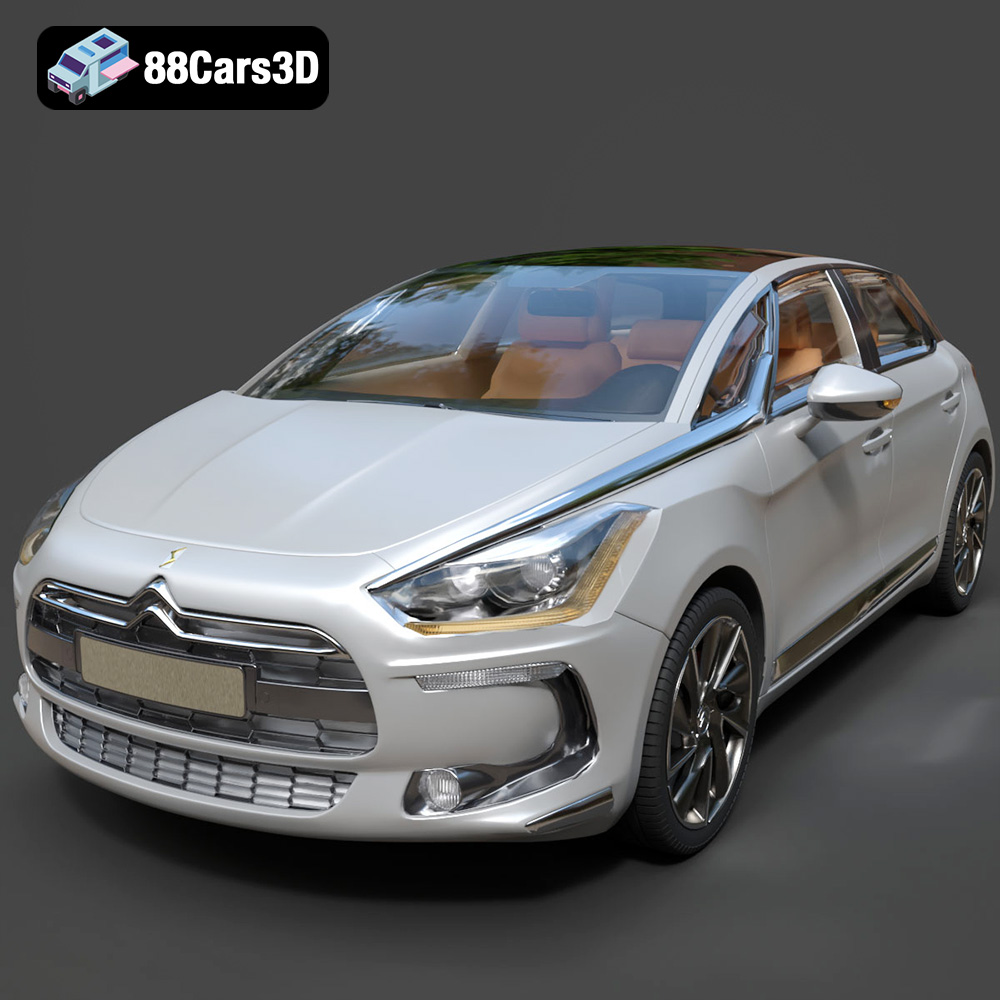
Whether you’re crafting a photorealistic architectural visualization, building an expansive open-world racing game, or developing an interactive AR configurator, the right 3D vehicle asset is a cornerstone. Today, we’re diving deep into what makes a 3D car model truly outstanding, exploring the technical nuances, workflow integrations, and creative possibilities. We’ll illustrate these concepts through the lens of a remarkable example: the Citroen DS5 3D Model available on 88cars3d.com – a perfect fusion of avant-garde design and meticulous digital craftsmanship.
Choosing the correct file format for your 3D car model is paramount, impacting everything from software compatibility to real-time performance and rendering quality. A high-quality model, like the Citroen DS5, offers a suite of formats, ensuring it can be utilized across virtually any professional workflow. Each format serves distinct purposes and carries specific technical advantages.
The .blend file is Blender’s native format, providing a complete, fully editable scene. This means not just the mesh, but also materials, textures, lighting, camera setups, animations, and even physics simulations are preserved within a single file. For artists and studios working primarily in Blender, this format offers unparalleled flexibility for further modifications, rigging, or scene composition. It’s perfect for deep customization, allowing users to delve into every aspect of the model, from adjusting shaders to refining geometry.
As Autodesk’s proprietary format, .fbx (Filmbox) has become an industry standard for data exchange between 3D software and game engines. It’s particularly ideal for Unreal Engine, Unity, and other real-time pipelines due to its robust support for mesh data, animation, skeletons, blend shapes, and PBR (Physically Based Rendering) materials. When you need to move a model, its animations, and its hierarchy seamlessly between applications like 3ds Max, Maya, Blender, and then into a game engine, FBX is the go-to choice. Its binary structure often makes it more efficient than text-based formats for complex scenes.
The .obj (Wavefront OBJ) format is a widely supported, universal solution for exporting and importing 3D mesh data. It stores vertex positions, UV coordinates, normals, and material group information, often accompanied by a separate .mtl (material template library) file for basic material properties. While it doesn’t support animation or rigging as comprehensively as FBX, its simplicity and widespread compatibility make it excellent for cross-software model transfers, particularly when the primary need is for the raw geometric data. It’s a reliable fallback when other formats present compatibility issues.
.glb (GL Transmission Format Binary) is an increasingly vital format, especially for web-based 3D, Augmented Reality (AR), and Virtual Reality (VR) applications. It’s a binary version of glTF, designed for efficient transmission and loading of 3D scenes and models. A single .glb file can embed all necessary data—mesh, materials, textures, animations—making it incredibly convenient for distribution and deployment in environments like browser-based configurators, social media AR filters, or mobile VR experiences. Its optimization for real-time delivery makes it a powerful asset for modern interactive projects.
.stl (STereoLithography) is the de facto standard format for 3D printing. It describes only the surface geometry of a 3D object using a collection of connected triangles. While it lacks color or texture information, its simplicity makes it universally compatible with 3D printers and slicing software. When designing a model for physical fabrication, converting it to .stl is a crucial step. The Citroen DS5 3D Model, for instance, is perfectly convertible to .stl, allowing enthusiasts to bring this digital design into the tangible world with recommended print settings for optimal results.
The .ply (Polygon File Format or Stanford Triangle Format) is often used for storing 3D data from 3D scanners, CAD software, and various scientific applications. It can store not only polygonal mesh data but also color, transparency, texture coordinates, and even properties like confidence values or normal vectors for each vertex or face. It’s a more versatile format than .stl for data integrity and precision, often preferred in academic research, engineering, or when a highly accurate representation of a physical object’s scanned data is required.
While not a direct file extension like the others, an “.unreal” file often refers to an asset specifically prepared and optimized for Unreal Engine. This typically means an FBX file that has been meticulously imported, had its materials set up using Unreal’s PBR system (Master Materials, Material Instances), collision meshes generated, LODs (Levels of Detail) configured, and possibly even Blueprints or animation sequences integrated. Having an “Unreal-ready” asset ensures minimal setup time and maximum performance within the engine, a crucial factor for game developers or virtual production studios.
The .max file is the native project format for Autodesk 3ds Max, one of the most widely used 3D modeling, animation, and rendering software packages. Similar to .blend files, .max files contain all scene data, including geometry, lights, cameras, materials, textures, modifiers, and animation keyframes. For professionals working within the 3ds Max ecosystem, this format offers the highest level of editability and allows access to all proprietary features and plugins used during the model’s creation. It is the definitive starting point for complex animation projects or high-end rendering setups within 3ds Max.
The inclusion of these diverse formats with the Citroen DS5 3D Model underscores its professional-grade versatility, making it a valuable asset for any studio or individual artist on 88cars3d.com.
Automotive design often blends artistry with engineering, and translating that complexity into a compelling 3D model requires exceptional skill. The Citroen DS5, with its distinct avant-garde styling, presents a unique challenge that the Citroen DS5 3D Model conquers brilliantly. This model doesn’t just represent a car; it encapsulates the essence of its unique aesthetic, making it an ideal choice for any project demanding a touch of modern European flair.
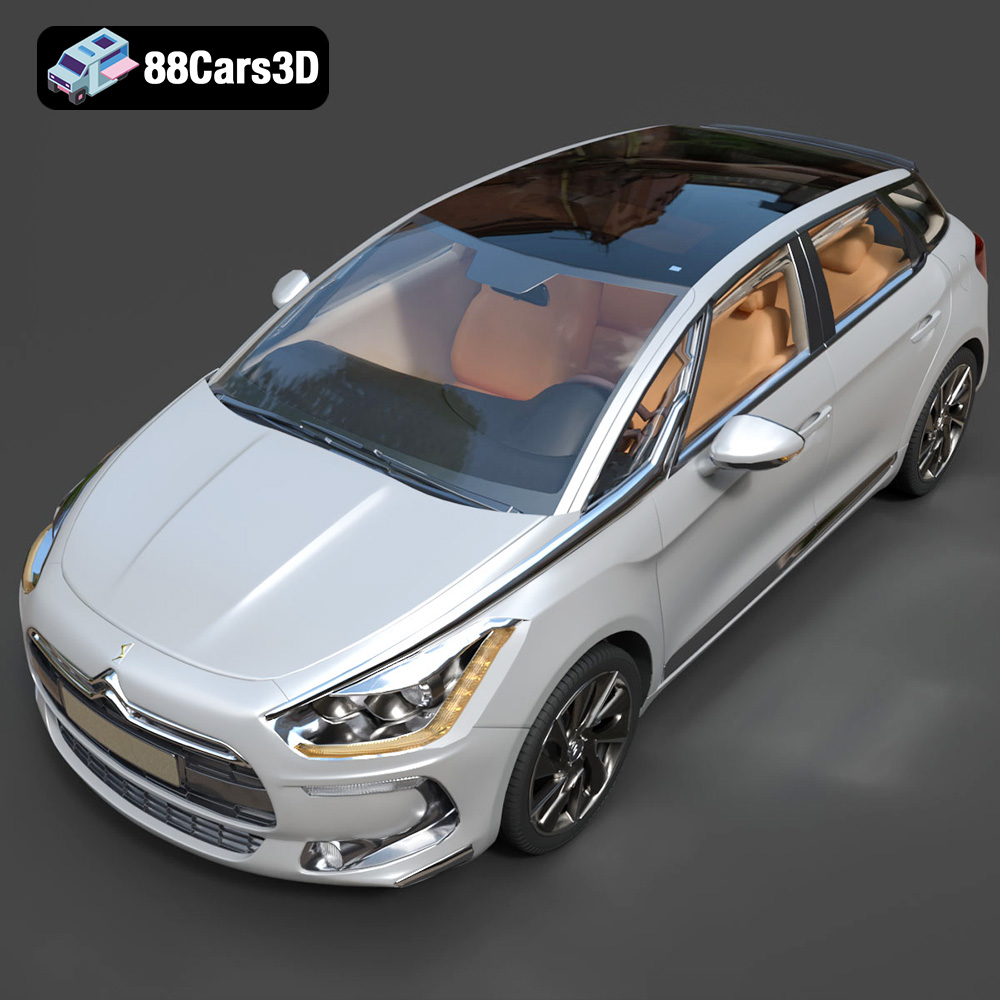
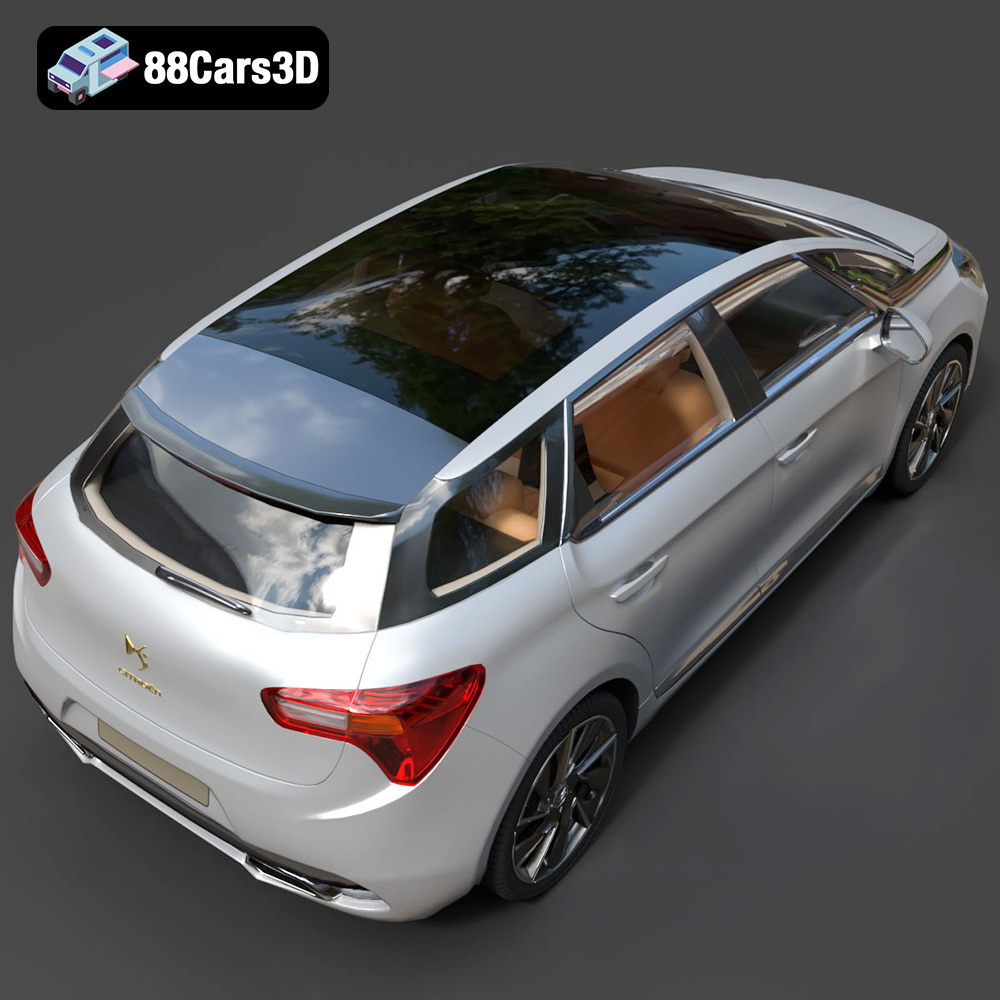
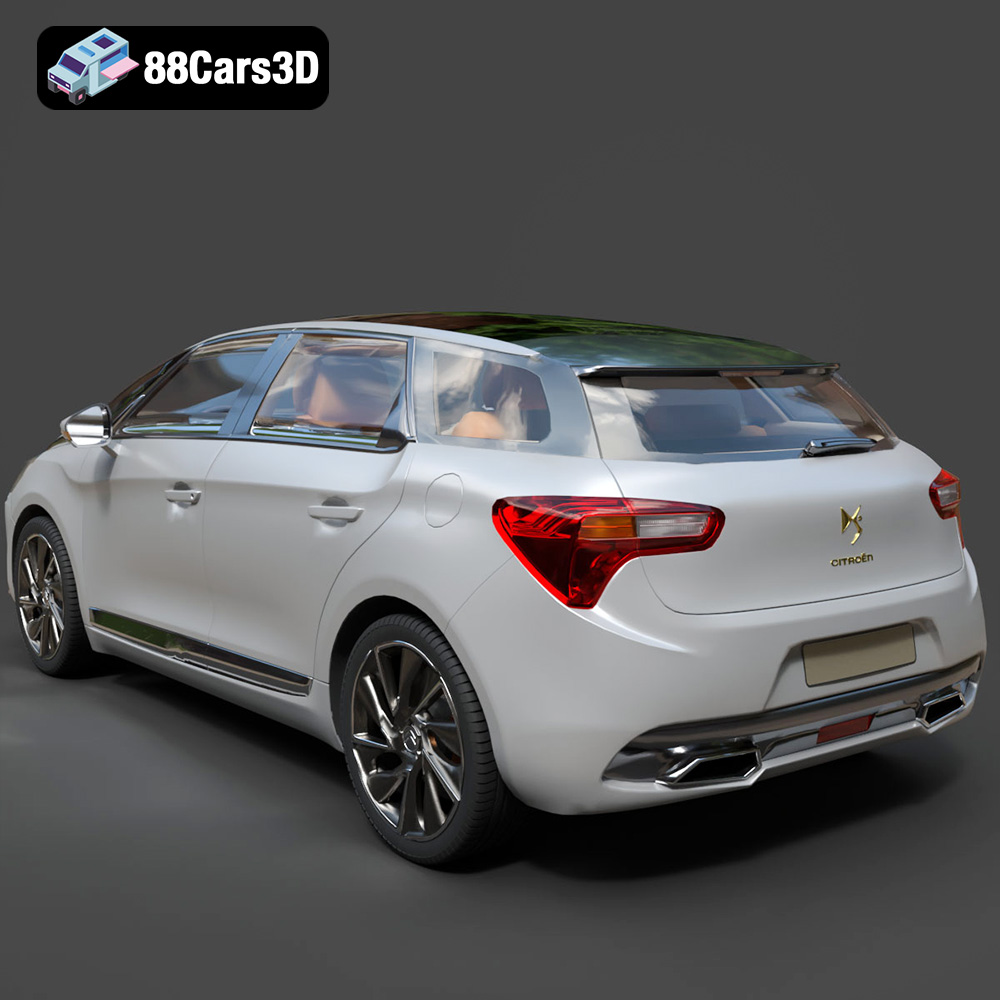
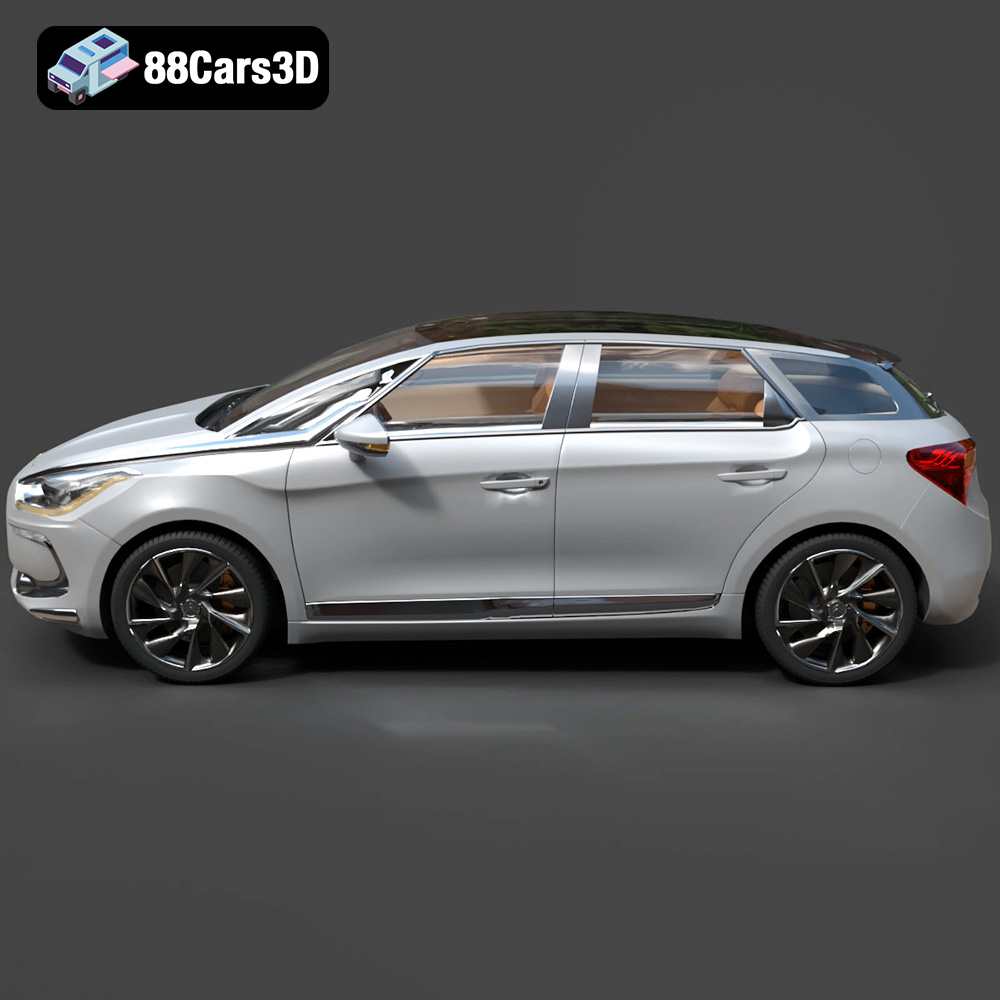
The Citroen DS5 is renowned for pushing design boundaries, sitting comfortably between a premium hatchback and a sleek executive estate. The 3D model meticulously reproduces this striking, aviation-inspired styling. Every curve, every panel gap, and every design line has been faithfully recreated, ensuring that the digital representation evokes the same sense of luxury and futuristic heritage as its real-world counterpart. This attention to detail is crucial for projects where visual authenticity is paramount, such as virtual showrooms or high-end product configurators.
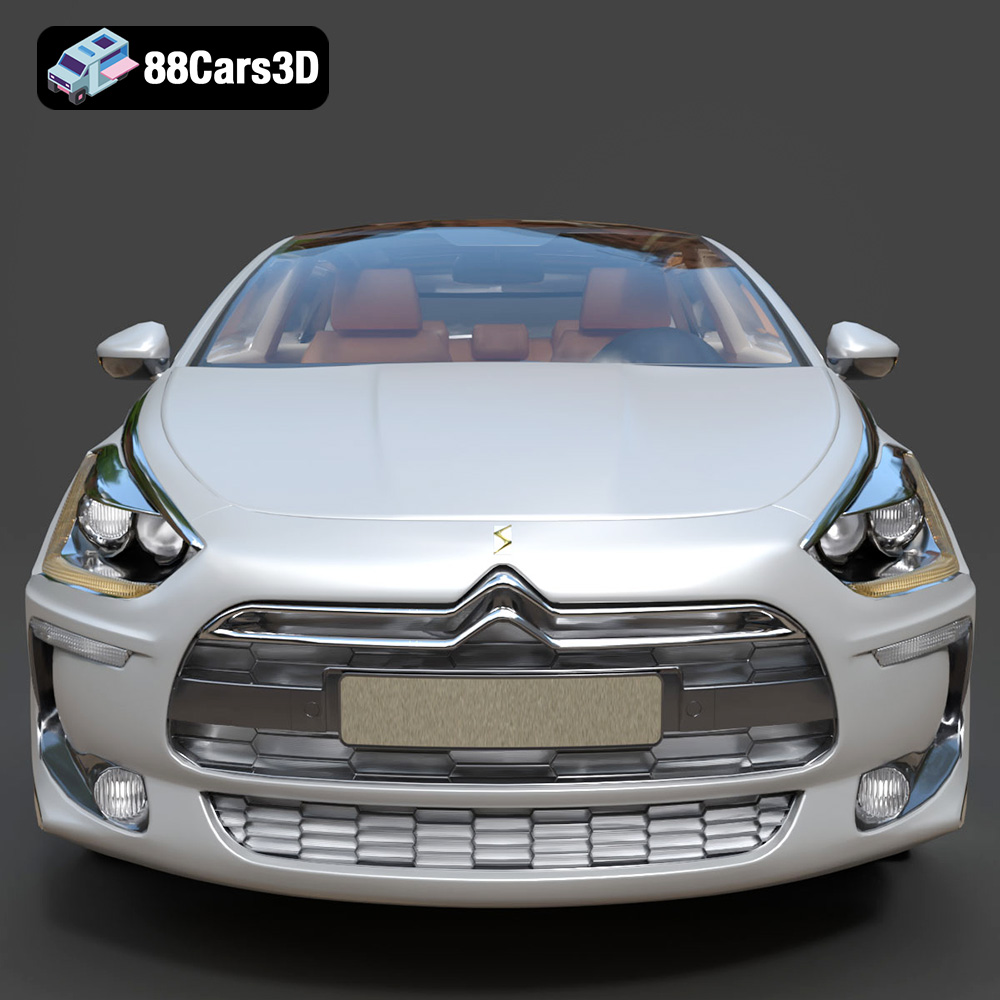
One of the most iconic visual elements of the DS5 is the signature chrome “sabers” that sweep from the aggressive headlight clusters to the A-pillars. The 3D model captures these details with precision, along with the sculpted bodywork, distinctive front grille, and dynamic dual exhaust setup. The intricate LED lighting signatures, including the stylized headlights and the unique 3D-effect taillights, are also reproduced, ready to illuminate any scene. Furthermore, high-fidelity alloy wheels are equipped with detailed brake calipers and discs, and even the suspension and undercarriage elements are precisely modeled. This level of granular detail allows for close-up shots and renders that maintain realism, a critical factor for automotive rendering and visualization specialists.
Beyond its visual accuracy, a truly professional 3D car model is defined by its technical specifications and optimization. The Citroen DS5 3D Model excels in this area, offering a ‘game-ready’ asset that doesn’t compromise on high-end visual fidelity. This balance is key for developers and artists working across various platforms and performance requirements.
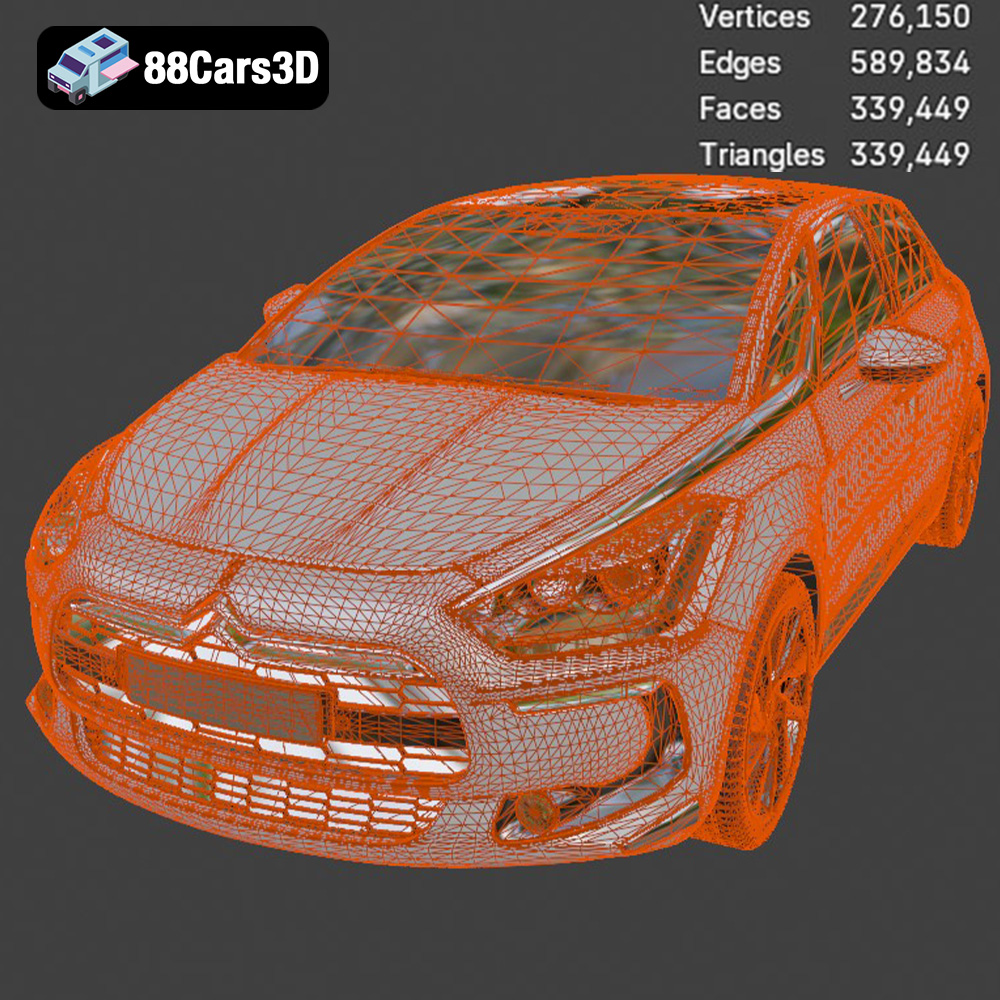
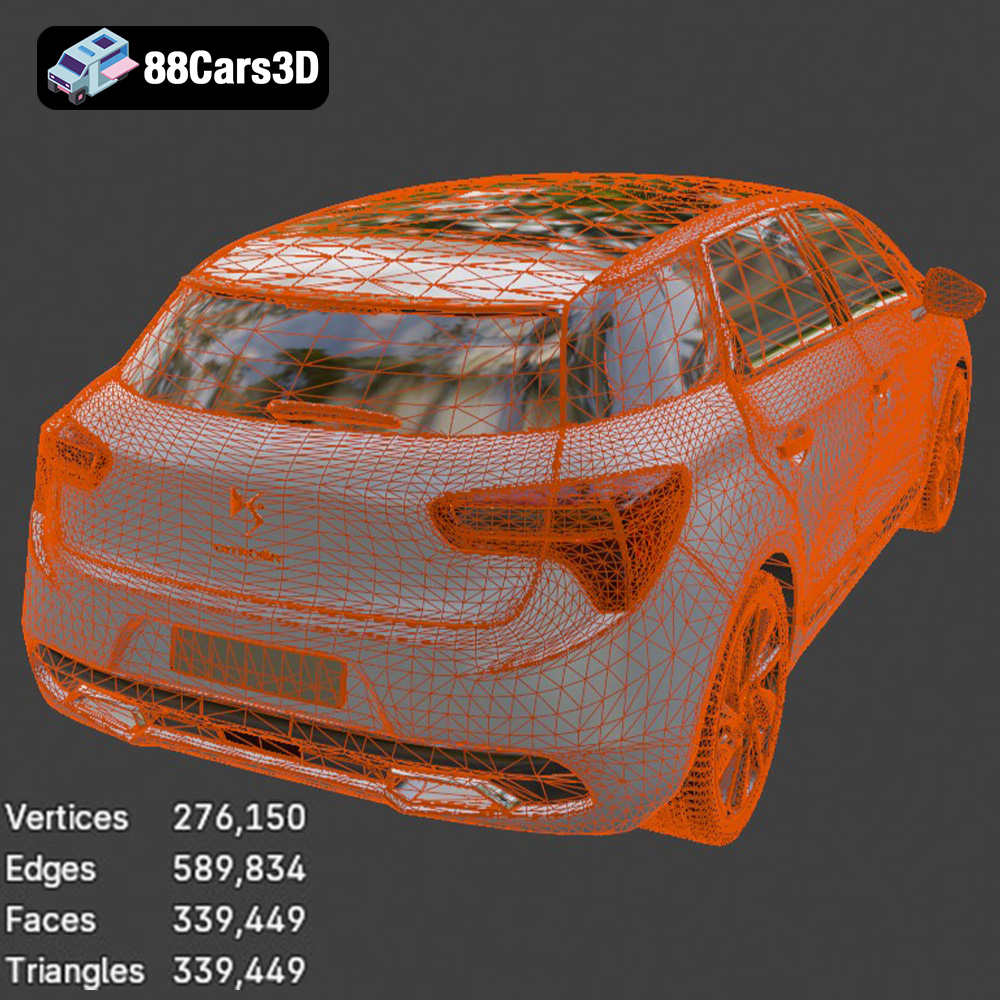
With a meticulously optimized topology, the model features a triangle count of 339,449. This figure strikes an impeccable balance: it’s low enough to ensure exceptional performance in real-time engines like Unreal and Unity, making it a true game asset, yet high enough to retain the intricate details required for photorealistic rendering. Such optimization is vital for maintaining smooth frame rates in interactive applications while still delivering stunning visuals. The clean, efficient mesh also simplifies UV mapping and texturing workflows, saving valuable production time.
Professional 3D car models are not static images; they are dynamic elements ready for interaction and animation. The Citroen DS5 model is built with this in mind, featuring separate wheels, suspension, and steering components. This thoughtful breakdown allows for seamless animation of steering, wheel rotation, and suspension travel, essential for realistic driving simulations and cinematic sequences. Moreover, the model boasts real-world scale accuracy, based on actual vehicle chassis dimensions. This ensures that when integrated into architectural visualization scenes, urban environments, or virtual showrooms, the vehicle appears proportionate and grounded, enhancing overall realism. The proper pivot setup further facilitates easy rigging and animation, streamlining complex tasks for animators.
For many applications, especially game development and virtual reality, the exterior of a car is only half the story. The interior, or cockpit, must be just as convincing to create a truly immersive experience. The Citroen DS5’s unique interior design, with its aviation-inspired layout, is a focal point of this 3D model’s excellence.
The physical Citroen DS5 is known for its sophisticated, aircraft-like cabin, and this 3D model meticulously reproduces that experience. From the premium seating representations to the intricate center console and digital instrument cluster, every element conveys a sense of high-tech luxury. Details such as the sporty, flat-bottomed steering wheel, accurately modeled pedals, gear selector, and dashboard switches contribute to an authentic and engaging environment. This level of interior fidelity is crucial for simulations, virtual showrooms where users might explore the car’s cabin, or even cinematic renders that feature interior shots.
For game developers and AR/VR creators, the optimization of the interior geometry is paramount for first-person perspective (FPP) gameplay or immersive virtual reality simulations. The Citroen DS5 3D Model’s cockpit is specifically designed with this in mind. Its optimized geometry ensures that players or users can experience the interior from a driver’s viewpoint without performance hiccups, making it ideal for racing titles, open-world games, or interactive configurators where users can sit inside and explore the vehicle’s features. This meticulous attention to both exterior and interior detail makes the model incredibly versatile for a broad range of interactive and visual projects.
The true value of a high-quality 3D car model lies in its ability to integrate seamlessly into diverse professional workflows and elevate a variety of projects. The Citroen DS5 3D Model, with its comprehensive features and file formats, is a prime example of such a versatile asset, ready for immediate deployment across industries.
Game development demands assets that are not only visually appealing but also highly optimized for real-time performance. With its game-ready polycount of 339,449 triangles and separate, animatable components, the Citroen DS5 is an ideal choice for open-world games, racing titles, and vehicle simulators. Developers can drop this model directly into engines like Unreal Engine or Unity, leveraging its pre-configured pivots for realistic physics and animation. Imagine this DS5 cruising through a digital cityscape or engaging in a high-speed chase – its optimized geometry ensures smooth frame rates while retaining all the visual flair necessary for an engaging player experience. Assets like these significantly reduce development time, allowing studios to focus on gameplay and storytelling.
In architectural visualization, adding lifelike vehicles is essential for contextualizing a scene and bringing it to life. The Citroen DS5, with its modern and luxurious aesthetic, perfectly complements high-end architectural renders, urban planning visualizations, or even product placement scenarios. Its accurate real-world scale and detailed exterior/interior make it suitable for close-up shots in marketing materials or virtual tours of properties. Similarly, for product visualization, placing the DS5 in a lifestyle scene instantly conveys a sense of aspirational living. Artists can easily customize body colors, material finishes (matte, gloss, metallic), and adapt lighting to match specific branding or environmental requirements, creating compelling visual narratives.
Augmented Reality (AR) and Virtual Reality (VR) are transforming how we interact with products and environments. The Citroen DS5 3D Model is perfectly suited for these emerging technologies, especially with its inclusion of the .glb format, optimized for efficient web and mobile deployment. Imagine a virtual showroom where customers can walk around, sit inside, and configure their dream DS5 in VR, or an AR app that allows potential buyers to “place” the car in their driveway before purchase. Its optimized geometry ensures smooth interaction in these demanding real-time environments, offering immersive virtual configurators and engaging mobile AR experiences that provide a significant competitive edge.
The utility of a high-quality 3D model extends far beyond digital screens. For hobbyists, designers, and educators, the ability to transition a digital asset into a tangible object through 3D printing opens up exciting new avenues. Furthermore, a professional-grade model should offer ample scope for creative customization to fit unique project needs.
Thanks to its clean topology and conversion capability to the .stl format, the Citroen DS5 3D Model is perfectly suited for 3D printing. This allows enthusiasts and professionals to create physical representations of this striking vehicle. The recommended print settings provided – such as scales like 1:12, 1:18, or 1:24, and layer heights of 0.04–0.12 mm (with resin printing suggested for fine details) – ensure optimal results. Crucial advice on wall thickness, infill, and the necessity of supports for intricate parts like exhausts, mirrors, and side trims, guides users toward a successful print. Even print orientation is considered, recommending the frame be angled for structural integrity and wheels printed separately, followed by post-processing like sanding, priming, and applying authentic factory colors with metallic finishes. This comprehensive guidance bridges the gap between digital asset and physical model, offering immense value.
A static model offers limited use; true value comes from its adaptability. The Citroen DS5 3D Model provides extensive customization options, enabling artists to tailor the asset to specific project requirements. Users can easily change body and interior colors to match factory palettes or custom finishes, experiment with different tire textures (e.g., off-road vs. street variants), and adjust material finishes from matte to gloss or metallic. The ability to adapt lighting for different environments further enhances its versatility, allowing for seamless integration into diverse scenes, from urban nightscapes to sun-drenched coastal roads. This flexibility empowers creators to personalize the model, ensuring it perfectly fits their artistic vision or project’s branding.
The journey through the world of premium 3D car models reveals a critical intersection of art and technical mastery. From the foundational understanding of file formats to the intricate detailing of a vehicle’s design and its seamless integration into complex workflows, every aspect contributes to a truly exceptional asset. The Citroen DS5 3D Model stands as a testament to this, offering a meticulously crafted, game-ready, and highly versatile asset for professionals across industries.
Whether your goal is to push the boundaries of automotive rendering, create immersive game assets, develop groundbreaking AR/VR experiences, or even bring digital designs to life through 3D printing, investing in high-quality 3D car models is a decision that pays dividends. Such assets save production time, enhance visual fidelity, and provide the technical flexibility needed to succeed in demanding creative environments. Explore the possibilities and elevate your next project with premium 3D models available at 88cars3d.com – where quality and versatility drive innovation.
Experience avant-garde French automotive design with this highly detailed 3D model of the Citroen DS5. Renowned for its striking, aviation-inspired styling, the DS5 bridges the gap between a premium hatchback and a sleek executive estate. This model captures the vehicle’s iconic visual elements, most notably the signature chrome “sabers” that stretch seamlessly from the aggressive headlight clusters to the A-pillars. The sculpted bodywork, distinctive front grille, and dynamic dual exhaust setup are faithfully reproduced to reflect its luxurious and futuristic heritage. Engineered for maximum versatility, this 3D model features a meticulously optimized topology with a triangle count of 339,449. This ensures an impeccable balance between game-ready performance and high-end visual fidelity. Whether you are developing interactive real-time applications, crafting immersive AR/VR experiences, or producing photorealistic cinematic animations, this model delivers exceptional detail without compromising system performance. Perfect for modern urban driving games, virtual automotive showrooms, architectural visualization scenes, and high-end lifestyle rendering.
$35.00
.blend
.citroen
.ds5
.fbx
.glb
.hatchback
.max
.obj
.ply
.rendering
.stl
.unreal
car-3d-model
executive-car
game asset
game-ready
low-poly
optimized
VR/AR