Get 20% OFF All Premium 3D & STL Models!

The automotive world has always been a beacon of design, engineering, and cultural impact. Translating this intricate reality into the digital realm requires not just artistic flair, but a deep technical understanding of 3D modeling, rendering, and real-time asset optimization. From the sweeping lines of a classic sports car to the minute details of its interior, every element must be meticulously recreated to achieve true immersion and visual fidelity. In today’s demanding industries – be it high-end game development, cinematic visualization, or cutting-edge AR/VR experiences – the quality of your 3D assets can make or break a project.
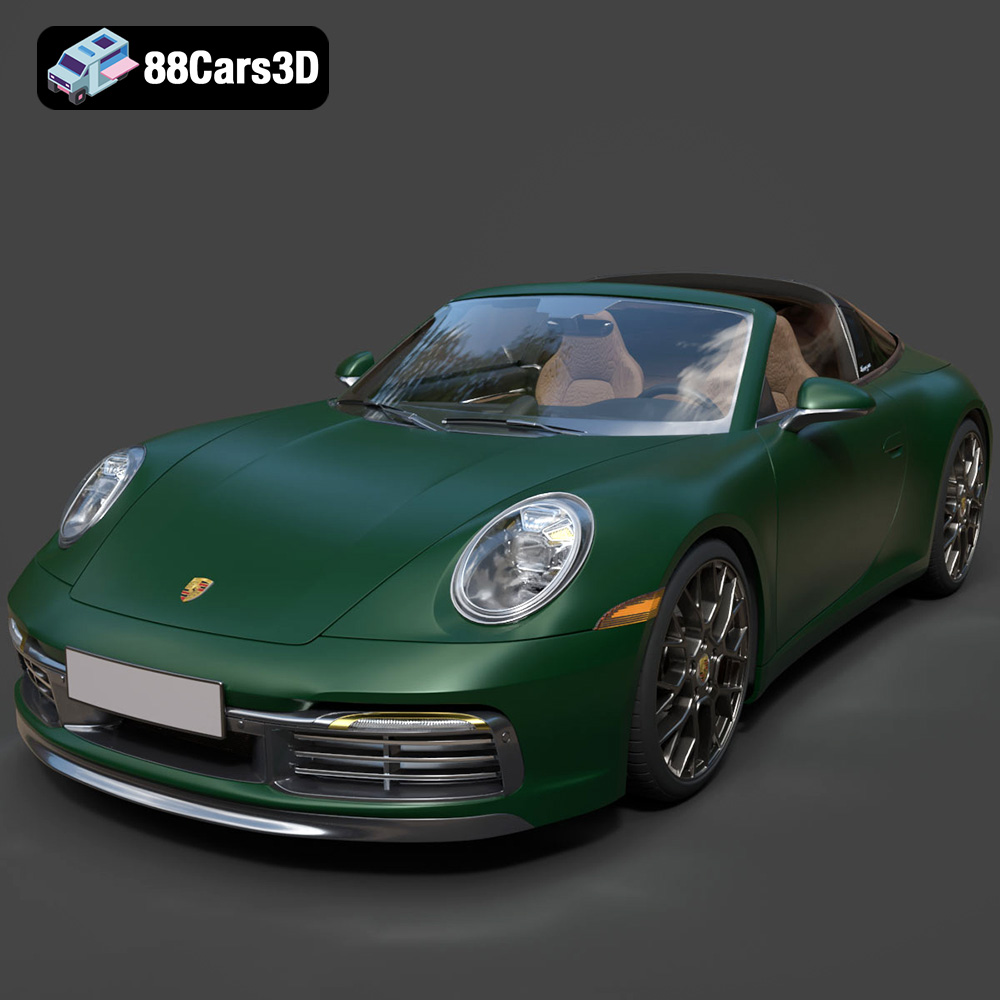
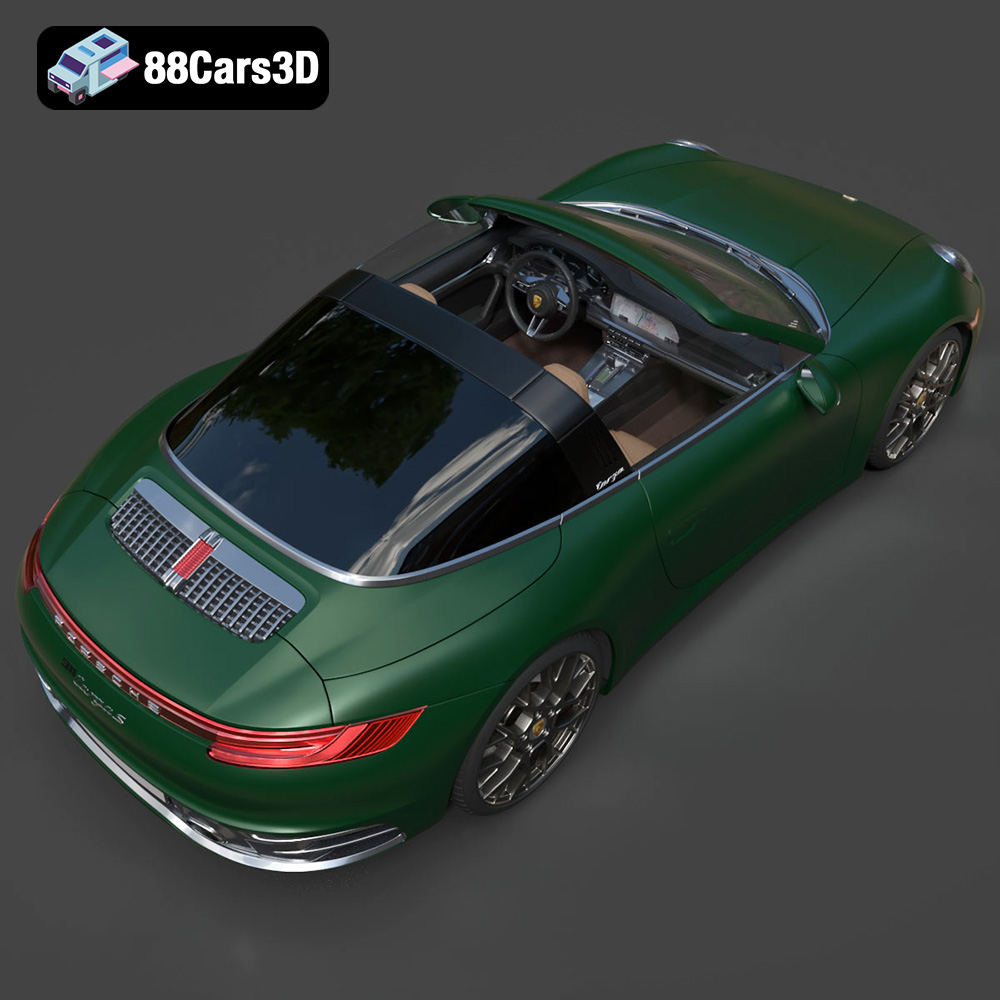
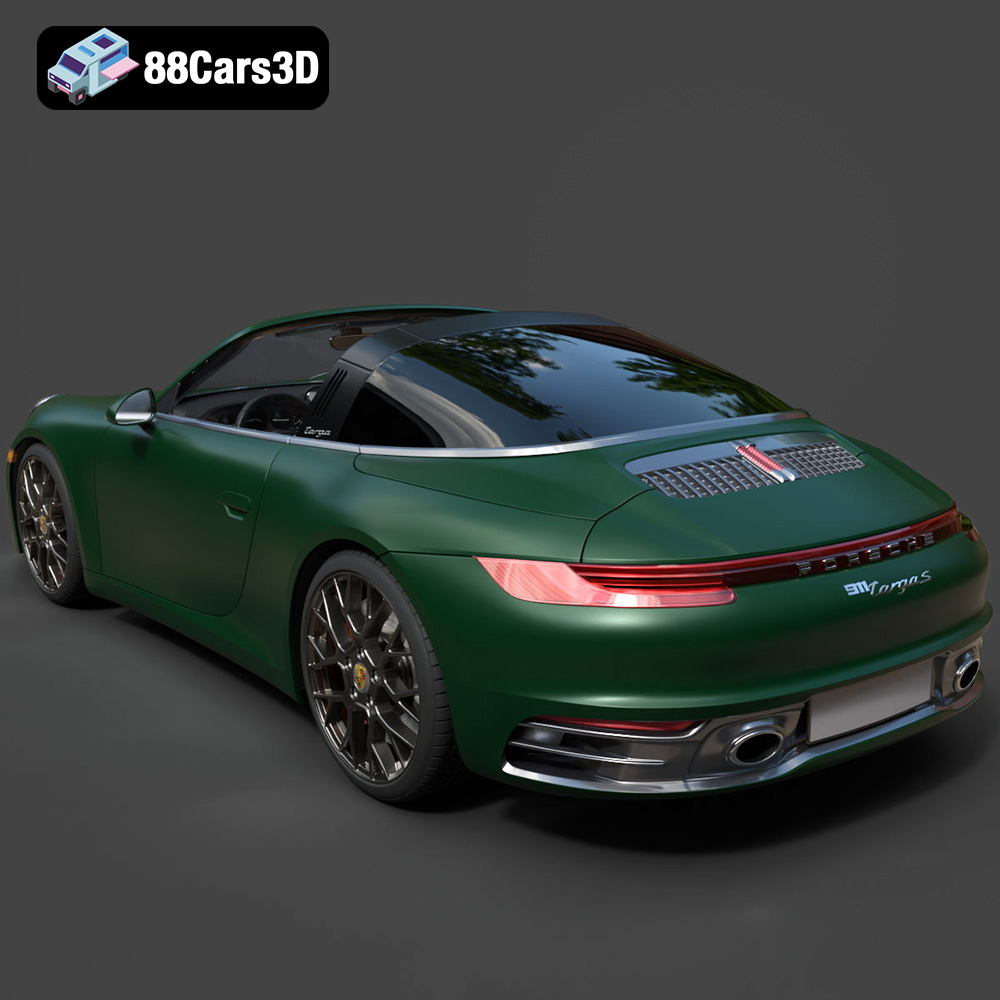
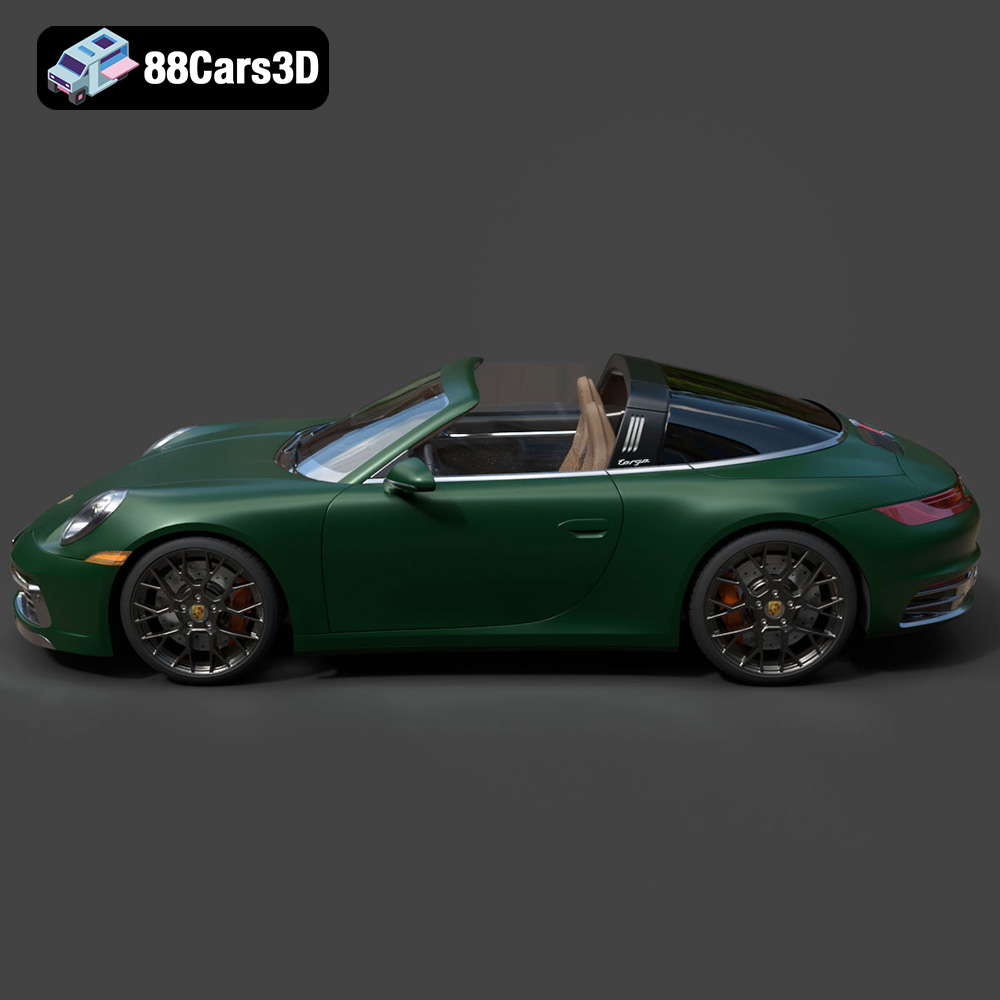
Few cars embody this blend of iconic design and engineering prowess quite like the Porsche 911 Targa. A legendary machine celebrated for its unique open-top mechanism, unmistakable silhouette, and exhilarating performance, it represents a pinnacle of automotive artistry. Imagine bringing this legend to life in your next project. This is precisely where a high-quality 3D car model, such as the Porsche 911 Targa 3D Model available at 88cars3d.com, becomes an indispensable tool. It offers an unparalleled level of detail and optimization, serving as a cornerstone for professionals aiming for photorealism and interactive excellence across various digital platforms.
Navigating the vast landscape of 3D software and engines necessitates a keen understanding of file formats. Each format serves a distinct purpose, offering specific advantages for different stages of the 3D workflow, from creation and editing to rendering, game integration, and even physical fabrication. Choosing the correct format ensures compatibility, preserves data integrity, and streamlines your production pipeline. The Porsche 911 Targa 3D Model is provided in an impressive array of formats, ensuring its utility across virtually any professional application.
The .blend file is Blender’s native format, preserving an entire Blender scene with all its components. This includes not only the mesh data but also materials (complete with node setups), textures, lighting, cameras, animations, rigging, modifiers, and even scene settings. For artists primarily working within the Blender ecosystem, the .blend file offers maximum flexibility, allowing for full editability and direct access to the model’s construction. It’s ideal for deep customization, refining materials, or preparing the model for animation within Blender itself, leveraging its robust toolset.
.fbx (Filmbox) is arguably the most widely adopted 3D interchange format in the industry, particularly favored for game development and animation. Developed by Autodesk, it efficiently stores 3D models, textures, animations, and skeletal data. Its broad compatibility with software like Autodesk 3ds Max, Maya, Blender, and major game engines like Unreal Engine and Unity makes it indispensable. For the Porsche 911 Targa, the .fbx version ensures smooth import into these real-time pipelines, preserving hierarchies, pivot points, and potential animation data, making it a truly versatile game asset.
.obj (Wavefront OBJ) is a universal, human-readable format known for its simplicity and widespread support. It primarily stores geometric data (vertices, normals, UV coordinates) and can reference external material files (.mtl). While it doesn’t support advanced features like animation or rigging, its ubiquity makes it an excellent choice for static mesh exchange between virtually any 3D software. For archiving or sharing the core mesh data of the Porsche 911 Targa without software-specific overhead, .obj is a reliable option.
.glb (GL Transmission Format Binary) is an increasingly popular format, especially optimized for AR, VR, and browser-based 3D applications. It’s a single-file, binary version of .gltf, encapsulating all mesh, material (PBR), texture, and animation data into one compact package. This makes it incredibly efficient for web loading and mobile deployment. For showcasing the Porsche 911 Targa in an interactive web configurator or an AR experience, the .glb format provides excellent performance and visual quality.
.stl (Stereolithography) is the de facto standard for 3D printing. It represents a 3D model as a tessellated surface composed of triangles, defining the model’s geometry without any color, texture, or material information. While not suitable for rendering or animation, its simplicity makes it ideal for additive manufacturing. The availability of the Porsche 911 Targa in .stl format means enthusiasts can bring a physical representation of this iconic vehicle to life, creating display models or prototypes with precision.
.ply (Polygon File Format) is a versatile format capable of storing a wide range of properties, including color, transparency, and often used for scanned 3D data. It’s common in scientific computing, CAD applications, and for models that require precise geometric representation for analysis. While less common for general artist workflows than FBX or OBJ, its inclusion for the Porsche 911 Targa model ensures compatibility for specialized applications requiring high-precision mesh data, potentially for reverse engineering or detailed technical analysis.
The .unreal format, or often a packaged Unreal Engine asset, signifies a model pre-configured and optimized specifically for direct import and use within Unreal Engine. This often means textures are properly linked, materials are set up with PBR shaders, and potentially even collision meshes or basic LODs are included. For game developers, this significantly reduces the setup time, allowing for a near plug-and-play experience when integrating the Porsche 911 Targa into an Unreal-powered game or simulation.
The .max file is the native project format for Autodesk 3ds Max, one of the leading 3D modeling, animation, and rendering software packages. Like .blend, it saves an entire scene, including geometry, materials, lighting, cameras, animation keyframes, modifiers, and plugins. For professionals whose primary workflow is centered around 3ds Max, this format offers full editability and access to all the construction details of the Porsche 911 Targa, making it perfect for high-end automotive rendering and animation projects.
The comprehensive support for these diverse formats underscores the versatility of premium 3D car models from resources like 88cars3d.com, ensuring that regardless of your software or project requirements, you have the right tools at your fingertips.
Replicating a real-world vehicle, especially one as revered as the Porsche 911 Targa, in 3D is a demanding task. It requires an artist’s eye for proportion and detail combined with a technician’s understanding of polygon budgets and efficient topology. The success of a 3D automotive model hinges on its ability to faithfully reproduce the original’s aesthetic and functional characteristics while being adaptable for various digital environments. The Porsche 911 Targa 3D Model excels in this regard, offering a benchmark in visual fidelity and technical craftsmanship.
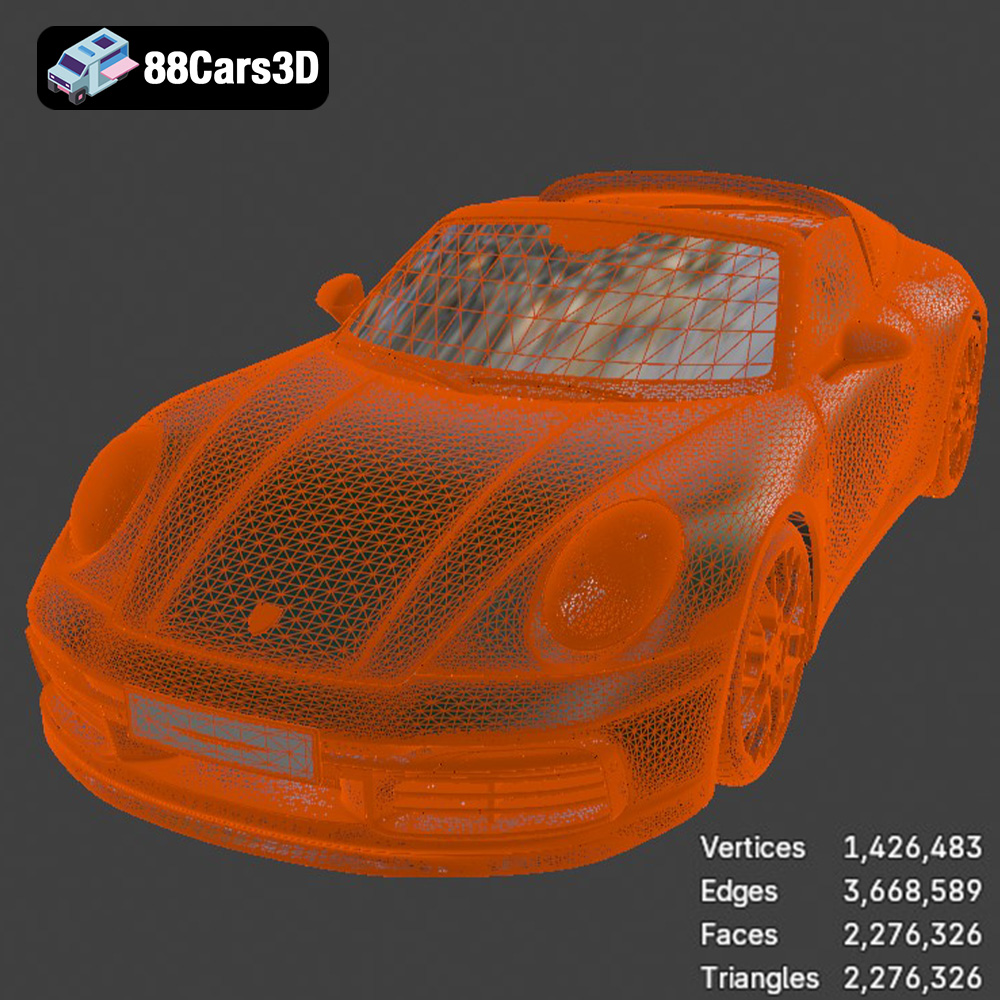
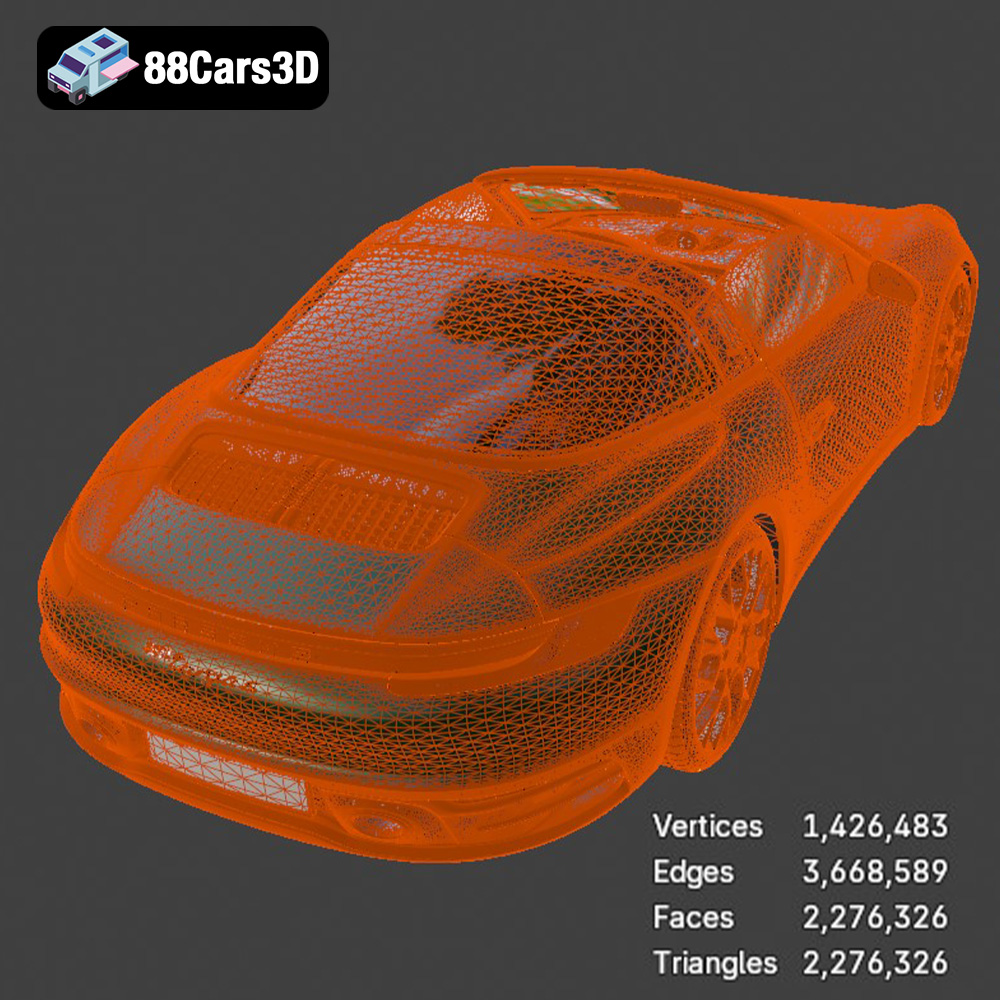
At the heart of any high-quality 3D model is its geometry and topology. The Porsche 911 Targa model boasts an “exact triangle count of 2,276,326,” a figure that strikes a meticulous balance. This polycount is sufficiently high to capture every curve, vent, and panel gap with “unparalleled visual fidelity,” ensuring that even in close-up renders, the model holds up beautifully. Yet, it’s also optimized to avoid unnecessary polygon density, which would burden real-time engines. Clean, quad-based topology (from which triangles are derived) is crucial for smooth subdivision, realistic deformation, and efficient UV unwrapping, all contributing to the model’s “exceptional topology.” Furthermore, its “real-world scale accuracy based on actual vehicle chassis” means it will seamlessly integrate into scenes without requiring tedious scaling adjustments, maintaining authenticity whether placed in a virtual showroom or a gaming environment.
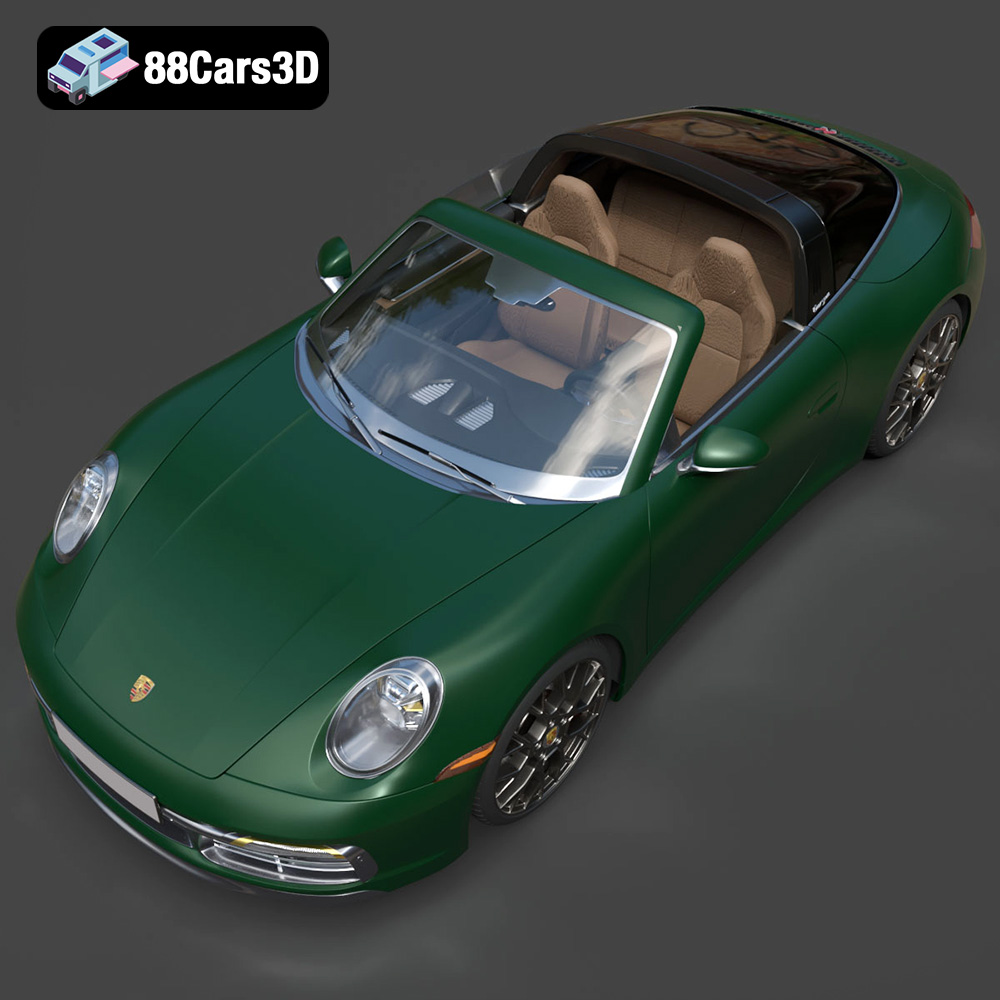
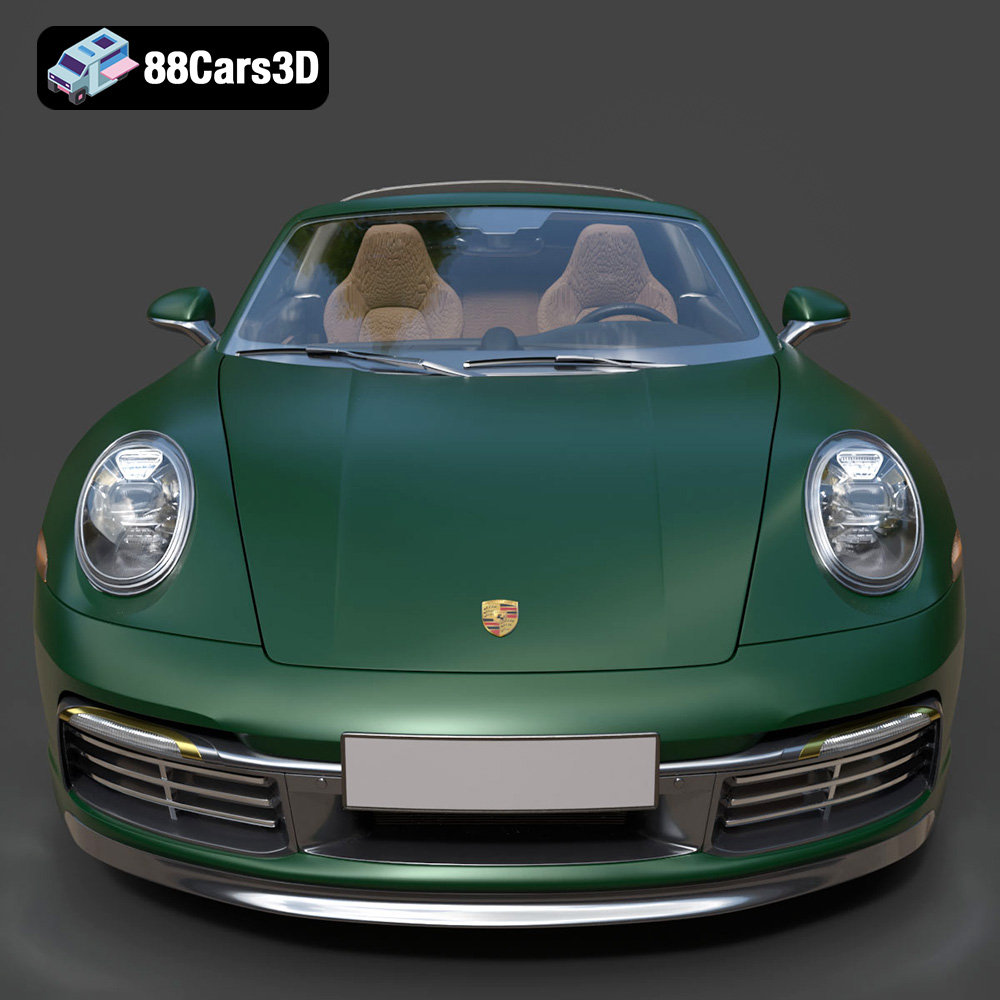
True excellence in automotive 3D modeling extends beyond the main body. It’s in the hundreds of intricate components that make a car feel real. The Porsche 911 Targa model leaves no stone unturned, detailing both its exterior and interior with remarkable precision. On the exterior, artists will appreciate the “detailed flat-six engine block” (visible through specific camera angles or with removable parts), the “authentic dual exhaust system and rear diffuser,” and the “signature LED headlights and continuous rear taillight strip.” The “premium alloy wheels with high-performance low-profile tires” are accompanied by “detailed brake calipers and suspension geometry,” crucial elements for realistic vehicle dynamics and close-up beauty shots. For animators, the “separate wheels, suspension, and steering components” are a godsend, allowing for accurate articulation. Inside the cockpit, the attention to detail continues with “premium leather-trimmed sport seats with intricate stitching,” the “iconic 911 steering wheel with functional button layouts,” and a “classic five-dial analog/digital hybrid instrument cluster.” Even the “detailed center console, pedals, and shifter” are precisely modeled, ensuring that the car feels complete and immersive, especially for first-person perspectives in games.
The demands of modern game development are immense, requiring assets that are both visually stunning and highly optimized for real-time performance. Game assets, particularly vehicles, must balance polygon counts, texture resolution, and animation readiness to deliver fluid gameplay without sacrificing graphical fidelity. The Porsche 911 Targa 3D Model is expressly designed to meet these challenges, making it an ideal choice for racing simulators, open-world adventures, and interactive experiences.
The “game-ready & optimized” designation for this Porsche 911 Targa model is not just a marketing claim; it’s a testament to its thoughtful construction. With 2,276,326 triangles, it achieves a “perfect balance for real-time engines (Unreal, Unity) while maintaining high-end visual realism.” This means developers can integrate it into their games without excessive performance drops, even when multiple vehicles are present. Crucially, the model features a “proper pivot setup for steering, wheel rotation, and suspension travel.” This technical detail dramatically simplifies the rigging and animation process within game engines, ensuring that the car’s wheels rotate correctly and its suspension responds realistically to terrain. Furthermore, the “optimized geometry for first-person POV in gaming” ensures that the interior details, which are often the focus in driving games, are crisp and visually engaging without being overly complex, providing a truly immersive driver experience.
Integrating a complex 3D car model like the Porsche 911 Targa into a game engine like Unreal Engine can be a streamlined process when starting with a high-quality asset. Given the model’s availability in both .fbx and a dedicated .unreal format, developers have options. Using the .unreal asset often means much of the heavy lifting is already done: PBR materials might be pre-configured, and basic collision meshes could be included. If starting with .fbx, the workflow typically involves:
.fbx file into Unreal Engine’s Content Browser. Ensure settings like “Import Materials” and “Import Textures” are enabled.This meticulous preparation means that the Porsche 911 Targa becomes a powerful and performant game asset, ready to be driven, customized, and experienced by players. It significantly accelerates development time, allowing teams to focus on gameplay mechanics rather than asset creation from scratch.
Beyond interactive experiences, high-fidelity automotive rendering serves as the backbone for marketing campaigns, product showcases, and cinematic productions. Here, the emphasis shifts from real-time performance to absolute photorealism, where every reflection, every shadow, and every material characteristic must be indistinguishable from reality. The Porsche 911 Targa 3D Model is an exceptional foundation for these demanding visualization tasks.
For professionals leveraging software like 3ds Max or Blender, the provided .max and .blend files offer the full spectrum of editable data, ready for high-end rendering engines.
.max or .blend file. The scene will be fully intact, often with pre-configured materials, or at least properly UV-mapped geometry.The result is stunning imagery and animations perfect for “brand campaigns, lifestyle scenes, and studio lighting setups,” showcasing the Porsche 911 Targa in its full digital glory.
The rise of Augmented Reality (AR) and Virtual Reality (VR) demands 3D assets that are both visually rich and optimized for interactive, often mobile, platforms. The Porsche 911 Targa 3D Model, particularly in its .glb format, is perfectly suited for these emerging applications. Imagine a customer exploring a virtual showroom where they can walk around the 911 Targa, open its doors, examine the interior in 360 degrees, and even configure its colors and wheel options in real-time. Or an AR application where the car appears parked in their driveway, true to scale, allowing for an incredibly visceral pre-purchase experience. The optimized polycount and PBR material readiness make it ideal for such interactive configurators and immersive virtual showrooms, pushing the boundaries of product visualization.
The utility of a high-quality 3D model isn’t confined to the digital realm. With the advent of accessible 3D printing, these assets can transcend the screen, becoming tangible objects. The Porsche 911 Targa 3D Model, available in the .stl format, opens up exciting possibilities for hobbyists, collectors, and even automotive design enthusiasts.
The .stl format is universally recognized by 3D printers and slicing software. While the initial 3D model is highly detailed, converting it to .stl prepares it for the physical world. The product description provides excellent guidance for optimal 3D print settings:
These detailed settings demonstrate a thoughtful approach to the model’s real-world conversion, making the 3D printing process more predictable and successful for users.
Once printed, the journey from raw plastic to a museum-quality replica involves a series of finishing steps. “Sanding, primer, and authentic factory colors with metallic finishes” are essential to achieving a realistic appearance. This process allows creators to add a personal touch, replicating a specific Porsche livery or experimenting with custom paint jobs. The ability to physically hold and display a miniature version of the Porsche 911 Targa, derived directly from a professional-grade 3D car model, offers a unique and satisfying extension of the digital creative process.
A truly valuable 3D asset provides not just a finished product, but a versatile foundation for endless creative exploration. The Porsche 911 Targa 3D Model embodies this principle, offering extensive customization options that empower artists and designers to adapt the model to their precise vision and project requirements.
The flexibility embedded within the model allows for comprehensive aesthetic modifications. Users can easily “change body/tank colors” to match specific branding guidelines, reflect various factory color options, or invent entirely new custom finishes. Imagine a vibrant ruby red Targa for a luxury ad campaign, or a stealthy matte black version for a futuristic game. Beyond color, the ability to “modify tire textures (off-road vs. street variants)” provides practical utility for simulations or diverse game environments. Artists can also “adjust material finishes (matte, gloss, metallic)” across different parts of the vehicle, adding subtle nuances like a brushed metal trim or a high-gloss carbon fiber accent. Furthermore, the model’s adaptable materials mean that “lighting for different environments” will interact realistically, allowing for stunning studio renders, golden hour outdoor scenes, or gritty urban settings. This level of customization ensures that the Porsche 911 Targa 3D Model remains a dynamic and reusable asset for a multitude of creative endeavors.
In the fast-evolving landscape of 3D content creation, the demand for high-quality, versatile assets is constant. The Porsche 911 Targa 3D Model stands out as an exemplary asset, meticulously crafted to meet the rigorous demands of professional workflows. Its unparalleled visual fidelity, exceptional topology, and comprehensive optimization make it an indispensable tool for anyone involved in automotive rendering, game development, AR/VR experiences, or 3D printing. From its detailed exterior and interior to its game-ready pivot setups and multiple file format support, every aspect of this model is designed for seamless integration and maximum creative output.
Whether you’re developing the next generation of racing simulators, producing stunning cinematic visualizations, building immersive virtual showrooms, or crafting physical collectibles, this Porsche 911 Targa model provides the foundation you need for excellence. Its availability across formats like .blend, .fbx, .obj, .glb, .stl, .ply, .unreal, and .max ensures compatibility with virtually any software pipeline, cementing its status as a truly universal and valuable 3D car model. For professionals seeking to elevate their projects with premium 3D assets, exploring the offerings at 88cars3d.com, including this remarkable Porsche 911 Targa, is a crucial step towards achieving digital mastery.
The Porsche 911 Targa is an iconic masterpiece of automotive engineering, celebrated for its legendary rear-engine layout, unmistakable silhouette, and the classic Targa roof mechanism. Perfectly blending the thrill of open-top driving with the structural rigidity of a coupe, this model features signature round headlights, sweeping rear fenders, and a meticulously crafted dual exhaust system. With an exact triangle count of 2,276,326, this highly detailed 3D model delivers unparalleled visual fidelity and exceptional topology. Optimized for both high-end rendering and detailed visualizations, it maintains the precise geometry needed for cinematic sequences, immersive VR/AR experiences, and next-gen game development. Perfect for high-fidelity racing simulators, luxury virtual showrooms, architectural visualizations, and cinematic automotive animations.
$87.50
.blend
.fbx
.glb
.max
.obj
.ply
.porsche
.rendering
.sports car
.stl
.unreal
911-targa
car-3d-model
classic-car
game asset
game-ready
low-poly
optimized
VR/AR