Get 20% OFF All Premium 3D & STL Models!

In the expansive and ever-evolving world of 3D visualization, the demand for highly detailed and technically accurate models is paramount. Whether you’re crafting a hyper-realistic automotive rendering, developing an immersive game environment, or producing a compelling industrial simulation, the quality of your assets dictates the fidelity of your final output. While much attention often goes to sleek 3D car models, the equally critical realm of heavy machinery provides unique challenges and immense opportunities for artists and developers. Today, we’re exploring an exceptional example of industrial asset creation: the Articulated Tandem Road Roller Dusty 3D Model. This isn’t just any heavy equipment model; it’s a meticulously crafted digital twin, designed to deliver authenticity and performance across a spectrum of professional applications, from high-fidelity visualizations to real-time game assets.
This comprehensive guide delves into the technical intricacies, practical applications, and workflow advantages of incorporating such a specialized asset into your projects. We’ll unpack its features, discuss the critical role of various file formats, and illustrate how this model can elevate your creative endeavors, ultimately saving you invaluable production time and resources. For professionals seeking top-tier 3D car models and industrial assets, platforms like 88cars3d.com offer a curated selection, ensuring you start with a foundation of quality.
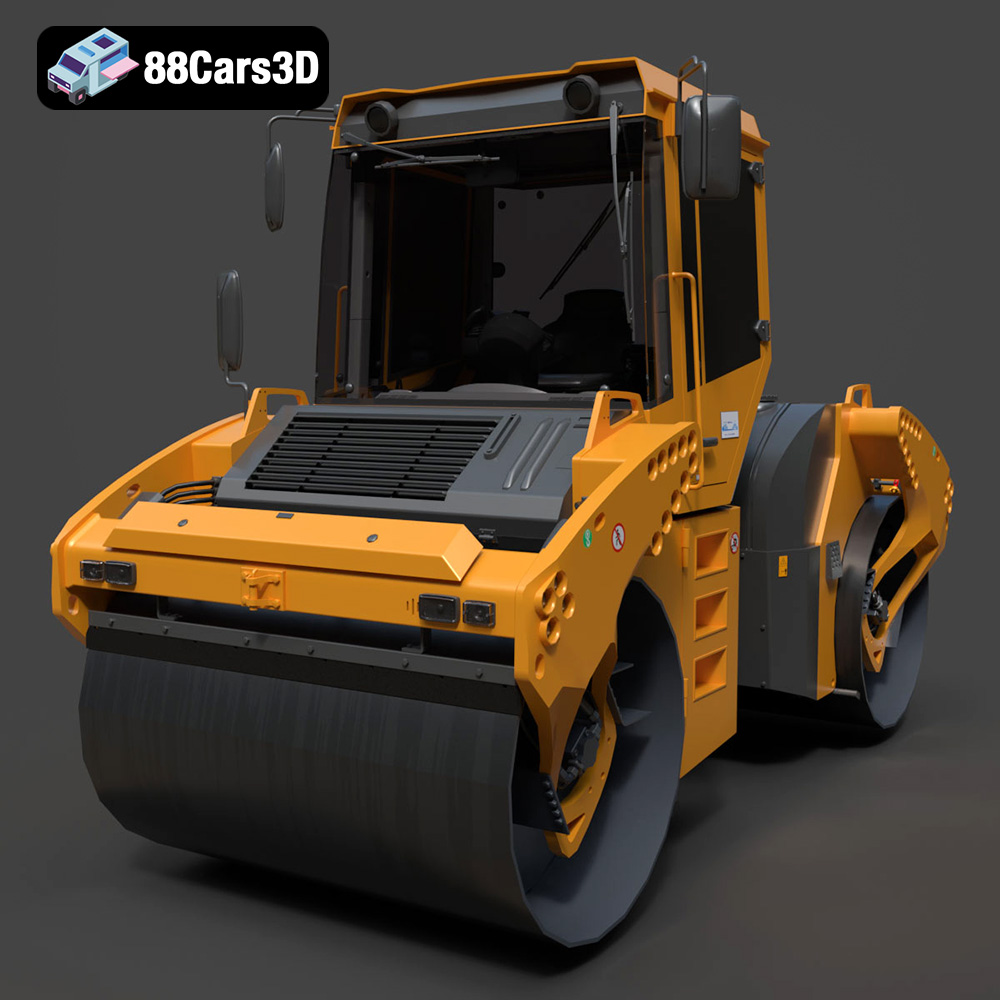
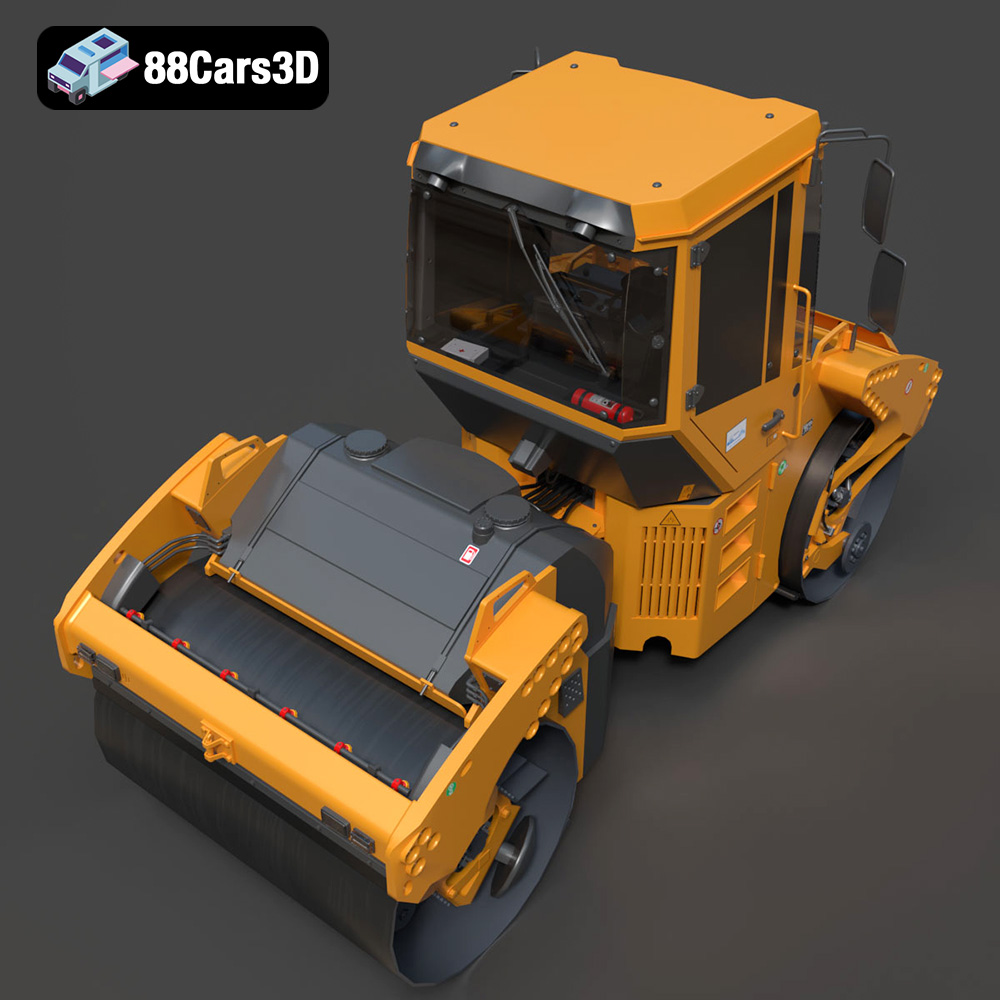
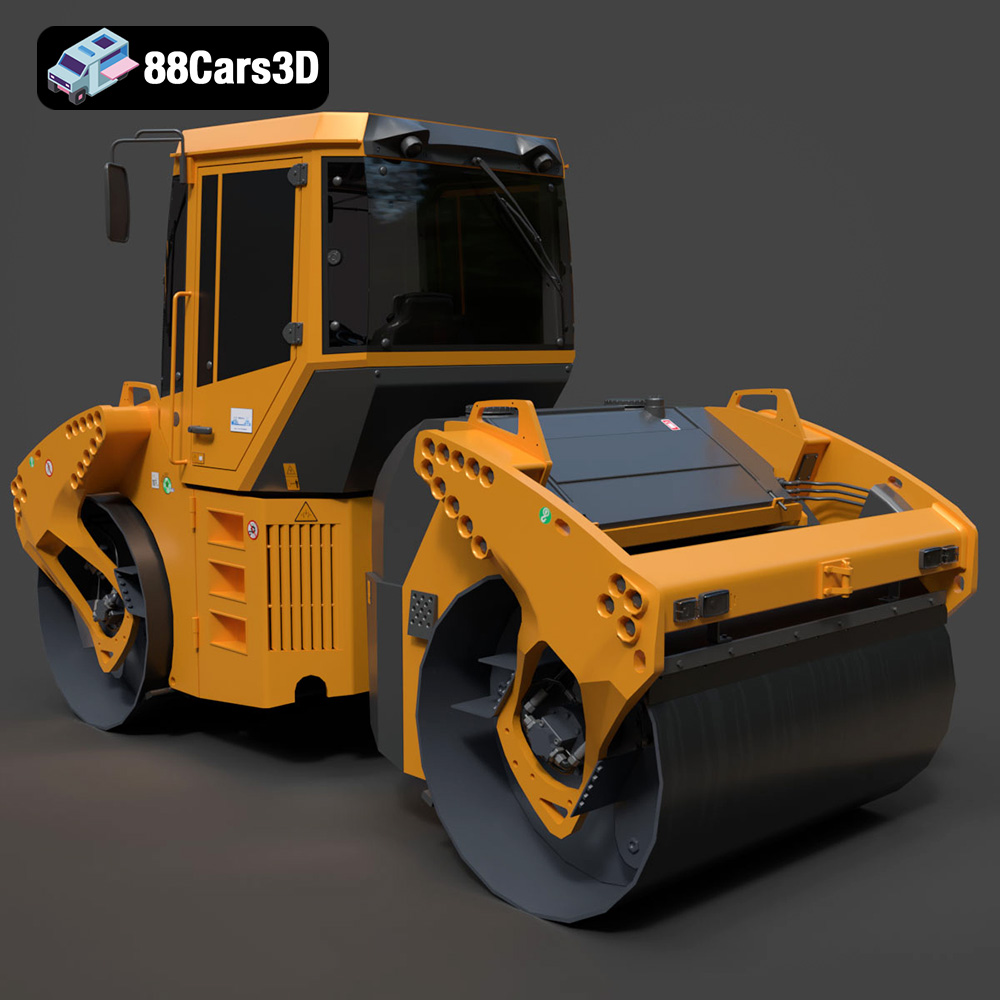
The Articulated Tandem Road Roller Dusty 3D Model represents a pinnacle of industrial asset design, capturing the rugged functionality and imposing presence of its real-world counterpart. Every aspect, from its weathered exterior to its intricate internal mechanisms, has been thoughtfully brought to life in three dimensions, making it an invaluable addition to any digital scene requiring construction or heavy machinery elements.
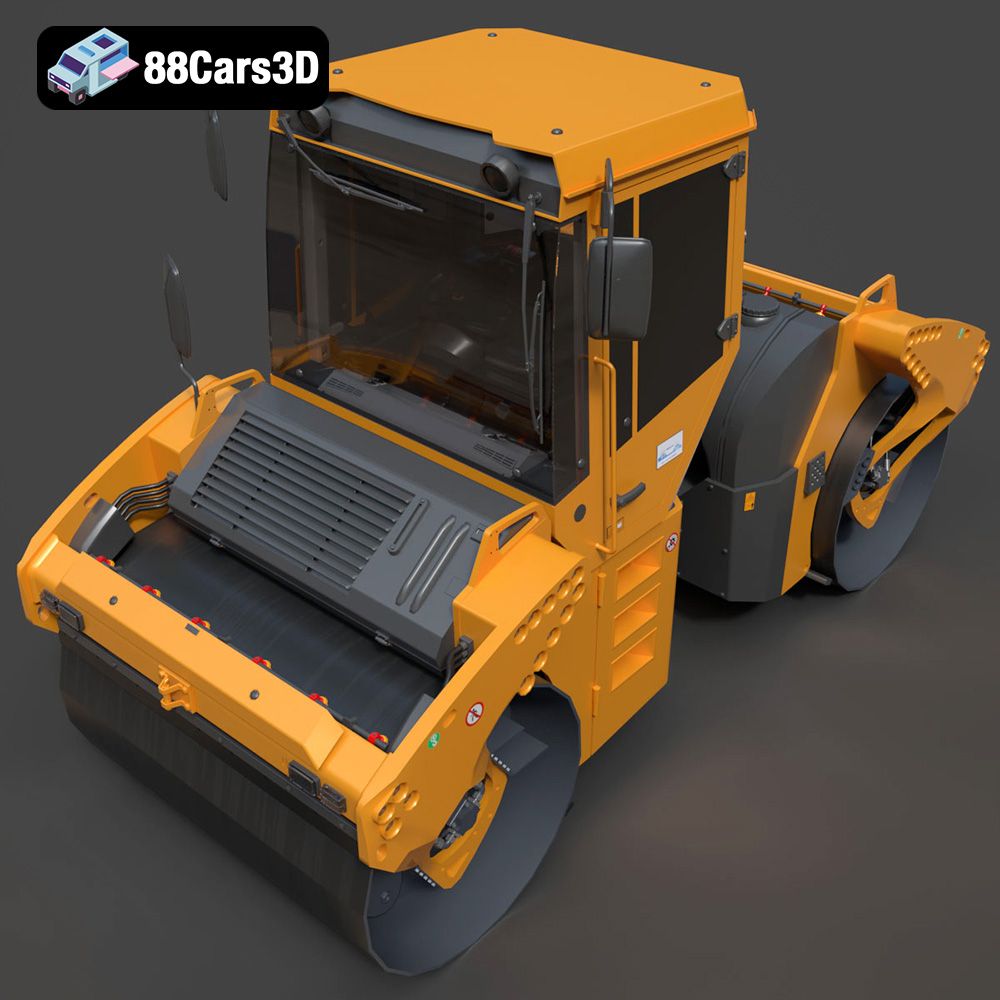
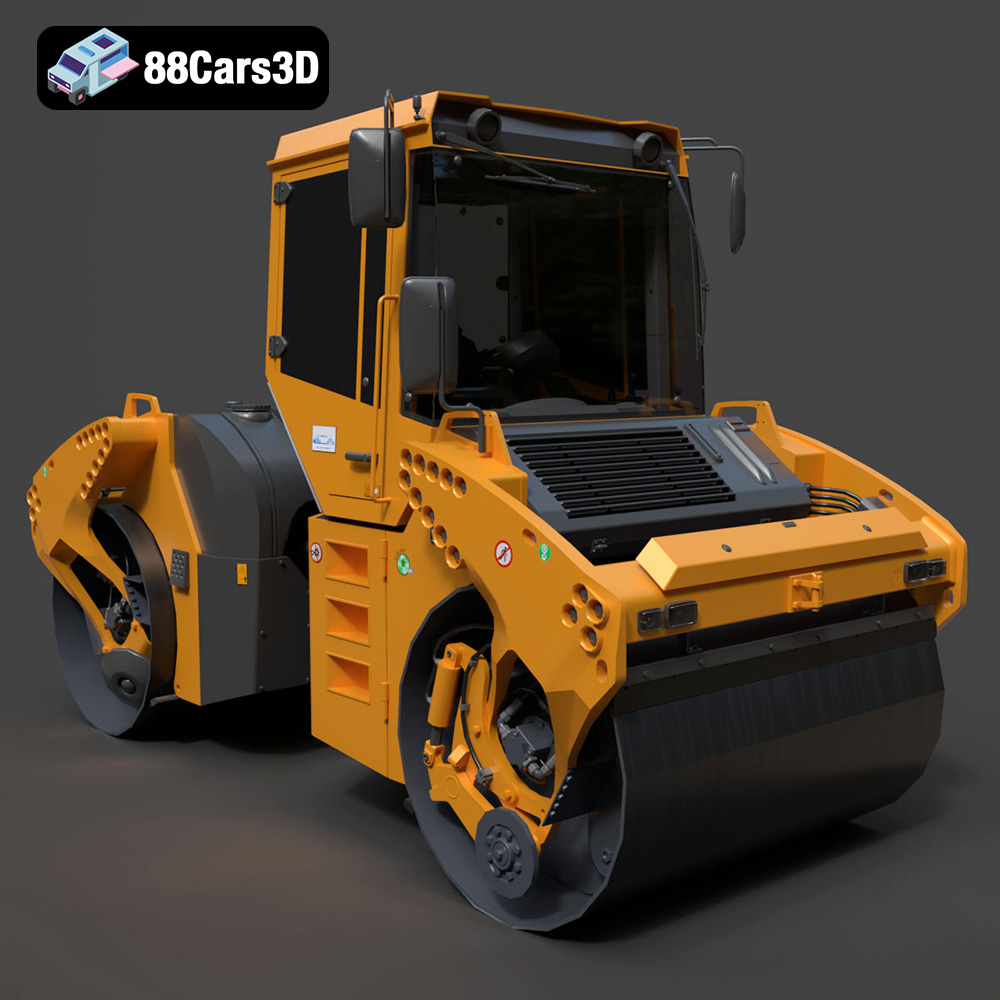
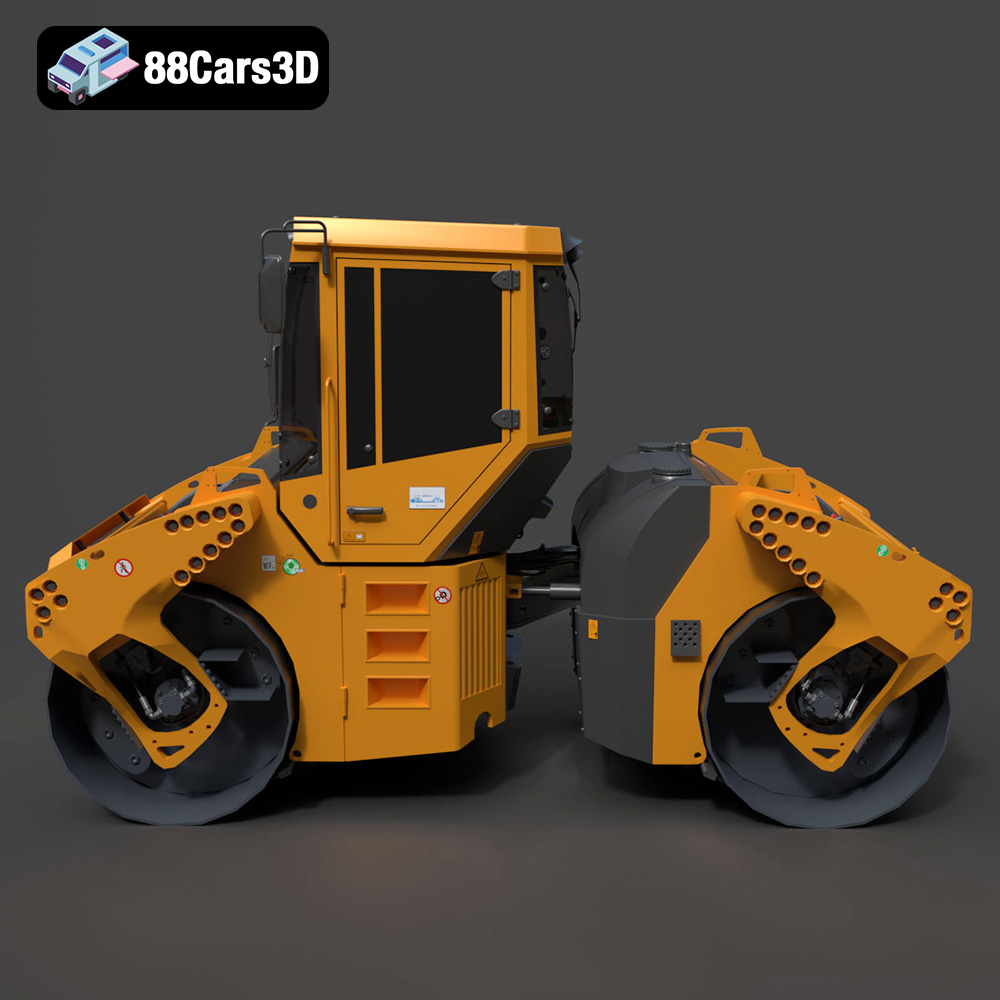
At the core of this model’s appeal is its unwavering commitment to exterior accuracy. It boasts the authentic frame geometry and heavy-duty proportions characteristic of a genuine articulated tandem road roller. Crucial mechanical details are not overlooked; the hydraulic rams and hoses, vital for the machine’s operation, are meticulously modeled, showcasing their complex routing and connections. The articulated center pivot, allowing the real machine its maneuverability, is accurately represented and properly pivoted, a crucial detail for realistic animation. The dual steel compaction drums, the very essence of a road roller, are rendered with a convincing weathered and dusty texture, immediately conveying a sense of practical use and operational history. Functional elements like work lights, beacons, and safety indicators are faithfully included, enhancing the model’s utility in various scenarios, from daytime construction sites to twilight industrial scenes. The robust roll-over protection structure (ROPS) and safety railings are also present, reflecting real-world safety standards and adding another layer of authenticity.
Beyond the formidable exterior lies a surprisingly detailed cockpit, a testament to the model’s comprehensive design. The operator’s suspension seat, complete with textured floor mats, provides a realistic environment for any virtual pilot. The steering wheel and precise directional joysticks are accurately modeled, suggesting full interactive potential. An authentic instrument cluster and industrial control panel, featuring safety switches, levers, and pedals, are present, hinting at the complex operational interface of such a machine. This level of interior detail is particularly beneficial for applications requiring an immersive first-person point of view, such as heavy machinery simulators or AR/VR training modules, where the operator’s environment needs to feel genuine and functional.
What truly sets this Articulated Tandem Road Roller apart is its “Dusty” edition finish. The realistic weathered and dusty textures are not merely superficial; they are integral to the model’s character, telling a story of countless hours spent on construction sites. This authentic industrial character adds a layer of believability that clean, pristine models often lack, making it instantly suitable for scenes depicting active work environments. The interplay of dirt, wear, and metal finishes creates a visual narrative that enhances realism, making it a powerful asset for any artist aiming for gritty, true-to-life visualizations.
Choosing the correct 3D model file format is a critical decision that impacts workflow, compatibility, and the ultimate utility of your digital assets. The Articulated Tandem Road Roller Dusty 3D Model offers an extensive range of formats, ensuring maximum flexibility for diverse project requirements. Understanding each format’s strengths and typical use cases is essential for any professional working with 3D content.
The .blend format is native to Blender, one of the most powerful and popular open-source 3D creation suites. When you download an asset in .blend format, you’re not just getting the model; you’re receiving a complete Blender scene. This typically includes the mesh geometry, materials, textures, lighting setups, cameras, and even animation data if present. For users of Blender, this is often the most desirable format as it allows for immediate, full editability. You can easily modify topology, adjust materials, re-rig, or animate directly within the environment where the model was potentially created or optimized. This offers unparalleled flexibility for customization, making it perfect for integration into existing Blender projects or for artists who prefer to fine-tune every aspect of their assets.
FBX (Filmbox) is a proprietary file format owned by Autodesk, widely recognized as the industry standard for 3D data interchange. It is incredibly versatile, supporting geometry, materials, textures, animations, and even skeletal deformation. Its robust support for animation data makes it indispensable for game development. Both Unreal Engine and Unity, the leading real-time game engines, have excellent support for FBX, allowing developers to import complex animated characters and objects with minimal fuss. For automotive rendering and game assets, FBX is often the go-to format for transferring models between different software packages (e.g., from 3ds Max to Maya, or into a game engine) while preserving crucial information.
OBJ (Object) is one of the oldest and most universally supported 3D file formats. Developed by Wavefront Technologies, it’s a simple, text-based format primarily used to store 3D geometry (vertices, normals, UVs, and faces). While it supports basic material definitions through an accompanying .mtl (Material Template Library) file, it typically doesn’t carry animation data or complex node-based materials. Its strength lies in its widespread compatibility; almost every 3D software application can import and export OBJ files. This makes it an excellent choice for broad cross-software compatibility, especially when the primary focus is on static mesh geometry. For archival purposes or when you need a clean mesh to start from, OBJ remains a reliable option.
GLB is the binary version of glTF (GL Transmission Format), a royalty-free specification for the efficient transmission and loading of 3D scenes and models by applications. GLB bundles the entire 3D model, including textures and animations, into a single, self-contained file. This makes it incredibly efficient for web-based 3D, augmented reality (AR), and virtual reality (VR) applications. Its compact size and optimized structure ensure faster loading times and smoother performance in browser-based viewers and mobile AR/VR experiences. As AR/VR and web-based 3D become more prevalent, GLB is rapidly gaining traction as a preferred format for delivering interactive 3D content.
STL (STereoLithography) is the de facto standard file format for 3D printing. It represents a 3D model as a series of connected triangles (a tessellated surface) without any color, texture, or material information. Its simplicity makes it universally compatible with 3D printers and slicing software. While not suitable for rendering or animation, it is indispensable for physical fabrication. If your goal is to bring the Articulated Tandem Road Roller into the physical world as a miniature or a prototype, the .stl format is precisely what you need, allowing you to prepare the model for additive manufacturing.
PLY (Polygon File Format, or Stanford Triangle Format) is a file format for storing 3D data, particularly point clouds and polygon meshes, along with properties like color and transparency. It’s less common in general 3D rendering workflows but is frequently used in scientific applications, 3D scanning, and some CAD/CAM software where precise geometric data with additional attributes is important. It can store data very accurately and is often preferred for applications requiring detailed geometric analysis or reverse engineering.
While not a universal file extension in the same way FBX or OBJ are, a file designated as “.unreal” typically implies a specifically prepared asset pack or a direct import setup for Unreal Engine. This often means the asset has already been optimized, had its materials configured using Unreal’s physically-based rendering (PBR) system, and may even include blueprints or specific lighting setups tailored for the engine. For rapid integration into Unreal Engine projects, an “.unreal” package saves significant setup time, making it an incredibly valuable resource for game developers and real-time visualization artists. It embodies the concept of “game assets” ready to drop into a scene.
The .max format is the native file format for Autodesk 3ds Max, a powerhouse software used extensively in architectural visualization, product design, and game development. Similar to .blend files for Blender, a .max file contains the complete 3ds Max scene, including geometry, modifiers, materials, textures, lights, cameras, animations, and render settings. For artists and studios working within the 3ds Max ecosystem, this format offers the highest level of editability and allows for seamless integration into existing 3ds Max projects. It provides access to the full creative control offered by the software, from complex rigging and animation to advanced rendering with V-Ray or Corona Renderer, making it ideal for high-fidelity automotive rendering and industrial animations.
In 3D production, an exceptional model isn’t just about visual appeal; it’s about intelligent engineering that balances fidelity with performance. The Articulated Tandem Road Roller Dusty 3D Model exemplifies this balance, providing both stunning detail and practical optimization.
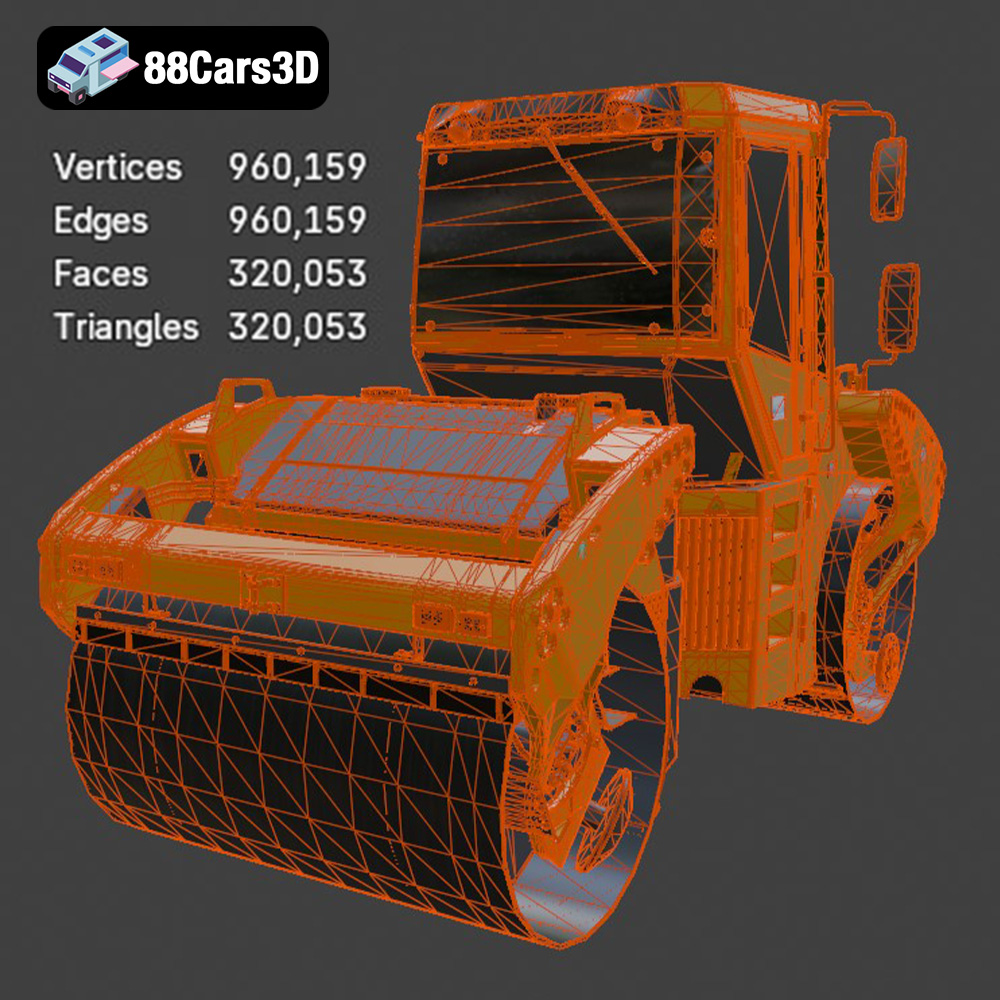
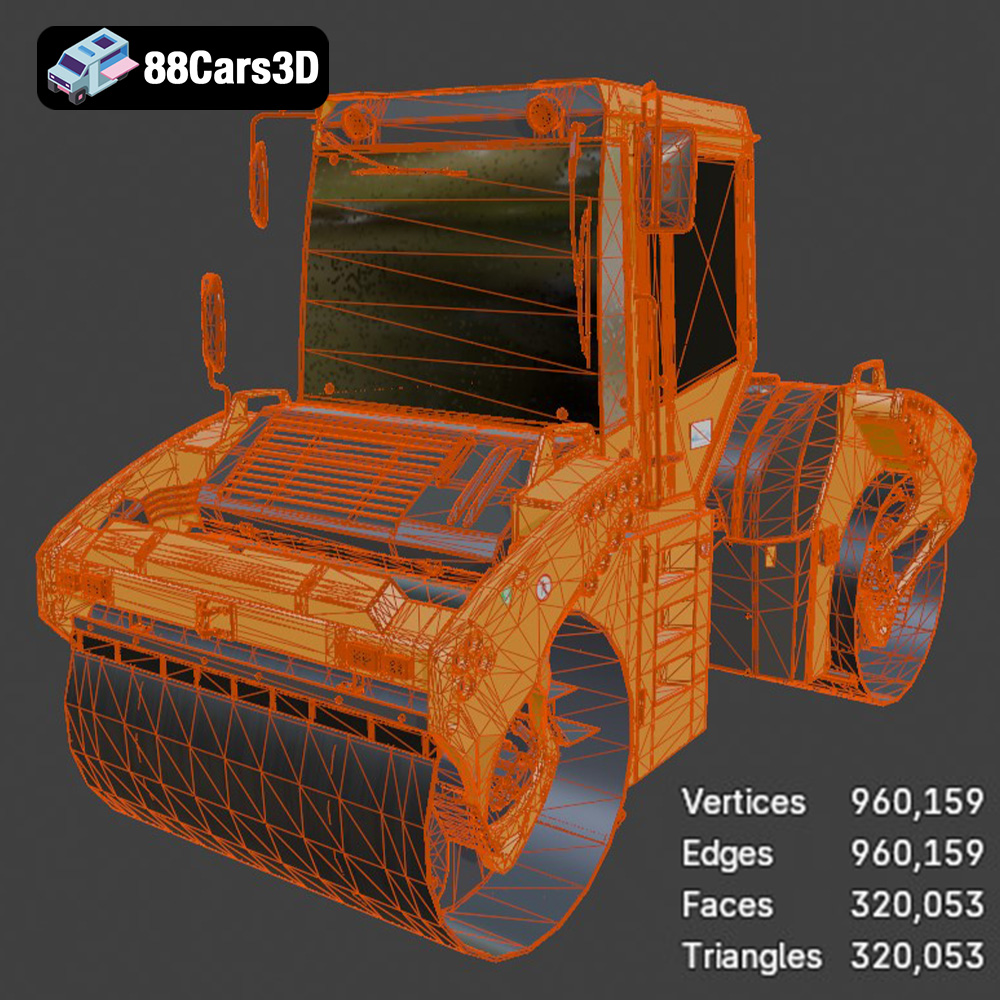
With a topology boasting 320,053 triangles, this model strikes a remarkable balance. This polycount is substantial enough to convey intricate details like hydraulic lines, control panels, and the fine texturing of the weathered surface, ensuring high-end visual realism. Crucially, it remains within a game-ready range, making it highly suitable for real-time engines such as Unreal Engine and Unity. Achieving this optimization means developers can integrate the model into large-scale environments without incurring prohibitive performance costs, allowing for dense scenes filled with quality game assets and vehicles.
Accuracy extends beyond visual detail to real-world scale. The model is built to actual paving vehicle dimensions, which is essential for realistic scene composition, camera perspectives, and physics simulations. Furthermore, a key advantage for animators is the proper pivot setup. The separate drums and steering articulation components are correctly pivoted, allowing for accurate articulated steering, realistic drum rotation, and authentic chassis flex. This precision streamlines the animation process, ensuring that the heavy machinery moves and operates with believable mechanics, a critical aspect for industrial animations or simulation projects.
The model’s design also emphasizes versatility through its material setup. While it comes with a compelling “dusty” finish, its underlying structure allows for extensive customization. Users can easily change equipment colors, transitioning from standard industrial yellow or orange to custom fleet colors. The weathering textures can be modified to show clean factory finishes or heavy mud and dust variants, adapting to specific scene requirements. Adjusting material finishes—from matte metal to rusted steel or gloss paint—further expands its application range. This flexibility ensures that the Articulated Tandem Road Roller can seamlessly integrate into diverse visual styles and project needs, from crisp automotive rendering to gritty game environments.
The versatility of a well-crafted 3D model like the Articulated Tandem Road Roller Dusty edition makes it an indispensable asset across numerous professional domains. Its optimized design and high fidelity cater to a wide array of applications, pushing the boundaries of what’s possible in digital content creation.
For game developers, particularly those working on construction simulators, open-world environments, or industrial sandbox games, this model is a significant asset. Its optimized polycount of 320,053 triangles means it can be readily incorporated into real-time engines without impacting performance. Imagine sprawling construction sites in a game, populated with these realistic road rollers, complete with accurate articulated steering and dusty textures. It adds a layer of authenticity crucial for player immersion and realism, turning a simple game level into a believable digital world. As part of a larger collection of game assets, it enhances the visual richness of any virtual environment.
The burgeoning fields of Augmented Reality (AR) and Virtual Reality (VR) benefit immensely from high-quality, optimized 3D models. The Articulated Tandem Road Roller is perfect for immersive safety training modules, allowing operators to practice complex maneuvers in a risk-free virtual environment. Virtual showrooms can showcase heavy machinery in interactive 3D, enabling potential buyers to explore every detail. For mobile AR experiences, its GLB format and optimization make it ideal for overlaying realistic digital content onto the real world. From simulating construction processes to interactive maintenance guides, this model serves as a robust foundation for cutting-edge immersive experiences.
When it comes to high-end rendering and professional visualization, the model’s meticulous detail truly shines. Industrial campaigns require assets that convey power and realism, and this road roller delivers. Architectural site visualizations can be greatly enhanced by populating construction areas with accurate, weathered machinery, adding context and scale. Studio lighting setups can highlight its intricate geometry and material properties, producing stunning promotional imagery. The ability to modify its dirt and weathering textures, along with material finishes, allows artists to tailor its appearance to specific render scenarios, from clean-cut corporate presentations to dramatic, post-apocalyptic scenes. This quality is on par with what one would expect from top-tier 3D car models used in advertisements.
The utility of 3D models extends beyond digital realms, crossing into the physical world through 3D printing. The Articulated Tandem Road Roller Dusty 3D Model, available in .stl format, is perfectly suited for this transition, allowing hobbyists and professionals alike to create tangible representations of this impressive machine.
When preparing for 3D printing, scale is paramount. The recommended scales for this model—1:35, 1:50, or 1:87—are common for dioramas, architectural models, and hobbyist vehicles. These scales ensure that details remain discernible while maintaining a manageable print size. For fine details like hydraulic lines and thin safety rails, resin printing is highly recommended due to its superior resolution compared to filament-based FDM printers. Layer heights between 0.04mm and 0.12mm will capture the model’s intricacies, ensuring a crisp physical output that reflects the digital fidelity.
Complex 3D models, especially those with overhangs or delicate features, invariably require support structures during printing. For the road roller, parts like the safety rails, ROPS (Roll-Over Protection Structure), and the intricate articulation joint will necessitate supports to prevent deformation during the printing process. Careful consideration of print orientation is also critical for structural integrity and minimizing support material. Printing the main chassis and drums separately, for instance, allows for stronger individual components and easier post-processing. This modular approach not only enhances print success but also simplifies the assembly of the final physical model.
Once printed, the physical model enters the post-processing phase, where it can truly come to life. Sanding will smooth out any layer lines or support marks, creating a clean surface for painting. Applying a primer ensures paint adhesion and a uniform base. To achieve authentic industrial character, painting the model in standard industrial yellow or orange factory colors, followed by heavy weathering finishes, will replicate the dusty, worn look of its digital counterpart. Techniques such as washes, dry brushing, and pigment powders can emulate rust, oil stains, and accumulated dirt, completing the transformation from digital asset to realistic physical display piece.
The true value of a versatile 3D asset like the Articulated Tandem Road Roller Dusty 3D Model lies in its seamless integration into various professional workflows. Whether you’re a seasoned architectural visualizer, a game developer, or an animation specialist, this model is designed to enhance efficiency and elevate the final output across industry-standard software.
For users of 3ds Max, the inclusion of the .max file format is a significant advantage. This allows direct access to the model’s native scene, enabling full creative control. You can easily modify the geometry, adjust UV layouts, or integrate it into existing 3ds Max projects. The properly set up pivots for articulated steering and drum rotation are a huge time-saver for animators. Instead of spending hours rigging and setting up hierarchies, you can immediately begin animating realistic heavy machinery movements. Similarly, the .blend file provides the same level of deep integration for Blender artists, facilitating direct manipulation and animation within their preferred environment. This ensures that the Articulated Tandem Road Roller can be quickly adapted for complex industrial animations or dynamic automotive rendering sequences.
The model’s realistic weathered and dusty finish is achieved through carefully crafted textures and materials. When working with the provided textures, artists can leverage Physically Based Rendering (PBR) workflows common in modern 3D software. This involves maps for albedo (color), roughness, metallic, normal, and ambient occlusion, which accurately simulate how light interacts with the surface. For customization, these maps can be easily tweaked in software like Substance Painter or directly within your 3D application’s material editor. For instance, you could increase the roughness values for a more worn metallic look or paint in additional grime using mask layers, adapting the dusty textures to even heavier operational conditions. This attention to detail in texturing is vital for achieving truly convincing results in any visualization project.
The “game-ready & optimized” nature of the Articulated Tandem Road Roller makes it a prime candidate for real-time engines like Unreal Engine and Unity. With the .fbx and “.unreal” formats, importing the model is straightforward. In Unreal Engine, for example, the FBX import pipeline handles mesh, materials, and even basic animations with ease. The optimized polycount ensures that the model contributes to a smooth frame rate, even in densely populated scenes. For game developers, this means faster iteration times and less effort spent on optimization. You can quickly set up physics assets, add collision, and integrate it into your game’s mechanics, whether it’s for a construction simulator or an open-world driving experience involving heavy machinery. The materials can be rapidly converted to Unreal’s PBR system, and lighting can be configured to showcase its detailed dusty finish, providing excellent visual fidelity for your game assets.
The Articulated Tandem Road Roller Dusty 3D Model is far more than just another digital asset; it is a meticulously engineered solution designed to meet the rigorous demands of modern 3D production. From its authentic exterior and detailed cockpit to its optimized geometry and versatile file formats, every aspect has been crafted to deliver exceptional realism and performance. Whether your project involves creating immersive game assets, stunning automotive rendering, dynamic AR/VR experiences, high-fidelity industrial visualizations, or even tangible 3D prints, this model provides the quality and flexibility needed to succeed.
Its comprehensive file format support, including .blend, .fbx, .obj, .glb, .stl, .ply, .unreal, and .max, ensures seamless integration into virtually any professional workflow. The careful balance between high visual fidelity and game-ready optimization means you don’t have to compromise between aesthetics and performance. For those seeking a reliable source for such high-quality 3D car models and industrial assets, 88cars3d.com stands out as a marketplace dedicated to delivering professional-grade content that empowers creators to bring their visions to life with unparalleled realism.
Investing in assets like the Articulated Tandem Road Roller Dusty 3D Model is an investment in efficiency, quality, and the ability to produce truly impactful 3D content. It exemplifies how detailed, specialized 3D models can transform your projects, providing the foundational elements for compelling and believable digital worlds.
The Articulated Tandem Road Roller Dusty edition captures the rugged essence and heavy-duty presence of essential construction machinery. Featuring its iconic dual steel compaction drums and a highly detailed articulated center pivot, this model showcases a realistic weathered, dusty finish that brings authentic industrial character to any scene. From the intricate hydraulic routing to the robust operator platform, every visual element is meticulously crafted to reflect the true nature of earthmoving and paving equipment. Boasting a highly detailed yet efficient topology of 320,053 triangles, this 3D model offers the perfect balance between high-end visual fidelity and game-ready optimization. The geometry is structured to support seamless integration into real-time engines and complex renders, making it an exceptional asset for game development, AR/VR experiences, industrial animation, and professional visualization.
$34.50
.blend
.fbx
.glb
.max
.obj
.ply
.rendering
.stl
.unreal
articulated-tandem-road-roller
car-3d-model
construction-vehicle
dusty
game asset
game-ready
heavy-machinery
low-poly
optimized
road-roller
VR/AR