Get 20% OFF All Premium 3D & STL Models!

The roar of a turbocharged inline-four, the aggressive stance forged in the crucible of rally stages, and the undeniable aura of a JDM legend – few vehicles command such respect and admiration as the Mitsubishi Lancer Evolution III. Born from the demanding homologation requirements of the World Rally Championship, the Evo III isn’t just a car; it’s a statement, a testament to raw performance and engineering prowess. For automotive enthusiasts, designers, game developers, and visualization artists, bringing such an icon into the digital realm requires more than just a basic mesh; it demands a meticulously crafted asset that captures every nuance of its real-world counterpart.
This is where a high-quality 3D model becomes an indispensable tool. Whether you’re aiming to recreate a thrilling rally stage in a game engine, design a stunning visualization for a marketing campaign, or develop an immersive AR experience, the fidelity and optimization of your 3D assets are paramount. A premium 3D car model, such as the Mitsubishi Lancer Evolution III available on 88cars3d.com, offers a direct path to achieving professional-grade results without the arduous task of modeling from scratch. It provides a foundation of intricate detail, accurate scale, and performance-ready geometry, allowing creators to focus on innovation and artistic expression rather than foundational asset creation.
The Mitsubishi Lancer Evolution III is more than just a car; it’s a cultural icon, especially within the JDM scene and the world of motorsport. Its design is instantly recognizable, combining functional aerodynamics with an aggressive aesthetic that screams performance. Replicating such a legend in the digital space requires a keen eye for detail and a deep understanding of its engineering.
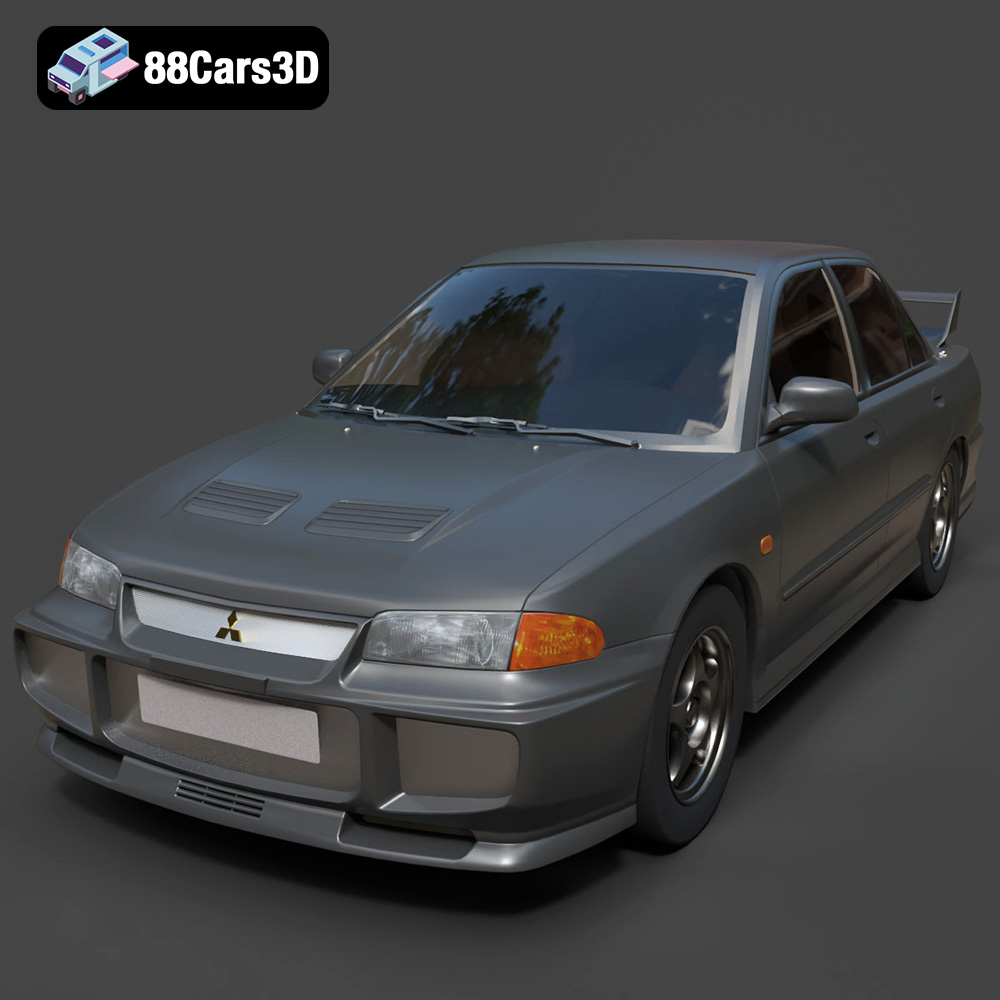
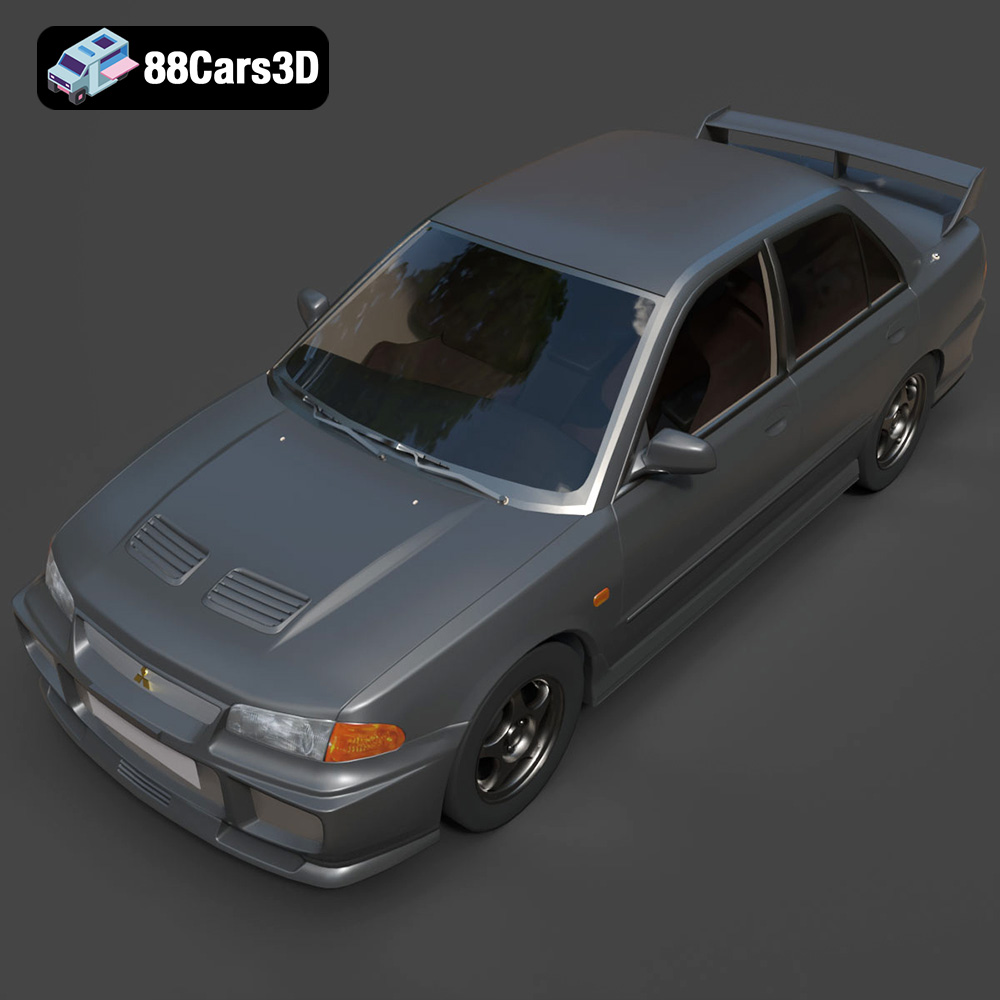
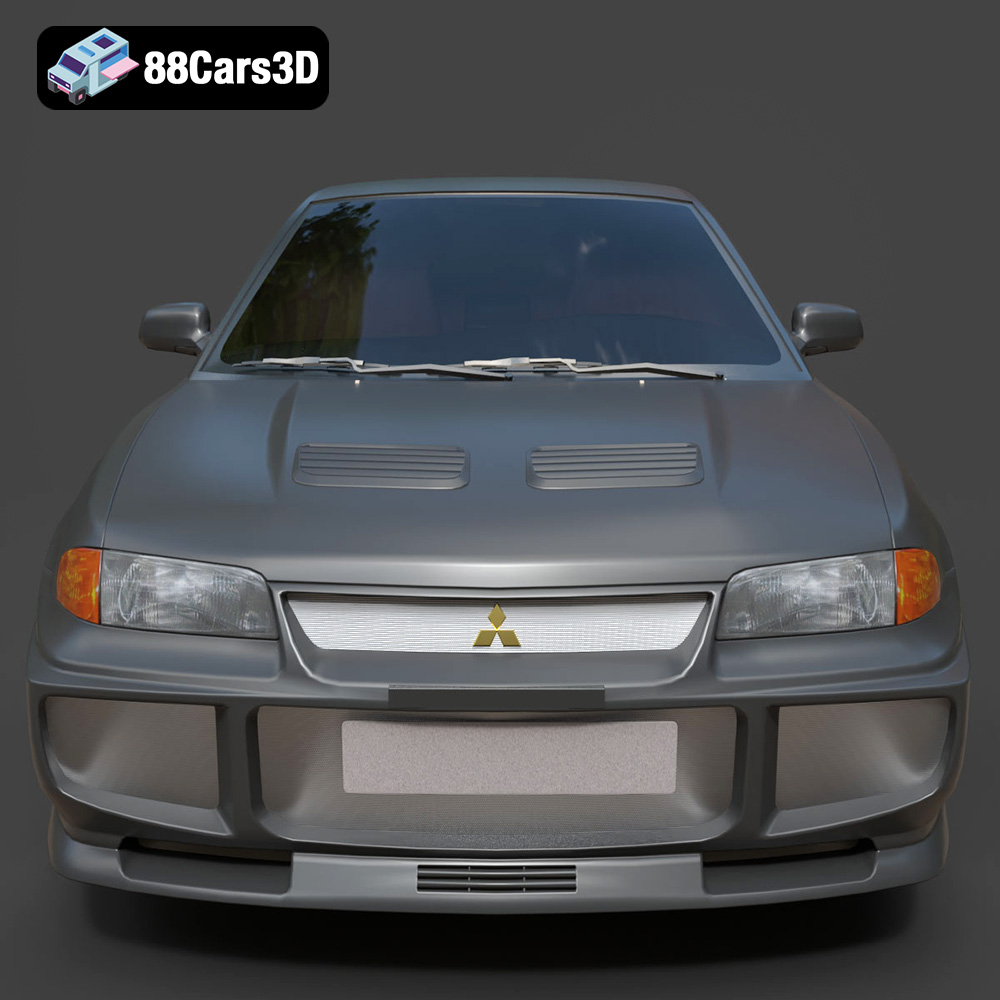
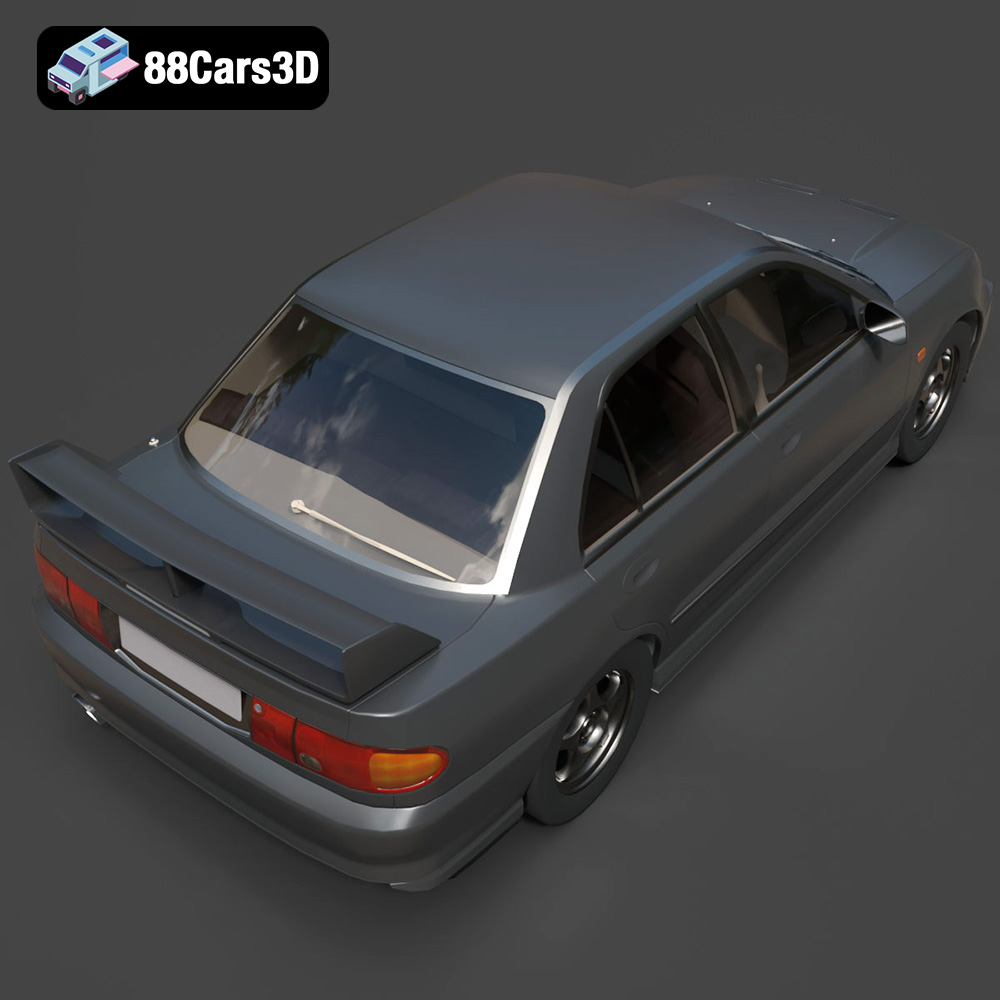
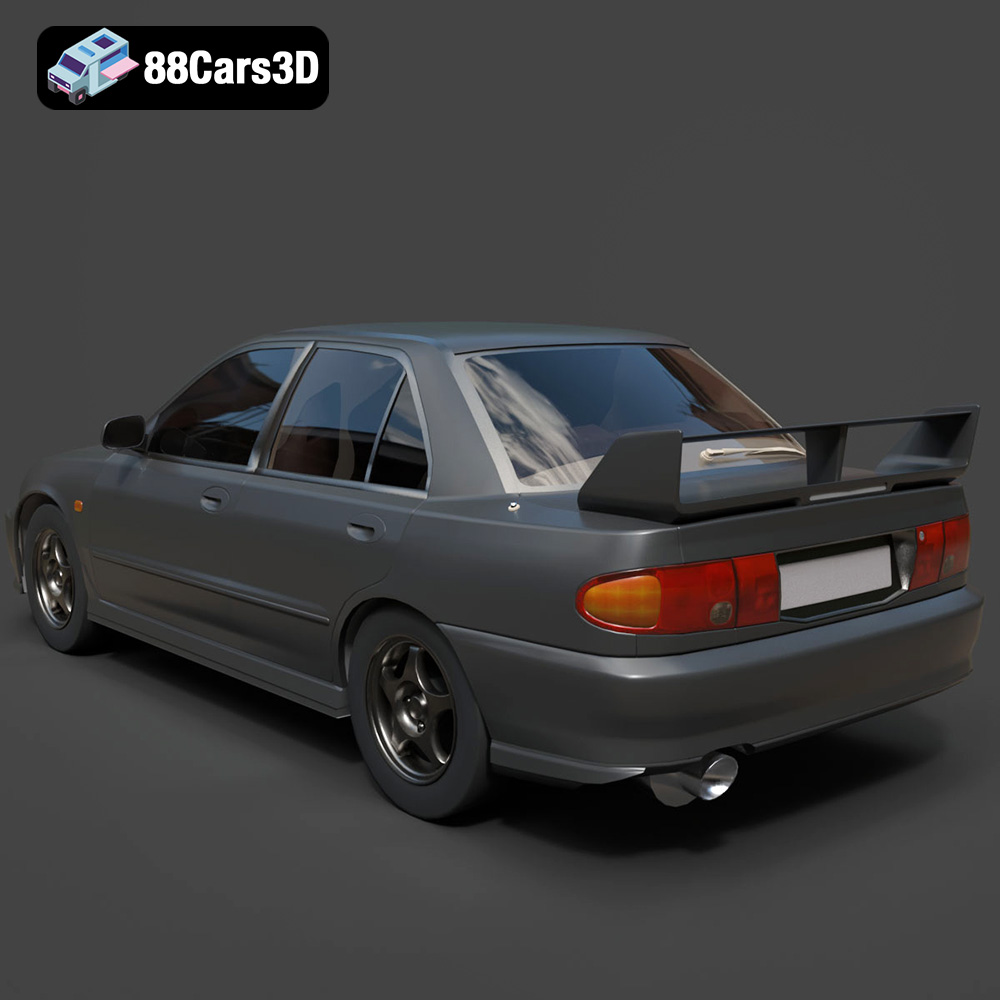
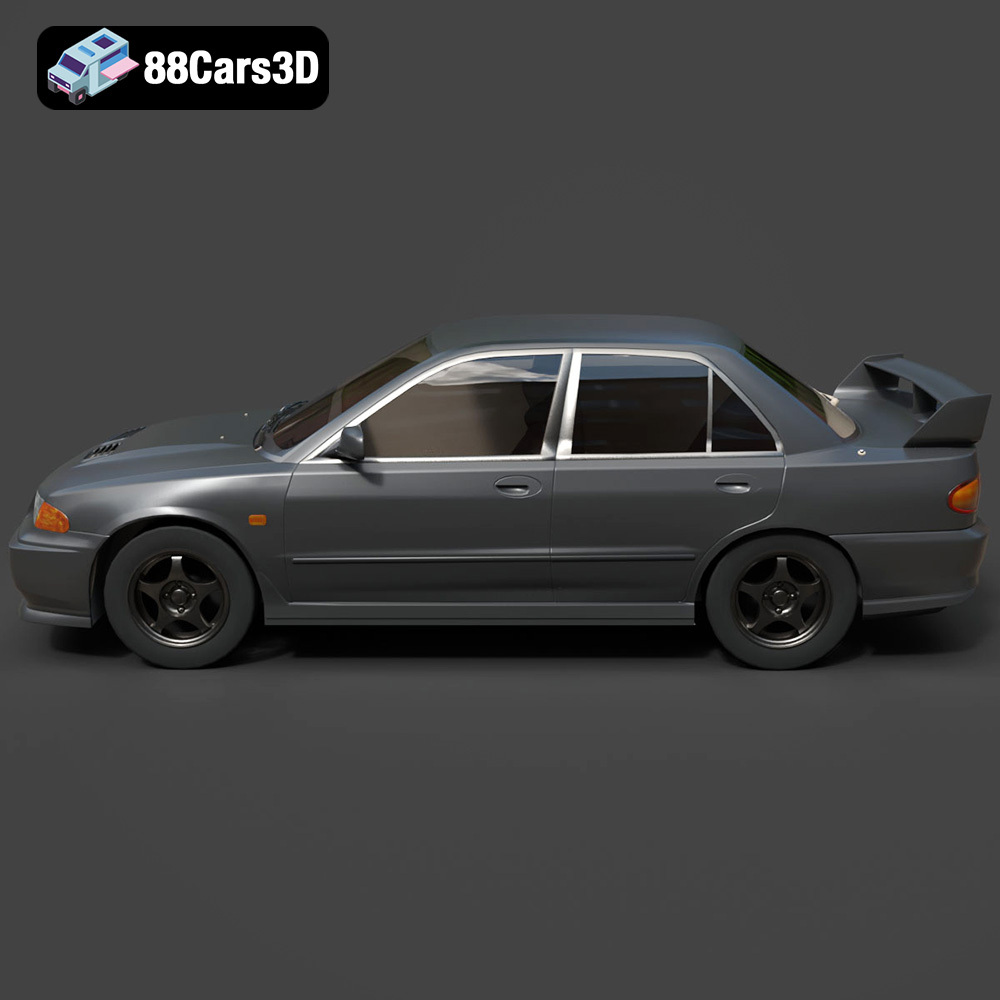
At its core, the Evo III’s aggressive aerodynamics were designed for a singular purpose: winning rally races. The enlarged front air dams, a hallmark of the Evolution III, were not merely stylistic; they were crucial for feeding air to the massive intercooler and improving engine cooling under extreme conditions. The high-profile rear wing, an unmistakable feature, generated significant downforce, keeping the car planted at high speeds. Even the widened stance and ventilated hood were purposeful, enhancing stability and heat dissipation. A truly exceptional 3D model must honor these functional design elements, not just mimic their form. The Mitsubishi Lancer Evolution III 3D model meticulously recreates these signature elements, from the precise curvature of the body panels to the subtle contours that define its legendary silhouette. This ensures that the digital representation carries the same visual weight and authenticity as the physical car.
The level of detail in a 3D model dictates its versatility and visual impact. For the Mitsubishi Lancer Evolution III, this model goes beyond basic shape, delving into the intricate components that complete the vehicle’s identity. On the exterior, the detailed intercooler is visibly tucked behind the enlarged front bumper air dams, a small but significant touch that speaks volumes about the model’s accuracy. The sport-tuned exhaust system, complete with a large polished tip, adds another layer of realism. The high-detail halogen headlights and the unmistakable Evo III rear taillight assemblies are faithfully reproduced, capturing the distinctive lighting signature of the era. The classic multi-spoke rally-style alloy wheels, performance tires, and even visible brake calipers and suspension components elevate the model’s visual fidelity, making it suitable for even the most scrutinizing renders. Crucially, the wheels, suspension, and steering components are separated, allowing for realistic animation of steering, wheel rotation, and suspension travel, a critical feature for game development and cinematic sequences.
Inside the cockpit, the attention to detail continues. The detailed Recaro-style racing bucket seats not only look authentic but also provide a comfortable and realistic environment for virtual drivers. The accurate Momo-style sports steering wheel, classic 1990s analog instrument cluster, and center console dials transport the viewer back in time. Even the manual shifter, handbrake, and sport pedal assembly are meticulously crafted, optimizing the geometry for first-person perspective in gaming scenarios. This level of comprehensive detail ensures that whether viewed from afar in a wide shot or up close in a virtual interior walkthrough, the Evo III model holds up to scrutiny, offering an immersive and authentic experience.
In the vast landscape of 3D content creation, choosing the right file format is as crucial as the model itself. Different formats serve different purposes, offering varying degrees of compatibility, data preservation, and optimization for specific pipelines. A professional-grade 3D model, like the Mitsubishi Lancer Evolution III, typically comes with a suite of formats to ensure maximum utility across diverse projects. Understanding these formats is key to streamlining your workflow and achieving your project goals efficiently.
The .blend format is Blender’s native file type and is a comprehensive package. When you download a .blend file, you’re not just getting the mesh; you’re getting a fully editable Blender scene. This includes all the geometry, materials (with all their nodes and textures properly linked), lighting setups, camera positions, animations, physics simulations, and even scene properties. For users who primarily work in Blender, this format offers the most flexibility. You can easily modify the model, adjust materials, rig new components, or even dissect the scene to understand how it was constructed. It’s the ideal choice for artists who need to deeply customize the asset within Blender’s powerful ecosystem, leveraging its non-destructive workflows and extensive toolset.
.fbx (Filmbox) is arguably the most widely adopted interchange format in the 3D industry, particularly favored for game development and real-time pipelines. It excels at preserving complex scene data, including meshes, materials (often simplified or baked to common standards), textures, bones, skinning, and animations. When exporting to Unreal Engine or Unity, .fbx is often the go-to choice because it reliably transfers hierarchical data, making it easy to import and set up animated characters or complex models like vehicles. Its robust support for skeletal animations and blend shapes makes it invaluable for dynamic scenes. For the Mitsubishi Lancer Evolution III, the .fbx ensures that the separate animatable parts like wheels and suspension can be imported with their pivot points intact, ready for integration into a physics system.
.obj (Wavefront Object) is a universal, open standard format primarily used for exchanging 3D geometry data. It stores vertex positions, UV coordinates, normals, and face information. While it doesn’t typically embed animations or complex material nodes, it’s exceptionally reliable for transferring static meshes between almost any 3D software. Materials are often defined in a separate .mtl (material template library) file, which references textures. The .obj format is an excellent fallback for cross-software compatibility when more advanced formats might encounter issues. It’s clean, lightweight, and perfect when you only need the raw geometry for sculpting, retopology, or foundational scene building, making it a reliable choice for any professional pipeline.
.glb (GL Transmission Format Binary) is the binary version of the glTF (Graphics Library Transmission Format) format. It’s specifically designed for efficient transmission and loading of 3D scenes and models by applications, particularly those in web browsers, augmented reality (AR), and virtual reality (VR). A single .glb file can contain the entire model, including geometry, materials, textures, and animations, making it highly portable and easy to implement. Its optimizations focus on real-time rendering, making it ideal for displaying the Mitsubishi Lancer Evolution III in virtual showrooms, online configurators, or mobile AR experiences where performance and file size are critical considerations.
.stl (Stereolithography) is the de facto standard file format for 3D printing. It represents a 3D model as a series of connected triangles (a triangulated surface). Unlike other formats, .stl files contain no color or texture information, focusing solely on the geometry for manufacturing. When converting the Evo III model to .stl, it’s crucial to ensure the mesh is watertight (no holes) and manifold, as these are prerequisites for successful 3D printing. It’s the format you’d choose for creating a physical replica of the digital model, allowing hobbyists and professionals to bring the Evo III to life as a display piece or scale model.
.ply (Polygon File Format) is another format for storing 3D data, often used in CAD, 3D scanning, and scientific applications. It’s more flexible than .obj and .stl, as it can store a wider range of properties, including color, transparency, normals, texture coordinates, and even confidence values for each vertex or face. While not as universally supported as .obj, .ply is excellent for precision mesh data and can be a strong choice for applications requiring detailed geometric analysis or where richer data per vertex/face is needed beyond just position, such as when importing point cloud data or complex CAD models.
The .unreal designation often refers to an asset package specifically prepared for Unreal Engine. While not a standalone file format in the traditional sense like .fbx, it signifies that the asset has been pre-processed, textured, and sometimes even set up with basic blueprints or materials directly within an Unreal Engine project. This means the asset is ready for immediate drag-and-drop implementation, bypassing common import hurdles and material setup. For the Evo III model, a .unreal file would be an engine-ready asset, saving considerable time and effort for game developers working within the Unreal ecosystem, ensuring optimal performance and visual fidelity straight out of the box.
The .max format is the native file format for Autodesk 3ds Max. Similar to .blend for Blender, a .max file contains a complete 3ds Max scene, including all geometry, materials, textures, lights, cameras, animations, modifiers, and scene settings. It offers the most comprehensive editing capabilities for users working in 3ds Max, allowing full control over every aspect of the model and its environment. Professionals using 3ds Max for architectural visualization, product design, or animation will find the .max file indispensable for deep customization, complex rigging, or integrating the Evo III into existing project scenes with seamless compatibility.
In the realm of 3D modeling, particularly for real-time applications, the adage “less is more” often holds true. However, “less” must still deliver “more” in terms of visual fidelity. Achieving this delicate balance is the hallmark of a professionally engineered 3D asset, and the Mitsubishi Lancer Evolution III model exemplifies this.
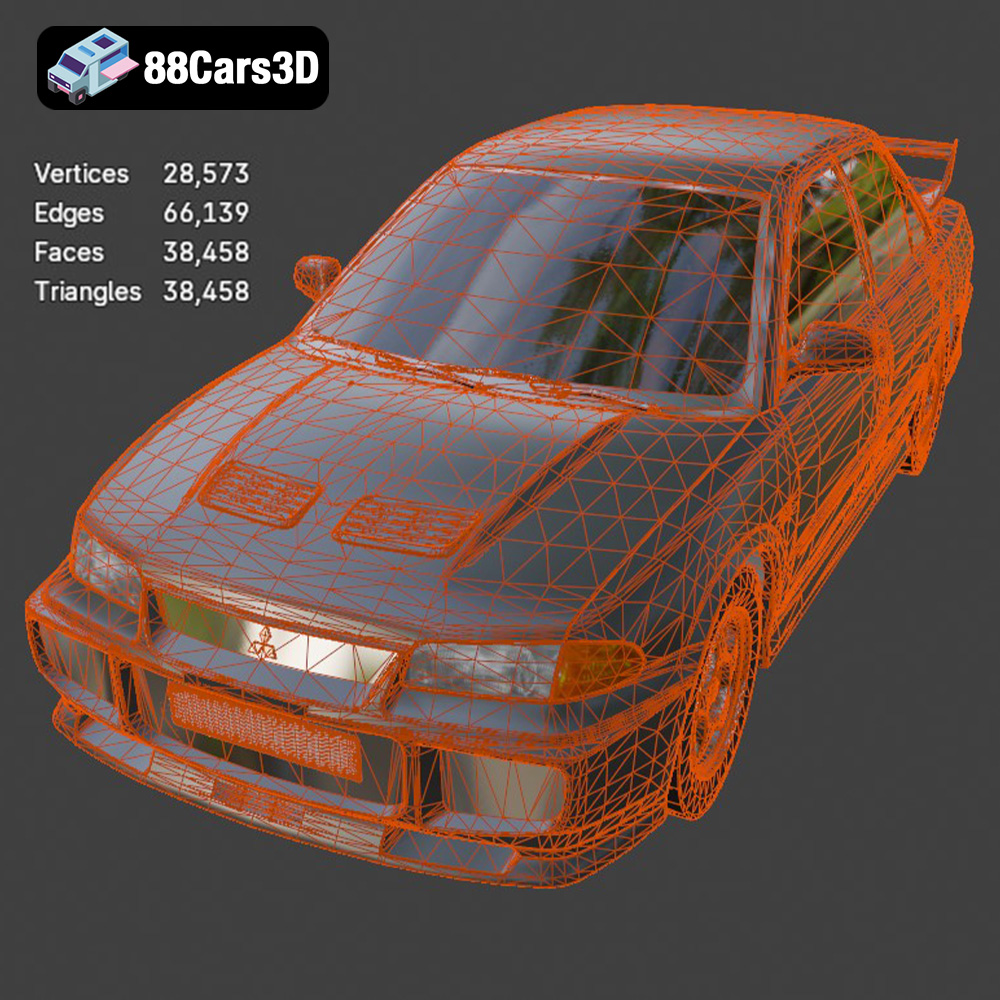
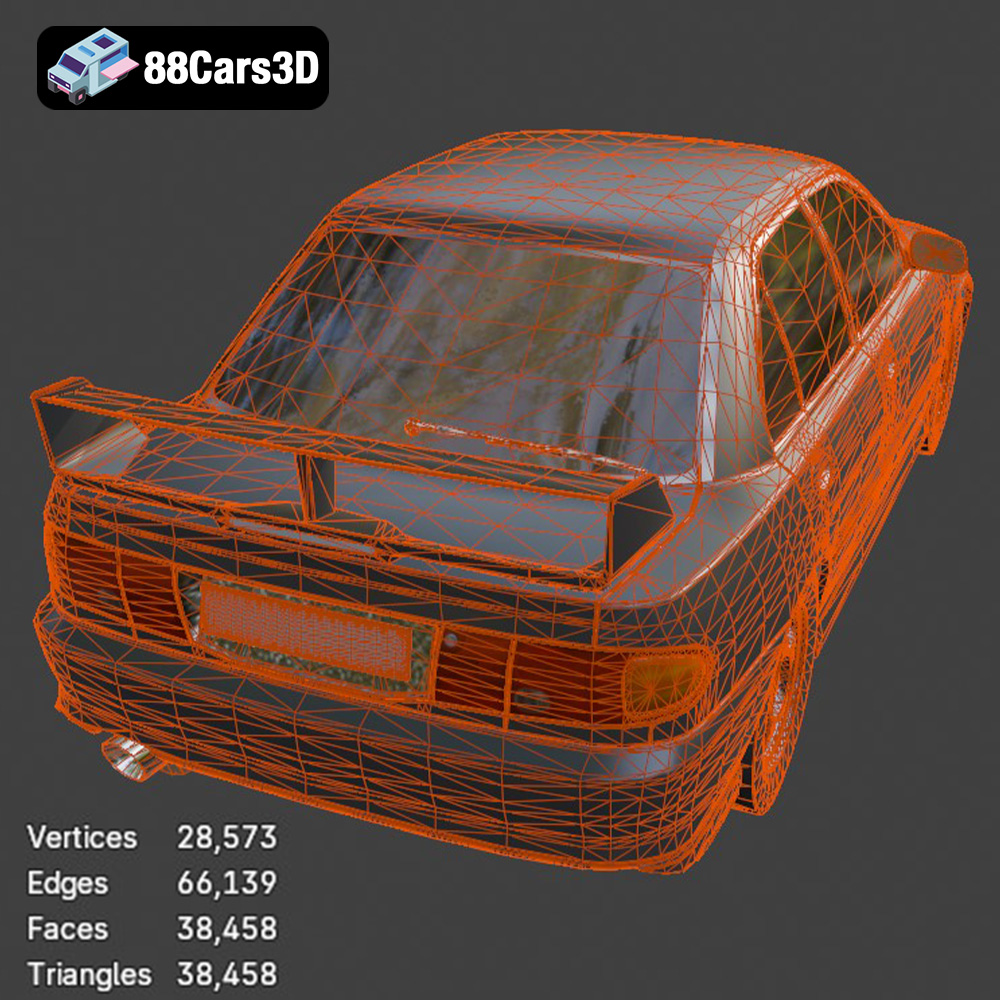
The decision of polygon count is critical, especially when targeting modern game engines or AR/VR experiences. Too many polygons can lead to performance bottlenecks, dropped frame rates, and slow loading times. Too few, and the model appears blocky and unrealistic. The Mitsubishi Lancer Evolution III 3D model boasts an optimized topology with a triangle count of 38,458. This isn’t an arbitrary number; it’s a carefully calculated balance. This polycount is sufficiently detailed to capture the aggressive aerodynamics, intricate grill work, and interior features without burdening the rendering engine. For real-time applications like Unreal Engine or Unity, 38,458 triangles is considered game-ready, allowing for multiple instances of the car to be present in a scene without significant performance impact. Yet, it maintains enough resolution for stunning close-up shots in high-end renders, proving its versatility across performance and visual fidelity requirements. The clean, efficient mesh also contributes to easier UV unwrapping and texture application, reducing potential issues in the shading pipeline.
Accuracy in 3D modeling extends beyond visual appeal to include real-world scale. A model that is accurately scaled to its physical counterpart ensures correct interaction with environments, characters, and other assets in a digital scene. The Mitsubishi Lancer Evolution III 3D model is built with real-world scale accuracy, based on the actual vehicle chassis dimensions. This is crucial for applications such as architectural visualization, precise vehicle configurators, or simulation environments where realistic proportions are non-negotiable.
Furthermore, for any vehicle in a dynamic environment, animation is key. The model features separate components for wheels, suspension, and steering. More importantly, it includes a proper pivot setup for steering, wheel rotation, and suspension travel. This means that animators and game developers don’t have to spend valuable time manually setting up pivot points or rigging basic movement controls. The model comes pre-prepared, allowing for immediate integration into an animation rig or a game engine’s vehicle physics system, accelerating development workflows significantly. This level of preparation is a testament to the model’s professional quality and its readiness for complex interactive scenarios.
The true test of a game-ready asset lies in its ease of integration into leading game engines. With its optimized geometry and included .fbx and .unreal file formats, the Mitsubishi Lancer Evolution III 3D model is designed for seamless import into Unreal Engine and Unity. The .fbx format ensures that the mesh, UVs, and pivot points are transferred correctly, ready for material assignment and physics setup. For Unreal Engine users, the dedicated .unreal file provides an even more streamlined experience, often including pre-configured materials, textures, and even basic asset blueprints, drastically cutting down on setup time. This means developers can quickly populate their virtual worlds with a high-fidelity, performance-optimized vehicle, focusing their efforts on gameplay mechanics, environmental design, and artistic polish rather than asset preparation. This compatibility and optimization make the Evo III model an invaluable resource for creating immersive racing titles, open-world adventures, or realistic driving simulators.
A versatile 3D asset is one that transcends a single purpose, finding utility across various digital mediums. The Mitsubishi Lancer Evolution III 3D model is engineered with this versatility in mind, offering exceptional performance and visual fidelity for a wide array of applications, from interactive games to static photorealistic renders.
The demand for high-quality, optimized vehicle assets in game development is immense. The Mitsubishi Lancer Evolution III, with its 38,458 triangle count, hits the sweet spot for game-ready performance. It’s ideal for open-world games where numerous vehicles might populate a scene, requiring efficient rendering. In racing titles and simulators, the model’s accurate geometry, real-world scale, and pre-configured animatable components (wheels, suspension, steering) are critical. Imagine a scenario where a game studio is developing a new rally racing game. Instead of spending weeks modeling and optimizing a core vehicle like the Evo III, they can acquire this model, quickly integrate it into their physics engine, apply custom liveries, and focus on track design and gameplay. The optimized geometry ensures smooth frame rates even in high-speed, action-packed sequences, delivering an immersive experience for players. Its robust structure also allows for easy implementation of damage models, further enhancing realism.
Augmented Reality (AR) and Virtual Reality (VR) are rapidly expanding fields, creating new opportunities for immersive experiences. The Evo III model is perfectly suited for these platforms due to its optimized polycount and support for formats like .glb. Imagine a virtual showroom where potential buyers can walk around, inspect, and even customize the Evo III in full 3D, perhaps even seeing it appear in their driveway via AR on their phone. Companies can use this model to create interactive car configurators, allowing users to change colors, wheels, and interior trims in real-time. The balance of visual detail and performance ensures that such experiences are not only breathtaking but also run smoothly on various devices, from high-end VR headsets to mobile AR applications, pushing the boundaries of interactive product visualization.
While optimized for real-time, the Mitsubishi Lancer Evolution III 3D model’s meticulous detail also makes it an excellent candidate for high-end rendering and cinematic visualization. When paired with advanced rendering engines like V-Ray, Corona, or Cycles, the model shines. Artists can create stunning studio lighting setups, craft dynamic lifestyle scenes, or integrate the Evo III into photorealistic architectural visualizations. For a marketing campaign, this model could be used to generate breathtaking imagery or animated sequences that showcase the car’s legacy and aesthetic appeal, eliminating the need for expensive physical photo shoots or CGI production from scratch. The clean topology and proper UV mapping facilitate the application of complex material shaders, allowing for realistic paint finishes, intricate carbon fiber details, and accurate reflections, resulting in truly cinematic quality.
The utility of a 3D model isn’t limited to screens. With the advent of accessible 3D printing, digital assets can be transformed into physical objects. The inclusion of the .stl format for the Mitsubishi Lancer Evolution III model makes it suitable for display-scale hobbyists and model makers. The provided 3D print settings are invaluable, offering practical recommendations: ideal scales (1:12, 1:18, 1:24), layer heights (0.04–0.12 mm, with resin printing recommended for fine details), wall thickness, infill percentages, and crucial support requirements for intricate parts like the exhaust, mirrors, and rear wing. Even print orientation is advised, suggesting angling the frame for structural integrity and printing wheels separately. This forethought enables enthusiasts to accurately reproduce a physical Evo III, ready for post-processing like sanding, priming, and applying authentic factory colors and metallic finishes, bridging the gap between digital design and tangible craftsmanship.
Beyond its inherent quality and versatility, a truly valuable 3D asset empowers artists and designers with the flexibility to adapt it to specific project needs. The Mitsubishi Lancer Evolution III 3D model provides ample customization opportunities, significantly enhancing its utility within professional pipelines.
No two projects are identical, and the ability to customize an asset without re-modeling is a huge time-saver. The Evo III model offers several key customization options that allow artists to make it their own. Changing body and tank colors is straightforward, enabling the application of authentic factory colors or custom rally liveries to match a specific team or artistic vision. Modifying tire textures, from rugged gravel rally variants to sleek street performance tires, can drastically alter the vehicle’s context and narrative. Adjusting material finishes – from matte and gloss to various metallic flake effects – allows for nuanced aesthetic control, adapting the car’s appearance to different lighting conditions or desired visual styles. Furthermore, the ability to adapt lighting for different environments is fundamental for photorealistic rendering, allowing the model to be seamlessly integrated into diverse scenes, whether it’s a sun-drenched rally stage or a dimly lit urban setting. These customization options provide an essential toolkit for artists to tailor the Evo III to any creative brief.
For professional studios and freelance artists, time is a precious commodity. Modeling a high-fidelity, game-ready car from scratch can take hundreds of hours, involving meticulous blueprint matching, retopology, UV unwrapping, and texturing. Purchasing a pre-made, high-quality asset like the Mitsubishi Lancer Evolution III from 88cars3d.com offers a significant strategic advantage. It drastically reduces development time and costs, allowing teams to allocate resources to more creative aspects of their projects. Beyond time savings, these professional assets come with a level of quality assurance that an individual artist might struggle to achieve under tight deadlines. The model is optimized for performance, geometrically accurate, and includes all necessary components and file formats for immediate integration. This reliability means fewer headaches, fewer unexpected issues, and a smoother workflow from concept to final product, ensuring that projects stay on schedule and within budget without compromising on visual excellence.
Consider a hypothetical virtual production studio tasked with creating a realistic car chase sequence for a film or an interactive advertisement. The Mitsubishi Lancer Evolution III is chosen as the hero car. Instead of dedicating a senior modeler for weeks, the studio purchases the optimized Evo III model. Within hours, the asset is imported into Unreal Engine via its .fbx or .unreal format. Because of its proper pivot setup and separate animatable parts, the technical artists can quickly integrate it into a pre-existing vehicle physics rig. The material artists then apply custom PBR materials and high-resolution textures, leveraging the model’s clean UVs. Animators begin choreographing complex stunts, knowing the underlying geometry supports dynamic deformation if a damage system is implemented. For close-up shots, the high fidelity of the interior is paramount, allowing the virtual camera to peer inside as the driver executes a turn. The efficiency gained by starting with a production-ready asset allows the team to iterate faster, experiment with different camera angles and stunt choreographies, and ultimately deliver a visually stunning and physically accurate sequence in a fraction of the time it would take to build the asset from the ground up. This real-world application underscores the profound value of high-quality 3D car models in demanding professional environments.
The Mitsubishi Lancer Evolution III is an undisputed icon, and its digital reincarnation as a meticulously crafted 3D model carries that legacy into the modern era of digital content creation. From its aggressive, WRC-bred aerodynamics to its detailed interior, every facet of this JDM legend has been painstakingly recreated, providing artists and developers with an asset that is both visually stunning and technically robust. With an optimized triangle count of 38,458, it strikes the perfect balance between high-end visual fidelity for cinematic renders and performance-ready efficiency for real-time applications like game development and AR/VR experiences.
The versatility offered through its comprehensive suite of file formats – including .blend, .fbx, .obj, .glb, .stl, .ply, .unreal, and .max – ensures seamless integration into virtually any professional workflow. Whether you’re building an immersive open-world game, designing a cutting-edge virtual showroom, producing a photorealistic marketing visualization, or even 3D printing a physical replica, this model provides the necessary foundation. Its accurate real-world scale, proper pivot setups for animation, and readily customizable features empower creators to push their artistic boundaries without being bogged down by fundamental asset creation.
In a world where speed, quality, and versatility are paramount, investing in a high-quality 3D car model like the Mitsubishi Lancer Evolution III from 88cars3d.com is a smart strategic move. It’s not just a purchase; it’s an accelerator for your creative projects, ensuring that your digital endeavors reflect the same level of excellence as the legendary vehicle it represents. Elevate your next project with a 3D asset that truly embodies the spirit of rally dominance and automotive passion.
The Mitsubishi Lancer Evolution III is an iconic JDM legend born from World Rally Championship homologation requirements. Renowned for its aggressive aerodynamics, larger front air dams, and the legendary 4G63T 2.0-liter turbocharged inline-four engine, this model captures the essence of 1990s rally dominance. From its unmistakable high-profile rear wing to its widened stance and ventilated hood, every detail of this classic AWD sports car has been meticulously recreated to honor its rich motorsport heritage.
Engineered for high performance in digital environments, this 3D model boasts an optimized topology with a triangle count of 38,458. It strikes a perfect balance between visual fidelity and real-time performance, making it highly game-ready without sacrificing detail. Whether it is used for high-end rendering, virtual reality showrooms, or fast-paced racing simulations, the geometry ensures smooth integration and breathtaking realism.
Perfect for open-world racing games, JDM car culture visualizations, mobile AR experiences, and high-quality cinematic animations.
.blend, .fbx, .obj, .glb, .stl, .ply, .unreal, .max
Tags:
mitsubishi, lancer-evolution-iii, evo-3, jdm, sports-car, rally-car, game-ready, low-poly, optimized, car-3d-model, game-asset, rendering, vr-ar, blend, fbx, obj, glb, stl, ply, unreal, max
$16.99
.blend
.fbx
.glb
.jdm
.max
.mitsubishi
.obj
.ply
.rendering
.sports car
.stl
.unreal
car-3d-model
evo-3
game asset
game-ready
lancer-evolution-iii
low-poly
optimized
rally-car
VR/AR