Get 20% OFF All Premium 3D & STL Models!

In the expansive and ever-evolving landscape of digital content creation, the demand for high-quality 3D assets is paramount. From breathtaking cinematic sequences to hyper-realistic game environments and immersive virtual reality experiences, precision and detail are the hallmarks of excellence. Nowhere is this more apparent than in the realm of automotive design and visualization. Capturing the essence, luxury, and engineering prowess of a modern vehicle in three dimensions requires an exceptional blend of artistic skill and technical acumen.
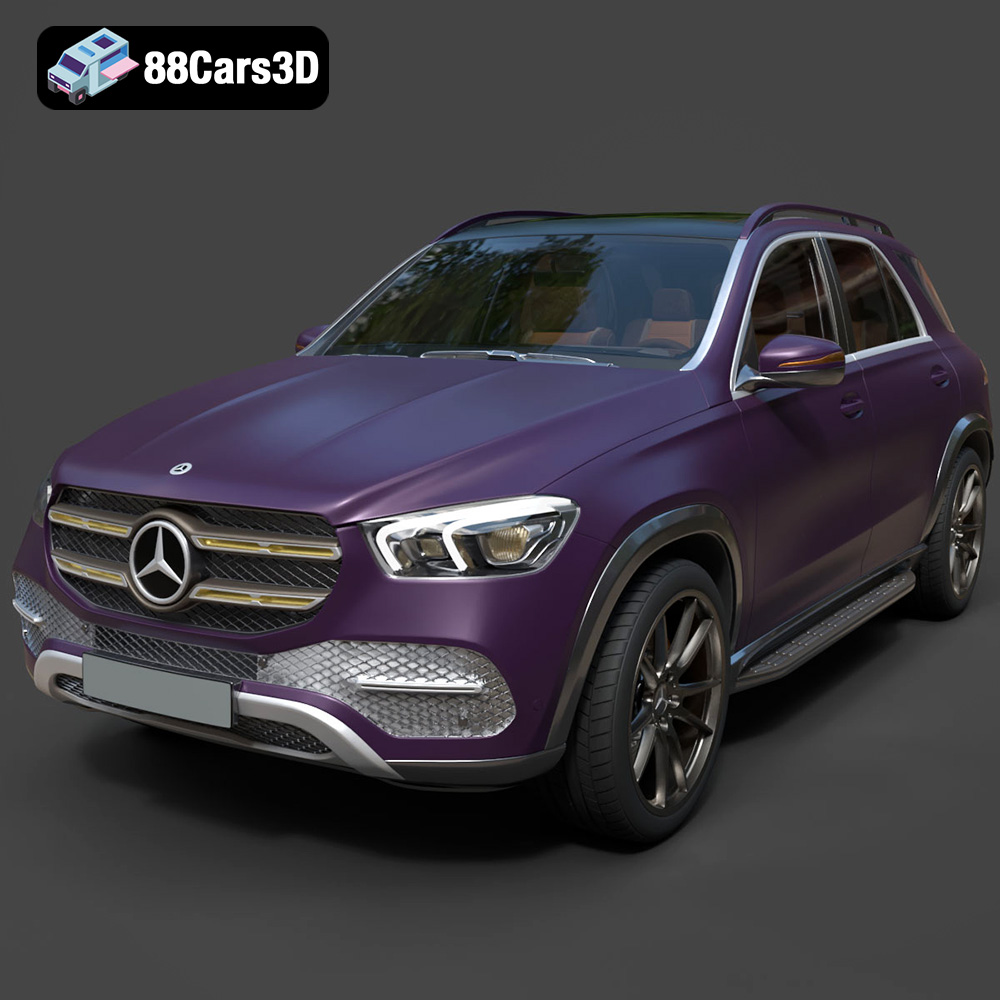
For professionals seeking to elevate their projects, a meticulously crafted 3D car model is not just an asset; it’s a foundation. It saves countless hours of modeling work, allowing designers, developers, and artists to focus on rendering, animation, or integration. This is where offerings like the Mercedes Benz GLE 3D Model Download excel, providing a ready-to-use solution that embodies the pinnacle of luxury mid-size SUVs. With its aggressive styling, premium comfort, and dominant road presence faithfully replicated, this model stands as a testament to what’s achievable with expert 3D craftsmanship.
Whether your goal is photorealistic automotive rendering, integration into a next-generation game, creating a virtual showroom, or even 3D printing a physical collectible, understanding the intricacies of such a model and the diverse file formats it offers is key to unlocking its full potential. Let’s delve into the technical depths of high-fidelity 3D car models and explore how assets like the Mercedes Benz GLE 3D Model seamlessly integrate into professional workflows across various industries.
The world of 3D modeling is rich with diverse file formats, each designed for specific applications, software compatibility, and optimization goals. When you acquire a high-quality 3D car model like the Mercedes Benz GLE from 88cars3d.com, you often receive it in an array of formats to ensure maximum versatility. Selecting the right format for your project is crucial for an efficient workflow and optimal results. Here’s a detailed look at the common formats provided with the Mercedes Benz GLE 3D Model and their ideal use cases:
The .blend format is the native file type for Blender, a powerful open-source 3D creation suite. A .blend file typically contains a complete scene, including the 3D model geometry, materials, textures, lighting, cameras, animations, and even physics simulations. For artists working primarily in Blender, this format offers the highest level of editability and preservation of all scene data. It allows for direct manipulation of the model’s topology, shaders, and any rigging or animation setups, making it ideal for customization, further detailing, or integrating the car into complex Blender scenes for rendering or real-time visualization within Blender’s Eevee or Cycles engines.
The .fbx (Filmbox) format is one of the most widely adopted 3D exchange formats, particularly favored in the game development and animation industries. Developed by Autodesk, FBX supports geometry, materials (with some limitations on complex node-based shaders), textures, animations, rigging, and even camera data. Its strength lies in its ability to transfer complex 3D scenes between different software applications like 3ds Max, Maya, Cinema 4D, and most importantly, game engines like Unreal Engine and Unity. For the Mercedes Benz GLE 3D Model, the .fbx version would be your go-to for importing into game development pipelines, ensuring that the car’s intricate mesh, UVs, and pivot points (for animation) are preserved.
The .obj (Wavefront OBJ) format is a simple, universal 3D data format that stores only geometry (vertices, normals, texture coordinates, and faces) and references to external material files (.mtl). It’s an excellent choice for cross-software compatibility, especially when you need a clean mesh without any animation or advanced rigging. While it doesn’t embed materials or complex scene data, its simplicity makes it highly stable and widely supported across virtually all 3D software. If you’re importing the Mercedes Benz GLE into a new 3D application for a static render or further modeling work where you intend to re-create materials, .obj is a reliable foundation.
The .glb (GLB format, which stands for GL Transmission Format Binary) is the binary version of glTF, a royalty-free specification for the efficient transmission and loading of 3D scenes and models by applications. .glb files encapsulate geometry, materials, textures, and even animation in a single, self-contained file, making them incredibly efficient for web-based 3D, AR/VR experiences, and mobile applications. For showcasing the Mercedes Benz GLE in an interactive web configurator, an augmented reality app, or a lightweight virtual showroom, the .glb format offers optimal performance and ease of deployment without external dependencies.
The .stl (Stereolithography) format is the standard file type for 3D printing. It represents a 3D model as a series of connected triangles (a triangular mesh) without any color, texture, or material information. Its sole purpose is to define the surface geometry of a 3D object for manufacturing. The Mercedes Benz GLE 3D Model, when converted to .stl, becomes a blueprint for physical replication. Hobbyists and professionals alike can use this format to print display-scale models of the luxury SUV, provided they adhere to the recommended print settings for optimal detail and structural integrity.
The .ply (Polygon File Format or Stanford Triangle Format) is another format for storing 3D data, particularly known for its ability to save properties like color, transparency, and even normal vectors associated with vertices and faces. While less common for general 3D model exchange than .fbx or .obj, it’s frequently used in scanning, CAD, and scientific applications where precise mesh data with additional per-vertex or per-face information is crucial. For detailed analysis or specialized engineering workflows, the .ply version of the Mercedes Benz GLE offers a robust data set.
The .unreal format, or more accurately, assets prepared and sometimes packaged specifically for Unreal Engine (often as part of an Unreal project file or content pack), signifies a model that has been optimized and configured for Unreal’s real-time rendering pipeline. This might include proper material setup using Unreal’s physically-based rendering (PBR) system, collision meshes, LODs (Levels of Detail), and potentially Blueprints for interactive functionality. When a model is provided in an “.unreal” context, it means significant work has already been done to make it engine-ready, allowing developers to drop the Mercedes Benz GLE directly into their projects with minimal further setup.
The .max format is the native file type for Autodesk 3ds Max, a leading software for 3D modeling, animation, and rendering in the entertainment and design industries. Similar to .blend for Blender, a .max file contains the complete 3ds Max scene, including geometry, modifiers, materials, textures, lighting, cameras, and animations. For users of 3ds Max, this format offers full editability, allowing for comprehensive customization, sophisticated rendering setups (with V-Ray or Corona Renderer), and complex animation sequences. The .max version of the Mercedes Benz GLE 3D Model is ideal for high-end cinematic rendering, architectural visualization integration, or detailed product presentation where 3ds Max is the primary tool.
Achieving visual realism in 3D automotive models is a meticulous process, demanding an obsessive attention to detail. The Mercedes Benz GLE 3D Model serves as an exemplary case study in how to capture the essence of a luxury vehicle, making it suitable for a vast array of high-stakes professional applications. From its exterior lines to its intricate interior, every element is designed for impact.
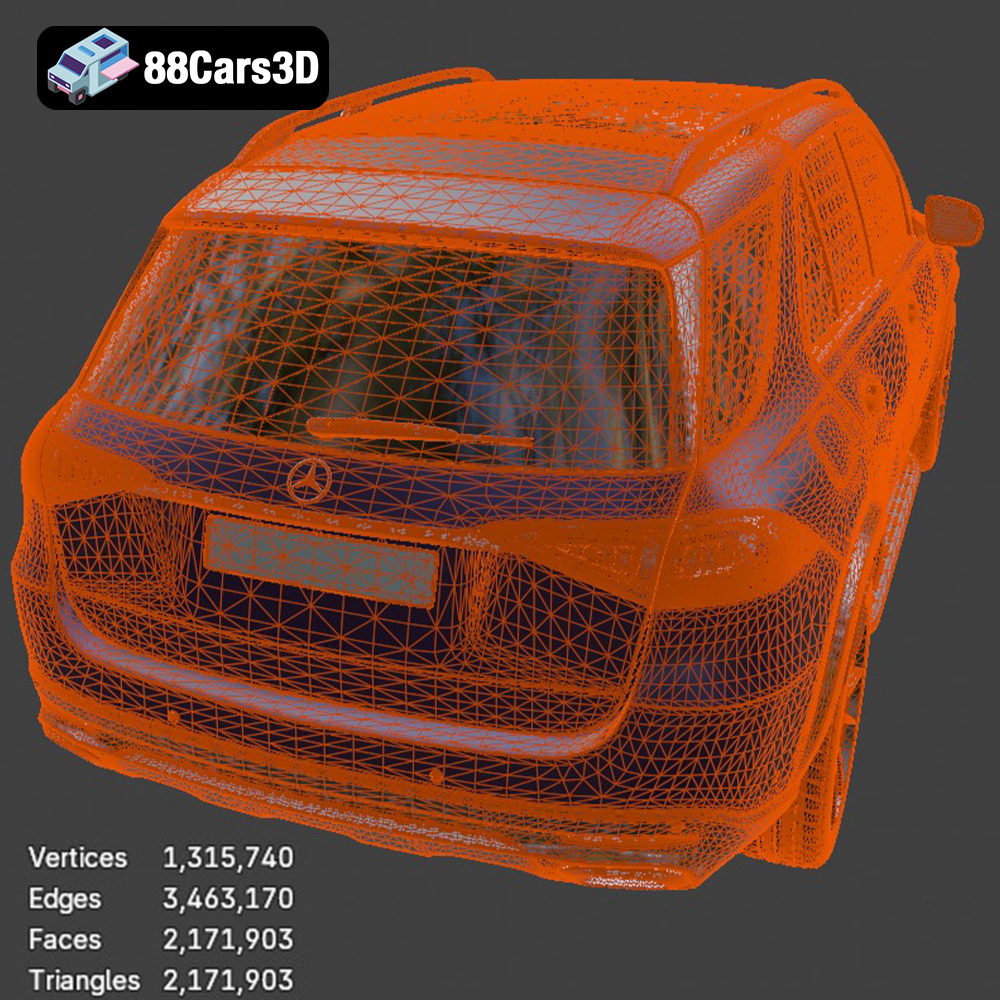
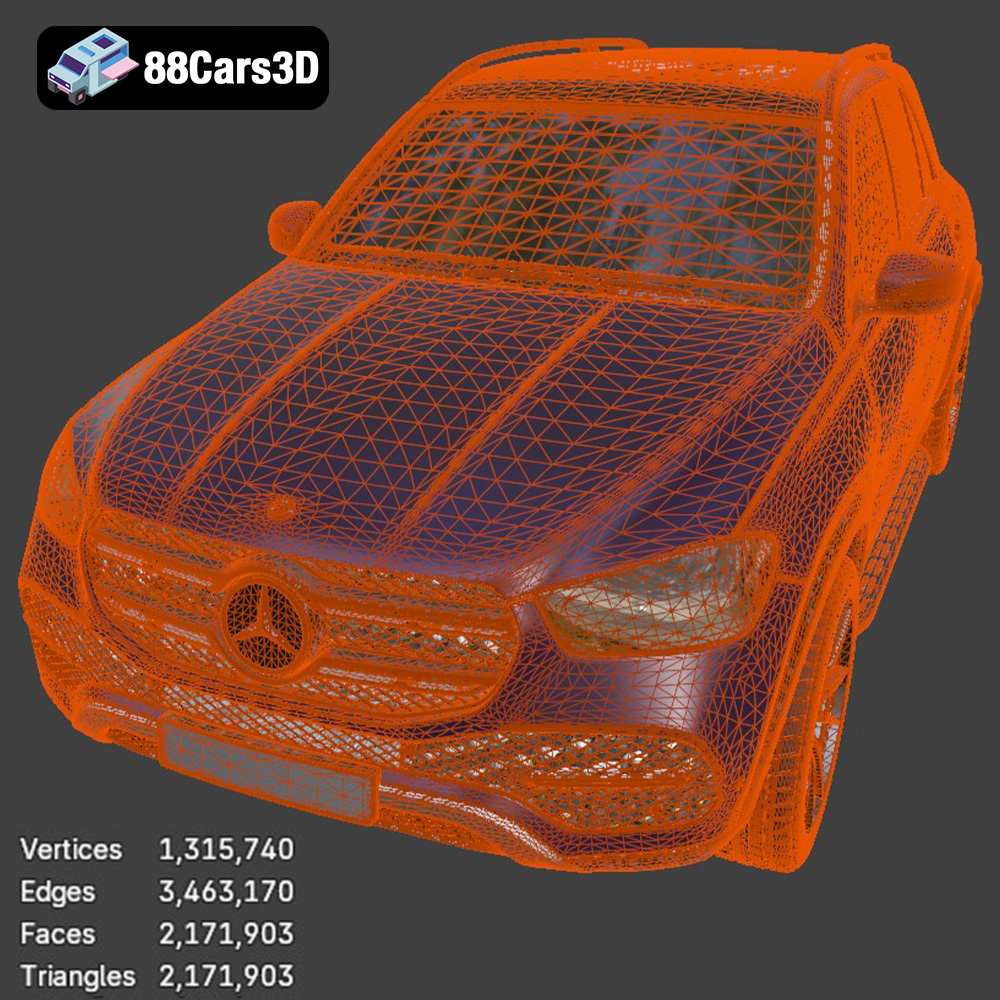
The first impression of any vehicle is its exterior, and the digital representation must live up to this expectation. The Mercedes Benz GLE 3D Model boasts a high-fidelity topology with an impressive 2,171,903 triangles. This substantial poly count is not merely for show; it’s the foundation for unparalleled visual realism, particularly crucial for high-end rendering and next-generation real-time engines that can handle such detail, like Unreal Engine’s Nanite system. The meticulously modeled surfaces ensure stunning reflections and accurate light behaviors, mimicking real-world physics.
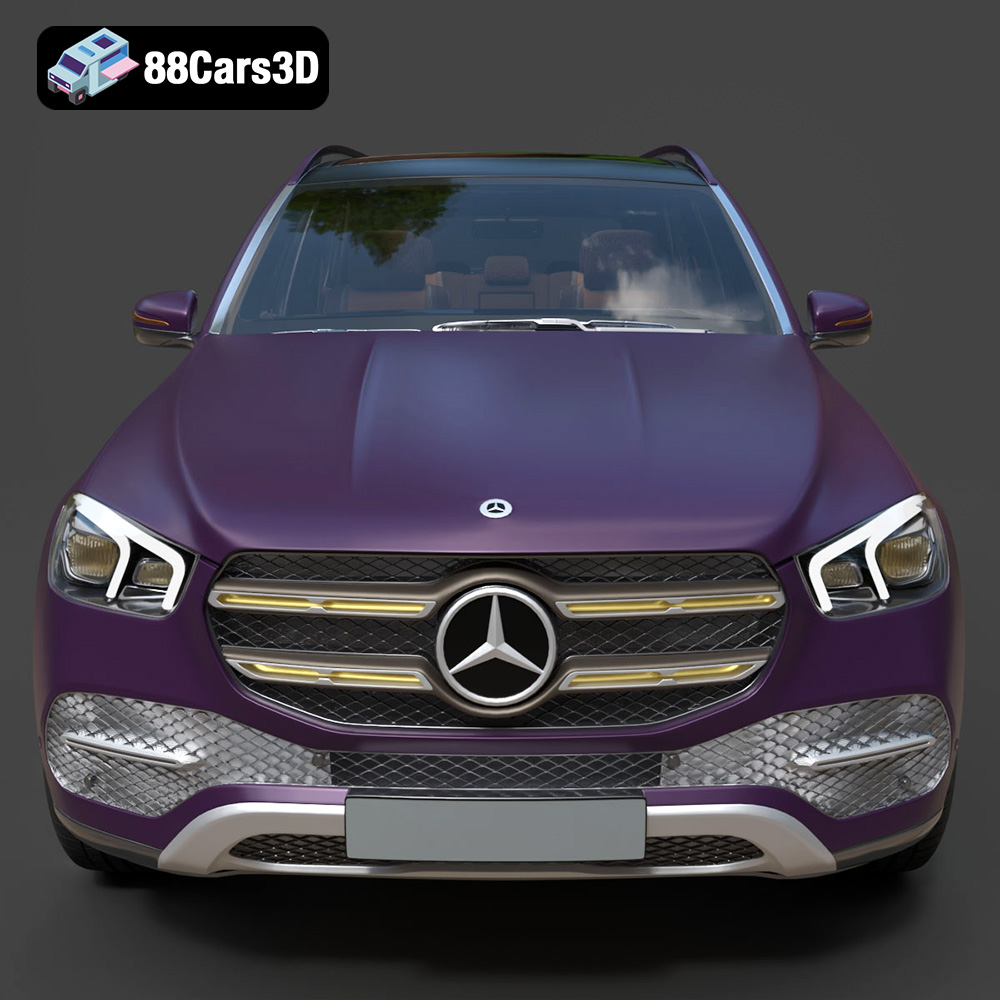
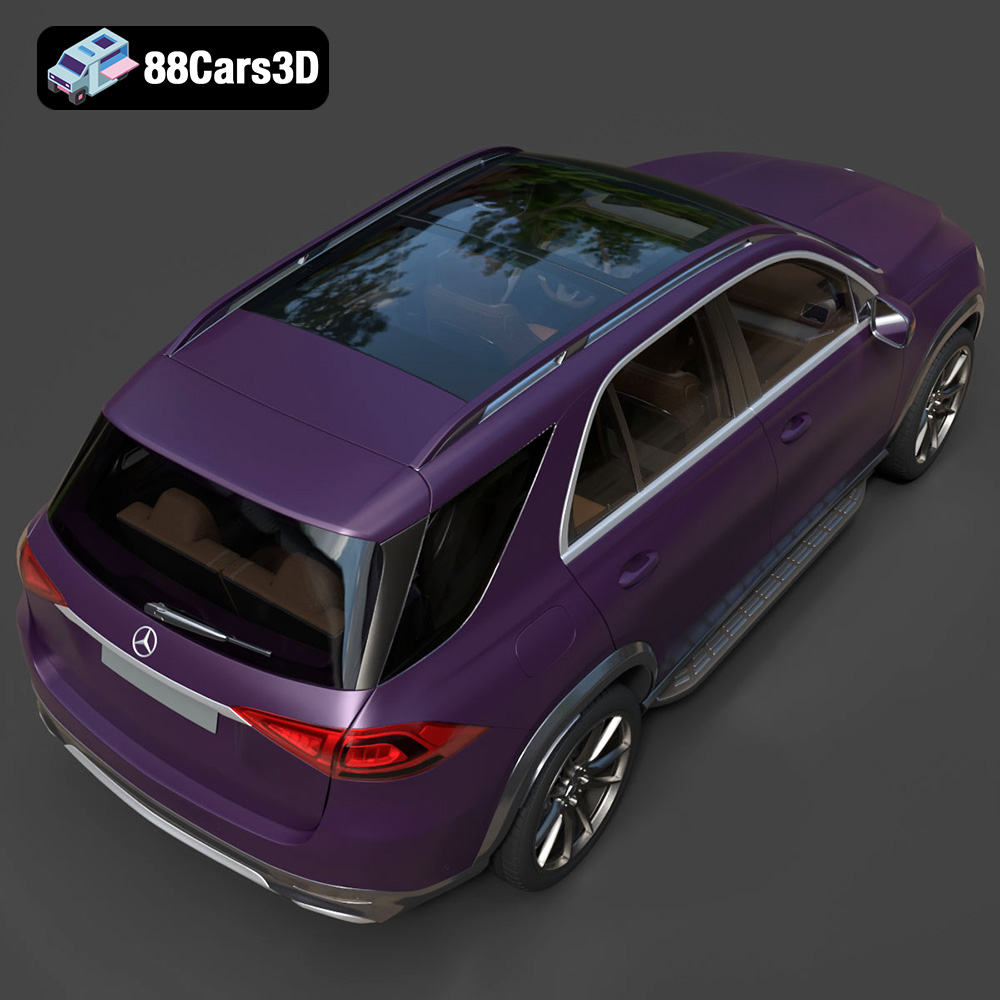
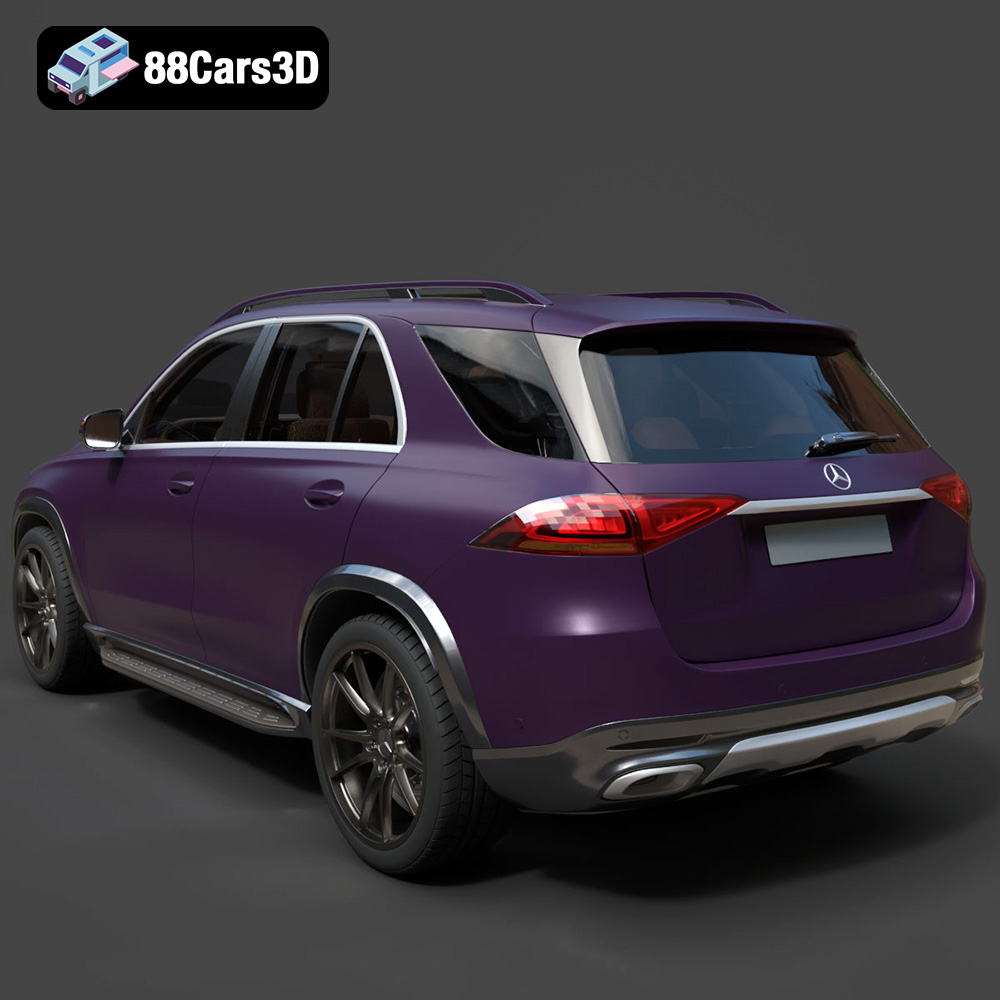
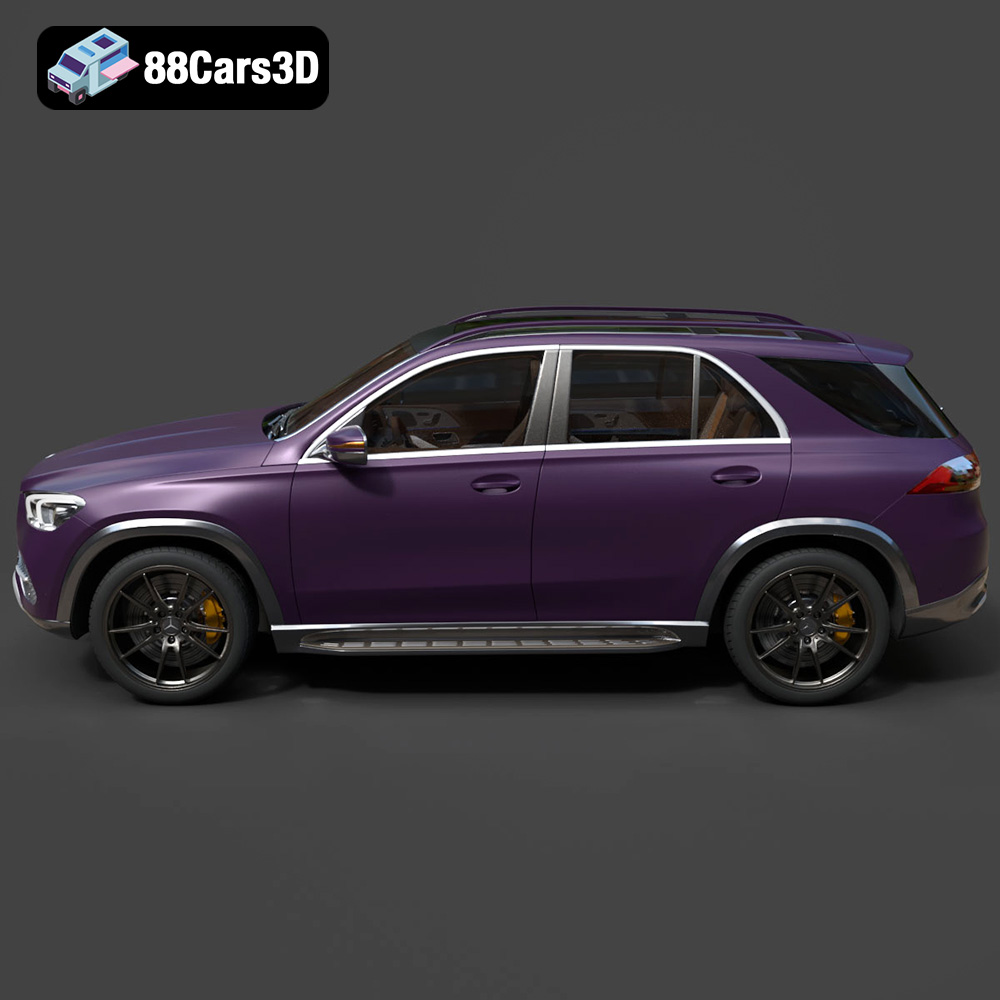
Every iconic design cue of the Mercedes Benz GLE is faithfully replicated: the imposing signature front grille, aerodynamic sweeping lines, and muscular stance. Specific elements like the intricate housing of the dynamic LED headlights and taillight clusters are modeled with precision. The integrated dual exhaust system with chrome-style tips, premium multi-spoke alloy wheels with accurately treaded tires, and intricate suspension and brake caliper details all contribute to an authentic portrayal. Furthermore, the model’s geometry is intelligently structured with separate wheels, suspension, and steering components, enabling seamless animation for dynamic scenes in games or cinematic productions.
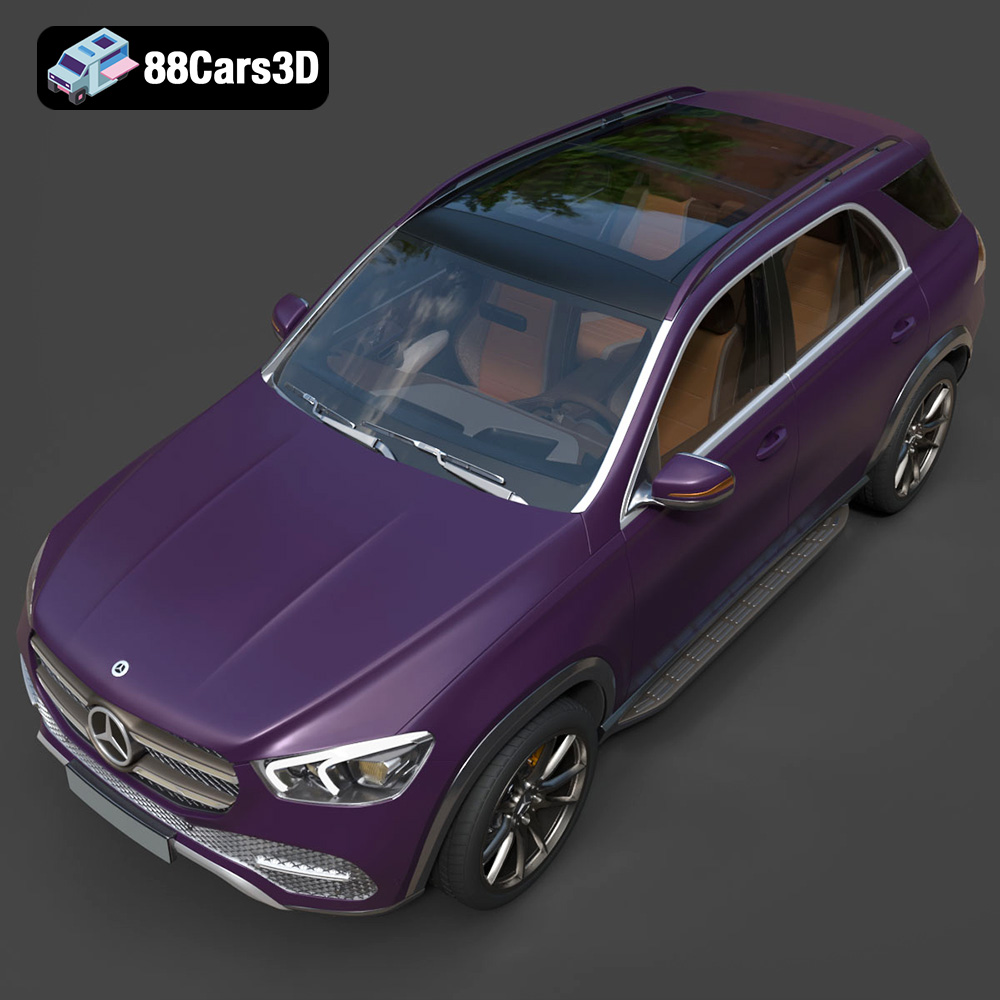
While often seen less, the interior of a 3D car model is just as critical, especially for first-person perspectives in games or interactive virtual tours. The Mercedes Benz GLE 3D Model extends its high level of detail to the cockpit and interior features. This includes luxurious contoured seating with highly detailed upholstery stitching, which adds a tactile sense of realism to the digital environment. The multifunction steering wheel with paddle shifters and controls is accurately represented, enhancing the sense of a premium driving experience.
Perhaps most striking are the accurate dual-screen digital instrument cluster and infotainment system, which are central to the modern GLE’s appeal. Detailed center console, climate controls, pedals, and gear selector complete the immersive experience. This optimized geometry for first-person POV makes the model perfect for virtual test drives, interactive configurators, or even cinematic close-ups that highlight the vehicle’s luxurious cabin.
Beyond visual fidelity, a professional 3D car model must be technically robust. The Mercedes Benz GLE 3D Model excels here with its real-world scale accuracy, based on actual vehicle chassis dimensions. This is vital for consistent integration into any scene, ensuring the car interacts correctly with environments and other assets. Equally important is the proper pivot setup for steering, wheel rotation, and suspension travel. This technical foresight is what makes the model “game-ready & optimized,” as its 2,171,903 triangles strike a perfect balance for next-gen real-time engines like Unreal Nanite and Unity, while still maintaining high-end visual realism suitable for cinematic rendering.
The versatility of a high-quality 3D car model like the Mercedes Benz GLE allows it to be a cornerstone asset across various creative industries. Its intelligent structure and multi-format availability ensure seamless integration into diverse professional workflows.
For architectural visualization studios, advertising agencies, or product design firms, automotive rendering is about creating compelling, photorealistic imagery that evokes emotion and conveys luxury. The Mercedes Benz GLE 3D Model is a perfect fit. Artists typically import the .max or .fbx version into 3ds Max, Maya, or Cinema 4D. From there, they apply sophisticated materials using render engines like V-Ray or Corona Renderer, fine-tune lighting setups (often using HDRI environments for realistic reflections), and compose dynamic camera angles. The model’s meticulously modeled surfaces ensure stunning reflections and accurate light behaviors, essential for capturing the vehicle’s sleek contours and metallic finishes under studio or environmental lighting. For instance, an architectural visualization project might place the GLE elegantly parked in front of a modern home, enhancing the scene’s aspirational quality and illustrating a lifestyle.
The demands of game development are unique, requiring a balance between visual fidelity and performance. The Mercedes Benz GLE 3D Model is “game-ready & optimized,” making it an ideal asset for open-world games, racing titles, and simulators. Developers can import the .fbx or the specially prepared .unreal asset into Unreal Engine or Unity. For next-gen engines, the high polygon count (2,171,903 triangles) is perfectly suited for features like Unreal’s Nanite virtualized micropolygon geometry, allowing for incredible detail without traditional LOD constraints. For other scenarios, the base mesh provides an excellent foundation for generating efficient Levels of Detail (LODs) to maintain frame rates across various platforms. The accurate pivot setup for steering, wheel rotation, and suspension travel is critical for creating realistic physics and engaging driving mechanics within a game, offering a truly immersive experience for players.
Augmented Reality (AR) and Virtual Reality (VR) are transforming how consumers interact with products, especially in the automotive sector. The Mercedes Benz GLE 3D Model is perfect for creating immersive virtual showrooms, configurators, and mobile AR experiences. For web-based or mobile AR applications, the lightweight and efficient .glb format is often preferred, allowing for quick loading and smooth performance on various devices. For more dedicated VR applications, the .fbx or .unreal assets can be integrated into custom VR applications built with Unreal Engine or Unity. Imagine potential buyers exploring the GLE’s luxurious interior in a VR headset, examining upholstery stitching or interacting with the infotainment system as if they were physically present in the car, or placing the virtual car in their driveway using AR to see how it fits their lifestyle – all made possible with this detailed 3D car model.
While the Mercedes Benz GLE 3D Model is delivered with exceptional quality, the ability to customize and adapt it to specific project needs is a significant advantage. Professional workflows often require tailoring assets to match brand guidelines, scene aesthetics, or interactive options.
One of the most common customization requirements is altering the visual appearance of the vehicle. With a well-structured 3D model, it’s straightforward to change body colors, applying anything from authentic factory metallic finishes to bespoke matte wraps or even unique graphics. The underlying geometry and UV mapping facilitate modifying tire textures, allowing for a switch between street variants, performance treads, or off-road patterns. Furthermore, the material finishes can be adjusted, transforming elements from gloss to matte, adding chrome accents, or incorporating carbon fiber textures to highlight specific parts of the car. This level of material versatility ensures the Mercedes Benz GLE can be presented in countless aesthetic variations to suit any campaign or game environment.
Beyond the car itself, adapting its appearance to different ambient rendering environments is crucial for visual harmony. A high-quality 3D car model allows artists to adjust reflections, refractions, and overall material response to match diverse lighting conditions – be it the harsh midday sun, a soft overcast sky, the artificial glow of a studio, or the dynamic interplay of city lights at night. This adaptability means the Mercedes Benz GLE 3D Model can be seamlessly placed into various scenes, from a serene natural landscape to a bustling urban street or a dramatic advertising studio setup, always looking integrated and believable. This flexibility is a key differentiator for professional-grade 3D car models available on platforms like 88cars3d.com.
The journey of a 3D model isn’t always confined to the digital realm. With the advent and popularization of 3D printing, high-fidelity digital assets can transcend screens and become tangible objects. The Mercedes Benz GLE 3D Model, with its detailed geometry, offers a fantastic opportunity for this transition.
Converting a complex digital asset like the Mercedes Benz GLE into a physical model involves careful preparation. The .stl format, the industry standard for 3D printing, is key here. While the original digital model has a high triangle count for visual realism, the .stl conversion must be robust and watertight to ensure a successful print. Hobbyists, collectors, and even automotive enthusiasts can leverage this to create display-scale models of the luxury SUV. Recommended scales like 1:12, 1:18, or 1:24 offer a balance between detail preservation and manageability for home or professional 3D printers.
Achieving fine details, especially on a model as intricate as the GLE, often necessitates specific print settings. For instance, a layer height of 0.04–0.12 mm is recommended, with resin printing often favored over FDM (Fused Deposition Modeling) for its ability to capture sharper edges and smaller features. Adequate wall thickness (1.2–2.0 mm) and a moderate infill (20–30%) contribute to the model’s structural integrity. Crucially, supports will be required for detailed parts like mirrors, exhaust tips, and the steering wheel to prevent drooping during the printing process. Optimal print orientation, such as printing the main frame angled and wheels separately, further enhances the chances of a high-quality output.
Once printed, the physical model undergoes a transformation to truly mimic its digital counterpart. Post-processing is a critical phase. This includes careful sanding to smooth out layer lines or support marks, followed by the application of primer to create an even surface for painting. The final step involves painting, where hobbyists can meticulously apply authentic factory colors, often with metallic finishes, to replicate the Mercedes Benz GLE’s real-world aesthetic. This blend of digital precision and physical craftsmanship allows enthusiasts to own a piece of automotive art that began as a professional 3D car model.
The creation and utilization of high-quality 3D car models are central to innovation across multiple industries, from immersive game development and sophisticated automotive rendering to groundbreaking AR/VR experiences and even tangible 3D prints. The Mercedes Benz GLE 3D Model exemplifies the pinnacle of what’s possible in digital asset creation, offering an unparalleled level of detail, technical precision, and versatility.
Its meticulously crafted exterior and interior, combined with optimized geometry and a comprehensive suite of file formats (from .blend and .max for native software use to .fbx and .unreal for game engines, and .glb for web/AR/VR, plus .stl for 3D printing), ensure it is ready for virtually any professional application. By understanding the nuances of these formats and the technical advantages embedded within such models, artists, designers, and developers can significantly enhance their workflows and elevate their final output.
For professionals seeking to integrate top-tier 3D car models into their projects, whether for captivating automotive rendering or developing cutting-edge game assets, resources like 88cars3d.com provide a curated selection of assets that meet the highest standards of quality and technical sophistication. The Mercedes Benz GLE 3D Model is more than just a digital file; it’s a powerful tool designed to bring visions to life with stunning realism and efficiency.
The Mercedes Benz GLE represents the pinnacle of luxury mid-size SUVs, seamlessly blending aggressive styling, premium comfort, and dominant road presence. This 3D model captures the vehicle’s iconic heritage, featuring its imposing signature front grille, aerodynamic sweeping lines, and muscular stance. Every visual element has been meticulously crafted, from the intricate housing of the dynamic LED headlights to the integrated dual exhaust system and sporty rear diffuser. Boasting a high-fidelity topology with 2,171,903 triangles, this model delivers unparalleled visual realism for high-end rendering and next-generation real-time engines. Its meticulously modeled surfaces ensure stunning reflections and accurate light behaviors. The geometry is intelligently structured for advanced game development, high-end cinematic animation, architectural visualization, and premium AR/VR configurators.
$86.50
.blend
.fbx
.glb
.gle
.luxury suv
.max
.obj
.ply
.rendering
.stl
.unreal
car-3d-model
game asset
game-ready
high poly
mercedes-benz
optimized
SUV
VR/AR