Get 20% OFF All Premium 3D & STL Models!

In the fast-paced world of 3D visualization, game development, and digital media, the demand for high-quality, technically sound assets is perpetually growing. Whether you’re crafting an immersive open-world game, designing an architectural walkthrough, or developing a captivating industrial training simulation, the foundation of your project lies in the fidelity and optimization of your 3D models. Generic placeholders simply won’t cut it when striving for photorealism and seamless performance. This is particularly true for specialized assets like heavy machinery and construction vehicles, which require meticulous detail and robust construction to convey their real-world presence effectively.
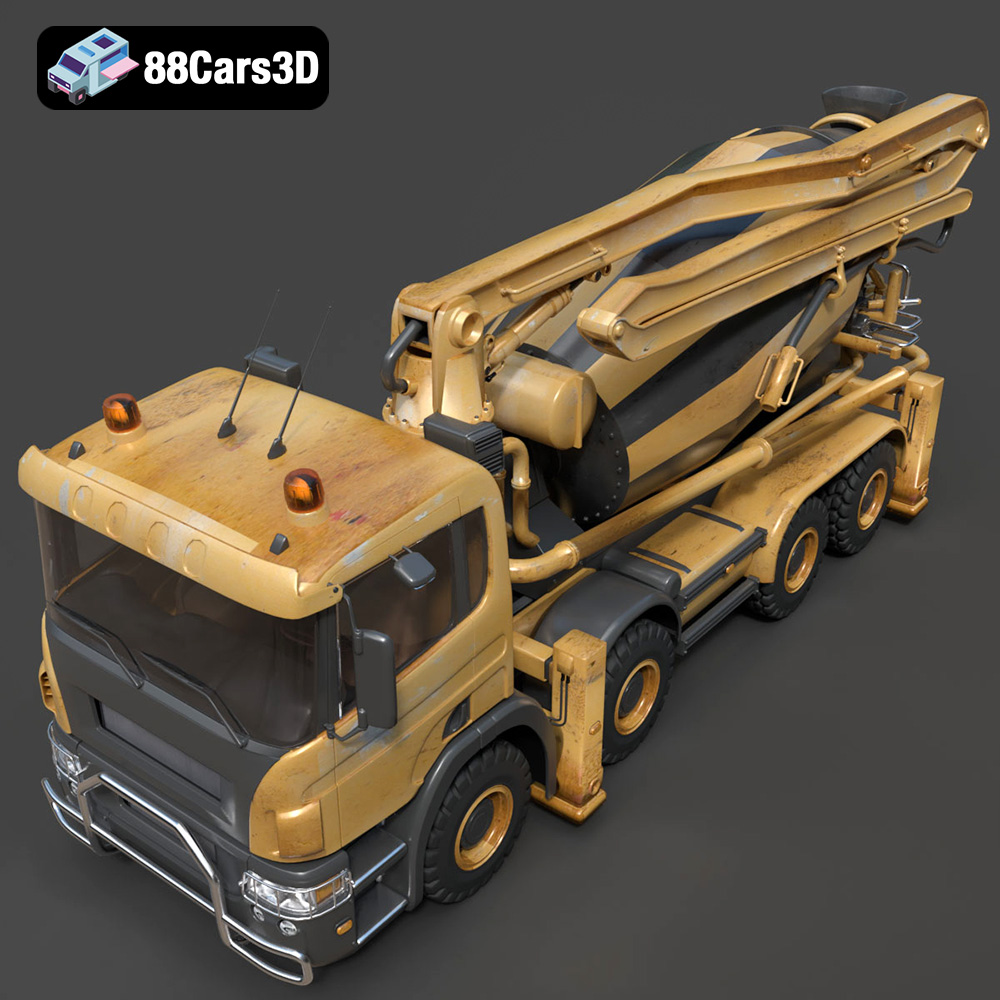
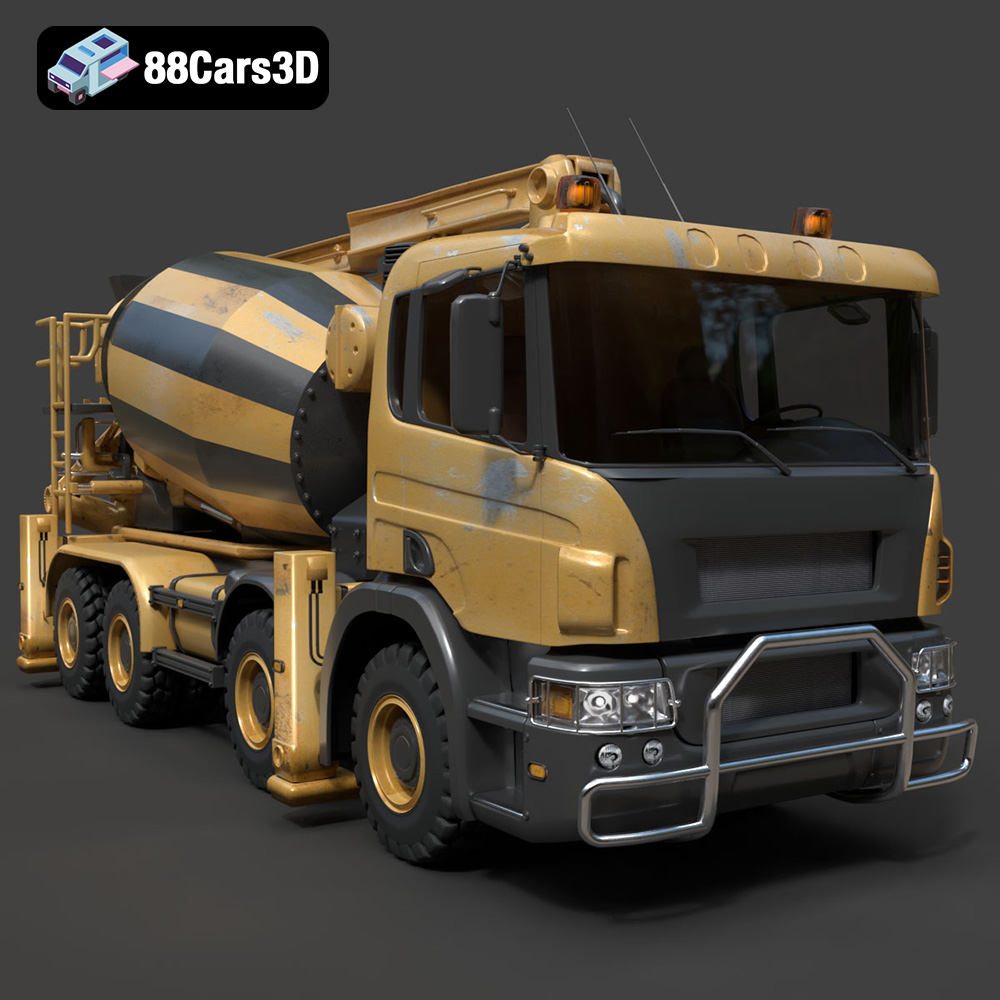
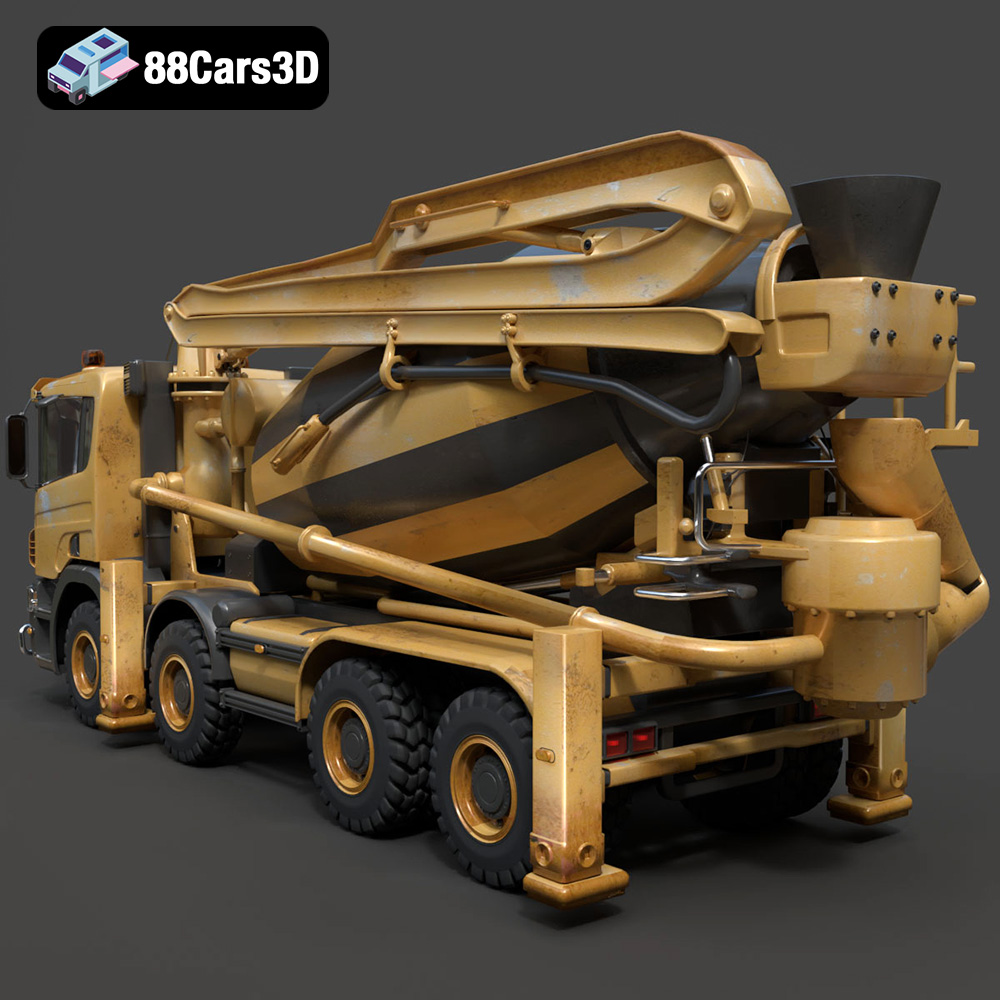
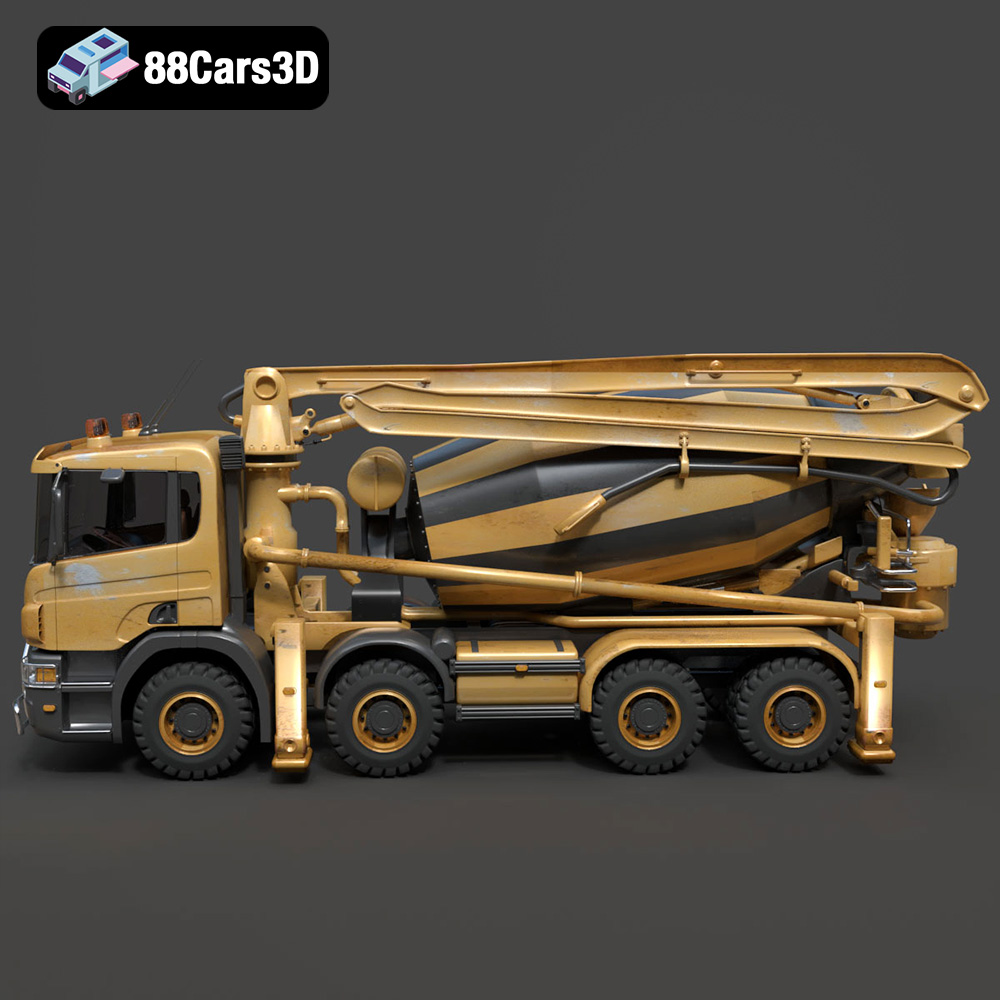
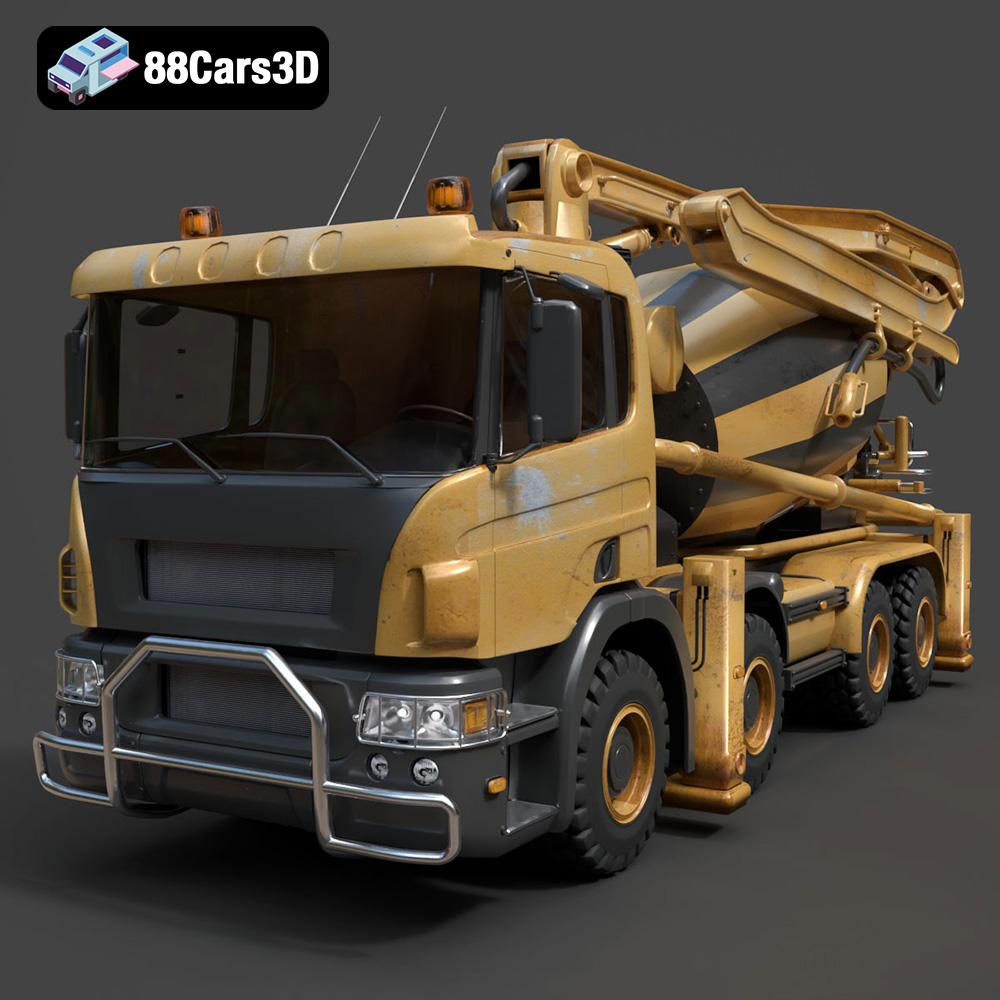
Today, we’re going to delve into the critical role of expertly crafted industrial 3D models, using a prime example: the Concrete Mixer 3D Model available at 88cars3d.com. This isn’t just a digital prop; it’s a meticulously engineered asset designed to integrate effortlessly into a multitude of professional pipelines, offering both visual realism and technical efficiency. From its heavy-duty chassis and rotating mixing drum to its detailed interior, this model exemplifies the quality necessary to elevate any project. We’ll explore how such an asset streamlines production, enhances realism, and provides a versatile foundation for everything from stunning automotive rendering to complex game environments.
The journey of any 3D model, especially complex industrial equipment like a concrete mixer, involves navigating a diverse landscape of file formats. Each format serves a specific purpose, offering unique advantages for different stages of the production pipeline, from initial modeling and texturing to real-time deployment and physical manufacturing. Understanding these distinctions is crucial for anyone working with 3D car models, game assets, or advanced visualization projects. The Concrete Mixer 3D Model, for instance, comes equipped with a comprehensive suite of formats, ensuring maximum compatibility and utility.
The `.blend` file is Blender’s native format, containing a complete scene with all objects, meshes, materials, textures (packed or linked), animations, cameras, and lighting setups. It’s a powerful format for anyone working within Blender, offering full editability. For the Concrete Mixer, a `.blend` file means you can dive straight into modifying textures, adjusting geometry, or even re-rigging components with all original scene data intact. It’s the ideal choice for designers who want to deeply customize the asset or integrate it into an existing Blender-based workflow.
`.fbx` (Filmbox) is arguably the most widely adopted interchange format in the 3D industry. Developed by Autodesk, it’s a robust choice for transferring models, animations, and rigs between different software applications like 3ds Max, Maya, Blender, and game engines like Unreal and Unity. Its strength lies in its ability to encapsulate complex scene data, including meshes, materials (often as basic placeholders that need re-setting in the target application), animations, and hierarchical structures. For a Concrete Mixer game asset, `.fbx` is almost always the go-to for importing into real-time engines, thanks to its reliability and support for animation data crucial for the rotating drum and steering.
The `.obj` (Wavefront Object) format is a simpler, more universal alternative to `.fbx`. It primarily stores geometric data (vertices, normals, UV coordinates) and can reference external `.mtl` (material template library) files for basic material properties. While it doesn’t support animation or rigging, its widespread compatibility makes it excellent for static mesh transfers across virtually any 3D software. If you’re bringing the Concrete Mixer into a legacy system or need a clean mesh for sculpting or retopology in a different program, `.obj` is often the most dependable choice.
`.glb` (GLB, a binary version of glTF) is an increasingly popular format optimized for efficient transmission and loading of 3D scenes and models in web browsers, augmented reality (AR), and virtual reality (VR) applications. It packs all necessary data – mesh, materials, textures, and even animation – into a single file, making it incredibly convenient. For displaying the Concrete Mixer in an interactive online configurator or deploying it in a mobile AR app, `.glb` offers a streamlined, performant solution without external dependencies.
`.stl` (Stereolithography) is the de facto standard for 3D printing. It represents a 3D model as a collection of triangular facets, defining only the surface geometry without color or texture information. While simple, its ubiquity ensures compatibility with virtually all 3D printers and slicing software. The Concrete Mixer’s availability in `.stl` format means enthusiasts can bring this industrial marvel to life as a physical model, requiring careful consideration of print settings and supports as outlined in its product description.
`.ply` (Polygon File Format) is another format that stores 3D data as a list of polygons, but it often includes additional properties like color per vertex, normal information, and sometimes even transparency. It’s commonly used in applications requiring high-precision mesh data, such as CAD (Computer-Aided Design), 3D scanning, and scientific visualization. For certain engineering or analysis tasks involving the Concrete Mixer’s geometry, `.ply` can offer more detailed mesh information than a basic `.obj`.
The `.unreal` format, or more specifically, assets packaged and optimized for Unreal Engine, signifies a level of preparation beyond a generic `.fbx`. This often implies pre-configured material instances, proper collision meshes, LODs (Levels of Detail), and a hierarchical structure ready for direct import and use within Unreal Engine. For the Concrete Mixer, an “unreal” specific offering suggests it’s been through a specialized pipeline, making it a true game asset that minimizes setup time for developers.
Similar to `.blend` for Blender, `.max` is the native file format for Autodesk 3ds Max. It contains a complete 3ds Max scene, including all geometry, textures, materials, lighting, cameras, and animation data. Professionals working primarily in 3ds Max for architectural visualization, automotive rendering, or complex animation will find the `.max` file invaluable, offering full creative control and the ability to leverage Max’s powerful modeling and rendering tools.
The Concrete Mixer 3D Model from 88cars3d.com stands out as a testament to the balance between visual fidelity and performance efficiency. For any project demanding high-quality industrial assets, this model delivers on all fronts, offering detailed geometry, real-world scale, and thoughtful optimization crucial for diverse applications.
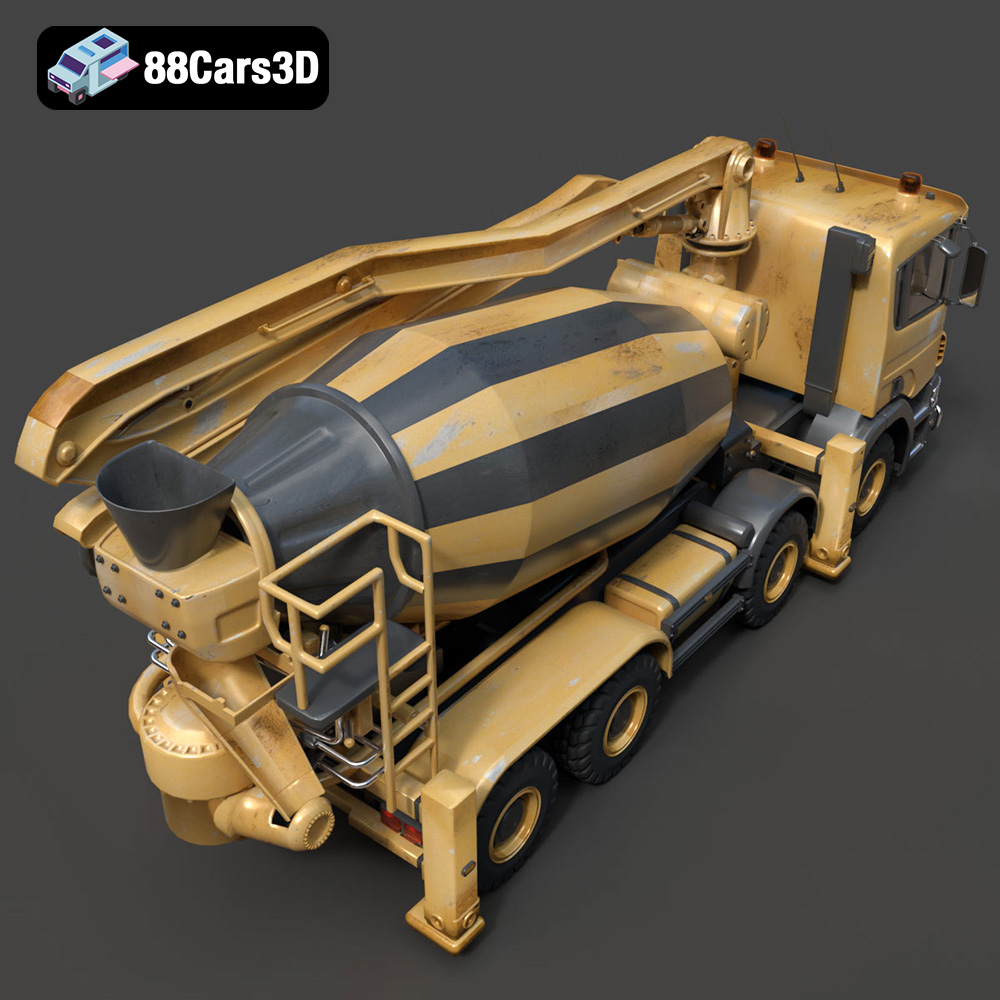
The model’s exterior is where its robust character truly shines. It boasts accurate heavy-duty frame geometry, replicating the rugged proportions of a real-world concrete mixer. The large-displacement diesel engine block and exhaust stacks are meticulously modeled, adding a layer of realism often overlooked in less detailed assets. The iconic rotating mixing drum, complete with structural mounting rings, is not just a static mesh; it’s designed for animation, allowing for dynamic scene integration. Industrial lighting details, from beacon lights to headlights and rear work lights, contribute significantly to immersion, especially in night or low-light scenarios. Furthermore, heavy-duty commercial wheels, multi-axle tire configurations, and reinforced leaf-spring suspension details are all individually modeled, ensuring the vehicle feels grounded and substantial. The separation of wheels, suspension, mixing drum, and steering components is a critical advantage for animators, enabling realistic movement and interaction.
While many industrial models might skimp on interior details, this Concrete Mixer provides a fully realized cockpit, perfect for first-person perspectives in games or simulations. The utilitarian heavy-duty driver seat and cabin layout reflect the practical nature of such vehicles. An industrial-grade steering wheel and column, accurate instrument cluster, fleet communication radios, and detailed operational control levers with hydraulic interfaces all contribute to an authentic in-cab experience. This level of detail is paramount for virtual training applications, where operators need to interact with a realistic environment, or for game development where players might spend significant time inside the vehicle.
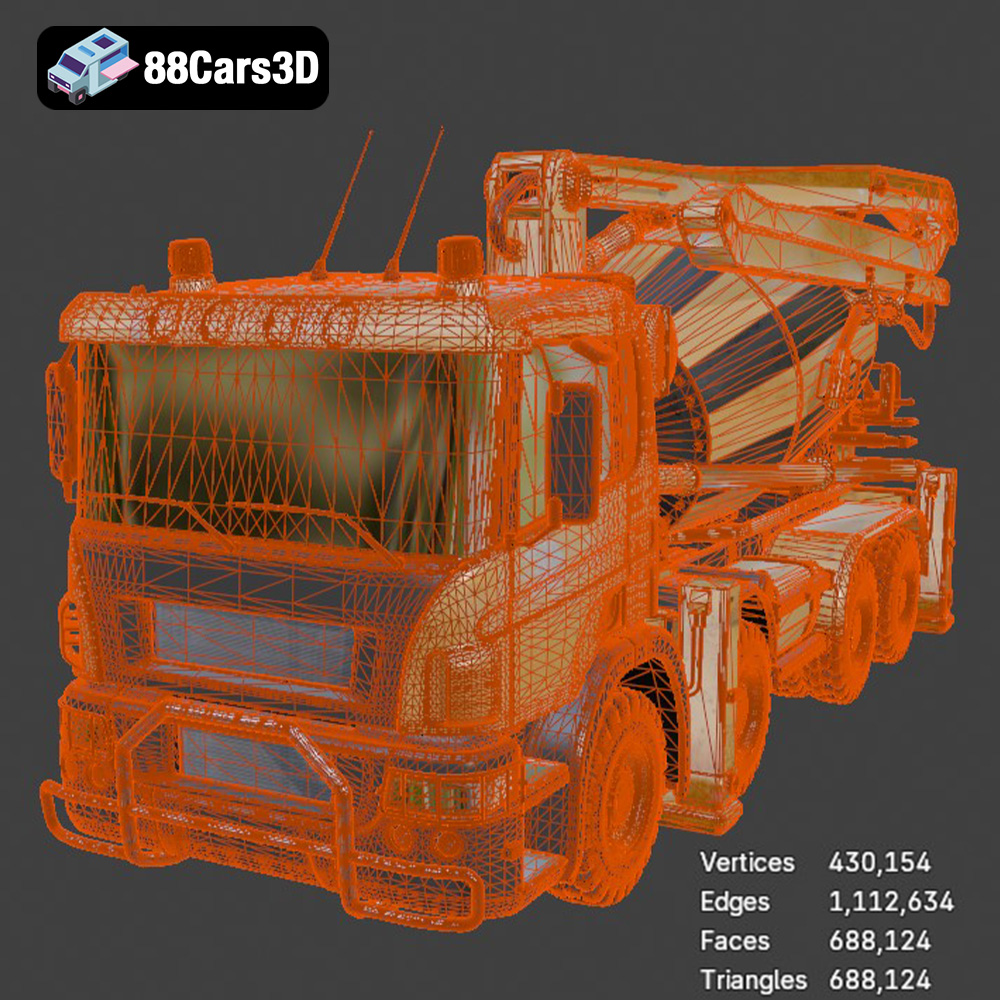
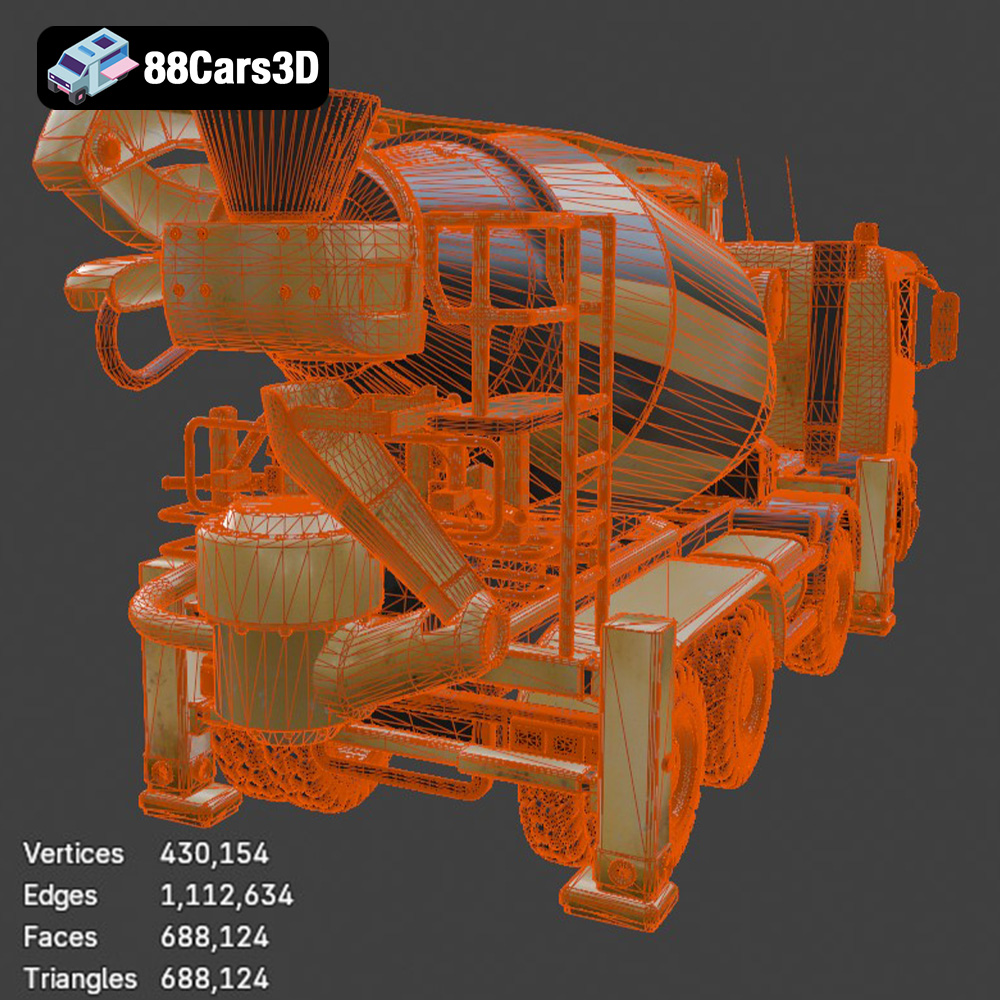
Under the hood, the Concrete Mixer 3D Model is engineered for peak performance. With 688,124 triangles, it strikes an optimal balance between visual realism and real-time engine efficiency. This polycount is robust enough to look convincing up close in high-end renders and cinematic sequences, yet optimized enough for smooth integration into demanding game engines like Unreal and Unity without excessively taxing performance. The model adheres to real-world scale accuracy, based on actual vehicle chassis specifications, which is vital for consistent scene composition and realistic physics in simulations. Crucially, it features proper pivot setups for steering, wheel rotation, drum rotation, and suspension travel. This meticulous attention to rig-readiness significantly reduces development time, as animators can immediately begin creating dynamic sequences without extensive re-rigging. Its compatibility with major 3D software platforms and real-time rendering engines further underscores its versatility and professional-grade quality.
The true value of a high-quality 3D asset like the Concrete Mixer lies in its seamless integration into diverse professional pipelines. Whether you’re a game developer, an architect, an animator, or a marketing professional, efficiency and fidelity are paramount.
For game developers and simulation creators, the Concrete Mixer 3D Model is a game-changer. Its “game-ready & optimized” status, indicated by its balanced polycount and proper pivot setups, means less time spent on optimization and more time on creative development. When imported into Unreal Engine or Unity via `.fbx` or the specific `.unreal` package, developers can quickly set up PBR (Physically Based Rendering) materials, leverage the separated components for dynamic physics (e.g., rolling wheels, rotating drum), and create interactive elements. Imagine a city-building game where these concrete mixers drive to construction sites, or an industrial simulation where a trainee operates the vehicle in VR. The model’s optimized geometry for first-person POV in the cockpit is a significant advantage for these immersive experiences, enabling realistic interaction. With proper LODs (Levels of Detail) that can be generated or included, the asset maintains visual quality even at a distance, ensuring performance across various hardware configurations.
For artists specializing in automotive rendering and architectural visualization, the `.max` and `.blend` files offer unparalleled flexibility. In 3ds Max, the complete scene data allows artists to experiment with advanced rendering engines like V-Ray or Corona, applying intricate material shaders to achieve photorealistic finishes. The model’s separate components (wheels, drum, suspension) are ideal for complex animation sequences, from driving along a construction route to engaging in a dynamic concrete pouring scene. Similarly, Blender users can harness its powerful rendering capabilities with Cycles or Eevee, leveraging the full editable `.blend` file. Customization options, such as changing cabin and drum colors for specific branding or modifying tire textures for heavy mud or street variants, are easily implemented, allowing for bespoke visualizations. This level of detail makes the Concrete Mixer an excellent candidate for industrial visual campaigns, where product accuracy and aesthetic appeal are critical.
Beyond games, the Concrete Mixer model finds extensive use in architectural visualization. Placing such a detailed heavy machine within an architectural render of a new building site instantly adds realism, context, and a sense of scale. For AR/VR applications, the `.glb` format is particularly beneficial. Imagine a client walking through a virtual construction site, viewing the concrete mixer in real-time AR on their phone, or experiencing a virtual factory tour where the mixer is a key interactive element. The model’s optimized geometry for AR/VR means smooth performance on mobile devices and VR headsets, delivering immersive experiences without compromising visual quality. This is crucial for virtual training, configurators, and mobile AR initiatives.
The utility of a robust 3D model extends beyond the digital realm. With the advent of accessible 3D printing technology, assets like the Concrete Mixer 3D Model can bridge the gap between virtual and physical, allowing for tangible representations of digital designs.
The inclusion of an `.stl` file specifically for 3D printing opens up a fascinating avenue for hobbyists, collectors, and prototyping specialists. The product description provides detailed 3D print settings, which are crucial for a successful physical output. Recommended scales (1:35, 1:48, 1:50) cater to popular modeling sizes, ensuring compatibility with existing collections. The advice on layer height (0.04–0.12 mm) and the recommendation for resin printing highlight the pursuit of fine detail, essential for capturing the intricate elements like exhaust stacks, mirrors, and the delicate chute assembly. Structural considerations like wall thickness (1.2–2.0 mm) and infill (20–30%) ensure a robust print. The necessity of supports for complex parts and the suggested print orientation for structural integrity are invaluable tips for achieving a high-quality model. Finally, the post-processing suggestions – sanding, primer, authentic fleet colors, and industrial weathering – guide users toward creating a truly display-worthy replica. This capability makes the Concrete Mixer not just a digital asset but a blueprint for a physical collectible.
In any professional production, time is money. Developing complex 3D car models or industrial equipment from scratch is a significant investment of resources, often requiring specialized modeling, texturing, and rigging expertise. This is where high-quality, ready-made game assets and visualization models offer a powerful strategic advantage.
Acquiring an asset like the Concrete Mixer 3D Model from 88cars3d.com instantly injects a meticulously crafted element into your project. Instead of spending weeks on modeling, UV unwrapping, texturing, and rigging, your team can focus on integrating the asset, setting up scenes, and refining gameplay or animation. This drastically shortens production cycles, allowing teams to meet tighter deadlines or allocate resources to other critical areas of development. For small studios or independent creators, such assets are often the only way to achieve high production values without an extensive art team.
Pre-made assets from reputable marketplaces are often held to high standards of quality. The Concrete Mixer, with its specified polycount, real-world scale, proper pivot setups, and comprehensive file formats, embodies this standard. This consistency in quality ensures that your overall project maintains a professional aesthetic, avoiding the pitfalls of disparate asset styles or varying levels of detail that can break immersion. It also means the technical foundation for integration is solid, reducing unforeseen compatibility issues.
The cost of purchasing a premium 3D model is typically a fraction of what it would cost to commission or develop an equivalent asset in-house. This cost-effectiveness allows projects with limited budgets to access high-fidelity content. Furthermore, it frees up internal art teams to focus on unique, bespoke elements that are central to the project’s core identity, rather than generic background props or standard industrial vehicles. This strategic allocation of resources maximizes efficiency and creative output.
Even with a ready-to-use model, the ability to customize and adapt it is crucial for unique project requirements and future scalability. The Concrete Mixer 3D Model is designed with this flexibility in mind, ensuring it remains a valuable asset for years to come.
The product description highlights several customization options that empower users to adapt the model to their exact vision. The ability to change cabin and drum colors is fundamental for reflecting specific fleet branding, company logos, or artistic styles. Modifying tire textures, from heavy mud variants for a rugged construction site to cleaner street variants for city environments, allows for nuanced scene detailing. Adjusting material finishes (matte, gloss, heavy weathering) can dramatically alter the vehicle’s perceived age and operational history, contributing to the narrative of the scene. Furthermore, adapting lighting for different work environments, such as day/night cycles or specific interior lighting setups, enhances realism. These options ensure that while the core model is robust, its presentation can be uniquely tailored.
A versatile 3D asset, supported by multiple file formats and designed for both real-time and offline rendering, is an investment in your project’s future. As technology evolves, so do rendering techniques and engine requirements. An asset like the Concrete Mixer, which is compatible with major software platforms and optimized for current-generation game engines, is less likely to become obsolete quickly. Its modular nature, with separated components and proper pivot setups, makes it adaptable to new animation systems, physics simulations, and rendering pipelines that may emerge. By choosing professional-grade assets from platforms like 88cars3d.com, developers and artists are building a resilient library capable of supporting their creative endeavors for years to come.
The creation of believable, high-performance 3D environments and applications hinges on the quality of individual assets. For anyone working with industrial scenes, construction simulations, or even dynamic automotive rendering, a detailed and optimized model like the Concrete Mixer 3D Model is an indispensable tool. We’ve explored how its meticulous design, from external robustness to interior intricacies, coupled with its versatile file format support, makes it ideal for game development, AR/VR, visualization, and even 3D printing.
Understanding the nuances of file formats like `.fbx`, `.obj`, `.glb`, and the specific engine-ready `.unreal` package empowers developers to choose the right tool for each job, streamlining workflows in 3ds Max, Blender, Unreal Engine, and beyond. By leveraging such expertly crafted 3D car models and heavy machinery assets, artists and developers can significantly reduce production times, ensure consistent quality, and focus on delivering truly immersive and impactful digital experiences. Investing in premium assets from trusted sources like 88cars3d.com is not just about acquiring a model; it’s about acquiring a foundation for success, a building block that allows your creative vision to take concrete form.
The Concrete Mixer is a powerhouse of the construction site, renowned for its heavy-duty utility and iconic rotating mixing drum. This industrial marvel is characterized by its robust chassis, immense diesel engine, and the intricate rear chute assembly designed for precise concrete pouring. Its utilitarian styling and rugged aesthetic make it an essential element for any modern construction or city environment.
$47.50
.blend
.fbx
.glb
.max
.obj
.ply
.rendering
.stl
.truck
.unreal
concrete-mixer
construction-vehicle
game asset
game-ready
heavy-machinery
industrial-equipment
low-poly
optimized
truck-3d-model
VR/AR