Get 20% OFF All Premium 3D & STL Models!

The allure of a classic car is undeniable. It’s a blend of masterful engineering, iconic design, and a tangible piece of history. For automotive enthusiasts and digital creators alike, the desire to capture this essence in a virtual realm is a driving force. Whether for a high-fidelity rendering, an immersive game environment, or a detailed AR/VR experience, the demand for truly exceptional 3D car models has never been higher.
Crafting such a model requires an intricate balance of artistic vision and technical precision. It’s about more than just replicating shapes; it’s about capturing the soul of the vehicle, from its sweeping curves to the meticulous detailing of its engine bay. This dedication to authenticity is precisely what defines a premium 3D asset, and it’s perfectly embodied in models like the Shelby Cobra 427 2013 3D Model available on 88cars3d.com. This continuation model pays homage to an American legend, and bringing it into the digital world demands the same level of respect and craftsmanship. Understanding the complexities behind such assets is crucial for anyone looking to leverage them effectively in professional projects.
In the vast landscape of 3D content creation, choosing the right file format is paramount. It dictates compatibility, workflow efficiency, and the ultimate utility of your 3D asset. A comprehensive model, such as the Shelby Cobra 427 2013, typically comes in a variety of formats to ensure maximum versatility across different software and applications. Each format serves a specific purpose, offering unique advantages for particular pipelines.
The availability of such a diverse range of formats for the Shelby Cobra 427 2013 3D Model underscores its professional-grade quality and adaptability, making it a truly versatile asset for any digital project.
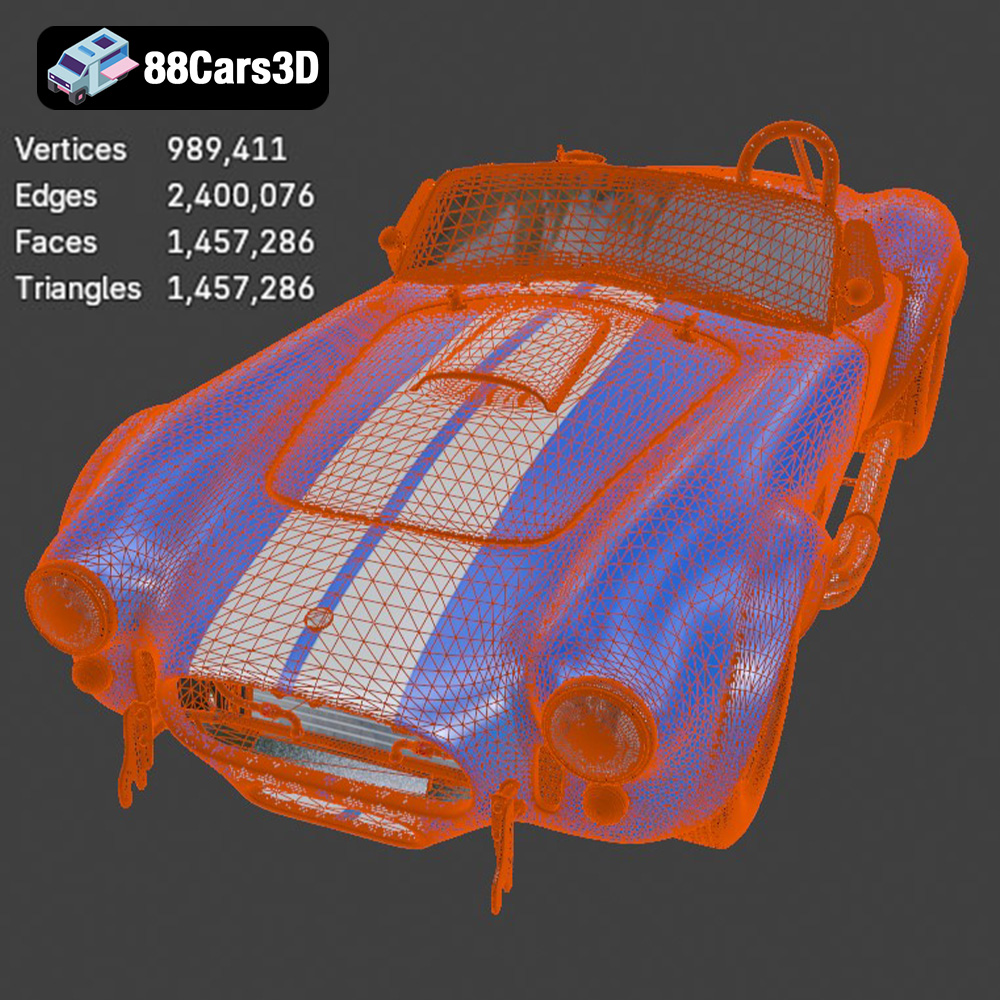
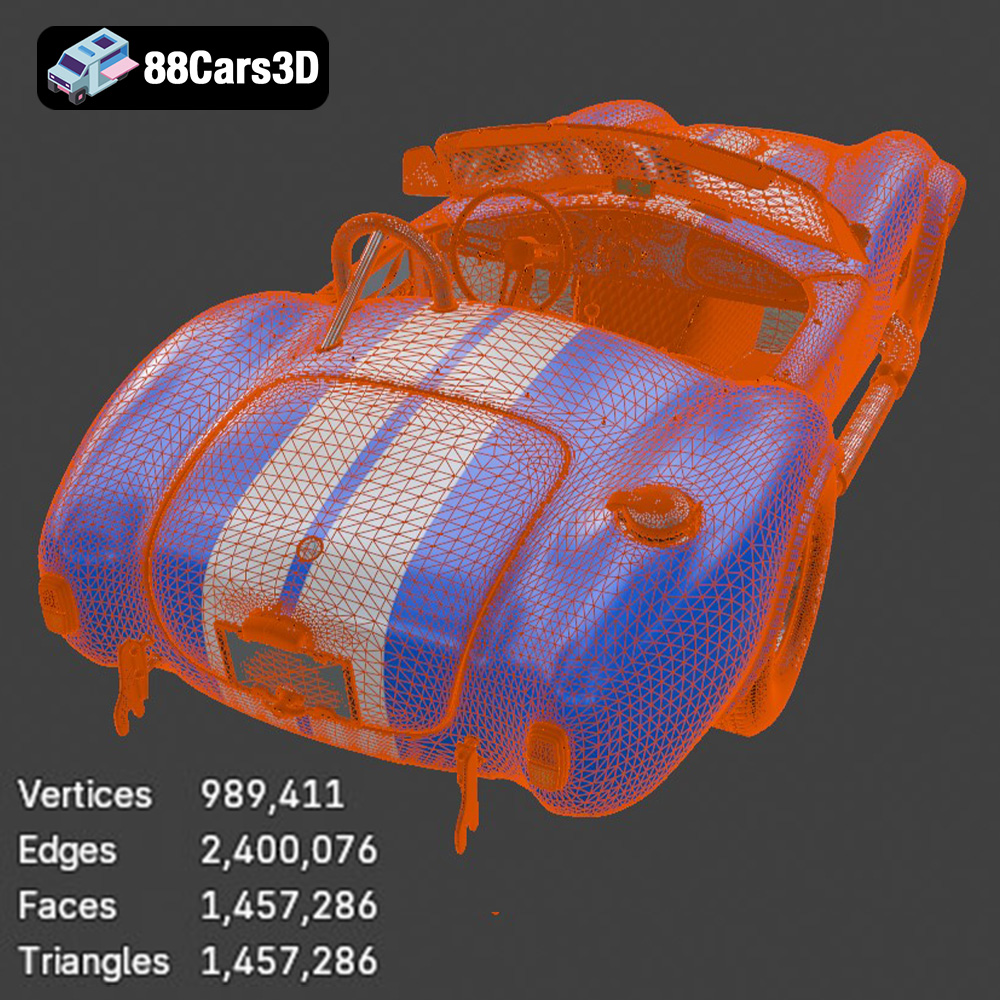
In today’s visually-driven world, the quality of 3D assets can make or break a project. For automotive visualization, game development, or AR/VR experiences, a high-quality 3D car model is more than just a decorative element; it’s a critical component that defines immersion, brand perception, and overall user experience. The Shelby Cobra 427 2013, with its 1,457,286 triangle count, exemplifies this dedication to quality, offering a level of detail that stands up to the closest inspection.
Photorealism is the gold standard in automotive rendering. Achieving it requires more than just a good render engine; it demands a technically sound 3D model. High-quality 3D car models feature clean, optimized topology that minimizes visual artifacts, supports smooth subdivisions, and facilitates realistic deformation for animation. Accurate UV mapping is essential for textures to wrap correctly without stretching or distortion. Furthermore, a model’s real-world scale and proper pivot points for components like wheels and suspension are non-negotiable for realistic physics and animation in game engines or simulation software. Without these foundational technical elements, even the most powerful rendering software will struggle to produce convincing results.
Developing a complex 3D car model from scratch is an incredibly time-consuming and expensive endeavor, often requiring hundreds of hours from skilled 3D artists. This involves extensive blueprint research, precise modeling, detailed UV unwrapping, material creation, and optimization for various platforms. For studios and individual artists, purchasing a professionally crafted asset like the Shelby Cobra 427 3D Model from 88cars3d.com offers immense time and cost savings. It allows creators to bypass the lengthy modeling phase and jump straight into project-specific tasks like scene integration, lighting, and animation, significantly accelerating production timelines and reducing overhead. This efficiency allows creative teams to focus their resources on innovation and fine-tuning their core project goals rather than reinventing the wheel.
Automotive rendering is an art form, transforming raw 3D data into stunning, lifelike imagery. The process involves meticulous attention to lighting, materials, and composition, all built upon a high-fidelity 3D model. The Shelby Cobra 427 2013 3D Model, with its detailed exterior, cockpit, and engine features, provides the perfect canvas for such an endeavor.
In professional rendering applications like 3ds Max or Blender, the workflow typically begins with scene setup. This involves importing the chosen file format (e.g., .max or .blend for native projects, or .fbx/.obj for cross-software compatibility) and establishing a realistic environment. High Dynamic Range Imagery (HDRI) maps are crucial for capturing natural lighting and reflections, simulating real-world studios or outdoor locations. Material creation is another critical step, where physically-based rendering (PBR) workflows are leveraged to accurately simulate paint, chrome, glass, and leather. For the Shelby Cobra 427, this means defining a deep metallic paint finish, reflective chrome bezels on the headlights, and the subtle imperfections of a leather-wrapped interior. Render engines like V-Ray, Corona Renderer (for 3ds Max), or Cycles and Eevee (for Blender) then process this information, calculating light bounces, shadows, and reflections to produce stunning, photorealistic images. The model’s intricate details, like the V8 engine block and independent suspension, shine through when rendered with precision, elevating the visual fidelity to cinematic levels.
Imagine a global automotive brand launching a digital campaign for a modern tribute to a classic. They need a cinematic short film showcasing the heritage and power of the Shelby Cobra 427. Using the provided 3D model, a team of artists can quickly integrate it into a virtual studio environment. They would animate the car’s approach, a slow reveal of its iconic lines, perhaps a close-up on the detailed Halibrand-style wheels and the aggressive side-pipe exhaust. With the model’s separate components for animation, subtle suspension compression and steering articulation can be added for enhanced realism. Lighting designers would sculpt the scene with virtual studio lights, highlighting the muscular curves and the deep reflections on the bodywork. Post-production in software like Adobe After Effects or Nuke would add motion blur, depth of field, and color grading, transforming the raw renders into a breathtaking visual narrative that honors the Cobra’s legacy. This level of production quality is only possible with a meticulously crafted 3D asset like the one available on 88cars3d.com.
The demand for immersive, interactive experiences means that high-fidelity 3D models are no longer confined to static renders. They are now dynamic assets within game engines, AR/VR applications, and real-time simulators. Integrating a detailed vehicle like the Shelby Cobra 427 2013 into a real-time environment requires careful optimization and setup, ensuring both visual quality and performance.
When bringing the Shelby Cobra 427 3D model into Unreal Engine, the process begins with importing the .fbx or the optimized .unreal format. While the model boasts a robust 1.4 million triangles, which is suitable for many modern games, further optimization steps may be considered for extremely demanding scenarios or mobile AR. This could involve generating Levels of Detail (LODs) – lower polygon versions of the model that swap in when the car is further from the camera, significantly improving performance without noticeable visual degradation. Artists would then set up PBR materials within Unreal, connecting the various texture maps (albedo, normal, roughness, metallic, ambient occlusion) to create realistic surfaces. Collision meshes are essential to define the car’s physical presence in the world, allowing for realistic interaction with other objects and terrain. For the Shelby Cobra, implementing vehicle physics (like those found in Unreal’s Chaos Vehicle system) would bring it to life, simulating weight, engine power, and suspension dynamics, creating an authentic driving experience for racing games or simulators.
The compact and efficient .glb format makes the Shelby Cobra 427 ideal for AR/VR applications and interactive product configurators. Imagine a potential buyer using an AR app on their phone, able to place a full-scale, highly detailed Shelby Cobra 427 in their driveway. They could walk around it, explore its exterior features, and even peer into the cockpit. In a VR showroom, users could “sit” inside the car, examining the vintage-style Smith instrument cluster, the authentic wood-rimmed steering wheel, and the classic leather bucket seats up close. Developers can leverage the model’s customization options – changing body and stripe colors, modifying tire textures, or adjusting material finishes – to create dynamic, interactive experiences that allow users to personalize their dream car in real-time. This level of interactivity, driven by a high-quality 3D asset, blurs the lines between the virtual and the real, offering unparalleled engagement for automotive brands and enthusiasts.
The versatility of a high-quality 3D model extends beyond digital displays. With the advent of accessible 3D printing technologies, these virtual assets can now be transformed into tangible objects. The Shelby Cobra 427 2013 3D Model, specifically its .stl format, opens up a world of possibilities for hobbyists, collectors, and even professional prototyping.
Converting a detailed render-ready model into a print-ready file requires specific considerations. The .stl format is the industry standard for 3D printing, representing the model’s surface geometry as a collection of triangles. For the Shelby Cobra, the existing high polygon count (1.4 million triangles) is an excellent starting point, ensuring intricate details are captured. However, the model must be “watertight” – meaning it has no holes or non-manifold geometry – to ensure a successful print. Specialized software is used to check and repair any mesh issues. Given the complexity of the Cobra, breaking the model into smaller, manageable parts (e.g., chassis, wheels, engine block, interior) before printing can improve print quality and reduce the need for extensive support structures. The product description’s recommendations for layer height, wall thickness, infill, and supports provide a valuable guide for achieving optimal results, especially for parts like the side-pipe exhausts and independent suspension.
While FDM (Fused Deposition Modeling) printers can produce decent results, resin (SLA/DLP) 3D printers are highly recommended for capturing the fine details of a model like the Shelby Cobra 427. Resin printing offers significantly higher resolution, allowing for smooth surfaces and sharp edges that mimic the car’s actual finish. This is crucial for rendering the accurate frame geometry, classic round headlights, and the intricate V8 engine block. Post-processing, involving sanding, priming, and painting with authentic factory colors and metallic finishes, transforms the raw 3D print into a display-worthy replica. This physical manifestation of the digital asset provides a unique way for enthusiasts to connect with automotive history and showcases the incredible flexibility of professional 3D car models.
A truly professional 3D car model isn’t just a static representation; it’s a dynamic foundation for endless creative possibilities. The Shelby Cobra 427 2013 3D Model is designed with versatility in mind, offering extensive customization options that allow artists and developers to tailor it precisely to their project’s needs, extending its value far beyond a single use case.
One of the primary advantages of a well-structured 3D model is its adaptability. For the Shelby Cobra 427, this means easily modifying its appearance to suit different themes or branding requirements. Artists can effortlessly change the body and stripe colors, experimenting with classic factory finishes or bold, custom palettes. Adjusting material properties – from a high-gloss, showroom-ready metallic sheen to a matte, race-worn look – can dramatically alter the car’s character. Imagine adapting the model for different scenarios: a pristine, polished version for a luxury ad campaign, a gritty, road-worn variant for a post-apocalyptic game, or even a concept livery for a futuristic racing simulator. The ability to swap tire textures (e.g., from street performance to racing slicks) further enhances this flexibility, allowing the same base model to serve a multitude of visual narratives without the need for additional modeling.
The Shelby Cobra 427 3D Model is not just visually rich but also technically prepared for dynamic applications. With separate wheels, suspension, and steering components, it’s inherently animation-ready. This crucial feature enables realistic simulations of driving, turning, and suspension compression, which are vital for racing games, cinematic sequences, or interactive vehicle demonstrations. Furthermore, the model’s robust construction allows for seamless adaptation to diverse lighting conditions and environments. Whether placed under the harsh desert sun, in a moody urban night scene, or within a brightly lit virtual garage, its material definition and precise geometry ensure it reacts realistically to environmental lighting, maintaining its photorealism across any setting. This level of inherent flexibility makes the Shelby Cobra 427 an invaluable asset for any project requiring a truly dynamic and adaptable 3D vehicle.
From the captivating curves of its exterior to the intricate details of its V8 engine and classic cockpit, the Shelby Cobra 427 2013 3D Model stands as a testament to the power of high-fidelity digital craftsmanship. As we’ve explored, such a premium 3D car model is more than just a collection of polygons; it’s a versatile tool that underpins success across a myriad of digital and physical applications.
Whether your project demands photorealistic renderings, seamless integration into demanding game engines, immersive AR/VR experiences, or even detailed 3D printed replicas, the technical specifications and multi-format compatibility of this asset ensure it meets professional standards. Its carefully optimized topology and included customization options empower artists and developers to unlock unparalleled creative potential, saving valuable time and resources while delivering exceptional results. Investing in a high-quality 3D car model like the Shelby Cobra 427 from 88cars3d.com is investing in efficiency, versatility, and uncompromising visual excellence for your next automotive-themed endeavor.
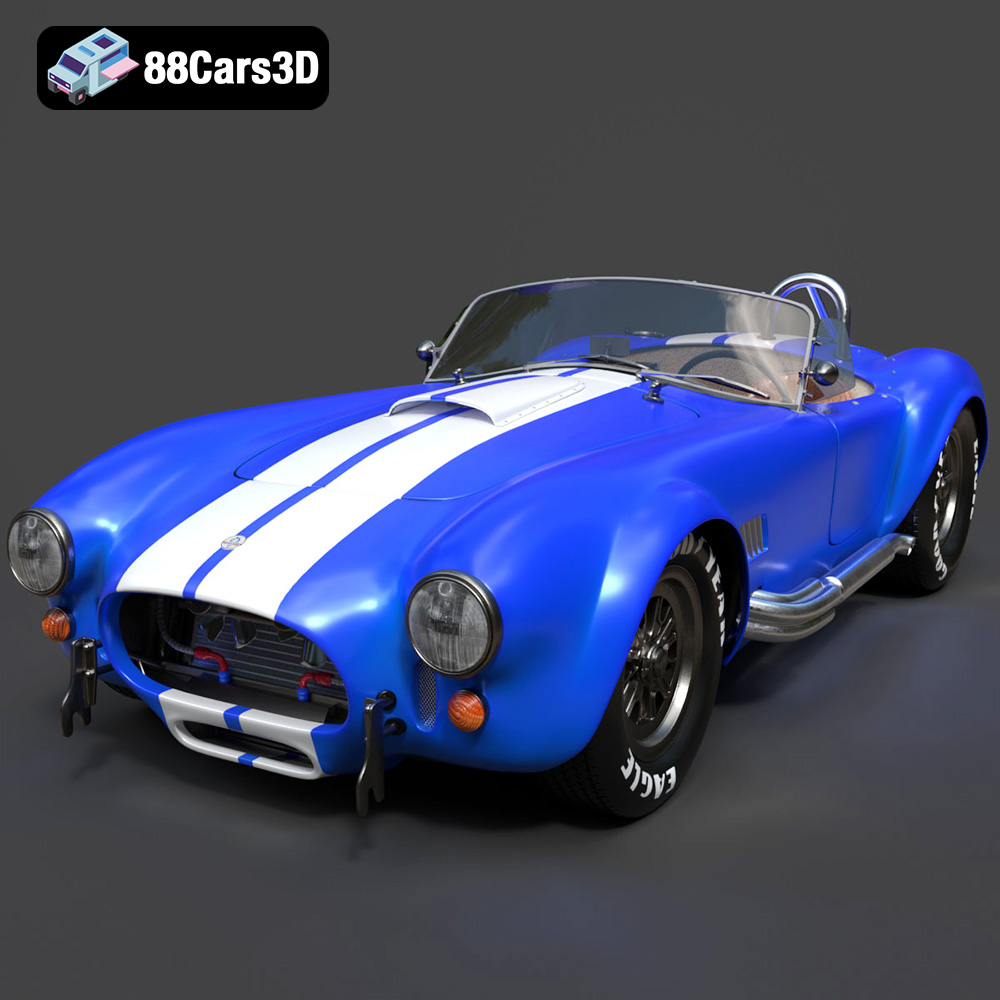
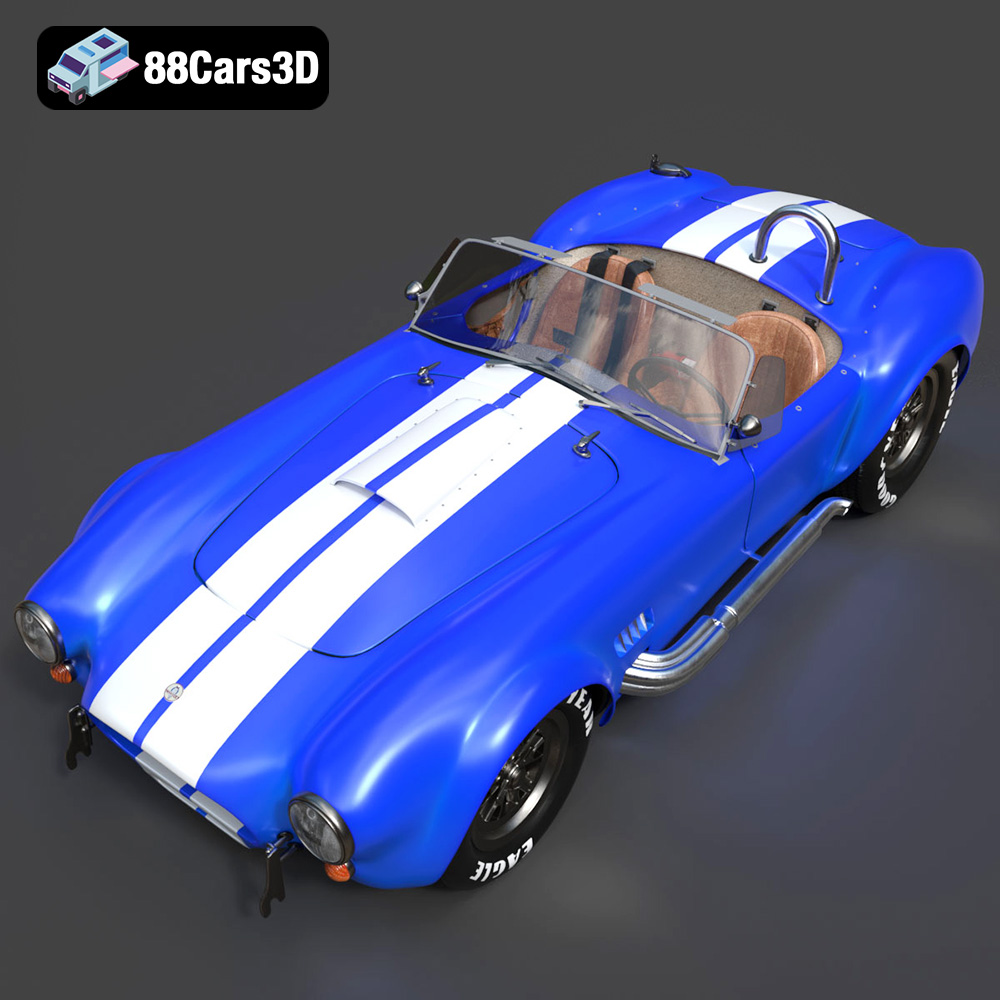
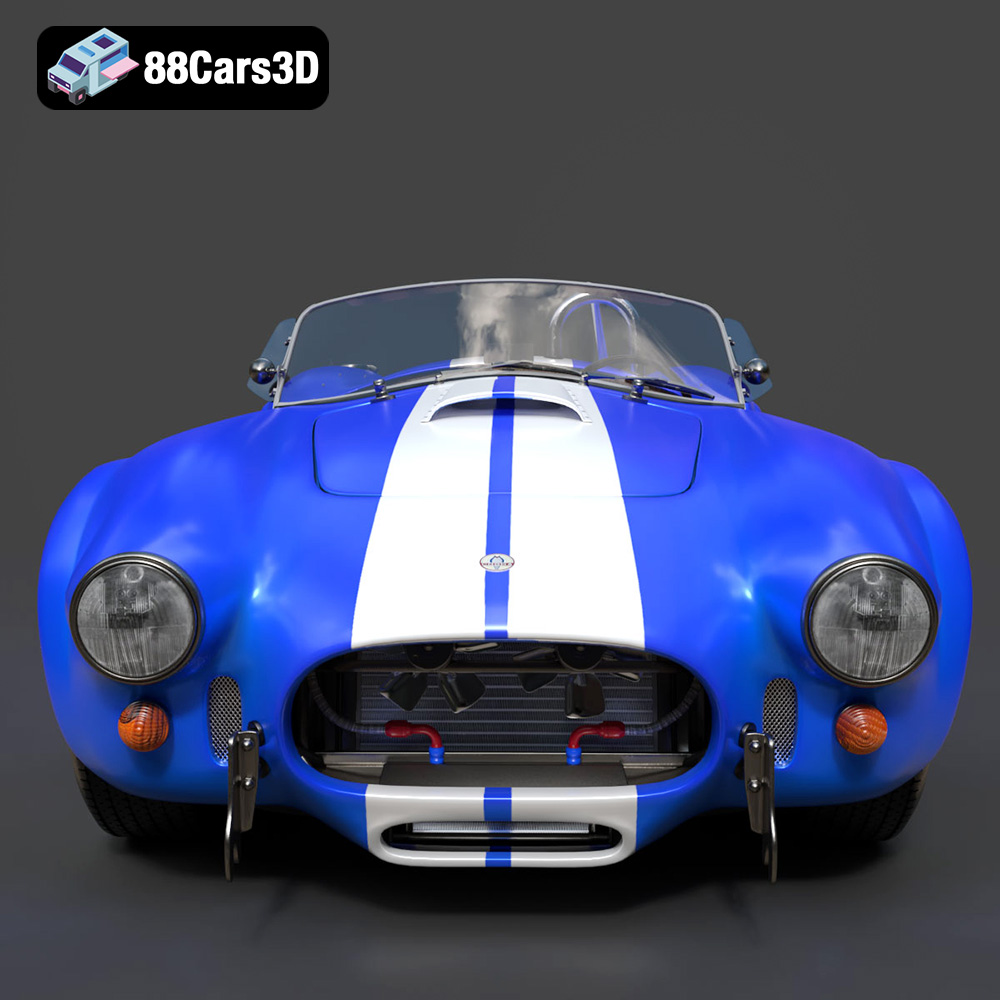
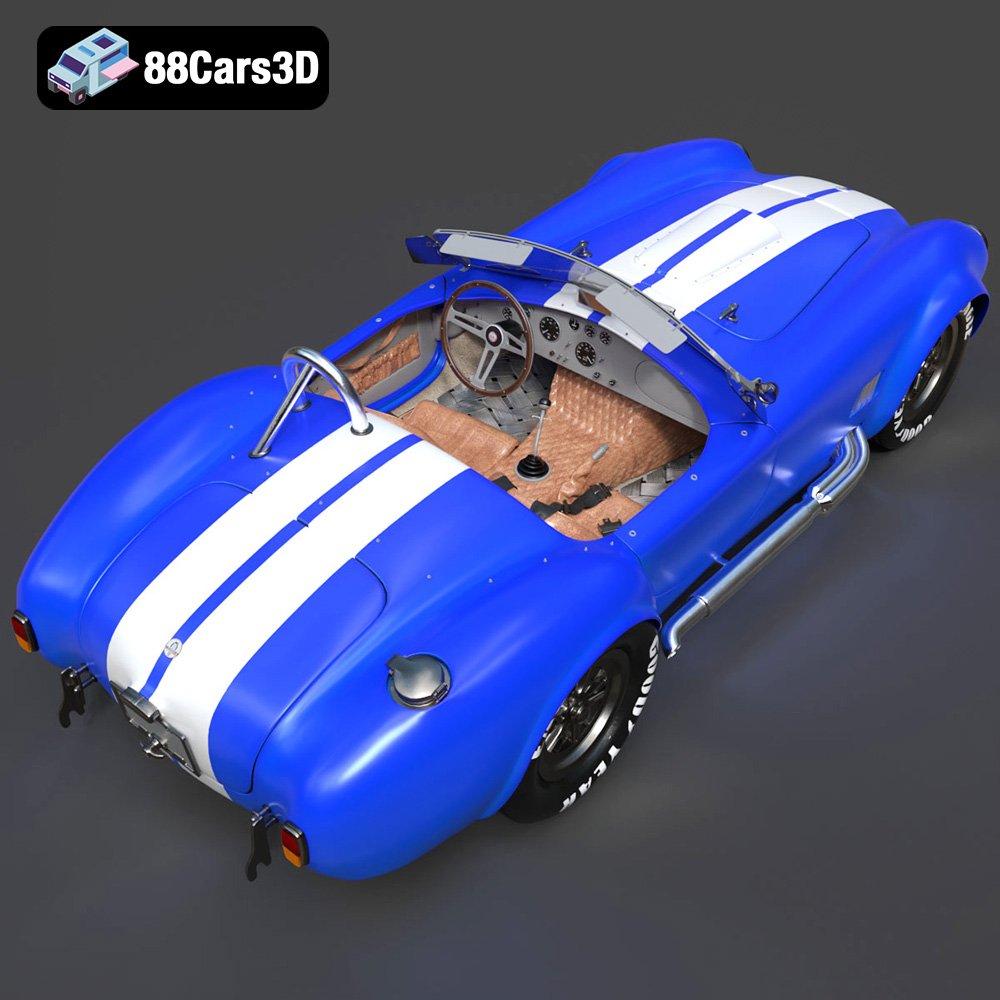
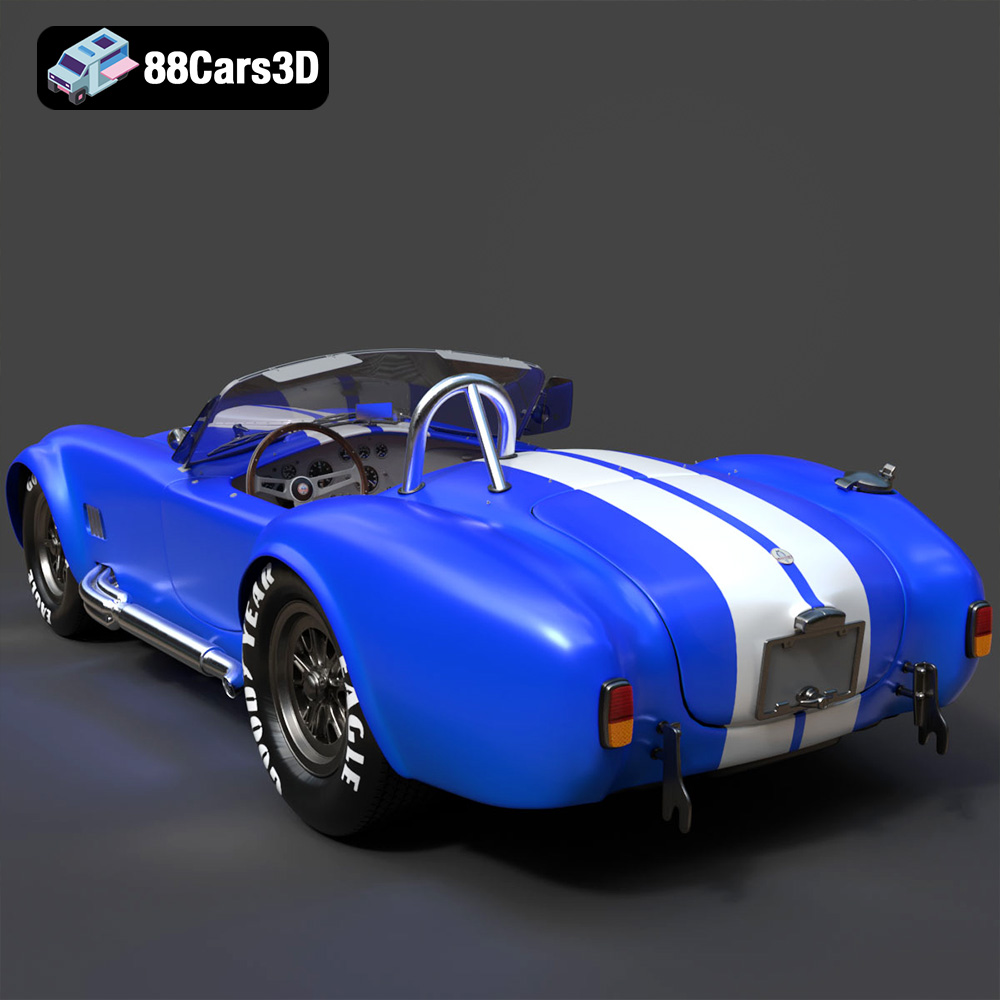
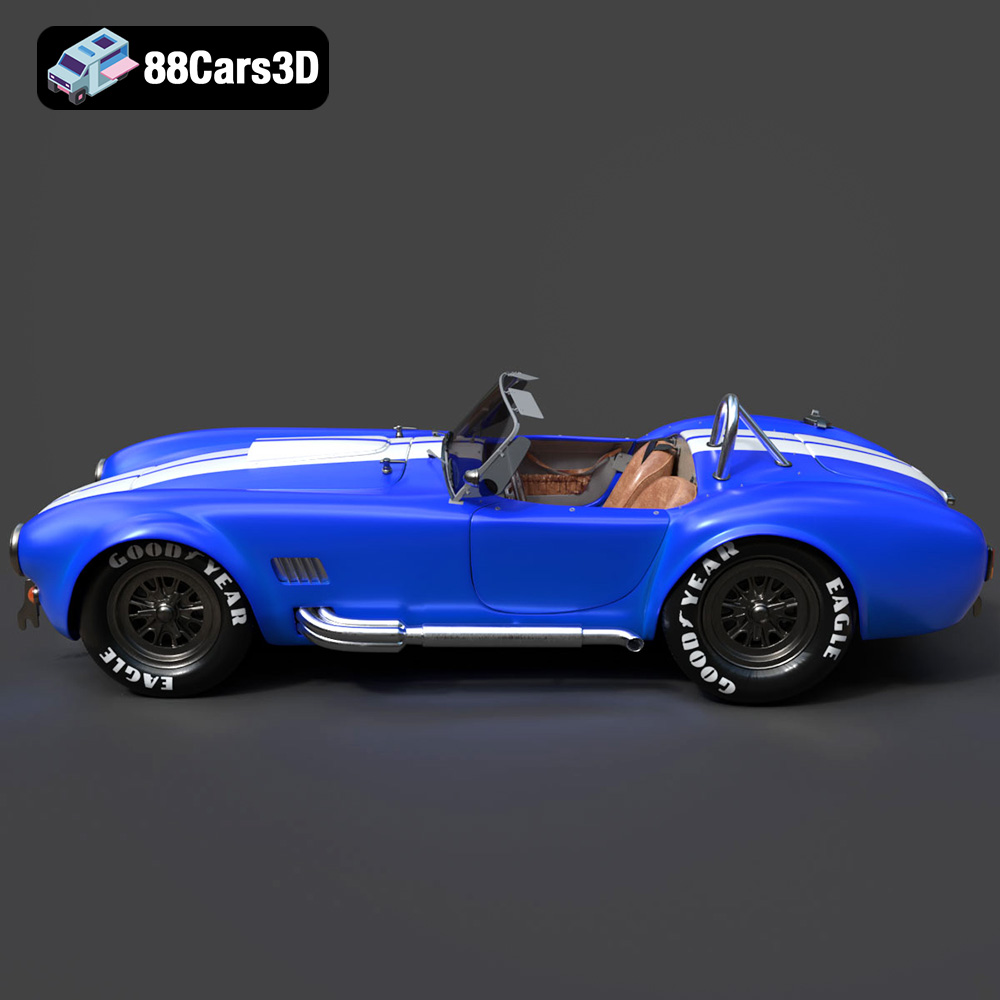
The Shelby Cobra 427 2013 continuation model is a masterful tribute to one of the most iconic American muscle cars ever produced, blending classic 1960s heritage with modern precision. This legendary roadster is celebrated for its muscular, sweeping curves, wide rear fenders, and aggressive side-pipe exhaust system. Known for its raw power and unmistakable V8 engine roar, the Cobra 427 stands as a timeless symbol of performance and automotive styling.
This premium 3D model boasts an impressive 1,457,286 triangle count, offering exceptional visual fidelity and intricate detailing suitable for high-end rendering and close-up shots. Despite its high polygon count, the topology is carefully structured to integrate into modern game engines and professional visualization pipelines, making it a versatile asset for game development, AR/VR experiences, and cinematic animation.
Perfect for classic car configurators, high-octane racing games, realistic garage scenes, and automotive brand visualizations.
.blend, .fbx, .obj, .glb, .stl, .ply, .unreal, .max
Tags:
shelby, cobra-427, classic-car, muscle-car, roadster, sports-car, game-ready, low-poly, optimized, car-3d-model, game-asset, rendering, vr-ar, blend, fbx, obj, glb, stl, ply, unreal, max
$73.00
.blend
.fbx
.glb
.max
.obj
.ply
.rendering
.roadster
.shelby
.sports car
.stl
.unreal
car-3d-model
classic-car
cobra-427
game asset
game-ready
low-poly
muscle-car
optimized
VR/AR