Get 20% OFF All Premium 3D & STL Models!

In the vast landscape of 3D visualization, the demand for highly detailed and functionally accurate industrial assets is ever-growing. From the meticulous simulations of construction sites to the immersive realism of modern video games, heavy machinery models play a crucial role in bringing virtual worlds to life. These aren’t just static props; they are often complex engineering marvels, meticulously recreated to serve a multitude of professional applications.
Understanding the intricacies of such models – their topology, material fidelity, and adaptability across various platforms – is paramount for any professional in 3D modeling, game development, or architectural visualization. Today, we’re taking an in-depth look at a prime example of such an asset: the Articulated Tandem Road Roller Dusty 3D Model. This particular model, available on 88cars3d.com, offers a compelling blend of visual authenticity and technical optimization, making it an indispensable tool for a wide array of projects.
Whether you’re an environmental artist building a sprawling construction scene, a game developer designing a heavy machinery simulator, or an architect showcasing a new development, the quality of your 3D assets directly impacts the final output. The Articulated Tandem Road Roller Dusty model embodies the rugged essence of real-world equipment, designed to integrate seamlessly into high-fidelity renders, interactive experiences, and even physical 3D prints.
The choice of file format for a 3D model is not merely a matter of preference; it’s a critical technical decision that impacts compatibility, feature retention, and overall workflow efficiency. For professional 3D artists, understanding the strengths and weaknesses of different formats is essential for seamless integration and optimal project delivery. The Articulated Tandem Road Roller Dusty 3D model, for instance, is offered in a comprehensive suite of formats, each serving a specific purpose in the production pipeline.
The .blend format is the native file type for Blender, the popular open-source 3D creation suite. When you download a .blend file, you’re getting the complete Blender scene, including all geometry, materials, textures, lighting, cameras, animations, rigging, and even modifiers and physics simulations. This format is ideal for users who primarily work in Blender and require full editability. It allows for direct manipulation of the model’s structure, materials, and pivot points, offering unparalleled flexibility for customization. For the Articulated Tandem Road Roller Dusty model, the .blend file would enable a Blender artist to easily change equipment colors, modify weathering effects, or even animate the articulation joint with precision.
.fbx (Filmbox) is arguably the most widely adopted 3D file format in the industry, particularly favored for game development, animation, and real-time pipelines like Unreal Engine and Unity. Developed by Autodesk, FBX is excellent at preserving hierarchical data, materials, textures, animations, and skeletal deformation. While it can be more complex to work with than a simple OBJ, its ability to package a complete animated scene with correct transformations makes it indispensable. For game assets like the Articulated Tandem Road Roller, FBX is the go-to for exporting into game engines, ensuring that pivots, scale, and potential animations are transferred accurately.
The .obj (Wavefront OBJ) format is a widely supported, simpler alternative to FBX, known for its excellent cross-software compatibility. It primarily stores geometry (vertices, normals, texture coordinates, and faces) and references external material files (MTL). OBJ files are textual and human-readable, making them robust and less prone to proprietary issues. While they don’t typically store complex animations, rigging, or scene data, they are perfect for basic mesh exchange between different 3D applications. When you need to get the clean mesh of the road roller into virtually any 3D software for further texturing or rendering, .obj is a reliable choice.
.glb (GL Transmission Format Binary) is a relatively newer format designed specifically for the efficient transmission and loading of 3D scenes and models in web and real-time applications. It is a binary version of glTF, which packages all assets (geometry, materials, textures, animations) into a single, self-contained file. GLB is highly optimized for performance and is the preferred format for AR, VR, and browser-based 3D viewers. The Articulated Tandem Road Roller in .glb format would be perfect for embedding into a website, a virtual showroom, or an augmented reality app, providing a lightweight yet visually rich experience.
.stl (STereoLithography) is the de facto standard for 3D printing. It represents a 3D model as a collection of unconnected triangular facets, defining only the surface geometry without color, texture, or other CAD attributes. The primary requirement for an STL file is that it must be a “watertight” mesh, meaning it has no holes or gaps, allowing the 3D printer to correctly interpret the object’s volume. While it lacks visual data, the .stl version of the Articulated Tandem Road Roller is invaluable for producing physical scale models for dioramas, prototypes, or educational purposes, leveraging its carefully optimized geometry for printability.
The .ply (Polygon File Format, or Stanford Triangle Format) is similar to OBJ in that it stores geometric data, but it offers more flexibility for storing additional attributes per vertex or face, such as color, transparency, normals, texture coordinates, and even reliability information. It’s often used in scientific applications, 3D scanning, and CAD/CAM for storing complex mesh data with high precision. For analytical purposes or niche workflows requiring specific mesh properties, the .ply format for the road roller provides a robust and detailed representation.
The .unreal format, or more accurately, assets packaged for Unreal Engine, typically refers to files that have been specifically prepared and sometimes already imported into an Unreal project, often leveraging a datasmith or custom pipeline. This might involve optimized material instances, collision meshes, LODs (Levels of Detail), and blueprint setups. A truly “.unreal” file often implies a ready-to-use asset within the engine’s ecosystem. The Articulated Tandem Road Roller as an “.unreal” asset implies a streamlined integration, requiring minimal setup and offering immediate functionality within Unreal Engine for game development or high-fidelity real-time visualization.
The .max format is the native file type for Autodesk 3ds Max, a powerful 3D modeling, animation, and rendering software. Like .blend for Blender, a .max file contains the entire scene data, including geometry, modifiers, materials, textures, lighting, cameras, animation keyframes, and plugins. It provides full access to the original model’s construction, making it perfect for 3ds Max users who need to perform advanced modifications, set up complex animations, or achieve high-end photorealistic renders. For professional studios utilizing 3ds Max, the .max version of the Articulated Tandem Road Roller ensures full compatibility and maximum creative control.
The availability of such a diverse range of formats for the Articulated Tandem Road Roller Dusty model highlights its versatility and the commitment of 88cars3d.com to provide assets that fit seamlessly into any professional pipeline.
Creating a compelling 3D model of heavy machinery like a road roller goes far beyond basic geometry. It demands a keen eye for industrial design, an understanding of mechanical function, and a mastery of optimization techniques. The Articulated Tandem Road Roller Dusty 3D Model exemplifies this balance, offering both visual fidelity and technical efficiency.
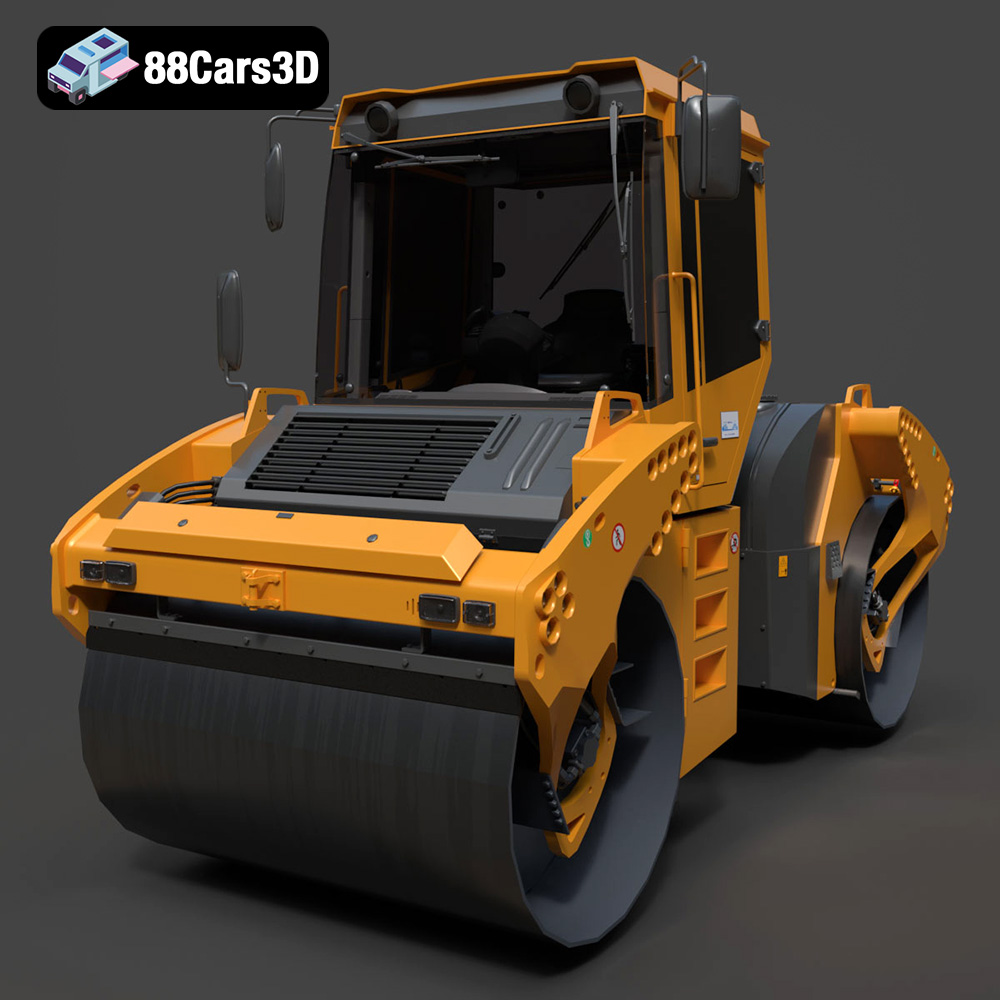
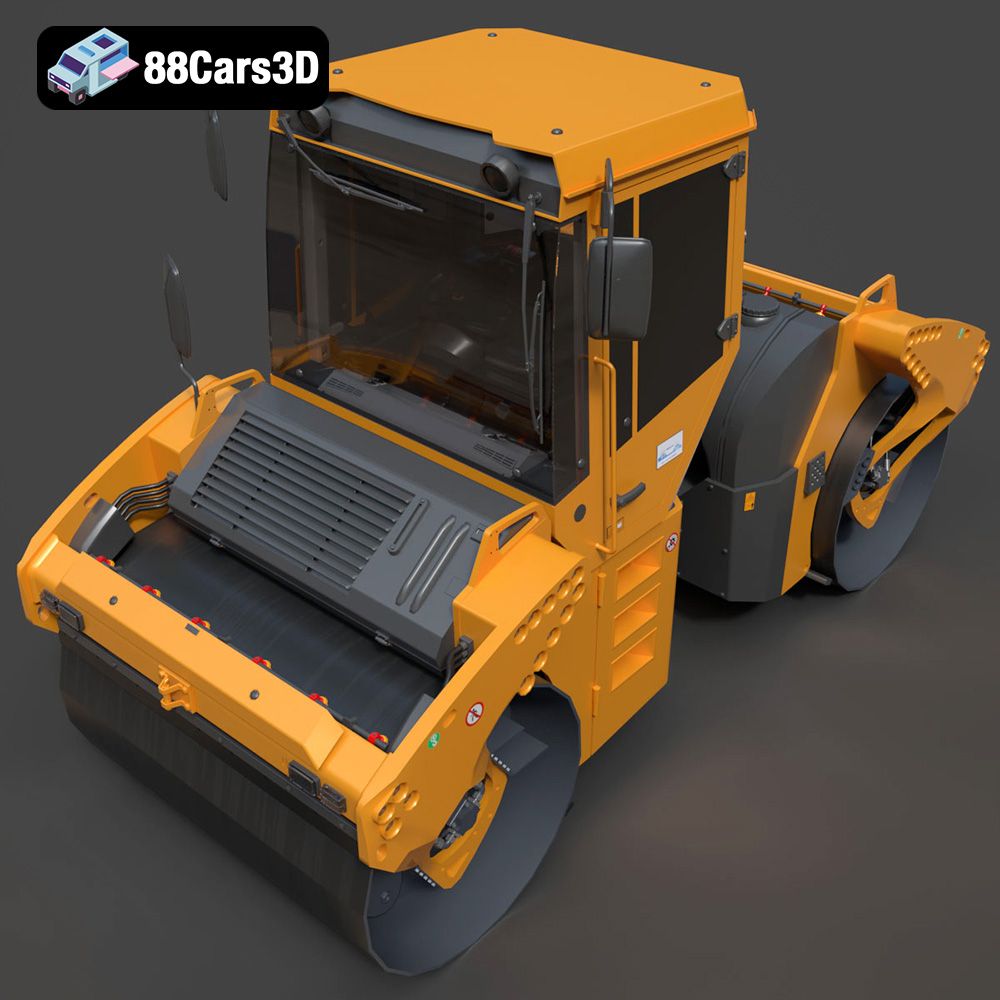
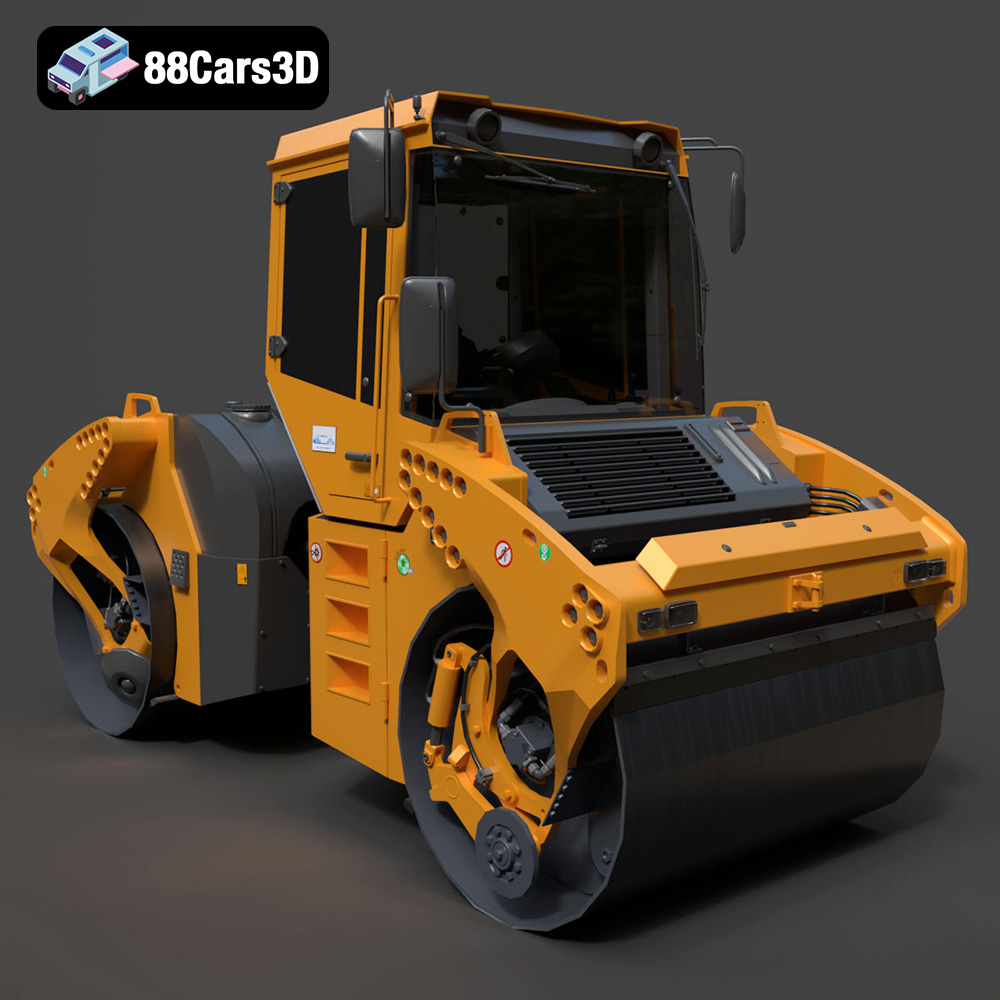
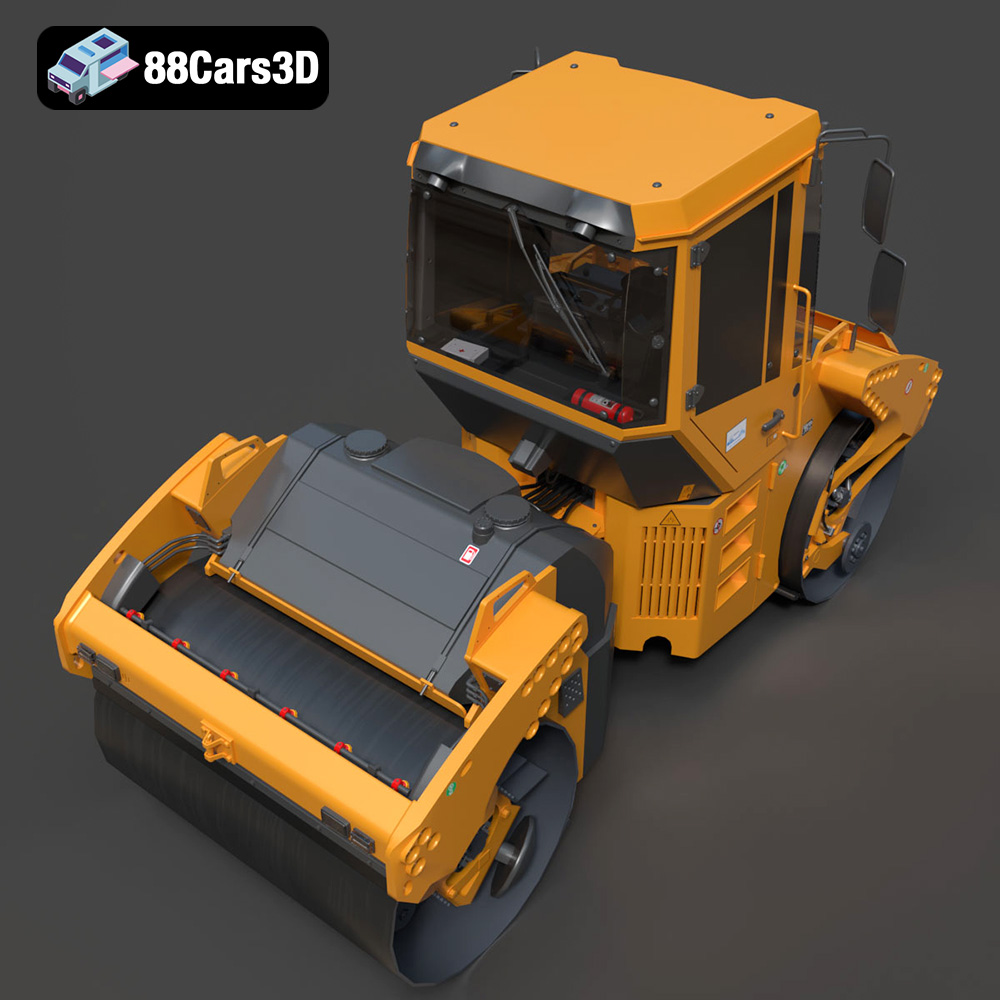
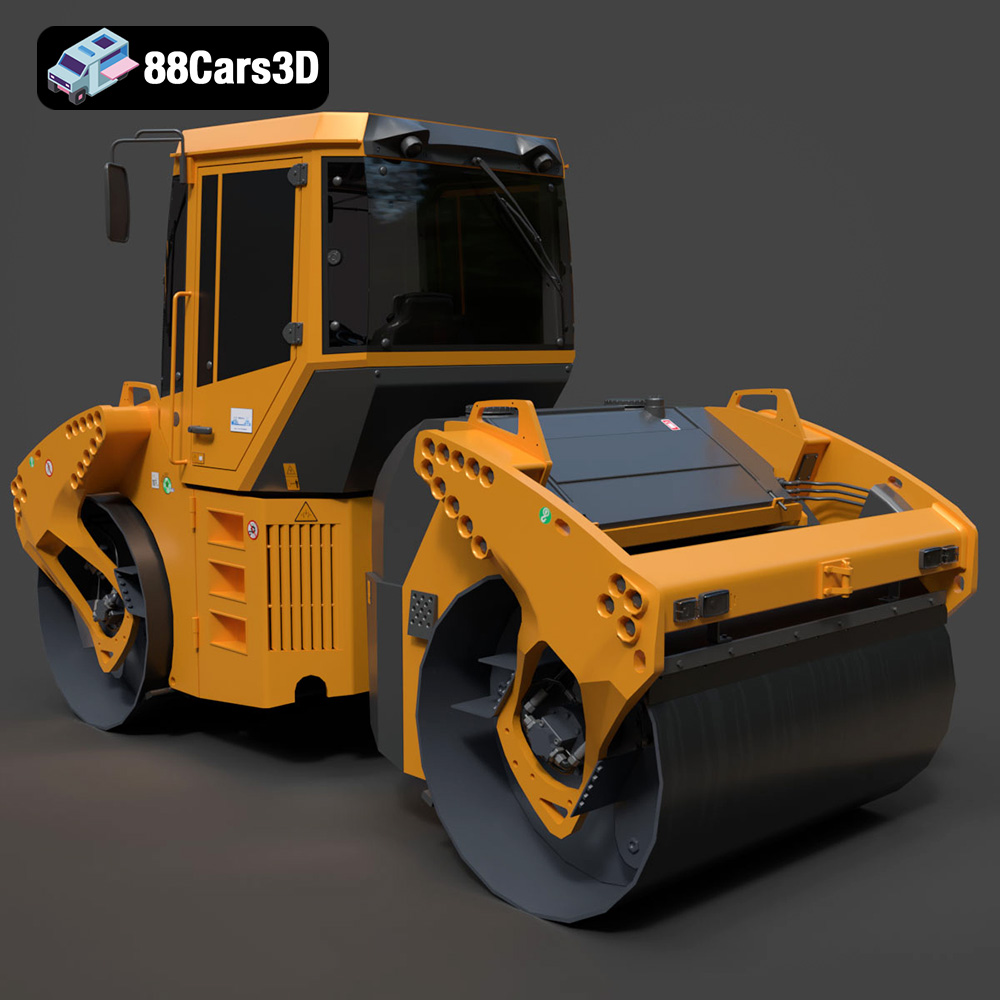
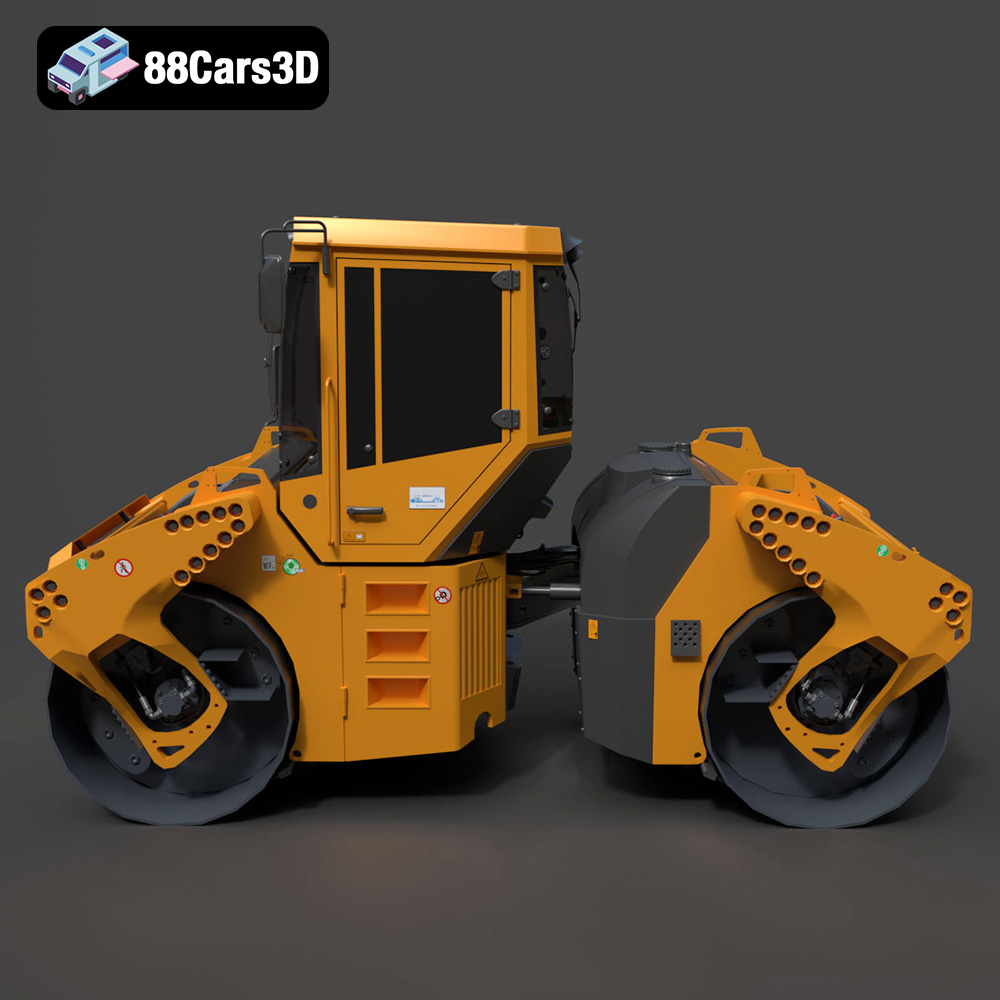
The exterior of this road roller model is a masterclass in capturing industrial realism. Every curve, panel, and component is accurately represented, reflecting the heavy-duty proportions of real-world equipment. The dual steel compaction drums, the core functional element, are meticulously textured with a weathered, dusty finish that instantly conveys a sense of operational history and rugged use. This “dusty” detail is not just a texture; it’s a character element that enhances the model’s believability in any construction or industrial scene.
Beyond the primary forms, the model excels in its mechanical specifics. Intricate hydraulic rams and hoses are carefully routed, highlighting the complex systems that enable the machine’s powerful movements. The articulated center pivot, crucial for the roller’s maneuverability, is not just a visual detail but is properly pivoted for animation, allowing for realistic steering and chassis flex. Features like authentic work lights, beacons, safety indicators, and robust roll-over protection structures (ROPS) further elevate the realism, making the model suitable for safety training simulations and detailed cinematic renders alike.
While the exterior grabs attention, the interior details of a heavy machinery model are equally important, especially for first-person perspectives in simulators or interactive applications. The Articulated Tandem Road Roller Dusty model does not disappoint here. The cockpit features an ergonomic operator suspension seat, textured floor mats, and a detailed steering wheel with precise directional joysticks. The instrument cluster and industrial control panel are accurately replicated, complete with safety switches, levers, and pedals. This level of interior detail ensures that the model is “optimized geometry for immersive first-person POV in heavy machinery simulators,” providing a truly convincing experience for the user.
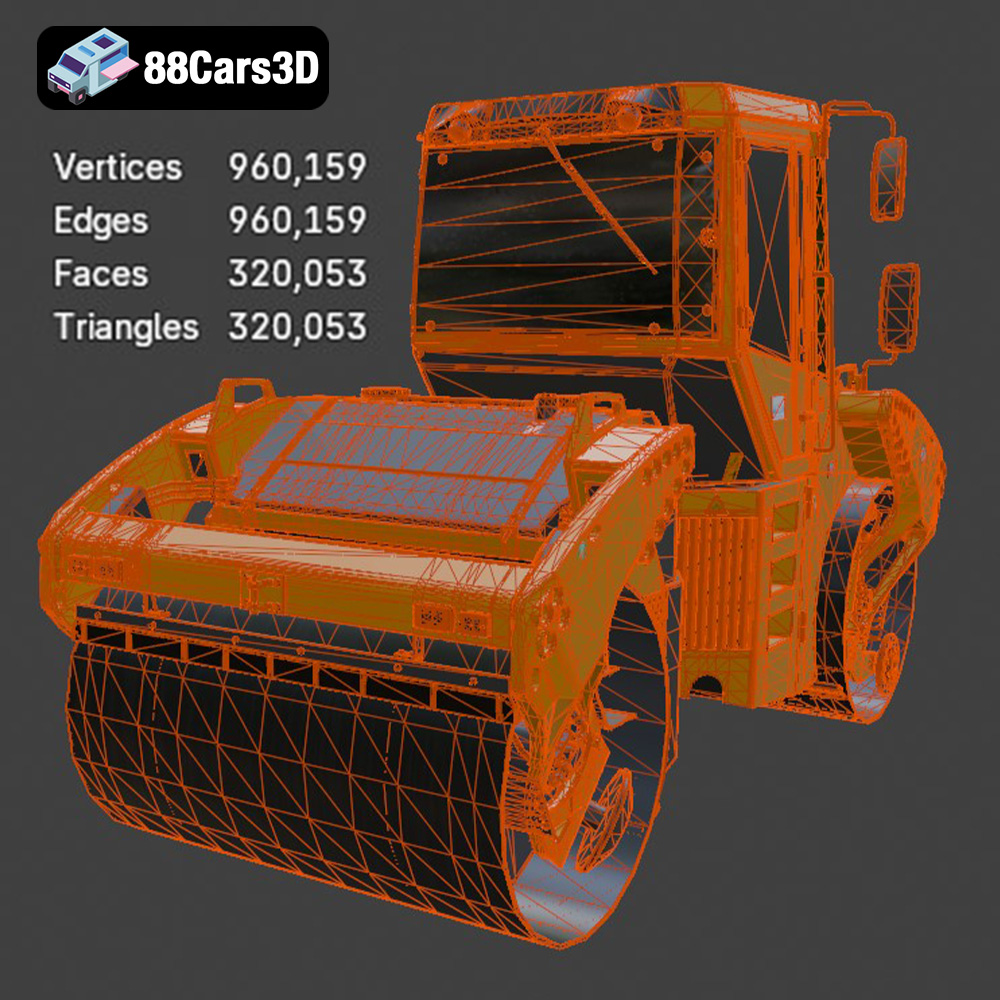
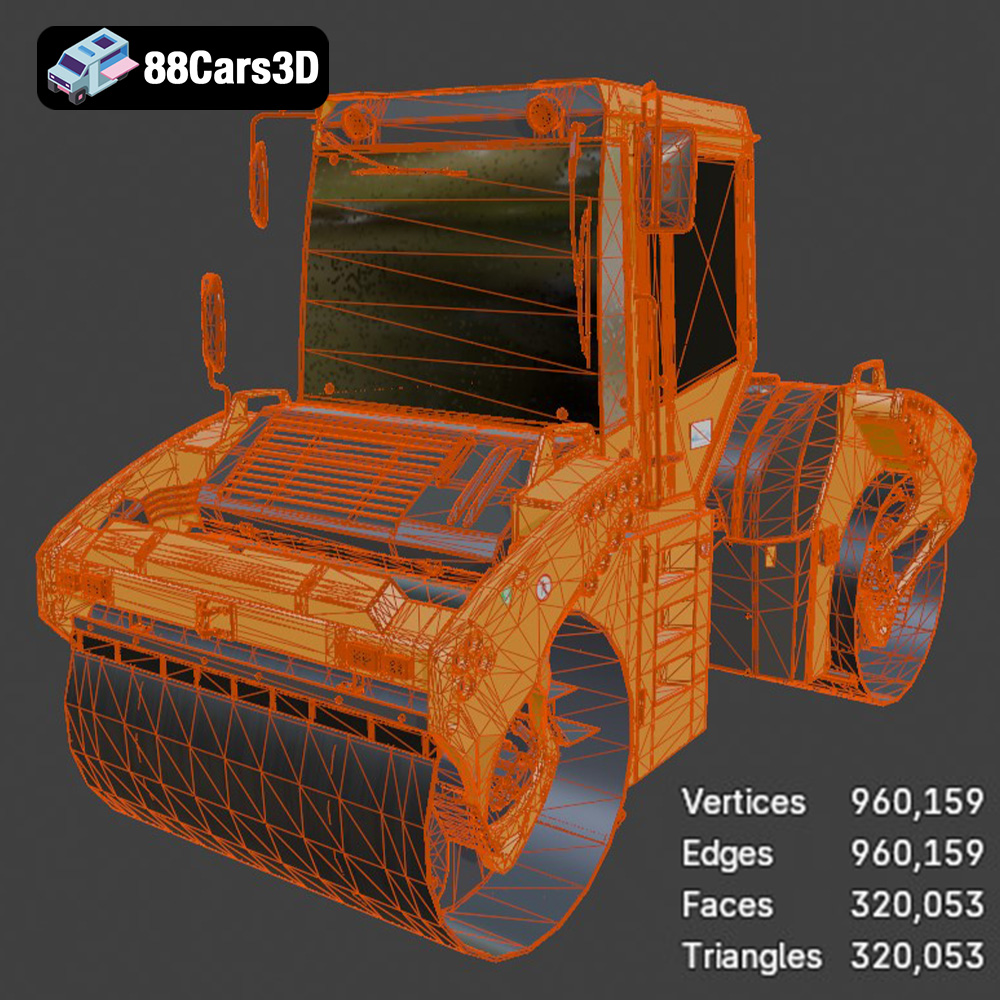
A truly professional 3D asset balances visual detail with technical efficiency. The Articulated Tandem Road Roller Dusty model strikes this balance expertly with a triangle count of 320,053. This “game-ready & optimized” polycount is substantial enough to maintain high-end visual realism, making it suitable for close-up renders and cinematics, yet optimized enough for seamless integration into real-time engines like Unreal and Unity without compromising performance. Furthermore, the model boasts “real-world scale accuracy,” ensuring consistency when integrated into larger scenes or simulations, and “proper pivot setup for accurate articulated steering, drum rotation, and chassis flex,” which is critical for animation and interactive control.
The versatility of a 3D model is often defined by its ease of integration into various professional software environments. The Articulated Tandem Road Roller Dusty 3D model, with its range of file formats and optimized structure, is designed to fit seamlessly into popular 3D modeling, rendering, and game development workflows.
For professionals using 3ds Max, the included .max file offers the ultimate level of control. Importing this file provides access to the complete scene, allowing artists to leverage 3ds Max’s powerful rendering engines like V-Ray or Corona for photorealistic output. The properly set up pivots for articulation and drum rotation mean that animators can immediately begin creating realistic movements, from steering and turning to the subtle vibrations of the compaction drums. Material customization is straightforward, enabling changes to the dusty finish, paint colors, or metallic sheens to match specific project requirements for automotive rendering or industrial visualization. The detailed chassis components and hydraulic systems can be further enhanced with complex lighting scenarios to showcase every intricate detail in marketing materials or engineering visualizations.
Blender users benefit directly from the native .blend file. This ensures that all materials, textures, and the optimized geometry of the Articulated Tandem Road Roller Dusty model are preserved as intended by the original artist. Artists can utilize Blender’s Eevee for fast real-time renders or Cycles for physically accurate ray tracing. The fully editable nature of the .blend file allows for extensive customization: modifying the weathering effects using Blender’s procedural texturing, adjusting the hydraulic components, or even adding custom decals to the vehicle. The logical hierarchy and pivot points also facilitate easy animation within Blender, making it an excellent asset for independent game developers or small studios looking for high-quality game assets without proprietary software limitations.
Game developers and real-time visualization specialists using Unreal Engine will find the .fbx and specifically prepared .unreal assets invaluable. The FBX format ensures that the optimized geometry and crucial pivot information for articulated steering and drum rotation are correctly imported into Unreal Engine. Once in Unreal, artists can quickly set up physically based rendering (PBR) materials, leveraging the high-quality textures of the dusty finish. The optimized poly count of 320,053 triangles is perfectly suited for real-time performance, allowing the road roller to be integrated into vast open-world environments or detailed construction simulations without significant performance overhead. Developers can then implement interactive controls, physics, and even custom logic (using Blueprints) to create a fully functional and immersive heavy machinery simulator, showcasing its prowess as a top-tier game asset.
The utility of a robust 3D model like the Articulated Tandem Road Roller Dusty extends far beyond static images. Its thoughtful design and diverse file format support make it a valuable asset across various interactive and tangible media, making it more than just another one of the available 3D car models or vehicle assets.
For game developers, the Articulated Tandem Road Roller is a standout asset. Its “game-ready & optimized” nature, with a balanced 320,053 triangle count, means it can be dropped into construction simulators, open-world exploration games, or industrial sandbox titles with minimal performance impact. The detailed cockpit, with its ergonomic seat and functional-looking controls, is perfect for first-person perspectives, allowing players to truly immerse themselves in the role of a heavy equipment operator. The accurate articulated steering and drum rotation, facilitated by proper pivot setups, allow for realistic physics and driving mechanics, enhancing the gameplay experience. Imagine the satisfaction of driving this machine across a virtual construction site, compacting digital asphalt with a convincing dusty trail.
Augmented Reality (AR) and Virtual Reality (VR) are transforming industries, and high-quality 3D models are at their core. The Articulated Tandem Road Roller is “perfect for immersive safety training modules, virtual showrooms, and mobile AR experiences.” In a VR environment, prospective operators can learn to maneuver the roller without any physical risk, exploring every detail of the operator platform and controls. For industrial manufacturers, a virtual showroom featuring this model could allow clients to inspect the machinery from any angle, even customizing colors and finishes in real-time. The lightweight .glb format is particularly advantageous here, ensuring smooth performance on various AR/VR devices and web-based platforms.
The ability to convert a 3D model into a physical object opens up a world of possibilities for hobbyists, educators, and industrial designers. With its “convertible to .stl format,” the Articulated Tandem Road Roller Dusty model can be transformed into a tangible scale model. The recommended scales (1:35 / 1:50 / 1:87) cater to popular diorama sizes, allowing enthusiasts to populate their miniature construction scenes with highly accurate equipment. The detailed 3D print settings – including layer height, wall thickness, infill, and support requirements – guide users through the process, ensuring a successful print. Resin printing is recommended for capturing the fine details like hydraulic lines, bringing a new dimension of realism to physical models and offering a unique way to interact with a sophisticated 3D car model / vehicle model from 88cars3d.com.
Professional 3D projects often require a degree of flexibility, allowing artists and developers to adapt assets to specific visual styles or functional needs. The Articulated Tandem Road Roller Dusty 3D model is built with this flexibility in mind, offering a range of customization options and inherent optimizations.
One of the most immediate customization options is the ability to “change equipment colors.” While the model might come in a standard industrial yellow, the underlying material setup allows for easy alteration to orange, green, or even custom fleet colors to match a specific brand identity. Beyond color, the “dusty” finish is a significant character element. Artists can “modify dirt and weathering textures” to present a brand-new factory-fresh look, a moderately used appearance, or a heavily mud-splattered version, depending on the scene’s narrative. This level of control over the weathering directly impacts the realism and storytelling of any automotive rendering or industrial scene. Adjusting material finishes – from a matte metal to a rusted steel or a high-gloss paint – further expands the visual possibilities, allowing the roller to fit seamlessly into diverse environments.
The road roller model’s comprehensive detailing also extends to its lighting elements. “Authentic lighting details including work lights, beacons, and safety indicators” are present, and these can be adapted for different scenarios. For instance, adjusting lighting setups for night-time construction environments involves configuring the intensity, color, and falloff of these lights to create dramatic and functional illumination. This is crucial for realistic automotive rendering in varying conditions. The ability to control these elements allows the model to be integrated into diverse environmental conditions, enhancing its utility for cinematic sequences or time-of-day simulations in game engines.
Beyond visual customization, the model’s inherent technical advantages are key to its professional appeal. The “game-ready & optimized” 320,053 triangle count is a carefully chosen sweet spot, providing ample detail without excessive polycount. This optimization is crucial for maintaining high frame rates in real-time applications like games and VR, while still delivering stunning visuals for offline rendering. The “real-world scale accuracy” ensures that the model integrates correctly with other assets in a scene, preventing scale mismatches that can break immersion. Moreover, “proper pivot setup for accurate articulated steering, drum rotation, and chassis flex” means animators and game developers don’t have to spend valuable time correcting pivot points, allowing for immediate rigging and animation work. This foresight in design makes the Articulated Tandem Road Roller Dusty model a true plug-and-play solution for demanding projects.
In the dynamic world of 3D content creation, the difference between a good project and a great one often lies in the quality and versatility of its assets. The Articulated Tandem Road Roller Dusty 3D model stands out as a prime example of an expertly crafted industrial asset, meticulously designed to meet the rigorous demands of modern 3D workflows.
From its highly detailed exterior, showcasing realistic weathering and intricate mechanical components, to its thoughtfully designed cockpit, optimized for immersive first-person experiences, every aspect of this model speaks to a commitment to authenticity and technical excellence. Its balanced triangle count ensures it performs admirably in real-time game engines and AR/VR applications, while its comprehensive file format support guarantees seamless integration into virtually any professional software, be it 3ds Max, Blender, or Unreal Engine.
Whether your goal is to produce stunning automotive rendering visualizations, build a next-generation construction simulator with realistic game assets, create impactful AR/VR training modules, or even produce detailed physical models via 3D printing, this road roller provides the foundation for success. It offers the flexibility to customize colors, weathering, and material finishes, allowing artists to tailor it to any project narrative or aesthetic. By leveraging a high-quality asset like the Articulated Tandem Road Roller Dusty, professionals can save valuable development time, achieve superior visual results, and deliver engaging experiences across all media.
Explore this exceptional model and a wide range of other high-quality 3D car models and industrial assets at 88cars3d.com, where precision meets performance in the digital realm. Investing in such robust assets is not just an acquisition; it’s an investment in the fidelity and efficiency of your creative endeavors.
The Articulated Tandem Road Roller Dusty edition captures the rugged essence and heavy-duty presence of essential construction machinery. Featuring its iconic dual steel compaction drums and a highly detailed articulated center pivot, this model showcases a realistic weathered, dusty finish that brings authentic industrial character to any scene. From the intricate hydraulic routing to the robust operator platform, every visual element is meticulously crafted to reflect the true nature of earthmoving and paving equipment. Boasting a highly detailed yet efficient topology of 320,053 triangles, this 3D model offers the perfect balance between high-end visual fidelity and game-ready optimization. The geometry is structured to support seamless integration into real-time engines and complex renders, making it an exceptional asset for game development, AR/VR experiences, industrial animation, and professional visualization.
$34.50
.blend
.fbx
.glb
.max
.obj
.ply
.rendering
.stl
.unreal
articulated-tandem-road-roller
car-3d-model
construction-vehicle
dusty
game asset
game-ready
heavy-machinery
low-poly
optimized
road-roller
VR/AR