Get 20% OFF All Premium 3D & STL Models!

In the fast-evolving landscape of digital content creation, the demand for unparalleled realism and technical precision is greater than ever. From the captivating cutscenes of AAA video games to the immersive experiences of virtual showrooms and the intricate details of architectural visualizations, high-fidelity 3D models form the very backbone of engaging digital worlds. Nowhere is this more apparent than in the automotive sector, where a vehicle’s digital representation must evoke the same sense of luxury, power, and design artistry as its real-world counterpart.
Today, we delve into the sophisticated world of 3D automotive assets, exploring the meticulous craftsmanship, technical considerations, and diverse applications that elevate a mere digital object into a powerful creative tool. Our journey will highlight the profound impact of expertly crafted 3D car models, using a prime example from 88cars3d.com: the BMW X7 40i 3D Model. This particular asset exemplifies the pinnacle of luxury SUV design, meticulously recreated for the most demanding professional pipelines, offering creators an authentic, game-ready, and render-optimized asset.
Creating a truly high-fidelity 3D car model is a sophisticated blend of artistic vision and rigorous technical execution. It goes far beyond simply replicating shapes; it involves capturing the essence, the spirit, and the minute details that make a vehicle iconic.
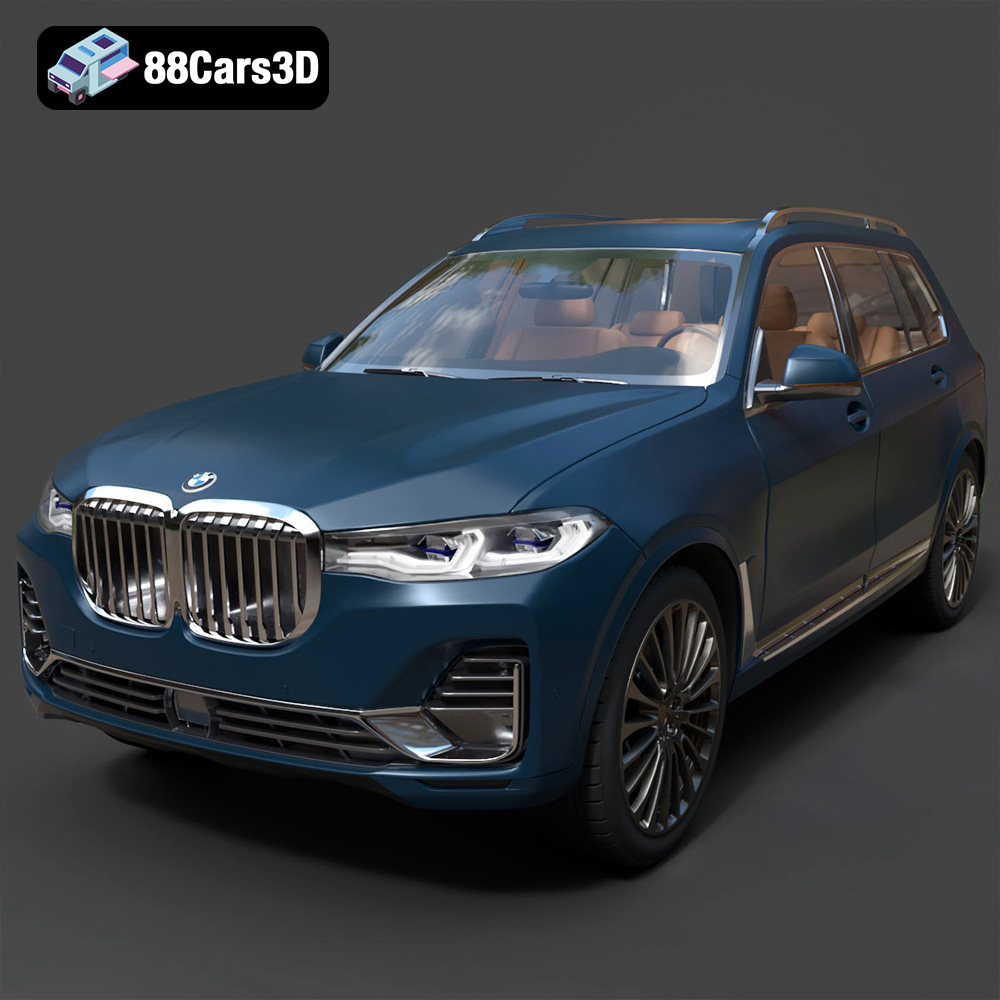
Achieving photorealism in 3D car models requires an obsessive attention to detail. Every curve, every panel gap, every texture and reflection must be painstakingly crafted to mimic reality. This process often begins with extensive reference gathering, including CAD data, blueprints, and hundreds of photographs from all angles. Artists then translate this data into a digital mesh, focusing on clean topology, accurate proportions, and efficient polygon distribution. The BMW X7 40i 3D model, for instance, showcases this dedication with its accurate frame geometry, intricate multi-spoke alloy wheels, and signature split-headlight LED array, all contributing to an authentic visual experience.
Materials and textures play an equally critical role. Physically Based Rendering (PBR) workflows are standard, ensuring that digital materials react to light in a physically plausible manner. This means meticulously creating diffuse, metallic, roughness, normal, and ambient occlusion maps that accurately represent everything from the car’s paintwork to the subtle grain of its leather interior. The result is a model that looks convincing under any lighting condition, whether in a high-end rendering studio or a real-time game engine.
For automotive manufacturers and designers, 3D models are essential throughout the entire product lifecycle, from initial concept sketches to virtual prototyping and marketing. A high-quality 3D model serves as a “digital twin” of the physical vehicle, allowing designers to iterate rapidly, conduct virtual wind tunnel tests, and even simulate crash scenarios long before physical prototypes are built. For external content creators, these models become vital assets for advertising campaigns, interactive configurators, and immersive virtual experiences that allow consumers to explore a vehicle like never before.
The transition from a raw concept or even a physical scan to an optimized, usable 3D asset for various platforms is a complex journey. It involves not just modeling but also UV unwrapping for efficient texture application, rigging for animation (doors, wheels, suspension), and meticulous optimization for performance. The BMW X7 40i 3D model, with its separate wheels, suspension, and steering components, exemplifies an asset designed with this versatility in mind, ready for dynamic animation sequences.
Navigating the world of 3D modeling often requires a deep understanding of the various file formats available, each tailored for specific workflows, software compatibility, and end-use applications. Choosing the correct format can significantly impact your project’s efficiency, quality, and overall success. The BMW X7 40i 3D Model package from 88cars3d.com notably includes a comprehensive range of these formats, ensuring maximum flexibility for professionals.
The `.blend` format is the native file type for Blender, the popular open-source 3D creation suite. It’s a powerful format because it stores an entire Blender scene, including mesh data, materials, textures, animations, rigging, lighting setups, cameras, modifiers, and even custom scripts. This makes `.blend` files ideal for Blender users who need full editability and want to preserve all aspects of their project. If your primary workflow is within Blender, this format offers the most comprehensive and direct access to the model’s structure and features, allowing for deep customization of the BMW X7 40i, from adjusting its paint shader to re-rigging its suspension.
Autodesk’s `.fbx` (Filmbox) format is arguably the most widely adopted interchange format in the 3D industry. It’s renowned for its robust support for mesh geometry, materials, textures, animations, and skeletal rigging, making it a cornerstone for transferring assets between different digital content creation (DCC) applications like 3ds Max, Maya, Cinema 4D, and most importantly, game engines like Unreal Engine and Unity. When working with the BMW X7 40i for a real-time game or animation pipeline, `.fbx` is your go-to. It ensures that crucial data like pivot points for wheel rotation and suspension travel, as well as PBR material assignments, are preserved as accurately as possible during export and import, minimizing setup time in the target engine.
The `.obj` (Wavefront Object) format is a universal standard, prized for its widespread compatibility across virtually all 3D software. It’s a text-based format primarily designed to store mesh geometry (vertices, normals, UVs) and basic material references (via an accompanying `.mtl` file). While it doesn’t support advanced features like animation, rigging, or complex PBR materials directly within the file, its simplicity makes it an excellent choice for straightforward mesh transfers. For the BMW X7 40i, an `.obj` file would be ideal if you only need the raw geometry and UVs for a new project or if you’re working with older software that has limited import options. It provides a clean base for re-texturing and re-shading in your chosen application.
The `.glb` (GL Transmission Format Binary) format is a relatively newer standard rapidly gaining traction, particularly for web-based 3D, Augmented Reality (AR), and Virtual Reality (VR) applications. Based on the glTF specification, `.glb` is a binary format that efficiently packages 3D model data, including geometry, materials, textures, and animations, into a single, self-contained file. This makes it incredibly efficient for streaming and displaying 3D content in browsers, mobile AR apps, and lightweight XR experiences. The BMW X7 40i in `.glb` format would be perfectly suited for an interactive 3D viewer on a website, a mobile AR configurator, or an entry-level VR showroom, offering optimized performance without sacrificing visual quality.
The `.stl` (Stereolithography) format is the de facto standard for 3D printing. Unlike other formats that focus on visual representation, `.stl` describes only the surface geometry of a 3D object using a collection of interconnected triangles. It lacks color, texture, or material information. For the BMW X7 40i, the `.stl` file provides a direct path to bringing the digital model into the physical world. It’s crucial for the model’s geometry to be “manifold” (watertight) when exported to `.stl` to ensure successful printing, preventing errors in the slicing software. The product description highlights its suitability for display-scale hobbyists, indicating that the model’s topology is clean enough for this purpose.
The `.ply` (Polygon File Format) is another widely used format for storing 3D data, particularly popular in academic and research contexts, often associated with 3D scanning and point clouds. It supports more advanced features than `.obj`, such as vertex colors, normal vectors, and even properties like transparency and confidence values. While less common for general DCC workflows than `.fbx`, `.ply` can be valuable for niche applications requiring precise mesh data or when working with models derived from 3D scans. For the BMW X7 40i, a `.ply` file might be used for advanced mesh analysis, reverse engineering workflows, or integration with CAD software that benefits from its detailed mesh properties.
The `.unreal` format isn’t a single file extension in the traditional sense like `.fbx` or `.obj`, but rather signifies an asset or collection of assets that are specifically prepared, optimized, and often packaged within an Unreal Engine project. This implies that the BMW X7 40i model has undergone a rigorous process of material setup (using Unreal’s PBR shader system), static mesh conversion, collision geometry creation, LOD (Level of Detail) generation, and potentially blueprint integration for interactive elements. This “engine-ready” state means minimal setup is required for direct implementation into an Unreal Engine project, allowing developers to immediately drop the vehicle into their virtual worlds, ensuring optimal performance and visual fidelity straight out of the box.
Similar to `.blend` for Blender, the `.max` format is the native file type for Autodesk 3ds Max, a leading software for 3D modeling, animation, and rendering. A `.max` file contains a complete 3ds Max scene, including geometry, materials, textures, lighting, cameras, animation data, modifiers, and rendering settings specific to 3ds Max. For users whose primary workflow revolves around 3ds Max, having the BMW X7 40i in its native `.max` format provides the highest level of control and editability. This allows for seamless integration into existing 3ds Max projects, easy modification of its complex hierarchies, and direct access to its meticulously crafted components for high-end rendering and animation within the software.
Each of these formats serves a distinct purpose, and understanding their strengths and limitations is key to a smooth and efficient 3D production pipeline. The availability of multiple formats for the BMW X7 40i underscores its versatility for diverse professional needs, a testament to the comprehensive offerings from 88cars3d.com.
The BMW X7 40i 3D Model is not just a digital representation; it’s a testament to the meticulous detail and technical excellence required in professional 3D asset creation. Every facet of this model is engineered for peak performance and visual fidelity across various applications.
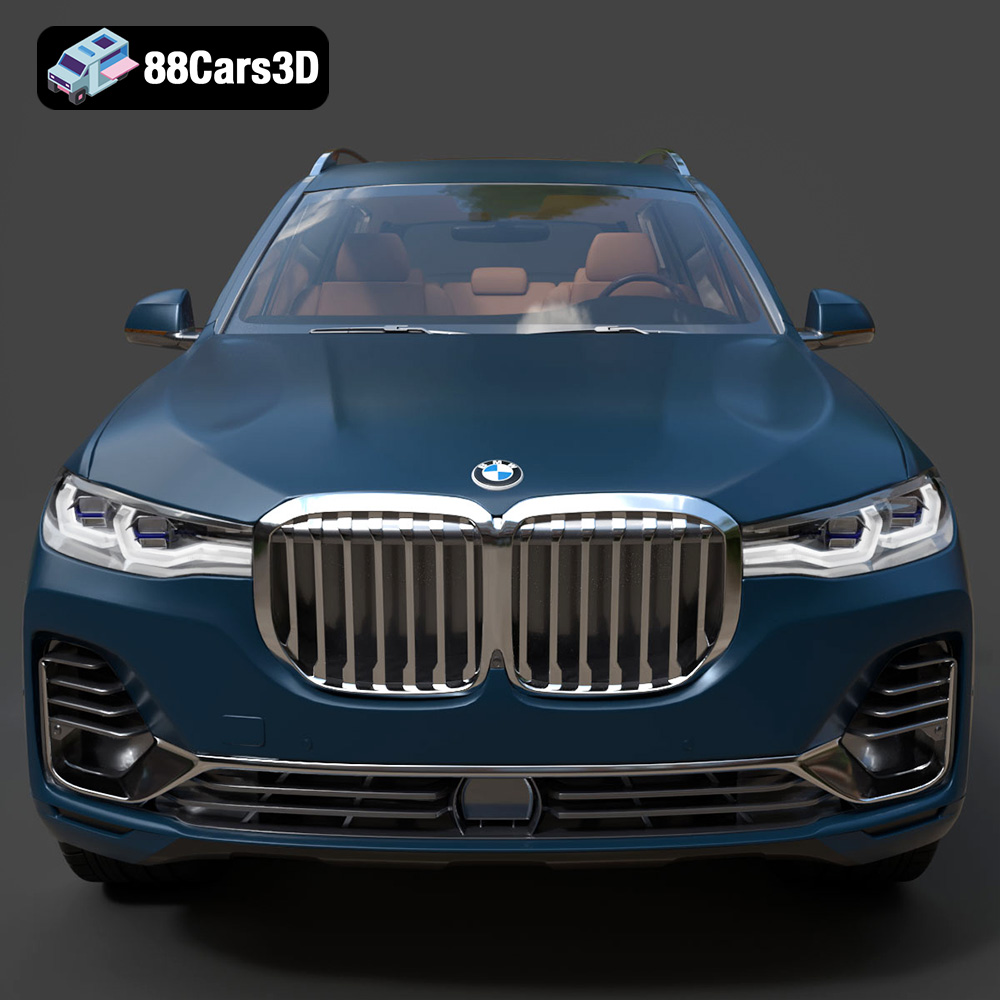
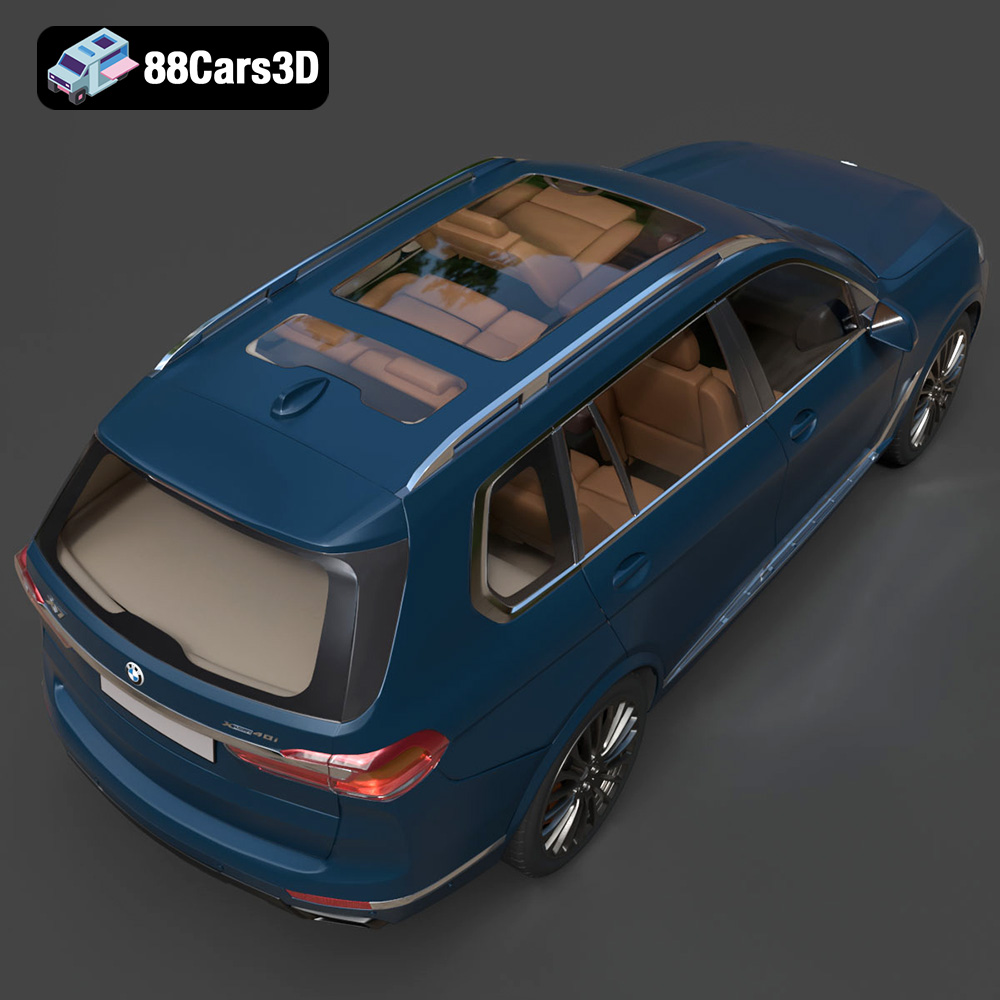
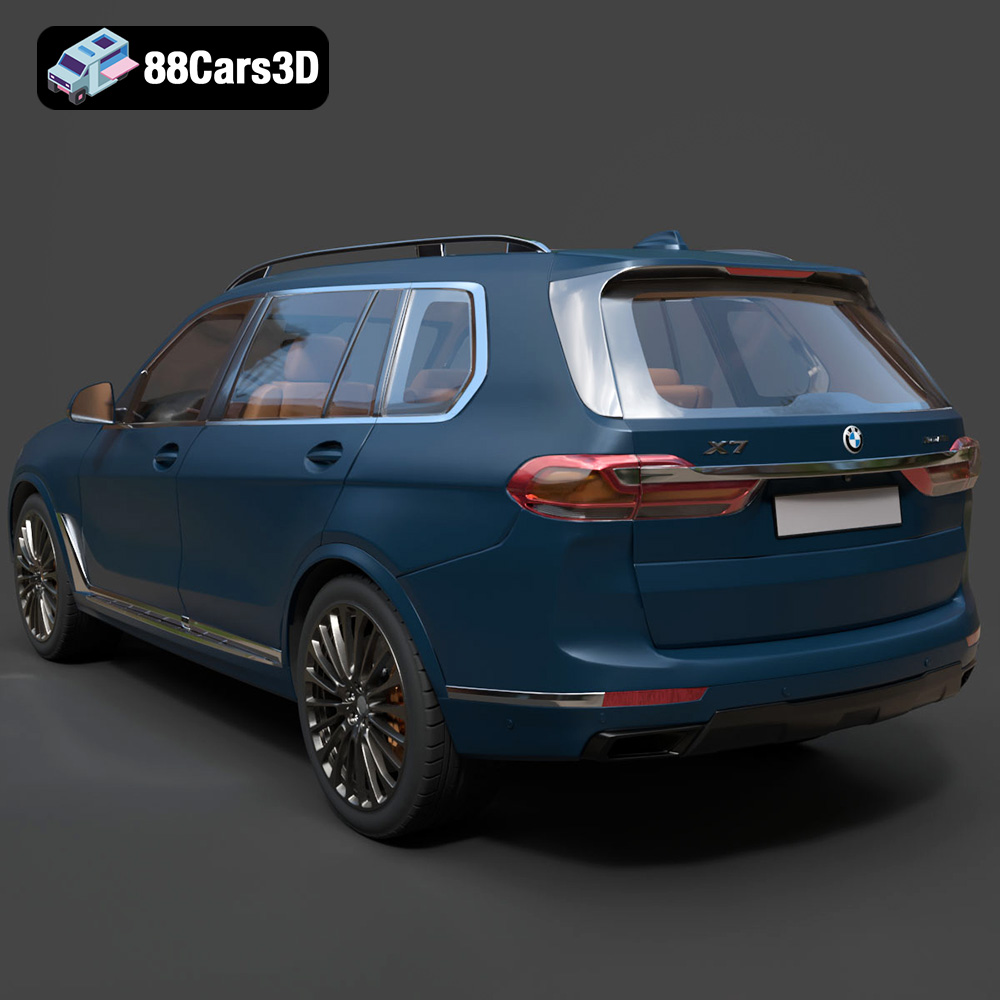
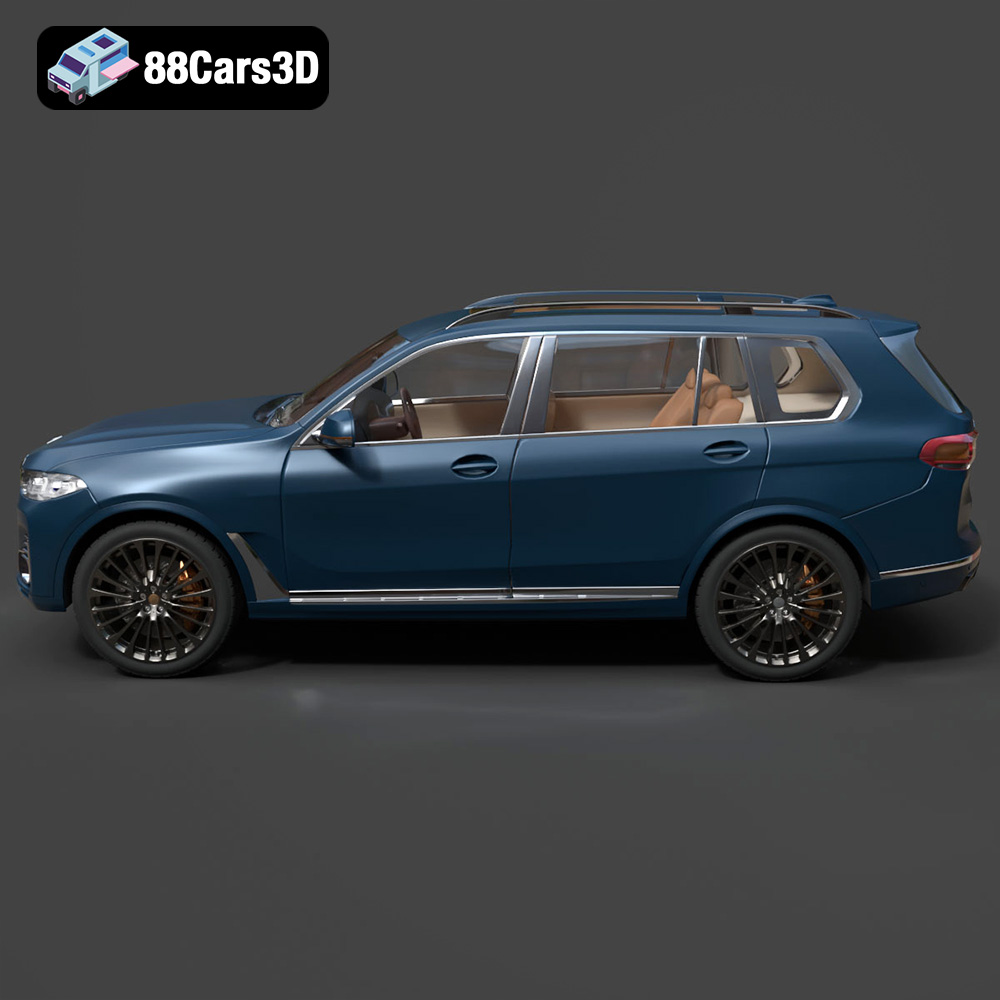
The BMW X7 40i is known for its commanding presence, and this 3D model faithfully captures its iconic large kidney grille, sleek aerodynamic profile, and muscular proportions. The exterior features are incredibly detailed, including the signature split-headlight LED array and 3D sculpted taillights, which are complex elements to reproduce accurately. The intricate multi-spoke alloy wheels are meticulously modeled, complete with realistic tire treads, adding a layer of authenticity often overlooked in less detailed models. Even the undercarriage boasts accurate air suspension setup and components, ensuring realism from every viewing angle. This level of detail is crucial for high-end automotive rendering where close-up shots are common and demand absolute precision.
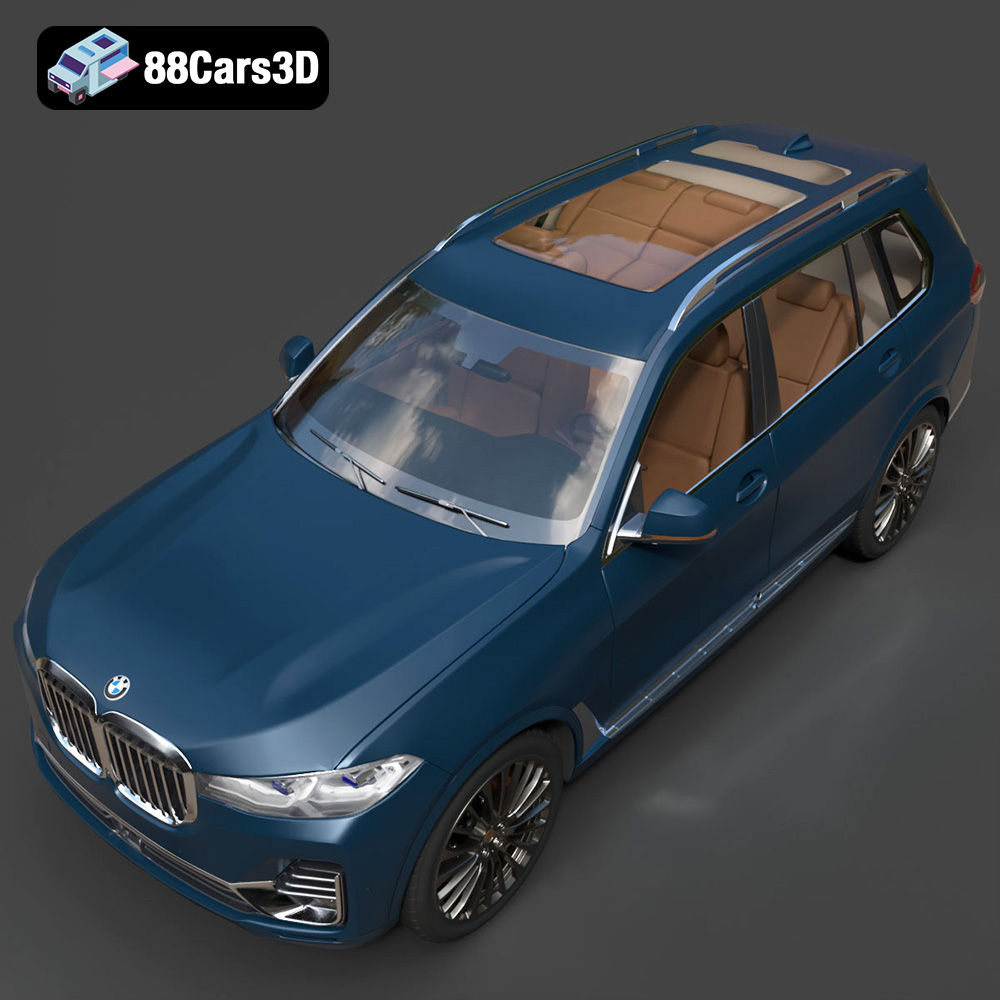
The interior of the BMW X7 40i is where luxury truly comes to life, and the 3D model extends this opulence to the digital realm. It features luxurious three-row seating with premium leather textures, an M-Sport style multi-function steering wheel, and a precisely modeled center console. A standout feature is the curved display dual-screen instrument cluster and infotainment setup, a hallmark of modern BMW design, recreated with stunning accuracy. The glass crystal gear shifter and pedals further enhance the high-fidelity experience. For game developers, the optimized geometry for first-person POV ensures that players will experience an immersive and realistic cockpit view, vital for racing simulators and open-world titles.
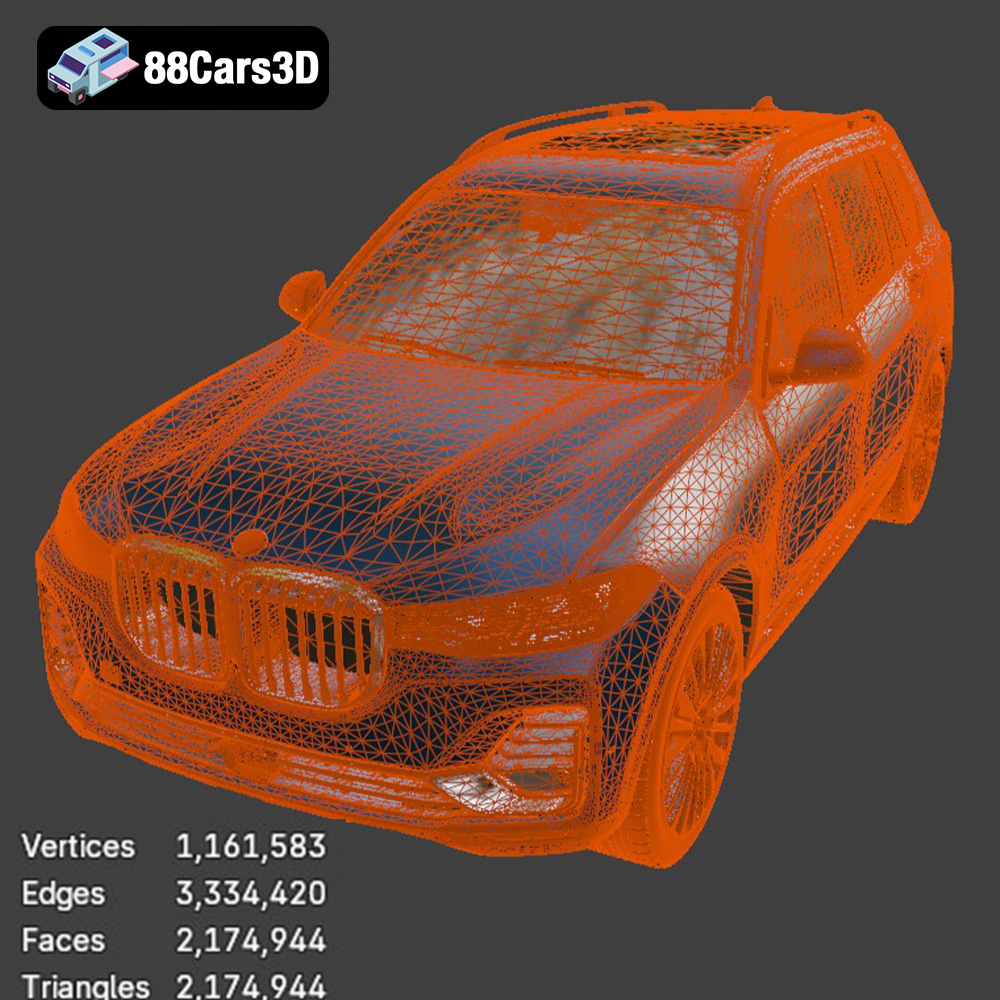
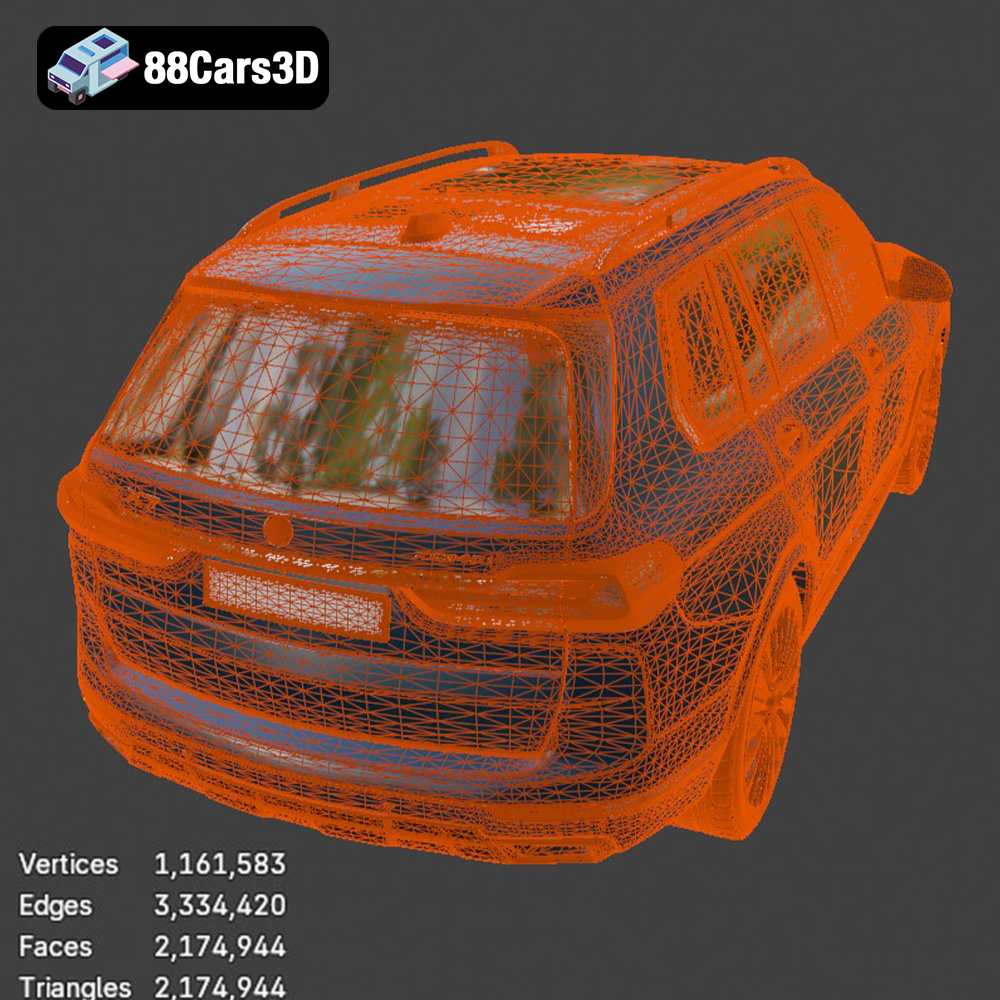
Beyond its stunning visuals, the BMW X7 40i 3D model is built on a solid technical foundation. With 2,174,944 triangles, it strikes a near-perfect balance between high-end visual realism and game-readiness. This optimized polycount is crucial for real-time engines like Unreal and Unity, where performance is paramount. Each component, such as separate wheels, suspension, and steering, is designed with proper pivot setups, enabling realistic animation of wheel rotation and suspension travel. Real-world scale accuracy ensures seamless integration into scenes without the need for manual resizing. This thoughtful engineering means the model is not only beautiful but also highly functional across a wide spectrum of professional uses, from intensive rendering to interactive AR/VR experiences.
Premium 3D car models like the BMW X7 40i from 88cars3d.com are indispensable tools across various professional sectors, streamlining workflows and enabling unparalleled creative outputs.
In the competitive world of game development, realistic vehicle assets are non-negotiable for achieving immersion. The BMW X7 40i 3D model is explicitly designed as a “game-ready” asset, perfectly suited for AAA racing titles, open-world adventures, and sophisticated driving simulators. Its optimized polycount of just over 2 million triangles is carefully managed to provide high visual fidelity without crippling real-time performance. The inclusion of proper pivot setups for steering, wheel rotation, and suspension travel simplifies the rigging and animation process for game developers. This means less time spent on asset preparation and more on gameplay mechanics, physics, and delivering a polished user experience within engines like Unreal Engine 5 or Unity.
For studios, acquiring pre-optimized, high-quality assets significantly reduces development cycles and costs associated with creating complex models from scratch. The BMW X7 40i serves as a premium starting point, ready for integration into a vehicle physics system, adding authentic luxury to any digital world.
In architectural visualization (arch-viz) and product marketing, the presence of a realistic car model can elevate a scene from good to extraordinary. Placing a high-fidelity BMW X7 40i outside a luxury residence in an architectural rendering instantly communicates a lifestyle, adds scale, and enhances visual interest. For product marketing, this model is invaluable for creating stunning studio renders, lifestyle animations, and brand campaigns that highlight the vehicle’s design and features. Using software like 3ds Max or Blender, artists can integrate the model into custom environments, set up complex lighting scenarios, and render breathtaking visuals that are indistinguishable from professional photography.
The detailed engine block, chrome finish exhaust, and intricate interior elements provide ample opportunities for close-up shots and animated sequences that showcase the vehicle’s premium attributes, making it a powerful asset for luxury brand storytelling.
The frontier of interactive experiences lies in Augmented Reality (AR) and Virtual Reality (VR), and high-quality 3D models are central to these technologies. The BMW X7 40i 3D model is perfect for immersive virtual showrooms, where potential buyers can explore the vehicle in a dynamic 3D space, open doors, change colors, and even sit virtually inside the cockpit. For mobile AR experiences, the optimized `.glb` format allows for seamless integration into smartphone apps, letting users “place” the luxury SUV in their driveway and view it from any angle, fostering a deeper connection with the product. Its optimized geometry ensures smooth performance on AR/VR hardware, crucial for delivering a fluid and believable interactive experience.
These applications revolutionize how consumers interact with products before purchase, offering a level of engagement that traditional marketing simply cannot match. The technical precision of this model directly translates into a more compelling and realistic AR/VR presence.
The versatility of a high-quality 3D model extends beyond digital screens into the physical realm through 3D printing. The BMW X7 40i 3D model, available in the `.stl` format, offers enthusiasts and professionals the unique opportunity to manifest this digital luxury SUV as a tangible object.
Converting a high-detail rendering or game asset into a printable model requires careful preparation. The `.stl` format simplifies the mesh into a series of triangles, which 3D printers understand. For a model as complex as the BMW X7 40i, ensuring a “manifold” mesh – meaning it’s watertight with no holes or intersecting geometry – is paramount for a successful print. Artists often need to perform cleanup operations, check for non-manifold edges, and ensure all normals are consistent before exporting to `.stl`. The scale also needs to be carefully chosen; the product recommends scales like 1:12, 1:18, or 1:24, which are common for hobbyist and collector models, striking a balance between detail retention and printability.
Achieving a high-quality 3D print of the BMW X7 40i demands specific printer settings. Resin (SLA/DLP) printing is often recommended for fine details, offering superior resolution compared to filament (FDM) printers. A low layer height (0.04–0.12 mm) is essential for capturing the intricate exterior geometry, the multi-spoke wheels, and the interior details. Adequate wall thickness (1.2–2.0 mm) ensures structural integrity, especially for delicate parts. Supports are almost always required for complex overhangs and parts like the exhaust, mirrors, and door handles, which would otherwise deform during printing. Strategic print orientation – such as printing the frame at an angle and wheels separately – optimizes support placement and minimizes visible layer lines.
Post-processing is where the model truly comes to life. Sanding, priming, and applying authentic factory colors with metallic finishes can transform a raw print into a stunning display piece. This physical manifestation serves as an excellent complement to its digital counterparts, offering a tangible connection to the luxurious design of the BMW X7 40i.
A truly professional 3D car model is not static; it’s a versatile foundation for endless creative exploration. The BMW X7 40i 3D model from 88cars3d.com offers extensive customization options, empowering artists to tailor the asset to their specific vision and project requirements.
The ability to easily modify aesthetic elements is a cornerstone of creative flexibility. With the BMW X7 40i model, artists can effortlessly change body colors, experimenting with a spectrum of authentic factory hues or venturing into custom finishes like matte, gloss, or unique metallic variations. This adaptability extends to material properties, allowing for fine-tuning of reflections, roughness, and other PBR parameters to achieve specific visual effects. Beyond paint, tire textures can be swapped to represent different conditions—from sleek street variants to rugged off-road options—instantly transforming the vehicle’s character. These customization options are paramount for configurators, advertising campaigns, and ensuring the model fits perfectly into diverse scene requirements without the need for extensive re-modeling.
A 3D model’s appearance is profoundly influenced by its surrounding environment and lighting. The BMW X7 40i is designed to be highly adaptable to various lighting scenarios, from a pristine studio setup with softboxes and rim lights to an outdoor environment under dramatic sunset hues or harsh midday sun. Artists can adjust the model’s materials to react realistically to different light sources, allowing for seamless integration into any digital scene. Whether it’s showcasing the X7’s elegant lines in an urban night scene or its commanding presence against a natural landscape, the model’s robust material setup ensures it always looks its best. This adaptability makes it an invaluable asset for creating compelling narratives and visual storytelling across all media.
The world of 3D modeling is a dynamic fusion of art and technology, where precision and performance converge to create breathtaking digital experiences. From the intricate details of a luxury SUV to the complex ecosystems of game engines and interactive AR/VR applications, the quality of a 3D asset dictates the success of a project.
The BMW X7 40i 3D Model stands as a prime example of a premium asset, meticulously crafted for a broad spectrum of professional applications. Its optimized geometry, rich detail, and comprehensive suite of file formats (including .blend, .fbx, .obj, .glb, .stl, .ply, .unreal, and .max) ensure seamless integration into virtually any workflow, whether for automotive rendering, game development, virtual showrooms, or even 3D printing. This level of versatility and technical excellence is precisely what professionals expect from leading marketplaces like 88cars3d.com.
Investing in high-quality 3D car models not only elevates the visual fidelity of your projects but also streamlines production, saving invaluable time and resources. As digital content continues to push the boundaries of realism and immersion, assets like the BMW X7 40i model remain essential tools for driving digital excellence and bringing visions to life.
The BMW X7 40i stands as the pinnacle of luxury SUVs, blending commanding presence with refined elegance. This 3D model captures the iconic large kidney grille, sleek aerodynamic profile, and premium exterior aesthetics that define the flagship Bavarian Sports Activity Vehicle. From its muscular proportions to the intricately modeled TwinPower Turbo inline 6-cylinder engine bay components and dual trapezoidal exhaust system, every detail has been faithfully recreated.
Boasting a detailed 2,174,944 triangles, this model delivers unparalleled high-fidelity visuals. While highly detailed, the topology is carefully structured for next-gen game development engines like Unreal Engine 5, high-end architectural visualization, and immersive VR/AR experiences, offering premium realism from every angle.
Perfect for luxury automotive configurators, high-end architectural visualization scenes, AAA racing titles, and premium brand marketing animations.
.blend, .fbx, .obj, .glb, .stl, .ply, .unreal, .max
Tags:
bmw, x7-40i, suv, luxury-suv, game-ready, high-poly, optimized, car-3d-model, game-asset, rendering, vr-ar, blend, fbx, obj, glb, stl, ply, unreal, max
$86.50
.blend
.bmw
.fbx
.glb
.luxury suv
.max
.obj
.ply
.rendering
.stl
.unreal
car-3d-model
game asset
game-ready
high poly
optimized
SUV
VR/AR
x7-40i