Get 20% OFF All Premium 3D & STL Models!

There are few automobiles that capture the raw spirit of American muscle quite like the 1969 Ford Mustang Mach 1. With its distinctive fastback silhouette, aggressive styling, and legendary performance pedigree, it remains an icon, revered by enthusiasts and designers alike. For digital artists, game developers, architects, and visualization specialists, accurately representing such a legendary vehicle presents a unique challenge and opportunity. High-fidelity 3D car models are not just static representations; they are dynamic assets that drive immersive experiences, captivating visuals, and interactive simulations across a multitude of platforms.
In the demanding world of professional 3D content creation, the quality and versatility of your assets can be the difference between a project’s success and its stagnation. This article will explore the intricate technical aspects of leveraging premium 3D models, using the exquisite Ford Mustang Mach 1 1969 3D Model from 88cars3d.com as a prime example. We’ll delve into its features, discuss its application across various industries, and uncover the essential workflows that transform a digital asset into a cornerstone of your creative vision.
The journey of any 3D asset begins and often ends with its file format. Choosing the correct format is paramount for compatibility, performance, and successful integration into your specific workflow, whether for automotive rendering, game asset development, or 3D printing. The Ford Mustang Mach 1 1969 3D Model exemplifies versatility by offering a comprehensive suite of file formats, each tailored for distinct applications.
The .blend format is native to Blender, a robust and increasingly popular open-source 3D creation suite. A .blend file offers a fully editable Blender scene, preserving not just the mesh geometry but also materials, textures, lighting setups, cameras, animation data, and even physics simulations. For artists deeply integrated into the Blender ecosystem, this format provides maximum flexibility for customization, rigging, animation, and rendering with Cycles or Eevee. It’s ideal for those who want to dissect the model, understand its construction, or build upon its foundation within Blender’s comprehensive environment.
.fbx (Filmbox) is arguably the most widely adopted proprietary file format for 3D data exchange, especially prevalent in game development (Unreal Engine, Unity) and animation pipelines. It supports a vast array of data, including geometry (polygons, vertices), materials, textures, animations, skinning, and camera information. Its strength lies in its ability to reliably transfer complex scene data between different 3D applications like Maya, 3ds Max, Cinema 4D, and popular game engines. When you need to move a detailed 3D car model from one software to another while preserving as much of its original structure and animation readiness as possible, .fbx is often the go-to choice.
The .obj (Wavefront OBJ) format is a universal standard for storing 3D geometry. It’s a plain-text format, making it highly readable and compatible across virtually all 3D software. While it excels at representing mesh geometry (vertices, normals, texture coordinates, faces), it typically handles materials and textures via an accompanying .mtl (material) file, which is much simpler than .fbx. For simple model exchange where complex animation or rigging data isn’t required, .obj is a reliable and lightweight option, ensuring cross-software compatibility for your automotive rendering projects.
.glb is the binary version of glTF (Graphics Library Transmission Format), an open standard designed for the efficient transmission and loading of 3D scenes and models by applications. It’s quickly becoming the “JPEG of 3D” due to its optimization for real-time applications, particularly in AR (Augmented Reality), VR (Virtual Reality), and browser-based 3D displays. A single .glb file can embed all necessary data—geometry, materials, textures, animations—making it incredibly self-contained and easy to deploy for interactive experiences, virtual showrooms, or mobile AR apps featuring classic car assets.
.stl (STereoLithography) is the de facto standard for 3D printing. It represents a 3D model as a series of connected triangles, defining only the surface geometry without color, texture, or material information. For hobbyists and professionals looking to bring the Ford Mustang Mach 1 1969 3D Model into the physical world, converting to .stl is the crucial step. It ensures the mesh is watertight and ready for slicing software, which prepares the model for layer-by-layer fabrication.
.ply (Polygon File Format or Stanford Triangle Format) is another format primarily used to store 3D data, particularly from 3D scanners. It can store more complex data than .stl, including color, transparency, and normal vectors for each vertex, making it valuable for scientific analysis, CAD applications, or precise geometric manipulation. While less common for general 3D asset exchange, its precision can be beneficial in certain niche engineering or simulation contexts.
The .unreal format, often referring to a pre-packaged asset or project within Unreal Engine, signifies an asset that has been specifically prepared and optimized for this powerful real-time environment. This often means the model has appropriate collision meshes, level-of-detail (LOD) setups, material instances, and possibly even Blueprint scripting ready for immediate integration into an Unreal project. It provides a direct, streamlined path for game developers and real-time visualizers to implement high-quality 3D car models without extensive pre-processing.
Finally, the .max format is the native scene file for Autodesk 3ds Max, a long-standing industry standard for 3D modeling, animation, and rendering. Like .blend, it saves the entire scene setup, including geometry, materials, textures, lighting, cameras, animation keyframes, and modifiers. For professionals working within a 3ds Max pipeline, this format offers the highest level of editability and integration, allowing for deep customization, complex rigging, and high-end V-Ray or Corona renders.
The true value of a premium 3D car model lies in its meticulous attention to detail and technical craftsmanship. The Ford Mustang Mach 1 1969 3D Model from 88cars3d.com is a testament to this philosophy, delivering a digital twin that’s ready for the most demanding production pipelines.
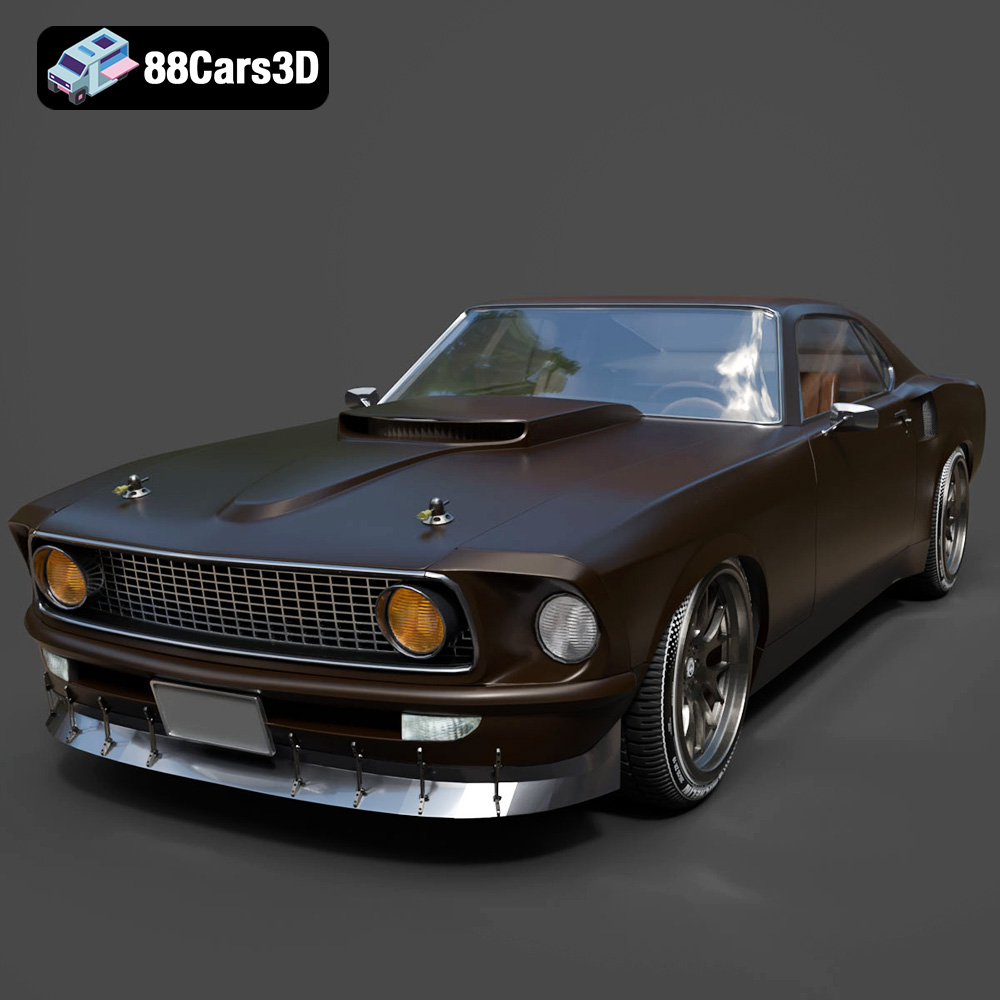
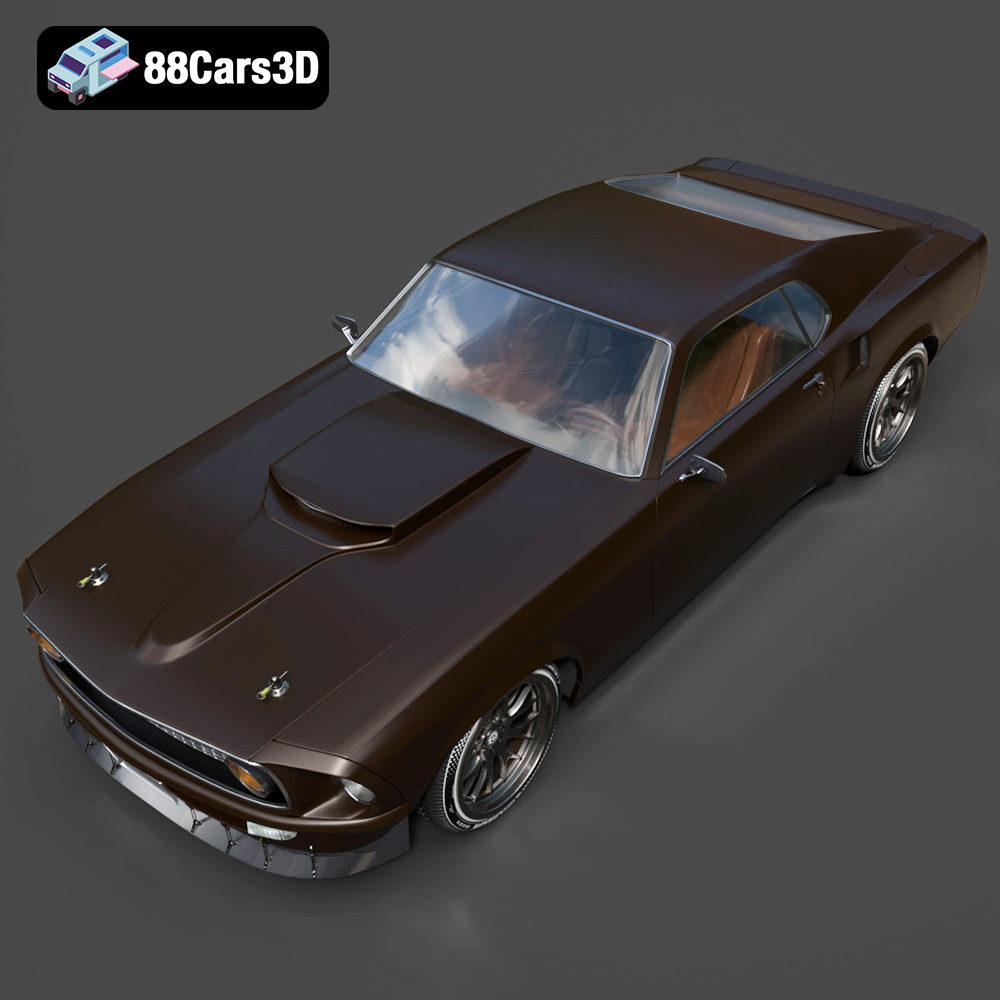
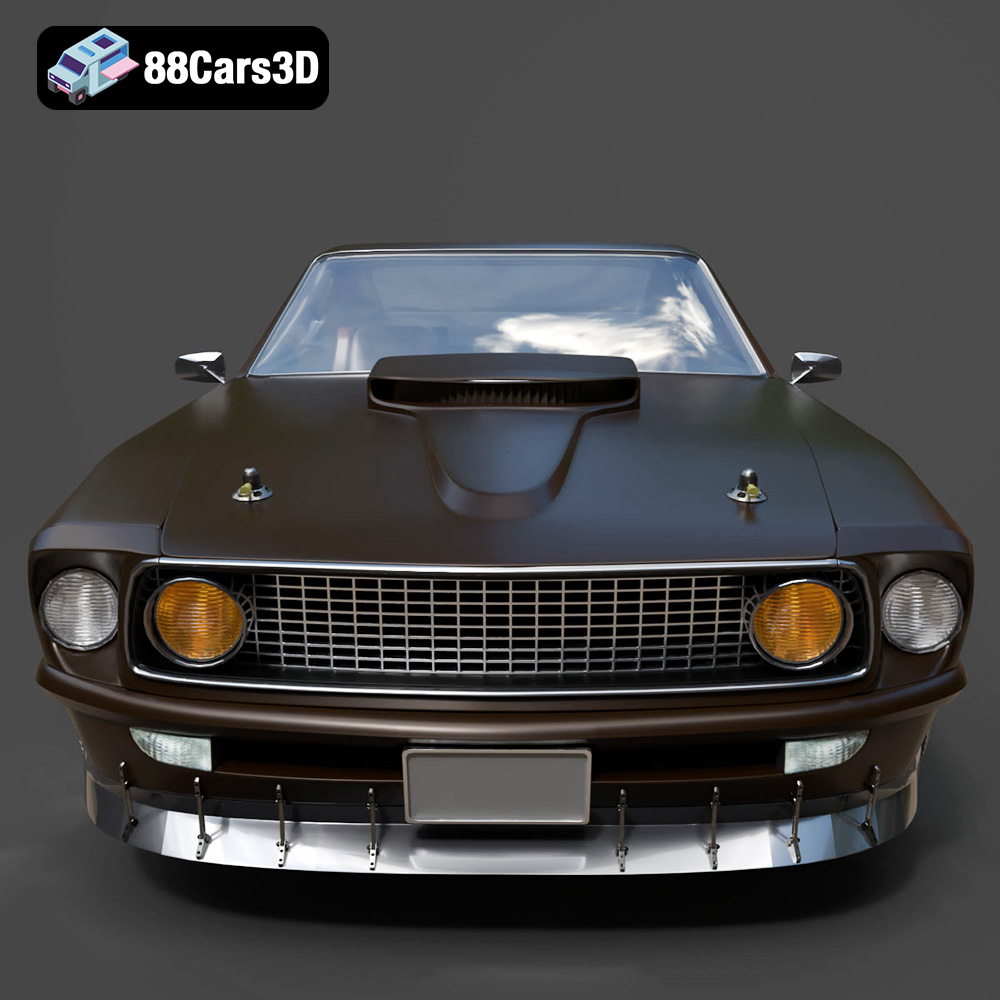
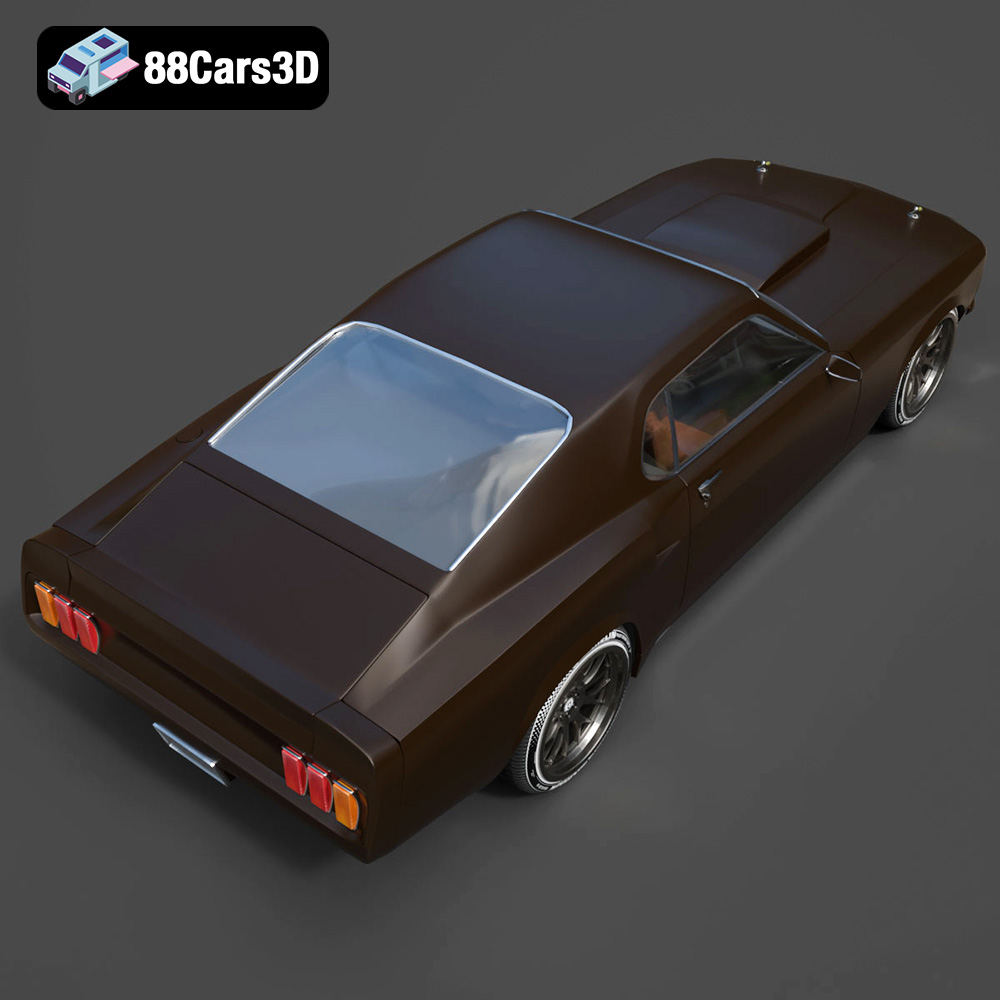
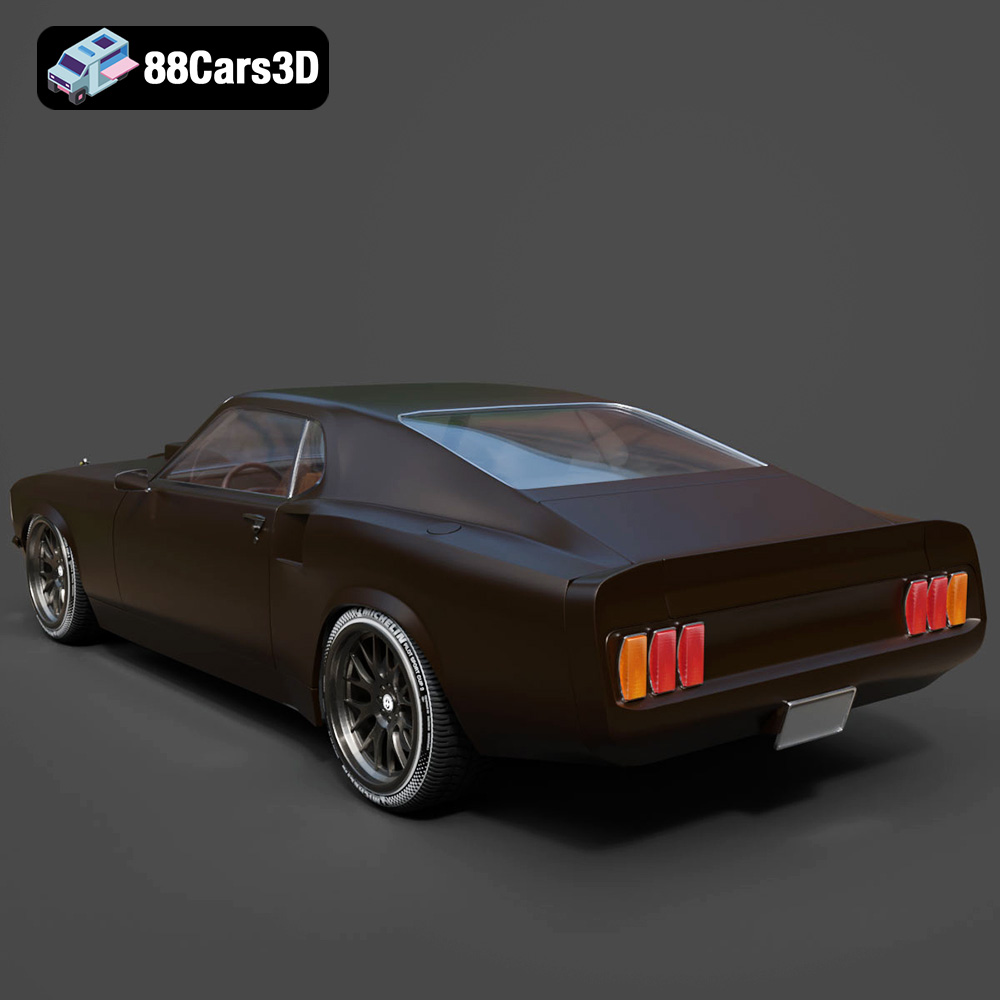
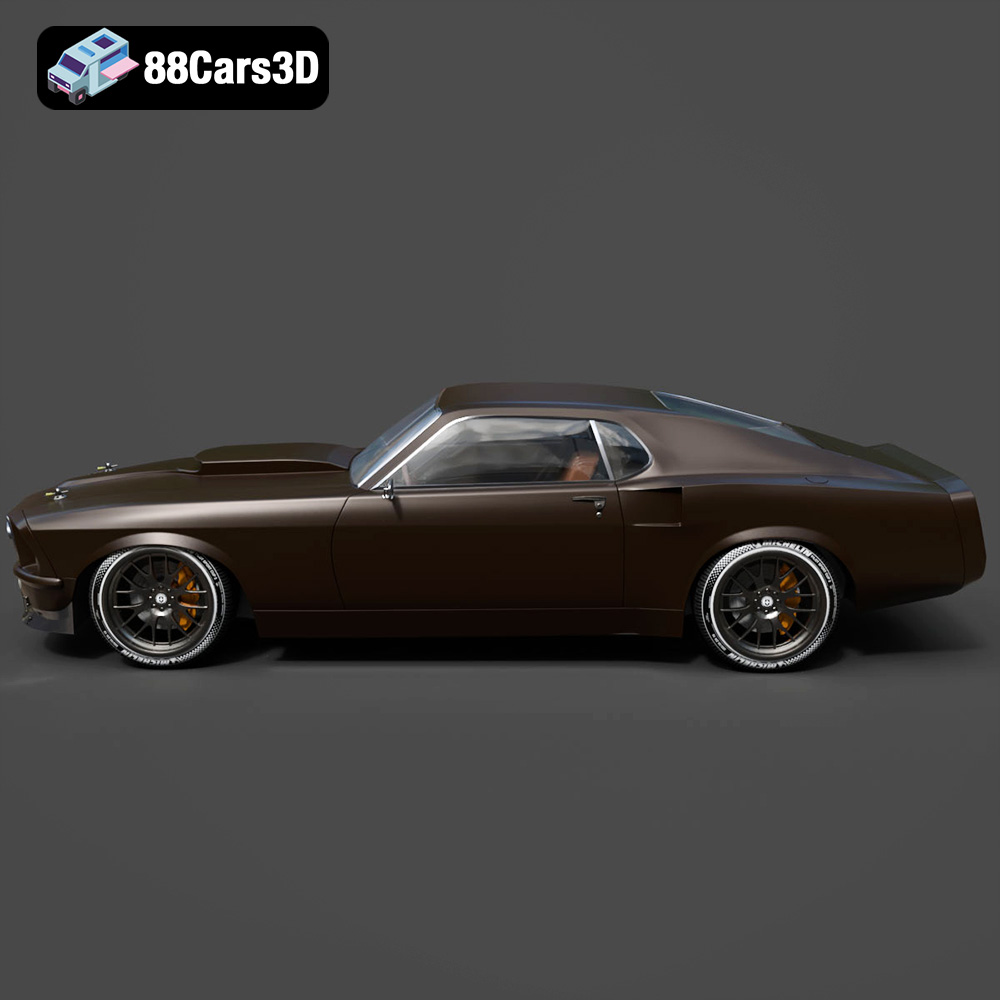
This 3D model doesn’t just resemble the Mach 1; it embodies its essence. Every curve and angle of the accurate fastback proportions and chassis geometry has been carefully recreated. From the menacing front grille and classic quad headlamp setup to the signature sportsroof styling, the details are impressive. The muscular rear haunches, distinctive hood scoop, and authentic dual exhaust system with chrome-tipped tailpipes are faithfully rendered, ensuring visual authenticity. Beyond the bodywork, the model features period-correct Magnum 500 style wheels and muscular tires, alongside a detailed undercarriage with classic leaf-spring suspension. Crucially for animators, components like the wheels, suspension, and steering are separate, enabling realistic animation and dynamic simulations.
The exterior only tells half the story. The interior of the Mach 1 model is equally rich in detail, providing an immersive experience whether for a virtual showroom or a first-person perspective in a game. High-back bucket seats with classic vinyl upholstery styling, an authentic wood-grain trimmed three-spoke steering wheel, and a detailed multi-dial instrument cluster bring the cockpit to life. Even the smaller control details, such as pedals, levers, and the iconic T-bar shifter, are accurately represented. This level of interior fidelity is vital for VR applications and racing games where players or viewers will spend significant time inside the vehicle, enhancing the sense of realism and presence.
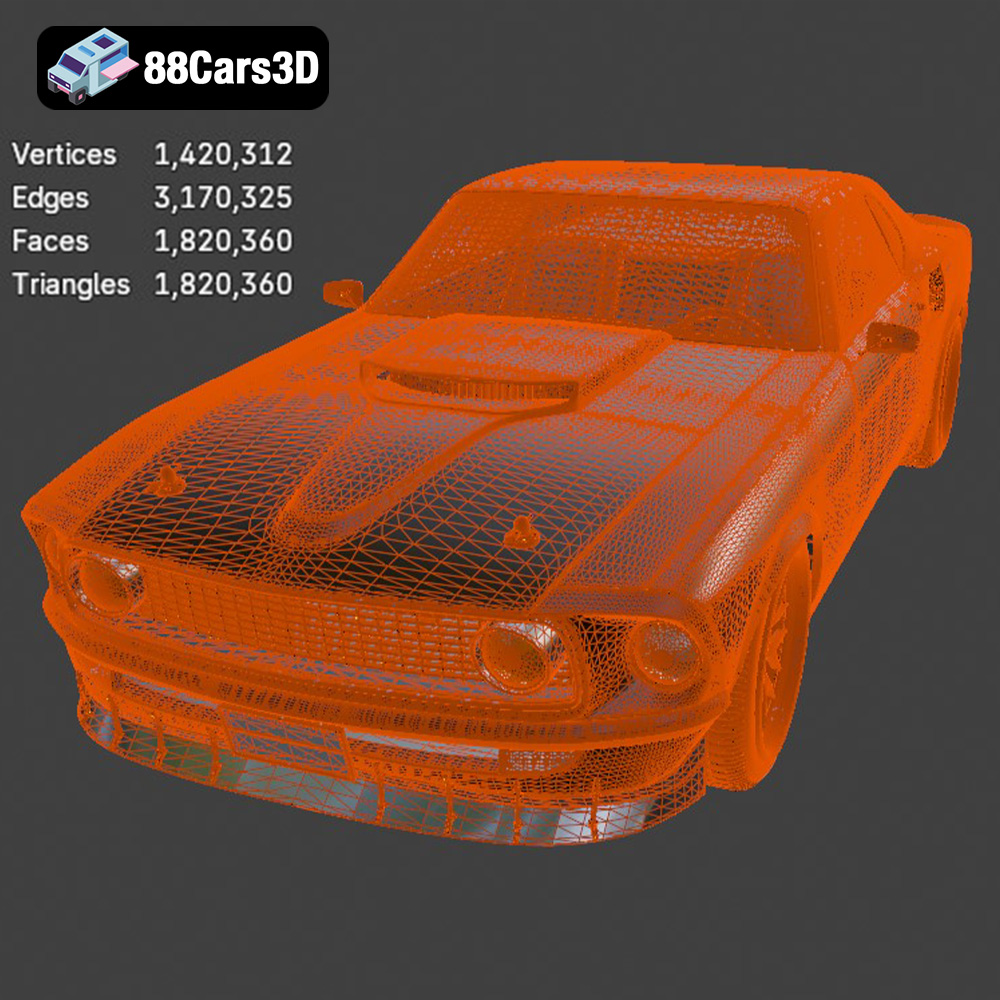
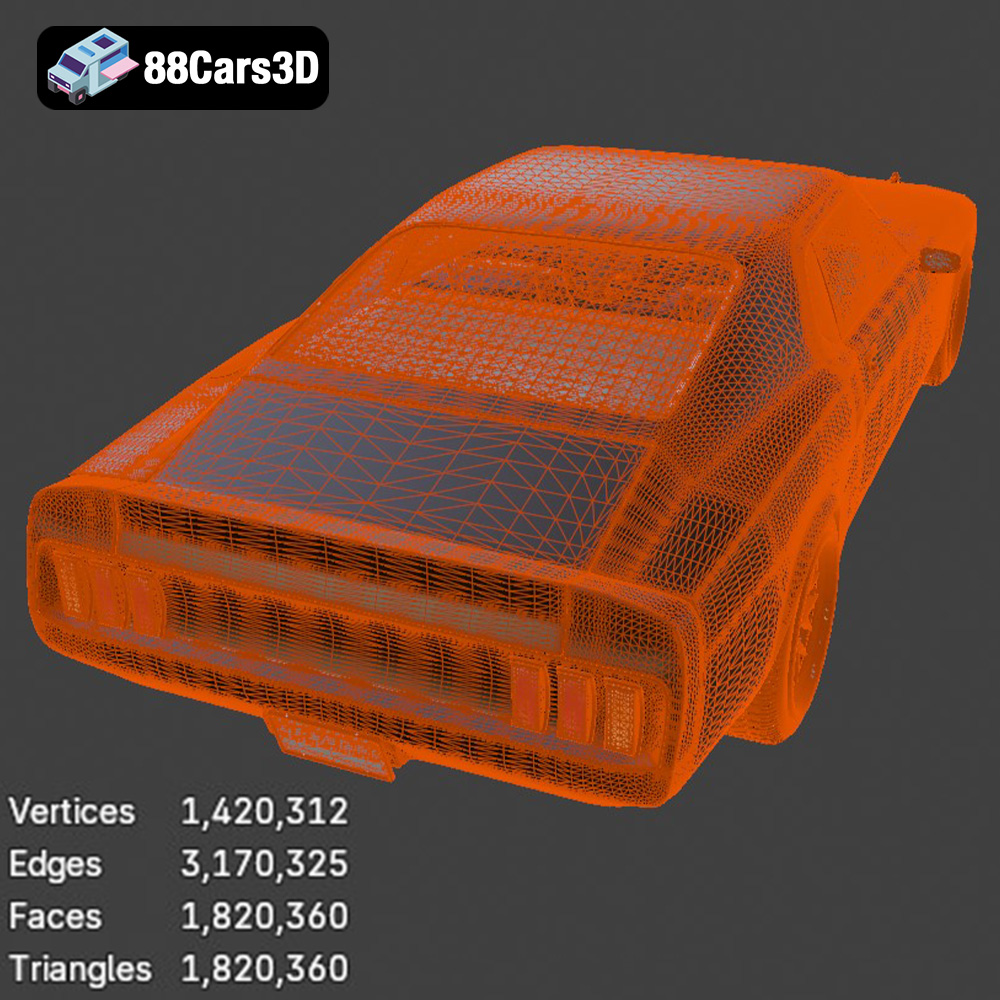
Beyond visual accuracy, technical specifications are paramount. This model boasts a highly detailed topology of 1,820,360 triangles. This polycount strikes a perfect balance, delivering high-end visual realism essential for cinematic automotive rendering without overburdening real-time engines like Unreal or Unity. The model adheres to real-world scale accuracy, based on actual vehicle chassis dimensions, ensuring proper integration into architectural visualizations or simulation environments. Furthermore, the proper pivot setup for steering, wheel rotation, and suspension travel is already established, significantly reducing setup time for animators and riggers. This optimization underscores the model’s “game-ready” status and broad compatibility with major 3D software platforms.
The true power of a versatile 3D asset like the Ford Mustang Mach 1 1969 3D Model is its ability to seamlessly integrate into diverse professional pipelines. Its multi-format availability ensures that regardless of your preferred software or target platform, you have a solid foundation.
For artists working with industry-standard packages, the .max and .blend files are invaluable. In 3ds Max, professionals can open the native .max file, immediately accessing the model with its materials, potentially lighting setups, and even pre-rigged components. This allows for deep customization, re-texturing, setting up complex animation sequences for commercials or cinematics, and rendering with powerful engines like V-Ray or Corona. Similarly, Blender artists benefit from the .blend file, enabling them to explore the model’s construction, modify its topology, animate its parts using Blender’s robust toolset, and produce stunning visuals with Cycles or Eevee. The separate components (wheels, suspension, steering) make it straightforward to create realistic driving animations or even simulate suspension physics for an authentic automotive rendering experience.
Game developers and real-time visualization specialists will find the .fbx and .unreal formats particularly useful. Importing the .fbx file into Unreal Engine or Unity allows for direct integration, retaining PBR (Physically Based Rendering) materials, textures, and skeletal mesh data. The “game-ready & optimized” nature of the Mustang model means it has been carefully constructed to perform efficiently within these engines. Developers can quickly set up collision meshes, implement level-of-detail (LOD) systems to manage performance across different distances, and create interactive experiences. For instance, in a racing game, the precise geometry and proper pivot points facilitate realistic driving dynamics and physics simulations. For virtual showrooms, the model’s high fidelity combined with Unreal’s ray tracing capabilities can produce photorealistic interactive experiences.
The inclusion of the .glb format opens up exciting possibilities for interactive AR/VR and web-based applications. glTF (which .glb is a binary form of) is designed for efficient delivery of 3D content over the web. This means the Ford Mustang Mach 1 1969 3D Model can be easily integrated into mobile AR apps, allowing users to virtually place the car in their real-world environment. For VR, the optimized geometry is perfect for creating immersive virtual showrooms where clients can explore the vehicle from every angle. WebGL projects, such as online configurators or interactive product showcases, can leverage the .glb format to display the Mach 1 directly in a web browser without the need for plugins, offering a seamless and engaging user experience.
Digital models offer endless possibilities, but sometimes, the desire to hold a physical representation of a legendary machine is undeniable. The Ford Mustang Mach 1 1969 3D Model provides a pathway to tangible creation through 3D printing, catering to hobbyists and collectors alike.
The availability of .stl and .ply formats is crucial for 3D printing. The .stl format, being the standard, is universally accepted by 3D printing slicer software. Before printing, the model might need minor adjustments depending on the desired scale and printer capabilities. Ensuring the mesh is “watertight” (no holes or gaps) is a fundamental step, which good quality models like this one typically are. For those needing even more precise data, the .ply format can offer additional information, although .stl is usually sufficient for most consumer and prosumer 3D printing applications.
To achieve the best results when 3D printing the Mach 1, specific settings are recommended. A scale of 1:12, 1:18, or 1:24 provides a good balance between detail and printability. For optimal fine details, especially on a classic car model, resin printing is highly recommended over FDM. A layer height between 0.04–0.12 mm will capture intricate curves and sharp edges. Wall thickness should be between 1.2–2.0 mm for structural integrity. An infill of 20–30% is generally sufficient. Supports will be required for detailed parts such as the exhaust system, mirrors, and steering components, and careful attention to print orientation (e.g., printing the frame angled) can enhance structural strength. Post-processing, including sanding, priming, and painting with authentic factory colors and metallic finishes, transforms the raw print into a display-worthy replica, truly bringing the 3D car model to life.
A high-quality 3D asset is not just about fixed aesthetics; it’s about the potential for transformation. The Ford Mustang Mach 1 1969 3D Model offers extensive customization options, allowing artists to tailor it precisely to project requirements.
The model’s clean topology and organized UVs (implied by its professional-grade nature) make it straightforward to change body and panel colors. Artists can experiment with authentic factory colors, apply custom metallic finishes, or even explore matte and gloss variations to achieve a specific look. Tire textures can be modified to switch between street variants and off-road tires for different scene contexts, dramatically altering the vehicle’s character. The material finishes of chrome, glass, and plastic components can also be fine-tuned to react realistically to light, enhancing the overall photorealism for any automotive rendering scene.
Beyond the vehicle itself, its presentation within a scene is crucial. This Mach 1 model is designed to be easily adaptable to various lighting conditions and environments. Whether you’re placing it in a sun-drenched desert landscape, a moody city street at night, or a pristine studio showroom, its materials will respond accurately to global illumination and direct lighting. Artists can adjust lighting setups to highlight specific features, create dramatic shadows, or achieve a particular mood, ensuring the classic car asset always looks its best. Its accurate scale means it will fit perfectly into architectural visualizations or existing digital environments without needing tedious resizing.
The 1969 Ford Mustang Mach 1 is more than just a car; it’s a piece of history, an emblem of power and style. Bringing such an icon into the digital realm with authenticity and technical excellence requires a commitment to detail that few can match. The Ford Mustang Mach 1 1969 3D Model available on 88cars3d.com stands out as a prime example of a premium asset that meets the rigorous demands of professional production across game development, automotive rendering, AR/VR experiences, and even 3D printing. Its comprehensive file format support, meticulous attention to both exterior and interior details, and optimized topology ensure it’s a versatile and powerful addition to any artist’s toolkit. Whether you’re crafting a hyper-realistic scene, developing an immersive game, or creating a tangible replica, this 3D car model provides the foundation for exceptional results. Investing in such high-quality 3D car models accelerates workflows, elevates visual fidelity, and ultimately allows artists to focus on their creative vision with confidence.
The 1969 Ford Mustang Mach 1 stands as a defining pillar of American muscle car heritage. This legendary fastback is celebrated for its aggressive stance, signature sportsroof styling, and high-performance V8 pedigree. Our 3D model meticulously captures its iconic visual elements, from the menacing front grille and quad headlights to the muscular rear haunches, distinctive hood scoop, and classic dual exhaust system. Boasting a highly detailed topology of 1,820,360 triangles, this 3D model is crafted for maximum visual fidelity while maintaining optimized structures for modern rendering engines. It is designed to deliver photorealistic results for high-end rendering, game development, cinematic animation, and interactive AR/VR applications. Perfect for virtual showrooms, classic car racing games, architectural visualizations, and automotive brand campaigns.
$82.50
.1969
.blend
.fbx
.ford
.glb
.max
.obj
.ply
.rendering
.stl
.unreal
car-3d-model
classic-car
game asset
game-ready
muscle-car
mustang-mach-1
optimized
VR/AR