Get 20% OFF All Premium 3D & STL Models!

In the fast-paced world of digital creation, where photorealism and interactive experiences are paramount, the demand for high-fidelity 3D assets continues to surge. From blockbuster game titles and immersive AR/VR simulations to breathtaking architectural visualizations and sophisticated product renderings, accurate and optimized 3D models form the bedrock of compelling visual content. For automotive enthusiasts and digital artists alike, the allure of classic and high-performance vehicles translates directly into a desire for meticulously crafted digital representations.
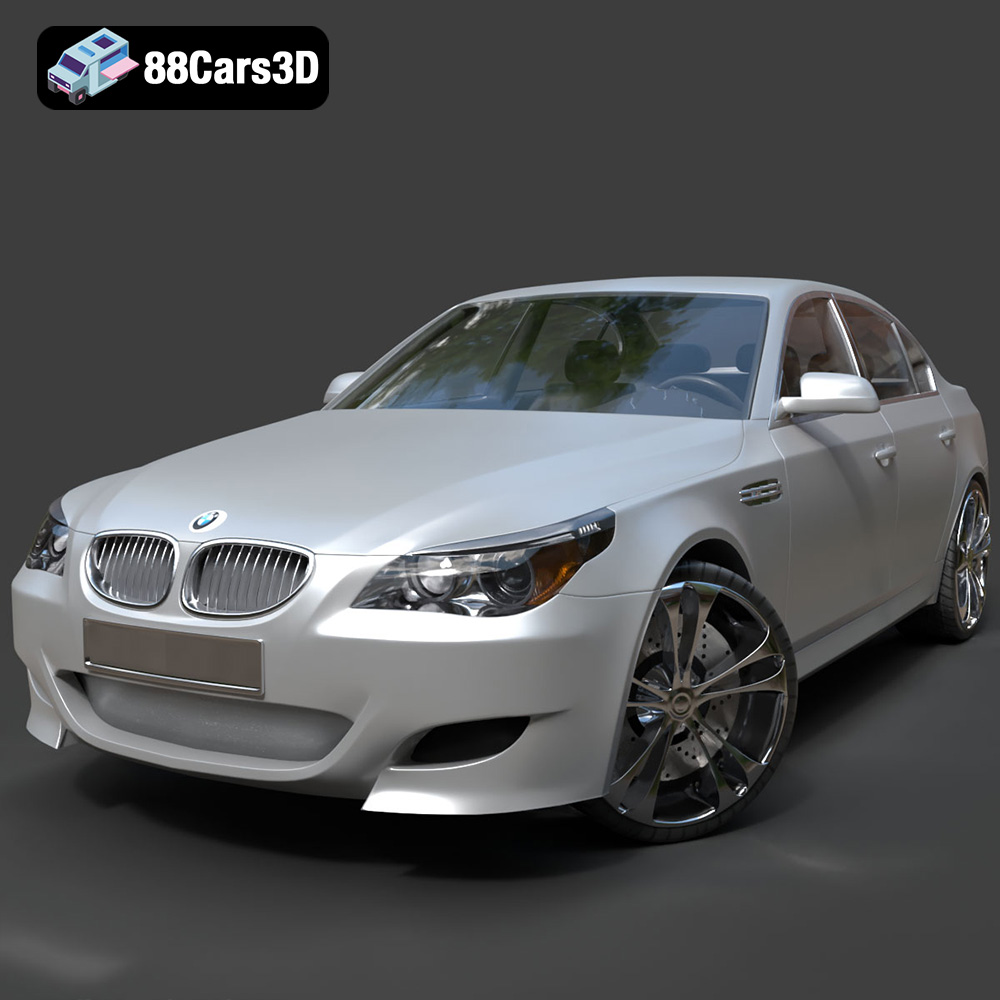
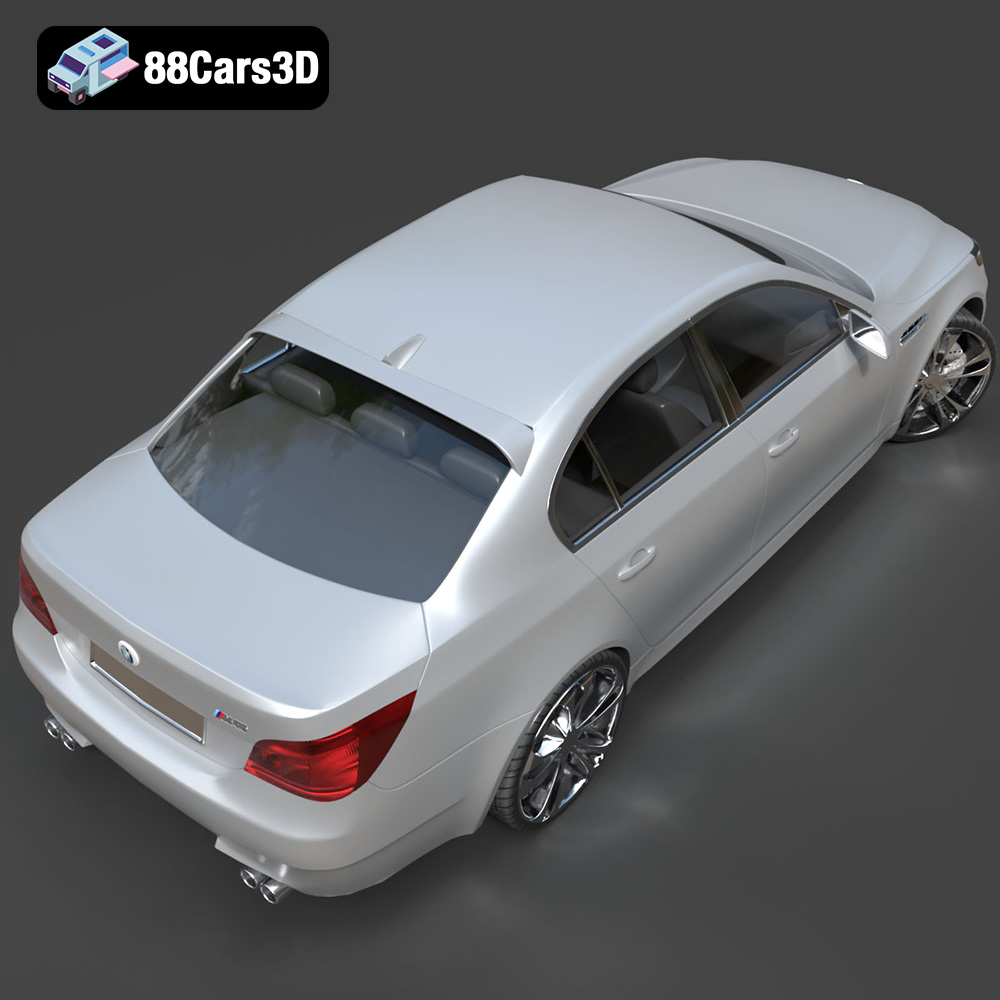
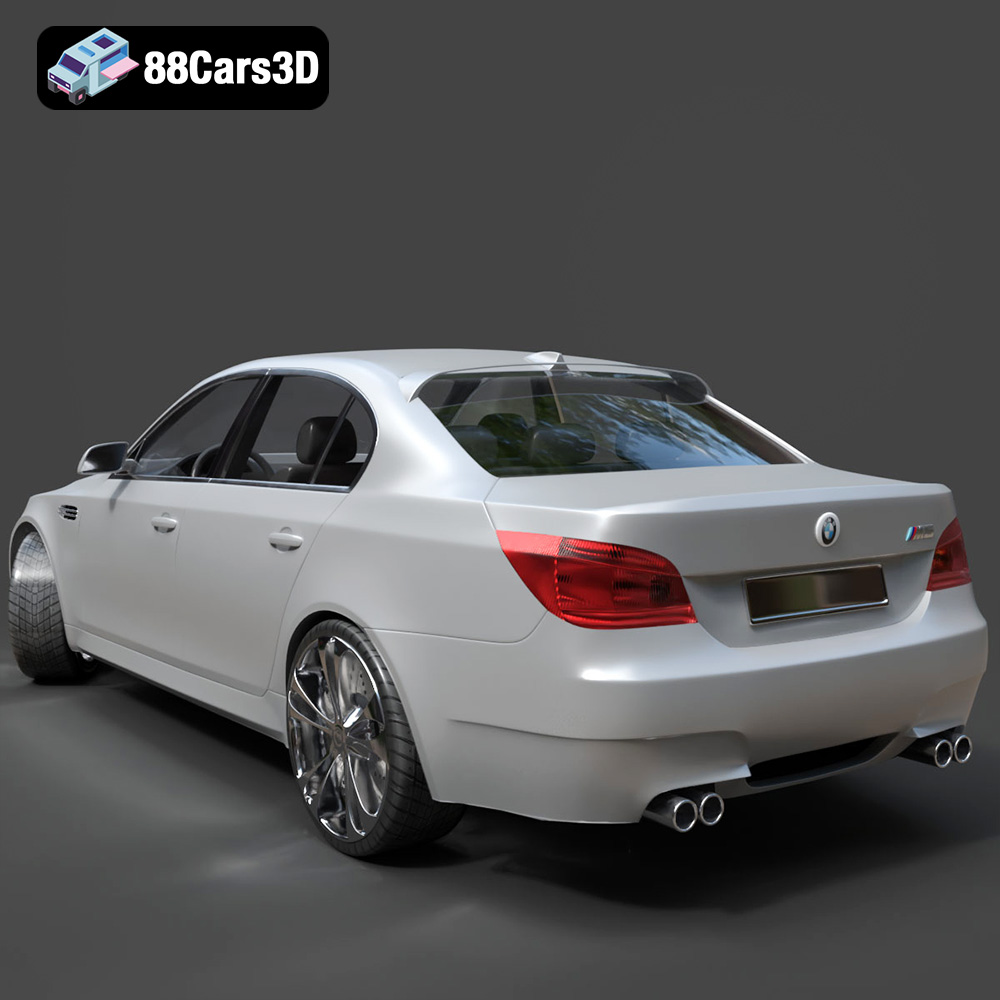
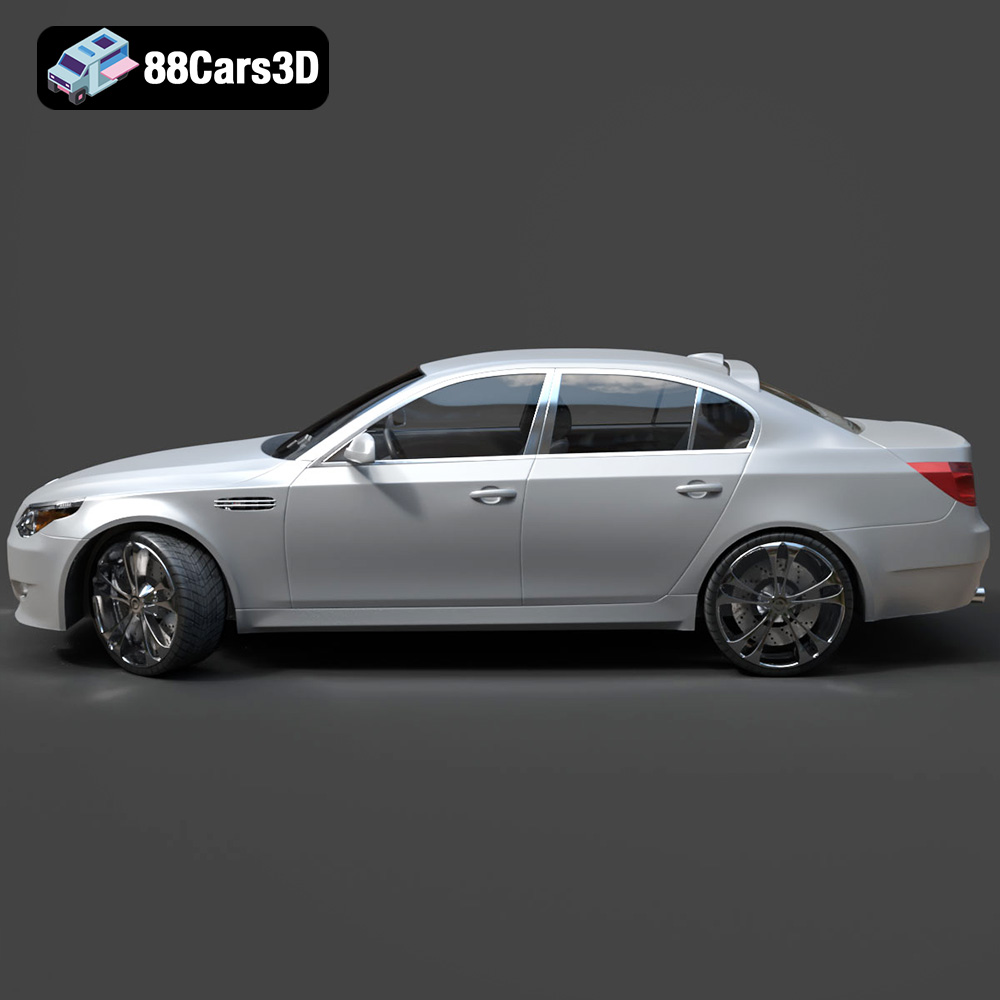
Consider the legendary BMW M5 2008 (E60 generation). This iconic sports sedan, revered for its Formula 1-inspired V10 engine and distinctive, aggressive styling, holds a special place in automotive history. Capturing its essence in the digital realm requires more than just a passing resemblance; it demands precision, technical understanding, and an unwavering commitment to detail. This is precisely where a premium 3D car model like the BMW M5 2008 3D Model Download STL FBX OBJ GLB Blend from 88cars3d.com excels, offering a robust foundation for a myriad of professional applications.
This comprehensive guide delves into the technical intricacies of utilizing such a sophisticated 3D automotive asset, exploring critical aspects from file formats and optimization strategies to advanced rendering workflows and real-world application scenarios. Whether you’re a game developer seeking realistic vehicles for an open-world title, an architect visualizing a luxury garage, or an animator bringing dynamic automotive scenes to life, understanding the underlying technology and best practices is key to unlocking the full potential of high-quality 3D car models.
The selection of the correct 3D model file format is a foundational decision that impacts workflow, compatibility, and the ultimate utility of your digital asset. Different formats are optimized for distinct purposes, offering varying degrees of editability, metadata retention, and performance characteristics. The BMW M5 2008 3D model, for instance, provides a comprehensive suite of formats to cater to virtually any professional pipeline.
The .blend format is the native file type for Blender, a powerful open-source 3D creation suite. When you acquire a .blend file, you’re gaining access to a fully editable Blender scene, complete with all its intricacies. This includes the mesh geometry, materials, textures, lighting setups, camera positions, animation data, modifiers, and even custom scripts. For artists working primarily in Blender, the .blend file is the most convenient and flexible option. It allows for seamless customization, modification of topology, tweaking of shader networks, and integration into existing Blender projects without any loss of data fidelity that might occur during format conversions. This is ideal for detailed interior adjustments, suspension animation setups, or even re-texturing the M5’s iconic S85 V10 engine block.
.fbx (Filmbox) is arguably the most widely adopted proprietary 3D file format for inter-application data exchange, especially favored in game development and real-time visualization. Developed by Autodesk, FBX is excellent for transferring 3D models, animation, and scene information between different software packages like Maya, 3ds Max, Blender, Unity, and Unreal Engine. It maintains mesh data, materials (though often simplified upon export/import), textures, skeletal animations, and rigging. For the BMW M5 2008 3D model, the .fbx format is ideal for importing into game engines like Unreal, offering a streamlined pipeline for immediate use in interactive environments due to its robust support for mesh, hierarchy, and animation data.
The .obj (Wavefront Object) format is a universal standard, highly compatible across almost all 3D software. It stores geometry data (vertices, normals, UV coordinates, and faces) in a plain text file, often accompanied by a .mtl (material) file that defines surface properties like color, reflectivity, and texture map references. While .obj is excellent for static mesh exchange and offers broad compatibility, it typically doesn’t support animation, rigging, or scene information beyond the core mesh and basic material assignments. It’s a reliable choice when you need a clean mesh for sculpting, retopology, or when working in niche software that might not support more complex formats. Importing the M5 .obj file provides a clean slate for applying custom shaders or integrating it into specific rendering engines.
.glb (GL Transmission Format Binary) is an increasingly crucial format, particularly optimized for web-based 3D, Augmented Reality (AR), and Virtual Reality (VR) applications. It’s a binary version of the glTF (GL Transmission Format) standard, designed for efficient transmission and loading of 3D scenes and models. A .glb file packages all necessary assets – geometry, materials, textures, animations – into a single, compact file. This “all-in-one” characteristic makes it perfect for quick deployment in virtual showrooms, mobile AR experiences of the M5, or interactive 3D viewers directly in a web browser, ensuring fast load times and broad compatibility across modern platforms.
The .stl (Stereolithography) format is the industry standard for 3D printing. It represents a 3D model as a series of connected triangles (a tessellated surface) without any color, texture, or material information – purely geometry. For hobbyists or professionals looking to create a physical replica of the BMW M5 2008, the .stl file is essential. It provides the necessary data for slicing software to prepare the model for additive manufacturing, allowing for physical display models at scales like 1:12 or 1:18, as specified in the product description, ensuring the intricate exterior features are accurately reproduced.
The .ply (Polygon File Format, or Stanford Triangle Format) is another format used to store 3D data, particularly useful for scanned data, point clouds, and precision meshes often found in CAD or scientific analysis. Like .obj, it stores geometry and can optionally include color, transparency, normals, and other properties per vertex or per face. While less common for general animation or game development than .fbx or .blend, .ply offers a robust way to preserve detailed mesh information, making it suitable for applications requiring high precision or complex data representation, which could be useful for advanced physics simulations or detailed engineering analysis of the M5’s chassis.
The .unreal format signifies an asset specifically prepared and optimized for direct integration into Unreal Engine. While Unreal primarily uses .fbx for import, an “.unreal” file often implies a pre-packaged asset with materials, textures, collision meshes, LODs (Levels of Detail), and possibly blueprints already configured within the engine’s ecosystem. This dramatically speeds up development time, as the BMW M5 2008 3D model can be dropped directly into a project with minimal setup, ready for real-time environments, racing simulations, or cinematic sequences within Unreal.
Similar to .blend for Blender, .max is the native file format for Autodesk 3ds Max, a leading software for 3D modeling, animation, and rendering in design visualization and media entertainment. A .max file contains the complete 3ds Max scene, including all geometry, modifiers, materials, textures, lights, cameras, animations, and scene settings. For artists and studios relying on 3ds Max, this format offers the highest level of editability and allows full access to the original scene construction of the BMW M5 2008, enabling advanced rendering with engines like V-Ray or Corona, complex animation sequences, or detailed environmental integration.
In the realm of 3D modeling, especially for applications like game development, AR/VR, and real-time visualization, “high-quality” isn’t solely about visual fidelity; it’s also about optimization. An exquisitely detailed model that brings a system to its knees is ultimately unusable. The BMW M5 2008 3D model from 88cars3d.com exemplifies this balance, offering both stunning visuals and practical performance.
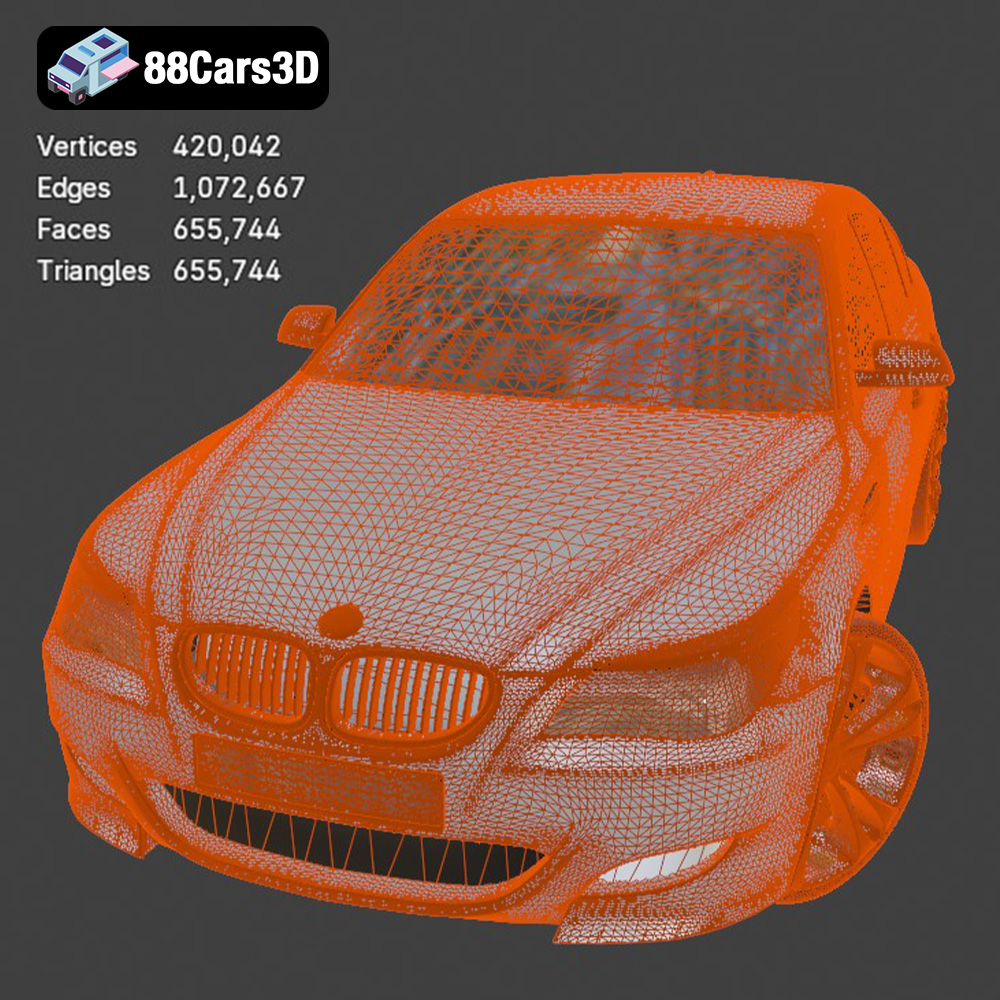
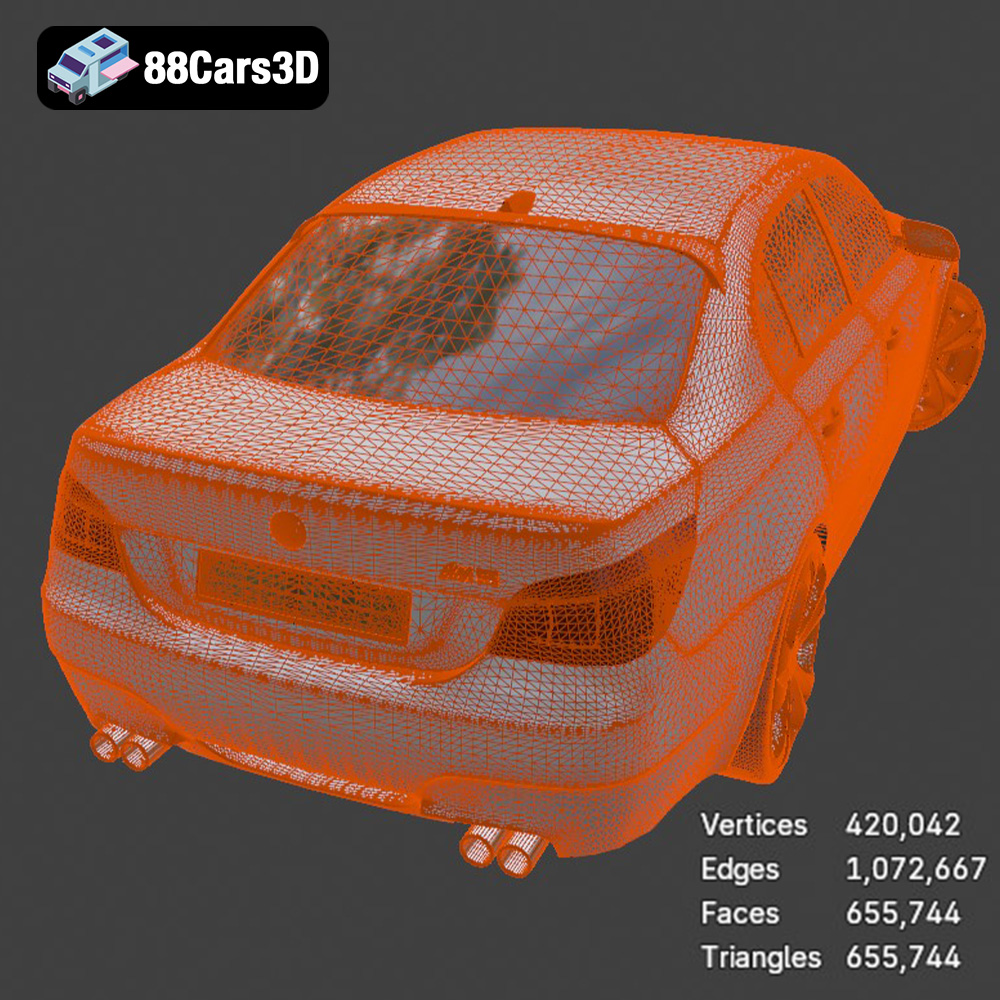
The product’s stated triangle count of 655,744 (approximately 327,872 polygons) strikes a crucial balance. For a hero vehicle in a modern game or a central asset in an AR/VR experience, this polycount allows for exceptional visual realism, capturing the intricate curves of the M5’s bodywork, the detailing of its wheels, and the nuances of its interior, without being excessively heavy. Excessively high polycounts lead to poor frame rates and long loading times, while too few triangles result in blocky, unrealistic geometry. This model’s optimized geometry ensures it can be rendered smoothly in real-time engines like Unreal and Unity, making it a truly game-ready asset.
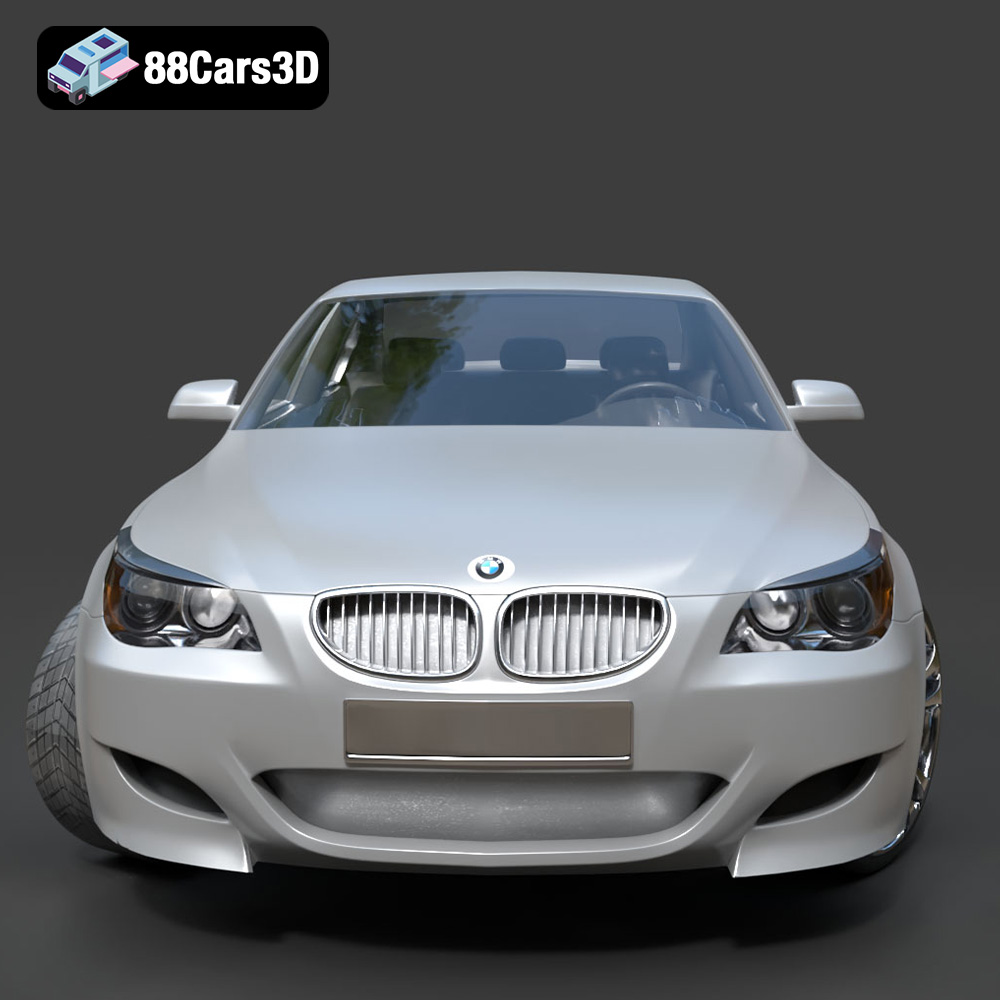
The attention to detail extends beyond the raw polycount. The model faithfully captures the M5’s aggressive front fascia, signature quad exhaust, and iconic kidney grilles. Furthermore, the interior is optimized for first-person POV in gaming, featuring heavily bolstered M sport seats, a detailed instrument cluster, and intricate controls like the SMG shifter and iDrive dial. This level of granular detail, when properly optimized with efficient UV mapping and material setup, allows for immersive experiences whether you’re racing through a virtual city or exploring the cabin in an AR configurator. The separation of components like wheels, suspension, and steering further enhances its utility, allowing for realistic animation without complex rigging from scratch.
Accuracy in 3D modeling also extends to real-world scale. The BMW M5 2008 model is built to actual vehicle chassis dimensions, ensuring it integrates seamlessly into virtual environments alongside other assets or architectural designs. Crucially, the model features a proper pivot setup for critical animated parts: steering, wheel rotation, and suspension travel. This is not a trivial detail; incorrect pivot points can derail animation efforts, making it difficult to achieve realistic movement. With pre-configured pivots, animators can immediately begin scripting vehicle dynamics, saving countless hours of setup time and ensuring physically accurate motion in simulations and cinematics.
Leveraging a high-quality 3D model like the BMW M5 2008 effectively requires understanding how it integrates into professional 3D pipelines. The availability of multiple file formats ensures compatibility across industry-standard software. Here, we’ll explore workflows in 3ds Max, Blender, and Unreal Engine.
For architectural visualization, product marketing, or cinematic animation, 3ds Max remains a powerhouse. The inclusion of the .max file format ensures seamless integration. Upon opening, artists gain full access to the original scene setup, including mesh data, material assignments, and potentially pre-configured render settings. Users can then:
The accurate geometry and pivot setup provided by the 88cars3d.com model significantly reduce the prep work, allowing artists to focus on artistic direction and rendering quality.
Blender’s open-source nature and powerful capabilities make it a favorite for many artists and smaller studios. The native .blend file ensures that all aspects of the BMW M5 2008 model are immediately accessible. The workflow typically involves:
The model’s clean topology and separated components are highly beneficial for Blender users looking to dive straight into rendering or animation projects.
Unreal Engine is the industry leader for real-time graphics, making the game-ready BMW M5 2008 a perfect fit. The .fbx and especially the .unreal formats are key here:
This streamlined integration allows developers to quickly populate open-world games, develop racing simulations, or create immersive virtual showrooms with a high-performance, visually stunning vehicle asset.
The versatility of a well-crafted 3D car model extends far beyond traditional rendering and gaming. The BMW M5 2008 3D model is designed to excel in emerging and specialized applications, pushing the boundaries of digital and physical interaction.
Augmented Reality (AR) and Virtual Reality (VR) are transforming how we interact with products, offering immersive experiences that bridge the digital and physical worlds. The inclusion of the .glb format is critical here. Its optimized, single-file packaging makes the M5 model ideal for:
For marketing campaigns, product launches, or architectural visualization (arch-viz), photorealistic renderings are essential. The BMW M5 2008 3D model, with its accurate geometry and real-world scale, is an excellent asset for:
Beyond digital displays, the .stl format opens up the fascinating world of 3D printing. For enthusiasts, model collectors, or educational purposes, printing a physical replica of the BMW M5 2008 provides a unique tangible connection to the digital asset. The product description provides crucial guidelines:
This capability adds another layer of value to the 3D car models available on 88cars3d.com, transforming a digital file into a physical collectible or a functional prototype.
One of the significant advantages of investing in a high-quality, technically sound 3D model is the inherent flexibility it offers for customization. The BMW M5 2008 3D model is not a static asset; it’s a versatile foundation for boundless creative exploration, allowing artists and developers to truly make it their own.
The ability to easily modify aesthetic elements is crucial for integration into diverse projects. With a well-structured model and editable materials, users can:
The BMW M5 2008 3D model serves as a central element that reacts to its environment, and controlling these interactions is key to realism:
The creative freedom afforded by a comprehensive asset like this BMW M5 3D model from 88cars3d.com means that it’s not just a standalone object, but a flexible component ready to be integrated and transformed within any creative vision.
The journey from a legendary vehicle like the BMW M5 2008 to a versatile, high-fidelity 3D model is a testament to the intricate balance of artistic skill and technical precision. As we’ve explored, a truly professional 3D car model offers far more than just visual appeal; it provides a robust, optimized foundation that integrates seamlessly into a multitude of digital pipelines, from real-time game development and immersive AR/VR experiences to photorealistic rendering and even tangible 3D prints.
Key takeaways include the critical importance of understanding various file formats and their specific applications, the strategic balance between visual fidelity and performance optimization for game-ready assets, and the power of proper technical setups like real-world scale and accurate pivot points for animation. Whether you’re working in 3ds Max, Blender, Unreal Engine, or any other leading 3D software, the availability of comprehensive file formats ensures maximum compatibility and creative freedom. Furthermore, the capacity for extensive customization—from body colors and material finishes to environmental lighting—empowers artists and developers to tailor the model precisely to their project’s needs.
For those seeking to elevate their digital automotive projects, a meticulously crafted asset like the BMW M5 2008 3D Model Download STL FBX OBJ GLB Blend stands as an invaluable investment. It’s more than just a model; it’s a gateway to creating compelling visual narratives, immersive simulations, and innovative digital experiences that captivate audiences and push the boundaries of virtual realism. Explore this and many other high-quality 3D car models available at 88cars3d.com to bring your next project to life with unparalleled detail and performance.
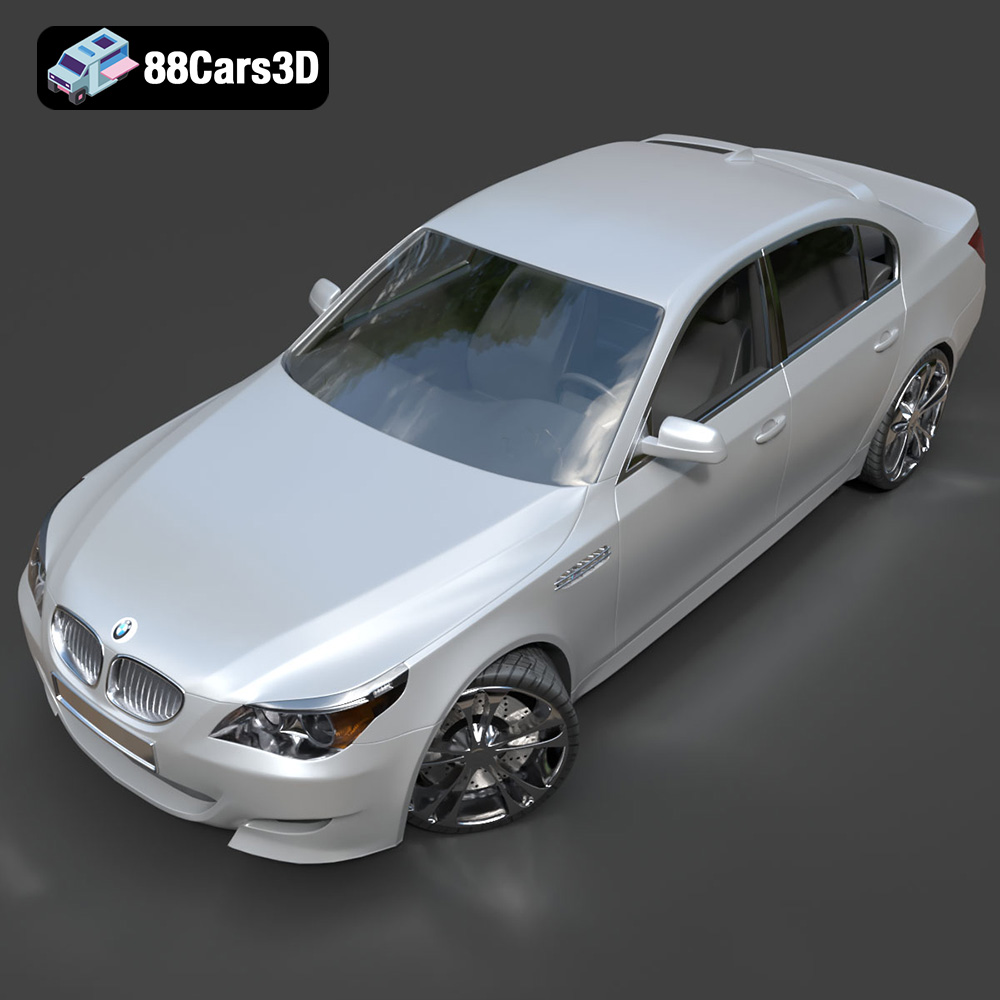
Experience the legendary BMW M5 2008 (E60 generation), a defining sports sedan famed for its Formula 1-inspired naturally aspirated V10 engine and striking aerodynamic styling. This 3D model faithfully captures the vehicle’s heritage, showcasing key visual elements like the aggressive front fascia, flared wheel arches, signature quad exhaust system, and iconic kidney grilles that make this super saloon truly special. Designed with meticulous attention to detail, this 3D model features a well-structured topology with a triangle count of 655,744. It offers exceptional game-ready optimization and high-end visual fidelity, making it a premier asset for real-time applications, game development, AR/VR experiences, professional animation, and architectural visualization. Perfect for high-speed racing simulations, urban open-world environments, luxury virtual showrooms, and photorealistic cinematic renderings.
$46.50
.2008
.blend
.bmw
.e60
.fbx
.glb
.m5
.max
.obj
.ply
.rendering
.stl
.unreal
car-3d-model
game asset
game-ready
low-poly
luxury car
optimized
sports-sedan
VR/AR