Get 20% OFF All Premium 3D & STL Models!

In the expansive realm of 3D visualization, where photorealism meets limitless creativity, the meticulous recreation of automotive icons stands as a testament to digital artistry. From high-octane racing simulations to cinematic masterpieces and interactive showrooms, the demand for exceptionally detailed 3D car models is constantly accelerating. These assets are not merely static representations; they are complex digital blueprints that capture the essence, engineering, and aesthetic appeal of their real-world counterparts.
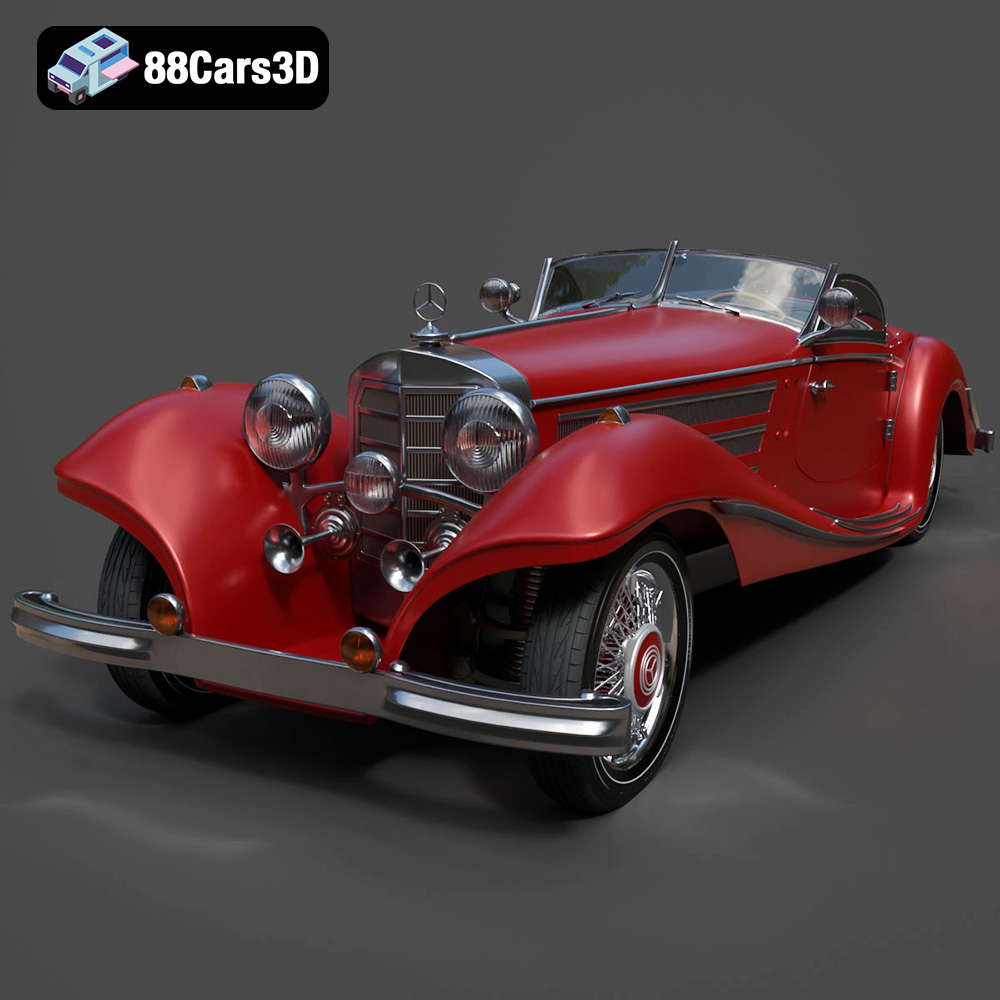
Imagine bringing the grandeur of a bygone era to life with unparalleled precision. Few vehicles embody this spirit of luxurious design and engineering prowess quite like the 1936 Mercedes-Benz 540K Roadster. This magnificent machine, a symbol of pre-war elegance and automotive innovation, transcends time and is now available as an exquisite 3D model, ready to ignite your next project. Whether for rendering breathtaking visuals, populating a game world, or creating immersive AR/VR experiences, a high-fidelity model of such a classic is an invaluable asset for any professional artist or developer.
Navigating the diverse landscape of 3D production pipelines requires a clear understanding of file formats. Each format is designed with specific use cases in mind, offering unique advantages for compatibility, functionality, and performance across different software and platforms. For a complex asset like the Mercedes-Benz 540K Roadster 3D model, having access to multiple formats ensures maximum versatility and seamless integration into virtually any workflow.
The .blend format is native to Blender, the powerful open-source 3D creation suite. When you acquire a model in .blend format, you’re not just getting the mesh; you’re typically receiving a complete Blender scene. This includes all materials, textures, lighting setups, and even animation rigs if present. For artists working primarily in Blender, this format offers the highest degree of editability and flexibility. You can dive deep into the model’s construction, modify its topology, adjust its shader networks, or reconfigure its UV maps with ease. It’s an ideal starting point for customization or integrating the model into a larger Blender-based project, ensuring all attributes are preserved exactly as intended by the original creator.
Autodesk’s .fbx (Filmbox) format has become an industry standard for interoperability, particularly between different 3D software applications and real-time game engines like Unreal Engine and Unity. FBX excels at packaging complex scene data, including geometry, materials (though often simplified, requiring re-setup in the target engine), textures, cameras, and crucially, animation data. For high-fidelity models like our Mercedes-Benz 540K Roadster, the .fbx file provides a robust bridge, allowing developers to import the model with its hierarchical structure, pivot points, and potential skeletal rigging intact. This makes it a go-to choice for game developers, ensuring optimal data transfer and minimizing setup time within the engine environment.
The .obj (Wavefront OBJ) format is one of the oldest and most widely supported 3D file formats. Its strength lies in its simplicity and universality. An OBJ file primarily stores geometric data – vertices, faces, normals, and UV coordinates – along with references to external material (MTL) files. While it doesn’t typically store advanced features like animation or complex material definitions, its broad compatibility makes it an excellent choice for straightforward mesh exchange between almost any 3D software package. If you need to import the Mercedes-Benz 540K Roadster into a less common application or simply require the raw geometric data for custom processing, .obj is a reliable fallback.
.glb (GL Transmission Format Binary) is rapidly gaining traction as the preferred format for efficient 3D model delivery on the web, in augmented reality (AR), and virtual reality (VR) applications. GLB files are self-contained, packing geometry, materials, textures, and animation into a single binary file. This makes them incredibly efficient for streaming and display, reducing load times and simplifying asset management. For interactive experiences featuring the Mercedes-Benz 540K Roadster in a virtual showroom or an AR configurator on a mobile device, the .glb format provides the necessary optimization without sacrificing visual quality, making it a powerful tool for modern immersive content.
The .stl (STereoLithography) format is synonymous with 3D printing. It represents a 3D model as a series of connected triangles, describing only the surface geometry of an object without color, texture, or other attributes. For anyone looking to bring the Mercedes-Benz 540K Roadster into the physical world, the .stl file is essential. While it simplifies the model, it does so in a way that 3D printers can directly interpret to create physical layers. Careful attention to mesh integrity and scale is crucial when preparing an .stl for successful printing, ensuring all surfaces are manifold and free of errors.
The .ply (Polygon File Format) is another format primarily used for storing 3D data from 3D scanners, CAD applications, or for scientific analysis. It supports properties like color, transparency, surface normals, and even confidence values for each vertex or face. While less common for artistic assets compared to FBX or OBJ, PLY offers a robust way to store precise geometric information, making it valuable for applications requiring accurate mesh data or when converting a scan into a usable 3D model. For the Mercedes-Benz 540K Roadster, a .ply export could be useful for specific engineering or measurement tasks.
The inclusion of a dedicated .unreal format (often referring to assets already packaged for Unreal Engine, typically via Datasmith or direct export) signifies a model optimized for Unreal Engine’s specific requirements. This means the asset has likely undergone internal optimization, material setup with Unreal’s Physically Based Rendering (PBR) system, and correct pivot placements. For game developers and visualization artists leveraging Unreal Engine, this pre-configured asset saves significant development time, allowing for immediate integration and rendering within the engine’s powerful real-time environment, embodying the true “game-ready” nature of the 540K model.
Finally, the .max format is the native file type for Autodesk 3ds Max, a leading software in architectural visualization, animation, and game content creation. Similar to .blend, a .max file contains the complete scene, including geometry, materials, textures, lighting, cameras, and animation. For 3ds Max users, this provides the ultimate control and flexibility, allowing for full customization, advanced rendering setups with V-Ray or Corona, and complex animation sequences. Artists can leverage 3ds Max’s robust toolset to modify every aspect of the Mercedes-Benz 540K Roadster, making it an indispensable format for high-end rendering and animation studios.
Creating a truly exceptional 3D car model, especially for a classic like the Mercedes-Benz 540K Roadster, involves a blend of artistic vision and rigorous technical execution. It’s about more than just replicating shapes; it’s about capturing the soul of the vehicle in a digital format that performs flawlessly across various applications.
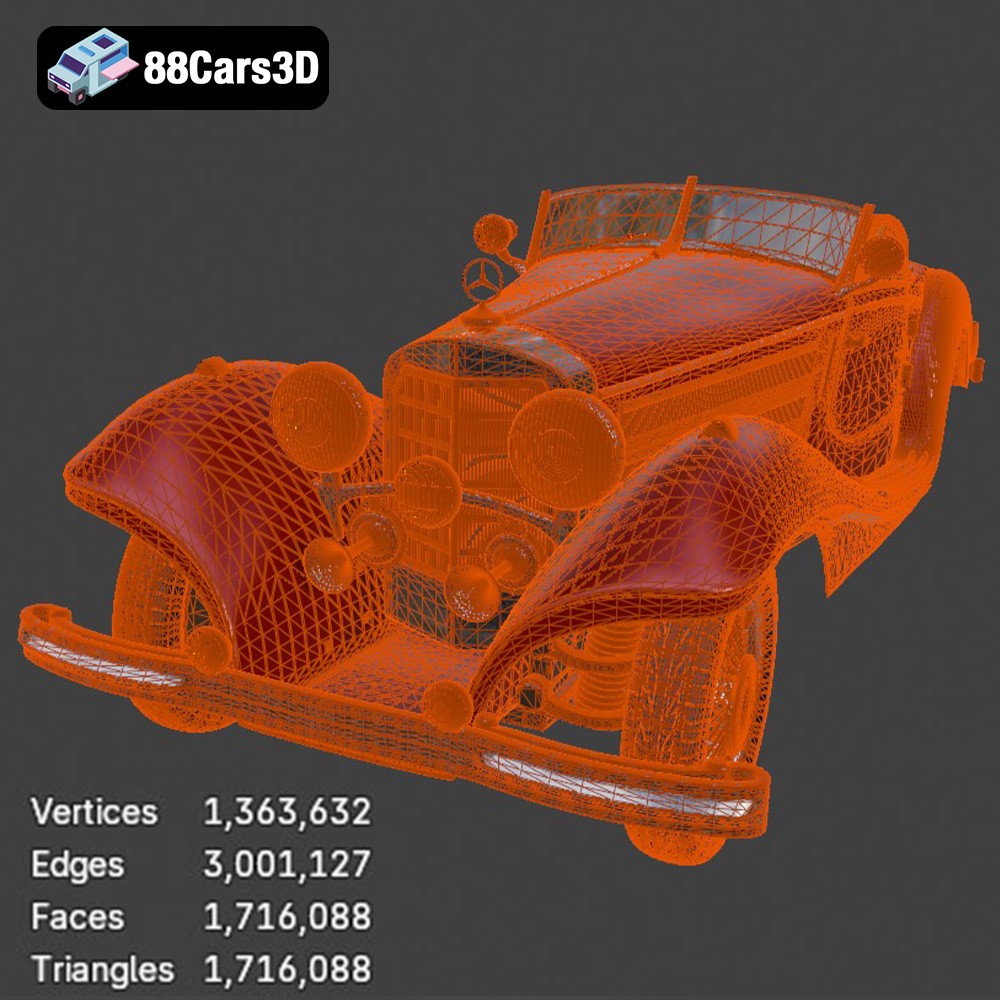
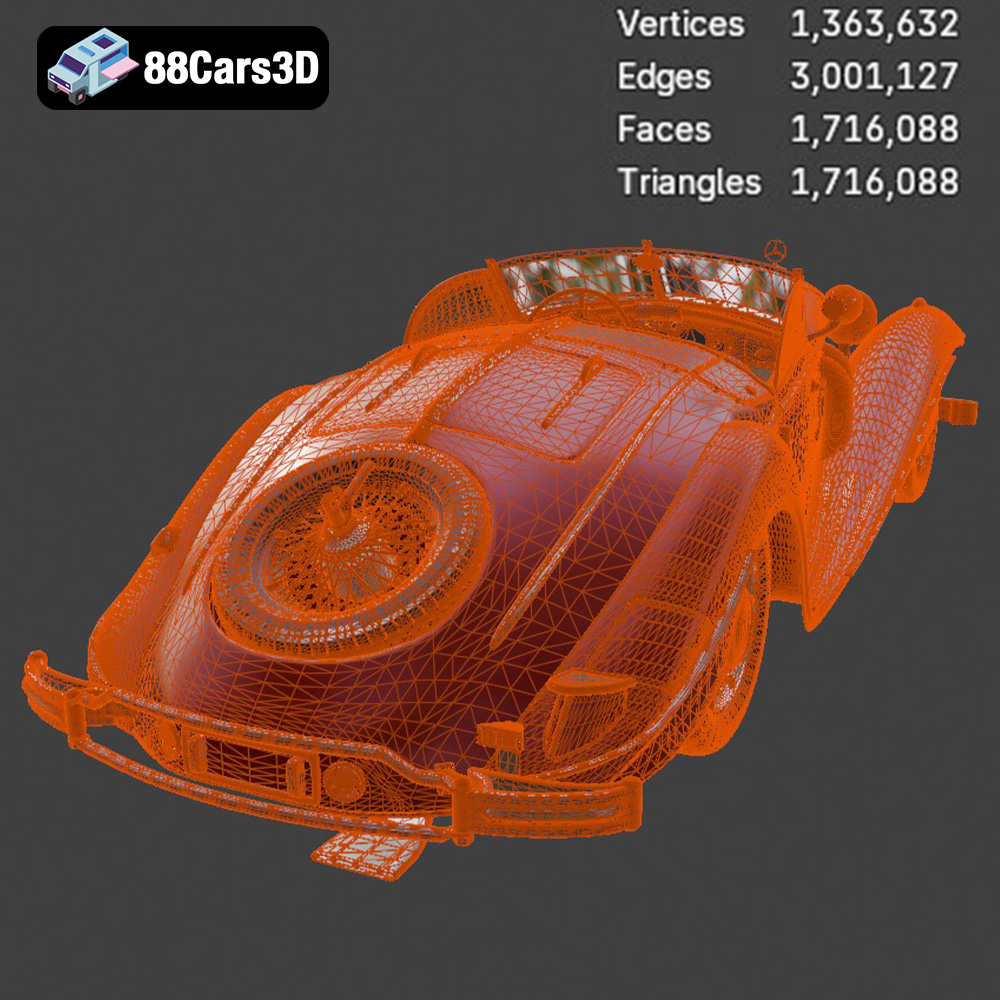
The topology of a 3D model refers to the arrangement of its vertices, edges, and faces. Good topology is paramount for clean deformations during animation, efficient UV unwrapping, and smooth subdivision surfaces. For complex models, especially those intended for real-time environments, managing polycount is critical. Our Mercedes-Benz 540K Roadster, with its 1,716,088 triangles, strikes a masterful balance. This high polycount allows for unparalleled visual fidelity, capturing every curve and detail of the classic bodywork, the intricate wire-spoke wheels, and the elegant interior. Yet, it’s structured to leverage modern real-time engine capabilities, such as virtualized geometry (like Unreal Engine’s Nanite), which can efficiently handle high-density meshes without crippling performance. This ensures that the model looks stunning in cinematics while remaining viable for high-end game development or immersive AR/VR.
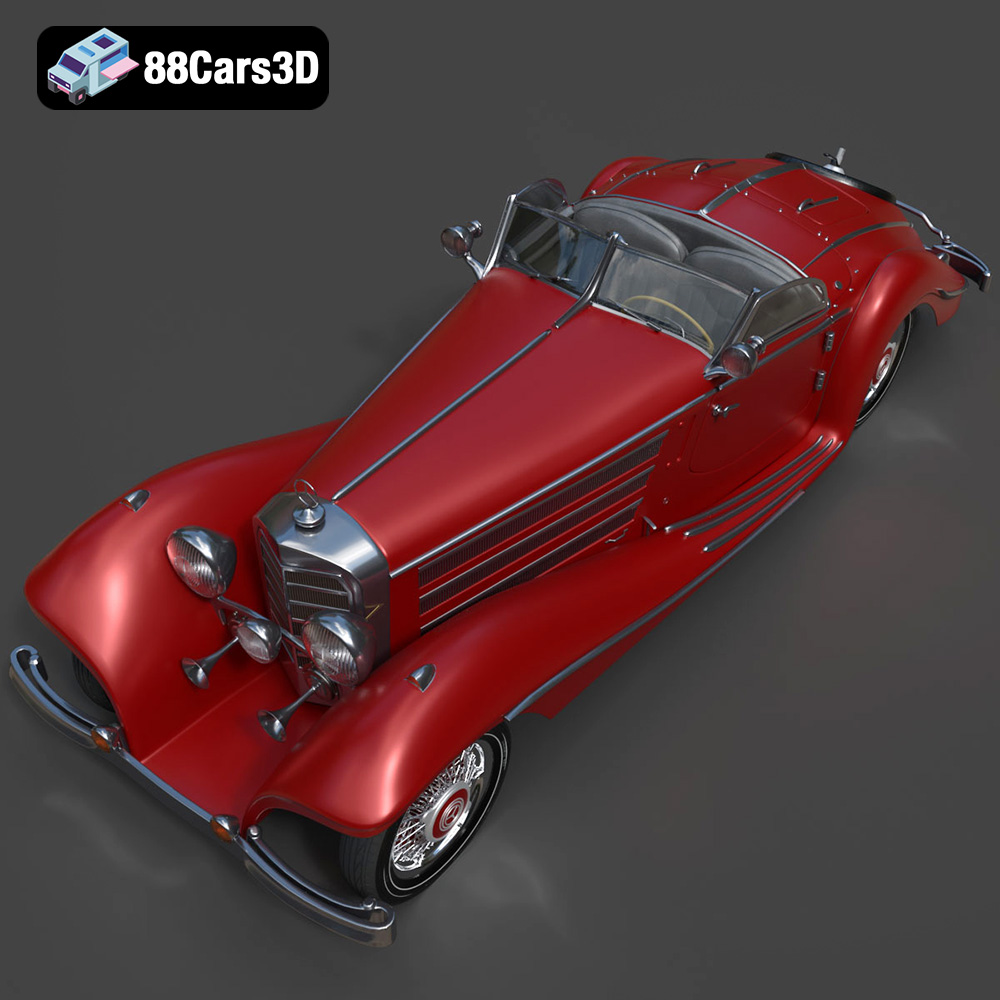
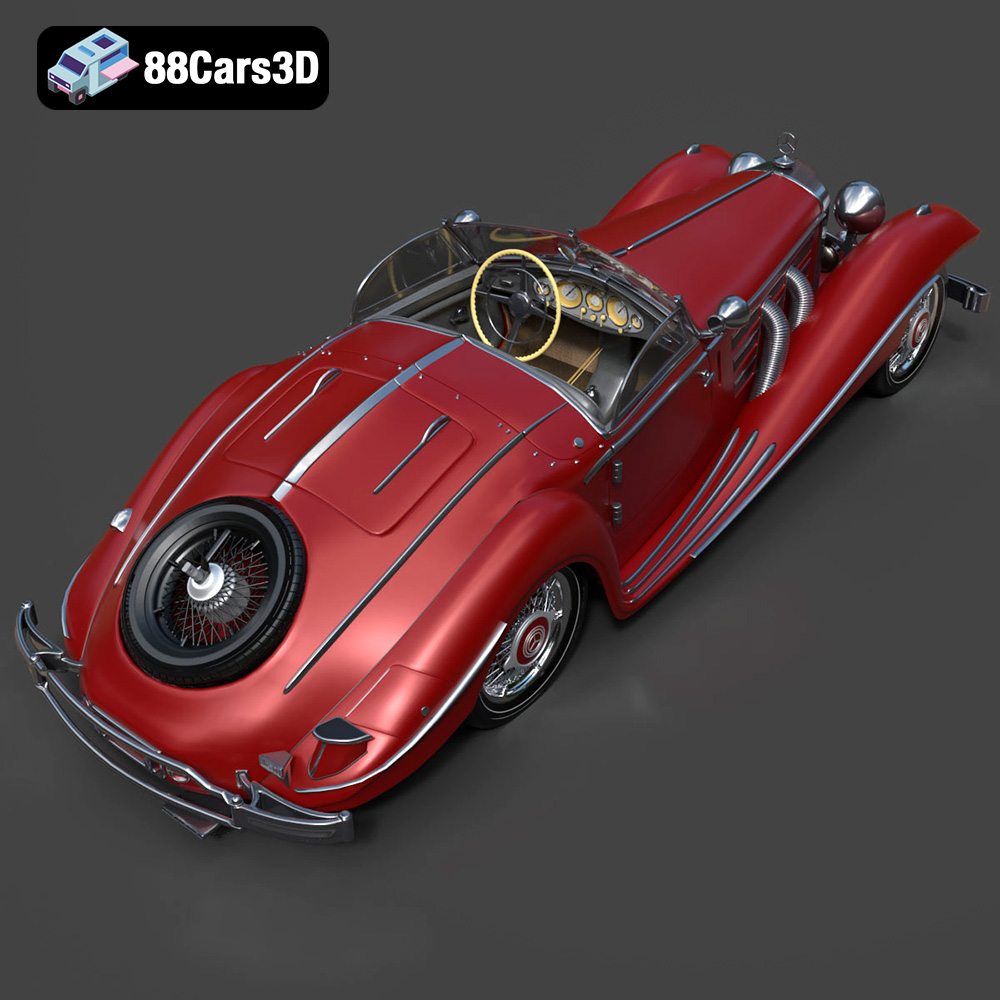
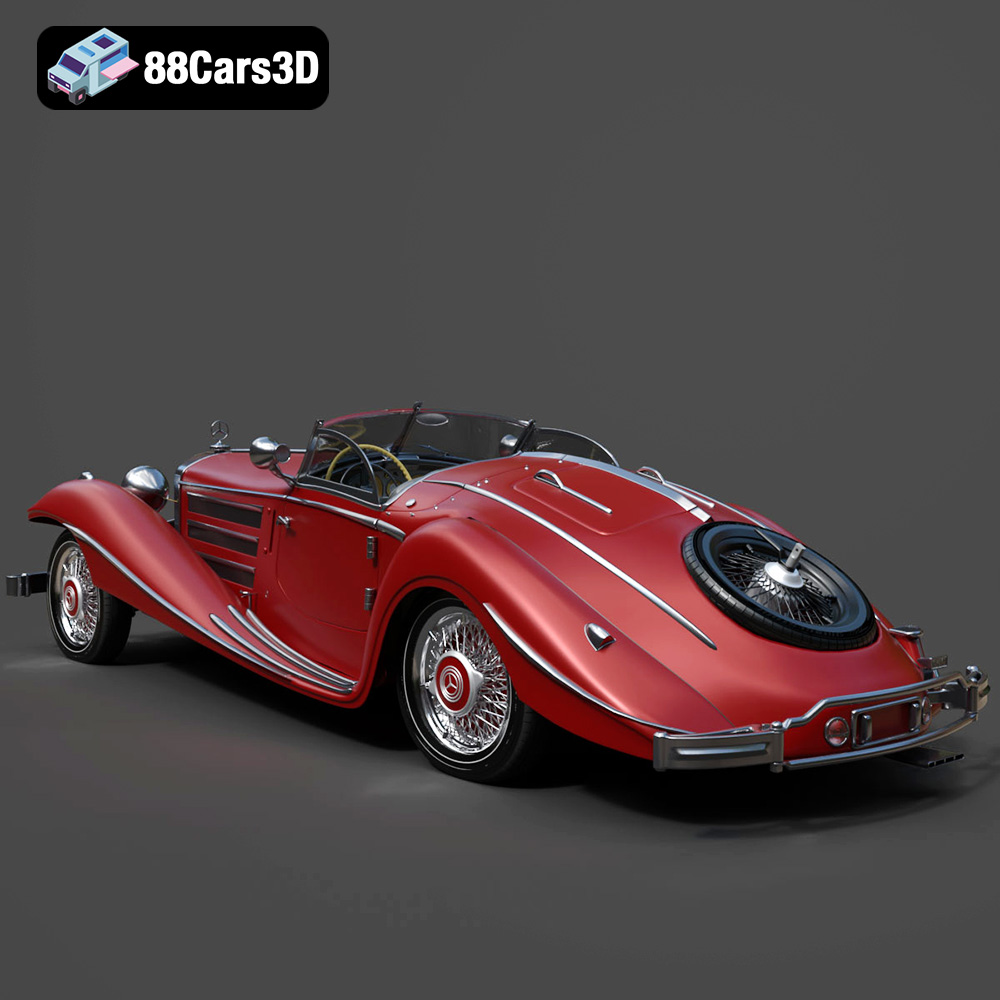
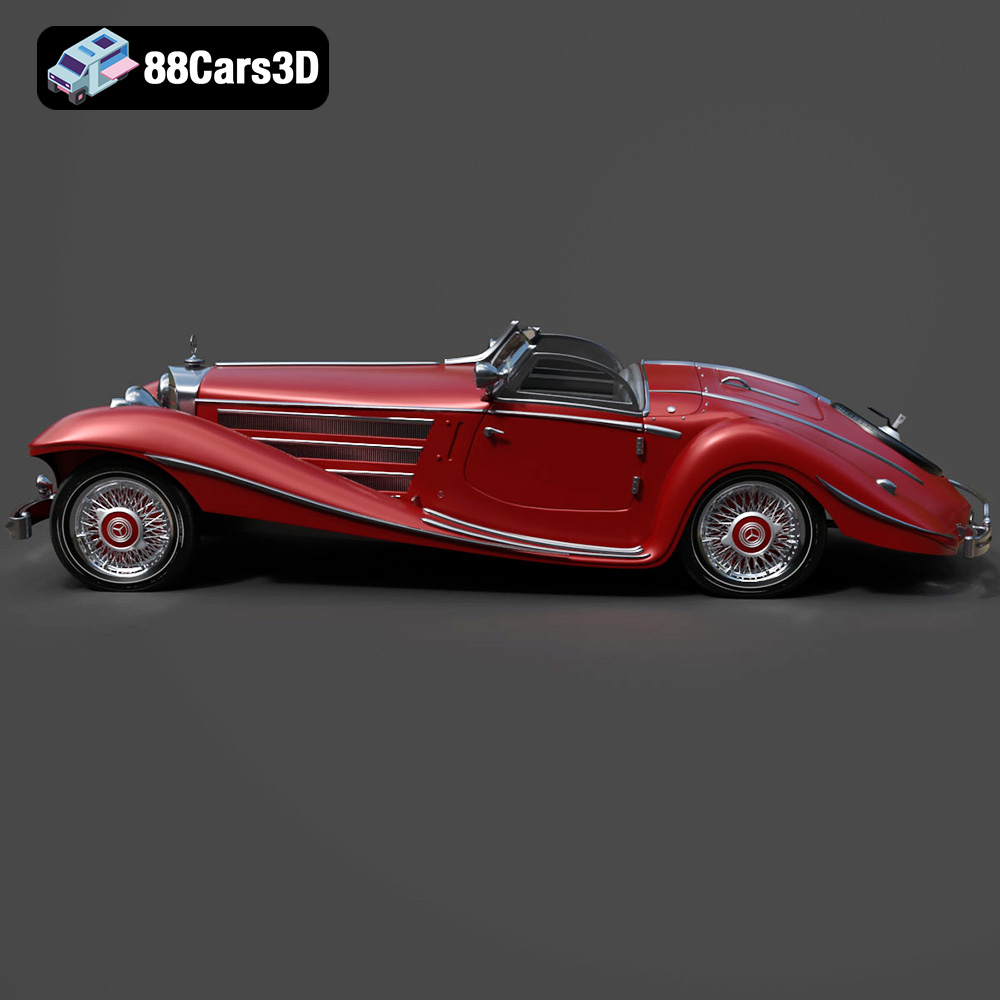
Authenticity in a 3D car model goes far beyond the outer shell. Every component, from the engine bay to the cockpit, demands meticulous attention. For the Mercedes-Benz 540K Roadster, this includes a highly detailed straight-eight engine block with visible supercharger elements and signature external chrome exhaust pipes that cascade majestically from the hood. The exterior features extend to accurate period-correct lighting, including large classic headlamps and delicate taillights, intricate wire-spoke wheels, and a detailed classic suspension chassis setup. The interior is equally impressive, boasting luxurious, tufted leather bench seating, a large-diameter, vintage-style steering wheel, an accurate analog instrument cluster, and an authentic floor-mounted shifter and pedal assembly. This level of detail, with optimized geometry for first-person POV in gaming, ensures that the model is versatile enough for close-up renders and interactive exploration.
One of the foundational technical advantages of professional 3D car models is their adherence to real-world scale accuracy. The Mercedes-Benz 540K Roadster 3D model is built precisely based on actual vehicle chassis dimensions. This isn’t just an aesthetic choice; it’s a critical technical requirement for seamless integration into scenes with other assets, architectural visualizations, or simulation environments. Proper scaling ensures that lighting behaves correctly, physics engines calculate interactions accurately, and the model maintains its realistic proportions when placed alongside other elements in a digital world. Furthermore, proper pivot setups for steering, wheel rotation, and suspension travel are included, ensuring that the model is not just visually accurate but also functionally ready for animation and interactive control.
The true value of a high-quality 3D car model like the Mercedes-Benz 540K Roadster lies in its seamless integration into diverse professional pipelines. From cinematic rendering to real-time game engines, its versatility is a key asset for studios and individual artists alike.
For artists working on high-end cinematic animations, automotive advertisements, or photorealistic visualizations, software like 3ds Max and Blender are indispensable. With the Mercedes-Benz 540K Roadster model available in both native .max and .blend formats, artists gain full control. They can leverage advanced rendering engines like V-Ray, Corona Renderer (for 3ds Max), or Cycles and Eevee (for Blender) to create breathtaking visuals. This involves setting up complex material shaders to accurately represent chrome, glass, leather, and paint; crafting sophisticated lighting environments to highlight the vehicle’s curves; and orchestrating intricate camera animations to showcase its majestic presence. The model’s detailed topology and accurate PBR-ready material definitions make it a perfect candidate for stunning studio lighting setups and dynamic lifestyle scenes.
The gaming industry demands assets that are not only visually impressive but also highly optimized for real-time performance. The Mercedes-Benz 540K Roadster 3D model is specifically designed to be game-ready, boasting 1,716,088 triangles – a polycount that, while high, is optimized for modern engines leveraging virtualized geometry technologies. The inclusion of the .fbx and .unreal formats ensures straightforward import into Unreal Engine and Unity. For game developers, this means the model can be dropped into racing titles, open-world environments, or simulators with minimal hassle. Crucial features like real-world scale accuracy and proper pivot setups for steering, wheel rotation, and suspension travel are essential for realistic physics and animation within the game engine, providing a solid foundation for an immersive gameplay experience.
Augmented Reality (AR) and Virtual Reality (VR) are transforming how we interact with digital content. Imagine experiencing the 540K Roadster in a virtual classic car museum or customizing its finishes in an interactive AR configurator on your smartphone. The .glb format, included with the Mercedes-Benz 540K Roadster 3D model, is specifically optimized for these immersive applications. Its self-contained nature and efficiency make it ideal for delivering high-quality 3D content quickly across web, mobile, and dedicated AR/VR platforms. This opens up possibilities for virtual showrooms, interactive product showcases, and mobile AR experiences, allowing users to explore this automotive icon in unprecedented ways.
The utility of high-quality 3D car models extends beyond digital screens. For enthusiasts, collectors, or designers who desire a tangible representation, 3D printing offers a bridge between the virtual and physical worlds. The Mercedes-Benz 540K Roadster 3D model is perfectly convertible for this purpose, particularly with its inclusion of the .stl format.
Converting a complex model like the 540K into a printable format requires careful consideration. The .stl format simplifies the geometry into a mesh of triangles, which 3D printers understand. While the model is highly detailed, specific recommendations are provided for successful 3D printing: scales like 1:12, 1:18, or 1:24 are recommended for balancing detail and manageability. For fine details, resin printing is often preferred over FDM due to its precision. Critical parameters like layer height (0.04–0.12 mm), wall thickness (1.2–2.0 mm), and infill (20–30%) are suggested to ensure structural integrity and detail preservation. Support structures will be required for intricate parts such as the external exhaust pipes, mirrors, and handlebars, and specific print orientations (e.g., printing the frame angled, wheels separately) are advised for optimal results.
Once printed, the journey to a stunning physical model is not complete. Post-processing is key to achieving a professional finish. This typically involves sanding to smooth layer lines, applying primer to create an even surface for paint, and then meticulously painting the model. Using authentic factory colors and metallic finishes can truly bring the miniaturized Mercedes-Benz 540K Roadster to life, transforming a digital asset into a beautiful display piece that celebrates the vehicle’s historical significance. This capability underscores the versatility of investing in premium 3D car models from marketplaces like 88cars3d.com, where the digital asset can truly transcend its original medium.
A truly professional 3D car model is not a static object; it’s a flexible foundation for endless creative possibilities. The Mercedes-Benz 540K Roadster 3D model exemplifies this, offering robust customization options that extend its utility across various projects and future needs.
One of the most powerful aspects of working with a well-structured 3D model is the ability to customize its visual appearance. Artists can easily change body and tank colors to match authentic factory finishes or create entirely custom paint schemes, ranging from matte to gloss or metallic. Tire textures can be modified to adapt the vehicle for different environments – from pristine street variants to rugged off-road styles, if desired. Adjusting material finishes allows for nuanced control over how light interacts with surfaces, whether it’s the polished chrome, the rich leather interior, or the glossy paintwork. This level of material customizability ensures that the 540K Roadster can be adapted to fit any aesthetic requirement, from a historically accurate period piece to a stylized modern interpretation.
For dynamic projects, animation readiness is crucial. The Mercedes-Benz 540K Roadster 3D model is designed with this in mind, featuring separate components for animation. The wheels, suspension, and steering components are distinct elements, allowing for realistic wheel rotations, suspension travel over uneven terrain, and accurate steering animations. This modular design streamlines the animation process, saving countless hours for animators who would otherwise need to rig complex parts from scratch. Whether for a racing game, a cinematic sequence, or an interactive demonstration, the model is built to move realistically and efficiently. This forward-thinking design ensures that the model remains a valuable asset for future projects, adapting to evolving creative demands and technological advancements.
The journey from a historical artifact to a vibrant digital asset is a testament to the sophistication and artistry of modern 3D modeling. A premium 3D car model, such as the Mercedes-Benz 540K Roadster 1936, is far more than just a collection of polygons; it is a meticulously engineered piece of digital art designed to meet the rigorous demands of contemporary creative industries. From its detailed topology optimized for real-time engines to its comprehensive set of file formats ensuring unparalleled compatibility, this model stands as a benchmark for quality and versatility.
Whether you are a game developer crafting an immersive world, an architectural visualiser enhancing a scene, an AR/VR designer building interactive experiences, or a hobbyist bringing iconic vehicles to life through 3D printing, the value of a high-fidelity asset cannot be overstated. Investing in such a model from a reputable marketplace like 88cars3d.com provides not just a product, but a powerful tool that accelerates workflows, elevates visual standards, and unlocks new creative possibilities. Embrace the legacy, ignite your projects, and experience the unparalleled realism that only a top-tier 3D car model can deliver.
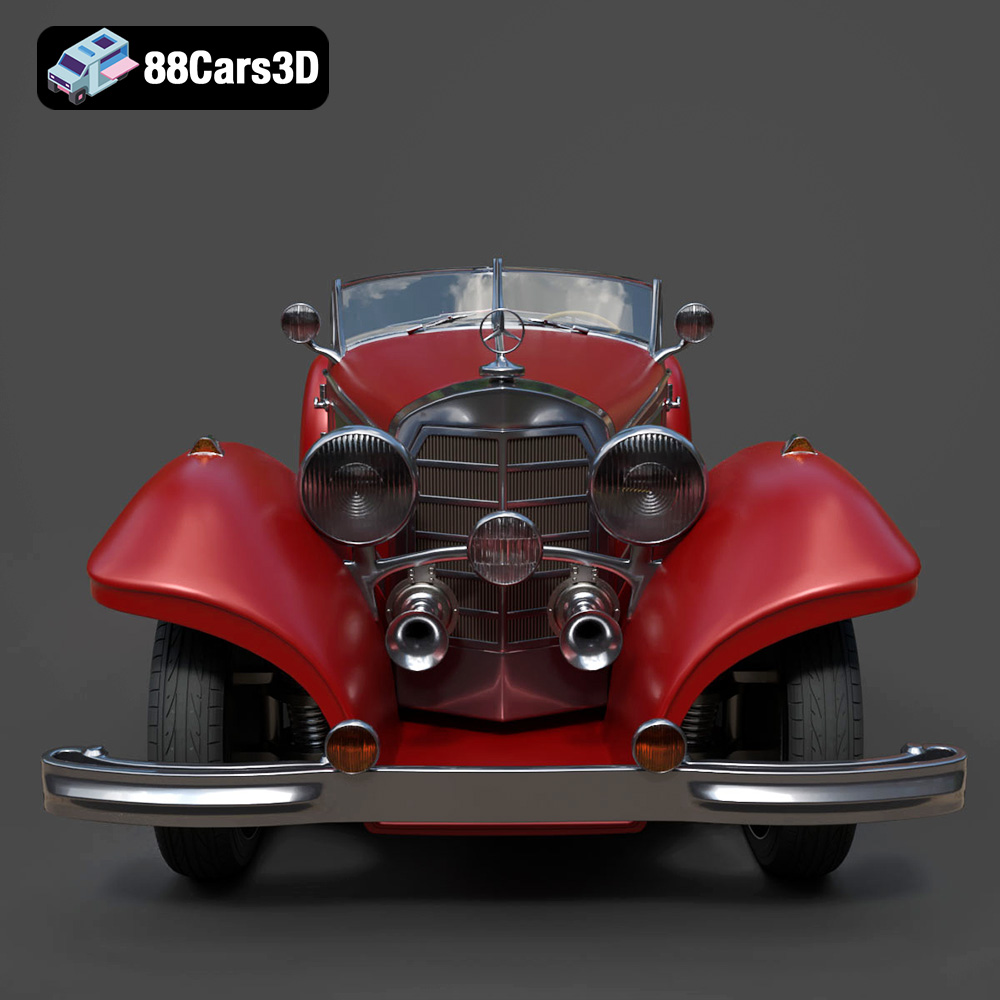
Experience the epitome of pre-war automotive luxury with our Mercedes-Benz 540K Roadster 3D model. A true masterpiece of 1930s engineering and design, the 540K is renowned for its sweeping, majestic fenders, elongated hood housing the legendary supercharged straight-eight engine, and iconic external exhaust pipes. Every signature styling cue, from the prominent chrome radiator grille to the elegant wire-spoke wheels, has been meticulously recreated to capture the majestic presence of this historical classic. Boasting a highly detailed topology with 1,716,088 triangles, this 3D model delivers unparalleled visual fidelity while remaining structured for modern workflows. Designed to leverage the power of advanced real-time engines utilizing virtualized geometry, it serves as a top-tier asset for high-end game development, cinematic animation, immersive AR/VR experiences, and photorealistic automotive visualization.
$81.00
.blend
.fbx
.glb
.max
.obj
.ply
.rendering
.stl
.unreal
540k-roadster
car-3d-model
classic-car
game asset
game-ready
high poly
luxury car
mercedes-benz
optimized
vintage-car
VR/AR