Get 20% OFF All Premium 3D & STL Models!

In the dynamic world of 3D visualization, automotive design, and interactive media, the quality of your digital assets can make or break a project. Whether you’re a game developer crafting the next open-world driving experience, an architectural visualiser populating a scene with photorealistic vehicles, or an AR/VR innovator building immersive showrooms, the need for precision, optimization, and aesthetic fidelity in 3D car models is paramount. These digital vehicles aren’t just props; they are integral components that convey brand identity, define realism, and enhance user engagement.
Today, we delve into the meticulous craft behind creating such assets, highlighting how a high-quality model can transform your workflow. We’ll explore the technical nuances, diverse applications, and the sheer versatility that defines truly exceptional 3D automotive assets. As a prime example, we’ll frequently reference the stunning Citroen DS5 3D Model available at 88cars3d.com – a testament to detailed digital craftsmanship, perfectly engineered for a multitude of professional uses, from advanced rendering to real-time game development.
Choosing the correct file format is a critical first step in any 3D project. It dictates compatibility, workflow efficiency, and the preservation of crucial data like materials, animations, and scene information. The Citroen DS5 3D Model, like many premium assets, offers a comprehensive suite of formats, each serving distinct purposes for different software and industry pipelines.
The .blend format is Blender’s native file type, offering a complete and fully editable scene. This means not only the mesh data but also materials, textures, lighting, cameras, animations, and even physics simulations are all encapsulated within this single file. For users of Blender, this format provides the most flexibility, allowing for deep customization, modification of the model’s geometry, changes to material shaders, and the ability to integrate the asset seamlessly into a larger Blender project. It’s ideal for artists who want to delve into the model’s construction, make significant alterations, or leverage Blender’s powerful rendering capabilities (Eevee and Cycles) directly.
.fbx (Filmbox) is arguably the most widely adopted interchange format in the 3D industry, particularly for game development and animation. Its strength lies in its ability to store not just mesh data but also animation, rigging, skinning, materials, and even blend shapes, making it incredibly versatile for transferring animated characters and objects between different 3D software applications and game engines like Unreal Engine and Unity. The Citroen DS5 3D Model in .fbx format is therefore perfectly suited for integration into real-time pipelines, ensuring that the model’s pivot points for wheels, suspension, and steering, along with basic material assignments, are preserved for easy setup in an engine.
.obj (Wavefront Object) is one of the oldest and most universal 3D file formats. It’s excellent for transferring static mesh geometry, UV coordinates, and basic material information (via an accompanying .mtl file) between virtually any 3D software. While it doesn’t support animation or complex rigging, its widespread compatibility makes it a safe bet for ensuring that the core mesh data of the Citroen DS5 can be opened and worked with in almost any 3D application, from Maya and ZBrush to simpler viewers. It’s a robust choice for architectural visualization or scenarios where only the raw geometric form is needed for static renders or further sculpting.
.glb (GL Transmission Format Binary) is the binary version of glTF, a royalty-free specification for the efficient transmission and loading of 3D scenes and models by applications. Optimized for web-based 3D, AR (Augmented Reality), and VR (Virtual Reality), .glb files are single-file containers that include geometry, materials, textures, and even animations, all compressed for quick loading. This format is crucial for developers building interactive experiences on the web, mobile AR apps, or standalone VR environments, ensuring that the Citroen DS5 can be displayed quickly and efficiently across diverse platforms.
.stl (Stereolithography) is the de facto standard file format for 3D printing. It represents 3D surfaces as a series of connected triangles, making it ideal for describing the surface geometry of a 3D object for manufacturing. While it contains no color, texture, or material information, its simplicity makes it universally compatible with 3D printers and slicing software. The Citroen DS5 3D Model includes an .stl version, making it directly usable for hobbyists or professionals looking to bring the digital design into the physical world through 3D printing, enabling the creation of physical scale models for display or prototyping.
.ply (Polygon File Format) is another format for storing 3D data, often used in applications requiring high precision, such as 3D scanning, CAD software, and scientific analysis. It can store a variety of properties including color, transparency, surface normals, texture coordinates, and even reliability information. While less common for general-purpose rendering than .fbx or .obj, its inclusion with the Citroen DS5 model provides an option for users working in fields that demand precise mesh data for engineering review or specialized visualization.
The .unreal format typically refers to assets packaged specifically for direct import into Unreal Engine. While Unreal primarily uses .fbx for import, “unreal” often implies a version that has been pre-configured or optimized with Unreal’s specific asset pipeline in mind, potentially including collision meshes, LODs (Levels of Detail), and optimized material setups. This format ensures the Citroen DS5 is as “plug-and-play” as possible for Unreal Engine users, minimizing setup time and maximizing performance within the engine’s real-time environment.
.max is the native file format for Autodesk 3ds Max, one of the leading 3D modeling, animation, and rendering software packages. Like .blend for Blender, the .max file encapsulates the entire scene, including geometry, modifiers, materials, textures, lighting, and animation data specific to 3ds Max. This format is essential for professionals who use 3ds Max as their primary tool, allowing for full editing control, detailed rendering with engines like V-Ray or Corona, and seamless integration into complex animation pipelines for cinematic quality visualizations of the Citroen DS5.
Creating a truly authentic 3D car model is an intricate process that blends artistic vision with technical precision. It’s about more than just replicating a vehicle’s silhouette; it’s about capturing its soul, its unique design language, and the intricate details that make it recognizable. The Citroen DS5 3D Model exemplifies this dedication to detail, faithfully reproducing one of French automotive design’s most distinctive vehicles.
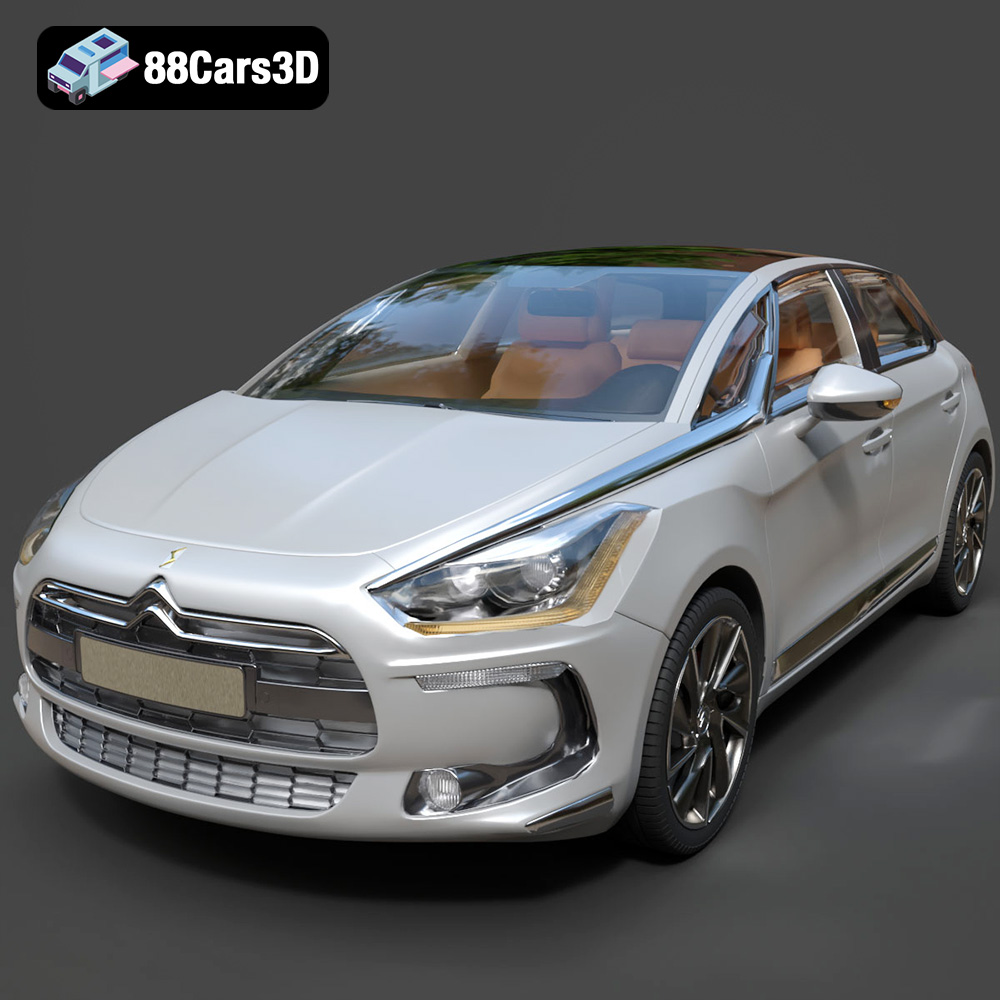
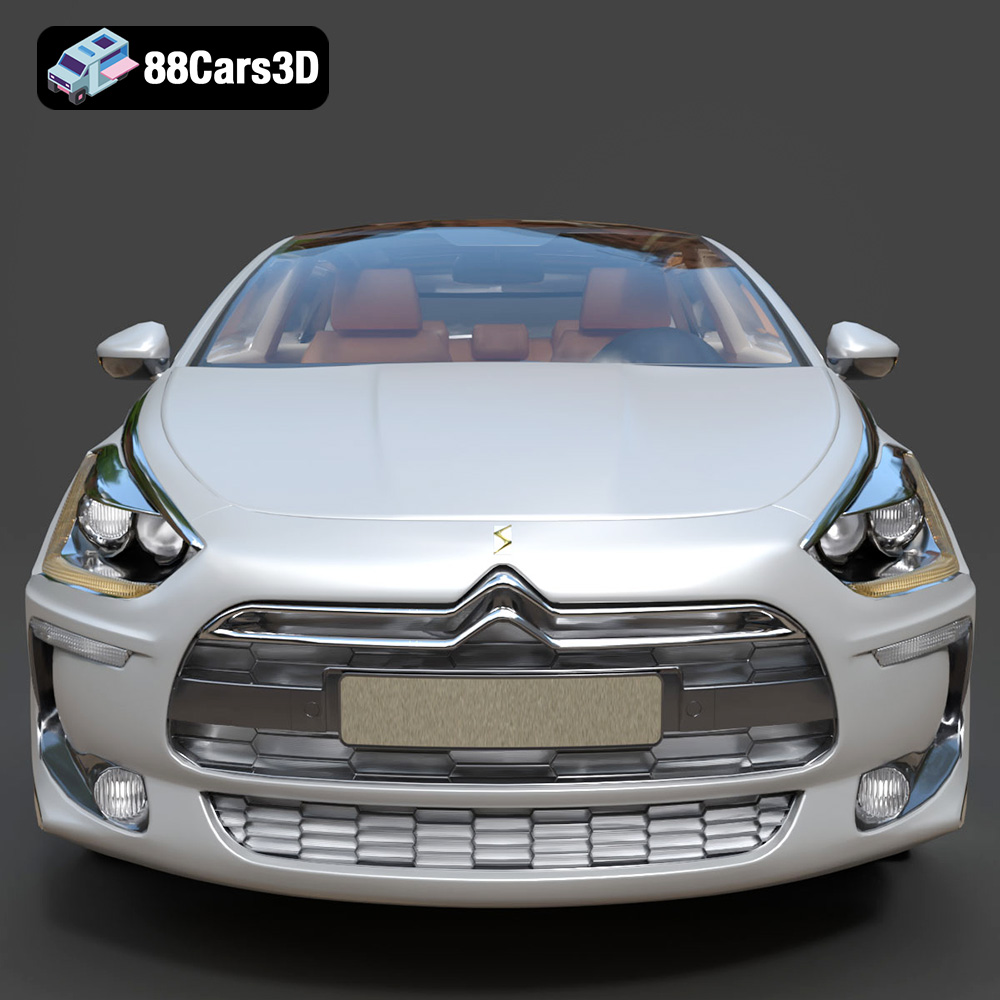
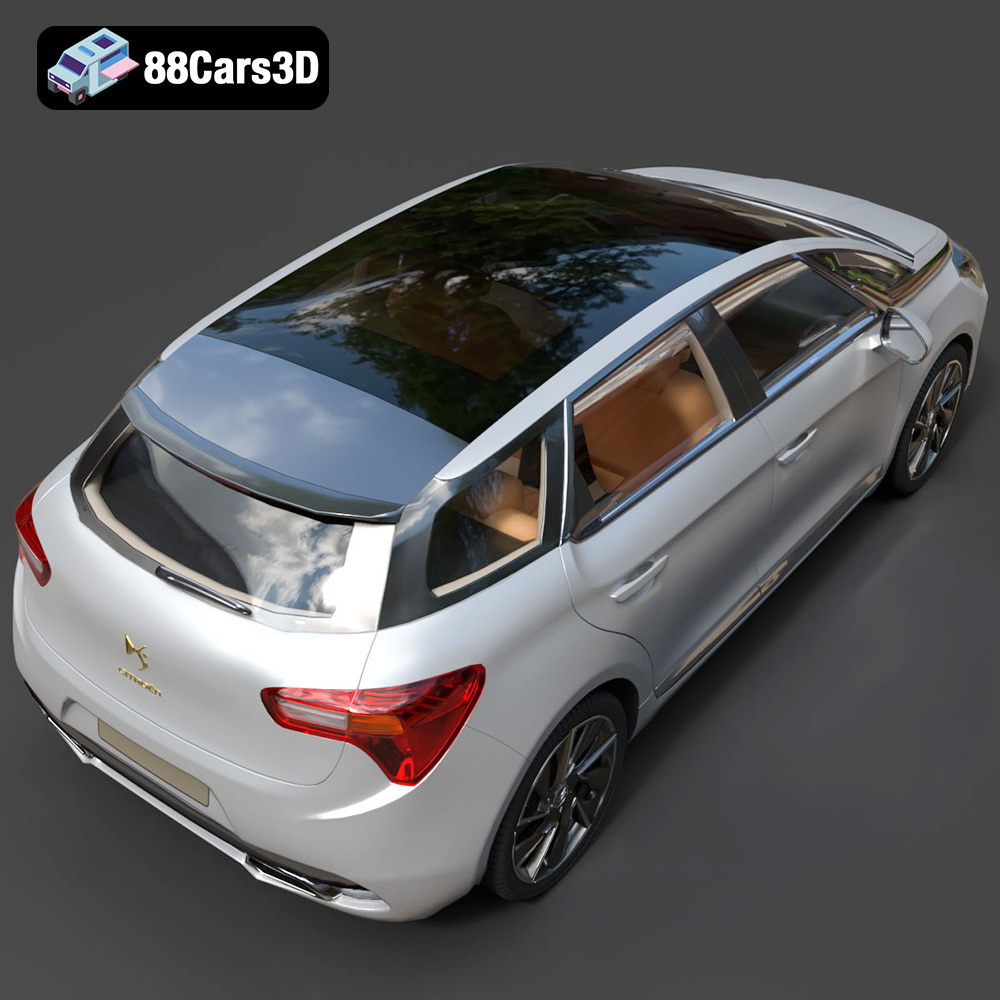
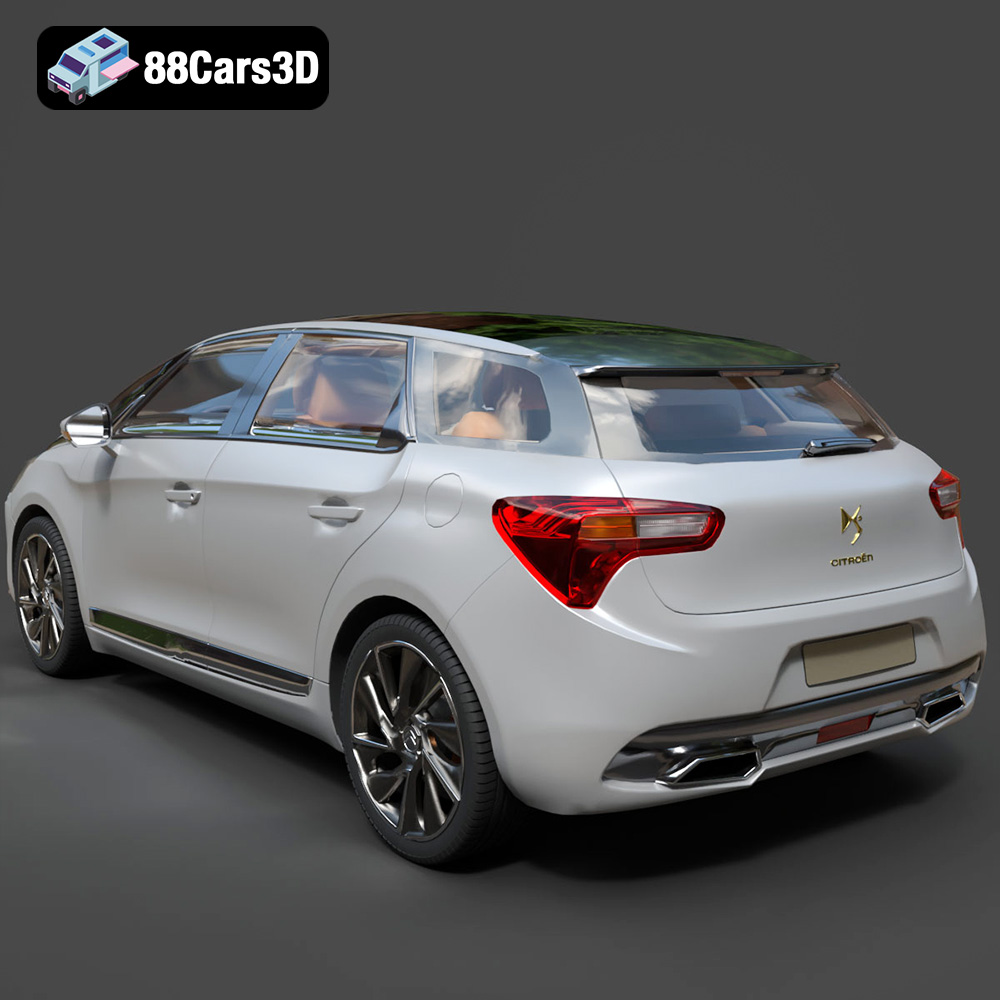
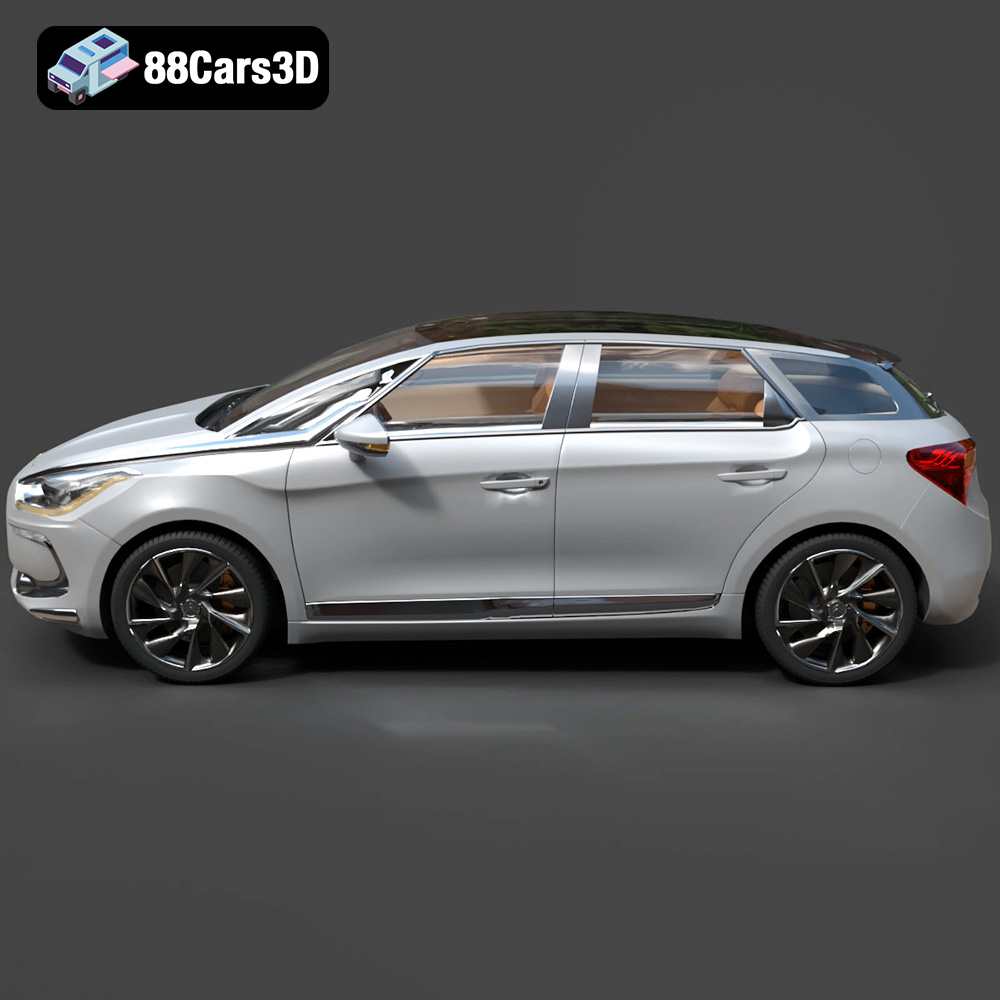
The Citroen DS5 stands out with its avant-garde, aviation-inspired styling, and this 3D model brings every curve and contour to life. Key to its appeal are the signature chrome “sabers” that elegantly sweep from the aggressive headlight clusters to the A-pillars. The model meticulously reproduces these elements, ensuring their reflections and form are accurate. Beyond this, the sculpted bodywork, the distinctive front grille that defines its assertive stance, and the dynamic dual exhaust setup with integrated rear diffuser elements are all rendered with stunning accuracy. Even subtle details like the complex LED lighting signatures and high-fidelity alloy wheels, complete with detailed brake calipers and discs, are included, making the model ideal for photorealistic renders and close-up shots. This level of exterior detail ensures that whether it’s featured in a high-end commercial render or a bustling virtual city, the Citroen DS5 will command attention.
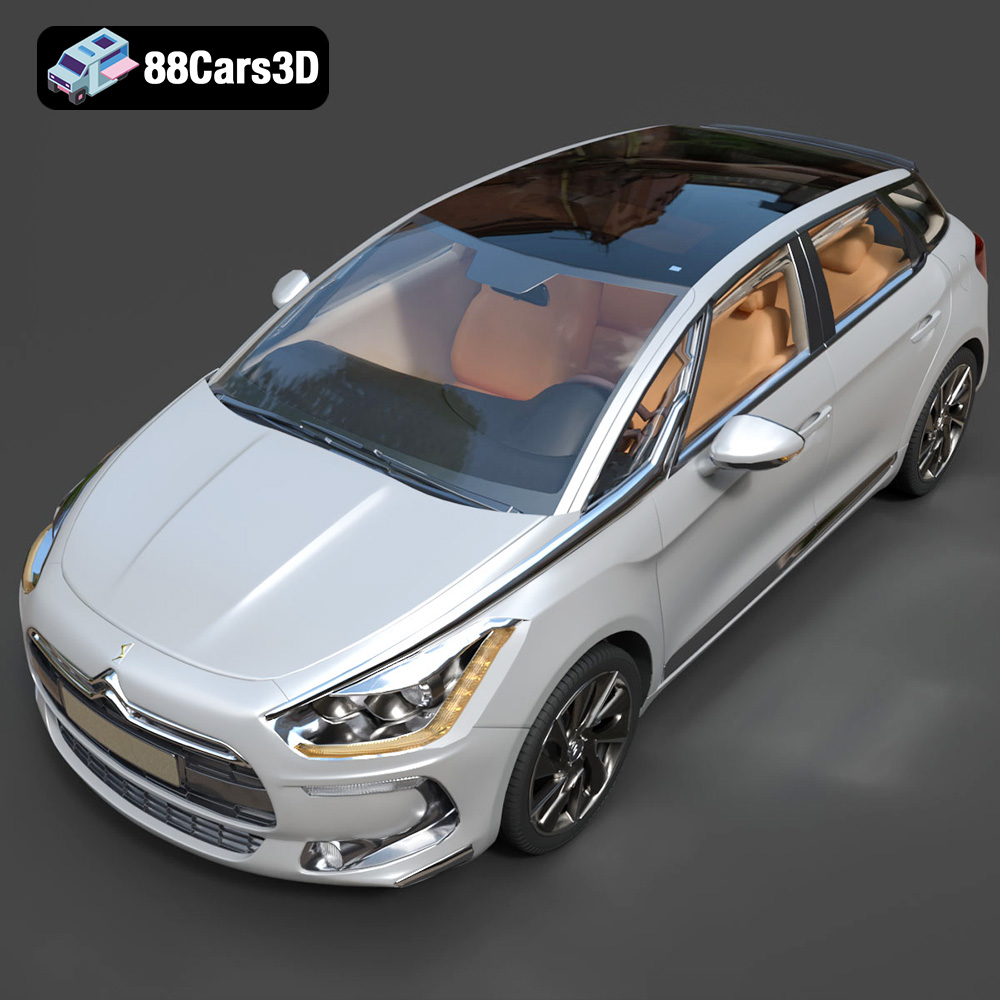
A premium 3D car model isn’t complete without an equally detailed interior. The Citroen DS5 3D Model offers an aviation-inspired cockpit layout, which has been meticulously recreated. From the premium seating representations to the sporty, flat-bottomed steering wheel and the intricate center console, every element contributes to an immersive experience. The digital instrument cluster, accurate control elements including pedals, a gear selector, and dashboard switches are all present, optimized for first-person POV in gaming and virtual reality simulations. This attention to interior detail is crucial for projects demanding full user interaction or realistic camera perspectives, enhancing the sense of presence and authenticity for players or viewers.
While visual appeal is critical, a truly valuable 3D asset must also be technically robust and optimized for performance across various platforms. The Citroen DS5 3D Model excels here, striking a delicate balance between high-fidelity visuals and real-time efficiency.
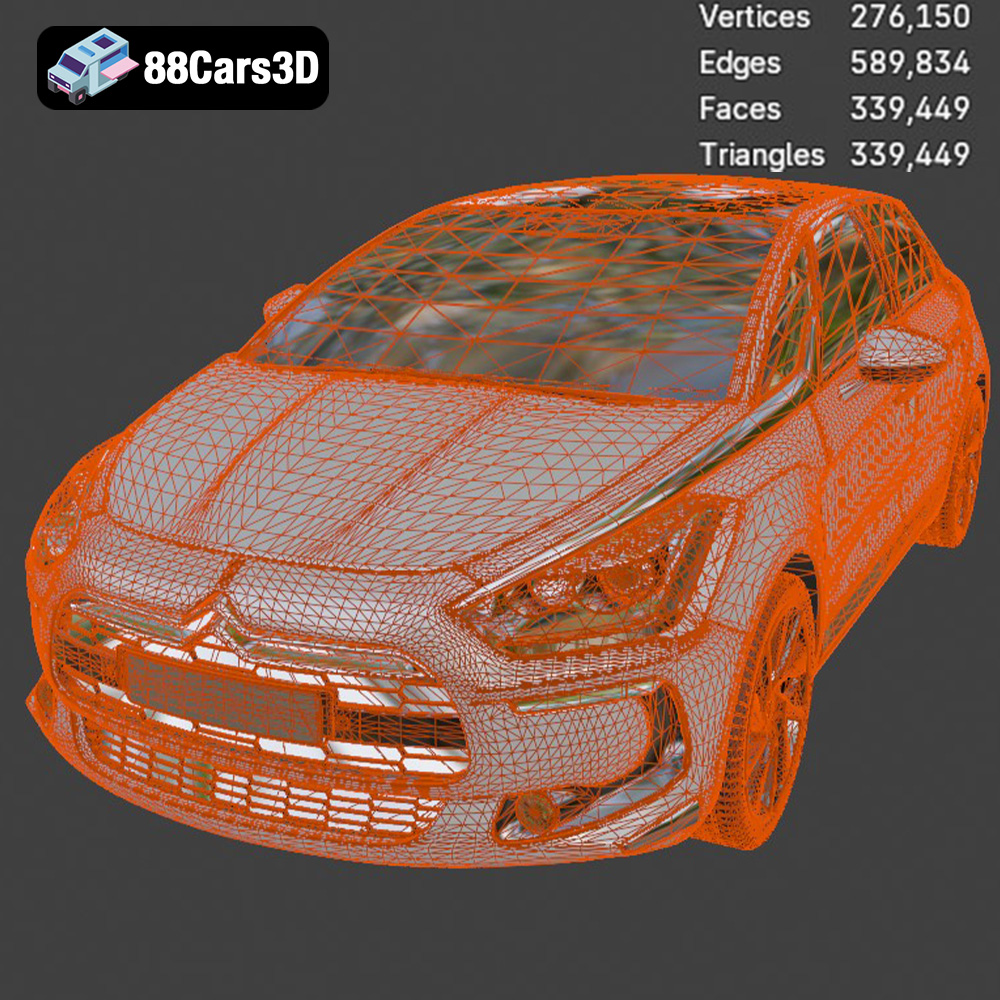
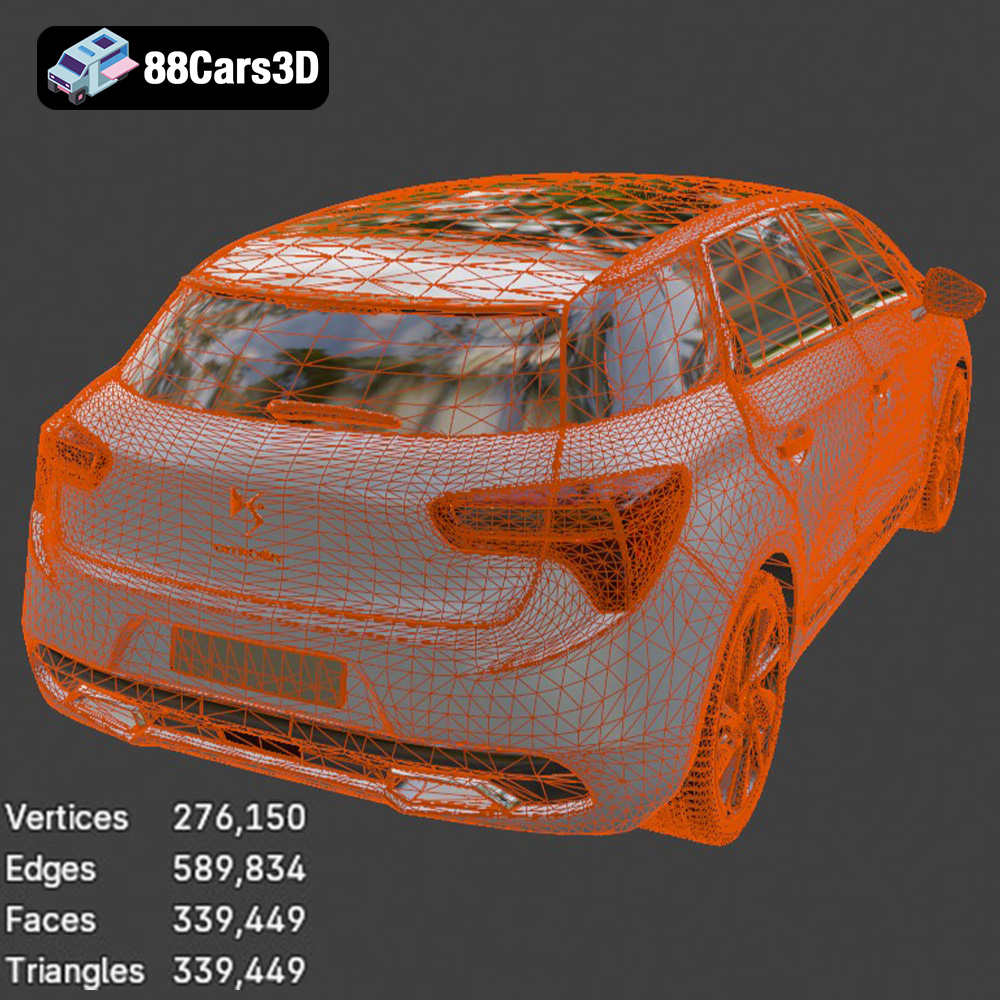
With a triangle count of 339,449, this model hits a sweet spot for modern 3D pipelines. This poly count is high enough to capture the complex curves and intricate details of the DS5 without resorting to excessive tessellation that can bog down real-time engines. The meticulously optimized topology ensures clean mesh deformation and efficient UV mapping for texture application. This careful balancing act makes the model “game-ready” for demanding engines like Unreal and Unity, while simultaneously maintaining the visual realism required for high-end cinematic rendering. Its real-world scale accuracy, based on actual vehicle chassis dimensions, guarantees that the model integrates seamlessly into scenes without requiring manual scaling adjustments, a common frustration with less professional assets.
Beyond static beauty, the model is engineered for dynamic use. It features a proper pivot setup for steering, wheel rotation, and suspension travel. This means animators and game developers can easily integrate the model into a vehicle rig, allowing for realistic driving physics and complex animation sequences without extensive re-work. Separate components for wheels, suspension, and steering further enhance this flexibility, enabling independent animation and dynamic interactions. This foresight in preparation saves countless hours in a professional production pipeline, ensuring the Citroen DS5 3D Model is not just a pretty face, but a functional, performance-oriented asset.
The true measure of a high-quality 3D asset lies in its adaptability. The Citroen DS5 3D Model is a prime example of an asset engineered to meet the rigorous demands of multiple creative industries, offering unparalleled flexibility.
For game developers, performance is king. The optimized polycount of 339,449 triangles makes the Citroen DS5 3D Model ideal for open-world games, racing titles, and realistic simulators. Its “game-ready” status means less time spent on optimization and more on creative implementation. The proper pivot setups for steering and suspension are invaluable, allowing for quick integration into vehicle physics systems in engines like Unreal Engine and Unity. Imagine this model cruising through a meticulously rendered city in a driving simulator or being a customizable option in a high-stakes racing game; its blend of detail and optimization ensures it looks stunning without sacrificing crucial frame rates.
The burgeoning fields of Augmented Reality (AR) and Virtual Reality (VR) demand highly optimized yet visually rich models. The included .glb format is specifically designed for efficient transmission and display in these immersive environments. The Citroen DS5 model is perfect for virtual showrooms, allowing potential customers to explore the vehicle in a realistic 360-degree environment or even place it in their driveway via AR. Its optimized geometry also ensures smooth performance in mobile AR experiences and high-fidelity VR configurators, providing a truly interactive and engaging user experience.
For artists focused on photorealistic imagery, such as in advertising, film, or architectural visualization, the exceptional detail of the Citroen DS5 is a huge asset. Its accurate aerodynamic profile, intricate chrome details, and detailed lighting signatures make it a perfect subject for brand campaigns or lifestyle scenes. In architectural visualizations, placing a premium vehicle like the DS5 adds a layer of realism and aspiration to exterior renders of buildings or urban landscapes. With formats like .max and .blend, artists have full control over materials, lighting, and rendering settings to achieve stunning, cinematic-quality results.
Beyond the digital realm, the Citroen DS5 3D Model can also materialize into the physical world. With its inclusion of an .stl format, the model is fully convertible for 3D printing. Hobbyists can create highly detailed display-scale models (recommended 1:12, 1:18, or 1:24) with fine features, especially when utilizing resin printing. The provided 3D print settings, including recommended layer heights, wall thickness, infill, and support requirements, guide users to achieve the best possible physical output. This opens up possibilities for physical prototyping, miniature collectors, or unique display pieces, bridging the gap between digital design and tangible objects.
A superior 3D model offers more than just fidelity; it provides a canvas for creative expression and seamless integration into existing production pipelines. The Citroen DS5 3D Model offers extensive customization options and is designed to fit effortlessly into professional workflows.
The versatility of this model extends to its customizability. Artists and designers can easily modify various aspects to suit specific project requirements. Want to change the body color to a vibrant custom finish or a classic factory metallic hue? The model’s material setup allows for straightforward adjustments. Need to adapt the tire textures for an off-road variant versus a sleek street look? This is readily achievable. Furthermore, material finishes can be adjusted between matte, gloss, or metallic to achieve different aesthetic effects and lighting responses. This level of flexibility ensures that the Citroen DS5 can be adapted to any scene or narrative, from a gritty urban environment to a luxurious showroom display.
The comprehensive range of included file formats ensures that the Citroen DS5 3D Model integrates smoothly into various professional workflows. For artists primarily using 3ds Max, the native .max file provides the most comprehensive scene data, allowing for intricate animation, advanced material setup with renderers like V-Ray or Corona, and full control over every aspect of the model. Blender users benefit from the native .blend file, enabling direct manipulation within their preferred environment, leveraging Blender’s powerful modeling and rendering toolset. For real-time applications, the .fbx and specifically optimized .unreal formats are crucial. Importing into Unreal Engine, for instance, is a streamlined process; the model’s optimized geometry and correct pivot points minimize setup time, allowing developers to focus on scene building, lighting, and gameplay mechanics. This multi-format approach drastically reduces the friction of integrating high-quality assets into diverse production pipelines, saving valuable time and resources.
In the competitive landscape of digital design, the strategic investment in high-quality 3D car models like the Citroen DS5 3D Model is not merely an enhancement; it’s a foundational element for success. We’ve explored how such a meticulously crafted asset, with its perfect balance of aesthetic detail and technical optimization, empowers professionals across game development, AR/VR, rendering, and even 3D printing.
From understanding the critical role of various file formats like .fbx, .obj, .blend, and .unreal, to appreciating the artistry behind capturing a vehicle’s unique design, and finally leveraging its game-ready performance and extensive customization options, the value is clear. A model of this caliber accelerates workflows, elevates visual fidelity, and provides an unparalleled level of versatility, making it a cornerstone for any serious digital project.
For those seeking to equip their projects with premium 3D assets that meet the highest industry standards, the Citroen DS5 and other exceptional 3D car models are readily available. Explore the vast collection at 88cars3d.com and experience firsthand how superior digital craftsmanship can drive your creative vision forward.
Experience avant-garde French automotive design with this highly detailed 3D model of the Citroen DS5. Renowned for its striking, aviation-inspired styling, the DS5 bridges the gap between a premium hatchback and a sleek executive estate. This model captures the vehicle’s iconic visual elements, most notably the signature chrome “sabers” that stretch seamlessly from the aggressive headlight clusters to the A-pillars. The sculpted bodywork, distinctive front grille, and dynamic dual exhaust setup are faithfully reproduced to reflect its luxurious and futuristic heritage. Engineered for maximum versatility, this 3D model features a meticulously optimized topology with a triangle count of 339,449. This ensures an impeccable balance between game-ready performance and high-end visual fidelity. Whether you are developing interactive real-time applications, crafting immersive AR/VR experiences, or producing photorealistic cinematic animations, this model delivers exceptional detail without compromising system performance. Perfect for modern urban driving games, virtual automotive showrooms, architectural visualization scenes, and high-end lifestyle rendering.
$35.00
.blend
.citroen
.ds5
.fbx
.glb
.hatchback
.max
.obj
.ply
.rendering
.stl
.unreal
car-3d-model
executive-car
game asset
game-ready
low-poly
optimized
VR/AR