Get 20% OFF All Premium 3D & STL Models!

In the vibrant world of 3D modeling and digital art, few subjects capture the imagination quite like classic automotive icons. These vehicles don’t just represent engineering prowess; they embody eras, cultural shifts, and a timeless sense of style. Among the most cherished is the venerable Chevrolet C10, particularly the 1963 C14 generation. Its rugged charm, distinctive silhouette, and enduring appeal make it a perennial favorite for artists, game developers, and visualization specialists alike. Crafting such an intricate piece of automotive history into a high-fidelity 3D model requires meticulous attention to detail, a deep understanding of topology, and an appreciation for the vehicle’s unique character. When done right, a digital rendition of the ’63 C10 isn’t just a static object; it’s a versatile asset ready to drive innovation across various digital mediums.
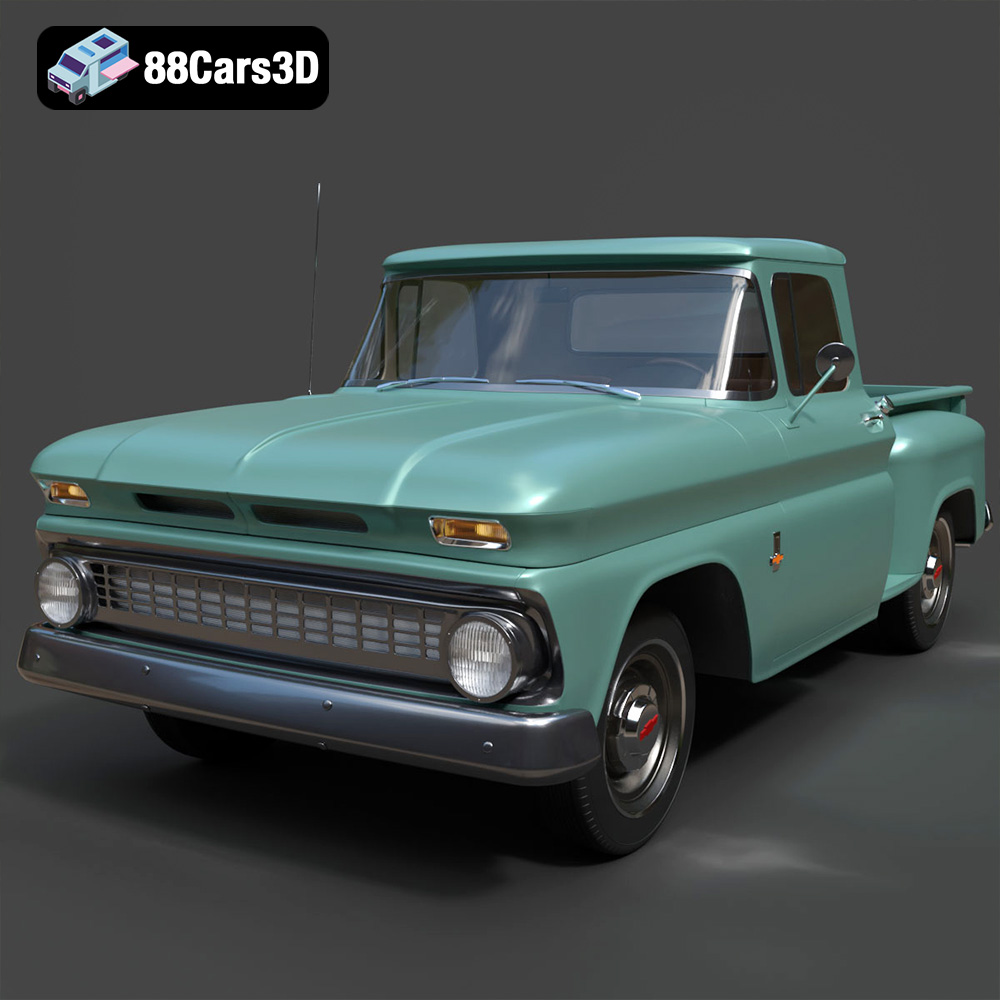
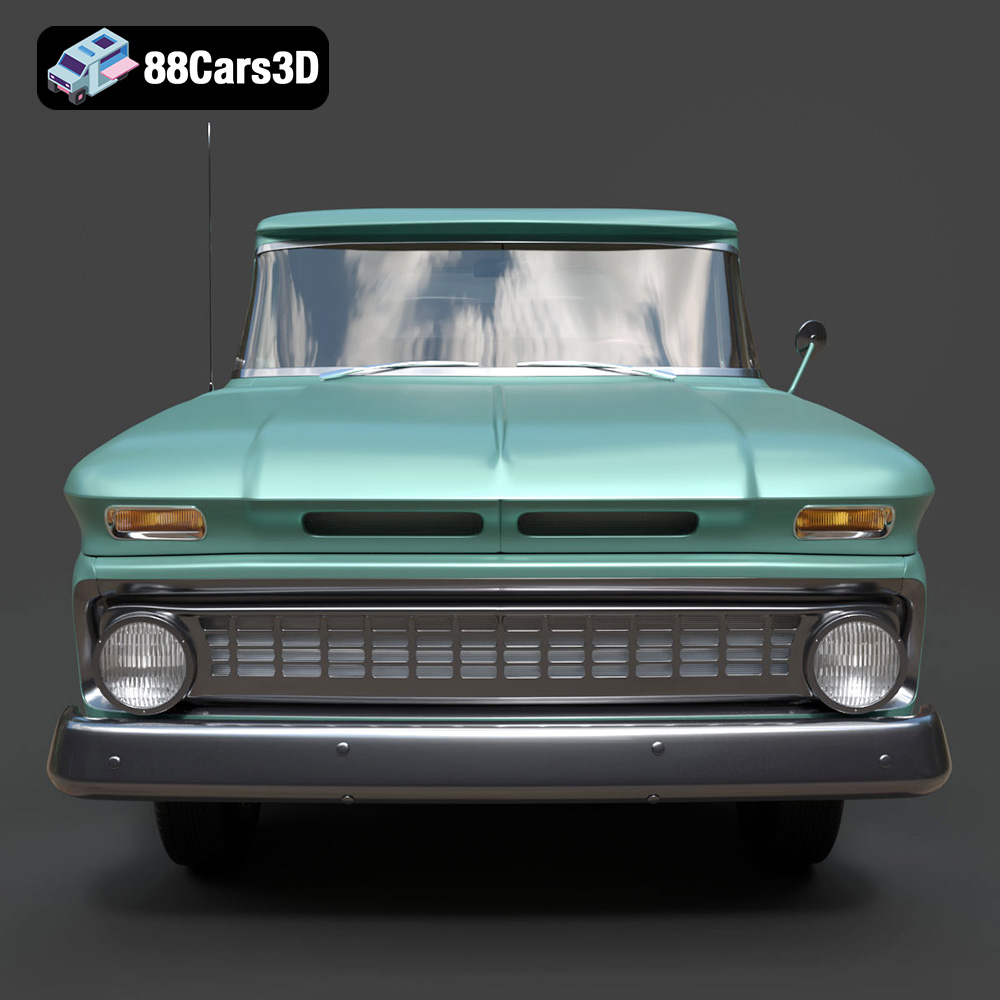
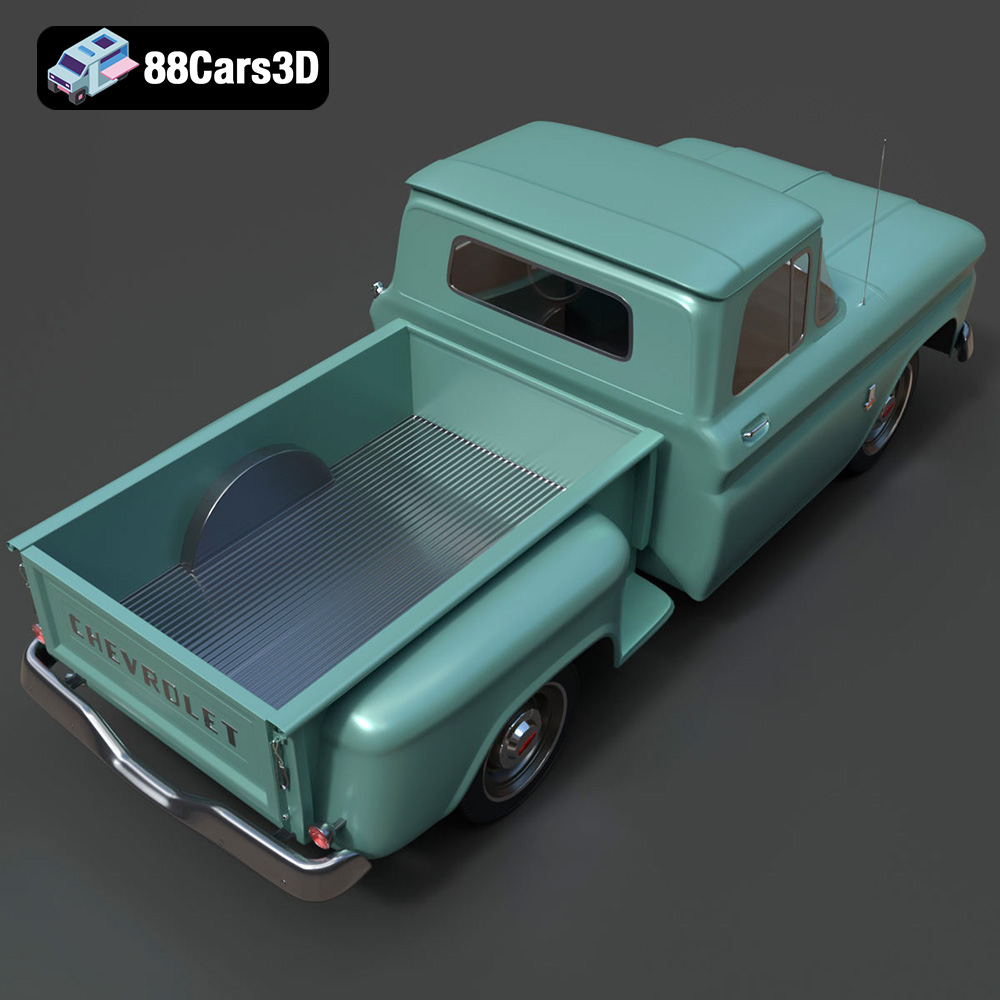
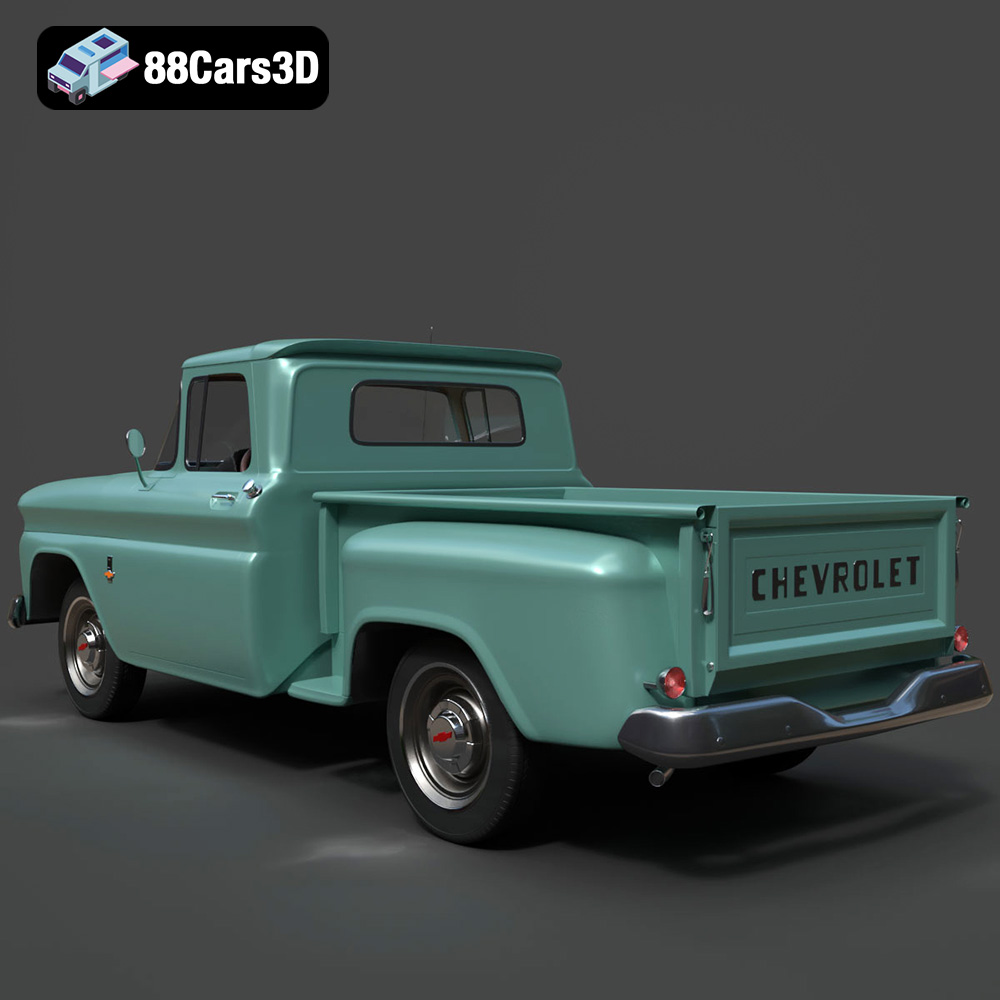
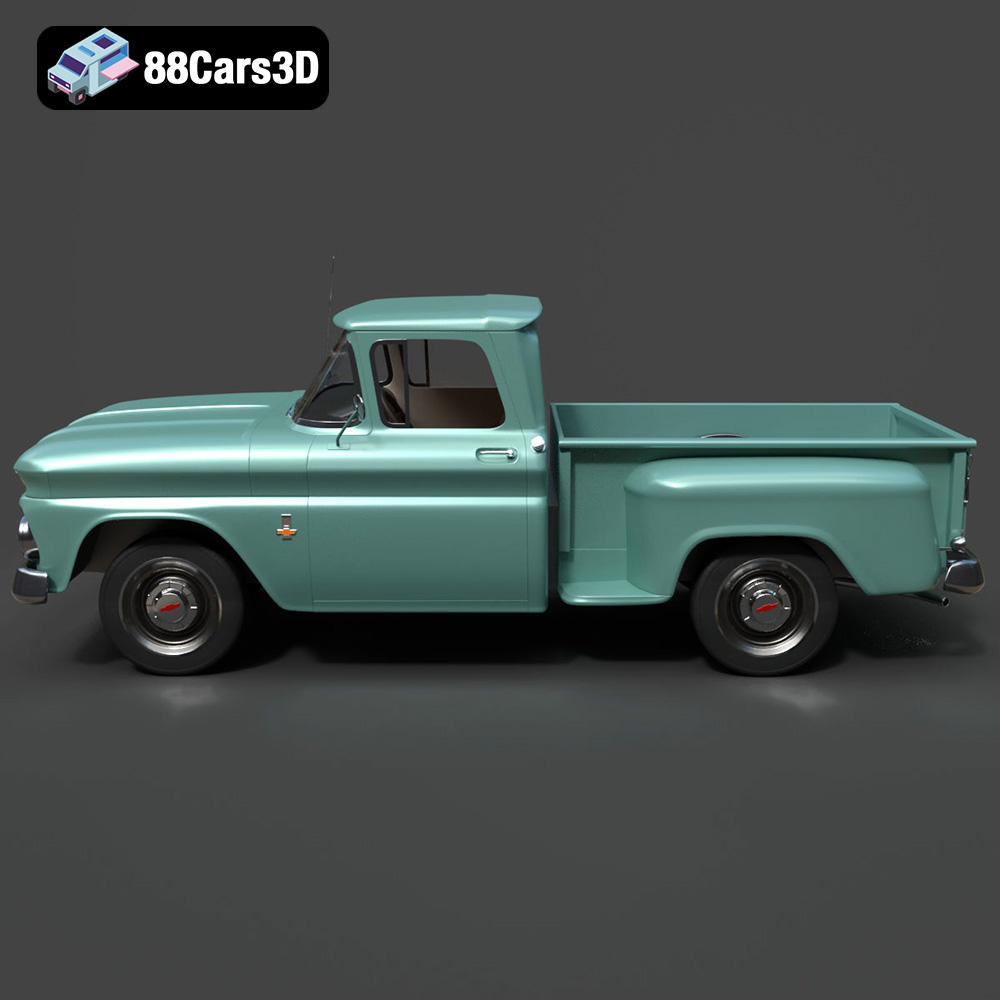
The Chevrolet C10 (C14) 1963 stands as a monument to American industrial design and utility. Its sturdy build, iconic front grille, and choice of step-side or fleet-side body lines have cemented its place in automotive lore. For 3D artists and developers, this makes it an irresistible subject. Recreating such a vehicle in a digital environment goes beyond simple modeling; it’s about preserving a piece of history and making it accessible for modern applications, from photorealistic renders to interactive game environments. A well-executed 3D car model of the C10 allows creators to tap into this rich heritage, injecting authenticity and character into their projects.
The challenge and reward in modeling a classic like the 1963 C10 lie in faithfully replicating its nuances. From the specific curvature of its fenders to the intricate details of its engine bay and undercarriage, every element contributes to its identity. This isn’t just about exterior aesthetics; it’s about the mechanical soul of the truck. A high-quality model, such as the one available at 88cars3d.com, encapsulates these historical accuracies. It ensures that when this digital C10 appears in a scene, whether it’s an architectural visualization, a vintage advertisement, or a video game, it instantly communicates its authentic era and design philosophy. Such precision is crucial for automotive rendering professionals who demand photorealism and historical fidelity.
Beyond its historical significance, the C10’s enduring popularity in the digital realm stems from its versatility. Its classic lines and robust appearance lend themselves well to a multitude of scenarios. It can be a hero asset in an open-world game, a background prop in a cinematic short, a customizable vehicle in a configurator, or even a detailed piece for 3D printing. The timeless aesthetic means it doesn’t quickly fall out of fashion, providing long-term value for any creative studio or individual artist. This broad applicability makes high-quality 3D car models like the C10 invaluable additions to any asset library, proving their worth across diverse projects.
Navigating the landscape of 3D development often involves understanding a myriad of file formats, each with its strengths and specific use cases. The Chevrolet C10 (C14) 1963 3D model from 88cars3d.com is provided in a comprehensive suite of formats, ensuring maximum compatibility and flexibility for professionals across different platforms and pipelines. Choosing the right format is crucial for maintaining data integrity, optimizing performance, and achieving the desired final output, whether it’s for game development, cinematic rendering, or 3D printing.
The .blend format is native to Blender, the popular open-source 3D creation suite. When a model is provided in .blend format, it offers the artist a fully editable scene, often including original materials, textures, lighting setups, and even animation rigs if present. For the Chevrolet C10 model, this means Blender users can immediately dive into the project, modify materials, adjust lighting, make geometric alterations, or even re-rig components like doors or wheels with the original scene hierarchy intact. This format is ideal for artists who primarily work in Blender and require full control over the asset’s various components and attributes without the loss of data that can sometimes occur during format conversions. It’s an excellent starting point for deep customization or integration into existing Blender projects.
.fbx (Filmbox) is arguably the most widely used proprietary 3D file format for exchanging 3D data between various applications, particularly for game development. It supports geometry, materials, textures, animation, and rigging, making it perfect for transferring complex assets like 3D car models into game engines such as Unreal Engine and Unity. For the C10, the .fbx file would contain the optimized mesh, UV mapping, material assignments, and crucial pivot setups for animation (e.g., wheel rotation, suspension travel). Its robust support for hierarchies and animation data makes it an ideal choice for integrating game assets into real-time pipelines, ensuring that the model behaves as expected in a dynamic environment.
.obj (Wavefront OBJ) is a universal geometry definition file format known for its simplicity and wide compatibility. It stores vertex positions, UV coordinates, normals, and material group information, often accompanied by an .mtl (material library) file for basic material properties. While it doesn’t typically support animation or rigging, its widespread acceptance across virtually all 3D software makes it an excellent choice for cross-software compatibility. When working with the C10 model, the .obj format serves as a reliable geometric base that can be imported into any 3D package, making it easy to create custom materials and setups regardless of the artist’s preferred software.
.glb (GL Transmission Format Binary) is an increasingly popular format, especially for web-based 3D, augmented reality (AR), and virtual reality (VR) applications. It’s a binary version of glTF, designed for efficient transmission and loading of 3D scenes and models. A single .glb file can embed geometry, textures, and animations, making it highly portable and ideal for displaying interactive 3D content directly in browsers or mobile AR/VR viewers. The C10 model in .glb format would be perfectly optimized for quick loading and smooth interaction in virtual showrooms, web configurators, or mobile AR experiences, leveraging its compact file size and efficient rendering capabilities.
.stl (STereoLithography) is the de facto standard file format for 3D printing. It represents a 3D model as a series of connected triangles, defining its surface geometry without color or texture information. For hobbyists and professionals looking to create a physical rendition of the Chevrolet C10, the .stl file is essential. The provided .stl for the C10 ensures that the model is watertight and ready for slicing software, enabling accurate replication of its form through additive manufacturing processes. This allows fans of the classic pickup to hold a tangible piece of its history.
.ply (Polygon File Format) is another common file format for storing 3D data, particularly useful for scan data and scientific applications where precise vertex and face information is critical. It can store a wider range of properties than .obj, including color per vertex, normal information, and other attributes. While less common for everyday artistic exchange than .fbx or .obj, its inclusion for the C10 model suggests a focus on providing maximum data fidelity for users who might need to perform detailed analysis, reverse engineering, or integrate the model into specialized CAD or engineering pipelines where geometric precision is paramount.
The inclusion of .unreal and .max files highlights specific engine and software integration. A .unreal file (or an asset package tailored for Unreal Engine) means the C10 model is delivered as an engine-ready asset, often with pre-configured materials, collision meshes, and LODs (Levels of Detail) directly importable into Unreal Engine projects. This significantly accelerates development for game studios using Unreal. Similarly, the .max format is the native project file for 3ds Max, providing 3ds Max users with the original scene file, allowing for comprehensive editing, complex animation setups, and high-fidelity rendering within this industry-leading software. These native files offer the deepest level of access and customization for users of these specific platforms.
The true value of a premium 3D car model lies in its underlying technical specifications. It’s not just about how good it looks in a screenshot, but how well it performs, how easily it integrates, and how much creative freedom it offers. The Chevrolet C10 (C14) 1963 3D model exemplifies this philosophy, built with a keen eye for both aesthetic fidelity and practical application.
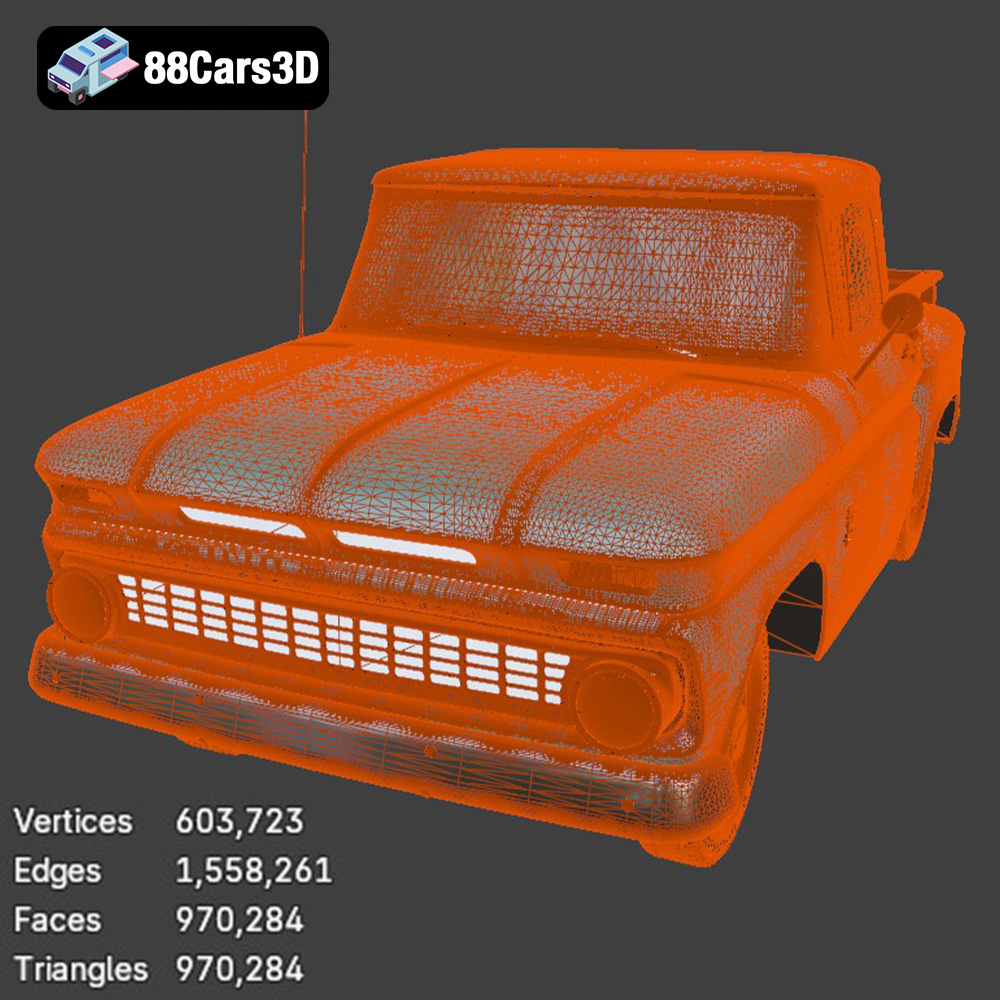
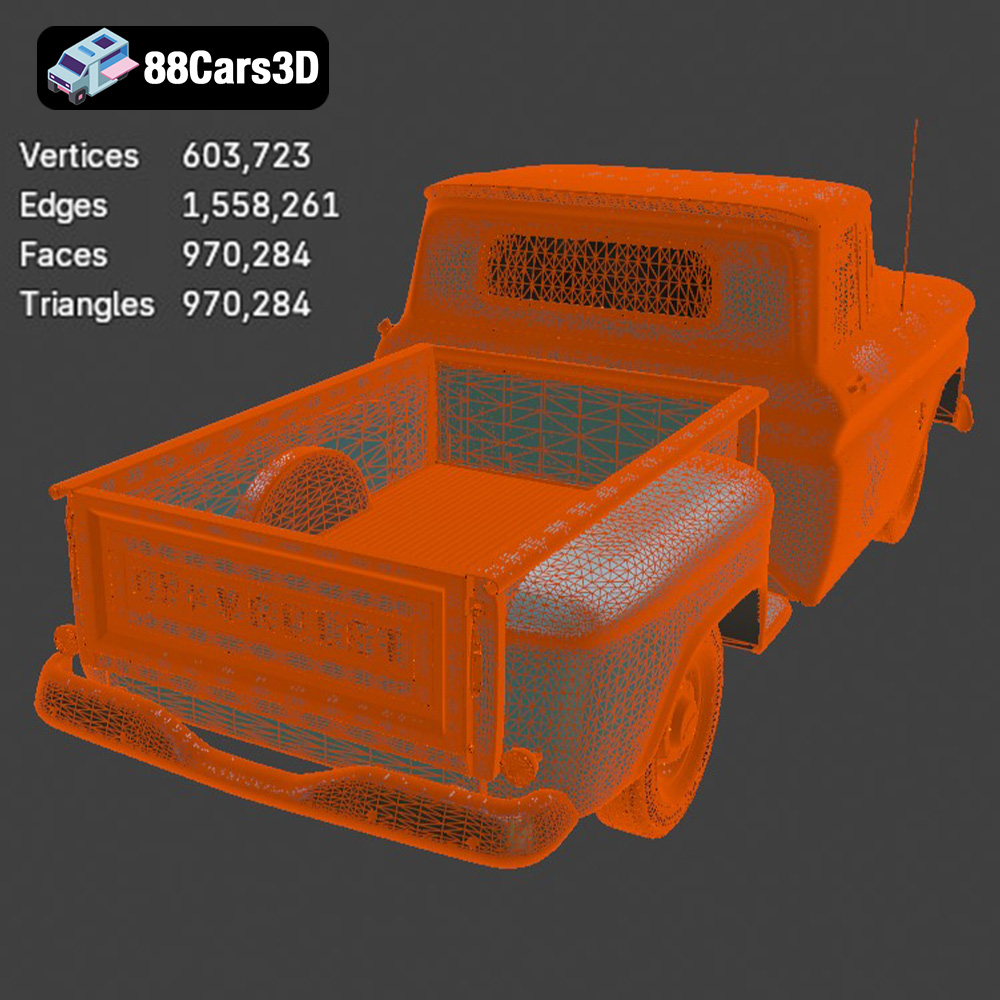
One of the standout features of this C10 model is its expertly optimized topology, boasting 970,284 triangles. This figure strikes a critical balance: it’s high enough to deliver exceptional visual fidelity, capturing the intricate curves and details of the 1963 C10 without resorting to overly complex normal mapping tricks. Simultaneously, it’s carefully managed to ensure excellent performance in real-time engines like Unreal and Unity. This optimization means developers can integrate the model into games or interactive experiences without significant frame rate drops, providing a smooth and immersive user experience. For automotive rendering, this polycount offers a robust base for subdivision surfaces, enabling ultra-high-resolution renders when needed.
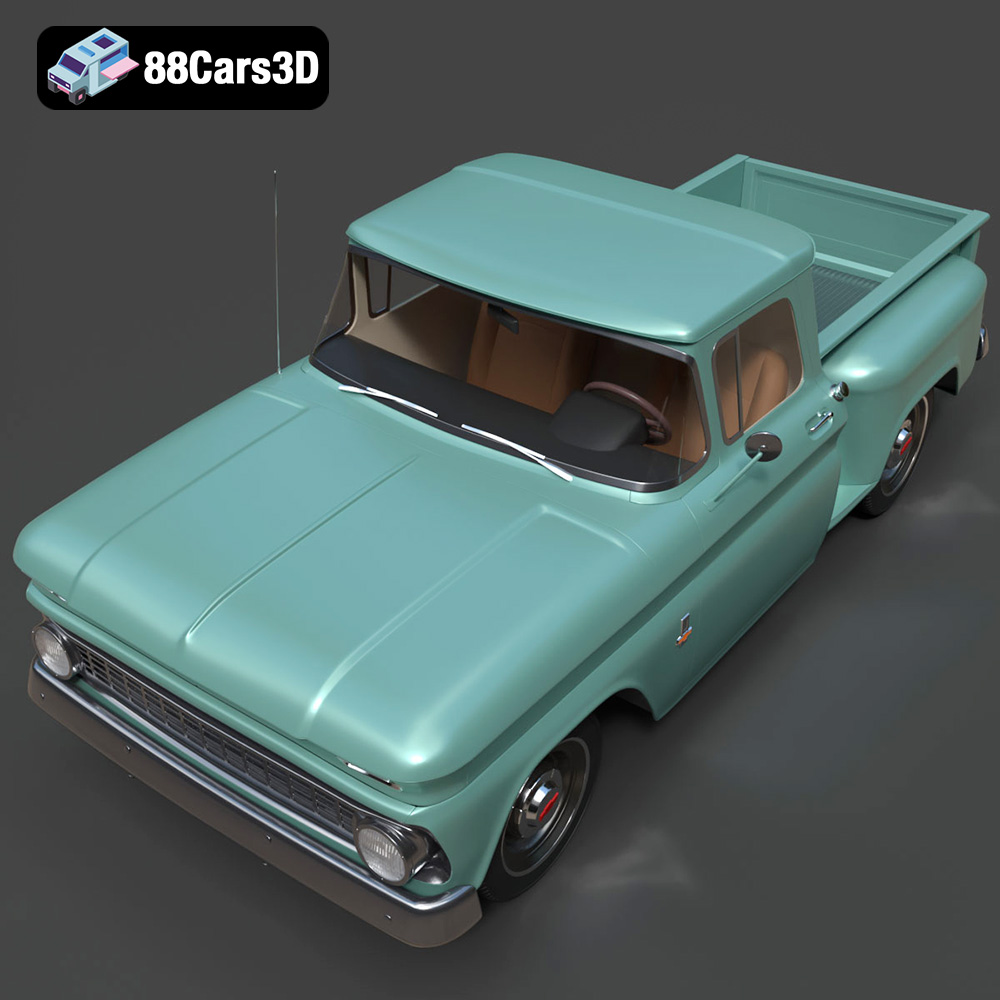
Every aspect of the C10 has been meticulously modeled. The exterior features accurate frame geometry, classic pickup proportions, a detailed engine block (based on classic Chevrolet configurations), authentic dual or single exhaust systems, historically accurate headlights and taillights, and period-correct steel wheels with chrome hubcaps and classic tread tires. Even the leaf spring and independent front suspension components are detailed, crucial for realistic vehicle dynamics in simulations. Inside, the model continues this commitment to authenticity with a classic vinyl bench seat, a vintage large-diameter steering wheel, accurate instrument cluster with analog gauges, and detailed dashboard controls. This level of detail extends to optimized geometry for first-person POV, making it perfect for immersive gaming experiences.
Beyond static beauty, the C10 model is designed for dynamic interaction. Its “game-ready” status means it’s prepped for immediate use in real-time environments. Crucially, it features proper pivot setups for steering, wheel rotation, and suspension travel. This allows animators and game developers to easily implement realistic vehicle physics and animations, from driving sequences to detailed cutscenes. The separation of wheels, suspension, and steering components further enhances its animation potential, giving artists the control needed to bring this classic truck to life with dynamic motion.
The versatility of the Chevrolet C10 (C14) 1963 3D model makes it a cornerstone asset for various professional workflows. Its robust design and multiple file formats ensure seamless integration into diverse projects, accelerating development and enhancing visual quality.
For game developers, the C10 model is an exceptional asset. Its optimized polycount and game-ready topology make it ideal for integration into demanding real-time environments. In open-world games, this classic truck can serve as a key vehicle, either as a player-drivable asset or as a richly detailed environmental prop that adds character to the landscape. For racing titles and simulators, the accurate geometry, detailed suspension, and proper pivot setups allow for realistic physics implementation, providing an engaging driving experience. Its compatibility with Unreal Engine and Unity, often via the .fbx or .unreal formats, streamlines the import and setup process, allowing developers to focus on gameplay rather than asset preparation. This high-quality 3D car model provides an excellent foundation for creating immersive and believable virtual worlds.
When it comes to cinematic animations and automotive rendering, the C10 model truly shines. Its high level of detail, from the engine bay to the interior, makes it perfect for close-up shots and photorealistic renders. Artists can utilize the .blend or .max files to leverage native software capabilities in Blender or 3ds Max, respectively. This allows for advanced material customization, complex lighting setups, and the creation of stunning visual effects for commercials, brand campaigns, or lifestyle scenes. Imagine the C10 bathed in golden hour light, its chrome gleaming, showcasing a product or setting a nostalgic mood. This model provides the visual fidelity required to achieve those breathtaking results, making it a powerful tool for advertising agencies and visualization studios.
The burgeoning fields of Augmented Reality (AR) and Virtual Reality (VR) demand highly optimized yet visually appealing 3D assets. The C10 model, especially in its .glb and .fbx formats, is perfectly suited for these applications. For immersive virtual showrooms, clients can explore the C10 from every angle, even stepping inside its meticulously detailed cockpit. In configurators, users can customize colors and materials in real-time, providing an engaging pre-purchase experience. Mobile AR experiences benefit from the compact and efficient nature of the .glb format, allowing for quick loading and smooth interaction on portable devices. This capability allows businesses to create compelling interactive experiences that showcase classic 3D car models in new and exciting ways.
The utility of a premium 3D model extends beyond digital screens. For enthusiasts, collectors, and model makers, the ability to transform a digital asset into a tangible object is a significant advantage. The Chevrolet C10 (C14) 1963 3D model offers this exciting possibility, thanks to its inclusion of the .stl format, specifically optimized for 3D printing.
When preparing the C10 for 3D printing, certain settings and considerations are paramount to achieving a high-fidelity physical model. The product description recommends scales of 1:12, 1:18, or 1:24, offering flexibility for different display sizes. For optimal detail reproduction, resin printing is highly recommended over FDM, particularly for intricate parts like the grille, mirrors, and interior components. A layer height between 0.04mm and 0.12mm will ensure smooth surfaces and sharp edges. Adequate wall thickness (1.2–2.0mm) is crucial for structural integrity, preventing fragile parts from breaking post-print. Infill settings of 20-30% provide a good balance between strength and material usage. Additionally, supports will be necessary for overhangs and delicate features such as the exhaust system, steering wheel, and potentially the door handles. Print orientation is also key; printing the frame angled can improve structural integrity, while wheels are often best printed separately to capture their distinct details.
Once printed, the journey of the physical C10 model is far from over. Post-processing is where the model truly comes to life. This typically involves removing supports, sanding to smooth any layer lines or imperfections, and applying a primer coat to prepare the surface for paint. The real magic happens with painting, where hobbyists can apply authentic factory colors, perhaps even recreating the classic two-tone finishes of the era, complete with metallic finishes for realism. Custom touches like weathering, rust effects, or even miniature accessories can further personalize the model, turning a generic print into a unique piece of art. This transformation from a digital file to a detailed physical replica underscores the versatility and comprehensive nature of this 3D car model, providing an immersive experience for enthusiasts.
A truly professional 3D car model isn’t just about static accuracy; it’s about the potential for customization and adaptation. The Chevrolet C10 (C14) 1963 3D model is built with this flexibility in mind, empowering artists to tailor it to their specific project requirements and unleash their creative vision.
The ability to easily modify materials and textures is fundamental for any high-quality 3D asset. With the C10 model, artists can readily change body and tank colors to reflect factory finishes, custom two-tone schemes, or even unique paint jobs. Beyond color, the material properties can be adjusted to create different looks—from a showroom-gloss finish to a weathered matte or even a rusted patina effect, ideal for post-apocalyptic or vintage scenes. Tire textures can be swapped between street variants and more rugged off-road options, instantly changing the truck’s character. This granular control over material properties ensures that the C10 can seamlessly fit into any artistic direction or visual narrative, making it a highly adaptable game asset or rendering centerpiece.
Integrating the C10 model into various scenes and adapting its lighting is another area where its inherent flexibility shines. Whether it’s being placed in an urban environment, a desolate desert, or a cozy garage, the model’s well-structured UVs and material assignments allow for quick texture adjustments to match the surroundings. Lighting plays a crucial role in defining the mood and realism of a scene. Artists can easily adjust lighting setups, leveraging the model’s reflective properties to create dramatic highlights on its chrome elements or subtle shadows that emphasize its robust form. This adaptability extends to rendering engines, where artists can take full advantage of global illumination, ray tracing, and other advanced rendering techniques to produce stunning visual results that elevate any automotive rendering project.
The Chevrolet C10 (C14) 1963 is more than just a pickup truck; it’s an enduring symbol of automotive design and rugged utility. Translating such an icon into a high-fidelity 3D model, as demonstrated by the offering from 88cars3d.com, provides an indispensable resource for digital artists, game developers, and visualization specialists. With its meticulously optimized topology, boasting 970,284 triangles, and unparalleled attention to both exterior and interior detail, this model delivers both visual realism and exceptional performance.
From its robust game-ready features, including precise pivot setups for animation in Unreal Engine and Unity, to its comprehensive suite of file formats—.blend, .fbx, .obj, .glb, .stl, .ply, .unreal, and .max—this 3D car model offers unmatched versatility. Whether you’re crafting immersive open-world games, producing photorealistic automotive rendering for cinematic projects, developing engaging AR/VR experiences, or even creating tangible replicas through 3D printing, the C10 model provides the technical foundation and creative freedom you need.
Its adaptability for customization, from material and texture variations to seamless integration into diverse lighting environments, further solidifies its value as a professional-grade asset. For anyone seeking to infuse their projects with the timeless appeal and authentic character of a classic American pickup, this Chevrolet C10 (C14) 1963 3D model is an investment in quality, efficiency, and creative potential. Explore this exceptional asset and many other premium 3D car models at 88cars3d.com and bring your digital visions to life with unparalleled realism.
Experience the timeless appeal of the Chevrolet C10 (C14) 1963, a true icon of American automotive history. This legendary pickup truck is celebrated for its distinctive front grille, classic step-side or fleet-side body lines, and rugged utilitarian heritage. Our meticulously crafted 3D model captures the essence of this vintage workhorse, featuring authentic exterior styling cues, a detailed engine bay, and historically accurate mechanical components that made the ’63 C10 a favorite among truck enthusiasts. Boasting a highly detailed topology with 970,284 triangles, this model is expertly optimized to deliver exceptional visual fidelity without compromising performance. Whether you’re creating a realistic virtual environment, building a high-octane racing game, or producing photorealistic cinematic renders, this game-ready asset provides the perfect foundation. Its accurate geometry and well-structured materials ensure seamless integration into modern real-time engines like Unreal Engine and Unity.
$60.99
.1963
.blend
.chevrolet
.fbx
.glb
.max
.obj
.ply
.rendering
.stl
.unreal
c10-c14
car-3d-model
classic-car
classic-truck
game asset
game-ready
optimized
pickup-truck
VR/AR