Get 20% OFF All Premium 3D & STL Models!

In the dynamic world of digital content creation, the demand for high-fidelity 3D assets continues to escalate across industries. From automotive manufacturers showcasing future vehicles to game developers crafting immersive virtual worlds, and architects visualizing luxury environments, the need for photorealistic and technically sound 3D models is paramount. These digital representations are more than just pretty pictures; they are robust tools that drive innovation, streamline production, and enhance user experiences.
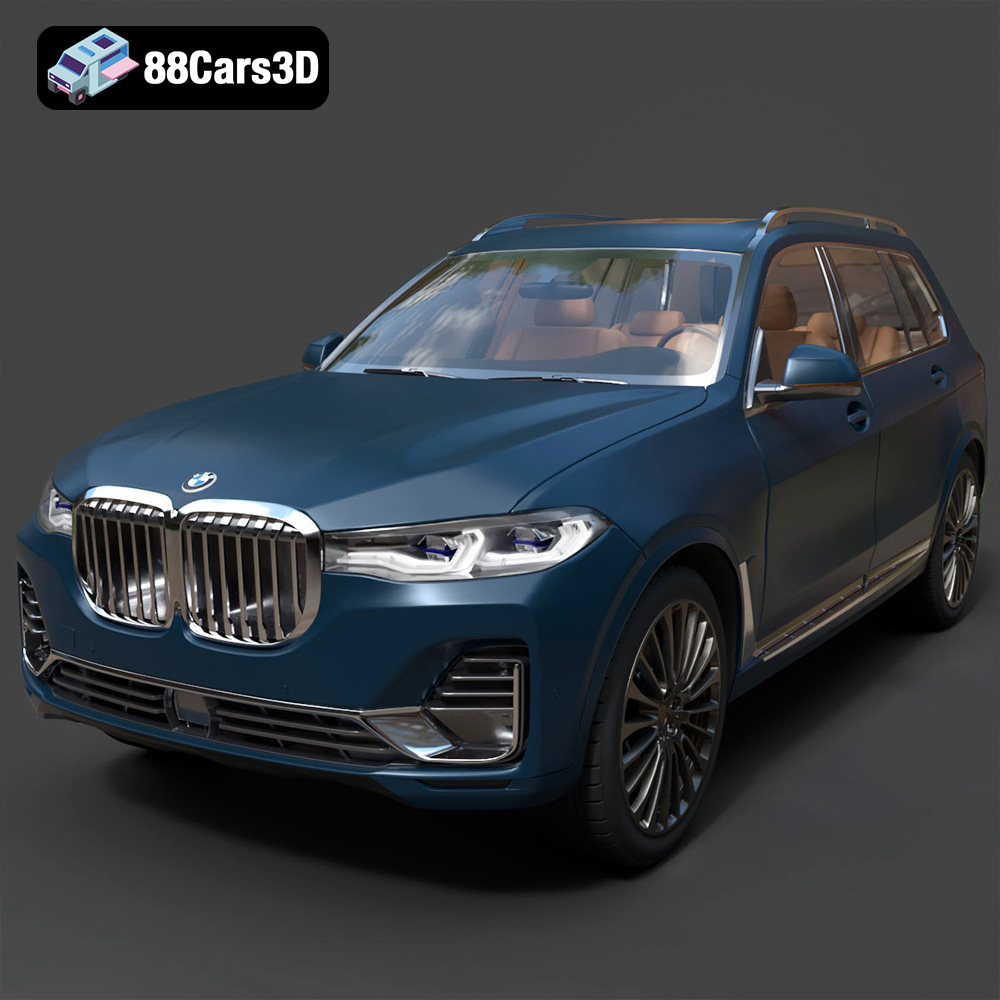
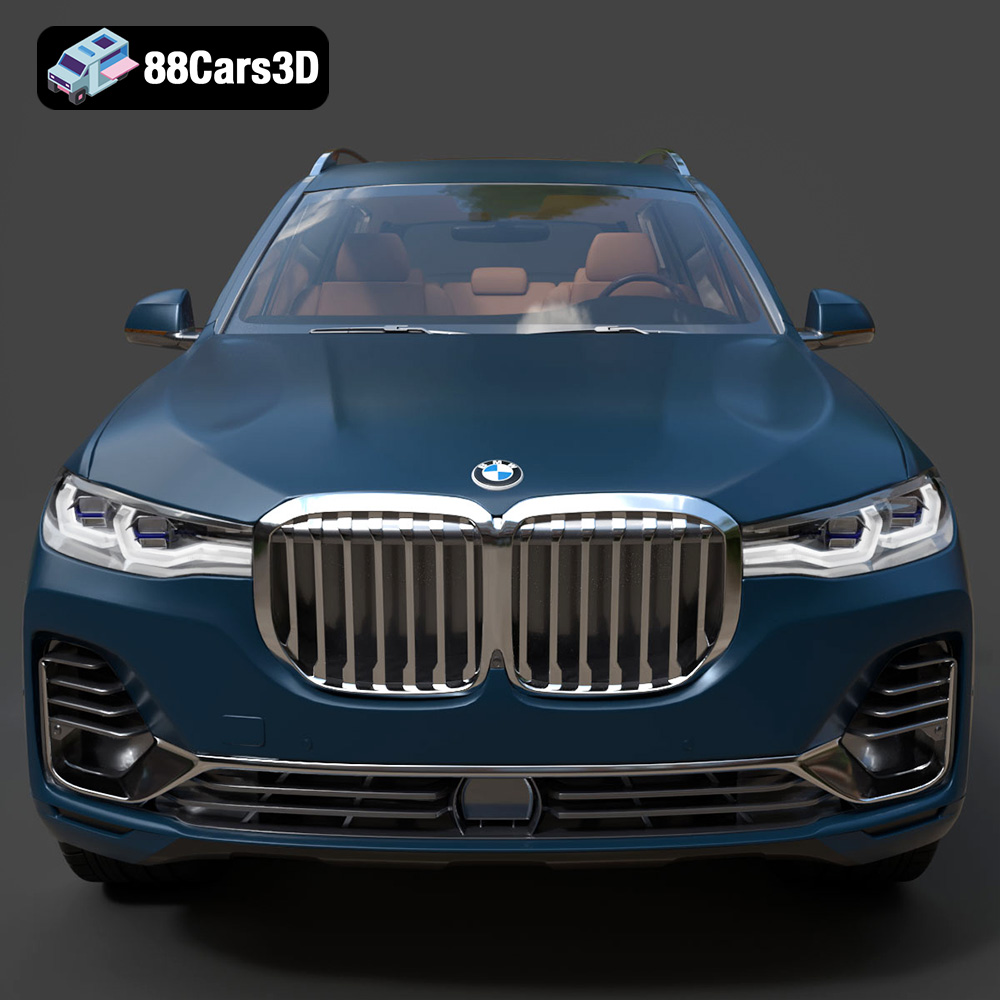
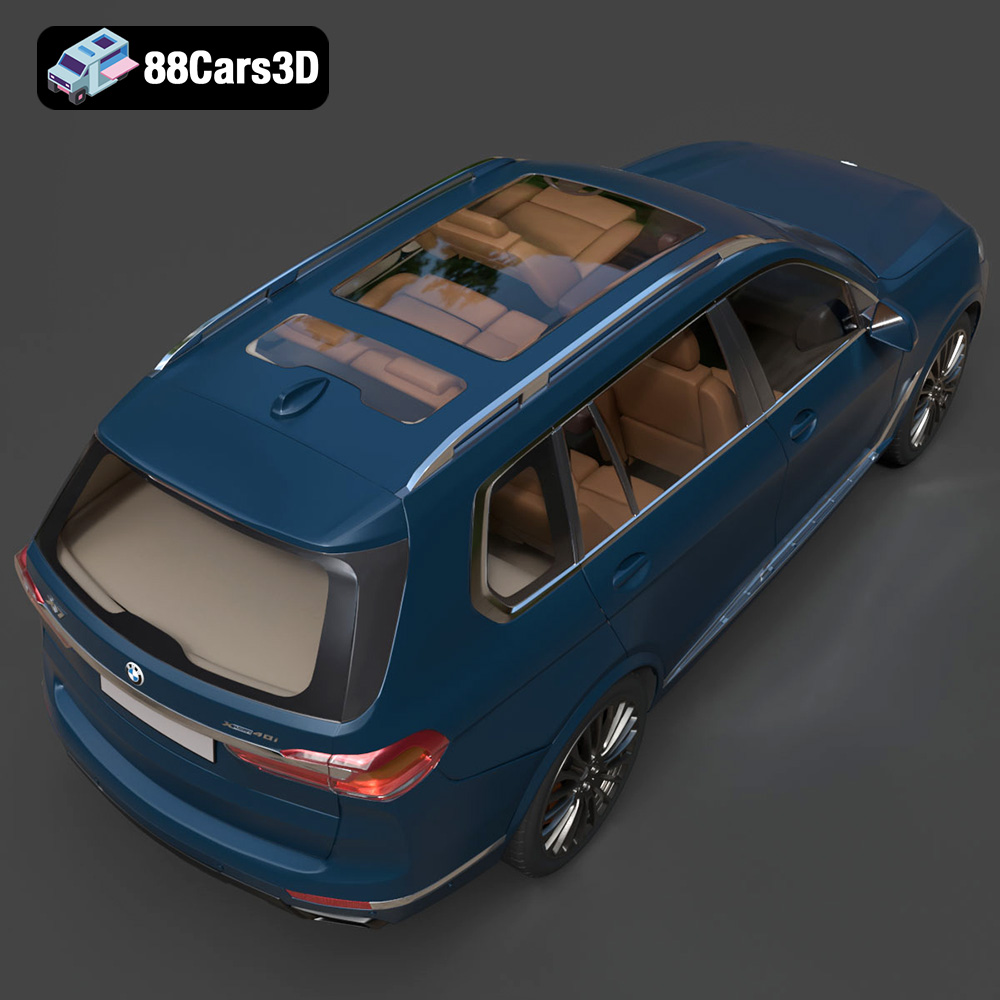
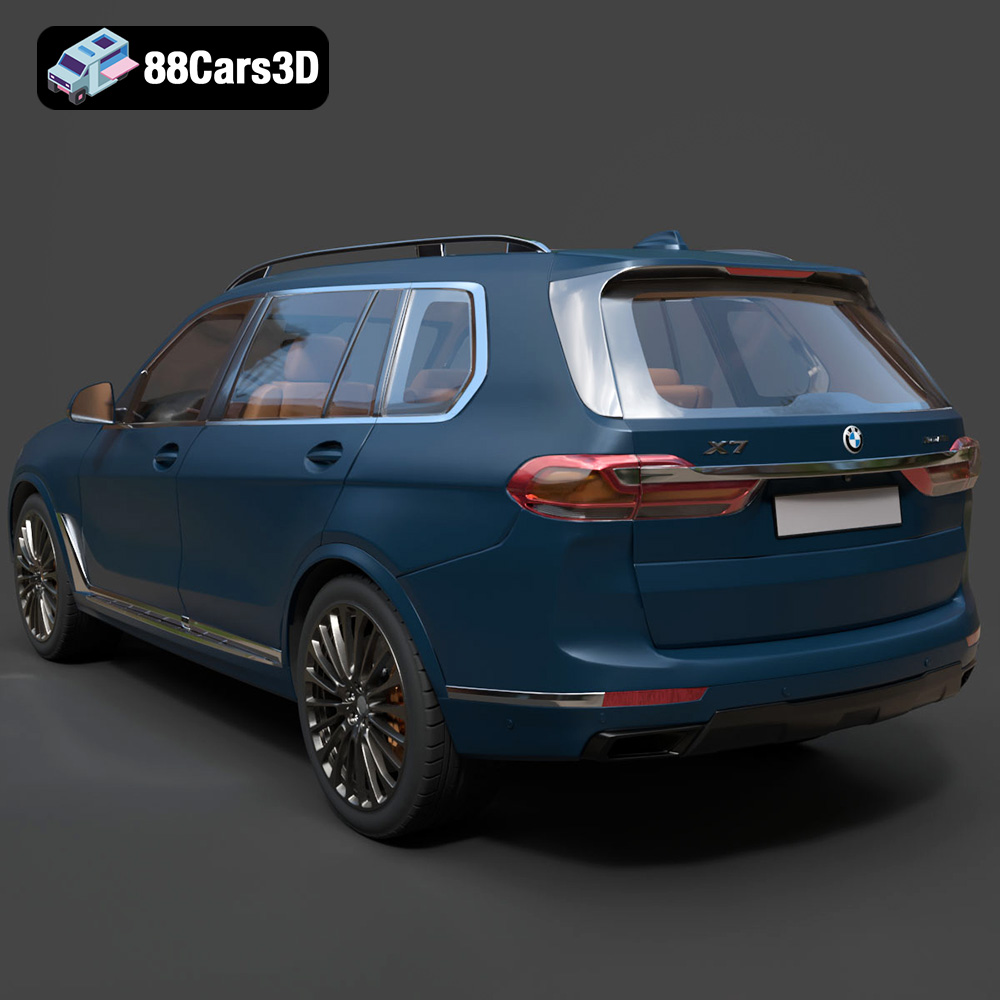
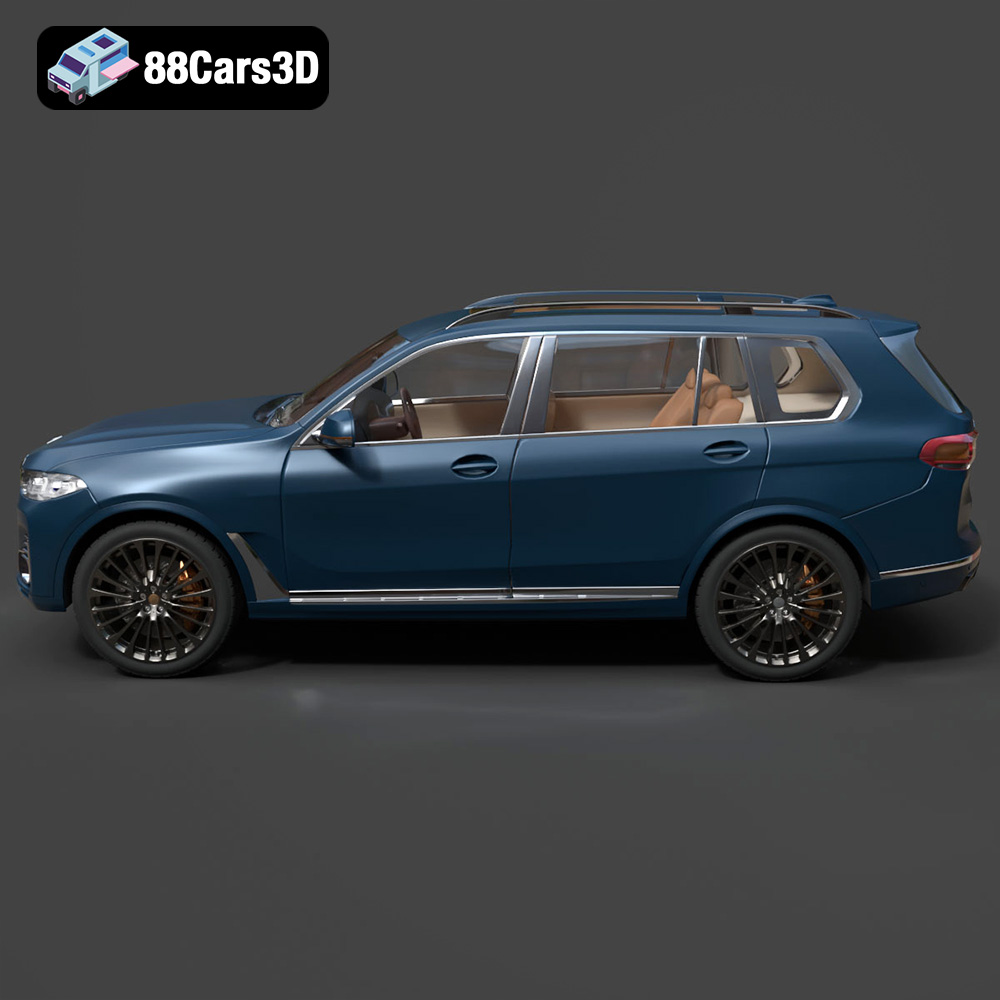
At the forefront of this digital revolution are meticulously crafted 3D car models that serve as the backbone for countless projects. Imagine bringing the epitome of luxury and engineering, like the BMW X7 40i, into a digital space with such precision that it’s indistinguishable from its real-world counterpart. A premium asset like the BMW X7 40i 3D model from 88cars3d.com exemplifies this convergence of art and technical excellence, offering a game-ready, highly detailed digital twin of this flagship SUV. Its commanding presence, from the iconic kidney grille to the intricately modeled engine bay and luxurious interior, is faithfully recreated, ready for integration into a diverse array of professional applications.
This article delves into the technical intricacies and expansive applications of high-quality 3D car models, demonstrating how assets like the BMW X7 40i model are indispensable for achieving professional-grade automotive rendering, developing cutting-edge game assets, and pushing the boundaries of interactive visualization.
The choice of file format for a 3D model is often as critical as the model’s geometry itself. Each format is designed with specific use cases and software ecosystems in mind, impacting everything from compatibility and data preservation to performance and final output. Understanding these distinctions is crucial for anyone working with 3D car models, especially when acquiring a versatile asset like the BMW X7 40i 3D model, which comes bundled with a comprehensive range of formats.
The .blend file format is the native format for Blender, a powerful open-source 3D creation suite. A .blend file typically encapsulates an entire Blender scene, including mesh data, materials (with complex node setups), textures, animations, lights, cameras, and even Python scripts. For artists and studios primarily working within Blender, this format offers the most flexibility and complete preservation of the original project’s editable state. The BMW X7 40i model in .blend format provides full access to its construction, allowing users to delve into its material shaders, adjust modifiers, and integrate it seamlessly into existing Blender projects for rendering or further development.
.fbx (Filmbox) is a proprietary file format owned by Autodesk, widely regarded as an industry standard for exchanging 3D data between various software applications, including 3ds Max, Maya, Blender, Unreal Engine, and Unity. It excels at preserving complex scene data such as geometry, materials, textures, animations, and skeletal rigging. For game development and real-time pipelines, .fbx is often the go-to choice due to its robust support for animation and scene hierarchy, which is vital for animated car components like wheels and suspension. The BMW X7 40i model’s .fbx version is ideal for direct import into game engines or for further processing in other professional 3D packages.
The .obj (Wavefront OBJ) format is one of the oldest and most universally supported 3D file formats. It’s a simple, text-based format that primarily stores geometric data: vertices, normals, UV coordinates, and faces. While it can reference external material (.mtl) files and textures, it does not support animation, rigging, or advanced shader networks. Its strength lies in its simplicity and widespread compatibility, making it an excellent choice for static models or when transferring mesh data between disparate software where .fbx might introduce compatibility issues. The .obj version of the BMW X7 40i model ensures that its core geometry can be accessed and used in virtually any 3D software.
.glb (GL Transmission Format Binary) is the binary equivalent of .glTF (GL Transmission Format), a modern, open-standard format specifically designed for efficient transmission and loading of 3D scenes and models in web, augmented reality (AR), and virtual reality (VR) applications. A .glb file is self-contained, embedding all necessary assets like textures and animations directly into a single file, which significantly simplifies deployment. Its optimization for real-time applications and web delivery makes the BMW X7 40i model’s .glb format perfect for interactive virtual showrooms, mobile AR experiences, and browser-based automotive configurators.
.stl (Stereolithography) is the de facto standard file format for 3D printing. It represents a 3D model as a collection of unconnected triangular facets, defining only the surface geometry without color, texture, or material information. While simplistic, its universal acceptance by 3D printers and slicing software makes it indispensable for physical fabrication. The BMW X7 40i model includes an .stl version, explicitly tailored for hobbyists and professionals looking to produce a tangible, display-scale replica of the luxury SUV, complete with recommendations for optimal print settings.
The .ply (Polygon File Format) is another format for storing 3D data, often used for data generated by 3D scanners, CAD systems, or scientific applications. It supports both polygon meshes and point clouds, and can store a wide array of properties, including color, transparency, normals, texture coordinates, and confidence values per vertex or face. While less common for general animation, its precision and ability to store rich per-vertex data make the BMW X7 40i model’s .ply format valuable for detailed mesh analysis, reverse engineering, or integration into specialized engineering software.
While not a traditional standalone file format in the same vein as .fbx or .obj, the inclusion of .unreal typically signifies an asset package pre-configured for direct integration into Unreal Engine. This often means the model (likely an .fbx internally) has been imported, optimized, had its materials set up with Unreal’s PBR shaders, collision meshes generated, and potentially even LODs configured within an Unreal project structure. For developers targeting Unreal Engine 5, this provides an unparalleled head start, as the BMW X7 40i model arrives as a nearly plug-and-play solution, ready for immediate deployment in high-performance real-time environments.
Finally, the .max file format is the native format for Autodesk 3ds Max, a leading software for 3D modeling, animation, and rendering. Like .blend, a .max file contains a complete scene, preserving all aspects of the 3ds Max project, including geometry, materials, textures, lighting, cameras, animation keyframes, and scene modifiers. For professionals working in architectural visualization, broadcast animation, or product design who rely on 3ds Max, the .max version of the BMW X7 40i model offers the highest degree of editability and compatibility within that ecosystem, ensuring all intricate details and setups are maintained.
The provision of the BMW X7 40i 3D model in such a wide array of formats underscores its versatility and the foresight of its creators. This comprehensive approach ensures that regardless of the professional workflow or target application, users have the optimal file format at their disposal, enabling seamless integration and maximum creative freedom.
Automotive rendering is a highly specialized field, demanding meticulous attention to detail to achieve photorealism. For luxury vehicles like the BMW X7 40i, the digital representation must convey the same sense of craftsmanship, material quality, and design intent as the physical car. Premium 3D car models are the cornerstone of this process, enabling artists to create stunning visualizations for marketing, configurators, and design reviews.
Achieving breathtaking renders starts with the materials and lighting. The BMW X7 40i 3D model boasts accurate frame geometry and proportions, which are only the beginning. Its premium exterior aesthetics, from the signature split-headlight LED array to the intricate multi-spoke alloy wheels, are designed for high-fidelity material application. Using Physically Based Rendering (PBR) workflows in software like 3ds Max (with V-Ray or Corona) or Blender (with Cycles or Eevee), artists can simulate how light interacts with real-world surfaces.
Strategic studio lighting, often utilizing High Dynamic Range Images (HDRIs) combined with targeted area lights, accentuates the BMW X7’s muscular proportions and elegant lines, showcasing its premium features from every angle.
Beyond static images, 3D car models are invaluable for dynamic visual storytelling. The BMW X7 40i 3D model is specifically designed for animation, featuring separate wheels, suspension, and steering components with proper pivot setups for realistic rotation and travel. This modularity allows animators to create captivating sequences:
These animations are crucial for high-end brand marketing campaigns, automotive configurators, and lifestyle scene visualizations, providing an immersive experience that traditional photography cannot match.
In the competitive world of video games, realism and performance are key. High-quality game assets, particularly for vehicles, can make or break an immersive experience. The BMW X7 40i 3D model is specifically engineered to meet the rigorous demands of next-gen game development engines, striking a crucial balance between visual fidelity and real-time performance.
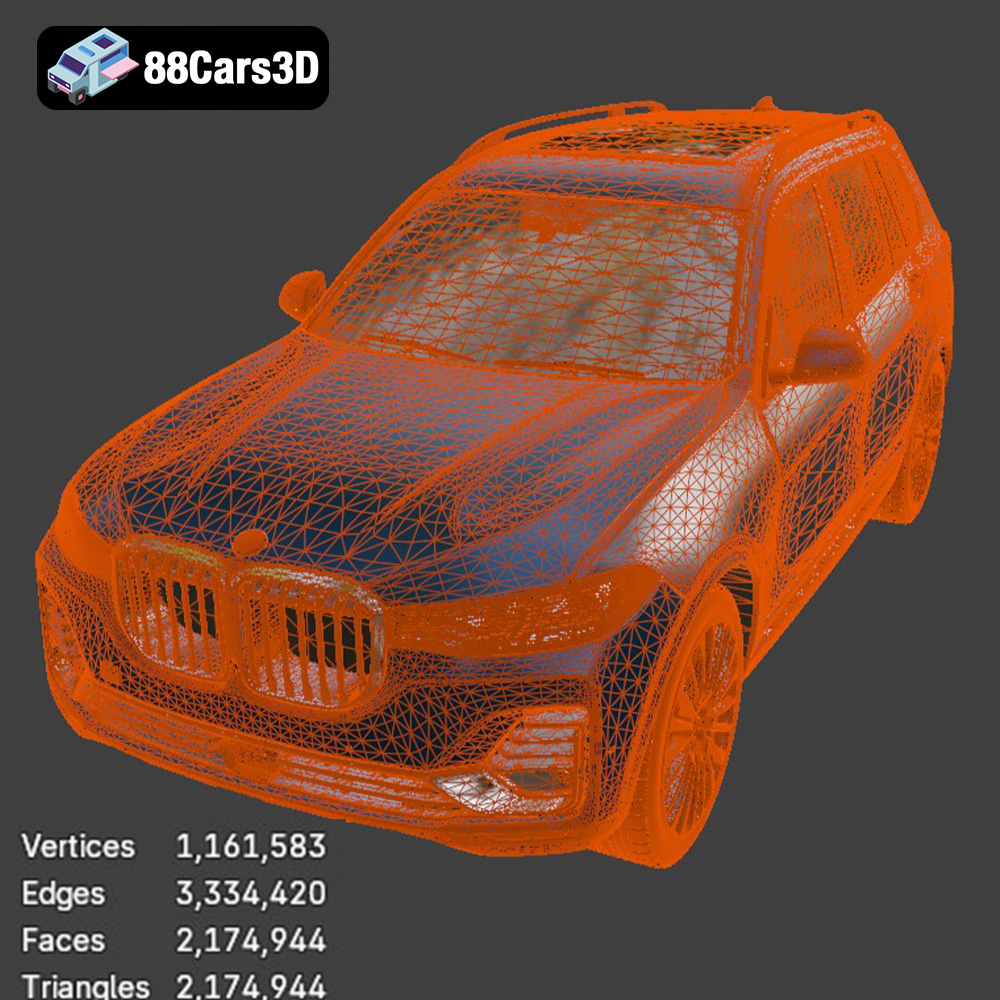
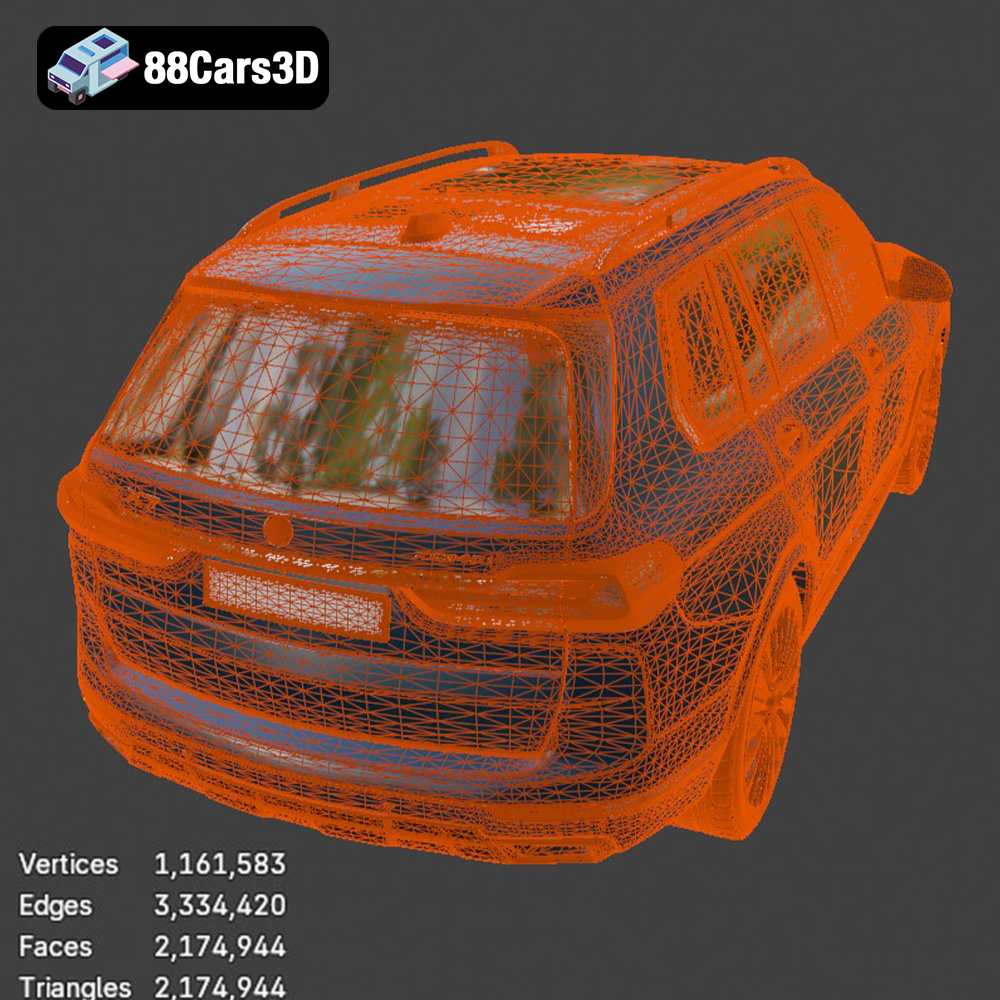
The BMW X7 40i model boasts 2,174,944 triangles. This polycount is a testament to its “Game-Ready & Optimized” nature, offering a sweet spot for real-time engines like Unreal Engine 5 and Unity. It’s detailed enough to stand up to close-ups in cinematic cutscenes or first-person camera views, yet optimized to ensure smooth frame rates in demanding open-world games and racing titles. The topology is carefully structured to facilitate efficient rendering and physics calculations.
The model’s real-world scale accuracy is also crucial for consistent physics and collision detection within game environments, ensuring a believable driving experience.
A detailed 3D car model directly enhances player immersion. The BMW X7 40i’s accurately modeled exterior features, detailed engine block, and fully realized interior contribute significantly:
This level of detail makes the BMW X7 40i 3D model an ideal candidate for AAA racing titles, open-world adventures, and serious driving simulators, where visual fidelity and authentic mechanics are paramount.
The burgeoning fields of Augmented Reality (AR) and Virtual Reality (VR) are transforming how we interact with digital content. 3D car models are central to these immersive experiences, offering new ways to visualize, configure, and engage with products. The BMW X7 40i 3D model is perfectly suited for these cutting-edge applications.
Virtual showrooms and configurators represent a significant leap forward for automotive sales and marketing. Instead of static images or limited physical displays, customers can explore a vehicle in a fully interactive, virtual environment. The BMW X7 40i model’s customization options (change body/tank colors, modify tire textures, adjust material finishes) are directly applicable here.
These virtual experiences provide unparalleled engagement, allowing brands to reach a wider audience with a richer, more personalized product presentation.
AR technology allows digital models to be superimposed onto the real world, creating powerful mixed-reality experiences. The BMW X7 40i 3D model’s robust construction and compatibility with AR frameworks make it an excellent candidate for:
The ability to interact with such a detailed vehicle model in AR/VR environments opens up new possibilities for education, sales, and immersive entertainment.
While most applications of 3D car models exist in the digital realm, the ability to translate these virtual assets into physical objects offers a unique blend of craftsmanship and technology. The BMW X7 40i 3D model’s inclusion of the .stl format caters directly to the growing community of 3D printing enthusiasts and professionals, enabling the creation of tangible replicas.
3D printing transforms the digital mesh into a physical object layer by layer. The .stl format is universally recognized by 3D slicing software, which prepares the model for printing. The product description provides specific print settings and recommendations, highlighting the practical considerations for producing a high-quality physical model:
These guidelines are crucial for hobbyists and model makers aiming to create an accurate and robust physical representation of the BMW X7 40i.
A successful 3D print is often just the first step in creating a display-quality model. Post-processing is where the replica truly comes to life:
The ability to transition from a high-fidelity digital 3D car model to a meticulously crafted physical object demonstrates the profound versatility of these assets in both virtual and tangible creative endeavors.
The landscape of digital content creation is continually evolving, driven by an insatiable demand for visual fidelity and technical excellence. High-quality 3D car models like the BMW X7 40i are not merely static representations; they are powerful, versatile assets that fuel innovation across a spectrum of professional industries, from cutting-edge automotive rendering to immersive game asset development and innovative physical fabrication.
From its meticulously captured exterior aesthetics and luxurious interior details to its optimized topology and comprehensive range of file formats, the BMW X7 40i 3D model epitomizes the blend of artistic precision and technical sophistication. Its readiness for real-time engines, configurability for AR/VR experiences, and printability for physical replicas underscore its immense value.
For designers, developers, and artists seeking to elevate their projects, investing in such a robust and adaptable digital asset is a strategic decision. It reduces development time, enhances visual quality, and provides a foundational element for countless creative applications. Explore the possibilities and discover premium 3D car models that meet the highest professional standards by visiting 88cars3d.com, where quality and versatility converge.
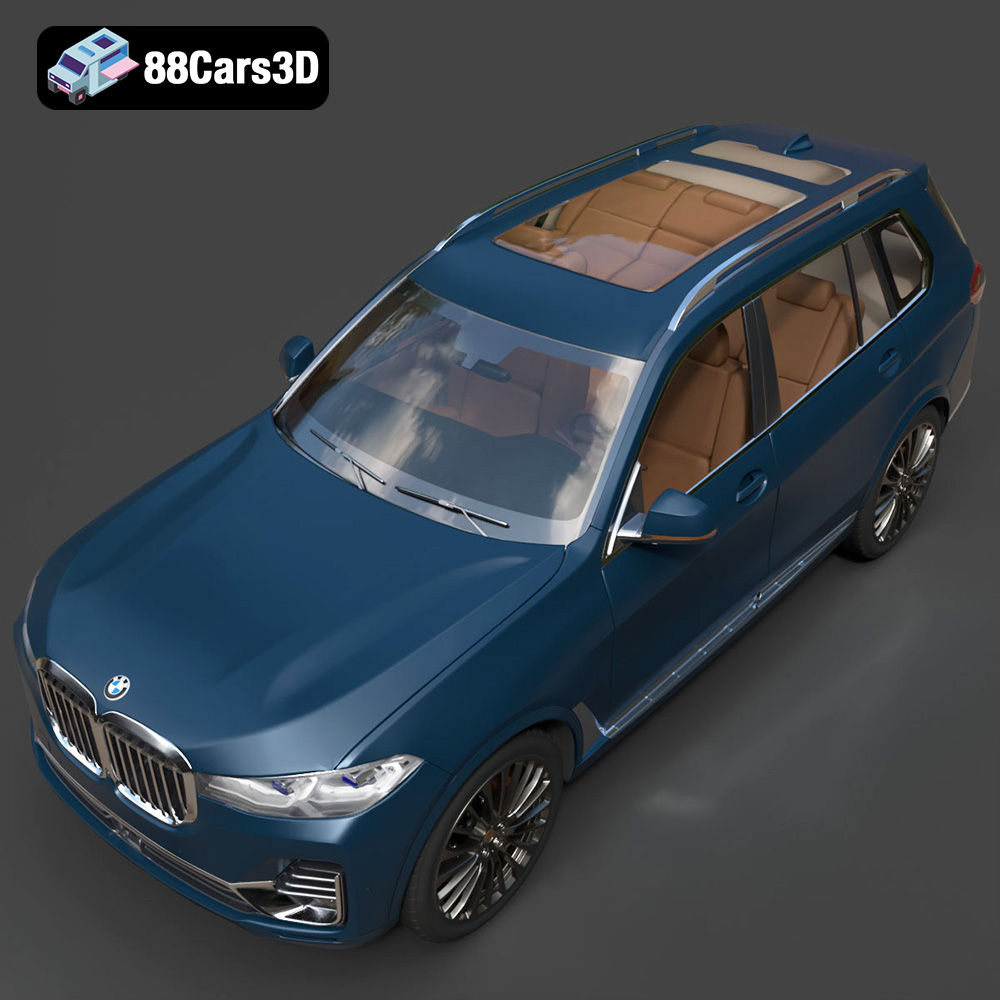
The BMW X7 40i 3D model captures the iconic large kidney grille, sleek aerodynamic profile, and premium exterior aesthetics defining BMW’s flagship SUV. Boasting 2,174,944 triangles, this model delivers unparalleled high-fidelity visuals while being optimized for next-gen game engines like Unreal Engine 5, high-end architectural visualization, and immersive AR/VR experiences. From the detailed TwinPower Turbo inline 6-cylinder engine bay to the luxurious three-row seating and curved display, every element is faithfully recreated, making it perfect for luxury automotive configurators, AAA racing titles, and premium brand marketing animations.
$86.50
.blend
.bmw
.fbx
.glb
.luxury suv
.max
.obj
.ply
.rendering
.stl
.unreal
car-3d-model
game asset
game-ready
high poly
optimized
SUV
VR/AR
x7-40i