Get 20% OFF All Premium 3D & STL Models!

In the exhilarating world of 3D visualization, automotive design stands as a pinnacle of technical artistry. From the gleaming chrome of a classic muscle car to the aerodynamic curves of a futuristic concept, creating convincing virtual vehicles demands a blend of artistic vision and rigorous technical execution. Whether you’re a game developer crafting immersive racing simulators, an architect visualizing a sleek car in a modern driveway, or an AR/VR enthusiast building interactive experiences, the quality of your 3D car models can make or break your project.
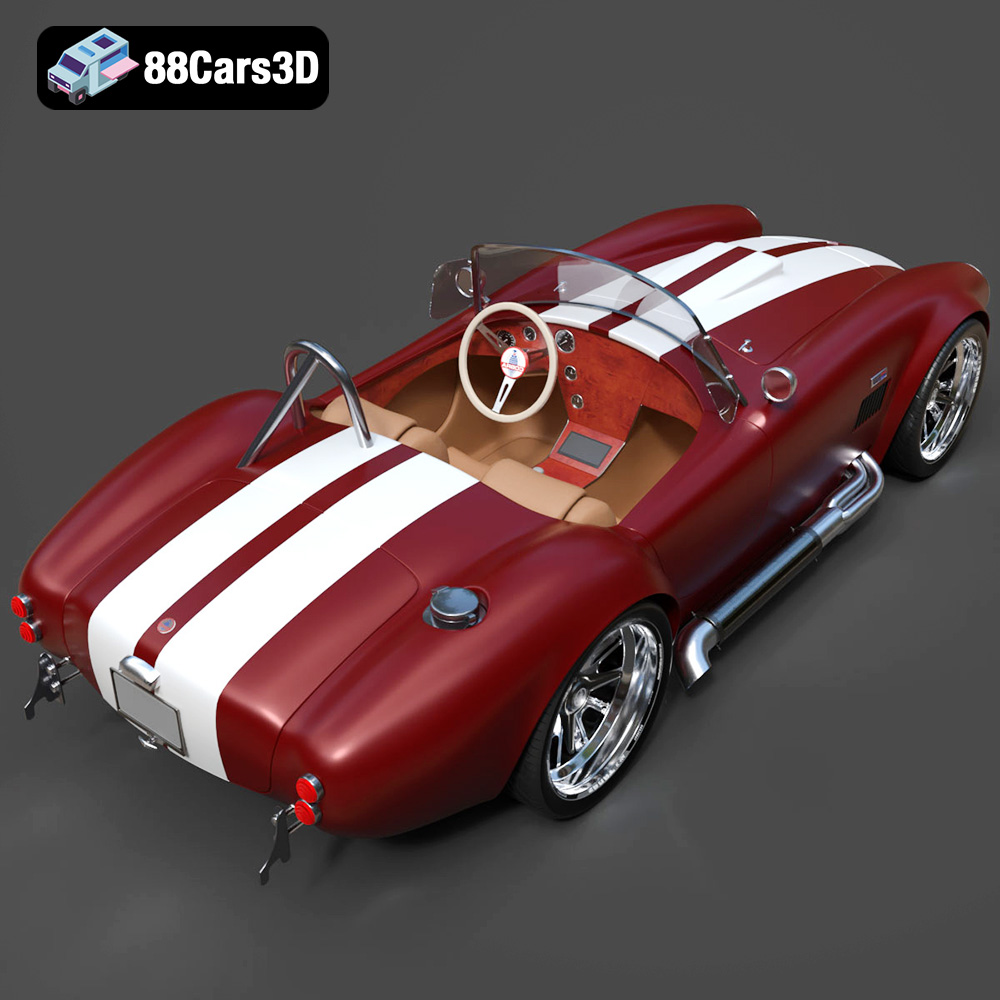
At the heart of any successful automotive 3D project lies a foundational asset: a meticulously crafted 3D model. These aren’t just pretty pictures; they are complex digital blueprints, optimized for performance across various platforms. Today, we’re diving deep into the realm of high-fidelity 3D car models, exploring the workflows, technical considerations, and the unparalleled value they bring to professional pipelines. And as we navigate this intricate landscape, we’ll spotlight a prime example of excellence: the Ford Cobra 3D Model, a remarkable asset available for download at 88cars3d.com, which perfectly encapsulates the blend of classic aesthetic with modern technical prowess.
The choice of file format for your 3D car models is far more than a technicality; it’s a strategic decision that impacts compatibility, workflow efficiency, and the ultimate utility of your asset. Each format serves specific purposes, tailored for different software environments, rendering pipelines, or end-use applications. Understanding these distinctions is crucial for any professional working with 3D automotive assets, especially when sourcing premium models like the Ford Cobra from 88cars3d.com, which offers a comprehensive suite of formats.
The .blend format is native to Blender, the powerful open-source 3D creation suite. When you receive a .blend file, you’re getting a fully editable Blender scene. This typically includes the complete mesh geometry, intricate material setups (often leveraging Blender’s Cycles or Eevee render engines), lighting configurations, camera setups, and any animation data. For artists deeply integrated into the Blender workflow, this format offers unparalleled flexibility for customization, material tweaks, scene integration, and direct rendering within Blender.
.fbx (Filmbox) is arguably the most widely adopted 3D exchange format in the industry, particularly vital for game development and animation pipelines. Developed by Autodesk, FBX files can store a vast array of 3D data, including mesh geometry, materials, textures, animations, skinning information, and even skeletal data. Its robust support in major software like Autodesk Maya, 3ds Max, Cinema 4D, and critically, game engines like Unreal Engine and Unity, makes it the go-to choice for transferring complex animated assets. For real-time applications and cinematic sequences, an FBX of a detailed 3D car model like the Ford Cobra provides the perfect foundation.
The .obj (Wavefront OBJ) format is a classic, highly compatible choice for pure geometry transfer. It’s a universal format supported by virtually every 3D software application. While OBJ files excel at conveying mesh data (vertices, faces, UV coordinates), they generally do not natively support complex material definitions, animation, or rigging. Instead, material properties are often referenced via an accompanying .mtl (material template library) file. For users needing a clean, cross-software base mesh to build upon, or for simpler rendering tasks, OBJ remains an indispensable and reliable option.
.glb (GL Transmission Format Binary) is the binary version of glTF, a modern, royalty-free specification for the efficient transmission and loading of 3D scenes and models by applications. GLB files package all assets—geometry, materials, textures, animations—into a single, self-contained binary file, making them incredibly efficient for web-based 3D, AR (Augmented Reality), and VR (Virtual Reality) applications. For interactive showrooms or web configurators featuring 3D car models, GLB offers superior performance and ease of integration compared to more complex formats.
.stl (Stereolithography) is synonymous with 3D printing. This format represents the surface geometry of a 3D object using a collection of interconnected triangles. It does not carry color, texture, or material information, focusing solely on the object’s form for fabrication. When preparing a 3D car model for physical production, such as printing a detailed replica of the Ford Cobra, converting it to an STL is the essential first step, ensuring the printer interprets the model’s precise shape for layer-by-layer construction.
The .ply (Polygon File Format) is often used to store 3D data from 3D scanners, CAD applications, or scientific data. It’s capable of storing more complex data than OBJ, including color per vertex, surface normals, and other properties. While not as universally used as FBX or OBJ for general asset exchange, PLY is valuable when precision, especially with color data derived from scans, is paramount for visualization or analysis.
The .unreal designation isn’t a standalone file format in the traditional sense, but rather signifies an asset or package that has been meticulously prepared, optimized, and often pre-imported into an Unreal Engine project. This means the model typically comes with correctly configured materials, collision meshes, LODs (Levels of Detail), and potentially blueprints for interactive elements. For developers working within Unreal Engine, an “.unreal” asset implies a plug-and-play experience, saving countless hours of optimization and setup, making a product like the Ford Cobra 3D Model invaluable for rapid game development.
Similar to .blend for Blender, .max is the native file format for Autodesk 3ds Max. This format captures an entire 3ds Max scene, encompassing geometry, modifiers, materials (V-Ray, Corona, Arnold), lighting, cameras, animation, and scene organization. For professionals who rely on 3ds Max for high-end architectural visualization, product rendering, or animation, a .max file offers complete editability and access to all the scene’s native elements, allowing for deep customization and seamless integration into existing 3ds Max pipelines.
Creating a truly exceptional 3D car model, such as the Ford Cobra 3D Model, is a journey that marries artistic skill with rigorous technical understanding. It’s about more than just recreating shapes; it’s about capturing the essence, performance, and intricate details that define an automotive icon. This process involves meticulous attention to topology, texturing, and optimization.
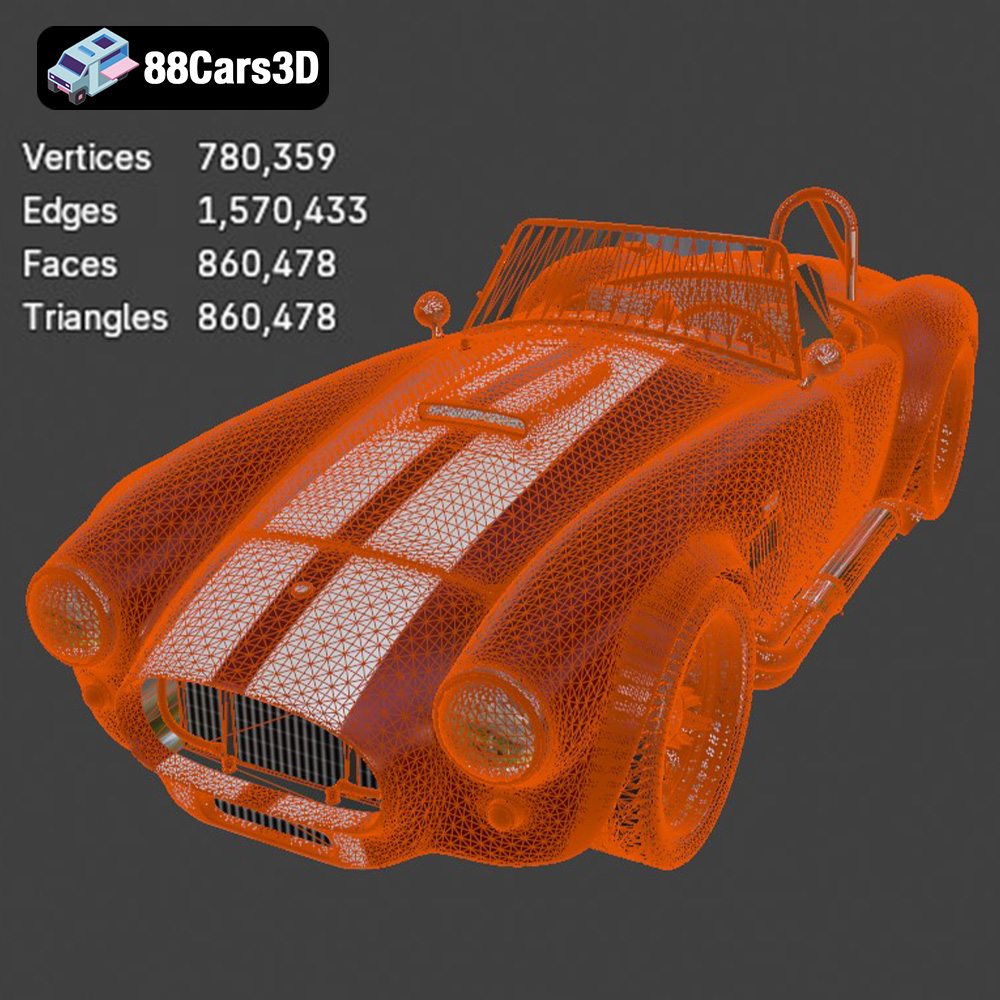
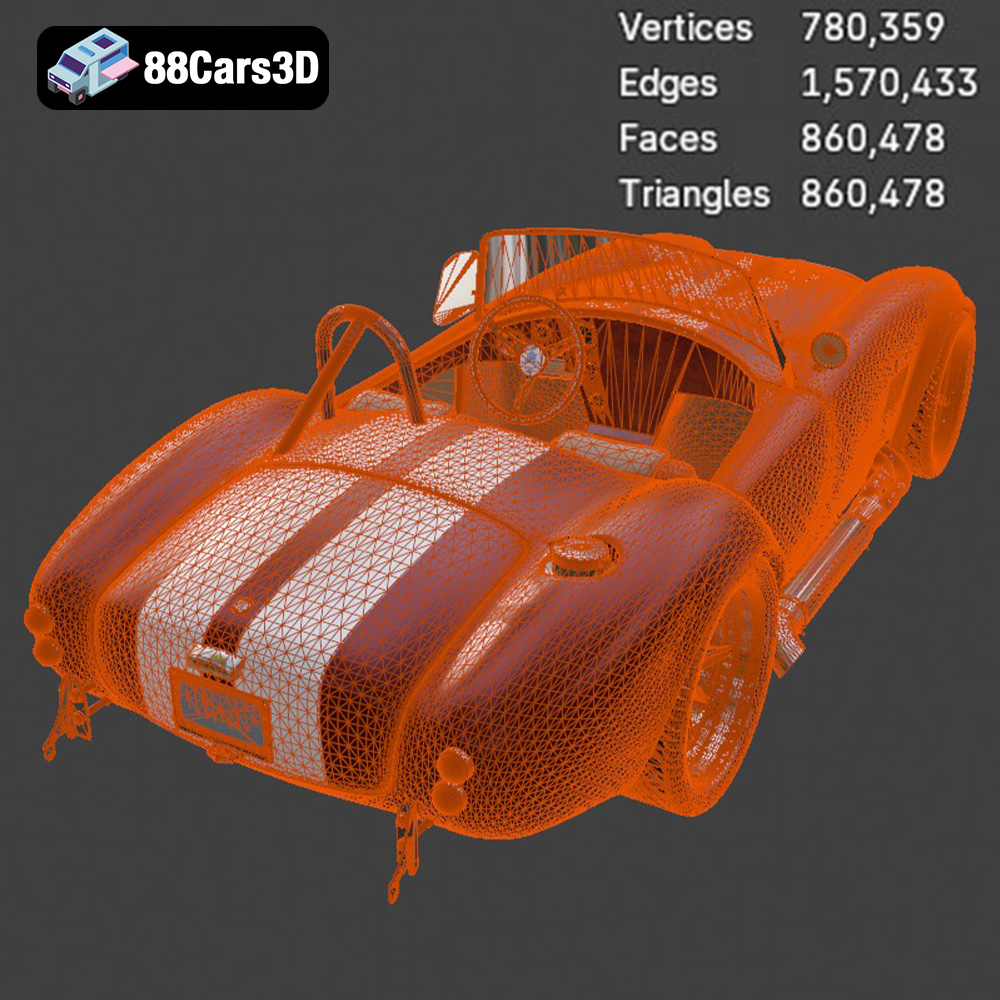
At the core of any great 3D model is clean, efficient topology. This refers to the arrangement of vertices, edges, and faces that form the model’s surface. For 3D car models, especially those intended for real-time applications like games or AR/VR, managing polycount (the number of polygons or triangles) is critical. High-end rendering might allow for millions of polygons to capture every nuance, while game assets require careful optimization to maintain performance without sacrificing visual fidelity.
Beyond the raw geometry, it’s the materials and textures that breathe life into a 3D car model. Modern rendering relies heavily on Physically Based Rendering (PBR) workflows, which simulate how light interacts with surfaces in the real world.
A static model is a good start, but truly professional 3D car models are built with functionality in mind. This includes real-world scale accuracy and preparing components for animation.
High-quality 3D car models are incredibly versatile assets, serving as the backbone for diverse professional applications. The Ford Cobra 3D Model, with its optimized geometry and multi-format availability from 88cars3d.com, is an exemplary asset designed to slot effortlessly into various pipelines, from cinematic rendering to interactive gaming experiences.
For game developers, 3D car models are central to racing simulators, open-world games, and even virtual showrooms. Performance is key, and the balance between visual fidelity and polycount is a constant challenge. The Ford Cobra model, described as “game-ready & optimized” with 860,478 triangles, hits this sweet spot.
Augmented Reality (AR) and Virtual Reality (VR) are revolutionizing how we interact with products, and automotive is a prime candidate. High-fidelity 3D car models enable breathtaking virtual showrooms, interactive configurators, and realistic driving simulations.
In the realm of advertising, film, and architectural visualization, 3D car models are used to create photorealistic images and animations. Here, the emphasis is often on maximum detail and realistic material simulation.
The Ford Cobra 3D Model from 88cars3d.com is not merely a digital representation; it’s a meticulously engineered asset built to professional standards. A closer look at its technical specifications reveals the depth of its craftsmanship and its readiness for demanding projects.
The exterior of any classic car model needs to be instantly recognizable and faithful to its real-world counterpart. The Ford Cobra model excels in this area:
The interior of a vehicle, especially for first-person experiences, requires just as much attention as the exterior. The Ford Cobra’s cockpit details are designed for immersion:
Beyond aesthetics, the model’s underlying technical specifications are what truly make it a professional-grade asset:
The utility of high-quality 3D car models extends beyond the digital realm. With advancements in 3D printing technology, these digital assets can be transformed into tangible objects, enabling physical prototyping, collectible models, and detailed display pieces. The Ford Cobra 3D Model, with its comprehensive format support, is perfectly suited for this transition, including its dedicated .stl output for 3D printing hobbyists and professionals alike.
The .stl format is the universal language of 3D printing. When preparing a 3D car model for physical output, the digital mesh needs to be clean, manifold (watertight), and appropriately scaled. The Ford Cobra’s detailed topology translates exceptionally well into a printable mesh.
Successful 3D printing is not just about having a good model; it’s about optimizing the print settings to achieve the desired outcome. The Ford Cobra’s guidelines provide an excellent starting point:
Once printed, the journey isn’t over. Post-processing is where the model truly comes to life:
A truly valuable 3D asset is one that can be adapted and repurposed across various projects and iterations. The Ford Cobra 3D Model exemplifies this flexibility, offering extensive customization options and a design philosophy that ensures longevity in your digital library. This aspect is crucial for professionals seeking to maximize their investment in 3D car models.
The ability to customize a 3D model allows artists and developers to tailor it precisely to their project’s unique needs, offering creative freedom and visual distinctiveness. The Ford Cobra model comes with inherent flexibility:
In the rapidly evolving landscape of 3D technology, investing in assets that remain relevant and usable over time is paramount. The Ford Cobra 3D Model is designed with this longevity in mind.
By offering such extensive customization and being built on solid technical foundations, the Ford Cobra 3D Model from 88cars3d.com provides not just an asset, but a versatile tool that can evolve with your creative and technical demands, ensuring it remains a valuable part of your digital toolkit for a long time.
The journey through the creation and application of high-quality 3D car models reveals a fascinating blend of artistic passion and technical precision. From the intricate detailing of every curve and panel to the rigorous optimization for real-time performance, a truly exceptional 3D automotive asset is a testament to skilled craftsmanship.
We’ve explored the critical importance of understanding various file formats, each serving a unique purpose in the vast ecosystem of 3D production. We’ve delved into the artistry and science behind crafting these models, emphasizing clean topology, realistic materials, and animation-ready components. Furthermore, we’ve seen how these versatile assets are indispensable across professional workflows, empowering game developers to build immersive worlds, AR/VR creators to craft interactive experiences, and visualization artists to produce stunning photorealistic renders. Even the tangible world of 3D printing benefits profoundly from these digital masterpieces.
The Ford Cobra 3D Model stands as a shining example of this excellence. Its meticulous detail, optimized polycount, and broad format compatibility make it an invaluable asset for anyone looking to integrate a classic American muscle car into their next project. Whether you’re aiming for a vintage racing simulator, an immersive virtual showroom, or a high-impact advertising campaign, this model provides the technical foundation and visual fidelity you need to succeed.
For professionals seeking top-tier 3D car models that blend historical accuracy with modern optimization, 88cars3d.com offers a curated selection designed to elevate your projects. Investing in assets of this caliber means investing in efficiency, quality, and the limitless potential of 3D visualization.
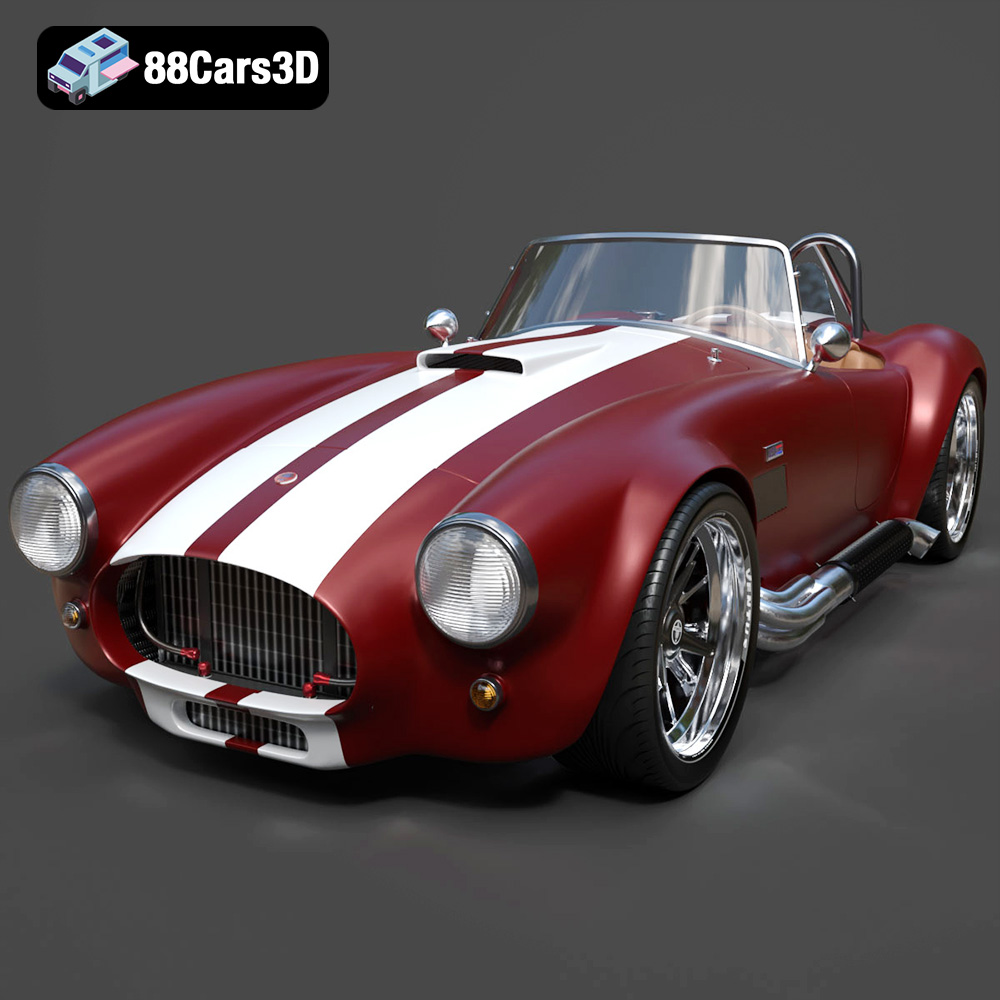
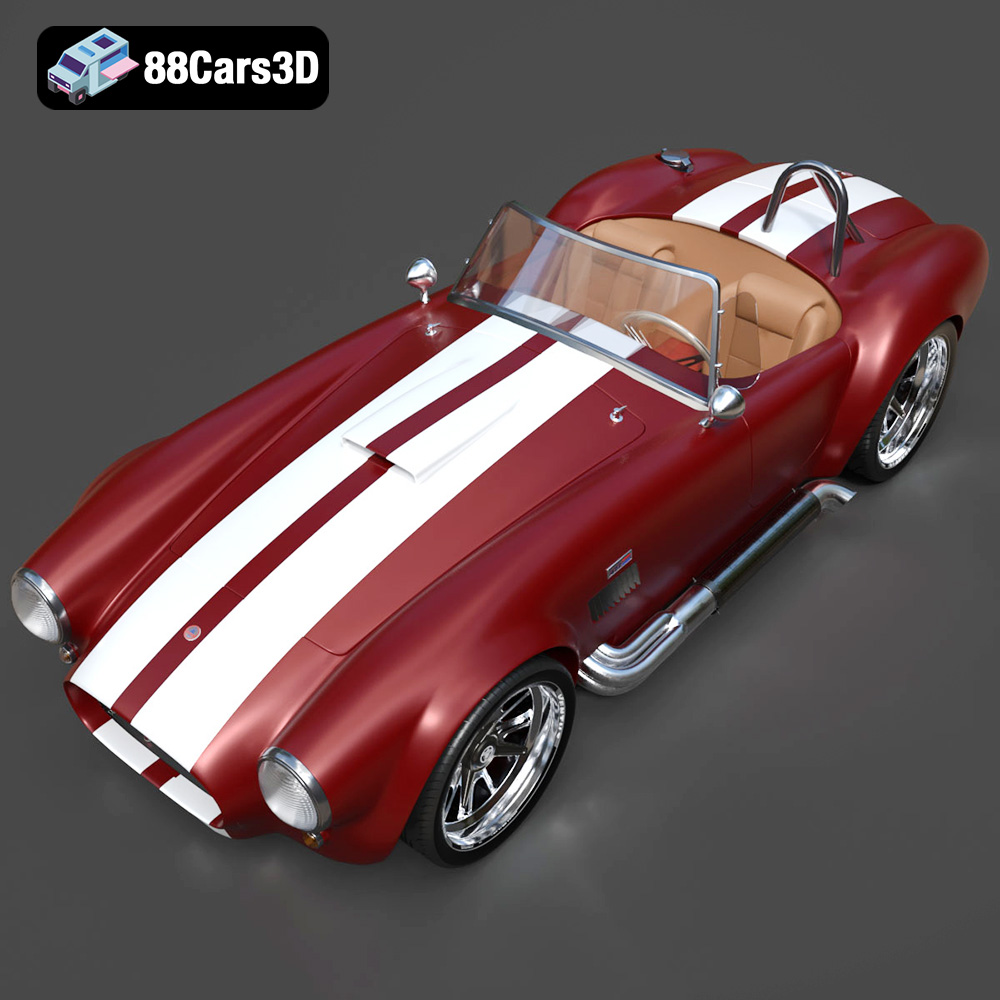
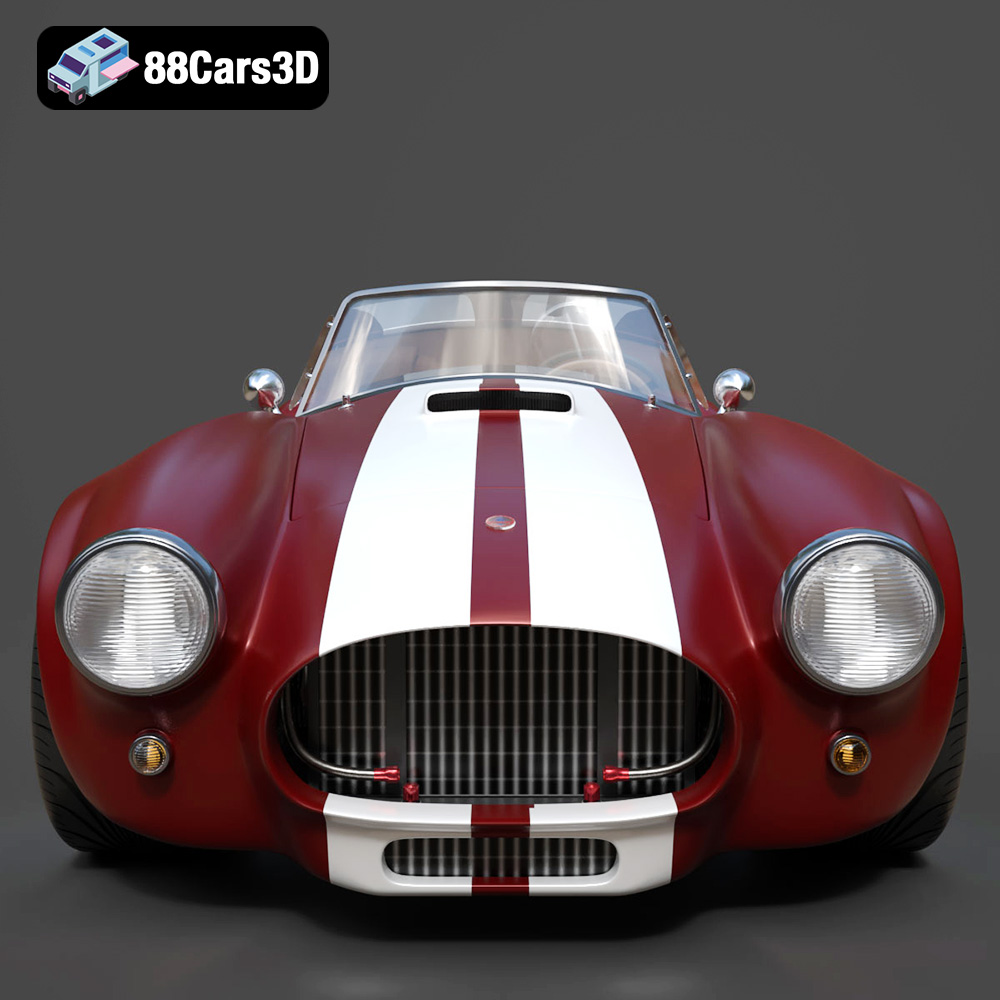
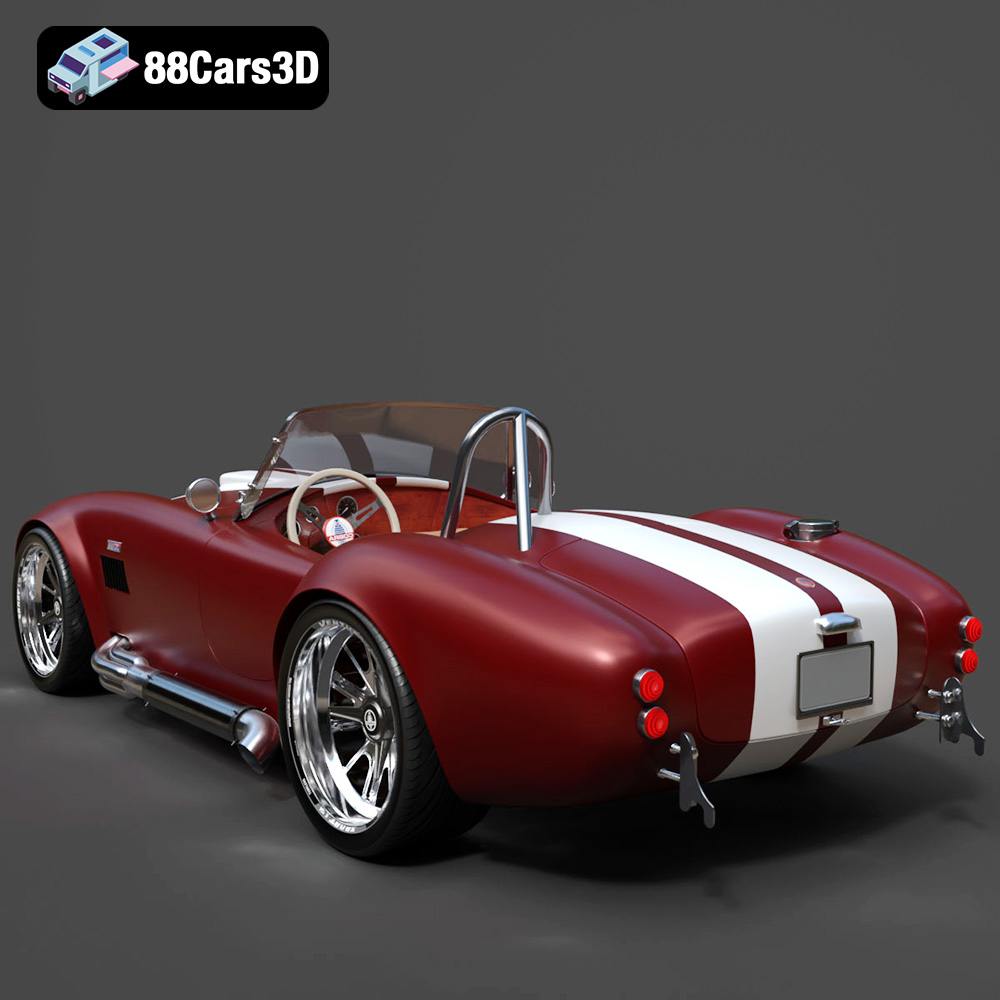
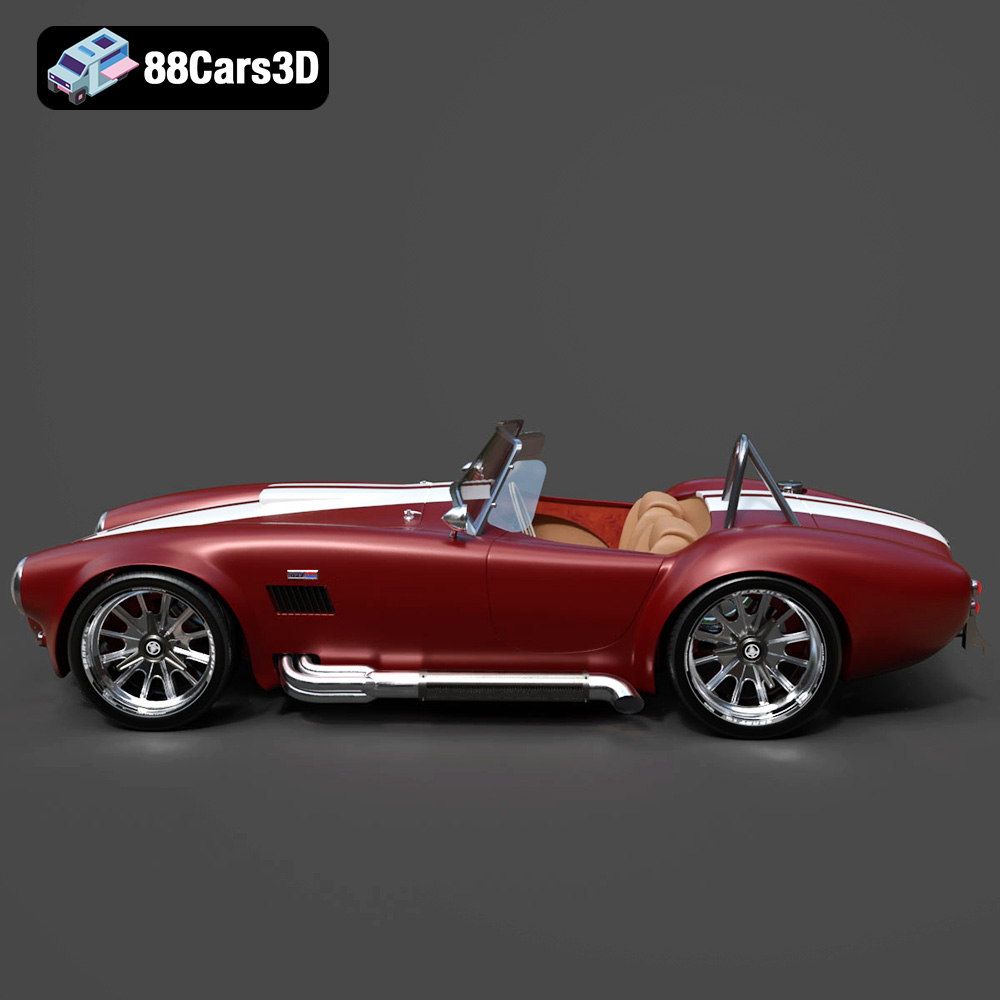
The Ford Cobra represents the pinnacle of classic American muscle, combining lightweight roadster design with immense V8 performance. Known for its iconic flared fenders, aggressive wide stance, signature side-exit exhausts, and legendary racing heritage, this vehicle is a true automotive masterpiece that captures the essence of 1960s sports cars. This meticulously crafted 3D model features a highly detailed topology with 860,478 triangles. It ensures stunning visual fidelity and game-ready optimization, making it an exceptional asset for high-end rendering, game development, AR/VR environments, and detailed animation work. Perfect for classic car racing simulators, vintage automotive showcases, cinematic animations, and virtual reality garage experiences.
$57.99
.blend
.cobra
.fbx
.ford
.glb
.max
.obj
.ply
.rendering
.roadster
.sports car
.stl
.unreal
car-3d-model
classic-car
game asset
game-ready
low-poly
muscle-car
optimized
VR/AR