Get 20% OFF All Premium 3D & STL Models!

In the rapidly evolving world of 3D design, simulation, and game development, the demand for highly detailed, optimized, and versatile 3D models has never been greater. Whether you’re an architect visualizing a new urban landscape, a game developer crafting an immersive open-world experience, or an engineer simulating complex construction operations, the quality of your digital assets directly impacts the realism and performance of your projects. Specialized assets like heavy machinery, often overlooked for their complexity, are critical for lending authenticity to these environments.
It’s within this context that the Road Roller Vibratory Tandem 3D Model emerges as an exemplary asset. This isn’t just a generic model; it’s a meticulously crafted digital replica of an essential piece of construction equipment, designed to meet the rigorous demands of professional 3D workflows. Its robust double steel drums and articulated chassis are instantly recognizable on any construction site, and this model captures every nuance, from the powerful diesel engine housing to the specialized vibratory mechanism, all built for high-efficiency paving operations. As we delve into the technical intricacies and vast applications of such a model, we’ll explore how assets from platforms like 88cars3d.com empower creators to achieve unparalleled realism and efficiency.
When working with 3D models, understanding the various file formats is crucial. Each format serves a specific purpose, offering unique advantages for different stages of the production pipeline, from initial modeling to final rendering, game integration, or even 3D printing. The Road Roller Vibratory Tandem 3D Model, for instance, offers a comprehensive suite of formats, ensuring maximum compatibility and utility across a multitude of software and engines. Let’s break down these essential formats.
The .blend file is the native format for Blender, a powerful and free open-source 3D creation suite. When you download the Road Roller Vibratory Tandem as a .blend file, you’re getting a fully editable Blender scene. This means all the original mesh data, materials, textures, lighting setups, animation rigs (if applicable), and even camera positions are preserved. For artists who primarily work in Blender, this format offers the most flexibility for customization, tweaking shaders, adjusting topology, or integrating the model directly into existing Blender projects. It’s the ideal choice for deep manipulation and extending the model’s capabilities within its original ecosystem.
.fbx (Filmbox) is arguably the most widely used proprietary 3D file format for exchanging 3D data between different applications. Developed by Autodesk, it supports geometry, materials, textures, animation, and even skeletal deformation. This makes it an indispensable format for game development, especially for engines like Unreal Engine and Unity. When importing the Road Roller Vibratory Tandem .fbx into these engines, artists can expect a high degree of fidelity, with meshes, UVs, and materials translating cleanly. Its robust support for animation data also means that any pre-rigged or animated elements, such as the articulated steering joint or rotating drums, will transfer seamlessly, making it ideal for real-time pipelines.
The .obj (Wavefront Object) format is a universal standard for 3D geometry. While it’s an older format, it remains incredibly versatile due as it’s almost universally supported by 3D software. An .obj file primarily stores geometric data (vertices, normals, texture coordinates, and faces) and often references an accompanying .mtl (Material Template Library) file for basic material definitions. While .obj doesn’t support animation or advanced material properties, its widespread compatibility makes it excellent for cross-software transfers where pure mesh data is the priority. For the Road Roller model, .obj offers a reliable fallback for import into virtually any 3D application for rendering or further modeling.
.glb (GL Transmission Format Binary) is a modern, royalty-free format designed for efficient transmission and loading of 3D scenes and models. It’s particularly optimized for AR, VR, and browser-based 3D applications because it packages all assets (geometry, materials, textures, animations) into a single binary file, simplifying integration and reducing load times. For displaying the Road Roller in a web viewer, an AR app on a mobile device, or a lightweight VR experience, the .glb format provides an excellent balance of visual quality and performance.
The .stl (STereoLithography) format is synonymous with 3D printing. It represents a 3D model as a collection of unconnected triangular facets, defining only the surface geometry without color, texture, or other CAD attributes. While simple, this format is the standard input for most 3D printers and slicing software. The Road Roller Vibratory Tandem 3D Model specifically provides an .stl variant, catering to hobbyists and professionals looking to physically manifest the digital asset for display-scale models or dioramas. Careful preparation, as detailed in the product description, is key for successful prints.
.ply (Polygon File Format) is another format that stores 3D data, often used for scanned 3D objects. It supports properties like color, transparency, and surface normals per vertex or face, making it suitable for applications requiring more precision than .stl but without the complexity of .fbx. For certain CAD workflows, reverse engineering, or analytical purposes where precise mesh data is paramount, the .ply format for the Road Roller model ensures data integrity.
While not a universal file extension in the same way .fbx is, the inclusion of an .unreal file (often referring to a pre-packaged asset or project file ready for Unreal Engine) is a significant advantage. This implies that the Road Roller Vibratory Tandem has been specifically prepared and optimized for Unreal Engine, potentially including pre-configured materials, collision meshes, LODs (Levels of Detail), and blueprint setups. This saves countless hours for game developers, allowing for direct drag-and-drop integration into their projects, with immediate access to engine-ready assets tailored for real-time environments.
Finally, the .max file is the native format for Autodesk 3ds Max, one of the leading software packages for 3D modeling, animation, and rendering. Similar to the .blend file for Blender users, the .max file provides a fully editable 3ds Max project. This gives professionals working in 3ds Max full access to the model’s original scene structure, modifiers, materials, and any animation setups. It’s the optimal format for high-end rendering, complex animation sequences, and integration into existing 3ds Max visualization projects.
The essence of a truly valuable 3D model lies in its meticulous detail, efficient optimization, and versatility across diverse applications. The Road Roller Vibratory Tandem 3D Model exemplifies these qualities, offering a robust solution for a wide range of professional needs.
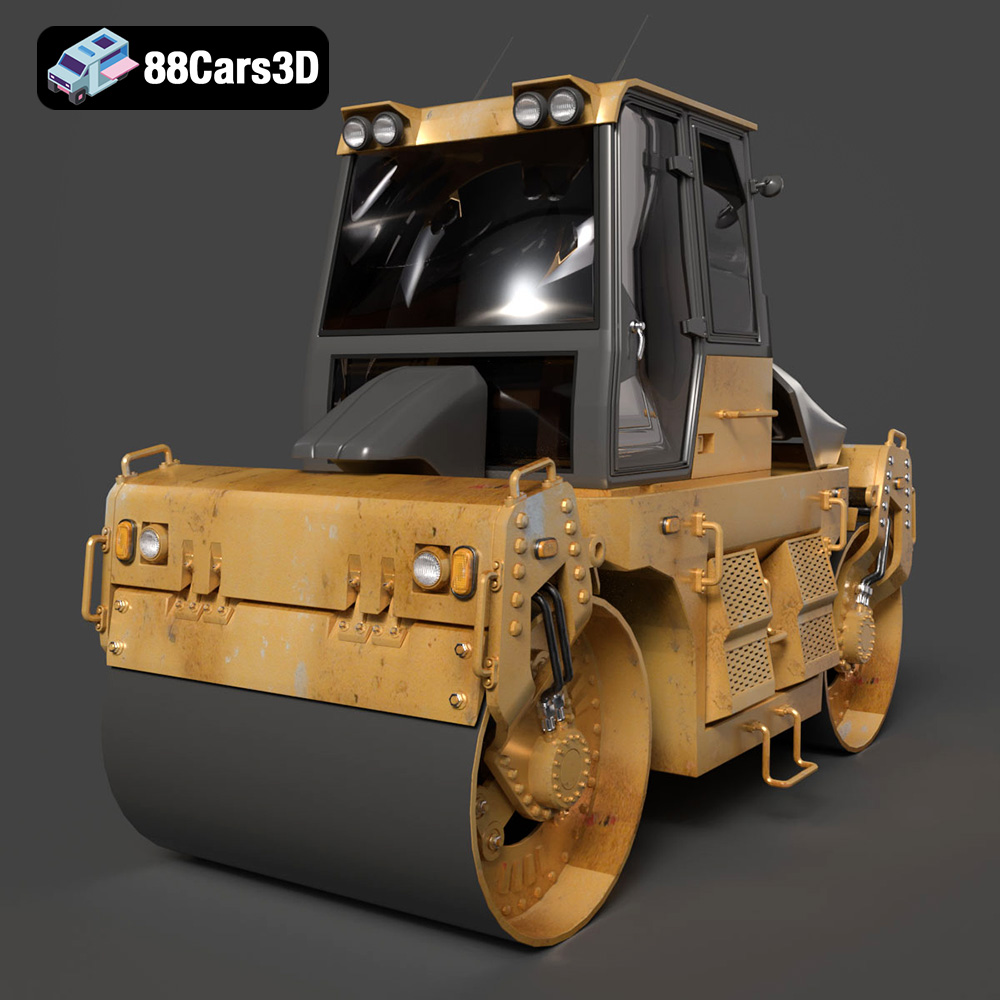
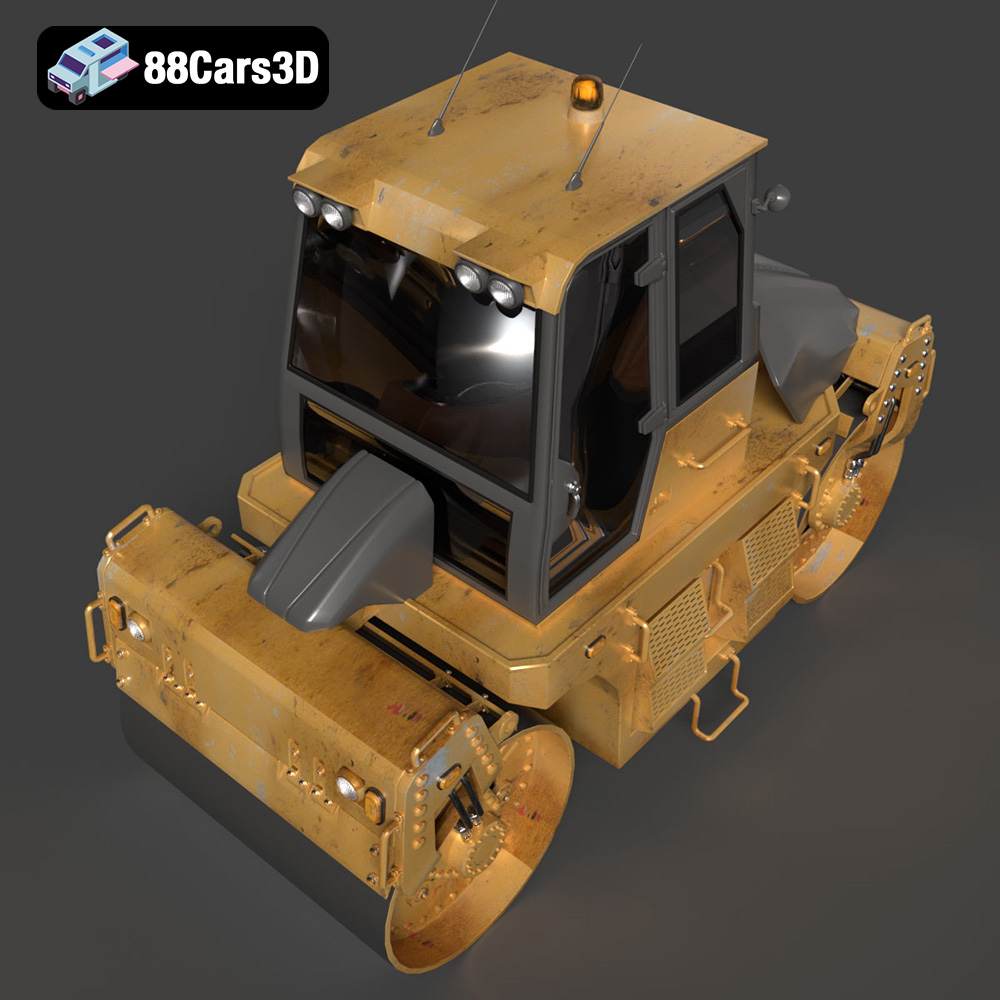
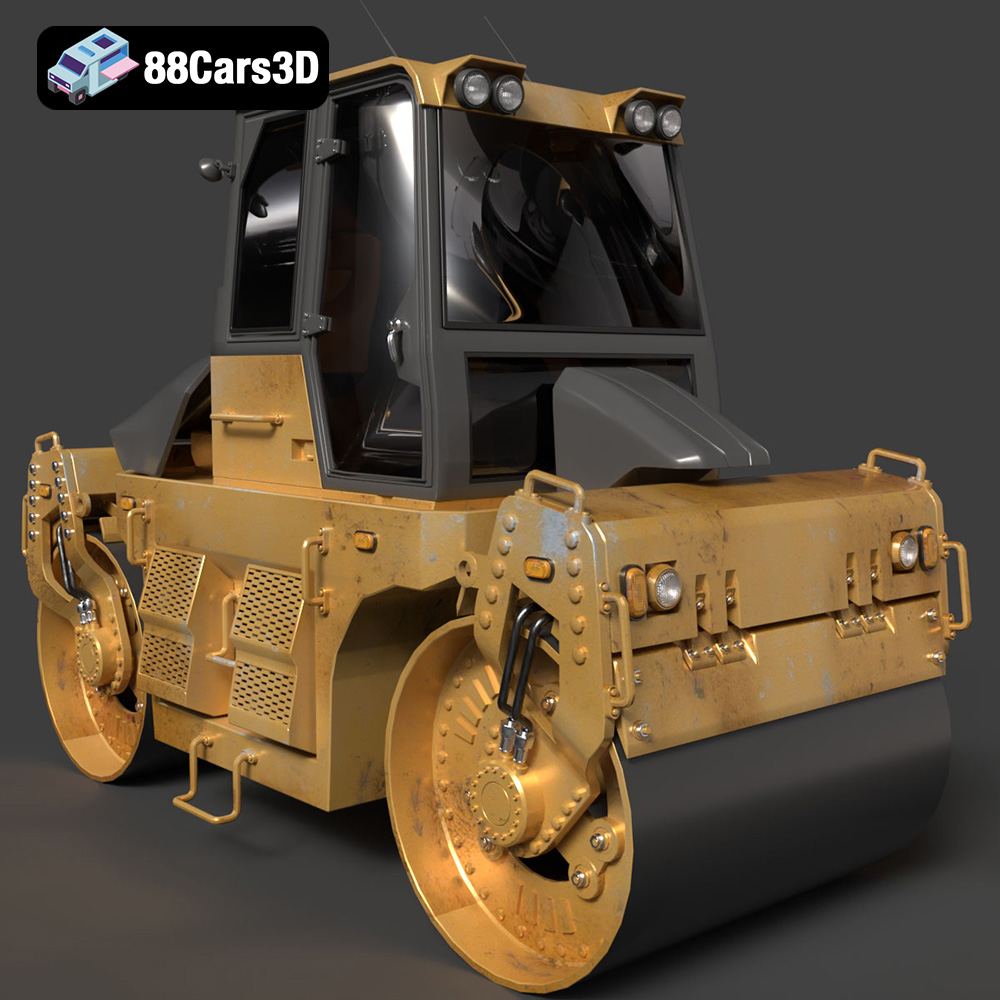
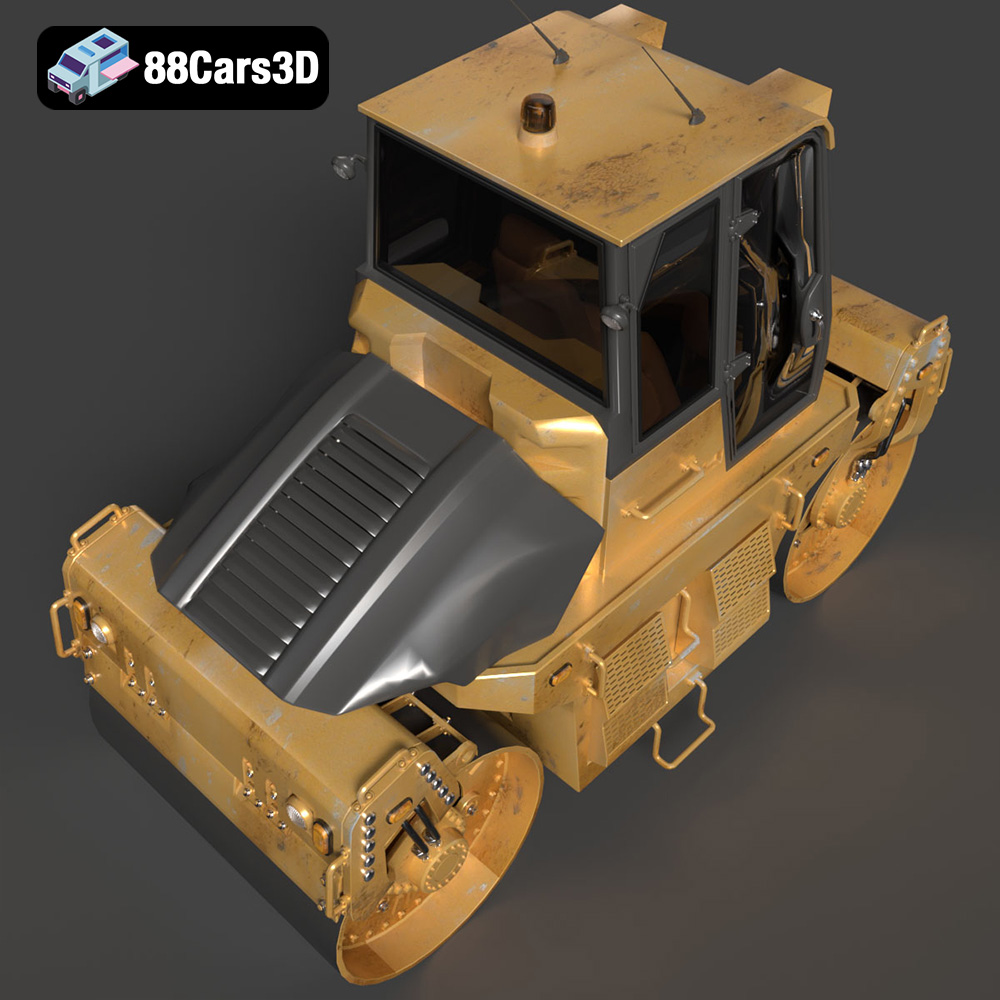
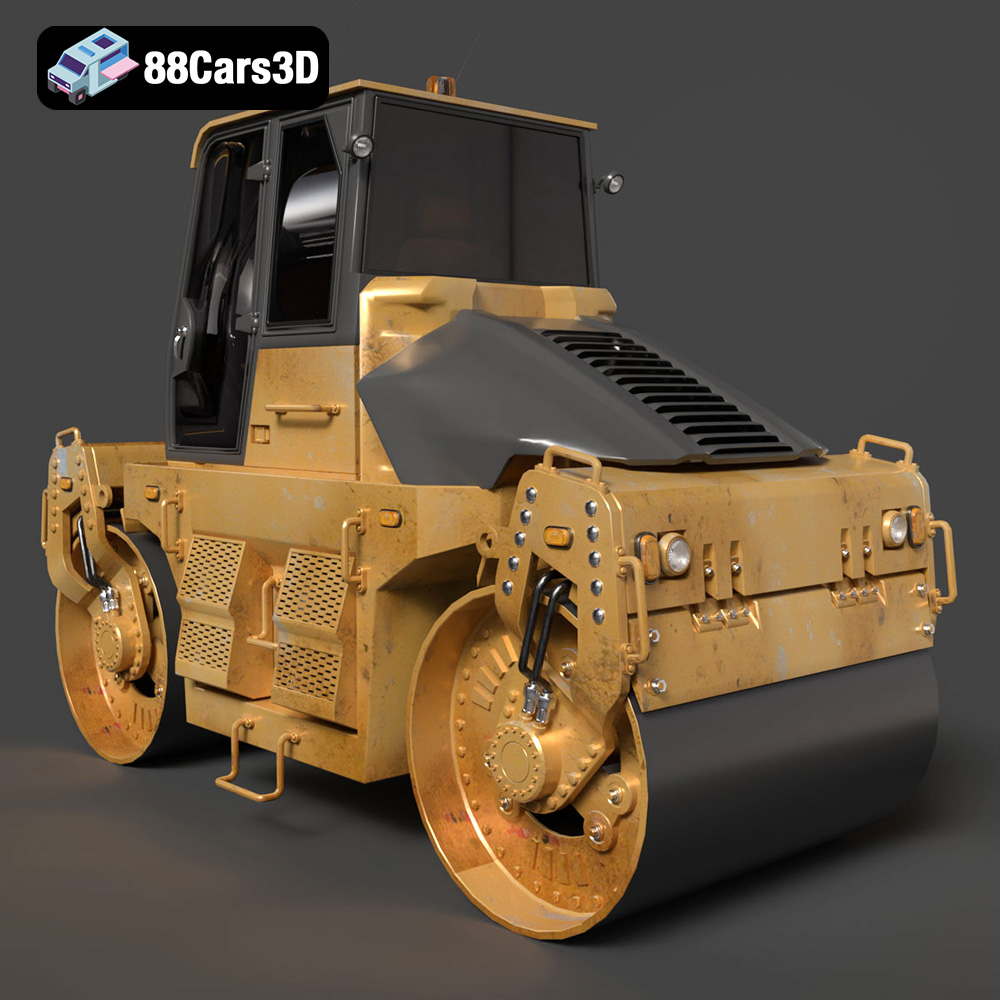
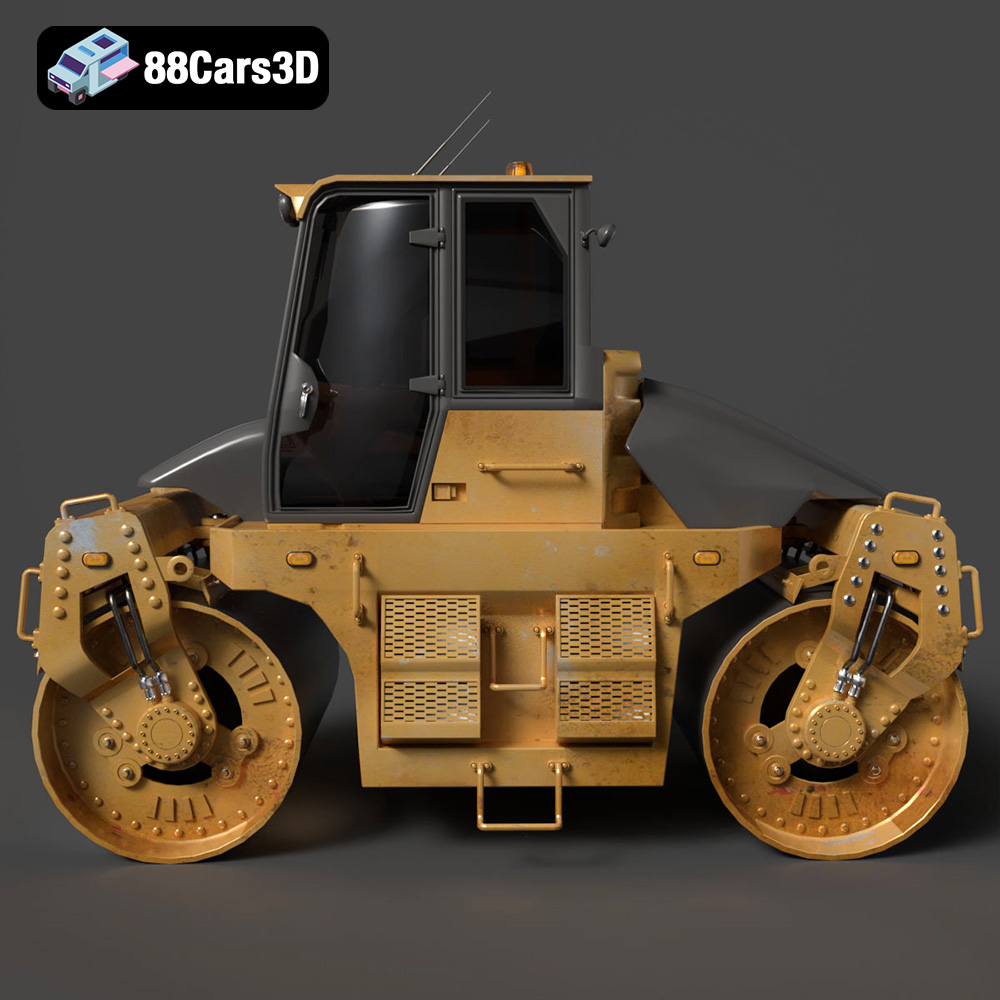
From the moment you inspect this model, the commitment to realism is evident. It accurately replicates the Road Roller Vibratory Tandem’s distinctive features, beginning with its authentic dual steel compacting drums, complete with subtle scraper mechanisms. These elements are not merely aesthetic; their separation allows for realistic animation, crucial for any simulation or dynamic rendering. The heavy-duty diesel engine housing is intricately detailed, featuring vents and realistic proportions that speak to the machinery’s power. Furthermore, industrial-grade work lights and safety beacons are included, adding functional realism for day-night cycle simulations or architectural renders. The articulated center steering joint, a hallmark of this type of heavy machinery, is faithfully reproduced with detailed hydraulic cylinders, underscoring the model’s suitability for complex motion studies and interactive simulations.
Even smaller details, like water spray system components and reservoir detailing, contribute to the overall authenticity, making the model ideal for close-up shots or highly realistic environmental scenes. This level of external fidelity ensures that whether the model is a focal point or part of a larger construction site diorama, it consistently holds up to scrutiny.
Beyond its impressive exterior, the Road Roller Vibratory Tandem 3D Model provides a fully realized interior, a critical feature for immersive experiences. The ergonomic operator seat boasts suspension detailing, while the heavy machinery steering wheel and control console are meticulously crafted. Artists will appreciate the detailed instrument cluster with industrial gauges, along with vibration, throttle, and directional control levers. This attention to interior detail is paramount for applications like construction simulators, where a first-person perspective (FPV) is essential. The optimized geometry ensures that even with a detailed cockpit, the model remains efficient for real-time rendering, providing a seamless and believable experience for the user.
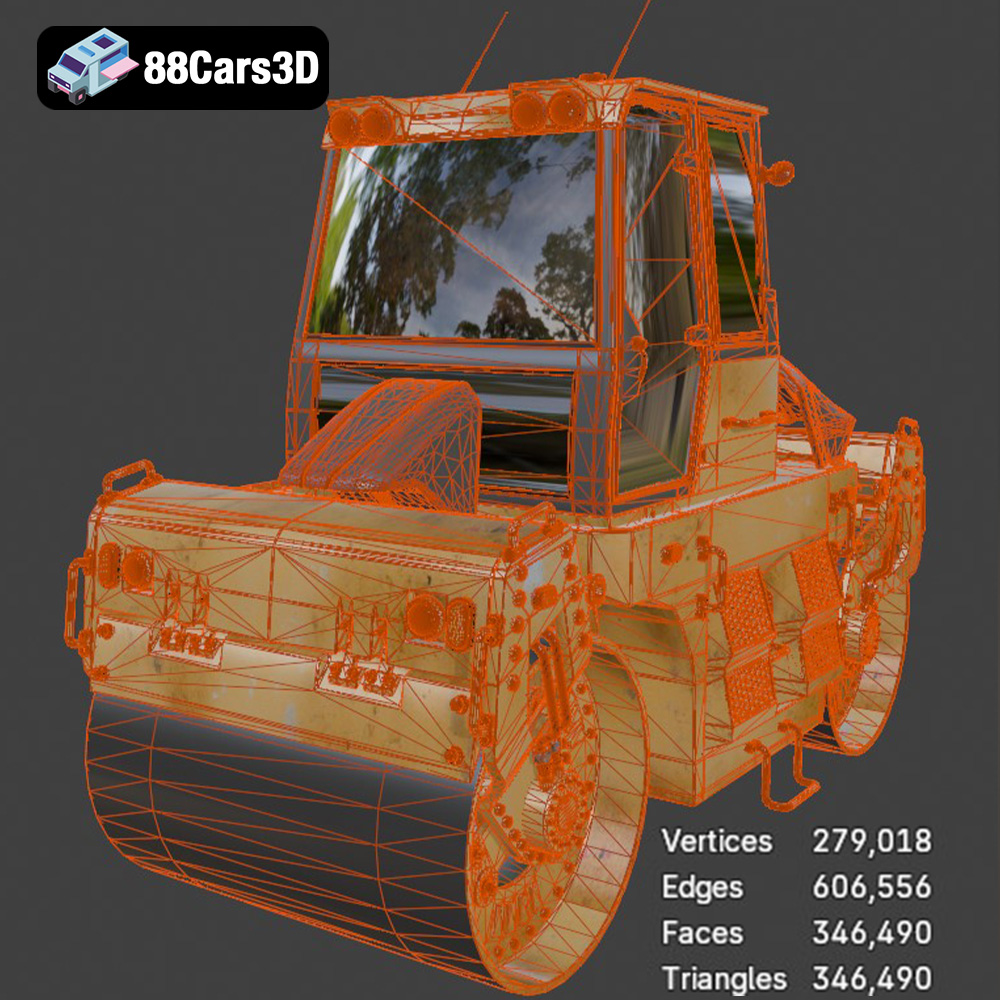
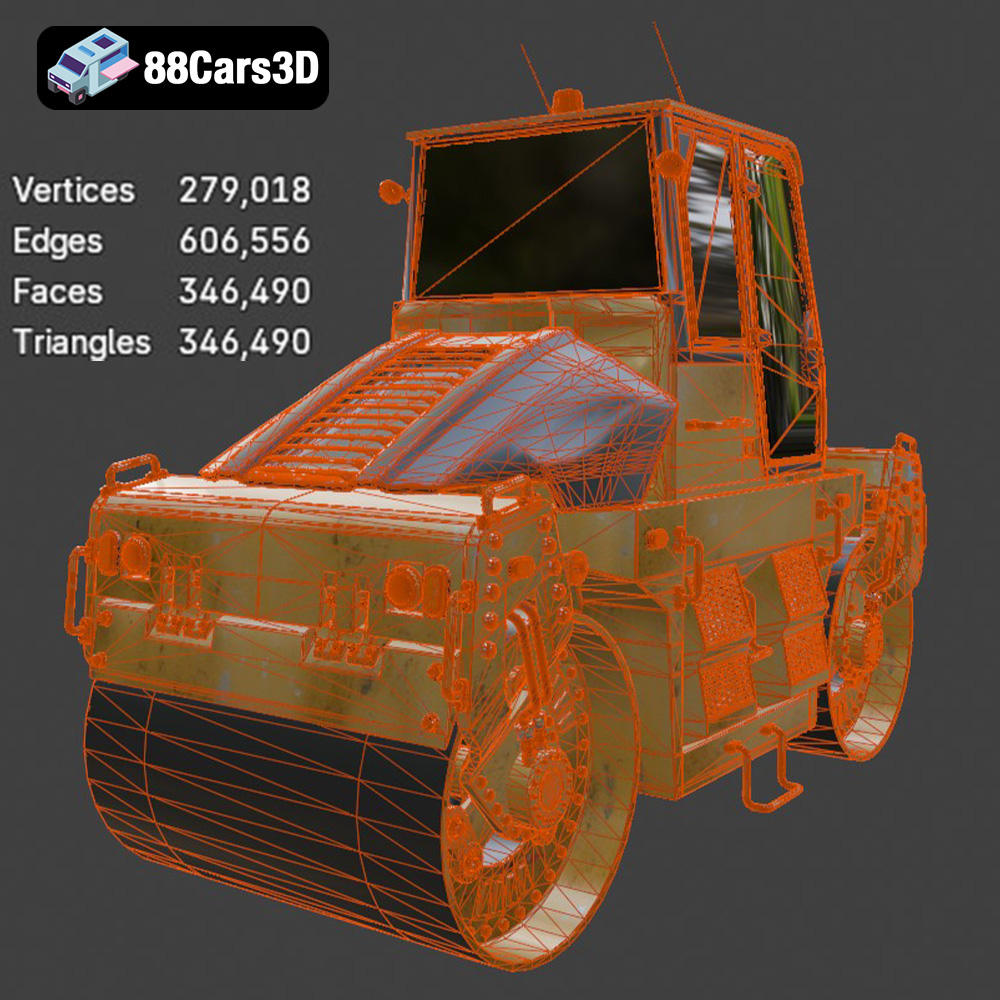
Underpinning the visual fidelity of this 3D car model is its technical prowess. With an optimized topology of exactly 346,490 triangles, the model strikes a perfect balance between high-end visual realism and efficiency. This “game-ready” optimization is crucial for smooth performance in real-time engines like Unreal and Unity, where polycount management directly impacts frame rates. Crucially, the model boasts real-world scale accuracy, based on actual vehicle chassis, ensuring that it integrates seamlessly into projects requiring precise dimensional consistency, such as architectural visualization or engineering simulations. Furthermore, proper pivot setup for steering articulation, drum rotation, and mechanical movement means that artists spend less time rigging and more time animating, providing a significant advantage in production pipelines. This technical thoughtfulness makes it a premium game asset.
The versatility of a well-crafted 3D model like the Road Roller Vibratory Tandem extends across numerous professional domains. Its optimized nature and attention to detail make it a powerhouse for everything from interactive games to critical visualization projects.
For game developers, this model is a treasure trove. Its optimized polycount of 346,490 triangles hits the sweet spot for integration into open-world games, where performance is paramount. Imagine a bustling city builder where players manage infrastructure projects, or a detailed construction simulator where every piece of heavy machinery operates with realistic precision. The separate drums, articulation joints, and steering components are prepped for animation, allowing developers to create dynamic, believable movement. With its “game-ready” label and inclusion of .fbx and .unreal formats, integrating this road roller into Unity or Unreal Engine projects becomes a streamlined process, saving valuable development time. It provides a foundational asset for creating engaging and realistic virtual construction sites.
Beyond gaming, the Road Roller Vibratory Tandem 3D Model is an invaluable asset for architectural rendering and industrial visualization. Architects can use it to populate their proposed infrastructure projects, such as highways, commercial parking lots, or urban developments, lending a sense of scale and realism to their visualizations. Engineers can integrate it into simulations of construction processes, demonstrating project phases or site logistics. The model’s high detail allows for stunning close-up renders, showcasing material finishes and mechanical intricacies in marketing materials or client presentations. Its real-world scale accuracy ensures that it fits perfectly within precise digital environments, enhancing the credibility of any visual output.
The burgeoning fields of Augmented Reality (AR) and Virtual Reality (VR) benefit immensely from optimized 3D assets. For virtual training simulations, the detailed cockpit features, including the ergonomic operator seat, steering wheel, and control levers, offer a realistic environment for future operators to familiarize themselves with the machinery without risk. Imagine VR safety configurators where users can interact with the road roller in a simulated construction zone, learning best practices. Mobile AR experiences can bring this heavy machinery into the real world, allowing stakeholders to visualize it on a construction site before breaking ground. The .glb format, specifically designed for efficient web and immersive display, makes this model an ideal candidate for such applications, ensuring smooth performance and rapid deployment.
A static model, however detailed, only tells half the story. The true potential of a professional-grade 3D asset like the Road Roller Vibratory Tandem is unlocked through animation and customization, allowing it to become a dynamic element within any scene.
One of the standout technical advantages of this model is its proper pivot setup for steering articulation, drum rotation, and mechanical movement. This is not a trivial detail; it means the model is prepped for realistic animation right out of the box. Imagine a cinematic rendering where the road roller smoothly navigates a curve, its articulated joint bending convincingly, and its heavy drums rotating with an authentic rumble. In game engines, this setup simplifies the integration of physics-based movements or pre-baked animations, ensuring that the heavy machinery operates as it would in the real world. This level of preparation drastically reduces the time and effort an artist or developer needs to invest in making the model truly come alive.
Customization is key to integrating any 3D asset into diverse visual contexts. The Road Roller Vibratory Tandem 3D Model offers ample opportunity for modification. Artists can easily change body colors, opting for standard construction yellow, safety orange, or custom fleet finishes to match a specific brand identity. Modifying drum textures allows for depicting clean, brand-new steel or heavily worn, asphalt-coated surfaces, reflecting different stages of use or environmental conditions. Adjusting material finishes—from matte to gloss, or adding heavy weathering—can dramatically alter the model’s appearance, from factory-fresh to battle-hardened. Furthermore, adapting lighting for daytime or nighttime construction environments can change the mood and realism of a scene. This flexibility ensures the model can be tailored to fit virtually any artistic vision or project requirement, enhancing its value as a reusable game asset.
The journey of a 3D model doesn’t always end on a screen. For enthusiasts and professionals alike, the ability to transition from a digital design to a tangible object through 3D printing offers a unique dimension to asset utilization. The Road Roller Vibratory Tandem 3D Model is specifically prepared for this exciting possibility, thanks to its inclusion of the .stl format and detailed printing guidelines.
Converting a complex digital model into a successful physical print requires careful consideration. The .stl format is the industry standard for 3D printing, but the quality of the print often hinges on the model’s internal structure and how it’s prepared. For this Road Roller model, the recommendation of scale (1:24, 1:35, 1:50) provides a clear starting point for hobbyists and diorama creators. These scales are common in model-making, ensuring compatibility with existing collections or scenes. The detailed advice on wall thickness (1.2–2.0 mm) and infill (20–30%) is crucial for achieving a robust print that is neither too fragile nor unnecessarily heavy and material-intensive. Understanding these parameters is a hallmark of a professional-grade 3D model designed for multi-faceted applications.
Beyond basic print parameters, the provided guidance on layer height (0.04–0.12 mm) and the strong recommendation for resin printing underscores the model’s capability for fine detail. Resin printers excel at capturing intricate features, which is essential for heavy machinery with numerous small parts like hydraulic cylinders, vents, and interior cockpit elements. Critically, the need for supports for detailed parts like the cabin frame, articulation joint, and mirrors highlights the model’s complexity and the practical considerations for achieving a clean print. Proper print orientation, such as printing the frame angled for structural integrity and drums separately, demonstrates thoughtful preparation for minimizing support material and maximizing part strength. Finally, post-processing advice—sanding, primer, and authentic factory colors with metallic finishes—guides the user toward achieving a professional, display-worthy physical replica. This comprehensive approach to 3D printing makes the Road Roller Vibratory Tandem a truly versatile 3D car model, even when it’s not a car!
The world of 3D content creation thrives on quality, versatility, and efficiency. The Road Roller Vibratory Tandem 3D Model stands out as a prime example of an asset that delivers on all fronts. From its meticulously detailed exterior and immersive cockpit to its game-ready optimization and extensive file format support, it’s engineered to integrate seamlessly into a myriad of professional workflows. Whether you’re aiming to create hyper-realistic automotive rendering, develop engaging game assets for a construction simulator, or bring a tangible model to life through 3D printing, this model provides the foundation for exceptional results.
Its comprehensive technical specifications, including optimized polycount, real-world scale, and articulated pivot setups, ensure high performance and ease of use across major 3D software and real-time engines. The inclusion of formats like .blend, .fbx, .obj, .glb, .stl, .ply, .unreal, and .max signifies a commitment to universal compatibility, empowering artists and developers regardless of their preferred tools. As the digital landscape continues to expand, investing in high-quality assets from reputable marketplaces like 88cars3d.com is not just a convenience; it’s a strategic decision that fuels creativity and elevates the final product.
The Road Roller Vibratory Tandem is an essential piece of heavy construction machinery, universally recognized for its robust double steel drums and articulated chassis. Designed to compact asphalt, gravel, and soil, this vehicle features distinctive industrial styling, a powerful diesel engine housing, and a specialized vibratory mechanism built for high-efficiency paving operations. This highly detailed 3D model boasts an optimized topology with exactly 346,490 triangles, delivering remarkable visual fidelity while remaining efficient for real-time applications. Whether used in high-end game development, architectural visualization, or immersive VR training simulations, the model’s precise geometry and realistic material separation provide an exceptional asset for developers and 3D artists alike.
$35.50
.blend
.fbx
.glb
.max
.obj
.ply
.rendering
.stl
.unreal
car-3d-model
construction-equipment
game asset
game-ready
heavy-machinery
optimized
road-roller
vibratory-tandem
VR/AR