Get 20% OFF All Premium 3D & STL Models!

In the rapidly evolving landscape of 3D visualization, game development, and immersive experiences, the demand for exceptionally detailed and optimized 3D car models has never been higher. Whether for a photorealistic rendering, an interactive game environment, or an augmented reality application, the quality of the digital asset directly impacts the final product’s realism and user engagement. This deep dive explores the critical role of premium 3D car models in today’s professional pipelines, using a truly iconic vehicle as our central example: the BMW M5 2008 (E60).
The BMW M5 E60 generation, with its Formula 1-inspired naturally aspirated V10 engine and distinctive Chris Bangle-era styling, remains a revered masterpiece of automotive engineering. It’s a vehicle that perfectly blends executive luxury with supercar performance, making it a compelling subject for digital artists and developers alike. Recreating such a legendary car in three dimensions requires an intricate understanding of design, proportion, and technical detail.
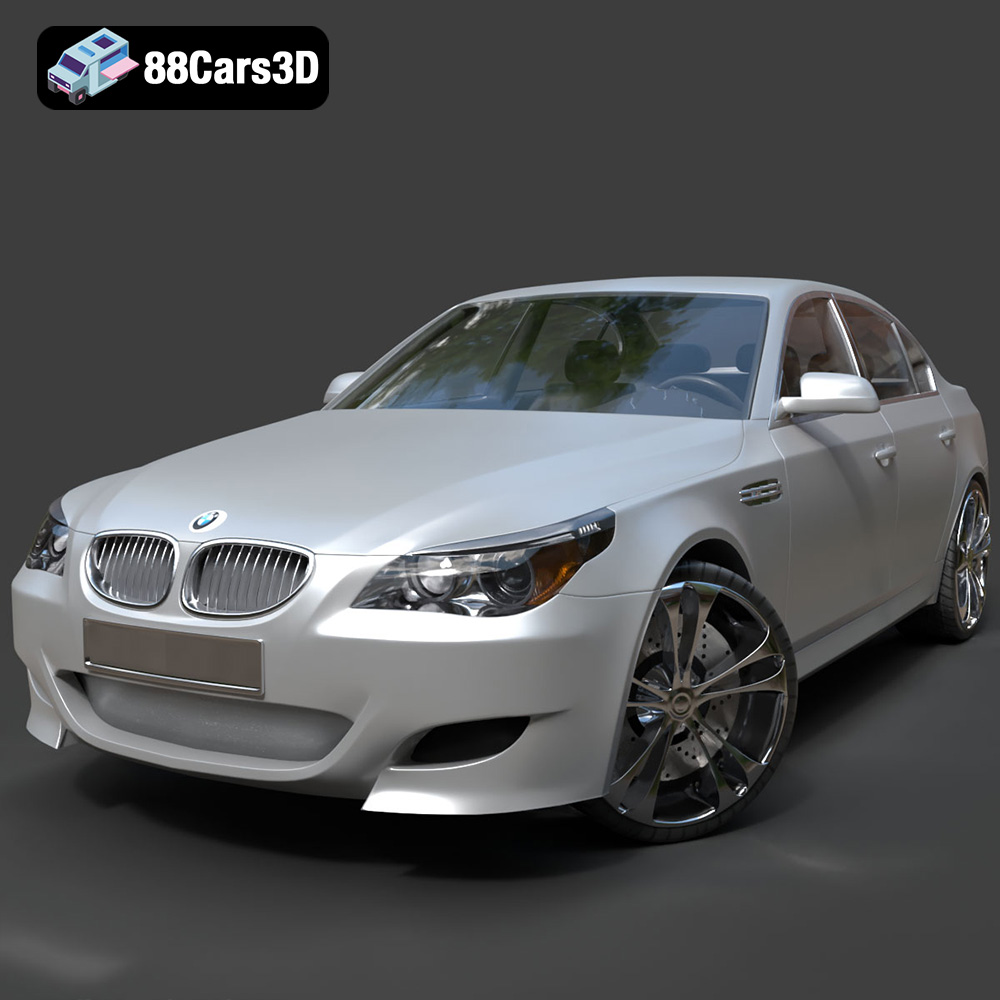
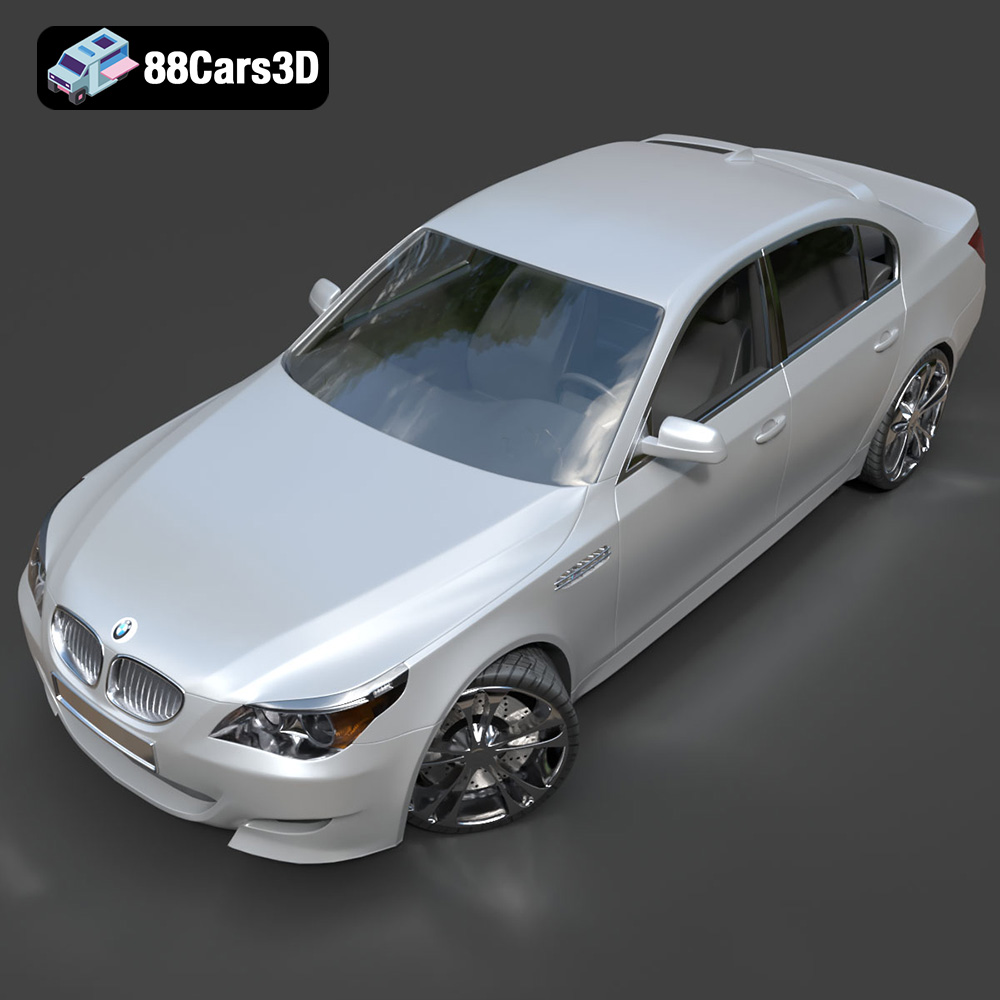
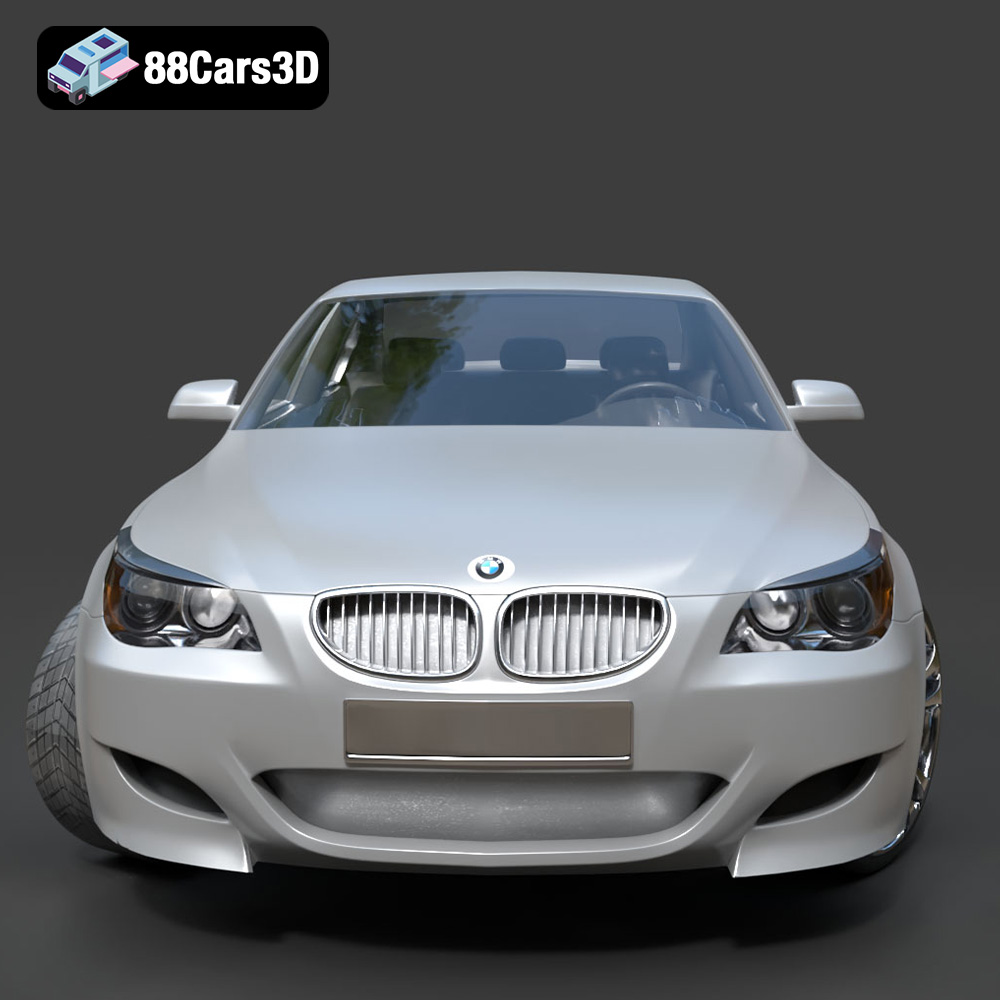
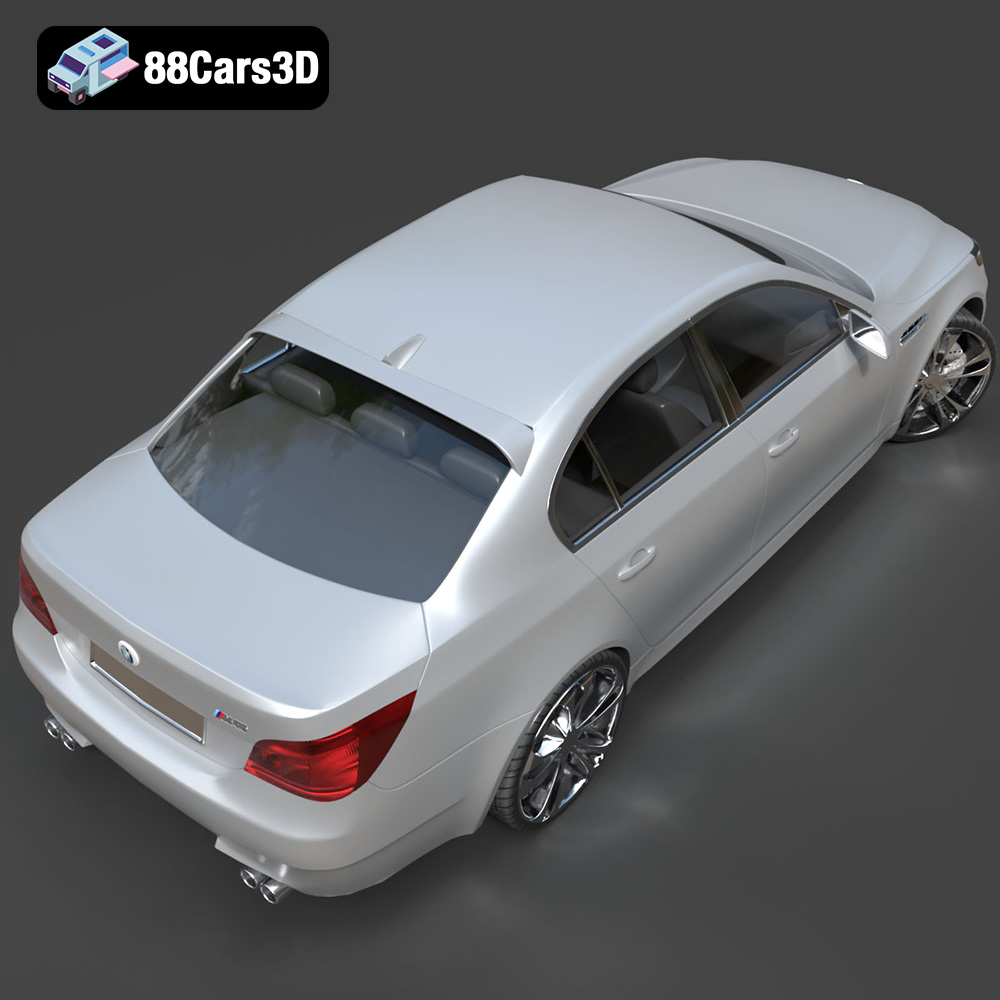
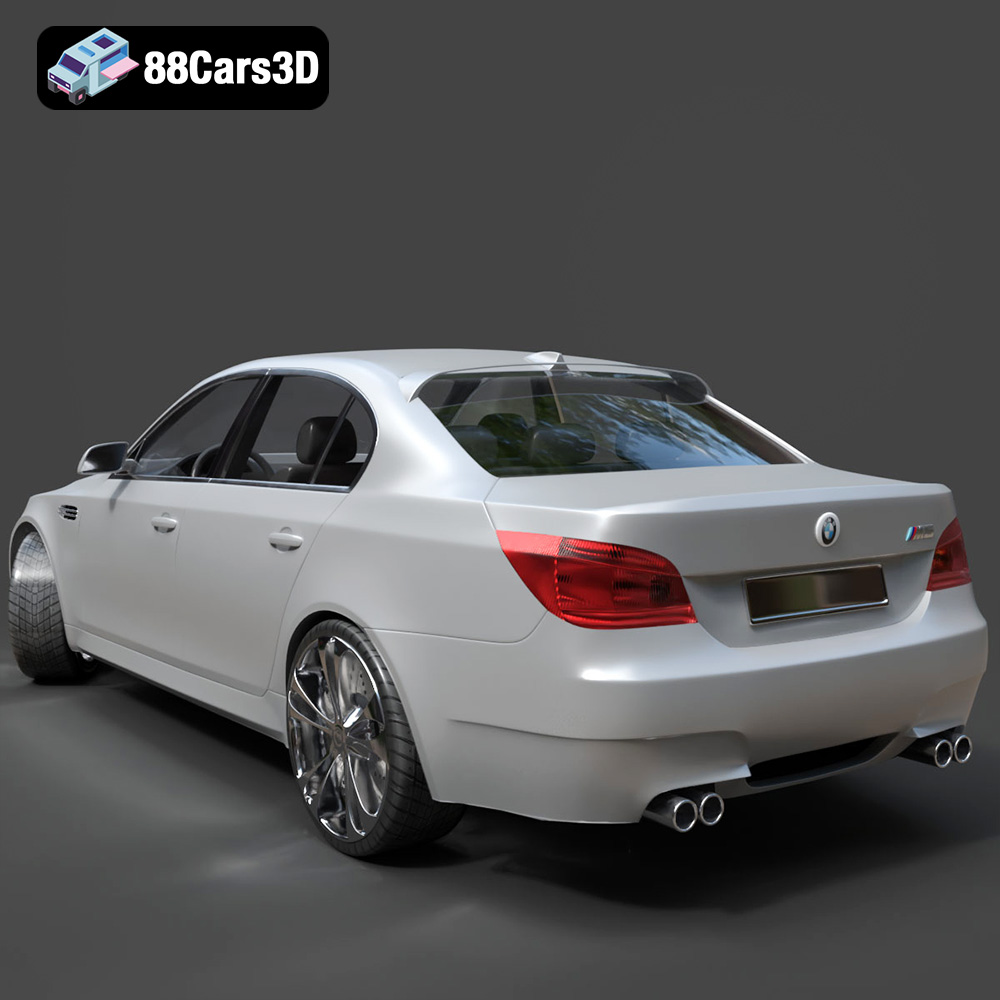
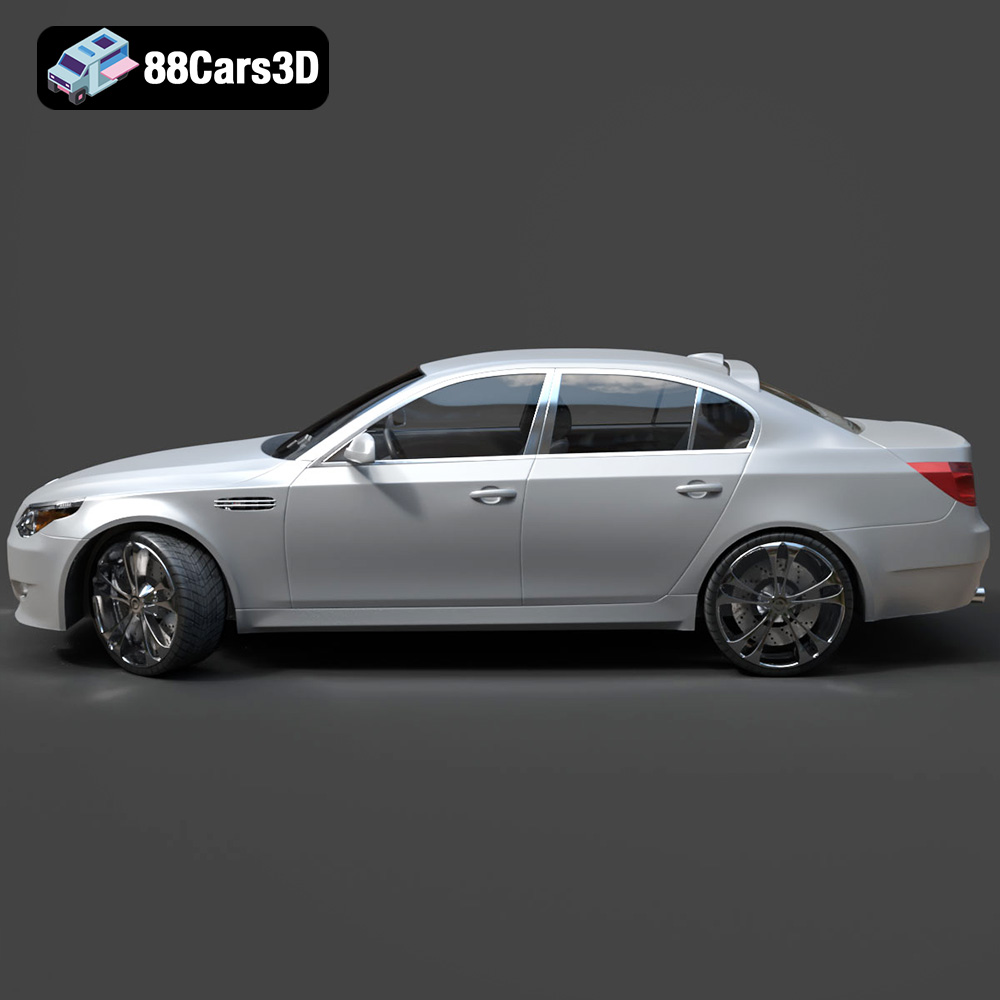
Capturing the essence of the BMW M5 2008 in a 3D model means faithfully reproducing its aggressive front fascia, signature quad exhaust, flared wheel arches, and the iconic kidney grilles that define its presence. Beyond the exterior, the interior’s heavily bolstered M sport leather seats, the thick-rimmed multi-function steering wheel with paddle shifters, and the intricate iDrive system all contribute to the car’s immersive character. A high-quality 3D model, such as the one available at 88cars3d.com, encapsulates this heritage, offering creators a foundation that is both visually stunning and technically robust.
The journey from a physical vehicle to a digital asset involves meticulous modeling, texturing, and optimization. For a car as complex as the E60 M5, every curve, every vent, and every panel must be painstakingly recreated to maintain authenticity. This digital representation serves as a versatile tool, capable of being transformed into a high-speed racing simulation, integrated into an urban open-world environment, or showcased in a luxury virtual showroom. Its adaptability stems from its foundational quality – a well-structured topology that balances visual fidelity with performance efficiency, making it suitable for both cinematic renderings and real-time applications.
One of the most crucial aspects of working with 3D models, especially complex automotive assets like the BMW M5 2008, is understanding the various file formats available. Each format serves a specific purpose, offering different levels of compatibility, data retention, and optimization for various stages of a professional workflow. The BMW M5 2008 3D model comes with an impressive array of formats, ensuring maximum flexibility for any project.
The .blend file is Blender’s native format and is highly advantageous for artists working within the Blender ecosystem. It contains the entire scene data, including meshes, materials, textures, animations, cameras, lighting, and even physics simulations. For a detailed model like the BMW M5, a .blend file provides a fully editable Blender scene with all materials pre-configured. This allows artists to dive directly into customizing, animating, or rendering without needing to reconstruct complex shaders or hierarchies. It’s the ultimate format for maintaining creative control and leveraging Blender’s powerful toolset.
The .fbx (Filmbox) format is a proprietary file format owned by Autodesk, widely regarded as the industry standard for 3D data interchange. Its strength lies in its ability to store a comprehensive range of 3D data, including geometry, materials, textures, animations, and skeletal structures, while maintaining hierarchical relationships. For the BMW M5 3D model, .fbx is ideal for transferring the asset between different 3D software packages like 3ds Max, Maya, and Blender, and crucially, for integration into game engines like Unreal Engine and Unity. Its robust support for animation and scene hierarchy makes it perfect for real-time pipelines where performance and fidelity are paramount.
The .obj (Wavefront OBJ) format is one of the oldest and most widely supported 3D file formats. It’s a universal format known for its simplicity and excellent cross-software compatibility. An .obj file primarily stores geometric data (vertices, normals, texture coordinates, and faces) and can reference external .mtl (material) files for basic material properties and textures. While it doesn’t support animation or scene hierarchies as robustly as .fbx, it’s a reliable choice for static models, ensuring the BMW M5’s raw geometry can be opened in virtually any 3D application. Its simplicity makes it excellent for arch-viz or simple rendering tasks where the mesh itself is the primary concern.
The .glb (GL Transmission Format Binary) is a relatively newer format that has rapidly gained traction, especially in the realms of AR, VR, and web-based 3D applications. It’s a self-contained, binary version of the glTF format, meaning all textures, materials, and animations are embedded directly within a single file. This makes .glb highly optimized for fast loading and efficient transmission over the web, making it perfect for showcasing the BMW M5 in online configurators, mobile AR experiences, or browser-based virtual showrooms. Its optimization for real-time rendering also ensures a smooth, high-quality visual experience across various platforms.
The .stl (STereoLithography) format is almost exclusively used for 3D printing and rapid prototyping. It describes only the surface geometry of a 3D object using a collection of triangular facets. While it lacks color or texture information, its simplicity and widespread support make it the go-to format for converting the BMW M5 3D model into a physical object. Hobbyists and professionals alike can use the .stl file to bring the digital car into the tangible world.
The .ply (Polygon File Format or Stanford Triangle Format) is another format for storing 3D data, often used for precision meshes generated from 3D scanners or for scientific and engineering applications (CAD, analysis). It can store information like color, transparency, normals, texture coordinates, and even reliability information. For the BMW M5, a .ply file offers a robust representation of its mesh, suitable for detailed analysis or specific rendering pipelines that benefit from its comprehensive data storage.
The .unreal format refers to engine-ready assets specifically packaged for Unreal Engine. This often implies not just the raw model but also optimized materials, collision meshes, LODs (Levels of Detail), and blueprint setups, making integration into an Unreal project seamless and efficient. For game developers, having the BMW M5 pre-configured for Unreal saves immense development time and ensures optimal performance within the engine.
Finally, the .max format is Autodesk 3ds Max’s native scene file. Similar to .blend, it contains all the scene data, including geometry, modifiers, materials, lights, cameras, and animation keyframes. For professionals heavily invested in 3ds Max, the .max file of the BMW M5 provides full access to the original project, allowing for intricate adjustments, complex animations, and high-fidelity rendering using industry-standard renderers like V-Ray or Corona.
This comprehensive suite of file formats ensures that the BMW M5 2008 3D model from 88cars3d.com is not just a visual asset but a versatile and adaptable tool for virtually any digital creation task, from game development to architectural visualization and 3D printing.
The true value of a premium 3D car model lies not just in its aesthetic appeal but in its underlying technical quality and optimization. The BMW M5 2008 3D model exemplifies this balance, meticulously engineered to perform across a spectrum of applications while retaining exceptional visual fidelity.
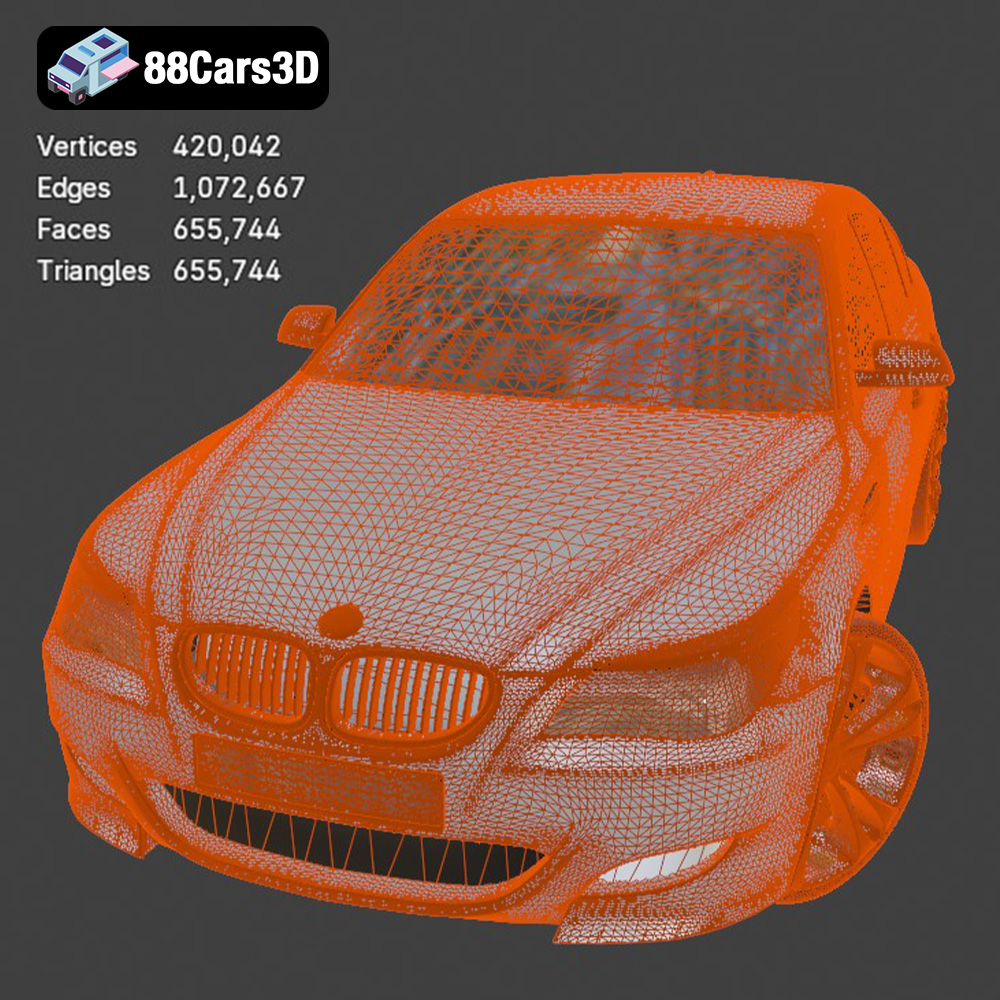
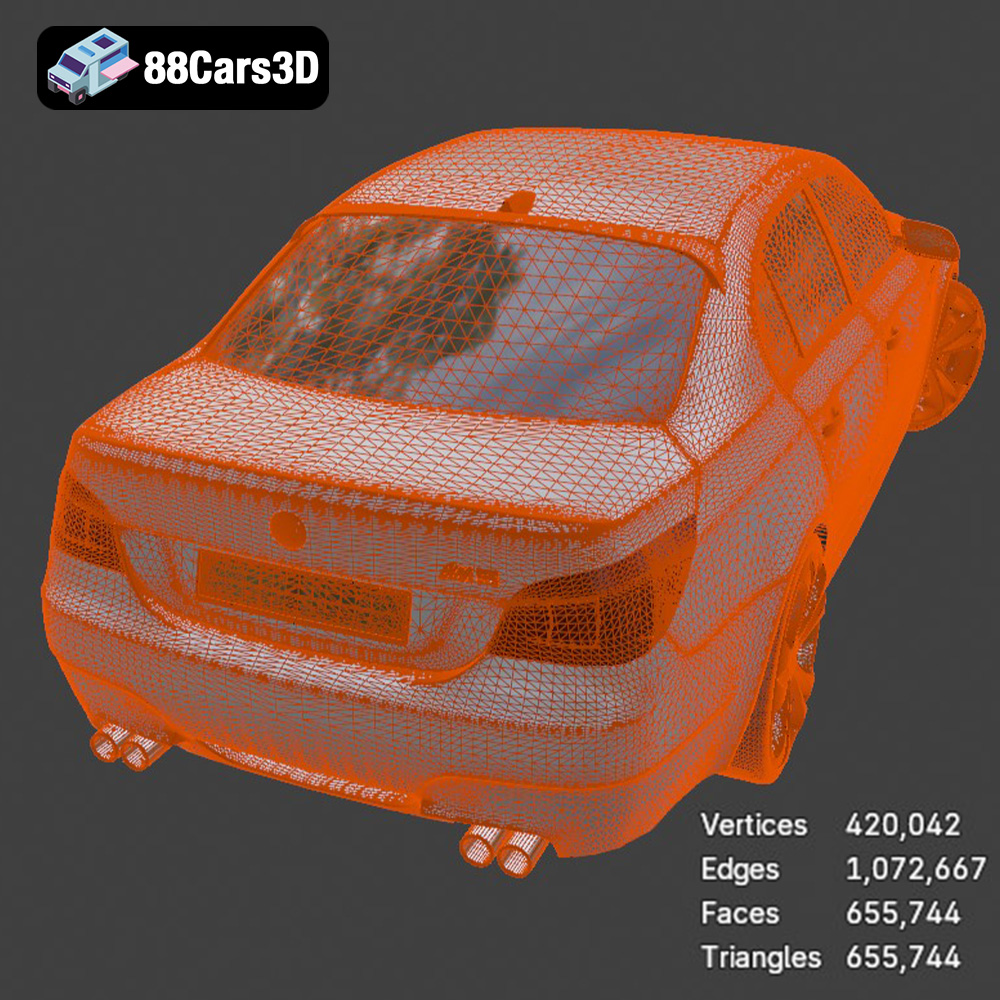
A fundamental indicator of quality is the model’s geometry and topology. This BMW M5 model boasts a well-structured topology with a triangle count of 655,744. This specific count strikes a perfect balance: it’s rich enough to capture the nuanced curves and sharp edges of the M5 with high-end visual realism, yet optimized enough to be considered “game-ready” for real-time engines like Unreal and Unity. The clean topology also ensures smooth deformations during animation and efficient UV mapping for texturing. Furthermore, the model adheres to real-world scale accuracy, based on the actual vehicle chassis, which is crucial for architectural visualization, realistic simulations, and seamless integration into existing environments.
The level of detail extends far beyond the surface. The model includes an accurate BMW M5 2008 frame geometry and proportions, alongside a detailed 5.0L S85 V10 engine block – a cornerstone of the M5’s legend. Exterior features such as the signature M-specific quad exhaust system with a rear diffuser, authentic Bi-Xenon headlights, distinct L-shaped LED taillights, and M-style lightweight alloy wheels with high-performance tire treads are all faithfully replicated. Inside, the cockpit is equally impressive, with heavily bolstered M sport leather seats, a thick-rimmed M multi-function steering wheel with paddle shifters, an authentic instrument cluster featuring the M-specific tachometer, and intricate control details including pedals, the SMG shifter, and the iDrive dial. This comprehensive detailing ensures the model can be used for close-up shots, first-person perspectives in games, and detailed virtual tours.
For dynamic projects, animation readiness is key. This 3D model is designed with separate components for wheels, suspension, and steering, each with proper pivot setups. This modularity allows for realistic wheel rotation, independent suspension travel, and accurate steering animations, essential for racing games, cinematic sequences, or interactive vehicle configurators. Such foresight in the model’s construction significantly reduces setup time for animators and technical artists, allowing them to focus on creative execution rather than tedious rigging.
Integrating a high-quality 3D car model into professional workflows requires an understanding of software-specific techniques and best practices. The BMW M5 2008 3D model’s versatility, supported by its various file formats, ensures a smooth experience across different platforms.
For cinematic quality renders and complex animations, software like Autodesk 3ds Max and Blender are indispensable. With the included .max and .blend files, artists gain direct access to the native project setup. In 3ds Max, this means leveraging powerful renderers like V-Ray or Corona to achieve photorealistic results. Workflows typically involve:
Blender offers a similar powerful suite, with its Cycles and Eevee renderers. The .blend file allows for immediate manipulation and rendering, leveraging Blender’s extensive add-ons and community support for advanced material creation, procedural texturing, and dynamic simulations.
Game developers and AR/VR creators will find the BMW M5 2008 3D model particularly valuable for its “game-ready optimization” and the inclusion of the .fbx and .unreal formats. In Unreal Engine, the workflow might include:
This streamlined process allows developers to quickly integrate a high-quality vehicle that looks fantastic and performs efficiently in demanding real-time scenarios.
The “game-ready” nature of this specific 3D car model is a significant advantage. Its optimized polycount facilitates smooth performance in open-world games, racing titles, and simulators. For AR/VR applications, the .glb format is a game-changer, providing a highly optimized, single-file asset for immersive virtual showrooms, configurators, and mobile AR experiences. This optimization is not just about low poly counts; it’s about efficient UV mapping, clean geometry, and PBR-ready materials that render consistently and quickly across diverse hardware.
The versatility of a meticulously crafted 3D car model extends far beyond simple rendering, touching various industries and creative endeavors. The BMW M5 2008 model, with its technical advantages, is a prime example of an asset that can drive innovation across multiple sectors.
In the automotive industry, photorealistic rendering is paramount for marketing and pre-production visualization. Companies often need to showcase vehicles in various environments, with different paint finishes, and under diverse lighting conditions. A model like the BMW M5 from 88cars3d.com is excellent for:
The ability to adjust body colors, modify tire textures, and adapt material finishes (matte, gloss, metallic) provides unparalleled flexibility for marketing teams to explore endless visual permutations.
For game developers, high-quality 3D car models are the backbone of realistic and engaging driving experiences. The BMW M5’s optimized geometry and modular components make it ideal for:
The balance between fidelity and optimization ensures that even in graphically intensive games, the M5 model contributes to a smooth and believable simulation.
Augmented Reality (AR) and Virtual Reality (VR) are transforming how we interact with digital content. The BMW M5 model is perfectly suited for:
The .glb format, in particular, facilitates these experiences due to its efficient, single-file packaging and optimization for real-time mobile and headset rendering.
Beyond digital displays, premium 3D models offer the unique opportunity to bridge the digital and physical worlds through 3D printing. The BMW M5 2008 3D model, specifically designed with 3D printing in mind, allows enthusiasts to hold a tangible representation of their favorite virtual car.
The inclusion of the .stl format is crucial for 3D printing. This format represents the model’s surface geometry as a series of connected triangles, forming a watertight mesh essential for successful printing. Before printing, the model often undergoes a few preparation steps:
For a detailed model like the M5, ensuring all components are manifold (watertight) is critical to avoid printing errors.
To achieve a high-quality physical model of the BMW M5, specific 3D print settings and post-processing techniques are advised:
This meticulous approach ensures that the digital BMW M5 2008 can be transformed into an impressive physical replica, perfect for hobbyists and collectors.
A truly versatile 3D car model empowers creators with extensive customization options, allowing them to tailor the asset to precise project requirements. The BMW M5 2008 3D model offers significant creative flexibility, ensuring it remains relevant across diverse applications.
The ability to customize the visual appearance of the M5 model is crucial for integration into various scenes and branding initiatives. Artists can easily:
This granular control over visual elements ensures that the BMW M5 can seamlessly adapt to any creative vision, from a gritty post-apocalyptic scene to a pristine luxury advertisement.
Beyond the vehicle itself, the interaction of the BMW M5 with its environment through lighting and scene setup is paramount for realism. The model facilitates dynamic integration, allowing artists to:
This flexibility transforms the BMW M5 2008 3D model from a static object into a dynamic element, capable of being the centerpiece of any digital narrative or interactive experience.
In the demanding world of 3D content creation, the difference between a good project and an exceptional one often lies in the quality of its core assets. The BMW M5 2008 3D model is a testament to meticulous craftsmanship and technical excellence, offering an unparalleled level of detail and optimization for a vast array of applications. From its faithfully recreated V10 engine to its game-ready topology and comprehensive file format support, this model empowers professionals across automotive rendering, game development, AR/VR, and even 3D printing.
It represents not just a vehicle, but a versatile tool designed to accelerate workflows and elevate creative projects. Whether you’re aiming for photorealistic renders, seamless game integration, or a tangible print, the technical specifications and thoughtful design of this M5 model ensure superior results. For those seeking premium 3D car models that stand up to the most rigorous professional scrutiny, a visit to 88cars3d.com is highly recommended, where assets like this iconic BMW M5 2008 are readily available to transform your digital visions into reality.
Experience the legendary BMW M5 2008 (E60 generation), a defining sports sedan famed for its Formula 1-inspired naturally aspirated V10 engine and striking aerodynamic styling. This 3D model faithfully captures the vehicle’s heritage, showcasing key visual elements like the aggressive front fascia, flared wheel arches, signature quad exhaust system, and iconic kidney grilles that make this super saloon truly special. Designed with meticulous attention to detail, this 3D model features a well-structured topology with a triangle count of 655,744. It offers exceptional game-ready optimization and high-end visual fidelity, making it a premier asset for real-time applications, game development, AR/VR experiences, professional animation, and architectural visualization.
$46.50
.2008
.blend
.bmw
.e60
.fbx
.glb
.m5
.max
.obj
.ply
.rendering
.stl
.unreal
car-3d-model
game asset
game-ready
low-poly
luxury car
optimized
sports-sedan
VR/AR